This has been my ‘in the bath’ book for the last three or four days and I don’t mind saying that I have been like a prune during that time because I kept reading ‘just another chapter’. I also drove my other half crazy by topping up the hot water every time I gave in to the story. I have to follow an unusual reading regime in my house. It was built in 1787 and has a lot of ‘quirks’, including the emptying of my entire tub of bath water into the kitchen below instead of the usual plumbed in route. A further quirk is that if I take my iPad into the bathroom to read from Kindle or NetGalley, it simply switches itself off. I can sometimes bypass this by putting the iPad into airplane mode before going into the bathroom, but it’s not a fail-safe method. So I tend to read real proof copies in the bath and downstairs, keeping my iPad for bed where I don’t want to wake my other half. I don’t like to put on a reading light or do what my sister-in-law does and go to bed in my brother’s night fishing hat with built in head-lamp. She didn’t like to keep him awake by reading with a light on in their camper van.
So now you know that we’re all a bit odd in my family, I’ll come back to the book, one that grabbed me straight away and kept hold of me till the final page. There’s just something compulsive about it. It could be the short chapters that are so snappy and often end on a cliffhanger. It could be the alternating narration between neighbours Natalie and Rani who live across from each other. The women have such strong narrative voices and are both in completely relatable positions in life; Natalie is the beautiful neighbour with the killer job and the lovely house across the road that Rani has been coveting since she moved here. In fact as soon as the For Sale sign went up she was over there with a different name and address, swanky clothes and great back story in order to view it. So when Natalie moves in Rani knows exactly which high end work tops she butters her toast at in the morning and the surprisingly sheltered garden made for children to play in. We all think the grass is greener at times, but few of us would go to the lengths that Rani will.
Natalie does appear to have everything going for her. She’s undeniably beautiful with honey blonde hair and designer clothing. Naturally she’s the high flyer in a corporate law firm, with the opportunity to become the youngest ever woman at her firm to become partner. Her handsome and older husband Charlie is attentive and thoughtful. The pair married in Tuscany and Charlie is keen to start a family, hence the beautiful home in just the right area. Sometimes, when people really love a house they’ve looked at, they might claim to feel immediately at home there or be able to see them living in these perfectly curated spaces but for Natalie it’s less of a feeling and more of a certainty. She has lived here before, right at the beginning of her life, before her dad left and when she had an imaginary friend, Noemi, to run around with. She knows she was running a risk not telling Charles, but when the elderly next door neighbour doesn’t seem to recognise her she seems to have a got away with it. What is luring her back there? Her mother Luella is unlikely to enjoy a trip down memory lane, in fact she’s the first to remind Natalie how her dad left them in a terrible state, financially as well as emotionally. She likes to remind Natalie what a good man Charles is: all Charles wants is to settle and have a family; to look after Natalie; to take the burden of her high-powered career away; help her cultivate the right sort of friends. Surely that can’t be bad?
Rani lives opposite in her cramped flat, being a full-time mum and wearing supermarket clothes. She watches Natalie settle in and we can see a perfect psychological storm starting to build. Rani will happily admit that, at times, Natalie’s lifestyle must be hard to keep up. Although that revelation only surfaces when she realises it does take work to be that put together and professional. At first though, Rani feels almost as if Natalie is a fantastical creature who simply drifts out of bed with not a hair out of place, naturally smelling of roses and never working for her enviable figure. Rani feels out of place next to her, in her daily mum uniform of leggings and a t-shirt. However, these thoughts come from Rani’s anxieties and feelings of inadequacy. Although she loves her beautiful girls, she does miss going to out to work and having something that is entirely hers. She also feels disconnected from Joel, although she loves him the years of babies and toddlers have wiped out any spontaneity or time for themselves. When Joel commits a huge betrayal Rani has a huge choice to make. Can they find a way back to each other?
Just like Rani, we are drawn in more and more by Natalie’s life. Cleverly the author has made sure that we get to see more than Rani, through Natalie’s chapters we get her inner thoughts while everyone else is still seeing the perfect exterior. We know that she’s having nightmares again, full of people close to her but who don’t look quite right. Noemi is back too, breaking into her thoughts and becoming so tantalisingly real. As the two women become friends, I was actually a little bit scared for Rani. She doesn’t know what she’s getting into, although she has an inkling the perfect marriage to Charles may not be all it seems. I was unsure where the danger was coming from, was Charles much more dangerous than he at first appears or is Natalie’s strange past all in her imagination? Why did she choose to live in this house, when her childhood seems like an endless nightmare and Luella comes across as a harsh and controlled woman? It’s as if she adopted the Royal family’s motto for her family; ‘never complain, never explain’. Rani is the first true friend Natalie has had in her adult life, so she’s not always as open as she could be or is so used to thinking what Luella’s take on the situation might be, she comes out with something that sounds wrong. As Natalie starts to enjoy a little freedom, what will Charles’s reaction be and what dangers might the two women face if they start to dig up her past? This book is so well paced and the tension just keeps building. I enjoyed the female characters in the book and the unflinching depiction of domestic abuse that forms part of the story. I found Rani a more engaging and rounded character than Natalie, but of course she would be – none of her past is missing. Natalie comes across as a borderline personality, she has no sense of her own identity and has always gone along with the strongest person in the room, adopting their values and attitudes as her own. Rani has a lot more to lose, not material possessions but a family and roots that she knows keep her grounded. It’s knowing the threat and knowing how much Rani has to lose that kept me reading, even if the bath water was getting a little cold.
Meet the Author
Mira V Shah is a writer, former City lawyer turned legal editor and the proud owner of three good dogs. She is the daughter of Indian African parents and lives in North London with her husband and the pack – merely a few miles from where she grew up, although she often dreams about retiring in Italy should her intermittent lottery entries prove successful.
She wrote her first ever novel in 2020 during the first UK lockdown after studying on the Curtis Brown Creative novel writing course. HER was published by Hodder and Stoughton in November 2023.
Way back in 1997, I started my first job in the mental health field as a support worker for social services. My role was spread between the day centre and the community, covering several of the halfway houses that supported people coming from a period in hospital and back into their lives. I remember being daunted when taken to one of these houses for the first time, not because I was scared of all people with mental health issues, but because there were five men living in the house and I was just a 24 year old little 5 feet 2 inch scrap who suddenly felt like they knew very little! So I felt a very personal sense of trepidation for Lou O’Dowd who travels across the world from Australia to Edinburgh for a job with the organisation SASOL. Her new life will mean living with her cousin and working shifts at a halfway house for high risk offenders including two killers, a celebrity paedophile, and a paranoid coke dealer. After orientation, Lou will be on shift alone dealing with these offenders with little more than her own instinct to guide her. What could possibly go wrong?
I love that Helen Fitzgerald writes characters like Lou O’Dowd. She doesn’t worry about whether the reader will like her heroine or not – I did feel a strange affection for her if I’m honest. She is controversial in a lot of ways. In Australia she has been living on a sugar daddy’s generosity, depending on him for the roof over her head and a monthly allowance that’s enough for her not to work. She has never really known what she wants to do with her life so has jumped at the opportunity to be sheltered by someone else’s money. When this relationship comes to a disastrous end she has no choice but to find a job and with zero skills, Edinburgh seems like a great opportunity. She seems to veer between low confidence and an almost cocky attitude that’s veering on the reckless. Her inability to direct her own life suggests feelings of inadequacy, but when she takes on her job in Edinburgh she really doesn’t seem to comprehend the potential risks of her role. On her first day in Edinburgh she goes out to see her cousin’s play at the matinee and meets a charming man who’s intelligent and personable. He also shares Lou’s attitude to risk, suggesting sex in alleys or doorways rather than either of their homes. It’s as though Lou has met the male version of herself: charming, unpredictable and addicted to taking risks. When she finds out he’s one of the heirs to a Scottish estate she starts to wonder whether they could be more than a quick fling?
As the book builds towards Lou’s solo shifts at the halfway house, I felt so nervous for her. It also felt like the employer didn’t prepare new staff anyone near enough, just one shadow shift then in at the deep end. I didn’t do night shifts, but the thought of staying up all night as the only person in a house of murderers and sex offenders made me jumpy. To the extent that I dreamt people had broken into my own house one night over Christmas. I loved the way Helen mixed the mundane domesticity of working in a place like this, with the fear and all out horror that could potentially take over. On her first shift Lou takes it upon herself to clean the kitchen and throw out the broken crockery. This might seem like a sensible and industrious job to start with, but it takes a senior worker to point out that this isn’t Lou’s home, it’s the resident’s home and their belongings that she’s thrown out. It’s a line a lot of people would have crossed, but takes away the resident’s agency. It would have been better to try and include them. There’s the evening ritual of cocoa for each resident, but it has to be to perfectly timed in order to interrupt one resident’s suicide ritual. These are the extremes a job like this entails, but it’s only the beginning.
There’s still humour to be found though, laced with a few moments of disgust as Lou realises why one of the residents is happy to be roomed in the basement and another’s seemingly excited leg movements, turn out to be the wrong kind of excited. However, with one resident owing money to the type of people who won’t mind being repaid one body part at a time, another just waiting for Lou to drop her guard and close her eyes and one she thought she could trust, displaying his dangerous side and the depths he’s willing to plumb to scratch a powerful itch! By the final showdown my heart was racing, I was holding my breath and had to go make myself a cup of tea at 4am because I needed to finish, but I also needed a comforting brew. This was another great thriller from Helen and Orenda Books and I heartily recommend it for those who like their heroines less than squeaky clean and their danger very real.
Available now from Orenda Books
Meet The Author
Helen FitzGerald is the bestselling author of thirteen adult and young-adult thrillers, including The Donor (2011) and The Cry (2013), which was longlisted for the Theakstons Old Peculier Crime Novel of the Year and adapted for a major BBC drama. Her 2019 dark- comedy thriller Worst Case Scenario was a Book of the Year in the Literary Review, Herald Scotland, Guardian, Sunday Times, The Week and Daily Telegraph, shortlisted for the Theakston’s Old Peculier Crime Novel of the Year, and won the CrimeFest Last Laugh Award. The critically acclaimed Ash Mountain (2020) and Keep Her Sweet (2022) soon followed. Helen worked as a criminal-justice social worker for over fifteen years. She grew up in Victoria, Australia, and now lives in Glasgow with her husband.
At five a.m. one summer’s morning, police diver Jen Harper wakes to find herself submerged in the silt of a river with no memory of how she got there.
Forty-eight hours later, she’s called to dive in the same river in search of a missing woman, Claudia Franklin.
But for Jen, this is no ordinary job. Her and Claudia’s families were entangled for decades – there is unresolved resentment between them, unspoken secrets.
Jen hasn’t seen Claudia for twelve years now. Or has she?
This was an interesting and complex novel that feels part thriller and part family drama. From the mysterious opening, this is a book full of secrets and lies. It’s a slow burner and I wasn’t sure at first. I found myself more drawn in by the characters involved in the story. Told through Jen, a police diver, it was a perspective I’d never come across before in crime novels. My brain immediately went back to 2023 to the disappearance of Nicola Buller, who went to walk her dog as usual one morning and never came home. The unusual circumstances- her dog left alone, her phone left on a bench on an open work call – caused a media frenzy and people spread wild theories on social media. A diver, who was contracted for searches in waterways by other police forces, offered his services direct to the family saying ‘if she’s in there, I will find her’. He didn’t. Sadly she was found days later. Water behaves in unusual ways and that mysterious movement of tides can take bodies and conceal them for days. Jen’s work was a fascinating backdrop to the disappearance of local woman Claudia Franklin from the small town of Bourne. After two days with no sign of her, police divers are called to search the river – Jen included. However, Jen doesn’t disclose her family’s complicated relationship with the Franklins, or that where a member of the public has reported seeing something in the water is exactly where she woke up after sleepwalking.
Jen is intriguing and it was interesting to experience what could be seen as quite a macho job, from a woman’s perspective. Jen is definitely one of the boys, she doesn’t expect special treatment and even changes into her dive gear with the men, in the back of the van. There are also parts of the job where Jen has an advantage, she is a slimmer build and has smaller hands for tight spaces like drainage pipes. Jen’s also a mum and that makes such an interesting and varied job harder. She only has two people she can trust to step in and look after her little boy when she gets the call, her brother and her best friend. The men in her team just see her as one of them, but they can do the job they love without the mental load of running a household and arranging child care. Jen has to do both and I had some admiration for her courage and resilience, while never being completely sure of what she’s capable of. That ambiguity in Jen’s character, plus the strange unsolved nature of her sleepwalking left her so open to interpretation.
I found the best way of reading this story is not to try and solve things. I let it wash over me and when the twists happened, they were a revelation. From a slow start, the author did let the tension build beautifully, and the revelations don’t stop coming. What I loved was how the author kept our knowledge of the case within limits. Unlike some protagonists in crime fiction, Jen stays within her role. We only know what the police divers know and it kept us with the hard evidence rather than speculation. It brought authenticity to the case and we could be sure of what had happened, showing a depth of research into diving and forensics. In the background we are building up a picture of life in a small town, where everyone knows everyone else and pasts are intertwined and complicated. Having lived in a small Lincolnshire town since I was nine years old, I know how this works. I thought the author had created a great balance between the professional and the personal, the crime and the characters. Emotions of guilt, rivalry and obsession swirl around alongside the theme of protection, especially of those we love most. This is a story that slowly takes hold of you, it’s multiple strands like the weeds in a river that wind themselves around you and pull you under.
Published by Mountain Leopard Press 22nd June 2023
Meet the Author
For over ten years L V Matthews worked both in domestic and international sales for major UK publishing houses, before leaving to pursue a career in writing.
SILENT WATERS is her newest thriller novel (out July 2023)
It seems I’ve barely said goodbye to 2023 and I’m already six books in with my 2024 books. This looks like a bumper year of brilliant books and is likely to cause me some problems when summing up next New Year. It blows my mind to think there will be others that pop along and surprise me too. Here’s my first part and the second will be posted tomorrow. Here’s to a bookish New Year 🥂🍾📚
At The Stroke of Midnight by Jenni Keer.
It’s 1923 and in a decade that promises excitement and liberation, Pearl Glenham and her father are invited to a mysterious country house party on the Dorset coast, by a total stranger. Her father claims not to have any prior association with Highcliffe House, but it’s apparent that he has a shared history with several of the guests, although he won’t admit it. Belatedly discovering that her father was blackmailed into attending, Pearl’s worries are compounded when their host fails to arrive. Intimidated by everyone, Pearl escapes to the nearby cove and finds a mysterious mercury clock hidden in a cave. This strange encounter sets in motion a series of events that will culminate in an horrific house fire, claiming the lives of all the guests, including Pearl herself. But then Pearl wakes up back in the cave, seemingly destined never to live past midnight. She can repeat the day. But can she change its outcome?
Out on 10th March from Boldwood Books
Night Watching by Tracy Sierra
I don’t know very much about this novel, except for the blurb below and the many brilliant reviews from other thriller writers using so many superlatives to describe it.
There was someone in the house.
Home alone with her young children during a blizzard, a mother tucks her son back into bed in the middle of the night. Then she hears a noise – old houses are always making some kind of noise. But this sound is disturbingly familiar: it’s the tread of footsteps, unusually heavy and slow, coming up the stairs…
In that split second, she has three choices. Should she hide? Should she run? Or should she fight?
Out on 8th February from Viking.
A Sign of Her Own by Sarah Marsh
Ellen Lark is on the verge of marriage when she and her fiancé receive an unexpected visit from Alexander Graham Bell. Ellen knows immediately what Bell really wants from her. Ellen is deaf, and for a time was Bell’s student in a technique called Visible Speech. As he instructed her in speaking, Bell also confided in her about his dream of producing a device which would transmit the human voice along a wire: the telephone. Now, on the cusp of wealth and renown, Bell wants Ellen to speak up in support of his claim to the patent to the telephone, which is being challenged by rivals.
But Ellen has a different story to tell: that of how Bell betrayed her, and other deaf pupils, in pursuit of ambition and personal gain, and cut Ellen off from a community in which she had come to feel truly at home. It is a story no one around Ellen seems to want to hear – but there may never be a more important time for her to tell it.
Out on 1st Feb from Tinder Press.
Expiration Dates by Rebecca Serle
Daphne believes the universe has a plan for her. Every time she meets a new man, she receives a slip of paper with his name and a number on it – the exact amount of time they will be together. The papers told her she’d spend three days with Martin in Paris; 5 weeks with Noah in San Francisco; and three months with Hugo her ex-boyfriend turned best friend. Daphne has been receiving the numbered papers for over twenty years, always wondering when there might be one without an expiration. Finally the night of a blind date at her favourite LA restaurant, there’s only a name: Jake. But as Jake and Daphne’s story unfolds, Daphne finds herself doubting the paper’s prediction, and wrestling with what it means to be both committed and truthful. Because Daphne knows things Jake doesn’t, information – that if he found out – would break his heart. Rebecca always manages to do something a little bit different with her romances and I’ve loved all of her books so far.
Out on 19th March from Quercus
Christ on a Bike by Orla Owen.
Cerys receives an unexpected inheritance but there are rules attached, twisted rules that have to be followed if she is to receive it in full . As she settles into her new life, she begins to feel trapped and senses that the villagers, her sister and a man she keeps seeing on a bicycle are constantly watching her. Cerys, desperate to control her own future, decides to try break free but the past is ever present and dictates her fate. I found the blurb of this intriguing and I have a recommendation from fellow blogger Ellie and she’s usually great for unusual reads.
Out on 25th Jan from Bluemoose Books.
One of the Good Guys by Araminta Hall.
I’ve been lucky enough to have a proof of this one so I can honestly say WOW! This one will blow your socks off. Cole is the perfect husband: a romantic, supportive of his wife, Mel’s career, keen to be a hands-on dad, not a big drinker. A good guy. So when Mel leaves him, he’s floored. She was lucky to be with a man like him. Craving solitude, he accepts a job on the coast and quickly settles into his new life where he meets reclusive artist Lennie.
Lennie has made the same move for similar reasons. She is living in a crumbling cottage on the edge of a nearby cliff. It’s an undeniably scary location, but sometimes you have to face your fears to get past them. As their relationship develops, two young women go missing while on a walk protesting gendered violence, right by where Cole and Lennie live. Finding themselves at the heart of a police investigation and media frenzy, it soon becomes clear that they don’t know each other very well at all. This is an up to the minute look at relationships and the gender war. If so many men are feminists, why are so many women scared to walk home at night?
Out on 4th Jan from Macmillan
Anna O by Matthew Blake
ANNA O HASN’T OPENED HER EYES FOR FOUR YEARS
Not since the night she was found in a deep sleep by the bodies of her best friends, suspected of a chilling double murder. For Doctor Benedict Prince, a forensic psychologist on London’s Harley Street, waking Anna O could be career-defining. As an expert in sleep, he knows all about the darkest chambers of the mind; the secrets that lie buried in the subconscious. As he begins Anna O’s treatment – studying his patient’s dreams, combing her memories, visiting the site where the horrors played out – he pulls on the thread of a much deeper, darker mystery.
Awakening Anna O isn’t the end of the story, it’s just the beginning.
Out on 1st Feb by HarperCollins
Goodbye Birdy Greenwing by Ericka Waller
Great friends are hard to find, difficult to leave and impossible to forget…
Birdie, Ada and Jane are all lost. Life has not turned out as they planned, and all three of them are scared to ask for help, to say yes – or to say no. To take a chance on someone else. Birdie Greenwing has been at a loose end ever since her beloved twin sister and husband passed away eight years previously. Too proud and stubborn to admit she is lonely, Birdie’s world has shrunk. Jane Brown hoped moving to Brighton would be a new start, away from her overbearing mother. While she finds it hard to stand up for herself, her daughter Frankie has no problem telling people what she does and doesn’t want. Ada Kowalski thought training to become an Oncologist in England would be a dream come true. In reality she is isolated, exhausted, the professional detachment she has had to develop now threatens to take over her life.
When a series of incidents brings their lives crashing together, these three unlikely allies find that there’s always more to a person than meets the eye.
Out on 18th April by Doubleday.
The King’s Witches by Kate Foster
Women whisper secrets to each other; it is how we survive.
1589. Princess Anne of Denmark is betrothed to King James VI of Scotland – a royal union designed to forever unite the two countries. But first, she must pass the trial period: one year of marriage in which she must prove herself worthy of being Scotland’s new Queen. If the King and the Scottish royal court in Edinburgh find her wanting, she faces permanent exile to a convent. Determined to fulfil her duties to King and country, Anne resolves to be the perfect royal bride. Until she meets Lord Henry. By her side is Kirsten Sorenson, her loyal and pious lady’s maid. But whilst tending to Anne’s every need, she has her own secret motives for the royal marriage to be a success . . .
Meanwhile, in North Berwick, a young housemaid by the name of Jura is dreaming of a new life. She practises the healing charms taught to her by her mother, and when she realises she is no longer safe under her master’s roof, she escapes to Edinburgh. But it isn’t long before she finds herself caught up in the witchcraft mania that has gripped not just the capital but the new queen . . This is the follow up to Kate’s brilliant book The Maiden.
Out on 6th June from Mantle.
The Knowing by Emma Hinds.
Powerful, intoxicating and full of suspense. The Knowing is a darkly spellbinding novel about a girl fighting for her survival in the decaying criminal underworlds. It is a hard-hitting story of love, obsession and betrayal.
Whilst working as a living canvas for an abusive tattoo artist in the slums of 19th-century New York, Flora meets Minnie, an enigmatic circus performer who offers her love and refuge in an opulent townhouse that is home to the menacing and predatory Mr Chester Merton. Flora earns her keep reading tarot cards for his guests whilst struggling to harness her gift, the Knowing – an ability to summon the dead. Caught in a dark love triangle between Minnie and Chester, Flora begins to unravel the secrets inside their house. Then at her first public séance in the infamous cathouse Hotel du Woods, Flora hears the spirit of a murdered boy prostitute and exposes his killer, setting off a train of events that leaves her fighting for her life. The Knowing is a stunning debut inspired by real historical characters including Maud Wagner, one of the first known female tattoo artists, New York gang the Dead Rabbits, and characters from PT Barnum’s circus in the 1800s. It is so up my street it’s ridiculous and I can’t wait to tell you all about it.
Out on 18th January from Bedford Square Publishers.
The Collapsing Wave by Doug Johnstone
This is my current read and I’m really enjoying being back with Ava, Heather, Lennox and of course Sandy. This follows on from the first in the series, picking up from that moment in Ullapool where the trio reunited Sandy the Enceladon with his fellow aliens and they made the Great Descent into the sea loch. Now Lennox and Heather are detained nearby, in a purpose built centre called New Broom that’s part prison and part research facility. Run by the American military, the base is dedicated to researching any individual enceladons they can catch. This is a form of torture as they are separated from the whole and forced to communicate telepathically with Lennox and Heather. Meanwhile, Ava is on trial for the murder of her husband after years of domestic violence, but what next for her and her daughter Chloe if she’s acquitted? As Sandy tries to help his detained friends, they all learn just how far the Americans will go to reach their objectives. However, the protest camp near New Broom is filled with people who didn’t believe the government’s explanation for the Great Descent. They know that the the Americans are experimenting on something more than marine life, something extraterrestrial. Could their help ensure freedom for the Enceladons as well as Lennox, Heather and Ava? A brilliant read, full of Doug Johnstone’s usual mix of politics, philosophy and buckets of empathy alongside the aliens.
Out on 14th March from Orenda Books.
The Unfinished Business of Eadie Brown byFreya North
Eadie Browne is an odd child with unusual parents, living in a strange house neighbouring the local cemetery. Bullied at school – but protected by her two best friends Celeste and Josh, and her many imaginary friends lying six feet under next door – Eadie muddles her way through. Arriving in Manchester as a student in the late 1980s, Eadie experiences a novel freedom she never imagined and it’s seductive. She can be who she wants to be, do as she pleases, and no one back home needs to know. As Manchester embraces the dizzying, colourful euphoria of Rave counterculture, Eadie is swept along, blithely ignoring danger and reality. Until, one night, her past comes hurtling at her with ramifications which will continue into her adult life.
Now, as the new Millennium beckons, Eadie is turning 30 with a marriage in tatters. She must travel back to where she once lived for a funeral she can’t quite comprehend. As she journeys from the North to the South, from the present to the past, Eadie contemplates all that was then – and all that is now – in this moving love letter to youth.
Out on Feb 1st from Welbeck Publishing
The London Bookshop Affair by Louise Fein
London, 1962: The world is teetering on the brink of nuclear war but life must go on. Celia Duchesne longs for a career, but with no means or qualifications, passes her time working at a dusty bookshop. The day a handsome American enters the shop, she thinks she might have found her way out of the monotony. Just as the excitement of a budding relationship engulfs her, a devastating secret draws her into the murky world of espionage.
France, 1942: Nineteen-year-old Anya Moreau was dropped behind enemy lines to aid the resistance, sending messages back home to London via wireless transmitter. When she was cruelly betrayed, evidence of her legacy and the truth of her actions were buried by wartime injustices. As Celia learns more about Anya—and her unexpected connection to the undercover agent—she becomes increasingly aware of furious efforts, both past and present, to protect state secrets. With her newly formed romance taking a surprising turn and the world on the verge of nuclear annihilation, Celia must risk everything she holds dear, in the name of justice.
Out on 29th February from William Morrow.
Loot by Tania James
Meet Abbas. Woodcarver, toy maker, dreamer. Abbas is seventeen when he is whisked away to Tipu Sultan’s glorious palace in Mysore. Apprenticed to the clockmaker Monsieur Du Leze, he is ordered to create an ingenious musical tiger to delight Tipu’s sons. In the eccentric Du Leze, Abbas finds an unexpected friend who encourages his skill and hunger for learning, and through whom he also meets the unforgettable Jehanne, who has questions and ambitions of her own.
But when British soldiers attack and loot Mysore, Abbas’s world is turned upside down and his prized tiger is shipped off to a country estate in England. In order to carve out his place in the world, he must follow. A hero’s quest, a love story, an exuberant heist novel that traces the bloody legacy of colonialism across the world, Loot is a dazzling, wildly inventive and irresistible feat of storytelling from a writer at the height of her powers.
Out on 25th Jan by Harvill Secker.
This Tale is Forbidden by Polly Crosby
Nesta believes in the fairy tales – the true stories of powerful magical women who shaped and ruled the world decades ago. But the world has changed since then, and now, she is forbidden from wandering too far from the isolated woodland cottage where she lives with her grandmother. Nesta longs more than anything to see the city that lies beyond the forest, and when her grandmother is abducted, she gets her chance, journeying there in the hope of rescuing her.
But once there, she is horrified to see her grandmother’s warnings were true: girls are forced to wear certain clothes and punished if they don’t behave in certain ways. The city’s Authorities have rewritten history, replacing the fairytale heroines with weak girls who must rely on men. Worse still – everyone believes this is how the world has always been. Only Nesta knows the truth. But truth is a dangerous thing, and suddenly she finds herself a target. Can she evade the Authorities long enough to rescue her grandmother and liberate everyone else, bringing magic back into the world? This is a YA debut from Polly, whose writing I absolutely love.
Out on 4th Jan by Scholastic
Emily Wilde’s Map of the Otherlands by Heather Fawcett
This is the second book in the Emily Wilde series and another beautiful cover to add to my collection. Emily Wilde is a genius scholar of faerie folklore, and has catalogued many secrets of the Hidden Folk in her encyclopaedia with her infuriatingly charming fellow scholar, Wendell Bambleby, by her side. But Bambleby is more than just a brilliant and unbearably handsome scholar. He’s an exiled faerie king on the run from his murderous mother, in search of a door back to his realm. By lucky happenstance, Emily’s new project, a map of the realms of faerie, will take them on an adventure to the picturesque Austrian Alps, where Emily believes they may find the door to Bambleby’s realm, and the key to freeing him from his family’s dark plans. But with new friendships for the prickly Emily to navigate and dangerous Folk lurking in every forest and hollow, Emily must unravel the mysterious workings of faerie doors, and of her own heart.
Out on 16th February by Orbit Books
Spitting Gold by Camilla Lowkis
Paris, 1866. When Baroness Sylvie Devereux receives a house-call from Charlotte Mothe, the sister she disowned, she fears her shady past as a spirit medium has caught up with her. But with their father ill and Charlotte unable to pay his bills, Sylvie is persuaded into one last con. Their marks are the de Jacquinots: dysfunctional aristocrats who believe they are haunted by their great aunt, brutally murdered during the French Revolution. Sylvie and Charlotte will need to deploy every trick to terrify the family out of their gold – until they experience inexplicable horrors themselves. The sisters start to question if they really are at the mercy of a vengeful spirit. And what other deep, dark secrets threaten to come to light…?
Spitting Gold is a darkly atmospheric and propulsive historical debut that twists and turns, blending gothic mystery with a captivating sapphic romance.
Out on April 18th from Doubleday
Crow Moon by Suzy Aspley
When the crow moon rises, the darkness is unleashed…
Martha Strangeways is struggling to find purpose in her life, after giving up her career as an investigative reporter when her young twins died in a house fire. Overwhelmed by guilt and grief, her life changes when she stumbles across the body of a missing teenager – a tragedy that turns even more sinister when a poem about crows is discovered inked onto his back. When another teenager goes missing in the remote landscape, Martha is drawn into the investigation, teaming up with DI Derek Summers, as malevolent rumours begin to spread and paranoia grows. As darkness descends on the village of Strathbran, it soon becomes clear that no one is safe, including Martha… Both a nerve-shattering, enthralling and atmospheric thriller and a moving tale of grief and psychological damage, Crow Moon is a staggeringly accomplished debut and the start of an addictive, unforgettable series.
Out on 14th March from Orenda Books
The Gathering by C.J.Tudor
A small Alaskan town. A missing boy. A brutal murder. A detective brought in from out of state to assist the former sherriff who investigated a similar murder twenty-five years ago. But are they hunting a twisted psychopath – or something even more terrifying? I am determined to read C.J. Tudor’s back catalogue this year as she’s an author I’m very aware of but haven’t had time to read. This one sounds amazing.
Out on 11th April from Michael Joseph.
I have made an error in the above book covers graphic and added Halfway House by Helen Fitzgerald, if you want to know about her brilliant new novel take a look at part one.
White lies. Dark humor. Deadly consequences… Bestselling sensation Juniper Song is not who she says she is, she didn’t write the book she claims she wrote, and she is most certainly not Asian American–in this chilling and hilariously cutting novel from R.F. Kuang
June Hayward and Athena Liu were in the same year at Yale and both debuted in the same year in publishing. Yet that’s where the similarities end. Athena is picked up immediately in the world that’s always looking for the next big thing. Stories about basic white girls just aren’t cutting it any more, so Athena is a cross genre literary darling. Her death is a freak accident that allows June an opportunity, she acts impulsively and steals Athena’s work in progress. Her work is an interesting novel about Chinese labourers and their part in WW1 helping the British and the French. Could she perhaps edit the manuscript and submit it to her own agent? Would it be wrong to start a new pseudonym? Enter the ethnically ambiguous new novelist June Song.
This was a brilliant inside look at issues and timely arguments within the publishing industry. In the past couple of years I’ve seen the question of authentic voices rage back and forth, especially interesting to me when it comes to writers with disabilities and the way disabled characters are written. Is it more important that a marginalised story is told or is who tells it the vital issue? This can be especially urgent when it’s a previously untold story or a hidden part of history. June has so much success with the book, but struggles to protect her secrets. One wrong word could expose her, so how far will she go to protect her new identity?
I’m always fascinated with books where I don’t like any of the characters because it usually means I’m learning something. I think some readers are uncomfortable with this. Athena is the wronged party and should therefore be ‘likeable’. In fact racist or more accurately model minority thinking means that a Western audience might expect the Athena to be sweet, pretty, docile and diligent just because she’s Asian. The qualities are positive, but allow no room for difference unlike the endlessly unique white characters created every day by Western writers. Huang broaches the idea that the industry’s criteria for deciding which Asian writers to publish is based within this flawed expectation. There’s also an issue around the type of subject matter chosen by publishers. In the wake of George Floyd’s death a lot changed in the publishing industry and we all talked a lot about diversity, but when I think of the subject matter of books I’ve read from ethnically diverse writers, particularly African American or Black British writers, they have all contained sexual abuse, violence or intergenerational trauma. Can we say this is a true reflection of the experience of people from those communities? Or do publishers expect this type of story from black writers and favour publishing them over other narratives? Do we only accept marginalised voices when they’re saying things we expect, things that make us comfortable because they echo our ideas about that particular community?
June truly believes that she’s becoming the minority in the writing world. That unless you’re a BIPOC writer you can’t get a look in from agents and publishers. The focus is on ‘own voice’ fiction and no one wants to hear from yet another white girl. I thought about the controversy around the book American Dirt when reading this. Writing is all about imagination and an author can imagine anything. An author can also research anything, but is research enough when you’re attempting to write from the perspective of someone with a disability, or someone LGBTQ+. I have to mention the proliferation of books from a neuro-divergent perspective by writers who have experience in this area, but who aren’t neuro-divergent themselves. I can understand the concern about it, but I’ve also really learned from some of these books and been led to other reading so I could educate myself. Where does ‘own voice’ writing end? Are we saying that a male writer can’t write in the voice of a female character? Writing is all about creativity so if we can only ever write from our own viewpoint wouldn’t it get a little boring? Should publishers accept a manuscript from a white writer who’s writing outside their own experience, if they are inundated with own voice manuscripts of equal merit?
“She’s using the pen name Juniper Song to pretend to be Chinese American. She’s taken new author photos to look more tan and ethnic, but she’s as white as they come. June Hayward you are a thief and a liar. You’ve stolen my legacy and now you spit on my grave’.
I loved that this book addressed those big issues, but it was also entertaining, delicious and disturbing in equal measure. I really enjoyed the ins and outs of the publishing world and the gossipy social media ‘blow-up’ feel of the book. Then there were moments that were more uncomfortable and challenging. It addressed what a lonely job it is to be a writer and how that isolation magnifies other aspects of being an author such as the negativity of social media and the perils of comparison. I wasn’t sure about June but that meant her character stayed with me. On one hand I felt she deserved to be exposed, but when I saw the reality of that I felt really bad for her. This was such a clever novel, so complex, full of amazing contemporary issues and always entertaining.
Meet the Author
Rebecca F. Kuang is the #1 New York Times bestselling and Hugo, Nebula, Locus, and World Fantasy Award nominated author of Babel, the Poppy War trilogy, and the forthcoming Yellowface. She is a Marshall Scholar, translator, and has an MPhil in Chinese Studies from Cambridge and an MSc in Contemporary Chinese Studies from Oxford. She is now pursuing a PhD in East Asian Languages and Literatures at Yale.
When I received an email asking if I’d be interested in a finished copy of Fern Brady’s memoir I was typing ‘Yes please’ before I’d even finished reading the email. Something about Fern made me sit up and take notice when I was half-watching a late night showing of Live at the Apollo. She was such an interesting mix of intelligence, wit, forthrightness and that little bit of indefinable magic that captures an audience and takes them with you. By the time she appeared in Taskmaster I was a big fan. If you listen to my partner, this was because of her approach to tasks, which is very like my own. She dissected tasks in a very analytical way that was completely obvious to her, then when her team mates didn’t catch on (quite often in one case) she would speak to them as if they were insufferably stupid. Apparently the look in Fern’s eyes and her tone of voice reminded him of me watching a quiz show or reality series. Every Monday I become inexplicably wound up by Mastermind, especially when contestants pass questions instead of just throwing an answer out there. It’s obvious to me that if passes count against you in the tie-break situation, it would be better to simply shout ‘banana’ if you don’t know the answer. They might look stupid but they’d have no passes. So I guess I felt something of a kinship with her and the way our brains work, although in other respects we couldn’t be more different.
I had heard that Fern was recently diagnosed as on the autistic spectrum, a very hard won diagnosis for women and something I’ve had some experience of in my mental health work. Any mental health team has it’s share of people who are neuro-divergent, especially older people whose schools were simply unaware of the condition, whatever gender the individual might be. I’ve seen first hand the devastation that can be caused by undiagnosed autism. The inability to fit in at school, the crippling ‘shyness’ that leads to bullying, subsequent depression and anxiety, institutionalisation from long periods on psychiatric wards, coping strategies such as self-imposed isolation, drinking or drug taking. Then all the social issues that come along with these difficulties, like struggling to find or keep employment, poverty, neglect or even being preyed upon by those in society who look out for people to cuckoo or subject to modern slavery. This may sound extreme to some, but I’ve personally seen all of the above happen to people who were not diagnosed early. Not that diagnosis is the cure for all of these terrible life circumstances, but labelling does help because it enables the individual to access benefits, housing, support and some degree of protection in society. Fern was one of these people, born in an era when diagnosis was more common, but usually reserved for boys. The problem is that autism looks very different in women – women don’t fall into the Sheldon Cooper, no girlfriend, obsessive, Star Trek loving, nerd stereotype.
Fern was diagnosed exactly twenty years after she first told a doctor she had autism. Prior to that doctors told her she couldn’t possibly be autistic because she made eye contact and she’d had boyfriends (as if the ability to maintain a heterosexual relationship inoculated you from being neuro-divergent). One night after performing, Fern told her boyfriend that an audience member thought she might have Asperger’s and she should read a book called Aspergirls. She wasn’t sure she wanted to, but as her boyfriend started to read up on it he said to her ‘this is an exact description of you’. Often the signs of autism are simply missed in women because we have become too good at disguising or masking how we truly feel in a situation. Women are able, particularly in a work environment, to put on a mask. For example, all through school and university I was terrified of public speaking. I didn’t want everyone’s eyes on me, I would start to feel hot, sweaty and go completely purple in the face. Eventually I became so embarrassed about being purple in the face I became anxious about that too. These symptoms were exacerbated by a terrifying exercise at the beginning of teacher training where we had to pick a song that told a story and then sing it, unaccompanied in our seminar group. I felt like my mum’s pressure cooker, shuddering with heat and pressure until it gave a high pitched whistle and she would let the steam out. It felt like that but with nobody on hand to release the pressure. When things like this happened and even now when I’m involved in confrontation I’m right back there sweating, with a face like a giant blueberry. I didn’t last a term. However, if I am teaching a whole class of people, like one of my therapeutic writing workshops, I barely break a sweat. I have put on the mask of an expert, someone who knows what they’re talking about and how much it can help. So, as an expert, I can do the task.
Fern struggles to fit in wherever she goes in life, whether it’s school, college or work. She can’t fathom the unspoken social codes that govern our existence, especially in groups of women. Her obsessions are not the archetypal trains, sci-fi or comics. As a child she was obsessed with learning languages, culminating in a successful application to Edinburgh University to study Arabic and Persian. She had no desire to visit the countries where these languages were spoken, she just loved doing verb drills and was running out of languages. She played the piano incredibly well at a young age too, but because these were seen as ‘positive’ pastimes it never occurred to anyone to label them as autistic tendencies. She funded her studies at university by stripping, somewhere she felt that she fitted in. Although that was probably due to the fact that most stripper’s dressing rooms have their fair share of misfits. She didn’t have to be herself in the club, she put on a persona and got on with it. The early years of her comedy career were harder, mainly because there were more social codes to navigate, such as having to pretend she would like to have coffee and ‘get to know’ someone instead of just asking if she could be considered for a panel show slot. Sometimes it felt as if people wasted years playing games just to work with someone, when a simple ‘do you want to work together?’ Would have sufficed. She noticed that people didn’t like her to be so direct, particularly standing up in meetings and asking what the point was? This was something I used to do regularly in my last job as an advocate for people with disabilities. I had a huge case load on part-time hours so if someone called a meeting with no obvious point I would ask if they could quickly get to the point so I could assess if it was worth me sitting there. I remember saying that I’d like to get back to my desk and ‘do some real work’. I was there for the clients who needed me, not my colleagues. In hindsight I can see why our receptionist was terrified of me.
I loved the honesty of this book. Fern is brutally honest, even about those things that perhaps don’t show her in the best light. Her frankness about the autism, but also the mental health problems and addictions she experienced as a result of remaining undiagnosed, is admirable because it will help people who are in that destructive cycle. Her teenage years are particularly fraught and painful to read, mainly because she’s totally misunderstood by those who are supposed to love her. I found Fern’s retrospective take on those years and her post-diagnosis discussion with her mother was particularly moving. Fern is staunchly feminist and I loved that her inability to read social cues meant she didn’t internalise some of the bullshit that still exists in society about how women should behave. When in a shared flat at university, her flat mates basically slut-shamed her for having too many men at the flat. Hilariously, Fern replies that there seven days in a week and she’s shown restraint by only bringing a man back four times. There are other laugh out loud moments like this, where Fern is more than happy to create humour from her situation. There were some similarities in religious upbringing that resonated with me and made me smile.
This is not the typical redemptive narrative arc memoir where someone transcends their illness/situation in order to tie up any loose ends and become the ‘superhuman’ that we should all emulate. I have a disability and this is a narrative trope I can’t stand to see in disability memoirs. People don’t overcome a permanent disability, whether it’s visible or invisible; physical or mental. We learn to accommodate it and live alongside it if we’re lucky. Fern shows that beautifully by describing her difficulties working within her industry with her diagnosis. She describes the Taskmaster experience brilliantly and it’s refreshing to read a celebrity admitting to ongoing issues with their health. It’s more of that brutal honesty she’s famous for and it helps to know that what we see on TV doesn’t come without it’s difficulties, particularly the meltdowns which are a result of the stresses and strains of filming. As you can probably tell I identified strongly with this book and I have wondered if it might be worth mentioning to my GP that I have struggled with social codes; have been told that people are scared of my rather forthright opinions and ideas; have physical crashes after periods of stress; avoid parties; have repetitive mind games or movements that calm me and help me go to sleep; prefer to deal with people in writing; watch repetitive programs that are calming to me; prefer to see friends one to one rather than socialise in groups of women. These may just be personality quirks, but I have wondered and could see how a label might help me understand some of my behaviours. I really welcomed Fern’s story in terms of understanding myself better, whether diagnosed or not, but I also admired her ability to bare her soul and find the funny in her difficulties.
Meet the Author
Fern Marie Brady (born 26 May 1986) is a Scottish comedian, podcaster, and writer. Before becoming a stand-up comedian Brady worked as a journalist. She achieved fame as a stand-up comedian by entering stand-up competitions such as at the Edinburgh Film Theatre. As a result of her success as a stand-up she was invited on to comedy panel shows such as 8 Out Of Ten Cats. In 2020 she became a podcaster when she co-created a podcast entitled Wheel of Misfortune.
Brady was diagnosed as being on the autistic spectrum in 2021, as an adult. She has been active within the field of autism education since learning of her diagnosis. She has written how she has been dealing with the diagnosis in her 2023 memoir Strong Female Character.
I was so blown away by my first Val McDermid novel last month that I couldn’t settle to any other reading when I knew that this sequel was waiting for me on the book trolley! So in the end I gave in. We left DCI Karen Pirie at the beginning of lockdown, which she’d decided to spend in her lover Hamish’s huge Edinburgh flat with her new constable Daisy. It was a hurried and unexpected choice, with Hamish retreating to his Croft in the Highlands where he was now making hand sanitiser and profiting nicely. The team are officially stood down from working, but Karen had ordered some cold case files to be taken to the flat so they could at least read and review them. She isn’t known for being good at following rules so lockdown is a challenge, with her midnight walks and checks on the old flat she bends things a little to suit her. It would be impossible to imagine her not working though and luckily her DS Jason gets an unexpected call that triggers something. A librarian is using lockdown to file away items donated to the archive and she has been working on the papers of the late author Jake Stein. In them she found an unfinished manuscript that bothered her. The narrator is a crime writer and he abducts an aspiring writer from one of his workshops, a young girl called Laurel Oliver. He describes taking her to a shack in the woods and strangling her, then planting her body in the garage of another crime writer, Rob McEwan. Rob and Jake met at a festival and became friends, with Jake being the big name and Rob just starting out. They discovered a mutual love of chess and would play each other each week at Jake’s house, where he has the classic car, the high end kitchen decor and a beautiful wife. A beautiful wife who seems to get along with Rob very well. Stars in any creative field can fall as well as rise and as the tables start to turn for these two could Jake have carried out this murderous blueprint? All the way down to the detail of concreting her body into the inspection pit of Ron’s swanky new house? Since once of their cold cases is a young girl called Lara Hardie who did disappear in Edinburgh at the time of this manuscript, Karen can’t afford to take any chances.
It must have been very hard to write tension and excitement into a situation where people can’t go far and are largely researching online and in archives. It’s not fast paced activity and I always remember laughing out loud at a moment in one of Dan Brown’s thrillers where his hero tries to make running to the library sound macho and full of action. It could have gone horribly wrong, but somehow Val McDermid brings real tension to the case. That’s without the anxieties of every day life at this very surreal time, which are captured perfectly by the author. She relates to us the strange emptiness of a busy capital city and the difficulty of having to apply the intricacies of COVID legislation to your every movement, even if it’s just looking at papers in a library. Karen is possibly even more impatient in her working life, so there are times to bend the rules a little, but it means she never slips into the slapdash lazy ways of other people who seem to think it’s an excuse to shut down. Her boss ‘the Dog Biscuit’ thinks she could easily stay at home because HCU cases can wait; the case has no urgency, since the main suspect, Jake Stein, will never come to trial. However, maybe because she lost the love of her life to murder, Karen understands that the sooner a victim’s family finds out the truth, the better. This applies whether the suspected killer is alive or not. Besides, despite what the manuscript suggests, she’s not going to pigeon hole the case just yet. Things aren’t always what they seem.
Her relationship with Hamish is proving difficult and not because he’s in the Highlands on his croft. They actually have more problems when they see each other, probably because they shouldn’t be. There’s something about Hamish’s cheerful ability to make money out of other people’s misery that rankles with Karen. He’s angry to find Karen isn’t home in the night, but she’s out walking. Unbeknownst to Hamish, there’s an asylum seeker staying in Karen’s flat after threats were made against his life. It’s a favour for a good friend and Karen is so moved by his situation that she buys him new clothes and stocks the cupboards. We see a side to Hamish we’ve never seen before when he has a confrontation with Daisy after turning up at the flat with no warning and against regulations. This time he threatens Daisy, but on a second illegal visit he becomes violently angry to find this strange man staying in Karen’s flat. When he tries to break the door down Karen is furious: it’s her flat and it’s not Hamish’s place to tell her who can be in it; he has no empathy for the man’s plight and zero understanding of his own privilege. Plus, he shouldn’t be here in the first place. Could this be the end for their relationship? Despite this, the COVID journey that Daisy and Karen have is a lot better than most. They have plenty of room in the flat they’ve borrowed from Hamish and their frustrations are small ones, mainly confined to how difficult it is to investigate a case when every establishment seems to be working to their own idea of the rules. Jason has a truly terrible experience when his mum is hospitalised with the virus, because they can’t see her or reassure her unless the staff organise a FaceTime session. Jason’s brother takes his frustration to the extreme while Jason is just terribly sad and scared for her. The snippets of her small team’s personal lives are more apparent now that their living and working spaces are in one place. Jason is in lockdown with girlfriend Eilidh, but has proximity made their relationship stronger? Daisy has been hiding a secret about her personal life and finds lockdown a difficulty when embarking on a new romance.
Karen’s grief for Phil ebbs and flows, not helped by the extra time she has to overthink. She has to think about whether her relationship with Hamish gives her what she needs. They miss a shared outlook on the world, something she had and lost with Phil. The case didn’t go the way I expected at all, making the last sections really gripping. Karen’s ability to get results in a global pandemic doesn’t surprise me. Where some potential witnesses try to fob her off, using COVID as an excuse, Karen always tries to find a way to stay within the law while still getting the job done. I love seeing her come across petty bureaucracy, it makes me laugh because they have no idea what they’re dealing with if they take on Karen. This is crime fiction at it’s best and I’m now starting back at the beginning with the first novel featuring this interesting and incredibly insightful detective.
Out on 12th October 2023 from Sphere
Meet the Author
Val McDermid is a number one bestseller whose novels have been translated into more than forty languages, and have sold over eighteen million copies. She has won many awards internationally, including the CWA Gold Dagger for best crime novel of the year and the LA Times Book of the Year Award. She was inducted into the ITV3 Crime Thriller Awards Hall of Fame in 2009, was the recipient of the CWA Cartier Diamond Dagger in 2010 and received the Lambda Literary Foundation Pioneer Award in 2011. In 2016, Val received the Outstanding Contribution to Crime Fiction Award at the Theakstons Old Peculier Crime Writing Festival and in 2017 received the DIVA Literary Prize for Crime, and was elected a Fellow of both the Royal Society of Literature and the Royal Society of Edinburgh. Val has served as a judge for the Women’s Prize for Fiction and the Man Booker Prize, and was Chair of the Wellcome Book Prize in 2017. She is the recipient of six honorary doctorates and is an Honorary Fellow of St Hilda’s College, Oxford. She writes full-time and divides her time between Edinburgh and East Neuk of Fife.
“The entrance to Hotel Beresford is art deco. Strict lines, geometry and arches showing cubist influence. The monochrome carpet screams elegance as it leads towards the desk that stretches the length of one wall, marble with chrome embellishments. Or, at least, it once looked that way. Back when writers and poets and dignitaries roamed the hallways and foyer. It still feels lavish. Glamorous, even. But faded. And a little old-fashioned.”
Ever since I read The Beresford I’ve been wondering what was going on through the other entrance. The entrance merely hinted at in one of it’s scenes. If what was going on up there was more weird or dangerous than the apartments at the front, I dreaded to think! In my review for the first book I wrote about the Dakota Building in New York City, because my mind kept drifting towards it while reading. It has just the atmosphere for this particular den of iniquity, it has a brooding sense of menace or presence of evil. Yet inside it reminds me of the Chelsea Hotel, a NYC landmark where in the mid Twentieth Century writers, musicals and artists lived. Arthur Miller, Bob Dylan, Arthur C. Clarke, Andy Warhol and Edie Sedgwick all inhabited the hotel in the 1960’s.
“Each floor looks the same yet somehow has its own unique landscape; it’s known for something particular. A celebrity affair. A mysterious death. A legendary party. Rumours that a serial killer crashed there between sprees. Rock stars smashing up rooms. Writers creating their masterpieces. Some is legend, much is true. All is talked about. With fondness, fascination and morbid curiosity.”
The author tells his story through a series of fascinating characters who live or work in the building. A young boy called Otis who lives on the seventh floor with his parents, who are constantly at war. Sam is an angry man who lets everyone feel his displeasure, often taking out his anger on wife Diane and son, Otis. Diane is turning tricks while Sam is at work in order to have an escape fund, often leaving Otis hanging round the building trying to avoid what’s going on. His favourite place to hang out is at their neighbours, but knows his mum would go crazy if she found out. Neighbour Danielle is a jazz singer with a voice so smokey it immediately conjures up exactly the kind of bar that would employ her. She likes to sit on her couch, under the window with one leg dangling out into the street. Along the corridor are the Zhaos, a sweet Chinese couple who also like to dangle out of their window, smoking something a little stronger than Danielle. Then, living in the penthouse on the top floor, is Mr Balliol. He owns the building and has the disconcerting ability to know everything that’s going on in the rooms he rents out and often sidles up to guests and his staff with no warning or sound. His unique staff are working on a business conference which will keep the hotel busy for a couple of days, but today is going to be an unusual day. Many different rumours swirl around the Beresford Hotel, some more fantastical and darker than others. It’s had more than it’s fair share of deaths, some accidental and some less so. Today is going to test the people who dismissed those darker rumours as impossible. Anything is possible at The Beresford Hotel.
“Peeling paint and faded hopes. Much like Carol. Carol seems to age with the building. For every strip of wallpaper that gets ripped or falls away, Carol gets another wrinkle. When the front facade gets uplifted with a new paint job or some detail on the masonry, Carol turns up with a Botoxed forehead or facelift. But not from a reputable surgeon. From somebody she saw advertising in the back of a magazine.”
Of all the characters I was absolutely transfixed by hotel manager Carol who seems like part of the building. She is that wonderful mix of unobtrusive, but yet ever present when needed, that all the best hotel employees have. No one notices the person who quietly sits in her office or on reception, but Carol has an uncanny way of knowing most things that go on in the hotel. She can probably guess at the rest, but doesn’t share Mr Balliol’s seemingly supernatural abilities. She has the world weariness of having seen it all before; most guest’s behaviour is not as unique as they would like to think. So she’s adept at covering up minor indiscretions all the way up to the accidentally dead: the husband who’s beaten his wife for years and finally gets his comeuppance, a solo sex game gone wrong or prostitutes- who end up accidentally dead more than most. Nothing much surprises Carol, even if a business conference does turn into a wild party or bacchanalian orgy. Yet behind the secret door to her inner office we see a softer Carol, perhaps the real woman beneath he hard nosed employee. It’s clear she’s suffered a loss. One guest who has spied Carol’s profile on a website has noticed this crack under the surface:
“He remembers Carol’s profile among the twenty that he settled on. He could see her former beauty, but this isn’t about going deeper than the surface, it isn’t some outreach programme. It isn’t benevolence or sensing someone’s spirit. Danny can see that Carol is broken. And he likes that. She had loved somebody so completely and then they died, and she has never recovered.”
Her soulmate and husband Jake is almost fatally injured in an accident and hasn’t come out of a coma since and as the weeks go on she begins to realise that the Jake she knew and loved was gone. His body was here, but not his mind, and the more time that passes the more it dawns on her that he is going to need help with his most basic human functions – he will have to be fed and piss into a bag for the rest of his life, if it can be called that. In desperation she calls on God, she will do anything if it will save the man she loves. God doesn’t answer. Yet bargaining is her only hope and if God won’t answer ……
Will Carver is one of the most unique writers I’ve ever read and this latest novel is no exception. He understands human nature. Not that all of us are checking into hotels and choking the life out of prostitutes, but he gets the smallest most innocuous and innocent thoughts as well as the darker side of our nature. His narrative voice is conspiratorial, it lets us into every corner of the hotel and also gives us curious little asides about the world we live in. Many of the speeches are recognisable as things we’ve thought and said about the absurdities and horrors of our world.
I loved his insight into writing through the character of I.P. Wyatt who also lives on the seventh floor and is struggling with that difficult second novel after a very successful first. His words are probably self-reflexive – where an author writes their own experience of writing the novel into their novel – although I do hope Carver isn’t applying Wyatt’s method.
“Some days he writes without breathing for hours, others he spits four perfectly formed words onto the page. And each evening, he deletes everything. He can’t stay in love with his words. He had it so perfect. Anything less than that and he will be chewed up by the press and readers and strangers online who just want to vomit vitriol with no personal consequence. Even if he can replicate the quality of that last book, it won’t be that book, that surprise success. And too much time has passed now. It will never live up to the hype. He should have just churned something out quickly. Something that could be torn apart that he wouldn’t care about.”
Carver has taken the age old tale of the Faustian pact and brought it up to date, into the 21st Century where despite all the advances in science and technology there are still terrible events we can’t control. As we all know, especially if we’ve watched Peter Cook and Dudley Moore’s film Bedazzled, making that sort of bargain or deal rarely benefits the desperate petitioner. The brilliance of Carver is that when we think we’ve worked out what’s going on, just like the twelve elite businessmen at their conference find out, a whole new level opens up before us. This is a daring novel, with a deep vein of human emotion at the centre. Yet it’s also playful, thrilling and dangerously dark indeed. If you’re not convinced by me then I’ll let Carver persuade you in his own words.
“When you watch a television soap opera, things are hyperreal. It’s unfathomable to have that many murderers and fraudsters and adulterers living on one street as part of one of three largely incestuous families. Life isn’t like that. Things don’t happen in that way. Hotel Beresford makes television soap operas look like a four-hour Scandinavian documentary about certified tax accountancy.”
Published 9th November 2023 by Orenda Books
Meet the Author
Will Carver is the international bestselling author of the January David series and the critically acclaimed, mind-blowingly original Detective Pace series, which includes Good Samaritans (2018), Nothing Important Happened Today (2019) and Hinton Hollow Death Trip (2020), all of which were ebook bestsellers and selected as books of the year in the mainstream international press. Nothing Important Happened Today was longlisted for both the Goldsboro Books Glass Bell Award 2020 and the Theakston Old Peculier Crime Novel of the Year Award. Hinton Hollow Death Trip was longlisted for Guardian’s Not the Booker Prize, and was followed by four standalone literary thrillers, The Beresford, Psychopaths Anonymous, The Daves Next Door and Suicide Thursday. Will spent his early years in Germany, but returned to the UK at age eleven, when his sporting career took off. He currently runs his own fitness and nutrition company, and lives in Reading with his children.
THE BERESFORD is currently in development for TV.
If you would like to get in contact, I can usually be found on TWITTER/X @will_carver but who knows how long that will last..?
You could always check out my website where you can join the MAILING LIST to stay updated with deals and competitions and which EVENTS I will be attending throughout the year. (There are also many hidden easter eggs within the site, just as there are in my books. Feel free to click around and see what you find.)
Recently, I have also become a podcaster and present the LET’S GET LIT podcast with fellow writer SJ Watson, where we discuss books and writing each week while sharing a drink. (Find us wherever you get your podcasts from.)
Oh, and just in case TWITTER implodes, I can also be found here…
‘Holding her robust infant, Beatrix murmured a prayer in her native Dutch. She prayed that her daughter would grow up to be healthy and sensible and intelligent, and would never form associations with overly powdered girls, or laugh at vulgar stories, or sit at gaming tables with careless men, or read French novels, or behave in a manner suited only to a savage Indian, or in any way whatsoever become the worst sort of discredit to a good family; namely, that she not grow up to be een onnozelaar, a simpleton. Thus concluded her blessing — or what constitutes a blessing, from so austere a woman as Beatrix Whittaker.’
Some people didn’t know Liz Gilbert until the film ‘Eat, Pray, Love’ came out, in fact I was surprised to learn how many people hadn’t known about or read the book. I’d really enjoyed the book and found the film ok, but thought it didn’t dwell enough on the psychological and spiritual aspects of her journey. It had a mixed reception at my book club where some really identified with her character, but others were screaming how lucky she was to have a publisher willing to fund her trip of a lifetime during her divorce as many have to continue getting the kids to school, going to work and only having the millisecond before sleep hit them to have anything resembling a spiritual or self-aware thought. I’d not expected the anger and jealousy that it evoked in some readers. So it was with trepidation that I approached her novel The Signature of all Things. If I’m honest I probably wouldn’t have sought it out, but I was in one of my favourite bookshops while on holiday in Wales and I saw it in the second hand section. It was such a beautiful book that I had to buy it and I flicked through it back at the holiday cottage, then was sucked in very quickly and all my planned reading went out of the window. I was stunned to be sailed around the globe from London to Amsterdam, Peru and Tahiti. Even more exciting was the heroine, Alma Whittaker, daughter of a famous explorer, plant hunter and botanist. I was drawn to her intelligence, her busy mind, her assertion that she is the equal of any man and the depths of her feelings.
The book begins be setting up Alma’s early life and family situation, so we meet her father and his beginnings in botany as a boy apprentice to a plant hunter- actually a punishment for some very sneaky thefts from Kew Gardens. His incredibly enterprising ideas mean that by the time Alma is born he is a very rich man, with a mansion in Philadelphia. His fortune has been made in the quinine trade, a medicine extracted from the Cinchona tree found in Peru then traded and grown around the world to produce a drug for malaria. At his home, White Acre, he and his wife have two daughters: Prudence their adopted daughter who follows an extraordinary path into abolitionism and Alma. Alma is a tall, large-boned girl who is described as ‘homely’, but is intelligent, determined and secretly contains well pools of sexual curiosity, all qualities that seem unusual for her gender in this time period. Her father’s belief that all people should be given the opportunities that enable them to manage others and excel in their own chosen field governs the household. ‘All’ really does mean all in William’s case and his daughters are given a thorough education at home, rivalling any man. Both he and his Dutch born wife are clearly progressives and Alma flourishes with the opportunities they give her to become a very accomplished botanist in her own right and perfectly able to develop her own projects and command the voyages necessary to hunt for the plant she has set her heart on. Unexpectedly, at an age when scholarly spinsterhood is expected to be her path, a painter visits White Acre and Alma falls deeply in love. This painter believes Joseph Boehme’s philosophy that all of nature contains a divine code, every flower and every creature – such as the Fibonacci sequence. Their two interests combine and while Ambrose is a utopian artist, often found to be painting orchids rather than studying them in a lab, they do have the same passion for nature. Where he saw life as divine and a guardian angel watching over him, Alma saw a life as a struggle where only the fittest survived, something she found out for herself when exploring:
“Then — in the seconds that remained before it would have been too late to reverse course at all — Alma suddenly knew something. She knew it with every scrap of her being, and it was not a negotiable bit of information: she knew that she, the daughter of Henry and Beatrix Whittaker, had not been put on this earth to drown in five feet of water. She also knew this: if she had to kill somebody in order to save her own life, she would do so unhesitatingly. Lastly, she knew one other thing, and this was the most important realization of all: she knew that the world was plainly divided into those who fought an unrelenting battle to live, and those who surrendered and died.“
Of course, this love is not the end of Alma’s story. Liz Gilbert isn’t going to let a man eclipse Alma or create a sappy rom-com ending to such a strong, feminist story. Alma and Ambrose represent two great schools of thought in the 19th Century, that of the spiritual and the scientific. These two schools of thought had equal status and often intermingled to this point, but as the century progressed a complete separation occurred where spirituality became a belief without reason and science became fact without a divine sense of wonder. Could the common ground that Ambrose and Alma thrive upon at first, survive the divide between their two disciplines? Make no mistake though, Alma is the protagonist here and she’s one of my favourite characters ever. I loved her drive (sadly lacking in this writer) and her preservation of it, no matter what. She can speak five languages at five years old! Oh and two dead ones. Her educational achievements aside, it was her confidence and self-belief that stood out to me. Yet here we are two centuries later in a crisis of confidence, with an epidemic of imposter syndrome and doubts about how to be women. Alma is wholly herself, even when at times that might seem steely, reserved and abrupt. She believes that everyone is the master of their own self, including women. It is sad that the introduction of Prudence to their family is the catalyst for Alma experiencing negative self- thoughts. She wishes to keep Prudence, who has been staying with the Whittakers since a family tragedy, but her presence is an opportunity for comparison – the ultimate thief of joy. Alma realises for the first time that she is not beautiful. She retreats into her work at moments of doubt or unhappiness, even extreme heartbreak and loss. It is her refuge and the one area of life that she can control and that she continues to be confident in. I truly admire her ability to continue. To live.
The research that Liz Gilbert must have undertaken for the verisimilitude of this novel is colossal. She writes with a 19th Century sensibility, keeping Alma completely grounded in her place and time. The first rule of creative writing – show, don’t tell – is so strongly in place that I felt like I was with Alma, only seeing or hearing things at the same moment she does. This brings such an immediacy to the novel that it gallops on at quite a right, especially considering this is the story of a 19th Century dowdy and academic spinster. It’s a book that a lot of people might not consider reading from the blurb, which is why it needs to be highlighted in this way. It ranges across biology, exploring, business, philosophy, science, the mystical and yes, the sexual. There are secrets kept all the way to the end that I really didn’t expect at all. I have to say that my favourite review of this book is a negative one. Mainly because it made me laugh out loud, but also because it unwittingly makes you want to read it.
“I was actually enjoying this and then at 49% a spinster has a spontaneous orgasm from holding hands with a dude in a closet.”
left by Goodreads Member, Sylvia, October 2nd 2015
I don’t know about you, but I’d want to read that book!
Meet the Author
Elizabeth Gilbert is the #1 New York Times bestselling author of Eat, Pray, Love, as well as the short story collection, Pilgrims—a finalist for the PEN/Hemingway Award, and winner of the 1999 John C. Zacharis First Book Award from Ploughshares. A Pushcart Prize winner and National Magazine Award-nominated journalist, she works as writer-at-large for GQ. Her journalism has been published in Harper’s Bazaar, Spin, and The New York Times Magazine, and her stories have appeared in Esquire, Story, and the Paris Review.
One unremarkable afternoon, Rosie watched her daughter Saoirse cycle into town, expecting to hear the slam of the door when she returned a few hours later.
But the slam never came.
Eight years on, Rosie is the only person who believes that her child might one day return home. Will this belief come at the cost of everything she has left?
My previous work in mental health and my counselling training always lead me towards books that either portray dramatic life events or feature characters that are deep and three dimensional, with a flourishing inner life. Anne Griffin delivers this and more, so I was interested to read her latest novel because it goes into the character’s reactions to a highly dramatic and distressing event. The worst thing that can happen to a parent is to lose their child and this happens to Rosie. Her daughter, Saoirse Dunne, disappeared eight years ago and since then she has been unable to think straight or get on with life. Her heart and spirit are broken, So she heads back home, an island off the coast of Cork. There she’s hoping to find solace and some sort of healing from the natural world around her and the community she knows on the island. She and her husband Hugh have grieved differently over the last eight years, the loss has slowly separated them emotionally and now they continue to need different things. When we see a comparison of their relationship, before and after their daughter’s disappearance, the difference is stark.
Rosie still holds on to the belief that Saoirse might return and she isn’t ready to let go of this. She’s also taking her son Cullie with her and they share so those questions many people ask in grief – ‘what if I’d just…’ and ‘if only I had …’. There’s a sense of survivor’s guilt in these thoughts and I was hoping that they would both find some peace too. Rosie’s decision to return home to where she grew up and even her old work operating the ferry to the mainland, could be seen as a way of cutting out the most painful part of my life and returning to a time when life was more simple. When she’s operating the ferry she feels closer to her daughter than she has in a long while. Of course this gives her solace, but it’s also a barrier to her accepting reality.
I really enjoyed the sense of place created by the author and it’s meaning in the novel. I could visualise Roaring Bay Island completely and the surrounding sea even feels soothing. It’s a refuge, but only for the summer. I worried that after this idyllic interlude in her grief, going back to reality would be a terrible shock. The author acknowledges this, writing that it’s merely a chance to ‘step out of the world for a while’. I loved the freedom she feels while piloting the ferry, with the rocking motion of the waves like a cradle. It was wonderful to witness the kindness and thoughtfulness of the people on the island too. Is this something she isn’t getting in her current home. The place where Saoirse is still missing.
The author keeps Saoirse’s disappearance at the heart of the novel and the family’s experience of loss and pain is devastating but beautifully done. I have experienced loss and this was so raw and real, with incredibly authentic dialogue. I did feel tears coming here and there because Rosie’s feelings were so close to my own. It gives the reader a window into an experience they hope never to share. Please don’t be put off though, there are moments of lightness in the community, they really are an example of humanity at it’s best. There’s also such resilience in the characters, in the face of a loss that is unthinkable. When she returns from the island, she’s moved forward emotionally and Dublin feels like a dark place. It feels like the past. I loved the author’s addition of a sentence from Saoirse, on it’s own page and in a larger font. This lets us get to know Saoirse a little. It also seems to amplify that feeling that she’s gone, yet always there for those who love her. I won’t say this is an easy read. In fact some people may be uncomfortable witnessing the family’s grief. If people do push through that, they’ll gain an understanding of a universal human experience. We all experience loss. For people like me who have had their lives, like Rosie’s, divided into a before and after, this type of emotionally literate writing is a God send. A comfort and a reminder that we’re not alone.
Meet the Author
I’m the international bestselling author of three books: ‘The Island of Longing’, 2023, ‘When All Is Said’, 2019, and ‘Listening Still’, 2021.
I’ve been published all over the world, from the UK to the US and from Taiwan to Lithuania. It has been published in twenty-five territories. In 2019, I was honoured to be awarded Newcomer of the Year at the Irish Book Awards.
To me, writing is all about great storytelling and I hope you find that within the pages of my books, from Maurice Hannigan in ‘When All Is Said’ who sits to the bar of his local hotel to raise five toasts to the five most important people in his life, to Jeanie Masterson in ‘Listening Still’ who is struggling under the weight of obligation to the family funeral directors, and to Rosie Driscoll trying to find her daughter Saoirse who has been missing for eight years.


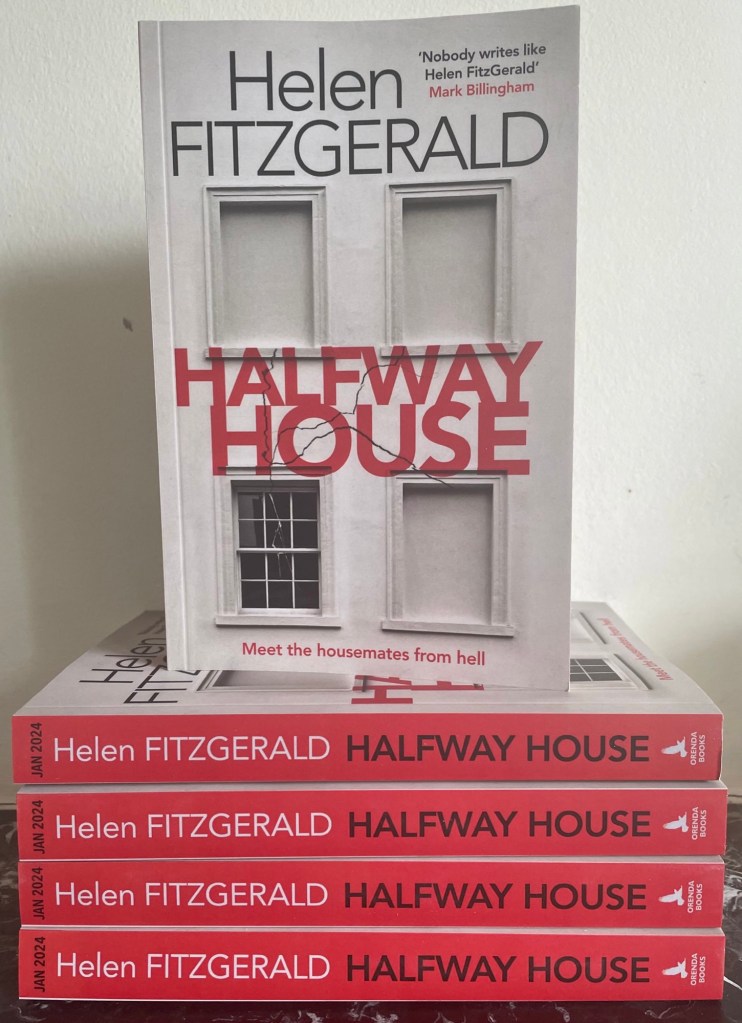

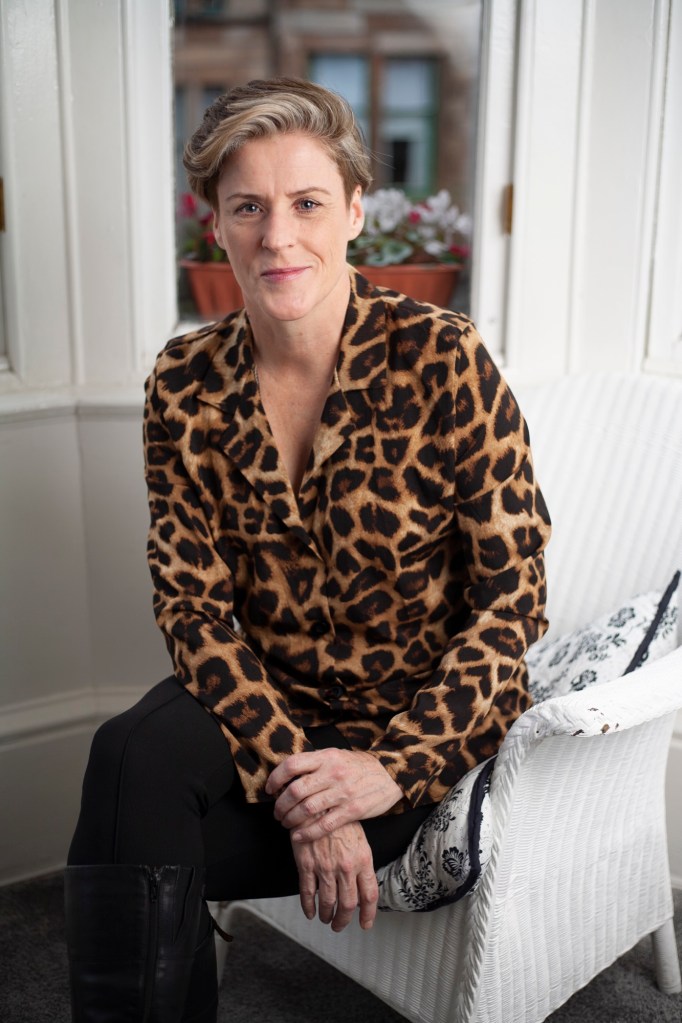





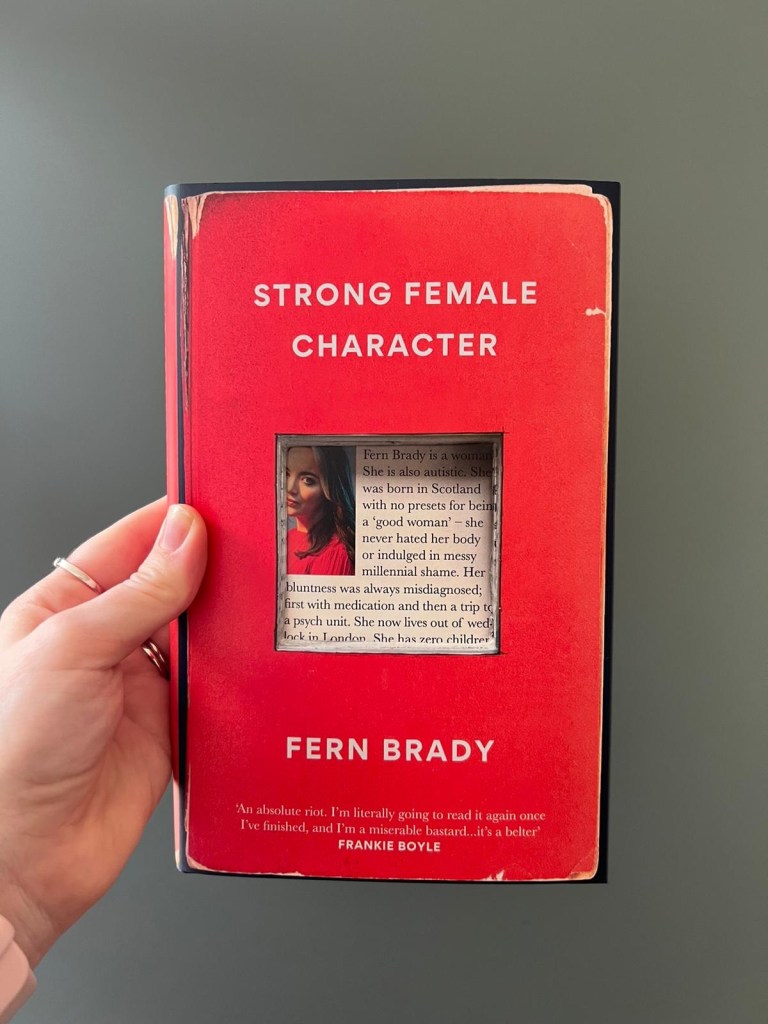

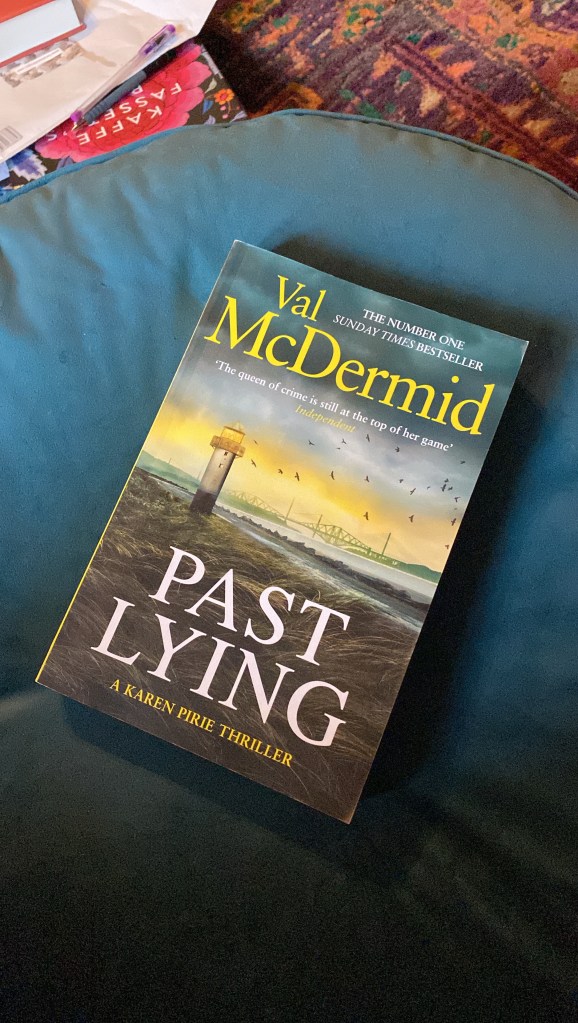
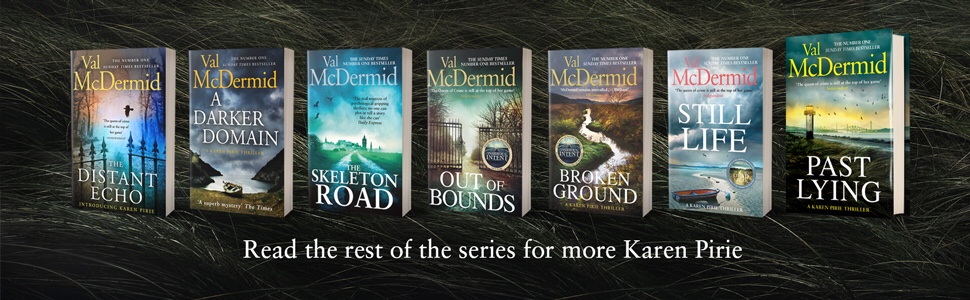
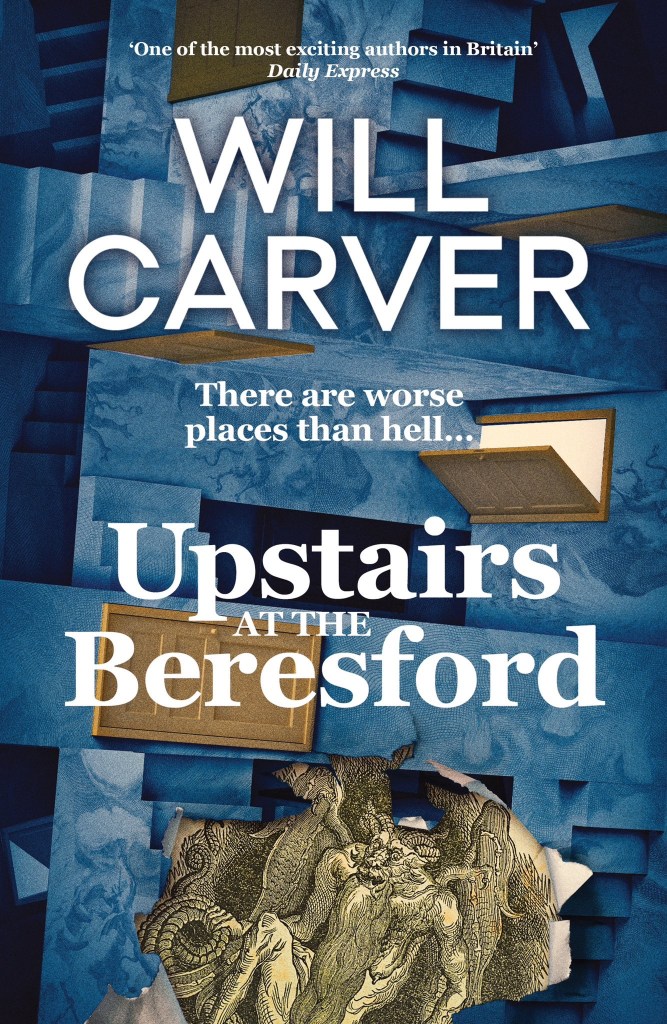
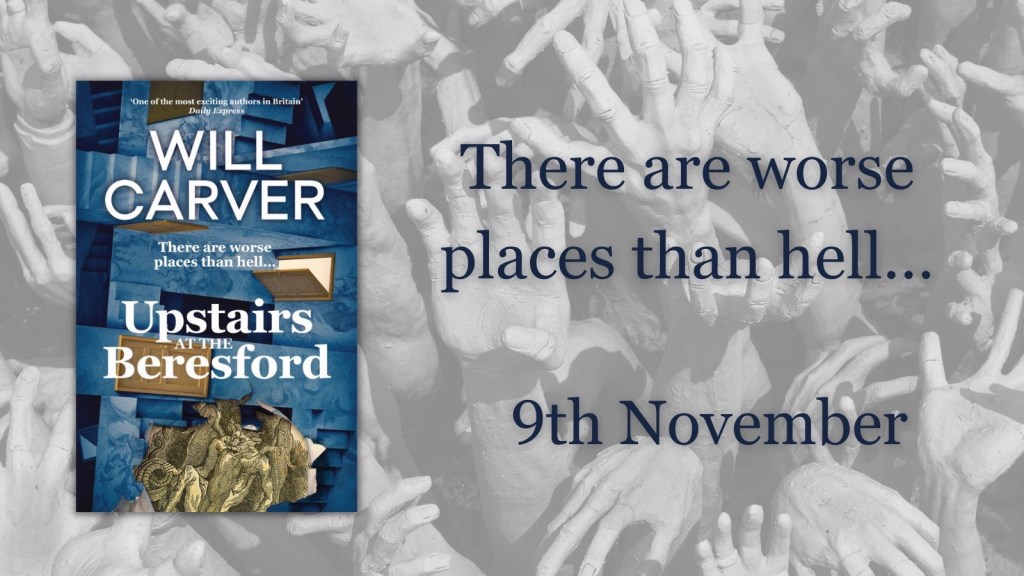
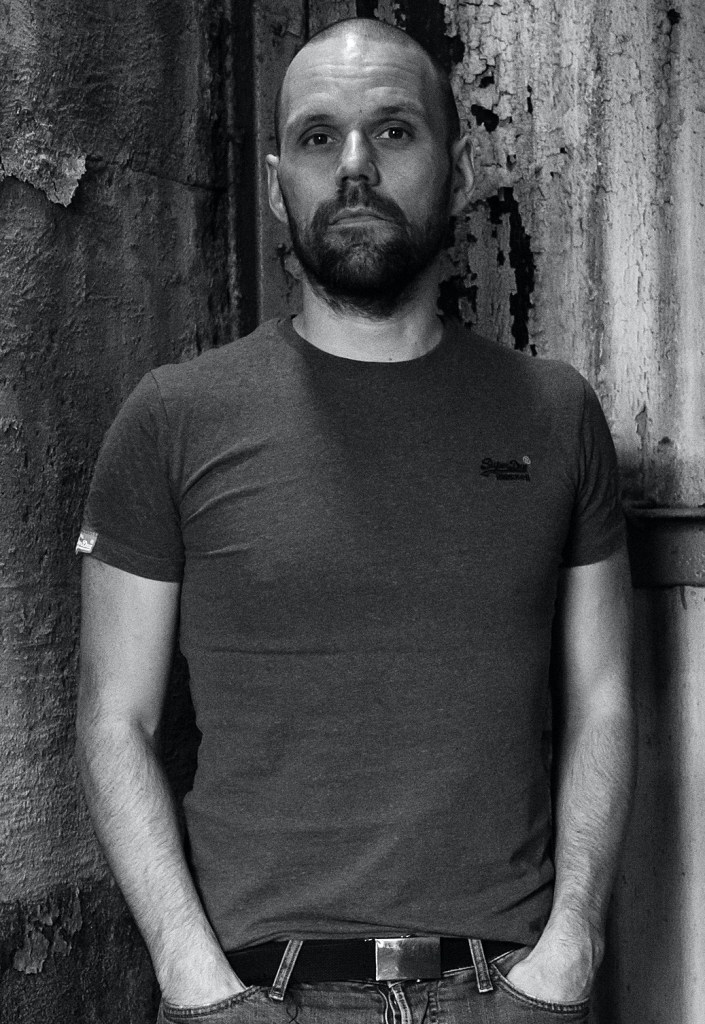

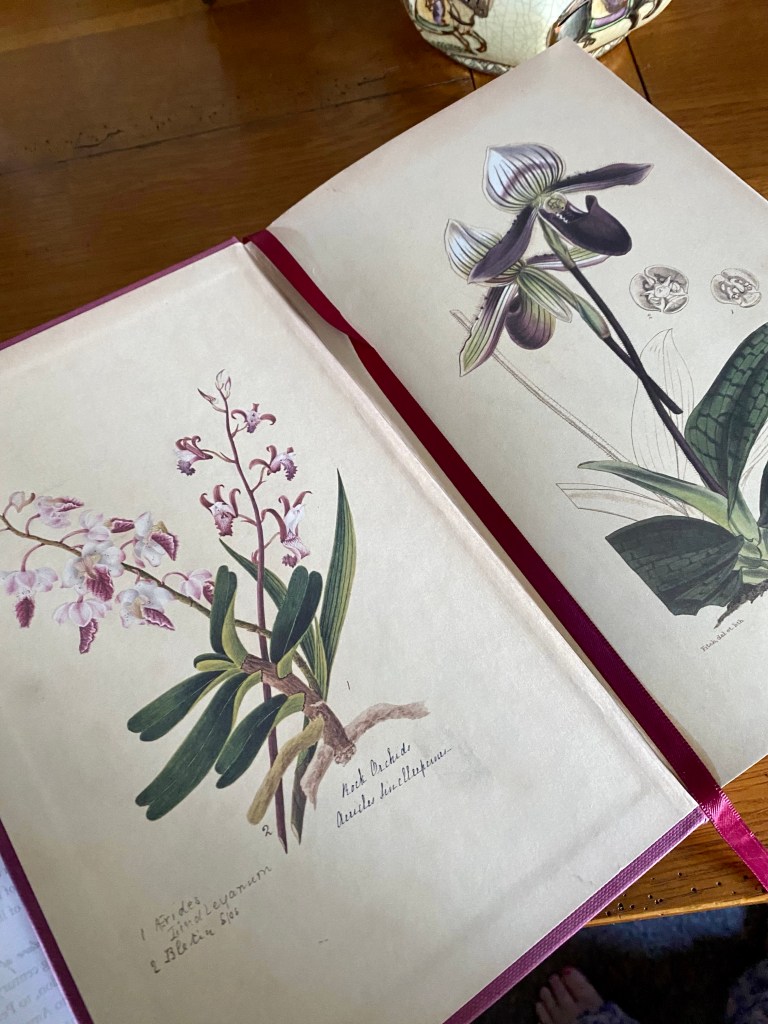
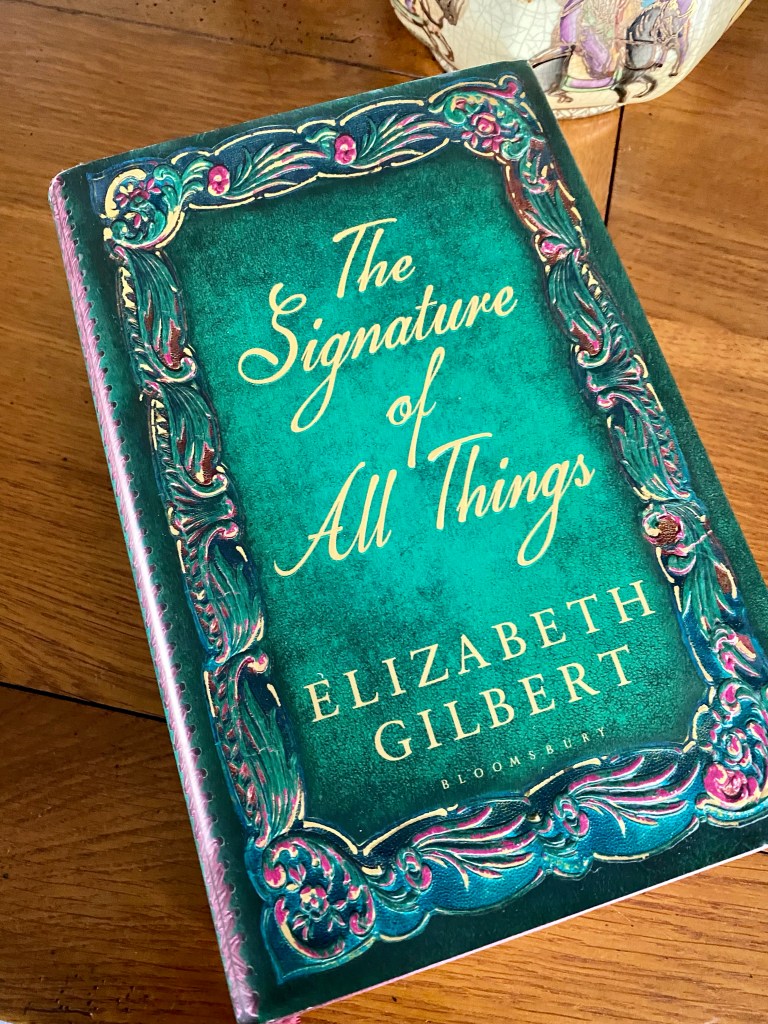
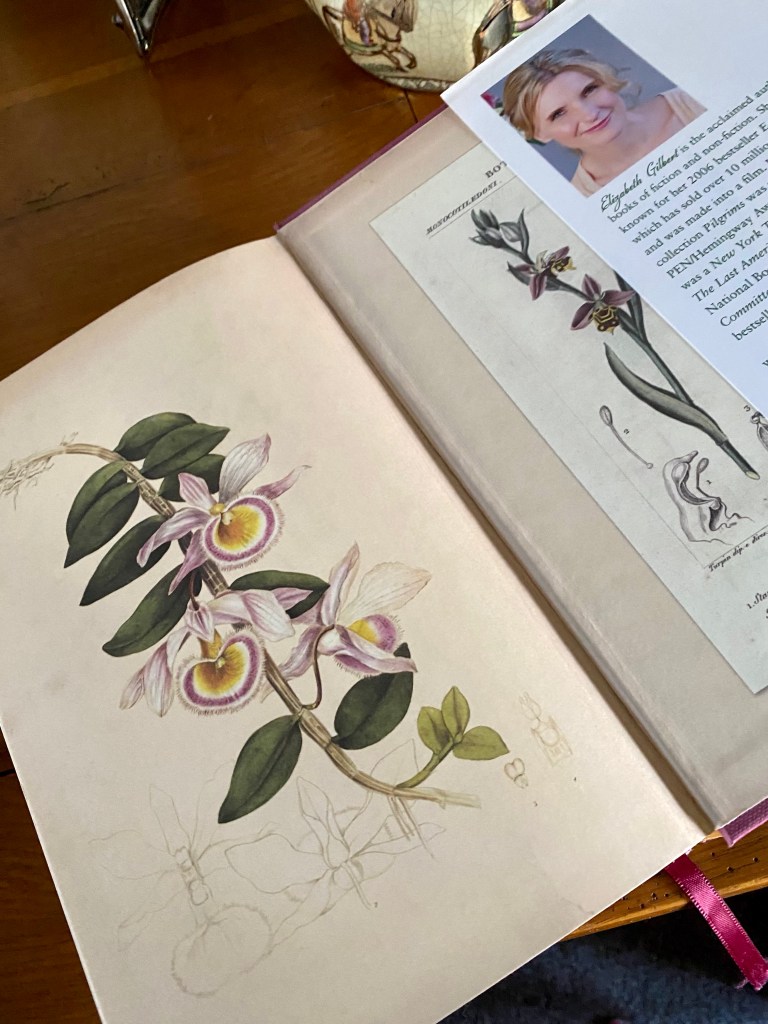

 The Lotus Readers