Posted in Netgalley

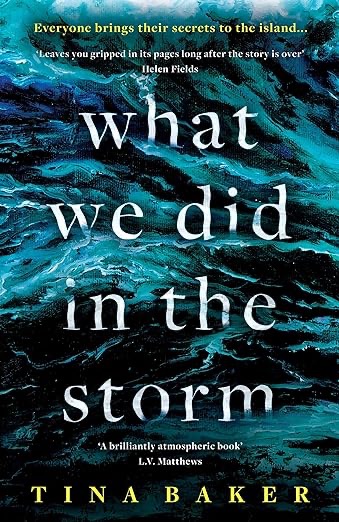
What We Did in the Storm by Tina Baker.

This is my first Tina Baker novel, although I’ve been aware of her others she’s been a new author I hadn’t managed to get on my TBR. Now I feel very stupid and sorry that I haven’t picked up one of her earlier thrillers because I enjoyed this one very much indeed. Tresco is a small island in the Scilly Isles that’s run almost like a club for the wealthy. Owned by ‘the family’ it’s main currency is tourism but often the same families own timeshares or block book the cottages, each named after a seabird, for the same times each year. Those that live there all year round are ‘the workers’ who look after the abbey gardens, work in the pub or the shop, or work directly as gamekeeper or groundsmen for the family estate. This creates a community where everyone knows everyone else, and each is very aware of their status in relation to each other. So when Kit, son of the very wealthy and regular cottage dweller Beatrice Wallace, starts a flirtation with Hannah the barmaid from The Old Ship tongues start wagging. There are many rumours about Hannah: that she’s been dallying with fellow worker Sam who is married with three boys; that she is easy with her favours, especially on poker nights with the boys; that she was spotted dancing naked by the full moon; that she’s possibly a witch. None of that bothers Kit, but as the young lovers become more than a quick fling it bothers other people. Kit’s mother is raging at her son’s choice of girlfriend, knowing the grief of a relationship with someone from a different class to you. She tries to push him towards her goddaughter Charlotte, who might be stupid enough to wear heels and off the shoulder tops on the island, but is at least in the same circles as the Wallace’s. Sam’s wife Christie should be ecstatic, but for some reason she isn’t, still fuming at Hannah any time she comes within an inch of her husband knowing that she has some sort of hold on him. Alison, Hannah’s boss, just wishes that Hannah would stop sleeping with the customers and causing drama in the pub. As a storm approaches and tensions are at their height, two women are attacked at a remote point on the island, but one woman is lost to the sea. But who?

The author uses different narrators throughout the story, which is difficult at first until you get to know each character and their place on Tresco. Interspersed with these voices is a separate narrative entitled ‘After the Storm’ that recounts the events of that day and what the speaker has seen. We don’t know who they are, but they seem to have been in the right place at the right time to have some of the answers, but not all. The rest of the narrative occurs in the lead up to the storm and we get to know all the residents, visitors and workers. Hannah and Kit aren’t the only ones potentially causing problems for the community. There’s John and Mary-Jane from Georgia in the USA, evangelical Christians who seem to have eyes only for each other. Why did they leave their hometown and families and what shameful secret does Mary-Jane impart to the island’s nurse? Thor works in the village shop, where a bottle of wine can cost as much as some of the worker’s weekly salary, but has a rather active internet life that would raise eyebrows. There’s quiet Maisie who cares for her mother’s needs 24/7 and seems devoted, but lays awake at night listening to her sleep apnoea machine helping her breath, just wishing she’d stop. There’s also a strange man who appears at bathroom windows wearing a balaclava and spying on unsuspecting ladies. Even Christie and Sam’s relationship isn’t what it seems, the long suffering wife whose husband drinks more than he should, neglects his family and strays when he can is the accepted narrative, but never assume that what you see is the truth. Beatrice is a horror though, although islanders are sympathetic when she loses her husband, she isn’t perhaps grieving as much as they would assume. She loves her son, but wants him to commit to something more than painting, sailing and cavorting with that barmaid in whichever cottage is free. None of these activities will make a living and although the family have money and he won’t be destitute she still wishes he had some direction.
I loved the way the author created these rigid boundaries between the different groups on the island and how it disrupts everything if they are broken. After the storm, Kit spends more time on the island painting and renting whatever cottage is free. He offers help where needed, even if it’s a shift in the pub or running errands for holiday makers. Yet he’s stuck in limbo. The workers don’t accept him, in fact they wish he’d bugger off and let someone who needs the money have a job. However, they do have to be careful because his mother is a rich timeshare owner and as such must be treated as a guest. As for him and Hannah, a quick bunk-up is overlooked but why did they have to fall in love? There are clever little faux pas that show someone up as an outsider, such as the plague of pink waterproof coats that islanders wouldn’t be seen dead in. Having come from a small village, I enjoyed the way gossip spread, usually via the pub, as one person tells someone else in confidence, then that person tells someone else in confidence, until it’s a chain of Chinese whispers with the truth lost somewhere in the telling. I also loved the incredible sense of place Tina has created, the crashing waves, exotic flora and incredible seabirds are romantic and enthralling to visitors, but islanders know this isn’t some sort of nature’s Disneyland. The wild weather and stormy seas can be lethal and only the workers know the endless maintenance it takes to keep the island to counteract the damage caused by the sea fret. They are stuck in a parasitic relationship, where they can’t do without the tourism but hate it at the same time. There are so many revelations and twists here I made sure I set aside enough time to finish it in one go and I’m glad I did. Right up until the end I was fairly sure what happened during the storm, but how wrong I was! I’m now going back to Tina’s other novels because I think I’ve just become a fan.

Published on 15th February from Viper.

Meet the Author
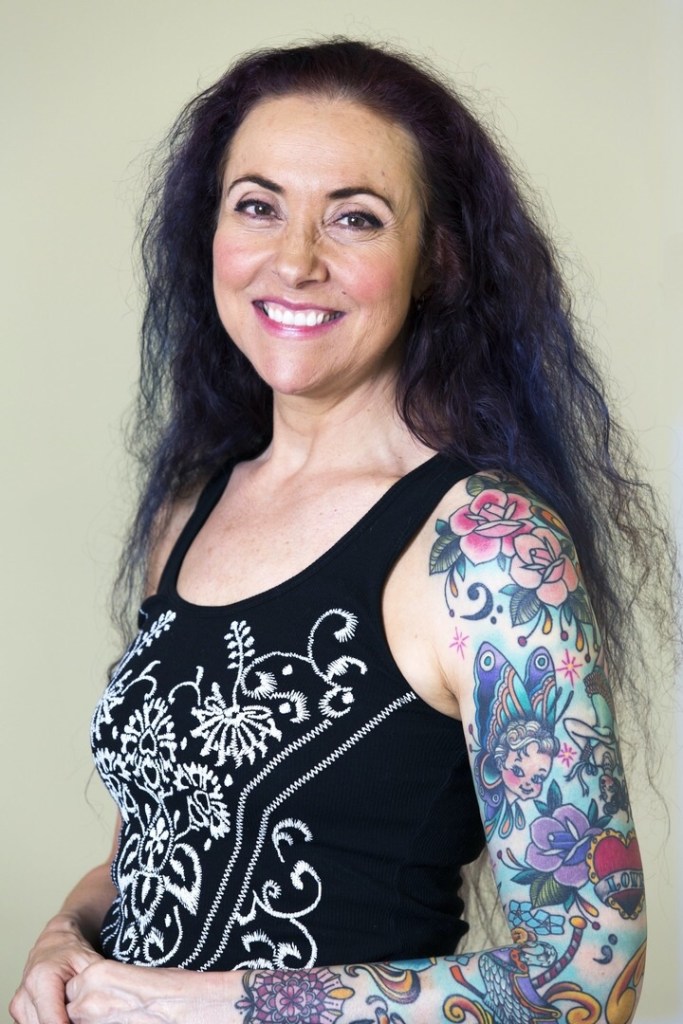
Tina Baker, the daughter of a window cleaner and fairground traveller, worked as a journalist and broadcaster for thirty years and is probably best known as a television critic for the BBC and GMTV. After so many hours watching soaps gave her a widescreen bum, she got off it and won Celebrity Fit Club. She now avoids writing-induced DVT by working as a Fitness Instructor.

Call Me Mummy is Tina’s first novel, inspired by her own unsuccessful attempts to become a mother. Despite the grief of that, she’s not stolen a child – so far. But she does rescue cats, whether they want to be rescued or not.
Posted in Squad Pod

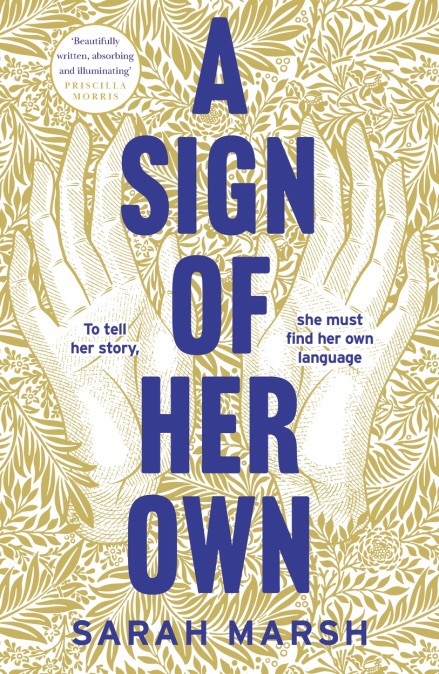
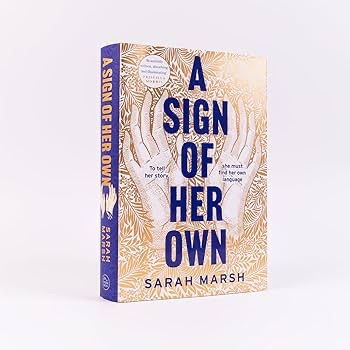
A Sign of Her Own by Sarah Marsh

“Peach. Its shape floats on Mr Bell’s mouth. The pinch of the p, followed by a rounded push of the lips, sending the last syllable hard across the tongue. My hand nearly reaches for my pocket, as if the feather from our lessons might still be found there. It’s been a long time since I thought of the feather. I would balance it on my knuckles and make it quiver with the puff of my ps. Puh-puh-puh. I stop myself just in time, folding my hands against my skirts.”

I found the opening scene of this novel incredibly moving and so skilful, placing us so close to our heroine that we understand the barriers she faced being deaf at that point in history. In it, Ellen and her fiancé receive an unexpected visit from Alexander Graham Bell. As the two men converse, Ellen is picking up body language and tone of voice which indicate a serious topic but she notices a repeated word ‘peaches’. Her attention moves to the beautiful jar of peaches preserved by her mother on the dining table. Yet she’s wrong, as she passes Mr Bell the jar and urges him to take it he tells her no, the word he was saying was ‘speeches’.

As Ellen reminisces, so did I. I was propelled back to the early years of my nephew Charlie, who was born visually impaired. Before we knew the full implications of his sight loss, we’d noticed he was behind in his development. He wasn’t moving round much, had put on weight and wasn’t speaking. It then occurred to us. In order to learn something for the first time, we tend to copy it. If you can’t see, you can’t imitate others and just as Ellen is struggling to get the full meaning of Mr Bell’s conversation, Charlie couldn’t form the words if he didn’t know how to use his mouth to make the noises. So Mum used the same technique she’d used with us when we were small. When a specific noise was needed like the ‘puh’ sound in the book, Mum would raise his hand to her mouth and make the sound against his fingers. He would then put his fingers to his own mouth a copy her. It was lovely to relive that memory and feel perhaps a tiny bit of what Ellen is feeling too.

A Sign of Her Own is narrated by Ellen Lark across two timelines and it’s an incredible feeling to be in her world, because it’s so different from the world we know. It felt similar to when actress Rose Ayling-Ellis did Strictly in 2021 and performed a ‘Couple’s Choice’ dance with Giovanni Pernice, choreographed to bring the audience into Rose’s world. At a certain point, the music stopped but the couple continued to dance and we realised that this was Rose’s world. For us the music would return, but she carried on dancing into the silence. She somehow used her trust in Giovanni and read his body to perfect her dance routines. It was moving, disorienting and a complete revelation so it was no surprise to me that they were winners of that year’s BAFTA for a memorable TV moment.

Ellen’s inner world is also a revelation and the author communicates it so beautifully. She lost her hearing as a child during a bout of scarlet fever and communicated with her mother using a language of signs they made up as they went along. It broke my heart to read how the sound of her speech was viewed by local children. Restricted to vowel sounds, because she couldn’t hear the precision of the consonants, Ellen feels shame about how she sounds. Her personal sign language seems to suit her, but it’s her grandmother who comes up with the idea of using Alexander Graham Bell’s ‘Visible Speech’. Students of his method were banned from using any sort of sign language, but were allowed to use a notebook. Family politics played their part in the decision, because the family were in debt to their grandmother. Luckily Ellen enjoyed studying and proved to be incredibly clever, even if she was unsure about Bell’s method and his motives. She has to be perceptive and learns to read people very quickly, including Bell. As we move into the present day, Ellen and her fiancé are visited by Bell who is embroiled in a fight to be recognised as the sole inventor of the telephone. He wants Ellen’s support as a character witness, but Ellen doesn’t have good memories of her time under his tutelage. She feels like he betrayed her and other deaf students for his own fame and recognition. How can she support him when she feels so conflicted?

During the later timeline Bell’s fight becomes all consuming. He is full of determination and I felt torn about his character because on one hand he appears to be paying attention to a group of people rather alienated by the rest of society so his work could be seen as altruistic. On the other hand it’s as if the people he’s helping don’t really matter to him. There’s a narcissism or selfishness in his character that means he only sees his students in terms of how they can help him potentially find fame. I felt like he didn’t appreciate their characters or individuality. I found myself disliking him intensely. By contrast, Ellen is instantly likeable and intelligent. Through her we are invited into the deaf community and the debate over sign language and visible speech is fascinating. As someone who has studied disability theory, I was very aware that some people don’t consider their deafness a disability. If they sign, they simply see themselves as speakers of a different language. I was interested in the politics and ethics of a speaking world imposing a method of communication on the deaf community, rather than the community coming to society with their own choice of language or speech method. I think there are many readers who might never have considered these issues and wondered how the book is being received in the deaf and/or disabled community. I was impressed that the author wanted to bring these issues to the fore and loved the enthusiasm she clearly has about her subject and her heroine. This is a well researched debut clearly inspired and informed by her own experiences of deafness as a child. It puts us into the centre of that experience and I came away feeling like I had a renewed awareness of sensory disability.

Thank you so much to the Squad Pod Collective and Tinder Press for my copy of A Sign of Her Own, published on Feb 1st 2024

Meet the Author


Sarah Marshwas short-listed for the Lucy Cavendish Prize in 2019 and selected for the London Library Emerging Writers Programme in 2020.A Sign of Her Ownis her first novel, inspired by her experiences of growing up deaf and her family’s history of deafness

Posted in Publisher Proof

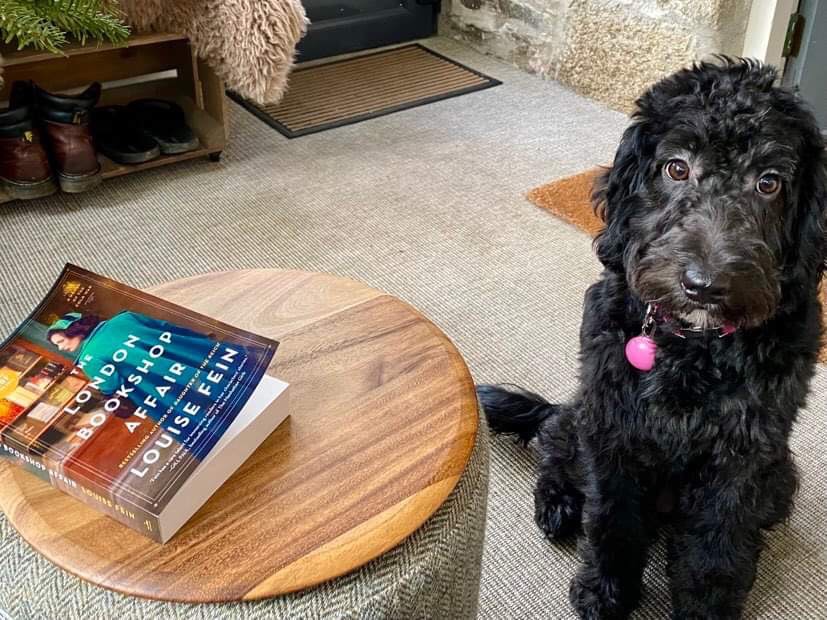
The London Bookshop Affair by Louise Fein

Books and Bramble, the perfect combination.

Historical fiction is one of the genres I enjoy most and I’m drawn to Louise Fein’s novels because she always finds an interesting time period then looks at it from an unexpected viewpoint. It makes you rethink events you thought you knew all about. Here she has chosen post-WW2 London and the dawning of the early 1960’s when Kennedy is president and the Cuban missile crisis is looming. Her heroine is Celia, an ordinary young woman with older parents who are stricter than most and perhaps don’t understand her modern preoccupations and ambitions. I always imagine the ‘swinging sixties’ when I think of London at that time, but progress like that hasn’t quite reached Southwark yet. Celia is working at a second hand bookshop, that specialises in antique and collectible books. Yet her heart yearns for adventure. The world is on the cusp of space travel, women’s liberation and the Beatles. It’s also rather closer to nuclear war than most realised as the USSR and USA start a terrifying game of brinkmanship. Celia wants to protest against the testing and gathering of weapons far more powerful than the Hiroshima bomb. She also chasing her dream career – she’s signed up for classes at Pitmans to gain the secretarial skills that might get her a job at the BBC. The little life her mum leads is not for her and she’s definitely not going to settle for Sam, the boy next door.

The catalyst for change is the bookshop’s new owner Mrs Denton, a dainty well dressed lady who is living alone in the flat above the shop. She seems more interested in shopping than books and offers Celia a raise to manage the shop as she sees fit. Mrs Denton has two regular male visitors: an older man called Mr Humphries who has wandering eyes and a scar down his face and a younger, handsome American called Septimus who Celia is drawn to. Could he be another pathway to a different life. The changes in Celia’s life are interspersed with a different timeline following a young woman called Anya Moreau who is dropped behind enemy lines in 1943. She’s been trained to help the French Resistance disrupt the Germans by sending messages back home via a wireless transmitter. She is betrayed by a double agent and faces torture to divulge her secrets, but she never betrays her cause. Meanwhile Celia finds a connection to this woman and in her desperation to know more she comes across the mysterious Miss Clarke who opens Celia’s eyes to the murky world of espionage running under the surface of everyday life. Possibly even in her own family. I felt for Celia’s parents who have always been protective of their girl, so much so that she sometimes feels suffocated. However their determination to keep Celia away from the past is understandable when we find out the truth.

I throughly enjoyed both timelines and Louise always has a wealth of research underpinning her story making it feel so real. I believed entirely in these two brave young women and their conviction to support their country. I loved seeing Celia’s political awakening as she talks to friend Daphne about the secret nuclear bunkers being dug out in the English countryside and the drastic measures to move works of art out of London – her shock at the immorality of a government that chooses to save art, but keeps it’s ordinary citizens in the dark is a real moment of growth. Her friendship with one of Mrs Denton’s visitors, Septimus, is also a place where she can freely discuss and share ideas about the world. This freedom to debate is new to Celia and you can see her growing all the time. At home her mum turns the tv off when the depressing news is on and Dad never talks about the war. In fact there seems to be a silence between them. I was excited and scared for Celia as her world opens up. The secrets she starts to discover will change her life forever, but will they leave her with the confidence to choose her own path and who will walk it with her? The emotional scenes between mum and daughter are really heart rending as finally everything is brought into the light. The pace of the novel really picked up towards the end as both stories come to their conclusions and different options start to open up before her. I really hoped Celia would choose wisely and not throw away everything about her home while still gaining some of the adventures she’s set her heart on. This was a great read and would make a fantastic film or TV series one day.

Published by William Morrow on Feb 29th 2024

Meet the Author

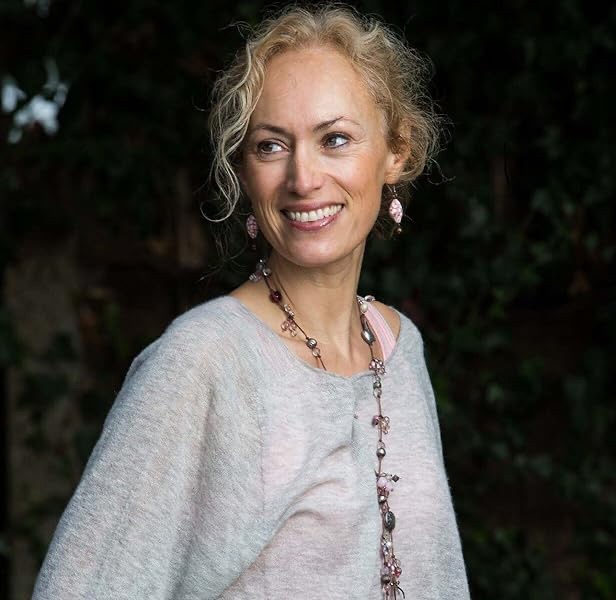
Louise writes historical fiction, focusing on unheard voices or from unusual perspectives. Her debut novel, Daughter of the Reich (entitled People Like Us in the UK edition) was published in 2020 into 13 territories and is set in 1930’s Leipzig. The book was shortlisted for the RSL Christopher Bland Prize 2021 and the RNA Historical Novel of the Year Award, 2021. Louise’s second novel, The Hidden Child, was published in 2021 and is centered around the eugenics movement in 1920’s England and America. It was a Globe & Mail bestseller in Canada. Her third novel, The London Bookshop Affair, about one woman’s journey to uncover secrets of her past, set against a backdrop of espionage and looming nuclear war in 1962 London, will be published in January 2024. 

Louise, previously a lawyer and banker, holds an MA in Creative Writing from St Mary’s University and now writes full time. Equally passionate about historical research and writing, she loves to look for themes which have resonance with today’s world. Louise lives in the Surrey countryside, UK, with her family, and is a slave to the daily demands of her pets.

For more information, go to https://www.louisefein.com and sign up to Louise’s newsletter. She also posts regularly to her blog at

https://www.louisefein.com/blog-and-news, or follow her on Facebook, https://www.facebook.com/louisefeinauthor; Twitter, https://twitter.com/FeinLouise; or Instagram, https://www.instagram.com/louisefeinauthor

Posted in Netgalley, Publisher Proof

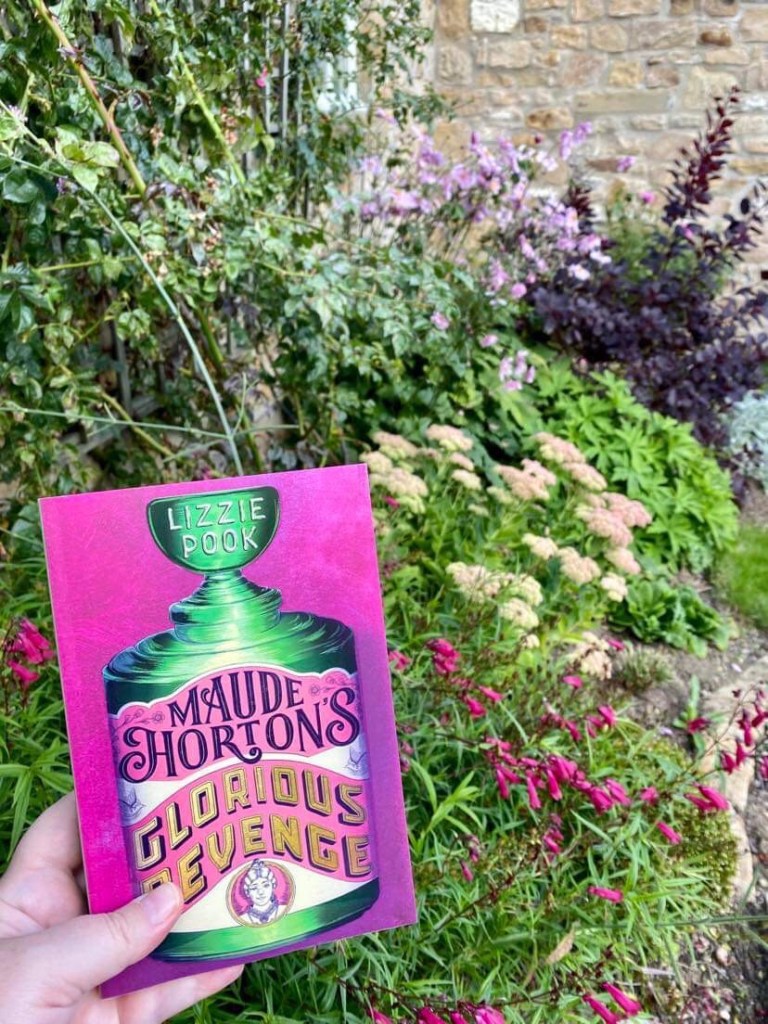
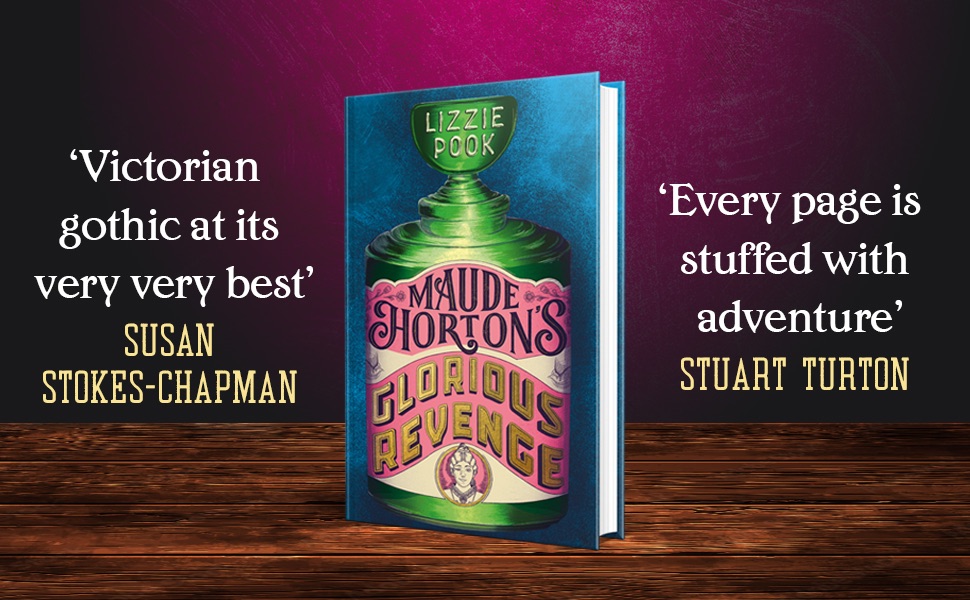
Maud Horton’s Glorious Revenge by Lizzie Pook.

Maud’s sister Constance is on a ship sailing to the Northern Passage, on a mission to find Franklin’s expedition ship. She has always craved adventure and climbed out of her bedroom window, taking the disguise of a cabin boy called Jack Aldridge. Does she really comprehend the dangers that could befall her should the men on board discover a woman on their vessel? On the same voyage is the rather strange and macabre Edison Stowe who has managed to get aboard as a scientific officer – mainly involving the killing and gathering of animals, as bone specimens or in jars. When Constance is lost on the voyage, the rather quiet and timid Maud is determined to find out what has happened to her sister. She devises a plan to get close to and expose Edison Stowe. Telling her grandfather she’s on a trip to the country, she embarks on a rather ghoulish steam train journey. Stowe has a money making scheme to turn various public hangings into a tourist attraction and Maud becomes one of his tourists. The author uses three different narrative voices to tell her story. A diary written by Constance on the voyage was returned to her family and gives us a front row seat for the horrors but also the wonders of the voyage complete with edible arctic creatures, ‘esquimaux’ women and the northern lights playing overhead. Then in the present day there’s Edison Stowe’s narrative of his day to day life, living in Mr Inchbold’s bone shop and dodging debt collectors. His debts being the reason behind his execution tourism. Finally, there’s Maud, whose narrative hangs everything together and provides context with memories of the sister’s lives and her own relentless quest for the truth.

Maud and Constance are fascinating characters, both sisters with the hearts of lions and nerves of steel. It just takes Maud longer to realise she is every bit as adventurous and brave as her sister. Maud has the disarming advantage of beauty and a composed, modest manner that makes her seem the ideal ‘Angel in the House’. Her knowledge of pharmacy and toxicology is honed by years of helping her grandfather in his shop. She is proud of her sister and has never believed the official version of her death, but we never realise the extent of her plotting and planning until the final few chapters. What an opponent she has in the villainous Edison Stowe! Not since Uriah Heep have I felt so uncomfortable while reading about a character. He constantly made me want to wash my hands. He’s a strange contradiction in all sorts of ways: dressed like a gentleman but absolutely penniless; seemingly genteel but capable of moments of extreme violence against those weaker than himself, people or animals. He seems oddly unmoved by inflicting violence, but has strange fits of illness, where he appears to pass out as well as seeing and hearing things, including people long dead.

I was absolutely fascinated by this novel from start to finish. I love books that subvert what we think about the supposedly straight laced Victorians, especially women. She doesn’t downplay the dangers women faced, especially those that try and move outside of their boundaries. It was interesting that it was far more successful for Maud to use her strengths as a woman, than to try and be like a man like Constance. I enjoyed the more macabre and decadent tastes of the Victorians such as Mr Inchbold having a shop full of animal skeletons and a bear welcoming people at the door, the popularity of the gruesome murder room at Madame Tussaud’s and the fascination with collecting such ghoulish souvenirs as Staffordshire figures of the people they’ve just watch hang. Lizzie always creates such a fabulous sense of place and I was feeling the arctic cold and really smelling the crowds, both at the hangings and in the pub at the quay where sailors come unwashed and straight off the boats and monkeys are racing round the tables. These little extra details keep you immersed in her worlds. We even get an unexpected love story that further breaks the image people have of the Victorians. This is such an incredible story and a must for people who love their historical fiction to surprise and compel them.

Published by Picador, Hardback and Kindle Editions 1st Feb 2024.

Meet the Author

Lizzie is an award-winning writer and journalist. She is the author of Moonlight and the Pearler’s Daughter, a STYLIST and WOMAN & HOME ‘Best Books of 2022’ pick.

Lizzie began her career in women’s magazines, covering everything from feminist motorcycle gangs to conspiracy theorists, before moving into travel writing, contributing to publications including Condé Nast Traveller, Lonely Planet and the Sunday Times.

Her assignments have taken her to some of the most remote parts of the world, from the uninhabited east coast of Greenland in search of polar bears, to the trans-Himalayas to track snow leopards. She was inspired to write Moonlight and the Pearler’s Daughter, her debut, after taking a road trip through Australia with her twin sister after the death of their father. A chance visit to the Maritime Museum in Fremantle led her to an exhibition about a family of British settlers involved in the early pearl diving industry. Thus began an obsession and a research journey that would take Lizzie from the corridors of the British Library to isolated pearl farms in the farthest reaches of northwest Australia.

She lives in London.

Posted in Monthly Wrap Up

Best Reads January 2024!

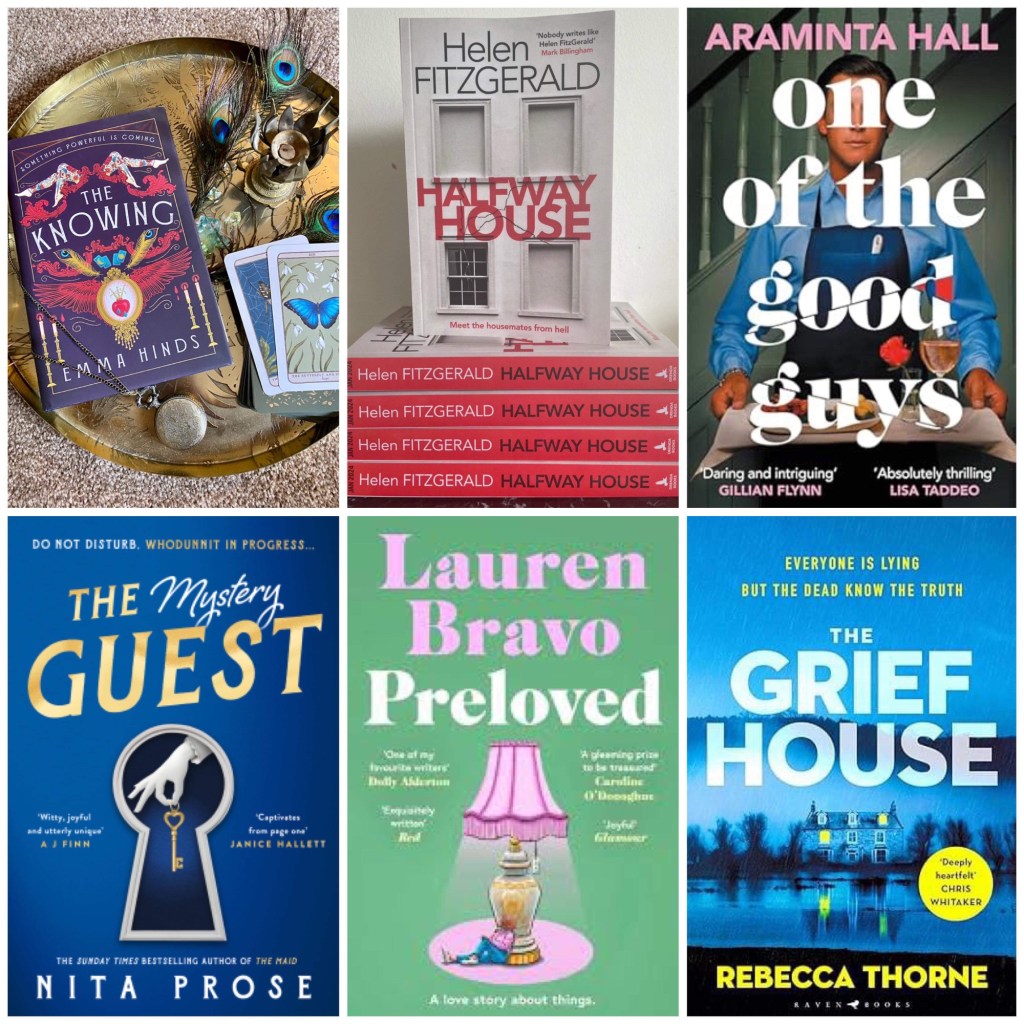
Well, what a wonderful start to my bookish New Year! January has been a busy month and I’ve read some fabulous books. Being away for a couple of weeks at the beginning of January has helped enormously. I’ve been able to keep up with blog tours and managed to get some personal choices read as well, a balance that I’d like to continue through this year. It’s been so nice to just pick something that appeals to my mood on that day! So my favourites are a great mix: three are choices from my Squad Pod book group; one is a blog tour book from Orenda Books and Random Things Tours; the final two were personal choices. These are my January favourite reads:

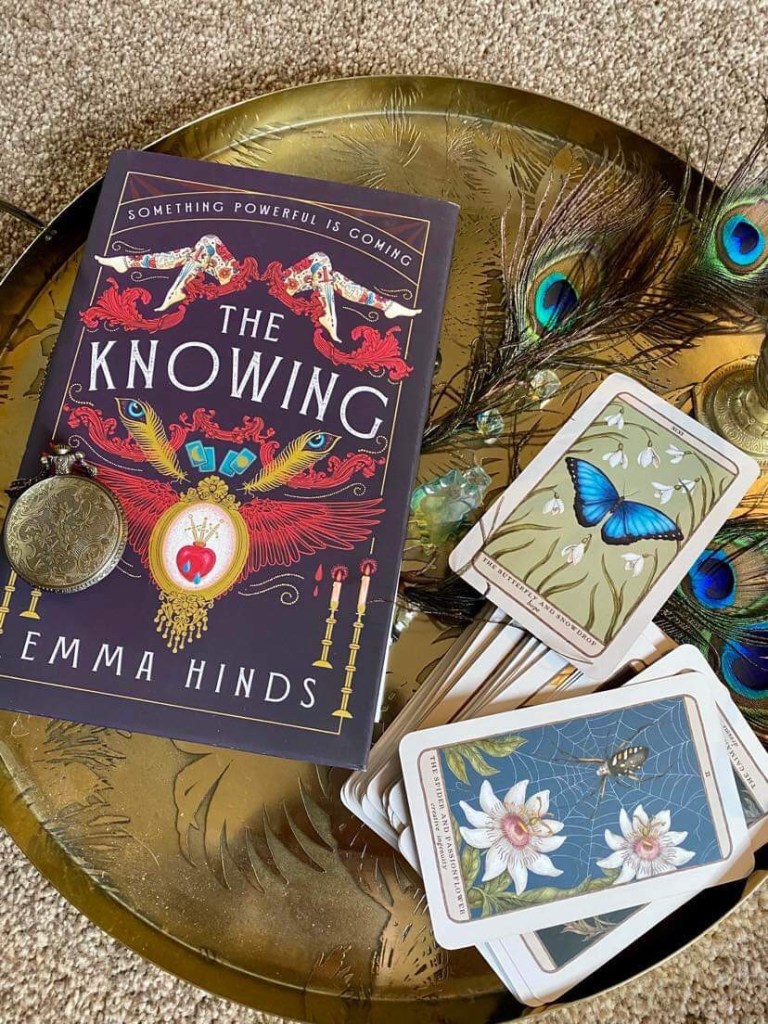
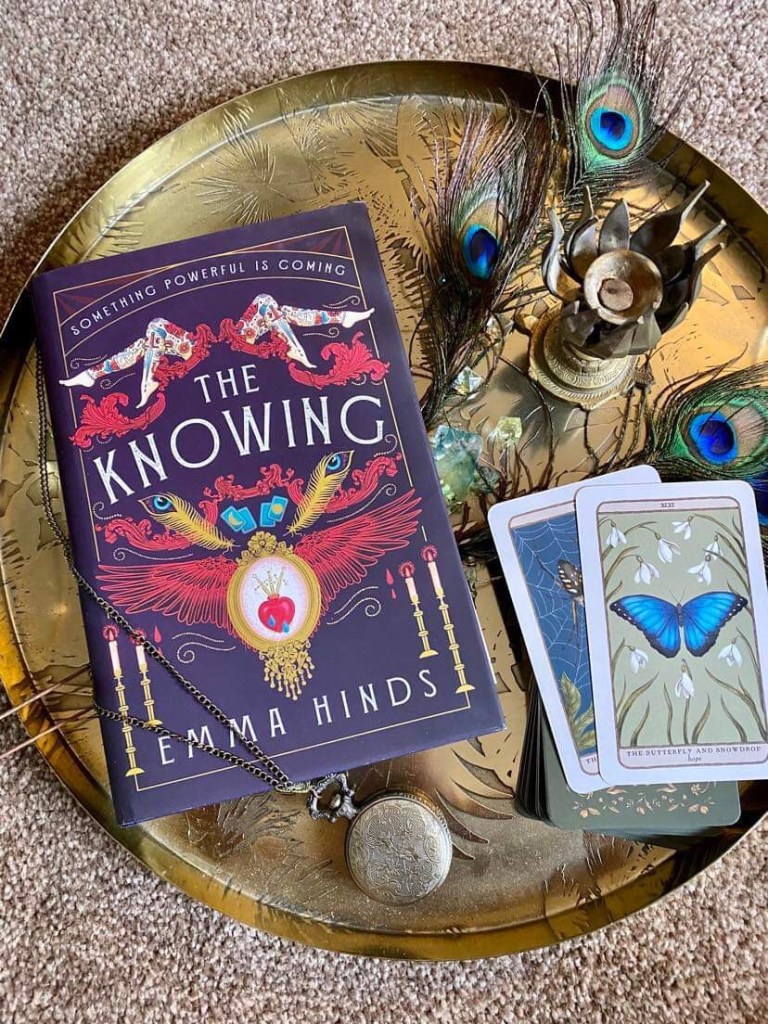
The Knowing is a fantastic debut from Emma Hinds and Bedford Square Publishers. If a book could have been written specifically for me it would have been this one. If you love The Night Circus, The Crimson Petal and the White or the books of Sarah Waters then this is for you. Flora is a mystic, tarot reader and tattoo artist living with a member of the Dead Rabbits gang in Five Points, NYC. Jordan has had Flora since she was a child and their ‘relationship’ is nothing more than a long history of physical and sexual violence. Her life changes when she meets Minnie, a young woman with dwarfism who organises freak shows and curiosities. She takes Flora in and shares her own room, within a mansion belonging to her lover Chester Merton. This isn’t just an act of altruism though, Minnie wants Flora to share her gift and become their ‘tattooed mystic’. But Flora’s ‘knowing’ is more powerful than anyone expects. This book takes us from NYC to the slums of Manchester, through Flora’s eyes, as she experiences love, obsession and betrayal.

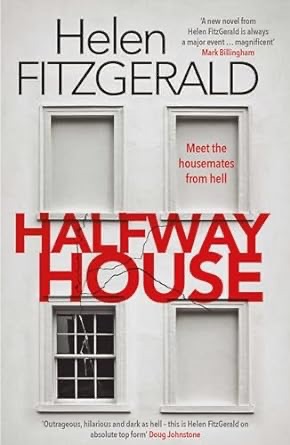
Lou has lost her sugar daddy and needs to get a job, so she decides to interview for a role in Edinburgh working in a halfway house for offenders newly realised from prison. She intends to live with her cousin Beatrice and get her life back on track. Before she’s even over the jet lag she meets a man at the matinee of Beatrice’s new play. After a few days of wild outdoor sex, she has to start her new job. One shift shadowing a current employee introduces her to the men she’ll be on night shifts with. The offenders are guilty of crimes that range from drugs and public decency, all the way up to murder. I wondered if Lou hadn’t bitten off more than she could chew! Her nighttime routine means doling out cocoa and the right biscuits, but is timed to the minute so she’ll be able to catch one resident who tries to hang himself every evening at the same time. This thriller is dark, but also very funny. I loved Lou. She is a force of nature, displaying compulsive and even dangerous behaviour. As the routines of the house start to unravel a little, I was rooting for her and hoping she’d come out alive! A brilliantly dark and comic thriller.

This book was a Squad Pod choice in it’s paperback form and I fell in love with it’s charm and themes of loss, letting go and moving on. There is nothing more cathartic then having a good clear out – something I tend to do at this time of year. I also love a good rummage in second hand and charity shops, especially the bookshelves of course. I’m also mainly clothed in Vinted purchases so I love to repurpose things and give homes to some unique items that seem to exist purely for me – a candleholder in the form of a monkey wearing a dress anyone? Gwen is being made redundant and decides to use the pay off she receives to have a career break and really think about what she wants to do next. For the summer she decides to volunteer at her local charity shop and it opens her up to experiences she never imagined. Gwen has been in a rut for a long time, now that she can reshape it she seems overwhelmed. She also seems detached from family and old friends. With the help of volunteer Connie, who is determined to help Gwen take the next step, or the hint of romance with young volunteer Nicholas could she find a new way of living? This is a love story, not a boy meets girl, but of finding yourself. It’s about discarded belongings getting a new lease of life and a family’s acceptance of loss. I loved it.

This was one of my personal reading choices for the month and I really enjoyed the premise. Blue has decided to attend a grief retreat, run in the rural home of Molly and Josh Park. Guests stay in the farmhouse and take their meals together, but also participate in therapy sessions facilitated by Molly. Blue is an unusual woman, who has grown up with the gift of mediumship. The happiest days of her childhood were with stepfather Devlin who encouraged her gift and understood what it cost her – after seeing a spirit Blue would be exhausted and affected by headaches. She lived with Devlin, her mum and two other children – a baby and young boy named Bodhi who seems to glower at her and never speaks. As soon as she reaches the farm, Blue’s headaches and vision problems start. Her neighbour Sabine’s door keeps coming open, no matter how many times it’s locked and Blue gets the sense of a little girl with long, wispy blonde hair. As a storm encroaches on the weekend and the roads start to flood, they are completely cut off. Blue is getting the sense that all is not well with their hosts. Who is the girl in the photograph, hidden in their private living room? Why does she sleep so well after Molly’s hot chocolate? Why does participant Milton keep coming to the retreat when he barely joins in? As the flood waters close in, will Blue find answers to her questions? Or are they in even more danger than they imagined?

We rejoin the unforgettable Molly the Maid in this wonderful sequel that drew me back into her world immediately. Molly still lives in her grandmother’s and is still working at the Regency Grand, but now she’s living with her boyfriend and has been promoted to Head Maid. She has declined a trip to Cuba because the mystery author J.D. Grimthorpe will be launching his new book from the newly restored Art Deco tea room at the hotel. She knows the author is very precise and has high standards so getting his tea trolley ready is no easy task. Molly trusts Lily, her protégé, to make sure all his needs are met including his own honey pot to sweeten his tea. As everyone gathers to hear the author, including some avid book fans, he takes a sip of his tea and collapses to the floor, quite dead. The Regency is once again at the centre of a murder mystery and Molly’s incredible memory and powers of observation are a much needed asset. What she’s not telling them is that she knows J.D. Grimthorpe rather well. Could she have a motive for his murder? This is a brilliant return of a character I absolutely loved the first time.

This book absolutely blew my mind! It’s like nothing else I’ve read recently and I was transfixed by it, almost reading it cover to cover in one sitting. Cole doesn’t understand modern women any more. He has taken a job in a remote coastal area that comes with its own lodgings, removing himself from London and the failure of his marriage. His wife Mel is seeking divorce, but he has always treasured her and looked out for her safety, especially when she was working too hard. They had decided to start a family through IVF and still have three viable embryos waiting for implantation. Mel is acting like he’s some sort of monster. When he meets Lenny, an artist who lives in the coastguard cottage, he is taken with her femininity and decides to call her Leonora as he thinks it suits her better. They become friends, but he is wary of wanting more even though they look at life the same way and she lets him look after her. Then he becomes embroiled in the drama around two missing girls, who were walking the coastal route over several days to highlight the amount of violence against women in society. Will Leonora stand by him if he is implicated? This is a brilliant book which captures the zeitgeist and is full of so many delicious twists and turns you won’t know who to believe.

That’s my January round up for 2024. February is looking like a bumper month for publications and with less time to read them all I’m going to be very busy!

Posted in Netgalley

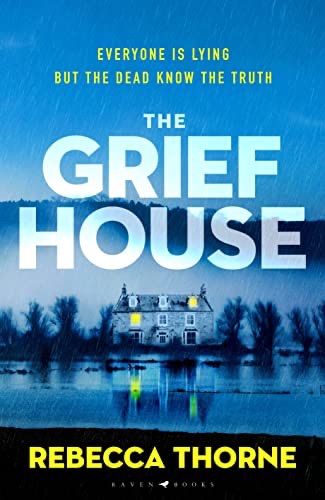
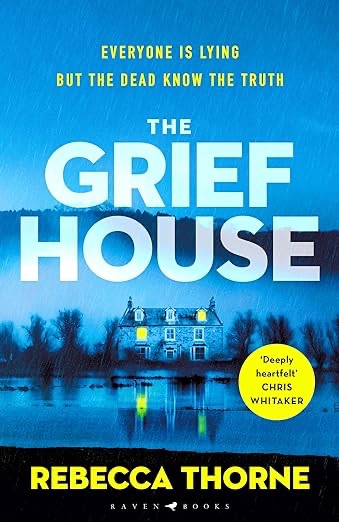
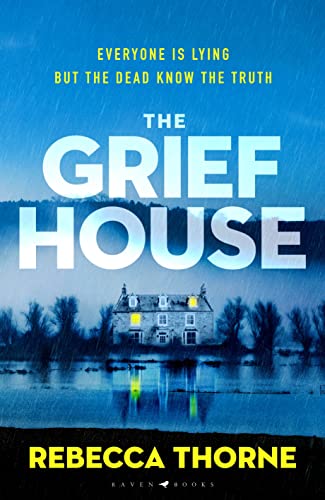
The Grief House by Rebecca Thorne

‘She searches for ways to stop feeling so lonely you fear your brain will melt and your heart will stop and your skin will never be touched again. She searches for ways to make herself feel better. The online forum has been a lifeline. A lifesaver. She can chat to counsellors when she needs to or other women who struggle with similar issues. Every week she receives a piece of advice to help her on the road to recovery or, as she calls it, the road to normality. The path to living a life.’

Blue makes a decision to deal with her unresolved grief and trauma with a residential course she sees advertised when she’s at a low ebb. At Hope Marsh House participants are offered counselling, art therapy and meditation with married couple Molly and Joshua Park. Blue has been struggling for a long time, culminating in the death of her mother with whom she had an uneasy relationship. However her grief journey begins with the loss of her stepfather Devlin, a rotund man with a fondness for kaftans and a talent with tarot. His own skills are based in clever observation, carefully worded open questions and more than average perception, but in Blue he recognises something he isn’t. A lonely child with strong, natural,psychic abilities. Prior to meeting Devlin, Blue’s mother has managed a rather haphazard upbringing at best with choices for Blue that are based in her own problems and inadequacies rather than what’s best for her child. Blue has been home-schooled but any learning was provided by magazines, television and whatever books Blue could lay her hands on. As a result she had no friends and was thought of as weird by the kids nearby. Her mother is equally isolated, not helped by the fact they move constantly. What exactly are they running from? So, Devlin’s attention is welcomed by both mother and daughter. Losing him to a heart attack was devastating and Blue became parent to her heartbroken mother, taking responsibility for her mum’s worsening mental health, the family’s income and single-handedly running Devlin’s mediumship business. Maybe it will take a place like Hope Marsh House to deal with the lonely and exhausting rut Blue finds herself in? It will be kill or cure….

‘And how long have you had your … talents?’ he said. Blue didn’t know what to say. Was hitting a saucepan with a wooden spoon a talent? Was babysitting a toddler in a dry bath whilst her mother cried herself to sleep a talent? She could wash her own clothes in the steel kitchen sink, she could heat soup and tins of beans, she could sing all the words to ‘May the Circle Be Open’. Is this what the strange man meant? She was five years old. She didn’t know.’

The author tells Blue’s story using different timelines: one gives us the present and focuses in on the retreat at Marsh House, while the others are in flashbacks to Blue’s life before her trip and further back in vignettes of her childhood. The flashbacks give us the building blocks of Blue’s personality and the strange abilities she has. She is a little girl simply longing for love and care, we can see this from the way she blossoms if praised by Devlin. Even more than that, the most powerful thing Devlin does is seemingly very simple – when Blue comes off stage, Devlin simply asks ‘are you ok, lass’? These four words mean more to her than anything else because they bypass the person she is on stage and the money her gift can make them and instead asks how she is. He knows and acknowledges what this gift costs her and how arduous a whole show can be, but mainly it’s just a dad checking in on his daughter. It means a lot to Blue, who has probably never been asked if she’s ok before. No one has ever cared enough. It is his care of her that she misses so deeply. I wondered if there were elements of personality disorder. Does Blue know who she is? When Devlin lives with them she’s at her happiest, but I was confused about her relationship with the other two children who live with them – Bodhi and the baby. They seem to be there, but she rarely relates to them. In fact she actively seems to avoid them and almost looks past them if they appear in her eye line.

Other short sections of the book include a story about a loving married couple who haven’t been able to have children, but look after a little girl who lives in a nearby flat with her elder brother. Unfortunately he is a drug addict and the couple, James and Marie, provide that stable family unit for Jessica. They dread something happening to Jessica’s brother because she could then be taken away from them. I knew that this couple related to Marsh House in some way, but I wasn’t sure how. Why does Blue keep hearing the same three girls names, Jessica, Eleanor and Lauren? Who is the strange long haired girl that appears in Sabrina’s room and opens the door when they’re not there. When she appears Blue starts to feel sick and a feeling of dread comes over her, a couple of times she comes close to passing out. The apparitions also have a way of spoiling her food, making it smell like rotten eggs or rubbish bins. They want to be noticed, but what are they trying to tell her?

The retreat itself is disturbed by a storm and the nearby river bursting it’s banks, threatening the house itself. Instead of the therapy they’re supposed to be receiving Blue and the other able bodied participant Sabina, help Mr Park with unblocking debris from the bridge to help the river flow on it’s normal path. The only other resident is Milton, an older man who uses a wheelchair and seems weakened by a lung disease that causes coughing fits. He’s been to the retreat several times, but seems incredibly grumpy with Molly and her husband. He also avoids any of the activities and even rebuffs Molly’s late night cocoa ritual. Is he just one of life’s misanthropes or is there more going on? Obviously, as a therapist, it’s Molly I’m fascinated with. I’ve been through a major bereavement and have run courses like the ones Molly advocates using a combination of meditation and group therapy using creative writing and art. I found her manner with the participants overwhelming at times. Even before the flood interrupted the normal flow of things there was a boundary issue that I couldn’t put my finger on. As time went on I realised the couple had no children, so who is the little girl in the picture that’s hidden in their own private sitting room? Who is the girl that Blue can see, if no children have lived there? Molly seems to mother her guests. It’s difficult to create clear boundaries when working in your own home and especially when participants are also eating with you and staying overnight. However, there’s something about the way Molly nurtures her clients that feels off. There’s a power imbalance at play, almost as if she is the parent and they are children. It’s this element in her personality and the care she gives that Milton seems to resist or even reject outright. Blue is particularly susceptible to her methods, because she has never had a nurturing mother figure. I felt protective towards Blue (my own maternal instinct at play) and my instinct was telling me she needed to keep her wits about her. The author created a sense of impending doom and as the worst of the storm hit it felt like a warning.

I don’t want to reveal any more, because I think the the story unfolds at the right pace and the truths are revealed slowly. The revelations come in both timelines, as Blue unearths the truths about her mother Bridget by looking through archived newspapers in the library. The secrets come out as if they’ve always been there in Blue’s mind, she just needed something to unlock the door. There will be moments at Hope Marsh House where you wonder what’s going on, placing you in exactly the same position as our main characters. The reader discovers the answers when the characters do so we feel their disorientation, confusion and fear. There were one or two moments that were genuinely terrifying! I enjoyed the growing bond between the three guests at Marsh House, something that Blue has never had before and exactly what she needs. I stayed up late to get to the end and I wasn’t disappointed, although it did lead to some disturbing dreams that night. This was a really great read with a perfect balance between psychological thriller and haunting, gothic tale.

Published Jan 18th by RAVEN Books

Meet the Author

Rebecca lives in the West Country with her family and their cat. She has written two best-selling novels under the name Rebecca Tinnelly: Never Go There and Don’t Say A Word, both published with Hodder.

Posted in Squad Pod

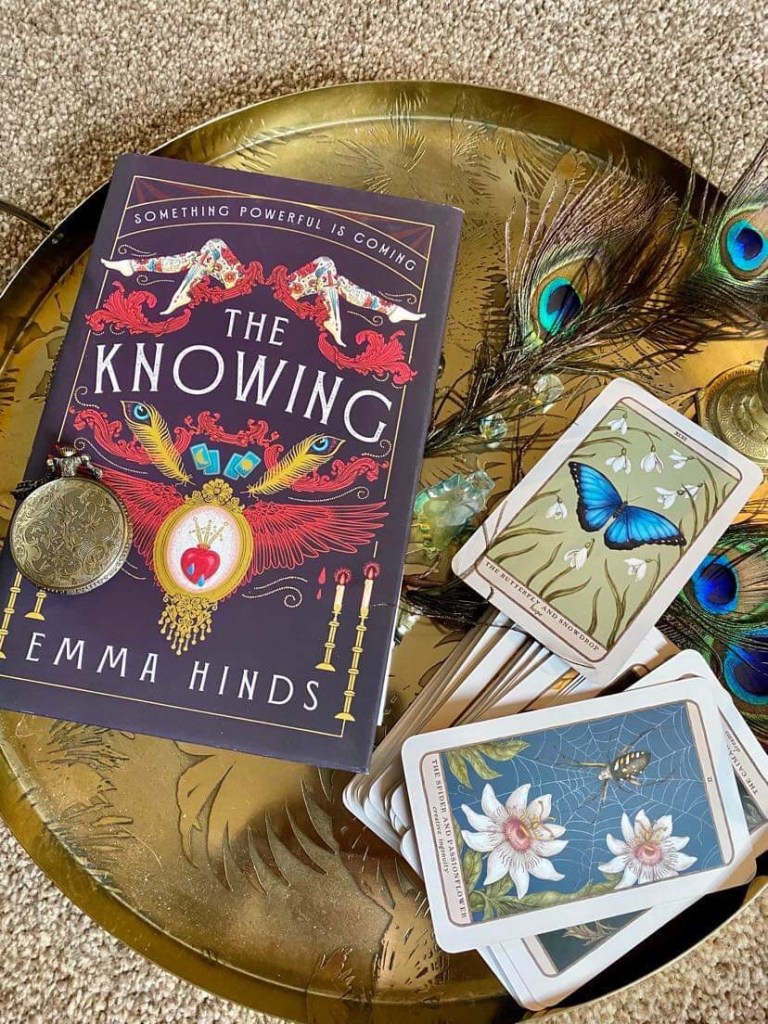
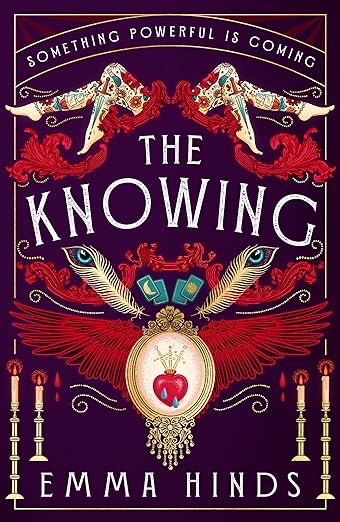
The Knowing by Emma Hinds

If this author had a certain readership in mind when writing this debut novel, she might as well have had a picture of me. I would have picked this book up on the strength of the cover alone. Three of my all time favourite books are: The Crimson Petal and the White set in the seedier areas of 19th Century London with a heroine is a prostitute called Sugar; The Night Circus that appears without warning, held together by real magic and the result of an epic battle between two magicians; The Museum of Extraordinary Things where our heroine is a mermaid, exhibited in a freak show at Coney Island. See what I mean? It’s perfect for me. The blurb promised me a tattooed mystic, a show run by a prostitute with dwarfism and real life New York gangs and Barnum as their contemporaries. It’s quite a heady mix and I was enthralled from page one. Flora is a tattoo artist and mystic, in an abusive relationship with a tattooist called Jordan, a member of an Irish gang the Dead Rabbits. She longs for escape from the slums of Five Points and the degrading relationship she’s been in since she was a teenager. Then she meets Minnie, a beautifully dressed woman whose dwarfism has led her to a career as a circus and freak show performer. Minnie promises Flora a career and life in an opulent town house uptown, not to mention her freedom. However, the freedom she’s promised comes with certain conditions.

Flora stays with Minnie, in her palatial bedroom and bathroom within the townhouse that belongs to her lover, Chester Moreton. Avoiding Chester’s advances seems to be one condition of Flora’s freedom, along with constant worry about being found by Jordan’s friends in the Dead Rabbits gang. She’s to earn her keep as a mystic, with her tattoos and tarot cards the centre of attention. Minnie knows that Flora’s skills run deeper, although she’s always been warned to hide them and ‘tell nuthin’. Flora’s gift is ‘the knowing’ an ability to summon the dead that’s always on the periphery of her performances, but kept at bay by Flora’s willpower. It’s when she’s pushed into allowing her spirit guide to break through that the trouble begins. At the Hotel du Woods she exposes the abuser and killer of a young boy, setting in motion a chain of events including suicide, murder and madness. Flora and Minnie escape and voyage to Manchester, where they try to survive on what they can earn from sex work and Flora’s tarot readings, but the past is never far behind and once again Flora finds herself at the centre of a love triangle where obsession and betrayal are medicated with drugs and alcohol and a tragic end seems inevitable.

I felt fully immersed in the novel immediately as the author creates an incredible sense of place. Five Points is grimy, deprived and controlled by gangs. I loved how the author used the grotesque throughout the novel and particularly where she’s describing the slums of New York and Manchester, filled with rats, unwashed bodies and an ever present grime that’s sticky on the skin. This took me straight back to university and Kristeva’s theory of abjection. The things that women’s bodies can do are magical or monstrous. Flora’s body is a conduit, allowing the dead to speak through her. Minnie’s body is seen as grotesque by others, but she wears angel’s wings and when she’s in bed with Flora it’s the softness of her skin that’s noticed first. All women have a transformative power to produce another life, when their pregnancy isn’t terminated by the men in their lives. The author doesn’t hold back when describing the reality of life for women, particularly women like Flora who haven’t had choices. Bodies seem divorced from minds when it comes to sex with men, as torsos become slabs of meat, breaths are whisky sour and skin is raw, red and broken. Sex is rarely consensual and always comes with violence. It’s a grim world so any chance to escape into a better future is welcome. The gentle and pleasurable attentions of Minnie are a promise of things to come, where Flora could have choices and sexual experiences that come from a loving place instead of a place of ownership.

No one here is perfect. Each character is morally grey and I loved that complexity in their personalities and the ambiguity it brought to their actions. I was also transfixed by the sheer power of Flora’s ‘knowing’. Mediumship has become something of a joke these days, a formulaic stage show where people are picked out of the audience and told that Grandad left the priceless clock in the attic or under the floorboards. It’s always benign and a little bit boring. Flora’s spirits are not there to guide her and they’re definitely not benign. They want to expose truths, tell the subject’s darkest secret and even mete out punishment where necessary. The first seance at Hotel du Woods is successful from one viewpoint – the spirits do come through – but a disaster from the other side when a vengeful spirit talks a man into killing himself. No one will be booking them again! Flora will have to learn how to control the spirit’s power and keep the vengeful ones at bay. Strangely, for a story where our main character is prevented from carrying children, this felt like a story about mothers too. It’s about the lack of a mother when growing up and how the lack of motherly love and protection feels, but it also shows the people who fill that void and become mother figures. This could be a difficult read for some, especially the sexual violence, but it would have been the daily reality for women living in 19th Century slums and for some women in upper Manhattan townhouses. I desperately wanted Flora to survive and have the right people around her, to give her the feeling of being loved and wanted. This is an addictive read of vengeance, betrayal and obsessive love and I couldn’t stop reading until I knew the truth of Flora’s fate.

Meet the Author

Emma Hinds is a queer novelist and playwright from Manchester. She focuses on untold historical Queer narratives and her debut novel, The Knowing, from Bedford Square Publishers is coming in January 2024.

Posted in Netgalley

The Grief House by Rebecca Thorne


‘She searches for ways to stop feeling so lonely you fear your brain will melt and your heart will stop and your skin will never be touched again. She searches for ways to make herself feel better. The online forum has been a lifeline. A lifesaver. She can chat to counsellors when she needs to or other women who struggle with similar issues. Every week she receives a piece of advice to help her on the road to recovery or, as she calls it, the road to normality. The path to living a life.’

Blue makes a decision to deal with her unresolved grief and trauma with a residential course she sees advertised when she’s at a low ebb. At Hope Marsh House participants are offered counselling, art therapy and meditation with married couple Molly and Joshua Park. Blue has been struggling for a long time, culminating in the death of her mother with whom she had an uneasy relationship. However her grief journey begins with the loss of her stepfather Devlin, a rotund man with a fondness for kaftans and a talent with tarot. His own skills are based in clever observation, carefully worded open questions and more than average perception, but in Blue he recognises something he isn’t. A child with strong psychic abilities. Prior to meeting Devlin, Blue’s mother has managed a rather haphazard upbringing at best, making choices for Blue that are based in her own problems and inadequacies rather than what’s best for her child. Blue has been home-schooled but any learning was provided by magazines, television and whatever books Blue could lay her hands on. As a result she had no friends and was thought of as weird by the kids nearby. Her mother is equally isolated, not helped by the fact they move constantly. What exactly are they running from? So, Devlin’s attention is welcomed by both mother and daughter. Losing him to a heart attack was devastating and Blue became parent to her heartbroken mother, taking responsibility for her mum’s worsening mental health, the family’s income and single-handedly running Devlin’s mediumship business. Maybe it will take a place like Hope Marsh House to deal with the lonely and exhausting rut Blue finds herself in? It will be kill or cure…. 

‘And how long have you had your … talents?’ he said. Blue didn’t know what to say. Was hitting a saucepan with a wooden spoon a talent? Was babysitting a toddler in a dry bath whilst her mother cried herself to sleep a talent? She could wash her own clothes in the steel kitchen sink, she could heat soup and tins of beans, she could sing all the words to ‘May the Circle Be Open’. Is this what the strange man meant? She was five years old. She didn’t know.’

The author tells Blue’s story using different timelines: one gives us the present and focuses in on the retreat at Hope Marsh House, while the others are flashbacks to Blue’s life before her trip and further back in vignettes of her childhood. The flashbacks give us the building blocks of Blue’s personality and those strange abilities she has. She is a little girl simply longing for love and care, we can see this from the way she blossoms if praised by Devlin. The most powerful thing Devlin does is seemingly very simple – when Blue comes off stage, Devlin simply asks ‘are you ok, lass’? These four words mean more to her than anything else because they bypass the person she is on stage and the money her gift can make for the family and instead asks how she is. He knows and acknowledges what this gift costs her and how arduous a whole show can be, but mainly it’s just a dad checking in on his daughter. It means a lot to Blue, who has probably never been asked if she’s ok before. No one has ever cared enough. It is his care of her that she misses so deeply. I wondered if there were elements of a personality disorder in Blue. Does she even know who she is? When Devlin lives with them she’s at her happiest, but I was confused about her relationship with the other two children who live with them – Bodhi and the baby. They seem to be there most of the time, but she rarely relates to them. In fact she actively seems to avoid them and almost looks past them if they appear in her eye line. 

Other short sections of the book include a story about a loving married couple who haven’t been able to have children, but look after a little girl who lives in a nearby flat with her elder brother. Unfortunately he is a drug addict and the couple, James and Marie, provide that stable family unit for Jessica. They dread something happening to Jessica’s brother because then she could be taken away from them. I knew that this couple related to Hope Marsh House in some way, but I wasn’t sure how. Why does Blue keep hearing the same three girls names, Jessica, Eleanor and Lauren? Who is the strange long haired girl that appears in Sabrina’s room and opens the door when they’re not there. When she appears Blue starts to feel sick and a feeling of dread comes over her, a couple of times she comes close to passing out. The apparitions also have a way of spoiling her food, making it smell like rotten eggs or rubbish bins. This little girl wants to be noticed, but what is she trying to tell her? 

The retreat itself is disturbed by a storm and the nearby river bursting it’s banks, threatening the house itself. Instead of the therapy they’re supposed to be receiving Blue and the other able bodied participant Sabina, help Mr Park unblock debris from the bridge to help the river flow on it’s normal path. The only other resident is Milton, an older man who uses a wheelchair and seems weakened by a lung disease that causes coughing fits. He’s been to the retreat several times, but seems incredibly grumpy with Molly and her husband. He also avoids any of the activities and even rebuffs Molly’s late night cocoa ritual. Is he just one of life’s misanthropes or is there more going on? Obviously, as a therapist, it’s Molly I’m fascinated with. I’ve been through a major bereavement and have run courses like the ones Molly advocates using a combination of meditation and group therapy with creative writing and art. I found her manner with the participants overwhelming at times. Even before the flood interrupted the normal flow of things there was a boundary issue that I couldn’t put my finger on. As time went on I realised the couple had no children, so who is the little girl in the picture that’s hidden in their own private sitting room? Who is the girl that Blue can see, if no children have lived there? Molly seems to mother her guests. It’s difficult to create clear boundaries when working in your own home, especially when participants are also eating with you and staying overnight. However, there’s something about the way Molly nurtures her clients that feels ‘off’. There’s a power imbalance at play, almost as if she is the parent and they are children. It’s this element in her personality and the care she gives that Milton seems to resist or even reject outright. Blue is particularly susceptible to her methods, because she has never had a nurturing mother figure. I felt protective towards Blue, my own maternal instinct was at play and my it was telling me she needed to keep her wits about her. The author created a sense of impending doom and as the worst of the storm hit it felt like a warning. 

I don’t want to reveal any more, because I think the the story unfolds at the right pace and the truths are revealed slowly. The revelations come in both timelines, as Blue unearths the truths about her mother Bridget by looking through archived newspapers in the library. The secrets come out as if they’ve always been there in Blue’s mind, she just needed something to unlock the door. There will be moments at Hope Marsh House where you wonder what’s going on, placing you in exactly the same position as our main characters. The reader discovers the answers when the characters do so we feel their disorientation, confusion and fear. There were one or two moments that were genuinely terrifying! I enjoyed the growing bond between the three guests at Hope Marsh House, something that Blue has never had before and exactly what she needs. I stayed up late to get to the end and I wasn’t disappointed, although it did lead to some disturbing dreams that night. This was a really great read with a perfect balance between psychological thriller and haunting, gothic tale. 

Out on 18th Jan 2023 from Raven Books

Posted in Squad Pod

First Lie Wins by Ashley Elston

Everything she is about to tell them is a lie…

Evie Porter has everything a girl could want: a doting boyfriend, a house with a picket fence, a fun group of friends.

The only catch: Evie Porter doesn’t exist.

First comes the identity. Once she’s given a name and location by her employer, she learns everything there is to know about the town and the people in it.

Then the mark: Ryan Sumner.

The last piece of the puzzle is the job. For Evie, this job feels different. Ryan has gotten under her skin and she’s started to picture another kind of life for herself – one where her boss doesn’t pull the strings. But Evie can’t make any mistakes. Because the one thing she’s worked her entire life to keep clean, the one identity she could always go back to – her real identity – just walked right into this town. A woman, who looks just like her, has stolen her name – and she wants more. As Evie’s past begins to catch up with her, can she stay one step ahead to save her future?

Evie has never seen herself as the sort of girl who could have everything. The things many young girls dream of -marriage, security, family – have never really factored in her life, especially since she started working for the man on the end of the telephone. They’ve never met in person, but he is able to control her whole life even the person she’s going to be. From petty theft and credit card fraud she has been noticed by the boss and honed into one of his best operatives, able to throw on a new identity and slip into the mark’s life within a matter of days. Strangely, despite her criminality, the writer managed to make me feel empathy for Evie and even root for her a little bit. Her relationship with Ryan is at a stage where the friends are asking questions and want to meet this new woman. It’s a small town where everyone knows everyone else, especially the moneyed circles that Ryan grew up in. The rules dictate that he can dabble where he likes when it comes to liaisons, but when it comes to settling down it should be within their hallowed circles. An outsider might be tolerated if they’re rich, but Evie isn’t and neither is she one of them. As she dresses for a lunch date with the women from his circle of friends I found myself willing her to succeed. She’s clever in how she dresses – a bit like them but with a boho edge, enough to be accepted but still seem as an individual. I was nervous for her because it felt like she was being dropped into a shark tank and I had to keep reminding myself that Evie is the shark. As the weeks go by she’s starting to think she can relax, when she’s thrown a curve ball. At a horse racing event Ryan introduces her to a couple she’s never met before, a man who he clearly knows well with a woman who is closer to home than either of them realise. This is an old friend, but he’s with a woman Ryan doesn’t know and when she introduces herself Evie realises that her boss is playing games. The woman introduces herself as Lucca, Evie’s real name. Could she be about to lose the only thing that belongs to her – her true identity?

The author cleverly uses shorter chapters in between the main timeline that take us back through Evie’s previous jobs. They are glimpses into her past, teasing the reader with tidbits of information until we finally meet the real Evie. Sometimes our questions are answered and other times we’re surprised by a revelation that takes us in a different direction. We see how she’s pulled into her boss’s orbit, then tested until she’s the best operative he has. There’s a sadism and an element of gaslighting in what he does, sometimes sending multiple people on the same job to see who gets there first – the first prize is staying on his payroll. Although, people don’t get to just walk away from his employment because they know too much. So far Evie has had a great track record, earning well and staying on his good side, but on the last job something went wrong, could this new game be her punishment? There are only two people who Evie trusts, one is her fellow operator Devon – a man she employs to keep her safe and one step ahead of the competition. They have become close over time and he is her family. The other person is George, a messenger man for the boss who brings her the paperwork for each new identity. Can she really trust both of them? Oddly, even though she knows there must be something dodgy about him, she’s starting to trust Ryan more too and that’s a dangerous place to be. She knows there must be something dodgy about his haulage operation, because why else would she be here? Yet, even though this started as a job she feels they’re growing closer. It’s a rare feeling that’s never happened to her before. Could her fake relationship be developing into something real? The author keeps us guessing to the final pages and it’s so tense as Evie has to question the loyalties of those closest to her and juggle her burgeoning feelings for Ryan. Could he be playing her too? Has the boss pitted them against each other to see who comes out on top?

I enjoyed the back story of how Evie had ended up in this life of criminality. It was interesting to see her pluckiness and street smarts pitted against the women in Ryan’s circle. They’re so awful that I was rooting for her. The author has created an original and pacy thriller, full of intrigue and adrenaline filled moments. I found my usual loyalties and moral code turned completely on their head and was left hoping the con artist would win.

“There’s an old saying: The first lie wins. It’s not referring to the little white kind that tumble out with little to no thought; it refers to the big one. The one that changes the game. The one that is deliberate. The lie that sets the stage for everything that comes after it. And once the lie is told, it’s what most people believe to be true.”

Published by Headline 2nd January 2024

Ashley Elston lives in North Louisiana with her husband and three sons. She was a wedding and portrait photographer for ten years so most of her Saturday nights included eating cake, realizing no shoe is comfortable after standing for more than six hours and inevitably watching some groomsman do the alligator across the dance floor. Now, Ashley helps her husband run their small business and she writes as often as possible.

Posted in Squad Pod

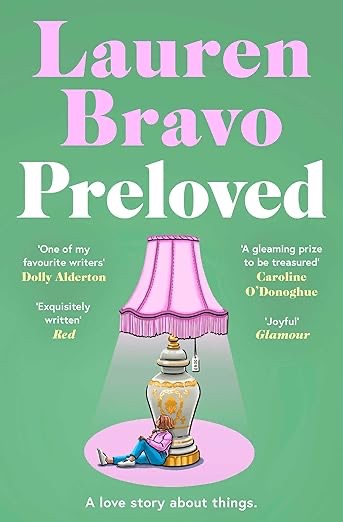
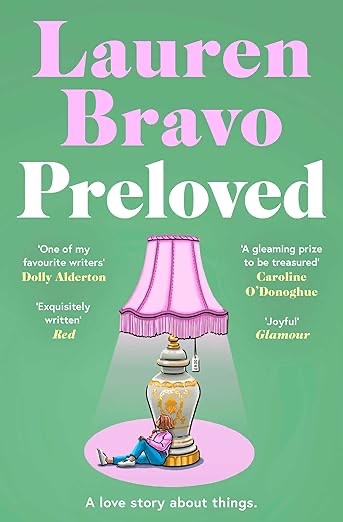
Preloved by Lauren Bravo

Gwen is coasting through life. She’s in her mid-thirties, perpetually single, her friends are busy procreating in the countryside and conversations with her parents seem to revolve entirely around the council’s wheelie-bin timetable.

And she’s lonely. But then, isn’t everyone? 

When she’s made redundant from a job she hardly cares about, she takes herself out for a fancy dinner. There she has the best sticky toffee pudding of her life and realises she has no one to tell. She vows to begin living her life fully, reconnect with her friends and family, and finally book that dentist’s appointment. 

Gwen decides to start where all things get a second chance: her local charity shop. There, with the help of the weird and wonderful people and donated items bursting with untold stories, Gwen will find a way to move forward with bravery, tenacity, and more regular dental care.

Dazzlingly witty, Preloved is a tale about friendship, loss and being true to yourself no matter the expectations. Lovingly celebrating the enduring power and joy of charity shops.

I absolutely loved this charming book about Gwen’s experiences volunteering in a charity shop, but so much more besides. Gwen has lost her job and this catalyst starts a new train of thought. Maybe instead of jumping into the next thing that comes along, she could budget her redundancy money and spend the summer taking stock. Gwen lives alone and some distance from her family, but she hasn’t struck up any meaningful friendships either. She’s alone a lot of the time. She desperately wants change but doesn’t know how to get there. So she takes a voluntary role at her local charity shop a couple of days a week, giving her time to work out what’s next in a more focused way. I felt for Gwen immediately and identified with the life crisis she’s in, having just turned 50 and facing the very real possibility that I might never be well enough to work has felt strange. I’ve never been a focused, goal setting type so I got Gwen’s tendency to drift into work without a plan. As everyone else was leaving sixth form knowing what they wanted to do, I had no clue. It took years for me to move into mental health and my own ill health provided the emotional kick up the bum – if I didn’t choose something I could do flexibly and get some training completed – my MS could advance and I was going to run out of time. Some people do simply drift, but with Gwen I knew there was an underlying reason. Her inability to call her parents and tell them about her redundancy was a powerful first clue. Did she want to avoid making them worry? Would they be angry or disappointed in her? 

Gwen tells her story and she’s a great narrator. We slowly start to build up a picture of the way she relates to others and how limited her support system seems to be. As mentioned she seems estranged from her parents and her best friend Suze has become a mum, such a big life change that means there’s less room for friends. As she gets to know the other volunteers at the shop there’s an opportunity to make friends. One lady in particular strikes up a friendship, inviting Gwen round for dinner to get to know her. The charismatic and energetic Connie is a blast of fresh air rather than a breath. She’s full of ideas to Gwen participating in life again which is inspiring and exciting, but also ever so slightly exhausting. There’s even a touch of romance too, although that’s never the real focus. The author knows this is Gwen’s story and if there is change it has to come from within herself. Only Gwen has the power to change her life and make it fulfilling again. In between the chapters there are small, magical snippets about objects or clothing that’s found it’s way to the charity shop, invariably telling a story about the person that’s donated it or the person who decides to buy it. I loved these little gems because they highlight the importance of these transitional items in their owner’s lives, but also the role of the charity shop in it’s community. They serve a practical purpose in terms of recycling, but also a community purpose because staff know people who pop in on certain days, whether they might need some company and if they don’t turn up, checking if they’re okay. They are places where lonely people can expect a cheery smile and a chat. It sounds simple, but these little interactions can be the highlight of someone’s day. 

However, what the author captures most beautifully is the magic of charity shops. How many of us bookish types have been thrilled with a find from the bookshelves – for me it was a pristine folio society edition of Isak Dennison’s gothic tales. We might find: the perfect pair of vintage shoes; a 1990’s grunge dress that’s come full circle again; old China tea sets that will look beautiful at an afternoon tea party. You never know what might jump off the rails or shelves and become a precious ‘find’ rather than someone else’s clutter or trash. I love that, in a way, Gwen is like one of these objects – made redundant and sitting patiently in place until a new future opens up before her. However, before that happens she must go through the process of clearing out, sorting through the rubbish and throwing out what’s broken. For Gwen that means confronting a life changing event that’s so painful it’s blocking her whole life. I was rooting for her, right up to the very last page.

Published on 18th January 2024 by Simon and Schuster UK