Posted in Sunday Spotlight

Sunday Spotlight: Uplifting and Comforting Fiction. A.J. Pearce and Matson Taylor.

As many readers know, I’m very partial to historical fiction, especially if it’s telling me a story I didn’t know or following characters who are largely erased from our impressions of the time period: Sarah Waters brings us lesbian characters in the Victorian period; Patrick Gale narrates the journey of an Edwardian husband and father who is gay in A Place Called Winter; Michael Faber brings to life a Victorian prostitute with a skin disease in The Crimson Petal and the White. I’ve enjoyed some incredible stories of the world wars and Holocaust, slavery, and migration. These are some of the most harrowing historical events to choose and it’s no wonder they win awards. They totally engage the emotions and carry you along with them. However, sometimes you want to scratch your historic fiction itch, but want something fun, to feel uplifted. So where do you go? Here are a few ideas you might enjoy.
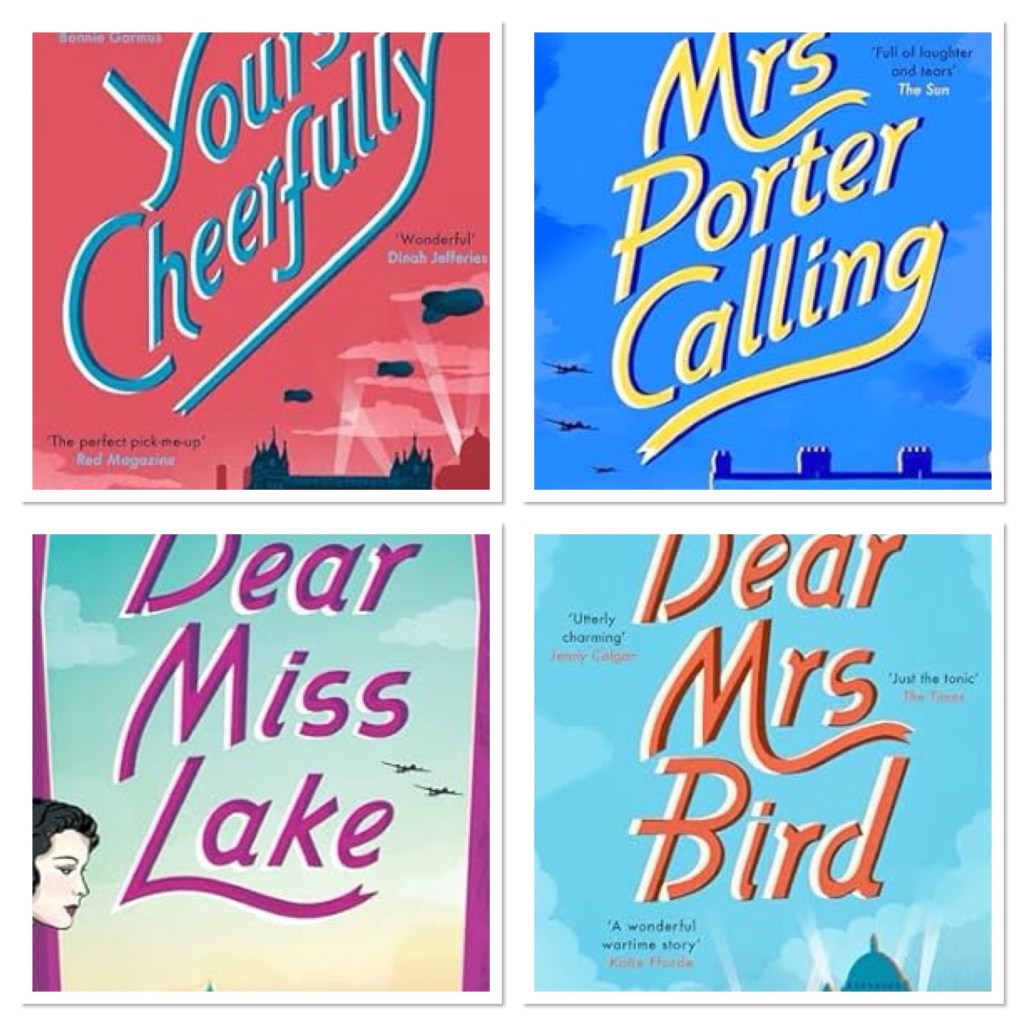
This wonderfully enjoyable series from A.J.Pearce starts during London’s blitz and is filled with warmth, wit and heartbreak. The first is Dear Mrs Bird, a wartime story about the power of friendship, the kindness of strangers and the courage of ordinary people.

London, 1941. Amid the falling bombs Emmeline Lake dreams of becoming a fearless Lady War Correspondent. Unfortunately, Emmy instead finds herself employed as a typist for the terrifying Henrietta Bird, the renowned agony aunt at Woman’s Friend magazine. Mrs Bird refuses to read, let alone answer, letters containing any form of ‘Unpleasantness’, and definitely not letters from the women the war has left lovelorn, grief-stricken or conflicted. But the thought of these desperate women waiting for an answer becomes impossible for Emmy to ignore. She decides she simply must help and secretly starts to write back – after all, what harm could that possibly do?

Her story is then continued over two more novels, based at the same magazine. Emmeline always has an obstacle to overcome, but she’s plucky and optimistic despite everything that’s happening around her. This doesn’t mean that the war is ignored. Emmeline is always caught between the magazine’s aesthetic and what’s happening in the real world. Some of the magazine owner’s want to keep the pre-war feel of a magazine for upper class ladies. Emmeline knows the world has changed, women’s lives are very different and there’s so much more to write about than hunt balls and the latest fashions. So with Emmeline taking letters from their readers we see more of the real picture for women; parenting alone or sending your child to the countryside as an evacuee; trying to juggle war work and child care; bereavement and loss. These are big issues, so they are discussed and experienced by the women Emmeline knows. Yet the author still manages to make them cheery and the uplifting feeling we get is from real women supporting each other and pushing for social change.

In July 2025, a fourth in the series will be published by Picador. It’s July 1944 and Emmy Lake’s career is soaring: Woman’s Friend magazine is a huge success, and she is finally realizing her dream of becoming a female war correspondent. On the personal front, Emmy’s husband Charles has been posted closer to home, and they and their friends Bunty and Harold have escaped to the countryside for a few precious summer days. They all know how lucky they are. But after nearly five years of war, the nation is struggling. The “Yours Cheerfully” advice column receives more letters than ever, and even though it looks like the war might finally be over by Christmas, the situation is far from resolved. For Emmy and her team, it’s all about pulling together and pushing on. But then disaster strikes. Soon Emmy finds herself facing her greatest battle yet. Now she needs her friends more than ever . . .

Endearing, engaging, and full of heart, Dear Miss Lake is a testament to the power of friendship in the hardest of times.

I must admit to being astonished that the 1960’s/70’s are now classed as historical fiction, but here we are. I have to be reminded that it’s 60 years ago and as someone who’s now over 50 this was my childhood. Anyway I fell absolutely in love with these wonderful books about Evie Epworth and I know I’ll be re-reading them when I need a boost. Evie is an absolute delight and we first meet her in the summer after her exams and her plans are no more structured than helping her dad deliver their cow’s milk and reading. This is rural Yorkshire in 1962 and life so far has been filled with schoolwork, Girl Guides, milking, lacrosse, village fetes and baking with her elderly neighbour. She did also lose her mother and misses her every day. She wants to be left to her dreams of becoming like her idols – Charlotte Brontë, Shirley MacLaine and the Queen – and to live a glamorous life in London, or Leeds would do. She wasn’t banking on her Dad’s girlfriend Christine. A money-grabbing, manipulative and tasteless schemer who starts to move in and make changes. She wants to upgrade the farmhouse kitchen to Formica and put Evie to work in the village salon, surrounded by shampoos, sets and blue rinses. How can Evie rescue her future from Christine’s over-perfumed clutches? Luckily people come into her life who might be able to help and with a dollop of Yorkshire magic she might succeed.

In the second novel. All About Evie, takes us forward to 1972. Evie is settled in London working for the BBC. She has everything she’s ever dreamed of (a career, a leatherette briefcase, an Ossie Clark poncho) but, following an unfortunate incident involving Princess Anne and a Hornsea Pottery mug, she finds herself having to rethink her life and piece together work, love, grief and multiple pairs of cork-soled platform sandals. This is a brilliant follow up where Evie has to sail the choppy waters of her twenties, following her dreams and finding they’re not as easy as they seemed. She’s soon trying different occupations, all in her inimitable Evie way, with a wonderful side order of romance and a trip back to Yorkshire of course. These novels are so tender and genuinely moving, but are also witty, inventive and incredibly funny. I don’t know how Matson inhabits the soul of this teenage girl, but he does it beautifully. She’s brimming with life force and sound Northern reason. I think you’ll absolutely love her.

Celebrating the publication of Evie Epworth with Cow Cakes.

Other Uplifting Historical Fiction

I loved this story set in New York, 1979. It is Thanksgiving and Evelina has her close family and beloved friends gathered around, her heart weighted with gratitude for what she has and regret for what she has given up. She has lived in America for over thirty years, but she is still Italian in her soul. 
 
Northern Italy, 1934. Evelina leads a sheltered life with her parents and siblings in a villa of fading grandeur. When her elder sister Benedetta marries a banker, to suit her father’s wishes rather than her own, Evelina swears that she will never marry out of duty. She knows nothing of romantic love, but when she meets Ezra, son of the local dressmaker, her heart recognises it like an old friend. 
 
Evelina wants these carefree days to last forever. She wants to bask in sunshine, beauty and love and pay no heed to the grey clouds gathering on the horizon. But nothing lasts forever.  The shadows of war are darkening over Europe and precious lives are under threat. This is a beautifully moving story, but it feels like a hug in book form. I could literally disappear into it and escape into Evelina’s life that tells you all you need to know about love.

It is England, 1932, and the country is in the grip of the Great Depression. To lift the spirits of the nation, Stella Douglas is tasked with writing a history of food in England. It’s to be quintessentially English and will remind English housewives of the old ways, and English men of the glory of their country. The only problem is –much of English food is really from, well, elsewhere . . .

Good taste is in the eye of the beholder…

So, Stella sets about unearthing recipes from all corners of the country, in the hope of finding a hidden culinary gem. But what she discovers is rissoles, gravy, stewed prunes and lots of oatcakes. Longing for something more thrilling, she heads off to speak to the nation’s housewives. But when her car breaks down and the dashing and charismatic Freddie springs to her rescue, she is led in a very different direction. Full of wit and vim, Good Taste is a story of discovery, of English nostalgia, change and challenge, and one woman’s desire to make her own way as a modern woman. This was a lovely nostalgic read and I’m so looking forward to new novel The Best of Intentions coming in summer this year.
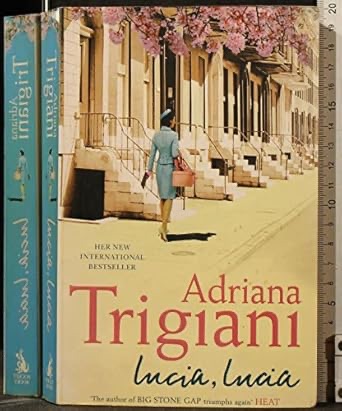
This is a twenty year old novel from Adriana Trigiani based around Lucia Sartori, the beautiful twenty-five-year-old daughter of a fine Italian immigrant family in Greenwich Village, New York. Set in 1950, Lucia becomes an apprentice for a made-to-wear clothing designer at a chic department store on Fifth Avenue. Though she is sought after as a potential wife by the best Italian families, Lucia stays her course and works hard, determined to have a career. She juggles the roles of dutiful daughter and ambitious working girl perfectly. When a handsome stranger comes to the story and catches her eye, it is love at first sight for both of them. In order to win Lucia’s hand, he must first win over her traditional family and make the proper offer of marriage. Their love affair takes an unexpected turn as secrets are revealed, Lucia’s family honour is tested, and her own reputation becomes the centre of a sizzling scandal. Set in a time of possibility and change for women in America, in a city that celebrates its energy with style and elegance, LUCIA, LUCIA is the story of a girl who risks everything for the belief that a woman could – and should – be able to have it all. There’s definitely a melancholic feeling here, falling into nostalgia over choices that she could have made and we see the result of those choices in her older years. However, I find it life-affirming and comforting.
Posted in Netgalley

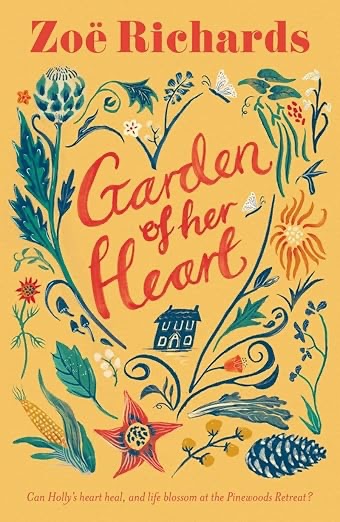
Garden of her Heart by Zoe Richards

I was immediately attracted to this book because of it’s themes of trauma and recovery, something I have personal and professional experience with. This is an ultimately uplifting story of healing that was the perfect antidote to the current news cycle and being pretty much housebound due to illness. The story is set on a well-being retreat and follows one loner, two secrets and three weeks at Pinewoods Retreat. When Holly Bush (yes, that’s her name ) is made redundant with gardening leave, after suffering a brutal attack. She decides to visit a retreat not far from home, finding friendship and a garden in need of love. She ends up doing literal gardening leave and journals her way through the holiday, working on both her mental and physical scars as well as discovering an inner strength and resilience.

I’d been looking forward to reading this, but the TBR and my health got in the way. Although, perhaps this was the perfect time to read it. Zoe is open about her own journey with mental health and it’s something that will resonate with a lot of people. I bonded with Holly very quickly and was rooting for immediately. I thought all of the characters were very real and the owners of the retreat, Dee and Lorraine, were incredibly authentic and seemed to truly care about their residents. They reminded me of people I’ve worked with and thank goodness for people like this! The other residents were an interesting mix and I loved watching Holly’s relationship with Bex, Ruth and San grow into friendship and mutual support. They all felt honest and real. Hunter, the odd-job guy, was a bit of a fox and almost made me want to pick up a trowel and get planting. I loved the journaling aspects of the retreat, because it’s something I’ve taught for some time in mental health settings and for people with acquired disabilities. It makes such a difference to people’s wellbeing and their acceptance of a huge life change. I loved facilitating these sessions and being unable to work at the moment it was lovely to be back in that atmosphere.

The story is moving and there are sad parts, these are people who are healing and they need to process their trauma in order to move on. There are characters who don’t behave very well, but they’re on their own healing journey and it really isn’t easy. I found it moving as people let go of all the fear, anger and frustration they were feeling. There’s something so beautiful about seeing someone blossom this way and the garden was obviously a great metaphor for that. It’s why I chose the lotus flower as my logo for counselling because of the quote about it growing from a muddy pod; beautiful and strong. There was just so much hope for the future, not to mention the enduring friendships that are made. I think Zoe captured the sense of peace that comes from being your authentic self. While there is a hint of romance, I loved the way it was kept in the background, with the friendship and trust between Holly and the new allies being the most important part. This is a great debut, creating a place of healing that readers could easily be inspired by. It’s not just a enjoyable story, I think a lot of people will identify with it and perhaps start their own recovery journey. It’s a book that will stay in my uplifting reads for those grey days when I need comfort from what I’m reading. 

Out now from UCLan Publishing

Meet the Author

Zoë Richards was inspired to write Garden of Her Heart by being a suicide survivor from which she learned the healing that worked best for her, which is not the same for everyone. Dog walks around the Formby pinewoods, not far from her home, gave her the location, in an area known locally as The Lost Resort, a town that never came into existence, close to the sea. In the woods there is a sole Victorian house, standing alone on a cinder track, and this is the inspiration for the location of Pinewoods Retreat. She lives in Southport, near Liverpool, has been married to Rob for 34 years, and they have a grown-up daughter and a cockapoo who will never grow up. She worked for the NHS as an improvement programme manager, reforming how children and young people with special educational needs and disabilities are supported in healthcare. Writing gives her an escape from the intensity of work and from caring for her elderly mother.

Zoë is an author and host of the podcast, Write, Damn It!. She has written for national magazines for many years. She is represented by Clare Coombes of The Liverpool Literary Agency and her debut novel, Garden of Her Heart, a novel about recovery, community and purpose, was published by UCLan Publishing in June 2024. Her second novel, Tell It To The Bees is a standalone sequel, and is out in August 2025.

With over 30 years of experience of working on mindset, and a teacher of coaching for over 25 years, Zoë hosts the Write, Damn It! podcast, where she has weekly conversations with authors, and offers doses of support to writers. She also coaches writers to overcome their demons and blocks, and helps them get the writing done. Much of what she uses on mindset comes from lived experience, as she is a suicide survivor who learned how to get through the darkest times using mindset and wellbeing support. 

Zoë lives on the Merseyside coast with her husband and MillyMoo the cockapoo. She has an adult daughter and a granddaughter – and best not forget Peanut the grandpup too.

Posted in Throwback Thursday

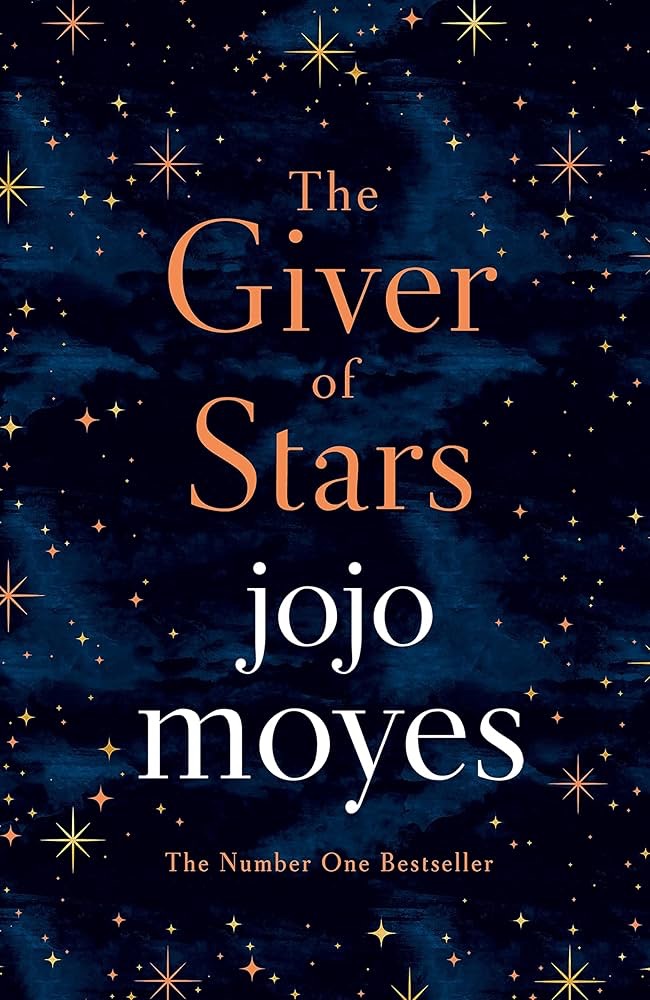
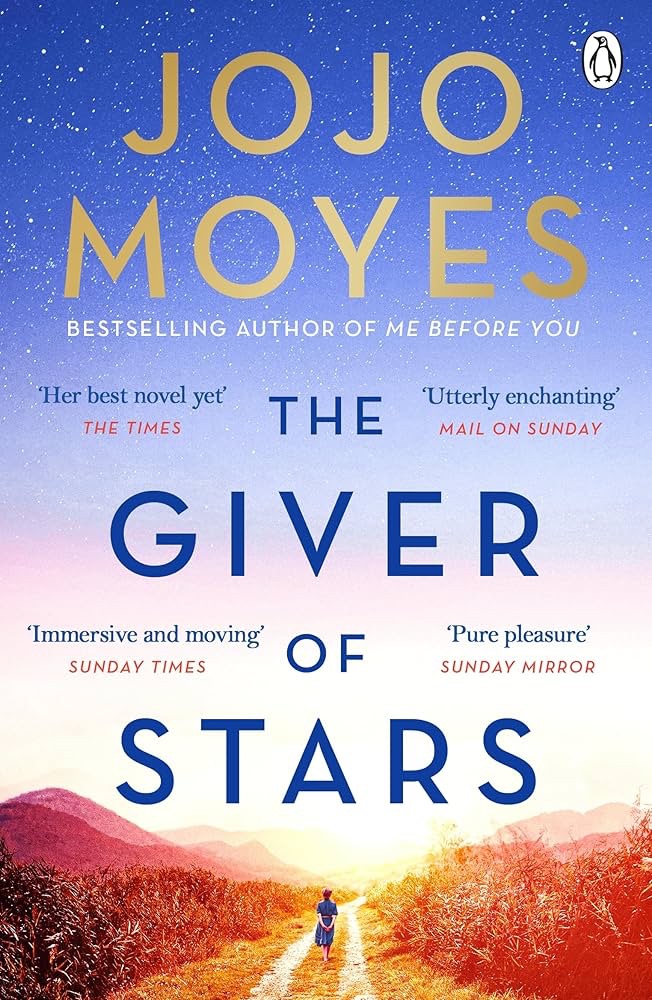
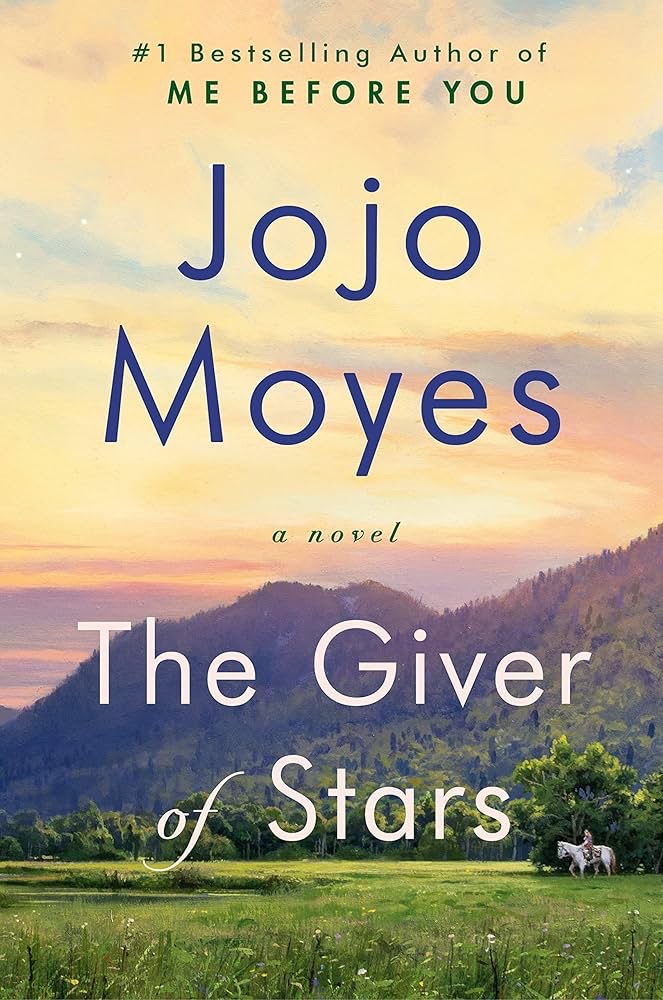
The Giver of Stars by Jojo Moyes.

When I first read The Giver of Stars I felt it was a totally different type of Jojo Moyes novel. Using the historical setting of the Great Depression, she takes us to a town in rural Kentucky., where most people work in the Van Cleeve family’s mines and levels of rural poverty are high. In Kentucky, African-Americans are still subject to segregation and middle class women are expected to stay home and know their place. Women in poorer families are working hard while trying their best to feed and look after ever-growing families. Into this setting comes Alice, the English bride of the heir to the mining fortune, Bennet Van Cleeve. Bennet is handsome and considerate, and their marriage seems to start well but once they reach the family home things change. Bennet has lived with his father, following the death of his mother and the house is still being run to her exacting standards. Alice finds she has little to do, with a house is full of her late mother-in-laws ornaments and china dolls, especially since Mr Van Cleeve doesn’t like anything to be out of it’s normal place. More worrying is the change in Bennet now they are home. Despite showing some desire at the beginning, the proximity to his father is affecting their sex life. Several months down the line their marriage is still unconsummated and Mr Van Cleeve keeps hinting about grandchildren, adding to the pressure.

When a town meeting is called to discuss President Roosevelt’s initiative to get the rural poor reading, Alice senses an outlet for her energy. Margery O’Hare will head up the initiative, a wonderfully outspoken and self-sufficient women who doesn’t listen to the opinion of anyone else, particularly men. She opens a door for Alice, out of the claustrophobic Van Cleeve household and into the wild forests of Kentucky. Alice learns to ride a mule, and along with Margery and two other local women she sets out as a librarian for the Packhorse Library. At first, rural locals are suspicious of an Englishwoman coming to the door offering them books, but soon Alice finds a way in and starts to be trusted. She also finds she likes the open air, the smells of the forest and singing of the birds. There is also the freedom to be in more casual dress and the camaraderie she is building up with her fellow librarians. She is close to Margery and when she confides about her marriage, Margery loans her a book she has been sneaking out with the novels and recipes. It is an instruction book on married love and Margery has been loaning it to poor women on her rounds who are inundated with children and need educating about sex. Alice takes the book home and a series of events are set in motion that will change not only the Van Cleeve household, but the whole town.

Mr Van Cleeve is determined to deal with Margery O’Hare once and for all, as he vows to destroy the Packhorse Library altogether. Margery is sure that a devastating flood had more behind it than high rainfall and suspects the mines. She has left herself vulnerable though, with what Van Cleeve sees as transgressive behaviour: she is exposed as having a relationship out of wedlock, she has hired an African-American woman who used to run the coloured library and she is encouraging townswomen to take control of their own lives. She seems impervious to other people’s disapproval so what lengths will he have to go to in order to stop her?

This was a beautifully written book and was on holiday when reading. I encouraged my other half to go fishing so I could stay in the holiday cottage to read it. It is so well researched, with real and authentic characters I fell in love with. Moyes manages to capture the tensions and societal changes of the Depression, depicting rural poverty, domestic abuse, and the rise of feminine power. We can see new attitudes towards race and feminism particularly where marriage and sex are concerned. Progressive attitudes come up against old money and old values in a tragic way. It was interesting to re-read it with the backdrop of Trump’s America where such traditional values are being forced on women in many states. I found myself desperate for the progressive characters and attitudes to prevail and it was this that built the tension and kept me reading till 2am! This was real, romantic and simply great storytelling. It’s an absolute must read and one of her best novels to date.

Posted in Netgalley

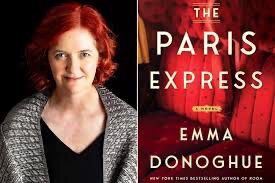
The Paris Express by Emma Donaghue

When I first started reading The Paris Express, I had a strange feeling of deja vu. It wasn’t that I thought I’d read the book before. In fact I was a bit disoriented at first, wading through a lot of characters I didn’t know and who didn’t all fit together was a lot to take in. It was more that I had a sense of when I was. The books that immediately came to mind were Dubliners by James Joyce and Mrs Dalloway by Virginia Woolf. Both books have passages on public transport, but it was the drifting quality of the writing and the ‘democratisation’ of people being pushed together in a small space. They are forced to exist together for the time of that journey and even though this Paris train has First, Second and even Third Class, there is such a mix of generations, classes and genders that there’s potential for desire, tension, friction and misunderstandings. However different they may seem, the fate of one of them, is the fate of all. 

What Woolf achieved beautifully in Mrs Dalloway, is that experience of being in the same place and looking at the same thing, but seeing it completely differently. The much loved Cognitive Behavioural Therapy, works on the basis that two people can witness exactly the same event but view it differently. They experience the event through a filter of their own past, their general well-being and mood that day, even whether they’re in a rush or feeling hungry. Woolf shows us that a car backfiring in the street is just a car backfiring to some, they hear it, recognise it and file it away to be forgotten. Whereas, Mrs Dalloway who is slightly anxious and focused on getting things done for her dinner that evening, actually flinches against the noise and immediately her brain starts questioning what it might have been? She will remember it and possibly even comment later that she jumped out of her skin. Septimus Smith hears a bang and is immediately back in the trenches, surrounded by death and destruction. It might even send him over the edge. I felt like Emma Donoghue really achieved that feel here. We can hear the conversation in each carriage and even go into the minds of some of the train’s passengers, but each one is reacting differently to everything that’s going on. Gradually I was compelled to keep reading because the tension was rising with every new passenger and because the reader is omniscient. Donoghue gives her reader the full story and we know the potential fate of every one of them.

Set in 1895 on a train journey to Montparnasse, Donoghue places us within the fin de siecle, with every little detail. It isn’t just her description of the train, it’s the character’s clothing and their attitudes. One passenger muses on the very idea of the fin de siecle, debating whether the closing of a century does cause a decadence of behaviour and fear of the coming century. There’s certainly evidence of a shift in attitudes to the Victorian ideals that have held firm throughout the 19th Century. In one journey we can see women being more outspoken, having a definite sense of purpose, and a need to determine their own destiny. Women are travelling alone or for work, in the case of Alice she is travelling with her boss as the secretary for his photographic business, but she is enterprising. She takes the opportunity to talk to him about moving pictures, looking for permission to make a short film. She has researched the subject and thinks it could be a new market for the firm. Marcelle is researching in the field of science and huge fan of Marie Curie who is so work focused that she went to get married in an everyday blue dress and spent their gifted money on two bicycles so they could ride to the lab every day. Marcelle knows it isn’t just her gender that may hold her back, it’s her race: ‘a pair of twits in her anatomy class once asked her to settle a bet as to whether she was a quadroon or an octoroon.’

Blonska has a variety of skills, but she’s also incredibly perceptive and quickly reads the other passengers in her carriage. I was absolutely fascinated with Mado. She stands out more than she realises, with her androgynous clothing and short hair, not to mention the lunch bucket she’s clutching as if her life depends on it. She’s a feminist, an anarchist and like Blonska seems to have an interest in reading other people. Her own internal struggle is so vivid that I could feel the tension in her body as I read. She seems contemptuous of many of her fellow passengers, particularly the men, knowing that the Victorian feminine ideal is simply a role women are forced to play. To step outside of the norm is brave and a deliberate outward show of her inner strength and determination to change women’s place in the world. 

‘That’s the price of wearing a tailored jacket with short, oiled-down hair. Even back in Paris, where quite a few young women go about à l’androgyne, sneers and jeers have come Mado’s way ever since she scraped together the cash to buy this outfit at a flea market last year. Her hair she cuts herself with the razor that was one of the few possessions her father had when he died. She’ll take sneers and jeers over lustful leers any day. Bad enough to have been born female, but she refuses to dress the part.’

Throughout the novel there were complex relationships and interesting vignettes, sometimes no more than a line that made me rethink the people I’d been journeying with. There’s a grandad who hops off the train at the last stop to have a furtive and erotic moment with a stranger. As we spend time with the train crew, I learned a lot about their working conditions – having to relieve themselves by hanging over the side of the engine. They struggle amongst the chaos to read tickets and make sure people are in the right carriage, some actually choosing to downgrade their journey for some peace and anonymity. I was faced with my own assumptions near the journey’s end as I learned something about two of them that turned their relation to each other upside down. Of course they’re not the only ones who are pretending to be something they’re not. The author takes us far beyond the beautiful period costumes and shows the reality of train travel – ladies having to relieve themselves in a handy receptacle while the men look away, the inconvenience of a heavy period on a long journey, the strange contents of some traveller’s picnic bags as duck legs and creamed leeks made an appearance! The birth scene brings home the indignities of bringing life into the world, especially in a small train carriage. It is Blonska and Mado who have to help the poor woman, who is desperately trying to convince her baby that now is not the time. Mado has experience with midwifery too: 

“Nothing ever came of all that labour—no more little Pelletiers, nothing but stains on the floorboards. Ever weeping,Madame Pelletier blamed the devil. But Papa taught Mado that her mother’s losses and his own paralysis— such broken health among the hungry and worn out—could be no accident. Employers, politicians, and capitalists were to blame for the sufferings of the working classes.“

This was one of those novels that becomes much more than you expect at the beginning, although I should have known that since Donoghue has never let me down yet. I loved how she ended the novel and the journey because it was such a surprise, along with the afterword. I don’t read the blurb or reviews of a novel I’m about to read and come to it completely fresh, so I didn’t expect it and appreciated it all the more. Donoghue’s ability to see the unexpected, the downtrodden, the extraordinary and the silenced voices, of both a story and it’s place in time, is at it’s peak here. These anonymous and ordinary train carriages are made fascinating and unique by the character’s inside and their intentions. Through them she drives the story along faster and faster, until you simply have to go with it and read through to the end. 

Meet the Author

Born in Dublin in 1969, Emma Donoghue is a writer of contemporary and historical fiction whose novels include the international bestseller “Room” (her screen adaptation was nominated for four Oscars), “Frog Music”, “Slammerkin,” “The Sealed Letter,” “Landing,” “Life Mask,” “Hood,” and “Stirfry.” Her story collections are “Astray”, “The Woman Who Gave Birth to Rabbits,” “Kissing the Witch,” and “Touchy Subjects.” She also writes literary history, and plays for stage and radio. She lives in London, Ontario, with her partner and their two children.

The Paris Express is out this week from Picador

Posted in Sunday Spotlight

Sunday Spotlight: Uplifting and Comforting Reads From Adriana Trigiani.

You know the world has really gone to hell when you click on a streaming service and they highlight a section as uplifting and good for your mental health. What with WW3 seemingly round every corner, every news programme hijacked by the antics of Trump and his attack dog JD Vance, Elon Musk waving a child or a chainsaw over his head and for me personally, the threat of losing my disability benefits. I’m also averaging at least one medical appointment every week as each test throws up something we never expected! Life is a wee bit stressful for all of us at the moment and I wondered whether it might be nice to spotlight some of my favourite authors who write uplifting and joyful fiction. I’m going to spotlight a few different authors on Sundays, suggesting some older novels and some that are worth keeping an eye out for through the rest of 2025. I will point out where there are tough themes in a novel, but even where there’s a lot to overcome in these novels the ending is always ultimately uplifting and inspiring.

I think it was my mum who first gave me one of Adriana Trigiani’s books to read and I think she got it from Oprah. My first taste of her work was one of her Valentina books, a series of books following an American Italian young woman as she starts to make her way in the world. Her family have been makers of custom wedding shoes since 1903. The Angelini Shoe Company trades from Greenwich Village, NYC and is one of the area’s last family run businesses. Now it’s in trouble and Valentina, working as apprentice to her grandmother Theodora, wants to bring their years of craftsman’s experience into the twenty-first century market. Valentine is juggling a lot of different commitments: her romance with chef Roman Falconi, her duty to her family and entering a design competition for a very prestigious competition for a department store. When she accompanies her grandmother to Italy they hope to find inspiration, she spends time in Tuscany and Capri. She’s overjoyed to find her artistic style but the trip changing her life in ways she never expected.

In the second book of the trilogy, Valentina’s plans have go awry. We start with a celebration as her grandmother marries the love of her life in Tuscany, but Valentina’s own romance is not going so well. It’s a second blow when her grandmother announces thar her brother Alfred is becoming her partner in the family business, not Valentine. She decides to devote herself to work and takes a trip to Buenos Aires for new connections and ideas. Emotionally though she’s caught between two loves, one who’s always nurtured her and another that promises to sustain her future. In the final book Valentine is living out her choices and continuing to modernise the firm. As she prepares to marry the man she has chosen, she is faced with painful choices and a fight for what she wants from life. Can the Angelina Shoe Company make it’s mark and will Valentine be able to savour the wonderful things she deserves. These books really are sumptuous, full of gorgeous fashion details and since I love shoes I really appreciate Valentine’s designs. We get the bustle and modernity of Manhattan, contrasted with her trips to Italy and Argentina to small artisan shoemakers. We get to be an armchair holiday maker too as we drink in the wonderful sights and food that she enjoys too. Of course there are challenges in Valentine’s life, some of the hardest life can throw at her, but ultimately we know she will triumph and get her happy ending.

Big Stone Gap is a sleepy village where kids get married and start families at eighteen, and stay for ever. So thirty-five-year old Ave Maria Mulligan is something of an oddity. A self-proclaimed spinster, as the local pharmacist she’s been keeping the townsfolk’s secrets for years. But Ave Maria is about to discover a scandal in her own family’s past that will blow the lid right off her quiet, uneventful life. Soon she’s juggling two unexpected marriage proposals and conducting a no-holds-barred family feud. The thought of spending the rest of her life in Big Stone Gap is suddenly overwhelming . .

In our second instalment, eight years have passed since town pharmacist and self-proclaimed spinster Ave Maria Mulligan married the man of her choice. Now they have a beautiful daughter, but for some reason her husband seems distant. In their comfortable stone house in the mountains there’s an empty room where their son slept. Ave and Jack haven’t found a way past their sadness and are struggling to share their feelings. In the town change is coming and is causing concern among the residents. With this backdrop, Ave must make decisions for her family and try to find a way back to her husband.

In the third part of the trilogy, Ave Maria feels time is slipping through her fingers as she watches her daughter growing up. It seems like a period of change for her friends too and her husband is desperate to reinvent himself in ways nobody could have predicted. Are they experiencing a mid-life crisis? Ave is about to have her foundations rocked and face the true test of love: letting go. I love this series because it’s so cozy and has that small town heart-warming feel. I found myself so invested in her family and seeing how they grow over time is a joy. I believe there is now a fourth novel in the series and I’m really looking forward to reading it.

More recently the author has moved to historical fiction and mid-century Italy, as well as a fascinating look at the golden age of Hollywood and a real-life scandal about Clark Gable. I’m so looking to her new novel out in July this year and perfect for summer holidays. Recently divorced, Jess Capodimonte Baratta helps her Uncle Louie with his marble business from her parents’ basement in Lake Como, New Jersey. An unexpected loss within the family unearths a long-buried secret and Jess questions where her loyalties lie. Deciding a change of scene is needed, she escapes to Italy – her ancestral home. We will be swept away to the majestic marble-capped mountains of Tuscany to the glittering streets of Milan and the enchanting shores of Lake Como, which despite a shared name could not be more different from her hometown, Jess soon feels a sense of belonging. And when she meets dreamy Angelo Strazza, a passionate artist, she know that this is where she is meant to be. But as further revelations about her family history come to light, it’s clear that Italy cannot be Jess’ hiding place forever. This sounds like the perfect comfort read to me.

Recently divorced, Jess Capodimonte Baratta helps her Uncle Louie with his marble business from her parents’ basement in Lake Como, New Jersey. But when an unexpected loss within the family unearths long-buried secrets, Jess questions where her loyalties lie. Deciding a change of scene is needed, she escapes to Italy – her ancestral home.

From the shadows of the majestic marble-capped mountains of Tuscany to the glittering streets of Milan and the enchanting shores of Lake Como, which despite a shared name could not be more different from her hometown, Jess soon feels a sense of belonging. And when she meets dreamy Angelo Strazza, a passionate artist, she know that this is where she is meant to be.

But as further revelations about her family history come to light, it’s clear that Italy cannot be Jess’ hiding place forever.

Will the dark truths of her ancestral past send her back home?

Or help her finally live life on her own terms?

Coming July 2025 from Penguin Books

Posted in Random Things Tours

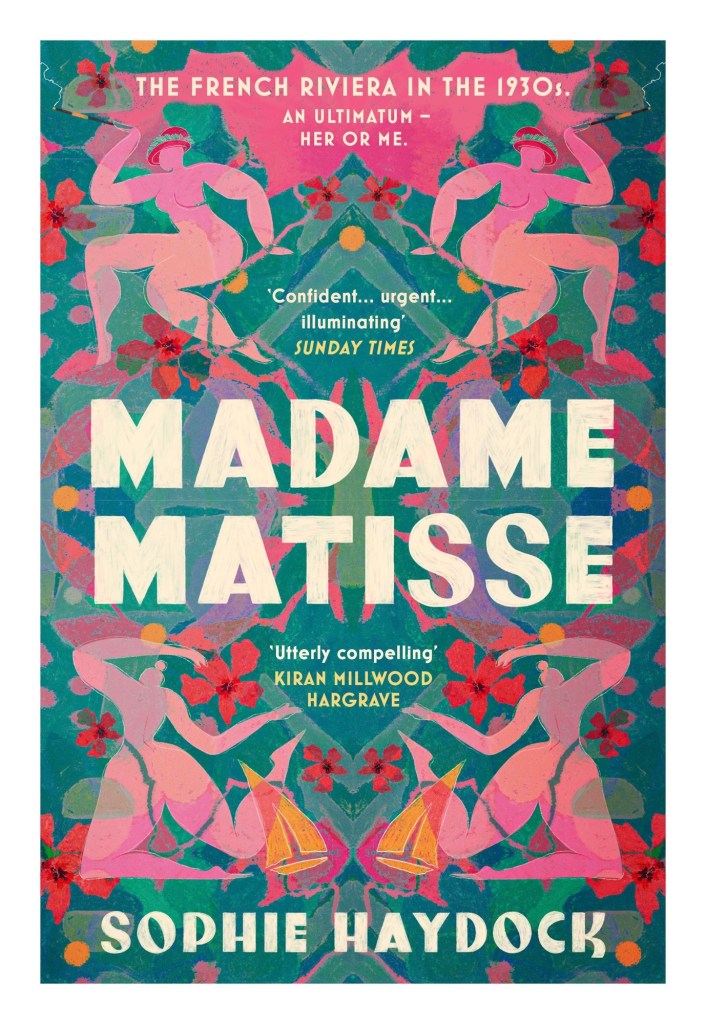
Madame Matisse by Sophie Haydock 

This is the story of three women – one an orphan and refugee who finds a place in the studio of a famous French artist, the other a wife and mother who has stood by her husband for nearly forty years. The third is his daughter, caught in the crossfire between her mother and a father she adores.

Amelie is first drawn to Henri Matisse as a way of escaping the conventional life expected of her. A free spirit, she sees in this budding young artist a glorious future for them both. Ambitious and driven, she gives everything for her husband’s art, ploughing her own desires, her time, her money into sustaining them both, even through years of struggle and disappointment.

Lydia Delectorskaya is a young Russian emigree, who fled her homeland following the death of her mother. After a fractured childhood, she is trying to make a place for herself on France’s golden Riviera, amid the artists, film stars and dazzling elite. Eventually she finds employment with the Matisse family. From this point on, their lives are set on a collision course….

Marguerite is Matisse’s eldest daughter. When the life of her family implodes, she must find her own way to make her mark and to navigate divided loyalties.

Based on a true story, Madame Matisse is a stunning novel about drama and betrayal; emotion and sex; glamour and tragedy, all set in the hotbed of the 1930s art movement in France. In art, as in life, this a time when the rules were made to be broken…

Almost eleven years ago my lovely arty friend Mandy wanted to visit the Matisse exhibit at Tate Britain. I really hope I didn’t ruin it for her. I probably did. I confess I’m not a lover of modernist art. We went to the Guggenheim in New York and I proclaimed it disappointing. We had to go across to the MET and see their collection of Impressionists to cheer me up. My loves are the Pre-Raphaelites and the Art Nouveau/ Arts and Crafts period so we’re a long way away from each other in preference. Art is her subject so I’m happy to own that she certainly knows a lot more than me. I was interested to read in her afterword that the author has always had an interest in Matisse, with a black and white postcard of him on her notice board for several years. I have one of Gustav Klimt wearing an artist’s smock and clutching a cat, with a look of devilment on his face. It makes me smile whenever I see it so I understand how a particular artist can inspire your imagination. Sophie’s first novel, The Flames, was about a protégé of Klimt. It was narrated by the women in the life of Egon Schiele, the subjects of four of his paintings. Here she takes a similar look at the women who surrounded Henri Matisse, showing how they advised, supported and sustained him in his endeavours, but remained completely in the background to his talent. 

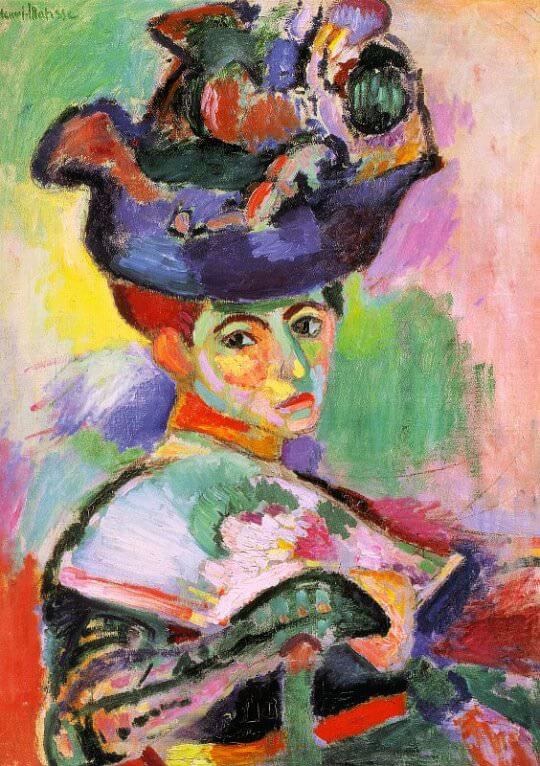
The story starts with Amélie, an incredibly brave young woman who takes a chance on marrying an artist rather than a more conventionally acceptable partner. She sees something in Matisse’s paintings, recognising the way his work could be at the forefront of modernism. Previously his colourful style has been rejected for exhibition in Paris, but Amélie knows that innovative artists often take a while to break through. In fact it is a painting of Amélie that is the catalyst for Henri’s career to take off. Woman in a Hat is exhibited in Paris and bought by siblings Gertrude and Leo Stein, a bohemian pair central to the art world throughout the early 20th Century. This is where Amélie makes the bravest and most important decision of her husband’s career. The Stein’s offered only two thirds of the asking price. Eager to make a sale to the influential pair, Henri is willing to give the discount but Amélie advises him to wait and hold out for the asking price. He takes her counsel and they go and meet the Steins, convincing them that Henri is central to the next great artistic movement. The Steins pay the full price. The couple are a great team with Amélie making all the household and business decisions, freeing Henri to paint and become a famous member of the Fauvist Movement. She also brings Henri’s daughter Marguerite into their growing family, when her own mother is struggling to care for her. Yet, not everything about their relationship runs smoothly. Once they are able to afford a family home with a garden and studio for Henri, Amélie’s help is no longer needed. Henri takes on a series of young assistants and Amélie has the more traditional wife’s role which doesn’t suit her. It’s fascinating to read about the changes, once their joint struggle is over they cease to become a team and the problems begin. 

Woman in a Hat

Another section of the novel is devoted to Marguerite, Henri’s illegitimate daughter. Once Amélie has brought her to live within their family, Marguerite seems to blossom under the care of her stepmother. She also makes herself useful to her father, tidying his studio and anticipating his needs. It is interesting to hear about Amélie and Henri’s relationship from her perspective and her anxieties that the family she’s been brought into, stays together. She shares a lot of Amélie’s suspicions about some of the assistants who breeze in and out of their lives. She’s also a strong advocate for her stepmother, even into her parent’s old age. Yet there were times when I felt she was taken advantage of by Amélie and her father. There’s a sense in which, despite seeming kind, loyal and trustworthy, Matisse does use the women around him. The household was entirely groomed to anticipate his needs and the women are sacrifices for his artistic genius. 

Most interesting to me was Lydia Delektorskaya, born in Tomsk, Russia, in the tumultuous period after the revolution. After the murders of the Royal family, Lydia has just lost her mother when her father decides she must leave the country. He gives her a gun with three bullets left in their chambers and sends her to China on the Trans-Siberian Express with her Aunt Berthe. After building a life there Lydia must make a choice between the Sorbonne in Paris or to marry her lifelong friend and stay. Lydia takes neither choice and instead aims for the South of France, a place that couldn’t be more different to the place she was born. She spends time working in a bar but when she sees a job with the Matisse family she decides to apply. The job is to look after Henri’s wife Amélie who has a chronic illness and is confined to their apartment. Lydia has experience of working with her mum and her aunt and felt fulfilled by her caring role. Once she starts work though, some of her duties are to assist Henri in his studio, eventually sitting for portraits and sketches. Amélie eyes their relationship with suspicion despite there being no evidence of impropriety. This is more than an affair, it’s a meeting of souls and when ultimatums are made they have terrible consequences. 

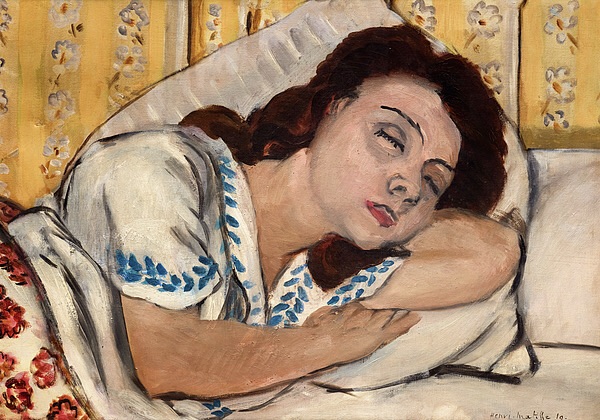
Marguerite Asleep

I loved reading about these fascinating women, all of which step outside the traditional role of most women of the time. Sophie beautifully situates Matisse within his peer group, especially his great rival Picasso. She situates each woman perfectly within their history, the most in depth being Lydia’s Russian background and Marguerite’s incredible bravery in WW2. Both are fascinating to read and show us the extreme cruelty and playbook of totalitarian regimes. She also shows us how incredibly brave and resourceful each woman is, more involved in the world and bigger risk takers than Matisse. Lydia’s realisation of what her father truly sacrificed to stay in Russia happens when she is older. First they came for the royal family and aristocracy, then those with intelligence and  the ability to challenge them, just as the Nazis did in Poland. This perhaps has more resonance thanks to current world events. I thoroughly enjoyed looking up the paintings mentioned and seeing Matisse’s representation of the three women who were closest to him and I found myself reading articles about him and Picasso. It left me with a sense of anger and empathy for how much women sacrifice so that men can excel at what they do, realising their ambitions while their wive’s ambitions are forgotten or buried under a suffocating mental load – still the thing women in my group talk about most. These women never take the limelight away from Matisse, even while stripped bare for people to view. The focus is always on the painter, their brush strokes, choice of colour and artistic decisions. I love that in this novel they are more than body parts, they’re shown as the vital, brave, complex and generous women they clearly were.  

Lydia Delectorskaya

Meet the Author


Sophie Haydock is an author, editor and journalist (Sunday Times, Financial Times, Guardian), based in Folkestone, Kent, where she is curator of Folkestone Book Festival. Her debut, The Flames – about the women who posed for the scandalous artist Egon Schiele in Vienna a century ago – was named by the Times as one of the Best Historical Fiction Books of 2022. It was longlisted for the HWA Debut Crown Award, and the Italian translation, Le Fiamme, won the Premio Letterario Edoardo Kihlgren for debut novels. She worked for the Sunday Times Short Story Award and is associate director of the Word Factory. Her Instagram @egonschieleswomen has 110,000 followers. Visit: sophie-haydock.com

Posted in Throwback Thursday

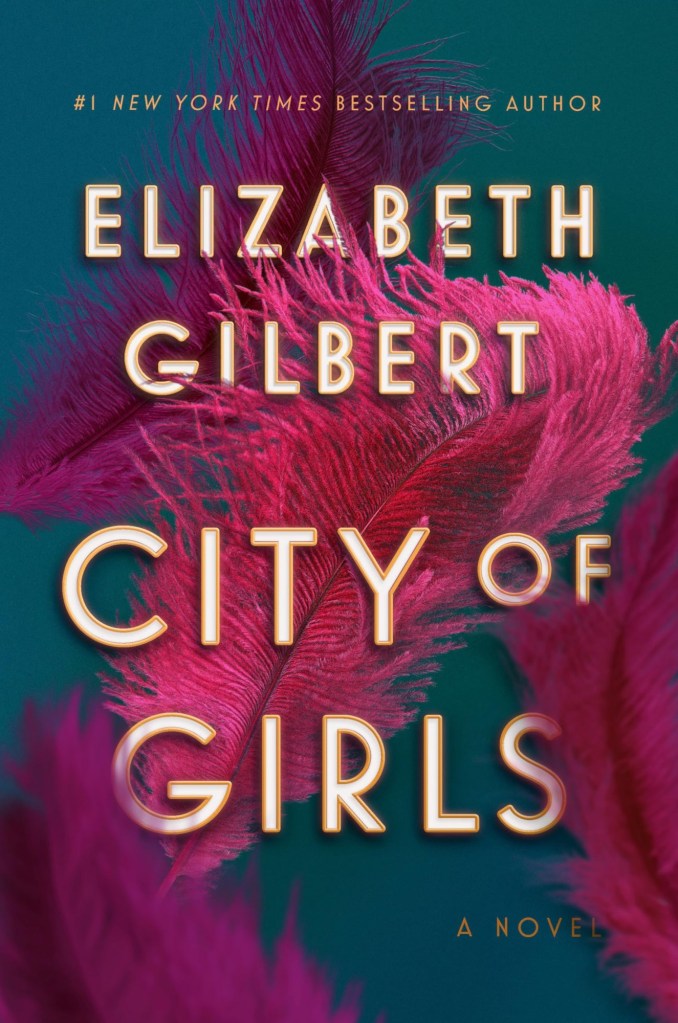
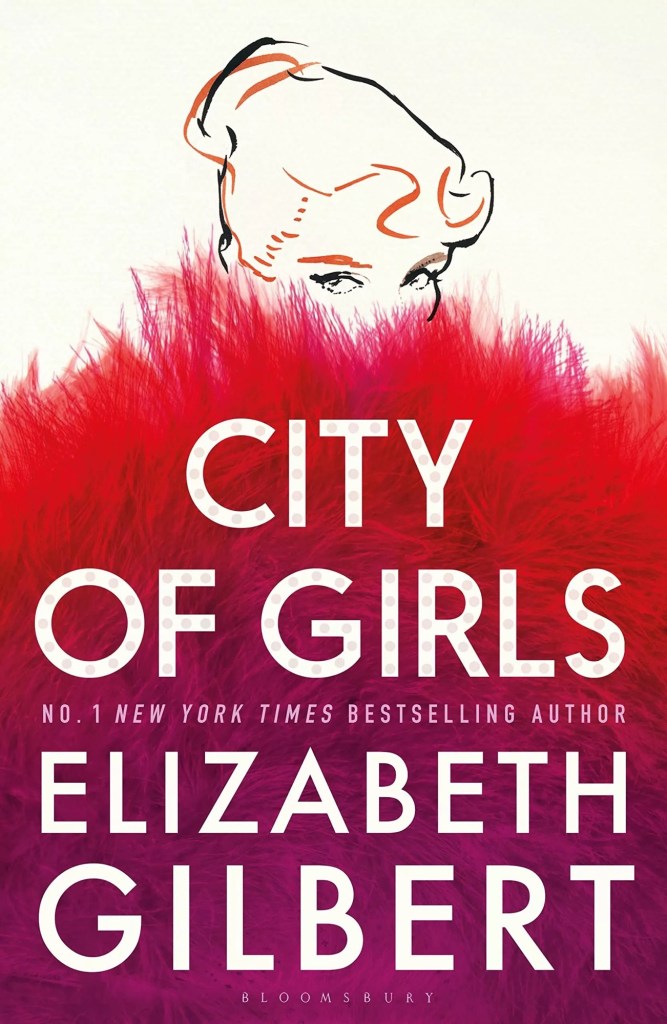
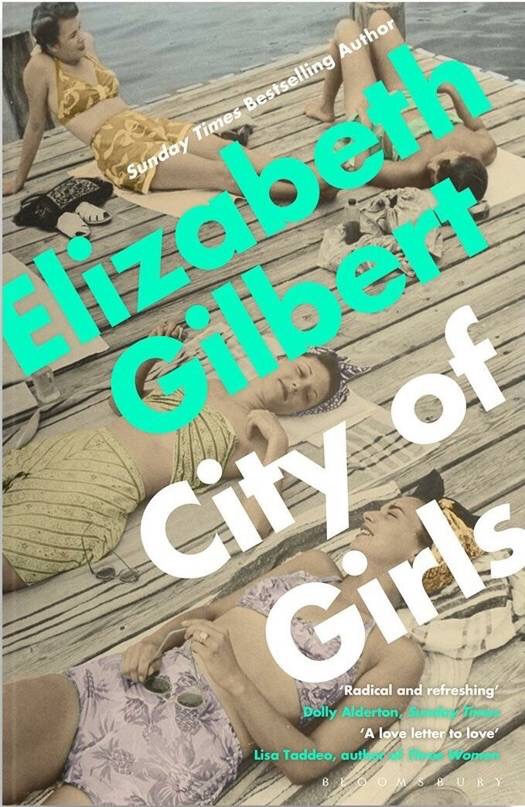
Throwback Thursday! City of Girls by Elizabeth Gilbert.

When one of my favourite authors writes a new book I always experience a confusing mix of emotions. Excitement and anticipation mix with fear; will I love it as much as I love their last book? I don’t want to be disappointed. Since there’s a new Liz Gilbert out this year I thought I’d share my review of her last novel, City of Girls. Like a lot of readers my first encounter with Gilbert’s writing was Eat, Pray, Love; a book that was nothing short of a cultural phenomenon, not to mention the following hit film. For me, it was her novel The Signature of All Things that caught the imagination. The combination of a sparky and intelligent heroine, the feminist theme and the historical detail came together in a beautifully woven story. So as the publication date approached for this new novel I desperately wanted it to live up to her first.

I shouldn’t have worried. City of Girls is a joyous, exhilarating riot of a book. Our narrator, Vivian, plunges us into 1940s Manhattan where she is sent by her parents after expulsion from Vassar. There she is placed in the care of her Aunt Peg who runs the, slightly ramshackle, Lily Theatre. I was suddenly immersed in the bohemian world of theatre people where Vivian soon finds her niche. At Vassar she made friends by creating outfits for the other girls on her trusty sewing machine. So, in her new rooms above the theatre she is soon surrounded by showgirls wanting costumes. I have an interest in fashion and sewing, so I really enjoyed the descriptions of Vivian’s creations, made on a shoestring with a lot of help from Lowtsky’s vintage clothing store downtown. Yet not everything is as it seems on the surface. Is her friendship with showgirl Celia as mutual as it appears? What influence does the matronly and doom laden Olive have over Aunt Peg? Where is Uncle Billy, whose rooms Vivian has been using since her arrival?

 Some of these questions are answered during the production of the brand new play City of Girls. Aunt Peg’s friend Edna Parker Watson comes to stay after losing her London home during the Blitz. Edna is a talented theatre actress who is petite, beautiful and impeccably dressed. She arrives at the Lily with her huge wardrobe and her very famous and much younger husband, Arthur. Every member of the theatre company does their very best to get this musical off the ground and make it a success. Vivian works hard on her costume designs, but also finds herself becoming an unofficial PA and friend to Edna. Determined to put on the best show they can to turn the Lily Theatre’s fortunes around, Aunt Peg agrees to audition for new actors. When Vivian meets Anthony, the new leading man, she falls in love for the very first time. But alongside the awakening of first love, Vivian will also have her eyes opened to how cruel showbiz and the wider world can be. Several revelations teach her that not everyone can be trusted, the most unexpected people can come to your aid, and Vivian realises she has been walking around with her eyes closed. As the Second World War moves ever closer to their shores Vivian is left with a reckoning of her own. Does she want the respectable, quiet life her family expects or does she want to make her own way in a city and a career that is anything but quiet?  

You will fall in love with Vivian as she takes you into her past and candidly shares her exploits in 1940s NYC. She takes you from theatre, to nightclub to a dingy apartment in Hell’s Kitchen where she conducts her first love affair. She holds nothing back and I felt her delight at encountering the bohemian characters of the theatre, her passion and ingenuity for costume work and her discovery of a city laid out before her like a playground. She allows us to experience her growing up with every triumph and mistake she makes along the way. Such an engaging central character is well matched with other beautifully drawn female characters from the dowdy killjoy Olive who has surprising depths, the enigmatic Edna Parker Watson, the brisk and sometimes foolhardy Aunt Peg to the glamorous showgirl Celia who leads our narrator into a world of nightclubs, make-up and disposable men. The women in this novel are strong, surprising and all teach Vivian something about the kind of woman she wants to be. The novel emphasises the importance of strong female role models or mentors in both our personal and working life. I found myself torn between bingeing on this book or savouring it slowly: I wanted to know what happened next but I didn’t want my adventures with Vivian to come to an end. 

Meet the Author


Elizabeth Gilbert is an award-winning writer of both fiction and non-fiction. Her short story collection Pilgrims was a finalist for the PEN/Hemingway award, and her novel Stern Men was a New York Times notable book. In 2002, she published The Last American Man, which was a finalist for both the National Book Award and the National Book Critics’ Circle Award. She is best known for her 2006 memoir Eat, Pray, Love, which was published in over thirty languages and sold more than seven million copies worldwide. The film, released in 2010, stars Julia Roberts and Javier Bardem. Committed: A Sceptic Makes Peace with Marriage, a follow-up to Eat, Pray, Love, was published in 2010. Elizabeth Gilbert lives in New Jersey, USA.

Posted in Sunday Spotlight

Sunday Spotlight: Novels Set in Nature

Last weekend was the first this year when I’ve sensed the merest whiff of spring, south easterly winds bringing a warmer feel when I ventured outside and a few bulbs sprouting in the sunshine. There’s still a little way to go though, so I thought I’d brighten up the dregs of winter with books that have a strong nature theme. Whether it’s a beautifully conjured sense of place, an outdoor challenge, the benefits of creating a garden or a correlation between nature and character, all of these have outdoor vibes. I was also inspired by my enjoyment of Eowyn Ivey’s new novel Black Woods, Blue Sky where our main characters inhabit the Alaskan wilderness.

On a personal front, I now know I have a narrowed spinal canal as well as arthritis throughout my spine. I’m a little stir crazy waiting for the next steps, so my longing for the outdoors is probably stronger than it’s been in a while. Thanks to my dad I now have a little custom made bench thats directly outside the kitchen door where I can sit with a brew in the morning and feel the sun. But I long to smell the forest, with pines swaying in the breeze and the sharp scent of their needles as I crunch them underfoot. Or the smell of the sea air and the salty spray on my cheeks. Each test and appointment gets me closer to a solution and hopefully, a long term one rather than a quick fix. If you too are longing for some outdoorsy book inspiration, look no further.

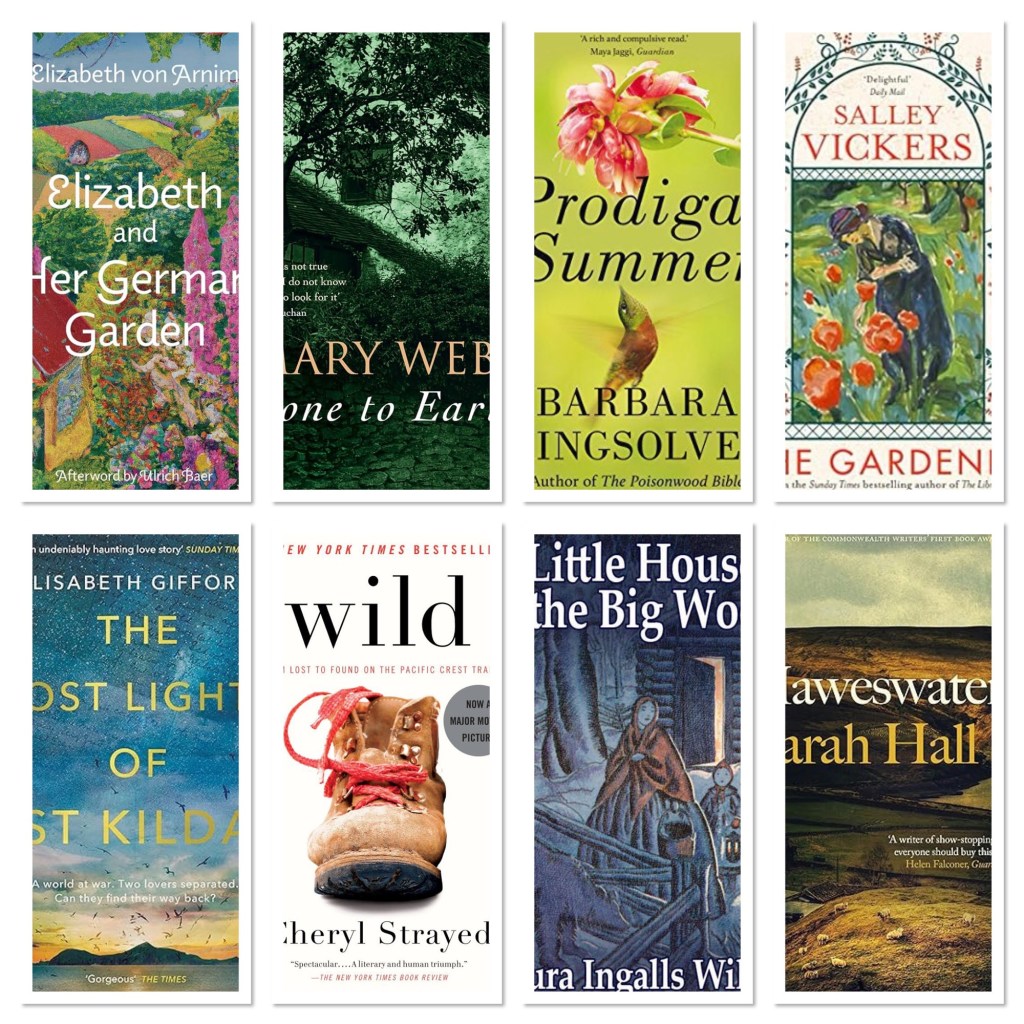
If I’m honest the Little House on the Prairie books are probably where I started to love reading about living in wild places. I think it’s also where I got my ability to make a home wherever I ended up. When we were small we moved wherever my Dad had work, so usually on farms or land drainage pumping stations – an absolute must in the flatlands of Lincolnshire! So every house was a ‘tied’ cottage and never belonged to us, although my Mum went out of her way to make every place a home. We both love these books, although of course we understand more about pioneer families now. Slowly moving further out to wilder areas, claiming land that until then had been Native American territory. Some of the language and attitudes towards Native Americans in later novels certainly reflect the attitudes of the time. This first book always stays with me, not necessarily because of the plot but because of the lengthy description of what life and nature was like. I remember a party when families came together to harvest maple syrup and the candy the girls would make out of syrup and snow.

I loved the harvesting, possibly because it was a part of our lives too, since we lived on a fruit farm for a few years so mum was always making pies, crumbles and jams. I must admit having my own pantry was a life goal, it had me gathering and freezing as well as making chutneys and plum brandy (absolutely lethal). There’s a huge satisfaction in growing your own and filling the pantry with enough preserves and chutneys to last till next harvest. The author captures how she felt and you always know that you’re experiencing life through the eyes of a small child. There are scary moments here – such as a big cat lurking overhead in the woods or bears stumbling into their homestead, but somehow the main feeling you come away with is how cozy and safe she was made to feel by her parents. I’m sure the reality for the adults was a lot harder. What I love is how their lives change through the seasons because they’re working with nature whether it’s the sharp cold of winter or the first warm spring day.

When I was about nine years old we spent some time living in Leicestershire and one of our regular family outings was to the Rutland Water reservoir. In 1975, the villages of Nether and Middle Hambleton were flooded to provide water for growing cities in the East Midlands. All that remains of the village is an old chapel that juts out into the water. We lived nearby in the late 1970’s to the early 1980’s so the reservoir was quite new with none of the facilities it now has, including a hotel, water sports centre and a nature reserve. I used to find it so eerie when I imagined a whole village underneath the water. This book gave me some insight into the experience as well as capturing the beauty and wildness of the Lake District. Set in 1936, the Lightburn family have always lived in a remote dale in the old, northern county of Westmorland. It’s a rural community where the family have been working in the harsh hill-farming tradition – largely unchanged by modern life. When a man from Manchester arrives, as spokesman for a vast industrial project, that will devastate the landscape and the local community. Mardale will be flooded, creating a new reservoir, supplying water to the Midlands’ growing cities. The waterworks’ representative is Jack Liggett who creates more problems by having an affair with local woman, Janet Lightburn. They each represent their respective viewpoints; Jack is all growth and progress, with man making his mark on the landscape, whereas Janet is more aligned with nature and her family’s way of life, now centuries behind. She takes a final, desperate and ultimately tragic attempt to restore the valley to what it has always been.

This book gave me an insight into how my grandparent’s lived, working on the land. The author creates an authentic sense of both time and place, in area that has been out of touch with progress for decades. It’s not just a destruction of a place, it’s a destruction of a whole community and tradition. It takes us away from the modern day touristy Lake District we all know, to when it was wilder and remote. When people wrestled their living from the landscape, working alongside nature and it’s changing seasons at a slower pace. The shock is seismic for those who now have to catch up with modern thinking and ways of earning a living. This is a beautifully written elegy for a time and place that no longer exists.

“Oh, my dear, relations are like drugs, – useful sometimes, and even pleasant, if taken in small quantities and seldom, but dreadfully pernicious on the whole, and the truly wise avoid them”.

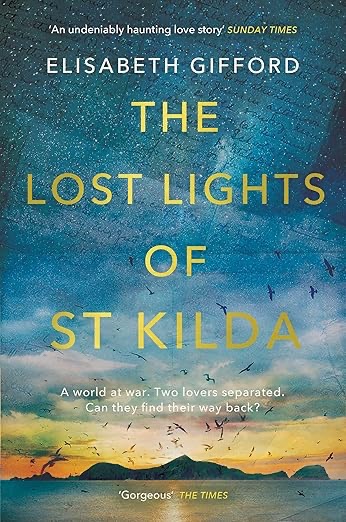
This beautiful book cover always makes me smile. Most readers probably know this author’s other novel The Enchanted April, but this is such a gentle, witty and uplifting story. In a semi-autobiographical diary Elizabeth looks for respite from her husband, a Prussian aristocrat, and their children who she refers to by the month they were born. She came from a highly-educated and slightly bohemian family in England and married at the age of 25. Sadly they were mismatched, her husband was rather somber and dedicated to his duty of farming the estate and keeping it profitable. She comes across as bright and happy by nature, as well as sensitive. This was her first novel, written after seven years of marriage and it really is a literary poem to flowers, gardens, solitude and finding something that feeds your soul. I share her enthusiasm for all things that blossom, often dragging my other half into the garden because something has flowered. She has so much enthusiasm she sweeps you up and takes you with her. This was clearly the place she could relax and be herself. It was written in the late Victorian period so expect a bit of snobbery and a lack of self-awareness. If this doesn’t make you want to pick up a trowel or visit a garden I don’t know what will.

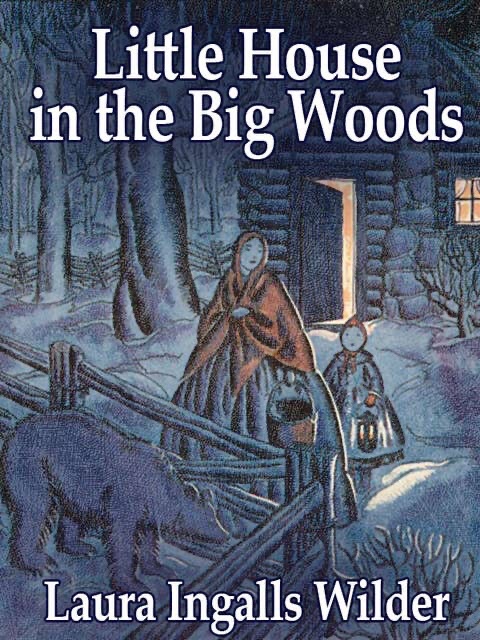
I love Mary Webb, with her novel Precious Bane being one of my all-time favourite books. They are rural based and immerse the reader into nature and a farming way of life, but Gone to Earth’s heroine is so bound to the landscape and particularly it’s wildlife.

Hazel has a pet fox and looks after other wounded or sick wild animals. She wants no more from life than this; to be herself, living in the remote Shropshire hills with her equally unnconventional father. Unfortunately for her, she is young and beautiful. Two men fall in love with Hazel – the good and honourable young church minister and a dissolute squire. She is driven to desperation by their competing claims on her and the pressures of conventional life. Hazel is no more equipped to be a squire’s wife than she is to marry a vicar. Both have very specific roles and duties, requiring her to be social and dressed appropriately. It would take her away from everything she loves and turn her into a caged bird or snared rabbit. She feels hounded, so much so that she’s forced to find a harrowing way of escape. This was Mary Webb’s second book, written in 1917 and set in the hills of Shropshire. It is a dark and difficult story that’s very intelligent and moving. It is Hazel’s connection to nature that’s so beautiful, it’s so clear that this is her place and purpose in life. Gone to Earth became a film in 1950, starring Jennifer Jones as Hazel.

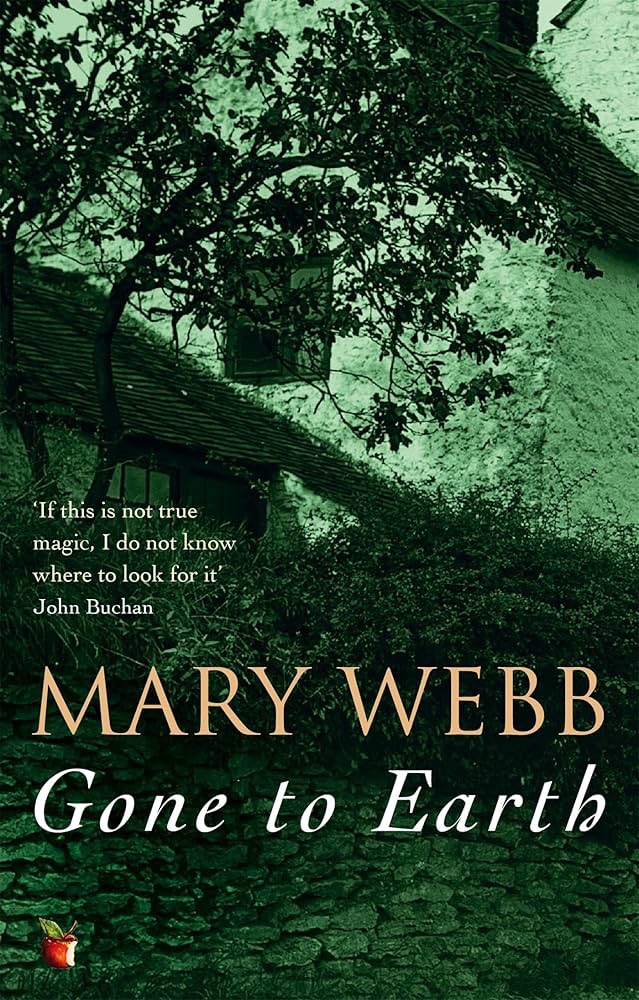
Chrissie Gillies comes from the last ever community to live on the beautiful, isolated Scottish island of St Kilda. Evacuated in 1930, she will never forget her life there, nor the man she loved and lost who visited one fateful summer a few years before. Fred Lawson has been captured, beaten and imprisoned in Nazi-controlled France. Making a desperate escape across occupied territory, one thought sustains him: find Chrissie, the woman he should never have left behind on that desolate, glorious isle. On the face of it, if you read the above blurb you might expect nothing more than a love story. However, even WW2 isn’t the main focus or even the part of the book I remember more than anything. It was the way the author wrote about the islands, these jagged and raw lumps of rock isolated in the ocean. They have no protection against the wind or the sheer power of the Atlantic. Then there are the birds that share the islands and provide the resident’s main source of food. Islanders must climb down the vertical cliff face to reach the birds and they don’t even taste good, considering their only diet is fish. It is bleak, so bleak that in real life the islanders eventually had to abandon the islands for the mainland. St Kilda is a World Heritage Site even now and is home to a tenth of Britain’s seabird population. I was totally immersed in this wild place and the people who scratched a living from it’s rocky and inhospitable outcrops.

Artist, Hassie Days, and her sister, Margot, buy a run down Jacobean house in Hope Wenlock on the Welsh Marches. While Margot continues her London life in high finance, Hassie is left alone to work the large, long-neglected garden. She is befriended by eccentric, sharp-tongued, Miss Foot, who recommends, Murat, an Albanian migrant, made to feel out of place among the locals, to help Hassie in the garden. As she works the garden in Murat’s peaceful company, Hassie ruminates on her past life: the sibling rivalry that tainted her childhood and the love affair that left her with painful, unanswered questions.

As she begins to explore the history of the house and the mysterious nearby wood, old hurts begin to fade as she experiences the healing power of nature and discovers other worlds. This is such a gentle read, it’s quiet and contemplative but ultimately joyful. This is for people who really understand how healing it is to be in the open air and being connected to the seasons.

At twenty-six, Cheryl Strayed thought she had lost everything. In the wake of her mother’s rapid death from cancer, her family disbanded and her marriage crumbled. With nothing to lose, she made the most impulsive decision of her life: to walk eleven-hundred miles of the west coast of America and to do it alone. She had no experience of long-distance hiking and the journey was nothing more than a line on a map. But it held a promise – a promise of piecing together a life that lay shattered at her feet… This read is a real journey that ultimately saves a life. It’s beautifully written, honest and raw. The author pits herself against the elements on the Pacific Coast Trail because she believes it will help her process everything that’s happened. She will be confronted with her self, every day, and forced to wrestle with her demons. She’s hoping that the walk will be a line, between her old ways of behaving and she will come out the other side with something to build from. She’s out in the open every day, whatever the weather and is reduced to her most essential self. I loved how she starts to notice the flora and fauna around her. It’s amazing to see how much the trail gets into her brain and ultimately changes her outlook.

It is summer in the Appalachian mountains and love, desire and attraction are in the air. Nature, too, it seems, is not immune. From her outpost in an isolated mountain cabin, Deanna Wolfe, a reclusive wildlife biologist, watches a den of coyotes that have recently migrated into the region. She is caught off guard by a young hunter who invades her most private spaces and interrupts her self-assured, solitary life. On a farm several miles down the mountain, Lusa Maluf Landowski, a bookish city girl turned farmer’s wife, finds herself marooned in a strange place where she must declare or lose her attachment to the land that has become her own. And a few more miles down the road, a pair of elderly feuding neighbours tend their respective farms and wrangle about God, pesticides, and the possibilities of a future neither of them expected. Over the course of one humid summer, these characters find their connections of love to one another and to the surrounding nature with which they share a place. I thought the author beautifully debates so many contentious issues around farming and nature: how much harm comes to wildlife when arable farming; the merits of vegetarianism and veganism, and whether we can be ethical meat eaters; the difficulties of cultivating crops and dealing with diseases in trees; studying animals without disturbing or changing them. It’s about how we humans interact with nature, the changing seasons and how fertile nature continues to be.

Posted in Orenda, Random Things Tours

Son by Thomas Enger and Johana Gustawsson

The blurb on the back of this novel promises an electrifying blockbuster that will be the start of a ‘nerve shattering’ new series. So there’s a lot to live up to, but don’t worry Son definitely delivers. To use a rather impolite phrase, this is a therapist’s wet dream of a novel – hidden characters, unexplained black outs, grief, trauma and an investigator who is dubbed ‘The Human Lie Detector’. I was definitely in my element here. Kari Voss is the centre of this tangled web, a psychologist who specialises in memory and body language making her a perfect consultant to Oslo’s police force. When two girls are brutally killed in a summer house in the village of Son, it’s a crime that’s closer to home than she would want. The girls, Eva and Hedda, were best friends with Kari’s son Vetle when they were younger. In fact it was while on a holiday seven years ago that Vetle disappeared in nearby woods and was never found. The girls are now teenagers and were planning a Halloween party for their friends, but were found tied to dining chairs with their throats cut. They were found by a third friend, Samuel Gregson, when he turned up to start the festivities. However, there was someone else there, someone who left slippery marks in the blood that has poured onto the floor. He’s the first person that police chief Ramona Norum arrests and starts to question. When Kari is asked to consult she knows this will be difficult, not only is she friends with the girl’s families, but their lives are inextricably linked to her missing son. How will she negotiate all the emotions this case will unleash and stay focused enough to find the girl’s killer? 

Often with thrillers, I find they’re full of action, twists and turns that are really addictive, but have no emotional depth. The characters are often one dimensional and it’s hard to care about what happens to them. There’s no danger of that here. This is the perfect combination of twisty and unexpected, but underpinned with huge emotional weight. It’s deeply unsettling, with a questionable suspect and an equally unreliable narrator. Not only is Kari still dealing with the trauma of losing her son, she’s also grieving for the more recent loss of her husband. She can’t sleep and seems to running on empty from the start. Yet, the way she observes people is so detailed and it seems almost effortless. This goes way beyond the basics like crossed arms meaning someone feels defensive. In a lecture she tells students that in the space of an ordinary conversation we give away over eighty-five non – verbal signs about the mood we’re in. She’s not afraid of giving an unpopular opinion either. She absolutely backs the science and her ability to analyse people, whether they’re claiming to be innocent or guilty. I loved the tension created by the authors as they played with her expertise and her emotions. Is she detached enough to make a sound judgement here? As if that isn’t enough, there seem to be instances where Kari loses time. She wakes up in the car on her own driveway with no recollection of the journey home. She seems to have been on autopilot, so caught up in her own thoughts she hasn’t noticed the journey. She had similar blackouts after her husband died, but what has triggered them? When the young man arrested at the scene of the crime also seems to have experienced a black out I wondered whether he knew her history. Could he be deflecting attention from himself because he knows Kari’s secret? Or is Kari more liable to believe a story like that because she’s experienced it herself? It’s this complexity that makes the plot and Kari herself more fascinating. 

No one is what they appear here. As Kari starts to ask questions about Eva and Hedda, it turns out that they aren’t always the polite children or young teenagers they appeared to be to the adults in their lives. Everyone has different layers, choosing what to reveal and to whom they reveal it. The authors are very clever about the amount of introspection they use, creating a hidden layer to the crimes and a breathing space between the character driven chapters and the ones filled with nail-bitingly intense action. Then they throw in another twist, to keep you engaged, leaving me unsure of my own deduction skills. There’s even subterfuge in the title, Son is a place that’s slightly north of Oslo, steeped in Nordic history and full of that unsettling atmosphere that I find Nordic Noir is so good at. Yet it’s also a person, so missed by those who love him and inextricably linked to this landscape, that has potentially become his final resting place. I was compelled to read this to the end, taking it everywhere with me on holiday so I could grab a chapter in a coffee shop or even in the car. This is an engrossing and addictive start to a promised new series and I’m already craving the next instalment.  

Out on 13th March from Orenda Books

Meet the Authors

Known as the Queen of French Noir, Johana Gustawsson is one of France’s most highly regarded, award-winning crime writers, recipient of the prestigious Cultura Ligue de l`Imaginaire Award for her gothic mystery Yule Island. Number-one bestselling books include Block 46, Keeper, Blood Song and her historical thriller, The Bleeding. Johana lives in Sweden with her family. A former journalist, Thomas Enger is the number-one bestselling author of the Henning Juul series and, with co-author Jørn Lier Horst, the international bestselling Blix & Ramm series, and one of the biggest proponents of the Nordic Noir genre. He lives in Oslo. Rights to Johana and Thomas’ books have been sold to a combined fifty countries and, for the first time, two crime writers, from two different countries, writing in two different languages, have joined forces to create an original series together.

Posted in Random Things Tours

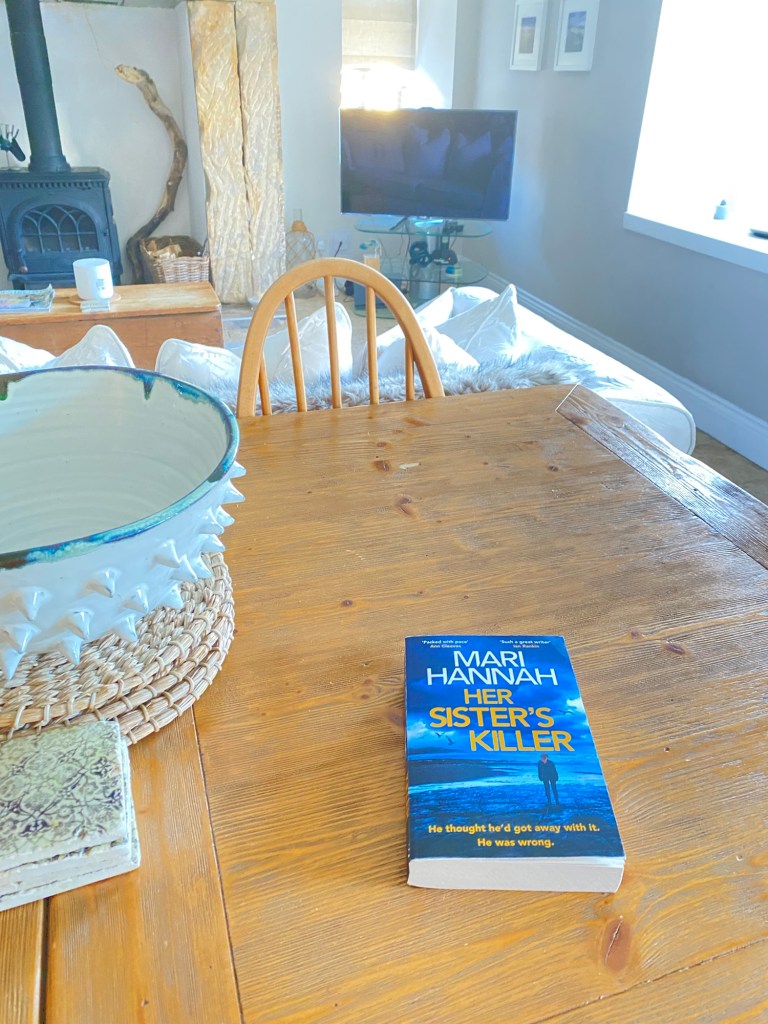
My Sister’s Killer by Mari Hannah

I’ve slowly been collecting the Stone and Oliver series over the past year, after one took my fancy in Northumberland’s famous Barter Books in Alnwick. Since then I’ve grabbed the paperbacks wherever I found one so I could read them all in order. Then this blog tour offer came along so I jumped at reading one completely out of sequence. Now I can’t wait for the rest of the story! 

Frankie Oliver and David Stone have been working together in the same MIT for the a few years, in their Newcastle headquarters jokingly referred to as ‘Middle-Earth’. However, the novel starts in a much darker place, many years before, when another detective is called to a body found on some waste ground. Horrified, he drops to the floor unable to contain his devastation. The body on the ground is his daughter. It’s such a powerful and emotive opening, leaving us in no doubt that this is a defining event for the loved ones of this girl. An absence that they still feel every day. For her dad it’s complicated by the fact he’s a murder detective and he missed Joanna’s last call. It’s arguable that this case is the very reason that her sister, Frankie Oliver, became a detective. She and David are an incredible team at work and have the potential to take their relationship further. It’s clear there’s been some ‘will they won’t they’ over the course of the previous novels. Now Frankie is taking a break from the team in Newcastle, a promotion to DI means she must fill a post back in uniform for a while, based out of the most northerly police station in the county, Berwick-Upon-Tweed. Frankie accepts and the team organise a leaving ‘do’. It’s there that Dave overhears an argument that immediately propels him back to the murder of Frankie’s sister. What’s said between the two men outside the venue sparks an idea in Dave’s mind. He has had an idea of how to investigate the cold case, but knows that he doesn’t want to bring more pain to the family. Hopefully Frankie’s secondment to Berwick means they won’t have to. 

Meanwhile Frankie’s first job is an RTC on the A1 and in the total chaos she finds a little boy handcuffed in the back of a van. The driver and passenger are dead and the van is a write off so Frankie can’t believe this little boy has survived. As she rescues him, an onlooker tells her that a man escaped out of the back doors straight after the crash. This opens up a trafficking case that might take her straight back out of uniform again. The boy, Amir, takes to Frankie. Possibly the first person in a long time who has made him feel safe. She shows a real maternal side with him and her sister-in-law Andrea is sure that Frankie’s sister Rae will feel the same. Andrea and Rae have been looking at fostering, much to Frankie’s surprise. Could they be the right fit for this terrified boy? Dave has been missing Frankie’s presence but he knows that solving the case of what happened to Joanne matters to her more than anything. He has just one officer -Indira- and a limited time scale to investigate. Frankie is the only person he wants to talks to but she can’t know until and if, they make an arrest. Especially since he suspects the murderer may have been closer than they ever imagined.

This really is a nail-biting story, written in very short chapters that are easy to devour very quickly. So many have a cliff-hanger ending too. The setting is beautifully captured in it’s contradictions: the modernity and buzz of Newcastle with the contrast of the wild countryside and beautifully rugged coastline. There are differences in policing too as we can see from Frankie’s time on the Scottish Borders. I really fell in love with Frankie’s family, because they are so loving and nurturing with each other. I could see how taking in Amir could be the best thing for him, but it could also put the tightly knit Olivers under stress or even into danger. I kept thinking about how distraught the family would be if something happened to him or to those like Andrea and Frankie who are trying to put the child trafficking gang out of business. The author cleverly uses these family dynamics, as well as Dave and Indira’s gentle and nuanced interviewing on the murder case, as a contrast or perhaps a breather between Frankie’s more nail-biting action sequences. The only drawback was that I’d be so desperate to know what happened next for Frankie that I might not take in all the detail of the quieter chapter in between. Of course that says more about my lack of patience than the book. As for the relationship between Frankie and Dave, I was very much invested despite not knowing everything that’s gone before. I can see both their perspectives and there are so many reasons not to take a risk, but if we never take a risk we might never know what might have been. It reminds me of the inspirational quote about fear of falling; ‘but imagine, what if you fly?’ 

Meet the Author

Multi-award winning Mari Hannah is the author of the Stone & Oliver crime series, the Ryan & O’Neil series and the DCI Kate Daniels series.

In July 2010, she won a Northern Writers’ Award for Settled Blood. In 2013, she won the Polari First Book Prize for her debut, The Murder Wall. She was awarded the CWA Dagger in the Library 2017 as the author of the most enjoyed collection of work in libraries. In 2019, she was awarded DIVA Wordsmith of the Year. In that same year, Mari was Programming Chair of the Theakston Old Peculier Crime Festival. In 2020, Mari was named as DIVA ‘Wordsmith of the Year’ and won Capital Crime’s ‘Crime Book of the Year’ award.

She lives in Northumberland with her partner, an former murder detective.

To find her or see where she’s appearing, visit her events page at: marihannah.com or follow her on Twitter @mariwriter.