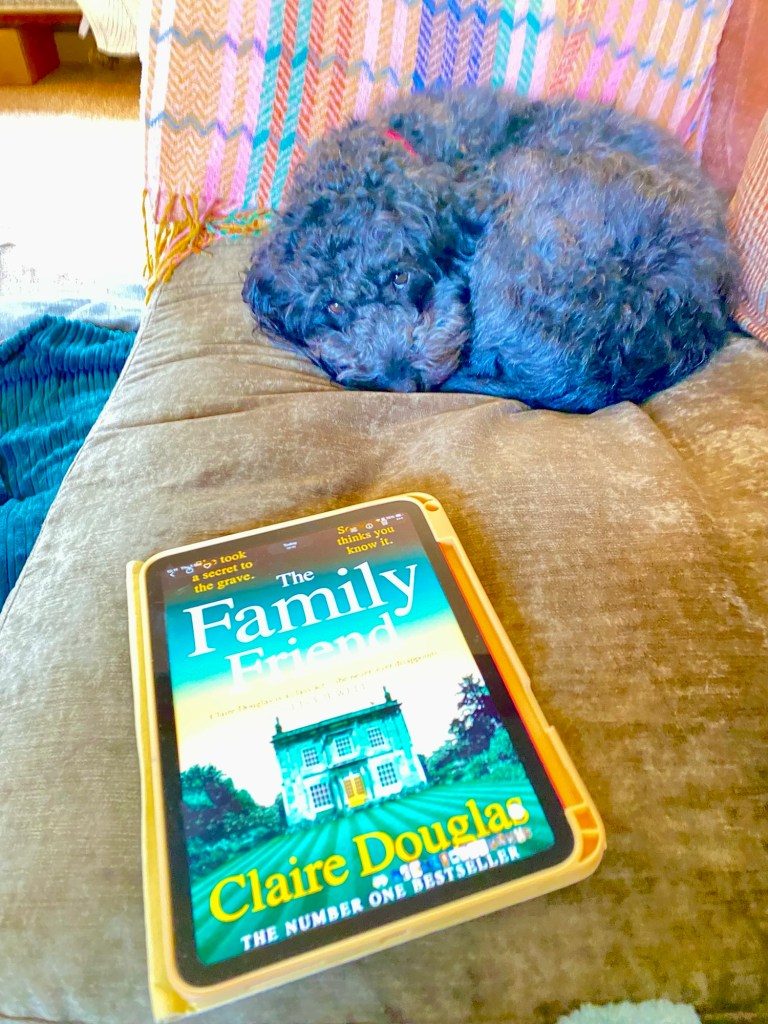
This is a cleverly plotted thriller by the author, designed to grab your attention and keep the questions coming. Imogen has lived with her boyfriend Josh since they were teenagers. She doesn’t have a big family because of a terrible incident in her past, her father was convicted of killing her mother after a Halloween party. With her father in prison, Imogen is lucky to have older sister Alison who put her life on hold to come back and look after Imogen until she went to university. We meet Imogen at a crossroads after a difficult time at work, she’s on indefinite leave from her job as an investigative journalist after a story led her into danger. She’s shocked to receive a phone call from a solicitor who asks her to come into their offices the next day. It would seem that her mother’s old friend Dorothea has died. Imogen remembers Dorothea very fondly after she took them in when her mum left her dad after years of abuse. Dorothea was a rather unconventional woman, an artist who worked with women who’ve suffered domestic violence using art therapy. Imogen has very fond memories of Dorothea’s large Victorian villa, complete with its own wood and studio. Imogen felt safe there, but it is still a shock to learn that this beautiful villa now belongs to her. As Imogen tries to come to terms with this legacy, questions start to form about Dorothea’s intentions. Was her death an accident? Who is the secretive author writing a book about her? What is contained in the underground bunker found in the wood? Imogen thinks all of this has something to do with her past and her investigative brain starts working.
This author knows exactly how to grab a reader and keep you asking questions. She drip feeds the answers by taking us into Dorothea’s past and the reasons she worked with women affected by domestic violence. We go into her own marriage, her meeting with fellow survivors Annette and Rosemary and founding the charity that helped Imogen and her mum. I kept reading, waiting for the flashbacks to that night – the terrible night Imogen and Alison’s mum died. Although with her dad asking to see her from prison, maybe she will have to weigh up different versions of the truth. The author constantly drops little clues and hints such as the items hanging off one of Dorothy’s final sculptures hidden in the bunker. Imogen also finds a piece of expensive cloth torn and caught on a small opening created in the perimeter fence. Is someone watching Imogen or was Dorothea the target? There are also emotional clues in the present with a little red flag popping up around Josh, Imogen’s boyfriend. They’ve been together forever, so it seemed strange that she needed time away from him to process and explore her new home. He also seemed to assume some things, like wanting to take over Dorothea’s office without realising that Imogen is grieving and it’s a space very personal to Dorothea. I didn’t like the sulking and withdrawing when he didn’t get what he wanted. I wondered if the inheritance had made him feel insecure, after all it does belong to Imogen and not him.
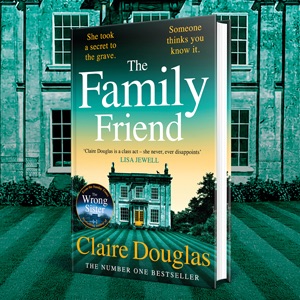
The character I enjoyed most was Dorothea who casts a long shadow over the book, despite being dead. I felt like she becomes Imogen’s saviour again, in many different ways. She has been such a creative woman, something I always admire, but also formidable. Learning some of her history makes us realise why she’s so self-reliant. As for Imogen, she didn’t grab me in the same way and I had a really hard time imagining her as an investigative journalist. I had to wonder whether she was a very different character at work and if so, why does she change at home. If we factor in the trauma of observing domestic violence in the home, it could be that the dynamic has conditioned her to avoid conflict and appear subservient. I felt the longer she was in Dorothea’s house the stronger she became and I hoped she was up to making some very hard choices. Her relationship with her sister Alison is interesting, because she had left home before the home environment worsened. When their father was arrested for their mother’s death, Dorothea offered to have Imogen but Alison wanted to keep her close. Was this a sister’s guilt, a need to keep them together, or was there something in Dorothea that Alison didn’t trust? As a result Alison does have a mum’s vibe with Imogen and it’s interesting to see that relationship develop over the course of the book. It’s very hard for Imogen to accept that Alison has visited their father, who still protests his innocence. This could definitely put a wedge between them. What I missed most was the perspective of Imogen’s mum and I would have loved a flashback into how she felt.
I loved the feel of the house and it reminded me so much of a family friend’s house that we visited a lot as children. They had a horse and lots of other animals, so the house wasn’t spotless but they had art, books and so many beautiful things that I think it influenced my love of interiors and weird objects. It also gave me a yearning to learn and understand art and literature. This is what the summer at Dorothea’s does for Immy, it opens her up to ideas and ambitions she might not have had otherwise. I loved how the sisters come together to try and solve the puzzle of Dorothea’s art and how that closeness allows Imogen to confide in her sister about her concerns; how do we tell the difference between caring too much and control? There’s something about them becoming more open with each other that gives Imogen more strength and purpose. I did not expect to go where the author takes us at the end and I think it was a brilliant idea. Anyone in our lives can be controlling and we must trust our good when it tells us something isn’t right. This was a great thriller, full of unusual twists and clues, plus some red herrings. I thoroughly enjoyed delving into the past with Imogen’s story and particularly the strengthening of the sister’s relationship.
Out now from Penguin.
Meet the Author

Claire Douglas is the Sunday Times number one bestselling author of eight stand alone novels: The Sisters (2015), Local Girl Missing (2016), Last Seen Alive (2017), Do Not Disturb (2018), Then She Vanishes (2019) and Just Like The Other Girls (2020). Her seventh, The Couple At No 9 (2021) was an Amazon number one bestseller, a number three Sunday Times bestseller and most recently hit number one on Germany’s Der Spiegel paperback bestsellers chart. The Girls Who Disappeared was a Richard and Judy book club pick for Autumn 2022 and was an instant number one Sunday Times bestseller. Her books have sold over a million copies in the UK and have been published worldwide.

























 The Lotus Readers