Posted in Personal Purchase

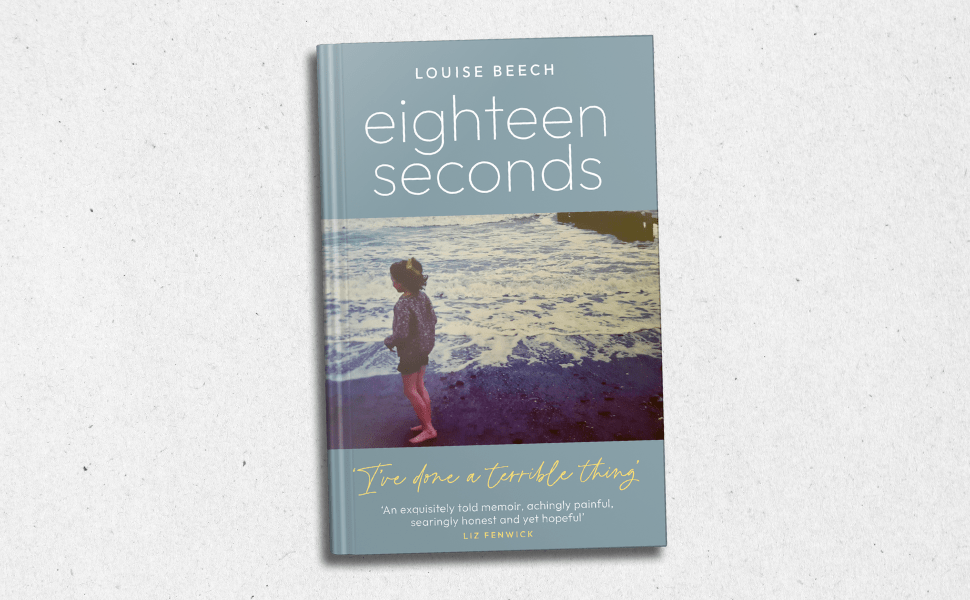
Eighteen Seconds by Louise Beech

My mother once said to me, ‘I wish you could feel the way I do for eighteen seconds. Just eighteen seconds, so you’d know how awful it is.’

I was reading this raw and painful memoir to discuss at my local book club Pudding and Pages. Sadly, my health wasn’t great that day and I wasn’t able to go. So I decided to tell all of you about it instead, because I love Louise’s writing and I identified very strongly with some of her experiences. This is such a psychologically astute story, from someone who has done a lot of work on their childhood trauma, even while being traumatised anew with the shock that comes on an ordinary morning. Normally, Louise would take her children to school and then have a walk along the path at the side of the River Humber and underneath the bridge itself. Her husband asks if she will take her walk earlier than normal as he has a package being delivered later and needs her to be home. She agrees, completing her walk earlier than usual, and returning home to a call from one of her sisters. Their mother has thrown herself off the Humber Bridge, it’s only by changing her schedule that Louise didn’t witness it. This call hits the reader like a punch to the gut and I’m sure that’s how she must have felt. If you’ve ever had a similar call you’ll know it hard to communicate the force of that moment. Your mind is still at home holding the phone while your body is grabbing the car keys and scrambling to reach A+E as soon as possible. 

Honestly, the siblings are shocked to find their mother alive when they reach the hospital. She landed, not in the water but on the path, causing multiple broken bones, internal bleeding and head injuries. As they navigate those first few hours Louise contrasts them with inserts that are flashbacks to their childhood. Their mum’s first suicide attempt flashes through her mind. The three girls were placed with grandma for several month, but Baby Colin had to be taken into foster care. Although losing their mum was terrifying for Louise’s younger twin sisters it must have been desperately traumatic for Colin who lost his whole family that day. She describes these months with grandma as the safest and most loved she ever felt. Their return to their mother heralded the worst years of their childhood, the abuse ranged from neglect to prioritising her own needs and emotions over that of her children. New relationships always came first, placing them in grave danger as she plunged headfirst into alcoholism. For Louise, as the eldest, it meant being a second mum to the other three while mum partied. In a way Louise became the identified problem of the family – she’s miserable, no fun and constantly moaning according to her mother and her male friends. It was an immense struggle to keep the younger ones happy, especially the girls who worried every time the door closed that their mother would ever come back. The didn’t know she was choosing to be in the pub. Louise’s attempts to get her mother to see what effect her alcoholism was having on the twins were met with either silence or insults, depending on which friend was drinking with her at the time. She just wants her mum to be responsible for her own children. 

This is such a hard read in parts but it isn’t without humour and hope. Once her mum is recovered enough to talk again, her sense of humour is restored and she is remarkably charming when she wants to be. I loved how the siblings handled her, with a patience and humour she barely deserves at times. I loved the sibling’s family WhatsApp group, including their Uncle Edwin who’s in Australia. Their ability to share gallows humour, even in the worst of circumstances reminded me a little of my family. Their discussions about her underwear and accusing Colin of sneaking it away, descends into uproar when he tells them it looks better on him. ‘Well you haven’t seen it on Edwin’, one of his sister’s hits back. My family and I used gallows humour all the time when my husband was dying. From my own experience I recognised the bulldozing that happens in MDT Discharge meetings, where everyone is agreeing to a plan you haven’t said yes to. Once I was told by an NHS Continuing Care nurse that my opinion didn’t really count because I wasn’t a nurse. No consideration to the fact that the care was happening in my house and I was the only full-time carer. In fact I was carrying out medical tasks such as pump feeding, suction and catheterising, so to all intents and purposes I was nursing him. The horror of realising there was nowhere for my husband to die broke me, because he didn’t have cancer so couldn’t go to a hospice. He wanted to come home but I couldn’t do it alone, Louise writes about similar issues in a very matter of fact way, because that’s the only way to be at times like this – blunt and forthright. Then in between the family uses humour to deal with a hurt that can’t heal and can’t change. 

I read this at a difficult time for my family, because my mum and her two sisters are dealing with care for my 90 year old grandmother, who has been a very difficult woman. My mum has felt completely overlooked by her mother, often left out of decisions or not considered when it comes to family memories or possessions. As the only daughter with any memory of her grandma (always referred to as Mother) she had hoped to be given her engagement ring when the time came, with her sisters receiving the wedding and engagement ring of their own mum. She was really upset to find her middle sister had been given Mother’s ring, with the other two going to her youngest sister. It wasn’t the item as much as the memory, not helped by my grandma saying ‘well the others really wanted them and I knew you wouldn’t make a fuss’. This total lack of consideration opened a Pandora’s box of hurt, including a terrible decision made when the family returned from a spell in Australia in the late 1960s. Having to accept housing away from their home city of Liverpool, they settled in Scunthorpe but both of my grandparents needed to work. My mother was twelve and her two sisters were pre-school age, so my grandma didn’t register my mum for school and left her at home caring for the younger children. This lack of education was devastating for my mum who felt like she was sacrificed for the good of her sisters and also felt ashamed that she had few qualifications. It affected her opportunities but also her confidence, leading to life long mental health issues. Despite this my mum shows incredible intelligence, is well-read and has had a lot of psychotherapy. I think that at the age of 72 she is very in touch with her authentic self and knows that she needs to ration the time spent with her mother, place careful boundaries around herself and us and accept a relationship that’s very one sided. I recognised a lot of my mum in Louise’s personal growth and that motherly relationship with her younger siblings. This book made me realise there are families like ours where intergenerational trauma is a very real part of life. I think the book holds out a lot of hope that with boundaries, solid friendships, somewhere to express the negative emotions and a lot of humour it’s possible to survive narcissistic parenting. Lastly, I admire Louise’s honesty and openness in writing this memoir so beautifully and I hope it has proved both cathartic and healing for her too.

Meet the Author

Louise Beech lives in East Yorkshire and grew up dreaming of being a writer but it took many years and many rejections for her to finally get a book deal in 2015, aged 44. Her debut, How to be Brave, got to No4 on Amazon and was a Guardian Readers’ Pick; Maria in the Moon was described as ‘quirky, darkly comic and heartfelt’ by the Sunday Mirror; The Lion Tamer Who Lost was shortlisted for the Popular Romantic Novel of 2019 at the RNA Awards and longlisted for the Polari Prize 2019; Call Me Star Girl was Best magazine’s Book of the Year 2019; I Am Dust was a Crime MagazineMonthly Pick; and This Is How We Are Human was a Clare Mackintosh Book Club pick. In 2023 her new novel, End of Story, will be published under the pen name Louise Swanson. Louise regularly writes short stories for magazines, blogs, and talks at universities and literary events.
Posted in Netgalley

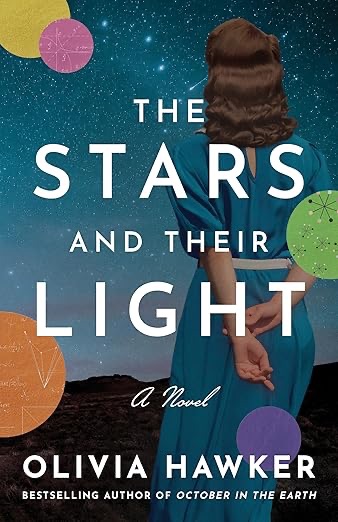
The Stars and Their Light by Olivia Hawker 

I was instantly fascinated with the subject matter of this book – the 1947 Roswell Incident in New Mexico. As any good X-Files fan knows this was the most famous potential UFO sighting in history. An unidentified craft lands in a field and local workers find objects they can’t identify. There are witnesses too who can’t explain what they’ve seen, even though the government claims it’s merely a stray weather balloon. This felt very pertinent at a time when unexplained phenomena, particularly in the USA, are once again giving rise to conspiracy theories such as the Blue Beam Project. Here we meet Betty Campbell whose father Roger is based at Roswell and brings home an object from the landing site. Roger and his friend Harvey Day have been on the recovery team and are shocked by what they found. Both men served in WW2 so they’ve seen action, but this has Roger so confused he goes against orders and takes a fragment home to his family. However, when his daughter Betty handles it, she develops stigmata. Lured by a possible miracle the Catholic Church sends Sister Mary Agnes to stay at a local convent and investigate this apparent miracle. 

This book was different to anything I’ve read before, but was a combination of many genres I love to read – science fiction, historical fiction and family drama. Sister Agnes is part of a local cloistered order, but here she will act as their PR in a way, liaising with local people and being the supportive face of the order. She is certainly the only person supporting the Campbell family, as Roger’s superiors start to shut down speculation. Betty is being ostracised in town and desperately needs a friend. She’s scared, confused and lonely. There are complex emotional matters here, such as how we cope when something we’ve seen surpasses our own understanding or clashes with our faith. There’s a loss of belonging – whether it be to the army, the church or a social group. I thought the interactions between Betty and Mary Anne were full of a yearning to understand and cope with a faith that might waver in the face of unexpected evidence. The clash between the Catholic Church and this encounter with the unknown is an almighty one, but it’s also a clash between the patriarchy and a young girl deemed ‘not holy enough’ to be visited by a miracle according to the bishops who come to witness the stigmata. If it isn’t a miracle what exactly is it? When the church maintains their stance that what’s above our world is heaven and the earth and all it inhabitants were all made over seven days, it seems reasonable to ask who made the other planets? Not to mention the galaxies beyond. Is Betty being punished or rewarded with this miracle? Especially when she discloses that her chosen course of study at college was going to be astrophysics. The church’s attitude is about trying to keep the status quo. Readers who have a faith or who are unable to stretch their mind beyond the established narrative on UFO sightings, might find the novel’s tone disrespectful but I quite enjoyed the anti-establishment feeling.

I would categorise the book as historical fiction more than sci-fi because it’s exploration of attitudes as they were at the time is the central theme of the book. It doesn’t take the UFO story forward or leap into alien worlds. The church’s role and attitudes were specific to the time period too, a plan of shutting down the claims and gossip to keep the church’s current role and influence in the community. Now poor Betty’s plight would be all over Facebook in seconds. I thought the characters, particularly Betty and Mary Anne were well written and felt very real. Their interactions were authentic and rooted within a desire to help. It’s a slow but utterly unique story that I felt fully explored such an unprecedented experience and the way people were affected by it. The author’s note at the back is an absolute mine of information about Roswell and the historical documentation on the event. We’re also told about the author’s own experiences, which show how she’s managed to write these characters and experience with such authenticity. This was different to sci-fi because it focused on the earth and human interaction with a UFO experience, as well as the response of powerful institutions whose first instinct is to reinforce the existing belief systems and behaviours. I felt that Mary Anne and Betty’s relationship almost existed outside that and became a therapeutic relationship for both concerned. This was unusual, interesting and made me think about my beliefs and how I’d come to hold them.                                                                                                                                                                                                                                                                                                                       

Meet the Author

Olivia Hawker is the pen name of American author Libbie Grant. Olivia writes historical “book club” fiction, for which she has appeared on the Washington Post bestseller list and has been a finalist for the Washington State Book Award and the Willa Literary Award. Her novel One for the Blackbird, One for the Crow, a favorite of readers around the world, was among Amazon’s Top 100 Bestselling Books of 2020. Under her real name, she writes literary fiction, and—via her podcast, Future Saint of a New Era—experiments with modern storytelling techniques that transcend the limitations of the printed word. A permanent resident of Canada, she divides her time between Victoria, BC and the San Juan Islands of Washington State. For more information, please visit hawkerbooks.com.

Posted in Throwback Thursday

The Thin Place by C.D.Major 

I have a fascination for the idea of ‘thin places’ – where there’s only a thin veil between our world and the spirit world, or possibly passages to another time or dimension. I am swayed towards the idea that it’s where something traumatic happened and left an imprint on a place, so that however much time passes, the events of that day can break through and be replayed almost like an echo of the original event through time. Ava Brent is a journalist who is investigating one such place. The Overtoun Estate is a strange and looming presence over town and no one seems to know it’s specific history, but it’s rumoured to be a thin place, steeped in myth. The legend is about a bridge where it’s claimed many dogs have thrown themselves to their deaths. The locals steer clear and when Ava begins to ask questions the warm welcome she received at first becomes a cold shoulder. When she discovers that a sick young girl lived there, the sadness that surrounds the building starts to make sense. Ava is expecting her first child so is maybe susceptible to this tale, but a message scratched into a windowsill  fills her with horror. What happened here and is she really prepared for what she may discover? What might her fascination with this place cost? As her life begins to unravel, she knows she should cut her losses and walk away. Then threats start to arise, but Ava can’t deny that despite the fear she is compelled to return. 

This was an excellent slow burn gothic novel from an author that was completely new to me. I am interested in tales of motherhood and the paranormal, brought to my attention at university where I was influenced by Frankenstein and Rosemary’s Baby on my Gothic, Grotesque and Monstrous course. There’s something about the extraordinary changes in the body and the idea of another person growing inside you that’s open to the world of monsters; rather like a human set of Russian nesting dolls. I think it’s also horrifying when a horror exploits that moment when both mother and baby are at their most vulnerable. Ava is drawn to the specific bridge on the property, despite the strange and eerie feelings that congregate there. Ava is taken in by it’s ’otherworldliness’ and slowly it takes over her life. The author lets us into Ava’s inner world by devoting some of the narrative to her journal entries where page after page is devoted to her ramblings about the place. Her home life starts to become disrupted, self-care goes out of the window and even her pregnancy can’t compete with her drive to discover the truth. 

In between Ava’s story we’re taken back to the historic occupants of the house. In the 1920s it’s Marion who lives there, a newly wed who feels lonely as her husband is away a lot for work. Then twenty years later it’s Constance, the sick little girl who is almost a prisoner, kept inside by her over anxious mother. Is she really the sick one in her family? Or is there some other motivation keeping her life so limited? We never know during these narratives whether what we’re being told is the truth. Are the women seeing events truthfully or skewed through the filter of their own experience? We all the view the world through our own learning, experience and emotional state so we have to question whether Ava’s state of mind is colouring her judgement? Is Marion’s loneliness affecting how she views the house? Could Constance’s illness and solitary existence have left her vulnerable to suggestion? All three could be unreliable narrators and the atmosphere can’t help, a sense of unease that settles over them and us. The darkness and mood seem to follow Ava like a miasma, created by every bad thing that’s happened there. It’s this that envelops her and draws her back again. Some historic events are appalling and I was affected by the scenes of animal abuse, as well as pregnancy trauma that’s also depicted. The scenes detailing pregnancy complications left me needing a few deep breaths and a cup of tea. That just underlines how well written the book is. I swear that as the book went on my blood pressure was climbing along with Ava’s. I was also left with a disoriented feeling sometimes and I think it’s a clever writer who can echo the character’s experiences with the feelings she evokes in the reader. 

The supernatural elements were very subtly and gently done, with the mere suggestion of the paranormal being enough. The way I felt while reading proved that this was the type of gothic horror I really enjoy. It felt like a classic horror that creeps up on you woven in with the sort of historical background that really grounds the characters in their time. The author uses the supernatural elements and the terrible story of the dogs, to tell us something about mothers and daughters – daughters being an echo of every woman who has come before them in the family line. It’s also about how the women fit into their world and I loved how the author explored the expectations on women and pressure placed on them by others and society in general. The author’s notes at the end are so interesting too, especially the elements of the book based on a true story. Overall this was a great combination of gothic storytelling and a compelling historical thriller. 

Out Now from Thomas and Mercer

Meet the Author

C. D. Major writes suspenseful books inspired by strange true stories. Alongside her thrillers she writes big love stories as Cesca Major, rom coms under the pseudonym Rosie Blake and emotional women’s fiction as Ruby Hummingbird. All information about her books, Book Club Questions and more are over on her website http://www.cescamajor.com. Cesca lives in Berkshire with her husband, son and twin daughters. She can be found on Twitter, Facebook and Instagram and enjoys connecting with readers.

Posted in Netgalley

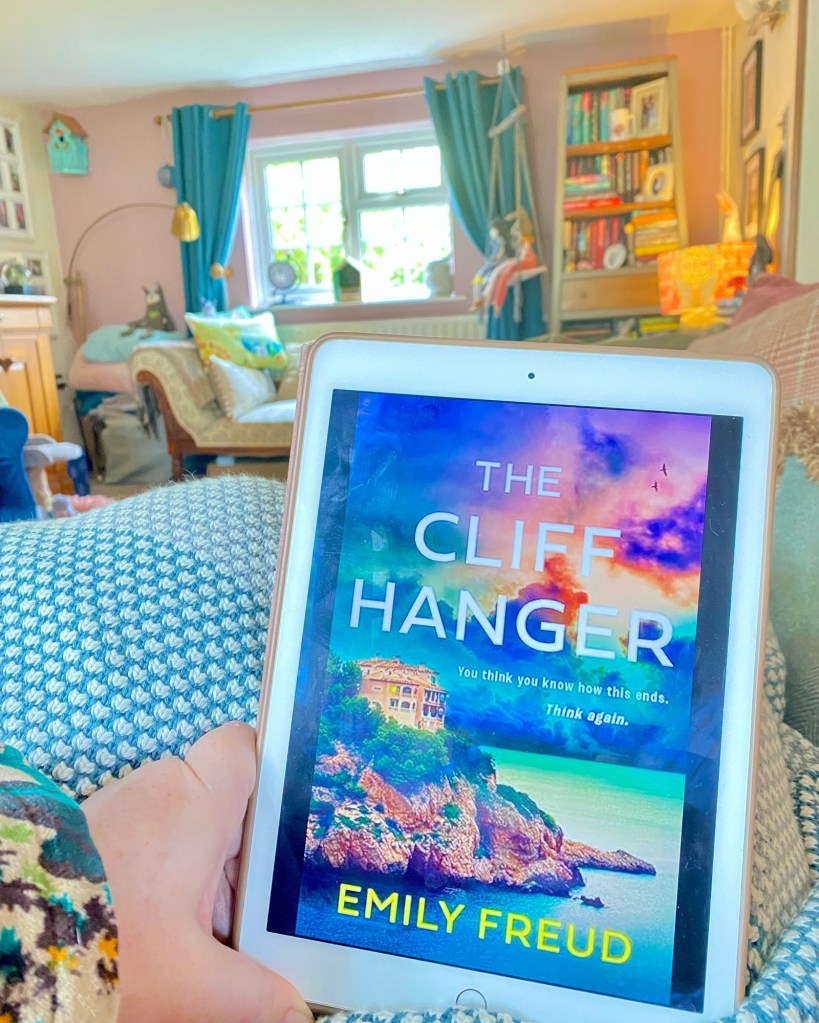
The Cliff Hanger by Emily Freud

You think you know how this ends. Think again.

Goodness this was a wild ride, full of unexpected twists, characters that are pathological and a book being written within a book. Married couple Felix and Emma seem to have it all. They are the husband and wife team behind the hugely successful Morgan Savage thrillers. However, their latest novel isn’t coming as easily as their others. Felix is drinking to the point of blacking out and had an affair with a girl called Robin who worked for their publishing house. Emma is angry and popping anxiety pills any chance she gets. Their publisher Max, exiles them to the South of France in the hope that new surroundings for the summer will unlock their creativity. The house is beautiful, on a cliff overlooking the sea, when visiting housekeeper Juliette tells them a story about a painting that hangs in the house an uneasiness hangs in the air. The girl was prone to sleepwalking and one night got out into the garden and walked directly off the cliff edge. Sometimes, her cries can be heard at night. Under the sweltering sun, will the couple heal their differences or will they become trapped in a deadly game that beats the plot of any Morgan Savage bestseller. 

This is a slow burn thriller, but when it does start to speed up it’s like a runaway train. Emma seems quite rigid and tightly controlled, almost as if she’s stifling her true feelings or self. Felix appears to be the more relaxed of the pair, sociable and happy to succumb to the pleasures of France. The couple met in a New York book shop, where Felix was sitting with his well worn copy of The Catcher in the Rye. Emma had a studious air, probably from the extra large glasses she wore. Both had always wanted to write but hadn’t yet succeeded. Years later Emma has become a neutral wearing, elegant and sophisticated woman who doesn’t like to be out of control. As an editor she knows what sells when it comes to fiction and how to jazz up or change the structure of a manuscript to create a bestseller. She writes early in the day, always sending her chapter of the book to Felix by 10am and then relaxing by the pool. Felix receives the chapter alongside little notes with suggestions or directions for Felix to follow. He falls out of bed (or wherever he slept) whenever he wakes, often nearer to lunchtime than breakfast. He has a leisurely start with plenty of coffee and when he’s feeling human again he gets to the book. He accepts that this is the way their joint writing works, but since they’re in France why not take the odd day off? He knows that without Emma starting the novel he would struggle. He had dreams of writing a great literary novel one day, but it’s never happened. His skills lend themselves to being the face of Morgan Savage. He does the festivals and book readings, because his charm and abilities lend themselves to being out front. He even signs their books as Morgan Savage, so it’s usually him people recognise. Emma stays behind the scenes, preferring the work to the publicity. She starts the new book on their first morning and then pushes Felix into his chapter each day to keep the momentum. Even in the quiet it’s clear there are resentments between them, a marriage’s worth of petty differences building towards a crescendo. 

Over the days little snippets of their lives emerge until we finally see the full picture. The pace picks up and the chapters get shorter and I was soon racing through the chapters to see what would happen next. My other half found me sat on a kitchen stool, cooking and reading at the same time. It leaves you desperate to know what happens next. At one point I had to check how close I was to the end on my Kindle but found myself really confused when I still had 15% of the book left. I thought I’d reached the end, that’s how clever the twists and turns are. I loved the book within a book, especially the way they are writing characters that explored their own marriage. Each has their own version though and while Emma would signpost where Felix should go next, she would receive his chapter and find he’d develop a character with entirely the opposite emphasis and behaviour. They’re using their writing like couple’s therapy, working out the kinks and plot holes but also punishing and spiting their spouse at every turn. It gets even more exciting when the tone and quality of the writing start to change at one side of the partnership. There are mistakes in grammar and spelling, but is this a sign of deteriorating mental health, over use of drink or drugs or something more sinister. I found myself wondering whether I trusted either narrator. 

Juliette is the girl who services the property. A carefree and natural young woman who cycles the area doing odds and ends for work. She’s the epitome of the term free spirit and could be a prime opportunity for Felix to continue his philandering ways. However, he’s confused when Emma befriends her, despite them being so different. Emma is also affected by Juliette’s story of the girl falling from the cliff and even has a bout of sleepwalking herself. Felix finds her in a trance in the living room and convinces her to go back to bed. Is this a reaction to Juliette’s story or something else? Emma was starting to remind me of Parker Posey’s character in the latest series of The White Lotus, uptight and reliant on pills to function. Could this be why the quality of the writing deteriorates or is Felix busier in his blackouts than previously thought? Just because he can’t remember doing anything, doesn’t mean he isn’t. This was a great story to get my teeth into and honestly, if they’d come to me as therapist, I might have asked them if they’d considered living apart. It’s a toxic atmosphere from the moment they arrive, but just when you think you’ve worked out why and what’s really going on it will surprise you again. As we go back in time, using flashbacks to important events, we can see how their romantic and professional lives began but these glimpses started to make me question what I thought I knew. I wanted to race back through the chapters to search for the clues that brought us to the unexpected conclusion. This was a thrilling and atmospheric read, with a brilliant portrayal of how a relationship has become toxic. If you love relationship dynamics partnered with a whole amusement park of twists and turns this will be your next completely unputdownable read. 

Out 8th May from Quercus

Meet the Author

Emily Freud is the author of four thrillers: My Best Friend’s Secret, What She Left Behind, Her Last Summer and, coming in 2025, The Cliffhanger. She spent her career working on award-winning television programmes, including Educating Yorkshire, First Dates, and SAS: Who Dares Wins – as well as developing original programming for all the main broadcasters. 

Posted in Monthly Wrap Up

Best Reads April 2025

It’s been a busy month at home so there’s been a little bit less reading, but what I have read I’ve really enjoyed. As is often the case it’s a straight split between historical fiction and crime. Weirdly it’s also a straight split between debuts and books that are the third in a series. There are some definite contenders for my favourite books of the year too. I hope to be reading a bit more in May, getting back into my stride with a couple of blog tours and a read with my squad ladies too. One things for sure, I’ve enjoyed mood reading so much that I’m not going to overload myself with tours going forward. I’d forgotten the joy of picking up whatever suits, rather than having a rigid schedule, My bank holiday is going to be quiet with plenty of reading and journaling. We’re planning to spend some of it outdoors, accompanying my other half fishing. Just us, the dog, my comfy camp bed and outdoor cooking. Usually I end up sharing my bed with the dog because it’s so comfy. I’ll also be taking a book of course. ❤️📚

I really do enjoy my time spent in Molly the Maid’s world. It’s one of those books where I find myself smiling as I read. It only takes a couple of sentences for me to feel like I never left her world. In some ways her life could be seen as unchanged. She’s still Molly, as wholly herself as ever, living in her late grandmother’s flat with her fiancé Juan, chef at the Regency Grand. In other ways things have changed, Molly manages the maids and has become ‘Events Manager’ so she’s definitely gone up in the world at work. Two events loom in the near future – Molly and Juan’s wedding at City Hall is on the horizon – but today the two darlings of the antique world are filming an episode of their TV show in the tearoom of the hotel. Beagle and Braun, known jointly as the Bees, are the married presenters of ‘Hidden Treasures‘. A show runs like our own Antique Roadshow where people queue to have their valuables appraised. Before they leave the flat that morning, Juan suggests Molly takes her grandmother’s box of treasures, including a highly decorated egg. When the Bees see this particular treasure their eyes light up. They seem to know immediately that this is very special and they must have it on camera. As the cameras roll they tell Molly that this looks like a lost Russian imperial egg, the prototype for all the ones that follow. It’s one of a kind, decorated with rubies and emeralds by Faberge himself. Now worth several million dollars. Molly doesn’t seem to take the news in and wants to carry on as normal, but as the clip is shared online that becomes impossible and Mr Preston has to take them home. Will life ever be the same again? Things go from bad to worse when during an auction at the hotel the egg disappears, despite being on a plinth and glass case in the middle of the stage. Now Molly must work with Detective Stark to find it, but this is a search that will take us back into the past. Molly really does prove in this novel that she’s a ‘good egg’, pardon the pun. No temptation lures her from the things she values – her job, Juan, Mr Preston and her flat. It was interesting to get some back story on her grandmother too and understand why she brought Molly up the way she did. This is a charming and heartwarming novel and a brilliant trilogy to delve into if you haven’t already.

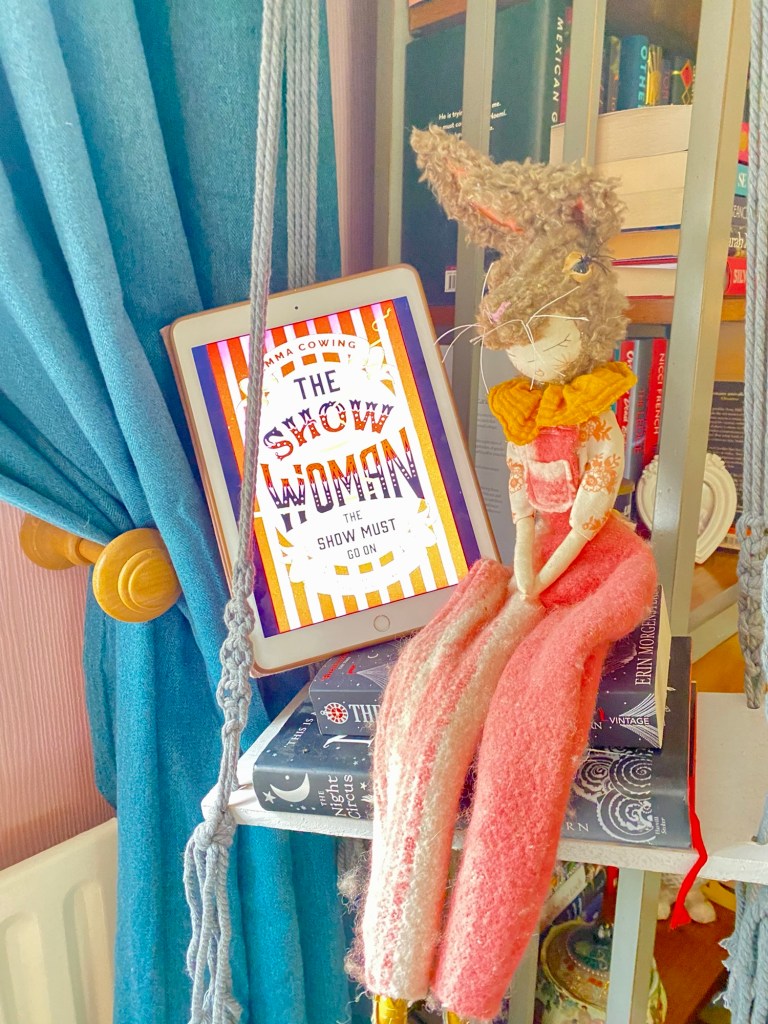
The Show Woman has been on my TBR since January and I was delighted to be accepted for a NetGalley ARC. I love all things circus, fairgrounds, mediums and freak shows so I was drawn straight away but this was so much more than I expected and has a lot in common with The Eights. Set in 1901 we meet Lena who has lost her father and after his death was left with his carousel and their caravan. She sells the carousel and has the idea of creating the first all-female show with herself as a ringmaster. The only female show woman is Serena Lind and she’s a hard, bitter and vengeful woman who rules her circus with a rod of iron. So when Violet meets with Lena about leaving Lind’s and becoming a trapeze artist for the new show, it sets a scene for what follows. With Rosie and her pony Tommy they have a bareback rider and Carmen the dancer and acrobat makes their four. With an old tent they start to practice and be ready for the next season and with a bit of help from Violet’s brother Harry, they start to become known. This is a story of revenge, friendship, love and women making their own way in the world. I loved how the women bond, living together in the caravan and travelling from show ground to show ground. Lena has the makings of a brilliant show woman but first she needs to find out who is trying to sabotage their circus. Lena becomes the head of this a community that fully supports each other, who listen and understand the circumstances and pain that has brought them here. I was rooting for all of these women and not just the show, but their new found independence and friendships. It was those evenings where they were talking in the caravan after a show, too full of adrenaline to sleep. Or the warm and sunny days when they got chance to swim in a local lake or river, to wash their hair. Then there were the joint efforts to save Rosie’s pony. It’s these moments that are just as magical for these women as the seconds before Violet lets go and flies through the air. 

This was another novel set in the early part of the 20th Century, this time just after WWI. It also features four young women but these meet in the hallowed halls of Oxford University where they will be the first female cohort to be awarded a degree for their studies. Nicknamed the ‘Eights’ because of the room numbers on their corridor, Beatrice, Ottoline, Marianne and Dora are very different, but soon become firm friends as they navigate their first year. Beatrice is political, has a feminist and suffragette mother and is used to being noticed, as she’s usually the tallest woman in a room. Marianne is a scholarship student, but she seems to have secrets, including why she returns home every other weekend. Ottoline (Otto) comes from a wealthy family, but is haunted by her war experiences in a nursing role. She’s had symptoms of PTSD ever since, but also feelings of shame that she couldn’t do her duty. Dora also struggles with the consequences of war, having received the dreaded letter from her fiancé Charles’s regiment to inform her he’d been killed. Just two weeks later her brother George also lost his life. Being so close to Charles’s university only serves to keep him at the forefront of her mind. This seemingly random allocation starts strong friendships as the girls help each other negotiate their university work, their memories of the war and being taken seriously by their male counterparts. I loved every one of these characters and it was wonderful to watch them grow and help each other navigate the choppy waters of academic problems, financial worries, matters of the heart and the terrible experience of loss. I was so sorry to turn the final page and leave their world.

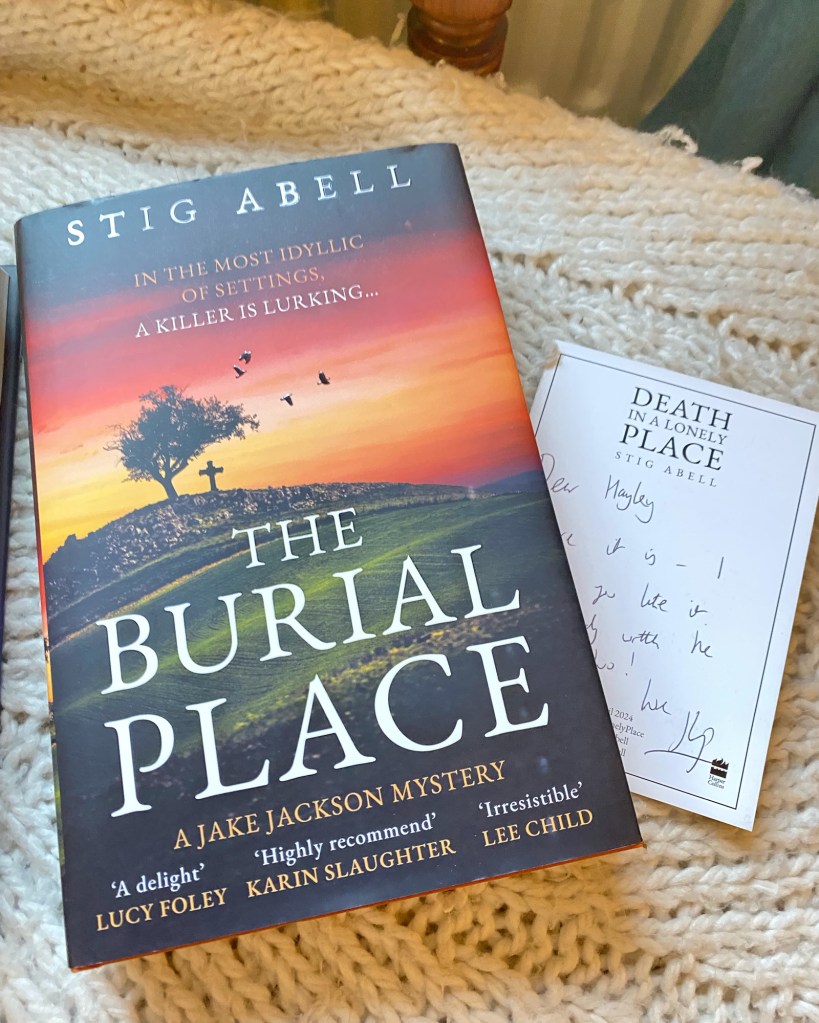
I’ve been re-reading Stig Abell’s Jake Jackson series after winning the latest instalment, The Burial Place, in a Twitter giveaway by the author. This is book number three and while Jake and his ‘team’ tangled with an international criminal gang in the last book, The Burial Place is more of a home grown mystery. There has been an archaeological dig close to Little Sky and a hoard of treasure found nearby. The ownership of this treasure is in dispute because it’s unclear who owns the land where it was found. Meanwhile, work carries on for the archaeologists, academics and local enthusiasts who have been working on the site but when a body is found it must shut down. It’s hard for new DCI McAllister to understand the motive and being new to the area he enlists Jake’s help, both for his investigative skills and his local knowledge. The community are aware that several nuisance letters have been sent to the dig office and various people who’ve worked on the site. They’re a strange mix of threats, Bible verses and ancient prophecies signed off by Wulfnoth – an ancient Briton from the area. They promise a terrible end for the dig and whoever benefits from the treasure found. Can Jake find the killer before anyone else is hurt? Looking at themes of belonging and sacred land, this is a quieter novel but no less deadly. A definite team have formed around Jake, a family of sorts who both work and relax together. There’s also the continuation of the romance between Jake and local vet, Livia and an appearance from his ex-wife Faye that brings about much soul searching and healing. Thankfully he has Little Sky as his sanctuary when things get too noisy and stressful. The home left to him by his Uncle Arthur, shows he clearly knew his nephew very well.

Here’s some of the fiction on my TBR trolley.