
There are two sides to every story…
This is one of those books that needs to be discussed. A perfect book club choice or book you can foist onto a friend because you will want to discuss it. As the cover suggests this is a marriage and a book that splits into two – one of life’s seismic fault lines that has a very definite before and after. Niklas and Bea have been married for over thirty years with two teenage daughters Alexia and Alma. They have what most people would consider the perfect life. They live in a beautiful and sought after area of Stockholm in an apartment that Bea has spent so much time perfecting. They are currently remodelling the kitchen, but it’s bespoke and at huge cost. Niklas is a doctor and has recently taking a job heading up a maternity department. Historically, Bea stayed home with the girls and more recently took a job with the Red Cross. It doesn’t pay a lot but with Niklas’s new wage they don’t need to worry about it. As we meet the family they are preparing to take their annual summer holiday to Holgreps and the home of Niklas’s parents. They go every year at the same time as his brother Henke because this is the only time the cousins get to be together. Niklas has forgotten to book the ferry tickets and Bea is furious. This means spending an extra week in the sweltering heat of the city with no outside space or a long drive to a different ferry crossing. He only has to do one thing, she does everything else and he’s so wrapped up in his new job he can’t do it.
“Bea is busy emptying the dishwasher in the kitchen, but she stops as he comes in. The look on her face is demanding […] Her jaw seems tense, and he can see her chest rising and falling rapidly beneath her blouse. She is disappointed. No, disappointed probably isn’t the right word. She’s angry. Furious. How the hell could you forget to pay the bill? This means we can’t go to Gotland tomorrow, the tickets are all sold out!”
“Niklas feels like shouting back at her, telling her there are worse things. Like being a single mother who has just found out that her newborn son has Down’s syndrome, for example. Or being the man on the ICU ward, watching over his wife as his stillborn daughter is taken down to a cold storage unit two floors below. He feels like roaring that his head is so full there isn’t room for the damn ferry tickets and all the terrible, exhausting planning she has apparently had to do. Niklas wants to shout, but instead he turns and walks away while she is mid-sentence. He can hear Bea’s agitated voice behind him, but to his surprise, he just keeps on walking […] Each step is a relief.”
Bea narrates the first part of the book and we get the sense she feels badly done too. Niklas wouldn’t be where he is without her and she has made sure he lives up to his potential. She talked him into accepting the new job because left to his own devices he would still be pottering along in his paediatrician role at the small local hospital. It’s the same with the apartment, he couldn’t see the problem with the existing kitchen. He’d have made do with it for years, never thinking about what the room could be. Bea looks forward to Hogreps every year, she never really had much of a family herself especially after her brother Jacob died. In the aftermath Niklas had taken her to stay with his parents and on her first mornings there, his mother Lillias took Bea wild swimming. She credits those mornings with saving her sanity, more effective than counselling. Niklas had been Jacob’s friend so they shared their grief and it brought them together. Bea has always thought that anything they do together becomes fun, even if it’s taking items to the recycling tip. So it comes as a huge surprise to her when Niklas sends her a text message to say he isn’t coming home. There’s no further explanation and she doesn’t know if he means he isn’t coming home that afternoon, till tomorrow or at all. Bea’s texts and voicemails are ignored so she tells him that their daughter was expecting him to take her out in the car and she’s upset. She’s still ignored and infuriatingly, when she checks in with their daughter Alma says it’s okay. Her dad has called her and said he’ll take her another time. As one night seems to be extending, Bea is beside herself. Niklas says he wants space, but what from and how long for? Where is he staying? She’s going through that strange feeling that the person you shared space with; the person you could touch whenever you wanted; the person who you spoke to several times a day, is now off limits. It was clear to me that the balance of power had shifted in this relationship but I couldn’t understand why.
“Bea picks up her phone again, staring at the screen as though she an coax Niklas into sending her another message. An explanation of why he is acting so oddly […] but the only messages in their chat thread are Bea’s own attempts to reach him. A long string of questions and exclamation marks. CAPS. Angry emojis. Furious red faces with slanting eyebrows and bubbling volcano heads. Demands for communication”.
“The condescending pat on the head, talking to him as though his choices are reprehensible. As though it’s him who is in the wrong, who is unhinged, when all he is trying to do is be true to himself. The clear subtext is that his feelings don’t matter, and nor do his choices or wishes.”
Halfway through the novel, as Bea sets off with her girls to Hogreps and their stay with the in-laws, Niklas takes over the narration. I’d got used to my narrator at this point and I was feeling some empathy with Bea who is clearly distraught. Yet now I started to hear her husband’s story and his inner world: the pressure he’s under at work; the diagnosis he feels he should have made that changed someone’s outcome; the responsibility of financially supporting his family and keeping up with Bea’s remodelling ambitions. He’s on the proverbial hamster wheel and feels totally trapped. The author puts across his tension and despair so beautifully and I could feel the panic in his mind. I started to feel that Bea’s needs were seen as more important than his, not just in the marriage but with his family too. This is a problem rooted in the way they became a couple, both were grieving for Bea’s brother Jacob but she had the claim of being his sister. He took her to his family as this lonely, wounded little bird and they all took her under their wing. Niklas was effectively pushed to one side, not only negating his grief for his best friend but piling on the pressure. He now feels held to account, forced to swallow his own needs and look after Bea at all costs. It isn’t until he ends up talking to one of their neighbours at a party that he even realises he has a choice. The sense of freedom he gets from someone listening to him is exhilarating. Everyone assumes he’s having a midlife crisis, but is he? As he and Bea go to couple’s therapy can they save their marriage?
‘She knows exactly what song Lillis means. ‘If You Love Somebody Set Them Free’ by Sting. Bea herself has never even a fan. Surely freedom also involves responsibility? Taking responsibility for those you love? She doesn’t have a problem with giving other people space, but leaving your partner in the lurch? That’s just cowardly.”
“She has liberated his mind somehow. Lifted the hundred-kilo weight from his chest. Sometimes he wonders what might have happened if they’d met earlier. Would he have been able to avoid all this? Would he have forgiven himself sooner? Realised that he isn’t responsible for other people – other than his children, of course – or at least not in a way that makes him a slave.”
I loved how the author shows us the difference in communication styles between these two characters. Bea is performative and you are never in doubt about how she’s feeling. He anger and distress leap out immediately, even all the way back to the beginning and Jacob’s death. Niklas seems shell-shocked by Jacob’s death and he internalises all of the feelings he has to look after Bea. However, it starts to become clear there are bigger things hidden deep inside this couple than tears. Grief is complicated and Niklas’s feelings have been discounted from the beginning, by his parents Lillis and Tores, by Bea and by himself. He hasn’t allowed himself to process what happened and this becomes his coping style. So, when he finally does start to express his feelings they come as a surprise to Bea and to him. He can’t blame her for not knowing how he’s felt, because he’s never tried to tell her. Or is it more that there’s never been room for anything but Bea’s feelings. As we go back and forth, especially section three which passes between the two of them, secrets come to surface that I really didn’t expect. It’s also interesting to see how the people around the couple adjust and cope with what’s going on, brought into sharp focus by the illness of Tores. I felt so much for Bea because she has a lot of catching up to do, it’s as if the world has moved on without out her suddenly. Then in Niklas’s sections of the story I could feel how free he is, exploring his likes and dislikes, changing long held traditions and doing things he never expected like having a tattoo. They might look like mistakes from the outside, but it’s his exploration and he’s finally finding his authentic self. This novel is so beautifully written and exquisitely structured to have impact on the reader. Reading this felt like a counselling session and I mean that in the best way possible. We delve deeply into these two characters and their shared history, looking for clues and patterns of behaviour till we can understand why they’ve reached this crisis point. The question of whether they can come together again and be a family I will leave you to find out.
“Maybe things are different for Bea and Niklas because their life together began in tragedy, with Jacob’s death. Because that, strangely enough, is what brought them together. Maybe that’s why she knows they can handle anything: because they fell in love at rock bottom. She wouldn’t have survived without Niklas”.
Out Now in hardback from Manila Press

Meet the Author
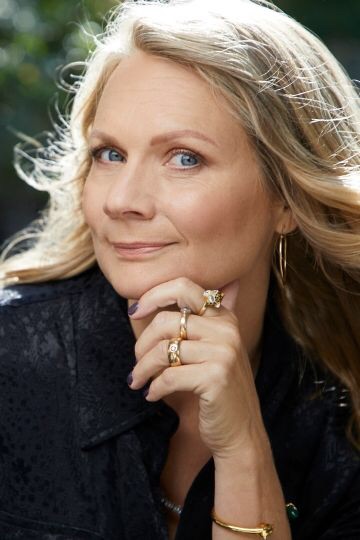
Moa Herngren is a journalist, former editor-in-chief of Elle Magazine and a highly sought-after manuscript writer. She is also the co-creator and writer on Netflix hit- show Bonus Family.
Alice Menzies is a freelance translator based in London. Her translations include work by Jonas Hassen Khemiri, Fredrik Backman, Tove Alsterdal and Jens Liljestrand.


 The Lotus Readers