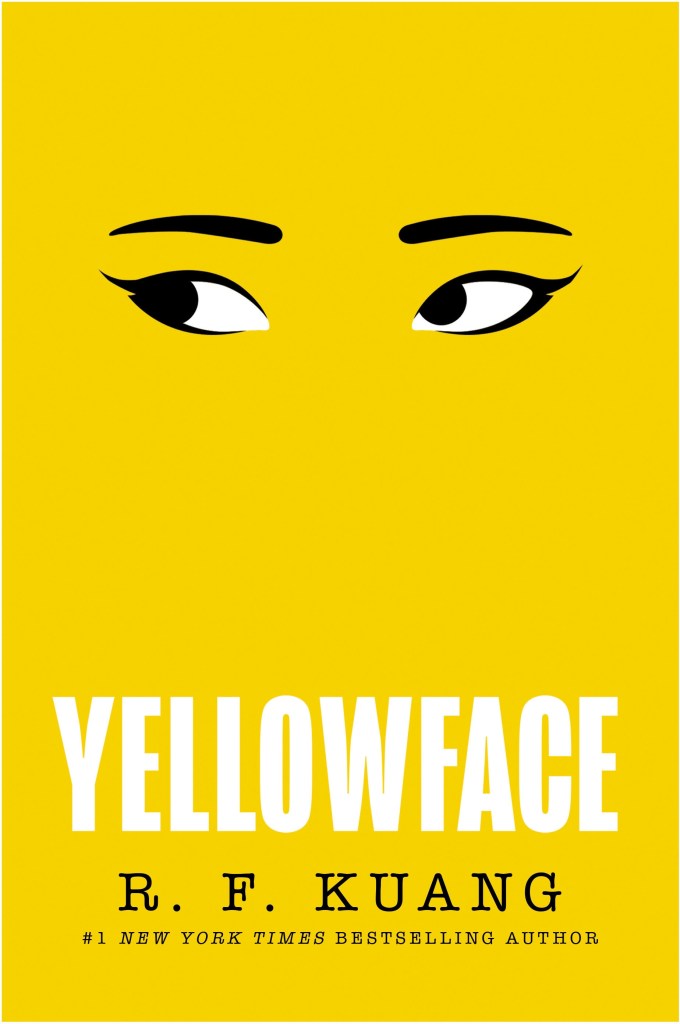
White lies. Dark humor. Deadly consequences… Bestselling sensation Juniper Song is not who she says she is, she didn’t write the book she claims she wrote, and she is most certainly not Asian American–in this chilling and hilariously cutting novel from R.F. Kuang
June Hayward and Athena Liu were in the same year at Yale and both debuted in the same year in publishing. Yet that’s where the similarities end. Athena is picked up immediately in the world that’s always looking for the next big thing. Stories about basic white girls just aren’t cutting it any more, so Athena is a cross genre literary darling. Her death is a freak accident that allows June an opportunity, she acts impulsively and steals Athena’s work in progress. Her work is an interesting novel about Chinese labourers and their part in WW1 helping the British and the French. Could she perhaps edit the manuscript and submit it to her own agent? Would it be wrong to start a new pseudonym? Enter the ethnically ambiguous new novelist June Song.
This was a brilliant inside look at issues and timely arguments within the publishing industry. In the past couple of years I’ve seen the question of authentic voices rage back and forth, especially interesting to me when it comes to writers with disabilities and the way disabled characters are written. Is it more important that a marginalised story is told or is who tells it the vital issue? This can be especially urgent when it’s a previously untold story or a hidden part of history. June has so much success with the book, but struggles to protect her secrets. One wrong word could expose her, so how far will she go to protect her new identity?
I’m always fascinated with books where I don’t like any of the characters because it usually means I’m learning something. I think some readers are uncomfortable with this. Athena is the wronged party and should therefore be ‘likeable’. In fact racist or more accurately model minority thinking means that a Western audience might expect the Athena to be sweet, pretty, docile and diligent just because she’s Asian. The qualities are positive, but allow no room for difference unlike the endlessly unique white characters created every day by Western writers. Huang broaches the idea that the industry’s criteria for deciding which Asian writers to publish is based within this flawed expectation. There’s also an issue around the type of subject matter chosen by publishers. In the wake of George Floyd’s death a lot changed in the publishing industry and we all talked a lot about diversity, but when I think of the subject matter of books I’ve read from ethnically diverse writers, particularly African American or Black British writers, they have all contained sexual abuse, violence or intergenerational trauma. Can we say this is a true reflection of the experience of people from those communities? Or do publishers expect this type of story from black writers and favour publishing them over other narratives? Do we only accept marginalised voices when they’re saying things we expect, things that make us comfortable because they echo our ideas about that particular community?
June truly believes that she’s becoming the minority in the writing world. That unless you’re a BIPOC writer you can’t get a look in from agents and publishers. The focus is on ‘own voice’ fiction and no one wants to hear from yet another white girl. I thought about the controversy around the book American Dirt when reading this. Writing is all about imagination and an author can imagine anything. An author can also research anything, but is research enough when you’re attempting to write from the perspective of someone with a disability, or someone LGBTQ+. I have to mention the proliferation of books from a neuro-divergent perspective by writers who have experience in this area, but who aren’t neuro-divergent themselves. I can understand the concern about it, but I’ve also really learned from some of these books and been led to other reading so I could educate myself. Where does ‘own voice’ writing end? Are we saying that a male writer can’t write in the voice of a female character? Writing is all about creativity so if we can only ever write from our own viewpoint wouldn’t it get a little boring? Should publishers accept a manuscript from a white writer who’s writing outside their own experience, if they are inundated with own voice manuscripts of equal merit?
“She’s using the pen name Juniper Song to pretend to be Chinese American. She’s taken new author photos to look more tan and ethnic, but she’s as white as they come. June Hayward you are a thief and a liar. You’ve stolen my legacy and now you spit on my grave’.
I loved that this book addressed those big issues, but it was also entertaining, delicious and disturbing in equal measure. I really enjoyed the ins and outs of the publishing world and the gossipy social media ‘blow-up’ feel of the book. Then there were moments that were more uncomfortable and challenging. It addressed what a lonely job it is to be a writer and how that isolation magnifies other aspects of being an author such as the negativity of social media and the perils of comparison. I wasn’t sure about June but that meant her character stayed with me. On one hand I felt she deserved to be exposed, but when I saw the reality of that I felt really bad for her. This was such a clever novel, so complex, full of amazing contemporary issues and always entertaining.
Meet the Author

Rebecca F. Kuang is the #1 New York Times bestselling and Hugo, Nebula, Locus, and World Fantasy Award nominated author of Babel, the Poppy War trilogy, and the forthcoming Yellowface. She is a Marshall Scholar, translator, and has an MPhil in Chinese Studies from Cambridge and an MSc in Contemporary Chinese Studies from Oxford. She is now pursuing a PhD in East Asian Languages and Literatures at Yale.









 The Lotus Readers