Posted in Throwback Thursday

Throwback Thursday: Fiction About the Tudors

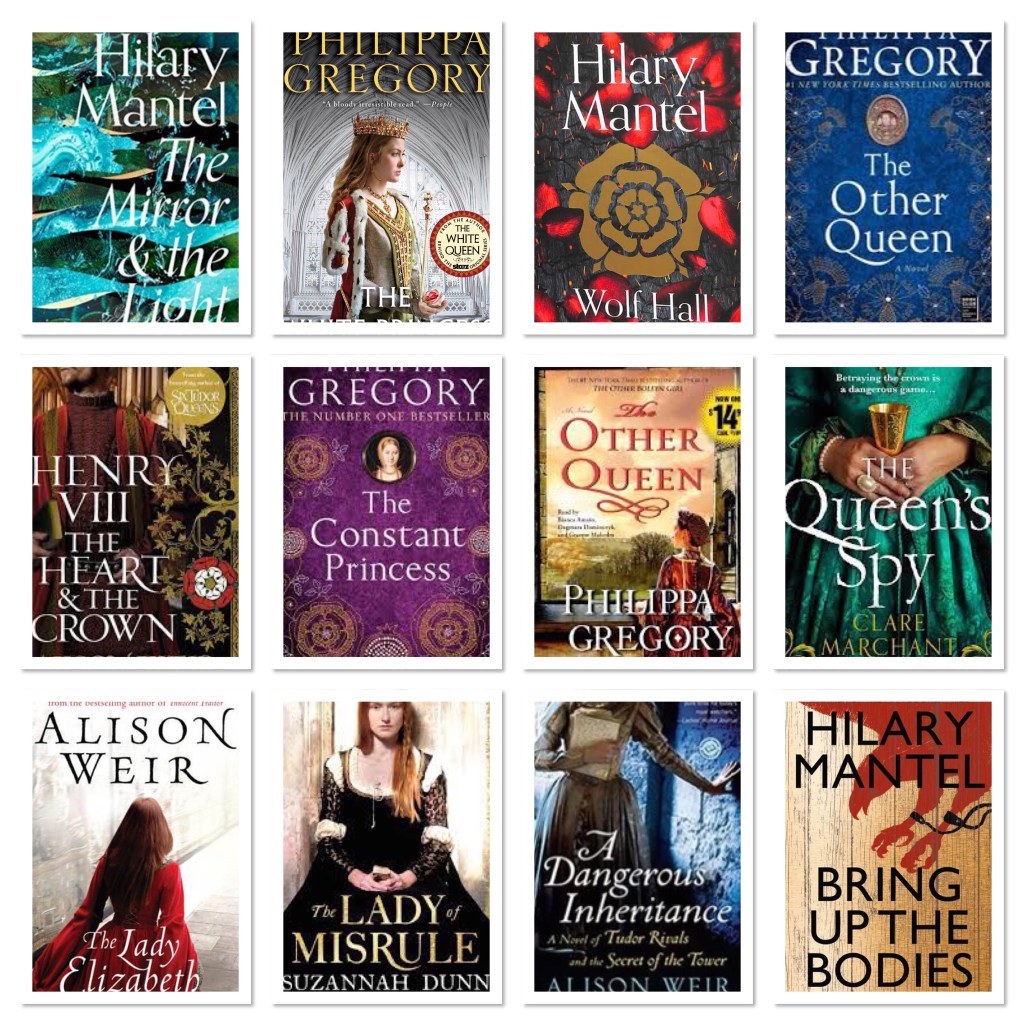
I’ve had this fascination with Henry’s wives and the whole Tudor dynasty since primary school, as I wrote about earlier in the week. It was my introduction to Philippa Gregory when I was in my twenties that really started the ball rolling. I started to learn about the women’s perspective behind these historical facts we all learn. I’d never known that Henry VIII had an affair with Anne Boleyn’s younger sister Mary or that it’s possible she had the King’s children just like Bessie Blount. I learned more about the political and religious machinations that hide behind the six marriages and their tragic ends. I hadn’t known about the uneasiness within Henry’s aristocratic courtiers and advisors about the commoners he was bringing in to advise him, such as Cardinal Wolsey and Thomas Cromwell. There were aspects of the Queen’s roles in events that opened up to me, such as their religious allegiances and how the marriages cemented Henry’s beliefs at the time and signalled his intentions to the rest of the world. I’d never known about how ladies in waiting were chosen or trained, often shipped to grand houses with aristocratic women overseeing their education. I’d also become fascinated about women on the periphery like Jane Rochford, who’d been married to Thomas Boleyn and had to give evidence against her own husband, then years later oversee the young Queen Katherine Howard only to be drawn into treachery yet again. I’d become interested in Bess of Hardwick after buying a book about her at Chatsworth House then going to an exhibition about her, including the household accounts written in her own hand. I knew that Chatsworth had been one of the houses where Mary, Queen of Scots was held, but not what her captivity did to her marriage and her reputation with Elizabeth I. There is such a rich seam of Tudor fiction in these areas, but I’m going to recommend some of my favourites that you will probably know, then some you might not as well as those still sitting on my TBR.

Great for Beginners

This is a great beginning because it’s outside the Queen’s series and deals with characters outside the actual court. Set in 1568, Elizabeth I has been on the throne for ten years, but hasn’t married and won’t choose a successor. Mary Queen of Scots has been forced to flee her own lands, due to rebellions and rash actions in her choice of husband. Her enemies have used her weaknesses and their perceptions of women to unseat her, leaving her on the mercy of her cousin, Elizabeth I. However, Mary is Catholic and advisors to the Queen don’t want to risk their already weak position against Catholic France and Spain. They also worry about her infant son James, another threat to the throne. Elizabeth’s advisor and spy master William Cecil comes up with a plan, Mary will be kept under house arrest, living with all the luxury a Queen should expect but unable to leave. He has to find a suitable couple to house Mary and decides upon Bess of Hardwick and her new husband George Talbot, who reside at Chatsworth House. Mary does not accept her house arrest though, bringing George Talbot under her spell and plotting to regain her throne in Scotland. Bess sees her husband’s deference to the young Queen and knows that if they are linked to her plotting, William Cecil will make sure they face the Tower or even the block. This is an interesting angle on Mary as we see her through the eyes of another woman, a very shrewd and intelligent woman who has managed to amass her own fortune along with estates and land left to her by her previous husband. I felt pulled into Mary’s story and despite feeling very sympathetic towards her I also felt angry on Bess’s behalf. Neither woman wanted to be in this position and I felt that frustration.

Set in 1539. It’s time for Henry to find a fourth wife after the tragic death of Jane Seymour. He has the heir and now he needs to have a spare. Since he is head of the church in England, it seems wise to take a Protestant Queen and Anne of Cleves fits the bill. Chosen from the painted likeness on the book’s cover and organised by Thomas Cromwell. The marriage falters immediately, when Henry dresses as a commoner to surprise his newly arrived wife to be she doesn’t even recognise him. Aggrieved, Henry tells Cromwell he finds her undesirable because she has too much flesh and smells unpleasant. His advisors are asked to pay court to the teenage Katherine Howard while a divorce agreement is reached. Anne Boleyn’s sister-in-law Jane Rochford returns to court and becomes close to the new Queen, desperately trying to cope with a young naïve and rather silly girl on one hand and the tyrannical Henry on the other. When Katherine starts to play dangerous games with Henry’s servant Thomas Culpepper, will Jane be able to avoid the block a second time? I love this period of the wives’s story because I think Anne of Cleves is the shrewdest of his wives, accepting his terms to live alone like his sister immediately and setting up home in palaces vacated by Wolsey and the Boleyn family. In fact the King got along very well with Anne and often joined her for dinner or to play chess in the evening. By contrast Katherine Howard’s tale is tragic and her eventual death is desperately sad as her courage fails her and she begs for her life.

Wider Reading

I have so much sympathy for this poor girl who is caught in a power play between political and religious factions. Jane Grey was the great niece of Henry VIII, a descendent of his closest friend Charles Brandon, Duke of Suffolk and Princess Mary – Brandon didn’t seek permission to marry Henry’s sister and their friendship faltered. Jane was actually the cousin of Edward IV, Mary I and Elizabeth I. At only 16 years old she is forced to marry into a powerful family – the Dudleys – as part of a plan to usurp the throne. When Edward IV dies, they decide to install Jane and her husband Guildford Dudley on the throne before Edward’s sister Mary can travel to London. The book is fascinating even if you do know the story of this nine day Queen and adds that human element behind the facts. Weir presents Jane as manipulated and physically abused by the powerful men who were desperate for her to take power on their behalf. There was the religious concern about having a Catholic queen on the throne and her allegiances with Spain. Would Mary return England to the Catholic faith? Might she seek a Catholic marriage with one of her European allies? Jane was a devout Protestant to the end, in fact it sustained and strengthened her when held in the Tower of London. I felt her dread towards the end and I felt so sad for her because she had so little control or peace in her short life.

The woman who outlived Henry VIII still had a tragic end. Her true love was Thomas Seymour and she expected after her first husband had died that she would have a husband of her choosing. Unfortunately Henry got there first with a surprise proposal and no one is allowed to refuse the King. Clever and sensible, she is known for being able to appease an increasingly cantankerous Henry. However, there is so much more to Katherine Parr than being a nursemaid to elderly husband. She published a religious text and proved a great stepmother to all of Henry’s children who joined them at court. It seemed as if love and motherhood had passed this woman by. After Henry’s death Thomas Seymour does jump in, determined not to miss the moment but with almost unseemly haste. Katherine thinks that finally she can have a husband of her choosing and love is on the cards. However, does Thomas have other plans? Could it be that Katherine’s house guest, the very young and spirited Elizabeth, is the reason he’s so keen on a quick marriage? As they marry and live together, Katherine soon becomes pregnant but her age and health are against her. With a wife on bed rest, Thomas has plenty of time on his hands and too little to do. Will Katherine know the happy family she always wanted? This book sticks closely to historical fact and is a fascinating read about one woman’s hopes and dreams dashed by duty.

The Tudors in Context

Hilary Mantel’s incredible Tudor trilogy starts with this introduction to Thomas Cromwell, set in the 1520’s when he was clerk to Cardinal Wolsey. His rise from lowly blacksmith’s son is a fascinating one and his eventual succession to Wolsey’s role as chief advisor to Henry VIII was not liked by aristocratic courtiers. Usually appointments like this were filled by dukes or earls, often from very specific families who traditionally held senior roles at court such as the Seymours. Wolsey is removed from office for failing to secure an answer to the King’s ‘Great Matter’, his divorce from Katherine of Aragon based on a biblical verse that states if a man should marry his late brother’s wife they will be childless. Henry did receive a special dispensation to marry Katherine when she was his heart’s desire, but several miscarriages later and only one daughter to succeed him, Henry is desperate for a male heir. Thomas is ambitious. He’s also a bully, with the ability to charm and manipulate to get the result he wants. He handles the King’s vacillations between romantic desire and murderous rage. He is pursuing Anne Boleyn who is not succumbing to his offer to be his exclusive mistress. She’s seen many women discarded by Henry, including her own sister and she’s playing a different game. Thomas is keen to install Anne as Henry’s wife because she shares his Protestant leanings and has a reformer’s agenda. Can Thomas secure Henry’s divorce and set in motion the English reformation? This is a different viewpoint on Henry and the turbulent moods that are starting to control both him and the court.

Elizabeth is a fascinating woman who grows up in the most tumultuous period in royal history: the Wars of the Roses or the Cousin’s War as it’s also known. She was the daughter of Edward IV and his wife Elizabeth Woodville, sister of the two lost princes in the tower, courted by her own uncle Richard III, but eventual wife of Henry VII and mother of Henry VIII. As Henry VII takes the throne from Richard III in battle, Elizabeth and her family are in a very precarious position. Her father’s death left the family fleeing to sanctuary as allegiances changed all around them. There are rumours she has been the mistress of Richard III. There is still no sign of her two younger brothers, Edward IV’s rightful heirs who were placed in the tower by her uncle and thought to be dead. As the Lancaster side take the throne she expects to live in sanctuary again, but her mother Elizabeth Woodville is a survivor and is in correspondence with the new King’s mother, the formidable Margaret Beaufort. She knows that her son’s reign is controversial and he needs to create a more peaceful England in order to secure the throne for his successors. Lancaster and York need to unite and Elizabeth is the last York princess. Their marriage is a symbol of peace an to represent that the white rose and the red rose are combined to create the symbolic Tudor rose, visible in many Royal palaces and historic buildings. Elizabeth presents a united front to the country, but their union was difficult. Henry was a paranoid man who dreaded Elizabeth’s brothers being found and was often suspicious of her mother too. This novel takes us into that marriage and sets the scene for Henry VIII’s unexpected reign, after the death of his brother Arthur, Prince of Wales. See also Philippa Gregory’s novel The White Princess.

My Tudor TBR
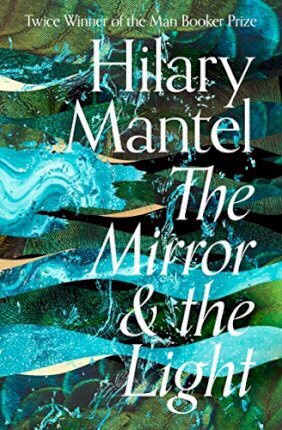
This is the third and final book in Hilary Mantel’s trilogy on Thomas Cromwell and takes us into his final years as Henry’s advisor. The book starts in 1536 when Anne Boleyn is decapitated with a french sword when Cromwell’s fortunes may be at their peak. Henry is settled with Jane Seymour who is expecting a baby. Calm reigns at court. Behind the scenes, Cromwell still has much to think about: rebellion, traitors and spies both at home and abroad. Can the nation shake off it’s Catholic past and move on? Or do the dead continually return to haunt us? The execution of Thomas More is playing on Henry’s mind particularly at this time. For Cromwell, the Spanish ambassador whispered something in his ear. A though that will not go away. Henry will turn on him too. As he always does in the end. With no family, title or private army behind him, Thomas has no one to defend him. It’s a lonely place to be, reliant solely on your own cunning to survive. This thought comes to life as the Queen dies and the lives of predator and prey move to their inevitable end. I know what happened to Thomas Cromwell, in fact I had to close my eyes when watching The Tudors and seeing his fate. That doesn’t stop me from wanting to read this book though, because Mantel’s research is extensive and she has an almost spooky ability to get inside a character’s mind and portray what those dry historical facts felt like. I must admit to being a little daunted by the size of this, so I think I’m going to separate it into readable sections and make it a daily reading goal.

I have this on the pile of books by the bedside, mainly paperbacks I’ve picked up from charity shops and second hand bookshops. It seems to provide or imagine a back story for Henry’s fifth wife that makes her plight even more tragic. Katherine is only twelve when she is sent to the home of the Duchess of Norfolk, a place where girls from aristocratic families go to train as ladies in waiting. As a member of the Boleyn family, this is a normal placement but she must have been aware of the terrible end her cousin met at Henry’s hands. Cat Tilney, another girl living in the house, is suspicious of Katherine. She thinks she’s only interested in clothes and boys, but is eventually drawn in by the young girl and they become close confidantes. When Katherine is called to court and drawn into the King’s orbit, Cat becomes her lady-in-waiting. Henry has set aside Anne of Cleves and despite Katherine only being 17 his advisors present the young girl as a possible successor. Henry is charmed by this charming young girl and at first married life is enjoyable on his side. However, Katherine is married to a much older man who is now in ill health and has a permanent leg ulcer that smells terrible. A rumours start to filter through the ladies-in-waiting that Henry can’t perform in the marital bed, whispers start to reach courtier’s ears about Katherine’s conduct. Girls that came from the Duchess of Norfolk’s home may have been entertaining much older men. In fact her present conduct is worse, because she’s already having an affair with King’s manservant Thomas Culpepper. Katherine is terrified and implicates others, including her childhood sweetheart Francis. Unknown to her though, Francis is now in a serious relationship with Cat Tilney. With Francis in the tower, Cat could save him, but but only by implicating the Queen and ensuring her death. I’m fascinated in reading this take on Katherine’s early life, which seems to show how vulnerable young women were at court and how they were always blamed for men’s actions.

I hope this gives you some ideas about where to start with historical fiction about The Tudors. It isn’t an exhaustive list and there’s plenty of non-fiction from various historical that’s equally fascinating, not to mention the debate on how male and female historicans often interpret material very differently and with potential bias. I do think Henry is more understandable when put in the context of his father’s reign. Henry wasn’t meant to be King and was allowed to spend time carousing with friends like Charles Brandon rather than learning about the constitutional obligations of the crown. Henry was an intelligent young man in terms of history, philosophy and religion, but wasn’t schooled in duty and service in the same way as his brother Arthur. He was also left at court with women: his mother, both grandmothers and his sisters were said to have spoiled him. His relationship with his father was complex considering he was the spare, but he was at court to see his father’s paranoia, his alleged affairs and his vacillating over whether Henry could marry Katherine of Aragon.

I’m interested in research that looks at the Tudor’s medical history. Henry’s jousting accident during his relationship with Anne Boleyn was a bad one, with Henry knocked out for some time afterwards. It is very possible he sustained a head injury at that time, not to mention the leg injury which became ulcerated and impossible to heal. The pain and restrictions of this ulcer certainly contributed to his obesity and terrible mood swings in later years. It is likely he was also impotent after his marriage to Jane Seymour, providing more insight into his comments on Anne of Cleves’s desirability; there was nothing wrong with him, she was too unattractive. I have also read about possible chromosomal abnormalities that might explain why both his first wives were unable to produce a male heir, with all male babies being miscarried or dying within a few days or weeks of their birth. Edward IV was a sickly child and died very young too, while his sisters Mary and Elizabeth lived into adulthood. All of this adds to our understanding of the Tudor’s reigns, but can’t fully excuse a man who was cruel and tyrannical. It does however give us insight into the experiences of the Tudor Queens and their daughters, most of whom met tragic ends either wholly or in part caused by men.

Posted in Q and A

Q & A with Clemmie Bennett Author of The Apple and the Tree.

Monday’s review of Clemmie Bennett’s book was interesting to write and brought up a lot of questions for me and I was lucky enough to be able to pose some of them to the author.

Q. I was inspired to read about the Tudors after seeing a copy of the Hans Holbein portrait of Henry VIII at Chatsworth House. What do you think first inspired you to be interested in the Tudor Court?

A. I watched the Showtime series The Tudors . In France, where I grew up, we do not learn about King Henry VIII and his wives at school. It was for me a completely new world and it compelled me. After each episode, I found myself researching on the true people behind the characters. I figured out quite quickly that the show was taking liberties with history, big ones even, but the deed had been done: I was hooked. Before I even finished watching the show, I was reading non-fiction books on Henry and his wives… I haven’t stopped yet!

Q. How does it feel to send a character back to one of the most tumultuous times in history, especially for women? ere you worried for her or did you know she was going to be okay?

A. I knew she would be okay, at least physically. It was always in the plot to make her survive Henry, maybe as some sort of revenge for the formidable women who did not. What was unexpected however, was Ella’s moral and psychological evolution. Without getting into too much detail, there were times when she was writing herself, giving herself an arc that I had not planned for. I am glad that she did. In the end, it does go back to your question: sending a character, especially a woman, in this tumultuous time in history is so dangerous that it was never likely that she would remain unscathed.

Q. Did you decide Ella would break the golden rule of time travel – don’t change anything in the past?

A. It was always the plan. One of the goals in the novel, was to show that some events in history were meant to happen, even if not necessarily in the same way. To a certain degree, I believe in determinism. The English Reformation was always going to happen, whether or not Ella changed the past. Besides, to me, the golden rule of time travel takes all the fun out of writing a time travel novel.

Q. Taking into account the legacy of the Wars of the Rose, the death of his brother and his uneasy relationship with his own father. Do you have empathy for Henry?

A. I use to. But now, not really. The way I see it, his main problem was the education he received. He was very intelligent and skilled in many things, but never learned to cope with the frustration of not getting what he wanted. During his childhood, the blame fell on the women who raised him ( as the second son he was not raised with his own, predominantly male household, but with his mother, sisters and female attendants) but as he grew older, one could have also expected him to also grow in control of himself and his desires. He did not, and it is the people closest to him who paid the price. Not only his wives, but also the men he loved, like Sir Thomas More, cardinal Thomas Wolsey or Thomas Cromwell. It is difficult to have empathy for someone who destroyed so many lives as a result of his tantrums, whether they had legitimate foundations or not. I do sympathise with his quest for a son, considering the threat of civil war, but this is overshadowed by the way he behaved for it.

Chatsworth House Portrait of Henry VIII

Q. Which of Henry’s wives do you identify with most? And which do you most empathise with?

A. Katherine Parr is the one I identify with most. She was, after all, the only one of them to publish a book. Under her name and written with her own hand! She was also the only one to survive Henry and even managed to marry the man she truly loved, Thomas Seymour. He was a questionable man, but that is another debate.

Queen Katherine of Aragon is the one for whom my heart breaks, because I believe she was the only one of the six, who actually loved her husband. The humiliation to be rejected by him would have probably have hurt her less than the rejection itself. Picture yourself in her shoes: married for over fifteen years to the man you love, only for him to unilaterally decide that your marriage has been a sham this whole time. If this was not cruel enough, his reasoning was: she had not given birth to a healthy boy, a male heir. Even in a world where losing a child was common, she had lost five of them and her grief was common knowledge. Henry used it, played on it, deciding that the death of their – born or unborn – children was God’s judgement on their marriage. Katherine had first been married to prince Arthur, Henry’s elder brother. When he died shortly after the wedding, the Pope granted a dispensation for her to marry Henry, on the basis that the marriage had not been consummated. By choosing to believe that God was punishing their union for it, Henry humiliated and dishonoured his wife; se was accused of lying for over a decade about her virginity, blamed for the death of her own children, separated from her daughter and exiled from court. I see her fate as the most tragic, most painful of the six.

Q. There are details about living in the sixteenth century that I have not found in other books, like people relieving themselves on the floor and even in the fireplaces. What made you include them?

A. I once read that Katherine of Aragon asked for male courtiers to stop relieving themselves in the fireplaces. I remember being appalled, thinking about the tench this would have created. It was important to me to include this aspect of Tudor life in the story. Very often, when we think about Royal Courts of Kings and Queens of the past, we picture the dances and the beautifully dressed women, dripping in jewels. I myself am guilty of this. I wanted Ella to remind the readers that hygiene was a real issue underneath the velvets and the diamonds. It was also a way for me to show a historical setting, peopled with historical characters that we only see portraits of, in a more human light.

Q. Was it important for you to represent the daily struggle of the women in the court? Ella finds the underwear situation weird and there are details of dealing with bodily functions too, like when Ella gets her period.

A. Absolutely. Ella’s character had to be the most relatable possible, so that when she would be sent five hundred years to the past, she would have concerns and struggles that would be understandable to the reader. Any woman reading a novel set before tampons were invented once asked herself how women used to go through their period – or am I the only one? I even did the last time I watched the Disney cartoon Mulan. Besides the most obvious difficulties that would come with time travelling to Tudor times, I honestly believe my most burdensome would be very trivial – sanitary products, underwear, shampoo etc.

Q. I was surprised when Queen Katherine’s lady in waiting gave birth to Henry’s last wife, Katherine Parr, during the book. It really made me notice the differences in age and power. Was it a conscious choice to highlight inequalities like this?

A. When I wrote the scene when Ella finds out about Maud parr’s daughter, I gave her my own reaction. A man marrying the goddaughter (Katherine Parr) of his first wife (Katherine of Aragon) was to me, quite surreal. I sometimes think people forget about the age differences between Henry and his wives. He was six years younger than his first one, but twenty-one years older than his last one … and thirty-three years older than the previous one, Katherine Howard! For time, and for his contemporaries, it was not necessarily shocking. I was once told that Katherine Parr had made some sort of choice in accepting the King in marriage, but I disagree; the choices that could be made as a woman were in a completely different category to the choices that could be made as a man – especially the King of England. This imbalance is reflected later on in the novel, in the very limited life choices presented to Ella.

Henry’s wives from left to right. Top: Katherine of Aragon, Anne Boleyn, Jane Seymour. Bottom: Anne of Cleves, Katherine Howard, Katherine Parr

Q. Ella’s grandmother Lolly says we can’t judge people from the Tudor period by our 21st Century values. Do you agree?

A. Yes. This was the main reason why I wanted a main character born in the 21st century. She had to be relatable to the reader, in a way that her thinking process would be more similar to them than the other characters in the story. As time passed, she would understand more their point of view, and her own thinking would change on certain topics. It is the duality that I wanted to show.

On a personal note, I think it is unfair to judge sixteenth century people with twenty-first century lenses. The world changes, people evolve. What would be shocking now could have been perfectly normal five centuries ago. And vice versa. However, I still maintain my judgement on Henry’s treatment of his wives, considering that even his contemporaries were divided by it, to say the least.

Q. I know a lot of book bloggers are aspiring writers so can you tell e a little bit about your writing routine and your route to getting published?

A. I actually do not have a writing routine. In the past I tried to follow other writers’ routines and pieces of advice – anything to feel in my heart that I was ‘doing it right’. It never really worked for me. i write when I can, mostly on evenings and weekends. I do try to write every day, but I work full-time so it is not always possible. When I have enough energy and inspiration, I usually pour myself a cup of tea and a sugary drink and I write. No music for me, as I end up focusing on the lyrics instead of my words. My current favourite spot is on my armchair by the window, but it can also be at my desk, my bed or even on the floor. It really depends on my mood.

The route to getting published was rocky. I queried many literary agents and publishing houses, hoping I would be traditionally published. It did not work out. It also brought to my attention the existence of something called a vanity press, which was an oddity to me, and I declined several of their propositions. In the end, I decided to use some of my savings to self-publish. I found lovely professionals on Reedsy: Matthew Kilburn for editing, Danna Mathias Steele for cover design and interior formatting, andJaime Witcomb as a publicist. It allowed me to keep complete control over my story and I am very happy with the final version.

Q. What are you writing next?

A. I am writing the sequel to The Apple and the Tree. I am not entirely sure yet if Ella’s story will be a duology or a trilogy, but it will be followed by a prequel on Lolly’s upbringing.

Clemmie Bennett

With Thanks to Clemmie Bennett and her P.R. Assistant Jaime Witcombe

Posted in Publisher Proof

The Apple and the Tree by Clemmie Bennett

For her debut novel Clemmie Bennet has chosen to write something so complex I have to take my hat off to her. Ella has recently lost her beloved grandmother, Lolly. They used to spend a lot of time together, exploring stately homes and royal residences, particularly those from the Tudor period. Lolly left her granddaughter a beautiful gold and sapphire ring, one that’s very precious to Ella as she remembers her grandmother wearing it every day on a chain around her neck. However, it’s when Ella puts the ring on her finger that something very strange happens. Ella feels dizzy and passes out, waking up in a field next to what looks like Eltham Palace. As a man walks towards her, Ella thinks she’s fainted in the middle of an historical reenactment. He’s dressed in the rich robes of a member of the Tudor court and his manners are impeccable, offering to let Ella rest in the palace until her memory returns. As Ella finds herself in the court, becoming one of Katherine of Aragons ladies, she is a fly on the wall for some of the most dramatic events in royal and religious history. Is it possible to remain an observer, or will Ella find herself tempted to intervene and perhaps change the course of history.

I’m fascinated by Tudor history, ever since I a painting (that was after Hans Holbein) of Henry VIIII in the Chatsworth library when I was a child. Henry seemed like a curiosity in our royal history with so many wives and scandals to his name. Once I’d read the David Starkey books and Phillipa Gregory’s novels from The Other Boleyn Girl onwards. I was also drawn to the glamour and dubious historical content of the Showtime series The Tudors, with Jonathon Rhys Meyers Henry and his best friend the Duke of Suffolk, as portrayed by the rather delicious Henry Cavill. What all these sources brought home to me was how uneven his marriages were – he was married to Katherine of Aragon for as long as he was to every other wife combined. That’s without noting his devotion to her from the moment she reached England for her marriage to Henry’s elder brother Arthur, a devotion that survived his teenage years, their marriage and his brother’s death. They were in love, he wasn’t faithful but Kings were not expected to be faithful. The idea of a character time travelling to that period threw up all sorts of questions and I was so impressed by the bravery of the writer. Writing historical fiction means researching your period throughly, so to do that and put your character in the middle of such a well- known series of events is brave.

I also applaud the author’s bravery in ripping up the rule book on time travel – we all know that it is important not to change anything in the past, but Ella ignores that rule. It’s a great choice because it gives her character more freedom, but I also think it makes an historical point too. I have always said that had I been in the Tudor court, I would do a Mary Boleyn and marry someone of little importance and get the hell out of there. I have always wondered while reading about the wives and friends of Henry why you would involve yourself in the political and religious machinations of the time. Wouldn’t a life in the country as a nobody be preferable? I think that the author allows Ella to get involved because she’s making the point that it would be impossible to live in that court and not become involved. It’s a game of survival and women are both marginalised and limited in their choices. They have a choice, to withdraw for a quiet life like Mary Boleyn or fight for their place and power like her sister Anne. Ella’s choices certainly raise the tension level! She’s playing a living game of chess, trying to keep within the rules but think three steps ahead of her opponent. Of course she has the benefit of hindsight and all the Tudor history her grandmother Lolly taught her, so she might be able to win.

I thought the book really brought to life the difficulties of the time period and being a subject of Henry VIII, particularly for women. We know there are ladies in waiting, but they’re often portrayed as companions the Queen and possible lovers of the King, but here we see more of their day to day activities and their emotional lives. Ella is a 21st Century woman and because of that we can see these women as being just like us. I loved the way she formed friendships and how the women supported each other. They are portrayed as emotionally open about their marriages and the dangers they face, whether from men or from their own bodies. Fertility plays a major part in the huge decisions of this court, in fact it still does today if we think of Prince Harry’s book Spare and the importance placed upon his father to marry and have both heir and spare. It’s always a huge part of the ‘King’s Great Matter’ that Katherine had not produced a male heir, but here the author explores what these struggles were like for the ordinary women at court. There’s a moment where Ella has to cope with getting her period in a time where underwear isn’t worn and she’s having all the same worries I remember having when starting my periods, all over again. It made me realise how vulnerable women were to sexual assault as well. It broke my heart to see how terrified women were of becoming pregnant, then dreading childbirth or losing their child. Having Ella there as a 21st Century comparison really heightened how different a woman’s lot really was and how the aristocratic practice of handing your child to someone else to look after caused such pain and grief.

I came away from this book with a different understanding of both the time and the court, even Henry himself. This Henry was intelligent, tender and seductive. Despite his shortcomings, there’s a compassion in Henry that seems missing from his actions in later years. It’s interesting to see how different the course of history might have been with just a few small changes. As Ella builds a friendship with Henry, I wondered how far her influence might reach and what might happen if she ever returned to her own time. This kept me reading and there was also a huge twist I didn’t expect! This was such an interesting premise and had me intrigued enough to keep me reading to the end. I recommend this to anyone who enjoys this time period and maybe thinks they know all there is to know about the court.

Independently Published and available on Kindle and in paperback.

Meet the Author

Clemmie Bennett is a writer, author of the historical fantasy “The Apple and the Tree.” A professional London-based French nanny, Clemmie has been working on her debut novel for over three years, but writing a book has been on her bucket list for as long as she can remember. When she is not writing or reading, she can be found wandering about ancient royal palaces or abbey ruins, most likely despairing that time travel is not a reality – like it is for her main character.

Posted in Sunday Spotlight

Spotlight: Fiction and the Tudors

Sometimes as book bloggers we struggle with maintaining our blogs, for many different reasons. Illness, bereavements, family issues, working lives, caring duties, mental ill health are just a few reasons – most of which I’ve encountered over the past four years – but there are others. Most book bloggers, have at various points in their reviewing journeys, had a complete crisis and felt imposter syndrome. We might question our abilities, feel burned out or just wonder why we spend so much of our time pursuing a hobby that can be thankless. Recently I’ve struggled with the double whammy of undergoing hospital treatment, feeling unwell and experiencing a loss so some authors and publicists perhaps didn’t get everything they’d asked for. I’ve been going back over my work and trying to fill in those gaps and now that my brain’s firing again, some of these books have inspired me to spotlight a review again and take them a bit further. So this week, thanks to going back over my review of Clemmie Burton’s The Apple and the Tree, I realised I needed to publish my Q and A with this lovely author and perhaps highlight a little bit about my favourite books set in the Tudor period, one of the biggest collections of books I have. So this week on The Lotus Readers blog it’s Tudor week!

We’ll be starting with a second look at Clemmie’s first novel in what will be a series, following 21st Century Ella when a piece of jewellery seems to transport her back to the Tudor court. This is a familiar place to Ella because her grandmother Lolly had spent time walking around Hampton Court with her, talking about Henry VIII in particular and all his wives. You will see from my Q and A with Clemmie tomorrow, that her inspiration for this time period came from watching Showtime’s The Tudors. For me, my interest came very early on a family day out to Chatsworth House where a portrait of Henry VIII stands in their library. I thought it was a copy of the Hans Holbein portrait, but the artist is Hans Eworth and it’s thought to be painted around 1560. In style it’s exactly like the famous Holbein painting, the stance and richness of the clothing is so similar. It exudes power, strength and wealth. I knew from school that he had six wives, but being primary school age I didn’t know any details about that. However, being a rather macabre child I did think a lot about ghostly Tudors wandering around with their heads under their arm. Living near to Gainsborough’s Old Hall with it’s resident Grey Lady, ghostly women were definitely on my radar.

I began to read historical fiction when I was a little older and a friend decided to lend me The Wise Woman by Phillipa Gregory. This interesting and slightly disturbing novel is set in Tudor England rather than the court, but Henry VIII’s policies directly affect the events of the story. Our heroine is Alys, a wise woman expelled from her sanctuary in a nunnery by the Reformation. Without a penny to her name, Alys has to return to the old cottage where she lived before and with only her own skills to support her, she returns to the magic and healing that are her natural gifts. However, when she falls for Hugo who is a feudal Lord and already someone else’s husband. She is tempted to use her gifts in a darker way, to remove her rival and secure the object of her desire. This then took me into reading her Wideacre series and eventually The Other Boleyn Girl, thought of as the start of her Tudor novels. While I was consuming the Phillipa Gregory series, I was also reading non-fiction by authors such as David Starkey and Alison Weir, giving me the facts behind the fiction. I loved the amount of reading that Philippa Gregory did to make her novels as authentic as possible, but it was also fascinating to read about those events where even historical researchers differ on their interpretation of primary sources like Henry VIII’s own letters. When Alison Weir moved into fiction I began to read her novels too, starting with a novel about Lady Jane Grey Innocent Traitor. I found myself enjoying these novels that gave voice to the women in and around the Tudor court. These novels explored what events must have been like from their point of view, bringing the human side of these, often silent, women to life. As Philippa Gregory moved into the years before Henry, exploring events of the Cousin’s Wars, it was interesting to follow the thread of events – to surmise who and what laid the groundwork for the Tudors and how their reign had stabilised England even though many noblemen resented Henry VIII and his father.

I will be talking about my favourite historical novels set in Tudor England later in the week. However, I can’t deny that I was also fascinated by television and film that portrayed this time period and controversial monarch. Like the author Clemmie Burton I was glued to The Tudors and yes, a lot of my fascination was down to Henry Caville as Charles Brandon, Duke of Suffolk. In the late 1990s there were so many great films that fired up public interest in the reign of Henry’s daughter Elizabeth. Shakespeare in Love was something widely used at university when looking at the Tudor theatre and Shakespeare in particular. It’s essentially a romance, but it’s period detail was brilliant and it was perfect for presenting post- modern representations of Shakespeare at university. For me Cate Blanchett’s turn as Elizabeth I in two films about her life that was more Oscar worthy. Again, they were largely inaccurate, but glorious to look at and with an incredibly strong performance from Blanchett especially in The Golden Age. A similarly strong performance was Anne Marie Duff as Young Elizabeth following the years before she became Queen and her love of Robert Dudley. I was so glad I’d done the reading when it came to Renaissance Literature at university, I had so much background knowledge in my head that I was easily able to place a poem or play within it’s historical context. It was like I’d done half the work already. Later in the week I’m going to list my favourite novels set around the Tudor period and perhaps inspire you to delve into this turbulent historical period a little more.

Posted in Throwback Thursday

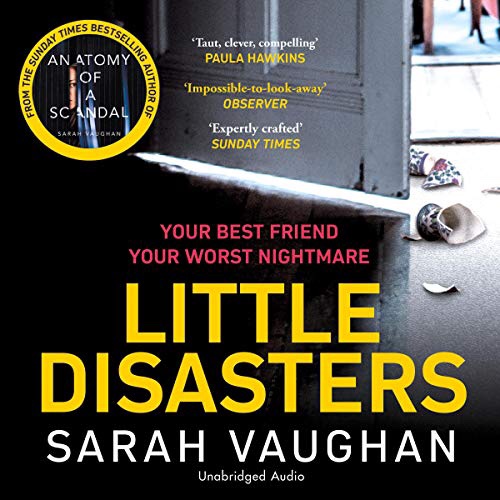
Little Disasters by Sarah Vaughan

You think you know her…

But look a little closer

She is a stay-at-home mother of three with boundless reserves of patience, energy and love. After being friends for a decade, this is how Liz sees Jess.

Then one moment changes everything.

Dark thoughts and carefully guarded secrets surface – and Liz is left questioning everything she thought she knew about her friend, and about herself.

As regular readers know, between my blog tour and current fiction reads I always like to go back and read an author’s earlier works. I thoroughly enjoyed this novel from Anatomy of a Scandal writer Sarah Vaughan, first published in 2020. It starts with an ordinary evening on duty for Liz, who is a registrar in paediatrics. She’s called down to A&E to see a ten-month-old baby presenting with strange symptoms. She’s been vomiting, and seems drowsy but doesn’t have a temperature which rules out a virus or infection. However, Liz is familiar with this particular baby girl, because she belongs to her best friend Jess and she’s definitely not acting normally. Jess has always seemed an absolute natural when it came to motherhood, certainly more than Liz. Jess made parenting seem easy, spending so much time making sure her children have the right foods, and lots of activities to try and nurture their minds. She’s the stay at home full time parent, but where Liz would struggle without working, Jess seems born for the role. Yet, this is not the same Jess that Liz knows outside of work – she’s edgy and claims her daughter had a fall. All children fall and through no fault of the parent, but the accident Jess describes doesn’t account for the boggy head injury that Liz can feel at the back of her baby’s head. Why would Jess lie?

Told through different perspectives, from Jess to Liz, this is a brilliant domestic thriller with tension so tight it might snap. This tension in the writing echoes Jess’s mind, at any time she might completely unravel but that doesn’t mean she hurt her baby. Vaughan is exceptional at drip feeding us a little at a time. A tiny bit of extra information here. A new viewpoint there. But never more than you need to keep the story flowing. It’s a powerful and emotive story, but Vaughan never descends into sentimentality or melodrama, this is sharp, addictive and never slows down, insisting you read another chapter, then another.

She is painfully honest about parenthood, so much so that it’s painful to read at times. Especially when the perspective shifts to one of the children and we’re suddenly reminded in the midst of all this, just how vulnerable they are. We are never really aware, until it happens to us or a close friend or family member, just how transformative giving birth can be. Some births are difficult, violent even. Yes, it’s a time of incredible joy and celebration, but my friends were exhausted in those first few days. Exhausted to the point of being almost catatonic. They were uncomfortable, dealing with caesarean scars and infection, stitches, painfully swollen breasts so that every bit of them seemed to be either hurting or leaking! It didn’t look like fun to me and there was a small part of me that was a little bit glad I couldn’t have children. We hear comedians and celebrities publicly talking about how difficult parenting can be and it isn’t just the body that’s affected. The birth can leave you feeling traumatised. The lack of sleep wears you down and you can’t remember things. Then your mind can play tricks on you. Are you really up to this? What if you’re not doing this right? Some women don’t bond with their baby straight away then berate themselves for being terrible mothers. We know so much more about post-natal depression and post-partum psychosis these days, but women still get missed because they’re too scared to say how they feel. If you’re having thoughts of harming your baby, how can you tell anyone?

I think this story that will resonate with many women. Jess and her baby really do pluck your heartstrings. At first I was so suspicious, because she’s cagey and closed off. I couldn’t understand why you would wait nearly six hours to get help for an obvious head injury. I was pretty sure where the narrative was going, but then the author surprised me with a new perspective and a huge twist that was really unexpected. This is a far darker path than I’d expected. Domestic thrillers are one of my a favourite genres and this is up there with the best. It really delves under the layers of motherhood and overturns that old expectation that every woman is naturally maternal. That post-natal depression can happen to anyone, even when they’ve not experienced it with their other children. It brings home to the reader that looking after a newborn baby is a giant undertaking and it how vital it is to ask for help. This is such a perceptive novel with an unexpectedly treacherous conclusion. Sarah Vaughan is an incredibly clever writer, balancing both our sympathy for Jess and her baby, but also our thriller reader’s desperation to uncover what has happened.

Published by Simon and Schuster 2020

Meet the Author

Sarah Vaughan is the international bestselling author of the Number one Netflix TV series, Anatomy of a Scandal, and four other novels. A former journalist, she read English at Oxford before training at the Press Association and spending 11 years at the Guardian as a news reporter and political correspondent. After having her second baby, she left to freelance, and eventually to write fiction. Two women’s fiction novels followed before Anatomy of a Scandal, her 3rd novel and her first courtroom drama/psychological thriller, heralded a new direction and became an instant international bestseller. Sold to 24 countries, it was also a Sunday Times top five bestseller, spending 10 weeks in the top 10 charts; a kindle number 1 bestseller; and one of Richard & Judy’s best dozen books of the decade. In April 2022, it dropped as a six-part Netflix mini-series, written by David E Kelley and Melissa James Gibson, and starring Sienna Miller, Michelle Dockery, and Rupert Friend. In its first 3 days, it debuted at number 3 worldwide and was the number 1 most watched Netflix TV show in multiple countries, including the UK and US. In its first 3 days alone, it notched up 40.28 million viewing hours.

Little Disasters, published during the first and third lockdowns, was a Waterstone’s Thriller of the Month and is in the process of being adapted for a UK broadcaster. It was also WH Smith paperback of the month, a Kindle bestseller, and has been published in the US and various other countries. Reputation, published in March 2022, has also been optioned by the team behind Anatomy of a Scandal with a view to being developed for TV. It will be published in the US in July, and in various other countries throughout the year

Posted in Random Things Tours

In Bloom by Eva Verde

‘This is my family story. From all I’ve sown together, through all I couldn’t ask. I want to be the bud who makes it.’

In Blooms tells of strength, survival, forgiveness, resilience and determination, and the fierce love and unbreakable bonds between mothers and daughters.

Ever since Sol’s untimely death left her pregnant and alone at twenty-two, Delph’s kept herself small as a form of self-protection. Now, over a decade later, she lives with their daughter Roche and her new partner Itsy, a kind and protective cabbie, on the fourteenth floor of Esplanade Point on the Essex coast.

But Delph’s protective bubble bursts when Roche moves in with her estranged nan, Moon. Feeling on the outside of the bond between her fierce-yet-flaky tarot-reading mother and volatile martial-arts-champion daughter, Delph begins questioning her own freedom. And when Roche’s snooping into her grandmother’s past unearths a familial line of downtrodden women; a worrying pattern emerges. Has keeping small and safe truly been Delph’s choice all these years…?

I don’t believe in trigger warnings, despite their intended purpose to flag up material that may ‘trigger’ difficult emotions in the reader, I feel that they might stop someone experiencing a connection with a text. It might well be a trigger, but that doesn’t always have to mean it’s a negative one. It might be a trigger that starts a healing process. If anyone should have avoided this book it was me, because I was Delph. I lost the love of my life in my early thirties and then sleepwalked into a coercive and damaging relationship. Yes, it was a hard read at times, but it wasn’t remotely negative. Moon, Delph and Roche are three generations of a family. Each woman has her own issues, but they all stem from one place. Right back at the beginning. As the book opens Roche can no longer live with her mother and Itsy, the man she’s been living with for most of Roche’s life. So she decamps to her grandmother Moon’s house. Roche can’t stand Itsy, he dislikes her and wishes she wasn’t there. In fact what he wants is Delph all to himself, it’s easier to control someone who’s isolated. Delph has had a glazed over look ever since he arrived in her life and she doesn’t seem like her mum anymore. Delph has done everything she can to keep Itsy happy. She’s changed how she dressed, made herself less beautiful, stayed at home and stopped going out with friends. Every day she makes herself smaller to make more space for him and Roche can’t watch it anymore. However, things are changing slowly. Delph has a job she enjoys at B & Q, new connections with her colleagues and today she has made a choice. Delph is pregnant and she knows deep down in her soul that ‘the thought of more years, more life, tied to him’ is more than she can bear. She goes secretly on her own for an abortion, the quietest but most powerful act of rebellion she can make. Then comes her opportunity, Itsy receives a phone call from Jamaica to tell him his mother is dying. He must jump straight on a flight, so Delph lets him go alone, knowing that now she has several weeks to herself. She doesn’t stop Roche from moving out and accepts this as her time to heal, time to be the parent that so often Roche has to be for her. However, this isn’t the only recovery needed in the three generations of this family thanks to the actions of men.

I felt at first that I was slowly piecing together the story of a client. Being a person- centred therapist means letting the client choose what they want to talk about. I would use my counselling skills to tease out that story and ask questions where it needs to be clarified or where I might only be getting one perspective. Here the story has it’s own pace and each woman narrates her own section. We flit back and forth between the women, also delving into the past here and there. It’s like doing a jigsaw puzzle but only being handed one piece at a time, then another from a different place. It takes some time to perceive the whole and that was definitely the case here. Only we the reader can see where they all are in relation to one another. The reality of being a woman in today’s world is explored fully, there is no doubt that these women’s lives would have been immeasurably better had they not encountered the men they do. It takes Roche to articulate this properly with the words and wisdom of her generation.

“Roche knows, remembers, how her life changed at around the time she started secondary, and her bubble of invisibility popped. How, despite the school uniform screaming otherwise, she very suddenly became the inhabitant of a woman’s body, complete with a depressing self-awareness that this was now Roche’s life until one day men deemed her invisible again. In fairness, it’s not her contemporaries who usually do the perving – no, it’s men, grown–ass men who have always done the bulk of the wolf–whistling, the innuendoes and basic compliments that they expect her to ‘smile, love’ and be grateful for.”

As a middle aged woman I now know the power of that invisibility and how, in many ways, it’s a blessing.

I love how carefully the author drew the threads between generations, those behaviours that create a pattern of intergenerational trauma. There are moments in her journey where Delph needs her daughter by her side, but she recognises that it’s a selfish need. Delph’s lived experience stops her; “is not for a child to fix the parent. Nor is Roche the ointment to Delph’s current troubles”. She’s spent enough time trying to help Moon. Then we go back into Moon’s early years, when her grandmother is in hospital, suffering from mental ill health. Her name was still Joy back then and her job is to dispense sunshine to a women who can’t even remember her name. ‘Come on,’ Ma says, in a giddy-up way. ‘You know how happy your little face always makes her.’ This a learned behaviour, people pleasing and exactly what Delph is trying to avoid for her own daughter, three generations later. By sitting with her own pain, Delph is avoiding instilling that behaviour in Roche, she’s actively breaking the cycle. Yes, there are traumatic moments in these women’s lives, Moon’s story being particularly harrowing, but we can also see the women’s determination to change. It’s that change and what it means for Roche that brings such an uplifting feeling to the book. For me it’s Delph’s struggle that touched me deeply. The loss of Sol, who’d been there her entire life, is devastating. So moving out of Itsy’s orbit and the mental paralysis she’s been living with means opening up her emotions. That’s all of the emotions including her grief, but it’s a process that needs to happen so that Roche can talk about her father openly and in a joyful way. I found myself more engrossed in the later stages of the book as I had to see whether these women could heal together. This is beautifully written and manages to be funny, moving and hopeful.

Meet the Author

Eva Verde is a writer from East London. Identity, class and female rage are recurring themes throughout her work and her debut novel Lives Like Mine, is published by Simon and Schuster.

Eva’s love song to libraries, I Am Not Your Tituba forms part of Kit De Waal’s Common People: An Anthology of Working-Class Writers. Her words have featured in Marie Claire, Grazia, Elle and The Big Issue, also penning the new foreword for the international bestselling author Jackie Collins Goddess of Vengeance.

Eva lives in Essex with her husband, children and dog.

In Bloom will be published in August 2023.

Twitter @Evakinder

Instagram @evakinderwrites

Posted in Monthly Wrap Up

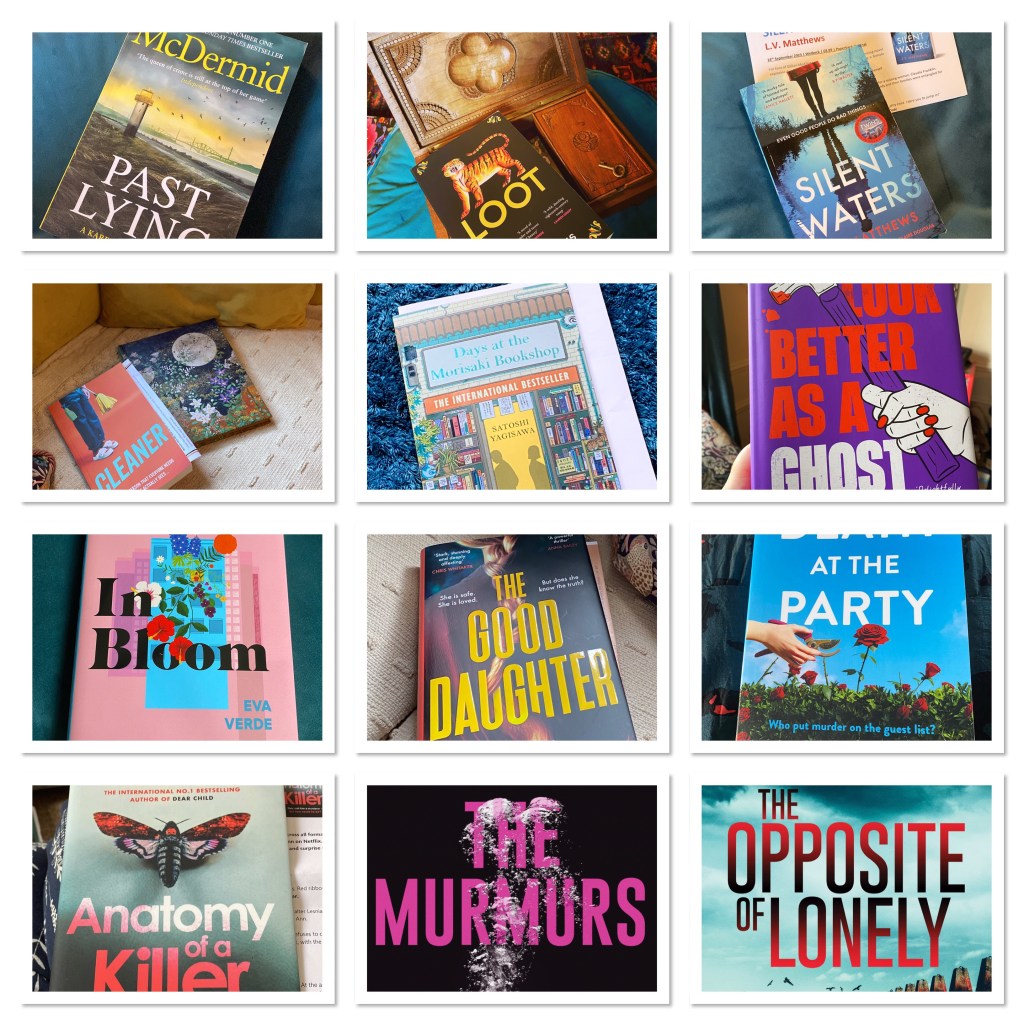
Monthly Wrap-Up August 2023

August has been a quieter month as far as blog tours and my usual reading schedule goes. It’s been a reading rollercoaster in that I’ve loved a book and blazed through it, then had another that I’ve really struggled to get into. There have been DNFs and a couple of very close calls. I’ve also taken time to catch up on the books I’ve missed in a series, this time it was Matt Wesolowski’s Six Stories novels that I’ve now caught up with. I’ll be mentioning them at the end of the post. I have indulged myself with a book that I knew would make me laugh, a couple of novels from writers I really admire, then a debut that I knew would be close to home. I’ve been to England, the USA and Australia plus two strange other worlds that bear some relation ours accept for some very strange medical conditions or the possibility of some strange paranormal phenomena. Here are my thoughts on my favourite August reads:

I’ve enjoyed Anita Frank’s other novels so I was very keen to get hold of this as early as I could. Thanks to NetGalley, HQ and the lovely Anita herself I was sent this beautiful finished copy as well as the digital version. This mystery had some of my favourite themes and settings; I enjoy the ‘new servant arrives at a family estate’ plot as it’s always reminiscent of Jane Eyre and I enjoy books set after WW1 as it’s a turbulent time when British society was changing rapidly. Sarah is the new employee arriving at Darkacre, the family seat of the Stilwells. WW1 has wreaked havoc on the men in this family. Maurice was not prepared to be the master of the house and with double death duties already crippling the estate, he’s had to learn fast. Unfortunately Maurice has returned from war a changed man, plagued by nightmares, flashbacks and extreme responses to loud noises. With youngest brother Leonard severely disabled by his war injuries and struggling to come to terms with the loss of his limbs, the family are depleted and barely coping. However, as Leonard so cryptically tells us, perhaps it is no more than they deserve? Sarah’s arrival is the catalyst for this story and it isn’t just the relationship between family members that points to there being issues at Darkacre, soon a series of unexplained happenings start to gnaw away at the nerves of even the most stoic inhabitants. Then a mysterious police officer arrives to tell the family that he’s investigating rumours of a body buried in the family’s woodland. This is a great mystery, placed within such a well researched and atmospheric setting.

I read this touching and very entertaining memoir one afternoon on holiday and feel more in love with Lou Sanders than I already was. Having enjoyed her on Taskmasters and Outsiders I was very interested to read the story behind the slightly scatty and incredibly open woman I’d seen on screen. As expected Lou tells her story with no frills or filter, creating a really intimate reading experience. I could hear her voice immediately and that was the best thing about it. She describes a difficult early life – struggles with ADHD and a very late diagnosis, coupled with devastatingly low self-esteem. Totally misunderstood at home, she was drinking and drug-taking from an early age, all to mask feeling different and as if she didn’t belong. Leaving home at 15 and working in pubs, she learned to use drink to create a new persona, one that made people laugh. Drama followed her and some of her stories, especially around the opposite sex, are starkly told and are all the more devastating for their honesty. She’s totally unaware that she has the option to keep to her boundaries, in fact I don’t think she was aware of her ability to set them. Lou is very matter of fact and unshowy about choosing to get sober and change her life. She credits AA with her success and it only stuck when she realised she was ruining her own chances, self-sabotaging her career. She would ask comic friends why new comics were getting TV gigs and she wasn’t. After shows where she was obliterated, threw things into the audience and even bit someone, it took a good honest friend to tell her the truth. TV producers didn’t trust her, she was too unpredictable. That friend probably saved her career, in act they saved her life. A brilliant, well written and emotionally intelligent memoir that’s also laugh out loud funny.

Lowbridge is a small town in Australia; the hometown of Katherine’s husband James. Katherine has been struggling with her mood and self-medicating with drink. James is hoping that the move will help, but it’s clear something momentous has happened. Their lives have imploded, but they are each dealing with it in different ways. James encourages Katherine to leave the house and she accidentally stumbles across the town’s historical society. She is inspired by the exhibition they’re putting together as it’s something she can potentially help with, but when she comes across a thirty year old mystery, problems start to arise. The disappearance of teenager Tess has remained unsolved and Katherine thinks it may be time to highlight the case and jog people’s memories. She knows she must involve Tess’s family in the decision, but she doesn’t expect opposition from anyone else. However, she is faced with opposition and it is from James. He tells her to leave the mystery alone: it will stir up trouble and be unhealthy for her to become wrapped up in another family’s grief. Katherine is determined though and with Tess’s family on board she starts to research what happened in 1987. The setting really does bring small town attitudes to life, but it also highlights the difference between the ‘haves’ and the ‘have nots.’ Uptown teenagers have lives filled with homework, tennis club, music lessons and private schools, a group that includes Katherine’s husband James as well as the missing girl. Downtownis where miner’s families live and poverty, drinking, trouble with the police and lack of aspiration seem to be the norm. The author shows how geographical situation can determine your life in a gritty and painful story that Katherine slowly uncovers, all the time wondering if the answers might lie too close to home.

This incredible debut is seriously in the running for my book of the year. It floored me emotionally and I don’t think I’ll be forgetting it any time soon. When Ella from Hachette Books messaged me to say there was a book she thought would be right up my street I was a little surprised. I didn’t think the publicists would know me well enough to make predictions about what I’d like. I was wrong. She knew exactly who this book was for. ‘It’s about a man turning into a Great White Shark’ she told me, well what’s not to like? I was hooked on the idea before the book even arrived. Lewis and Wren have fallen in love. They’ve no idea that their first year of marriage will also be their last. It’s only weeks after their wedding when Lewis receives a rare and shocking diagnosis. He has an unusual mutation and although he might retain some of his consciousness, his memories and possibly his intellect, his body will become that of a Great White Shark. Lewis is complicated, an artist at heart he has always wanted to write the great American play for his generation. How will his liberal and loving heart beat on within the body of one of the earth’s most ruthless predators? He also has to come to terms with never fulfilling his own dreams. However, worse than that, he has to come to terms with leaving Wren behind for her own safety. Wren wants to fight on. To find a way of living and loving each other as Lewis changes. She is told that there will come a point when this will be too dangerous. Lewis will then have to live in a state run facility or free in the ocean. It’s when she sees a glimpse of his developing carnivorous nature that a memory from her past is triggered. Wren has to make a terrible, heart-wrenching decision. This is a beautifully written, astounding debut, that takes universal human emotions like fear, love and loss but presents them in a highly original way that makes them all the more devastating.

I don’t want to tell you too much about this follow up to Louise Hare’s novel Miss Aldridge Regrets, because my review hasn’t been published yet. However, I can tell you how much I enjoyed it and how the author moves Lena’s story on from the murderous and surprising events of her cruise across the Atlantic to NYC. Lena was travelling to audition for a Broadway role, but her proximity to the rich Abernathy family on board left her caught up in a murder mystery. She also came closer to knowing more about her own background. While on board she had a relationship with Will, the singer in the ship’s band. He offers her a place to stay in NYC, with his best friends Louis and Claude. However, as the book opens with a woman falling from their apartment window we’re left wondering what goes on in the fortnight’s break? Especially since the fallen woman was clutching Lena’s passport. Has our heroine met a sudden and untimely end? I won’t tell you any more as I’m still reviewing this one, but I really enjoyed the pace and the detail in her setting of 1930’s New York. Themes of family, identity and being black in the USA make for fascinating reading and I would highly recommend it.

Here’s a preview of my September Reading

Posted in Netgalley

The Stargazers by Harriet Evans

The Stargazers does something I’ve been trying to put across in my own WIP. It shows us that our own story, as we have experienced it and tell it to others, is only one strand of an infinite tapestry. Sarah Fox and her husband Daniel are moving in to their new house on The Row. It’s a ‘proper house’, meaning that as you walk through it you can imagine your child taking their first steps in the hallway or using the tree swing in the garden. It reminded me of when we were looking at houses and we viewed an incredible place that felt to me like a grown up house. It had all the children’s heights written on the wall next to the kitchen door and also a little family of llamas, painstakingly cut out and coloured in, then clear varnished onto a beam in the living room. It was a proper family home and I think this is a little bit of what Sarah feels as they cross the threshold of No 7. Does this make them grown-ups? Perhaps amplified by the fact that Sarah has never known a real family home until now. Sarah and her sister Victoria (Vic) spend their early childhood in the family home of Fane Hall, one of the most splendid stately homes in the south of England. When their grandfather, the heir, dies. They are awaiting the return of Great Uncle Clive. He will become the Earl because Sarah’s mother, Iris, cannot inherit the house being a woman. Iris has doubts, but hopes that since the death of both her father and her husband, Uncle Clive will be benevolent and allow them to remain living in the west wing of Fane. Yet the man who returns from war with a new wife, Aunt Dotty, does not see things the same way. Fane is his, and instead he grants them a small flat in Kensington.

Years later, after Iris has repeated endlessly to her daughters that Fane is her house regardless of inheritance law, they fall on hard times. So she tells the girls to pack and brazenly moves into Fane, occupying a different wing to Clive. Time has been hard on Fane and it seems like her Uncle has allowed it to fall down around him. Every room feels ransacked and amazing collections like the taxidermy animals have been thrown on the floor, their glass cases broken and the smell emerging into the house. There’s also a far worse smell. Many of the toilets are blocked, the bathrooms unusable and their smell permeating throughout. This is the legacy of WW2 and Fane being used by the British forces, not very carefully it would seem. Uncle Clive is dirty, shambling and penniless. A game seems to resume between her Uncle and her mother Iris, with the girls caught in-between, often forgotten and at times completely neglected. Then Iris sends the girls to boarding school and settles in at Fane waiting for him to die. This means that for long periods Sarah has to leave her only friend in the world. The only one who understands her home situation and gets to know her one to one. They are the stargazers. Sarah climbs out of her window in the middle of the night to meet him at a large tree, big enough to sit in and watch the night sky. There they don’t have to talk about their home lives, it’s simply understood. This young boy lives with the lady who runs the post office, but she’s a foster mum. He tells her they need to look forward to their futures not their pasts, to their dreams of being a musician and a film maker.

As we work our way through these different layers of family history, it works like a set of Chinese boxes, one story tucked inside another and we learn a little more from each. Sometimes, an event in Sarah’s childhood helps us understand the present. Then we read a snippet from Iris’s past that informs us about why she treats her own children badly. The adult Sarah we meet in her house in London is very different, as her life shrinks a little. She has two small children and spends all day taking care of them. She doesn’t have time for daily music practice and her hands become stiff so she can’t stretch to pluck the cello strings. Where once she played cello professionally, it now sits in the corner of a room upstairs untouched. Husband Daniel is a bit clueless about how Sarah feels. He’s a fellow artiste, but he’s an actor and television producer and he still gets to leave the house each day. He also starts a long Sunday lunch tradition for the neighbours which seems to a euphemism for come into the house, drink all day and neglect to clear up after themselves. Sarah struggles a bit in this chaos, especially when something outside of their daily routine happens – like her sister turning up to stay when Sarah had completely forgotten them. Instead of embracing the chaos and simply saying ‘I’ve forgotten completely, come on into the madhouse’ she tries to cover the fact that she’s not remembered, putting untold pressure on herself.

There’s a saying in counselling that no two children have the same parent, that applies strongly to Vic and Sarah. They are very different people, possibly due to the way they responded to emotional abuse as children: one was compliant and the other, despite being scared, was defiant. Not only was Iris psychologically damaging, she was neglectful. She is constantly forgetting to feed them, doesn’t buy them the right clothes for school and ensures they are seen as different both by the children of the village and even their school friends. At school Vic becomes a huge hit with the popular group and seems worshipped by the younger girls. When asked to show her loyalty to the group she doesn’t hesitate, even when that loyalty means shunning her little sister. There is bullying that’s uncomfortable to read and gave me the shivers. In choosing the popular girls, Vic has ensured her safety but has also signed up for a lifetime of putting on a front. Sarah may be shunned but at least she can be herself. I felt sorry for Vic, after all she is also the product of abuse, but in turning into an abuser herself she started to lose my sympathy. Especially when it comes to their treatment of Sarah’s music teacher and an act that has lifelong repercussions.

I thought this book was fascinating from a psychoanalytic perspective showing how we find ways of surviving abuse childhood that become part of our personality. In a twist I didn’t expect, a Sunday dinner at Sarah and Daniel’s goes south fast when their little girl disappears. The reasons why surprised me, because I was never quite sure where the stories were going to join up or who might be lurking from the past. Sarah’s eventual return to Fane in adulthood doesn’t work out in the way she might have hoped, but it helps her finally face up to what happened there. The final paragraphs show us the irony of Iris clinging to Fane and to life. She is still muttering to herself that Fane is hers and what would have happened had she been a boy? Did she get what she wanted in the end? Is the estate viable or have terrible compromises been made? As we find the answers to these questions we also see Iris’s decline as compared with the little girl she must have been when she first visited the house. This final flashback is brilliantly thought out and placed. That first visit can’t fully vindicate Iris, there is never an excuse for her actions towards her own children, but it could shed some light on what happened to set these wheels in motion. It might even explain her unshakable belief that Fane is hers. This is a great book about family, intergenerational trauma and the adults we grow up to be, because of the children we once were.

Published by Headline Review 14th September 2023

Harriet is the author of thirteen novels, two of them are Richard and Judy book club selections, several have been Top Ten Bestsellers, one won the Good Housekeeping Book of the year prize, but the accolade she’s most proud of is the lady on Twitter who wrote last month that she thought my books were real ‘knicker grippers’. As Harriet says on her Amazon author page ‘I suppose that’s all you can hope for isn’t it?’

Her first novel, Going Home, came out in 2005 and her last was The Beloved Girls, published in paperback in April 2022. She wishes she’d tried another job sometime but she can’t imagine not writing. She has written since she was a child, first on books I stapled together with paper then notebooks, then a laptop that crashed and lost all of the novel she was writing in secret back in 2002. (So now she backs her work up properly) Her first novels were more about relationships and people in London and had more chicklit themes and the later ones are darker and more about families and secrets and houses and the past. Those themes have always been in her books, but as she’s grown older she’s enjoyed exploring them more. She has so many stories in her head all the time and adores knowing that her job means that she can carry on telling them.

If asked how she’d describe her books she’d say she wants them to be gripping, involving, heartwarming stories about families and mysteries in the past with a Gothic tinge. This one definitely fits that description.