Posted in Throwback Thursday

Other People’s Husbands by Elizabeth Noble

Elizabeth Noble’s domestic drama is focused around a solid group of friends. Six women and their husbands have been a ‘pack’ for several years after chat at the school gates led to lunches, then dinners and now regular get togethers like their annual May Day bank holiday. Traditionally this weekend is always spent together, sometimes abroad but usually at Annie’s picturesque holiday cottage. Annie loves sharing her home with her closest friends and is the best host, often heading down there a couple of days before the others to air the house out and prepare the bedrooms. This is where the ripples begin. In previous years Annie remembers all the kids coming along, playing in the pool and shrieking with laughter. More recently it’s just been the adults and the first day usually involves getting out of travelling clothes and spending the afternoon by the pool, the men in their swimming shorts and the women in sensible Boden one piece swimsuits, an unspoken rule. Kit and Natalie are late for everything and this weekend is no exception, so everyone is already lounging outdoors when Natalie joins them. This is the moment that everything changes, as Natalie strolls out in a high legged red bikini walks the length of the pool and climbs in. The red is as subtle as a matador’s cape, but will anyone take up the challenge? All the women know without speaking that this is a betrayal of the sisterhood, an open sexual invitation, a red flag. Even a couple of the men mention it, later on in bed with their wives they say it was a statement, pure theatre, something that shouldn’t be a surprise considering Natalie is an actress. Yet her husband Kit barely seems to notice.

However, one of the husbands noticed a long time ago that Nat is beautiful. In fact over twenty years there have been several moments – a glance, a brush of the fingers, a hand that lingers on a shoulder, a kiss that strays from the cheek to the edge of the mouth. Will this now become something more? The author lets the tension rise beautifully. She perfectly captures how one action acts like a ripple in a pond within a group like this. It would affect every one of the friends and the next generation who have grown their own friendships over the years. Natalie is feeling restless and expressing that in her clothing and changing her routine. She and husband Kit have a small flat in London that she can pop to on the train and visit galleries or go shopping. Previously she’s been held to the routine of children at home but now she’s free from that and has time for herself. Her husband Kit seems absolutely solid and a great dad, but Natalie misses that frisson of attraction and electricity between two people. So, when she and Dom accidentally bump into each other in London she doesn’t have anywhere to be or to rush back for, so they can enjoy the warmth of a city evening. Joining others who are sat on the embankment, looking at the river and enjoying a bottle of wine or ice cream. The heat between them is obvious, but there’s always been something to stop them before. Dom loves his wife, she’s solid and dependable but their sex life has dwindled of late and they don’t seem to have made the transition back from family to being a couple again. His attraction to Natalie, something he felt at their very first meeting, has never diminished. What if they now have a chance to be together? Whereas Natalie seems to agonise over her husband and children finding out, Dom doesn’t seem to think about the catastrophe this would cause.

Noble has written their characters very carefully so that I really did care about Natalie despite her actions. I enjoyed her relationship with daughter, listening to Temple’s marriage problems and going away with her for the weekend for some quality time. Natalie’s issues were largely her own and they had nothing to do with her relationship with Kit. Dom’s wife Sarah was very organised, something that seemed to fit with her job as a schoolteacher. She often organised group get togethers and was very family orientated. She knew that her sex life with Dom had slipped a bit of late but she wasn’t too worried. She thought that sex did tend to dwindle a little when people reached middle age and had been together so long. That didn’t mean they didn’t love each other. However, she had really been too busy to stop and think about whether they actually did still love each other. The author’s ability to get inside the mind of these characters was incredible and I enjoyed how the story was split between various different members of the group, including the next generation who were facing changes of their own. I loved how the women tried to remain friends with each other, despite everything that was happening around them.

While this intense drama was going on it was balanced by a peek into these couple’s lifestyle. I coveted Annie’s holiday home with it’s old fashioned charm. The events they’re all invited to, such as one of their daughter’s weddings being held in the garden at home, were lavish and beautifully arranged. These were dreamy interludes between the domestic drama that I drifted through, thoroughly enjoying how lovely they were. There was also a gorgeous little romance developing between two of the next generation, who had spent years climbing trees and running through sprinklers in each other gardens, but were now confused because their feelings were changing. In the main it was the women who stood out in this novel, whereas a lot of the husbands simply faded into the background. These were strong women, having to keep afloat careers, family commitments, parents and marriages. These are the ‘middle’ years where children still need you and parents start to rely more on their children. It’s a little like spinning plates, but at least these ladies had gorgeous homes and getaways. Let’s be honest, no one here is struggling on minimum wage. It’s gloriously gossipy though and I felt like a thoroughly spoiled fly on the wall by the end. Perfect for by the pool reading, this really was an enjoyable and addictive domestic drama.

Meet the Author

Elizabeth Noble is the internationally bestselling author of The Reading Group, The Friendship Test, Alphabet Weekends, and Things I Want My Daughters to Know. She lives in New York City with her husband and their two daughters.
Posted in Publisher Proof

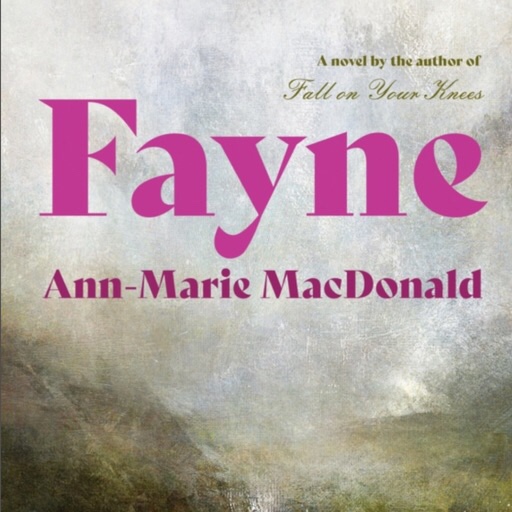
Fayne by Ann-Marie MacDonald

Fayne by Ann-Marie Macdonald

‘I do not wish to be a woman.’

‘My dear. I’m afraid we none of us has the choice.’

I do not wish to be a lady, then.’

‘I cannot blame you.’

The vast estate of Fayne lies to the southern border of Scotland, ruled by the Lord Henry Bell, Seventeenth Baron of the DC de Fayne, Peer of Her Majesty’s Realm of the United Kingdom of Great Britain and Ireland. The mysterious Lord Bell keeps to his rooms by day, appearing briefly at night to dote over his beloved and peculiarly gifted child. But even with all her gifts – intelligence, wit and strength of character – can Charlotte overcome the violently strict boundaries of contemporary society and establish her own place in the world? Fayne is the page-turning queer story of longing and belonging you’ve been waiting for.

I must admit to being slightly daunted when this novel came to the door. I say ‘to the door’ because it wouldn’t fit through the letterbox or into our postbox. It’s an absolutely brick of a novel, so much so that I had trouble holding it. Feeling a little overwhelmed I spoke to a fellow blogger who suggested that I mark it off into readable sections of about 150 pages. It was great advice and I’m glad I persevered with the novel, because it really was intriguing and original. Set in the late 19th Century and written in a similar style to a Victorian novel, Fayne is the story of Charlotte Bell. Charlotte is a precociously intelligent young woman with an insatiable curiosity that is starting to overcome the bounds of what her father and the estate’s library can teach her. This could be a dream existence, but there are shadows in her childhood. Charlotte’s mother died giving birth to her and her brother, the heir to Fayne House died at the age of two. Her father makes a break with tradition on her twelfth birthday, when a young woman would usually have a governess, he hires her a tutor instead. Lord Bell gives him one command for the education of his daughter, to teach her ‘as you would my son, had I one’. Charlotte’s only restriction up till now has been staying within the bounds of the estate. This is because she has a mysterious condition that may make her prone to catching illnesses from others. However, when she takes her tutor out to the bog, they find an unexpected artefact and take it home. Lord Bell suddenly announces he has arranged for her to be cured of this condition, turning Charlotte’s world completely upside down.

There is a feyness to her character, with her love of the boggy moorland and it’s mysterious mists that envelop walkers. She has learned both the ways of the bog and local folklore from Bryn, an elderly servant who seems to come with the estate. Yet the artefact she finds seems to be a mystery. The other mystery that confused me from the outset was the nature of Charlotte’s condition. Also, despite her curiosity about everything else, Charlotte seem strangely unaware of what it is and how it manifests. Her old nurse tells her there are all manner of miasmas and droughts that might carry off her ‘darling pet’. I kept waiting for her to ‘feel’ ill but that never seemed to happen. Another curiosity was her mode of dress, at a time when women were terribly restricted by their clothing which would have included a corset, possibly a bustle, and long cumbersome skirts and petticoats. Yet Charlotte is leaping around the moor, seemingly wearing a form of trousers, that she describes as a scarlet tunic and leggings. I was totally intrigued, imagining a type of female Robin Hood. In fact Charlotte herself says that if she did miss her footing in the bog and was discovered years later, she might be mistaken for a Roman centurion complete with a cape! She’s such an interesting and completely different Victorian female character I was fascinated with her. While still wondering what the mystery around her was, I became beguiled by her wit, intelligence and her endless wonder. As the answers started to come I was rooting for her to escape the rigid gender boundaries of her time and fulfil her potential. The author’s assertion that Charlotte is normal, it’s the world that’s trying to impose it’s order upon her, chimed very strongly with my disability theory background. The social model of disability asserts that all bodies are normal, but the way society is organised creates the disability. For example, if all exits and entrances to a building were ramped everyone can use it. It doesn’t matter if you’re sitting or standing.

It’s clear that the landscape at Fayne and Charlotte are inextricably linked. Despite eventually travelling away from it’s borders, it stands out as the one place she was allowed to be her true self with no restrictions or arbitrary boundaries. She didn’t have to choose who she was at Fayne, she could just be Charlotte. Fayne is a liminal space, existing somewhere between mythology and reality, between England and Scotland. I loved the way the author positions Fayne and the estate’s old folklore as authentic, as natural as Charlotte is before she moves to Edinburgh, which is a sharp contrast to the wilds of her childhood. I was desperate for Charlotte to retain this authenticity, but everything about a city imposes order – the signs, the roads, the hard surfaces. Then there’s ‘society’ and it’s arbitrary rules about gender. There are so many rigid ideas about how a woman should look and behave. The imprisonment of a Victorian woman’s clothing is so stifling that when we think of Charlotte’s tunic and leggings, it feels like being restrained. Yet there are other ways of being, even here, you just have to know where to look. It was great to be on that journey with Charlotte, as she finds that other people also defy expectations. There is so much more to the novel, different viewpoints and characters as well as some plot twists and turns. However, I was always happy to come back to the ever curious and irrepressible Charlotte. It will take all of Charlotte’s ingenuity and intelligence to unearth her family’s secrets and discover her own identity. In some ways I was reminded of another novel with an intersex character delving into her family history, Middlesex by Jeffrey Eugenides. I enjoyed both character’s journeys to find themselves, but also each book is so rich and full of history. I have read Middlesex more than once and Fayne will also benefit from a re-read, hopefully at a slower pace, as I’m sure there’s so much I missed or didn’t fully appreciate on first reading. Ann-Marie MacDonald is an extraordinary storyteller and I’m now interested to explore her other novels.

I knew from a very young age that I was wrong in the world. And the idea of looking through the eyes of somebody who’s born with an intersex trait has been quite compelling to me for a very long time. It’s not an exotic quality. That’s why I’ve decided not to treat it as a “spoiler.” That’s just who Charlotte is, that’s her body. That’s normal. It’s the world that has a problem and is going to make it a problem for her’.

Ann-Marie MacDonald Press Release from Tramp Press.

Meet the Author

Ann-Marie MacDonald is a novelist, playwright, actor and broadcast host. She was born in the former West Germany. After graduating from the National Theatre School of Canada in Montreal, she moved to Toronto where she distinguished herself as an actor and playwright. In 1996 her first novel Fall On Your Knees became an international bestseller, was translated into nineteen languages and sold three million copies. It won a Commonwealth Prize, the People’s Choice Award and the Libris Award. In 2002 it was an Oprah’s Book Club choice. In 2023, The Way the Crow Flies appeared and in 2014 Adult Onset, both of which had international success. In 2019 she was made an Officer of the Order of Canadafor her contribution to the arts and her LGBTQ25+ activism. She is married to theatre director Alisa Palmer with whom she has two children.

Posted in Publisher Proof

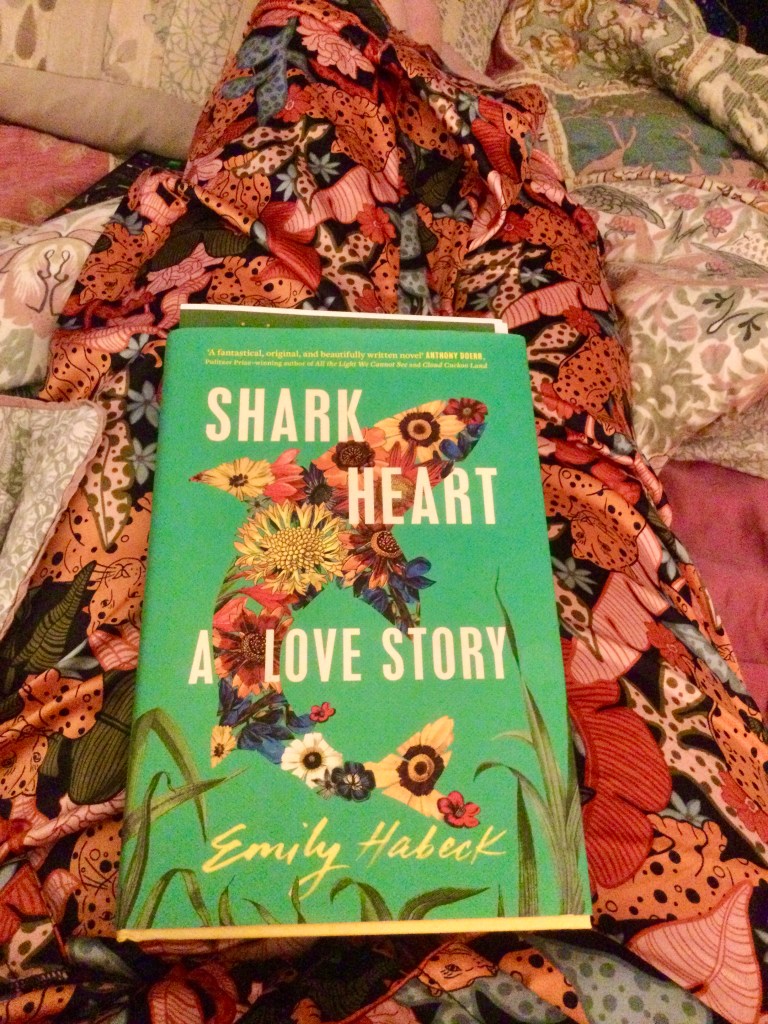
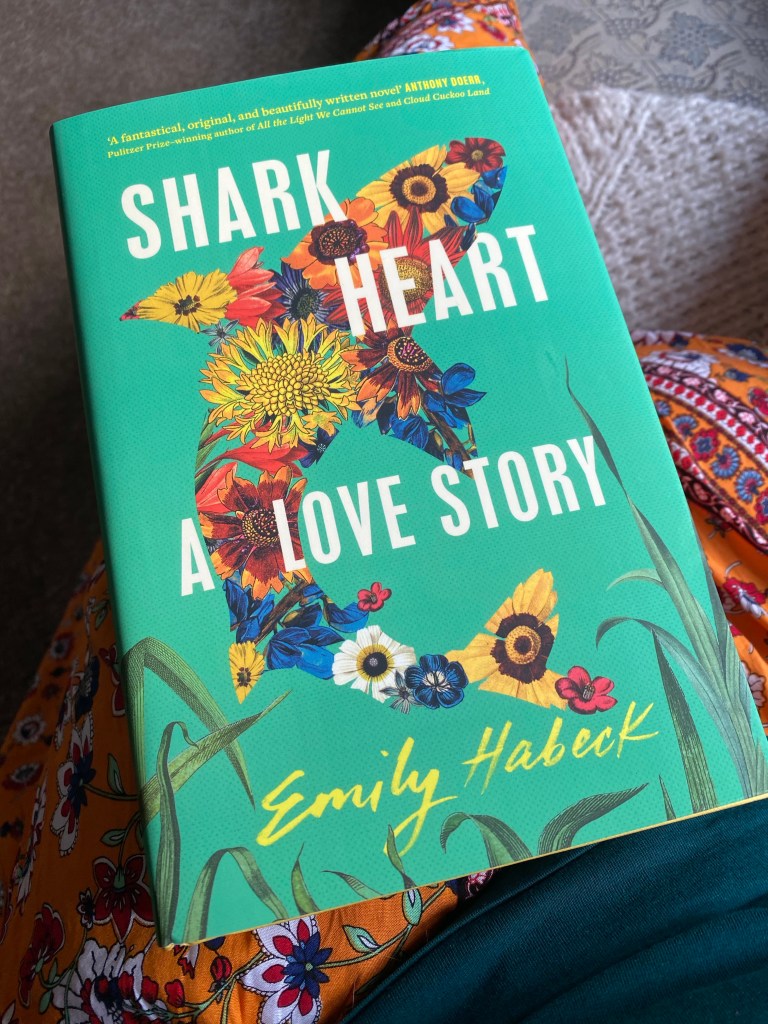
Shark Heart by Emily Habeck

When Ella from Hachette Books messaged me to say there was a book she thought would be right up my street I was a little surprised. I didn’t think the publicists would know me and my book choices well enough to make predictions about what I’d like. I was wrong. She knew exactly who this book was for. ‘It’s about a man turning into a Great White Shark’ she told me, well what’s not to like? I was hooked on the idea before the book even arrived. Lewis and Wren have fallen in love. They’ve no idea that their first year of marriage will also be their last. It’s only weeks after their wedding when Lewis receives a rare and shocking diagnosis. He has an unusual mutation. Although he might retain some of his consciousness, his memories and possibly his intellect, his body will become that of a Great White Shark. Lewis is complicated, an artist at heart he has always wanted to write the great American play for his generation. How will his liberal and loving heart beat on within the body of one of the earth’s most ruthless predators? He also has to come to terms with never fulfilling his dreams, but expressing that anger with shark DNA in his system has huge repercussions. He has to come to terms with leaving Wren behind, for her own safety. Wren wants to fight on. To find a way of living and loving each other as Lewis changes. She is told that there will come a point when this will be too dangerous. Lewis will then have to live in a state run facility or free in the ocean. It’s when she sees a glimpse of his developing carnivorous nature that a memory from her past is triggered. Wren has to make a terrible, heart-wrenching decision.

I felt emotionally devastated by this beautiful novel that uses a fantastical premise to unleash experiences of grief, love, loss and potentially, healing. Wren and Lewis reminded me of my relationship with my late husband. We married after six weeks and even then I knew I wouldn’t have him forever. I had almost seven years until I lost him. This book explained how my own grief experience felt. After Jez’s death I felt furious with anyone who said ‘Jez would think..’ or claimed they could sense his presence. I could feel nothing. No voice, no presence, nothing. It was as if he had never existed. For Lewis there becomes a point when his incessant desire to feed will become his overriding thought, strong enough to wipe out all others, will that include his love for Wren? He will not exist as Lewis anymore, the doctors tell Wren, he will not even know who she is, because he will be all shark. Wren has to come to terms with letting Lewis go, but how do you walk away from the most precious thing in your life? I had a point where I had to decide that I couldn’t look after my husband any more. I was exhausted, we had no carers in place and it didn’t feel safe to try and go it alone. Besides, as his brother told me, I had to start building a life without Jez. I cried more the night he went into nursing care, than when he died, because I felt I’d let him down and I knew he would die. He did, only six weeks later. Wren is told the same after a terrible violent incident occurs at the after-party for the play Lewis’s students have worked on. Wren calls the specialist nurse for advice, but she urges Wren that it’s time. Will they be able to say goodbye?

Despite these similarities to my life, it wasn’t Lewis’s story that broke my heart, It was Wren’s story. This is not the first time Wren has had to say goodbye. When she was barely a teenager her mother also had a rare diagnosis, but her mutation was that of a Komodo Dragon, equally deadly and impossible to live with. One scene between Wren and her mother, as she leaves her in the state facility, was so deeply moving I cried. I found it unbearable. This is what’s astonishing about Emily Habeck’s debut. It seems so fantastical, yet is utterly real in it’s experiences and emotions. Using such unusual animals as the mutation/illness creates a distance from the feelings involved. Some readers might even think the premise ridiculous – but the terrible anticipation, the moment of loss, the grief and relentless momentum of life are exactly the same. It doesn’t matter whether it’s the decision to put an elderly parent in a home or a Komodo Dragon into a facility, the guilt and pain as you walk away feels identical. It isn’t all relentless misery though. We meet Wren’s mother as the teenager she once was, experiencing love for the first time. We also go back to Lewis and his new life in the ocean, as his emotions flit between loss and what’s for dinner. His friendship with Margaret is so funny. She was once a human too and she’s been looking for another hybrid to talk to, and boy does she talk?! She’d try the patience of a shark. In a beautifully unusual way and in an almost poetic prose, this beautiful debut is about life. It’s ups and downs, the horrendous losses and the gains: the naivety of first love, becoming a mother, our love and care for an elderly parent, friendships and realising that a special little girl sees you as her dad. Life is constant adaptation, evolving and developing all the time. Every end is a beginning. This is such a special novel, an incredible debut with such a keen grasp of what being human is all about. I can see this becoming an all-time favourite for me. It quite simply took my breath away.

Meet the Author

Emily Habeck has a BFA in theater from SMU’s Meadows School of the Arts as well as master’s degrees from Vanderbilt Divinity School and Vanderbilt’s Peabody College. She grew up in Ardmore, Oklahoma. Shark Heart is her first novel.

Published on 3rd August by Jo Fletcher Books

Posted in Sunday Spotlight

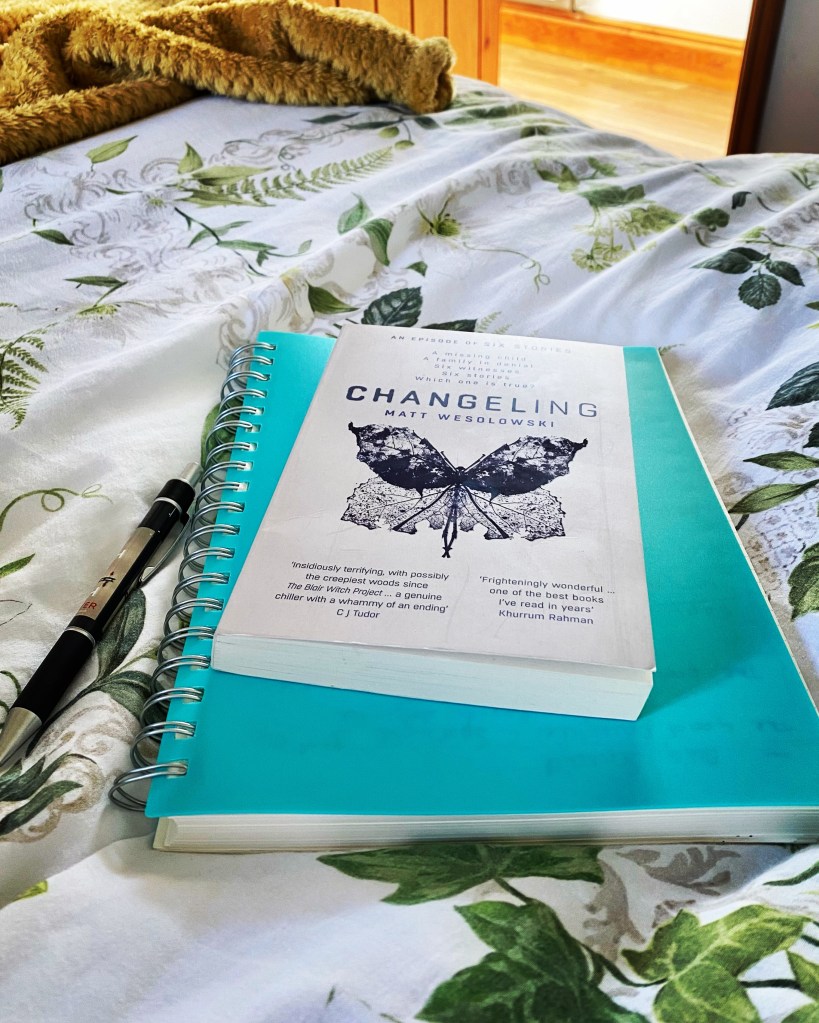
Changeling by Matt Wesolowski

I spent some of my recent holiday going back to the earlier books in a series I picked up half way through. I often review for Orenda books blog tours and this has meant picking up on some fabulous authors who are on the fourth or fifth book in a series. I then slowly buy the previous novels in the series and take them on holiday so I can wallow in them for a couple of days. So, it was with no idea of the subject matter, except it would be a mystery and was being revisited by a podcast called Six Stories where Scott King interviews six people connected to the case. It’s not that he expects or aims to solve the case, although that’s a possibility, it’s about hearing different voices, perhaps ones that haven’t been heard or have something to add to their original evidence. I had no idea of the geographical location in The Changeling, nor could I have predicted reading it when I did. The case begins on Christmas Eve 1988 when Sorrel Marsden is travelling along the Wentshire Forest Pass, a road between Chester and Wrexham in North Wales. He hears a knocking sound in the car and decides to pull over in a lay-by to investigate. As he gets out he glances back to check on his son Alfie who is fast asleep in his booster seat in the back. Sorrel checks under the bonnet of the car, but not seeing anything obvious he decides to continue his journey. However, as he drops the bonnet he notices the rear passenger door is open and Alfie’s booster seat is empty. He looks for his son on the edges of the forest, but with no clue where Alfie has gone he goes to the phone box and calls the police.

We holidayed on the welsh borders, with the River Wye running through the garden of the cottage. We were travelling back from Chester Zoo when I started to read The Changeling and I’d passed navigation duties to my stepdaughter so I could put my feet up in the back. So I read Sorrel Marsden’s account of his son’s disappearance as we drove from Chester into Wales! Wesolowski is skilled at creating a setting that slowly unnerves the reader and I felt this as I read about the history of the forest and the interview King does with a contractor working on the construction of a holiday park. He was working in the forest at the time of Alfie’s disappearance and tried to help with the search for the boy. Not that searching was easy, as floodlights that worked earlier that day completely malfunctioned when needed. It was also impossible to move vehicles from the area of the search, the very embodiment of a ghost in the machine or gremlins in the works. The builder claimed that strange events started happening when they tried to remove ancient trees from the woodland. With normal tools not working, they were reduced to hacking at the trunks of the trees with little success except for a few blood injuries. They were sleeping onsite in temporary buildings when the knocking started, insistent and gaining in volume despite having no visible source. Most fanciful were his stories of seeing an animal out the corner of his eye, possibly a goat or wild boar. What i found most chilling though were the voices, whispery and urgent little voices that were indecipherable but angry in tone. Sorrel Marsden has made a point of walking the pass every year on the anniversary of Alfie’s disappearance. He never claims to hear or see anything on his treks, but they do serve a purpose. They set him up as the victim, the hero of the piece, especially then compared with Alfie’s mother Sonia who has never taken part in the search or been interviewed about her son. Until now.

The character’s in the novel are open to interpretation and our impression of them might change, depending on whose account we are listening to. Part of Sorrel’s story of that night is as damning for Sonia as her absence at memorials and other events. He claims to have suggested to spend Christmas with his estranged wife and son, but as Sonia’s drinking worsened he decided to remove Alfie from his mother’s care and return with him to his own home in Wrexham. This would have given people a terrible impression of Sonia and as an uncaring and unfit mother. Yet we haven’t heard her or anyone else’s opinion, only Sorrel’s. People tend not to question or accuse the bereaved and with Sorrel being found by police curled up in the phone box in a foetal position, it’s hard to blame those in attendance for treating him with care and compassion. Yet Sonia does consent to meeting King and talks for the first time about that awful Christmas. She doesn’t deny drinking, but has some explanations for her actions. She claims that Sorrel is an unusual man, with an ability to draw people to him that goes beyond his looks or personality. She recalls being belittled and controlled. Yes she struggled as a very young and isolated mum, but no help came. Despite claiming she was a bad mother, Sorrel left her alone with Alfie and rarely visited. I loved the women who contacted Scott King to tell their story of encounters with Sorrel. Like a mini ‘Me Too’ movement these women come together to talk about coercive control, psychological abuse, strange knocking sounds keeping them awake and leaving them unnerved. These women have incredible strength and having experienced a relationship like this I had my suspicions about Sorrel Marsden.

Sorrel is controlled, especially in his work as a chef. Other kitchen workers comment on his admiration for the military way of running a kitchen, a system of rules and regulations he also expects in his kitchen at home. Women refer to an unusual feeling they’d experience, as if he had them in an enchantment. It made me think of the word ‘glamour’ in the way it’s applied to witches – folk tales tell of a witch’s ability to ‘glamour’ people, to only show those sides of themselves they wish to be seen, often appearing as a beautiful young woman when they are in fact a shrivelled old woman. If we look at it realistically, Sorrel is a master manipulator and serial abuser able to charm and convince women to trust him. He then slowly isolates them, breaks down their confidence, gaslights them and convinces them they are worthless. When his story is picked apart there are holes everywhere, including a past link to the forest. When Alfie is a toddler he suggests a family camping holiday to the forest, with a friend of his called Wendy to help with the childcare. On this trip Alfie ‘disappeared’ into the forest for the first time, found by Sorrel who walks back into the clearing with his son in his arms. Both Sonia and Wendy claim that Alfie was never the same after this trip. I could only wonder why Sorrel would have taken them to a wood with no facilities and such a haunted reputation. Did Sorrel know what was in the woods? Was Alfie some sort of sacrifice? From then on Sonia would hear strange voices and knocking when no one was there.

The section that genuinely lifted up the hairs on the back my neck seemed a bit tenuous at first. King interviews a man whose mother has recently died. She was a teacher back in the 1980’s and as part of her training she was gathering research on pupils who had behavioural issues. When she died her son found the research in the attic and was intrigued by her notes on Child A, because Child A was Alfie Marsden. Delyth recorded his behaviour on several occasions and the more she saw, the more scared she was. Alfie would turn his back on other pupils, deliberately not participating in what everyone else is doing. Alone with him, Delyth heard muttering and although he wasn’t moving, she could hear a strange knocking. There were times where she was scared to look him in the face. Yes, other teachers warned her that he might bite or lash out, but with her he was unnaturally still as if he was listening somewhere else or to something else. Did Alfie just have behavioural issues or was there something more sinister at play? Were the knockings and strange voices similar to those mentioned by the building contractors or by the women who knew Sorrel?

By the final stages of the book I was wondering exactly who is The Changeling of the story? Was Alfie’s sudden change after visiting the forest on the camping trip a sign that he was possessed or changed in some way? Or was Sorrel’s affinity with the forest a sign that he’d been there before? A Changeling is a child swapped in it’s infancy by the fairy folk, either because something wrong or because fairies want to strengthen their fairy blood. The behaviour of a Changeling is ‘unresponsiveness, resistance to physical affection, obstreperousness, inability to express emotion, and unexplained crying and physical changes such as rigidity and deformity.’ Some are unable to speak at all. I was also a little unnerved by the psychic who was brought in after Alfie’s disappearance, then stalled proceedings by saying Alfie was ‘in a Royal Court.’ It has never made sense and it never changed. As she corresponds with Scott I was unnerved by her, what does she know and how? There are a couple of utterly brilliant twists towards the end, neither of which I’d expected and one made me rethink everything I’d read up to that point, in a Sixth Sense way. I wanted to go back and reread with that knowledge, to see how I’d missed it. This was a brilliant and disturbing novel, a clever mix of psychological and supernatural elements that’s very addictive and will stay with you long after the book is finished.

Out now from Orenda Books

Meet the Author

Matt Wesolowski is an author from Newcastle-upon-Tyne in the UK. He is an English tutor for young people in care. Matt started his writing career in horror, and his short horror fiction has been published in numerous UK- and US-based anthologies, such as Midnight Movie Creature, Selfies from the End of the World, Cold Iron and many more. His novella, The Black Land, a horror set on the Northumberland coast, was published in 2013. Matt was a winner of the Pitch Perfect competition at the Bloody Scotland Crime Writing Festival in 2015. His debut thriller, Six Stories, was an Amazon bestseller in the USA, Canada, the UK and Australia, and a WHSmith Fresh Talent pick, and film rights were sold to a major Hollywood studio. A prequel, Hydra, was published in 2018 and became an international bestseller. Changeling, the third book in the series, was published in 2019 and was longlisted for the Theakston’s Old Peculier Crime Novel of the Year. His fourth book, Beast, won the Amazon Publishing Readers’ Independent Voice Book of the Year award in 2020. Matt lives in Newcastle with his partner and young son, and is currently working on the sixth book in the Six Stories series. Chat to him on Twitter @ConcreteKraken.

Posted in Netgalley

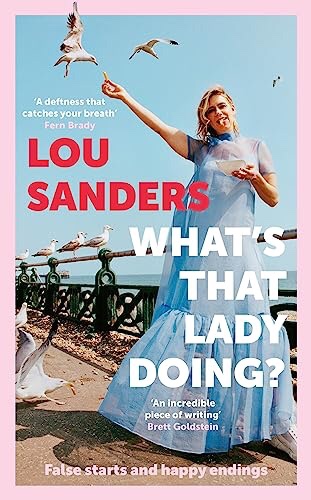
What’s That Lady Doing? By Lou Sanders

I’ve felt over the last year that every comedian has a book out. This is the result of the pandemic, where comedians could write material but had no way of testing it out on audience. It seems that a lot of them decided to use this time to write a memoir and this is up there with the best of them. One of the most important things about a memoir written by a celebrity is that it feels authentic and this book feels like a rambling conversation with Lou. She has such a strong narrative voice. I must admit to being a bit fascinated with Lou Sanders for a while now. I’d seen snippets of her stand-up, appearances on panel shows and a gloriously deranged turn as Mel Giedroyc’s sidekick on Unforgivable. However, it was her appearance on another Dave comedy show that cemented her in my memory as someone I’d like to know more about. On Outsiders, she was in a team with Ed Gamble, tackling activities out in the woods to earn Scout-style badges devised by David Mitchell. It was her effect on Ed that absolutely floored me. She slowly drove him to distraction by agreeing a plan, then as he struggled with it, she would get bored and wander off to start a Plan B by herself. His exasperation is delightful. Similarly, on Chris and Rosie Ramsay’s BBC2 show, she dissolved the presenters to puddles of uselessness by beautifully relaying a story about a dog’s back end while visibly gagging! I felt like this was a lady with a gloriously quirky and unapologetic way of being herself in the world that I simply loved. I learned while reading this memoir that her ease with herself, her authenticity, has been very hard won. I now admire her all the more and plan on buying this book for all the teenage girls in my life by the bucketload.

Lou tells her story with no frills or filter and that led to a really intimate reading experience. I could hear her voice immediately and that is the best thing about it. She tells the story of a difficult early life – struggles with ADHD and a very late diagnosis, coupled with devastatingly low self-esteem. Totally misunderstood at home, she was drinking and drug-taking from an early age. All to mask feeling different and as if she didn’t belong anywhere. Leaving home at 15 and working in pubs, she learned to use drink to create a new persona, one that made people laugh. She used whatever it was that made her feel different and strange for laughs. Drama followed her and some of her stories, especially around the opposite sex are starkly told and are all the more devastating for their honesty. She only realises in reverse that it’s impossible to give consent when you’re incapacitated. She’d learned that it was sometimes easier to give in and drink numbed the reality of what had happened. Each wound is almost unnoticed and that’s not just because she was obliterated. She’s totally unaware that she has the ability to keep to her boundaries, in fact I don’t think she was aware of her ability to set them. People who are worth nothing can’t ask for things. They’re not even aware they have the right to say no.

Lou is very matter of fact and unshowy about choosing to get sober and change her life. She credits AA with her success and it took a few false starts to get passed the times she kidded herself – ‘I’ve not had a drink for months, surely one or two would be okay?’ She learned that for her, one leads to many so she can’t have any. Ever. It only became clear for her when she realised she was ruining her own chances, self-sabotaging her career. She would ask comic friends why new comics were getting TV gigs and she wasn’t. After shows where she was obliterated, threw things into the audience and even bit someone, it took a good honest friend to tell her the truth. TV producers didn’t trust her, she was too unpredictable. That friend probably saved her career, in act they saved her life. I found her clarity around this part of her life really admirable, but she doesn’t want to see herself as a heroine or an example. This book doesn’t have a self-help vibe. She knows that she is a work-in-progress and only sticking with AA and practicing abstinence will work for her. In fact she also realises that therapy keeps her life ticking over, it gives her a release – like the pressure valve for her life. I loved the raw honesty of Lou’s writing. This is a book that never could have happened if she hadn’t learned to love every bit of herself. Well, most bits anyway. Some celebrity books are a list of achievements or a ‘how I became famous’ journey, but you don’t really meet the person. I’m not very good at surface stuff. Small talk is impossible for me, because it feels totally inauthentic. I put this book down feeling like I’d really met the person between it’s covers and we’d had a long, honest conversation about life.

Meet the Author

Lou Sanders is a British comedian. She is the champion of series eight of Taskmaster, co-hosts Mel Giedroyc: Unforgivable and has made a host of other television appearances from Live at the Apollo to The Late Late Show.

Lou has performed stand up around the world, including venues in New York, LA, Berlin and sell-out runs in Edinburgh and Soho. Lou has written articles for The Guardian, Time Out and GQ magazine.

More from Lou

Cuddle Club – The podcast where each week Lou Sanders (Taskmaster, QI, Would I Lie To You) asks a special guest the hard hitting questions that other non-cuddle based podcasts don’t dare to. Hot stuff like: Which kid did your parents prefer? Why are we all pretending massages are normal? And, can you ever trust anyone to order for you?

https://www.lousanders.com/gigs

Posted in Squad Pod Collective

Minor Disturbances at Grand Life Apartments by Hema Sukumar

The Grand Life Apartments are a series of dwellings with beautiful garden surroundings in the coastal city of Chennai. It’s residents are varied and each one has their own sections to the story. Kamala is a dentist on the edge of retirement who counts down the days to her annual visit from daughter Lakshmi who is studying at Oxford University in the U.K. Her tendency towards religious offerings and a more traditional view on marriage and family, sometimes put her at loggerheads with Lakshmi. Revathi is 32 and a successful engineer who lives alone, something her mother never tires of reminding her is not normal. She is reaching her expiry date in the arranged marriage market. Reva likes her freedom and has entertained thoughts that maybe not everyone is cut out for marriage and a family, but hasn’t dared tell her mother who is setting up her latest ‘introduction’. Then there is Jason, a young British chef who has impulsively decided to work at an exclusive hotel in Chennai. He has been driven from his London home by an awful break-up that he’s struggling to get over. In the meantime he is making friends with his neighbours and helping out Mani, the owner of the apartments. Mani is facing his own struggle though. A developer offered him a sum of money for the apartments, planning to level them and their gardens so they can extend their luxury apartment blocks across the street. Mani refused their offer, setting off a dangerous and dramatic series of events that will bring the residents together.

I thoroughly enjoyed this slice of life in Chennai, narrated by the the various inhabitants of Grand Life Apartments. I feared a sanitised setting, rather like the The Great Exotic Marigold Hotel’s beautifying of India. However, here the author manages a great balance of being honest about the difficulties of India, whilst also showing it’s warm welcome and sense of family and community. She also showed how travelling or working in the city could sustain someone and take them on an uplifting and life changing journey. A setting with this dichotomy of incredible positives versus the difficulties of corruption and poverty, is very difficult to write in a light-hearted novel. It takes serious skill and I was surprised to find it was a debut novel. It was no surprise to learn that Hema had been a travel writer, because when reading I did feel like I was there. This wasn’t the tourist route either, but real people living and working in the heat and smog of the city. The heat comes across strongly (possibly more to do with my menopause when I think about it) and the dust laying over everything. There was a great mix of things that are comforting and welcoming, but other stories and mentions that reinforced the foreignness of India. These momentary snippets of Indian daily life were brilliant, I loved Jason Skyping his mum who was terrified to see a lizard walking up the wall of his living room! ‘Oh that’s just Lizzie the Lizard’. The apartment’s beautiful gardens are a wonderful touch of old and new, as well as the place where residents tend to come together. It’s a unifying force for the residents and allows young and old to come together – such as on Kamala’s birthday where a power cut and Jason’s rice pudding are central to the impromptu celebration.

This is a book where the characters are really important, because the story comes out of their relationships and personality. Kamala’s daughter Lakshmi comes to stay and with incredible bravery shares a secret about her life that she knows will shock and possibly disappoint her traditional and religious mother. I loved the detail of Kamala’s life, the descriptions of her spice filled cooking and the rituals of her worship at her homemade shrine, with the flowers she buys to accompany her prayers. There’s a solidity about Kamala, she knows who she is and what she believes. Now her thoughts on life are being challenged and she’s having to step out of her comfort zone and let go of the things she expected for her life. I loved the scenes with her friend Sundu (a formidable woman and lawyer) when they come to England. Sundu forces Kamala into trainers on their trip to London and is often amused by her rather blinkered view of the world. The scene with the group of young men on a corner and Kamala’s observation that they smelled of a spice she’d never encountered before, made me laugh out loud.

I felt something for Reva, a connection of some sort although I couldn’t pinpoint why. The way Reva wants to be really does rub up against cultural and familial expectations in her personal life, whilst also coming up against the patriarchy at work. She’s an engineer who knows her own talent and ability to manage a team, but she finds her experience and ability overlooked by management. She’s thinking of moving to another company if they choose to promote a man over her this time, but is she too old to start again or choose a start-up company? She’s contemplating the same risk in her personal life. The pressure she feels from her mother, who doubts her prospects on the marriage market as a woman in her thirties, means she meets men that her mother has arranged. We see her on these ‘dates’ and she does meet nice men, but is ‘nice’ enough? Her mother can’t control Reva’s inner voice and it tells her to hold out for a love match. She knows it’s a risk, but what would happen if she didn’t find love? She would live the life she lives now: working, meeting friends, socialising with her neighbours and checking in on the older residents like Mani and Kamala. Would that be so bad? Does her freedom mean that much to her?

Finally there’s Jason and he has the part of an Englishman abroad. He’s an incredibly sensitive man who has come to Chennai on an impulse to avoid heartbreak at home. His relationship with Elizabeth came to an abrupt end and he’s facing that period of ruminating on the state of their relationship. He was imagining marriage, possibly a family and he thought they were on the same page. Clearly she wasn’t, so was she tricking him or was he simply so caught up in his own expectations he never noticed that she was lagging some way behind. He does spend time checking her social media profiles, dreading but knowing that eventually he will see a hand on her shoulder or a grinning face next to hers. However, when the news comes, it’s nothing he expected and he feels sick. It feels like a betrayal. I was desperately holding out hope that Jason would blossom in Chennai and I loved reading tiny steps towards this. His relationship with Kamala is based on food, she wants him to experience real South Indian food and he desperately wants to impress her. She feels like a grandmother figure to him and he’s so respectful of her. His relationship with Mani is great too and I loved how he helped with the garden, understanding how important it is to Mani and his memories, but also making small changes that help it sustain the lives of the people currently living at the flats. I was more than a little bit desperate for him to forget his heartbreak and maybe spend time with someone a little closer to his new home.

The corruption seen in the building company plot line isn’t the only real or gritty bit of the tale. Begging comes up a few times and Reva thinks about women who fall foul of the social rules and can find themselves drowned in the village pond! There’s also a young boy who rushes around delivering from the local store and has a manner like a little old man. It was great to have this edge because it made India feel real, rather than a Disneyfied version. I found the book, especially Jason and Reva’s journeys, really inspiring. They’ve both made big choices in life – to go away to university, to become a chef, to fly to the other side of the world even! I loved the way Jason was learning a new skill, with Kamala’s advice and making steps towards moving forward in life, by getting rid of his social media. Could they perhaps move forward towards each other? I kept hoping. I had visions of their setting as the perfect haveli with a stone courtyard, beautifully scented climbers and water feature at the centre with just the right trickling sound. I was scared for Mani and not just because the developer’s threatening behaviour worsened. With all of his memories tied up in these apartments, it would be an emotional upheaval for him to leave. I was left with some questions unanswered and I hope this means a sequel might be in the pipeline. I wondered: where Jason and Reva’s lives might go; how Lakshmi might build her life, knowing how much her mum is trying to understand; would Sundu be able to save the apartments? I was deeply invested in these characters and their journeys. The author engaged my senses and my emotions in her debut novel, so much so that I’m already waiting for what comes next.

Out now from Coronet Books.

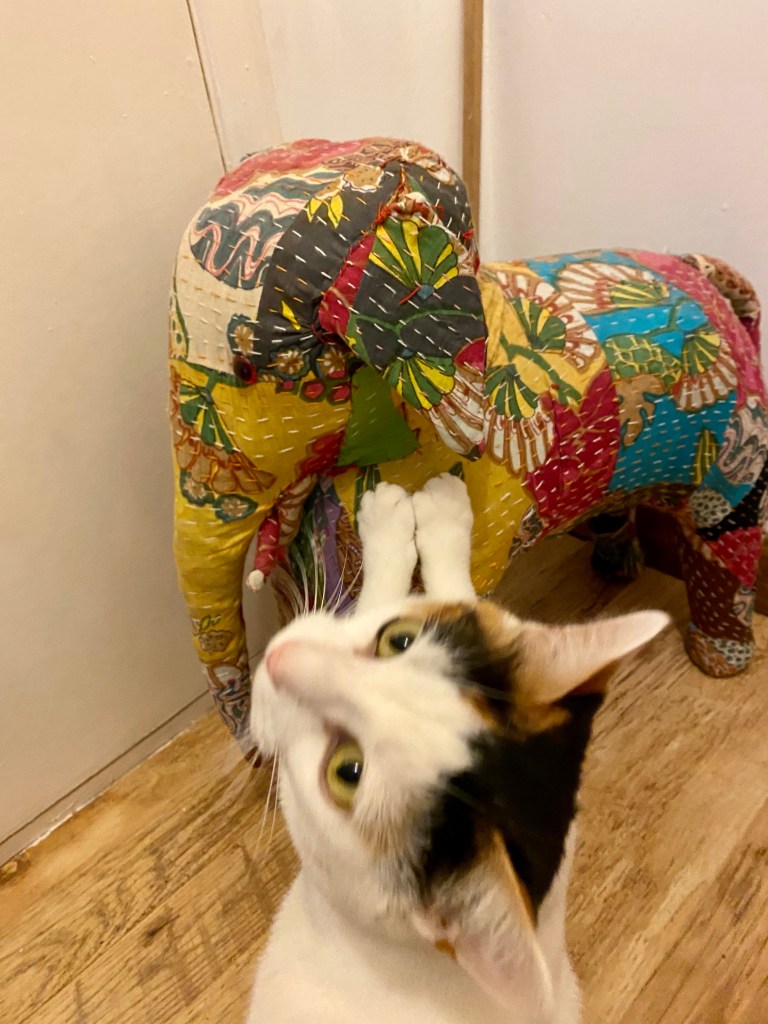
Book blogger problems No 1: Nosy cats 🐈
Posted in Netgalley

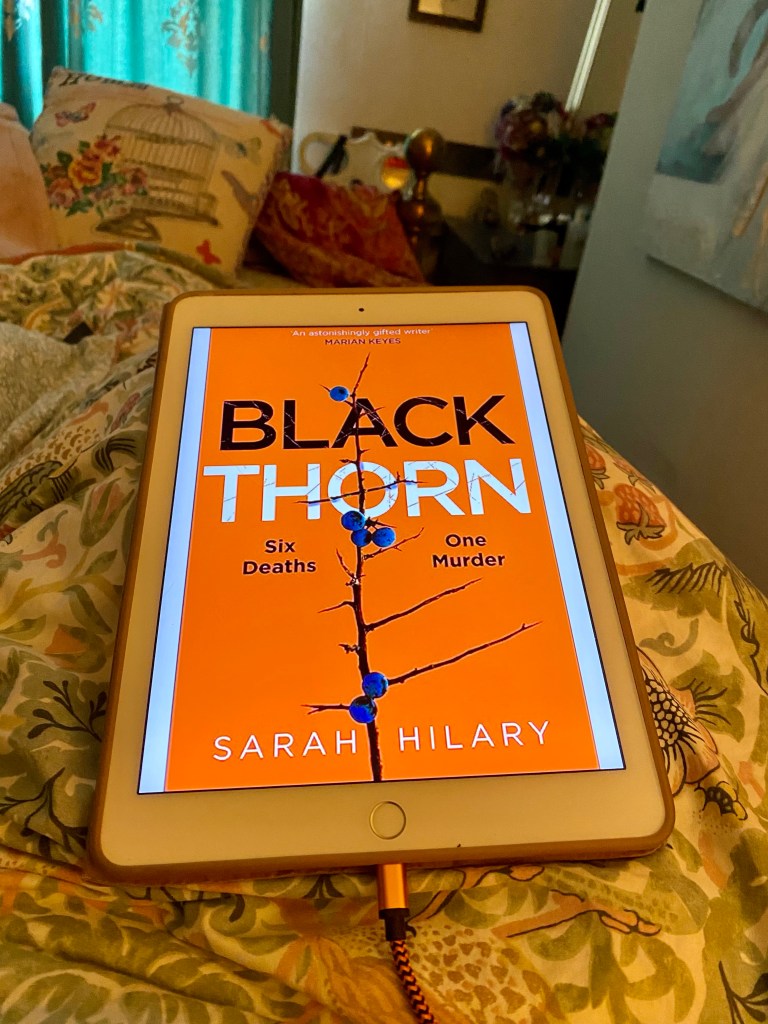
Black Thorn by Sarah Hilary

Black Thorn by Sarah Hilary

Sarah Hilary has this amazing ability to leave the reader floundering between law, morality and ethics. I never quite know who I’m rooting for. Who’s in the right or the wrong? I come to different answers depending on the lens I’m viewing it through – someone can be within the law whilst being morally questionable. I often find myself stopping to wonder if I even like any of the characters. This is one of those stories that expose the dark underbelly of what looks like the dream neighbourhood. The houses at Black Thorn are like those you see in the Omaze giveaway adverts. The opening scenes of a neighbourly barbecue show us two very different narratives: the jolly and friendly neighbours enjoying each other’s hospitality; the neighbour who breaks into the party with a grudge. Is Luke Dearborn a nutter and a conspiracy theorist? Is there something rotten at the heart of this dream housing development?

The timeline slips back and forth from pre to post-abandonment. Both timelines race towards Day 0, the day of ‘abandonment’ and possibly the truth about what has been happening, both to the houses and the people living there. I was interested in the word ‘abandonment’ because it feels as if it’s in the wrong context. It describes the development as something with feelings rather than bricks and mortar. Also ‘abandonment’ suggests an element of choice, when actually the residents were forced to leave by the authorities. It was an evacuation more than abandonment, a word that gives the sense of an unloved child rather than an inanimate house. Adrian is affected the most because not only did he sell the development, he bought one for his family. This leaves him on site for all the problems to come to his door, creating enormous stress for all of them. It’s almost as if Adrian fell for his own sales patter. He’s sold the units as state of the art living with coastal views through the huge glass sections at the back of the house. It seems a bleak setting to me, the last places before you drop off the edge of the world! They’re also described as luxury, but it feels like a Scandi design, more minimalist. To me luxury means softness, comfort, colour and warmth. These rooms seem to be more about impressing others than thinking what is comfortable for long term residents. Maybe they’d be better holiday homes. Even their gimmick of fake diamonds scattered throughout seems wrong, they’re hard and cold and not something you’d want to tread on in bare feet. Trevor, his business partner, manages to escape this by going off site or bedding down in one of the unsold units where he can’t be seen. In our flashbacks we know that six people die, but what of? Is there poison in the heating systems or is it carbon monoxide poisoning? Adrian clearly feels responsible, falling into a deep depression. Trevor is still hanging around, being cocky and unwilling to admit that corners were cut or mistakes made. Through Agnes we slowly untangle a whole web of deceit and lies, but Trevor is one of those people where nothing sticks. It’s Adrian who might end up taking the blame.

The character I seemed to view things through was Agnes, because I think she represented the reader – an outsider, lost, in the dark and vulnerable. She’s part of a family – her father Adrian was the salesman for this development – but has lived in London for a number of years. She’s had some distance from the project and can look at it with fresh eyes. Yet for a girl whose in her twenties, Agnes seems very naïve and a bit lost. We know that Agnes has split with her girlfriend so may be feeling vulnerable, but she is suspicious of her family’s new home at once. It’s almost as if her nervous system is affected by them. There’s something in the walls, there are trenches in the gardens and her pet rabbit dies. In the aftermath, her family are now living in a caravan park near her friend Errol and his grandmother Bette who was the cleaner at Black Thorn. Her friendship with Errol is warm and open and she’s welcomed into their caravan in a way that feels natural compared to the fractured and strained relationships elsewhere. Her father is almost catatonic and her mother is working round the clock trying to keep her family safe. Agnes is desperately trying to keep younger brother Christie safe, but he is lured back to the development. He walks along the coast road every day and breaks into a house, slowly going through what’s left and choosing his favourite items to take back to the caravan. Agnes feels she must protect him, particularly from Trevor who seems to exert a malign influence over Christie. Agnes knows first hand exactly how far Trevor will go to get what he wants.

As always the author’s writing is incredible. She keeps the reader on edge, never knowing who is lying or who’s in the wrong. She gives us ambiguous characters like Erica who masqueraded as a butcher’s assistant to deliver meat for the BBQ, keen to stay to show them how best to cook it and get to know the residents. Yet she’s not who she says she is and her deceit will place her in danger. Even the person we spend most time with, Agnes, is hard to connect with. As in real life, everyone has their faults, but it isn’t just that. I struggled because no one seemed to be showing human feelings or genuineness. As a result there were a couple of points in the book where I didn’t feel enough for the characters to be completely invested in the story so it stalled a little for me. However, I did want to know what exactly had happened in the houses and it was that need to know the truth that kept me reading. I had to wait till the very end for some characters to show how they really felt; until now feeling totally numb and shocked, or trying to hold it together and be the strong one for everyone else. This was an addictive read and did keep me guessing till the final page.

Published by Macmillan 13th July 2023

Meet the Author

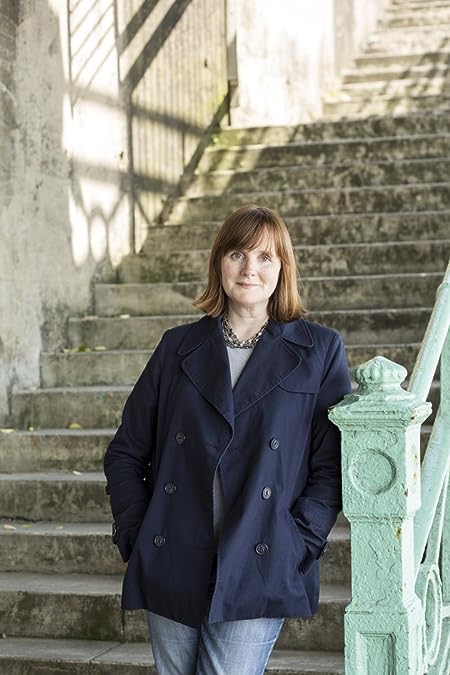
Sarah Hilary’s new novel BLACK THORN will be published in summer 2023 by Pan Macmillan. Her first standalone FRAGILE came out in 2021. Mick Herron called it ‘a dark river of a book’ while Erin Kelly said, ‘Timeless, tense and tender, Fragile will worm its way deep into your heart.’

Sarah’s debut SOMEONE ELSE’S SKIN won Theakstons Crime Novel of the Year 2015. It was a World Book Night selection and Richard & Judy Book Club pick. The latest in her D.I. Marnie Rome series NEVER BE BROKEN was published by Headline in 2019.

Visit http://www.sarahhilary.com for news, updates and reviews.

Posted in Netgalley, Publisher Proof

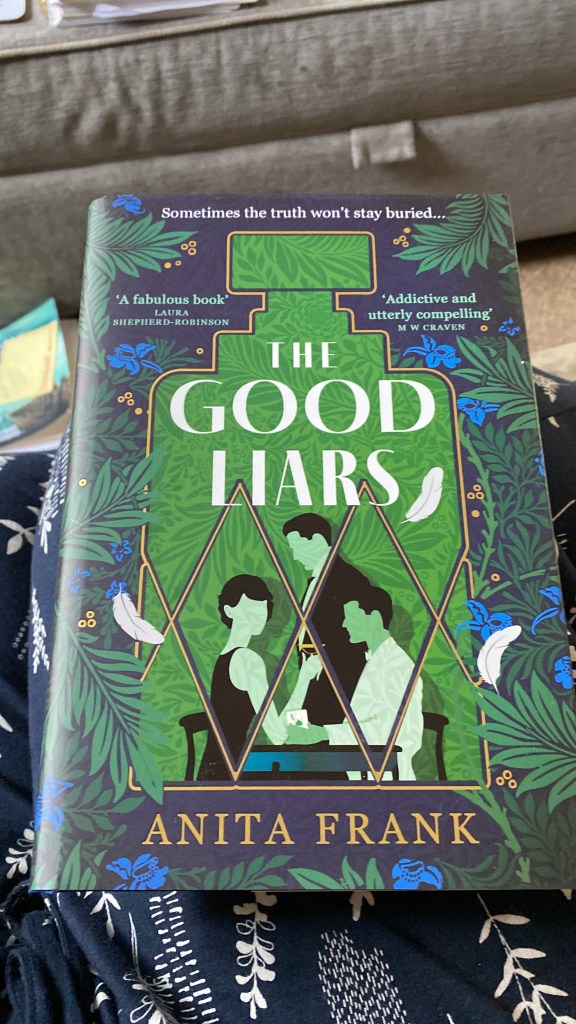
The Good Liars by Anita Frank

This is my favourite of Anita Frank’s novels so far. She’s chosen a fascinating period of history to set this gothic mystery and it adds something a little different to the ‘new servant in a creepy old house’ story. This is time when the country is traumatised, mired in grief and adjusting to the changes wrought by World War One. A time when loss looms large and people are searching for answers. Sarah is the new employee arriving at Darkacre, the family seat of the Stilwells. Like many aristocratic families, WW1 has wreaked havoc on the men in this family. When their father died, the eldest son Hugo became the heir of Darkacre. Yet his time as heir was very short, as he was killed on his return to the front leaving middle brother Maurice as heir to the Stilwell estate. Maurice was not prepared to be the master of the house and with double death duties already crippling the estate, he has learn fast. Unfortunately Maurice has returned from war a changed man, plagued by nightmares, flashbacks and extreme responses to loud noises, he has PTSD or what was then referred to as shell shock. With youngest brother Leonard severely disabled by his war injuries and struggling to come to terms with the loss of his limbs, the family are depleted and barely coping. However, as Leonard so cryptically tells us, perhaps it is no more than they deserve? Sarah’s arrival is the catalyst for this story and it isn’t just the relationship between family members that points to there being issues at Darkacre, soon a series of unexplained happenings start to gnaw away at the nerves of even the most stoic inhabitants.

Darkacre is the perfect gothic setting for the story and to some extent she represents the changes wrought on the aristocracy during this time period. Where before the war the family would have had several house servants, as well as gardeners, land agents, farm managers and so on, there is now just the brothers, Maurice’s wife Ida and Victor, a lifelong friend of Maurice. Due to the way army units were organised, Hugo Stilwell would have found himself the officer to a group of men he knew well, comprised of his brothers, tenants, young men and boys from the village. The losses were astronomical and not a single family in the parish missed out on their share of grief. This also left Maurice facing families of the young men he led to their deaths on a regular basis, including the upcoming ceremonies at the new war memorial. Servants were now in short supply and the tradition of going ‘into service’ had started to decline. We can see how social groupings have become blurred in the way Ida invites Sarah to eat with the family, instead of in the kitchen alone. They converse as equals, often as sitting together after dinner in the parlour. We can see how Ida has been craving female friendship and where it would be unsuitable to be passing confidences on to village women, Ida does start to confide in Sarah. Up till now it has very much been Victor’s role to inject a little levity into the proceedings and to amuse Ida. He confides to Sarah that both he and Maurice fell in love with her on sight, but she was more interested in Maurice and possibly the house and land that have her a title she craved.

On Sarah’s part there are few confidences shared and I found her rather mysterious and enigmatic. I was at first sure this was only a residue of the deference she had always shown employers in the past, but perhaps there is more to it than that. In a therapy situation, silence tends to draw the client forward and share confidences. In fact silence has often been my most powerful skill in terms of growth for the client and Sarah seemed to be using it for good effect. Is she simply trying to forge good relationships with her employers or is there something more sinister going on? The growing closeness between her and Leonard definitely feels genuine and I wondered what it was about their relationship that made Sarah relate to him differently. Was it that she saw him differently due to his disability, or is it a natural affinity? He seems to have different world views to the rest of the group, more compassionate and accepting of human imperfections. This is ironic given the family skeletons hiding out in closets and cupboards all over Darkacre. What was behind the sense of collaboration I felt between Ida and Victor? Why was Maurice so disturbed, not just by flashbacks and dreams, but possibly by his own conscience? Why is Ida unwelcome at the village’s ceremony for the new war memorial and does it have something to do with the disturbing parcel of an animal’s heart covered feathers that she receives?

Since I have a disability it would be remiss of me not to mention the veterans of WW1 left disabled by this horrifying war. Over one million men were killed in combat, but a further two million were left with some form of disability, 40,000 of which were amputees like Leonard Stilwell. He sits alongside such contemporary literary characters as Clifford Chatterley with a lot of the same emotional issues coping with the change of self-identity. Sarah represents a new stage in Leonard’s recovery, one he might resent, but yet they do become friends. On her first morning, Sarah arrives at Leonard’s room to find Victor smoking and Maurice laid across his brother’s bed rather like they’re still in barracks or the hospital. It’s a little glimpse into the institutionalisation of the men, more used to other male company in a military setting than the domestic sphere. Sarah could be seen as a barrier between Leonard and his fellow veterans, whereas before his care was kept within the sphere of the family now it is contracted out for money. Leonard could have felt as if he belonged, that his brother and Victor were still in the trenches with him, sharing the seismic shift his life has taken. His getting up routine was part of family life, whereas now it’s a job. A stranger has to perform the most intimate care for him and they are obliged to do it for money. He is now facing his disability alone. Yet he and Sarah muddle on quite well together, helped in part by Sarah’s training and professionalism, but also because they perhaps share the same anger and disdain for the futility of war.

Early on in the novel we see that Maurice is tormented by the memory of a young soldier who has half his face blown away. He can’t forget the horror of it, so it is perhaps fitting that the visiting Sergeant who arrives in the storm has a facial disfigurement. It’s as if Maurice’s worst nightmare has come knocking on the door. The inspector has only visited the day before and the sergeant seems to be following up, carrying out orders by interviewing the family. His disfigurement is covered by a copper mask, it’s smoothness belying the tangled and complex injuries underneath. For Maurice it almost seems worse that his injury is covered, because he can imagine in detail what’s actually there and imagination is worse than the reality. His mask also gives that element of disguise, it conceals his expression and leaves people wondering what he’s really thinking. There’s a definite Agatha Christie feel as a storm cuts the house off from civilisation and the family are trapped with these two outsiders. One of them a detective, trained to uncover secrets and the other has shown herself to have psychic tendencies. There are twists and turns, more than I expected in fact! I loved the atmosphere and Anita is brilliant at those little creepy happenings, that might have an innocent explanation, but start to unnerve you. The battle scenes are so well written too, perfectly capturing the chaos, the fear and a different kind of horror. This is a great read and Anita goes from strength to strength.

Published 17th August by HQ Stories.

Meet the Author

Born in Shropshire, Anita studied English and American History at the University of East Anglia. She now lives in Berkshire with her husband and three children.

You can connect with Anita via social media:

Twitter – @Ajes74

Instagram – @anitafrankauthor

Posted in Squad Pod

Lowbridge by Lucy Campbell

This story really crept up and took hold of me. It’s a slow burn, dual timeline mystery set in small town Australia. Katherine has moved to her husband James’s hometown of Lowbridge, a town with a very clear line between ‘the haves and have-nots’. Katherine is struggling with her mood and self-medicating with drink. James is hoping that the move will help her and has made it clear that they can’t continue as they are. He encourages her to get dressed and leave the house or go for a run like she used to. It’s clear something momentous has happened and their lives have imploded, but they are each dealing with it in different ways. In fact their teenage daughter Maggie was killed in a car accident, where the designated driver had been drinking. When Katherine does leave the house she accidentally stumbles across the town’s historical society and shows an interest in the exhibition they’re putting together. It’s something she can potentially help with and it’s enough to get her motivated. However, when she comes across a thirty year old mystery, problems start to arise. The disappearance of a young girl called Tess during the summer of 1987 has remained unsolved and Katherine thinks it may be time to highlight the case and perhaps jog people’s memories. She knows she must involve Tess’s family in the decision, but she doesn’t expect opposition from anyone else. It’s James’s opposition that surprises her most. He tells her to leave the mystery alone, that it will stir up trouble and it’s would be unhealthy for her to become wrapped up in another family’s grief. Katherine is determined though and with Tess’s family on board she starts to research what happened in 1987.

From the beginning, the author really gives us the sense of what it’s like to live in a small town where everyone knows each other. Having grown up in a small market town I know it’s rare for me to run errands without seeing someone I know. I still have friends that I had when I was thirteen and when I was sixteen a friend of mine was murdered, a few days before Christmas. A death like that sends a shockwave through the whole town and I could clearly imagine the collective grief and anger that Katherine would unearth as she investigates what happened. In the summer of 1987 the town was already at odds over a women’s clinic being proposed by a local doctor. This has enraged the anti-abortion lobby leading to protests and appeals to the locals authorities to stop the development. Three teenagers from the ‘right side’ of town are reaching an age where they’re asserting their independence and finishing their leaving certificates at school. Tess and Sim are friends with the slightly younger Luisa who is from an Italian family. The girls try to keep the clinic out of their conversation because it is Sim’s mother fighting to get the clinic open and Luisa parents are Roman Catholics, utterly opposed to abortion. Because they’re from the more middle class part of town they tend to keep separate from the ‘Pitsville’ kids, the area mainly inhabited by miners and their families. The author has really captured what it’s like to be a teenage girl on the cusp of womanhood. In the girl’s conversations there are all those insecurities about how they look and what they wear, their popularity and how boys view them. All three acknowledge that one girl at school really does capture the boy’s attention.

Jac is thought of as ‘easy’ by other girls, mainly because of the attention she receives from boys but also because of her sexy clothes. A lot of the derision also comes from the fact she’s a miner’s daughter from Pitsville, but they rarely think about what her life is actually like. The author takes us into her home, with a father who works and drinks heavily, often bringing other miners back to the house to continue drinking late into the night. Unbeknownst to anyone it’s on one of these nights that something terrible happens to Jac, setting in motion a sequence of events that will change her life. As Tess disappears off the face of the earth, Jac also goes missing but no one notices. I enjoyed this angle on the story very much, because it injects a element of social injustice into the mystery. We know that when girls go missing, even now, there are all sorts of social factors that play into the way the police investigate and the media report on the story. Often girls from black british and other minority communities go missing and don’t even make the evening news. Sim and Tess take Luisa to a house party after drinking a lot of home made ‘punch’. When they lose sight of their friend they go searching and find a brawl going on in an upstairs bedroom. Luisa is on the bed and two boys are fighting, each one claiming to be the knight in shining armour who’s found Luisa being attacked. It’s such a big story that everyone at school knows by Monday morning. It’s a big story because it’s Luisa. If it was a Pitsville girl would the popular kids get to know? Would they even care?

Katherine is a complicated heroine. She’s trying to avoid grief by drinking and I had a huge amount of empathy for her. Yet in a vicious argument with husband Jamie, he tells her a few home truths that made me think about it a different way. She wants him to grieve the same way she does, but he points out that he’s never been able to. It’s not that he doesn’t want to cry and shut the world out, it’s that he’s never had the luxury of falling apart. When their daughter Maggie was killed Katherine was able to keep her wonderful memories. She can imagine their daughter’s beautiful face when she thinks of her, but only because he had to see her broken and bleeding. He identified Maggie so that Katherine could keep her memories intact. He went to the inquest, so she didn’t have to hear the horrific details. She has felt alone, but so has he. I found this really powerful and I could understand why he thought involving herself in another family’s grief was unwise. Yet that’s not the full story, because Jamie has been keeping something from Katherine. That last summer when Tess disappeared, Jamie was secretly in a relationship with her. Maybe it’s in Jamie’s interest to stop Katherine from digging up the past. Could it be that he knows more than he’s letting on? The story dragged me in different ways, as each revelation came to light. I loved that the more we found out about Tess, the more special she became. It was wonderful to see her offer support and practical help to others, even to people others might have overlooked. She’s aware of the popular crowd’s opinion, but doesn’t let it sway her. She makes her own decisions and sets aside judgement. I had to have an early night to finish the book in one go, because I didn’t want to miss anything. This is a fascinating mystery, with a powerful theme running throughout about women’s rights over their lives and their own bodies.

Thank you to the Squad Pod Collective and Ultimo Press for my copy of this book.