Posted in Personal Purchase

Other Women by Emma Flint

It is 1923 and a country is in mourning. Thousands of husbands, fathers, sons and sweethearts were lost in the war, millions more returned home wounded and forever changed.

Beatrice Cade is an orphan, unmarried and childless. London is full of invisible women who struggle to find somewhere to work through their grief. But Bea is determined to make a new life for herself. She takes a room in a Bloomsbury ladies’ club and a job in the City. Just when her new world is taking shape, a fleeting encounter threatens to ruin everything.

Kate Ryan is an ordinary wife and mother. Following the end of the war, she has managed to build an enviable life with her husband and young daughter. To anyone looking in from the outside, they seem like a normal, happy family. But when two policemen knock on her door one morning and threaten to destroy the facade Kate has created, she knows what she has to do to protect the people she loves. And suddenly, two women who never should have met are connected for ever . . .

I can’t say enough great things about this incredible novel, but I’m going to try and do it justice. It’s a historical mystery, extraordinarily clever psychologically and made me think about feminism, sisterhood and the difference between what society expects women’s lives to look like and the life decisions we make for ourselves. Flint has told her story through the eyes of the Kate and Bea, two women who are strangers, but connected by one man. Bea was an orphan and is now an unmarried woman in her late thirties. She’s the book-keeper for a firm in London who has pretty much resigned herself to being a career girl and living in a woman’s hostel. All this changes when she meets the handsome and charming Tom Ryan, a salesman at her firm. Bea struggles to believe that this man, with his movie star looks, would be interested in a woman like her. She expects him to chat up the young women, who have noticed him and are giggling, but he makes a point of stopping at her desk. He comments on her name, telling her that Beatrice was the great love of a poet. Bea is smitten and agrees to meet him, despite the fact that he is married. She is mentally aware of his wife’s presence, the third person always standing between them. Despite this, will Bea allow herself to succumb to Tom’s advances and can it end any other way but heartbreak or disaster?

Flint’s setting is vitally important to this story. We can draw parallels between contemporary women and these two characters, but they are also very much products of their time. This is a post-war Britain and everything has been changed by a war so terrible it is known as the Great War. Men have come home destroyed by what they’ve experienced physically and mentally.

‘There were empty sleeves and eye patches that one must not stare at or draw attention to; there were crutches and bandages and dreadful ridges of thick pink skin; and sometimes there was simply an absence in a face where a man had left a part of himself – the brightest and most vital part – in a muddy foreign field.’

Whereas women could be said to have flourished. Yes, there’s the ever present weight of grief and loss, but some of the changes in women’s lives had been positive. Both Kate and Bea are working women, and represent the many women who became wage earners during the Great War, plugging the gap in the employment market as more men joined up to fight. This was liberating for many women, who were then reluctant to move back to the domestic sphere after the war. There were also a shortage of men in the marriage market, some women had lost their fiancé or husband but there were others who came of age just after WW1 for whom eligible men were scarce. Having the option of throwing themselves into an absorbing career instead proved very fulfilling for some, like Morley’s office manager who clearly expected Bea to be left on the shelf and had marked her out as a potential replacement. Women being outside the domestic sphere meant that the pre-war rigid barriers of social class started to be breached. Different classes of people mingled in work places and matches that would have been impossible a few years before became more common. Bea still longs for love, but as her personal life becomes complicated and painful she does muse on what she has lost. As a single working woman she had women friends and lived in a vibrant city where she could take herself to the theatre, to a museum or for tea with friends. Now that she can see the reality of a relationship, she wonders was she better off before?

Bea knows there is a difference between herself and the girls who have young men to wait for. These are carefree girls, full of life, ‘neat and slender – sleek hair, dainty ankles, flickering glances and quicksilver laughter.’ She’s of a different sort, in looks and class. Where her married sister Jane looks on career girls as modern, smart and fashionable Bea looks a little closer and sees

frizzed modern hairstyles that they’d seen in advertisements and that didn’t suit them; women with lines around their eyes that no amount of cream or powder would cover. And women who, despite the well-cut clothes, had red rough hands and nails cut to the quick.’

Bea is well aware she is plain and there are references to Jane Eyre in the way she sees herself. After talking to Tom, she sees herself in the bathroom mirror and is shocked at the difference between her tumultuous, rich inner life and this pale, plain outside. She feels such overwhelming emotions that she disassociates from her rather normal body; ‘how can all these feelings come out of this plain face and body?’ It immediately took me to the conversation between Jane and Rochester when she challenges him for underestimating her:

‘Do you think, because I am poor, obscure, plain, and little, I am soulless and heartless? You think wrong! I have as much soul as you, and full as much heart!…’

In fact Tom uses the comparison to flatter her, praising her strength and courage in living such a lonely life. Patronised by her sister too, she is full of anger inside and expresses the creeping fear that not only is she without a husband, she’s noticed younger, smarter girls starting to come into the workplace. Bright, young things who might be better at her job and quicker. She admits to being afraid of the day when the axe falls, her clothes become shabbier and she gets more desperate. Yet is it any better to be at the mercy of a man? As Kate’s story unfolds we can see that the state of being a wife, is just as unstable and scary, because where Bea has all the responsibility and makes decisions for herself Kate is powerless, entirely dependent on the whims of her husband. A husband who is capable of terrible things. The more Kate starts to learn about her husband, tiny jigsaw pieces start to slot together in her head. She has to admit to herself that she has always known there was something hidden underneath:

‘Hadn’t I known – hadn’t I always known – that he had something terrible inside him, something that lay rotting under the smooth surface of our normal life? I saw glimpses of it sometimes. I thought of his face as he persuaded me, sweet-talked me, into doing things I did not want to do. I thought of how dirty, how shamed, I felt afterwards.’

Set in the 1920’s, this story is based on the true case of Emily Kaye and her married lover Herbert Mahon. The novel’s aim was to give voice to Mahon’s wife and so Kate’s voice came to life, creating a brilliant interplay between her narration and Bea’s. I loved how well the pace was controlled, from relatively slow at the beginning to a breakneck pace towards the end as Kate makes sense of what has happened and holds the key to solve the mystery. I loved how the author showed us the truth of contemporary attitudes to women, that a man can do something terrible, but it will always be the woman’s fault. How Bea is simply disregarded as shameless, getting old and desperate, brazen and responsible for enticing Tom, despite him being married. It’s quite shocking, but then when I thought about our tabloid’s attitudes to women, I realised that women are judged every day for their appearance, their sexuality, their life choices and if ever there is a marital affair in the papers the ‘other woman’ is always blamed. It’s scary to think how little some people’s attitudes have changed, but thank goodness we can earn for ourselves, own property and have bank accounts. I loved the sense of sisterhood the author brings into the story and it made me think about how it’s the women in my life who have held me up when I couldn’t manage alone. I was on tenterhooks wondering whether Kate would realise that to choose the sisterhood is to change things for her own daughter. To make a decision towards a better world for women. This book was a brilliant piece of historical fiction, an addictive mystery that stirred up the emotions and had me completely hooked. As soon as I’d finished, I wanted to read it again.

Published by Picador 23rd February 2023

Meet The Author

Emma Flint was born and grew up in Newcastle upon Tyne. She graduated from the University of St Andrews with an MA in English Language and Literature, and later completed a novel-writing course at the Faber Academy. She lives and works in London.

Since childhood, she has been drawn to true-crime stories, developing an encyclopaedic knowledge of real-life murder cases from the early 20th century. Her first novel, Little Deaths, was longlisted for the Women’s Prize for Fiction, for the Desmond Elliott Prize, for the Crime Writers’ Association Gold Dagger Award, and for The Guardian’s Not the Booker Prize.

Other Women is her second novel.
Posted in Netgalley, Squad Pod

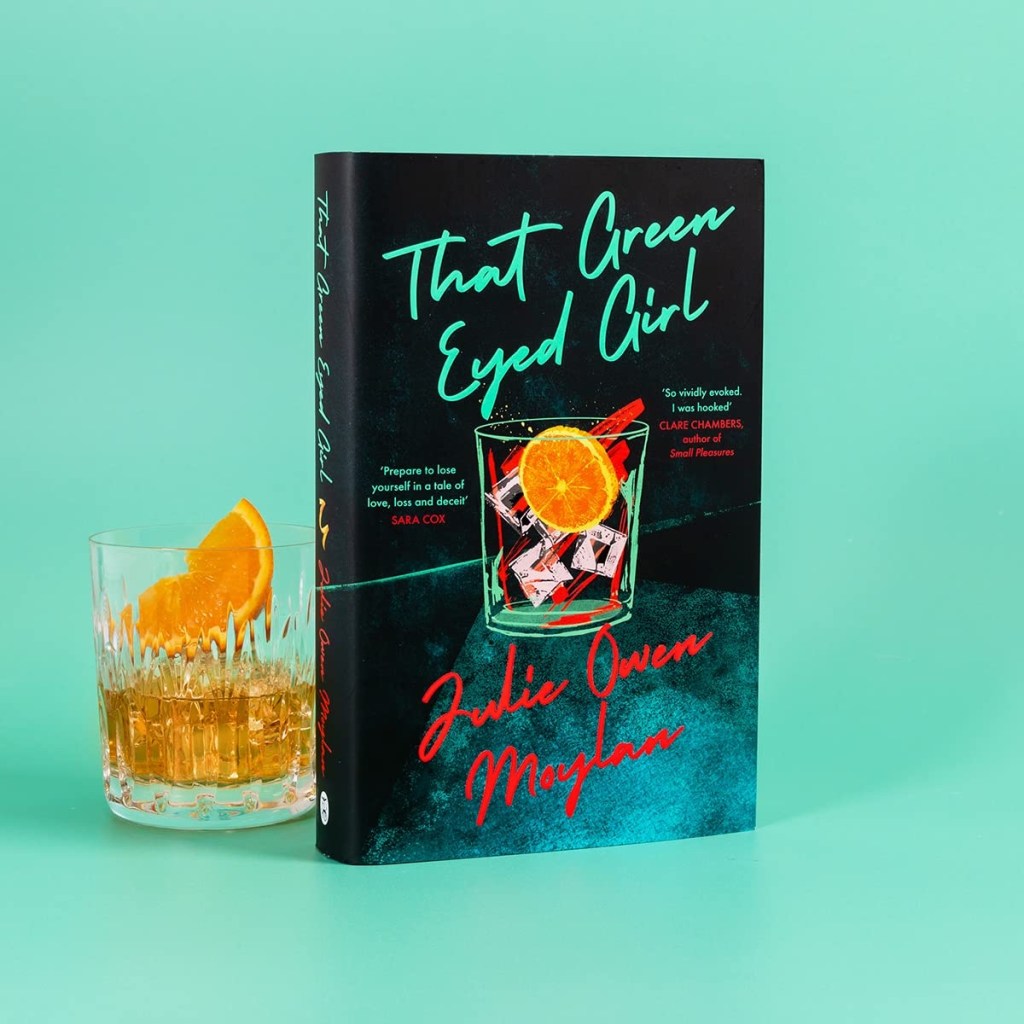
That Green-Eyed Girl by Julie Owen Moylan

The drinks glass and flashes of almost neon colour on this book’s cover were striking on NetGalley. To me they signified city living, the bar scene and potential for glitz and glamour – I’ve probably watched too much Sex and the City. However, the women depicted here were a long way from flashy, fashionista, New York City Girls. In fact there are only a couple of nights out in the whole book. This is a different NYC, where real people live and work day to day, just trying to get by in a city that’s exciting, but expensive and tough. In a split narrative, set partly in 1955 and partly in 1975, this is a novel that writes back to women’s history. It opened my eyes to a time when women were persecuted for the way they choose to live their lives. In 1955 Dovie Carmichael and her friend Gillian work together as teachers and share an apartment. The friends have a lot in common: they love jazz, a glass of whiskey at night and lazy Sundays at home. The pair guard their private time very carefully, until one day when the wrong person gets a glimpse into their lives, changing everything. Twenty years later teenager Ava Winter lives in the same apartment with her Mum and her Dad, when he’s around and not with his mistress. Ava’s mum is not well mentally and Ava is struggling to live a normal teenage life, preferring to stay home to keep an eye on her. She becomes fascinated with a mysterious box and letter sent to their address from France. Inside are letters, a butterfly necklace and a photograph with LIAR scrawled across a woman’s face. Ava wants to know the story behind the box. Who was this woman, that lived in her home and what do the letters say?

The theme that stood out to me more than anything was loneliness. I felt a contrast between the huge open city and the small private spaces where secrets are kept. The characters I felt most connection with were Ava and Dovie, both struggling to keep secrets about their living situation. The mistake Dovie and Gillian make allows a very manipulative woman to take advantage of them. Judith works at the same school and does come across as a lonely woman, but has allowed her situation to develop bitterness and envy in her character. In the guise of struggling to find an affordable apartment, she inveigles her way into Dovie and Gillian’s home and relationship. It’s clear she wants friends, but seemingly can’t stand to see two people who are happy in each other’s company and if she can’t have it for herself she might just set out to destroy it. Ava is also lonely and I think she senses a similar feeling in the box of keepsakes she discovers, it’s that connection with the sender’s loneliness that makes her so determined to find the person this box was meant for. It’s also a distraction from how miserable her own life is. With her mum and dad estranged she is often solely looking after her mother who seems severely depressed and liable to harm herself. It’s almost a role reversal, with Ava looking after her welfare instead of the other way round. I felt deeply for this young girl going through the usual teenage phases of a crush on a boy in the neighbourhood, a worry about how she looks and fitting in, and both the anticipation and fear of what comes next in life. On top of this her father uses his precious time with Ava to chat up the waitress in their favourite diner. Her mother is deteriorating, screaming and muttering through the night and Ava is so worried about the neighbours hearing her or her friend finding out what home is really like since her dad left. The scenes of her alone in their cold apartment, willing her mum to settle for the night and wishing her dad was there, were vivid and moving.

Whether in New York or Paris the settings are beautifully evoked and I could feel the change in time period from just a few well written sentences. Even the usually romantic Paris has it’s downsides because this is the reality of living there, rather than the dream. I felt the author really got under the surface of these cities and showed me what it was like to be a New Yorker. I found the LGBTQ+ scene so interesting and the contrast between women who kept their relationships secret, with more openly gay women in NYC or Paris, was beautifully portrayed. Dovie has never ventured into meeting other women and the scene where she visits a club stayed with me. There’s an innocence about Dovie that contrasts sharply with the sophisticated women she sees there, some of whom are scathing of Dovie’s lack of knowledge about being openly lesbian in 1955. I don’t think she really understood the danger she faced which could be anything from losing her job to being arrested or put into an asylum. I was just as shocked to realise that women who were open about their sexuality, or discovered, were subject to arrest and even ECT treatment to curb their ‘unnatural’ activities or desires. The nightclub raid where Dovie is helped to escape through a bathroom window is unbelievably tense and so poignant when we realise it’s link to 1975. The way police manhandle and sexually assault the women reminded me of how the suffragettes were treated so many decades earlier. The idea was to break the women’s resolve and remind them what they were really for – the amusement, desires and dominance of men. Reading these women’s experiences made me so angry, but also opened a door into a world I am ashamed to say I knew little about. At heart this is a love story and all the way through I wanted to know what had happened in that apartment in 1955 and I also hoped that Ava would find the intended recipient of the box from Paris. For me this book had a similar impact to the television series It’s A Sin. This was an emotionally captivating story that’s sure to stay with me and has inspired me to read more about the history of sexuality and the fight LGBTQ+ people still have for equal rights across the globe. It left me with a lump in my throat, thinking about how love can last a lifetime, even beyond separations and loss. I really look forward to reading more from this talented author in the future.

Meet The Author

Julie Owen Moylan is a writer whose short stories and articles have appeared in New Welsh ReviewHorizon Literary Review, and The Voice of Women in Wales Anthology

She has also written and directed several short films as part of her MA in Film. Her graduation short film called ‘BabyCakes’ scooped Best Film awards at the Swansea Film Festival, Ffresh, and the Celtic Media Awards. She also has an MA in Creative Writing, and is an alumna of the Faber Academy’s Writing a Novel course. 

Her debut novel THAT GREEN EYED GIRL was published by Penguin Michael Joseph on May 12 2022.

She is currently working on her second novel SPANGLELAND

Posted in Orenda, Publisher Proof

Beautiful Shining People by Michael Grothaus

I don’t tend to read a lot of science fiction and dystopian novels, often because I find them depressing and life is tough enough at the moment. I often I feel as if the author has become so carried away with world building that they forget the human element of their story. Almost like watching one of those films where the special effects are amazing, but the characters and their dialogue is an afterthought leaving me with an empty feeling. This book sounded intriguing though and once I started reading it I was completely blown away. This is science fiction with a heart and a lot to say about the human experience. Our narrator John is an awkward 17 year old, from a dysfunctional family and with deeply personal body issues. He also happens to be a coding genius, talented in quantum code and greatly in demand by tech companies. He is spending some time in Tokyo while signing a deal with Sony and comes across a small cafe that offers ear cleaning. Inside he finds a huge Japanese man working behind the counter, a quirky dog with a spherical head and his owner, a pretty and rather enigmatic young girl called Neotnia. This chance meeting develops into an incredible journey that will take them from the neon city of Tokyo, to the tragic past of Hiroshima and finally the beautiful mountains of Nagano.

Michael Grothaus also takes us on a journey of genre, starting the novel with a chilled travelogue style, interwoven with a tender story of first love, via body shame and finally becoming a dystopian thriller. The author knows how to build a world that feels dislocated and distant from us with just one simple sentence, such as the description of the night sky with three objects visible from earth. The moon’s light picks out the twin space stations being built by the world’s two superpowers; China and the USA. The author’s journalism background and research into the world of fake video production has helped in creating a believable and brilliant backdrop of warring superpowers in a daily information war. ‘Deep Fake’ videos are used to produce fake news, meaning people must question, not just everything they read, but everything they see. Warfare has become a barrage of misinformation and cyber attacks, at their worst disrupting every aspect of daily life. He also weaves in social issues that are already evident worldwide for us, such as the rapidly ageing population in Japan. People are now routinely living into their nineties, but need care for longer and there simply aren’t enough young people to pay for or provide the care needed. This is a world that’s ours, but not as we know it. I loved how I would be relaxing in a park, looking at a familiar landscape of trees and pagodas and then I’d be blindsided by a tourist information bot. When the group all go on a car journey I couldn’t work out who was driving; the answer was no one. Often I didn’t know where we were going next but I was so bewitched by his writing that I’d have followed him anywhere.

I loved the relationship that builds slowly between Neotnia and John. She has a quiet, calming manner that seems to soothe him and a caring nature that John has never really experienced before. They seem to connect on a deep level very quickly, but there are people around her who are very protective. Goeido is a disgraced sumo wrestler and owns the cafe where Neotnia both lives and works. He doesn’t speak much, but John is aware of his concern because of the barely concealed scowling and head shaking. Neotnia takes John to a nursing home where she volunteers, to meet an elderly American man she has a friendship with. John enjoys meeting him, but also gets a feeling this meeting was some sort of test. Why are these men so protective of her? His relationship with Goeido only improves when they drink sake together and next morning John wakes up still in the booth where they had dinner. They seem to have connected, but John is very confused by a disturbing dream involving a bath and a toaster! Despite this John and Neotnia’s relationship does deepen and I was so drawn into their tender love story. There is something they’re both hiding and strangely it’s the biggest thing they have in common. Then comes the massive twist that I really didn’t see coming. The clues are there but the idea is so fantastical it’s quickly dismissed.

The beautiful backdrop of Japan really brought the place alive for me and made me think deeply about some aspects of it’s history. The city of Tokyo is wonderfully varied with it’s neon signs, bubblegum fashions, restful gardens and kamii shrines dotted everywhere. I learned more about Japanese belief systems, the differences between Buddhism and those who believe in kamii. The history around Hiroshima was so devastating, as was the knowledge that any advance in science seems to be harnessed for the purposes of war. The full impact of the bomb on the population of Hiroshima was devastating as the author tells us about those damaged by the blast, but left with terrible injuries. That complete change of abilities, identity and living standards could be seen as a more terrible end than those at the bomb’s epicentre who were simply vaporised. I loved how philosophies of life were discussed too. In conversation with Neotnia, John explains that her age group’s concerns and anxieties about the space stations and cyber attacks haven’t affected younger generations because they’ve never known anything different. This is probably something we’ve all experienced and it’s interesting to think that a small child now will grow up with the cost of living, climate change and hybrid vehicles as their norm. Whereas someone like me who has lived half their life really feels the changes and is more likely to find them unsettling. I found the end so emotional and I was moved by John’s thought that the common thread of humanity is suffering. It’s something I’ve thought about a lot, both in my personal life and in my therapy work. My brother says that I think everyone needs counselling, because I’m a therapist. I always reply that everybody needs counselling at some point in their life. Yet, John’s experience makes him rethink his original statement and this took me from heartbreak to a glimpse of hope. This is a beautifully written story that’s definitely science fiction, but is also a deeply felt love story about difference and human connection. If this isn’t your usual genre, please give it a go. I’m so glad that I did.

Published by Orenda 16th March 2023.

Meet The Author

Michael Grothaus is a novelist, journalist and author of non-fiction. His writing has appeared in Fast Company, VICE, Guardian, Litro Magazine, Irish Times, Screen, Quartz and others. His debut novel, Epiphany Jones, a story about sex trafficking among the Hollywood elite, was longlisted for the CWA John Creasey (New Blood) Dagger and named one of the 25 ‘Most Irresistible Hollywood Novels’ by Entertainment Weekly. His first non-fiction book, Trust No One: Inside the World of Deepfakes was published by Hodder & Stoughton in 2021. The book examines the human impact that artificially generated video will have on individuals and society in the years to come. Michael is American..

Posted in Random Things Tours

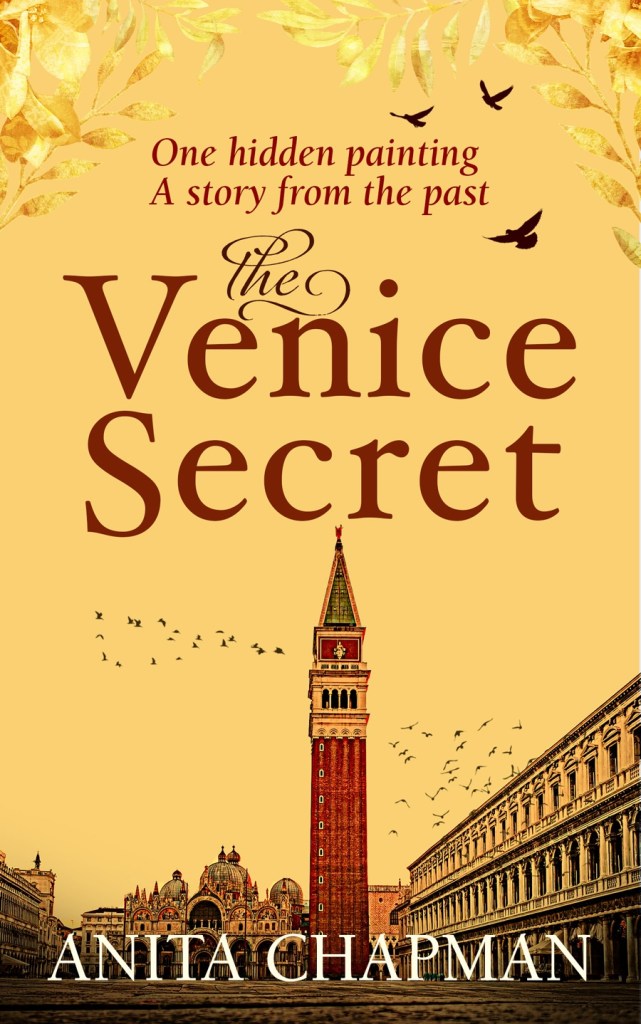
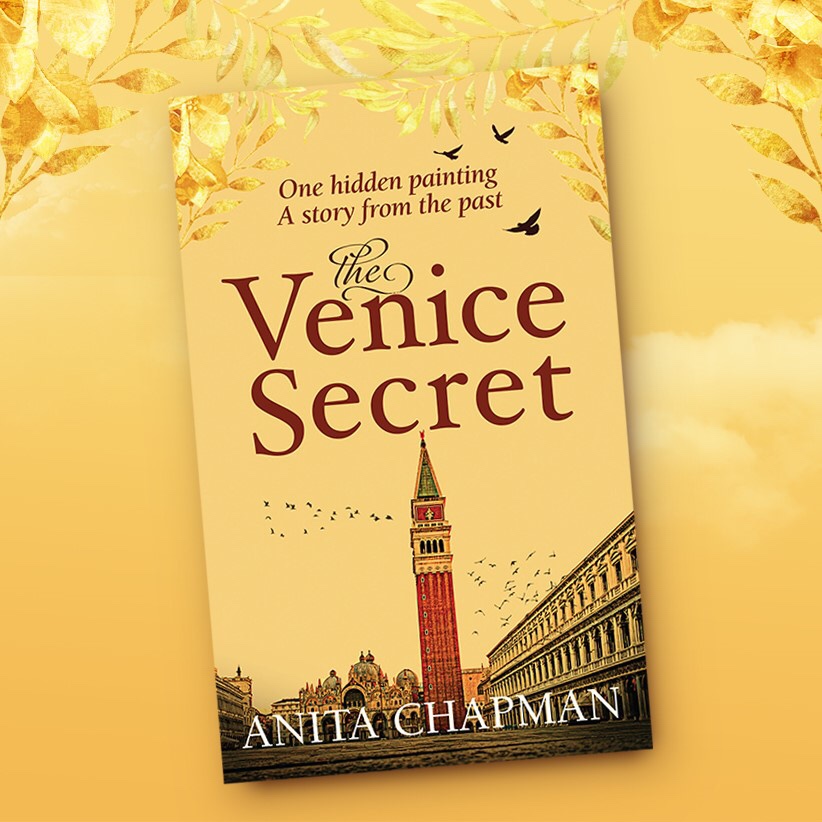
The Venice Secret by Anita Chapman.

I’m sure amongst those who travel a lot, saying that Venice is your favourite travel destination is a bit of a cliché. I’d first wanted to go aged around ten years old, when I first read the children’s book What Katy Did Next. This third book in the Katy series followed the eponymous heroine as she travelled Europe as companion to a woman and her little girl and is lucky enough to be in Venice for Carnival. I first travelled there with my mum as a fortieth birthday celebration and we both fell completely in love. A couple of years later I visited again, this time with my best friend and enjoyed exploring more of the city, beyond the usual tourist sites. Mainly I enjoyed wandering the labyrinthine streets, taking photographs and soaking up the atmosphere. It has a magic that’s part romance and part mystical, with an edgy gothic darkness that can easily unnerve you – especially when the fog comes down, you’ve lost your way and keep finding lonely dead ends. There’s a little maze behind Teatro La Fenice where you can spend untold hours, wondering if you’re stuck in a time loop. It is one of those places where I wouldn’t have been surprised to turn a corner and find myself back in the 18th Century. So it seemed fitting to me that Venice is a backdrop to Anita Chapman’s debut, a dual timeline story with two narrators; firstly in 2019 with Rachel, then back to the late 18th Century with Phillipa. Both women are going through a period of upheaval and change, another uncanny similarity to fit a city that seems to be a ‘thin place’: a city without the normal barriers of space and time.

In the present we meet Rachel who is helping to sort through her grandmother’s belongings while temporarily living in her cottage. She will soon have to make a decision, to share a home with her mother and her horrible new partner, or become homeless. Rachel is feeling a bit lost and displaced, so needs a project to get her teeth into. She certainly gets more than she bargained for! She discovers what appears to be a Canaletto painting in her grandmother’s loft along with a note addressed to Philippa in 1782. With help from Jake at the local art gallery, Rachel endeavours to find out if the painting is an original and uncovers a secret from the past. The painting depicts a view of St Mark’s Square towards the Basilica from one of the south corners of the piazza. It seems to have some provenance and Rachel sets out to discover who painted it and whether it’s really as old as it’s style suggests. It purports to be a Canaletto, but can it really be genuine and if so, what is it doing in her grandmother’s attic? If it is the real deal, it could be the link between Rachel and our 18th Century narrator, Philippa. Phillipa has gone through a huge change in circumstances, following the death of her father who was a preacher. He has left behind a family struggling to make ends meet and Phillipa feels weighed down by responsibility for them. So she takes the decision to become a governess, leaving her family behind in order to earn enough money to keep them. She manages to get a position at the prestigious Chipford Hall, the family seat of the Duke of Oxon, who has two little girls. Yet, it isn’t long before Phillipa is forced on the move again but this time she’s asked to accompany a family friend, Lady Cordelia, on a trip to Venice, researching her latest novel. It was Phillipa’s part of the story that really engaged me as I felt a real kinship with her. She is quite a level-headed and sensible young woman, prepared to take on her father’s responsibilities. There was common sense, but also a deep kindness in her – she’s willing to give up any dreams of her own to keep the family going.

While I enjoyed aspects of Rachel’s story, I didn’t feel she was as strong and her character didn’t quite grab me in the same way Phillipa did. Rachel’s difficulties often seemed to come from her own choices, but I did feel sorry for her. Nevertheless, her sections do hold the story together well and the history of the painting she finds is fascinating and very well researched too. The author has the skill of bringing the historical aspects of the story to life, full of vivid details and characters. For someone who loves Venice, those sections of the story were particularly enjoyable, taking me back to those tiny streets and romantic canals, triggering some incredible memories along the way. I was also interested in the way the author used the figure of the governess, which ever since Jane Eyre has provided rich material for the writer of historical fiction. Governesses are in a position within the house as neither servant nor master, she is rather unique and potentially dangerous. She has access to the centre of the home, working upstairs with the children and often living with the family, rather than in the servant’s quarters. This position allowed the author to really open up the 18th Century for us, particularly in terms of society and it’s hierarchies. The pace is slower at first, but soon speeds up as the clues start to be revealed and we each time we get a bit closer to the truth and the link with Phillipa. We also come closer to the resolution of each woman’s inner journey. Would Phillipa’s be able to construct better boundaries and gain some wisdom in discerning someone’s character before trusting them? Would Rachel learn to stand on her own feet more, despite the difficulties in her background? I loved how we could see the changes in women’s lives since the 18th Century and how we were less at the mercy of the men in our lives, some of whom seemed perfectly happy to sacrifice a woman if it brought them closer to the power they sought. Each part of the story was woven together beautifully towards a satisfying conclusion, ensuring that I’ll be be looking forward to whatever Anita Chapman writes next.

Meet The Author

Anita Chapman enjoyed writing stories from a young age, and won a local writing competition when she was nine years old. Encouraged by this, she typed up a series of stories about a mouse on her mum’s typewriter and sent them to Ladybird. She received a polite rejection letter, her first.

Many of Anita’s summers growing up were spent with her family driving to Italy, and she went on to study French and Italian at university. As part of her degree, Anita lived in Siena for several months where she studied and au paired, and she spent a lot of time travelling around Italy in her twenties.

Anita likes to read journals and diaries from the past, and one of her favourite pastimes is visiting art galleries and country houses. Her first published novel, The Venice Secret is inspired by her mother taking her to see the Canalettos at The National Gallery in London as a child.

Since 2015, Anita has worked as a social media manager, training authors on social media, and helping to promote their books. She’s run several courses in London and York, and has worked as a tutor at Richmond and Hillcroft Adult Community College.

Posted in Random Things Tours

All The Little Bird Hearts by Viktoria Lloyd-Barlow

What an intricately beautiful and nuanced novel this is! I had expected a story along the same lines as Eleanor Oliphant Is Completely Fine or Meredith Alone at first. The beautiful aesthetics of the setting and glamorous lifestyle dazzle us and everything on the surface seems benign as Sunday and her daughter Dolly start a relationship with their new neighbours. Vita is aristocratic in her manner and comes across as a likeable eccentric, perhaps a little pretentious but as my friend Nigel used to say, ‘a little bit of pretension doesn’t hurt anyone’. They love- bomb Sunday and her daughter with gifts and elaborate Friday night dinners. Vita and her husband Rollo are staying in the house next door while ‘Rols’ completes a plan to buy and convert a large institution for children in care nearby. Until this glamorous pair enter their lives, Sunday and Dolly lead a very quiet life. Divorced from Dolly’s father, they still live in a house on his family estate where Sunday works in the gardens. Sunday isn’t great with noise (especially several at once) only eats white food and struggles to read between the lines with others. She gets on best with David who works in the greenhouses with her and uses sign language to communicate. Extremes of anything, cause panic in Sunday, so the slow rhythms of nature and it’s subtle colouring are perfect for her. Sunday didn’t even know anything was missing in her life until Vita wants to become her friend. However, is Vita a genuine friend or does she have an ulterior motive? This is where the slightness of the story and the details of glamorous clothes, extravagant dinners and endless champagne started to remind me of Virginia Woolf and her clever way of hiding so much beneath a beautiful surface. Instead of being an uplifting tale about someone who struggles to make connections finding a friend and embracing their peculiarities, this promised to be something darker.

I felt a kinship with Sunday immediately and the tone is light at first as she meets new neighbour Vita and her comical little dog Beast. Vita is one of those people who never question themselves or worry about their interactions with others. She simply inserts herself into Sunday’s life, without any of the social angst over whether she’s wanted there. Vita and her husband Rollo are dazzling and disarming, from the clothes they wear to the hyperbole in their speech and the very best delicacies on the dinner table, including the most exquisitely wrapped and coloured petit fours. They are disarming in the way they present themselves, classy but bohemian and often a touch of carelessness like sitting on the front step in a silk kimono and old work boots. Is this nonchalance studied or natural? Conversely, Sunday can’t be what she isn’t and her ‘quirks’ are not affectations. She has learned to be less, to mask and try to make herself acceptable from a young age thanks to a mother who never showed her love. She constantly proclaimed Sunday was an ‘it’, a ‘what’, an unsavoury puzzle to be solved. We learn that this animosity towards her daughter worsened when a terrible family tragedy occurred. I loved how the author layered the voices in Sunday’s head: her daughter explaining that her dad and stepmum love each other so much, it’s just that Sunday is incapable of seeing it; her mother saying ‘you’re not wired right you’; her sister saying ‘I don’t know what you are Sunday’. At first, the friendship of Vita and Rollo soothes Sunday’s soul, because she feels accepted. They always make sure white rolls are available at the dinner table, in case the main course is too colourful or complex for her. They also make sure there is champagne or soda water, because Sunday will only drink cold, fizzy liquids. These attentions are simply there, neither one of the couple mention them, but they mean the world to Sunday:

‘their attention to my preferences touched me. I had not been known in this way before and found acceptable. There I was seen and approved of, even indulged’.

At first, Dolly and Sunday would often stay late next door after dinner, but subtle changes start to occur. Dolly wants to stay over with Vita on Friday nights. One night, after leaving for home, Sunday returns with her daughter’s favourite pyjamas and hears music as well as laughter next door. Yet when Rollo answers the door, he holds it closed behind him as he takes the pyjamas. He is perfectly polite, but does not step back as he once might have done to let Sunday inside. These subtleties make the reader nervous and I felt worse because I wasn’t sure whether Sunday could see what I was seeing.

‘painted subjects are easier to read than their physical counterparts […] in real life the details I am drawn to are often secondary, and these often mislead. That evening when I looked at Vita, I saw her pretty hair, her little wrists wrapped in gold chains, and her welcoming smile. I did not notice the grip of her hand on my daughter’s arm’.

I wanted to put myself between Sunday and these charming people. She recalls jealousy, but was it because she envied Dolly’s easy relationship with Vita or was she jealous of Vita’s relationship with her daughter? The subtle foreshadowing becomes more direct as Dolly relates the story of Vita simply taking a friend’s baby for a walk without telling the mother. Vita seemingly could not understand why the woman was so scared or why the police were called. Slowly, Sunday understands that her new friend is possibly not what she seems, by using a system of observation and noting patterns of behaviour. Yet I was still worried that she might underestimate the extent of Vita’s ability to create chaos. Sunday describes her way of analysing people, to look beyond their ‘fleeting expressions’ to see the repeated pattern on their heart. She looks beyond what they say and instead values and interprets them based on their repeated behaviour. Yet with Vita she declares herself too scared to look, because she isn’t sure whether the tick tock of her heart signifies a clock or a bomb.

Dolly’s changes are also subtle at first, but Sunday notices a new confidence and self-possession that she is acquiring from time spent with their neighbours. Whereas once Dolly might have been reserved with new people, Vita unlocks the young girl who is soon easily pushed to near hysteria over a shared joke. This quantity of feeling makes Sunday uneasy. Yet surely this new ease in her daughter’s manner can only make life easier for Dolly? She won’t share Sunday’s fears and awkwardness. The coming summer heralds a rollercoaster of change and emotions, first Dolly’s accent becomes more cut glass and she starts to dress differently, more like Vita. As exams loom and the renovation of the children’s home comes closer, the couple offer Dolly a job helping out with admin and interior design. She announces she’d like to do it for the holidays, but Sunday reminds her she does not need to work. Her father and grandparents get her everything her heart desires. Yet Sunday feels churlish refusing the opportunity, torn between what is best for her daughter’s future. I felt that Dolly used her mum’s inexperience against her at times, claiming that there were simply so many uses for her on site, but Sunday could never imagine them, because she’s only ever known the farm. If she refuses Dolly’s request to spend time in London with them, will it make Vita and Rollo’s offer even more attractive?

Vita isn’t above manipulation herself : ‘I’m so sorry Dolly, you know we love taking you out. And we had such fun planned in London. But…’

Sunday doesn’t know whether she can or should deny her daughter these experiences. It might help her get on in life. Should she be supporting her daughter to reach for something different? Should she be holding her back? However, some base instinct urges her to say no, to ban the trip and keep Dolly home for the summer, knowing this could backfire completely if their offer is benign, nothing more than a favour for the daughter of their friend. Sunday hasn’t had close friends before so can’t compare the situation. When Dolly receives her exam results, the dam breaks and out comes a voice Sunday has never heard before from her daughter, one filled with scorn, shame and no appreciation for her mother’s years of caring attention. Dolly sees her mother’s life as a failure and she will do anything not to be like her. The author cleverly contrasts this awful evening with the story of a fox that arrived in Sunday’s garden, a little too thin and straggly. It made it’s home under their shed for the winter and every day without fail Sunday would set milk and dog food down. In the spring the fox was sleek and flourishing because of Sunday’s steady and dutiful nature.

One of the most heartbreaking revelations for me is Sunday’s slow realisation that others have quirks and oddities, but it is still possible for people to be fond of them. To love them even. She had always thought it simply a fact of life that anyone with quirks like hers would be impossible to love, but that’s not the truth:

‘My mother could still have loved me had she chosen to’.

To befriend someone who has experienced this trauma, to make them feel loved and accepted, but then manipulate them for your own ends is evil. Yet the author keeps the reader unsure whether that’s what Vita is doing an I was constantly waiting for this ticking time bomb of a woman to explode. Yet whatever the outcome, I wasn’t sure that Vita was consciously acting this way. Her behaviour felt like a repeated pattern, possibly an enactment of her own traumas. Rollo knows though and when the truth starts to emerge he is openly affectionate to Sunday. Instead of serving up the usual air kisses, this is a hug that’s more substantial and perhaps honest. Showing a remarkable insight into his wife’s nature he tells Sunday:

‘It’s not you, darling. It’s Vee I’m afraid. She doesn’t think these things through. It might all change again by tomorrow’.

Yet he is willing to let her continue, to collude in destroying others casually and without consequence. At the very least she will offer friendship and take it away on a whim. They will simply slip into another life, with all the security their money and status gives them. Like Nick and Daisy in The Great Gatsby, Vita and Rollo are careless with other people, content to use others and leave them behind. Yet there are threads of hope in the conclusion, not least in Sunday’s ability to reflect on her own actions and feelings with more awareness. This novel is stunning, beautifully written and has such psychological complexity and insight. I loved it.

Meet the Author

Viktoria Lloyd-Barlow has a PhD in Creative Writing from the University of Kent. Like her protagonist, Sunday, in ALL THE LITTLE BIRD-HEARTS, Viktoria is autistic. She has presented her doctoral research internationally, most recently speaking at Harvard University on autism and literary narrative. Viktoria lives with her husband and children on the Kent coast.

Posted in Publisher Proof

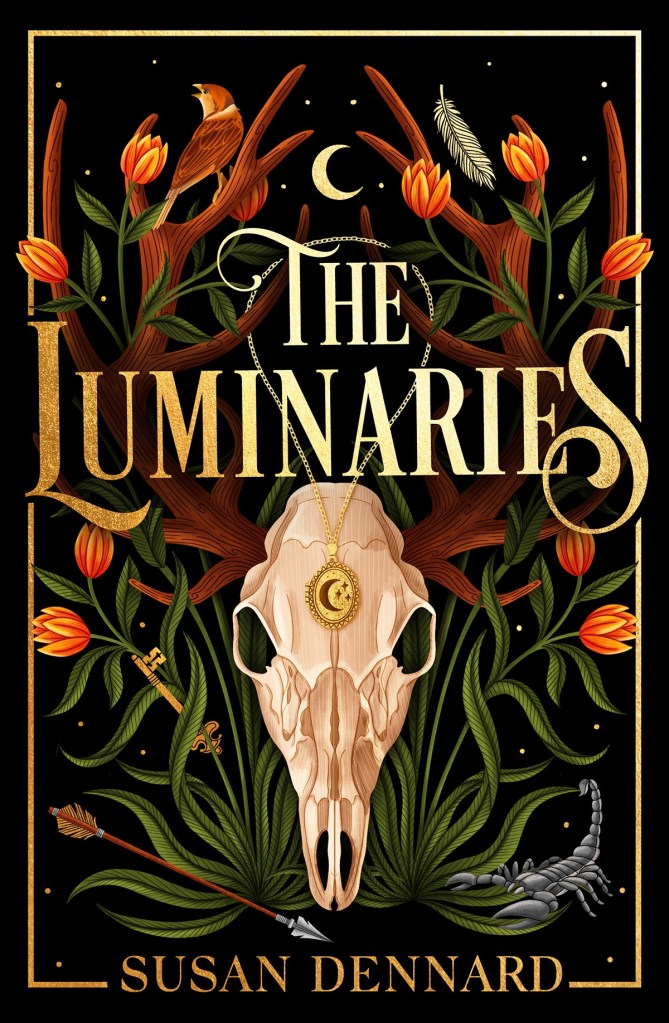
The Luminaries by Susan Dennard

From NYT bestselling author comes a haunting, high-octane contemporary fantasy for fans of The Chilling Adventures of Sabrina. Winnie Wednesday fights to take the deadly Luminary hunter trials in Hemlock Falls’ nightmare-filled forest.

Hemlock Falls isn’t like other towns. You won’t find it on a map, your phone won’t work here, and the forest outside town might just kill you…

Winnie Wednesday wants nothing more than to join the Luminaries, the ancient order that protects Winnie’s town—and the rest of humanity—from the monsters and nightmares that rise in the forest of Hemlock Falls every night. Ever since her father was exposed as a witch and a traitor, Winnie and her family have been shunned. But on her sixteenth birthday, she can take the deadly Luminary hunter trials and prove herself true and loyal—and restore her family’s good name. Or die trying.

But in order to survive, Winnie must enlist the help of the one person who can help her train: Jay Friday, resident bad boy and Winnie’s ex-best friend. While Jay might be the most promising new hunter in Hemlock Falls, he also seems to know more about the nightmares of the forest than he should. Together, he and Winnie will discover a danger lurking in the forest no one in Hemlock Falls is prepared for.

Not all monsters can be slain, and not all nightmares are confined to the dark.

I’m always going to be sucked into a story where my heroine is named Winnie Wednesday, it’s gone straight on my list of potential cat names for the future. Of course one of my other strange interests is monsters, I even studied the Grotesque and Monstrous at university, so the beautifully described and illustrated monsters were exquisite. The novel had immediate appeal and didn’t disappoint. Winnie’s clan are known for belonging to a secret monster hunting society. In fact her family and her entire clan outcasts, thanks to the betrayal of her father. This is a matriarchal society and Wednesday is hoping to become the next clan leader, just like every generation of strong women in her family. Winnie is willing to risk her life on a deadly monster hunting trial, just for the chance to win back her family’s reputation and to be recognised as the foremost hunter of her generation.

The world building here is so creative and I was aware that the author is setting the scene for a series of novels, not a stand alone story. I’m a sucker for beautiful detail and there’s an abundance of it here, in Winnie’s home of Hemlock Falls, the creatures and the action scenes that follow during her mission. The mythology is based on beings that inhabit the surrounding forest, including the spirits who produce nightmares. I loved how Dennard wove an entire bestiary of mythological and paranormal creatures together all inhabiting her mystical forest. Could there be something as yet undiscovered lurking in the trees and if so, how dangerous might it be? Wednesday suspects this being could be a danger, not only to her quest, but to all the inhabitants of her town and their way of life.

As a main character I would suggest it’s impossible not to fall in love with Winnie. Once you have, you’ll be completely beguiled by her quest and you will be behind her all the way. That doesn’t mean she’s perfect, but many of her flaws come from her outcast status. For four years she’s been ostracised by friends and family, so she’s very self-reliant even if she is a little indecisive at times. She’s disconnected from others at an emotional level and doesn’t trust anyone around her. This lack of solid family background shows in the way she doubts herself, but despite this she keeps going. Her determination is incredible especially since the isolation from her society has meant she’s had to train herself with no resources at all. Despite this disadvantage her courage and abilities shine through. Out of the other characters, I enjoyed Winnie’s friendships with Bretta and Emma, because they’re the only people who show support and kindness aside from her mum and brother. There’s also a hint of romance with Jay Friday, a past friend of Winnie’s who could become something more. He’s a bit of a bad boy and I think their dynamic could develop nicely in future novels. The relationships with all other characters are established, but not developed and this can seem a bit slow. This is Winnie’s book though and the author is building our relationship with her, although I could really see the promise in these early interactions.

I loved reading this novel, it’s setting of Hemlock Falls and it’s history, the careful descriptions of each clan and their nightmares, and I liked the characters, too. It felt like a perfect base for an exciting series and I can already imagine how storylines might be expanded as we go on. It was such an easy book to read and the short chapters kept a lively pace, as well as being rather addictive late at night – just one more chapter won’t hurt will it? I’m itching to know more about Jay and his bad boy status, as well as how he and Winnie develop their romantic feelings. Of course there was a cliffhanger ending too and enough loose ends to lead us neatly into the sequel. I’m already looking forward to it.

Published 1st November 2022 by Daphne Press.

Meet The Author

Susan Dennard has come a long way from small-town Georgia. Working in marine biology, she got to travel the world—six out of seven continents, to be exact (she’ll get to you yet, Asia!)—before she settled down as a full-time novelist and writing instructor.

She is the author of the Something Strange and Deadly series, as well as the New York Times bestselling Witchlands series, and she also hosts the popular newsletter for writers, the Misfits & Daydreamers. When not writing, she is slaying darkspawn (on her PS4) or earning bruises at the dojo.

She lives in the Midwestern US with her French husband, two spoiled dogs, and two grouchy cats.

Posted in Netgalley

One Italian Summer by Rebecca Searle

When Katy’s mother dies, she is left reeling. Carol wasn’t just Katy’s mum, but her best friend and first phone call. She had all the answers and now, when Katy needs her the most, she is gone. To make matters worse, the mother-daughter trip of a lifetime looms: two weeks in Positano, the magical town where Carol spent the summer before she met Katy’s father. Katy has been waiting years for Carol to take her, and now she is faced with embarking on the adventure alone.

But as soon as she steps foot on the Amalfi Coast, Katy begins to feel her mother’s spirit. Buoyed by the stunning waters, beautiful cliffsides, delightful residents, and – of course – delectable food, Katy feels herself coming back to life.

And then Carol appears, healthy and sun-tanned… and thirty years old. Katy doesn’t understand what is happening, or how – all she can focus on is that somehow, impossibly, she has her mother back. Over the course of one Italian summer, Katy gets to know Carol, not as her mother, but as the young woman who came before.

But can we ever truly know our parents? Soon Katy must reconcile the mother who knew everything with the young woman who does not yet have a clue.

I enjoyed Rebecca Serle’s last novel rather unexpectedly, as it became so much more than the simple romance I was expecting. Her new novel One Italian Summer also had some unexpected elements and was an interesting look at the relationships between mothers and daughters, the endurance of long term relationships and coping with grief. As the book opens Katy is married to Eric and has just lost her Mum to cancer. Katy is broken as her Mum has been her best friend, her shopping buddy, her sounding board, her arbiter of taste and so many other things and now she doesn’t know what to do without her. In a strange way she sees her mother as her partner in life, rather than her husband. Eric is also grieving, having been a part of Katy’s family since they were at college. However, when her mother started receiving end of life care, Katy went to live at her parent’s home sleeping on a sofa to keep her mother company while her father slept in a chair next to his wife. As the couple meet again at her mother’s funeral, Katy still feels unsure about their marriage. She wonders if her mother was right and they married far too soon. Katy needs some space, to grieve her mum and think about her marriage and an obvious opportunity presents itself. When her mother was younger she spent a summer living on the Amalfi coast at the picturesque town of Positano renovating a hotel. To surprise her mother Katy had bought them tickets to spend a week in there and the thought comes into her head. What if she went ahead and travelled to Italy by herself?

Katy finds herself in a beautiful hotel where she feels immediately embraced by the family who run it. She meets a man at breakfast called Adam who works for the large luxury hotel chain. He would love to acquire the hotel and his bosses would like a piece of this beautiful coastline for their portfolio. He charms Katy and offers to show her around a little, he has been coming to Positano for many years in his time off and can suggest some great places to eat and explore. Katy has felt totally cut off from her mother, but here she feels closer to her as if part of her mother’s spirit has always been here waiting for her. One morning as she wanders through reception she sees a woman who has brought a parcel to put into the hotel’s outgoing post. She looks strangely familiar and as she turns around Katy can’t believe her eyes. This is her mother Carol, full of life and only thirty years old. I loved the way the author creates this strange time loop in such a magical setting. I never once questioned it, because I was so involved with Katy’s feelings that she might just turn the corner and see her mum as if she’d never left. It was such an interesting chance for her to meet her mother as a young woman and understand more about her. This Carol is young, carefree and full of passion for her goal of becoming an interior designer. There’s so much that Katy wants to know, but is this going to change her view of her mother and their relationship?

I loved the Italian setting of this novel, having just read Adriana Trigiani’s new novel also set on the Tyherrenian Sea I am now dying to visit this beautiful coastline. The way the town is nestled into the cliff side and every balcony makes you feel you’re hanging over the sea. I could literally feel the sunshine and the warm sea on my skin. The descriptions of food had my mouth watering and I found myself longing for Italy. Meeting her Mum at this age was always going to throw up things Katy didn’t know. Carol doesn’t recognise her, so her actions are completely unguarded, whereas Katy has the knowledge of who Carol is. I wondered how long she would be able to keep it to herself. It was interesting to see Katy starting to question whether all aspects of their relationship were positive. Carol has always been so opinionated and matter of fact about how things should be done. As a couple, Katy and Eric have always gone to her for advice when making decisions and she is the family’s anchor, keeping them grounded and safe. However, was this safety always a positive thing? Katy starts to see that she’s never been left to make her own decisions, that she and Eric have rarely made their own choices as a couple. Carol has always weighed in on everything from what clothes to buy and whether they should have children yet. She always seemed so sure of what to do and Katy has felt inadequate to an extent, unable to weigh up the options and make her own mistakes. There is a bit of anger and resentment here; if she’s never been allowed to stand on her own two feet, no wonder Katy feels lost. As her mother’s story unfolds, will Katy get the answers she’s looking for? Why does this Carol seem so ‘go with the flow’ when her mum always planned everything, even a family picnic, with military precision?

This was another beautiful book from Rebecca Searle, concentrating on the relationships between women and perhaps the most complex female relationship we have. This shows beautifully the effect our parents have on our development as people and how one mistake can change the way someone approaches life forever. All set in the beautiful Italian sun, with a lot of personal reflection and even a little bit of romance thrown in. I loved how the space and the experience gives Katy a chance to re-evaluate her life and the way she’s been living it. This is the perfect summer getaway book and if you’re not going anywhere this year I definitely recommend it for vicariously enjoying Italy.

Rebecca Serle is an author and television writer who lives in New York and Los Angeles. Serle developed the hit TV adaptation of her YA series Famous in Love, and is also the author of The Dinner List, and YA novels The Edge of Falling and When You Were Mine. She received her MFA from the New School in NYC. Find out more at RebeccaSerle.com.

Posted in Netgalley

The Empire by Michael Ball

1922. Jack Treadwell arrives at The Empire in the middle of a rehearsal and he is instantly mesmerised. Once you look past the glitz and glamour, the true magic of the theatre lies in its cast of characters – both on stage and behind the scenes. There’s stunning starlet Stella Stanmore and Hollywood heartthrob Lancelot Drake; and Ruby Rowntree, who keeps the music playing, while Lady Lillian Lassiter, theatre owner and former showgirl, is determined to take on a bigger role. And then there’s cool, competent Grace Hawkins, without whom the show would never go on . . . could she be the leading lady Jack is looking for? When long-held rivalries threaten The Empire’s future, tensions rise along with the curtain. There is treachery at the heart of the company and a shocking secret waiting in the wings. Can Jack discover the truth before it’s too late, and the theatre he loves goes dark?

Jack is our eyes in this unfamiliar world, explaining the theatre whilst also representing the issues a man of his age would face post WW1. He outlines the theatre for the reader as a physical space first, both backstage, front of house and as a performer. There are three distinct aspects to the magic we see created on the stage. There’s the physical building and it’s structure, the artists and stagehands who build the scenery and then there’s the money. Without any of these aspects it’s impossible to create the business we call show. As Jack learns so do we and it brings a brilliant sense of wonder to the reading experience. The author also uses him to make the language of the theatre accessible to us, so we can understand everything that’s going on. Finally, Jack brings to life an aspect of life that affects all men of his age in the early twenties; learning to cope in the post war world. The trauma of war is explored through Jack and Danny Moon, with both young men very reluctant to discuss their experiences. However, as the story progresses it’s clear there are physical and emotional scars that can’t be seen.

Danny Moon in particular embodies a sad truth about war, men go into battle as one person and come out of as someone completely different, someone we may not recognise. All of the characters in the book have their own quirks and personality traits, making them feel real and individual in a large cast of characters. Often in casts like this people get lost but not here, where even if they are slightly stereotypical they’re still memorable. There’s a nice class distinction between upper and lower class characters and how they interact with each other too. The author even touched on the changes in women’s lives in the early Twentieth Century in a subtle but effective way. The issue of women’s legal and political equality was only one aspect of the volatile social change women faced at this time. In fact their social mobility had changed during the war and there were elements in society who wanted their roles to revert to pre-war tradition. Women were not so easily persuaded and the author represents this with headstrong female characters who struggle against the belief that women should return to the home. The role of actress had traditionally been synonymous with women of easy virtue and those attitudes still persist in the 1920s, as well as mistaken beliefs that women can’t think and therefore act as well as men. The women here definitely prove those theories wrong! Finally, there were returning soldiers struggling with their mental health and Billy Barlow represents this wave of men with depression, anxiety and P.T.S.D. His struggles are enacted on the stage, bringing real meaning to his performance. Of course the author isn’t aiming to make these issues the focus of the novel, but by adding it as background he has grounded the story in it’s place and time.

Whilst I’m not specifically a Michael Ball fan, I am a huge fan of musical theatre and I know what an incredible talent he is in that world. I figured if anyone knows how to put the magic of the theatre into words then it’s him. I had a certain amount of scepticism though – as a lover of books I’ve looked on with dismay at brilliant writers struggling to get publishing deals, when celebrities seem to find it easy. Just because someone is a celebrity doesn’t make them a great writer. However, here Michael Ball’s warmth and love of his subject comes across beautifully and I really enjoyed the book. For a first novel, the story is long with many different avenues to explore, but I found that despite the complexity it wasn’t hard to follow and I didn’t have to go back over earlier sections to keep track. The structure helped, because in addition to chapter breaks there were clever changes in tone, setting and description. His story immerses the reader in the world of theatre, but the author has also created sympathetic characters and opened a window on the social issues of the 1920s. I look forward to more adventures at The Empire.

Published by Zaffre 13th October 2022

Meet The Author

Michael Ball OBE is a singer, actor, presenter and now author. He’s been a star of musical theatre for over three decades, winning the Laurence Olivier Award for Best Actor in a Musical twice, he’s also won two BRIT awards and been nominated for a Grammy. Michael regularly sells out both his solo tours and his Ball & Boe shows with Alfie Boe and has multiple platinum albums. The Empire is his first novel.

Posted in Netgalley

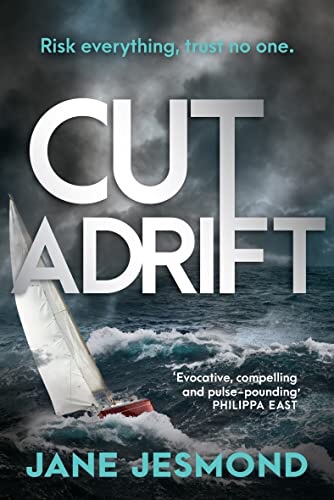
Cut Adrift by Jane Jesmond.

I really enjoyed our first outing with Jenifry (Jen) Shaw so I jumped at the chance to read the second outing for this daring and independent woman. Jen is taking time off to go climbing and has chosen Alajar, Spain as her destination, drawn in by a mysterious postcard showing a bar with decorative cork tiles on the ceiling. We met the shadowy undercover police officer Nick back in Cornwall and in the brief time they met their combined skills kept each other alive. There was also a connection between them that couldn’t be explored due to Nick being pulled straight back into another case. So when the postcard arrives with ‘wish you were here’ as the only message, Jen decides to take a chance and find the bar hoping this might be the right time to connect properly. Their time is limited though and it’s not long before Nick is off on another case. Jen does have a family issue to sort out though. Her brother has called in a panic to say that their father is planning to sell the family farm in Cornwall and the only person who can stop him is their mother. As usual their mother is elsewhere and not easy to contact, apparently teaching yoga to refugees in Malta. Jen takes advantage of Nick’s absence to fly to Malta in the hope of explaining to her mother what she needs to do to save the farmhouse where Jen and her brother grew up.

When Jen arrives though, her mother seems to be in the middle of a crisis with a family of refugees. The mother Nahla is an old friend of Morwenna’s and she’s with her two children Aya and Rania in a state of distress. This links back to a heart stopping prologue where we see that Nahla’s husband has been killed in Libya and the family have fled the country in a boat bound for Malta. Aya is so traumatised that she’s silent and both Rania and her mother are displaced and shellshocked by their experience. Now they’re forced into a refugee camp where disease, crime and trafficking are rife and no one can be trusted. Jen knows her mother and there’s no point trying to bring Morwenna’s mind back to home when she’s on a crusade. Jen’s now committed to helping Morwenna bring her friend and her daughters out of the refugee camp and settle them into a new home. The story is both heart stopping and heart rending. The author knows exactly how to pace her story with thrilling, fast paced set pieces followed by periods of calm that gave me chance to breath and think about what’s just happened. The scene with the fire in the clinic on the refugee camp had me gritting my teeth with anxiety, as Jen desperately tries to save those inside through the roof. Jen’s climbing skills are always at the forefront of the action and I trust her skills, but a part when she’s having to free climb a cliff with a complete novice was nail-bitingly tense.

The Maltese setting is fascinating with a sharp contrast between the picturesque streets with bougainvillea cascading prettily from the walls and the squalor of the camp. The distance between the Malta of the tourist trail and the Malta of those who arrive in the trafficker’s boats is vast. Morwenna is living across the two worlds, set up in a beautiful home with her lover Peter but entering the camp every day to teach yoga and help out at the clinic. The desperation of the refugees is made very clear and the way the traffickers ruthlessly exploit that desperation is horrifying. Nahla expects their escape from Libya to be uncomfortable and frightening, but she doesn’t expect their belongings to be discarded, to be forced into fighting others to make sure her and her children are on the boat, or to have her youngest child Aya hit when she can’t help but cry. Aya’s behaviour from there on is that of a deeply traumatised child, who automatically folds herself into tiny spaces without complaint knowing not to make a sound until she’s told to come out of hiding. Both girls are so vulnerable, clinging to the only person they recognise and so open to exploitation. It is difficult for Jen to get to the bottom of who is behind trafficking from the Maltese camp and when it becomes clear that secret services are also embedded in the camp it becomes even more complex. They have an entirely separate agenda, trying to separate potential terrorists using large movements of people from the Middle East and North Africa to slip into the UK undetected.

Jen is even more of a force to be reckoned with in this second novel and seems surprised at the connection she makes with Nahla’s daughter, particularly Rania. She’s more than an equal for those refugees stirring up trouble in the camp and her fitness skills mean she can escape many tense situations, but there were times when I was very worried. Her urge to protect the girls left her very vulnerable at times, luckily there was help from others but there were a couple of occasions when this was resolved by coincidences that stretched my credibility a little. Despite that I understood why the author had made those choices, for the development of other aspects of the story. Overall this was a page turning thriller, with a heroine I really enjoyed spending more time with.

Published by Verve 28th Feb 2023

Meet the Author

Jane Jesmond writes crime, thriller and mystery fiction. Her debut novel, On The Edge, the first in a series featuring dynamic, daredevil protagonist Jen Shaw was a Sunday Times Crime Fiction best book. The second in the series, Cut Adrift, will be published in Feb 2023, and A Quiet Contagion, an unsettling historical mystery for modern times, in Nov 2023. Although she loves writing (and reading) thrillers and mysteries, her real life is very quiet and unexciting. Dead bodies and dangerous exploits are not a feature. She lives by the sea in the northwest tip of France with a husband and a cat and enjoys coastal walks and village life. Unlike her daredevil protagonist, she is terrified of heights!

Posted in Throwback Thursday

Our Little Cruelties by Liz Nugent

In the famous words of Phillip Larkin, ‘they fuck you up your Mum and Dad’. Reading this book was a very interesting experience and patience definitely paid off. Had I given in to my impulses and thrown the book down in frustration during the first part, I would have missed out on a great read. The story of three brothers over their lifetimes is compelling, interesting and a great study in how mental health difficulties can be passed on from one generation to the next.

The structure of the novel is what I had difficulty with at first. The first section was narrated by the eldest brother, Will. Written in short chapters, slipping between decades, we see aspects of his childhood through to the present day where he is a successful movie producer. He meets his wife Kate through his brother Brian,when she’s brought to a family dinner. They have a little girl called Daisy, but Will is much more focused on work than he is his family. We get the sense that Kate is a long suffering woman who gets more support from Brian, who is now Daisy godfather. Brian is there for the birthdays and school concerts and Daisy has a great rapport with her Uncle. Will is dismissive of Brian and his lack of ambition. He is also dismissive of Luke, despite Luke’s success as a pop star in his late teens. He is close to his Mum and through flashbacks we see she favours him, quite openly.

Luke, by contrast, really gets the brunt of their mother’s moods. He is the youngest, the weakest but soon finds success as a pop star. However, in the later fragments of his life he has times of struggle, where his mental health is poor and he turns to drink or experiments with drugs. He is an unusual child with a religious fixation to the extent where the family priest thinks he has a vocation! The other boys use his goodness against him, it gets them extra food and attention, especially from their father. There are moments where it seems his life is on track and he could be happy, but others where I wondered if he was just not meant for this world. Finally, there’s Brian the middle brother. If Will is his Mum’s favourite and Luke is doted on by his Dad, it leaves nobody for Brian. He does seem fatally dragged between the two of them. Will is very dismissive of him, even though Brian does so much for his niece. He’s not grateful that Brian stands in for him or that he looks after Luke when his mental health deteriorates. In fact their relationship becomes so destructive that other family members get caught in the crossfire.

The genius of this book is its structure. During the first part, narrated by Will, I was ready to put the book down. I couldn’t stand him. He was arrogant, self-centred and treats women appallingly. If the whole book had been his viewpoint I might have thrown it out of the window. Just when I was at the point of giving up, I saw Luke’s name across the next section and it was such a relief. As the tale goes back and forth in time and perspective we see a tiny bit more of the whole. At a Bob Dylan concert at a local castle, Will ends up in a fight and is taken to hospital with Dad, leaving Luke to follow behind. Mum is also left behind at the castle and doesn’t arrive at the hospital till late. However, through Luke’s story we learn that something terrible happened to her, something that explains so much about how she behaves. When we finally get Brian’s section we see what a lifetime of being in the middle feels like. Overlooked, unconsidered and brushed aside. We find out things we already suspected and other things that surprise and enlighten us. Every single strand of this novel teaches us that we are only ever a small part of the picture and we must step back to see the whole.

This brings me to the second line of Larkin’s poem, which is the best; ‘they do not mean to but they do’. There are parts of this novel, particularly the way Dad behaves, where genuine mistakes are made and misunderstandings occur in the same way they do with any family. However there are other situations where the damage seems deliberate, especially in their mother’s attitude to Luke, Will’s intervention in Luke’s relationship, and in the treatment of Will’s daughter Daisy towards the end of the novel. These acts are more than little cruelties. They are deliberate, potentially causing lifelong psychological disturbance. This is a complex and interesting novel that moves from one narrow perspective to give us all the pieces of the emotional jigsaw puzzle that makes up this family. Liz Nugent is such an emotionally literate writer that I can’t wait to read her next work.

Meet The Author

Liz Nugent lives and writes in Dublin, Ireland. She is an award winning writer of radio drama, children’s animation soap opera and television plays. Her second novel, Lying in Wait, is to be published in July 2016. Unusually for a writer, Liz likes neither cats nor coffee and does not own a Breton top.

Liz Nugent’s new novel Strange Sally Diamond is out on March 2nd from Sandycove.