Posted in Publisher Proof

Backstories by Simon Van der Velde

What I want is to find the spark, to dig down into their pain, their passions and their imperfections, and show you our heroes as they truly are.

Backstories is a unique collection of stories each told from the point of view of a famous, (or notorious) person at a pivotal moment in their lives. The writing is literary but accessible and the voices vividly real. The settings are mostly 60’s and 70’s UK and USA, and the driving themes are inclusion, social justice and of course, nostalgia – but the real key to these stories is that the protagonists’ identities are withheld. This means that your job is to find them, leading to that Eureka moment when you realise who’s mind you’ve been inhabiting for the last twenty minutes.

Dreamers, singers, talkers and killers; they can dazzle with their beauty or their talent or their unmitigated evil, but inside themselves they are as frail and desperate as the rest of us. But can you see them? Can you unravel the truth?

These are people you know, but not as you know them.

Peel back the mask and see.

I read a lot of books and hear the words ‘unique reading experience’ all too often, but this really is just that. A great premise that makes a series of short stories about celebrities, an intriguing psychological puzzle. The author withholds their identities, taking us back to a time before they were famous, potentially giving us insights into who they were and even what made them become the stars we know and love. A lot of fun can be had sharing them with friends and working out who can identify which star first, or discussing which story you enjoyed most.

However, this collection of short stories is much more than a gimmick or party game. Simon Van der Velde is a great writer with an uncanny ability to get inside the mind of each of his subjects. He constructs their ‘selves’ beautifully, giving us fully rounded people behind the star status. He has a keen understanding of what it means to be human and how events may affect someone psychologically. In one story he shows how childhood bullying leads our character to a particular friendship, perhaps also the insight into human emotions that eventually make his song lyrics so poetic and beloved.

What the author does is almost filmic, in the same vein as the film Rocket Man, where the Elton John we know in the extravagant costumes strolls into a group therapy session. Then as he reminisces to the group we see a series of flashbacks, to the drink and drug fuelled 1970s. He takes us even further back to a lonely childhood with a mother preoccupied with how things look, and a severe father who can’t show love. Each time we return to the therapy group a little bit of his costume has fallen away, until at the end the costume is gone and he’s able to reconnect with that hurt little boy and give him comfort. It’s a beautiful way of framing an biopic and it’s exactly what the author does here. He creates those flashback moments or snapshots for each of his characters, so that we can piece together their ‘true’ personality, possible motivations and know them in a way we haven’t before. It’s almost like inhabiting another person and that’s how versatile the author is here. He’s a literary shapeshifter, jumping into each new incarnation with skill and insight. There’s something voyeuristic about looking this far into someone’s psyche, but it’s compelling and illuminating too.

I know these stories will send many readers to the internet to check how close to the truth some of the stories are and that’s definitely the fun part. However, it’s great to sit back and read the stories again to fully appreciate the brilliant sense of place and time across the collection. These people are fully grounded in a real world that I believed in. Despite these worlds being on different continents, time periods and encompassing varied family backgrounds, they all felt like real spaces. With each story being self-contained, this is a great collection to carry with you and read on the go. Each story might only take twenty minutes to read, but that’s perfect for spending your lunch hour or commute home totally immersed in someone else’s life experience. Its a chance to examine what made each person, become the household name they are. This collection is fun and intriguing, but also psychologically astute and a masterclass in how to construct a ‘self’ within fiction.

Published by Smoke and Mirrors Press, 25th March 2021

The Author’s Vision.

MY BACKSTORIES QUEST 

“Whatever happened to, all of the heroes?”  The Stranglers 1977  

I was twelve years old when I first heard this song and although there was something in the feral tone that grabbed me, I didn’t really understand it. I do now. I get the angst and the loss and the emptiness, which is why, in Backstories, I aim to answer the question.

I’m not interested in simplistic tabloid truths. They clung on too long, drank too much, lost their looks and their charm and generally reminded us that we’re all getting older. That’s not what I want from my heroes.  

What I want is to find the spark, to dig down into their pain, their passions and their imperfections, and show you our heroes as they truly are.  

So join me on my quest. Let’s bypass the obvious, the tedious,and the dull. Brave the deeper, darker paths where the treasures can be found, and together we’ll uncover the fears and doubts that made our heroes what they were and perhaps catch a glimpse of ourselves along the way.

Whatever happened to all of the heroes?

They turned out to be human beings, in all their diverse glory.

Simon Van der Velde January, 2021

Meet The Author.

Simon Van der Velde has worked variously as a barman, laborer, teacher, caterer and lawyer, as well as traveling throughout Europe and South America collecting characters for his award-winning stories. Since completing a creative writing M.A. (with distinction) in 2010, Simon’s work has won and been shortlisted for numerous awards including; The Yeovil Literary Prize, (twice), The Wasafiri New Writing Prize, The Luke Bitmead Bursary, The Frome Prize, and The Harry Bowling Prize – establishing him as one of the UK’s foremost short-story writers.

Simon now lives in Newcastle upon Tyne, England, with his wife, labradoodle and two tyrannical children.

www.simonvandervelde.com

Posted in Publisher Proof

The Deception of Harriet Fleet by Helen Scarlett.

When I’m looking at the blog tours that are available to me, nothing makes me jump on board quicker than the words ‘atmospheric Victorian chiller’. I can’t get enough of this genre, so I was really looking forward to spending the weekend immersed in this debut novel.

1871. An age of discovery and progress. But for the Wainwright family, residents of the gloomy Teesbank Hall in County Durham the secrets of the past continue to overshadow their lives.

Harriet would not have taken the job of governess in such a remote place unless she wanted to hide from something or someone. Her charge is Eleanor, the daughter of the house, a fiercely bright eighteen-year-old, tortured by demons and feared by relations and staff alike. But it soon becomes apparent that Harriet is not there to teach Eleanor, but rather to monitor her erratic and dangerous behaviour – to spy on her.

Worn down by Eleanor’s unpredictable hostility, Harriet soon finds herself embroiled in Eleanor’s obsession – the Wainwright’s dark, tragic history. As family secrets are unearthed, Harriet’s own begin to haunt her and she becomes convinced that ghosts from the past are determined to reveal her shameful story.

For Harriet, like Eleanor, is plagued by deception and untruths….

This ‘governess sent to brooding gothic mansion’ story is becoming a genre of its own. Having read modern versions of the tale such as Madam and The Turn of the Key recently, it was good to go back to Victorian England and the roots of this tale that has its origins in Turn of the Screw and Jane Eyre. The structure is clever, in that we start in 1849 with a prologue and a narrator that doesn’t introduce themselves. As I read, I started to feel intrigued, but that soon turned into an uneasy feeling that this character was shifty and manipulative. Their narration doesn’t flow, but the scene that follows has impact, even though it is brief. We then jump forward and the author gives us a bit of distance from events – an older Harriet recounting the tale in her old. The parts she relates are pacey and tense, so when I was jerked back to the present, I wanted the next instalment and what came next. All of this creates a novel that is very hard to put down once started and led to a lot of boxes left unpacked in my new house!

The tale Harriet tells moves us to 1871, to Co Durham and the country house Teesbank Hall. Far away from the urban areas and deep into the countryside, it’s remoteness gives us the sense that anything could happen and no one would know – the Victorian equivalent of ‘in space no one can hear you scream’. Added to the sense of isolation and foreboding in the environment we learn that no one has lasted long in the role of governess here. However, we’re not sure that Harriet has many other choices. She’s running from something and that means she may not have been too vigilant about what she’s running towards. She ignores warnings from locals about the house’s macabre history and the isolation, but does feel a little apprehensive as she walks up the drive. What if they aren’t the respectable, ordinary family they have led her to believe they are? Yet, Harriet Caldwell is an assumed name, suggesting that she hasn’t been too free with the truth about her own past.

Her pupil Eleanor, the daughter of the Wainwright family, is incredibly bright, but also obsessed by her own family history. She’s plagued by dark secrets and tragic incidents in their past. Eleanor draws Harriet into their heritage, but is it a heritage she wants any part of, especially when her own secrets are haunting her? Harriet soon finds that Eleanor’s breadth of knowledge is good, perhaps even better than her own, so she doesn’t need a teacher. Her role seems more like that of a guardian or carer, observing Eleanor’s behaviour and being vigilant against the angry, hysterical fits she apparently suffers with.The family would like Harriet to observe and report back to them, and even though she feels like a spy she knows she has no choice, if she wants to stay hidden. The feeling in the house is oppressive, with the parents almost at war with each other and the grief over their tragically murdered son twenty years before still affecting them deeply. In fact, the only welcoming and calm presence seems to be that of their other son Henry.

There are a lot of aspects to the mysteries here, but all of them are hauntings in a way. There are some potentially ghostly goings on, but also the lingering emotions of past events, the fear of something or someone catching up with you and the way secrets, lies and even intense marital discord can leave an impression on a house and it’s inhabitants. As Harriet slowly reveals her reasons for fleeing Norfolk on one hand, she is also uncovering the terrible murder of Samuel Wainwright back in 1849. However, it isn’t just the suppression of these secrets that are highlighted in the novel, its the psychological damage caused when someone can’t be their true self, openly and without judgement. There’s also an element of gaslighting in the denial of certain truths and the frightening ease with which men will declare their wives and other female relatives insane when they become inconvenient or dangerous.

I think the book succeeds beautifully in showing 21st Century readers how powerless women really were in the 19th Century. This thread in the novel reminded me of the Wilkie Collins’s The Woman in White. Another novel where, once used, a woman is consigned to an asylum if she threatens a man’s status or respectability. However, married women like Mrs Wainwright were also stuck, unable to own their own property or have their own money. A husband could have a sympathetic doctor label his wife as insane or hysterical, and sign her away to an asylum without censure. Even the word hysteria has gender implications in that it’s linked to the word for the uterus – hystera – only women can be labelled hysterical. A man is allowed to be angry, upset and even lash out without any judgement or negative connotations relating to his gender. Whereas women are still labelled unstable, unbalanced and insane. This is how the original madwoman ended up in the attic.

I found myself deeply sympathetic towards Eleanor, who is trapped by the house, by the past and by her father. On first meeting her, she seems a little paranoid and distrustful of most of the family. However, as the story develops I started to admire her intelligence and her desire to speak out. I felt she was stifled by her family, and almost imprisoned at the hall, where memories of 1849 still haunt her. This girl will never flourish if she doesn’t get away and I had such hopes for her time in London with her brother Henry. I hoped it would create an escape for her and a chance to meet like-minded, progressive people. There is also a burgeoning friendship developing between Harriet and Eleanor, that’s broken when the trip comes to an end and Eleanor feels Harriet is to blame. It is after this trip, when she is at her most vulnerable, that the past comes back to taunt her and I found myself holding my breath, waiting for the consequences.

This is an absorbing novel, with several mysterious strands to follow and I think readers will be split over the characters and whose story they are most invested in. While I wanted the mystery surrounding Samuel’s murder to come to light, it was the women’s fates that kept me engrossed to the very end. This was an enthralling gothic mystery, with the pace of a modern thriller and strong feminist overtones. It’s a fantastic debut and I can’t wait to see what’s next for this author.

Published Quercus 1st April 2021 Paperback Edition

Helen Scarlett is a writer and English teacher based in the north east of England. Her debut historical novel, The Deception of Harriet Fleet, is a chilling take on nineteenth-century classics such as Jane Eyre seen through modern eyes. It is set in County Durham, close to where Helen lives with her husband and two daughters.

Posted in Random Things Tours

The April Dead by Alan Parks.

NO ONE WILL FORGET . . .

In a grimy flat in Glasgow, a homemade bomb explodes, leaving few remains to identify its maker.

Detective Harry McCoy knows in his gut that there’ll be more to follow. The hunt for a missing sailor from the local US naval base leads him to the secretive group behind the bomb, and their disturbing, dominating leader.

On top of that, McCoy thinks he’s doing an old friend a favour when he passes on a warning, but instead he’s pulled into a vicious gang feud. And in the meantime, there’s word another bigger explosion is coming Glasgow’s way – so if the city is to survive, it’ll take everything McCoy’s got . .

I was lucky enough to be on the blog tour for the third book in Alan Parks’s Harry McCoy series, so it was a real treat to be able to read this one straight away, back to back. This is real Sottish Noir at its best as we follow a new case for Harry, in the crime ridden streets of 1970s Glasgow. I visit Glasgow a lot, and love its galleries, architecture and museums but this isn’t touristy, post-City of Culture, Glasgow. This city is grimy and dangerous, plagued by violence from criminal and sectarian gangs. Harry grew up in these rough, tenement areas of the city and it’s where his friendship with Steve Cooper started; back in their childhoods way before Harry became a police officer, and Stevie went in a very different direction. Harry’s loyalty to his old friend, means that he’s there at the prison gates when Steve gets out after a six-month stretch inside. Steve’s position as the boss of a criminal enterprise means he has to pick up where he left off – looking for whoever betrayed him. Loyalty is vital to an organisation like Steve’s and he won’t rest till he knows where the leak is. No matter how much he still feels like the big crime boss he always was, things have changed. Harry drops him at his old council flat knowing that even his own loyalty may be called into question.

The case Harry investigates is one of a bombing, not that unusual in the 1970s as the sectarian troubles in Ireland spread over to the mainland. However, the IRA’s targets are usually more illustrious than a flat in Woodlands. The only casualty seems to be the bomber with his remains scattered around the property. This is usually a job for Special Branch, so Harry is shocked to find it falls to him, and his sleep deprived colleague Wattie, to investigate. Wattie has become a father and is an easy target for DCI Murray. Murray thinks Wattie isn’t up to the job and Wattie begs McCoy for support, especially when the DCI piles a murder investigation on top of his other work. To make things worse for Harry, the prime suspect in the murder is Steve Cooper. Harry is well and truly in the middle, trying to keep the peace and his loyalty to many different people at once. His main concern is that there will be a bigger bomb, a more public target, and a long list of casualties. When this happens, Harry finds his loyalties called into question again, this time from a Special Branch officer who thinks McCoy may have connections to the IRA.

This investigation will lead Harry into the past, and a history of British military atrocities committed as the empire collapsed and beyond. The bomber follows an old army leader with murderous loyalty, and Harry stumbles across terrible hidden truths. The dark, atmospheric house in the country will stay with me, it’s terrible secrets never known until now as Harry uncovers evidence of torture and killing. Have these horrible acts ended though? Or is someone still carrying out killings in this terrible place? As if Harry doesn’t have enough to do, he’s also charged with finding a missing son of an ex- naval captain. Donnie Stewart was based in Scotland following in his father’s footsteps in the navy, but now he’s gone AWOL. His father travels to Scotland from retirement in America, keeping the pressure on Harry to leave no stone unturned looking for Donnie.

There is so much going on here, and so many loose ends to chase. However, one of the things I love about this series is that the author doesn’t just focus on the plot. He puts the characters and the intricacies of their relationships front and centre too. The relationship between Steve and McCoy is particularly interesting, especially in this instalment where pressure is placed on them both. It’s very interesting to see how Harry balances his job upholding the law, with his loyalty to his friend. Steve drags him into the fight with another crime boss, trying to use Steve’s recent time in prison as a chance to muscle in on his patch. This stretches Harry to his limits and place some edge into their relationship. Yet there is still that sense of a long held friendship that allows some black humour to creep in, even when the stakes are high. McCoy has a similar rapport with his colleague Wattie, but also some sensitivity too. He empathises with Wattie’s position as a new dad, and shows his concern. This is a sensitivity that spills over into his dealings with Donnie Stewart’s father too. I had the sense this wasn’t just being a good police officer, it was a softer side to Harry that maybe had something to do with getting older. What I loved most though is the author’s love of the wonderful city of Glasgow, in all its dark and dirty 1970s glory. He highlights the social injustices of the city, and the wry humour of its people. I would highly recommend this series to anyone who loves crime fiction and I look forward to May in the series.

Check out the other bloggers on the tour and their thoughts on The April Dead.

Meet The Author

Before beginning his writing career, Alan Parks was Creative Director at London Records and Warner Music, where he marketed and managed artists including All Saints, New Order, The Streets, Gnarls Barkley, and Cee Lo Green. His love of music, musician lore, and even the industry, comes through in his prize-winning mysteries, which are saturated with the atmosphere of the 1970s music scene, grubby and drug-addled as it often was. Parks’ debut novel, Bloody January, propelled him onto the international literary crime fiction circuit and won him praise, prizes, and success with readers. The second book in the Harry McCoy series, February’s Son, was a finalist for a MWA Edgar Award. Parks was born in Scotland, earned an M.A. in Moral Philosophy from the University of Glasgow, and still lives and works in the city he so vividly depicts in his Harry McCoy thrillers.

Posted in Publisher Proof

Another Life by Jodie Chapman.

Published by Michael Joseph, 1st April 2021.

Nick and Anna work the same summer job at their local cinema. Anna is mysterious, beautiful and from a very different world to Nick.

She’s grown up preparing fot the end of days, in a tightly-controlled existence where Christmas, getting drunk and sex before marriage are all off limits.

So when Nick comes into her life, Anna falls passionately in love. Their shared world burns with poetry and music, cigarettes and conversation – hints of the people they hope to become.

But Anna, on the cusp of adulthood, is afraid to give up everything she’s ever believed in and everyone she’s ever loved. She walks away and Nick doesn’t stop her.

Years later, a tragedy draws Anna back into Nick’s life.

But rekindling their relationship leaves Anna and Nick facing a terrible choice between a love that’s endured decades, and the promises they’ve made to others along the way.

Wow! I expected a love story and received so much more from this wonderful read. Jodie Chapman has managed to capture all of life’s stages as we to and fro through the years with Anna and Nick. Told mainly by Nick, we begin on Christmas Eve in NYC 2018, then we tumble back through the years: to when he meets Anna; to his childhood years and everything beyond. Everything we come to learn about Nick’s personality, his closed off manner and inability to let anyone close, is made clear by one childhood event. So dreadful and emotional that it brought me up short. I had to close the book for a moment to process it and think about what such a loss could do to a young boy.

Nick and Anna first meet in their early twenties, while working at their local cinema. In the heat soaked days of summer 2003, their love burns with a similar intensity, as only young love can. They seem opposites. Nick is quiet and has a solidity to his character. Anna is more intense and emotion driven. These differences could balance each other out, but instead they mean the relationship never fully catches light. Anna’s fervency could come from her deeply religious upbringing. Her beliefs are strong and part of her, not just as a religion but as a culture, a way of being. If she’s to throw that life away she doesn’t just lose her church, she loses her friends, her family, her certainty in the way she sees the world. Only promises of Nick’s real feelings could persuade her to let go of these ties. Yet Nick isn’t built for such intensity of feeling. His calmness and solidity come from a place of not wanting to feel such extremes of emotion. He closes off just when Anna needs assurances. It is a short lived romance that never fully gets off the ground. Yet, this is not the last time they will meet, as they are thrown together again several times over a lifetime.

Love in all its forms is celebrated here, not just romantic love, but sibling love, family love, and love of a religion or way of life. Nick and his brother Sal have such a special relationship, condensed into that opening section, which is set in Manhattan. Nick pours a lifetime of shared love and memories into just a few pages and it grabs you, it pulls you into the story. In a way Sal is more like Anna, more fiery and quick to share his thoughts and feelings. Despite this difference in their characters the brothers are very close. We’re taken deeper into their lives together later in the novel, almost as if Nick has had to take the time to open up to the reader. These chapters are infused with nostalgia for the late eighties and early nineties – probably because I was a teenager back then, but also because they have the feel of faded home movies and I could almost here the sound of an old-fashioned projector running in the background. The author lulls us into a sepia toned dream and then shatters our emotions again as we revisit that terrible life changing event, but in greater detail. We see that this has affected both brothers, but in different ways. It also feels like one of those moments where everything clicks into place and our understanding of Nick’s behaviour and personality opens up completely.

I understood the young Anna well, because I was brought up within the confines of religion. My primary school years were spent partly in Catholic school and I made my first communion and confession, then inexplicably my Mum jumped to an evangelical church which became all encompassing. It was our Sundays, then weekly prayer meetings, house group, youth group and social events. In hindsight I was being indoctrinated and at times my parents actually scared me, because their behaviour was so out of character. If I liked a boy, my head would start whirling with how much my parents might disapprove, how they would act, the constant teaching of purity and dating exclusively within the faith and its rules. Often I found myself in the painful position of ‘just friends’ with someone I really liked, because I was too frightened to go out with them. I understood that Anna needed to hear more about how Nick felt. Did he love her? She couldn’t wait and let things play out because she didn’t have the freedom.

Personally, I realised that I needed to face whether or not I believed in this system of religion, independent from my parents. Not for a relationship, but for me. Then, although we didn’t always agree, I could make my own life choices based on my moral compass and not someone else’s. This is something Anna needed to learn too, whether she wanted that religious life or something different for herself in the future, because within some religions there is no compromise. I did appreciate the author’s autobiographical influence here, because I learned more about the Jehovah’s Witnesses and their faith. It gave me a more nuanced picture than I had previously and helped me understand Anna’s choices. I also loved the touch of having Anna’s emails and poems throughout, because it is the only way we hear her voice unmediated by Nick.

The background of Nick’s parents marriage was a great addition to the novel, because it shows us how two very different people can be together. Eve is one of those people whose warmth can light up a room. She’s also keenly intelligent, not just intellectually but emotionally too. She can definitely read the men in her life. Her husband Paul is hard to like, because he’s more austere and can be unpredictable. It’s as if he’s resentful of something, and while it’s hard to understand what that might be at first, Nick does eventually discover why his father was so difficult. From the outside, people would shake their heads and wonder why this couple are together and how the relationship works. Marriage is a secret room, and only the two people inside it truly have the key to open its door. This book also feels like a key. A key to the inside of Nick and how he sees his life and relationships. A privileged and rare look into how he truly thinks and feels, but only for those who open it’s pages. I feel very lucky to be one of those few and I hope you will too.

Meet The Author

Born and raised in England, Jodie spent a decade as a photographer before returning to her first love of writing. She lives in Kent with her husband and three sons. Another Life is her first novel, coming April 2021.

Instagram: @jodiechapman
Twitter: @jodiechapman

Posted in Damp Pebbles Tour

A Mirror Murder by Helen Hollick.

Today, as part of the Damp Pebbles blog tour, I’m sharing an extract from A Mirror Murder by Helen Hollick.

CHAPTER ONE

Life After School

Murder, when I was a naïve sixteen-year-old, was very firmly in my uncle and guardian, DCI Toby Christopher’s domain, not mine. But two years after leaving school, in the summer of 1971, a brutal murder was to change my life. For a second time.

    It is not the amount of blood pooling over the black and white linoleum, nor its copper-tang smell that clings, these many years later, to my mind or occasionally haunts a restless dream. The other smells are also there – but I’ll not dwell on those for the sake of the victim’s dignity. It is the hollow emptiness of the house that I remember. That stilled quietness, as if the place was suspended on pause, holding its breath – waiting. Waiting for the lonely coldness of death to be discovered, for the stunned silence to be disturbed by those who, by necessity, must intrude…

* * *

As a shy schoolgirl, I knew little of the world, my priority being to not make a fool of myself. Insecurities matter when you are an awkward teenager about to be let loose from the sanctimonious boredom of a girls’ school into the unknown of the grown-up world. My careers talk, in that final term of 1969, did little to boost my fragile confidence:

“What do you want to do when you leave school, January?” 

I had sat, staring blankly at the two prim schoolmistresses. No one except those in ‘authority’, or girls who didn’t like me (the feeling was mutual), called me ‘January’. To my family and friends I was Jan. Jan Christopher. I frequently cursed the day I was born because that was why I had been lumbered with such a stupid Christian name. My identical twin and I came several weeks too early, on the last day of January 1953, so we were named for the months we were conceived and born. I got January because I arrived first, my twin got June. I guess it could have been worse: hard to shorten February into a respectable-sounding nickname. 

June had died when we were three years old. I can only remember hearing incessant crying in a darkened room. She – we – had been ill. I don’t know what with, we never talked about it. I survived. She didn’t.

So, there I was, a gawky lass who hid behind her curtain of long, non-descript brown hair, trying my best not to be noticed by the girls who had confidence (the bullies), being asked by two teachers what I wanted to do with my life after I finally escaped the long, tortuous, horrid, lonely, hell years at school. (I’m paraphrasing.) I had no idea. My only ambition was to write. I was always writing, but real authors, I thought, were clever, intellectual people who went to university and got degrees and things. I had three minor exam credits: even obtaining those had been a miracle.

Reading was my other passion. Characters in books were more reliable than so-called friends who sashayed arm-in-arm with you around the playground one day, then stabbed you in the back the next. I preferred to retreat into fictional worlds. Even the ‘baddies’ of fiction were better friends than the spiteful two-faced trash of the ‘frilly-knicker brigade’.

As for that unhelpful careers talk: “I want to write,” I had mumbled to the two teachers.

“But you like reading, don’t you, January? I think a library is the best place for you.”

Which is why I found myself shelving books at the Branch Library in South Chingford, a north London suburb on the edge of Essex, where I was born and raised. And two years after leaving school I was still there, shelving books at the same library. (Although I had soon discovered not to be quite so quick about it.)

“Old Mrs Norris is in again, I see.” I said as I gave the empty book trolley a shove with my hip to roll it into its parking bay behind the counter. “I wonder what coupons she’ll cut from the paper today?”

Mrs Norris was a regular. She tottered in on the dot of a quarter past six every evening that we were open, a faded pink beret perched atop her grey hair, a red, string shopping bag always containing a small packet of McVitie’s digestive biscuits in her left hand, and an old black, plastic handbag, that was meant to look like leather, dangling from the crook of her right elbow. She looked about ninety, but from her library registration card, was only in her early seventies. She would heave her way through the wood and glass entrance door – a wretched thing on the inside of a small, square, lobby. Even us younger ones had a job to push that monster open and get through without it snapping at our heels as it swung back.

The old dear would smile at us, wave hello, and shuffle off to the carpeted reading area over in the upper left-hand corner of the single storey library. There, she would settle herself on one of the comfortable armchairs, nibble at her biscuits, (Caretaker Bert always moaned, because they left crumbs everywhere), and peruse the newspapers. She always left again at five minutes to eight, just before closing. The only thing different to when she had arrived, the packet of biscuits would be empty and all the supermarket discount food coupons would be neatly cut from the tabloid papers.

We knew that Mrs Norris was pilfering the coupons, but did it matter? She was obviously poor, and came into the library each evening to eat her biscuits in the warm, using our lighting and heating rather than her own. 

Approaching closing time was often a strain, depending on how busy we were. Inevitably, someone rushed in during the last ten minutes, determined to choose the right book to read, and taking ages about it. 

I glanced again at the clock. Was it moving? It didn’t look like it! 

Seven-forty. I heaved a few more returned books on to the trolley and looked up to see Mrs Norris leaving in a flustered hurry. How odd. She never left early. 

“Are you all right?” I called, but I don’t think she heard, because she merely muttered, “Oh dear, oh dear,” as she hauled her way through the equally as obnoxious ‘Out’ door. I noticed that she still had the packet of biscuits in her bag, along with the entire Daily Mirror newspaper, which annoyed me a little as it had an article about one of the ex-Beatles, which I’d wanted to read all day, but hadn’t found the chance.

It was Friday evening, looked like it was about to pour with rain, and I had a twenty-five-minute walk home, or a wait, equally as long, for the bus. But tomorrow was Saturday, my one-in-three weekends off. A whole two days to myself. 

Or so I thought.

A Mirror Murder © Helen Hollick

Helen Hollick.
Posted in Random Things Tours

The Source by Sarah Sultoon.

This was one of those books. The ones that make me stay up till 3am because I simply have to see the story through. Sarah Sultoon’s novel takes us straight into the action, starting in 2006 with a very tense scene where a group of men are discussing the terms for the exchange of a trafficked girl. Once outside and in their van, there’s a huge sigh of relief from everyone – the man is a journalist and he is deep undercover trying to expose the horrifying trade in young girls for sexual exploitation. In my head as I continued reading, was the author’s harrowing description of the girl in question. She’s shown off as if at a market, stunned by the terrible experiences she’s gone through so far. A young girl called Marie is working with the team and she has found the sight of the girl deeply upsetting, but is committed to bringing these people to justice and sometimes that means confronting awful practices or seeming complicit in acts that make them sick to their stomach. This time though, they’re sure they’ve got them.

We’re then taken back to our second narrator, a 15 year old called Carly living in an Army town called Warchester. The barracks loom large in town, the pubs are full of squaddies and even the roads have lanes specifically for Army vehicles. The Army has loomed large in Carly’s life too. Her dad is dead, killed in action. She and her brother Jason have never met him, but Jason followed his dad into the family business and is now stationed at the barracks. Carly lives in army accommodation with her mum and half-sister Kayleigh, who is still a baby. They live off her Dad’s pension, but it doesn’t always go far when Mum drinks. Carly is used to coming home to a mum who’s insensible, slumped in front of the TV and Kayleigh screaming her lungs out because she hasn’t been changed or fed all day. Carly is just about holding it together so that social services aren’t on their backs, but it isn’t easy. That’s why she needs time to blow off steam and just be a 15 year old, so when her friend Rachel invites her to a party at the barracks she is tempted. Rachel has a contact, and a secret way in where they won’t be seen. However, I could sense something ominous in Rachel’s reassurances to Carly – to just go along with what they want to do. Her instructions could be construed as grooming and I was worried about exactly what type of party this was going to be.

Our narrative flits between the two different women. Marie has clawed her way up into journalism the hard way, but is a diligent junior member of the term. That is until some news comes through that derails their trafficking expose and seems to shock Marie to her core. A press conference is suddenly called about a previous investigation called Operation Andromeda and the commissioner herself will be making the announcement. Every media outlet needs to be down at New Scotland Yard now, and when the announcement comes the room falls silent. The commissioner recaps for the press that Andromeda was an investigation into the sexual exploitation of young girls by those in the Army, followed by prosecutions. What happened to Carly all those years ago, happened to others too. The commissioner talks about failed victims, up to and beyond the dates they originally investigated. Girls who were let down and soldiers left to commit more crimes on further generations of girls. The news team know that there were potentially two girls exploited and abused in Warchester: Girl A who gave evidence in the original court case, but also Baby Girl A, removed from her parent after the abuse and taken into the care system. Both were given new identities.

This is a complex story in terms of who knew what was happening, who is part of the cover up and who is working on the inside to expose what happened. Although it adds to the tension and rapid pace of the novel it isn’t what grabbed hold of me. It was the human stories that really moved me and its easy in a case this big and a conspiracy so complex to forget what has happened to the individuals involved. By including Carly’s narrative we can see how this happened on a human level. In a town where kids are brought up to revere the army and its men, with few other opportunities and insidious grooming technique at play, it was easy. Rachel is the girl on the inside, recruiting her friends just as she was once recruited – this type of abuse is generational. She coaches Carly in what to do, how to please and slowly ratchets up the pressure for her to do more extreme things until it becomes Carly’s normal too. Generations of Warchester men have joined up and done their service. She’s doing what generations of Warchester girls have done, they do their service too. Yet, because Rachel is over 16 when the original investigation happens she could be tried as an adult for grooming the younger girls, despite having also been groomed into this behaviour when she was a child. The author shows us what happens when abuse is institutional, when safeguarding fails and a community is complicit. It’s a very hard read in parts – the neglect as upsetting as the sexual abuse – but it should be hard and people should be shocked by it. I felt the author had done her research and depicted the psychological effects of abuse thoroughly, showing how they persist into adulthood. She showed the effect of being let down, by family, friends, community and the agencies that are meant to help. However, Carly shows us how one person’s persistence and courage can force justice, of a kind. I love that this author was brave enough to write this novel and that she found a publishing house to share her vision.

Meet The Author

Sarah Sultoon is a journalist and writer, whose work as an international news executive at CNN has taken her all over the world, from the seats of power in both Westminster and Washington to the frontlines of Iraq and Afghanistan. She has extensive experience in conflict zones, winning three Peabody awards for her work on the war in Syria, an Emmy for her contribution to the coverage of Europe’s migrant crisis in 2015, and a number of Royal Television Society gongs. As passionate about fiction as nonfiction, she recently completed a Masters of Studies in Creative Writing at the University of Cambridge, adding to an undergraduate language degree in French and Spanish, and Masters of Philosophy in History, Film and Television. When not reading or writing she can usually be found somewhere outside, either running, swimming or throwing a ball for her three children and dog while she imagines what might happen if…..

Posted in Throwback Thursday

Throwback Thursday! The Miniaturist and Meeting Jessie Burton.


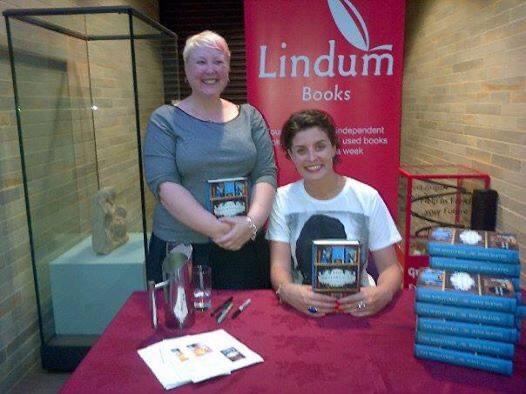
Me and Jessie Burton! I never imagined I would meet the author of a book I picked up at my local indie bookshop Lindum Books. They run regular evenings with authors at The Collection in the city of Lincoln – I can’t wait to attend them again in the future. This was a great evening listening to Jessie Burton talk about her exciting debut novel The Miniaturist. Admittedly the book was displayed well, but I picked it up because it looked so intriguing. There was an element of mystery as well as a historical setting, plus a cover with a vintage bird cage and since I have a bird cage tattoo I am attracted to them all the time. I had read the book before the evening and loved it, so I was very eager to hear about how it was written and as a very amateur writer I am always interested in a writer’s inspiration and the writing process.

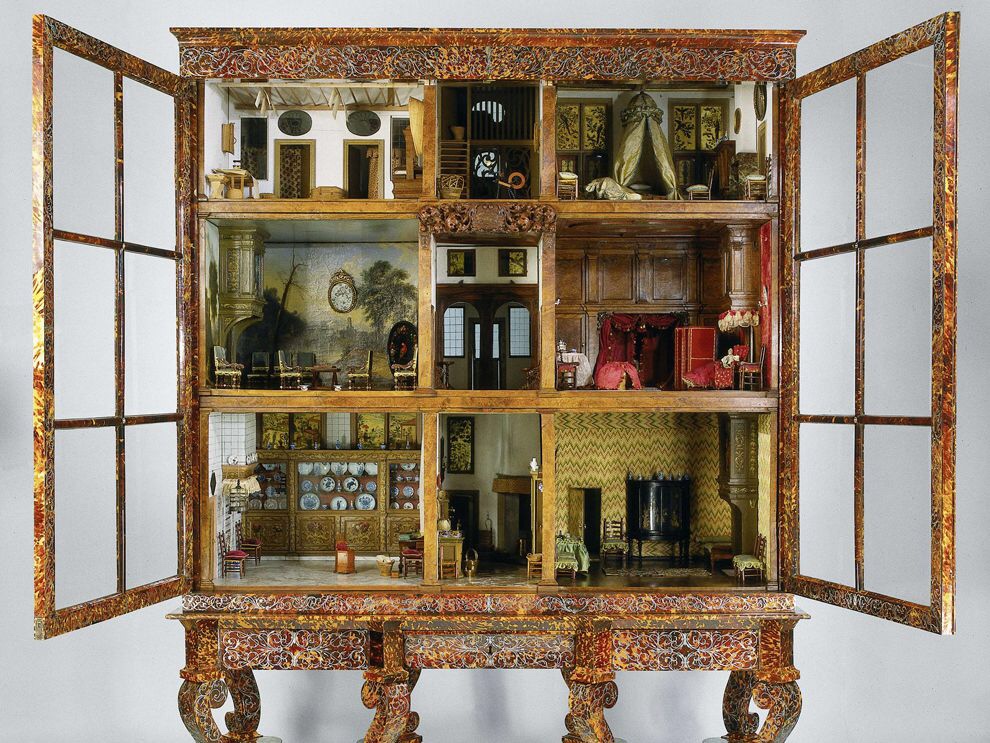
Jessie’s ability to tell stories means she is immediately engaging and natural with an audience. In her potted biography we learned she had a drama background and that definitely came across in her reading of the novel and during a humorous and lovely question and answer session. Jessie’s inspiration was a beautiful cabinet house in The Riijksmuseum, Amsterdam belonging to Petronella Oortman. The house is made up of 9 rooms that are so ornate and richly furnished that it cost as much as a real house. This fact and the sheer beauty of the piece piqued Jessie’s interest so much that she built her novel around it. Spending only ten days in Amsterdam but doing plenty of reading and researching, writing started using the name of Petronella Oortman but reimagining her as a new young wife entering Amsterdam for the first time. Nella needs to make a good marriage to support her family and marries business man Johannes Brandt who owns an incredible house in the wealthiest district of Amsterdam. However, when Nella arrives she is greeted by an open door and Johannes Brandt’s sharp tongued sister and housekeeper, Marin. Johannes buys Nella a cabinet house, an exact replica of the grand house they live in and its appearance in the novel is based on the one in the Riijksmuseum. Jessie did a reading of an early chapter entitled The Gift where Nella, disturbed by the fact she rarely sees Johannes in the day or at night, explores the house and starts to ask questions of Marin. It is a chapter where we see the beginning of an interesting tension between the two very different women and as Nella explores the house we start to see a major theme of the novel developing too; the conflict between interior and exterior worlds.


The questions began with one about research and how Jessie had gained her expertise in 17th Century Dutch culture. The audience also wanted to know how long the research process had been before she started writing. Jessie did most of her research the old fashioned way, by reading and writing in a piecemeal way (This amateur was pleased to know that writing while researching is ok). She shone some light into the publishing process too, it’s not as simple as getting an agent and then getting a publishing deal. There were 17 edits and 3 different drafts of the whole novel during the process and several different endings including one where every character had a happy outcome that was vetoed by her friends. One of the terms she used was to ‘write out’ something I was very interested in as a writing therapist where I am constantly using exercises to write out emotions and past experiences. She was referring to it as her writing process of working things out as she went along; there was no single moment where she sat down to write and it was all worked out with plot, characters and ending.

Petronella Oortman’s cabinet house.


I learned an enormous amount about the culture the novel was set in and there were some interesting parallels with Lincolnshire. Jessie felt that the people of Amsterdam were in the strange position of having built their own land by draining the area using canals and dykes. This was very pertinent to me because my ancestors on my father’s side were Dutch and came over to implement the same system of land drainage here in Lincolnshire. Jessie talked about the tension between the immense wealth of the city and the people’s Calvinist principles as well as the interesting roles of women in the city who often married later than their European counterparts and worked in business with their husbands. She was also interested in their liberality in that area but their barbarity in others, such as the practice of drowning homosexuals with a millstone round their necks. The African character, Otto, was discussed in his historical context; apparently wealthy merchant’s coats of arms were decorated with black faces as well as buildings in Amsterdam -probably a nod towards the city’s involvement with the slave trade. Otto would never have received the magnanimity he enjoys in the Brandt household anywhere outside. One of the most interesting ideas to me was the exploration of interior and exterior decor and architecture. The grand house has rooms that are lavishly decorated, but they are mainly to the front of the house where they can be seen from the street or where they are seen by visitors. Similarly, Nella’s cabinet house is a condensed version of the home but only contains the best rooms and it takes the miniaturist’s pieces to highlight the similar difference between what the character’s show and what remains hidden. The revelations of these character’s private rooms and their private lives is what makes the novel so compelling.


I still can’t recommend this novel enough. It combines intelligent research and just the type of relationship tensions, secrets and surprises to keep you reading. There will be a certain character that will grab you and Jessie admitted to having a soft spot for Marin who comes across as abrupt and harsh, but does have incredible depths beneath the icy exterior. The miniaturist of the title is a shadowy figure who has more insight into the characters than anyone else but only ever appears in glimpses despite Nella’s efforts to find her. This was intentional and although Jessie was asked whether she was planning to write a sequel there are none at present. Jessie is writing a second novel and is finding that a completely different experience because she has less time and is under more scrutiny since The Miniaturist ended up in an 11 publisher auction and there are rumours of film rights being obtained. The new novel is provisionally titled Belonging and is set across two times; the Spanish Civil War and 1960s London. Even now, years later, I am intrigued by the mystical and spiritual character of the miniaturist who knows all but cannot be seen, and has an ending that’s very much unfinished.

Published by Picador 3rd July 2014.

I have remained a huge fan of Jesse and loved the BBC adaptation of The Miniaturist in 2017. I have also built up a signed collection of her novels The Muse and The Confession and of the children’s book, The Restless Girls. Her novels have been translated into 38 languages, and she is a regular essay writer for newspapers and magazines. The Miniaturist ended up being a Sunday Times number 1 bestseller in both hardback and paperback, and a New York Times bestseller. It sold over a million copies in its first year of publication, and was awarded the Waterstones Book of the Year, and Book of the Year at the National Book Awards. The Muse was also a Sunday Times number 1 bestseller in both hardback and paperback, and has sold more than 500,000 copies. The Confession is Jessie’s third novel, and became an immediate bestseller too.

Visit her website at https://www.jessieburton.com, and follow her on Instagram at https://www.instagram.com/jessieburton