Posted in Personal Purchase

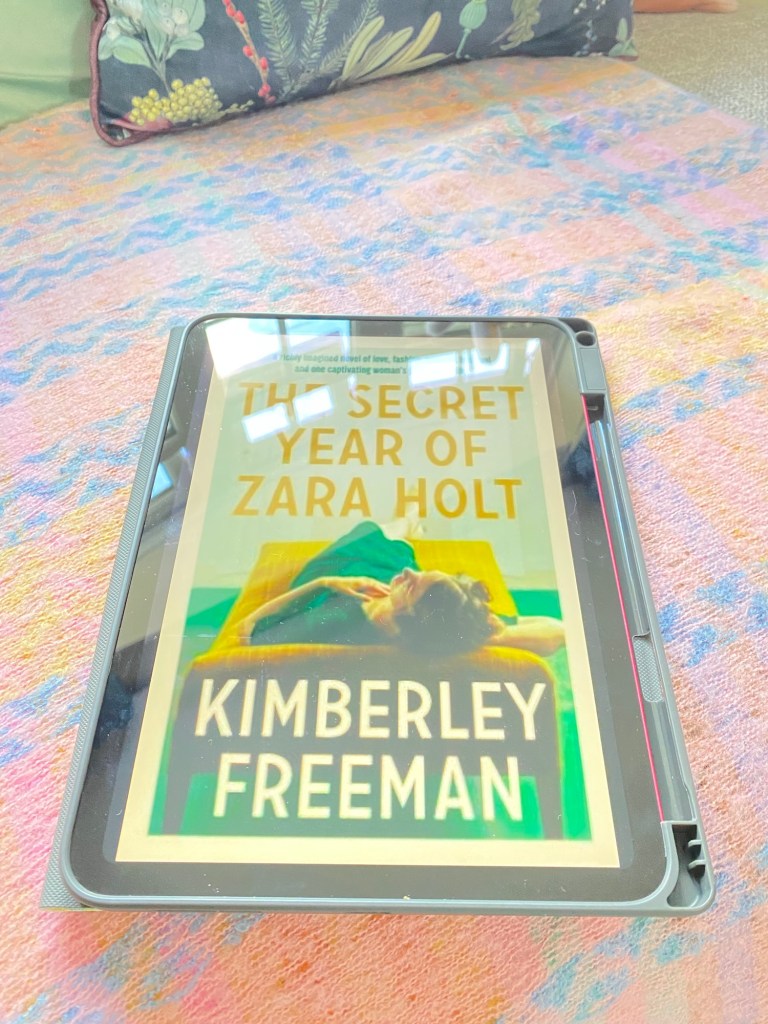
The Year of Zara Holt by Kimberley Freeman 

I discovered Kimberley Freeman’s novels about ten years ago and read all of them in one go. It was the combination of historical fiction, with an emphasis on Australian and women’s history that drew me and the romance element is always rooted in that context. I’ve been waiting a very long time for a new novel and this is particularly interesting as it’s based on a true story. I did drop everything to read it. She takes us through a large part of the early – mid Twentieth century through the life of Zara Holt. We join her as a teenager, living with her parents and dreaming of becoming a fashion designer. She spends hours drawing elaborate evening and wedding dresses with Betty her best friend. On a night out together Zara meets Harry, a handsome and ambitious young man who is aiming to get into law or politics. They have an instant connection and Zara feels it, almost like a jigsaw puzzle clicking into place. Their love will dominate her life as she also builds her own fashion empire and travels the world. As fiery as the couple are, it’s never an easy road and Zara will have to make difficult choices about whether she follows her head or her heart. 

I had to keep reminding myself that this was set in the earlier part of 20th Century. Zara feels like a woman far ahead of her time, so that when she comes up against male attitudes and societal expectations it feels like a surprise. It did take me a little while to realise she was a real woman, born in Kew Victoria in 1909 as Zara Kate Dickens. In 1929 when she was still just 19, she approached her father who was a successful businessman for a loan. She made the case that her sister had an expensive wedding and since she had no plans to get married in the near future, could she use the equivalent money to start her own business. With the money and her friend Betty in tow, she opened a dress shop called Magg. They provided a bespoke service with Zara designing for the client and Betty as the seamstress. When Betty got married and left the business, Zara tried to continue alone but was exhausted by her own success. At this point she was expecting a proposal from Harry, which wasn’t forthcoming. On her mother’s advice she liquidated the business, coming out with $1500 ($125,000 in today’s money). She used her money to travel the world, including an impromptu trip to India with Colonel James Fell who she met on her return voyage. James did propose and became her first husband, but this wasn’t the end of Harry and it wasn’t the end of Magg. 

Zara Holt

I found Zara such a compelling character and admired her boundless energy for business and travel. She is endlessly creative, never losing that urge to sketch a dress  or incorporate a detail she’s seen into a new collection. She was particularly inspired by her time in India and the bold colours and decorative flourishes in women’s clothing. In later years, as Harry becomes more important in government she has to try combining her business affairs with the role of a political wife, using her new contacts and always trawling markets in other countries for fabrics to ship back to India. With more age and experience she manages to keep Magg running, even expanding and hiring new seamstresses and designers. I loved her little rebellions, such as talking to a gathering of women about business rather than her life as ‘first lady’. She also changes an opera fundraiser to a fashion show, both rewarded by the enthusiasm of her audience. 

In her personal life she finds it a lot harder to stick to her guns. Harry is utterly single- minded and only proposes when he’s boxed into a corner. She has suspicions about his womanising early on, but it takes decades for him to be honest with her. He never makes promises he can’t keep, aside from his vows, and while he professes to love only her he will not hear ultimatums. What I found hardest to swallow was his disregard for places and people that were special to him and Zara as a couple, he trashes Zara’s special memories of finding a natural waterfall near Bingle Bay where they stay with close friends, eventually buying their own home there. Harry ruins both by taking a mistress there and my sympathies for him were gone at that moment. I wanted Zara to leave him and use all her energy into her work and children. I felt he did not hear her or deserve her. She is left with the age old compromise, that the little bit of him she does have is better than nothing. 

Zara and Harold Holt

Kimberley has Zara narrate the full story and that’s wise because she really is the main draw of the book. I was full of admiration for the way she bucked the system. When living in India she finds out that their head servant is taking such a huge cut of the other servant’s wages they can’t afford to eat. She’s told it’s best to turn a blind eye and that the British don’t meddle in servant’s affairs, but she has him fired anyway. She also builds a friendship with an Indian doctor and academic that she meets at the stables, often riding out with him in the mornings. Her husband James forbids this and is furiously jealous. She has a sense of fairness and equality in how she approaches life which is appealing and interesting when you read about some of the policies that Harry works hard for as prime minister, when he eventually gets there. She stands up for her interest in fashion and is incredibly proud of knowledge and skills she’s built. She can look at any woman and see what dress style will best suit her body and how to combine current trends with what will suit the client. She knows how confident a woman feels when she is well dressed and aims to give all her clients that feeling of looking their best. She also defends it as an art form. Her designs are her preparatory sketches and the fabrics are her paints, what is created from her imagination and these materials is no less an art than an oil painting in a gallery.

I wanted her to have the same confidence in her personal life and to trust that she will find someone who loves her and gives her the attention and fidelity she deserves. Yet her love for Harry seems to transcend his behaviour. If you know anything about the Holts it’s probably the mystery surrounding Harry’s disappearance while swimming in a bay he knew well. It is assumed he was caught in a rip tide and drowned, but his body was never found. Zara wrote her own book about their life together. Her achievements included winning ‘Gown of the Year’ in 1961 and in 1962 Miss Australia, Tania Verstak, wore a Magg gown in the Miss International contest, which she won. Zara also advised on Australian uniforms for events such as Expo ‘67 in Montreal and the Mexico Olympic Games in 1968. In 1979 she was appointed as chair of the Yves Saint Laurent board in Australia. She had a bubbly personality and could say the wrong thing, occasionally portrayed as a bit scatterbrained by the press she was actually incredibly astute with a business brain. She also claimed that her eye for fashion was inspired by her own figure, being rather short and round in shape – something I share with her. When she died in 1989 she left over $5 million dollars and several properties to her three sons. I think Kimberley Freeman does an incredible job of capturing this fascinating woman, including the odd hilarious public gaffe. I thoroughly enjoyed getting to know Zara and I’m sure many other readers will too. 

Out now from Hachette Australia

Meet the Author

Kimberley was born in London and her family moved back to Australia when she was three years old. She grew up in Queensland where she currently lives.

Kimberley has written for as long as she can remember and she is proud to write in many genres. She is an award-winning writer in children’s, historical and speculative fiction under her birth name Kim Wilkins. She adopted the pen name Kimberley Freeman for her commercial women’s fiction novels to honour her maternal grandmother and to try and capture the spirit of the page-turning novels she has always loved to read. Kim has an Honours degree, a Masters degree and a PhD from The University of Queensland where she is also a senior lecturer. She lives in Brisbane with her kids and pets and lovely partner.

Posted in Monthly Wrap Up

Best Reads June 2025

I’ve had a lovely reading month, with the subject of love and relationships being at the centre of most of my best reads in June. Possibly due to it being wedding season, romance seems to have been in the air and all my reads looked at it in a very different way. A couple are set in the present day but others range from the late 18th to the mid- 20th Century. Yet there was a sense of familiarity, with each book showing the difficulties in how women and men relate to each other and negotiate the rules of their relationship. Women seemed to wait an awful lot, trying to balance a career and a relationship not to mention children and home life. Some women were waiting for proposals, for a man to commit, to be faithful, or for life to begin. They bring up the age old question of women having it all and whether that’s ever possible. There’s also a lot of travel involved from the UK, to America, Italy, France, Switzerland, India and Australia. I hope you all have a great tbr lined up for July and I’ll see you on the other side.

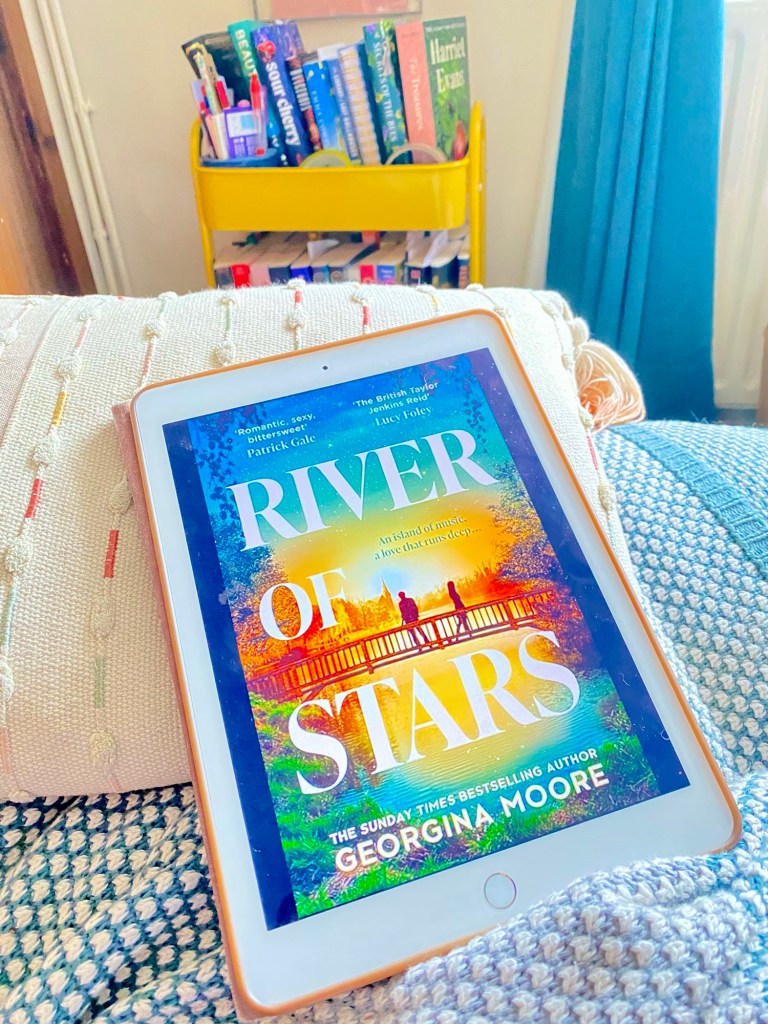
Walnut Tree Island sits in a tributary of the Thames and back in the 1960s its part derelict became a sought after music venue, thanks to the work of its owner George. Based on Eel Pie Island, Walnut Tree is a harmonious combination of up and coming musicians, artists and picturesque riverboats and in 1965 is a weekly Mecca for young people. One of them is Mary Star, a young girl with a beautiful voice and a head full of dreams. It’s there one night when musician and up and coming front man Ossie Clark notices Mary in the crowd as she’s hoisted up on someone’s shoulders. Ossie is about to hit the big time, but he’s captivated by Mary and when he meets her he encourages her to sing with him. They are so in love and lay down in the grasses by the Wilderness – the most beautiful part of the island. When reality hits Mary knows she has to make a choice for both of them, although Ossie doesn’t reject the idea of becoming a father. He asks her to go to America with him, but the adults in her life, including George, make her realise how difficult that’s going to be. There will be compromises and although Ossie can’t see it now, what if he resents her and their baby? She’s left with her baby Ruby and a broken heart, but also a place to live on the island gifted by George. 

Years later her granddaughter Jo experiences first love on the island. Used to running wild between Mary’s cottage Willows and houseboats, she meets George’s grandson Oliver when he visits the island. He’s the island’s heir, but such things don’t matter to young people and they have a magical summer thinking their love is all they need to sustain them. Now Oliver has returned from NYC as the new owner of Walnut Tree Island which has become a thriving community of musicians and artists all supported by Mary who is the mother of the community. The whispers over what might happen to the island start fairly quickly, not least the ownership of Willows that has always been a verbal agreement with George. Jo now teaches art to children in one of the houseboats. Once an incredible artist she seems to lose her confidence in creating and her career never fully got off the ground. How will she cope with Oliver back on the island, as handsome as ever, but with a touch of New York sophistication? More to the point, how will Oliver feel seeing Jo again? It’s not long before the red-headed firebrand is at his door, fighting on behalf of Mary and the rest of the community. But does she really know what his plans are? Changes are coming to the island, but some things are as constant as the river flows. Could their love be one of them? This is a captivating and magical read, thanks to its romantic setting and relatable female characters. An excellent holiday read.

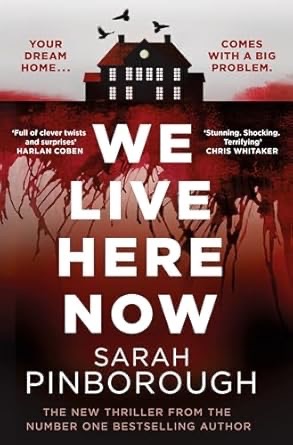
Emily and Freddie have been through the mill of late. After a terrible accident when they were on holiday, Freddie has surprised her with the home of their dreams. Emily fell from a cliff on a group holiday and not only did she break her leg in several places, she then developed sepsis and almost lost her life. Now she’s in recovery, still walking on a stick and has been thrust into a whole new life. Larkin Lodge sits just outside a village on the edge of the moors and could be their dream home, but Emily can’t believe Freddie made this huge decision without her. The house is gothic and in the mists and murk of winter it looks a little isolated and spooky. However, she can see that in spring the views will be incredible. As Freddie continues to work in London, Emily spends a lot of time alone and starts to feel uneasy. Sudden drafts and disgusting smells, then heavy footsteps moving across the second floor are unnerving. Freddie is convinced she’s struggling with post concussion syndrome and calls her ITU consultant for advice – much to Emily’s disgust for doing this behind her back. As she starts to look into the history of the house and questions some of the locals, all the different parts of her life start to fall apart. Secrets start to come to light and Emily wonders if the house is having an influence on her. 

Emily is a sympathetic narrator although she’s not entirely reliable. It must be so disorientating to wake from a coma and know that your body has been present but your mind has been somewhere else. Added to that is the risk of ICU psychosis – a common condition causing auditory hallucinations, nightmares, sleep disturbances and paranoia. The author cleverly creates tension between what we know about Freddie and Emily and what they know about each other. They’re both keeping secrets and Freddie projects all their problems on to her. Even when she’s quite measured and reasonable or accepts his apologies he becomes angrier. Just occasionally he pauses and wonders where these thoughts are coming from? Is it the shock of Emily’s fall still working on him or is something more insidious at work?  Of course it wouldn’t be a Sarah Pinborough novel without a supernatural element and this one is genuinely scary. It begins with the window on the landing, seemingly opening of it’s own accord. When she starts talking to older locals about the house there’s a moment that genuinely made the hair stand up on the back of my neck! The chapters from the raven’s perspective are very touching as well as creepy.  Was this an edge of the seat thriller or a ghost story? We’re never quite sure, but I felt compelled to keep reading and find out. Sarah Pinborough is the Queen of this type of gothic thriller and this was another brilliant read, keeping you guessing till the very end. 

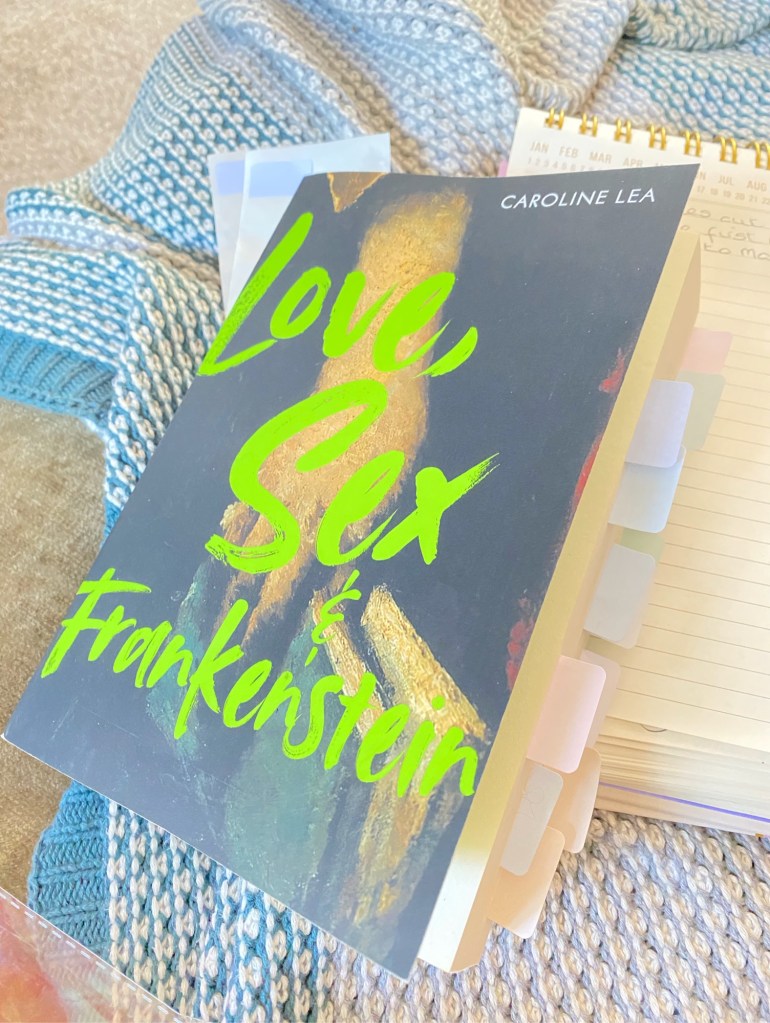
This book is definitely up there for my book of the year so far and it will take something momentous to knock it from that position. It’s the story of Mary Shelley and the origins of her novel Frankenstein which became a staple of the horror genre. I’d always known that it was a novel of monstrous birth, but the author has pulled all the ideas together so we can see the psychological background of the novel. I loved the idea that her story is stitched together by fragments, just like the monster himself. Her own emotions and thoughts feed into the emotions of the abandoned monster. She thinks of medical experiments and stories of medical students digging up bodies and stealing them for dissection. Frankenstein leaves his monster just as Shelley left Mary and their baby in squalor in London at the mercy of bailiffs. Frankenstein can be read as a criticism of men, creating with no thought for the thing they’ve created. Victor Frankenstein goes to sleep expecting his creature to die and feels nothing. The creature feels a combination of Mary’s grief and abandonment, having lost her mother at birth and then the losing of her father, as she runs away with Shelley, a married man. William Godwin brought Mary up to have a rebellious spirit and think for herself, but rejects her when she lives by these principles. Mary is this bewildered and angry creature and she gives her monster the equivalent of philosopher John Locke’s tabula rasa – the blank slate of a small child ready to experience nature, love and all that is beautiful. He embodies the nature/nurture debate in that the creature isn’t born evil, it’s other people’s cruel treatment of him that makes him monstrous. Her writing helps process all these feelings and. working through them makes her feel hopeful for the first time. She might return to London with her son and instead of being beholden to Shelley or her father, she could keep them both with her own writing. 

Typically, blinded by his own arrogance Shelley doesn’t see himself in Victor Frankenstein at all. The book, like the creature at its centre, will be sent out into the wilderness looking for a creator. She’s fairly sure it will find one because she knows it’s special. Caroline’s book is an absolute masterpiece and made me think about Frankenstein from so many different angles. Caroline Lea’s Mary take us through the psychological angles and brings to life her relationship with Shelley, often told in a rather salacious or romantic way without any thought to the inequality between them. It traces the genesis of this incredible novel. It is stitched together from so many different parts, but here we can see them all and understand the circumstances they come from. What she’s written is a Bildungsroman, a novel of Mary growing up from girl to womanhood. Frankenstein is the chronicle of that birth, as messy, terrifying, horrific and momentous it is, it is also the genesis of Mary Shelley the writer.                                                                                                                                                                                                                            

London 1990s – An up and coming French composer called Stan is invited to arrange music for a stage production of Dorian Gray. Although the play is never staged, he does meet Liv and she becomes the love of his life. They live together, joined by a daughter called Lisa. Their happiness fuels his senses with vibrant colours and melodious music. Paris, Present Day – Stan lives in France at the Rabbit Hole, a house left to him by his aunt. He now shares his life with Babette, a lifeguard and mother of a teenage boy of Lisa’s age. They also share their home with Laïvely, a machine built by Stan and given Liv’s voice. As Stan becomes more engrossed in his past Laïvely starts to take on a life of her own. His life is about to implode.

Stan presents his life in two narratives, the present in France and the past where he was at his most creative, happy and in love. His relationship with Liv is almost idyllic. Anything he relates of his present can only suffer in comparison. We learn that he and Babette are compatible, but there is none of the life and vivid colour that comes from his reminiscence. We are all nostalgic about the past, but no relationship can be perfect especially when cramped into the average London apartment with a small baby. While it is touching and romantic, the cynic in me wondered was this a true picture? As for Liv, she is in technicolour in Stan’s flashbacks with her vivid red hair. However, all that life is now reduced to a communication device and no matter how Stan cuddles Laïvely to him, she is inanimate, merely a machine. In what way is this a fitting representation of the love of his life? The author brings the truth to light brilliantly and I feared Stan’s mind was splitting. Stan seems to imagine that he and Liv would have lived in this harmonious way forever, but as the truth emerges Stan’s perception of himself starts to shatter. Babette finds him catatonic and soaking wet, having to place him in a hot bath and slowly bringing him back to himself. It’s the most nurturing, selfless and loving part of the book and it’s all the more sad that he hasn’t before recognised or rewarded her love and loyalty. He also realises that there were times he was too distant and distracted with Liv, that he stopped paying her attention. It was as if he had imagined them always walking towards a common goal but truthfully, he knows they were out of pace with one another. As the ‘tick, tock’ of the clock at the Rabbit Hole reminds us that the end is approaching we fully comprehend this heartbreaking story. This is no ordinary loss and it’s clear that Stan has never faced the truth of their final days until now. This is an emotional end that has one final twist to impart and it is devastating. It seems that Stan has always held on to Liv’s portrait, but is was a ‘painting turned against the wall’, keeping it’s secrets until that final terrible reveal.

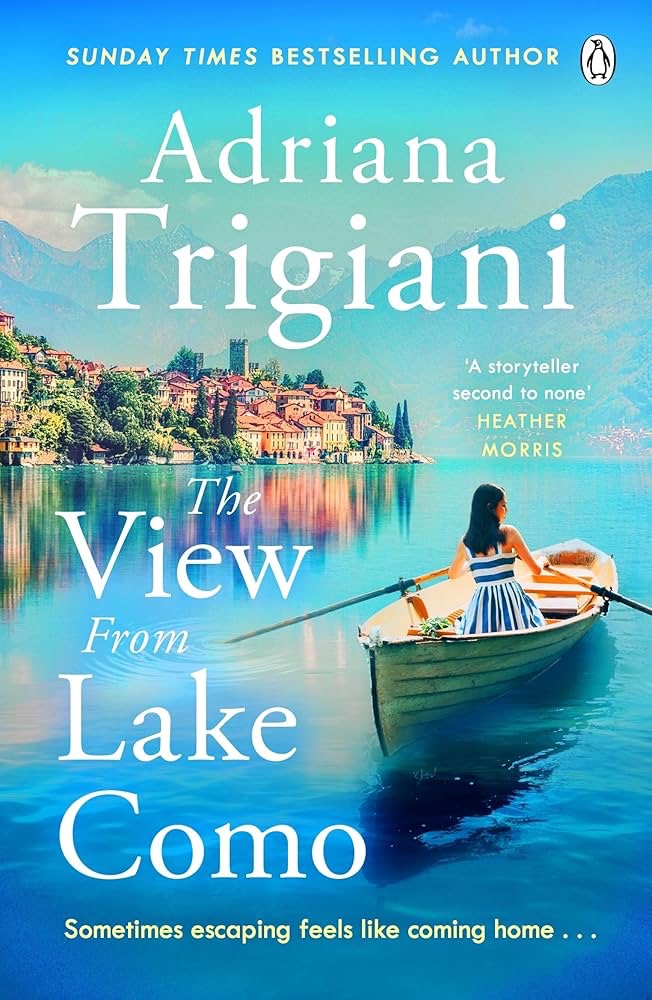
It was so lovely to be back in Adriana Trigiani’s world. It always feels like a hug in a book! Jess (short for Guiseppina Capidimonte Baratta) is an artist who designs pieces made with marble, everything from a garden fountain to a baptismal font. She lives with her family in the New Jersey town of Lake Como. Ever since she finished school Jess has worked with her uncle Luis at his marble business, shipping newly quarried Italian marble to the United States. Jess is at a stage in life when she’s longing for something new. After divorcing her childhood sweetheart and local heartthrob Bobby Bilancia she’s been living in her parent’s basement. Their mothers, who have a long held friendship, are openly praying for their reconciliation. Jess could see her whole life mapped out, in fact her namesake Aunt Guiseppina has given her the blueprint – the maiden aunt, chief baby sitter for her sibling’s kids, cook and bottle washer for family dinners, and eventually caring for their elderly parents. When the family experience an unexpected loss, coupled with financial worries, secrets come tumbling out of every closet. Jess decides to take the trip to Italy that had been planned for work. Now she’ll use it as a change of scene rather than just a work trip. Finally, she will see her ancestor’s homeland. Taking us to Lake Como via Milan, Jess falls in love with Italy and all it has to offer. 

This story is a common narrative in the author’s novels. A young, ambitious and talented woman is looking for a lucky break or a foothold in the family business and has an adventure. Jess is slightly different in that she’s older and has already found her Prince Charming once. Stressful situations usually floor Jess, who has suffered from anxiety all her life. The family carry brown paper bags wherever they go. Yet Jess has withstood the questions and judgement about her divorce and sticks with her decision, only confiding in her online counsellor and her journal. She sets out to her Uncle Louis’s hometown to visit the marble quarries that supply their marble but also meet with local stonemasons who use it. It should be useful for her work but also give her the head space she needs after the divorce, her loss and those family home truths that left her very angry with her parents. When she meets Angelo Strazzi, a talented local craftsman, there’s instant chemistry and future possibilities start to open up. As always Italy is a revelation and Trigiani writes about it in a way that only an Italian American can. There’s familiarity and nostalgia that comes from knowing her family are from here, but there’s also the wonder and magic of the tourist view too. It’s the best of both worlds. Mostly I loved that Italy seems to set Jess free, in her own right. She’s away from a community that claims to know her better than she knows herself, but also from the suffocating combination of her own family and that of her ex-husband. Free from a future that she and her family saw for her – that of the maiden aunt. Maybe it’s the mountains but Jess can breathe in Italy.  I came out of the novel feeling like I’d been on holiday. I won’t ruin the book by telling you what Jess’s choices are, but the ending isn’t the only important thing. I hope you enjoy the journey as much as I did. 

I was three quarters of the way through this novel before I found out it was based on a true story. Zara was a fashion designer, founding a dress shop called Magg with her best friend Betty in her twenties. Freeman’s novel follows Zara’s life from her meeting with Harry Holt and their relationship, which would dominate most of her life. The novel takes us on her travels, into her career as a fashion designer and businesswoman and the volatility of her relationship with Holt. Harry comes across as a selfish and ambitious man, who clearly loved Zara but was slow to commit and couldn’t curb his womanising ways. Zara is constantly waiting, whether it’s for him to propose marriage or to be faithful to her. She is torn between wanting a monogamous relationship or accepting both Harry’s love and the fact it comes with many compromises on her part. I’m not sure I could have made those compromises, but despite breaking off their relationship and even marrying an officer from the British Army and living in India, she finds it impossible to leave behind those feelings. Aside from her love life, Zara is a remarkable woman and one of those multi-tasking geniuses I envy. She managed to create an empire that paid for the couple’s holiday homes on different parts of the Australian coast and even when on political trips abroad, particularly as Harry was moving towards becoming prime minister, she used local fashions as inspiration and bought fabric to be shipped back. I had to remind myself I was reading a historical novel when frustrated with societal expectations and attitudes, because Zara was such a modern woman and seemed ahead of her time.

As always I have a loose tbr for July while I’m project managing our kitchen renovation. I’ll be frazzled by the time it’s done as I hate change and noise, but I’ll need to be at home so lots of reading time ❤️📚

Posted in Netgalley

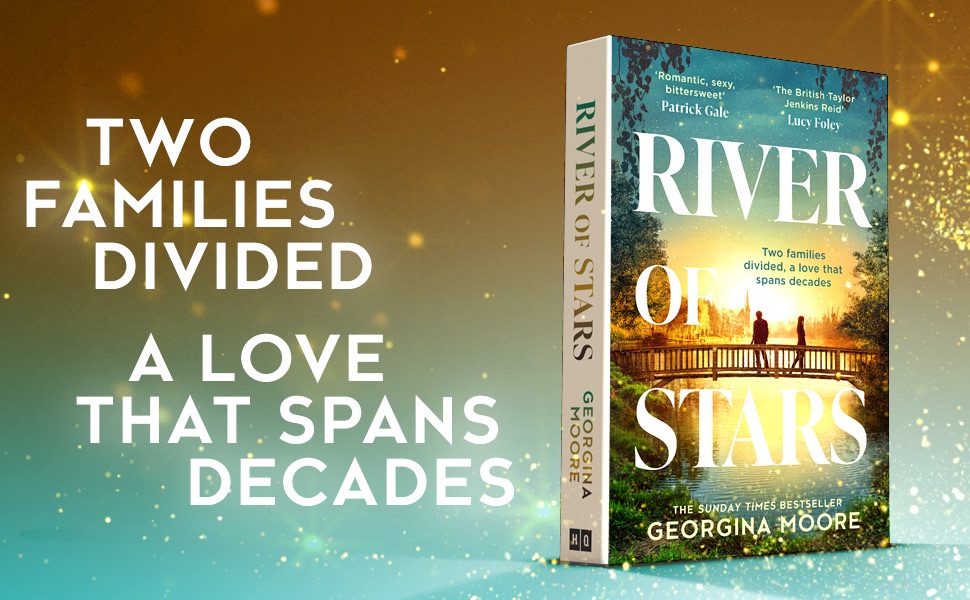
River of Stars by Georgina Moore

This book has the magical ability to captivate the reader. I found myself a fishing widow one night last week so I went to bed early and started reading. When I woke up the next morning I picked it straight back and read through to the end. I hadn’t even removed my glasses to sleep. The author has managed to make this feel like an escape, as well as heart-achingly romantic and with a bohemian setting that appealed to the creative in me. Walnut Tree Island is in a tributary of the Thames and back in the 1960s the owner, George, managed to turn a part derelict hotel into a sought after music venue. Based on Eel Pie Island, Walnut Tree is a harmonious combination of up and coming musicians, artists and picturesque riverboats and in 1965 is a weekly Mecca for young people. One of them is Mary Star, a young girl with a beautiful voice and a head full of dreams. It’s there one night when musician and up and coming front man Ossie Clark notices Mary in the crowd as she’s hoisted up on someone’s shoulders. Ossie is about to hit the big time, but he’s captivated by Mary and when he meets her he encourages her to sing with him. They are so in love and lay down in the grasses by the Wilderness – the most beautiful part of the island. When reality hits Mary knows she has to make a choice for both of them, although Ossie doesn’t reject the idea of becoming a father. He asks her to go to America with him, but the adults in her life, including George, make her realise how difficult that’s going to be. There will be compromises and although Ossie can’t see it now, what if he resents her and their baby? She’s left with her baby Ruby and a broken heart, but also a place to live on the island gifted by George. 

Years later her granddaughter Jo experiences first love on the island. Used to running wild between Mary’s cottage Willows and houseboats, she meets George’s grandson Oliver when he visits the island. He’s the island’s heir, but such things don’t matter to young people and they have a magical summer thinking their love is all they need to sustain them. Now Oliver has returned from NYC as the new owner of Walnut Tree Island which has become a thriving community of musicians and artists all supported by Mary who is the mother of the community. The whispers over what might happen to the island start fairly quickly, not least the ownership of Willows that has always been a verbal agreement with George. Jo now teaches art to children in one of the houseboats. Once an incredible artist she seems to lose her confidence in creating and her career never fully got off the ground. How will she cope with Oliver back on the island, as handsome as ever, but with a touch of New York sophistication. More to the point, how will Oliver feel seeing Jo again? It’s not long before the red-headed firebrand is at his door, fighting on behalf of Mary and the rest of the community. But does she really know what his plans are? Changes are coming to the island, but some things are as constant as the river flows. Could their love be one of them? 

As in her debut novel The Garnett Girls, Georgina has created a family of very strong women and allows them to tell their own tale. We also have the narrative of one of Jo’s closest friends, Sophie, who is another stalwart of the island community along with her husband Dave who runs the boatyard. I found Mary’s story so sad because she doesn’t get to fulfil her dreams of being a singer and loses the love of her life in Ossie. After that she has friends and protectors. Firstly there’s Oliver’s grandfather George who makes sure Mary and her baby have a roof over their head because he feels responsible for her and Ruby. Yet there’s no romance on her part and she still loves Ossie. I thought she made a huge sacrifice not going with him, but she doesn’t want to hold him back and as George points out he needs to be available to his adoring fan base. She never hears from him, until he makes the call no mother wants to receive. Then there’s Gotlibe, whose mixed-race relationship with Mary did raise eyebrows in the 1970s. She can’t remember when their relationship became more friends than lovers. Is now too late to change things? She is the undisputed Mother of the island, the first one called when something goes wrong or a resident needs advice, she’s the chair of the resident’s association and the first to volunteer for any of the island’s celebrations. I loved the island’s sense of community and their shared philosophy of finding joy in the small things and celebrating life whenever they get the opportunity. 

I thought Sophie’s husband Dave was a lovely man, happy with his lot in life and not really needing anything accept his boatyard, friends, a cold beer and Sophie. He was Oliver’s best friend that summer so it’s not long before they’re catching up. Sophie knows that her best friend Jo is struggling with his presence after all this time. She has a city job as a West End Theatres PR, a job that she loves despite it being stressful at times. She’s fascinated with Oliver, who has travelled, lived and worked in Manhattan. So when he calls and asks her for a drink in London after work she is tempted. Dave seems destined to settle even further into island life. Nearing 40 he wants to start a family but Sophie doesn’t want a baby and has secretly continued to take the pill. She’s drawn to Oliver, but is it really him or the sense of freedom he represents? However, it’s Jo you will root for throughout the novel, because despite her tendency to self-sabotage and fly off the handle she’s a truly lovely person and a loyal friend. I think I felt an affinity for her because I have a tendency to self-sabotage my writing. I start full of hope, then read it back and think ‘who would want to read this?’ Jo went to study in Florence, but ended up in a relationship with someone who derided her talent and put doubts in her mind. When they broke up she flew straight home without finishing her course and has never painted again. After Oliver’s return something clicks and she feels an urge to paint, including an abstract of her mother, Ruby. Gotlibe is hoping she’ll exhibit them when they open for the public in the summer. I loved Jo’s return to Italy because it elevated the novel beyond the romance and into the tough part of working on one’s self. Watching characters bloom is my favourite thing and Jo’s eyes are opened to her part in how her life has turned out. The realisation that other people might have had similar setbacks, but stayed and carried on is huge. She chose to believe the criticism and allowed it to affect half of her life. When she meets up with old friend Claudia it encourages her to take some risks, to settle into herself, wear some colour and own it. Is Oliver also a risk worth taking? 

Oliver and Jo originally bonded over a shared trauma, the loss of someone close. I was unsure whether the romance could or even should rekindle. The romantic in me wanted it, but he’s made choices that could derail their reunion. Jo doesn’t know if he’s still the Oliver she knows, or is he just playing at island life? He could turn round and evict them all tomorrow. I felt that Jo needed to see that Oliver knew the value of what he’d inherited, both it’s history and the unique community that now live there. If he commits to the island could they have a future? The island is magical, completely encapsulating the Japanese concept of ‘wabi-sabi’ with the beauty of it’s imperfections. The part derelict hotel was a perfect venue with it’s fairy lights and candles, giving off a nostalgic 1960’s boho that I loved and I know my mum will too. I was thinking of her throughout reading this book because in the early 1970s my mum travelled to London for a Neil Diamond concert with an invitation to meet him beforehand. My Grandad insisted on going with her, but waited outside when she went to meet him backstage. My mum said ‘if I don’t come back he’s asked me to run away with him and I’m going.’ I loved her innocence in thinking this and her guts for saying it to my rather anxious grandad. It was a time that was less cynical, where teenage girls did think dreams might come true and that love would conquer anything and it’s that spirit that this novel evokes. Of course Mum didn’t run off with Neil, affectionately called ‘Dima’ in our family because I couldn’t say his name properly, but they did correspond and she ran his UK fan club too. I hope there’s an alternate universe where my mum did get to run off with Neil. Just as I hope for one where Mary agreed to go on tour with Ossie and their daughter, living happily ever after. This is a gorgeous bitter sweet novel that will remind you of the posters you had on your bedroom wall, of those pangs of first love, of roads not taken. It also made me fall in love with the resilient and rebellious Star women and the community they called home. I’m happy to say this is the perfect summer read.  

Out Now from HQ Stories

Meet the Author

Georgina Moore grew up in London and lives on a houseboat on the River Thames with her partner, two children and Bomber, the Border Terrier.   The Garnett Girls was her debut novel and is set on the Isle of Wight, where Georgina and her family have a holiday houseboat called Sturdy. Georgina’s new novel River of Stars is published on 3rd July and is inspired by the legendary Eel Pie Island and its colourful history as a rock and roll haven in the 1960s, and by her own life on the river.

Posted in Netgalley

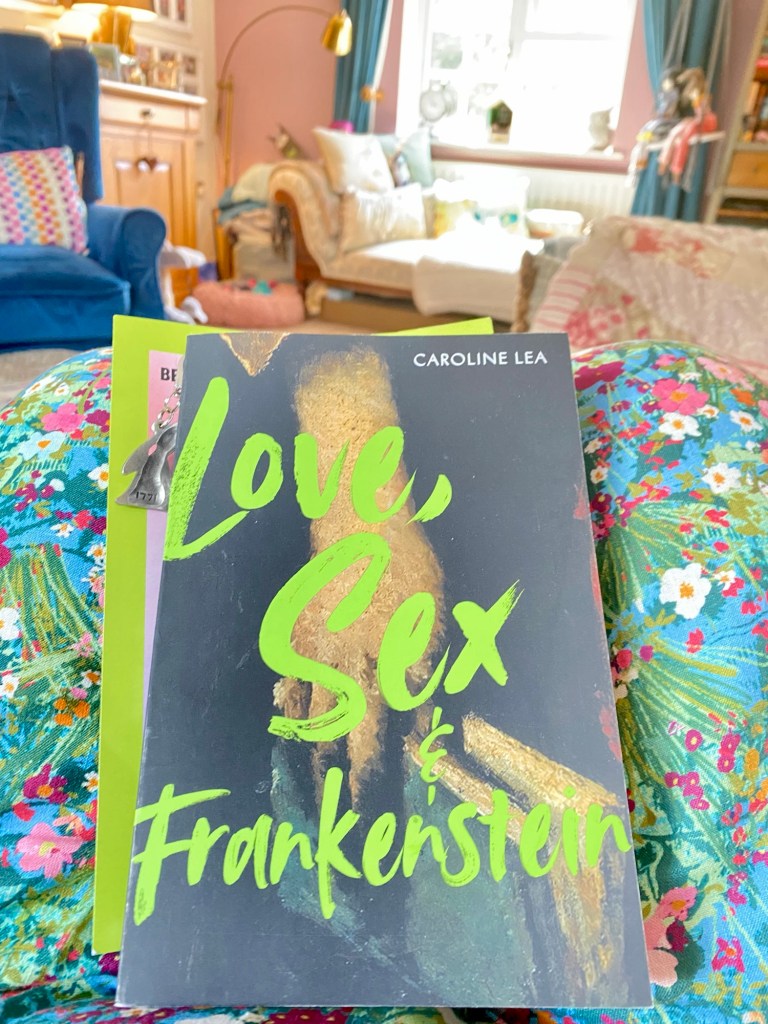
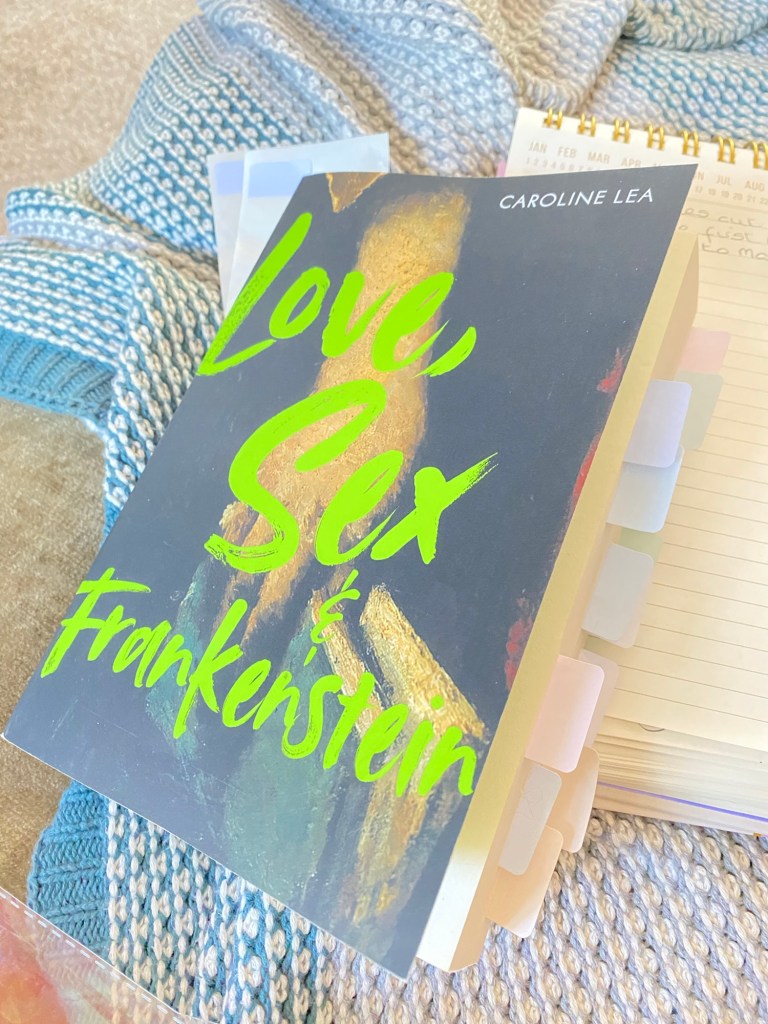
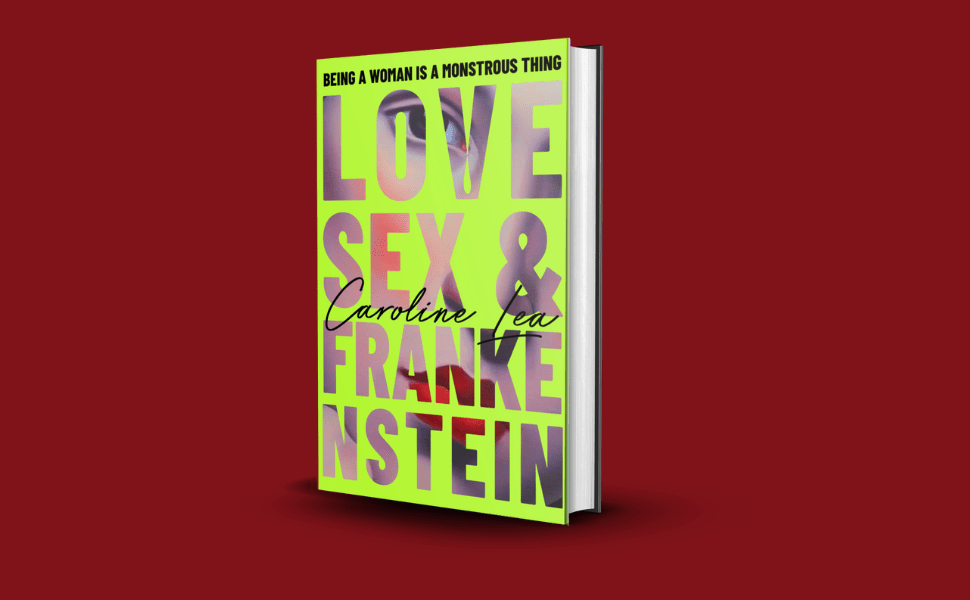
Love, Sex and Frankenstein by Caroline Lea

Mary Shelley, the author of Frankenstein, was born in 1797 to politician and writer William Godwin and his wife and fellow writer, Mary Wollstonecraft who wrote The Vindication of the Rights of Women. In her book she made, possibly the first, claim that women were not naturally inferior to men. It was a feminist manifesto centuries ahead of it’s time. Sadly Mary’s mother died only eleven days after she was born from puerperal fever, leaving Godwin to raise Mary as a single father. However, he remarried in 1801 to a widow with two children of her own, Clare being very near in age to her stepsister Mary. In 1841 Mary became connected to the poet Percy Bysshe Shelley, a well-known writer who was already married with three children. Shelley was 22 and Mary was 16. Facing nothing but criticism and social sanctions in London, the couple decided to escape to the continent along with Mary’s step-sister Clare. They then settled for a time on Lake Geneva, sharing a house with Lord Byron and his doctor Polidori. As the weather changed they become snowed in for a period of time and one of the diversions thought up by Byron was that each of them write a ghost story. Up until this point, Mary has only written in her journal but she can feel something stirring within her and in this strange place, Frankenstein’s monster is born. 

Probably every English Graduate who specialised in Gothic Fiction has fantasised about a stormy night, in a house on the edge of a lake near Geneva. That night was supposedly the genesis of the first vampire story – Polidori’s The Vampyre – and Mary Shelley’s classic horror, Frankenstein. It always seemed strange to me, how two iconic horror legends were conjured up in the same place on the same night. Of course it was a longer period of time and everything these writers experienced in their young lives so far was fuel for their creativity. The setting is definitely strange and unsettling. Caroline Lea paints a picture of the lake becoming monstrous, magical but evil too and no longer a place where children paddle and dive underwater. The sky is dark, trees look like ‘funeral lace’ and ash rains down from above. Local people have noticed that at times the lake throws up strange shadows and clouds, some that look like sky cities floating in the air. When they find a man called Karl Vogel drowned in the lake with his eyes turned from brown to blue – they are shocked, but this is a place of transformation. It’s as if nature is creating the perfect circumstances for monsters to be born. 

This incredible book. is a brilliant combination of historical and horror fiction, with a large side order of feminism – all of my favourite things. Every time I put the book down I would look at my husband and say ‘wow’ then try to write down everything that struck me. I ended up with ten pages of notes that I now need to build into coherent sentences and do this novel justice! Firstly the historical settings were incredible. When we first meet Mary and Clare, they are living in lowly lodgings in London. Mary’s baby is born and they are desperately trying to avoid the bailiffs that seem to follow Shelley wherever he goes. The author really captures 18th Century London with the girl’s filthy lodgings a bleak place to look after a baby. They’re also struggling to sleep, worried that any moment their flimsy door will be kicked down. This is the reality of being the mistress and illegitimate child of a well-known poet who does not pay his debts and has retreated back to his family home. I never imagined that Shelley left her in this position. I’d imagined them living on Lake Geneva complete with servants and all the excesses that Byron was famous for, then travelling around Europe, leaving their troubles behind them. Their relationship would probably be considered abusive now, not just because of their age difference but because of the way Shelley manipulates her. Something that only worsens when Byron and his peculiar brand of chaos are on the scene. When Mary tries to stick up for herself, all the qualities he supposedly loved about her – her independence, her spirit, her intelligence – are thrown back at her, in order to control, manipulate and punish her. He calls her a good mother, but also accuses her of fretting and becoming boring. It is her independent spirit that landed her in Shelley’s arms but he’d rather she didn’t have the independence to question him, refuse him or leave him. His threat is very clear:
‘Women who leave their children, will never see them again’. 

Of course Shelley wouldn’t give up his carefree life to look after his child. He would probably hire a string of nursemaids to seduce then discard, until his only option is to dump his son on his long suffering wife who is pregnant again. Mary starts to realise that although he professes to love her, once she has become a mother she is always expendable. My urge to slap Mary’s step-sister Clare started early in the book and flared up very frequently. She has absolutely no girl code. She had left with Mary in the hope of rekindling a brief liason with Byron. However, it’s clear she’s happy to switch affections if he isn’t there, even onto Shelley. She flirts and simpers, touching his arm and holding his hand to guide her outside. Byron’s treatment of Clare is utterly cruel, he manages to ghost her even when they’re finally face to face. He refuses to acknowledge she exists and then only picks her up again when the weather descends and there are no other prospects. Despite this it is hard to like her, especially when she gains snippets of information from Shelley only to drop them on Mary when they’ll hurt the most. The arrogance of both poets is endless! Byron isn’t just a seducer of women, he drinks and takes laudanum at every opportunity too. He abuses his supposed friend and doctor Polidori, considering him dull and mimicking his stutter in front of the women. His own disability is never mentioned by anyone – the limping stride he’s had since childhood is overlooked or even compensated for as Mary notices some people unconsciously falling into step next to him, slowing their stride to match his. His impulsivity is like that of a toddler, moving mid-week from a hotel to the house on the lake, determined not to pay for the weeklong stay he originally booked. It will cost more for the hotelier to clean up after his bizarre animals, including two eagles, a huge dog and a monkey. He sets his sights on Mary and despite his magnetism she can see what he truly is – a boy throwing mud at windows to detract from his own badness and shortcomings. 

The setting is glorious and it’s clear why frozen mountains, cavernous lakes and the arctic weather feature heavily in Frankenstein. It’s where Mary goes to have time to think, away from the chaos and hedonism indoors. The seemingly magical weather conditions are explicable, even though they feel supernatural. Lake Geneva is known for throwing up mirages called ‘Fata Morgana’. They take the form of distorted boats just above the horizon or even ‘castles in the air’, where a whole city seems projected into the clouds. Named after Morgan Le Fay the mirages are created by rays of light pass through air layers of different temperatures. The sheets of ice on a lake keep the surface air cooler than in the layers above. It’s easy to see why people might by unnerved by something that appears so otherworldly. A more psychological phenomenon that’s clearly takes hold within the house is cognitive dissonance, felt strongly by Mary in particular. The villa is starting to feel like a place she doesn’t belong because her emotions and reactions don’t seem to match anyone else’s in the group. 

‘She feels like a stranger in the foreign land of this room, unable to understand their bright chatter and loud laughter […] every moment takes her further away from these awful people who carry on as if she isn’t there at all’. 

Motherhood and the reality of being Shelley’s mistress has changed Mary and it’s so relatable. She wonders whether all women feel pulled in so many different directions at once. She also wonders if she ever had a true understanding with Shelley. A fire that lit up her heart and her mind is now glimpsed very rarely and she wonders if it ever truly existed. Has she fallen in love with her idea of Shelley – the one who creates the grand illusion of romance in his poems. He doesn’t love her, merely the idea of love itself. In disappointment with all men she turns to the wisdom of women, particularly her mother’s work. Mary Wollstonecraft was the first woman to write a feminist manifesto and she truly understood what needed to change for women – the problem of having to depend on a man. She realised that nurturing women’s learning was the first step: 
‘Strengthen then the female mind by enlarging it and there will be an end to blind obedience’. 

Women could only overcome their dependence on men if they were educated and could earn their own living. In Mary’s dark night of the soul she hears her mother’s voice encouraging and coaching her and the minute she does Mary’s able to breathe again and see a clear way to support herself – by selling her writing. Once she can do that, it no longer matters whether Shelley is inconstant or distant – she does not depend upon him for security and stability. She is ashamed that despite her intellect she has allowed this man to reduce her. Yet she has to tread a fine balance and think these things rather than say them outright. She fears that Polidori’s friendship with the two men, means they have convenient access to a doctor. If she fully expresses what she feels might Shelley think her mad and seek to have her committed? However, she is furious that she might be asked, yet again, to grant forgiveness to a man who is not sorry. She feels that both poets have taken and ruined promising young women, not caring that the consequences of their actions will rest solely on the girl’s shoulders. She wonders what it must be like to take up space in the world, to believe it is your birthright to dictate the temperature of every room they’re in. It is Byron’s arrogance that becomes her blueprint for a future self, allowing herself to be angry and consequences to be damned. She wants to be more like him, true to her emotions and principles and saying exactly what she thinks without worrying about the outcome. In fact it’s a dalliance with Byron where Mary seems to find more strength. It’s an uncomplicated exchange of desire, full of passion, but at no paint does he take anything from her. It gives her the strength to confront Shelley about returning to his wife and leaving both women at the mercy of debt collectors, out of sight and out of mind. She finds her voice and addresses Shelley as a man, rather than the great poet, making her feelings about his infidelity very clear, but also pointing out his cowardice and the times he hasn’t been there for her. 

I loved how the story of Frankenstein’s monster is psychological fragments stitched together, just like the monster himself. Through writing Mary processes her own emotions and thoughts which then feed into the emotions of the abandoned monster. She remembers stories of medical students digging up bodies and stealing them for dissection. Then she gives the creature an internal monologue, ripe with the emotions she has felt, but never expressed. Frankenstein leaves his monster just as Shelley left Mary and their baby in squalor. She’s writing a criticism of men who create with no thought for the thing they’ve created. Victor Frankenstein goes to sleep expecting his creature to die and feels nothing. The creature meanwhile feels a combination of Mary’s grief and abandonment, first losing her mother and then the loss of her father, a man who brought her up to have a rebellious spirit and think for herself, but rejected her when she lives by these principles. Mary is this bewildered and angry creature and that’s perhaps why she gives her monster the equivalent of philosopher John Locke’s tabula rasa – the blank slate of a small child ready to experience nature, love and all that is beautiful. Frankenstein’s monster embodies the nature/nurture debate in that the creature isn’t born evil, it’s other people’s cruel treatment of him that makes him monstrous. Her writing has processed all these feelings and working through them makes her feel hopeful for the first time. She might return to London with her son and instead of being beholden to Shelley or her father, she could keep them both with her own writing. 

Typically, blinded by his own arrogance Shelley doesn’t see himself in Victor Frankenstein at all. At first Mary thinks he’s feigning ignorance, but he genuinely can’t see his own reflection. He sees too much ambiguity in the story, thinking either the creature should make Victor look at his own shortcomings or she should make it so monstrous that no reasonable person would expect Victor to care for it. I loved the way she takes his criticism, because it shows us how much Mary has grown up. She realises that at every stage on the way to publication there will be a man who wants to shout his opinion. It doesn’t matter, because she knows they will all be mistaken. The book, like the creature at it’s centre, will be sent out into the wilderness looking for a creator. She’s fairly sure it will find one, because she knows her book is special. As for Caroline’s book, this is an absolute masterpiece and made me think about Frankenstein from so many different angles. Caroline Lea’s Mary take us through the psychological trauma and brings to life her relationship with Shelley, often told in a rather salacious or romantic way without any thought to the inequality between them. Through this experience she guides the reader through the genesis of this incredible novel. It is stitched together from so many different parts, but here we can see them all and understand the circumstances they come from. What Caroline has written is a Bildungsroman, a novel of Mary’s rebirth from girlhood to womanhood. Frankenstein is the chronicle of that birth, as messy, terrifying, horrific and momentous as it is. This birth being the genesis of Mary Shelley as a woman but also as a writer of one of the most important novels in literature.                                                                                                                                                                                                                                                                    

Meet the Author

Caroline Lea grew up in Jersey and gained a First in English Literature and Creative Writing from the University of Warwick, where she has also taught on the Creative Writing degree. Her fiction and poetry have been longlisted for the BBC Short Story Prize and Sunday Times Short Story Award, and shortlisted for the Bridport Prize, the Fish Short Story Competition and various flash fiction prizes. Her novel, THE GLASS WOMAN, was published to critical acclaim and shortlisted for the HWA Debut Crown. Her next novel, THE METAL HEART, was Scottish Waterstones Book of the Month. Her most recent novel, PRIZE WOMEN was featured and acclaimed on BBC Women’s Hour. Caroline is passionate about helping other writers to grow and succeed: she teaches creative writing both privately and, currently, for Writing West Midlands and is often recruited to give talks at literary festivals and events. She currently lives in Warwick with her partner and children and is working on her next novel about Mary Shelley writing Frankenstein. Her books often feature ordinary women in extraordinary circumstances.

Posted in Monthly Wrap Up

Best Reads May 2025

It’s been a lovely summery month and lots of great new books to read, including one of my most anticipated books of 2025. I’m still waiting for all sorts of test results so not moving far and thank goodness for books! I’d be struggling by now with so little activity. Now that the weather has improved I’ll be spending more time outdoors, reading and keeping on top of the garden while my dog Bramble and the cats chase each other around the lawns. The rest of the summer I’m having our kitchen ripped out and replaced so the garden will be the best place to be. My eldest stepdaughter is coming home for a few weeks and using us as a base for some travelling and I’m so looking forward to seeing her. I’ve already started June reading but I’ll pop a possible tbr at the end. Enjoy June everyone. ❤️📚

As Vianne scatters her mother’s ashes in New York, she knows the wind has changed and it’s time to move on. She will return to France, solo except for her ‘little stranger’ who is no bigger than a cocoa bean but very present in her thoughts. Drawn to the sea she blows into Marseille and to a tiny bistrot where owner Louis is stuck, struggling with grief for decades after losing his wife Margot. She charms herself into a waitressing job for bed and board, but with his blessing she starts to cook for his regulars using the recipe book Margot left behind. Louis has one stipulation, she mustn’t change the recipe at all. She revives the herb garden and starts to make friends, including Guy who is working towards opening a chocolate shop. This is going to be the place to have her baby, but then she must move on. She can see her child at about six years old, paddling by some riverboats tethered nearby, but she can also see the man her mother feared. The man in black. Vianne has inherited a peculiar kind of magic that urges her to fix the lives of those around her and give them what their heart truly desires. This is fine when it’s discerning their favourite chocolate, but can cause problems when it becomes meddling. Her mother warned her that she shouldn’t settle too long in one place and Vianne knows she has the strength to leave whenever she feels it’s right, but is thinking about those around her? 

The details and images they conjure up are always the best part of this series for me, because they take me on a visual journey. The author weaves her magic in the detailed recipes of Margot’s book, the incredible chocolates that she and Guy create and the decorative details of their display window with it’s origami animals and chocolate babies. The most beautiful part is how Vianne brings people together. Vianne is a glowing lantern or a warm fire, she draws people to her light and to bask in her warmth. This is also why readers who love the Chocolat series return again and again. We simply want to be with Vianne and that’s definitely a form of literary magic. 

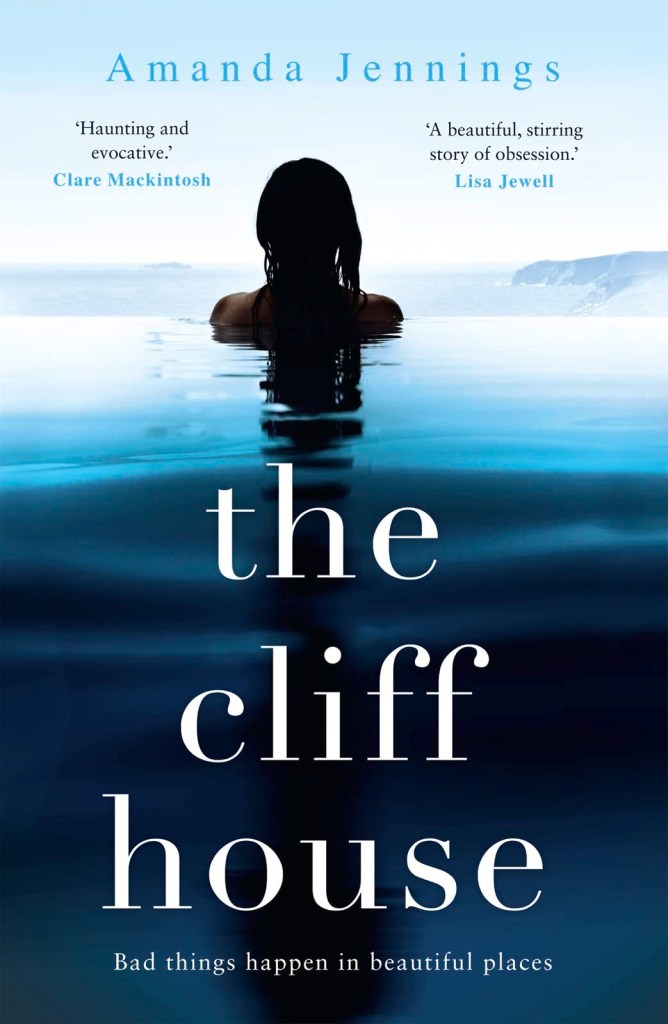
Goodness this was a wild ride, full of unexpected twists, characters that are pathological and a book being written within a book. Married couple Felix and Emma seem to have it all. They are the husband and wife team behind the hugely successful Morgan Savage thrillers. However, their latest novel isn’t coming as easily as their others. Felix is drinking to the point of blacking out and had an affair with a girl called Robin who worked for their publishing house. Emma is angry and popping anxiety pills any chance she gets. Their publisher Max, exiles them to the South of France in the hope that new surroundings for the summer will unlock their creativity. The house is beautiful, on a cliff overlooking the sea, when visiting housekeeper Juliette tells them a story about a painting that hangs in the house an uneasiness hangs in the air. The girl was prone to sleepwalking and one night got out into the garden and walked directly off the cliff edge. Sometimes, her cries can be heard at night. Under the sweltering sun, will the couple heal their differences or will they become trapped in a deadly game that beats the plot of any Morgan Savage bestseller. 

This was a great story to get my teeth into and honestly, if they’d come to me as therapist, I might have asked them if they’d considered living apart. It’s a toxic atmosphere from the moment they arrive, but just when you think you’ve worked out why and what’s really going on it will surprise you again. As we go back in time, using flashbacks to important events, we can see how their romantic and professional lives began but these glimpses started to make me question what I thought I knew. I wanted to race back through the chapters to search for the clues that brought us to the unexpected conclusion. This was a thrilling and atmospheric read, with a brilliant portrayal of how a relationship has become toxic. If you love relationship dynamics partnered with a whole amusement park of twists and turns this will be your next completely unputdownable read. 

Robin is exactly half way through his life. Like Mark Twain before him, Robin came into the world with Halley’s Comet in 1986 and fully expects to go out again when it returns in 2061. Recently he’s had a huge life change. He’s moved back to his home town of Eastgate to care for his sick father, who due to his disability has had one accident too many. Robin had a well-regimented life in London with girlfriend Gemma. He also had a boring well-paid job as an accountant. Now everything has been thrown up in the air and he’s living in a tiny bedroom surrounded by boxes he hasn’t unpacked. He’s trying to forge a relationship with a father who can’t communicate and who he never connected with as a child. There are childhood ghosts to face and a new connection with Astrid, fellow outsider and professor at a nearby university. She’s brutally straightforward and Robin has never met anyone like her. She’s also hiding something, but he’s hiding even more from her. Can Robin make friends, help his father and accept this is the next chapter of his life, rather than a blip?

Robin is eking out an existence that goes way off into the distant future, Living is now! It’s not when we have money, or have lost weight, or when we have better health. It’s now, when we’re skint, fat and feeling ill. Whatever life is right now, we absolutely must live. Living like this should only be a temporary state between chapters, not a lifestyle. When we find out why Robin is so adamant about his comet theory – while being forced to evaluate his choices by a strident Astrid – it all becomes clear. A heart-breaking tale emerges, just as Robin is faced with yet another loss. He’s forced to admit why he jumped off the cliff into the water when he was a child. He thinks he can’t die because it can only happen at the right time, because he can’t make sense of what once happened to him. He’s trying to make sense of what happened and his immortality is the only explanation. He’s subscribed meaning to something that has none. It’s just messy, terrifying, random and heart-breaking life. This book might sound very deep but it’s so beautifully infused with joy, humour and hope because life is beautiful and joyous too, if you let it be. 

Dani has been hitting rock bottom. Her eating disorder is out of control and her mental health has meant suspending her place at university where she was studying English Literature. She’s now living in a flat with her sister Jo and her boyfriend Stevie, having to share with his daughter Ellie when she’s there for weekends. She’s working as a pot-washer to pay the bills, but longs to go back to university. Despite having very little money, she decides to see a therapist and has a session with Richard. She feels at home in Richard’s room, in the quiet with the smell of books and furniture polish. She feels like he listens and seems perceptive, noticing her low self-esteem and anxiety. So she takes the decision to have therapy with him, although he’s expensive. She starts to feel more positive, greatly reducing her bingeing and purging cycle. Her attraction to him wasn’t surprising. For her to have a man listen and understand her might be a first. He also embodies all the things she wants for her own life; qualifications, respect from others, a better standard of living. She has attachment issues so I was sure Richard would have expected some element of transference to creep into the relationship. I didn’t expect what followed.

Of course as counselling boundaries start to be overturned Dani starts to spiral. It’s a really tough part to read, because I was feeling parental towards her. She puts herself in some incredibly dangerous situations, trying to find experiences that fulfil her needs. I was hoping that she’d realise she’d pressed the self-destruct button before it was too late. She has the resources to succeed, but can she utilise them when she feels so unstable? Honestly, my heart ached for this girl and that tells you a lot about my issues with clients! I wished she’d gone to a female counsellor. She needed that female nurturing, a mother’s care and love. Sometimes we have to choose our family. There are further behaviours and revelations I won’t go into for fear of ruining the suspense and eventual outcome, but I was genuinely scared that Dani couldn’t pull back from the mess she was in. When someone has listened to your innermost thoughts they are a formidable agent for change and even more powerful opponent. I had everything crossed that I’d underestimated Dani and that she could find those reserves to get through to the other side. This was a fantastic debut novel, full of suspense and stirring the emotions of the reader with finesse. 

London 1883

Rebecca and husband George run Evergreen House as a home for young girls and their illegitimate children, often called a house for ‘fallen women’. This has been a positive change. Previously, Rebecca’s sister Maddie was the woman of the house as the wife of Dr Everley. Maddie is recovering well after being on trial for the murder of her baby and the revelation that the Everley family had a tradition of hideous experimentation on the bodies of babies to create strange chimeras. Rebecca knows their tenure here is precarious. The Everley family still own the house, but with Dr Everley dead and his sister Grace in a prison asylum no one currently needs it. The small household are very close so all are devastated when the cook and centre of their household, Rose, is murdered. She fears the past is coming back to haunt them, because the murderous and twisted legacy of the Everley family is hard to ignore. With the charity board also tightening their grip on the house, Rebecca must draw out the murderer and discover their purpose. This was a great companion novel to The Small Museum which told the story of Maddie’s marriage to Dr Everley. Rebecca was once one of Grace Everley’s fallen girls, but this was just a way of acquiring babies for her brother. There’s such a positive atmosphere and the residents are able to live alongside their babies, unlike the terrible Magdalen Laundries where babies were taken for adoption and their mothers were forced into heavy labour to repent their sin, repay their debt and make a profit for the church. The truth is that most of these girls have been manipulated, coerced or abused. Rebecca works on the premise that they shouldn’t be punished twice. especially ironic when men are complicit, if not to blame for their supposed fall. Yet there are admirable women calmly showing compassion, understanding and professionalism, while stuck in this patriarchal system. Grace Everley gives me the shivers, but she is a victim too. I was held in suspense over who was the murderer and whether Rebecca’s home could remain the loving and caring space women need. There were heart-stopping moments, especially towards the end. The scene in the garden had me holding my breath. This is the perfect gothic mystery, especially for fans of historical fiction who like a touch of feminism on the side. This is a must-buy, for the engrossing story and for the gorgeous cover too. 

Here’s my provisional tbr for June. ❤️📚

Posted in Sunday Spotlight

Sunday Spotlight: Going Down Under

I’ve always been unconsciously drawn to books set in Australia and New Zealand, perhaps because I have family in both countries and want to familiarise myself with their lives. My mum lived there as a ten pound Pom in the 1960’s, leaving Liverpool behind and living in hostels meat Sydney. My grandad loved it out there and would tell us about nature, mostly horrific stories of people having spider’s nest in their ears or brains. My brother-in-law went out to New Zealand to work as a tree surgeon on a huge farm. He met the love of his life out there, Jenny, and although Jan died a few years after my husband I’m still in touch with Jenny and my two nephews. I was also hugely influenced by mum who was an enormous fan of The Thorn Birds – although hated Rachel award as Meggie in the TV mini-series. I’ve always thought that people down under are resilient, rather sweary and very straightforward. They say what they think – something I admire even where I don’t agree. I love the diversity of the cities and fascinated by Aboriginal and Māori. Some of my choices were read on my post-colonial literature course at university, a module that I found so inspiring and forced me to read writers I’d never have picked up as a casual reader. Here are just a few of the books and authors that can take you on a trip round both countries.

Classics

When her wealthy family prepares to host a lavish summer party, the young, hitherto sheltered Laura Sheridan suddenly feels a kinship with the staff and the helpers hired to set up the venue for the festivities. As she learns of the death of one of their working-class neighbours, this burgeoning sense of class consciousness is heightened by a realization of her own mortality. Published in 1922, at the height of literary modernism, ‘The Garden Party’ is now considered one of the key texts of that movement. This volume, which also includes all of Katherine Mansfield’s other published short stories, is an invaluable resource for anyone wishing to discover one of the early twentieth century’s finest writers. I first read this collection at university and I still have it today because it stands up against any short story collection from that period.

Integrating both Maori myth and New Zealand reality, The Bone People became the most successful novel in New Zealand publishing history when it appeared in 1984. Set on the South Island beaches of New Zealand, a harsh environment, the novel chronicles the complicated relationships between three emotional outcasts of mixed European and Maori heritage. Kerewin Holmes is a painter and a loner, convinced that “to care for anything is to invite disaster.” Her isolation is disrupted one day when a six-year-old mute boy, Simon, breaks into her house. The sole survivor of a mysterious shipwreck, Simon has been adopted by a widower Maori factory worker, Joe Gillayley, who is both tender and horribly brutal toward the boy. Through shifting points of view, the novel reveals each character’s thoughts and feelings as they struggle with the desire to connect and the fear of attachment.

Compared to the works of James Joyce in its use of indigenous language and portrayal of consciousness, The Bone People captures the soul of New Zealand. After twenty years, it continues to astonish and enrich readers around the world.

Mythology and contemporary Māori life are woven together seamlessly in this spectacular collection by Aotearoa’s foremost short story writer.

The titular story ‘Bird Child’ plunges you deep into Te Kore, an ancient time before time. In another, the formidable goddess Mahuika, Keeper of Fire, becomes a doting mother and friend. Later, Grace’s own childhood vividly shapes the world of the young character Mereana; and a widower’s hilariously human struggle to parent his seven daughters is told with trademark wit and crackling dialogue.

Moving artfully across decades, landscapes, time and space, with tenderness and charm, Bird Child and Other Stories shows an author as adept and stimulating as ever. This isn’t an easy read but fascinating and the comparison between Māori and other creation myths from around the world was fascinating.

Contemporary Fiction

Cassy smiled, blew them a kiss.

‘See you in September,’ she said.

It was a throwaway line. Just words uttered casually by a young woman in a hurry. And then she’d gone. 


It was supposed to be a short trip – a break in New Zealand before her best friend’s wedding. But when Cassy waved goodbye to her parents, they never dreamed that it would be years before they’d see her again. 
Having broken up with her boyfriend, Cassy accepts an invitation to stay in an idyllic farming collective. Overcome by the peace and beauty of the valley and swept up in the charisma of Justin, the community’s leader, Cassy becomes convinced that she has to stay.

As Cassy becomes more and more entrenched in the group’s rituals and beliefs, her frantic parents fight to bring her home – before Justin’s prophesied Last Day can come to pass. I love Charity Norman’s writing because she gets to the heart of family relationships and shows how families can fracture when placed under stress. I’d recommend any of her books but this one is set in New Zealand. I highly recommend Remember Me and Home Truths.

At a suburban barbecue one afternoon, a man slaps an unruly boy

The boy is not his son. 

It is a single act of violence, but the slap reverberates through the lives of everyone who witnesses it happen.

Christos Tsiolkas presents the impact of this apparently minor domestic incident through the eyes of eight of those who witness it. It’s honestly hard to find someone to like here, but it is a fascinating look at contemporary Aussie relationships. It’s an unflinching interrogation of the life of the modern family, a deeply thought-provoking novel about boundaries and their limits…

The Lambert sisters have secrets…

When 15-year-old Cathy Lambert runs away from her Dublin home, she is scared and pregnant. Settled in New Zealand with her new son Conor she believes the secret she carries will never be revealed…

Rebecca Lambert was eighteen when her parents died and she took responsibility for her younger sisters. Years later, she is haunted by fears she hoped she’d conquered.

Freed from family duties, mother of three Julie Chambers is determined to recapture the dreams of her youth.

Married to a possessive older man, Lauren Moran embarks on a frantic love affair that threatens to destabilise her fragile world.

Anxious to make peace with her three sisters, Cathy invites them to her wedding.

But as the women journey together through New Zealand towards their reunion, they are forced to confront the past as the secret shared histories of the Lambert sisters are revealed. I couldn’t put this book down as it’s a great mix of emotions, adventure, secrets and a lot of humour.

EVERY ENDING IS A NEW BEGINNING…

Ruth is ignoring the news. Like most people, she has relationship problems, job stress, friends and family who need her. Ruth has a life.

But the news is about to catch up with Ruth, and her problems are going to be swept away…along with the rest of the world. While on a plane to New Zealand, something starts to happen to the world. Arriving, Ruth makes her way to her coastal destination but never expected to be sharing the inside of a dead whale with a stranger as a world ending event happens. It takes this to change Ruth’s outlook completely. Only when the comforts and complications of her old existence are gone, does she finally realise how she might be able to live to the fullest. This was a mesmerising debut from Kate and I still recommend it constantly. It made me think about something drastic like this happening in my lifetime, but also question why we fall in love with the people we do and how commitments to others are nurtured and lad

Romantic Fiction

Love isn’t an exact science – but no one told Don Tillman.

A thirty-nine-year-old geneticist, Don’s never had a second date. So he devises the Wife Project, a scientific test to find the perfect partner. Don has a regimented life of work

Enter Rosie – ‘the world’s most incompatible woman’ – throwing Don’s safe, ordered life into chaos.

But what is this unsettling, alien emotion he’s feeling? . . .

This is a deeply funny, but emotional and fascinating in terms of Don’s neuro-divergence. He eats the same meal on the same night every week as part of his rotation of menus. His life felt like a never-ending to-do lust and I knew that he would drive me up the wall. Rosie is a woman of great patience! However, I also knew that my lack of systems and routine would have an equally detrimental effect on his mental health. Watching how these two people try, fail and try again to communicate their needs and feelings within the relationship is a lesson for every couple. It’s also brilliantly funny. There is a trilogy now so treat yourself to all of them.

In the rugged Australian Outback, three generations of Clearys live through joy and sadness, bitter defeat and magnificent triumph, driven by their dreams, sustained by remarkable strength of character… and torn by dark passions, violence and a scandalous family legacy of forbidden love.

The Thorn Birds is a poignant love story, a powerful epic of struggle and sacrifice, a celebration of individuality and spirit. Most of all, it is the story of the Clearys’ only daughter, Meggie, who can never possess Ralph de Bricassart, the man she so desperately adores. Ralph will rise from parish priest to the inner circles of the Vatican… but his passion for Meggie will follow him all the days of his life.

What a saga this is and I have to say the book is ten times better than the series, mainly because we get more of the family dynamic and get to know Meggie as a little girl. Her story of slowly growing up with such a harsh mother really builds and we understand more her bond to the young priest who befriends her, noticing that in a family of many sons she is largely ignored. He is her knight in shining armour and the only one, after her eldest brother is gone, who will hug and comfort this lonely girl. Catholic readers will recognise how powerful the religion is for Irish families and the schooling that nuns provide. The book is an epic and covers Father Ralph’s lifetime, but it has an incredible sense of place and time and really is worth a read for that alone.

n 1929, Beattie Blaxland had dreams. Big dreams. She dreamed of a life of fashion and fabrics. One thing she never dreamed was that she would find herself pregnant to her married lover, just before her nineteenth birthday. 

In 2009, Emma Blaxland-Hunter was living her dream. A prima ballerina with the London Ballet, she had everything… Until the moment she lost it all. 

Separated by decades, both women must find the strength to rebuild their lives. A legacy from one to the other will lead to Wildflower Hill, a place where a woman can learn to stand alone long enough to realise what she really wants.

I’d never read this author before so it came as a complete surprise when I enjoyed it so much. It is historical fiction too, but I loved that this was a ballsy woman who was determined to succeed at Wildflower Hill and her love story with an aboriginal worker would have been so transgressive at the time. It’s an unashamedly romantic story and if you enjoy love with a side order of feminism, family secrets and a dual-timeline this is for you.

Historical Fiction

A faded photograph. An abandoned house. A wartime mystery. . .

1939: On the eve of war, young English heiress Grace Grey travels from London to the wilderness of Tasmania. Coaxed out of her shell by the attentions of her Irish neighbour, Daniel – Grace finally learns to live. But when Australian forces are called to the frontline, and Daniel with them, he leaves behind a devastating secret which will forever bind them together.

1975: Artist Willow Hawkins, and her new husband, Ben, can’t believe their luck when an anonymous benefactor leaves them a house on the remote Tasmanian coast. Confused and delighted, they set out to unmask Towerhurst’s previous owner – unwittingly altering the course of their lives.

2004: Libby Andrews has always been sheltered from the truth behind her father Ben’s death. When she travels to London and discovers a faded photograph, a long-buried memory is unlocked, and she begins to follow an investigation that Ben could never complete. But will she realise that some secrets are best left buried . . .?

This gorgeous story that spans the twentieth century was one of my books of the year last year. The mystery of how all these timelines added up, the beautiful setting of Tasmania and the historical context around WW2 drew me in. The love story is simply gorgeous and potentially heart-breaking. I know this is a story I’ll want to read again.

1896, Bannin Bay, Australia. When British pearl-boat captain Charles Brightwell goes missing out at sea, rumours of mutiny and murder swell within the bay’s dens and back alleys. Only his headstrong daughter, Eliza, refuses to believe her father is dead, and sets out on a dangerous journey to uncover the truth.

But in a town teeming with corruption, prejudice, and blackmail, Eliza soon learns that the answers she seeks might cost more than pearls. How much is she willing to sacrifice to find them?

This incredible debut is richly atmospheric from the get go, throwing us straight into the strangeness of 19th Century Western Australia as if it is an alien landscape. In fact that’s exactly what it is for the Brightwell family, particularly Eliza whose childhood eyes we see it through for the the first time. The adult Eliza has to negotiate her way through the community’s corruption, violence, blackmail and the criminal elements of the pearling business. All the while reading her father’s diary for clues and guiding us to some fascinating characters, some of which are based on historical figures. You’ll love Eliza’s early feminist stance and sense of adventure. The twists and turns her journey takes are gripping and pull you deep into the story. It’s a fantastic debut, full of life and death, just like it’s setting.

Crime Fiction

A killer targeting pregnant women.

A detective expecting her first baby…

The shocking murder of a heavily pregnant woman throws the New Zealand city of Dunedin into a tailspin, and the devastating crime feels uncomfortably close to home for Detective Sam Shephard as she counts down the days to her own maternity leave.

Confined to a desk job in the department, Sam must find the missing link between this brutal crime and a string of cases involving mothers and children in the past. As the pieces start to come together and the realisation dawns that the killer’s actions are escalating, drastic measures must be taken to prevent more tragedy.

For Sam, the case becomes personal, when it becomes increasingly clear that no one is safe, and the clock is ticking…

There’s something about Aussie and NZ crime fiction. It’s gritty and immediate. This is the fifth in Vanda’s Sam Shepherd series and I can honestly say they’re all brilliant but this one …. I was on the edge of my seat! It feels like Sam has just let her guard down and accepted what’s next in her life, when everything could be ripped away from her. Even though she’s the one who most understood the killer’s motivations, will she still be shocked by their identity? Sam’s vulnerability is terrifying and I was praying that she would be okay, as if she’s a living and breathing human being. That’s the power of Vanda Symon’s writing and how much of that magic she’s poured into this brilliant character.

Lou O’Dowd travels across the world from Australia to Edinburgh for a job with the organisation SASOL. Her new life will be living with her cousin and working shifts at a halfway house for high risk offenders including two killers, a celebrity paedophile, and a paranoid coke dealer. After orientation, Lou will be on shift alone dealing with these offenders with little more than her own instinct to guide her. What could possibly go wrong?

Lou is a controversial character, living off a sugar daddy for a while she’s had no need to work, but when the relationship ends disastrously she has no choice but to leave. On her first day in Edinburgh she meets a man at a play who has a similar attitude to risk, enjoying mainly outdoor sex. He comes from a rich family, so maybe he could be more than a fling? I loved how the mundane domesticity of the job was mixed with genuine fear and horror of what could happen if residents flare up. There’s an evening ritual of cocoa for each resident, but it has to be to perfectly timed in order to interrupt one resident’s suicide ritual. These are the extremes a job like this entails, but it’s only the beginning….

A few more suggestions:

Posted in Sunday Spotlight

Sunday Spotlight: A City Break in Venice

Beautiful and mysterious Venice has been the backdrop for many stories. It’s beauty, endless winding streets and romantic canals inspire the creativity in film-makers, musicians, artists and writers. Vivaldi, Byron, John Ruskin all fell in love with it’s charms.

The first book that placed Venice on my travel list was What Katy Did Next by Susan Coolidge. I’d read the earlier books in the series, but read this when I was in hospital. I broke my back when I was eleven and I was laid flat for a long time and devoured all sorts of books. I felt an affinity with Katy who had her own accident at the end of the first book, falling from a broken swing. As an adult she’s employed as a companion and nanny for a woman travelling with her young daughter. Their last stop is Venice and the carnival. I remembered Katy sitting on their hotel balcony watching a procession and having sweets and trinkets thrown up to her by the passing revellers. Of course the darker side of carnival and the eeriness of the city didn’t occur to me until I was much older, but that’s the city’s magic I think, the beauty and the decay. Here are a few of my favourite books that feature Venice:

Venice Classics

This edition contains five stories of suspense, mystery and slow, creeping horror, Daphne Du Maurier’s Don’t Look Now and Other Stories includes an introduction by Susan Hill, author of The Woman in Black and her own novella set in Venice The Man in the Picture.

John and Laura have come to Venice to try and escape the pain of their young daughter’s death. But when they encounter two old women who claim to have second sight, they find that instead of laying their ghosts to rest they become caught up in a train of increasingly strange and violent events. It makes the reader the third person in the couple’s marriage, let into their innermost thoughts and intimate moments. The atmosphere she creates leaves the reader uneasy and unsure. Then that totally unexpected ending hits you right in the gut.

I thought of this cover when I took the main picture. Milly Theale, an American heiress in London, is young, hungry for life, and terminally ill. There she meets the dazzling beauty Kate Croy. Unbeknownst to Milly, Kate is madly in love with an old acquaintance of hers, Merton Densher, a young journalist who has everything a woman could want—except money.
 
Intensely aware of her new friend’s fate and coveting her fortune, Kate secretly spurs Merton to seduce and marry Milly. But their scheme to inherit her wealth does not go according to plan, and Kate and Merton learn that deceit alters love, and love, deceit. This is a novel that needs perseverance, but is rewarding for people who enjoy character driven fiction that takes it’s time. There are no action sequences here, just manipulation and a lot of passive aggression as Milly slowly tortures Kate and Merton with her forgiveness.

Historical Fiction

Venice, 1486

Here I have to share two of my favourite novels of last year. The first is Tracy Chevalier’s The Glassmaker. Across the lagoon lies Murano. Time flows differently here – like the glass the island’s maestros spend their lives perfecting.

In secret, Orsola Rosso learns to craft glass. As a woman, she must flout convention to save her family from ruin. We follow her through hundreds of years of war and plague, tragedy and triumph, love and loss. Skipping like a stone across the centuries, The Glassmaker is a virtuoso portrait of a woman, a family and a city that are as everlasting as glass. I absolutely loved this novel that takes us from the 15th Century to the present, which also happens to be Orsola’s life span. I loved the strength and adaptability of this incredible young woman, who makes herself a vital part of her family’s glassmaking business.

I was bowled over by this gorgeous debut from Harriet Constable about Anna Maria Della Pieta. A young woman who was left with the nuns at a Venice orphanage when she was just a baby. Anna Maria may have no name, no fortune, no family. But she has her ambition, and her talent. 

Anna is a sparkling ball of energy and ambition. Her best hope lies in her teacher, Antonio Vivaldi. Soon she is his star pupil. But as Anna Maria’s star rises, not everyone is happy. Because Anna Maria’s shining light threatens to eclipse that of her mentor…

She will leave her mark, whatever it takes. Her story will be heard. This is an incredible novel, woven around a real person that brings 17th Century Venice to vivid life.

Crime Fiction

I started reading the Commissario Brunetti series after I’d been to Venice for the first time and it was great to read about a character who lives in modern Venice. I’d felt that contradiction: the gratitude for being able to visit the city, whilst also acknowledging the damage the sheer amount of visitors are doing to the city. There are less Venetian born residents of the city every year. Something that saddens me, but doesn’t quell that urge to visit again. Here I could read about someone living everyday life in that city. My other reason for reading this was that my hotel was in a piazza behind La Fenice and we decided to cut behind the opera house to find a quicker route. When it is dark, there is nothing creepier than those tiny little streets behind La Fenice!

The twisted maze of Venice’s canals has always been shrouded in mystery. Even the celebrated opera house, La Fenice, has seen its share of death … but none so horrific and violent as that of world-famous conductor, Maestro Helmut Wellauer, who was poisoned during a performance of La Traviata. Even Commissario of Police, Guido Brunetti, used to the labyrinthine corruptions of the city, is shocked at the number of enemies Wellauer has made on his way to the top – but just how many have motive enough for murder? The beauty of Venice is crumbling. But evil is one thing that will never erode with age.

Phillip Gwynne Jones’s Nathan Hunt series is set in Venice, where Hunt is Great Britain’s Honorary Consul and finds himself drawn into the world of crime. This time he’s asked by the British Ambassador to look into the death of a British Art Historian called Dr Jennifer Whiteread. On the night of 12 November 2019, the worst flooding in 50 years hits the city of Venice. 85% of La Serenissima is underwater. Gale force winds roar across the lagoon and along the narrow streets. The body of Dr Jennifer Whiteread is found floating in a flooded antique bookshop on the Street of the Assassins. The local police are trying hard to restore order to a city on its knees, Nathan Sutherland – under pressure from the British Ambassador and distraught relatives – sets out into the dark and rain-swept streets in an attempt to discover the truth behind Whiteread’s death.

The trail leads to the “Markham Foundation”, a recent and welcome addition to the list of charities working to preserve the ancient city. Charming, handsome and very, very rich, Giles Markham is a well-known and popular figure in the highest Venetian social circles, and has the ear of both the Mayor and the Patriarch. But a man with powerful friends may also have powerful enemies. And Nathan is about to learn that, in Venice at least, angels come in many forms – merciful, fallen and vengeful. This thriller is part of a series, but can be read as a stand alone thriller with a fantastic and mysterious backdrop.

Non-Fiction

Who hasn’t dreamed, after a particularly mind-numbing meeting, or in the midst of another punishing five-thirty commute, of chucking it all and packing off to the enchanting canals and mysterious alleyways of Venice? Globetrotting writer Paula Weideger not only dreamed the dream; she and her partner actually took the leap. VENETIAN DREAMING charts the course of Weideger’s passionate love affair with one of the world’s most beautiful cities. Weideger opens her book with the wry, mishap-strewn account of the search to find a place to live which eventually takes her to the world famous Palazzo Dona delle Rose, the only palace in Venice continuously occupied by the family that built it. She weaves the past lives of the family Dona with her own present adventures, creating a tapestry that captures at once the grand heritage and imperilled labyrinth as she gives a lively, riveting and eye opening tour of the city. She explores the centuries old streets, meets locals from noblemen to shopkeepers and artists, makes peace with the ghost of Peggy Guggenheim and explains how Ishmael Merchant and James Ivory almost dislodged her from her home, and more.

“Francesco’s Venice”, now available in paperback, is the extraordinary story of the life of this intriguing city, told by a descendant of an old and distinguished Venetian family. Francesco explores Venice’s remarkable history, from the fifth century when the first settlers retreated to the safety of the lagoon and began to create their homes on its tiny islands, through its glorious years as a successful maritime nation, adept at trade, exploration, diplomacy and protecting its independence, to the fragile city of the twenty-first century. He vividly brings to life the places, events and people, including a colourful array of his own ancestors, that have sculpted this living theatre through the ages. Beautifully illustrated with stunning images by John Parker, “Francesco’s Venice” celebrates the mesmerizing beauty and surpising strength of this unique city.

Romantic Fiction

Caroline Grant is struggling to accept the end of her marriage when she receives an unexpected bequest. Her beloved great-aunt Lettie leaves her a sketchbook, three keys, and a final whisper…Venice. Caroline’s quest: to scatter Juliet “Lettie” Browning’s ashes in the city she loved and to unlock the mysteries stored away for more than sixty years.

It’s 1938 when art teacher Juliet Browning arrives in romantic Venice. For her students, it’s a wealth of history, art, and beauty. For Juliet, it’s poignant memories and a chance to reconnect with Leonardo Da Rossi, the man she loves whose future is already determined by his noble family. However star-crossed, nothing can come between them. Until the threat of war closes in on Venice and they’re forced to fight, survive, and protect a secret that will bind them forever.

Key by key, Lettie’s life of impossible love, loss, and courage unfolds. It’s one that Caroline can now make right again as her own journey of self-discovery begins.

Can a city hold the key to happiness?

”This isn”t a mid-life crisis OK? For a start I”m not old enough yet to have one of those. I”m calling it a happiness project. I”ve stolen an entire summer from my life and by the time it”s over I plan to leave this place with a list in my hand. The ten things that make me happy, that”s all I want to know. How difficult can it be? They may be small things – a perfect cup of coffee, a day without rain – or bigger ones. It”s still the beginning so how can I know?” 

Addolorata Martinelli knows she should be happy. She has everything she thought she wanted – her own business, a husband, a child. So why does she feel as if something is missing? Then when her restaurant, Little Italy, is slated by a reviewer, she realises that she”s lost the one thing she thought she could always count on, her love of food.

So Addolorata heads to Venice for a summer alone, aiming to find the ten things that make her happy. Once she”s found them, she”ll construct a new life around her ten things, but will they include her life in London?

Posted in Netgalley

The Surgeon’s House by Jody Cooksley

London 1883

Rebecca and husband George run Evergreen House as a home for young girls and their illegitimate children, often called a house for ‘fallen women’. This has been a positive change. Previously, Rebecca’s sister Maddie was the woman of the house as the wife of Dr Everley. Maddie is recovering well after being on trial for the murder of her baby and the revelation that the Everley family had a tradition of hideous experimentation on the bodies of babies to create strange chimeras. Rebecca knows their tenure here is precarious. The Everley family still own the house, but with Dr Everley dead and his sister Grace in a prison asylum no one currently needs it. The small household are very close so all are devastated when the cook and centre of their household, Rose, is murdered. Rebecca is shocked by the death of her friend in what seems to be a random act. Rose’s death isn’t the end of the mysterious events at Evergreen. Rebecca fears the past is coming back to haunt them, the murderous and twisted legacy of the Everley family is hard to ignore. What was a sanctuary is becoming dangerous as the evil presence continues it’s work. With the charity board also tightening their grip on the house, Rebecca must draw out the murderer and discover their purpose.

This was a great companion novel to The Small Museum which told the story of Maddie’s marriage to Dr Everley. Rebecca was once one of Grace Everley’s fallen girls, but this was just a way of acquiring babies for her brother. It was great to see Maddie again especially so happy with her partner Tizzy. They are both regular visitors to Evergreen. There’s such a positive atmosphere and the residents are able to live alongside their babies, unlike the terrible Magdalen Laundries where babies were taken for adoption and their mothers were forced into heavy labour to repent their sin, repay their debt and make a profit for the church. The truth is that most of these girls have been manipulated, coerced or abused. Rebecca works on the premise that they shouldn’t be punished twice. There’s a lovely parallel with Maddie’s paintings of mythical women that she’s submitting to the Royal Academy Summer Exhibition. Helen of Troy is seen as the cause of the Trojan War, but she had no agency in the story. She’s desired by a man who abducts her by force. Medusa is raped in the temple of Athena, but the goddess chooses to punish her for desecrating the temple, giving her snakes for hair and a gaze that turns men to stone. Neither woman asked for what happened to them. Maddie has painted them on huge powerful canvasses, a monument to women mistreated by men.

The house is becoming a hive of activity in the lead up to Easter. The children are excited, painting eggs and helping their mums to weave colourful baskets. So it is a shock to them when Rose is gone. She was always helping the children to bake and had a listening ear for anyone in the household who needed it. It’s as if the heart has been taken from their home. Downstairs at Evergreen has always been a different matter. Psychologist, Dr Threlfall practises in the basement at the behest of Grace Everley. He ensured Maddie wasn’t wrongly convicted of the murder of her baby and Rebecca is grateful, but is slightly suspicious of what he’s researching. He has an interest in eugenics, measuring the girl’s heads, the placement of their features and notes any patterns. He’s trying to create a taxonomy of fallen women as if their sin might be predicted by physical characteristics. Rebecca worries he’s been inspired by old Dr Everley’s research into pain – especially when she hears one of the girl’s scream from his room. Then there’s the room next door where one of the servants is practising her taxidermy, in an unhygienic way! It’s as if the interests and hobbies of the Everley’s are ingrained in the fabric of the house.

In between Rebecca’s narrative, we have Grace Everley’s. She’s incarcerated and seems to be teetering on the brink of insanity. Used to manipulating people with her beauty, her finery is a thing of the past and her beautiful hair has been completely shaved off. She’s still incensed that Dr Threlfall testified for Maddie, sending her brother to the gallows. What she cares about most and the focus for her vengeful thoughts, is that her father’s work isn’t being continued. She takes us back to her teenage years and participating in her father’s pain research – now she is utterly stoic and she can completely separate mind from body, blocking out her pain receptors. I did feel a tiny bit of sympathy for her because she didn’t stand a chance growing up in that environment. Having been used by her father she could have been a submissive mouse, but instead she became powerful and used her feminine charms to control the men around her. Could she still have that influence?

The men in the novel are mainly concerned with controlling their environment and all the women in it. Dr Threlfall is the last link between the Everley family and Evergreen House. He may be an effective doctor but his interest in eugenics is concerning. It always leads to controlling people’s behaviour and persecuting those who don’t fit the rigid ideal. It lead to some of the biggest atrocities of the 20th Century. Looking to categorise a type of woman who ends up in trouble, lets men off the hook for what happens to them. Mr Lavell is equally discriminatory. He thinks that women who have children out of wedlock must be punished for their actions and only the Bible and physical work will remind them of the terrible choices they’ve made. He finds Rebecca’s methods too lenient and would like the children sent to the orphanage. Then he’d bring laundry in for the women, to keep them penitent and make a profit for the charity board. Only George is absolutely steadfast to his wife. When a woman turns up at the door asking for kitchen work, Rebecca goes her a chance even though her references will need chasing after the fact. Things start to deteriorate quickly once Angela is in charge in the kitchen and it’s definitely not the heart of the home any more. She could have a bedroom but chooses to bed down in the cupboard where Dr Everley kept his specimens. She doesn’t try to make connections and won’t have children baking in the kitchen. Rebecca is concerned and then incensed when she suspects her of selling one of the women’s stories to a Penny Dreadful. When one of the youngest children falls ill, Rebecca knows for sure that something evil lurks in the house. She feels assailed from all sides, evil from within and outside forces trying to force their own agenda. She has to solve the mystery before the charity board get wind of their problems and use it to close them down.

This was a tense and atmospheric read. I could feel the warmth and happiness slowly being sucked from Evergreen House. It did feel evil, like a creeping black mould slowly covering everything. This really showed the inequality in society and how the fates of these women are decided by men; especially ironic when men are complicit, if not to blame for their supposed fall. One man seeks a genetic reason for their loose morals. Another feels they haven’t atoned for their sin. While a third would take away their children and punish them with hard labour. Not a single one questions their own behaviour or even doubts their right to pass judgement. Yet there are admirable women calmly showing compassion, understanding and professionalism, while stuck in this patriarchal system. Grace Everley gives me the shivers, but she is a victim too. I was held in suspense over who was the murderer and whether Rebecca’s home could remain the loving and caring space women need. There were heart-stopping moments, especially towards the end. The scene in the garden had me holding my breath. This is the perfect gothic mystery, especially for fans of historical fiction who like a touch of feminism on the side. This is a must-buy, for the engrossing story and for the gorgeous cover too.

Out Now from Allison and Busby

Meet the Author

Jody Cooksley is an author represented by literary agent Charlotte Seymour at Johnson & Alcock.

In 2023 she won the Caledonia Novel Award with The Small Museum, a chilling Victorian thriller that was published in hardback, ebook and audio with Allison&Busby in May 2024. Paperback publication was February 2025 and the sequel, The Surgeon’s House will be published in hardback, e-book and audio in May 2025.

Previous novels include award-nominated The Glass House, a fictional account of Victorian pioneer photographer, Julia Margaret Cameron (Cinnamon Press, 2020), and How to Keep Well in Wartime (Cinnamon Press, 2022)

She is currently writing more Victorian gothic novels. She has previously published essays, short stories and flash fiction.

Jody works in communications and lives in Surrey with her husband, two sons, two forest cats and a dangerous mountain of books.

Posted in Travel Fiction

Summer Holiday Reads: The Greek Islands

Classics

Three classic tales of childhood on an island paradise – My Family and Other Animals, Birds, Beasts and Relatives and The Garden of the Gods by Gerald Durrell – make up The Corfu Trilogy.

Just before the Second World War the Durrell family decamped to the glorious, sun-soaked island of Corfu where the youngest of the four children, ten-year-old Gerald, discovered his passion for animals: toads and tortoises, bats and butterflies, scorpions and octopuses. Through glorious silver-green olive groves and across brilliant-white beaches Gerry pursued his obsession . . . causing hilarity and mayhem in his ever-tolerant family. This book is joyous and has the reputation of being the only book my brother loved. The Durrells are gloriously eccentric and this trilogy transports you to Corfu so well it’s like taking a holiday.

It is 1941 and Captain Antonio Corelli, a young Italian officer, is posted to the Greek island of Cephallonia as part of the occupying forces. At first he is ostracised by the locals but over time he proves himself to be civilised, humorous – and a consummate musician.

When Pelagia, the local doctor’s daughter, finds her letters to her fiancé go unanswered, Antonio and Pelagia draw close and the working of the eternal triangle seems inevitable. But can this fragile love survive as a war of bestial savagery gets closer and the lines are drawn between invader and defender? Forget the awful film, in which barely anyone was Greek, and pick this up if you haven’t already. Not only is it a great chronicle of WW2 in Greece, but it is a touchingly beautiful love story you’ll want to read again.

That summer we bought big straw hats. Maria’s had cherries around the rim, Infanta’s had forget-me-nots, and mine had poppies as red as fire. . .’

I read a recent review where Three Summers was touted as a Greek I Capture The Castle and that draws me in straight away. This is a warm and tender tale of three sisters growing up in the countryside near Athens before the Second World War. Living in a ramshackle old house with their divorced mother are flirtatious, hot-headed Maria, beautiful but distant Infanta, and dreamy and rebellious Katerina, through whose eyes the story is mostly observed. Over three summers, the girls share and keep secrets, fall in and out of love, try to understand the strange ways of adults and decide what kind of adults they hope to become. A beautiful story of growing up, sisterhood and first love.

Retold Myths

Now that all the others have run out of air, it’s my turn to do a little story-making . . . So I’ll spin my own thread.

Penelope. Immortalised in legend and Greek myth as the devoted wife of the glorious Odysseus, silently weaving and unpicking and weaving again as she waits for her husband’s return from the Trojan war. 

Now Penelope wanders the underworld, spinning a different kind of thread: her own side of the story – a tale of lust, greed and murder. This is one of the first novels to write back to Greek Myth, to tell the story of a sidelined character in the tale of Odysseus. Atwood tells a tale of the Trojan War from a feminist perspective, looking through the eyes of Penelope who has no action or agency in the original myth, only appearing as the dutiful wife.

‘So to mortal men, we are monsters. Because of our flight, our strength. They fear us, so they call us monsters’

Medusa is so hard done to who acts like a cautionary tale about the meddling Greek gods. Medusa is the sole mortal in a family of gods. Growing up with her Gorgon sisters, she begins to realize that she is the only one who experiences change, the only one who can be hurt.

When Poseidon commits an unforgiveable act against Medusa in the temple of Athene, the goddess takes her revenge where she can: on his victim. Medusa is changed forever – writhing snakes for hair and her gaze now turns any living creature to stone. She can look at nothing without destroying it.

Desperate to protect her beloved sisters, Medusa condemns herself to a life of shadows. Until Perseus embarks upon a quest to fetch the head of a Gorgon . . .

After ten blood-filled years, the war is over. Troy lies in smoking ruins as the victorious Greeks fill their ships with the spoils of battle.

Alongside the treasures looted are the many Trojan women captured by the Greeks – among them the legendary prophetess Cassandra, and her watchful maid, Ritsa. Enslaved as concubine – war-wife – to King Agamemnon, Cassandra is plagued by visions of his death – and her own – while Ritsa is forced to bear witness to both Cassandra’s frenzies and the horrors to come.

Meanwhile, awaiting the fleet’s return is Queen Clytemnestra, vengeful wife of Agamemnon. Heart-shattered by her husband’s choice to sacrifice their eldest daughter to the gods in exchange for a fair wind to Troy, she has spent this long decade plotting retribution, in a palace haunted by child-ghosts.

As one wife journeys toward the other, united by the vision of Agamemnon’s death, one thing is certain: this long-awaited homecoming will change everyone’s fates forever. This is a brilliant retelling of a myth we know so well and the reality of war from a female perspective.

Crime Fiction

Mykonos had always had a romantic reputation, until the body of a female tourist was found on a pile of bones under the floor of amountain church. The island’s new police chief starts finding bodies, bones and suspects almost everywhere he looks. This thriller has a great atmosphere, is perfect for readers who love a good mystery and also Greek legends, which the author weaves throughout her story. The reader is firmly on the side of the heroine, trying desperately to escape her fate. You will also be rooting for Inspector Kaldis, who was recently demoted from Athens to the isle of Mykonos. He’s trying to avoid the political pitfalls on the island as he pursues the Killer, whose identity is not revealed until the end of the story. This is a fun one for the reader to speculate on as the action builds to a nail-biting climax. Highly enjoyable and addictive.

SOMEONE’S POISONING PARADISE

Detective Inspector Jack Dawes is travelling to a tiny Greek island with wife Corinne, ready for a bit of sun, sea and sand.

However, one of their fellow travellers is a ruthless killer.
When a storm destroys the island’s primitive communications, cutting it off from civilisation, people begin to panic. One victim is poisoned, followed swiftly by another. Then a woman is found in a grotto to St Sophia, the island’s patron saint. She is badly beaten. It feels as if the island’s visitors are being picked off one by one. Can Jack uncover the truth before the killer ups the ante?

Who will return home — and who will be sacrificed to the island?

Historical Fiction

It’s May 1941, when the island of Crete is invaded by paratroopers from the air. After a lengthy fight, thousands of British and Commonwealth soldiers are forced to take to the hills or become escaping PoWs, sheltered by the Cretan villagers.

Sixty years later, Lois West and her young son, Alex, invite feisty Great Aunt Pen to a special eighty-fifth birthday celebration on Crete, knowing she has not been back there since the war. Penelope George – formerly Giorgidiou – is reluctant, but is persuaded by the fact it is the 60th anniversary of the Battle. It is time for her to return and make the journey she never thought she’d dare to. On the outward voyage from Athens, she relives her experiences in the city from her early years as a trainee nurse to those last dark days stranded on the island, the last female foreigner.

When word spreads of her visit, and old Cretan friends and family come to greet her, Lois and Alex are caught up in her epic pilgrimage and the journey which leads her to a reunion with the friend she thought she had lost forever – and the truth behind a secret buried deep in the past…

Victoria Hislop is the Queen of fiction set on the Greek Islands, ever since her book The Island

25th August 1957. The island of Spinalonga closes its leper colony. And a moment of violence has devastating consequences.

When time stops dead for Maria Petrakis and her sister, Anna, two families splinter apart and, for the people of Plaka, the closure of Spinalonga is forever coloured with tragedy.

In the aftermath, the question of how to resume life looms large. Stigma and scandal need to be confronted and somehow, for those impacted, a future built from the ruins of the past.

Victoria Hislop returns to the world and characters she created in The Island – the award-winning novel where we first met Anna, Maria, Manolis and Andreas in the weeks leading up to the evacuation of the island… and beyond. Alexis Fielding longs to find out about her mother’s past. But Sofia has never spoken of it. All she admits to is growing up in a small Cretan village before moving to London. When Alexis decides to visit Crete, however, Sofia gives her daughter a letter to take to an old friend, and promises that through her she will learn more. 

Arriving in Plaka, Alexis is astonished to see that it lies a stone’s throw from the tiny, deserted island of Spinalonga – Greece’s former leper colony. Then she finds Fotini, and at last hears the story that Sofia has buried all her life: the tale of her great-grandmother Eleni and her daughters and a family rent by tragedy, war and passion. She discovers how intimately she is connected with the island, and how secrecy holds them all in its powerful grip…

In The Figurine we are taken beneath the dust sheets in the Athens apartment that Helena McCloud has inherited from her grandparents, There she discovers a hidden hoard of rare antiquities, amassed during a dark period in Greek history when the city and its people were gripped by a brutal military dictatorship.

Helena’s fascination for archaeology, ignited by a summer spent on a dig on an Aegean island, tells her that she must return these precious artefacts to their rightful place. Only then will she be able to allay the darkness of the past and find the true meaning of home – for cultural treasures and for herself.

It seems crazy to think of the 1960s as a historical era, but it is now 60 years ago! In this dreamy and bohemian novel, Erica is eighteen and ready for freedom. It’s the summer of 1960 when she lands on the sun-baked Greek island of Hydra and is swept up in a circle of bohemian poets, painters, musicians, writers and artists, living tangled lives. Life on their island paradise is heady, dream-like, a string of seemingly endless summer days. But nothing can last forever.

Romance and Self-Love

Set on the breathtaking island of Andros, The Jasmine Isle is one of the finest literary achievements in contemporary Greek literature. Mina Saltaferou is the despotic wife of a ship’s captain, Savvas Saltaferos. Her tyrannical influence over her two daughters is unquestionable and unrelenting, like nature itself. Tragedy becomes inevitable when Mina’s beautiful, eldest daughter, Orsa, is sentenced by her mother to marry a man she doesn’t love and watch as the man she does love weds another.

I love a family saga and this one spans half a century in the history of modern Greece, this novel explores the solace and joy women find in each other’s company during the insufferably long absences of their husbands, sons, and lovers. The story alternates between descriptions of domestic life and evocations of the world’s seas and ports, as it follows both the men who embark on voyages lasting months and the lives of the women who remain behind

Calli’s world has fallen apart – her relationship is suddenly over and her chances of starting a family are gone. So when she’s sent to write a magazine article about the Greek island of Ikaria, it seems the perfect escape.

Travelling to Crete, where her family is from, Calli soon realizes there is more to discover than paradise beaches and friendly locals. When her aunt Froso begins to share the story of her own teenage heartache, will the love, betrayal and revenge she reveals change Calli’s life forever?

As a young woman, Helena spent a magical holiday at Pandora, a beautiful house in Cyprus – and fell in love for the first time. Now, twenty-four years later and following the loss of her godfather, she has inherited Pandora. And, though it is a crumbling shadow of its former self, Helena returns with her family to spend the summer there.

When, by chance, Helena meets her childhood sweetheart, her past threatens to collide with her present. She knows that the idyllic beauty of Pandora masks a web of secrets that she has kept from her husband and thirteen-year-old son. And that, once its secrets have been revealed, their lives will never be the same . . .

Sophie Keech has it all. A new life in Greece with a handsome man enables Sophie to leave her mundane job and her estranged mum. But four years on, a domineering mother-in-law to be and the reality of living in Greece not being what Sophie imagined, strains her relationship with Alekos. 

When her mum is involved in an accident, Sophie jumps at the chance to escape. Time to reassess her life and make amends is sorely needed. Yet an attraction to a good looking and newly divorced man, and a shock discovery, complicates things.

Can Sophie and Alekos’ love survive the distance?

Can one house hold a lifetime of secrets?

Corfu, 1930, the moment Thirza Caruthers sets foot on Corfu, memories flood back: the scent of jasmine, the green shutters of her family’s home ― and her brother Billy’s tragic disappearance years before. Returning to the Greek house, high above clear blue waters, Thirza tries to escape by immersing herself in painting ― and a passionate affair. But as webs of love, envy, and betrayal tighten around the family, buried secrets surface, is it finally time to uncover the truth about Billy’s vanishing?

New To Look Forward To.

Could discovering a family secret encourage Kat to follow her heart?

Shattered by the sudden loss of her twin, Nik, Kat is lost in grief. The comfort of family feels both soothing and suffocating, but everything changes when she inherits a house on the breathtaking Greek island of Agistri from a mysterious uncle she’s never met.

Arriving on Agistri, Kat is mesmerized by its crystalline waters, lush pine forests, and the citrus-scented air. Among the white-washed houses and warm, welcoming locals, she begins to feel her heart heal. The island offers more than solace, sparking courage in Kat to face her loss — and maybe even embrace the spark of unexpected love…

But as she unearths her family’s buried past, Kat must also confront her own fears of belonging, forgiveness — and the possibility of rediscovering happiness in the shadow of heartbreak…

Posted in Throwback Thursday

The Thin Place by C.D.Major 

I have a fascination for the idea of ‘thin places’ – where there’s only a thin veil between our world and the spirit world, or possibly passages to another time or dimension. I am swayed towards the idea that it’s where something traumatic happened and left an imprint on a place, so that however much time passes, the events of that day can break through and be replayed almost like an echo of the original event through time. Ava Brent is a journalist who is investigating one such place. The Overtoun Estate is a strange and looming presence over town and no one seems to know it’s specific history, but it’s rumoured to be a thin place, steeped in myth. The legend is about a bridge where it’s claimed many dogs have thrown themselves to their deaths. The locals steer clear and when Ava begins to ask questions the warm welcome she received at first becomes a cold shoulder. When she discovers that a sick young girl lived there, the sadness that surrounds the building starts to make sense. Ava is expecting her first child so is maybe susceptible to this tale, but a message scratched into a windowsill  fills her with horror. What happened here and is she really prepared for what she may discover? What might her fascination with this place cost? As her life begins to unravel, she knows she should cut her losses and walk away. Then threats start to arise, but Ava can’t deny that despite the fear she is compelled to return. 

This was an excellent slow burn gothic novel from an author that was completely new to me. I am interested in tales of motherhood and the paranormal, brought to my attention at university where I was influenced by Frankenstein and Rosemary’s Baby on my Gothic, Grotesque and Monstrous course. There’s something about the extraordinary changes in the body and the idea of another person growing inside you that’s open to the world of monsters; rather like a human set of Russian nesting dolls. I think it’s also horrifying when a horror exploits that moment when both mother and baby are at their most vulnerable. Ava is drawn to the specific bridge on the property, despite the strange and eerie feelings that congregate there. Ava is taken in by it’s ’otherworldliness’ and slowly it takes over her life. The author lets us into Ava’s inner world by devoting some of the narrative to her journal entries where page after page is devoted to her ramblings about the place. Her home life starts to become disrupted, self-care goes out of the window and even her pregnancy can’t compete with her drive to discover the truth. 

In between Ava’s story we’re taken back to the historic occupants of the house. In the 1920s it’s Marion who lives there, a newly wed who feels lonely as her husband is away a lot for work. Then twenty years later it’s Constance, the sick little girl who is almost a prisoner, kept inside by her over anxious mother. Is she really the sick one in her family? Or is there some other motivation keeping her life so limited? We never know during these narratives whether what we’re being told is the truth. Are the women seeing events truthfully or skewed through the filter of their own experience? We all the view the world through our own learning, experience and emotional state so we have to question whether Ava’s state of mind is colouring her judgement? Is Marion’s loneliness affecting how she views the house? Could Constance’s illness and solitary existence have left her vulnerable to suggestion? All three could be unreliable narrators and the atmosphere can’t help, a sense of unease that settles over them and us. The darkness and mood seem to follow Ava like a miasma, created by every bad thing that’s happened there. It’s this that envelops her and draws her back again. Some historic events are appalling and I was affected by the scenes of animal abuse, as well as pregnancy trauma that’s also depicted. The scenes detailing pregnancy complications left me needing a few deep breaths and a cup of tea. That just underlines how well written the book is. I swear that as the book went on my blood pressure was climbing along with Ava’s. I was also left with a disoriented feeling sometimes and I think it’s a clever writer who can echo the character’s experiences with the feelings she evokes in the reader. 

The supernatural elements were very subtly and gently done, with the mere suggestion of the paranormal being enough. The way I felt while reading proved that this was the type of gothic horror I really enjoy. It felt like a classic horror that creeps up on you woven in with the sort of historical background that really grounds the characters in their time. The author uses the supernatural elements and the terrible story of the dogs, to tell us something about mothers and daughters – daughters being an echo of every woman who has come before them in the family line. It’s also about how the women fit into their world and I loved how the author explored the expectations on women and pressure placed on them by others and society in general. The author’s notes at the end are so interesting too, especially the elements of the book based on a true story. Overall this was a great combination of gothic storytelling and a compelling historical thriller. 

Out Now from Thomas and Mercer

Meet the Author

C. D. Major writes suspenseful books inspired by strange true stories. Alongside her thrillers she writes big love stories as Cesca Major, rom coms under the pseudonym Rosie Blake and emotional women’s fiction as Ruby Hummingbird. All information about her books, Book Club Questions and more are over on her website http://www.cescamajor.com. Cesca lives in Berkshire with her husband, son and twin daughters. She can be found on Twitter, Facebook and Instagram and enjoys connecting with readers.