Posted in Random Things Tours

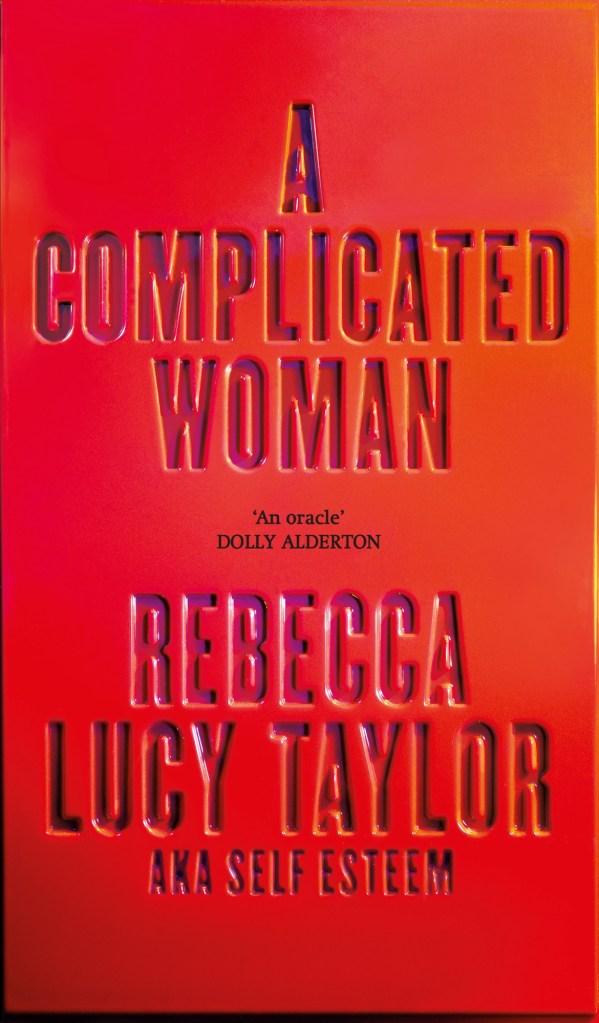
A Complicated Woman by Rebecca Lucy Taylor aka Self Esteem 

“I never could′ve told you anything I long for

While I was in the water swimming ‘gainst tides we′re taught to

Take it in our stride, laugh it off, take it on the chin just right

Don’t be too loud or too quiet, but I got all this fight

And now I see it clear with every passing of each year

I deserve to be here

And every time I fall, I crawl back like an animal

My focus is powerful.”

I knew I was going to love Self Esteem when I first caught her set at Glastonbury a few years ago, referencing 1990 Madonna with her black suit and corset. What made me stop and watch was that instead of the iconic John Paul Gaultier conical bra each breast was covered with the dome of Meadowhall Shopping Centre in Sheffield. At that point I didn’t know that Rebecca Lucy Taylor was born there but I could see she had a sense of humour, a sense of where she was from and had something very powerful to say as the above lyrics from her song Focus to Power show. In the intervening years Self Esteem has become a creative force with three solo albums, including A Complicated Woman this year. She had a Mercury Prize nomination for her album Prioritise Pleasure in 2022 and was the BBC Music Introducing act in 2021. She is not just a singer, she’s a multi-instrumentalist and has composed for theatre and became a West End lead in 2023/24 playing Sally Bowles in Cabaret. She’s been awarded an honorary doctorate in music from the University of Sheffield and a portrait of her hangs in the National Gallery. Now she has written a memoir, bringing together notes and lyrics, journal entries and observations on life as a woman in the 21st Century, referencing relationships, abuse, self-worth, creativity and living under the weight of the impossible expectations we impose on young women. The blurb refers to it as a ‘subversive anti-Bible’ and a ‘cathartic scream of a book’ and it is raw, emotional and so incredibly exposing. I will be buying it for my stepdaughters. 

The narrative is jagged and feels unfinished, a structure that underlines the theme of being the ‘finished’ article something that applies to both the professional and personal self. Creative work never feels fully done. I always imagined that when writing a book I would know when it was complete and I would feel satisfied that it was finished. A piece of writing is always open to change, but we have to let it go at some point and finishing is a collaborative process with mentors, agents, editors and might end up looking different to what you expected. Similarly as people we are never finished, the self is not one fixed thing and can be influenced by mood, something we watched, whether we slept well or not and interactions with others. I think we imagine as children that there’s a point where we become an adult and our self is a fixed thing, but the self is fluid and open to change until the last day we’re alive. The author writes that she wakes up knowing it’s going to be a day when her brain is against her. So out of all the options open she decides on the middle ground: 

‘Ultimately doing nothing garnished by a little of what I as a child imagined being an adult would be. A coffee in a cafe, walk to the cinema, watch an art house film alone, walk home.’ 

It’s almost a fake it till you make it idea. The self is just a raw block of clay but we still go out there, pretending to do what we think adults should.

Self Esteem at Glastonbury 2022

Toxic relationships are also a huge part of the book and it’s clear there was one in particular that was coercive and damaging. Tiny little snippets of information are dropped about him and I identified strongly with how she feels at these times. She addresses him remembering that: ‘ he made sure to take at least two pieces of jigsaw and hide them so it could finish it himself.’ It made me shiver with recognition. My heart broke for her in this paragraph: 

“I’ll never forget the first time it cracked and he became someone else. I spent that night trying to sleep on the floor and reaching back up to him in his single bed, sleeping soundly. Offering my hand over and over through the night. – And forever he held back. Each tendon in his fingers finally gracing me with tension. And in that moment the sickness in my stomach was gone and the addiction to his acceptance began.” 

She clearly spent years trying to please this person, to be enough but not too much. Enough in the right way that was acceptable to him. A rollercoaster of arguments followed by apologies to make things nice again, a blissful few weeks when he’s happy because she made herself smaller, then a withdrawal of affection, hurtful comments and arguments. It’s a place I’ve been and it only ended when I accepted I was enough, just as I was. I still feel sick to my stomach when something takes me back there and this really hit home. As she says, ‘tell me anyone who left when they should have.’ She also addresses the inevitable question of children, something women are always asked and I have noticed that I make a lot more sense to some friends now I have stepdaughters. The author wishes she could just have one, now, not because she wants one just because it would be done and people would stop asking. They ask as if you’ve forgotten to do it. There’s a point in the book though where change begins and it’s in a letter, because unsent letters have such power. It’s a letting go leaving the path clear to be whatever.
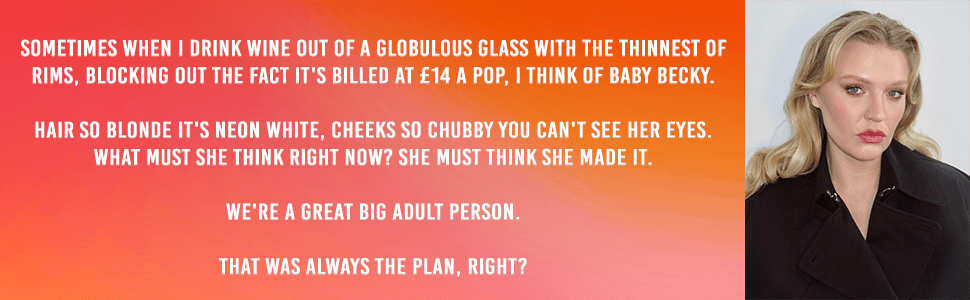
We get the sense of a person who has a huge and imaginative inner world, but is hampered by her own mind throwing out options, constantly questioning whether this or that is the right thing to do. There’s a very busy internal critic here and while the author may be an over-thinker and struggle with anxiety, I think this second-guessing herself is a habit many women have. It starts with parental pressures of what a girl should be, educational expectations influenced by gender, societal expectations of what an adult woman should want and how successful she should be. It’s as if feminism succeeded in giving women more choice, but also more expectations rather than equality. Yes of course we can have a career, but then you must go home and more than a fair share of housework, cooking, laundry and having the mental load of who eats what, which week a friend is coming to stay and an encyclopaedic knowledge of where every object belonging each family member might be found. On top of that are grooming standards, the endless opinions on whether women should age naturally or have surgery, when they should stop wearing short skirts and how to keep their sex lives spicy. No one asks a man when he’s going to fit in having a child or whether he should sacrifice his career for his family. This pressure is described beautifully here as it runs throughout the narrative alongside the extra pressures of being creative and a famous woman. Everyone talks about America Ferrarra’s speech in the Barbie film about what a woman is but I find the author’s words much more affecting as she writes a poem about herself as the woman she feels society wants her to be. A woman who eats the right things, who makes money but stays generous and humble, who is modern and desirable, but above all things maternal. It reads like a modern fairy tale.

‘I had one thousand friends and each and every one was happy with me, and felt I had given them enough time and attention’. 

It feels like slicing yourself into a thousand different pieces to be everything and keep everyone happy and they all think you’re amazing, but you’re still slicing yourself. It takes therapy, age and self-acceptance to throw off these expectations and doubts. In amongst this torrent of emotions there is a down to earth feel and a sense of humour that comes out a lot in lists – ‘things I should have said no to’ being one. There are also blunt truths that she clearly can’t say to the person but records in her diary – ‘I want to be fucked like that but not have to hear about your Edinburgh show.” I loved this directness, tempered with humour. It also shows how hard it can be for some women to say what they want and don’t want without judgement. 
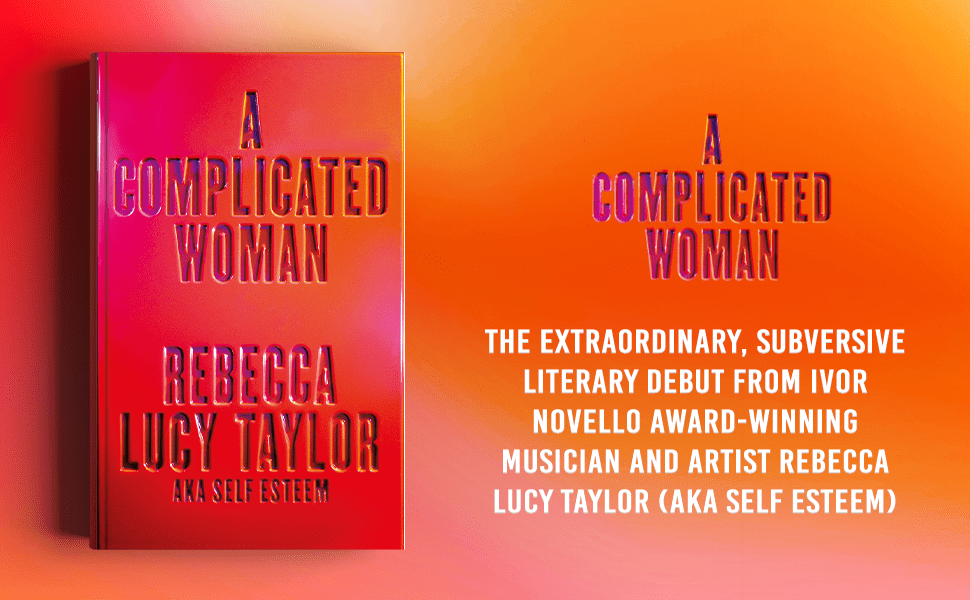
She gives us an insight into how those judgements are magnified in the music industry, where you’re trying to get your creative work out there but are being told you’d sell better if you wrote a certain way or were a bit more attractive. If she’d compromised she’d have a record deal by now, she’s told, why is she so difficult? This is a tale we’ve heard again and again in the music industry but it has to keep being said till something changes. We’ve heard it from the incredible Raye who wrote for other people for years because her own stuff didn’t fit in a specific box, or Cat Burns who writes about how difficult it is to know how to be the human everyone expects. Paloma Faith is an incredible inspiration and I watched a clip of her speaking to students at the university graduation. She has delved into music, fashion, writing, broadcasting and art and she passed on an incredible bit of advice – she has always been brimming with ideas and would worry that she couldn’t fix on one way to get these thoughts and ideas out there. She remembered a conversation with one of the tutors who said she didn’t have to fit all of her ideas into one mould. One idea might be a brilliant book, rather than trying to condense it into a song but another might be better suited to fashion or art. She didn’t have to fit into one mould. I think Rebecca is the embodiment of that idea, brim full of ideas and happy to range across music gigs, theatre shows, dance, tv appearances and memoir writing. The point is the creativity, not the medium. 

I can think of so many women who can take something from this book and it will sit happily up on my shelf with writing from Caitlin Moran and Paloma Faith, hugely creative and intelligent women with a lot to say. It renewed something I’ve been wrestling with in my own head now I’m hitting menopause and middle age – it’s ok not to ‘grow up’ but take joy in every new incarnation of yourself and the changes it brings. It’s subversive in a world where we’re told we should be striving to stay young and relevant. to be unhappy getting older. I found so much inspiration in this memoir, both personal and creative, as well as a wonderful feeling of being seen. 
Posted in Monthly Wrap Up

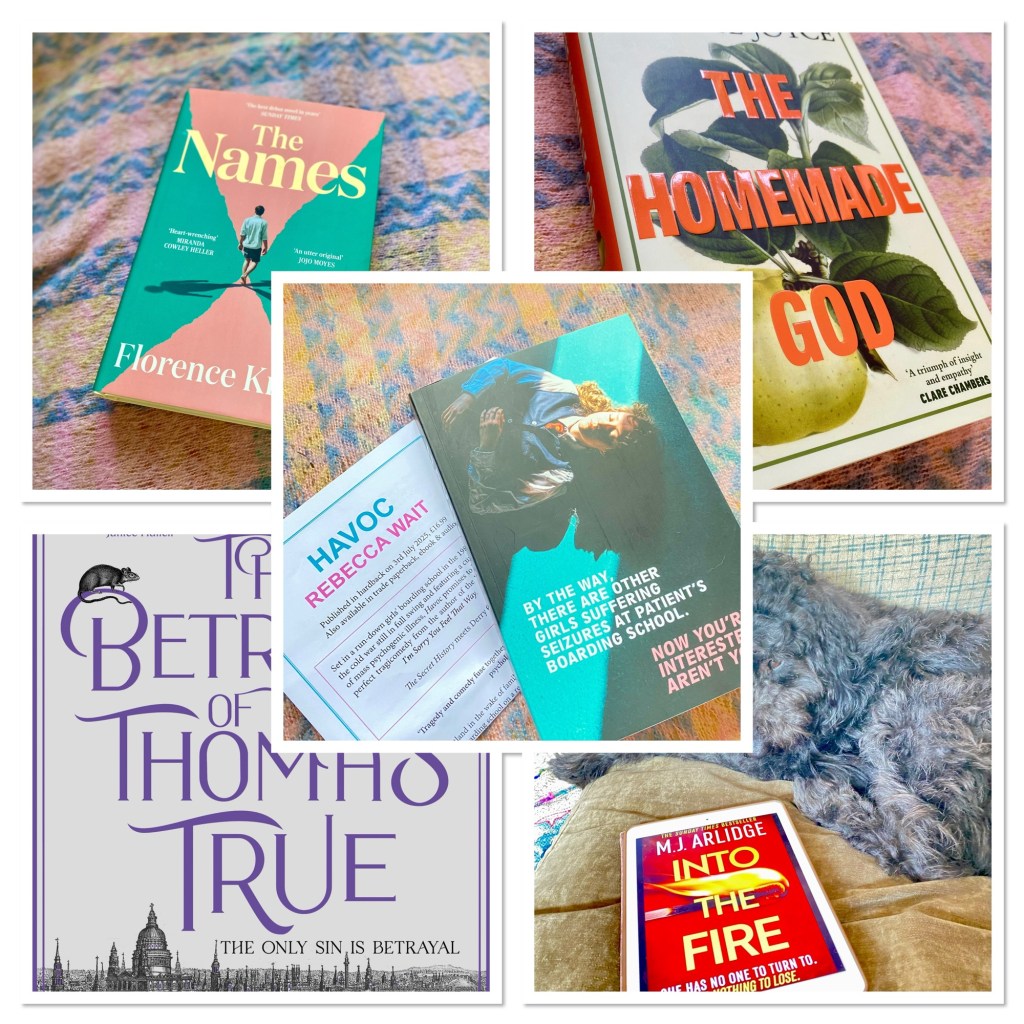
Best Books July 2025.

I’ve had a lovely reading month because even the books I had for blog tours, turned out to be fantastic reads. Any of these could easily make my end of the year list and some are by authors I’ve never read before. Others were from series I’d lost touch with and one has an incredible back story of the struggle the author had to get it published. I feel very privileged, looking back and realising what an incredible month of reading I’ve had. I’m already looking forward to next month’s choices.

This was one of those unexpected joys, a book I’d heard very little about and chose to read with my Squad Pod just on a short synopsis. I had no idea whether I’d enjoy it or not, but it turned out to be fascinating and very apt, because I’d been reading about Functional Neurological Disorder. Havoc is a brilliant combination of school drama, mystery and dark comedy featuring a wonderful character called Ida who lives on a remote Scottish island with her mother and sister, after fleeing from her mother’s boyfriend Peter. What started as a lonely but safe place to live, became impossible when her mother did something unforgivable and the island’s inhabitants turned against them. Deciding she wants to leave, Ida looks for private boarding schools who provide scholarship places and discovers one, as far away from Scotland as she can find. St Anne’s sits on the south coast of England, so remote and underwhelming that the school are terribly surprised when their scholarship student actually turns up. No one ever has before, so they don’t have anywhere suitable to put her. The school is ramshackle and in danger of falling off the cliffs and the food is questionable and often tastes of fish, even when it isn’t. Ida is placed in a double room with school miscreant Louise and starts to settle in. However, things take a very strange turn when Head Girl Diane becomes unwell, starting with strange jerks of the arms and soon descending into full blown seizures. Soon after, Diane’s friend April is sick and then starts the familiar pattern of jerks. By the time a third girl has the same symptoms outside agencies such as environmental health, doctors and the police start to descend on the school. Is this illness a virus or is it environmental? Could it be something more sinister like poison? This was a fascinating and often amusing read, with an illness that shares the symptoms of FND – a syndrome where neurological symptoms are present and real, but are often somatic. Although it’s also possible some malign force is at work, especially when rat poison appears in an unexpected place. Louise and Ida are a dastardly duo and I also loved the friendship between the school’s geography teacher and her strident and rather cynical flatmate. Little surprises are everywhere and I would love to meet the characters again,

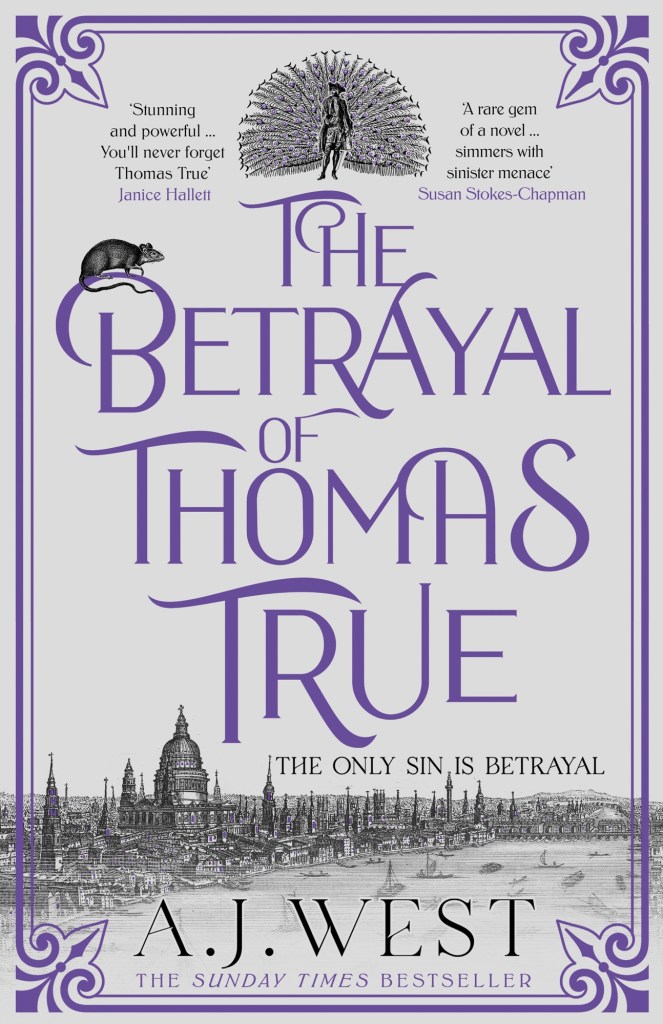
This book was the total opposite of the last in that I’ve heard nothing but praise for A.J.West’s newest novel. I’d loved The Spirit Engineer so much and I knew the struggle he’d had to get this published, but he believed in it and I’m so glad he was picked up by my favourite indie publisher Orenda Books. A match made in heaven. Having been supervised for my university dissertation by a lecturer who specialises in 18th Century Literature and secret sexualities, this was the perfect marriage of subject and style for me. I love when post-modern authors write back to a time in history to place people into their historical context. These are people who were erased from history due to their disability, sexuality or the colour of their skin. This has been done so well by authors like Sarah Waters who features 19th Century lesbians, Lila Cain whose main character were freed slaves in The Blackbirds of St Giles and Suzanne Collins, whose novel The Crimson Petal and the White is narrated by Sugar, a young prostitute with a disability.

Thomas True wears its vast amount of research lightly and definitely follows the style of the picaresque novel, where a young naive person makes their way into the big wide world with some humorous and rather risqué adventures. This young innocent travels to seek his fortune in London and is robbed on the highway, falling into the ‘wrong’ company – here this is the Molly House run by Mother Clap. A giant but gentlemanly man called Gabriel has brought him here and he is intrigued by the merriment, the wearing of women’s clothes and the safety of a place without scrutiny. This is above all a love story.  Thomas can’t possibly know how important this moment will be in his life, but it’s pivotal to his journey, his future and his heart. Far from the genteel worlds of Bridgerton and Jane Austen, the author creates a richly imaginative setting that brought all my senses to life – but not always in a good way. London is grim, overcrowded and disgusting. One scene where a body needs to be extracted from a ditch full of sewage is revolting. Even Mother Clap’s has a grotesque feel. These are not the preened and powdered men you might expect. Gabriel is huge, hairy and spends all day doing a heavy building job. He and Thomas have a complicated journey, one naive and optimistic and the other haunted by his past. You’ll be transfixed, hoping for their outcome to be a happy one but knowing this is a city that punishes ‘mollies’ by hanging and when the mysterious ‘rat’ betrays the men from Mother Clap’s the danger becomes very real. You can tell I loved it by the amount I write about it! It’s a definite must read.

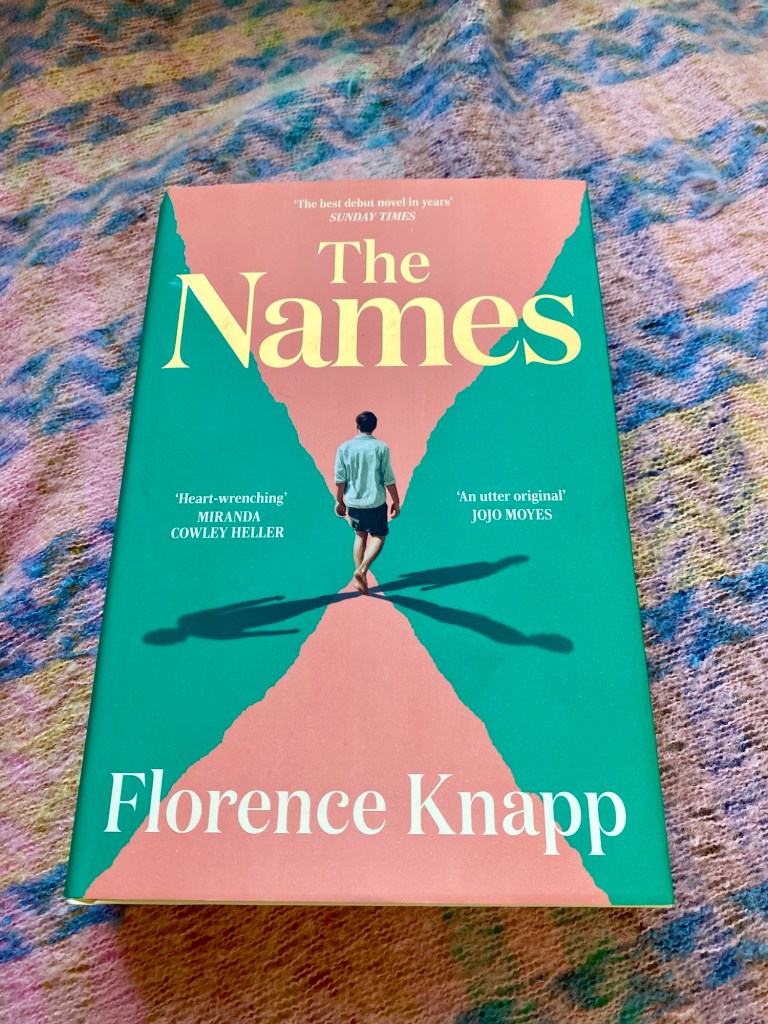
I knew from the first page that this novel was going to be special and it is utterly brilliant and an unbelievably good debut from Florence Knapp. It’s 1987 and Cora is going to register the birth of her baby boy. His name has been settled on because Cora’s husband has chosen his own name for his son – Gordon. But it wouldn’t be Cora’s choice. Cora’s choice would be something that doesn’t tie him so obviously to his father. She thinks Julian would suit him. Little sister Maia looks in the pram at her brother and decides he looks like he should be called Bear. All of these options swirl around in Cora’s head. In this moment, Cora has the power to make a choice and it’s done. It can’t be changed. What would happen if she went with Julian or even Bear? In the short term Gordon would be furious. How bad would it be this time? Long term, would it change her baby’s character or path in life? This is exactly what Florence Knapp does with her story. The book splits into three narratives and we discover what happens to this whole family, depending on Cora’s choice for her baby boy’s name. 

We then move on seven years and meet Bear, a name that proves to be a catalyst for change. We also meet Cora’s choice, Julian – the choice she hoped would break him free from domineering generations of Gordons. Although, what if he is called Gordon? Brought up by a cruel father to continue in the same mould perhaps? Or he might just break free from the shackles of his name? Each life is sparked by this one decision but it isn’t just Cora’s son’s story. This is the life of the whole family with all its ups and downs. It’s about how trauma shapes lives and whether love brings healing and hope to every version of who we are. Even her minor characters absolutely shine. Grandmother Silbhe and her friend Cian are so wonderful, modelling healthy male/female relationships for Julian and Maia. Cian is also Julian’s mentor at work, bringing out a creative side that needs nurturing. Julian needs to work with his hands and meeting fellow creatives helps him find his tribe. Lily is lovely character and we get to know her best during Bear’s narrative. I loved how she has to find a balance between giving Bear the freedom he needs without breaking her own boundaries in the relationship. It’s an utterly compelling debut and zooms straight into the list of best books I’ve read so far this year. The author brings incredible psychological insight to a story about how our names shape our identity, our relationships and our life choices. Something we didn’t even choose. Can it influence us to a huge extent, or do we become the same person no matter what the choice? 

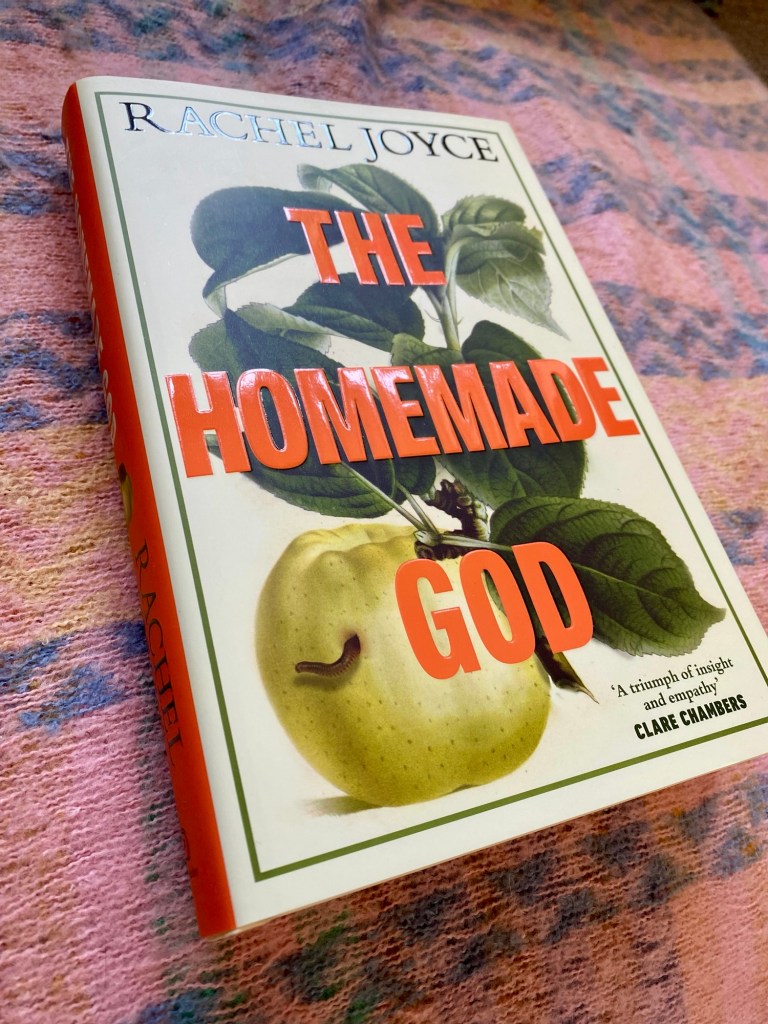
Rachel Joyce is a must-buy author for me and she gets better and better. This brilliant novel focuses on a bohemian family; Vic the father who is an artist and his four children – Netta, Susan, Iris and Goose (short for Gustav and the only boy). They’ve been parented by Vic and a series of au pairs after the sudden death not long after Iris was born. Their father’s art came first always and the conditions he needed in order to create were paramount so the oldest girls often played the mother role for Iris and Goose, especially when Vic inevitably slept with the au pairs. Vic was not an artist celebrated by the establishment. The description of his paintings brought Jack Vettriano to mind, criticised heavily by the art world, but very popular with the public. Now grown up, his children are stunned when Vic starts losing weight and drinking green, sludgy health drinks. His diet is being looked after by his new girlfriend, 27 year old Bella-Mae. None of his children have met her and she doesn’t seem keen to try. Within weeks Vic announces they’re engaged and Netta suggests that they all stand back and give this the space it needs to fizzle out. A couple of weeks later, Vic announces their marriage with a single photograph from the family home in Orta on Isola Son Guilio with Bella-Mae in such a heavy veil they can’t make out her face. They are staying at the house, situated on an island in the middle of a lake, but only two days later Netta is stunned by a phone call from a stranger called Laszlo, claiming to be Bella’s cousin. Vic has been dragged from the lake, drowned after a morning swim went wrong as the mist descended. Why would Vic go swimming in the mist? His children come together to travel to Orta, to finally meet their new stepmother and to find out whether she has killed their father. 

Bella isn’t what the siblings expect and nor is the villa, which has been changed in decor and atmosphere. She seems insubstantial and too fragile to have caused such an uproar. Especially when they’ve pictured her with an iron will, imposing her diet on their father and gaining their inheritance. She will prove to be a mirror through which each of them evaluate their lives. I love family sagas and this one is brilliant. It’s psychologically fascinating and I’m not going to ruin that for you by delving too deeply. I was absolutely transfixed! I couldn’t work out whether there was deliberate manipulation at play or if this was just a case of an outsider causing people to view everything through a different lens. Is Bella a destructive force or a helpful one? Whatever she is, the siblings will have to look at themselves, their choices and their relationship to their father. Some revelations will be explosive and take place in the open air- one particular meal is cataclysmic. Other revelations are quieter, insidious or internal but no less devastating. An utterly brilliant read for someone who loves complicated and tangled relationships. I LOVED it.

This book opened with a heart-stopping scene that set the pace for the rest of the story. Helen is relaxing after meeting her lover in a luxury hotel. While he has a shower, she is in her nightgown and robe enjoying the night time view over downtown Southampton. Movement suddenly catches her eye and she’s drawn to a woman who’s running down a darkened street towards a precinct of shops, pursued by two men. As they catch up, one of them pulls out a bicycle chain and starts to beat the woman. Helen doesn’t wait or think, tearing out of the hotel room and down several flights of stairs as she’s too impatient to wait for the lift. She tears down the dark street hoping that someone has called the police. Helen flies at one of the attackers, who is taken completely by surprise and she soon disables the second attacker before turning to the woman who has been badly beaten. She looks like she’s from the Middle East perhaps, with two very distinctive tattoos placed on her forehead and chin. Unfortunately, Helen has committed the cardinal sin of combat and has turned her back on her attackers. The next thing she feels is a huge bang to her head and then everything goes dark. This opening scene tells me this will be a gritty, modern thriller with a kick-ass heroine. 

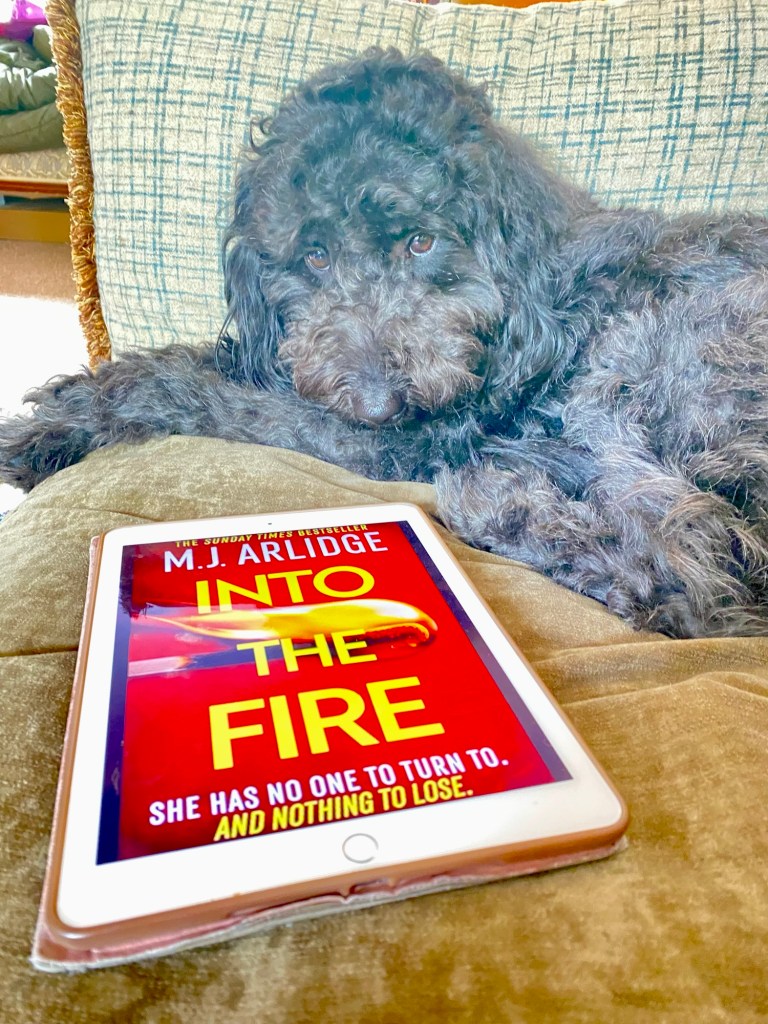
This is the thirteenth novel in the DI Helen Grace series and I’m seriously out of touch with the character, having only read the first couple of novels after picking them up in a book swap. Helen is working on her own initiative after handing in her notice at the end of the last novel, with her protege Charlie being promoted in her place. Helen doesn’t know what the next step is, but she’s been enjoying the break. The only thing she misses is the camaraderie of a team and although she has enough money to really think about what’s next, she is anxious about it. Although life will bring it’s own answer soon enough and it might be the last thing she’s expecting. She starts to investigate alone, feeding into Charlie who is trying to target traffickers and their victims coming through the port in lorries and containers. The story is told mainly through Helen’s eyes, but also through the narratives of two other women. Viyan is another trafficked Kurdish Syrian woman and Emilia is a journalist whose father is dying in prison. At first we’re not sure how all of these narratives fit together but slowly they form a cohesive picture. Helen is formidable! You will hold your breath for the final showdown and all the women involved. Each short punchy chapter is action packed and will keep you reading ‘just the next chapter’ until it’s 2am. I now need to set aside time and read the ten novels between this and the last one I read. I’ll probably load up the kindle with them before I go on holiday so I can carry on without interruption. This was a belting, action-packed, female led, crime thriller and I recommend it highly. 

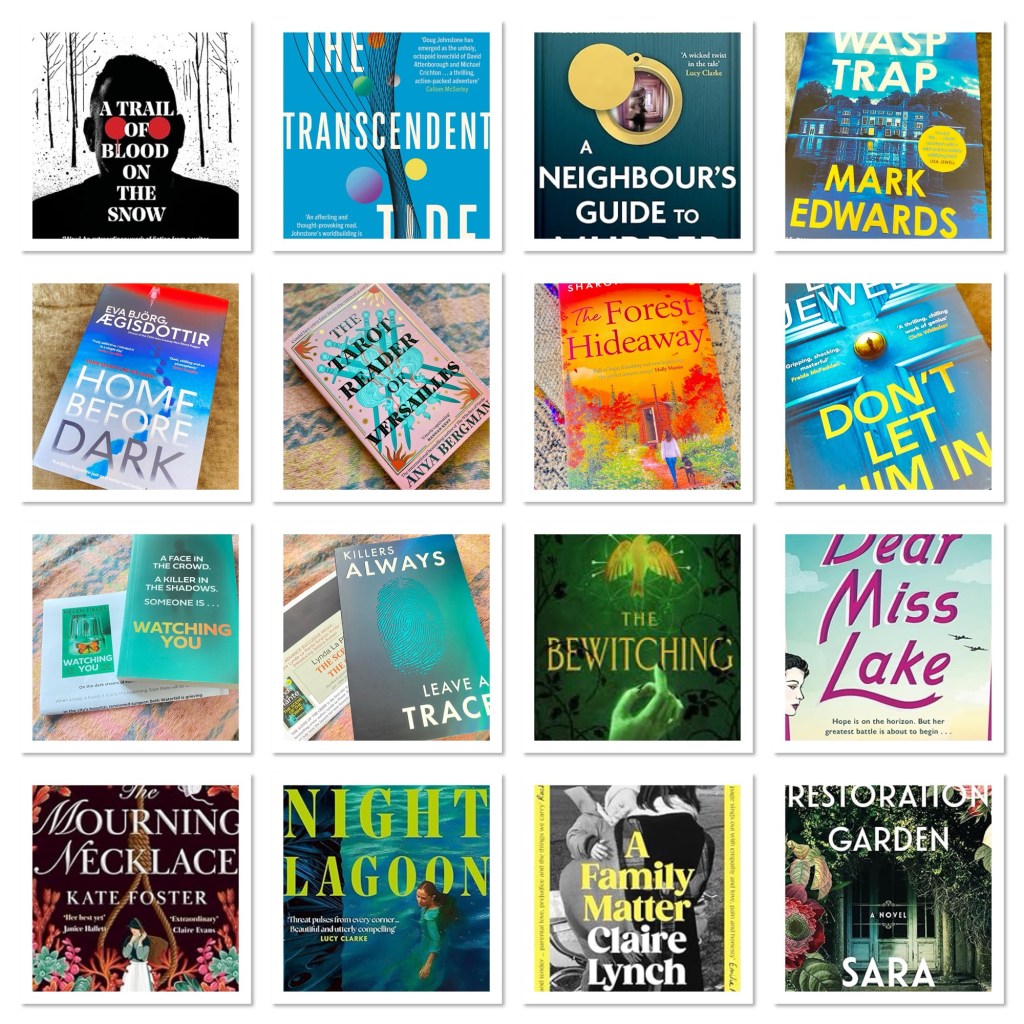
August TBR

Posted in Personal Purchase

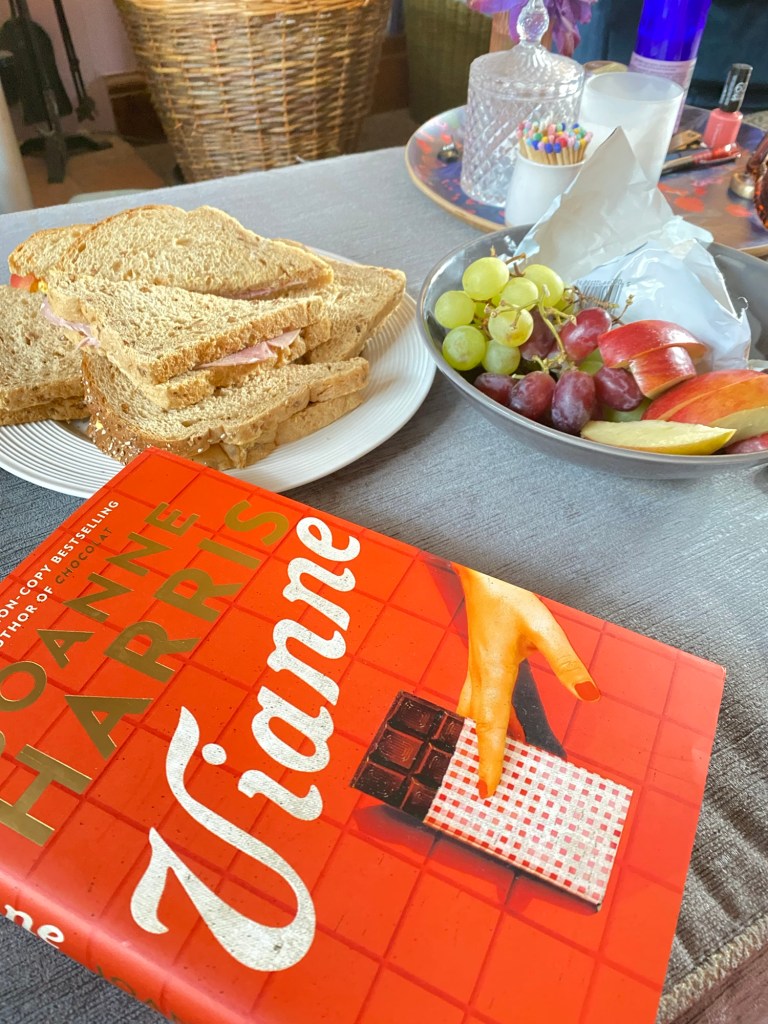
Vianne by Joanne Harris

As Vianne scatters her mother’s ashes in New York, she knows the wind has changed and it’s time to move on. She will return to France, solo except for her ‘little stranger’ who is no bigger than a cocoa bean but very present in her thoughts. Drawn to the sea she blows into Marseille and to a tiny bistrot where owner Louis is stuck, struggling with grief for decades after losing his wife Margot. She charms herself into a waitressing job for bed and board, but with his blessing she starts to cook for his regulars using the recipe book Margot left behind. Louis has one stipulation, she mustn’t change the recipe at all. She revives the herb garden and starts to make friends, including Guy who is working towards opening a chocolate shop. This is going to be the place to have her baby, but then she must move on. She can see her child at about six years old, paddling by some riverboats tethered nearby, but she can also see the man her mother feared. The man in black. Vianne has inherited a peculiar kind of magic that urges her to fix the lives of those around her and give them what their heart truly desires. This is fine when it’s discerning their favourite chocolate, but can cause problems when it becomes meddling. Her mother warned her that she shouldn’t settle too long in one place and Vianne knows she has the strength to leave whenever she feels it’s right, but is thinking about those around her? 

What a joy it is to be back in Vianne’s world. It’s like being back with an old friend and in a couple of sentences we’d picked up where we left off. This is a younger Vianne, aware of her burgeoning abilities, but inexperienced in the power she holds and it’s effects on others. Part of that ability is a natural charm and willingness to work hard. She takes time to win people over. She’s happy to take on a challenge whether it’s the recipe book, the garden or the chocolate shop. She merely softens the edges of all this with a ‘pretty’ here and there or tuning into someone’s colours. She has a natural ability to make the best of things, whether it’s adding a vase of flowers to a room or a pinch of chocolate spice here and there. It doesn’t do the work, it just deepens the flavours or enhances what’s there. There’s that little bit too much optimism, not fully reading a situation before wading in, that comes with youth and inexperience. She’s streetwise, used to watching her back. She knows how to protect herself and when to run, but lacks emotional intelligence. She’s unaware that breaking down someone’s defences can leave them vulnerable or even broken. Vianne doesn’t have a malicious bone in her body though, just youthful exuberance and emotional immaturity. 

As always there are wonderfully quirky characters with lots of secrets to uncover and others who become real through memory, artefacts or reviving something they loved and giving it life. Louis has a grumpy exterior, not as grumpy as his friend Emile, but definitely a tough shell and a rigid routine. Every day he cooks for his regulars never deviating from the recipes or her kitchen equipment. Vianne has to use specific pans for certain dishes and ancient utensils that could do with an update, but she doesn’t complain. On Sundays he visits the cemetery, but instead of going to the soulless high rise mausoleum where Margot is laid to rest, he visits her favourite poet and leaves a red rose. Vianne is touched by his adherence to this routine, but it’s only when she is in touch with Margot’s spirit that she can see the full, complicated picture. As she uses the kitchen she feels Margot’s sadness and anxiety. Her need for a baby comes through strongly. Was this the unhappiness at the centre of their marriage? Emile is very difficult to get a handle on, he doesn’t respond to Vianne’s charm or her chocolates. His concern is that she will take advantage of Louis, but the more she seems to settle the more hostile he gets. I enjoyed Guy and the chocolate shop, but it’s another occasion where she doesn’t get the bigger picture. Guy is quite similar to Vianne in temperament, drive and enthusiasm. He seems utterly different in character to his friend Mahmet. Vianne notices Mahmet’s more pessimistic nature and concerns about money. She puts it down to the friend’s different backgrounds and experience, but I could see that Mahmet was a realist and his concerns might be valid. It becomes clear that Guy is a dreamer and as a child of rich parents has never faced the consequences of disaster. He also has a tendency to bail out when things get difficult. 

Motherhood is the major theme of the book from Vianne’s pregnancy to the sadness of Margot and the relationship Vianne had with her own mother. There were memories of Vianne’s mother throughout and she has to battle with her mother’s voice constantly. She has internalised her mother’s voice to such a degree that it’s become one of her own inner voices. She fights against it, letting herself feel that natural urge to belong especially when Louis starts to get ready for the baby’s arrival. Part of her wants to stay, but her mother’s adage about becoming too comfortable is insistent. Is there something they were always running from? She’s angry with her mum in some ways, thinking about what she’s missed out on – a home, a wider family, school and friends her own age. It may be there was a good reason for their anonymity but her mum was all she knew making it all the more devastating when she died and Vianne was left utterly alone. Vianne’s own glimpses of motherhood are in the future, when her baby is a small child. She’s absolutely sure it’s a girl and the name Anouk comes to her. It seems that although her instinct and inner voice suggest they keep moving, she doesn’t want Anouk to have the upbringing she did. She wants Anouk to have a sense of belonging, a school and local friends, which gave me a lovely flash forward to Chocolat and Anouk running wild through the village with a pack of friends behind her. She remembers an instance when her mother insists they leave behind Vianne’s toy rabbit to teach her not to get attached to things. Is it Vianne’s memory of this incident and longing for that toy rabbit that conjures up her daughter’s later imaginary friend, the rabbi Pantoufle? I loved these little links to the future. 

The details and images they conjure up are always the best part of this series for me, because they take me on a visual journey. I was fascinated to read in her Amazon bio that she has synaesthesia, because I do with certain colours and I can feel that in her writing. The author weaves her magic in the detailed recipes of Margot’s book, the incredible chocolates that she and Guy create and the decorative details of their display window with it’s origami animals and chocolate babies. The most beautiful part is how Vianne brings people together. Yes, it’s partly magic but it’s also her kindness and lack of judgement. The noodle shop next door to the chocolate shop leaves rubbish and oil drums in the back alley which are an eyesore. When they’re reported the owner blames Mahmet, possibly due to his seemingly unfriendly demeanour. Vianne spends weeks taking them chocolates and chatting, slowly gaining their trust until they’re helping out for opening day. She even manages to get Louis and the fierce Emile to visit the shop, even though it’s in a part of the city Emile swears neither of them will visit. It’s when we see what Vianne can accomplish on days like this that we see her at her best – thinking forward to her Easter display window in her own shop or the meals cooked for friends under starlit skies. Vianne is a glowing lantern or a warm fire, she draws people to her light and to bask in her warmth. This is also why readers who love the Chocolat series return again and again. We simply want to be with Vianne and that’s definitely a form of literary magic. 

Out Now From ORION

Meet the Author

Joanne Harris (OBE, FRSL) is the internationally renowned and award-winning author of over twenty novels, plus novellas, cookbooks, scripts, short stories, libretti, lyrics, articles, and a self-help book for writers, TEN THINGS ABOUT WRITING. In 2000, her 1999 novel CHOCOLAT was adapted to the screen, starring Juliette Binoche and Johnny Depp. She holds honorary doctorates from the Universities of Sheffield and Huddersfield, is an honorary Fellow of St Catharine’s College, Cambridge, and a Fellow of the Royal Society of Literature.

Her hobbies are listed in Who’s Who as ‘mooching, lounging, strutting, strumming, priest-baiting and quiet subversion of the system’. She is active on social media, where she writes stories and gives writing tips as @joannechocolat; she posts writing seminars on YouTube; she performs in a live music and storytelling show with the #Storytime Band; and she works from a shed in her garden at her home in Yorkshire.

She also has a form of synaesthesia which enables her to smell colours. Red, she says, smells of chocolate.

Photo ©Frogspawn

Posted in Sunday Spotlight

Sunday Spotlight: Uplifting and Comforting Reads. Veronica Henry.

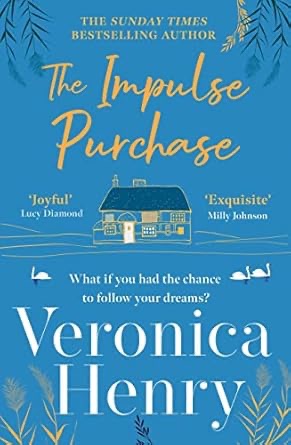
I was totally new to Veronica Henry when I was invited onto a blog tour a couple of years ago. I was desperately in need of an uplifting read after a lot of dystopian and crime fiction. I read The Impulse Purchase and found a series of warm, charming and uplifting reads that are so light but full of strong and capable women trying to change their lives. The settings are gorgeous, romantic and so well described it’s like having a little holiday.

I spent an escapist couple of days reading about this interesting family of women all at a crossroads in life. Julia, great-grandmother and owner of the beautiful Wisteria House in the village of Rushbrook, has died and left behind four generations of women. There’s grandmother Cherry who was a model in the 1960’s; mother Maggie, the redoubtable owner of a food PR company; daughter Rose who is a new mum and volunteers at the local homeless charity; and Gertie, three years old and the apple of everyone’s eye. Aside from great-grandmother Julia’s death and Gertie’s birth, this is a family facing a lot of change. Maggie is still mourning the death of the love of her life, husband Frank. Maggie also faces change at work, as her apprentice has absconded taking some of the business with her. Rose has struggled with grief, but her job is giving her more confidence. Cherry organises a party to celebrate her husband’s retirement, Mike is an artist and photographer, retiring from teaching and looking forward to spending more time travelling with Cherry. They just need to finish the sale of Wisteria House, but Cherry sees something at the party that changes her mind and sets in place a new plan for all the women of the family. The Swan is Rushbrook’s public house and has been a family haunt for as long as they can remember. If Cherry does the unthinkable and use her inheritance to buy The Swan, could the women come together and turn it into something really special. This is uplifting and inspiring, as well as incredibly cozy.

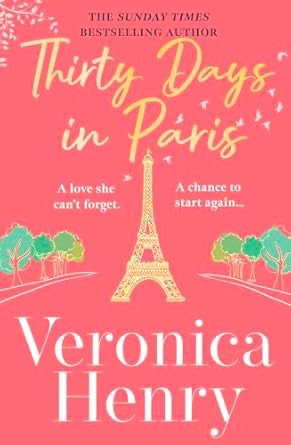
Years ago, Juliet left a little piece of her heart in Paris – and now, separated from her husband and with her children flying the nest, it’s time to get it back! So she puts on her best red lipstick, books a cosy attic apartment near Notre-Dame and takes the next train out of London. Arriving at the Gare du Nord, the memories come flooding back: bustling street cafés, cheap wine in candlelit bars and a handsome boy with glittering eyes. But Juliet has also been keeping a secret for over two decades – and she begins to realise it’s impossible to move forwards without first looking back.

Something tells her that the next thirty days might just change everything…

Juliet is now a middle-aged, ghost-writer who’s at a huge crossroads in life. She and her husband have taken the very brave decision to separate as their last child leaves home for university. Most of their friends think they’re crazy, because the couple still get along, they’re probably the best of friends in fact. However, they feel they’ve drifted into two different paths. As her husband has embraced all things cycling – including the Lycra and the diet – Juliet isn’t enamoured and would rather curl up with a good book or go to the theatre. As the time to sell their large family home has come around, they can’t see the point of trying to meld their differing lifestyles into another joint home. So each will take half of the house sale and do their own thing and Juliet would like to take a trip into her past. Years ago, when she was still a teenager, Juliet went to work as an au pair in Paris, but returned in shame and sadness only a few month later. She has rented an apartment for a month to reacquaint herself with the city and spend some time writing her own story. However, revisiting the past is never easy and Juliet finds there are experiences she still needs to process and come to terms with. 

I found reading this book a little lie watching Sex and the City or perhaps more aptly, Emily in Paris which I binge-watched over the Christmas period. Everything about Juliet’s time in Paris is simply gorgeous from the description of the patisseries near her apartment, to the clothes worn by her friend ….. and the work Juliet starts on her book project. It’s romantic and simply gorgeous.

There are a couple of her novels that I’ve gathered up from charity shops and are on the the throwback pile. In A Night on the Orient Express one group of passengers are settling in to their seats and taking their first sips of champagne, the journey from London to Venice is more than the trip of a lifetime. From a mysterious errand; a promise made to a dying friend; an unexpected proposal; a secret reaching back a lifetime…there are so many reasons to be there… As the train sweeps on, revelations, confessions and assignations unfold against the most romantic and infamous setting in the world.

One night to fall in love.
One summer to change everything…

Over the last few months, Connie’s whole world has fallen apart. Her husband’s run off with an older woman, the magazine she works for has gone bust and she’s having to sell the family home. So when her beloved godmother, Lismay, begs her to help run the beautiful Château Villette, it couldn’t come at a better time…

No one knows the château quite like Connie. She spent a blissful summer there in her twenties, learning to cook delicious French food for the guests, ironing the lavender-scented sheets – and trying to resist the very handsome neighbour, Remy.

As soon as she arrives, it’s clear that the château is close to crumbling and Connie knows she’s going to have her work cut out. Could it be the fresh start she didn’t even know she needed – and will she find a way to save the château, before it’s too late?

Coming June 2025 from Orion

Meet the Author


I’m Veronica – otherwise known as Ronnie – and I’m delighted you’ve found your way here!

I love to take my readers somewhere they might like to be, whether a gorgeous house in the countryside or a seaside clifftop; a trip to Paris or on board the Orient Express. There, my characters go through the trials and tribulations of everyday life, embroiled in situations and dilemmas we can all relate to. And of course at the heart of my writing is love. All kinds of love, not just romantic: the love of friends and family, or a place, or a passion (food, wine and books, in my case . . .)

I also live by the sea and head to the beach every day with my dog Zelda. I love discovering new restaurants, and do a bit of sea swimming to offset the calories. I love a bit of upcycling too – never happier than when painting a set of bookshelves with a tin of Farrow and Ball.

My biggest writing influences are HE Bates, Nancy Mitford, Jilly Cooper and any book that has a big rambling house and an eccentric family.

You can find out more about me and my books by following me on Instagram and Facebook @veronicahenryauthor or on twitter @veronica_henry

Posted in Netgalley, Publisher Proof

The Woman in the Purple Skirt by Natsuko Imamura.

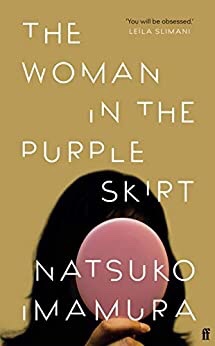
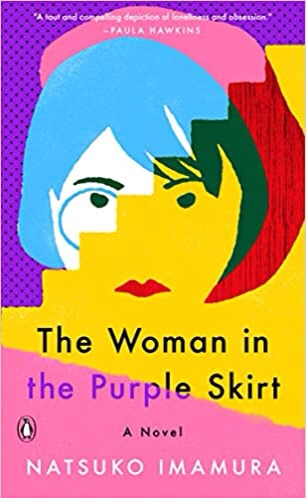
This was an unexpectedly quirky and refreshing take on the obsessional friendship trope, a theme I’ve loved ever since watching Single White Female back in the 1990’s. This is the first of the author’s novels to be translated into English from the original Japanese. I was surprised by that, because there was something about the writing style and the main character that I thought would appeal to the British reader. I thought earlier novels might have also appealed to British readers. The daily eccentricities of the the Woman in the Purple Skirt the man m were charming and intriguing, so it was that and my curiosity about the motives of the Woman in the Yellow Cardigan that drew me in to the story. There is also an interesting, melancholic sense of humour that struck me as something British reader would enjoy.

There are some characteristics that the two women share, such as living standards and finances. It’s possible that both are lonely and are living from hand to mouth, but what drives the Woman in the Yellow Cardigan to get up and watch her every move? What does she want? Eventually, she lures the Woman in the Purple Skirt to a job with the cleaning agency where she works as a hotel housekeeper. This brings the women into proximity, but instead of a friendship emerging, the Woman in a Purple Skirt falls into an affair with the boss. This is the main difference between the women; the Woman in a Yellow Cardigan only watches, while the Woman in a Purple Skirt actually lives. I felt this distinction very strongly and wondered whether there would be resentment or even anger towards the Woman in a Purple Skirt. This is where the book really ventures into thriller territory as the women meet and we see the dynamics of female relationships, the obsessiveness and that human need to be seen, recognised and even desired. This woman simply wants to be noticed and considered by someone else. Why do people recognise the Woman in the Purple Skirt? What does she have that makes people sit up and take notice?

I found myself thinking about the word ‘sonder’ – one I’m using for my own writing at the moment. It’s a German word to describe the realisation that every random passer by has a life as rich and varied as our own. This seems to be what the Woman in the Yellow Cardigan wants to know, the rich complexity of the Woman in the Purple Skirt’s life. The woman always wears a purple skirt, it is possibly this and her set daily routine that makes people notice her. As she leaves her apartment every day she is followed and insulted by neighbourhood children, in fact she’s great entertainment for the neighbours who seem equally fascinated by her set routine. Every day she walks to the bakery and buys a single cream cake, takes it to the same park bench and eats it. No one knows who her family are or where she’s from. Her jobs are temporary, she lives alone and doesn’t even attempt to relate to others. She is an enigma, and the Woman in the Yellow Cardigan watches her every move, until she knows her daily routine uby heart. Even her appearance is intriguing. From a distance she could pass for a schoolgirl, but up close she has liver spots that belie her age. Her hair is dry, she lives in a small, shabby apartment and is short on money. She looks like one thing, but could very well be another. She’s different, but seems to have carved a life out in the world, something that the Woman in the Yellow Cardigan seems to find so difficult.

I thought it was wonderful to have two such complex and multi-dimensional female characters, especially where the relationship between them is the focus. There was a peculiar creeping unease built into the narrative. Japan seems to exude ‘otherness’ like nowhere else, a theme explored in the film Lost in Translation. I lived next to a Japanese Garden for seven years, where English plants and trees were pruned into the shapes of Japanese topiary. Stepping into it from my cottage garden made felt like entering a surreal and alien landscape. That’s a little bit what this book felt like. It was original and refreshing, perfect for if you’re in a reading slump, and a fascinating take on the thriller genre.

Posted in Rachels Random Resources

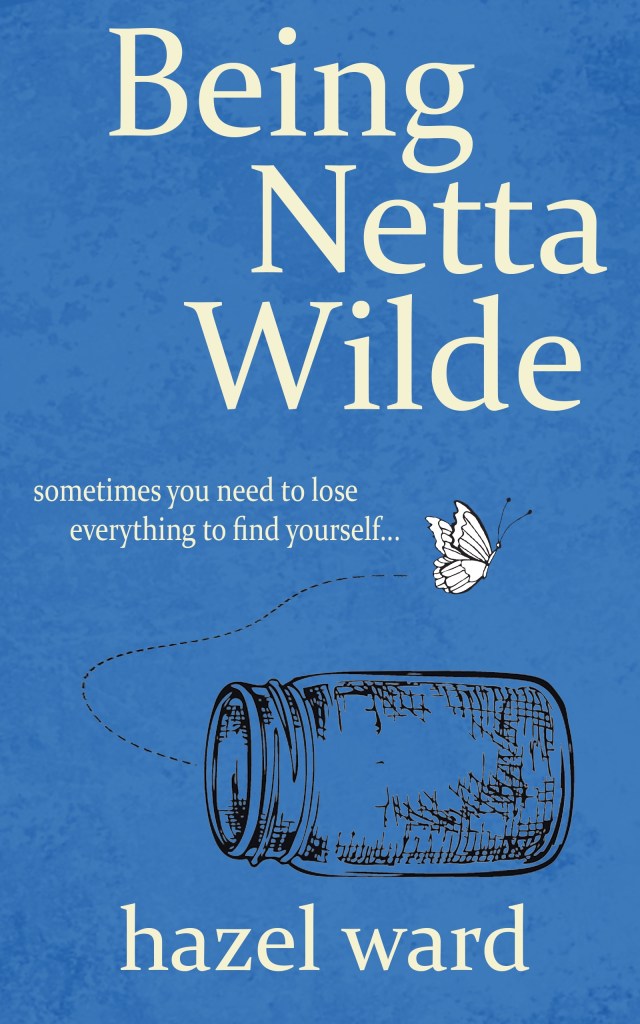
Being Netta Wilde by Hazel Ward.

An uplifting story of love, loss and second chances that celebrates friendship and human connections.

Netta Wilde was all the things Annette Grey isn’t. Netta Wilde was raw, unchecked and just a little bit rebellious. She loved The Clash and she loved being Netta Wilde.

Annette Grey is an empty, broken woman who hardly knows her own children. Of course, it’s her own fault. She’s a bad mother. An unnatural mother. At least, that’s what her ex-husband tells her.

The one thing she is good at …

the one thing that stops her from falling …

is her job.

When the unthinkable happens, Annette makes a decision that sets her on a journey of self-discovery and reinvention. Along the way, her life is filled with friends, family, dogs, and jam. Lots of jam.

Suddenly anything seems possible. Even being Netta Wilde again.

But, is she brave enough to take that final step when the secrets she keeps locked inside are never too far away?

I chose to read this novel, purely because I am a middle-aged woman who looks back to the nineties from time to time and wonders what would that girl think of who I am now? I still wear floral dresses, Doc Marten boots and big slouchy cardigans. I still listen to the same music sometimes, go to gigs and read, constantly. Of course there are times I think I’ve lost myself – that underneath the avalanche of life experience I’ve taken on a different shape. There are times life has been so difficult I haven’t been able to find the girl I was. I’m at my happiest when I’m close to her. When I feel we’re still connected. The times when I can’t find her and I feel completely lost, she’s still there. She never really goes away.

Annette Gray doesn’t know that. She thinks she’s lost her self. She’s become drab, miserable and as Gray as her name suggests. I thought it was clever to create a structure where the actual story feels dull and slow, just as Annette does. It just didn’t come alive at first. Then I realised what the author was doing. As we see flashbacks to her university days they do come alive like the bit in Wizard of Oz where Dorothy wakes from her black and white world to glorious technicolour. It isn’t surprising that she feels so drained. Under the pressure of a terrible marriage where all of her confidence was eroded, it was no surprise to me that she had lost herself. Colin, thankfully now her ex-husband, is unfortunately still playing a huge role in her life. Not only is he a spiteful bully, he has conditioned his children to treat their mother the same way. While working she has footed the bill for their life, while never getting chance to see her children or even put across what life was life was like for her. Even now they’re grown up, their Dad still influences how they feel about her.

When Netta is made redundant I worried that this was another setback for her and when Colin starts complaining about his hand-outs I worried she would crumble. However, this is where the book really does take on some colour and Annette Gray starts to find her inner Netta Wilde again. I loved the joy she found at the foodbank and the new friends she makes there. She also has time for a new hobby that brings her happiness and self-fulfilment – jam making. As a jam maker, I know the satisfaction that comes from a completed batch on the pantry shelf. Like Sophie’s mum in Peep Show, I like to give my batches quirky names that remind me of when I made them – Blair Resignation Plum and Downton Abbey Zingy Damson being two from my shelves! This new lease of life and financial upheaval really opens Netta’s eyes. She can no longer afford to subsidise Colin or her children the way she has, and when she realises she’s been taken for a ride, even more revelations come to light that made me furious. I was dying for the children to realise what a thoroughly unpleasant man Colin is. I also wanted them to see the real person Netta was, someone willing to give up her home to live more simply so she could look after others. Her fellow volunteers at the foodbank really do rally round and become the family she’s been missing for so long.

I think many women lose each themselves, because of the expectation that we’re the caregivers in life. Not just for children, but for elderly parents, disabled siblings and sick spouses. Instead of rebelling, we internalise this and blame ourselves for our rebellious and ‘unnatural’ feelings if we don’t want to do it. Often we don’t even stop and ask ourselves if the men in our family and of our age have the same expectations placed upon them. I think the book captures an experience familiar to many middle aged women. It is peopled with great characters and has a real sense of someone awakening to who they want to be for the next chapters of their life. Someone who’s still a little bit Netta Wilde of yesteryear, but brought bang up to date. The Netta Wilde for now.

Meet The Author

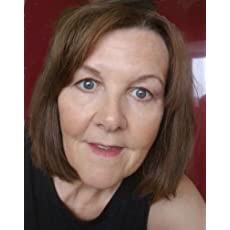
Hazel Ward was born in a back-to-back house in inner city Birmingham. By the time the council knocked the house flat and packed her family off to the suburbs, she was already something of a feral child who loved adventures. Swapping derelict houses and bomb pecks for green fields and gardens was a bit of a culture shock but she rose to the occasion admirably and grew up loving outdoor spaces and animals. Especially dogs, cats and horses. 

Strangely, for someone who couldn’t sit still, she also developed a ferocious reading habit and a love of words. She wrote her first novel at fifteen, along with a lot of angsty poems, and was absolutely sure she wanted to be a writer. Sadly, it all came crashing down when her seventeen-year-old self walked out of school after a spot of bother and was either too stubborn or too embarrassed to go back. It’s too long ago to remember which.  What followed was a series of mind-numbingly dull jobs that paid the bills but did little to quell the restlessness inside. 

Always a bit of a smart-arse, she eventually managed to talk herself into a successful corporate career that lasted over twenty years until, with the bills paid and the children grown up, she was able to wave it all goodbye and do the thing she’dalways wanted to do. While taking a fiction writing course she wrote a short story about a lonely woman who was being made redundant. The story eventually became her debut novel Being Netta Wilde.

Hazel still lives in Birmingham and that’s where she does most of her writing. When she’s not there, she and her partner can be found in their holiday home in Shropshire or gadding about the country in an old motorhome. Not quite feral anymore but still up for adventures. 

Social Media Links – 

https://hazelwardauthor.com

https://www.facebook.com/hazelwardauthor

https://twitter.com/hazelward

https://www.instagram.com/hazel.ward

https://www.youtube.com/channel/UCrmdeA7DKEXhrj6n


Purchase Links

UK – https://www.amazon.co.uk/Being-Netta-Wilde-Hazel-Ward-ebook/dp/B0947351XQ

US – https://www.amazon.com/Being-Netta-Wilde-Hazel-Ward-ebook/dp/B0947351XQ