Posted in Netgalley

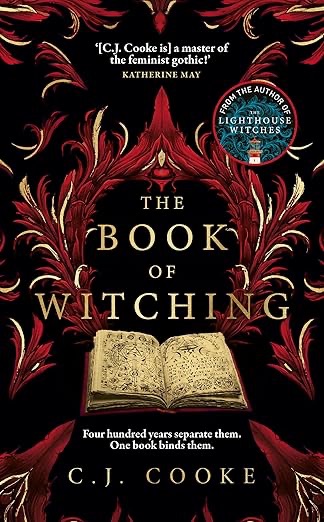
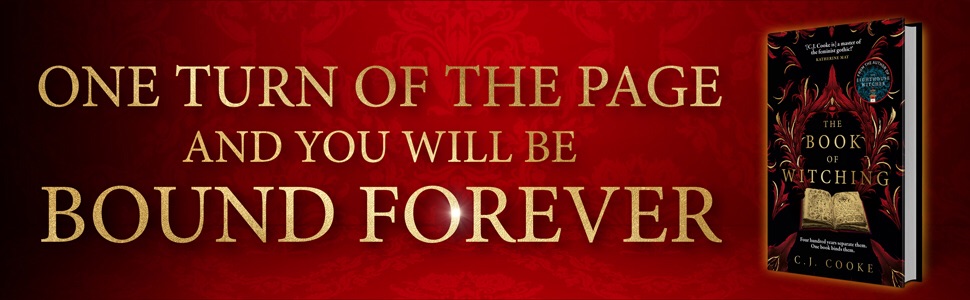
The Book of Witching by C.J.Cooke

On a small uninhabited island off Orkney, the body of a young man is found burned alongside a girl who is barely alive. She has suffered terrible burns to her arms and hands. When Clem receives the call that her daughter Erin is in the burns hospital in Glasgow, she races to her bedside and is horrified to find her in a coma with her damaged eyes stitched shut. Erin had been on a trip to Orkney with her boyfriend Arlo and a new friend Senna, leaving her daughter Freya with Clem. Arlo has been found dead, but Senna is missing. Erin desperately looks for clues as to how this has happened and is startled by a sudden vision of a strange book, with a bark cover and black pages that appear to be blank. Searching her daughter’s room she finds a note that reads ‘Arlo’s hands will need to be bound’. Could Erin have harmed her friends? We’re taken back to 16th Century Orkney as Alison Balfour wakes up and finds both of her children missing in the middle of the night. She tracks them to a clearing where masked and robed figures are holding a ceremony, initiating her children into the Triskele, just as she once was. Her own mother steps forward with the Book of Witching, inviting her grandchildren to ‘sign’ the book with a primal scream. Only a few weeks later she is approached by a nobleman when visiting her husband, who is working as a stone mason on the cathedral. He asks if Alison could create a powerful hex that would end the life of a powerful Earl. She refuses, so it’s a huge shock when she is arrested for practising witchcraft and thrown into a dungeon. Alison knows she has only ever used herbs and charms to help people with their ailments, particularly women. However, she knows what will follow; interrogation, violation and torture unless she confesses to something she didn’t do. Then she faces burning, with her only hope that she is strangled before the fire takes hold. Alison’s story is interwoven with Clem’s story, set in present day Glasgow where she lives with her daughter Erin. Clem is devastated when out of the blue she receives a call from the city’s burns unit. Erin has been admitted to the unit with serious burns and is in an induced coma. Clem is confused because Erin was on a trip to Orkney with her boyfriend Arlo and her friend Savannah. Now Arlo is dead, Savannah is missing and Erin has terrible burns to her arms and hands. She was found on the beach of Gunn, an uninhabited island off Orkney. Why were they in such a remote place and why is Clem had a vision of a blackened, bark covered book which opens to reveal a woman burning at the stake? 

C.J. Cooke combines these two stories into a narrative about Scottish heritage, the history of witchcraft and of women. She creates an eerie atmosphere where supernatural abilities abound, based within a breadth of research around the 17th Century moral panic about witches spearheaded by King James himself. These earlier sections are an unusual mix that ground us within the history of a place, but also creates a sense of unease. Alison renounced the Triskele years before and is angry with her mother for going behind her back, so when she’s arrested for witchcraft it’s a shock. The period where Alison is interrogated is incredibly accurate and hard to read in parts. She is entirely at the mercy of the powerful men who keep her in a filthy dungeon, restrict food and water, then use intimidation, violation and torture to elicit a confession. The historical background to the witch trials in Scotland has come up in a couple of novels this year and it might seem strange to the reader that such a belief in witchcraft existed. King James VI of Scotland had a marriage contract with a Danish princess, but her voyage to Scotland is threatened by fierce storms. Witch burnings had already swept across Germany and into Scandinavia and there are rumours that a witch had cursed the princess’s voyage. The North Berwick trials started a wave of panic over witches who might be accused of something as silly as causing a farmer’s cows to stop giving milk. King James voyaged across the North Sea to collect his bride, but does become obsessed with witchcraft using the Malleus Maleficarum as his witch finder’s bible. It includes the idea that witches will have a mark on their body where the devil has left his mark. One of the men interrogating Alison uses a pin to test marks on her naked body, looking for one that doesn’t produce pain when stabbed by the needle. He claims to have found the mark under Alison’s tongue, but also perceives the outline of a hare that turns into a shadowy figure. They are so sure of what they’ve seen that Alison almost thinks she’s seen it herself, but she’s starving, dehydrated, filthy and exhausted from being walked up and down all night to prevent her sleeping. Yet every time she denies their accusations, until they start hurting the people she loves. 

Clem meanwhile is horrified by the state of her daughter who is on a ventilator to protect her airway. She’s so vulnerable that she’s even grateful for the presence of her ex-husband at Erin’s bedside. She’s devastated for Arlo’s parents and for those waiting to hear news of Savannah. They’d only become friends very recently and there had been no red flags. Now the police are sniffing around the ICU, waiting for Erin to wake up and give them her account of what happened. When Clem pops home she goes into Erin’s room to feel her daughter. As she looks around she finds a slip of paper and written in Erin’s hand is he instruction that ‘Arlo’s hands must be bound ‘. That is exactly how Arlo was found. Instinctively, Clem pockets the evidence before the police ask to search their home. She must protect her daughter. Yet when Erin wakes up she claims to be someone else. Someone called Nyx. Clem only has to hear her voice to know that this is not her daughter. For me Alison’s narrative is more compelling, possibly because we’re in the midst of the action and everything is so immediate as we experience it through her eyes. By contrast we come into Clem’s story after the terrible event has happened. She’s in the dark, desperately trying to work out what has happened to her daughter. This only gets more complex as Erin wakes up different and she isn’t sure whether it is a case of ICU psychosis as her nurse suggests. This is a psychiatric response to the strange environment where sleep deprivation, being dependent on others and the sensory overload from the various machines and lights being on constantly. It’s also disorientating to wake up and find part of your life is missing. Yet there’s clearly a paralysing fear that something much worse is wrong. Erin has been through something so traumatic she’ll never recover or never be Erin again. The more Clem uncovers the more she feels something paranormal is at play. 

I was so impressed with the historical detail put into this novel and how real it made Alison’s experience. The punishments she and her family go through are more horrific than any of the paranormal stuff. We might fear the unexplained and the unknown but the things humans do to each other are far worse. I’ve loved this writer since her first novel and this one had me utterly gripped because she captures the fear of being labelled, noticed as different and blamed for things you haven’t done. Many witches served a purpose in their community, particularly for fellow women and I think she captured the complexity of that position. What’s the difference between giving a herbal remedy, a harmless charm or a spell and who makes that decision? Certainly not women and not those who are powerless or living in poverty. Even the most altruistic intention can be misconstrued or twisted by someone malicious. This was a dangerous time to be a wise woman. I also loved how the author based her story in a magic that was so powerful it could still wreak havoc today. This is another solid read from a fascinating author who has rapidly become a favourite of mine and a ‘must buy’ writer.

Published by Harper Collins 10th Oct 2024

Meet the Author

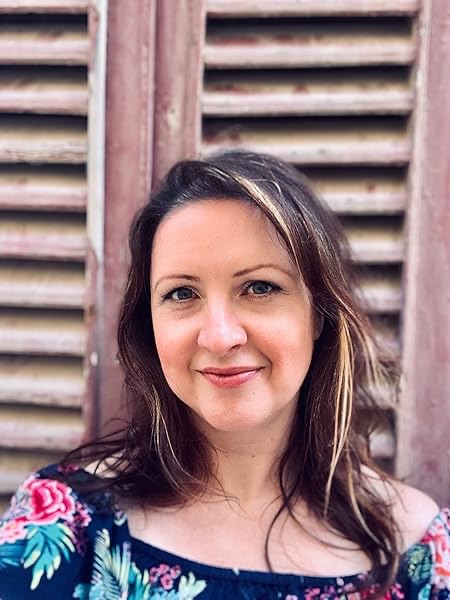
C J Cooke (Carolyn Jess-Cooke) lives in Glasgow with her husband and four children. C J Cooke’s works have been published in 23 languages and have won many awards. She holds a PhD in Literature from the Queen’s University of Belfast and is currently Senior Lecturer in Creative Writing at the University of Glasgow, where she researches creative writing interventions for mental health. Two of her books are currently optioned for film. Visit http://www.cjcookeauthor.com

Posted in Squad Pod

The King’s Witches by Kate Foster

Having only just read her debut The Maiden, I was very keen to get started on this second novel from Kate Foster. This novel is based during the reign of Elizabeth I and James VI of Scotland (James I of England). I knew of James VI’s obsession with witches after studying the Malleus Malificarum at university while writing about disability representation in fiction. I looked at witches while discussing how disfigurement and disability in novels is used as a symbol for evil. The Malleus Maleficarum was the bible for witch finders, describing all the behaviour and characteristics of possible witches and signs to look out for. The book features in this novel as a guide for James VI, who had been alarmed by news of witch hunts in Germany. His proposed bride, Princess Anna of Denmark, set sale for Scotland in 1590 and was driven back by catastrophic storms. The storms were blamed on witches in Denmark and when James travelled to meet her in Norway he heard allegations of witchcraft first hand. Around the same time, in North Berwick, a housemaid called Geillis Duncan was accused of sorcery and when tortured she implicated several other witches, allegedly conspiring with the Earl of Bothwell to take the throne from the King. Kate Foster has taken this history and weaves a story from three women’s points of view, giving a feminist slant on the witch trials that killed thousands over the next two centuries, the majority of them women over forty.

There are three narratives in the book, each one from women who hold different positions in society. Princess Anna of Denmark was a young girl of fourteen when he was betrothed to James VI and attempted to reach Scotland. This has been updated to seventeen in the novel, but at either age there’s an enormous pressure on her shoulders. She has been sent on the basis of a Scottish hand-fasting, if she should please James within the next year he will marry her. If not, she will be ruined for any other marriage and her future looks set to be a life within an abbey. Adding to the pressure, there is a witch burning just before they leave and Anna is compelled to watch, because burnings are a warning to all women. Anna is sickened by what she sees and can’t forget it, convinced as they set sail that the witch is stood on the harbour cursing the voyage and her union with the Scottish king. As it is the sailing does feel cursed because the weather is terrible, sea-sickness is rife and when Anna meets her Scottish tutor Henry every thought of the king is driven from her mind. Anna’s companion and lady-in-waiting is Kristen Sorenson, a pious woman who once lived in Scotland. She is charged with keeping Anna focused on her duty, but she also has her own personal reasons for wanting the royal marriage to be a success. Jura is a housemaid working in the house of the local bailie in North Berwick. Her mother was a cunning woman, treating local women’s ailments with natural ingredients and she passed her knowledge on to Jura. She heals the daughter of the house from a rash and redness on her face using an oatmeal poultice and soon other women in their circle are asking for cures of their own. However, she and the daughter clash over a dalliance with a local farmer’s son and when Baillie Kincaid starts to force his attentions on Jura she decides to flee to Edinburgh. All three women are now caught up in the witchcraft rumours and may have to come together in order to save themselves.

Within a few chapters of the book I felt taken right back to the 16th Century. The witch burning scene in Denmark is see through Anna’s eyes and it is sickening and barbaric to imagine people killed in this way. Before she sees Doritte Olsen burned Anna mentions that even though she is to be betrothed, she doesn’t feel like a woman yet. She doesn’t fully know who she is. She can’t eat and can’t sleep, smelling the smoke on her own hair and knowing that on the beach, Doritte Olsen is still burning down to ash. She starts to see that women have no power in this world and the burning is a lesson – this is what happens if women step outside their role. It left me knowing I was in a different world, where women’s roles are wholly defined by men. Jura senses freedom as she flees to the capital city. Her descriptions of Edinburgh are so vivid as she marvels at houses with four storeys that put the whole street in shadow. She is dazzled by Canongate with it’s gleaming shop fronts, tennis courts and cork-fighting pits. She marvels that her mother never told her such variety existed in one place. The use of Scottish dialect in Jura’s narrative really helps ground the reader in that place and her use of bawdy language made me smile and feel warm towards her.

Here and there, Kate uses letters between the chapters and they had the effect of reminding me that a true story lies behind this novel. After their first night together, she strategically places a letter to the king from his friend Douglas Murray, a fictional character who stands in for a series of lovers the king is known to have had. In a letter that is mainly keeping the king up to date with news from court, he signs off with a curious line:

‘Mostly I await your return […] so that we might embrace each other once more in the manner to which we have become so dearly accustomed’.

The consensus among 21st Century historians is that the king was homosexual or bisexual, but in the context of this story it makes us realise that Anna’s task is a difficult one. She truly will be a wife in duty only and she knows this as she tells Kristen it feels unnatural to be intimate with someone she doesn’t care for in the right way. Her role is to stay quiet and bear children, turning a blind eye to the king’s extra curricular activities. Anna’s description of their intimate relations made me feel sick for her, she senses there is no ‘longing’ in him and I realised that should she become Queen this is her life. She won’t be able to have lovers and her only romance in life would be the way she feels for her tutor Henry. In fact James seems more aroused when torturing potential witches. How I wanted her to run away.

The only women in the novel with a small amount of freedom are those able to earn their own money like Jura and her Aunt Mary who is a healer and cunning woman in Edinburgh. Mary lives alone on what she earns, not in any sort of luxury but at least she has autonomy. The ability to consult a cunning woman is vital for women who might want to stop a pregnancy, boost their fertility or need a charm for love or protection. In this way these autonomous women empower the women around them and accusations of witchcraft subdue not just the woman accused, but every woman in that area. When Jura heals Hazel Kincaid’s facial rash and gets the chance to meet with other local women who gather at the house, she glimpses the chance of a better life:

‘I like healing far better than I like polishing and sweeping and mibbie, one day, soothing grumbling guts and easing flaking skin will help me out of horrible Master Kincaid’s house and away from his prick, and able to rent a dwelling of my own.’

The hypocrisy of the men in the book is infuriating at times. The renowned witch finder Dr Hemmingsen from Copenhagen assures the king that he has a unique way to identify witches, using a bodkin to prick them and find the devil’s mark on their body – the only spot where it won’t hurt. In the same package he has sent the king a golden amulet for protection, carved by a man who knows how to ward off evil. It seems signs and charms are only witchcraft when a man says they are. In fact Anna has never heard so much about the practises of witches as she does from the king, regaling her with tales of baby-killing and orgies with man, woman and beast. Kristen tells Anna that James is becoming a danger to ordinary women and his fervour is a kind of madness, or a licence to abuse and degrade women. Anna has a realisation; a woman’s body is never truly her own, no matter what their position in society. Whether you’re a housemaid whose master decides you’re his property, a witch who can be stripped and examined by men who call themselves god-fearing, or a princess whose family hand-fasted her to James Stuart and didn’t ask her if it was what she wanted. Women must work together if they want to survive. These women are strong, but are they intelligent enough to try and outsmart a king? Kate is brilliant with twists and turns, so I wasn’t surprised to find a few revelations towards the end. I was driven to finish to know what happened to all three women and whether any of them would achieve the freedom they craved. This was a compelling and atmospheric read and cements Kate Foster’s position as a writer of historical fiction at it’s best.

Published on 6th June by Mantle Books

Meet the Author

Kate Foster has been a national newspaper journalist for over twenty years. Growing up in Edinburgh, she became fascinated by its history and often uses it as inspiration for her stories. The Maiden won the Bloody Scotland Pitch Perfect 2020 prize for new writers and is long-listed for the Women’s Prize for Fiction. She lives in Edinburgh with her two children.

Posted in Netgalley, Publisher Proof

One For My Enemy by Olivie Blake

After being slowly enticed by the glowing reviews of Olivie Blake’s Atlas Six series, I finally decided to take the plunge with this one. I’m a huge fan of Alice Hoffman so magic, romance and witchery are right up my street. However, this was the same themes but with some added NYC grit and sass.

In New York City, two rival witch families fight for the upper hand.

The Antonova sisters are beautiful, cunning and ruthless, and their mother – known only as Baba Yaga – is the elusive supplier of premium intoxicants. Their adversaries, the influential Fedorov brothers, serve their crime boss father. Named Koschei the Deathless, his enterprise dominates the shadows of magical Manhattan.

For twelve years, the families have maintained a fraught stalemate. Then everything is thrown into disarray. Bad blood carries them to the brink of disaster, even as fate draws together a brother and sister from either side. Yet the siblings still struggle for power, and internal conflicts could destroy each family from within. That is, if the enmity between empires doesn’t destroy both sides first.

I found myself hurled straight into this vivid world. It is earth but harbours a secret; witch families are vying to supply humans with magical pharmaceuticals. I loved the idea that there might be another realm within our own, hiding in plain sight. Baba Yaga has a shop – like Lush but with extra ingredients – whereas the Federovs sell on the streets and in the bars and clubs of the city. The rivalry and language of their industry was very ‘gangster’, with specific territories and penalties for stepping out of line. The patriarchal Federovs and the the matriarchal Antonova sisters. The sisters, although doing the bidding of Baba Yaga, are kept in line by eldest daughter Marya, also known as Masha. The scene that grabbed me was Masha simply walking into the Federovs lair and demanding to see second brother Dima. There has been an issue with territory and Masha believes it is Dima’s fault, so she carries out a terrifying enchantment that leaves Dima totally incapacitated. I was fascinated that youngest brother Lev tries to stop her, but is held back by his brother. Is there an honour code between the families? Even more intriguing is the obvious and immediate chemistry between Dima and Masha. The atmosphere was electric, the air charged with feelings and I was drying to know what had happened before and if these two had historic feelings for each other. If so, Masha is ruthless when it comes to business, but must have been full of hidden emotion. Would she be just as ruthless when protecting her family?

This scene showed me that Masha was confident in her power and very likely the successor to her mother. Masha is overseeing the expansion of their business. I found the idea of pharmaceutical drugs touched by magic fascinating too, I wanted to know more about their effects and whether they were largely benign. Did the customers truly know the power of what they were buying? I wondered about the family’s ethics with regards to black or white magic and was intrigued by how both families used their magic differently. Lev is sent to check out the clubs and see if he can work out the Antonov family’s next move, but he is distracted from his job by a young beautiful woman being hassled by a college student. As soon as he sees her he wants to help her, but already his attraction to her is obvious. She is very assertive and assures him she can look after herself and as Lev follows them out of the club she breaks the student’s nose. Intrigued by her confidence and the way she handled the situation, Lev offers to walk her home. Every block she tells him she can manage, but Lev has fallen in too deep already and the attraction is mutual. They have a passionate encounter down a side street. What Lev doesn’t know is that this young woman is Sasha, youngest of the Antonova sisters. As the pair fall in love, Lev confides the task he’s been given by his brothers. I wondered how she would react and whether she’s think his feelings were genuine or entrapment. Lev’s feelings are genuine and I was already wondering whether this was a repeat of Masha and Dima’s story. More importantly, if it comes to a showdown between the two families, which side would Lev choose?

Considering the amount of characters, they do have depth and feel very real. I think their back stories helped and the Russian folklore woven into their backgrounds seemed to ground them. Koshchei the Deathless is a male protagonist in Russian folklore, usually cast as an evil father figure who imprisons the male hero’s lover. He is called the immortal because he keeps his soul hidden within inanimate objects. Often he would hide his soul inside a tiny object then place it inside another object, perhaps an animal, like a rather grotesque set of Russian dolls. Baba Yaga was originally a supernatural being who hides within the disguise of a grotesque old woman. In a bizarre version of her story, which I love, she lived in a kettle with chicken’s legs – rather like the archetypal witch we all know from fairy tales. She would often take a maternal role and use that to hinder a character from the story. How these archetypes work within this story I’ll leave for you to find out. Then there’s the Romeo and Juliet parallel which certainly gives us the basic plot line of two rival families, where the youngest members of each family are falling in love with each other. That’s really where the comparisons end, because this is a loose retelling so don’t expect specific characters or even the same plot lines. This is a tragedy and it’s genuinely heartbreaking, but with gritty, real violence and it’s bloody consequences, just don’t expect the same victims. I loved that the rivalries are decades old and I think there’s definitely scope for more novels in this setting.

Although I loved Blake’s descriptive prose and enjoyed her characters, I did feel that the central love story lacked a bit of depth. I could tell these characters were in lust because their scenes were hot, but I didn’t feel the love at first. Perhaps that’s because I’m an older reader though and why I was interested in the oldest sister’s story. Also there were so many twists towards the end I had to go back and re-read sections to keep up with what was going on. However, for such a big book, it really fly by and the heady mix of love, power, magic, revenge and tragedy is a winner for sure. The art both inside and on the cover is absolutely beautiful. I feel that I could easily come back to these rival families in the future and it has certainly made me want to check out the author’s previous novels. If you like your love stories dark and laced with magic, violent tragedy and witches this is the book for you. It was definitely the book for me.

Published on 20th April by Tor (Pan Macmillan)

Meet The Author

Olivie Blake is the pseudonym of Alexene Farol Follmuth, a lover and writer of stories, many of which involve the fantastic, the paranormal, or the supernatural, but not always. More often, her works revolve around what it means to be human (or not), and the endlessly interesting complexities of life and love.

​Olivie has penned several indie SFF projects, including the webtoon Clara and the Devil with illustrator Little Chmura and the viral Atlas series. As Follmuth, her young adult rom-com My Mechanical Romance releases May 2022.

Olivie lives in Los Angeles with her husband and baby, where she is generally tolerated by her rescue pit bull. More on Olivie can be found at http://www.olivieblake.com

Posted in Sunday Spotlight

Sunday Spotlight! Alice Hoffman.

Last month I started a new feature on the blog where I shine a spotlight on one of my favourite authors. I feature the books I most enjoy from their back catalogue and in October I’d hoped to feature four authors who write books that are spooky, sinister, or magical in some way, hoping to give you some interesting Halloween reads. These featured everything from the evils that men do, to families of witches, cunning fairies, strange powers and other ghostly goings on. However, last weekend it didn’t happen because my other October evil crept up on me. I have MS and I always have an autumn relapse. I was just starting to pick up, but had a very dodgy weekend. So I’m bringing you last Sundays author today instead that’s Alice Hoffman. I’ve featured her book Blue Diary on Throwback Thursday before, but that’s a rare magic free novel. Magic realism flows through most of Hoffman’s works. Some of the strangest include a woman falling in love with a magical talking heron, angels descending to earth, a family of women who can see the future, a golem made from river mud protecting a girl fleeing the Nazis, a man struck by lightning leaving a pattern on his skin and a mermaid girl living in a freak show at Coney Island. However, for most people it’s the Practical Magic book, or the film starring Sandra Bullock and Nicole Kidman as two sisters coming to terms with their heritage as witches, that first comes to mind. This October sees the publication of the fourth and final book in the series, The Rules of Magic. So, I thought it was perfect timing to feature the whole Owens family series in chronological order.

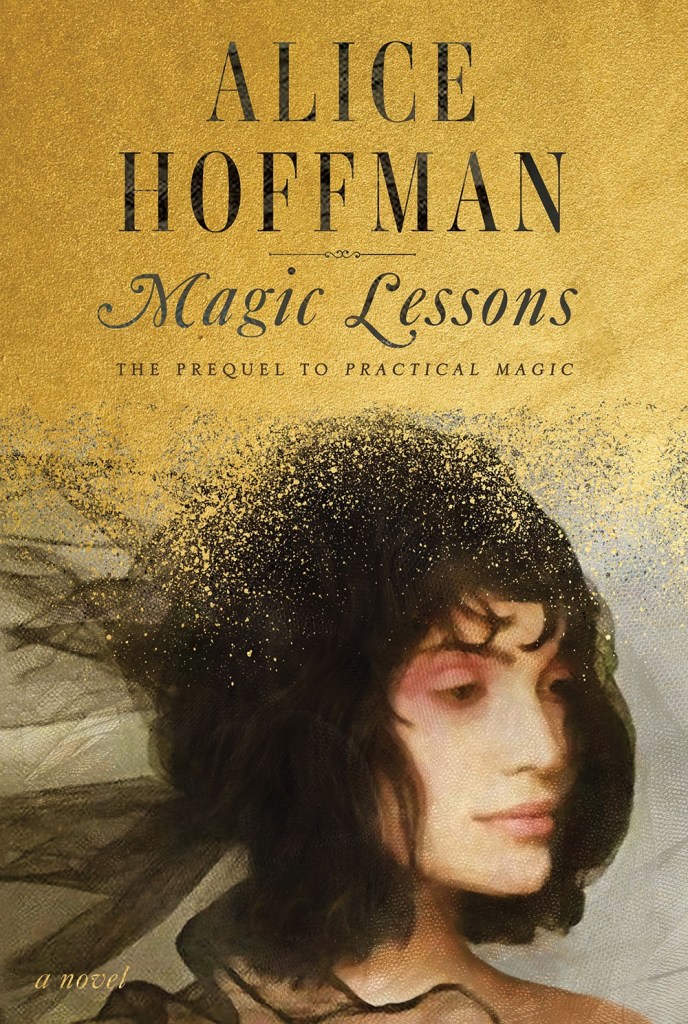
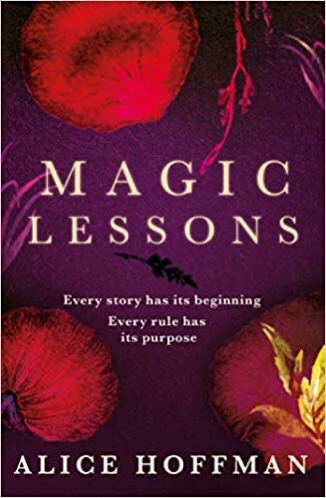
Despite being the most recent novel in the series, Magic Lessons is actually the first in the series chronologically. I was lucky enough to have a preview copy of this novel and reviewed it only last October. Maria is found as a baby by wise woman Hannah Owens, who brings her up in the old ways. Maria learns how to grow a healing garden, to use herbs for ailments of body and mind, and help women with problems caused by love. However, Maria’s power isn’t just learned. She has the mark of a blood witch from her birth mother, and has been chosen by her familiar Cadin who is a crow. Maria feels she must be the result of a woman being fooled by love and vows that she will never be taken in by a man. Tragically, Maria’s adopted mother Hannah is burned as a witch and Maria knows she must run to save her life. She then meets her mother and birth father, and realising there is no room in their love for a third person she takes a gift of red boots from them and sails to the island of Curacao where she has been sold into servitude for a period of five years. Here, her vow against love will be tested. Taking us through the dangerous years of the 17th Century, where Puritanical communities like Salem in Massachusetts were whipped to hysteria, and would not suffer a witch to live. Hoffman’s prequel to Practical Magic takes us back to the beginnings of the Owens family and the complicated relationship between their power and their very human need to be loved.

This was a thoughtful and atmospheric origins story for a family many fans have come to love. I think the strength of this series is in that combination of the mystical and the flawed human aspects of these women. Despite their powers Maria, her mother Rebecca and her daughter Faith experience the highs and lows of every woman’s life – the changes of adolescence, falling in love with the wrong man and the right one, motherhood, illness and ageing. I felt emotional when Maria saw her ‘mother figure’ Hannah murdered by men who feared her, when she realised the man she loved didn’t really exist, and when she lost Cadin her loyal companion. These women’s fight to be accepted and even acknowledged for their skills is a fight that continues today as we fight for women’s rights to equal pay, to save reproductive rights and to be seen as more than sexual objects. Their fight to stay alive is still echoed in our fight to stop child brides, exploitation of young girls and domestic abuse. This was a series coming full circle, as we see the formation of that mistrust of love that shapes Jet Owens’s journey or that sees Gillian Owens constantly pick the wrong man. I really enjoyed being back with these strong, powerful women once more.

This is the second in the series and my personal favourite of the four books. We meet the family on the cusp of the 1960’s in New York, where Susanna Owens has three very unique children, two sisters and a brother. Franny has deep red hair and the palest skin, which make her distinctive, but she’s also very difficult. Jet is so beautiful but terribly shy, and has the magical ability to read people’s thoughts. Vincent is trouble, from the moment he was born. Susanna knows that the Owens girls are unlucky in love and lays down the law to save them from heartbreak. She also wants to save them from the magical heritage: no walking in moonlight; no red shoes; have nothing black whether it’s crows, cats or clothes; no candles; no books about magic and most definitely no falling in love. Yet family secrets are still uncovered, back in the Massachusetts town where the Owens women have been scapegoats for anything that goes wrong. Aunt Isabelle doesn’t care what people think and the children open up for the first time to the truth of who they are. The two girls will become the fabulous aunts in Practical Magic and Vincent leaves an unexpected legacy. I loved the mix of ordinary teenage growing pains with the twist of something supernatural, and the magic even us mortals feel when we fall in love.

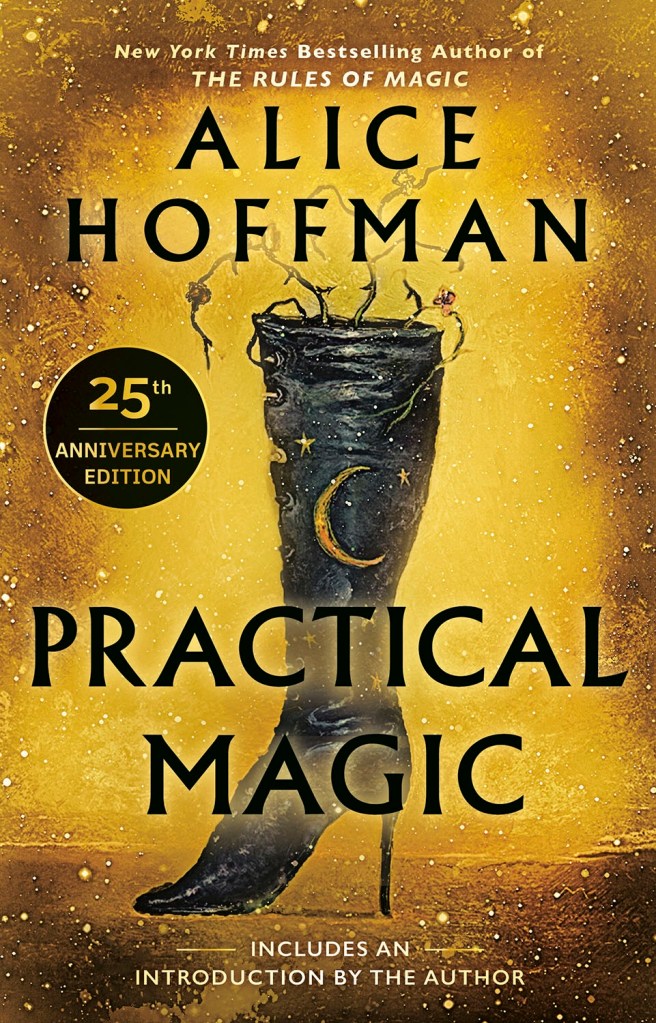
The Owens girls, who live in the strange house on the edge of the town, were always treated as different by the children and adults living alongside them. Gillian and Sally lived with their elderly aunts who did nothing to dissuade the townsfolk of their suspicions that witches lived among them. One look at the turrets on their house, the herd of black cats, and the aunt’s love potions would tell you there’s a possibility of magic. Unfortunately for the girls, the aunt’s freedom of expression has been their prison; schoolyard pointing, taunts and whispers have followed them through their childhood. The girls responded to this in different ways. Gillian ran away and became the beautiful, mysterious stranger always passing through and always falling in love with the wrong man. In losing the magic that was her birthright, she’s fallen for the charms of men and the magic of attraction. Sally disappeared too, but into a marriage with a respectable man in the hope of being ordinary and accepted. Now she has two girls and is determined they won’t have the same childhood she did. Then Gillian turns up, still running, but this time back to the family she left behind. She’s fallen in love with a very bad man and needs the help and comfort of her sister. Will Gillian’s troubles bring the sister’s closer? It might even bring their very elderly aunts back into their orbit. However, it also brings a detective into their midst. He could change their lives, in a very negative way if they let him. Yet the magic of love hasn’t finished with the Owens girls and maybe magic is the answer to all of their problems.

This is the last instalment of the series and involves the family, after the events of Practical Magic. Sally’s girls are now teenagers and the aunts are very elderly. However, it’s difficult knowing your time on earth is coming to an end. Aunt Jet has heard the Deathwatch Beetle ticking – a sure sign she only has a week left. However, the Owens family curse is at work and Jet isn’t the only one to hear it. The family must come together, for Jet’s sake but also to save another life. Much to the aunts surprise, a long lost brother returns to help. The family roam from Paris to London and deep into the English countryside where Maria Owens took her first tentative steps into magic. The youngest girls start to learn how much their Sally has kept from them, in terms of their heritage but also each tragic, family secret too. Kylie in particular relishes learning who she is and starts to dabble in some dark arts. Franny embarks on a journey of realisation, she will do anything for this family and Sally Owens will do anything for those she loves too. Magic comes in many forms and this is a very human type of magic – the magic of love within a family. This novel’s strength is in those well-known characters coming full circle and a new generation to explore. A magical tale of love and family lore passing from mothers to daughters.

.

Alice Hoffman was born in New York City on March 16, 1952, and grew up on Long Island. After graduating from high school in 1969, she attended Adelphi University, from which she received a BA, and then received a Mirrellees Fellowship to the Stanford University Creative Writing Center, which she attended in 1973 and 74, receiving an MA in creative writing. She currently lives in Boston. Hoffman’s first novel, Property Of, was written at the age of twenty-one, while she was studying at Stanford, and published shortly thereafter by Farrar Straus and Giroux. She credits her mentor, professor and writer Albert J. Guerard, and his wife, the writer Maclin Bocock Guerard, for helping her to publish her first short story in the magazine Fiction. Editor Ted Solotaroff then contacted her to ask if she had a novel, at which point she quickly began to write what was to become Property Of, a section of which was published in Mr. Solotaroff’s magazine, American Review.

Since that remarkable beginning, Alice Hoffman has become one of the most distinguished novelists. She has published over thirty novels, three books of short fiction, and eight books for children and young adults. Her novel, Here on Earth, an Oprah’s Book Club choice, was a modern reworking of some of the themes of Emily Bronte’s masterpiece Wuthering Heights. Practical Magic was made into a Warner Brothers film starring Sandra Bullock and Nicole Kidman. Her novel, At Risk, which concerns a family dealing with AIDS, can be found on the reading lists of many universities, colleges and secondary schools. Hoffman’s advance from Local Girls, a collection of inter-related fictions about love and loss on Long Island, was donated to help create the Hoffman Breast Center at Mt. Auburn Hospital in Cambridge, MA. Hoffman has written a number of novels for young adults, including Aquamarine, Green Angel, and Green Witch. In 2007 Little Brown published the teen novel Incantation, a story about hidden Jews during the Spanish Inquisition, which Publishers Weekly chose as one of the best books of the year.

Aside from the Practical Magic series, the novels I would recommend highly are:

Blue Diary – a picture perfect family in a small town is torn apart when Jory’s husband is accused of rape and murder.

The Marriage of Opposites – this stunning novel explores the difficult relationship between the painter Camille Pissarro and his mother. Set on the island of Sao Tomae this novel is an incredibly visual book, with stunning descriptions of Pissarro’s island home akin to impressionistic paintings.

The Museum of Extraordinary Things – set in a Coney Island freak show at the beginning of the 20th Century, this is the story of a girl who is shown as a mermaid by her father. As her confidence and self-belief grow and she falls in love, we also see the birth of Manhattan as we see it today.

Posted in Netgalley

Halloween Reads: Magic Lessons by Alice Hoffman

This month I took some time off from blog tours and other commitments to spend a couple of weeks reading my own choices. Not only did this give me a lot of freedom, it allowed me to read one of my all time favourite authors followed by one of my most recent loves; Alice Hoffman and Alix E. Harrow. Even more of a coincidence is that both have written books based within the folklore of witches, healers, and wise women. In Hoffman’s case this is her third novel in the Practical Magic series, which delves back further than ever before to the origins of the Owens family and the formation of communities whose religion will not suffer a witch to live. Harrow also creates a world of sisters, three separated sisters who come together at the very beginning of the 20th Century and the suffragette movement.

In Magic Lessons, Maria is found as a baby by wise woman Hannah Owens, who brings her up with the old ways. Maria learns how to grow a healing garden, to use herbs for ailments of body and mind, and help women with problems caused by love. However, Maria’s power isn’t just learned. She has the mark of a blood witch from her birth mother, and has been chosen by her familiar Cadin who is a crow. Maria feels she must be the result of a woman being fooled by love and vows not to be taken in by a man. Tragically, Hannah is burned as a witch and Maria knows she must run to save her life. She meets her mother and birth father, and realising there is no room in their love for a third person she takes a gift of red boots and sails to the island of Curacao where she has been sold into servitude for a period of five years. Here, her vow against love will be tested. Taking us through the dangerous years of the 17th Century, where Puritanical communities like Salem in Massachusetts were whipped to hysteria, and would not suffer a witch to live. Hoffman’s prequel to Practical Magic takes us back to the beginnings of the Owens family and the complicated relationship between their power and the very human need to be loved.

I had been waiting for this prequel for a long time and I wasn’t disappointed. It only took me moments to be in Hoffman’s magical world thanks to the layers of description she uses to create an unusual atmosphere. In some senses she creates an instantly recognisable sense of place. Her descriptions of Massachusetts, and later, Brooklyn are full of local floral and fauna, the sense of wilderness and pioneering spirit within these early settlers of the Americas. It is dark, foggy, wet and often icily cold with dangerous animals and even more dangerous people. By contrast the time spent travelling to the West Indies and the beautiful island of Curacao are vivid. In the daytime full of colour, exotic flowers and birds and I could feel the sun on my face, the warm sand beneath my feet and the incredible animals such as the turtles and tiny hummingbirds. By night, when Maria and her friend explore the island, it is still warm, with a vast sky full of stars. On the other hand there are times when these places seem otherworldly as we see them through the eyes of a witch: the magical properties of plants, the incredible loyalty of an wild animal like Keeper the wolf, and the witches’ power to control these elements to their advantage. It’s our world but not quite. The difference is viewing it through the lens of history, but most unimportantly, by magic.

There were times I didn’t fully understand Maria, although she’s the more sympathetic character of the three generations. She protects herself against love after seeing what it did to her mother, but then later says she couldn’t protect herself against love. I think this is almost a push and pull between the human and more magical signs of her character. She tries to use her power to prevent love, but perhaps her heart truly longs for it. The tragedy is in protecting herself against the right man, while letting the wrong one in. I find her choice to go to Massachusetts with her daughter Faith inexplicable given that she has friends and support in Curacao. John Hathorne is a very dangerous man, to women in general and not just the witches he persecutes. He drags young girls into a battle he is constantly fighting between his appetites and his conscience. There is part of him that emerged in Curacao that wants to shed his responsibilities, to throw off inhibition and dive into the sea as well as give in to his passions for a woman he desires. In Massachusetts he is a pillar of the Puritan community, yet he marries his wife Ruth when she is just 14 and his ward. She describes crying as he takes her to the marital bed, but her fear and young age does not stop him. It’s worth mentioning that in a historical context this isn’t unusual, but to me it shows a lack of compassion and respect for women. He turns his back on his daughter, both when she’s a baby and when she returns as a young woman. Maria, his wife Ruth and his daughter Faith are all his victims. Samuel, or Gogo as Faith calls him, is a good man and I was desperate for him to win Maria over. He is not scared of Maria or her power. He loves her intelligence, her fortitude and her power. I could have cried for how much time is wasted as Maria fights him.

I enjoyed the way Hoffman weaves in the historical context for America in this period. These are early settlements, some first colonised by the Dutch then by the English. She doesn’t forget the indigenous tribes either, often completely massacred by these ‘Christian communities’ who hold themselves in such high regard. They hold women with healing knowledge in the same regard as these natives of USA, as if they are cleansing their area of magical and primitive beliefs. Hoffman doesn’t forget her Jewish heritage either, situating them as a persecuted race often moved on from areas they’ve settled and treated with suspicion. We see this in the characters of Samuel and his father, who have chosen a life on the sea instead, but still hold their heritage close to their hearts. There’s a sense in which Christianity is anti-magic whereas Judaism is closer to ancient magic and respectful of its power, especially in its capacity to do good. The only time Samuel stops Maria from practicing her magic is when it’s in a darker form, as she tries everything to keep his father alive. The Christian beliefs practised by the Dutch and English settlers has become corrupted and Hoffman presents their acts as the very evil they fear. When Maria is taken for the trial by drowning in Massachusetts, there is a frenzy and mob like mentality that is seen later in real life witch trials of Salem and the fictional arrest and trial endured by Faith. When Faith is taken by a Christian woman, confined and forced to live as her daughter we again see obsession and evil. Her captor never seems to doubt she is doing God’s work removing Faith from her mother, taking her far away and putting her in irons to remove her power. Yet this evil, begets more evil as Faith escapes and uses her freedom to practice blood magic steeped in anger and revenge. Yet she still has a conscience. Faith is haunted by the death of her captor, despite helping women to wreak revenge and enchantment by night.

I would have liked to see a more time between John Hathorne’s wife Ruth and Maria, because they were both exploited by the same man. I also think that there was perhaps too much complex detail in the women’s appearances such as Faith’s changing hair colour or the different colours of thread used for different purposes. I found myself becoming confused at times, but it’s a small issue in a magical story. I think this was a thoughtful and atmospheric origins story of a family many fans have come to love. I think the strength of this series is in that combination of the mystical and the very human elements of the story. Despite their powers Maria, her mother Rebecca and her daughter Faith experience the highs and lows of every woman’s life – the changes of adolescence, falling in love with the wrong man and the right one, motherhood, illness and ageing. I felt emotional as Maria saw her ‘mother figure’ Hannah murdered by men who feared her, as she realised the man she loved didn’t really exist, and as she lost Cadin her loyal companion. These women’s fight to be accepted and even acknowledged for their skills is a fight that continues today as we fight for women’s rights to equal pay, to save reproductive rights and to be seen as more than sexual objects. Their fight to stay alive is still echoed in our fight to stop child brides, exploitation of young girls and domestic abuse. It was a series coming full circle, as we see the formation of that mistrust of love that shapes Jet’s journey or that sees Gillian constantly pick the wrong man. I truly loved my time back with the Owens women again.

Meet The Author

Alice Hoffman is the author of thirty works of fiction, including Practical Magic, The Red Garden, The Dovekeepers and, most recently,The Museum of Extraordinary Things. She lives in Boston. This book is the prequel to Practical Magic and The Rules of Magic.

Visit her website: http://www.alicehoffman.com