Posted in Sunday Spotlight

Sunday Spotlight! Memoirs and Other Non-Fiction Lifesavers

I’ve been struggling over the last couple of weeks, probably since the procedure on my back and short term increase of medication, I’ve struggled to connect fully with a book and to remember all the plot points in those twisty – turny thrillers I usually love. Often when I’m like this I find the best thing to read is non-fiction, which in my case usually means history or memoirs. So for the next few Sundays I’m going to feature some of the non-fiction books I’ve enjoyed and those that have changed my life.

An Evil Cradling by Brian Keenan

I wouldn’t have read this amazing piece of writing, had it not been set for my Autobiography class at university. It is an absolutely stunning book, for it’s story, it’s language and how Keenan tries to hold on to his sense of self when everything that normally defines us is stripped away. The Irish writer was teaching in Beirut in the 1980’s, when he was taken hostage by Shi’ite Militia Men, he was held for four years, much of his time with the British writer John McCarthy. What Keenan manages to do is convey the fear, the indignities, the atrocities and the endless hours of waiting. He muses on what it is that makes us ‘us’. Usually when we are asked what makes us who we are we tend to list the foods, music, sport or pastimes we love. I might feel defined as a rock music fan, who loves Italian food, Woody Allen films and reading novels. However, if we imagine all those things taken away, who do we become? While keeping us abreast of day to day events, Keenan goes inside himself to ask who he is when he isn’t observed or compared to another. He has to consider whether it is easier to let his psyche split into many different pieces that may be impossible to assemble should he survive? Or should he try to keep his sense of a cohesive self, if indeed there is one, and if he reminds himself daily of who he is will it help him survive. It’s hard to imagine the situation Keenan is in and how deprived he is of sensory information, so much so that just seeing an orange inspires this passage:

‘I want to bow before it. Loving that blazing, roaring, orange colour … Everything meeting in a moment of colour and form, my rapture no longer abstract euphoria. It is there in that tiny bowl, the world recreated in that broken bowl. I feel the smell of each fruit leaping into me and lifting me and carrying me away. I am drunk with something that I understand but cannot explain. I am filled with a sense of love. I am filled and satiated by it. What I have waited and longed for has without my knowing come to me, and taken all of me.’

Three Things You Need to Know About Rockets by Jessica A Fox

This was one of those books I simply fell upon while on holiday in Northumberland as I was browsing in Cogito Books at Hexham. For some reason this appealed to me as a holiday read because it felt light and had an escapist quality. Fox is living a life I can’t imagine, in a sublet house that has a lovely garden for meditation and she has a job working as a story teller, at NASA of all places. When she’s hit with redundancy she feels a need for a change of direction and Googles ‘second hand bookshops in Scotland’, dreaming of a quiet bookish retreat. She finds a bookshop in Wigtown where there is a book festival in the summer and they want voluntary help, with accommodation included. She fires off an email which starts an incredible journey geographically and emotionally.

She arrives in Scotland and is welcomed into the home and shop of Euan, where she’s due to spend a month. It’s not long before it’s clear there are feelings between these two book lovers, but they are very different people. Jessica’s is enthusiastic and wears her heart on her sleeve whereas Euan is all reserve and doesn’t want to define or commit to the relationship. When she returns to Scotland for a second time, she makes it clear that she needs to know he is as committed to this as she is and sets an ultimatum. She will return to the US and if he wants a relationship with her he must come out to get her before a certain date. Heartbroken, she returns to her parents house and tries to put her life back together again, thinking that she must move forward in case he doesn’t come. This isn’t soppy or sentimental, as Jessica relates a good amount of personal growth too. She learns to slow down, after living in a city where everything is available at any time of day, and has to accept that in Wigtown going for a walk or seeing some Highland Cattle is quite enough incident in one day. I truly enjoyed this and look forward to reading Euan’s story, under his real name Shaun Bythell.

Small Dogs Can Save Your Life by Bel Mooney
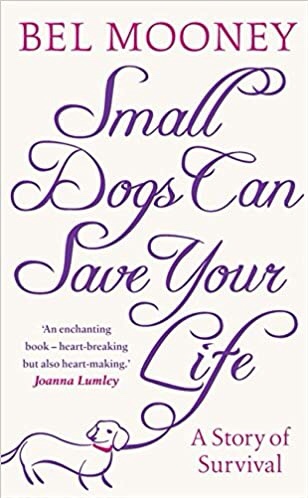
Although this is now packaged in a cutesy pink way, it’s quite a powerful memoir about loss and finding one’s identity against, written by journalist Bel Mooney and relating some of the most painful times in her life. Married for thirty-five years, Bel recounts the life shattering experience of her husband coming home and telling her he was in love with someone else. He had met an opera singer through his work and it had been an instant understanding between them. Through her pain, Bel could recognise this as love and he left the family home. While still in shock and starting to negotiate the terms of their divorce, Mooney rescued a small Maltese dog called Bonnie. Her story recounts the growth of her bond with this little rescue dog and how the simple act of looking after an animal can aid the process of recovery. The small steps it required to look after her small dog were the first tentative steps towards finding a new life, when she couldn’t even imagine what it might look like. When her husband’s new partner was suddenly diagnosed with terminal cancer, she even finds the strength to be loving and compassionate despite her own pain.

I know the power of a dog to heal. After the death of my husband I’d managed to do no more than put one foot in front of the other for about six months, when I bought a tiny cockapoo puppy. I collected him on New Year’s Eve and we settled in to a night in front of the fire with the TV on. I was watching the film Finding Neverland and the sequence where the boy’s mother slowly slips away while they perform a play for her really hit a nerve with me. The weight of the past six months seemed to suddenly become unbearable and for the first time in my life I actually considered what a relief it might be to not be here anymore. I knew I had enough medication in the house to do the job. The thing that stopped me was the bundle of fur I’d brought home that afternoon. In the battle going on inside my head I kept coming back to how scared and bewildered he would be. His first night away from his litter I couldn’t do that to him. Rafferty has been by my side ever since and on those days where I couldn’t face coming out from under the duvet, having to get up and let him out in the morning forced me to keep going. He’s now fifteen and his health is failing, but I’m still there each day supporting him like he’s supported me. Without him, I wouldn’t be here. So it seems that books and small dogs can save your life.

Posted in Sunday Spotlight

Sunday Spotlight! Self-Improvement Month.

I drive my family and friends crazy every January, complaining about New Year’s Resolutions and explaining why they rarely work. It’s a combination of: the proximity to Christmas – just the week before we’re being told to stuff our faces and fill our shopping trolleys to overflowing; the post-Christmas blues when everyone returns to life as normal; the cold weather and dark nights; the financial squeeze post- Christmas. We’re already dealing with so much this time of year, why would we decide this was the optimum time to start that boot camp or stringent diet? To start denying ourselves? I always say to clients that if they must make resolutions at all, make them positive resolutions. The only one I’ve ever kept was to go to the cinema once a week and that lasted several years, because it was adding something to my life rather than taking it away. I don’t know whether it’s years and years of conditioning as a child, but I always have more get up and go in the autumn. I had a childhood love of new stationery that has never left me, so it’s almost in my DNA that I organise myself at this time of year. The summer is so tough for people with MS, especially when the temperatures are creeping ever higher, so I feel a physical as well as a mental lift in September. It just so happens that September is ‘self-improvement month’ so I thought I’d share with you some of the books that have helped with my self-growth over the years and ones I recommend again and again to clients and friends.

The Happiness Project by Gretchen Rubin

This book brings back fabulous memories for me because I bought it in the gift shop of New York Public Library on my 40th birthday trip. That week was the start of new patterns in my life anyway, because I was recovering from widowhood swiftly followed by a disastrous abusive relationship. I’d bought my own home for the first time and I was looking for ways to work on my self. I had some counselling, started a weekly meditation class and was looking for a calmer, happier life. Gretchen Rubin’s original career was in law, but when she became an author she started the happiness project, inspired by a moment on a city bus when she looked out at the rainy day and thought ‘the days are long but the years are short’. She started by casting around for the latest research, theories, activities and programs that claimed to boost happiness. Taking us all the way back to ancient wisdom through to lessons in popular culture, she tries everything and reports back candidly on what worked for her and what didn’t. Some of the advice is practical – she looks into the catharsis of getting rid of belongings, the latest wisdom on organising life to reduce stress, and whether money really is the root of evil. In fact Rubin is very honest about this and admits that yes, having enough money to be comfortable does help in lifting mood. However, happiness doesn’t continue to rise the richer we get. The secret is to have just enough. Ultimately we would all gain from carrying out our own project, but the most universal advice for happiness Rubin found was novelty and challenge. We should never settle for routine or stop challenging ourselves, two things that also stop us from growing old mentally. The latest edition of this book has an interview with the author, an insight into other people’s happiness journeys, plus and a guide and free resources to plan your own happiness journey.

Harper Paperbacks, Anniversary Edition. 30th October 2018

The Gifts of Imperfection by Brené Brown.

What is it that stops us from taking risks and being vulnerable in life? Usually it is the fear of failure. The fear of falling flat on our faces in from of the world. We strive to appear perfect. I love all of Brené Brown’s work, but as someone who is trying to find the confidence to write, it’s this book that’s closest to my heart at the moment. Brown’s work is rooted in social science and while she’s an academic and rigorous researcher, she has a way of expressing her ideas that feels as if you’re talking to a friend over a coffee. It seems that all we do in this age of social media, is list our imperfections. Usually that means those on the outside, as we try to accept our bodies while looking at photographs that are edited and filtered until they bear no resemblance to the person to a human being. When it comes to our intelligence, fear of failure can actually impede our learning. Studies have shown that girls in their first couple of years at secondary school, a very vulnerable time of their development, are so self-conscious in front of their male classmates that they stop participating in school discussions. Even as adults we avoid trying new things because we don’t want to fail. Starting my blog was partly to get used to writing daily. I’d always wanted to write a book, but was so scared of finding out I wasn’t good enough. I had to build up confidence slowly, but it constantly plagues me that I might fail miserably, even though I tell my stepdaughters that they haven’t failed if they keep trying. Brené Brown’s book was a huge influence on my thinking, because she talks about those times where there’s risk and we are vulnerable. We tend to avoid vulnerability, because we see it as a weakness, almost as a negative feeling. She argues that vulnerability is actually a strength, because we’re vulnerable when doing something new or making a change. We can’t grow and learn, unless we allow ourselves to be vulnerable. When we hide ourselves, we’re actually shutting ourselves off from finding those true connections and the things that bring true meaning to our lives.

Published by Penguin 17th January 2013. Now on Netflix as The Call to Courage.

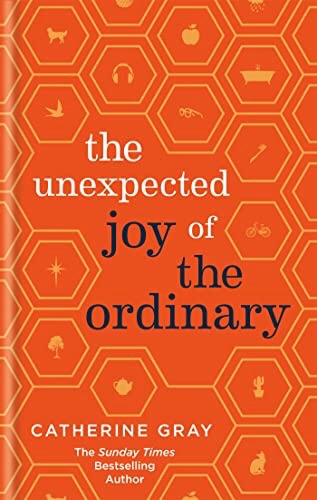
The Unexpected Joy of the Ordinary by Catherine Gray.

Something in society shifted during lockdown. It was probably the first time that adults of my age (mid-late 40’s) faced an international crisis. For weeks we were thrown back on our own resources, unable to socialise or go outside for entertainment. I felt I had a head start here because having had a disability for most of my life I already have to rely on myself for reassurance, comfort and entertainment. I’ve spent long periods in hospital or convalescing at home since I was about 11 years old so I can honestly say that through lockdown I was never bored or disenchanted with day to day life. I think I learned a long time ago to find happiness in the small stuff. So I was interested in this book that aims to teach people why they feel dissatisfied with everyday life and how to find happiness in ordinary existence.

The author claims it’s not us being brats. There are two deeply inconvenient psychological phenomenons that conspire against our satisfaction. We have ‘negatively-biased’ brains, which zoom in on what’s wrong with our day, rather than what’s right. Of course back in the mists of time, this negative bias kept us alert and stopped us being ambushed by the wildlife that used to eat us, but now it just makes us anxious. She also cites something called the ‘hedonic treadmill’ a drive we all have that keeps us questing for better, faster, more, like someone stuck on a dystopian, never-ending treadmill. Thankfully, there are scientifically-proven ways to train our brains to be more positive and to take a rest from this tireless pursuit. Catherine Gray knits together illuminating science and hilarious storytelling, unveiling captivating research that shows big bucks don’t mean big happiness, extraordinary experiences have a ‘comedown’ and budget weddings predict a lower chance of divorce. She reminds us what an average body actually is, reveals that exercising for weight loss means we do less exercise, and explores the modern tendency to not just try to keep up with the neighbours, but also the social media elite. I found this gave me the background to something I already knew in my heart, but for others this could be a life changing read.

Published by Aster 26th December 2019.

Living Well With Pain and Illness by Vidyamala Burch.

I’ve had chronic pain since I was eleven years old and I broke bones in my spine doing a somersault in school. Since then I’ve been diagnosed with Multiple Sclerosis. At the age of 40 I’d pretty much been round the block when it came to treatments and I was very wary of anything that promised to help or cure my condition. I was especially suspicious of anything that claimed to work on my physical condition through the mind. Any sort of faith healing or therapy that claimed to help me ‘think myself better’ was guaranteed to raise my blood pressure a few notches. So when I came across this woman I probably wasn’t the most receptive reader. However, Vidyamala Burch has suffered with chronic pain for over 30 years due to congenital weakness, a car accident and unsuccessful surgery. That made me sit up and listen. Knowing she is now a wheelchair user reassured me that she wasn’t trying to claim a cure or even that mindfulness would reduce my physical pain, only that mindfulness could reduce my instinct to fight with the pain. Burch identifies that it is our resistance to pain which causes it to be so distressing and miserable. We don’t want it to be happening to us, and we wish we weren’t experiencing it. Instead she suggests we accept it.

LIVING WELL WITH PAIN AND ILLNESS is her practical guide to living with and managing chronic pain through the principles of mindfulness. We must develop a calm awareness of our bodies and the pain we’re in. If we let go of the frustration and suffering that we associate with the pain, our perception of that pain will reduce.Vidyamala Burch uses easy-to follow breathing techniques and powerful mindfulness meditations to teach us how to live in the present moment. LIVING WELL WITH PAIN AND ILLNESS includes helpful illustrations, offers effective ways of managing chronic pain and is a must-read for all sufferers. I found it life changing, not because my pain went away, but because I stopped fighting and resenting it. I learned to meditate on my pain, to learn how it varies over a period of time and how much I can cope with.

Published by Piatkus 3rd March 2011. Vidyamala Burch is the founder of the Breathworks centre.

How To Be A Woman by Caitlin Moran.

I came across Caitlin Moran’s book at exactly the right time. I was hitting 40, coming out of an abusive relationship and buying a house to live by myself for the first time. I knew I needed to heal and along with the more practical and spiritual reads this one was much needed. It was honest, feisty and funny. Caitlin Moran is a breath of fresh air. I understood her background and that wildly romantic teenage fantasy life she had from her reading. I used to trudge the countryside in my wellies hoping to meet my very own Heathcliff. We had no money, untruly animals and a Labrador I could whisper all my secrets too. This book taught me that it was ok to do what I wanted and I could bypass all the rubbish that comes with the modern ideal of womanhood. I could spend time on looking nice, but not to take on the botoxed, contoured, epilated, pouting and filtered norm. I started to prefer photos that showed who I am inside. I took away from this book that it was okay to wear Dr Martens all the time, that maybe I needed to curb my spending and to accept my body as it is – it might never be better than this. In places, her honesty taught me to be brave about making decisions for my life and not to romanticise my love life. Instead, when I was ready, I would hope to meet a best friend; someone kind, caring and could make me laugh so much I nearly wet myself. This book takes us back to a feminism I could get on board with after twenty years of Spice Girls ‘girl power’ bullshit. She takes on the adolescent horror that comes with periods, a perfectly normal biological function, but overlaid with secrecy and shame. She also discusses body hair, the porn industry, childbirth and abortion. You might not agree with everything she says and does, but every woman can take something away from this book. I buy it for every young woman in my life too, when they reach an appropriate age to relate to those adolescent experiences.

Published by Ebury, 1st March 2012.

I think it’s best to take Self-Improvement Month as an opportunity for self-care. Self-care can be many things, but it’s not all afternoons at a spa – especially now that we’re in this cost of living crisis. It’s not necessarily about treating ourselves, but is more about creating time to take stock of life so far. Which areas of your life need work and how can you add time for self-reflection and recharging into daily life? I try to find time for a short journal entry every day. I still try to see a new film once a week. Since I recently had a back procedure I’m setting aside time to walk with the dog once a day, however far I can manage it. Again these all add to my life, instead of taking something away. Maybe the best thing we can do is accept ourselves as we are and learn to enjoy the small things in life. Be kind to yourself ❤️