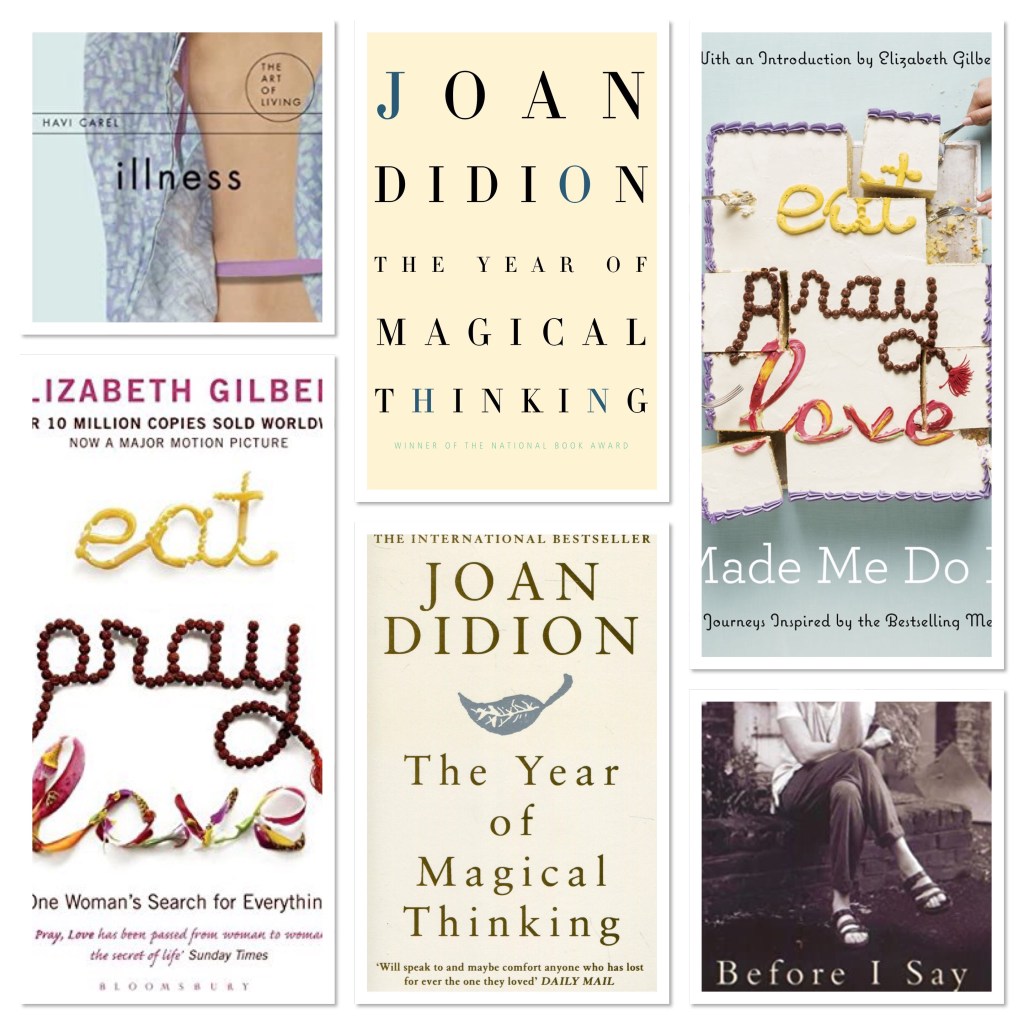
I’m continuing my look at the books that have had a huge effect on me personally or helped me to make a difference in my life. If I’m facing a difficulty, challenge or setback in life I usually look for something to read about it. My late husband used to say that knowledge can’t be taken away from you and that the more knowledge you have, the more options you have too. I’m looking at four books today, all of them memoirs in different forms, but each quite different in how they communicate to the reader. Each one did make me think and I can honestly say I came out of each book feeling changed a little: whether it was energised and inspired; feeling less alone in the world; learning how to face life’s obstacles or reaching an emotional catharsis.
The Year of Magical Thinking by Joan Didion.
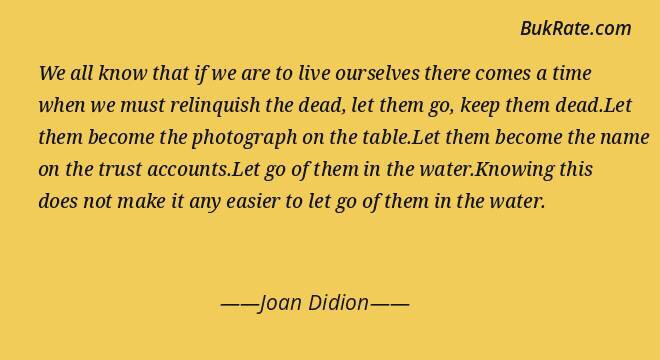
Joan Didion’s memoir is award winning for a reason. I found it a dense read in parts, but then my intelligence is probably far below Ms Didion’s level. However, there’s no denying the power of her opening chapter as she and her husband are preparing the table for dinner. Joan and her husband John had already been given the terrible news that their daughter had been placed on life support. Quintana had been suffering with flu symptoms, that became pneumonia and eventually septic shock. In the throes of grief, they are preparing for dinner when with no warning John collapses. John died from a heart attack instantly. In the maelstrom of emotions surrounding his death, Joan writes to make sense of what she’s thinking and feeling.
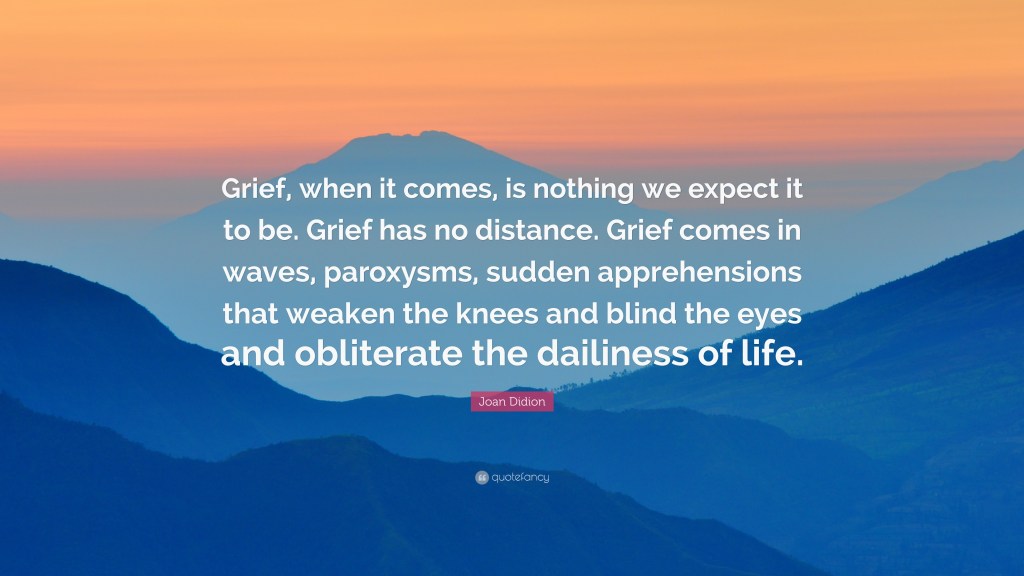
I found her writing raw and painful. I read this in my own grief and I recognised so much of the past year of my life in her descriptions. The way mind and body become disconnected; one carrying out the duties and routines of everyday life while the other is in another place. I felt like the bit that’s me, my ‘self’ had hunkered down deep inside the shell of my body, unable to cope with the shock of what happened. We were now in a world without my husband, where he didn’t exist. I think my ‘self’ was still in the one where he did. With her beautiful choice of words, Didion articulated a grief I didn’t have words for yet.
Illness by Havi Carel.
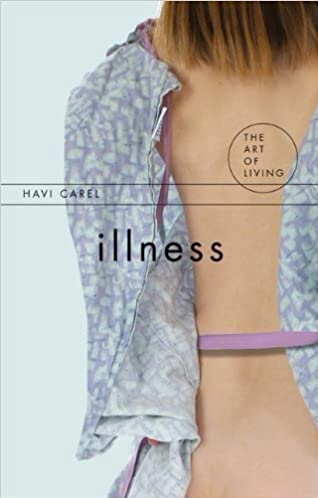
I came across this lesser known book when I was researching for a PhD. I was interested in the gap between a person’s perspective of their illness and the self presented in disability memoirs. My argument being that people write about their disability using certain tropes and archetypes – such as Christopher Reeve still presenting himself as superman. There is often a narrative of redemption or triumph that doesn’t relate to someone whose illness or disability is lifelong. I didn’t know whether these tropes were so ingrained in our society, there was only one acceptable way of writing about disability experience, or whether the truth simply doesn’t sell so publishers pressure writers to frame their disability this way. My supervisor suggested I needed to read Havi Carel’s book, because not only was she a professor in philosophy, she also had a long term illness that affects her lung function. What I was floundering around trying to describe was the phenomenology of illness – the ‘lived experience’ to you and me.
In some ways this is a text book, as Carel looks into what is illness? Is it a physiological dysfunction, a social label, or a way of experiencing the world? How do the physical, social, and emotional worlds of a person change when they become ill? Can there be well-being within illness?Carel explores these questions by weaving together the personal story of her own illness with insights and reflections drawn from her work as a philosopher. Carel’s fresh approach to illness raises some uncomfortable questions about how we all – whether healthcare professionals or not – view the ill, challenging us to become more thoughtful. A scene where Carel is devastated during a test of her lung function, because the result shows a decline, is so much worse because of the cold, unfeeling, practitioner. I had tears in my eyes reading it. Illness unravels the tension between the universality of illness and its intensely private, often lonely, nature. It offers a new way of looking at a matter that affects every one of us, because every one of us can become ill or disabled in our lifetime.
Before I Say Goodbye by Ruth Picardie.
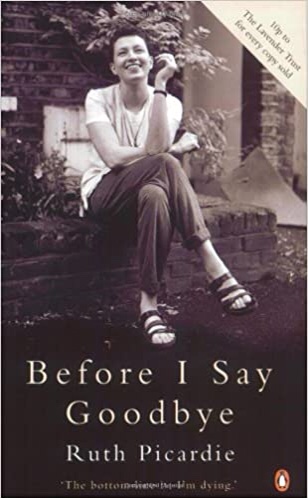
Back in 1998, way before Dame Deborah James and You,Me and the Big C, there was Ruth Picardie. Her column in The Observer was read by millions and it was the cancer experience laid bare. Searingly honest and raw about her illness one minute and the next the day to day routine of being a Mum to two small babies. I loved how Picardie debunked those myths and archetypes of illness. How people still associate being ill with the old Victorian consumptive idea of wasting away. Those who are ill should at least be thin. However, as a result of steroid treatment for a secondary brain tumour, Picardie gains weight and has the characteristic ‘moon face’ that I remember from my own steroid days. She is angry with herself for being shallow, especially when she has to dress up for a wedding and nothing fits. She expected that being faced with death, she might be able to let go of the small stuff that doesn’t matter. It does matter though and she goes to Ghost to buy one of their flowy maxi dresses to make herself feel beautiful. She documents the progress of her cancer without holding back and when she can no longer do so, around two days before she died, her husband and sister Justine conclude.and put a frame around this collection of diary events from The Observer. This is a tough one, because I know the context is needed, but losing her narrative voice and hearing her sister Justine’s still chokes me up today. Ruth died from complications following the misdiagnosis of breast cancer in September 1997, leaving a young husband and two-year-old twins.
Eat, Pray, Love by Elizabeth Gilbert
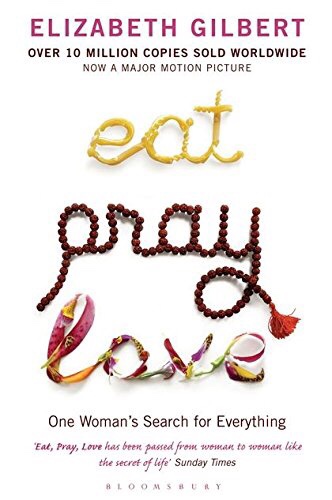
I read Gilbert’s book before all the hype and the film version. I’d been on holiday and picked it up as an easy read and I was hooked by page one. Liz Gilbert has a way of writing that makes the reader feel like it’s just you and her, two friends having a catch up after a long time apart. It’s an intimate and honest account of how she found herself again after a marriage breakdown and a long term relationship that wasn’t healthy. She decided to take a long trip and broke it into sections, each one to feed part of her: body, spirit and heart. First she went to Italy for the eating part, then India for spirituality, then Bali which sounds like an absolute paradise and the perfect place to conclude a healing journey. If you read this as a simple travelogue you won’t be disappointed. Her descriptions of the food in Rome and Naples made me want to book a plane and the warmth in the friends she made there were really heartwarming. I found the discipline and struggle of ashram inspiring, it was her time to really go inside and work things out. She needed to confront what had happened in her marriage, forgive her husband and herself, then remember the parts that were good.
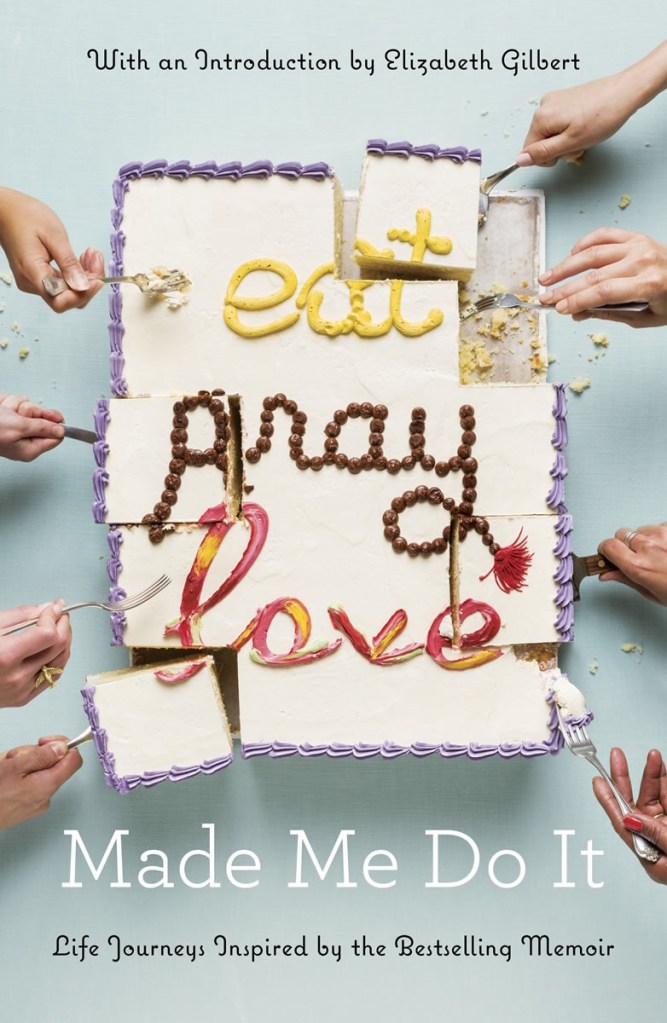
Bali is a like a warm place to land after all that mental work, where the people are welcoming and Liz finds work with a holy man transcribing his prayers and wisdom to make a book. Here she learns to love again and there was something that really chimed with me, when Liz meets a man at a party and they have a connection, she’s absolutely terrified about what it might lead to. She has worked hard and found her equilibrium and now her emotions are stirred up and unpredictable. She felt safe and grounded before, so she doesn’t want to lose it. I’d spent six years on my own, after the death of my husband I’d ended up in an abusive relationship and it had taken me a long time to recover. Then I met my current partner and I remembered back to this book and the wise friend who advised Liz to think of her life as a whole, it could only be balanced if it has periods of imbalance. Sometimes we have to throw ourselves into life. I used meditation a lot to keep grounded and it has changed my life in terms of improving mood and helping me cope with life’s difficulties. However, we can’t avoid life and stay in neutral all the time. When I read this with my book club there were mixed responses, the most negative being ‘it’s okay for some, able to swan off round the old and get paid for it’. It’s a valid point, but I never felt that. I thought she was in need of something drastic to get her life back on track and I didn’t begrudge her a moment of it. You might also like to try Eat, Pray, Love Made Me Do It. A series of stories about women’s journeys inspired by the book.




 The Lotus Readers