Posted in Netgalley

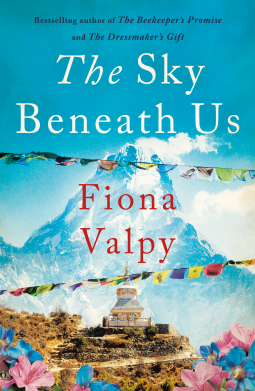
The Sky Beneath Us by Fiona Valpy 

Fiona Valpy is a newish author to me, someone that I’ve come across while blogging and I always request her books on NetGalley. I know I’m going to get a read that’s focused on women, their history and characters going through an experience that changes their outlook on life. I love the psychology behind these stories and this new novel was no exception, taking our main character through her family history to explore her identity and her direction now she’s in middle life. In two timelines we meet Violet Mackenzie- Grant and her great niece Daisy almost a century later. In 1927, Violet is leaving the family estate to focus on a new and exciting career path for women. Having watched her sister settle into the role of wife, Violet wants her life to be different and enrols at The Edinburgh School of Gardening for Women. Manual labour isn’t really what her family had in mind for her daughter, but Violet is so excited especially when she gets the chance to use her drawing skills to sketch plant specimens for the Edinburgh Botanical Gardens. She is thrilled to see the amazing plants being brought back from expeditions all over the world. Little does she know that this work will inspire a journey of her own; the trek of a lifetime to Kathmandu and beyond. In 2020, her great niece Violet Loverack has always dreamed of retracing Violet’s steps ever since she discovered her journals at the family home in Scotland. Her plant hunting exploits inspired Daisy’s own career as a landscape gardener, but from her tiny flat in London, Kathmandu has always seemed a long way away. Now divorced and with her last daughter leaving home for university, she’s made the decision to go on the trip of a lifetime. As she arrives in Nepal, ready for her trek into the Himalaya, fate has a different plan in store for her in the shape of the COVID pandemic. It prevents her mother joining her on the trip and soon after her arrival, the country is shut down leaving her stuck mid-way to the village Violet mentions with her two Sherpas. She must now undertake her journey alone with her guides, hoping for shelter at the same village. As she starts to piece together all the parts of Violet’s story she uncovers long held family secrets, can they inspire Daisy to find her own path forward and build a new life for herself? 

I was so inspired by this story, especially the adaptability and courage of these women. It gave me the travel bug too and I booked a little trip to Venice half way through! Violet is an incredible character, brave and perhaps a touch naïve at first. She doesn’t want to be restricted by what her family and society expect for her, but isn’t quite prepared by how strong their beliefs and rigid class structure is. Even going away to study us a massive step away from that path of marriage and children her parents were hoping for and manual labour for a woman of Violet’s class is possibly unheard of. There’s an openness and freedom to how she thinks that’s partly being young, part never challenging the status quo before and partly her own restless spirit. Things changed rapidly after WW1 for both women and the rigid class structure of the Edwardians. There’s a definite generational gap between those who remember those early years of the early Twentieth Century and those born after the war. Men were more scarce and that applied particularly to women of Violet’s social standing. There were more spinsters at that time, but the war also had an effect on class. It’s a change watchers of Downton Abbey saw between the dowager Duchess played by Maggie Smith and her granddaughter Sybil, who elopes with the young chauffeur. The family also struggled to keep the estate financially viable and many aristocratic families at this time had to give up their stately homes or married American heiresses who were only to keen to gain a British title in return for fixing the stately home’s roof or paying the multiple death duties. Young people of the 1920’s were the flappers and bright young things of the ‘Roaring Twenties’. Violet’s parents seem relatively relaxed about her studying, but probably assume Violet will give it all up when the right man comes along. In finding him, I’m not sure Violet understood how restricted her choices actually were. 

When Violet meets Callum Gillespie at the botanic gardens it’s a meeting of minds as well as hearts. Both love gardens and are inspired by the intrepid plant hunters who travel all over the world to bring back the specimens that Violet is sketching. They are experimenting by cultivating seeds and cuttings to see which plants grow well in the Scottish climate. Violet’s home is situated where the Gulf Stream brings milder temperatures and along with it”s mountainous countryside it could be the perfect site to cultivate plants coming from Nepal. Violet has fallen in love with the stunning Himalayan poppy, it’s sky blue petals and orange centre jumps out from the page and she’d love to grow it back home. Callum is going on the next expedition to Nepal, but first Violet takes him to meet her parents. It’s fair to say she’s stunned by their reaction. They insist that there’s no future in their relationship. He’s so far beneath them in class, that they couldn’t possible give their blessing to the relationship. Violet must break off their relationship. Determined to be with Callum, they both leave and spend the night in a nearby bothy together, cementing their union before a trip to Callum’s parents where they expect a better reception . Sadly things are equally awkward. Callum’s mother is uncomfortable when Violet tries to help out with tea. They are more used to working for people of Violet’s class, and to Callum’s embarrassment they act more like servants than family. They tell Callum he should look for a wife from his own class because this will never work and he could ruin Violet’s chances of a more suitable marriage. As Callum leaves for Nepal the pair are downcast and worry for their future. They continue to write to each other over the weeks and Violet becomes ever more sure that he is her soulmate. Surprise news makes Violet realise she wants to be with him, wherever he is and with the help of her sister she sets off to Nepal where life changing events await her. 

Years later Daisy is setting out on the same journey. She’s recently been very uncertain about the direction of her life now she’s no longer a wife or a full-time Mum. I loved following her journey, taking Violet’s steps into the Himalaya and at such an extraordinary time too. While the landscape itself is unchanged, more and more tourists have made their own attempts to conquer Everest. Previously, the Nepalese people thought it disrespectful to the mountain goddess to climb her, but since then both the Tibetan and Nepalese governments have allowed tourism in the area. Of course this has opened up the small communities to the rest of the world and allowed communication links to and from the area. It was fascinating to read about the effects of tourism on the people and the delicate eco-system around them. Sherpas are now employed to to tackled the most dangerous aspects of climbing Everest. They know the mountain, the weather and the best paths to take. Some are employed to create paths of ladders across the glaciers and many lives are lost, depriving families of their fathers and the income. It was clever to set Daisy’s journey in the pandemic because she gets to see the valley where Violet lived without tourists. The place feels untouched and even more remote as tourists have rushed home and the villages are locked down. So Daisy gets to experience the trek very much like Violet did, it’s quiet, there’s nobody on the same path and when she reaches the village she’s so surprised to a warm welcome. She’ll have to quarantine of course, but she has a family here with so many cousins she’s lost count. She also has access to the rest of Violet’s journals and will be able to read what remains of her life story. Just as these people did for Violet when she arrived a century ago, they now take Daisy in and look after her, 

I loved the equality of the village and I’m sure this is what Violet enjoyed too. There’s no class structure and seemingly no judgement either. She was taken in and as soon as a house becomes available it is cleaned and given to her for as long as she needs it. They don’t find industrious and hard working women an anomaly. This is somewhere Violet can settle and now Daisy can meet Violet’s descendants. Their societal structure is based on community and sharing. No one is without, but equally no one has ownership either. I loved how Daisy is inspired by the villagers and their generosity. It sparks a fire in her for community garden, partly to put something back into this wonderful place, a replacement for what years of visitors have taken. She also thinks it could work back home in Scotland, sharing some of the land that’s been her privileged birthright with the community. She inspires her daughters to improve the estate with an organic gardening project and more ethical values. The settings in the novel are incredible, equally beautiful but it’s hard not to be in awe of the incredible landscapes Daisy uncovers on each day’s trek. The valley between the mountains has its own climate and a unique combination of plants. I was blown away by the author’s description of the flower meadow which I pictured as a living rainbow of roses, rhododendrons and climbers. Of course there are also those vivid blue poppies and yes, I have already sourced some seeds. The idea of being above the clouds was incredible, almost as if it’s a magical, heavenly place. 

Of course there are some darker moments. COVID hits the family hard, just as typhoid hit Violet’s plans a hundred years earlier. The trek is challenging as Daisy struggles with the altitude and the stamina required to reach the village, in fact she’s stunned by how sure footed and physically fit the older members of the community are. This was heartbreaking in parts but also incredibly uplifting. It left me thinking I could start to tick off those bucket list items and fulfil those dreams I had for my life but set aside when I first became ill. Daisy’s Sherpa has a great way of combatting her fears and anxieties about completing the trek. He tells her to keep taking small steps, one in front of the other and I think this is great advice for any overwhelming task and life in general. You only fail if you give up. 

 Out 10th September from Lake Union Publishing.

Meet the Author

Fiona is an acclaimed number 1 bestselling author, whose books have been translated into more than thirty different languages worldwide.

She draws inspiration from the stories of strong women, especially during the years of World War II. Her meticulous historical research enriches her writing with an evocative sense of time and place.

She spent seven years living in France, having moved there from the UK in 2007, before returning to live in Scotland. Her love for both of these countries, their people and their histories, has found its way into the books she’s written. Fiona says, “To be the first to hear about my NEW releases, please visit my website at http://www.fionavalpy.com and subscribe to the mailing list. I promise not to share your e-mail and I’ll only contact you when there’s news about my books.”


Posted in Squad Pod Collective

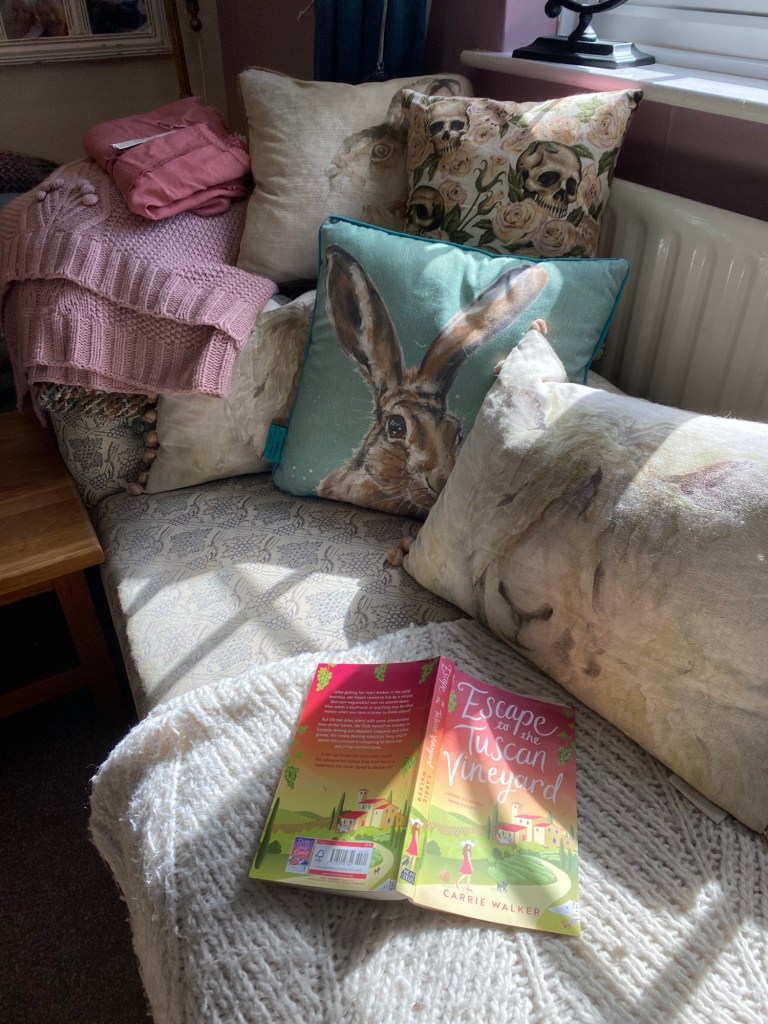
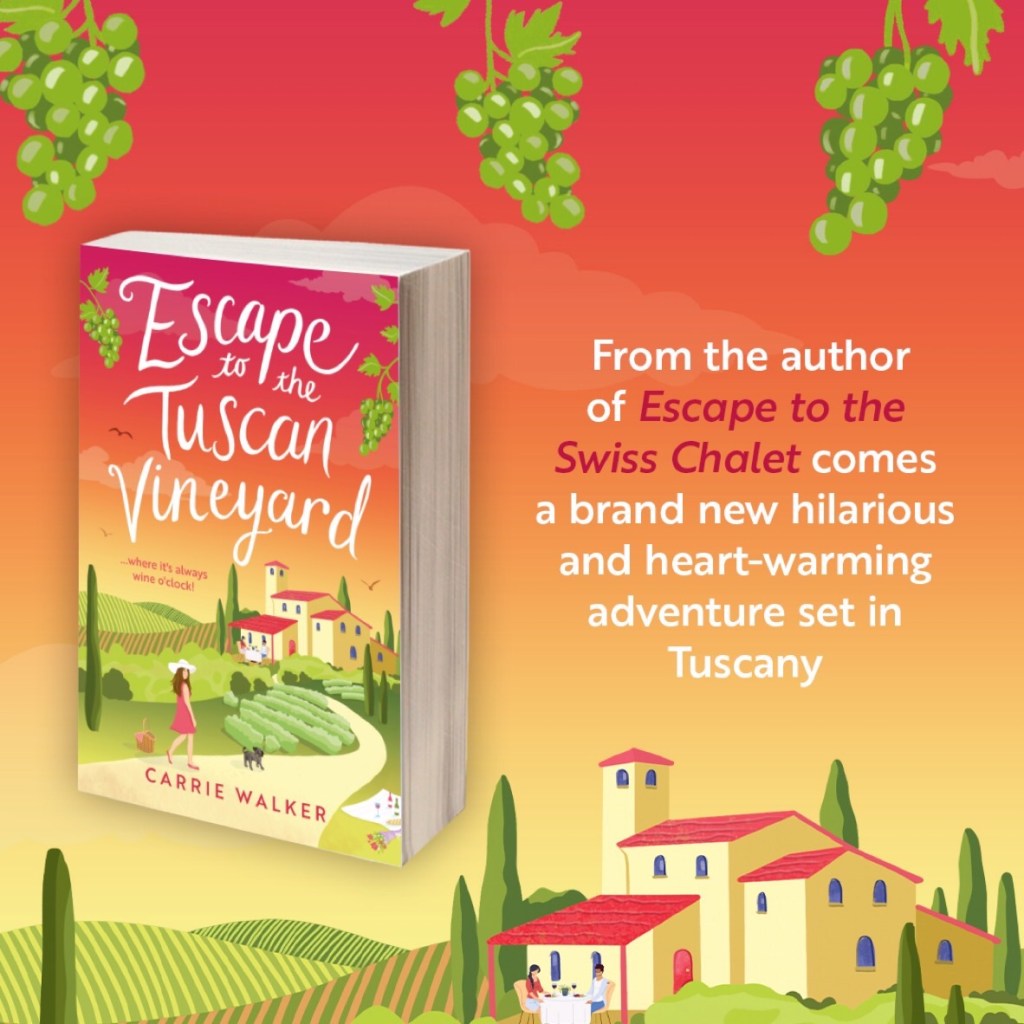
Escape to the Tuscan Vineyard by Carrie Walker

Just when Abi thinks she’s getting her big break as a movie make-up artist, everything starts to go wrong. When she’s told her booking on Moonmen was a mistake, she wonders if it had anything to do with her encounter in a sauna with a good looking guy who wasn’t honest about who he was. Nevertheless she has been paid for a month and when she tells her best friend Holly, she says there’s no excuse not to fly out to Tuscany and pay her a long overdue visit. When she makes it to San Gimignano she’s charmed by the ancient town and the lovely B and B that she’s booked into. The owners, Mia and Paulo are just starting out and Abi has the chance to be a guinea pig, sampling their food, activities and the wine from the attached vineyard. Then she meets Tony, a handsome American Italian man at Holly and her boyfriend Xavier’s restaurant and she decides to have a little holiday fling. Since the heartbreak she encountered in her last long term relationship, Abi has a rule when it comes to affairs of the heart; single encounters only because then she can’t get attached and can’t be hurt. However, something told me that Tony might not be discouraged as easily as she thinks.

Well this novel is a lovely slice of Italian sunshine! It can be read in a day and is the perfect escapist read. I’m not a usual romance reader so this wasn’t something I’d normally pick up. I wasn’t even sure I was going to like it at first because Abi was the type of person who rubs me up the wrong way. In fact there were moments I wanted to give her a slap. When we first meet her she’s running everywhere, helping her Mum out with hair and make-up when an ill advised spray tan and hair tint have left her looking like an Oompa Loompa. Luckily Abi has all the fixes to get her glowing again then she’s off picking up balloons and cake, getting changed and decorating a party room ready for her friend’s surprise birthday ‘do’. She’s so precise and controlled about everything. The discipline she has to get up every morning and pull on her running gear, even when she isn’t working, made me shudder.

‘A quick shower and I was in full make-up by 7.35am and ready for the day ahead. Which suddenly felt like a lot of time to fill. I made the pot of chamomile tea and opened my notepad to start a fresh, new list and get myself organised. I loved a list. It helped me feel in control.’

Abi is all routine and organisation, with no fun or relaxation. Luckily I’m a huge fan of transformation and I had a feeling that this one was going to be worth waiting for. I really enjoyed the humour in the story and I knew if anything could change someone Italy could. Abi loosened up by slow degrees – with a cake for breakfast here and a lie-in there. This is mainly because Italy forces her to be spontaneous. Despite a well planned itinerary Abi can’t sightsee because the buses don’t always run on time and sometimes don’t turn even up. People often close their shops to pop for lunch or an afternoon nap when the heat becomes too much. There’s nothing to do some days except be in the pool and the shade. She soon realises that La Dolce Vita is the only way and she’ll have to get on board with it. I started to enjoy this more relaxed Abi and as we hear more of her story and her feelings of loss and heartbreak the more we understand her.

The setting is simply magical. The vineyard view with the red roofs of the town in the distance sounded idyllic and the food made my mouth water. I’m also a massive fan of Glow-Up even though I rarely use make-up myself, so I loved all the detail about Abi’s career and how skilled she is creating everything from a face painted with bunches of grapes to a full Venetian mask with feathers and gold detailing. When she’s using her skills to help the vineyard and the people she loves, Abi really does shine. I did get drawn in by the romance because it’s impossible to dislike Tony. He’s a straight forward decent man who doesn’t play games and respects Abi’s boundaries. I wanted him to be able to break them down, but I didn’t know if he’d be able to. Ironically, in her desperate need to avoid being hurt, she’s hurting herself. I felt like I’d had a holiday myself when I finished the book. I’d thoroughly enjoyed the villa, especially the wine festival with its incredible food and a fairy lit pergola – the perfect venue for dancing the night away. The family of puppies were pretty irresistible too. Venice was the absolute crowning glory of the story, with Abi making-up the movie stars she’s longed to work with and dealing out some sweet revenge at the same time. Plus it’s my favourite place in the world so that helps. It’s wonderfully uplifting to see someone leave behind painful and negative patterns, it’s one of the reasons I love counselling. Even more than I wanted Abi to find romance, I wanted her to truly live life again instead of trying to control it. I could see a whole new world opening up for her and that made for a very satisfying read. I remember a bit of Eat, Pray, Love by Elizabeth Gilbert where she’s done the praying and the eating and falls in love on the island of Bali. She goes to her herbal doctor who listens as she panics that she’s not kept to her meditation routine and she’s going to lose the balance she’d worked so hard for. Her doctor smiles at this and points out that if we look at our lives overall there has to be some imbalance, otherwise it won’t be balanced. This is something Abi has had to realise for herself.

‘I didn’t want to slip back into my old, controlling ways. I needed to start taking chances again. My lists had to be less about cleaning and more about trying new things and going to new places. I’d wasted so much time…’

And what about Tony? I’ll leave you to find that out for yourself.

Meet the Author

Carrie Walker is a Brummie born romcom lover with a lifelong passion for travel. She has lived in a ski resort, by a beach, in the country and the city, and travelled solo through Asia, South America and Europe.

Her own love life was more com than rom until she met her husband a few years ago and settled down with him and her dog Ziggy in a pub-filled village in Essex.

Longlisted for Helen Lederer’s Comedy Women in Print prize in 2021, writing has long been Carrie’s side hustle, penning columns and features for newspapers and magazines, while working in many other jobs. She has been the CEO of a global disability movement, a board director of a brand agency, the editor of a newspaper, a radio presenter, a football mascot, dressed up as a carrot for the BBC and now she is writing books. Escape to the Swiss Chalet was her debut novel.

Posted in Netgalley

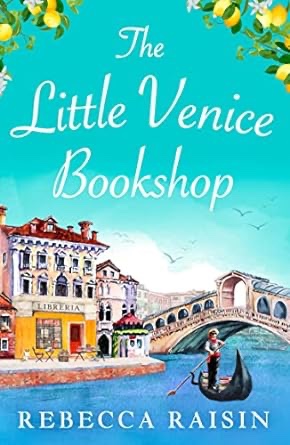
The Little Venice Bookshop by Rebecca Raisin

A bundle of mysterious letters, a trip to Venice, and a journey that will leave a lasting impression.

When Luna loses her beloved mother, it feels as if she’s lost her identity She’s rootless and can’t ground herself. Once she has these doubts, she’s begins to question everything around her. They have enjoyed a rather nomadic way of living up till now, probably because home has been where her mother was, but as she tries to cope with grief, the lack of roots is a struggle.The discovery of a collection of letters in her mother’s possessions seems to signal the way forward and she embarks on a most unexpected adventure. Taking clues from the letters, Luna travels to Venice, in the hope of unraveling her mother’s mysterious past. Maybe if she finds the answers, she might find her own place in the world.

I love Venice. I’ve been lucky enough to spend two weeks there, once in the spring and then a couple of years later in the winter when it actually snowed. I actually travelled with my mum the first time and it was wonderful to see this place we’d always dreamt about come to life in front of our eyes. Venice is obviously a place of wonder, but it’s also got a spooky edge that’s been explored in literature many times. This is more of a ‘cozy’ Venice and I think the cute cover really sets the tone for that. It focuses on the quaint and romantic side of the city, so it’s an easy read, but enjoyable nevertheless. The bookshop is a lovely setting for the story and the rather grumpy owner is clearly crying out for something new, perhaps an antidote to loneliness? As Luna begins to work at the shop mentioned in her mother’s letters she tries to work out how her bohemian mother and the owner, Giancarlo, were connected. She also persuades him to let her develop the shop, improving its visibility through use of social media – to make it a destination place for bookish travellers.

There’s nothing better for an avid reader than a book about books. Luna is definitely a lover of stories and she appreciates what books mean to their readers and collectors. I love that this celebrated second hand books too, something I love too, especially ones that have dedications or messages inside them. Often they tell a story that’s all their own, separate from the printed pages. It’s an interesting thought that these books have been through so many different hands, each with their stories to tell. It was a joy to spend time with a character who’s so passionate about books and Luna’s bookish initiatives are great fun. The family of cats named after authors are particularly whimsical. The idea that her bereavement has made her think about her own life is such a relatable one and the realisation she wants her own family is understandable. The urge to set down roots comes from wanting to make connections, permanent ones that are entirely opposite to the traveller’s existence she’s grown up with. I enjoyed the romance between Luna and Oscar and wondered if perhaps she’d found her forever home?

Although I normally enjoy books that go a little deeper, I did come away from this with a smile on my face. This was a relaxing and soothing read for me. It had a magical feel and I guess it does read like a book lover’s fairytale. I have often daydreamed of a life far different to my own and Italy, books and handsome men are an irresistible combination for this reader. Yes there’s the sadness of loss, but the emphasis is on healing and the result is hopeful and uplifting.

Published on 30th March by HQ

Meet the Author

Rebecca Raisin writes heartwarming romance from her home in sunny Perth, Australia. Her heroines tend to be on the quirky side and her books are usually set in exotic locations so her readers can armchair travel any day of the week. The only downfall about writing about gorgeous heroes who have brains as well as brawn, is falling in love with them – just as well they’re fictional. Rebecca aims to write characters you can see yourself being friends with. People with big hearts who care about relationships and believe in true, once in a lifetime love. Her bestselling novel Rosie’s Travelling Tea Shop has been optioned for film with MRC studios and Frolic Media.

Come say hello to Rebecca on her Facebook page : https://facebook.com/RebeccaRaisinAuthor

Posted in Squad Pod

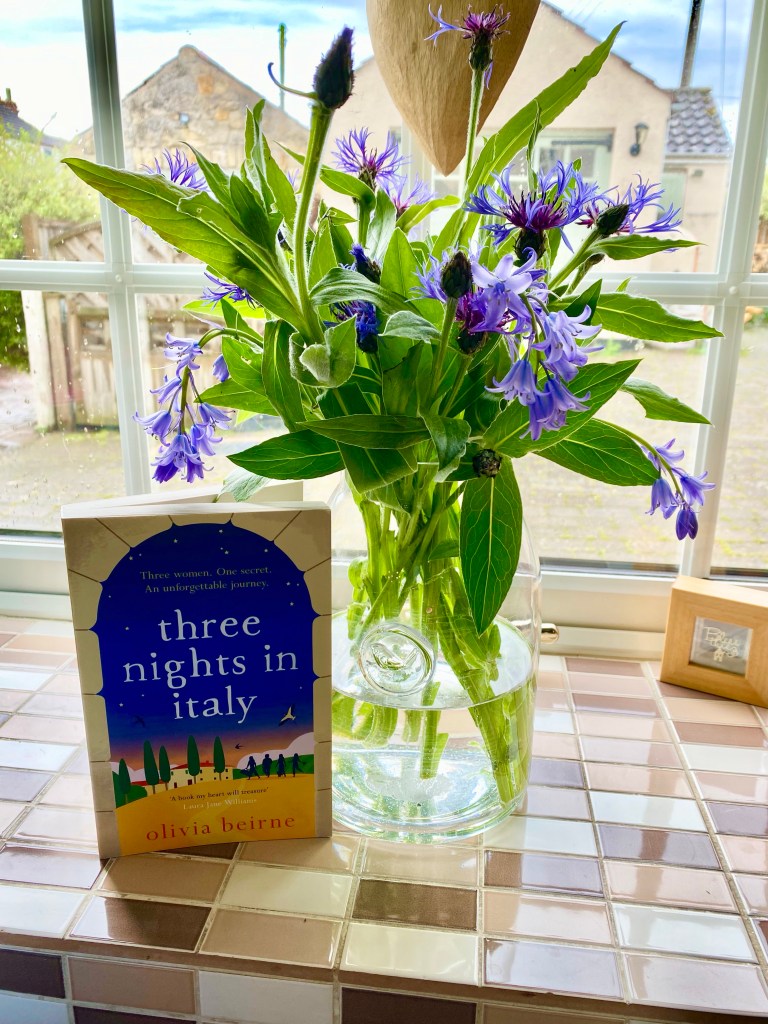
Three Nights in Italy by Olivia Beirne

As this novel opens Zoe has just lost her grandmother, a larger than life, charismatic artist who lived in Italy. Zoe and her mum Ange are left grieving in Cornwall, but they grieve differently and Zoe is worried about her mum, who appears to be in a trance but answers ‘fine’ when anyone asks how she is. Fine is a word banned in my counselling room, so I could understand Zoe’s concern. It’s a form of masking how we truly feel. Uncle Reg is dealing with all the legal and financial stuff, holding an auction of his mother’s belongings only a week after her funeral in Italy. Zoe and Ange plan to stay in Cornwall, but Zoe is uneasy about Uncle Reg and so was I. Her grandma promised her the beautiful emerald engagement ring that she claimed had magical properties. So, when Aunt Fanny turns up after being missing for fourteen years, she encourages them to travel out to Italy. She should know if it’s necessary, after all she was once married to Uncle Reg. With a reluctant agreement from Ange, they agree to travel to Italy for three nights only. They must go to grandma’s house and search for the ring before Uncle Reg even knows they’ve left the country.

Our young heroine Zoe shares the narrative in short, snappy sections with her friend Harriet, Mum Ange, and of course, Aunt Fanny. There are times when her voice gets a little lost amongst these other sparky and formidable women, especially Fanny who has chosen this diminutive of her true name Fenella just to see the blushes it causes. Zoe has stayed in her home town since school and works as a high end wedding coordinator. It’s as if she hasn’t really started in life, adept at creating and delivering the dreams of others she has forgotten her own. I loved her sparky little assistant Kitty who was giving off perky Reece Witherspoon vibes. Zoe hasn’t travelled, had a long term relationship or been to university. Her most important relationship is with close friend Harriet who also seems stuck, but we’re given more access to her inner world and she knows she’s treading water. It’s always been just Harriet and her mum, so it was a shock when Mum met someone and now has a newborn baby. They feel like a family and Harriet has felt like she doesn’t belong. Zoe has also had an all female upbringing made up of Mum and Aunt Fanny, along with holidays in Italy with her grandmother. Mum Ange remembers meeting Fanny just after she married her brother Reg and despite being so different they clicked instantly. Fanny is distinctly upmarket and while Reg always seemed embarrassed that his sister and niece were dressed by Next, Fanny never made her feel like that. With Reg working away the two women became Zoe’s parents and Zoe remembers the shock they felt when Fanny left suddenly and never contacted them till now. Zoe doesn’t have the pizzazz or individuality of her aunt or grandmother and it seems she has really suffered from the absence of these women in her life.

I enjoyed the women’s camaraderie and the way they supported each other. Despite seeming a bit disconnected from Mum at the moment, Zoe is devoted to her and wouldn’t think of leaving while she’s in this trancelike state. Aunt Fanny is the backbone of this group and such a formidable woman in her stilettos and her trademark ice-blonde bob that’s never out of place. She is loud, flirtatious and determined to live life to the full. She seems unbreakable and undaunted, buying everyone’s ticket to Italy, convincing Ange to come, overcoming obstacles and hiking in four inch heels! She grabs every opportunity to have fun and takes adversity in her stride, she even encourages the others to let their emotions out. Yet there are so many questions: where has she been for fourteen years? How does she keep her bob so immaculate? Does she really have a fortune from inventing a nail file? Why does she have other people’s credit cards? And why did she leave in the first place?

There is some romance too, with a love interest for Zoe in red-headed Sam who she meets by knocking a drink over him at the airport and pops up in the most unexpected places. They have a first date in Grandma’s town and I loved the women helping her get ready, just like they would when she was younger and going out. Even our older ladies (my age actually) have their flirtations, but this book is mainly about personal transformation though and finding your authentic self – something that’s not always easy for women who are bombarded with messages about who and how they should be. This is personified by Zoe’s grandmother whose presence is huge, despite her absence. I felt the book would have really benefited from more flashback moments between her, Ange and Zoe. She’s present in the laidback town where she lives, in her hillside home, and most of all in her paintings. The painting that’s a self-portrait of grandma in dungarees with her paint brushes in her pocket, seems to leap off the page with her life force. The depth and number of vivid colours show how vivacious she is and captures her love of life. It’s just so perfectly her, living her best life. I couldn’t bear to think of this stunning painting being sold at the auction. Even more than the engagement ring, it would have been the thing I had to keep. All I kept hoping was that Zoe could take some of grandma’s magic and apply it to her own life, to find out who she truly was and live her own fabulous, authentic life.

Thank you so much to Headline Review, Olivia Beirne and the Squad Pod Collective for the chance to read this book.

Meet the Author

Olivia Beirne is the bestselling author of The List That Changed My Life, The Accidental Love Letter and House Swap. She has worked as a waitress, a (terrible) pottery painter and a casting assistant, but being a writer is definitely her favourite job yet. Three Nights in Italy is her fourth novel.

Posted in Netgalley

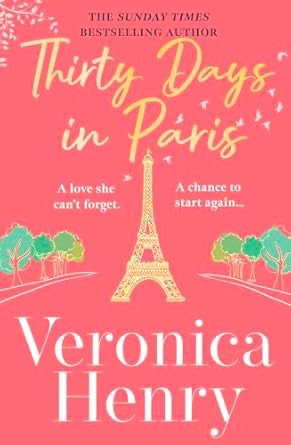
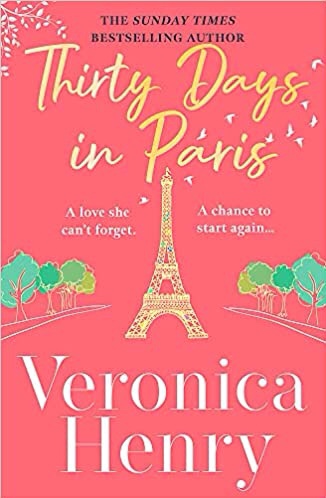
Thirty Days in Paris by Veronica Henry.

Because Paris is always a good idea…

Years ago, Juliet left a little piece of her heart in Paris – and now, separated from her husband and with her children flying the nest, it’s time to get it back! So she puts on her best red lipstick, books a cosy attic apartment near Notre-Dame and takes the next train out of London.

Arriving at the Gare du Nord, the memories come flooding back: bustling street cafés, cheap wine in candlelit bars and a handsome boy with glittering eyes. But Juliet has also been keeping a secret for over two decades – and she begins to realise it’s impossible to move forwards without first looking back.

Something tells her that the next thirty days might just change everything…

I hadn’t read any of Veronica Henry’s novels until I did a blog tour for her novel The Impulse Purchase. I found it delightfully escapist and optimistic while exploring female relationships, especially familial ones, in an interesting way. In her new novel we’re more focused on one woman; Juliet is a middle-aged, ghost-writer who’s at a huge crossroads in life. She and her husband have taken the very brave decision to separate as their last child leaves home for university. Most of their friends think they’re crazy, because the couple still get along, they’re probably the best of friends in fact. However, they feel they’ve drifted into two different paths. As her husband has embraced all things cycling – including the Lycra and the diet – Juliet isn’t enamoured and would rather curl up with a good book or go to the theatre. They’ve each become comfortable in their own routines and as the time to sell their large family home has come around, they can’t see the point of trying to meld their differing lifestyles into another joint home. So each will take half of the house sale and do their own thing and Juliet would like to take a trip into her past. Years ago, when she was still a teenager, Juliet went to work as an au pair in Paris, but returned in shame and sadness only a few month later. She has rented an apartment for a month to reacquaint herself with the city and spend some time writing her own story. However, revisiting the past is never easy and Juliet finds there are experiences she still needs to process and come to terms with.

I found reading this book a little lie watching Sex and the City or perhaps more aptly, Emily in Paris which I binge-watched over the Christmas period. Everything about Juliet’s time in Paris is simply gorgeous from the description of the patisseries near her apartment, to the clothes worn by her friend ….. and the work Juliet starts on her book project. Thanks to the two series mentioned, along with a teenage diet of Judith Krantz novels, I find Paris ridiculously romantic and imagine it full of quirky shops, artists, vintage bookshops and incredibly elegant women. Every walk she takes I was imagining the decorative shop windows, acres of pastel coloured macarons and fairy lit trees, not to mention the incredible bridges, cathedrals and art galleries. I’m also a sucker for transformation shows like the old Gok Wan and those wedding shows where people choose their dress and I also had that vibe too. This might seem like I’m making the book sound trivial or all about appearances, but it’s far from that. This isn’t just about visual transformation. The author takes what can be a difficult period in a woman’s life: empty nest syndrome; menopause; relationship breakdown and that sense of having lost who you are. Veronica Henry takes us into that process of grieving and growth and I kept reading in the hope Juliet would come to that place of finding herself – the person she is now and the way she wants the rest of her life to be. Before she can do that she needs to face what happened all those years ago when she was such a young girl and just starting out in life.

I really felt for the younger Juliet and these sections leapt off the page. I loved how brave she was in leaving her cozy home and family to do something completely different. That sense of being a fish out of water really comes across as she tries to settle into the apartment of the French family she’ll be living with. Her French is minimal and I could feel the nerves as she tries to fit in, especially when the children’s mother is quite volatile and erratic in mood. However, the father seems kind and tries to make Juliet feel at home by taking her out for Sunday lunch with the children. Juliet comes across as a kind young girl, good with the children and concerned about their mother whose moods fluctuate between treating Juliet like a little sister and angry, tearful outbursts. I warmed to Juliet because she doesn’t become angry or resentful, but is worried that her employer is struggling as a working mum of three children and perhaps needs extra support. I had concerns about the way the children’s father acted around Juliet early on and couldn’t decide whether he was trying to make her feel like family, or whether the late nights, sharing a bottle of wine, might lead to more. Juliet’s affections are completely engaged by Luke as soon as they meet. Her friend calls it a ‘coup de foudre’ or love at first sight and it does seem to be an immediate connection, as if their souls know each other before they even speak the same language. In the present day sections, Juliet hints at a disastrous ending to her time in Paris and a separation from Luke that leaves unfinished business. I wondered whether she would feel the urge to reconnect and explain what happened all those years before.

If you’re looking for an enjoyable, escapist read this winter/spring then this is definitely the book for you. Juliet is interesting and her earlier years in Paris really help us understand her character’s choices later on. I wondered how much her stable, but safe, marriage was a response to these early romantic mistakes and terrible heartbreak. I would say that her return to Paris, especially her rekindled friendship with Nathalie, brings out her spontaneous and playful side. Nathalie takes risks, from visiting less salubrious parts of the city, to accepting random invitations and wearing some quirky outfits. Their friendship picks up where they left off and I would definitely be the demographic buying Nathalie’s memoir and cookbook. I loved the way Juliet tackled what happened in the past and it showed the difference in attitudes between then and now; where once Juliet took on a lot of the blame, she can now see other people’s part in what happened and how they took advantage of her naivety. While I wasn’t necessarily rooting for a romantic ending to the story I was rooting for Juliet to build a totally new life for herself where she’s with the people who inspire her. I enjoyed the ending and felt it worked well for the character, especially when a call from home dangles her old safe life in front of her. I wanted her to continue growing and trying new things, because just reading about it felt like taking a holiday.

Meet The Author

I was so interested in reading Veronica’s author section on Amazon because it’s so personal. So I’ve reproduced part of it below.

‘People often ask me what kind of books I write and it’s a very difficult question to answer in one sentence. Primarily, I love to take my readers somewhere they might like to be, whether a gorgeous house in the countryside or on a seaside clifftop. There, my characters go through the trials and tribulation of everyday life, embroiled in situations and dilemmas we can all relate to. Love is at the heart of it, but all kinds of love, not just romantic: the love of friends and family, or a place, or a passion for what you enjoy (food, wine and books, in my case . . .)

I have a background in writing television drama (Heartbeat, Holby City) so that has been an influence – creating lots of characters whose lives impact on each other. Working on The Archers I was taught ‘Make ’em laugh; make ’em cry; but above all, make ’em wait’!

I hope my books are beautifully written, uplifting and a little bit escapist. I’d love to know what you think, so do leave a review. Or you can contact me via Twitter @veronica_henry, or on Facebook or Instagram @veronicahenryauthor

A little bit about me: I live by the sea and head to the beach every day with my dog Zelda. I love cooking and discovering new restaurants on city breaks, with a bit of yoga to offset the calories – and I’ve just bought an e-bike. My biggest writing influences are HE Bates, Nancy Mitford, Jilly Cooper and any book that has a big rambling house and an eccentric family.’ From http://www.amazon.co.uk

Posted in Random Things Tours

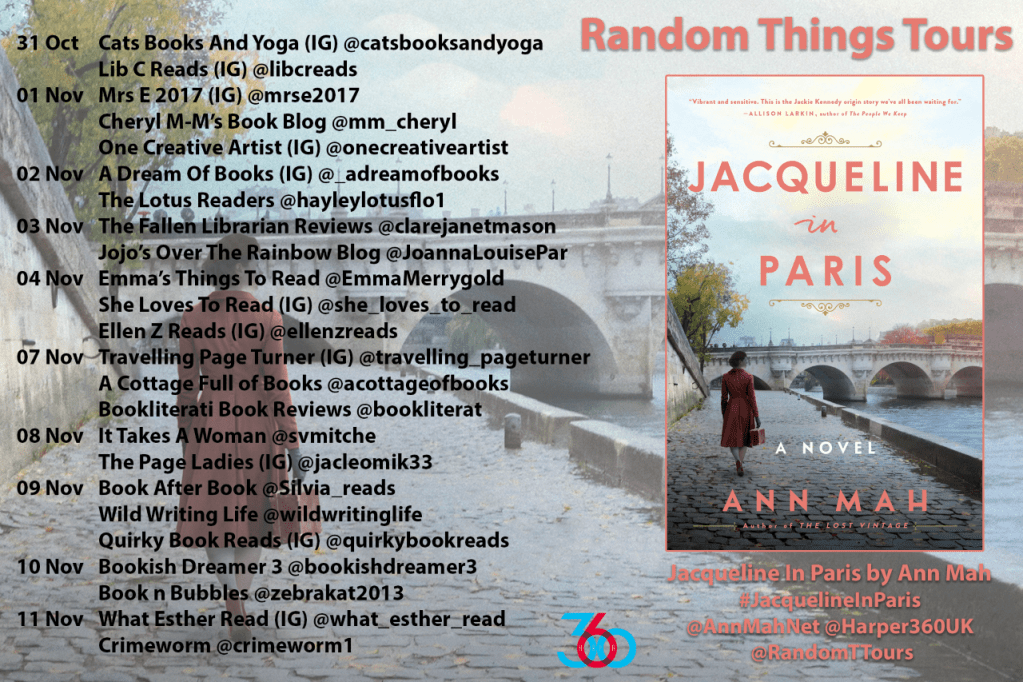
Jacqueline in Paris by Ann Mah

Jacqueline Bouvier Kennedy Onassis is one of those iconic women that we can’t help but be curious about. From watching the film JFK and numerous documentaries about the death of President Kennedy with my mother, I started to be curious about the woman in the blood-stained pink suit. I think people are drawn to women who remain silent. As far as I’m aware she has never spoken directly about the horrific, life changing events of that day. She has almost seemed stoic. The perfect widow, in her lace mantilla at the funeral, still seeming numb and shell-shocked. When she surprised everyone by marrying Aristotle Onassis, the millionaire shipping magnate, I think it was driven by a need to hide. She needed a place to be without cameras following her every move and on his yacht she was definitely away from prying eyes. Perhaps his protection allowed her to grieve and come to terms with her trauma. I wanted to read this book, because I was fascinated to meet this version of Jackie – the Jacqueline before she was Jackie in. I always had the impression that she could have been a woman in her own right, more than the political wife she became.

Ann Mah has set her book in one particular year. In 1949 Jacqueline Bouvier travelled abroad for her junior year at college. It was to be her last year of freedom. She was aware that despite being poised and ready for society, her family were on the edge financially and she felt pressure from her mother to make a good match on her return. She met Jack Kennedy in 1952. Jacqueline lives in an apartment with a widowed French countess and her daughters. She finds a world of champagne, avant-garde theatre and jazz clubs and socialises with people she would never have met in her home town or the social circles at Vassar. There’s even romance with a man who loves literature like she does, but who would be totally unsuitable back home. Yet Paris isn’t all fun and glamour, because this is the aftermath of WW2 and its clear that the city’s people have suffered. The countess and her daughters have suffered too, as part of the resistance. The whole city is haunted by events during the Occupation and it will take many years for them to recover from the lies, betrayals and suspicion that lurk round every corner.

I love that Mah has written this novel in the first person, so we have Jacqui’s unguarded thoughts and emotions from the start. Even though it is a fictionalised self we’re getting to know, it still feels like a rare window into the innermost thoughts of a very private woman. It may sound strange to regard her as private when she was later married to the most powerful leader in America and arguably the world. Jacqui is private though. From this part of her life when she has the most freedom she’s ever known she’s testing people out for herself, but there’s still a natural reserve. She gets to decide who to spend time with and who to trust. On her return to the US and her subsequent relationship with John Kennedy, she is private by design. It’s part of the mystique of being a powerful politician’s wife who should show loyalty, discretion and control of her emotions. Once she’s in those circles, who can she trust to be a true friend? Where many might have seen her as the archetypal political spouse, this was the ambition of her mother rather than Jacqui’s own desire. Here we see her when she was naive and idealistic. Her love of art and for the city of Paris is evident. She’s also keen to make friends and experience real French life, but that reserve can make it hard for others to feel they know the real her.

She finds that one of the biggest differences between the US and Europe is a political one. During the war, Parisian people did what they had to in order to survive and there are still grudges against those forced to collaborate. She learns which subjects to avoid. Madame de Renty is a lively and colourfully dressed woman during the day, but she was imprisoned at Ravensbrück concentration camp during the war and Jacqui hears her crying in the night. Some truths can never be spoken. Aside from the post-war adjustments and the effects of trauma that will last for generations, Jacqui is most shocked by the Parisian’s politics. There is a lean towards communism here, something that’s unthinkable in the US where it’s considered in the same breath as Nazism. Her mind is broadened by friends who explain it’s underlying principles – an equal, fair society. This has huge resonance for us, because we understand she will be First Lady during the Cuban missile crisis, and the 1950’s saw a wave of suspicion about communism that fuelled the McCarthy era.

Despite these darker undercurrents there’s also the joy of seeing Paris through her eyes, for the very first time. The beautiful language, the smells of incredible food and early morning croissants. There’s also Jacqui’s love of learning and through this I could see glimmers or the different life she could have had, if her family had valued her as more than a marriage commodity. This is a well-researched account that held some of the answers I’d pondered about her life: that pull between the security of marriage and the more precarious life of her own; the love of Europe that would see her return there after Kennedy’s death; the education from a really great college versus the education of how to be a wife provided by her mother. I thought the author found a great balance between fleshing out a story and what we know of Jacqui’s year abroad through historical research. I understood this Jacqui and felt I’d met her before in my own reading. Now I have to give this straight to my mum so we can talk about it.

Meet the Author

Ann Mah is an American food and travel writer. She is the author of the USA
Today and Wall Street Journal bestseller The Lost Vintage, as well as three other books. She contributes regularly to the New York Times Travel section, and her articles have appeared in the Washington Post, Condé Nast Traveler, The Best American Travel Writing, The New York Times Footsteps, Washingtonian magazine, Vogue.com, BonAppetit.com, Food52.com, TheKitchn. com, and other publications

Posted in Random Things Tours

Ahead of the Shadows by A.B. Kyazze

When a photographer witnesses war crimes, will she have to abandon her calling to save herself?

As Lena and Kojo work in conflicts across East and Central Africa, there is immense psychological pressure, and it’s not certain if their relationship will survive.

Eighteen years later, Bene walks the gritty back streets of Paris for one night in a music festival. He is on his way to meet his father in Kenya, a man he’s never met.

Ahead of the Shadows is about the intense relationships that come from work in war zones, the transmission of trauma from one generation to the next, and how one unconventional boy might be able to break the cycle.

It’s such a pleasure to close the blog tour for this small but powerful book about the dangers and struggles of working in conflict zones. I had a period in my teens where I wanted to be a journalist and was in awe of Kate Adie and Feargal Keane. My life didn’t go that way, but I remember reading Feargal Keane’s memoir and a long piece by Italian correspondent Janine di Giovanni that really impressed upon me the life long effects of being and working surrounded by danger. There are the effects of what they’ve seen such as PTSD and a terrible restlessness left over from living such an adrenaline fuelled existence. Many can’t overcome that restlessness and choose to live a peripatetic existence, endlessly wandering from one crisis to the next, using drink to avoid the worst of their memories. It destroys people and their relationships. So, when I saw the blurb for this novel I was interested to read it.

I think the author really captured how adrenalin fuelled these jobs can be as we follow Lena into the Democratic Republic of Congo. With her group she settles into their temporary accommodation for the night, only to be woken by the sound of a dozen phone alarms going off raised voices and activity. With very quick thinking she pushes a piece of furniture across her door and sits against it, eventually falling asleep on the floor. It shows the reader how alert Lena is to the possibility of violence at a moment’s notice. With no clear sides in the country’s conflict, as well as soldiers for hire, child soldiers and rape regularly used as a weapon, Lena doesn’t know from which side danger might come. There’s no clear wrong or right and danger could come from local bandits, not just men engaged in conflict. The next day, with most of her party having left in the night, Lena rings her lover Kojo for advice on what to do. He advises her to walk to the border and cross to Kigali in Rwanda where he can send someone to meet her. As she walks alone towards to border my heart was in my throat. The author creates so much tension and our own knowledge of corruption and violence in these regions adds to our fears for Lena. It seems to take forever for her to cross the no man’s land between the two countries and she seems so defenceless. Hours later in Kojo arms, she is awake as he sleeps, aware that she feels so much safer with him present, but she still has adrenaline coursing through her body.

When writing about such dramatic events and heightened emotions in one timeline of the book can leave the present day sections feeling flat by comparison. However, as we go to Paris with Bene who is on his way to meet his father for the first time in Kenya, the author doesn’t try to compete. She lets Bene’s world seem almost dreamlike in comparison, at least on the surface. As he wanders in Paris he meets a beautiful young woman called Fatima who takes him on a tour of her city. These sections are like a dream sequence within the harsh realities of Africa from almost two decades before. There’s a sense of going with the flow as Bene goes out with Fatima into the evening. This stop has been a hiatus in his journey out to Kenya to meet his father for the first time. He should be carefree, but here and there we get traces of anxiety. When she takes him to a party at her ex-boyfriend’s place he doesn’t look forward to being with strangers, especially if they’re fakes. Most are out on the apartment balcony, watching a singer in the square below. It’s not his type of party. He goes to find Fatima as he wants to leave and steps onto the heaving balcony and wonders at how easy it would be to throw oneself over the railings and what it would take to turn that urge into a reality? I wondered where these dark thoughts and anxieties came from in such a young man. As if he’s only just running one step ahead of the shadows.

Lena’s time in Sudan is a tough read, but an important one. There was a period of time when family and friends were fed up of hearing me ask why news programs and governments had forgotten what was happening in Sudan. I remember George Clooney funding a satellite to view areas where rumours abounded about the mysterious ‘Janjaweed’. The UN seemed reluctant to use the word genocide but it was happening. The author captures the fear these masked murderers on horseback generated in the villages. They were thought to be mercenaries, appearing with no warning, except for the sound of pounding hooves. They left no time for people to flee and showed no mercy. Men were killed, young boys rounded up and recruited or killed, young girls and women gang raped. Then the survivors rounded up and placed in camps. Lena travels there as an NGO worker, trusted to bring back her clear observations for Kojo’s project.

Kojo has trusted Lena to see exactly what’s happening, she has experience of travelling through conflict regions and knows how to find the truth. Even he is taken aback by her phone call, when she tells him that no other place they’ve travelled to holds the amount of fear expressed by survivors. She tells him there’s something more going on here, that even the workers are scared and the people to scared to speak. They’re petrified. Kojo has never known Lena use hyperbole, so when she suggests people are being rounded up, Kojo suggests they talk in person. The longer Lena spends in Darfur the more she thinks about her friend Stefan, another photographer, the one who killed himself. Kojo notices when they’re reunited, a mental distance, and a physical one too – as if she’s constantly on alert and ready to flee. It takes a catalyst to set, what has only been a feeling up till now, into reality. Something to force her into taking flight. The author brings all these strands together beautifully, a full eighteen years since Lena and Kojo were in Sudan. Will Kojo come to understand her urge to flee and find safety all those years ago? Will he forgive her for keeping secrets? This is a beautiful book about the horrors humanity is capable of and what it means to bear witness to these atrocities. It is about being broken down with no joy in life and a sense of despair that can kill and how those responses to trauma can pass to the next generation. However, it’s also about those things that happen to bring us back to ourselves. The things that help us to see the future again with a sense of joy and hope.

Meet The Author

A.B. Kyazze is a British-American writer and photographer. She spent two decades writing and taking photographs around the world in conflicts and natural disasters – in the Democratic Republic of Congo and Darfur, Sudan, where Ahead of the Shadows takes place, and other parts of Africa, Asia and the Balkans. Her photographs and non-fiction work have been published in travel magazines, The Huffington Post, The Washington Times, The International Review of the Red Cross, and by Oxfam, Save the Children, and the British Red Cross.Into the Mouth of the Lion, A.B. Kyazze’s debut novel, was published in May 2021. She has also published the Humanity in the Landscape photography book series, and a number of short stories, articles and book reviews. Today, she lives in southeast London with her young family. There she writes, mentors other writers, runs a freelance editing business, and facilitates creative writing workshops in schools and libraries. She serves as a Trustee for the Oxford Centre for Fantasy, a creative writing charity. For more information go to http://www.abkyazze.com

Posted in Sunday Spotlight

Sunday Spotlight! Memoirs and Non-Fiction

I’m continuing my look at the books that have had a huge effect on me personally or helped me to make a difference in my life. If I’m facing a difficulty, challenge or setback in life I usually look for something to read about it. My late husband used to say that knowledge can’t be taken away from you and that the more knowledge you have, the more options you have too. I’m looking at four books today, all of them memoirs in different forms, but each quite different in how they communicate to the reader. Each one did make me think and I can honestly say I came out of each book feeling changed a little: whether it was energised and inspired; feeling less alone in the world; learning how to face life’s obstacles or reaching an emotional catharsis.

The Year of Magical Thinking by Joan Didion.

Joan Didion’s memoir is award winning for a reason. I found it a dense read in parts, but then my intelligence is probably far below Ms Didion’s level. However, there’s no denying the power of her opening chapter as she and her husband are preparing the table for dinner. Joan and her husband John had already been given the terrible news that their daughter had been placed on life support. Quintana had been suffering with flu symptoms, that became pneumonia and eventually septic shock. In the throes of grief, they are preparing for dinner when with no warning John collapses. John died from a heart attack instantly. In the maelstrom of emotions surrounding his death, Joan writes to make sense of what she’s thinking and feeling.

I found her writing raw and painful. I read this in my own grief and I recognised so much of the past year of my life in her descriptions. The way mind and body become disconnected; one carrying out the duties and routines of everyday life while the other is in another place. I felt like the bit that’s me, my ‘self’ had hunkered down deep inside the shell of my body, unable to cope with the shock of what happened. We were now in a world without my husband, where he didn’t exist. I think my ‘self’ was still in the one where he did. With her beautiful choice of words, Didion articulated a grief I didn’t have words for yet.

Illness by Havi Carel.

I came across this lesser known book when I was researching for a PhD. I was interested in the gap between a person’s perspective of their illness and the self presented in disability memoirs. My argument being that people write about their disability using certain tropes and archetypes – such as Christopher Reeve still presenting himself as superman. There is often a narrative of redemption or triumph that doesn’t relate to someone whose illness or disability is lifelong. I didn’t know whether these tropes were so ingrained in our society, there was only one acceptable way of writing about disability experience, or whether the truth simply doesn’t sell so publishers pressure writers to frame their disability this way. My supervisor suggested I needed to read Havi Carel’s book, because not only was she a professor in philosophy, she also had a long term illness that affects her lung function. What I was floundering around trying to describe was the phenomenology of illness – the ‘lived experience’ to you and me.

In some ways this is a text book, as Carel looks into what is illness? Is it a physiological dysfunction, a social label, or a way of experiencing the world? How do the physical, social, and emotional worlds of a person change when they become ill? Can there be well-being within illness?Carel explores these questions by weaving together the personal story of her own illness with insights and reflections drawn from her work as a philosopher. Carel’s fresh approach to illness raises some uncomfortable questions about how we all – whether healthcare professionals or not – view the ill, challenging us to become more thoughtful. A scene where Carel is devastated during a test of her lung function, because the result shows a decline, is so much worse because of the cold, unfeeling, practitioner. I had tears in my eyes reading it. Illness unravels the tension between the universality of illness and its intensely private, often lonely, nature. It offers a new way of looking at a matter that affects every one of us, because every one of us can become ill or disabled in our lifetime.

Before I Say Goodbye by Ruth Picardie.

Back in 1998, way before Dame Deborah James and You,Me and the Big C, there was Ruth Picardie. Her column in The Observer was read by millions and it was the cancer experience laid bare. Searingly honest and raw about her illness one minute and the next the day to day routine of being a Mum to two small babies. I loved how Picardie debunked those myths and archetypes of illness. How people still associate being ill with the old Victorian consumptive idea of wasting away. Those who are ill should at least be thin. However, as a result of steroid treatment for a secondary brain tumour, Picardie gains weight and has the characteristic ‘moon face’ that I remember from my own steroid days. She is angry with herself for being shallow, especially when she has to dress up for a wedding and nothing fits. She expected that being faced with death, she might be able to let go of the small stuff that doesn’t matter. It does matter though and she goes to Ghost to buy one of their flowy maxi dresses to make herself feel beautiful. She documents the progress of her cancer without holding back and when she can no longer do so, around two days before she died, her husband and sister Justine conclude.and put a frame around this collection of diary events from The Observer. This is a tough one, because I know the context is needed, but losing her narrative voice and hearing her sister Justine’s still chokes me up today. Ruth died from complications following the misdiagnosis of breast cancer in September 1997, leaving a young husband and two-year-old twins.

Eat, Pray, Love by Elizabeth Gilbert

I read Gilbert’s book before all the hype and the film version. I’d been on holiday and picked it up as an easy read and I was hooked by page one. Liz Gilbert has a way of writing that makes the reader feel like it’s just you and her, two friends having a catch up after a long time apart. It’s an intimate and honest account of how she found herself again after a marriage breakdown and a long term relationship that wasn’t healthy. She decided to take a long trip and broke it into sections, each one to feed part of her: body, spirit and heart. First she went to Italy for the eating part, then India for spirituality, then Bali which sounds like an absolute paradise and the perfect place to conclude a healing journey. If you read this as a simple travelogue you won’t be disappointed. Her descriptions of the food in Rome and Naples made me want to book a plane and the warmth in the friends she made there were really heartwarming. I found the discipline and struggle of ashram inspiring, it was her time to really go inside and work things out. She needed to confront what had happened in her marriage, forgive her husband and herself, then remember the parts that were good.

Bali is a like a warm place to land after all that mental work, where the people are welcoming and Liz finds work with a holy man transcribing his prayers and wisdom to make a book. Here she learns to love again and there was something that really chimed with me, when Liz meets a man at a party and they have a connection, she’s absolutely terrified about what it might lead to. She has worked hard and found her equilibrium and now her emotions are stirred up and unpredictable. She felt safe and grounded before, so she doesn’t want to lose it. I’d spent six years on my own, after the death of my husband I’d ended up in an abusive relationship and it had taken me a long time to recover. Then I met my current partner and I remembered back to this book and the wise friend who advised Liz to think of her life as a whole, it could only be balanced if it has periods of imbalance. Sometimes we have to throw ourselves into life. I used meditation a lot to keep grounded and it has changed my life in terms of improving mood and helping me cope with life’s difficulties. However, we can’t avoid life and stay in neutral all the time. When I read this with my book club there were mixed responses, the most negative being ‘it’s okay for some, able to swan off round the old and get paid for it’. It’s a valid point, but I never felt that. I thought she was in need of something drastic to get her life back on track and I didn’t begrudge her a moment of it. You might also like to try Eat, Pray, Love Made Me Do It. A series of stories about women’s journeys inspired by the book.

Posted in Netgalley

Summer Fever by Kate Riordan

This is a real sizzler of a novel! Hot in every sense of the world, set in picturesque Italy with a sense of growing menace all the way through. I read this one in the garden, with a Pimms in hand and with every chapter became more convinced of the old saying; the grass is never greener on the other side. Laura and Nick have been through a lot. Back in London they were struggling with infertility and Laura hadn’t felt like herself for a long time, the fertility drugs pumping her full of hormones and the grief of miscarriage left her feeling broken. When she discovers a betrayal, after Nick accidentally leaves his phone at home, she’s angry and resentful too. In his eagerness to make it up to her, Nick suggests they do what Laura has always wanted, move to Italy and create a holiday hideaway for couples. They discovered Luna Rossa on a visit to Italy several months ago, after which Laura suffered a third miscarriage. It is in the Marche region, a largely unknown area of Italy next to Tuscany, but less expensive. Luna Rossa is wonderfully isolated and just dilapidated enough to still be charming. It includes a pool, a small derelict cottage and beautiful grounds that fall away steeply gifting the house with incredible views across the countryside. Only a few months later they are preparing to welcome their first couple for a three week stay. It seems idyllic, but they’re taking a risk in welcoming complete strangers into their home. Laura has stalked her guest Madison on social media and she seems very outgoing and glamorous. Laura and Nick could be underestimating how disruptive it can be to have strangers living in your home, especially these strangers…

I felt the author set out Nick and Laura’s back story and state of mind very well. Nick is contrite and desperate to make it up to Laura for his indiscretion, but he’s sacrificed a lot to follow her dream and might have been desperate to make it happen at all costs. Laura is still resentful of Nick’s mistake and the trauma of infertility has left her a little lost, unsure of who she is anymore. With hormones still not back to normal and the sadness of losing a child she’s very fragile and could easily be manipulated. I got a sense that she wanted to recapture herself, the person she was before their fertility journey began. It’s as if she wants to take off her experiences like taking off a costume and simple be who she was before. It takes time to process trauma and assimilate the experience into your sense of self, something she’s barely started. There’s a reckless feel to her actions, almost a need to self destruct. I thought the author’s description of the miscarriage experience was brilliant, I’ve been there and recognised Laura’s confusion at some of the euphemism’s used by medical staff to avoid emotive language; using ‘products of conception’ rather than baby and ‘come away’ rather than loss. It rang so true and I had empathy for her. As we start seeing flashbacks of her life at university and her relationship with the man she loved, I found her curiously passive. This annoyed me, although I did realise later on that it might be a coping mechanism. She seems to slip away in her mind and so any trauma or difficult experience only happens to her bodily rather than emotionally, hopefully leaving her able to cope. Sadly it just leaves her divorced from her emotional self, like an observer rather than someone truly living that moment and feeling it. Shutting emotions out never works and her destructive behaviour is the bodily experience of those repressed emotions.

Once their guests arrive, Madison and husband Bastian, the tone is set for their stay. Gregarious and sociable Madison seems to suck Laura and Nick into her orbit and they’re soon acting like friends visiting rather than paying guests. This is inexperience on the couple’s part and ordinarily they might learn from it, but there’s an air of menace in the way Madison ‘plays’ with Laura. She dresses Laura up, is overtly sexual and likes to play mind games with her husband. Is it for herself, or Bastian’s pleasure that she does this? At a neighbour’s pool one afternoon Madison comes on to Laura with Bastian watching. He’s clearly enjoying himself, but is it just the titillation or is he enjoying Laura’s discomfort and confusion too? In these moments of challenge Laura is again curiously passive, going along with the moment rather than causing a fuss. There’s also a feeling of unease around the builders who turn up to see Nick, their disdain of Laura very evident in the way they dismiss her objections as if she knows nothing about her own house. Is this simply a chauvinistic attitude or is something more sinister going on? The tension is often at fever pitch, accentuated by the physical temperature and constant need to cool off. The author then adds sections of unbearable tension, such as the slightly ‘Don’t Look Now’ masquerade feel of the town’s medieval festival. The heat is unbearable and Laura is never sure who is behind the costume and has the uneasy feeling that they could have stepped back in time; the permanence of the ancient buildings seeming to mock her for feeling untethered and temporary. The author also drip feeds a little bit of stress into everyday life, such as Madison’s wardrobe making Laura feel she has to make an effort too. Nick notices she’s now wearing make- up every day and styling her hair whereas she wouldn’t normally bother. These changes show that Laura isn’t comfortable in her own skin, this pair have some sort of hold or influence but what is it? We are taken back in time to her university days for the answers and then the shock revelations surrounding the guests start to unfold. With secrets being kept about Luna Rossa too, the conclusion is explosive to say the least. This will make you wish you were in Italy, but not with these people.

Meet The Author

Kate Riordan is a writer and journalist. She is an avid reader of Daphne du Maurier and Agatha Christie, both of whom have influenced her writing. She lives in the Cotswolds, where she writes full-time. The Heatwave is her fourth novel

Posted in Personal Purchase

Throwback Thursday! The Enchanted April by Elizabeth Von Armin.

This is such an apt novel for the time of year, but I’ve found myself thinking about it recently for two other reasons. Of course spring is on it’s way, but this year is something of a personal renaissance. I’ve been shielding since the second lockdown, because I have multiple sclerosis and it means I have a few issues with swallowing and breathing. This was a personal choice, but thank goodness I did, because I did receive a government letter four weeks ago telling me I should have been shielding. A brilliant bit of irony. So now I can have friends come and join me for a dog walk or sit in my garden for a cuppa together. I can’t explain how joyful this makes me feel. I will feel connected to the world again – well, as much as I ever want to be. I can also have my hair coloured silver blonde with lilac dip-dye! Hairdressers here I come.

The other reason is that four weeks ago I moved to my new home. It’s an 18th Century cottage in a really happy village, and I feel like the real me is re-emerging. We’d been living in the city, on a relatively new estate and I had no idea how much of an effect this as having on my mental health. I was sitting on my reading couch at the weekend with the sun coming in, next door have an apple tree and the branches hang over the fence, so I can smell the blossom when I have the window open. On Sunday afternoon we had a pot of tea and our Easter cake outside in the garden, where an enormous jasmine hangs heavily on the wall wafting a heady scent over the whole garden. I started planning what I’d like in the garden across the seasons and that always feels like a corner has been turned. It’s as if we went into hibernation in winter 2019 and we’re only just coming out and that feeling reminded me of the characters in this novel.

The premise of the book is that a discreet advertisement appears in The Times, addressed ‘To Those who Appreciate Wisteria and Sunshine’. On offer is a small medieval castle for rent, above a bay on the Italian Riviera. Four very different women – the dishevelled and downtrodden Mrs Wilkins, the sad, sweet-faced Mrs Arbuthnot, the formidable widow Mrs Fisher and the ravishing socialite Lady Caroline Dester – are drawn to the shores of the Mediterranean that April. As each, in turn, blossoms in the warmth of the Italian spring and finds their spirits stirring, quite unexpected changes occur. These characters drive the novel, as it is their responses to each other and to Italy that take centre stage. Mrs Wilkins and Mrs Arbuthnot are the first to respond, both ladies living resignedly, but quietly, in unhappy marriages. They are joined by Lady Caroline, a younger, beautiful woman who has found that her looks can be more of a burden than a blessing. Finally, there’s Mrs Fisher. A formidable woman who has a very strong will, which she tries to impose on the other women. The author is so perceptive when it comes to human foibles and how personalities rub against each other when living side by side. Tiny little acts of pettiness and selfishness can take on huge importance in these situations. However, what the author also shows is that one person’s character failing can have a transformative effect on someone else. One woman’s need to be in charge, inspires assertiveness in a quieter, more timid member of the party. The early chapters are a comedy of errors and miscommunication as the women try and often fail to understand each other.

The author deliberately creates an opening that feels like being under a rain cloud. The weather is miserable and cold, each woman feels unhappy or have lost themselves in some way. Then as they’re thrown together for this month in the castle we wonder if they’ll ever get along and if Italy will work its magic on them. The second half of the book feels like entering spring, the sun is shining and the surroundings start to work on each woman, even Mrs Fisher. The characters and the surroundings come into bloom. There are vivid descriptions of the castle and its gardens so the reader can really visualise the setting. It feels like a literary painting. Slowly, each woman begins their transformation. In the case of the married ladies, they invite their husbands to join them in Italy. Could this special place transform their marriages, relight a spark or remind them of the deeper love they once shared?

The movie version of the novel.

The novel is charming and light, without falling into whimsy or sentimentality, showing extraordinary skill in the writer. Despite barely having a plot, the book can be read as a satire on class and society post WW1. It could be read as a travel novel or just a study in how a different culture, characters and nature can soften and change us for the better. There isn’t a single character here who isn’t changed by the magic of Italy, and that’s the final reason I love this book. I was meant to get married last spring and go to Venice for my honeymoon. I picked the perfect hotel room with a double aspect and a balcony over one of the smaller canals. It would have been my third trip to Venice, but I don’t think I’ll ever tire of it. The first time I visited we arrived at night and took a water taxi in the dark across the lagoon. We arrived at a small jetty and it was so quiet, just the sound of water lapping against the buildings. The lamplight was reflected in the ripples on the surface, as well as tiny lanterns as we stepped up into a small garden. We walked through a courtyard with pots, pergolas with hanging plants and the tiny points of light hanging within. It was such a surprise because gardens are rare in Venice, but there it was. I did feel changed by my visit. I felt amazed that such a beautiful place actually existed and that I could go there whenever I wanted. It improved my confidence, my creativity and taught me to go a bit slower. If I never go abroad again in my life, I’ll be happy because I went to Venice. This book captures some of that transformative feeling; its a witty and delightful depiction of what it is like to rediscover joy.

Elizabeth von Arnim (1866-1941) was an Australian-born British novelist who was married to a Prussian aristocrat. Her most famous works include Elizabeth and Her German Garden and The Enchanted April