I thought that today I’d share with you the last ten books I’ve bought. Sometimes people think that because I review books on my blog, I get given every book I review but that’s far from the case. I still buy an enormous amount of books every month. It’s my main indulgence, aside from Doc Marten boots and a weird fascination with animals in clothes (probably best left unexplored but I’m sure it has to do with Mr Tumnus). I’d do get proof copies but they are becoming more scarce these days so mainly they come from the reviewing I do through the Squad Pod Collective – a group of blogger friends who have come together to share the book love – or through blog tours. More often it’s digital copies that are available, either offered by the publisher or through NetGalley. There are many reasons I might buy a book, as discussed last week there are come authors who are must-buy and are usually pre-ordered for a discount. Another reason might be that I’ve loved a book on Netgalley or digital proof and I’d like a finished copy. Then there’s the bookshop purchases where I have a terrible love of spredges and beautiful book cover art as well as the story itself. Finally comes those I buy second-hand in charity shops, second hand bookshops like Barter Books in Alnwick or Vinted, which is a great hunting ground for special editions. I also collect various copies of old classics or my favourites – I have about six different copies of The Night Circus for example. Currently on my radar is the Folio Society copy of The Colour Purple which is stunning but will take up a whole month’s book budget! Here are my latest buys:
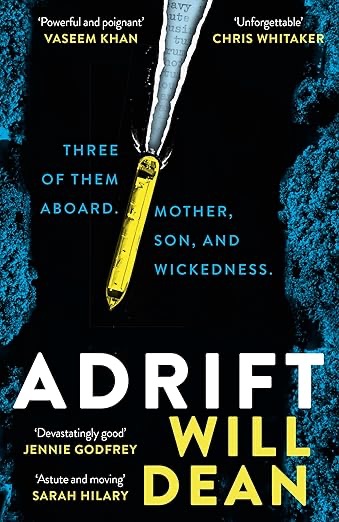
I love Will Dean’s Tuva Moodysson series and pre-order those always, but his stand-alone novels I tend to buy on Kindle. This has all the hallmarks of a heart-stopping thriller.
Three of them adrift on the narrowboat.
Mother, son, and wickedness.
Peggy Jenkins and her teenage son, Samson, live on a remote stretch of canal in the Midlands. She is a writer and he is a schoolboy. Together, they battle against the hardness and manipulation of the man they live with. To the outside world he is a husband and father. To them, he is a captor.
Their lives are tightly controlled; if any perceived threat appears, their mooring is moved further down the canal, further away from civilisation. Until the day when the power suddenly shifts, and nothing can be the same again.
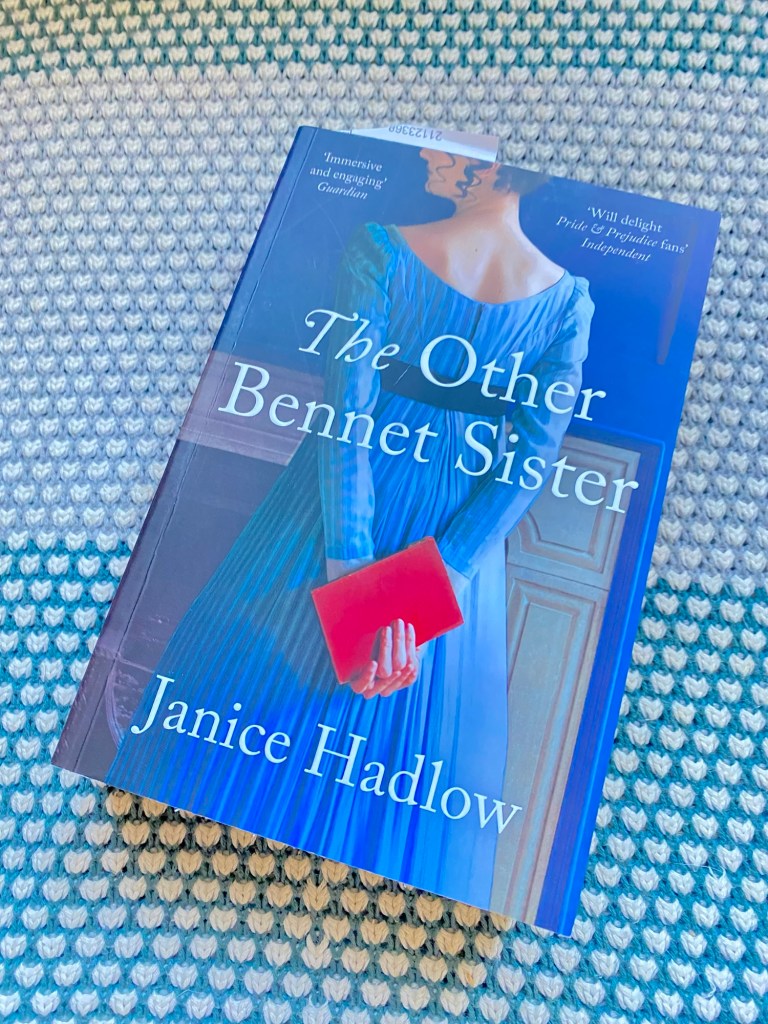
I left the parking ticket bookmark in this one, because I bought this from my local bookshop on Saturday and then my other half went to Screwfix so I read five chapters in the car out of boredom. I wanted to read this before I watched the BBC series and as usual I’ve left it to the last minute. I recently thoroughly enjoyed Rachel Pariss’s novel about Charlotte Lucas and I’d forgotten how lovely it is to be in Austen’s worlds so I thought this would be light relief, both from other reading and the news.
In Jane Austen’s Pride and Prejudice, we know the fates of the five Bennet girls. But while her sisters are celebrated for their beauty or their wit, Mary is the “plain” middle sister, the introvert in a family of extroverts, and a constant disappointment to her mother.
Lonely and lacking connection, Mary turns to the only place she feels safe: her books. Determined to be “right” since she can never be “beautiful,” she prepares for a life of solitude at Longbourn.
One by one, the other sisters move on: Jane and Lizzy for love, and Lydia for respectability. Mary is destined to remain single, at least until her father dies and the house is bequeathed to the reviled Mr Collins.
But when that fateful day finally arrives, the life Mary expected is turned upside down. In the face of uncertainty, she slowly discovers that there is hope for the “plain” sister after all. . .
Experience the witty, life-affirming tale of a young woman finally finding her place in the world.
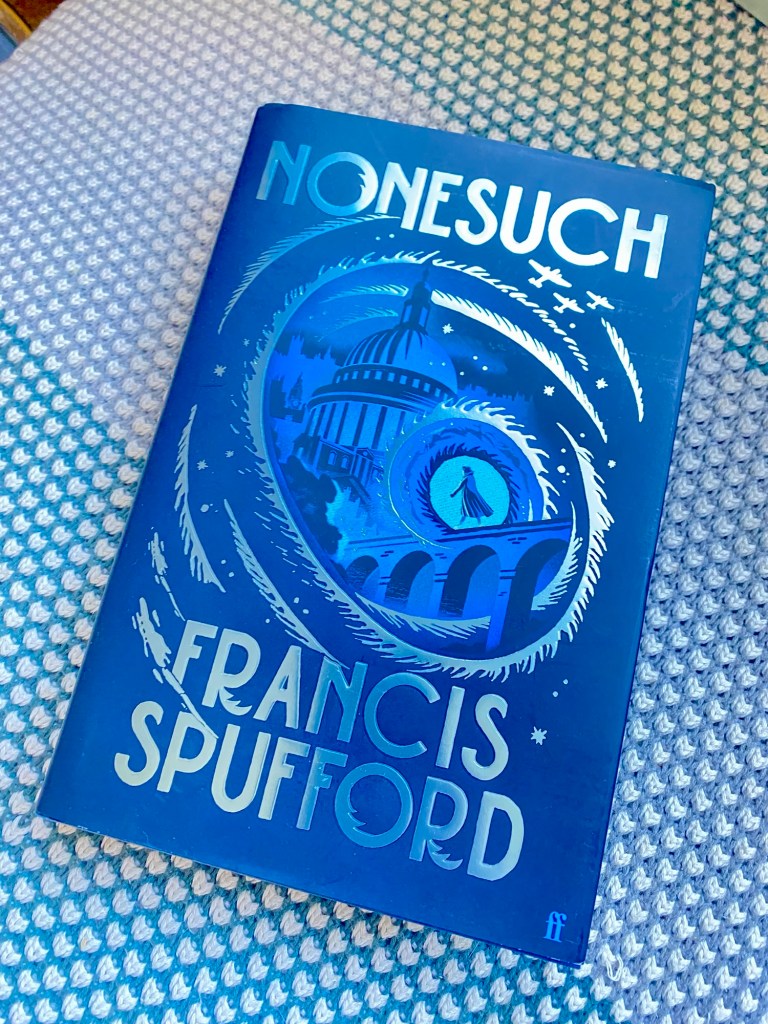
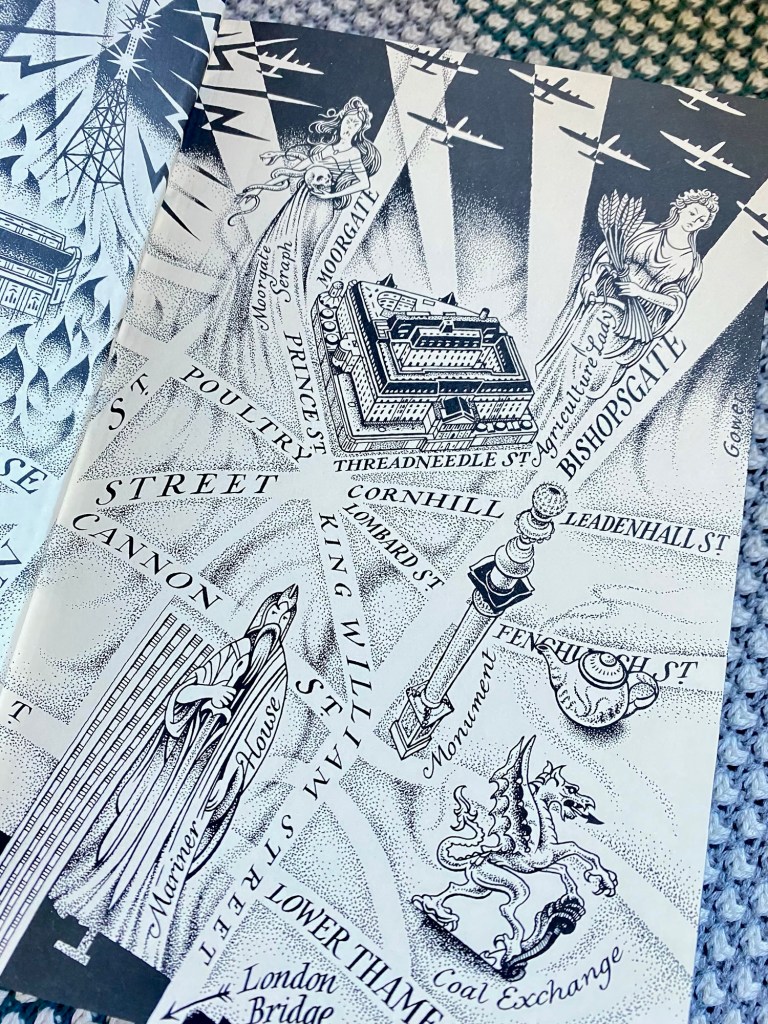
This book falls into the special edition category as it’s one I might normally have bought on Kindle, but couldn’t resist this beautiful signed edition complete with stunning spredges and endpapers.
It’s the summer of 1939. London is on the brink of catastrophic war. Iris Hawkins, an ambitious young woman in the stuffy world of City finance, has a chance encounter with Geoff, a technical whizz at the BBC’s nascent television unit.
What was supposed to be one night of abandon draws her instead into an adventure of otherworldly pursuit – into a reality where time bends, spirits can be summoned, and history hangs by a thread. Soon there are Nazi planes overhead. But Iris has more to contend with than the terrors of the Blitz. Over the rooftops of burning London, in the twisted passages between past and present, a fascist fanatic is travelling with a gun in her hand.
And only Iris can stop her from altering the course of history forever.
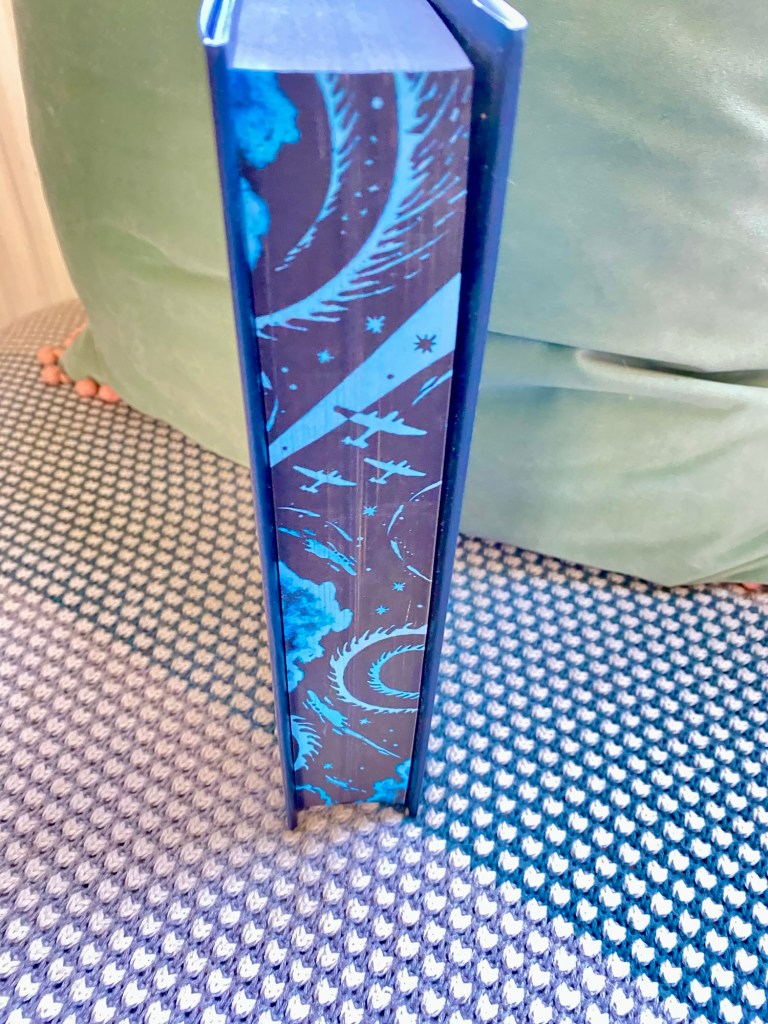
Just look at those beautiful spredges. I’m itching to dive into this but need to get my blog tour reading done first.
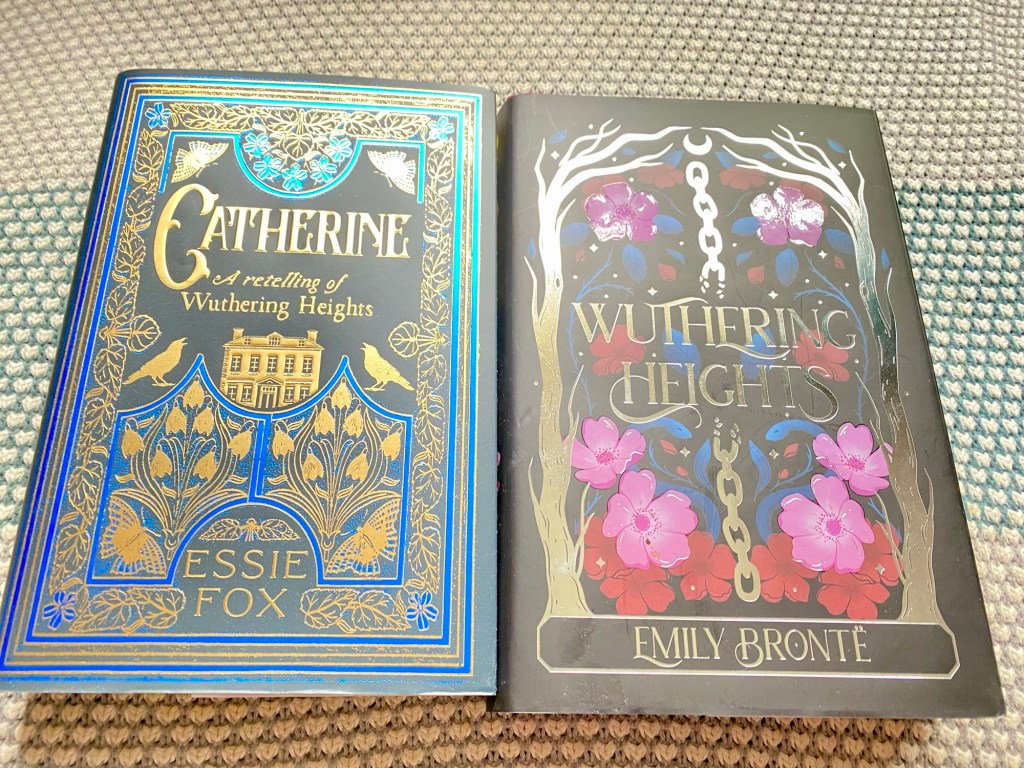
As you can see another ‘nostalgic’ purchase. Wuthering Heights is one of my favourite books of all time, despite the problematic middle bit where too many people die at once, so when I bought Essie Fox’s beautiful retelling through Catherine Earnshaw’s eyes I couldn’t resist this new edition of Wuthering Heights. The spredges are to die for!
With a nature as wild as the moors she loves to roam, Catherine Earnshaw grows up alongside Heathcliff, a foundling her father rescued from the streets of Liverpool. Their fierce, untamed bond deepens as they grow – until Mr Earnshaw’s death leaves Hindley, Catherine’s brutal brother, in control and Heathcliff reduced to servitude.
Desperate to protect him, Catherine turns to Edgar Linton, the handsome heir to Thrushcross Grange. She believes his wealth might free Heathcliff from cruelty – but her choice is fatally misunderstood, and their lives spiral into a storm of passion, jealousy and revenge.
Now, eighteen years later, Catherine rises from her grave to tell her story – and seek redemption.
Essie Fox’s Catherine reimagines Wuthering Heights with beauty and intensity – a haunting, atmospheric retelling that brings new life to a timeless classic and lays bare the dark heart of an immortal love.
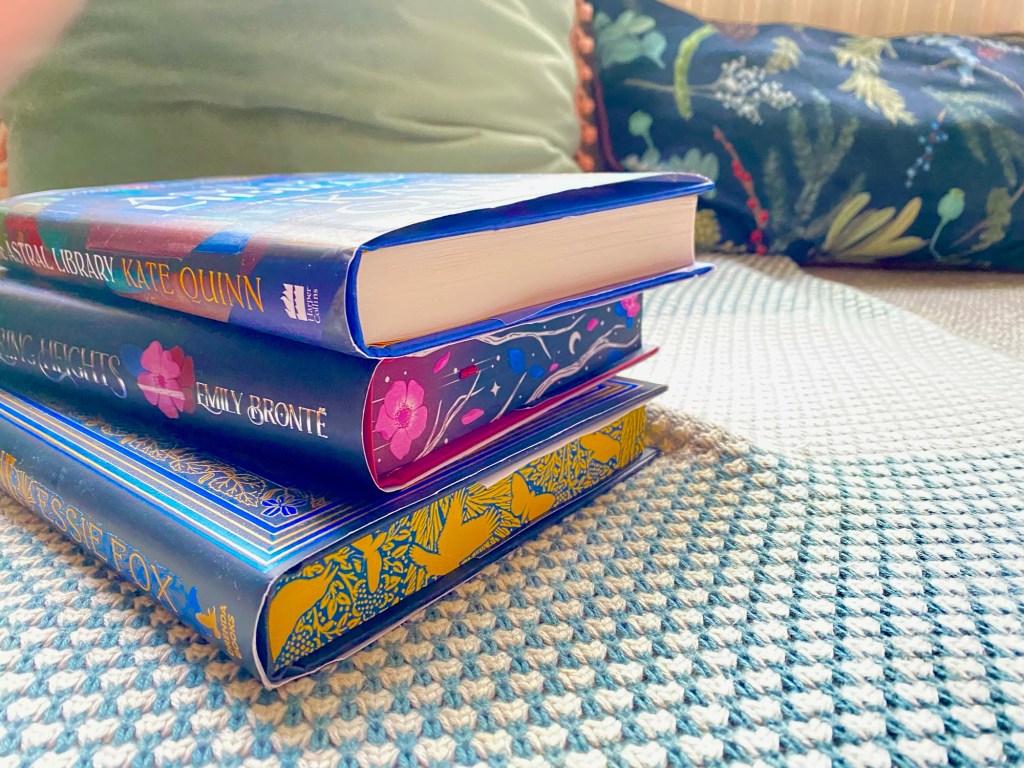
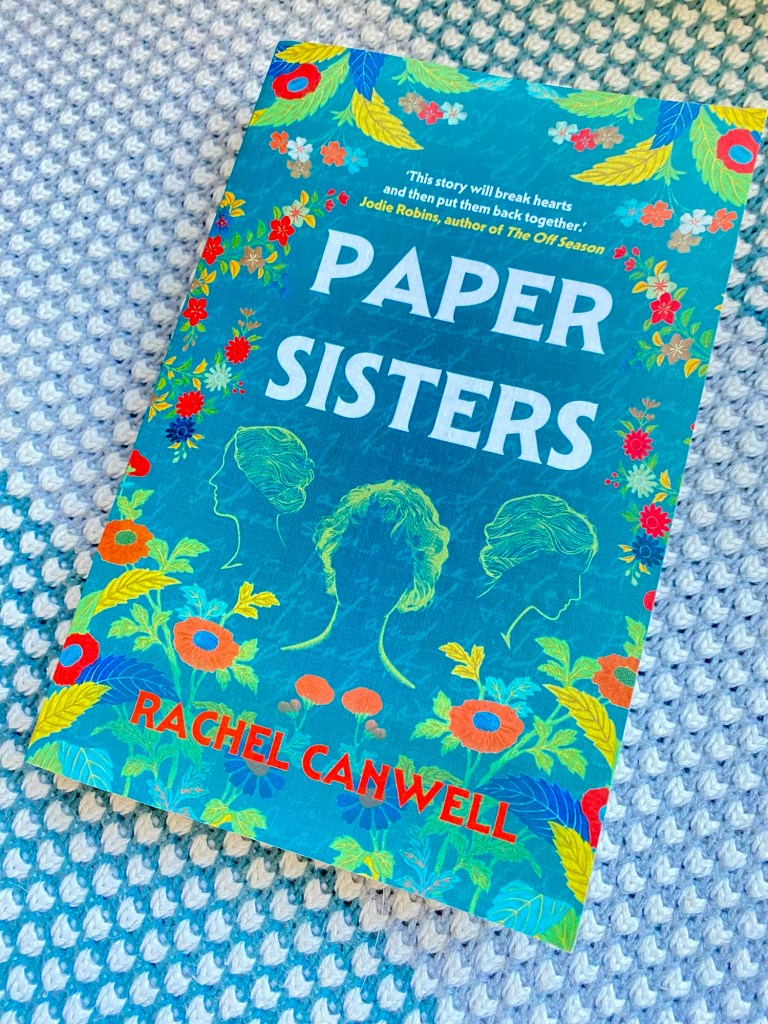
As you will know I’ve been raving about this one after reading it last month and yes I do have a proof copy but I do like to support independent publishers, authors and bookshops so I went to Lindum Books for her signing a few weeks ago. Sadly, by the time I arrived they’d run out of copies so they were waiting for new stock and Rachel kindly supplied a signed bookplate for it.
Lincolnshire, 1914. As the First World War approaches, three women are living, trapped between the unforgiving marsh, the wide, relentless river, and the isolation of the fen.
Their lives are held fast by profound grief, haunted by the spectres of the past. Trapped by the looming presence and eerie stillness of a hospital that has never admitted a single patient.
Eleanor longs to escape. To make a life with the man she loves, leaving her sister, and all her ghosts behind. Clara’s marriage is crumbling and violent and she yearns for peace and security for both herself and her innocent children. Meanwhile, Lily, a formidable force of will, stands resolute against the relentless tide of change. She will stop at nothing, no matter the devastating cost, to ensure that life, and her family, remain frozen in an unyielding embrace of the past.
The author, Rachel Canwell, grew up with the story of this forgotten hospital. Isolated, stocked weekly and cleaned daily but never admitting a single patient. The hospital was real, tended by her family for over sixty years and set against the ethereal beauty and loneliness of the Fens, is the inspiration for her novel.
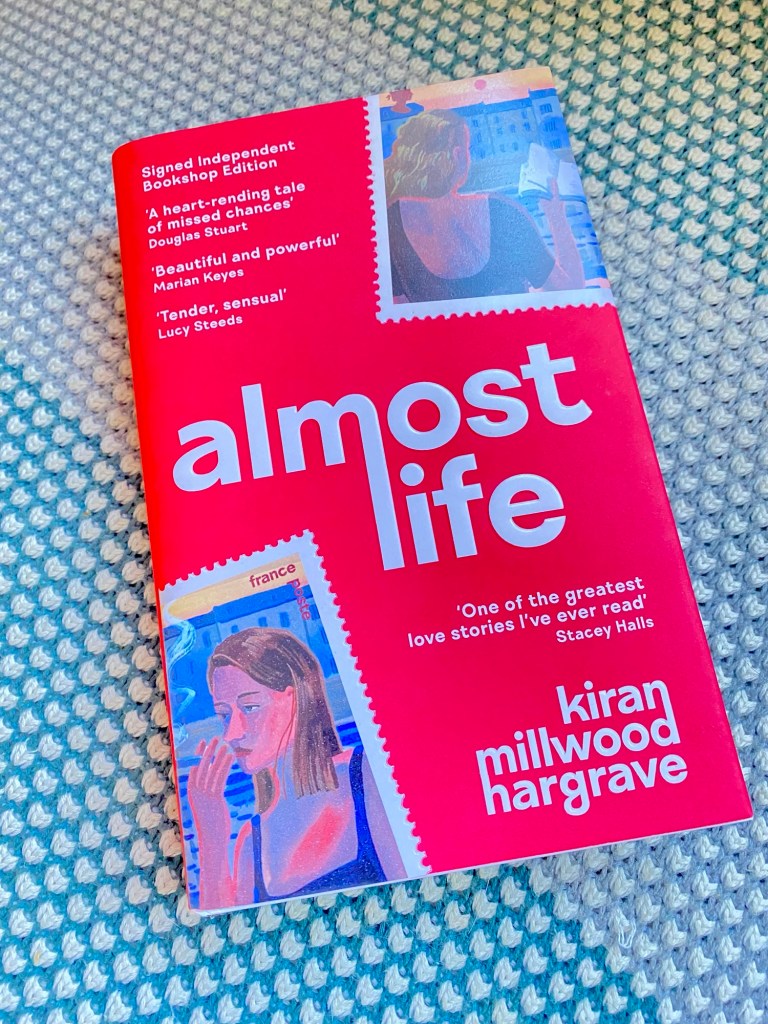
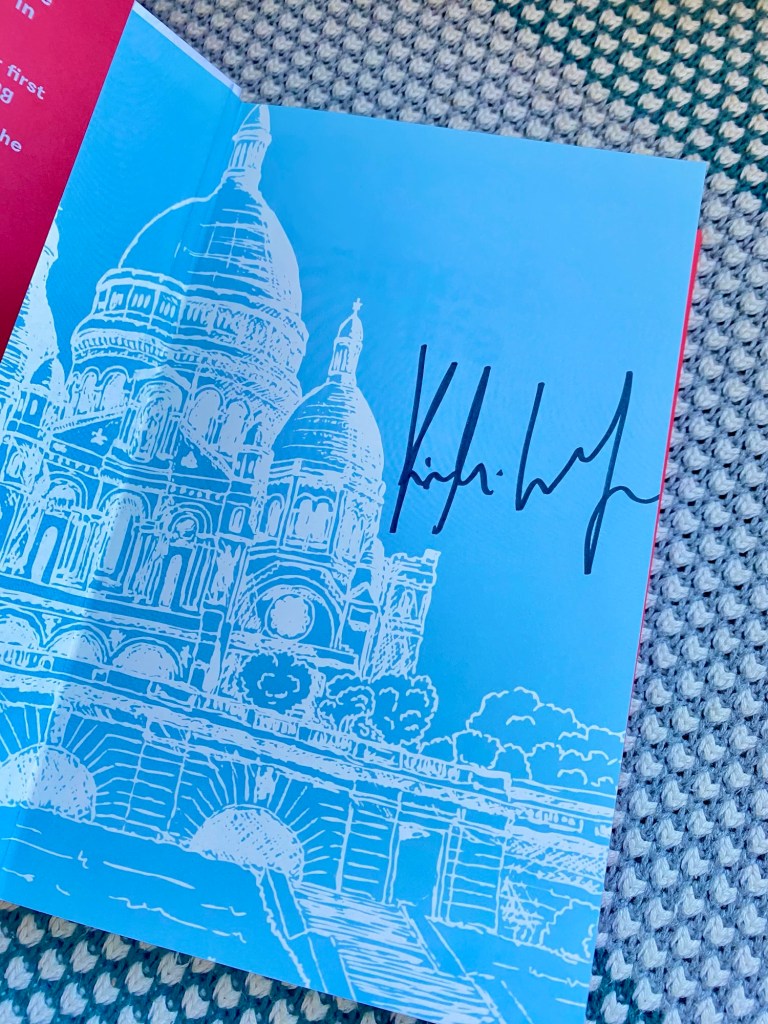
This beauty is the independent bookshop copy of Almost Life that came from Lindum Books. I always love the artwork from Kiran’s books and this is a stunner.
One chance encounter can define a lifetime
Erica and Laure meet on the steps of the Sacré-Cœur in Paris, 1978. Erica is a student, relishing her first summer abroad before beginning university at home in England. Laure is studying for her Ph.D. at the Sorbonne, drinking and smoking far too much, and sleeping with a married woman.
The moment the two women meet the spark is undeniable. But their encounter turns into far more than a summer of love. It is the beginning of a relationship that will define their lives and every decision they have yet to make. Spanning cities, decades and heartbreaks, fate brings them within touching distance again and again.
But will they be brave enough to seize the life they truly want?

My next purchases are two for the Kindle and after recently reading and reviewing her third Cal Hooper novel The Keeper, I decided I need to catch up on the first two in the series. I’d previously read her Dublin Murders series so I know I enjoy her writing and I read The Keeper through Netgalley so these are a treat for when I have a gap ?!
The Searcher covers Cal Hooper’s move to Ireland and the fixer-upper he’s bought in a remote Irish village, thinking it would be the perfect escape. After twenty-five years in the Chicago police force, and a bruising divorce, he just wants to build a new life in a pretty spot with a good pub where nothing much happens.
But then a local kid comes looking for his help. His brother has gone missing, and no one, least of all the police, seems to care. Cal wants nothing to do with any kind of investigation, but somehow he can’t make himself walk away.
Soon Cal will discover that even in the most idyllic small town, secrets lie hidden, people aren’t always what they seem, and trouble can come calling at his door.
The Hunter takes us back to Ardnakelty and blazing summer, when two men arrive in the village they’re coming for gold. What they bring is trouble.
Two years have passed since retired Police Detective Cal Hooper moved from Chicago to the West of Ireland looking for peace. He’s found it, more or less – in his relationship with local woman Lena, and the bond he’s formed with half-wild teenager Trey. So when two men turn up with a money-making scheme to find gold in the townland, Cal gets ready to do whatever it takes to protect Trey. Because one of the men is no stranger: he’s Trey’s father.
But Trey doesn’t want protecting. What she wants is revenge.
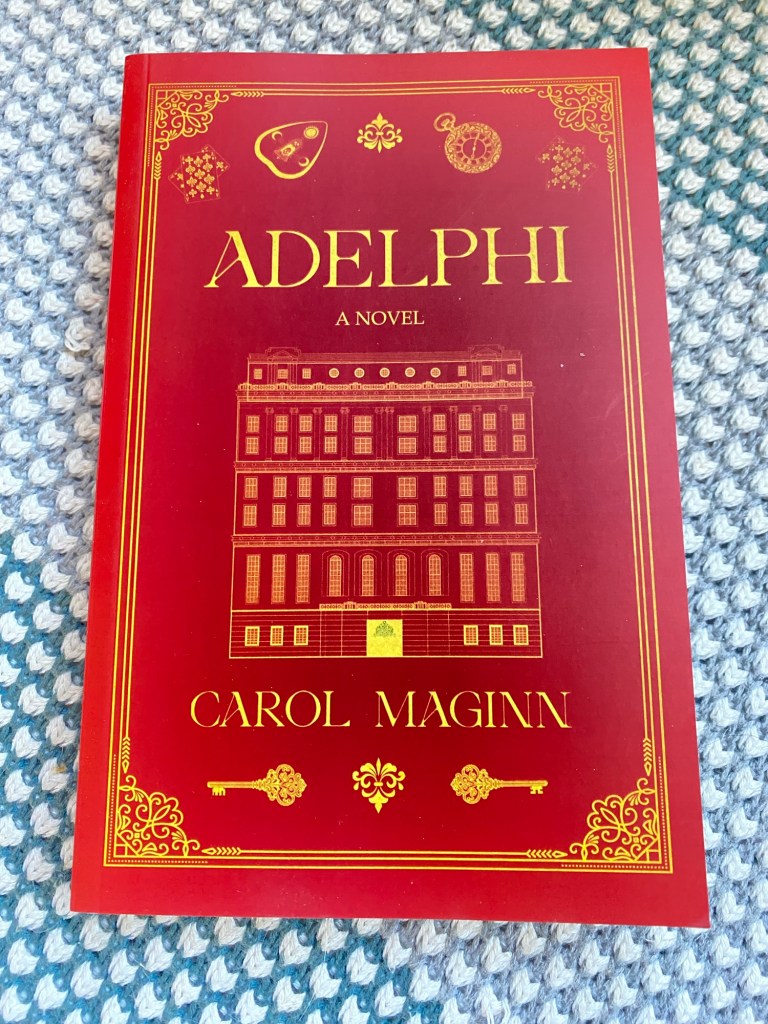
My final book came from the indie Northodox Press and features a place I know very well indeed. The Adelphi Hotel in Liverpool is a famous landmark I’ve known all my life, with my mum being a Liverpool girl. A former grand hotel, designed to look like the interior of an ocean liner it still has spectacular bones although its more recent furnishing choices in the original tea room have made it look more like a nursing home. Every time I go past it we say someone could make a lot of money doing that place up, it could be gorgeous. I live in hope, but currently she’s a strange mishmash of styles from art deco to faux leather BarcaLoungers. It’s a great cheap place to stay in Liverpool and my dad particularly enjoyed the prostitute’s card that was slipped under his door in the middle of the night!
Where better to work than the famous Adelphi Hotel?
Alistair Monroe is keen to make his way in Nineteenth Century Liverpool. The Adelphi is a landmark known for its grandeur, drawing many visitors, including Clemency Martin, an American psychic.
She too needs to make her way. But Alistair discovers that power and darkness lie at the heart of the hotel, and he must finally take risks to bring the truth to light. Step into the atmospheric world of the Adelphi…
So that’s all my recent purchases and buying secrets, but I’m sure there’ll be more next month, if I can resist The Folio Society that is.




















 The Lotus Readers