Posted in Netgalley

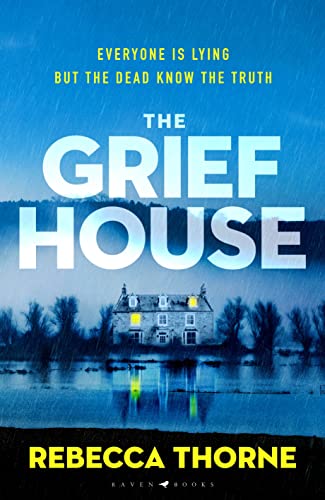
The Grief House by Rebecca Thorne


‘She searches for ways to stop feeling so lonely you fear your brain will melt and your heart will stop and your skin will never be touched again. She searches for ways to make herself feel better. The online forum has been a lifeline. A lifesaver. She can chat to counsellors when she needs to or other women who struggle with similar issues. Every week she receives a piece of advice to help her on the road to recovery or, as she calls it, the road to normality. The path to living a life.’

Blue makes a decision to deal with her unresolved grief and trauma with a residential course she sees advertised when she’s at a low ebb. At Hope Marsh House participants are offered counselling, art therapy and meditation with married couple Molly and Joshua Park. Blue has been struggling for a long time, culminating in the death of her mother with whom she had an uneasy relationship. However her grief journey begins with the loss of her stepfather Devlin, a rotund man with a fondness for kaftans and a talent with tarot. His own skills are based in clever observation, carefully worded open questions and more than average perception, but in Blue he recognises something he isn’t. A child with strong psychic abilities. Prior to meeting Devlin, Blue’s mother has managed a rather haphazard upbringing at best, making choices for Blue that are based in her own problems and inadequacies rather than what’s best for her child. Blue has been home-schooled but any learning was provided by magazines, television and whatever books Blue could lay her hands on. As a result she had no friends and was thought of as weird by the kids nearby. Her mother is equally isolated, not helped by the fact they move constantly. What exactly are they running from? So, Devlin’s attention is welcomed by both mother and daughter. Losing him to a heart attack was devastating and Blue became parent to her heartbroken mother, taking responsibility for her mum’s worsening mental health, the family’s income and single-handedly running Devlin’s mediumship business. Maybe it will take a place like Hope Marsh House to deal with the lonely and exhausting rut Blue finds herself in? It will be kill or cure…. 

‘And how long have you had your … talents?’ he said. Blue didn’t know what to say. Was hitting a saucepan with a wooden spoon a talent? Was babysitting a toddler in a dry bath whilst her mother cried herself to sleep a talent? She could wash her own clothes in the steel kitchen sink, she could heat soup and tins of beans, she could sing all the words to ‘May the Circle Be Open’. Is this what the strange man meant? She was five years old. She didn’t know.’

The author tells Blue’s story using different timelines: one gives us the present and focuses in on the retreat at Hope Marsh House, while the others are flashbacks to Blue’s life before her trip and further back in vignettes of her childhood. The flashbacks give us the building blocks of Blue’s personality and those strange abilities she has. She is a little girl simply longing for love and care, we can see this from the way she blossoms if praised by Devlin. The most powerful thing Devlin does is seemingly very simple – when Blue comes off stage, Devlin simply asks ‘are you ok, lass’? These four words mean more to her than anything else because they bypass the person she is on stage and the money her gift can make for the family and instead asks how she is. He knows and acknowledges what this gift costs her and how arduous a whole show can be, but mainly it’s just a dad checking in on his daughter. It means a lot to Blue, who has probably never been asked if she’s ok before. No one has ever cared enough. It is his care of her that she misses so deeply. I wondered if there were elements of a personality disorder in Blue. Does she even know who she is? When Devlin lives with them she’s at her happiest, but I was confused about her relationship with the other two children who live with them – Bodhi and the baby. They seem to be there most of the time, but she rarely relates to them. In fact she actively seems to avoid them and almost looks past them if they appear in her eye line. 

Other short sections of the book include a story about a loving married couple who haven’t been able to have children, but look after a little girl who lives in a nearby flat with her elder brother. Unfortunately he is a drug addict and the couple, James and Marie, provide that stable family unit for Jessica. They dread something happening to Jessica’s brother because then she could be taken away from them. I knew that this couple related to Hope Marsh House in some way, but I wasn’t sure how. Why does Blue keep hearing the same three girls names, Jessica, Eleanor and Lauren? Who is the strange long haired girl that appears in Sabrina’s room and opens the door when they’re not there. When she appears Blue starts to feel sick and a feeling of dread comes over her, a couple of times she comes close to passing out. The apparitions also have a way of spoiling her food, making it smell like rotten eggs or rubbish bins. This little girl wants to be noticed, but what is she trying to tell her? 

The retreat itself is disturbed by a storm and the nearby river bursting it’s banks, threatening the house itself. Instead of the therapy they’re supposed to be receiving Blue and the other able bodied participant Sabina, help Mr Park unblock debris from the bridge to help the river flow on it’s normal path. The only other resident is Milton, an older man who uses a wheelchair and seems weakened by a lung disease that causes coughing fits. He’s been to the retreat several times, but seems incredibly grumpy with Molly and her husband. He also avoids any of the activities and even rebuffs Molly’s late night cocoa ritual. Is he just one of life’s misanthropes or is there more going on? Obviously, as a therapist, it’s Molly I’m fascinated with. I’ve been through a major bereavement and have run courses like the ones Molly advocates using a combination of meditation and group therapy with creative writing and art. I found her manner with the participants overwhelming at times. Even before the flood interrupted the normal flow of things there was a boundary issue that I couldn’t put my finger on. As time went on I realised the couple had no children, so who is the little girl in the picture that’s hidden in their own private sitting room? Who is the girl that Blue can see, if no children have lived there? Molly seems to mother her guests. It’s difficult to create clear boundaries when working in your own home, especially when participants are also eating with you and staying overnight. However, there’s something about the way Molly nurtures her clients that feels ‘off’. There’s a power imbalance at play, almost as if she is the parent and they are children. It’s this element in her personality and the care she gives that Milton seems to resist or even reject outright. Blue is particularly susceptible to her methods, because she has never had a nurturing mother figure. I felt protective towards Blue, my own maternal instinct was at play and my it was telling me she needed to keep her wits about her. The author created a sense of impending doom and as the worst of the storm hit it felt like a warning. 

I don’t want to reveal any more, because I think the the story unfolds at the right pace and the truths are revealed slowly. The revelations come in both timelines, as Blue unearths the truths about her mother Bridget by looking through archived newspapers in the library. The secrets come out as if they’ve always been there in Blue’s mind, she just needed something to unlock the door. There will be moments at Hope Marsh House where you wonder what’s going on, placing you in exactly the same position as our main characters. The reader discovers the answers when the characters do so we feel their disorientation, confusion and fear. There were one or two moments that were genuinely terrifying! I enjoyed the growing bond between the three guests at Hope Marsh House, something that Blue has never had before and exactly what she needs. I stayed up late to get to the end and I wasn’t disappointed, although it did lead to some disturbing dreams that night. This was a really great read with a perfect balance between psychological thriller and haunting, gothic tale. 

Out on 18th Jan 2023 from Raven Books
Posted in Squad Pod

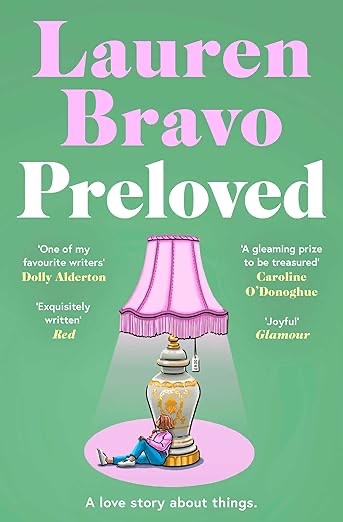
Preloved by Lauren Bravo

Gwen is coasting through life. She’s in her mid-thirties, perpetually single, her friends are busy procreating in the countryside and conversations with her parents seem to revolve entirely around the council’s wheelie-bin timetable.

And she’s lonely. But then, isn’t everyone? 

When she’s made redundant from a job she hardly cares about, she takes herself out for a fancy dinner. There she has the best sticky toffee pudding of her life and realises she has no one to tell. She vows to begin living her life fully, reconnect with her friends and family, and finally book that dentist’s appointment. 

Gwen decides to start where all things get a second chance: her local charity shop. There, with the help of the weird and wonderful people and donated items bursting with untold stories, Gwen will find a way to move forward with bravery, tenacity, and more regular dental care.

Dazzlingly witty, Preloved is a tale about friendship, loss and being true to yourself no matter the expectations. Lovingly celebrating the enduring power and joy of charity shops.

I absolutely loved this charming book about Gwen’s experiences volunteering in a charity shop, but so much more besides. Gwen has lost her job and this catalyst starts a new train of thought. Maybe instead of jumping into the next thing that comes along, she could budget her redundancy money and spend the summer taking stock. Gwen lives alone and some distance from her family, but she hasn’t struck up any meaningful friendships either. She’s alone a lot of the time. She desperately wants change but doesn’t know how to get there. So she takes a voluntary role at her local charity shop a couple of days a week, giving her time to work out what’s next in a more focused way. I felt for Gwen immediately and identified with the life crisis she’s in, having just turned 50 and facing the very real possibility that I might never be well enough to work has felt strange. I’ve never been a focused, goal setting type so I got Gwen’s tendency to drift into work without a plan. As everyone else was leaving sixth form knowing what they wanted to do, I had no clue. It took years for me to move into mental health and my own ill health provided the emotional kick up the bum – if I didn’t choose something I could do flexibly and get some training completed – my MS could advance and I was going to run out of time. Some people do simply drift, but with Gwen I knew there was an underlying reason. Her inability to call her parents and tell them about her redundancy was a powerful first clue. Did she want to avoid making them worry? Would they be angry or disappointed in her? 

Gwen tells her story and she’s a great narrator. We slowly start to build up a picture of the way she relates to others and how limited her support system seems to be. As mentioned she seems estranged from her parents and her best friend Suze has become a mum, such a big life change that means there’s less room for friends. As she gets to know the other volunteers at the shop there’s an opportunity to make friends. One lady in particular strikes up a friendship, inviting Gwen round for dinner to get to know her. The charismatic and energetic Connie is a blast of fresh air rather than a breath. She’s full of ideas to Gwen participating in life again which is inspiring and exciting, but also ever so slightly exhausting. There’s even a touch of romance too, although that’s never the real focus. The author knows this is Gwen’s story and if there is change it has to come from within herself. Only Gwen has the power to change her life and make it fulfilling again. In between the chapters there are small, magical snippets about objects or clothing that’s found it’s way to the charity shop, invariably telling a story about the person that’s donated it or the person who decides to buy it. I loved these little gems because they highlight the importance of these transitional items in their owner’s lives, but also the role of the charity shop in it’s community. They serve a practical purpose in terms of recycling, but also a community purpose because staff know people who pop in on certain days, whether they might need some company and if they don’t turn up, checking if they’re okay. They are places where lonely people can expect a cheery smile and a chat. It sounds simple, but these little interactions can be the highlight of someone’s day. 

However, what the author captures most beautifully is the magic of charity shops. How many of us bookish types have been thrilled with a find from the bookshelves – for me it was a pristine folio society edition of Isak Dennison’s gothic tales. We might find: the perfect pair of vintage shoes; a 1990’s grunge dress that’s come full circle again; old China tea sets that will look beautiful at an afternoon tea party. You never know what might jump off the rails or shelves and become a precious ‘find’ rather than someone else’s clutter or trash. I love that, in a way, Gwen is like one of these objects – made redundant and sitting patiently in place until a new future opens up before her. However, before that happens she must go through the process of clearing out, sorting through the rubbish and throwing out what’s broken. For Gwen that means confronting a life changing event that’s so painful it’s blocking her whole life. I was rooting for her, right up to the very last page.

Published on 18th January 2024 by Simon and Schuster UK

Posted in Netgalley

The Island of Longing by Anne Griffin

One unremarkable afternoon, Rosie watched her daughter Saoirse cycle into town, expecting to hear the slam of the door when she returned a few hours later.

But the slam never came.

Eight years on, Rosie is the only person who believes that her child might one day return home. Will this belief come at the cost of everything she has left?

My previous work in mental health and my counselling training always lead me towards books that either portray dramatic life events or feature characters that are deep and three dimensional, with a flourishing inner life. Anne Griffin delivers this and more, so I was interested to read her latest novel because it goes into the character’s reactions to a highly dramatic and distressing event. The worst thing that can happen to a parent is to lose their child and this happens to Rosie. Her daughter, Saoirse Dunne, disappeared eight years ago and since then she has been unable to think straight or get on with life. Her heart and spirit are broken, So she heads back home, an island off the coast of Cork. There she’s hoping to find solace and some sort of healing from the natural world around her and the community she knows on the island. She and her husband Hugh have grieved differently over the last eight years, the loss has slowly separated them emotionally and now they continue to need different things. When we see a comparison of their relationship, before and after their daughter’s disappearance, the difference is stark.

Rosie still holds on to the belief that Saoirse might return and she isn’t ready to let go of this. She’s also taking her son Cullie with her and they share so those questions many people ask in grief – ‘what if I’d just…’ and ‘if only I had …’. There’s a sense of survivor’s guilt in these thoughts and I was hoping that they would both find some peace too. Rosie’s decision to return home to where she grew up and even her old work operating the ferry to the mainland, could be seen as a way of cutting out the most painful part of my life and returning to a time when life was more simple. When she’s operating the ferry she feels closer to her daughter than she has in a long while. Of course this gives her solace, but it’s also a barrier to her accepting reality.

I really enjoyed the sense of place created by the author and it’s meaning in the novel. I could visualise Roaring Bay Island completely and the surrounding sea even feels soothing. It’s a refuge, but only for the summer. I worried that after this idyllic interlude in her grief, going back to reality would be a terrible shock. The author acknowledges this, writing that it’s merely a chance to ‘step out of the world for a while’. I loved the freedom she feels while piloting the ferry, with the rocking motion of the waves like a cradle. It was wonderful to witness the kindness and thoughtfulness of the people on the island too. Is this something she isn’t getting in her current home. The place where Saoirse is still missing.

The author keeps Saoirse’s disappearance at the heart of the novel and the family’s experience of loss and pain is devastating but beautifully done. I have experienced loss and this was so raw and real, with incredibly authentic dialogue. I did feel tears coming here and there because Rosie’s feelings were so close to my own. It gives the reader a window into an experience they hope never to share. Please don’t be put off though, there are moments of lightness in the community, they really are an example of humanity at it’s best. There’s also such resilience in the characters, in the face of a loss that is unthinkable. When she returns from the island, she’s moved forward emotionally and Dublin feels like a dark place. It feels like the past. I loved the author’s addition of a sentence from Saoirse, on it’s own page and in a larger font. This lets us get to know Saoirse a little. It also seems to amplify that feeling that she’s gone, yet always there for those who love her. I won’t say this is an easy read. In fact some people may be uncomfortable witnessing the family’s grief. If people do push through that, they’ll gain an understanding of a universal human experience. We all experience loss. For people like me who have had their lives, like Rosie’s, divided into a before and after, this type of emotionally literate writing is a God send. A comfort and a reminder that we’re not alone.

Meet the Author

I’m the international bestselling author of three books: ‘The Island of Longing’, 2023, ‘When All Is Said’, 2019, and ‘Listening Still’, 2021.

I’ve been published all over the world, from the UK to the US and from Taiwan to Lithuania. It has been published in twenty-five territories. In 2019, I was honoured to be awarded Newcomer of the Year at the Irish Book Awards.

To me, writing is all about great storytelling and I hope you find that within the pages of my books, from Maurice Hannigan in ‘When All Is Said’ who sits to the bar of his local hotel to raise five toasts to the five most important people in his life, to Jeanie Masterson in ‘Listening Still’ who is struggling under the weight of obligation to the family funeral directors, and to Rosie Driscoll trying to find her daughter Saoirse who has been missing for eight years.

Thanks so much for all of the great support.

From Anne Griffin’s Amazon Author Page 1/11/23

Posted in Netgalley

Lady McBethad by Isabelle Schumer

I was first introduced to Macbeth thanks to my crush on Sean Bean. I was living in Milton Keynes at the time and studying for my English Lit degree. We knew that Macbeth was coming in our final year and when we found out that Sean Bean would be playing the title role at our local theatre we had to see it. It was a production that had some unusual choices, but an incredibly clever banquet scene that has stayed with me. However, it was the more recent Michael Fassbender and Marion Cotillard film that I found absolutely spellbinding and moving in it’s depiction of Macbeth and his wife as two grieving parents. It gave some context to their actions in the play, particularly Lady Macbeth who is often depicted as a power hungry harpy who coerces her husband into a violent act that he’s unable to live with. I’ve always thought Lady Macbeth was done a disservice, depicted rather like Eve in the garden of Eden as a woman dissatisfied with her lot who convinces her husband to eat apples from the only tree God expressly told them not to touch. According to most dramatists she’s greedy, dissatisfied and power hungry. She was ripe for a rewrite and here it is in Lady Macbethad.

Gruoch has druid heritage and her grandmother prophesied that she would be Queen of Alba. She believes in this prophecy and will try her best to fulfil it. She was born the daughter of a King, even though her father has now been ousted. Her heart and desires are with Macbeth but she is the betrothed of Duncan, the heir elect and marriage to him should enable her to fulfil her destiny. Yet life at court comes with it’s difficulties, it’s lonely and uneasy to know every woman at court would do anything to be in her position. He coronation approaches, with the women keeping her at a distance and giving her the cold shoulder. An unexpected turn of events tears her plans apart and she’s forced to run for her life and leave her ambitions for the crown behind. Now she must fight just to survive, never mind the crown.

This was a really interesting take on the tale of Macbeth and a woman whose motivations are always unclear. There’s a feel of Eve about her, it is Macbeth who wields the knife yet in many depictions I’ve seen, the emphasis is on Lady Macbeth as the instigator of the killings. The evil temptress whispering in the blameless man’s ear. I was intrigued by a retelling of the story, based on a real woman who did marry a man called Macbethad who became the king of Scotland. The book starts as a fiction about Gruoch, but becomes an origin story for the character of Lady Macbeth. I thought these two women were brought together well, creating one character. She does have aspects of character that Shakespeare establishes in the play, becoming a scheming, power hungry woman. She’s also rather paranoid and even violent in her own right. However, whereas in the play we don’t know why she is this way, here we get her back story and have an opportunity to understand her a little better. Even if we don’t necessarily like her.

Macbethad seemed to be more balanced and measured in character. He stands out for this, which seems an irony when I expected to respond to Gruoch more sympathetically. There are other characters in the book based on real people from history, covering their family allegiances and their conflicts. I think it’s so difficult to marry historical facts with a fictional story in this way and I was impressed with the author’s attention to detail. She sets the book firmly in it’s Scottish setting by using Scottish Gaelic, as well as the stories and folklore of the area. She brought to life the conflict between the established pagan traditions and the growing practice of Christianity, something I found really interesting. Her descriptions of the place felt vibrant and alive, I could actually see it. She is equally vivid when it comes to the more brutal aspects of the story. There were parts of this book that I enjoyed immensely and I would definitely recommend it to those interesting in historical fiction and Shakespeare.

Meet the Author

Isabelle Schuler is a Swiss Hawaiian-American actress, writer and former Waterstones bookseller. She has a BA in Journalism and her screenplayQueen Hereafter was longlisted by the Thousand Films Screenwriting Competition in 2019. In 2020, Schuler adapted Queen Hereafter into her debut novel, Lady MacBethad. She lives in Hertfordshire.

Posted in Personal Purchase

Starling House by Alix E. Harrow

“When the house was complete, in February of 1870, Eleanor Starling took up residence and stayed there until her death in 1886. There is substantial evidence that she devoted the remaining years of her life to the study of the place she later called “Underland.” She believed, according to the notes and journals found by her successors, that there was another world beneath, or maybe beside, our own—a terrible, vicious world, populated by monstrous beings. She believed that there were cracks between that world and our own, places where things might leak through, and that one of these rifts lay underneath Eden, Kentucky.”

Starling House sits on Starling land and can’t be fully seen from the roadside, except for a pair of iron gates that are so intricate and sinuous it wouldn’t be a surprise if they started to move and become a living, writhing being. Opal passes the house daily as she takes a short cut from one of her jobs to another and she’s intrigued by the house, especially the one amber lit window, high up in the attic room. There she imagines Eleanor Starling, living the solitary life of an author trying to follow up their first extraordinary book. Opal loved Eleanor’s children’s book Underland described as a much darker Alice in Wonderland where a girl called Nell is under the ground with a weird array of beasts (all of which look like a member of the animal kingdom, but at the same time not at all). Opal’s life is a gruelling slog from the motel room she shares with brother Jasper, to her cleaning jobs then back to supervise homework and share their measly evening meal. It only takes one small difference in their routine to shake everything up and bring huge change to their lives. Opal pauses her route home and stops at the iron gates of Starling House. She holds on to the iron, but immediately finds her hand is slick with blood. More disturbingly, she feels the gates give, almost as if her blood is the key. She looks up to see that a tall, thin and rather bedraggled man has appeared in front of her. He looks her in the eye and says one word. Run!

[The town] “liked the Starlings even less. They’re considered eccentrics and misanthropes, a family of dubious origin that has refused for generations to participate in the most basic elements of Eden’s civil society (church, public school, bake sales for the volunteer fire department), choosing instead to stay holed up in that grand house. […] It’s generally hoped that both they and their house will fall into a sinkhole and rot at the bottom, neither mourned nor remembered, and—perhaps—release the town from its century-long curse.”

Arthur, the bedraggled man, is the current Starling living in the house and it isn’t long before Opal is drawn back into his presence. Arthur seems to be torn. He’s drawn to Opal, but so is the house. It seems unfair to strike up a friendship with her knowing that the house wants her and what that will mean for her life. Yet he asks her if she will clean for him and offers enough money that Opal can’t refuse. He is concerned about this flame haired waif that is now in his midst and he can’t help but offer her a winter coat, then his old truck. Are these genuine gifts, or is Arthur trying to assuage his guilt for doing the house’s bidding? The house almost seems to sigh and settle as Opal cares for it, like a cat stretching with pleasure when stroked. She does wonder about the crude symbols scratched into the wooden doors, that match Arthur’s tattoos. Every conceivable symbol to ward off evil is either scratched, painted or hung around the house. How do you ward off something that strikes from within? Opal is then approached by a woman in a suit, who seems to know a lot about Opal and the Starling House. She wants Opal to take photographs and pass on information from the inside of the house. Firstly she seems like any old local official, but becomes more sinister when Opal is reluctant to help, finally making threats against Jasper. Now she has no choice, but she’s surprised by her own emotions; it’s harder to betray Arthur Starling than she expected. Is it really the house she’s drawn to, or is it Arthur?

“Eleanor Starling left no record of why she built such a vast and strange house, but the oldest and best-loved book in her collection was a copy of Ovid’s Metamorphoses. It has been suggested by subsequent Starlings that she was not building a house but a labyrinth, for much the same reason the King of Crete once did: to protect the world from the thing that lived inside it.”

Opal isn’t easily afraid and I knew, just from that opening, she wasn’t done with Starling House. More to the point, the house isn’t done with her. I admired this plucky girl who is only just getting by in life and does everything for her brother Jasper. She desperately wants him to get away from Eden, Kentucky, because he has so much talent but also because nobody with any sense stays in Eden. She is saving for the fees of a private school she has seen, somewhere that would give him prospects and he would meet the right sort of people. She’s so set on this plan, she hasn’t bothered to ask what Jasper wants. Her heart is in the right place though. She doesn’t love many things, but when she does Opal loves like she does everything else – fiercely. Her existence is all work, striving just to survive but Opal is so intelligent, in fact one of the only places in town she visits religiously is the library. The librarian Charlotte is perhaps the closest thing to a friend she has. The truth is that Opal feels enormous guilt over the terrible car accident that killed their mother and what she sees as the decision she made to survive:

I’m fifteen and cold water is pouring through the windshield. The glove box is open, spewing pill bottles and plastic utensils. Mom is beside me, her limbs drifting gently, her hair tangling with the tacky dream catcher she pinned to the car roof. I’m reaching for her hand and her fingers are slick and limp as minnows and I might be screaming—Mom, come on, Mom—but the words can’t make it past the river? Then it goes very quiet and very dark. I don’t remember letting go of her hand, but I must have done it. I must have crossed her name off the list in my head and swum for the surface, abandoning her to the river bottom.”

I loved the psychological aspects of the story. The house has an identity and it knows who has the right stuff to live there and keep up the fight. I wondered whether the monsters were real or a manifestation of the occupant’s mental state. The thought of the monsters in our heads being able to run free in the world is definitely a terrifying one. The author builds the two worlds within the novel with contrasting techniques: short, blunt descriptions create Eden with it’s power plant and functional buildings, whereas Starling House and it’s labyrinthine tunnels are given long, descriptive passages that bring it to life. If something in Opal or Eleanor’s world is inexplicable she allows it to be unfinished or confused. Some of the monsters are beautifully described as ‘like a cat, but not quite’ or other strange combination that leaves gaps in the image for the reader to fill with their own imagination. This is an author that knows, the things we can’t see or comprehend are the most frightening.

When we finally get to Eleanor’s life story it is disturbing and sad, showing how unresolved trauma can project outwards into something monstrous. There’s a feminist thread here too in the truth about Eleanor’s life with the Gravely men and Opal recognition that her mother was shunned by the town, not just for liking sex but for not being sorry about it. In a reversal of the usual damsel in distress story, Opal is the architect of her own life and is determined to rid Starling House of it’s monsters and save Arthur. I was biting my nails in the final chapters, desperately wanting her to succeed! I’ve never doubted Alix E. Harrow’s talent or imagination. I’ve been a fan since her first novel, but this is her best yet. I’ve been reading that it’s a reimagining of Beauty and the Beast, and I can see that. However, Underland felt like the very darkest Alice in Wonderland to me. In both cases, all the ‘Disney-fied’ prettiness has been swept away. In it’s place are monsters that defy all description and a love story that’s more swords and thorns than hearts and flowers. It’s an absolute feast for the imagination and the perfect dark fantasy read for October.

Posted in Netgalley

The Haunting in the Arctic by C.J.Cooke

All I could say after reading the final sentence of the book was WOW! I couldn’t stop reading, the housework is completely neglected and I even forgot to eat lunch! Yes, I read this in 24 hours. This is the absolute best of her novels and I’ve enjoyed them all.

Dominique is making her way through Iceland to an old whaling ship called the Ormen. Stranded in a bay, the ship is going to be sunk out at sea and Dom wants to document it before it disappears from view together. Ormen was an unusual whaling ship being a sail and steam hybrid that became beached in the early days of the 20th Century near the small village of turf houses called Skúmaskot. When she reaches the ship she sets about turning the cabin into a base to explore from and puts up her tent. There’s one door in the ship that she wonders about, it’s made of carved oak and when she touched the handle it emitted such a feeling of evil she was taken aback. As she settles, she hears someone walking about on deck and she realises she’s not alone. Three more explorers join her – Jens, Samara and Leo. They have more up to date equipment and soon the four are documenting the ship and their discoveries as well as Leo’s parkour sessions. The questions start to mount though, is she wrong or are the other three suspicious or even slightly scared of her? What are the strange noises she can hear – banging could be gunfire or chains banging against the ship? There’s also a strange mix of footsteps and dragging something heavy in a steady rhythm. Who is the woman in the dress that she’s seen standing in the shallows? This is a strange place where light is limited, the village is deserted and there is a strange stone throne by the beach, said to be a Mermaid’s Throne. These are not Disney mermaids though, these mermaids have teeth and a song that will lure a man to his death.

There are different types of haunting in this tale. I could see examples of my own theory of hauntings in the woman seen by the edge of the sea. She feels like an imprint on the landscape. A place where heightened emotion and terrible events have left such a strong imprint that defies time. The sounds also seem to come from another place, a repetitive echo from time past. This is what I call a proper ghost story. It isn’t gory or a slasher’s tale, it’s old-fashioned creepy and blended beautifully with local folklore. The ship is from Scotland and this is where the folklore of selkies comes from, a race of seal women who have a dual nature. They can be nurturing and helpful, such as saving a child who’s in trouble in the sea. They can communicate with other aquatic creatures and assume a human form when on land. However, selkies can also be seductive luring men to her and often having hybrid children. At their worst Selkies can be violent and vengeful, but their need for revenge gives us a clue about why; people seeking revenge have usually been wronged in some way. Mermaids are also depicted as sirens, luring ships and men with their singing and often thought to lure ships onto the rocks. However, there is also a terrible element of coercion in their mythology, stories where a man steals an item from the mermaid and while he has that item in his possession she belongs to him and lives as his wife. If she finds the object the spell is broken and she can return to the sea. Of course in the fairy tale we have a mermaid who has to choose between her land and sea lives, she can have love but to have legs she must suffer excruciating pain and she can never use her voice. It’s a hard price to pay. Icelandic mermaids have all these qualities, but use their seductive charms to lure sailors to their deaths – a nice reversal of their capture by human men. The author describes Icelandic mermaids as having rows of pointed teeth too. There’s a sense of devouring their enemies, particularly those who have wronged them. Is this Nicky’s end?

I loved the tension between the group of four on the Ormen. Samara seems fine with Dom, but then she overhears a conversation with Leo where Samara seems terrified of her. She talks about ‘this time’ being different, but Dom can’t remember meeting them before. I loved this mix of psychological tension, the real dangers of the landscape around them and then the truth of what has happened to the previous crew of the ship and previous explorers who’ve also left their echoes here. I sensed a possible kinship between Jens and Dom, almost as if he already knew her. I was scared of Leo. There’s so much nervous energy in him, a rage running just under the surface that I feared might ignite at any point. Yet they’re also dependent on each other for their survival creating what feels like a truce between them, but how can a truce exist if they’ve never met? There are so many strange happenings, such as Dom’s dream of ponies running off a cliff followed by finding the skeletons of Icelandic ponies in a deep cave. I loved the bits of magic realism, such as Nicky’s leg. Everything about the voyage from Scotland is historically accurate and gives us such an incredible sense of place I can see it. However, Nicky’s broken ankle and wound start to heal in an usual way. She notices the grey colour of her newly healing skin and thinks she has an infection. The sensation is altered too, feeling rubbery and a little cold. As time goes on this patch of skin grows and she’s aware that the gap between her legs is becoming webbed. Could her legs be joining together? This could be a magical sort of protection against the assaults she suffers on a daily basis. It could also be a transformation. As the past starts to inform Dominique’s present I couldn’t leave the story and I was left with the worst kind of book hangover where I was stuck in the world and the feeling of the ending. It’s taken me two days to start another book but I can’t stop thinking about this one. In fact I’m already thinking about reading it again, a bit like watching The Sixth Sense again once you know the twist. This is a dark, disturbing ghost story of hauntings but also about the worst things human beings can do to one another, particularly men against women and the extraordinary ways they exact their revenge.

Out in Hardback now from Harper Collins

C J Cooke (Carolyn Jess-Cooke) lives in Glasgow with her husband and four children. C J Cooke’s works have been published in 23 languages and have won many awards. She holds a PhD in Literature from the Queen’s University of Belfast and is currently Senior Lecturer in Creative Writing at the University of Glasgow, where she researches creative writing interventions for mental health. Two of her books are currently optioned for film. Visit http://www.cjcookeauthor.com

Posted in Random Things Tours

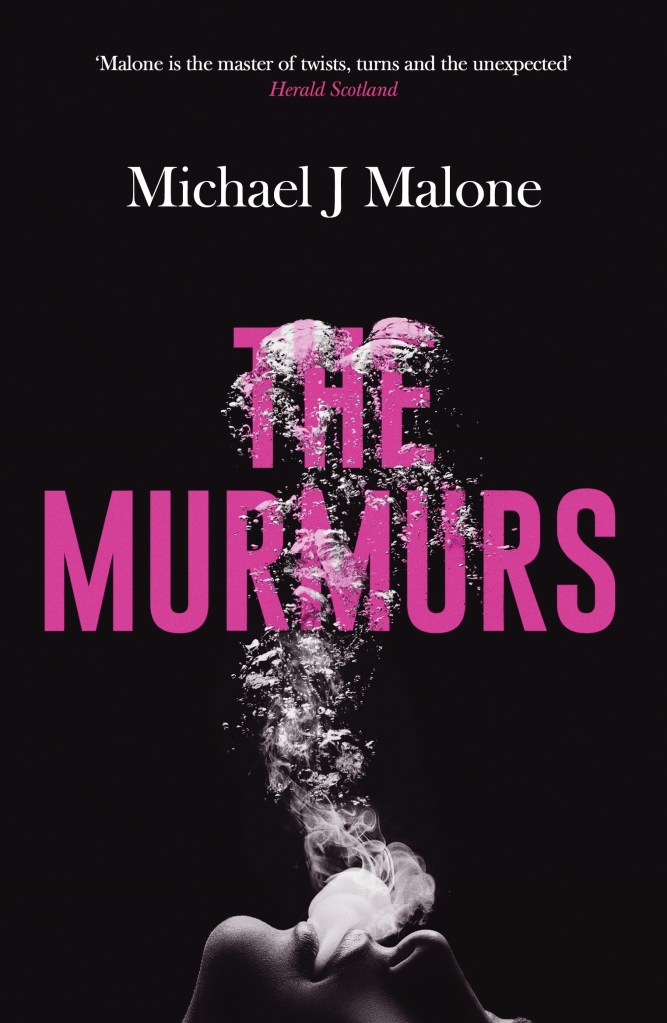
The Murmurs by Michael J Malone

I quickly became fascinated with this mix of historical fiction, psychological suspense and the paranormal. We meet Annie Jackson as she tentatively starts her new job in a nursing home in the West End of Glasgow, hoping to get her life back on track. Annie suffers with terrible nightmares where she’s stuck in a car underwater. She also has the sensation that someone is holding her head under water until her lungs feel ready to burst. She also has debilitating headaches and she can feel one threatening as her new manager introduces her to resident Steve. Then something very odd happens, as a blinding pain in Annie’s head is followed by Steve’s face starting to shake, then reform. A whispering sound begins in her head and she sees Steve as a skull, followed by a vision of him falling in his room and suffering a debilitating stroke. She desperately wants to tell him but how can she without seeming like a lunatic? He becomes agitated and upset, as Annie starts to describe the layout of Steve’s bathroom and he asks her to stop. As she’s sent home from another job she starts to think back to her childhood and the first manifestations of her debilitating problem. Annie survived the terrible car accident that wiped her childhood memories and killed her mother. This strange supernatural phenomenon is why Annie is alone and struggles to make friends. These are ‘the murmurs’.

I felt so much compassion for Annie, as the story splits into two different timelines: we are part of Annie’s inner world as a child, but also 0in the present as fragments of memory slowly start to emerge. We also go back even further to the childhood of Annie’s mother Eleanor and her two sisters Bridget and Sheila. We experience their lives through other people’s stories and written correspondence, especially that of a nun who also works in a residential home. I enjoyed how this gave me lots of different perspectives and how the drip feed of information slowly made sense of what was happening in the present day. Different revelations have a huge effect on the adult Annie and because her memories have been buried for so long she experiences the shock and surprise at exactly the same time as we do. This brings an immediacy to the narrative and I felt like I was really there alongside her, in the moment. With my counselling brain I could see a psyche shattered by trauma, desperately looking for answers, she is piecing herself back together as she goes.

Teenage Annie had a similar vision about a girl called Jenny Burn, who went missing never to return. The murmurs awakened when her mum’s sister Aunt Sheila came to visit them. She tried to openly discuss an Aunt Bridget who also had a ‘gift’ but has ended up in a home. Eleanor, Annie’s mother, asks Sheila to leave, but it’s too late because Annie has already seen that her aunt is dying of cancer. Annie evades her mum and makes her way to the hotel, the only place Sheila can be staying. Unfortunately, Jenny is working on reception. Annie can see her climbing into a red car and she desperately wants to warn her, but she knows she’ll come across as a crazy person. Eleanor is desperately looking for a way to deal with her daughter, she’s a person of importance in the church and she can’t be seen to have a daughter who has visions. Pastor Mosley has Eleanor exactly where he wants her. There’s a control and fanaticism in him that scared me much more than Annie’s murmurs. When Eleanor takes Annie to the pastor, he demonstrates his control by holding her head firmly under his head as he prays for her. When she almost faints, he’s convinced there’s a demon in her. Annie is scared of him, she gets a terrible feeling about him but doesn’t know why. Religion is portrayed as sinister and controlling, with fervent followers who never question, but live in the way they’ve been instructed is Christian? story takes an interesting turn when Annie’s brother Lewis, a financial advisor, becomes involved with the church once more and it’s new pastor Christopher Jenkins, the son of their childhood neighbour. He’s revolutionised the church and through the internet he’s turning it into a global concern. He’s not just interested in saving souls though, he’s also amassing money from his internet appeals. He also seems very interested in meeting Annie.

As the book draws to a close the revelations come thick and fast as both past and future collide. The search for Aunts Bridget and Sheila seems to unearth more questions than answers. Annie finds out that Jenny wasn’t the only woman who went missing in Mossgaw all those years ago. As she starts to have suspicions about her childhood home, Chris seems very keen to draw her back there. Might he be planning a huge surprise? I was a bit confused at first with all these disparate elements, but as all the pieces started to slot together I was stunned by the truths that are unearthed. Then as Annie’s childhood memories were finally triggered I felt strangely terrified but also relieved for her all at once. I hoped that once she’d regained that past part of herself she would feel more confident and free, despite the strange gift she seemed to have inherited. Maybe by facing the past and leaning in to her relationship with her brother, she might feel more grounded and strong enough to cope with her ‘gift’. I thought the author brought that compassion he’s shown in previous novels but combined it with a spooky edge and some intriguing secrets. I really loved the way he showed mistakes of the past still bleeding into the present, as well as the elements of spiritual abuse that were most disturbing. This book lures you in and never lets go, so be prepared to be hooked. Michael Malone is a natural storyteller and the fact this is billed as Annie Jackson Number One makes me think there may be others. I certainly hope so,

Out Now from Orenda Books.

Meet the Author

Michael Malone is a prize-winning poet and author who was born and brought up in the heart of Burns’ country. He has published over 200 poems in literary magazines throughout the UK, including New Writing Scotland, Poetry Scotland and Markings. Blood Tears, his bestselling debut novel won the Pitlochry Prize from the Scottish Association of Writers. Other published work includes: Carnegie’s Call; A Taste for Malice; The Guillotine Choice; Beyond the Rage; The Bad Samaritan; and Dog Fight. His psychological thriller, A Suitable Lie, was a number-one bestseller, and the critically acclaimed House of Spines and After He Died soon followed suit. Since then, he’s written two further thought-provoking, exquisitely written psychological thrillers In the Absence of Miracles and A Song of Isolation, cementing his position as a key proponent of Tartan Noir and an undeniable talent. A former Regional Sales Manager (Faber & Faber) he has also worked as an IFA and a bookseller. Michael lives in Ayr.

Posted in Squad Pod Collective

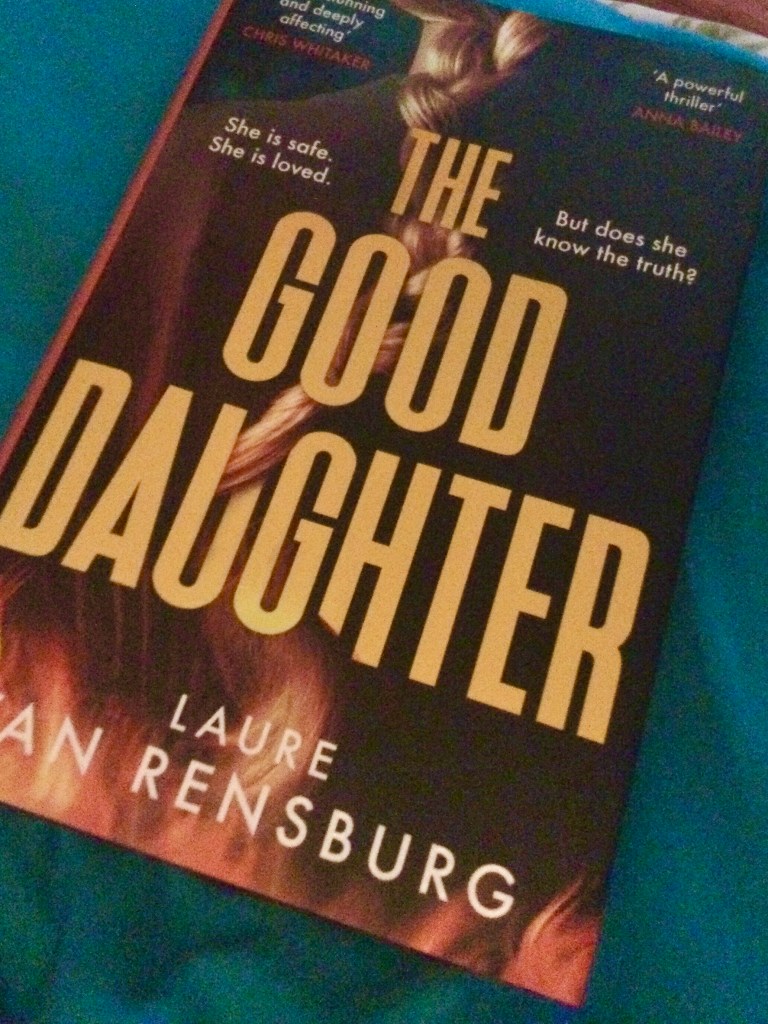
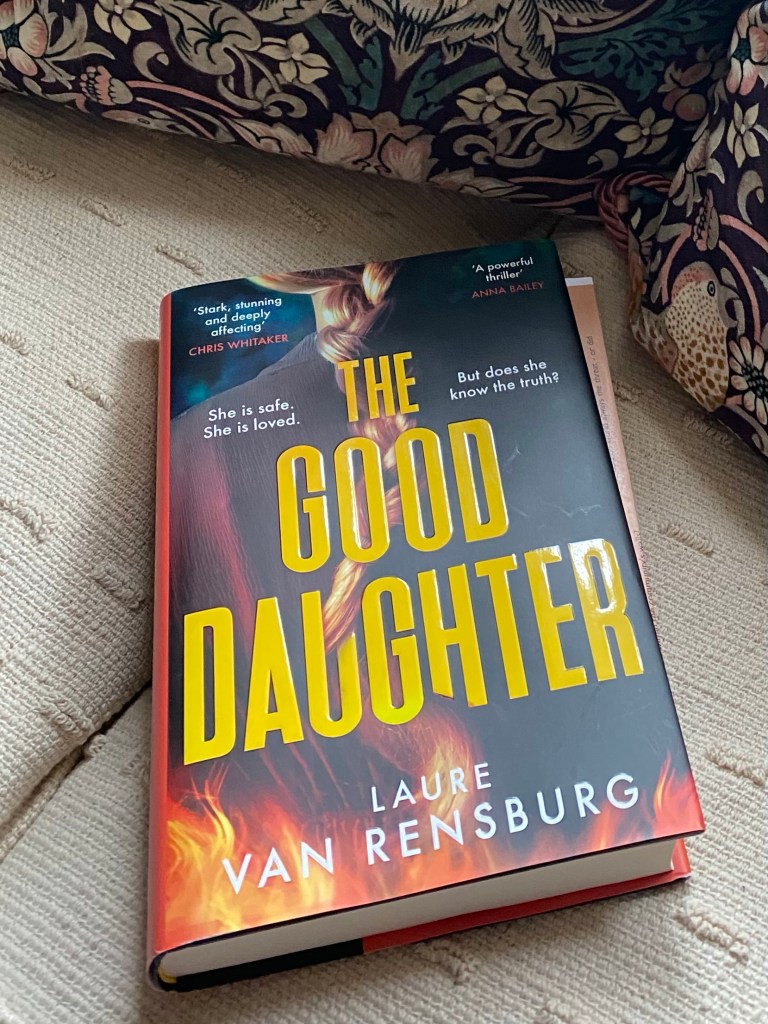
The Good Daughter by Laure Van Rensburg

Abigail is a proud member of the New America Baptist Church. A Christian community miles away from the nearest town in South Carolina, she is safe from the depraved modern world.

She is a good daughter. A valued member of the community.


So when she is the sole survivor of a fire that burns her family’s home to the ground, it seems like a tragic accident.

Until a surprising discovery is made: before the fire, Abigail let a stranger in.

Who was the stranger? What started the fire? And was the outside world always the threat – or did danger lurk within the community’s walls?

I became completely immersed in this fascinating story about faith and the complexities of memory while on holiday. Having spent part of my childhood in a church from the American Christian Fundamentalist tradition, I am always alert to the insidious nature of spiritual abuse and cultish techniques used to entrap converts in evangelical churches. The book opens with a death, immediately filling the reader with questions and drawing them into the story. A document tells us about the wreckage of the house, following a fire. From there the author tells her story in two parts: the present day and then back to three weeks before the fire happened. In between these two timelines there are more documents and discussions that work like ‘real life’ pieces of evidence. There are news reports, public comments and podcast transcripts, all working to verify the story and establish a factual perspective opposing the emotion and confusion of our narrator. The opening is dramatic and emotive, as we realise Abigail has lost her parents; Genevieve and Pastor John Heywood were discovered dead after the fire. Yet Abigail survived. Her parent’s congregation are secretly suspicious about Abigail and think she may have started the fire. The police are beginning to think the same, but what reason does Abigail have for doing something so awful? She’s always been a good girl, dutiful and obedient. Or is that just an act? We experience everything through Abigail and her mind is a complex and intense place to be. She felt like a real person to me very quickly.

Their neighbourhood, in a remote part of South Carolina, is entirely made up of New American Baptist church members. The church members, including Abigail’s family, live according to strict rules based on the Bible. They don’t mix with non-church members and have a domestic life where the man is the head of his household. He goes out into the world to provide for his family and the wife is the homemaker, looking after the house and their children according to the principles laid down by her husband. This is a philosophy I’m very familiar with and I remember, even from a young age, wondering how could I possibly defer to my husband if he happened to be a complete idiot? Abigail doesn’t question the religious rules that govern her life, but then she meets a stranger who changes everything. Summer comes to the community to interview church members for a podcast she’s making about the New American Baptist Church. She asks to interview Abigail. They are completely different in terms of life experience but a friendship starts to grow. It’s fascinating watching the changes in Abigail and her characterisation is excellent, as is that of Summer. She is a catalyst of so much and the storytelling is strong, but follows an unpredictable path. It’s a slow start, then as Summer arrives the story takes off and becomes the pacy and addictive psychological thriller I expected from this writer.

Laure Van Rensburg has taken a very sensitive, difficult subject and has managed it with a great deal of care and empathy. It’s hard to tell such a powerful story with the right amount of sensitivity, while also creating a gripping narrative that keeps readers turning the pages, but I think the author has managed that balance well. We’re taken deeper into life on the plantation with brilliant descriptive passages that create insight into the group. There’s a lot here that wasn’t weird to me, although I think it would be for most readers. If I say to people religious fundamentalism most people don’t really know what that means. I was taught to take every word in the Bible as the absolute truth: Noah built an ark, we all come from Adam and Eve and the world was created in 7 days. Every word comes direct from God with no room for interpretation, symbolism, or the historic period or culture it was written in. Years later, when studying literature at university, I was asked to consider the Bible as a book. I had to research how it was produced, when and by whom. It’s obvious why all books included in the New Testament are written by men. It became a written text in AD325 and powerful men decided what went in (at least that explains the prominence of St. Paul the misogynist). Emperor Constantine and a council of men had the final say, but when the reformation swept through Europe in the 16th Century there was a further split on the books included by the existing Roman Catholic Church and the newly formed Protestant belief system. It’s no wonder then, that the New Testament preaches female modesty and subservience; it suited the church and the men in control of it.

When you imagine that that belief system preached to you every Sunday, borne out by the way your home functions it’s clear to see the damage it can do to self-esteem and the way young women form relationships. That was certainly the case for me. It’s a potent recipe of coercive male control and dominance over women and I could feel a familiar conflict brewing within Abigail as she tries to follow the path forced upon her by both the religious group and all the families around her, but starts to wonder if there’s more. Of course the church is judged and treated with suspicion from outside the community, but there’s no room for questions inside. Questioning the status quo is seen as rebellion, a loss of faith or even a spiritual battle going on within the soul. However, as with all organisations, there are disturbing secrets that lies beneath. I will admit that this was difficult to read in parts, because it set off a chain of little light bulb moments for me. Although, I think it would be an emotional experience for any reader. There’s a creeping sinister feeling, but the increasing tension and twists in the tale keep you glued to the page. I came away feeling so many emotions, but mainly I was so angry, for Abigail and the other young women in the community. Of course some of that anger was for me and the other young women who grew up in my church, many of whom I’m in contact with and who, despite all of them leaving the church in their teens and twenties, are still affected by the experience and their internalisation of the church’s teachings. As Amber’s real memories began to appear I was hooked and had to know what had happened and how she was going to move forward.

I am so impressed by the level of research Laure Van Rensburg has done into this type of church and the sinister way it works. She has really captured the narrative that’s constructed, using the Bible to create an outmoded and illusory vision of the world. If you follow their teachings and actively apply them to your life, God will protect you and keep you safe. The loneliness felt by church members when something bad happens to them or their family is heart-breaking; I was told that my multiple sclerosis would be healed by prayer and when it wasn’t it couldn’t be a failure of God, or their prayer. It was my lack of faith. I found Laure’s writing absolutely mesmerising, the Newhaven community felt just as real as Abigail. I could see it vividly in my mind’s eye. Then when she allowed the outside world to encroach on the narrative it came as a shock, because you realise just how far these people are removed from modern society and even reality. Your mind will flit between whether Abigail is genuinely traumatised by the community and the terrible night of the fire, or whether she’s a psychologically astute and proficient liar. It has a slow start, but by the end I was questioning everything! For me, although it’s at the extreme end of experience in a church like this, the teachings and the coercion were no surprise at all. Most readers will be familiar with these but see them as the practices of cults or churches like the Latter Day Saints. I think they might be a lot more comfortable imagining this mistreatment of women is confined to religions like Islam. It will surprise a lot of readers to learn that a modern Christian church could be like this. They do exist, both here and in USA. As both the restriction of women’s rights over her own body and book banning is in progress now in some US states, the timing of this book is just right. It’s not much of a leap from here to The Handmaid’s Tale. I found this a disturbing, dark and addictively intense read that you really won’t want to put down.

Meet the Author

Laure Van Rensburg is a French writer living in the UK and an Ink Academy alumna. Her stories have appeared in online magazines and anthologies such as Litro Magazine, Storgy Magazine, The Real Jazz Baby (2020 Best Anthology, Saboteur Awards 2020), and FIVE:2:ONE. She has also placed in competitions including 2018 & 2019 Bath Short Story Award.

The Good Daughter is out now from Michael Joseph Books

Posted in Random Things Tours

In Bloom by Eva Verde

‘This is my family story. From all I’ve sown together, through all I couldn’t ask. I want to be the bud who makes it.’

In Blooms tells of strength, survival, forgiveness, resilience and determination, and the fierce love and unbreakable bonds between mothers and daughters.

Ever since Sol’s untimely death left her pregnant and alone at twenty-two, Delph’s kept herself small as a form of self-protection. Now, over a decade later, she lives with their daughter Roche and her new partner Itsy, a kind and protective cabbie, on the fourteenth floor of Esplanade Point on the Essex coast.

But Delph’s protective bubble bursts when Roche moves in with her estranged nan, Moon. Feeling on the outside of the bond between her fierce-yet-flaky tarot-reading mother and volatile martial-arts-champion daughter, Delph begins questioning her own freedom. And when Roche’s snooping into her grandmother’s past unearths a familial line of downtrodden women; a worrying pattern emerges. Has keeping small and safe truly been Delph’s choice all these years…?

I don’t believe in trigger warnings, despite their intended purpose to flag up material that may ‘trigger’ difficult emotions in the reader, I feel that they might stop someone experiencing a connection with a text. It might well be a trigger, but that doesn’t always have to mean it’s a negative one. It might be a trigger that starts a healing process. If anyone should have avoided this book it was me, because I was Delph. I lost the love of my life in my early thirties and then sleepwalked into a coercive and damaging relationship. Yes, it was a hard read at times, but it wasn’t remotely negative. Moon, Delph and Roche are three generations of a family. Each woman has her own issues, but they all stem from one place. Right back at the beginning. As the book opens Roche can no longer live with her mother and Itsy, the man she’s been living with for most of Roche’s life. So she decamps to her grandmother Moon’s house. Roche can’t stand Itsy, he dislikes her and wishes she wasn’t there. In fact what he wants is Delph all to himself, it’s easier to control someone who’s isolated. Delph has had a glazed over look ever since he arrived in her life and she doesn’t seem like her mum anymore. Delph has done everything she can to keep Itsy happy. She’s changed how she dressed, made herself less beautiful, stayed at home and stopped going out with friends. Every day she makes herself smaller to make more space for him and Roche can’t watch it anymore. However, things are changing slowly. Delph has a job she enjoys at B & Q, new connections with her colleagues and today she has made a choice. Delph is pregnant and she knows deep down in her soul that ‘the thought of more years, more life, tied to him’ is more than she can bear. She goes secretly on her own for an abortion, the quietest but most powerful act of rebellion she can make. Then comes her opportunity, Itsy receives a phone call from Jamaica to tell him his mother is dying. He must jump straight on a flight, so Delph lets him go alone, knowing that now she has several weeks to herself. She doesn’t stop Roche from moving out and accepts this as her time to heal, time to be the parent that so often Roche has to be for her. However, this isn’t the only recovery needed in the three generations of this family thanks to the actions of men.

I felt at first that I was slowly piecing together the story of a client. Being a person- centred therapist means letting the client choose what they want to talk about. I would use my counselling skills to tease out that story and ask questions where it needs to be clarified or where I might only be getting one perspective. Here the story has it’s own pace and each woman narrates her own section. We flit back and forth between the women, also delving into the past here and there. It’s like doing a jigsaw puzzle but only being handed one piece at a time, then another from a different place. It takes some time to perceive the whole and that was definitely the case here. Only we the reader can see where they all are in relation to one another. The reality of being a woman in today’s world is explored fully, there is no doubt that these women’s lives would have been immeasurably better had they not encountered the men they do. It takes Roche to articulate this properly with the words and wisdom of her generation.

“Roche knows, remembers, how her life changed at around the time she started secondary, and her bubble of invisibility popped. How, despite the school uniform screaming otherwise, she very suddenly became the inhabitant of a woman’s body, complete with a depressing self-awareness that this was now Roche’s life until one day men deemed her invisible again. In fairness, it’s not her contemporaries who usually do the perving – no, it’s men, grown–ass men who have always done the bulk of the wolf–whistling, the innuendoes and basic compliments that they expect her to ‘smile, love’ and be grateful for.”

As a middle aged woman I now know the power of that invisibility and how, in many ways, it’s a blessing.

I love how carefully the author drew the threads between generations, those behaviours that create a pattern of intergenerational trauma. There are moments in her journey where Delph needs her daughter by her side, but she recognises that it’s a selfish need. Delph’s lived experience stops her; “is not for a child to fix the parent. Nor is Roche the ointment to Delph’s current troubles”. She’s spent enough time trying to help Moon. Then we go back into Moon’s early years, when her grandmother is in hospital, suffering from mental ill health. Her name was still Joy back then and her job is to dispense sunshine to a women who can’t even remember her name. ‘Come on,’ Ma says, in a giddy-up way. ‘You know how happy your little face always makes her.’ This a learned behaviour, people pleasing and exactly what Delph is trying to avoid for her own daughter, three generations later. By sitting with her own pain, Delph is avoiding instilling that behaviour in Roche, she’s actively breaking the cycle. Yes, there are traumatic moments in these women’s lives, Moon’s story being particularly harrowing, but we can also see the women’s determination to change. It’s that change and what it means for Roche that brings such an uplifting feeling to the book. For me it’s Delph’s struggle that touched me deeply. The loss of Sol, who’d been there her entire life, is devastating. So moving out of Itsy’s orbit and the mental paralysis she’s been living with means opening up her emotions. That’s all of the emotions including her grief, but it’s a process that needs to happen so that Roche can talk about her father openly and in a joyful way. I found myself more engrossed in the later stages of the book as I had to see whether these women could heal together. This is beautifully written and manages to be funny, moving and hopeful.

Meet the Author

Eva Verde is a writer from East London. Identity, class and female rage are recurring themes throughout her work and her debut novel Lives Like Mine, is published by Simon and Schuster.

Eva’s love song to libraries, I Am Not Your Tituba forms part of Kit De Waal’s Common People: An Anthology of Working-Class Writers. Her words have featured in Marie Claire, Grazia, Elle and The Big Issue, also penning the new foreword for the international bestselling author Jackie Collins Goddess of Vengeance.

Eva lives in Essex with her husband, children and dog.

In Bloom will be published in August 2023.

Twitter @Evakinder

Instagram @evakinderwrites

Posted in Netgalley

The Stargazers by Harriet Evans

The Stargazers does something I’ve been trying to put across in my own WIP. It shows us that our own story, as we have experienced it and tell it to others, is only one strand of an infinite tapestry. Sarah Fox and her husband Daniel are moving in to their new house on The Row. It’s a ‘proper house’, meaning that as you walk through it you can imagine your child taking their first steps in the hallway or using the tree swing in the garden. It reminded me of when we were looking at houses and we viewed an incredible place that felt to me like a grown up house. It had all the children’s heights written on the wall next to the kitchen door and also a little family of llamas, painstakingly cut out and coloured in, then clear varnished onto a beam in the living room. It was a proper family home and I think this is a little bit of what Sarah feels as they cross the threshold of No 7. Does this make them grown-ups? Perhaps amplified by the fact that Sarah has never known a real family home until now. Sarah and her sister Victoria (Vic) spend their early childhood in the family home of Fane Hall, one of the most splendid stately homes in the south of England. When their grandfather, the heir, dies. They are awaiting the return of Great Uncle Clive. He will become the Earl because Sarah’s mother, Iris, cannot inherit the house being a woman. Iris has doubts, but hopes that since the death of both her father and her husband, Uncle Clive will be benevolent and allow them to remain living in the west wing of Fane. Yet the man who returns from war with a new wife, Aunt Dotty, does not see things the same way. Fane is his, and instead he grants them a small flat in Kensington.

Years later, after Iris has repeated endlessly to her daughters that Fane is her house regardless of inheritance law, they fall on hard times. So she tells the girls to pack and brazenly moves into Fane, occupying a different wing to Clive. Time has been hard on Fane and it seems like her Uncle has allowed it to fall down around him. Every room feels ransacked and amazing collections like the taxidermy animals have been thrown on the floor, their glass cases broken and the smell emerging into the house. There’s also a far worse smell. Many of the toilets are blocked, the bathrooms unusable and their smell permeating throughout. This is the legacy of WW2 and Fane being used by the British forces, not very carefully it would seem. Uncle Clive is dirty, shambling and penniless. A game seems to resume between her Uncle and her mother Iris, with the girls caught in-between, often forgotten and at times completely neglected. Then Iris sends the girls to boarding school and settles in at Fane waiting for him to die. This means that for long periods Sarah has to leave her only friend in the world. The only one who understands her home situation and gets to know her one to one. They are the stargazers. Sarah climbs out of her window in the middle of the night to meet him at a large tree, big enough to sit in and watch the night sky. There they don’t have to talk about their home lives, it’s simply understood. This young boy lives with the lady who runs the post office, but she’s a foster mum. He tells her they need to look forward to their futures not their pasts, to their dreams of being a musician and a film maker.

As we work our way through these different layers of family history, it works like a set of Chinese boxes, one story tucked inside another and we learn a little more from each. Sometimes, an event in Sarah’s childhood helps us understand the present. Then we read a snippet from Iris’s past that informs us about why she treats her own children badly. The adult Sarah we meet in her house in London is very different, as her life shrinks a little. She has two small children and spends all day taking care of them. She doesn’t have time for daily music practice and her hands become stiff so she can’t stretch to pluck the cello strings. Where once she played cello professionally, it now sits in the corner of a room upstairs untouched. Husband Daniel is a bit clueless about how Sarah feels. He’s a fellow artiste, but he’s an actor and television producer and he still gets to leave the house each day. He also starts a long Sunday lunch tradition for the neighbours which seems to a euphemism for come into the house, drink all day and neglect to clear up after themselves. Sarah struggles a bit in this chaos, especially when something outside of their daily routine happens – like her sister turning up to stay when Sarah had completely forgotten them. Instead of embracing the chaos and simply saying ‘I’ve forgotten completely, come on into the madhouse’ she tries to cover the fact that she’s not remembered, putting untold pressure on herself.

There’s a saying in counselling that no two children have the same parent, that applies strongly to Vic and Sarah. They are very different people, possibly due to the way they responded to emotional abuse as children: one was compliant and the other, despite being scared, was defiant. Not only was Iris psychologically damaging, she was neglectful. She is constantly forgetting to feed them, doesn’t buy them the right clothes for school and ensures they are seen as different both by the children of the village and even their school friends. At school Vic becomes a huge hit with the popular group and seems worshipped by the younger girls. When asked to show her loyalty to the group she doesn’t hesitate, even when that loyalty means shunning her little sister. There is bullying that’s uncomfortable to read and gave me the shivers. In choosing the popular girls, Vic has ensured her safety but has also signed up for a lifetime of putting on a front. Sarah may be shunned but at least she can be herself. I felt sorry for Vic, after all she is also the product of abuse, but in turning into an abuser herself she started to lose my sympathy. Especially when it comes to their treatment of Sarah’s music teacher and an act that has lifelong repercussions.

I thought this book was fascinating from a psychoanalytic perspective showing how we find ways of surviving abuse childhood that become part of our personality. In a twist I didn’t expect, a Sunday dinner at Sarah and Daniel’s goes south fast when their little girl disappears. The reasons why surprised me, because I was never quite sure where the stories were going to join up or who might be lurking from the past. Sarah’s eventual return to Fane in adulthood doesn’t work out in the way she might have hoped, but it helps her finally face up to what happened there. The final paragraphs show us the irony of Iris clinging to Fane and to life. She is still muttering to herself that Fane is hers and what would have happened had she been a boy? Did she get what she wanted in the end? Is the estate viable or have terrible compromises been made? As we find the answers to these questions we also see Iris’s decline as compared with the little girl she must have been when she first visited the house. This final flashback is brilliantly thought out and placed. That first visit can’t fully vindicate Iris, there is never an excuse for her actions towards her own children, but it could shed some light on what happened to set these wheels in motion. It might even explain her unshakable belief that Fane is hers. This is a great book about family, intergenerational trauma and the adults we grow up to be, because of the children we once were.

Published by Headline Review 14th September 2023

Harriet is the author of thirteen novels, two of them are Richard and Judy book club selections, several have been Top Ten Bestsellers, one won the Good Housekeeping Book of the year prize, but the accolade she’s most proud of is the lady on Twitter who wrote last month that she thought my books were real ‘knicker grippers’. As Harriet says on her Amazon author page ‘I suppose that’s all you can hope for isn’t it?’

Her first novel, Going Home, came out in 2005 and her last was The Beloved Girls, published in paperback in April 2022. She wishes she’d tried another job sometime but she can’t imagine not writing. She has written since she was a child, first on books I stapled together with paper then notebooks, then a laptop that crashed and lost all of the novel she was writing in secret back in 2002. (So now she backs her work up properly) Her first novels were more about relationships and people in London and had more chicklit themes and the later ones are darker and more about families and secrets and houses and the past. Those themes have always been in her books, but as she’s grown older she’s enjoyed exploring them more. She has so many stories in her head all the time and adores knowing that her job means that she can carry on telling them.

If asked how she’d describe her books she’d say she wants them to be gripping, involving, heartwarming stories about families and mysteries in the past with a Gothic tinge. This one definitely fits that description.