Posted in Sunday Spotlight

Sunday Spotlight. City Break in a Book: Prague

Prague is one of those places on the bucket list that I’ve never managed to get to, but I’m very drawn to it. There’s something about Prague that’s a touch gothic, mystical and dark. It strikes me as being like Venice, a place where you can almost touch the layers of history. A thin place, where you might take a wrong turn and end up in the 18th Century. Prague knows you are temporary, while it endures forever. That is probably just a romantic notion, but I’m looking forward to testing out my impressions. Much of the fiction I’ve read deals with the city’s history and I’m hoping some of these choices might tempt you to visit too, if only in one of these books.
An intriguing and almost hallucinogenic novel that has Kafka in its DNA. Blake is a pornographer who photographs corpses. Ten years ago, a young man becomes a fugitive when a redhead disappears on abridge in the rain. Now, at the turn of the millennium, another redhead has turned up in the morgue, and the fugitive can’t get the dead girl’s image out of his head. For Blake, it’s all a game — a funhouse where denial is the currency, deceit is the grand prize, and all doors lead to one destination: murder. In the psychological noir-scape of Kafkaville, the rain never stops, and redemption is just another betrayal away. Armand is an Australian writer who lives in Prague and is director of the Centre of Critical and Cultural Theory. This is definitely not for everyone, but just go with it as he strips bare this society and reveals it in all its decadence.

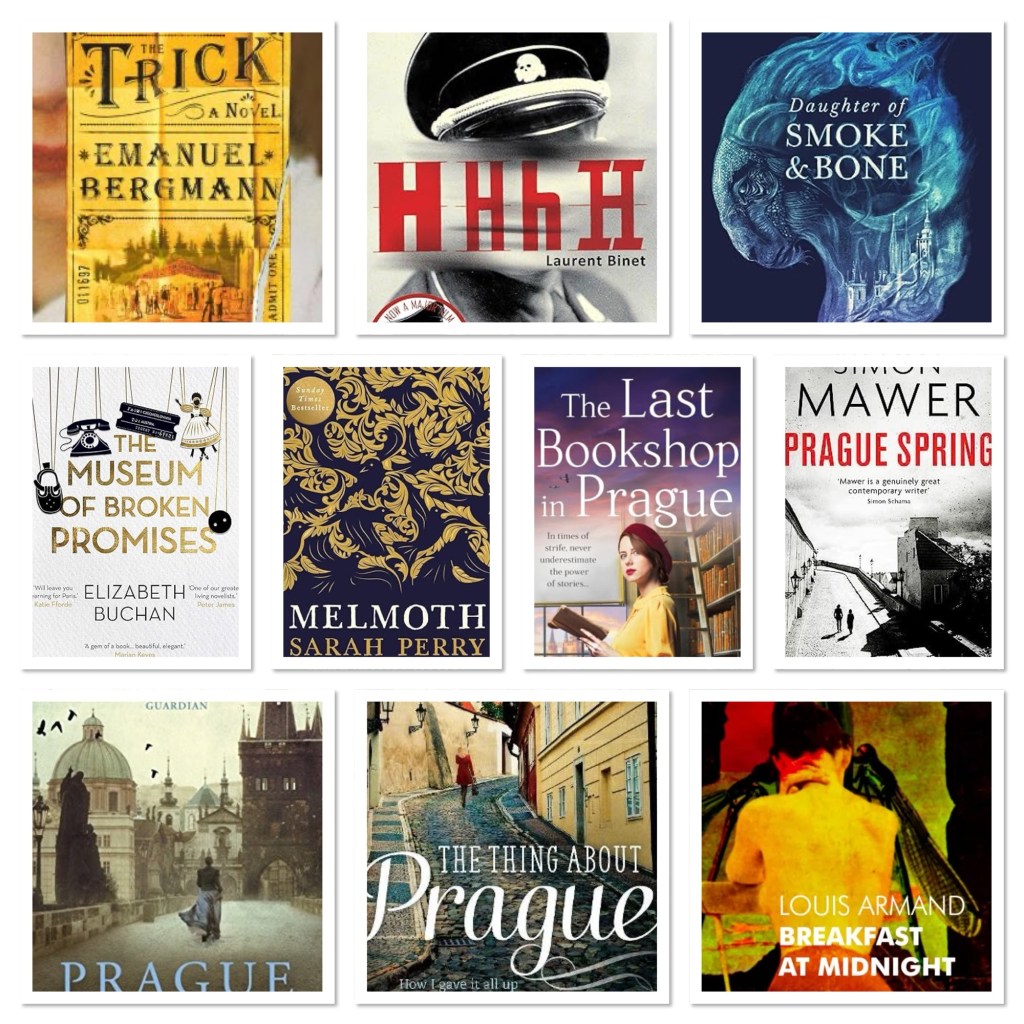
Prague Spring is a wonderfully atmospheric portrait of the city as well as a political and historical thriller with dashes of espionage. It’s the summer of 1968, the year of love and hate, of Prague Spring and Cold War winter. Two English students, Ellie and James, set off to hitch-hike across Europe with no particular aim in mind but a continent, and themselves, to discover. Somewhere in southern Germany they decide, on a whim, to visit Czechoslovakia where Alexander Dubcek’s ‘socialism with a human face’ is smiling on the world. Meanwhile Sam Wareham, a first secretary at the British embassy in Prague, is observing developments in the country with a mixture of diplomatic cynicism and a young man’s passion. In the company of Czech student Lenka Konecková, he finds a way into the world of Czechoslovak youth, its hopes and its ideas. It seems that, for the first time, nothing is off limits behind the Iron Curtain. Yet the wheels of politics are grinding in the background. The Soviet leader, Leonid Brezhnev is making demands of Dubcek and the Red Army is massed on the borders. How will the looming disaster affect those fragile lives caught up in the invasion? This is a great read about a city teetering on the edge of one of it’s most significant moments in history.
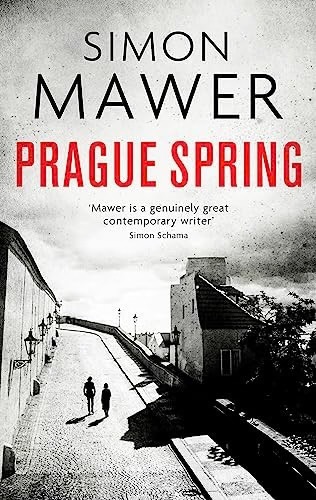
The banned books club was only the beginning; a place for the women of Prague to come together and share the tales the Germans wanted to silence. Is she brave? No, she’s just a bookshop girl doing whatever she can.

For bookshop owner, Jana, doing the right thing was never a question. So when opportunity comes to help the resistance, she offers herself – and her bookshop. Using her window displays as covert signals and hiding secret codes in book marks, she’ll do all in her power to help.

But the arrival of two people in her bookshop will change everything: a young Jewish boy with nowhere else to turn, and a fascist police captain Jana can’t read at all. In a time where secrets are currency and stories can be fatal, will she know who to trust? If you enjoy Kristin Hannah you’ll love this story from WW2.

Oh my friend, won’t you take my hand – I’ve been so lonely! 

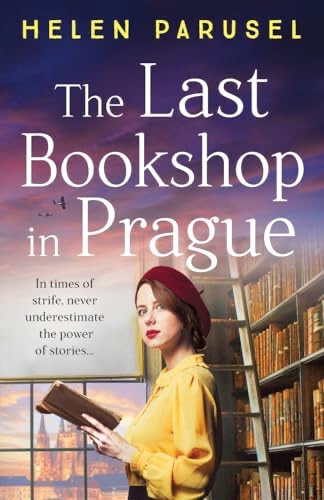
One winter night in Prague, Helen Franklin meets her friend Karel on the street. Agitated and enthralled, he tells her he has come into possession of a mysterious old manuscript, filled with personal testimonies that take them from 17th-century England to wartime Czechoslovakia, the tropical streets of Manila, and 1920s Turkey. All of them tell of being followed by a tall, silent woman in black, bearing an unforgettable message. Helen reads its contents with intrigue, but without knowing everything in her life is about to change. I love creepy little novellas like this and Sarah Perry does everything right here. I loved the almost Victorian ‘Dear Reader’ and the Dracula-like inclusion of letters and diaries. The fear comes from that very Freudian juxtaposition of repulsion and fascination or death and desire. It assumes we all have that thing we’ve done that we wish we hadn’t, buried at the back of the mind or written in a decades old diary. Melmoth is the embodiment of the thing we’ve repressed and she will come for you. Dark, mysterious, thrilling and scarier than you’d think.

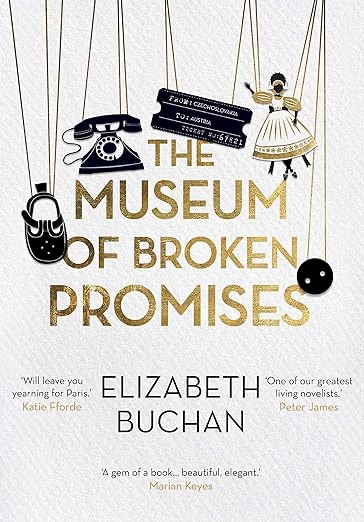
Paris, today. The Museum of Broken Promises is a place of wonder and sadness, hope and loss. Every object in the museum has been donated – a cake tin, a wedding veil, a baby’s shoe. And each represent a moment of grief or terrible betrayal. The museum is a place where people come to speak to the ghosts of the past and, sometimes, to lay them to rest. Laure, the owner and curator, has also hidden artefacts from her own painful youth amongst the objects on display. A marionette from her time in Czechoslovakia as a teenager.
Prague, 1985. Recovering from the sudden death of her father, Laure flees to Prague. But life behind the Iron Curtain is a complex thing: drab and grey yet charged with danger. Laure cannot begin to comprehend the dark, political currents that run beneath the surface of this communist city. Until, that is, she meets a young dissident musician. Her love for him will have terrible and unforeseen consequences. 
It is only years later, having created the museum, that Laure can finally face up to her past and celebrate the passionate love which has directed her life. It may seem strange that someone would base their whole life’s work on an experience at the age of 18, but that misunderstands the power of traumatic experiences. While the objects in the museum may seem mundane, their importance is in the wealth of emotion in those memories. It is by holding or valuing these things that we remain connected to the past and the person in it.

Errand requiring immediate attention. Come.

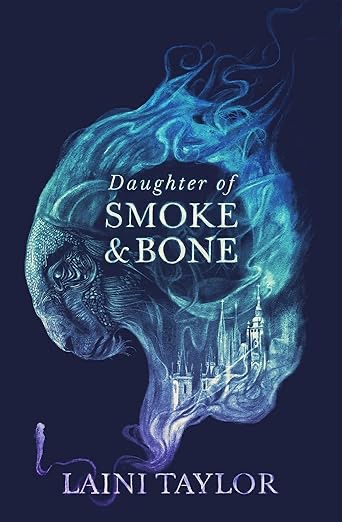
The note was on vellum, pierced by the talons of the almost-crow that delivered it. Karou read the message. ‘He never says please’, she sighed, but she gathered up her things. 

When Brimstone called, she always came. 

In general, Karou has managed to keep her two lives in balance. On the one hand, she’s a seventeen-year-old art student in Prague; on the other, errand-girl to a monstrous creature who is the closest thing she has to family. Raised half in our world, half in ‘Elsewhere’, she has never understood Brimstone’s dark work – buying teeth from hunters and murderers – nor how she came into his keeping. She is a secret even to herself, plagued by the sensation that she isn’t whole. Now the doors to Elsewhere are closing, and Karou must choose between the safety of her human life and the dangers of a war-ravaged world that may hold the answers she has always sought.

I’m not usually a fan of fantasy but this is an exception and Prague is the perfect setting for a girl with blue hair who does the bidding of a chimera who’s part human, ram and lion! Karou is my kind of heroine and I’d happily take her for a drink. I blew through the first third of the novel without thinking, just wishing I had an imagination like this.

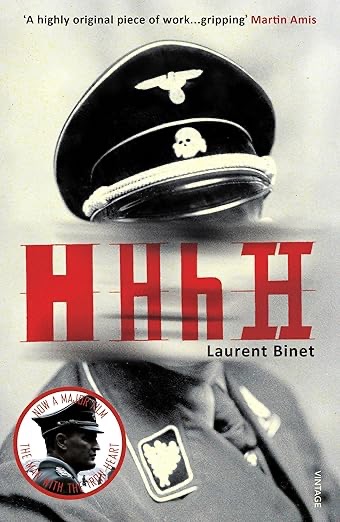
This is probably best described as ‘faction’, while it is shelved as a novel there is so much fact in it that it reads like a true crime story, except the author keeps interrupting his own narrative. Two men have been enlisted to kill the head of the Gestapo, in a mission named Operation Anthropoid. In Prague, 1942 two Czechoslovakian parachutists are sent on a daring mission by London to assassinate Reinhard Heydrich – chief of the Nazi secret services. Known as ‘the hangman of Prague’, ‘the blond beast’ and ‘the most dangerous man in the Third Reich’. His boss is Heinrich Himmler but everyone in the SS says ‘Himmler’s brain is called Heydrich’, which in German spells HHhH. 

It is an incredible story, occasionally interrupted so the author can point out something he’s made up for dramatic effect – such as, ‘I don’t really know if a tank was the first vehicle to enter Prague’. Or even re-writing a paragraph if he later finds he got it wrong. It’s strange and a little jarring but you get used to it. In fact I don’t doubt his research, you will see the acres of documents and history books in his bibliography. This is a very clever panorama of the Third Reich told through the life of one outstandingly brutal man, a story of unbearable heroism and loyalty, revenge and betrayal. It is a moving work of fiction you will not forget.

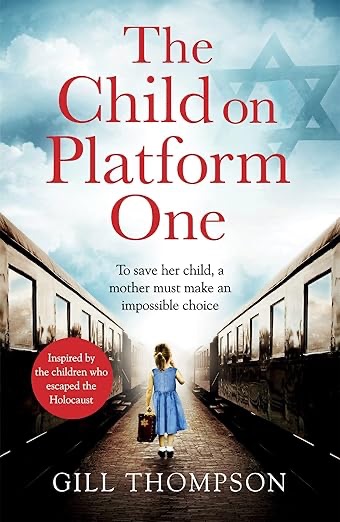
Prague 1939. When the Nazis invade, Eva knows the danger they pose to Jewish families and the only way to keep her daughter Miriam safe is to send her away – even if it means never seeing her again. Eva is taken to the concentration camp Terezin, her secret is at risk of being exposed.

In London, Pamela volunteers to help find places for the Jewish children arrived from Europe. Befriending one unclaimed little girl, Pamela brings her home. Then when her son enlists in the RAF, Pamela realises how easily her own world could come crashing down…

Moving between England and Czechoslovakia this is a heart-rending story made all the more poignant for me as my mother-in-law Hana was sent from Poland as a child to England, separated from all her family and was eventually reunited with her mother after the war. I loved the themes of motherhood and music too. This is one of those historical novels that concentrates on emotion and character rather than acres of detail, but thar makes it all the more heart-rending.

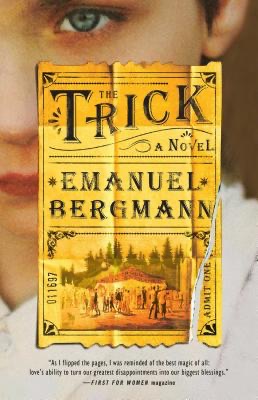
In 1934, a rabbi’s son in Prague joins a traveling circus, becomes a magician, and rises to fame under the stage name the Great Zabbatini, just as Europe descends into World War II. When Zabbatini is discovered to be a Jew, his battered trunk full of magic tricks becomes his only hope for survival.

Seventy years later in Los Angeles, ten-year-old Max finds a scratched-up LP that captured Zabbatini performing his greatest illusions. But the track in which Zabbatini performs the spell of eternal love—the spell Max believes will keep his parents from getting divorced—is damaged beyond repair. Desperate for a solution, Max seeks out the now elderly, cynical magician and begs him for help. As the two develop an unlikely friendship, Moshe discovers that Max and his family have a surprising connection to the dark, dark days the Great Zabbatini experienced during the war.

With gentle wisdom and melancholy humor, this is an inventive, deeply moving story about a young boy who needs a miracle, and a disillusioned old man who needs redemption.

Posted in Sunday Spotlight

Sunday Spotlight. City Breaks in a Book: Paris

A weekend trip to the City of Lights is usually on everyone’s bucket list but if you can’t travel these books will give you a flavour of Paris. Whether it’s an escapist romance or a travelogue each will give you an insight into life in Paris, from the fin de siecle through two World Wars and all the way through to the COVID pandemic and it’s aftermath, these choices take in the Twentieth Century and beyond. Hope you find something you enjoy.

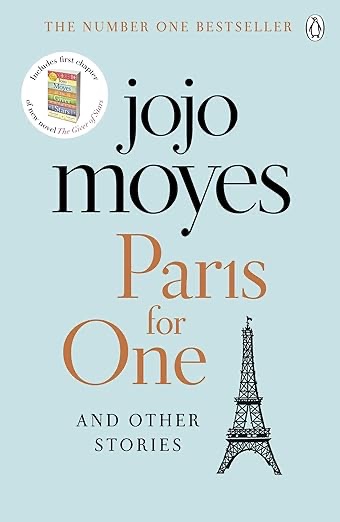
Not the best known of Jojo Moyes’s books, but a series of short stories all with the backdrop of Paris.

In Paris for One, Nell is deserted by her boyfriend minutes before setting off on what was supposed to be a fantastic romantic weekend away to Paris. Can she forget him and find herself? Honeymoon in Paris is a tale of the early days of two marriages in both 1912 and 2012, featuring Liv and Sophie from Jojo Moyes’ bestselling romance The Girl You Left Behind.

Beth is faced with a difficult decision in Bird in the Hand when she bumps into an old flame at a party, with her husband . . . 

This is classic Jojo Moyes fiction – easy to read and within a few lines you’re pulled into the story. The characters are absorbing and soon have you on side, rooting for their romantic dreams to come true.

Historical Fiction

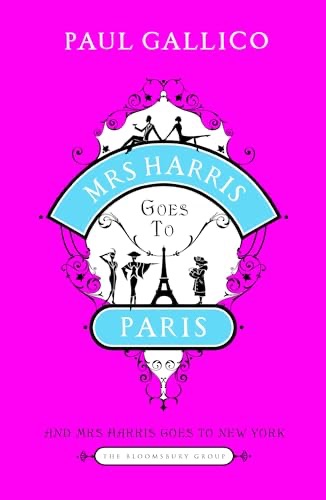
This book is utterly charming from start to finish, while seemingly sprinkled with fairy dust our heroine has some very painful and difficult setbacks. Mrs Harris is a salt-of-the-earth cleaner living in London, struggling financially with her husband never returning from WWII. She cheerfully cleans the houses of the rich and one day, when tidying Lady Dant’s wardrobe, she sees the most beautiful thing she has ever seen in her life – a Dior dress. In her fairly drab and working class existence, she’s never seen anything as magical as this dress. It seems to be alive, like living and wearable work of art. She’s never wanted a material thing so much in her life. Mrs Harris scrimps, saves and slaves away, often finding that the very rich avoid their bills and has to assert herself. Then one day, after three long years, she finally has enough money to go to Paris. However, when she arrives at the House of Dior, she could never have imagined how her life is going to be transformed and how many other lives she will touch in return. Always kind, always cheery, she finds time to charm the ladies who create Dior’s designs in the atelier and organise the love lives of other key staff. Mrs Harris really does takes Paris by storm and learns one of life’s greatest lessons along the way. This treasure is from the 1950s introduces the irrepressible Mrs Harris, part charlady, part fairy-godmother, whose adventures take her from her humble London roots to the heights of glamour in Paris until eventually she has the dress of her dreams. It only highlights those lovely qualities that we know have been there all along. I am absolutely in love with this character.

Rene is the concierge of a grand Parisian apartment building. With the residents she keeps up a professional facade and to them she’s what they expect, a helpful and reliable concierge but not as sophisticated or cultured as they are. Underneath is this the real Rene – a woman who’s incredibly passionate about culture and probably knows more than her rather snobbish residents. Her loves are Japanese Arthouse Cinema and her cat, Leo Tolstoy. Meanwhile, several floors above, is twelve-year-old Paloma Josse, another person keeping their knowledge to themselves. She doesn’t want the empty future her parents have laid out for her and decides she will end her life on her thirteenth birthday. Unknown to both Rene and Paloma, the sudden death of one of their privileged neighbours alter everything for them. The simplicity of the story is what makes this book magical. It shares deep truths about the choices we make in life and the way they change everything. It’s quirky and has an intelligent humour, but is also elegantly written. The charm of it seems quintessentially Parisian.

Doria is in a difficult place. That place is the Paradise Estate, dreadfully misnamed and situated on the outskirts of Paris showing a different side to the city. In Doria’s unforgettable voice, we learn that her father has returned to Morocco. He’s looking for a new wife, who can produce a boy. So her mother is trying to get by a single mother, but she can’t speak French and is illiterate. The only work she can find is cleaning. It could be worse, Samra who lives above them has a father who won’t let her out. Another young resident, Youssef, has been put in prison for stealing cars and supplying drugs. One good thing is her weekly appointment with a psychologist, who listens even if she doesn’t have answers. The author has created a memorable character in Doria who is knowing beyond her years but also heart-breakingly naive. This book gives us a beautifully drawn alternative to the romantic tourist impression of Paris.

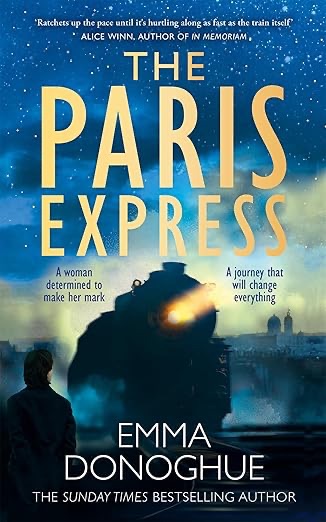
A woman called Mado is determined to make her mark and begins a journey that will change everything. Set on a train to Paris in 1895, and based on a real incident when a train crashed into the platform at Montparnasse, a young woman boards the Granville Express with a deadly plan. The author sets us firmly in the fin de siecle, not just with the clothing but with the attitudes. We can see a shift from the Victorian ideals of the previous seventy years. We have Alice who is travelling for work and taking the opportunity to talk her boss into a new investment. Marcelle is a pioneering scientific researcher inspired by Marie Curie. Mado’s androgynous clothing and short hair make her stand out as someone unconventional and modern. She’s definitely a feminist, but is also an anarchist and I could feel the tension in her body as I read, how far is she willing to go to make her political point? The prose speeds up as the train edges closer and closer to Paris and more passengers climb aboard until the reader is almost breathless.
.

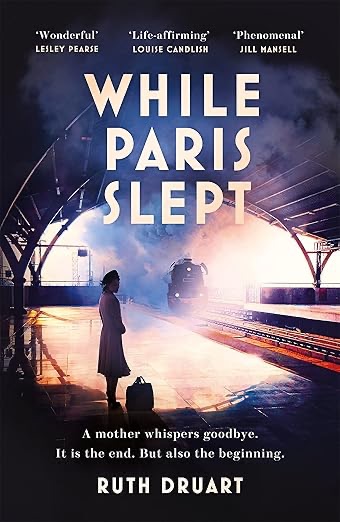
Another wonderful historical novel here, this time set in Paris during WWII. It’s 1944 and Jean Luc is working on the railway under the Nazi occupation when a train bound for Auschwitz is passing through. In an act of desperation a mother makes the ultimate sacrifice and gives the thing she loves most to a stranger. Now she can face her own future with the hope that she’s done the right thing.

Ten years later in Santa Cruz and Jean Luc is happy to have left the memories of the occupation behind. The scar on his face is the daily reminder of the horrors of life under the Nazis. His new life has given him the family he’s always wanted and he doesn’t expect the past to come knocking. That one night on the train platform has shaped all of the futures in a way none of them imagined.

This is such an emotional story, beautifully researched and gives us some insight into life in Paris under the occupation and the terrible choices people had to make to save the ones they love.


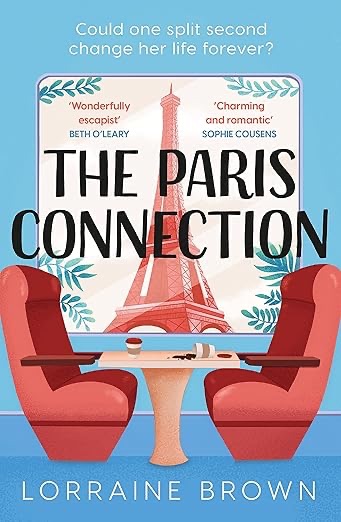
Could one split second change her life forever?

Hannah and Si are in love and on the same track – that is, until their train divides on the way to a wedding. The next morning, Hannah wakes up in Paris and realises that her boyfriend (and her ticket) are 300 miles away in Amsterdam!

But then Hannah meets Léo on the station platform, and he’s everything Si isn’t. Spending the day with him in Paris forces Hannah to question how well she really knows herself – and whether, sometimes, you need to go in the wrong direction to find everything you’ve been looking for…

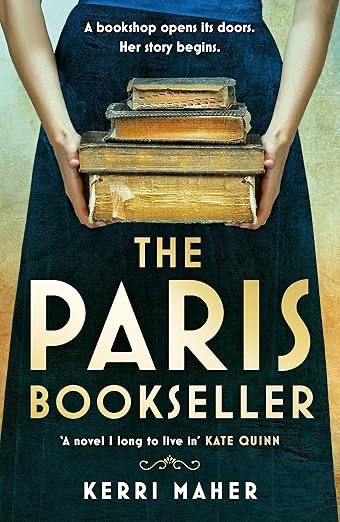
PARIS, 1920. On the bohemian Left Bank, Sylvia runs a little bookshop called Shakespeare and Company. Here she welcomes the greatest writers of the day – and from the moment James Joyce finally walks through her door, the two become friends.

When Joyce’s controversial novel Ulysses is banned, Sylvia is determined to publish it herself.

But championing the most scandalous book of the century will come at a cost – and Sylvia finds herself risking ruin, her reputation and her heart, all in the name of the life-changing power of books.

Set in post-war Paris, The Paris Bookseller is a sweeping story of love, courage and betrayal – and a breathtakingly beautiful love letter to books.

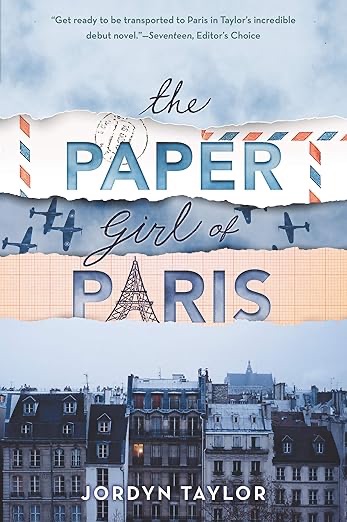
Sixteen-year-old Alice is spending the summer in Paris, but she isn’t there for pastries and walks along the Seine. When her grandmother passed away two months ago, she left Alice an apartment in France that no one knew existed. An apartment that has been locked for more than seventy years.

Alice’s grandmother never mentioned the family she left behind when she moved to America after World War II. With the help of Paul, a charming Parisian student, she sets out to uncover the truth. However, the more time she spends digging through the mysteries of the past, the more she realizes there are secrets in the present that her family is still refusing to talk about.

THEN:

Sixteen-year-old Adalyn doesn’t recognize Paris anymore. Everywhere she looks, there are Nazis, and every day brings a new horror of life under the Occupation. When she meets Luc, the dashing and enigmatic leader of a resistance group, Adalyn feels she finally has a chance to fight back.

But keeping up the appearance of being a much-admired socialite while working to undermine the Nazis is more complicated than she could have imagined. As the war goes on, Adalyn finds herself having to make more and more compromises—to her safety, to her reputation, and to her relationships with the people she loves the most.

Because Paris is always a good idea…

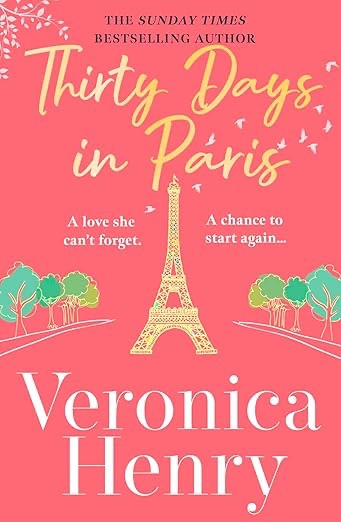
Years ago, Juliet left a little piece of her heart in Paris – and now, separated from her husband and with her children flying the nest, it’s time to get it back!

So she puts on her best red lipstick, books a cosy attic apartment near Notre-Dame and takes the next train out of London.

Arriving at the Gare du Nord, the memories come flooding back: bustling street cafés, cheap wine in candlelit bars and a handsome boy with glittering eyes.

But Juliet has also been keeping a secret for over two decades – and she begins to realise it’s impossible to move forwards without first looking back.

Something tells her that the next thirty days might just change everything…

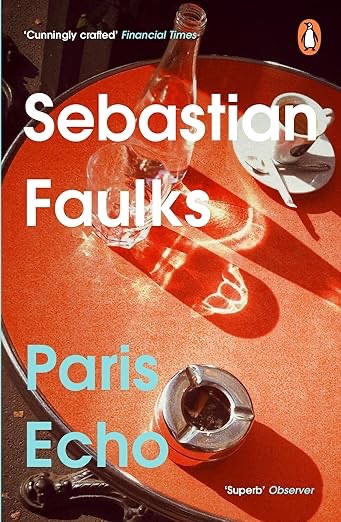
In the depths of the archive, Hannah dances with the ghosts of Vichy France, lost in testimony and a desire to hear the voices of the past. Back in her apartment, Moroccan teenager Tariq crashes on her sofa, consumed by his search for the mother he barely knew. Their excavations will unearth rich histories that will teach them both just how much the future is worth fighting for.

She is there to study the wartime experiences of women living there under German Occupation, while still licking the wounds of a painful, decade-old romance.Paris Echo knocks on big subjects such as the legacy of empire and identity, but mostly it’s a heart-warming masterclass in storytelling that weaves and winds and brims with a deep affection for Paris: its otherworldliness, and the ghosts of history that lurk around every beautiful, tree-lined avenue.  

Paris Echo is a propulsive and haunting novel of empire and identity, told with biting wit and tenderness, which exposes the shadows of the city of lights.

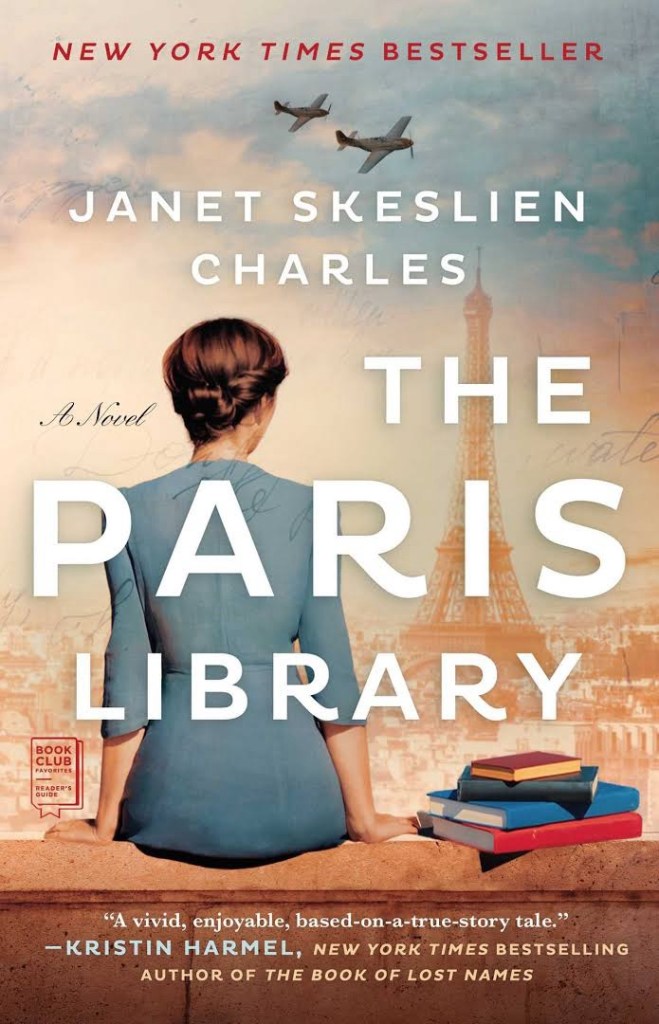
PARIS, 1939
Odile Souchet is obsessed with books, and her new job at the American Library in Paris – with its thriving community of students, writers and book lovers – is a dream come true. When war is declared, the Library is determined to remain open. But then the Nazis invade Paris, and everything changes.
In Occupied Paris, choices as black and white as the words on a page become a murky shade of grey – choices that will put many on the wrong side of history, and the consequences of which will echo for decades to come.

MONTANA, 1983
Lily is a lonely teenager desperate to escape small-town Montana. She grows close to her neighbour Odile, discovering they share the same love of language, the same longings. But as Lily uncovers more about Odile’s mysterious past, she discovers a dark secret, closely guarded and long hidden.

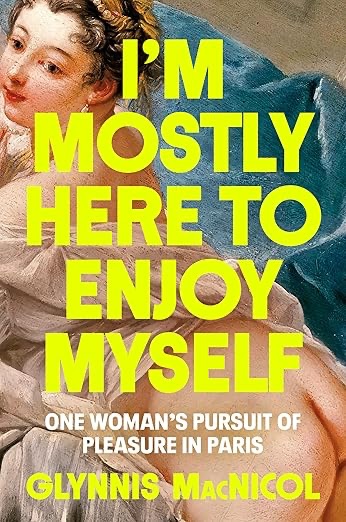
When you’re a woman of a certain age, you are only promised that everything will get worse. But what if everything you’ve been told is a lie?Come to Paris, August 2021, when the City of Lights was still empty of tourists and a thirst for long-overdue pleasure gripped those who wandered its streets.

After New York City emptied out in March 2020, Glynnis MacNicol, spent sixteen months alone in her tiny Manhattan apartment. She was 46, unmarried and the isolation was punishing. A whole year without touch. Women are warned of invisibility as they age, but this was an extreme loneliness, so when the opportunity to sublet a friend’s apartment in Paris arose, MacNicol jumped on it. Leaving felt less like a risk than a necessity.What follows is a decadent, joyful, unexpected journey into one woman’s pursuit of radical enjoyment.

The weeks in Paris are filled with friendship and food and sex. There is dancing on the Seine; a plethora of gooey cheese; midnight bike rides through empty Paris; handsome men; afternoons wandering through the empty Louvre; nighttime swimming in the ocean off a French island. And yes, plenty of nudity. I’m Mostly Here to Enjoy Myself is an intimate, insightful, powerful, and endlessly pleasurable memoir of an intensely lived experience whose meaning and insight expand far beyond the personal narrative. MacNicol is determined to document the beauty, excess, and triumph of a life that does not require permission.The pursuit of enjoyment is a political act, both a right and a responsibility. Enjoying yourself—as you are—is not something the world tells you is possible, but it is.

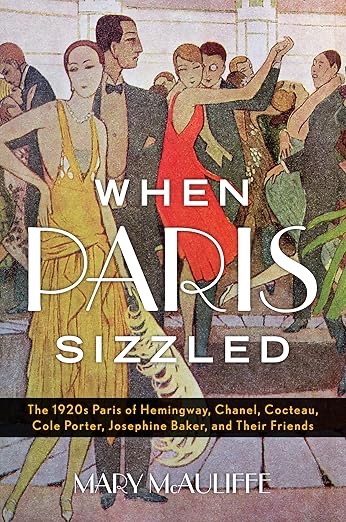
When Paris Sizzled vividly portrays the City of Light during the fabulous 1920s, when Parisians emerged from the horrors of WWI to find that a new world greeted them. This world reverberated with the hard metallic clang of the assembly line, the roar of automobiles, and the beat of jazz. Mary McAuliffe traces a decade that saw seismic change on almost every front, from art and architecture to music, literature, fashion, entertainment, transportation, and, most notably, behavior. The epicenter of all this creativity, as well as of the era’s good times, was Montparnasse, where impoverished artists and writers found colleagues and cafés, and tourists discovered the Paris of their dreams. Major figures on the Paris scene―such as Gertrude Stein, Jean Cocteau, Picasso, Stravinsky, Diaghilev, and Proust―continued to hold sway, while others now came to prominence―including Ernest Hemingway, Coco Chanel, Cole Porter, and Josephine Baker, as well as André Citroën, Le Corbusier, Man Ray, Sylvia Beach, James Joyce, and the irrepressible Kiki of Montparnasse. Paris of the 1920s unquestionably sizzled. Yet rather than being a decade of unmitigated bliss, les Années folles also saw an undercurrent of despair as well as the rise of ruthless organizations of the extreme right, aimed at annihilating whatever threatened tradition and order―a struggle that would escalate in the years ahead. There are rich illustrations and an evocative narrative, through which Mary McAuliffe brings this vibrant era to life.

Posted in Personal Purchase

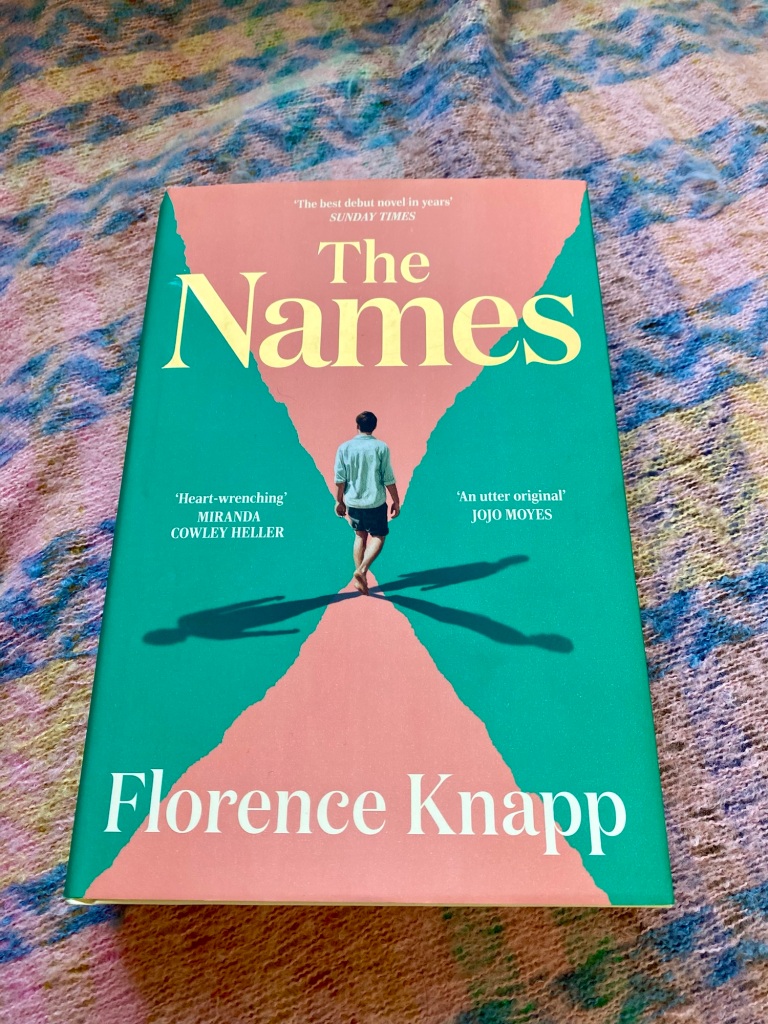
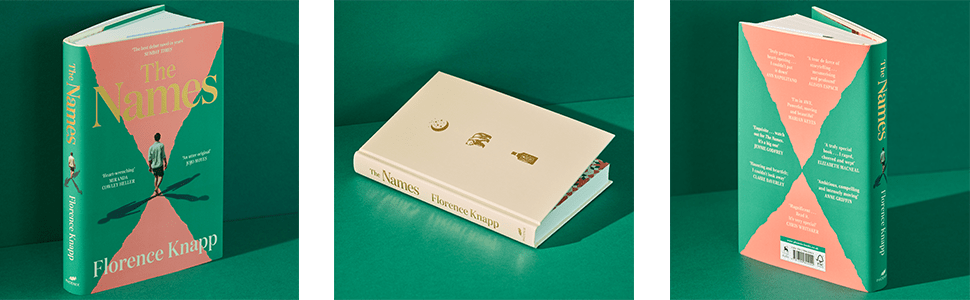
The Names by Florence Knapp

This is one of those books that’s been on the periphery of my wishlist for ages, but I’ve never had time to pick it up. I always set aside a bit of money for visiting a book shop when we go on holiday so when we visited the Lake District this was the first book I saw when I walked into a bookshop in Pooley Bridge. Afterwards, as I looked through the purchases in the pub I read the first few lines, then read the whole chapter and I told my other half it was something special. In 1987 Cora is going to register the birth of her baby boy. His name has been settled on for some time. Cora’s husband has chosen his own name for his son, Gordon. But it wouldn’t be Cora’s choice. Cora’s choice would be something that doesn’t tie him so obviously to his father. She thinks Julian would suit him. Little sister Maia looks in the pram at her brother and decides he looks like a he should be called Bear. All of these options swirl around in Cora’s head. In this moment, Cora has the power to make a choice and it’s done. It can’t be changed. What would happen if she went with Julian or even Bear? In the short term Gordon would be furious. How bad would it be this time? Long term, would it change her baby’s character or path in life? That’s exactly what Florence Knapp does. The book splits into three narratives and we discover what happens to this whole family, depending on Cora’s baby boy’s name. 

We then move on seven years and meet Bear, a name that proves to be a catalyst for change. Or we meet Cora’s choice, Julian – the choice she hoped would break him free from domineering generations of Gordons. Although, what if he is called Gordon? Brought up by a cruel father to continue in the same mould perhaps? Or he might just break free from the shackles of his name. Each life is sparked by this one decision and it isn’t just Cora’s son’s story. This is the life of the whole family with all its ups and downs. It’s about how trauma shapes lives and whether love brings healing and hope to every version of who we are. Even her minor characters absolutely shine. Grandmother Silbhe and her friend Cian are so wonderful, modelling healthy male/female relationships for Julian and Maia. Cian is also Julian’s mentor at work, bringing out a creative side that needs nurturing. Julian needs to work with his hands and meeting fellow creatives helps him find his tribe. Lily is lovely character and we get to know her most during bear’s narrative. I loved how she has to find a balance between giving Bear the freedom he needs without breaking her own boundaries in the relationship. It’s an utterly compelling debut and zooms straight into the list of best books I’ve read so far this year. The author brings incredible psychological insight to a story about how our names shape our identity, our relationships and our life choices. Something we didn’t even choose. Can it influence us to a huge extent, or do we become the same person no matter what the choice? 

One of our family narratives is that mum wanted to call me Little Green after the Joni Mitchell song. Mum is definitely a hippy and Dad is definitely not. My whole life I’ve said ‘thank goodness for Dad’, as I ended up with Hayley Marsha Ann which felt unusual enough. However, when I read the lyrics of the Joni Mitchell song, it was just so beautiful. Written for a child she had when she was very young. She felt she was too young to be a mum and gave her up for adoption. The song is so full of the hopes a mother would have for their daughter: 

“Just a little Green

Like thе color when the spring is born

There’ll be crocuses to bring to school tomorrow

Just a little Green

Like the nights when the Northern lights perform

There’ll be icicles and birthday clothes

And sometimes there’ll be sorrow.”

The book made me wonder whether I’d be a different person now had I been Little Green. Would I have been more confident? Perhaps I’d have been more comfortable in my creativity. Might I have written my book by now? How could I have failed with a name imbued with such hope? I liked that the author included the meaning of all the character’s names at the back of the book. It’s fascinating to look at them after reading knowing they were so carefully chosen. 

Each of three arcs has its share of joy and heartache as Cora’s children cope with the aftermath of that day in 1987. For Gordon the legacy of his father is perhaps the most damaging as Cora feared. Growing up in his father’s presence means he could pass on the misogyny passed down through all the Gordons in his ancestry. It damages his relationship with his mother as he can be used as a tool for his father to oppress Cora further or to spy on her behaviour. It will also affect his own relationships with women, both his sister and potential partners – his teenage crush on Lily becomes something that’s very hard to read, but it’s right to include it. The author depicts inter-generational trauma and how it can damage the next generation in different ways. Abusers can’t always break patterns and sometimes I was compelled to read on in sheer hope. 

Each narrative has its moments of emotion where you have to look up from the book and breathe for a moment. Just to take it in. However, one narrative broke me. I was reading quietly in the same room as my husband and I actually responded out loud. He had to give me a cuddle because I did have tears coming and I’m astonished by the writer’s ability to absorb to that degree. To make words into a flesh and blood person I can shed tears over and another who has the potential to become a monster. Gordon Sr really is terrifying in his reach and I felt Cora’s constant fear and the way she made herself small, not taking up space or making him notice her. The author doesn’t forget Maia either and the effect this monster has had on her life, emphasised in a single moment of panic and horror. Yet would she have become a doctor without witnessing his competence as a doctor or his patient’s respect for his skills. Throughout her love for her brother shines through. This is an absolutely incredible debut with a brilliant grasp of domestic abuse and how it affects every member of a family, their friends and even neighbours. She depicts how the children and grandchildren in this chain have to consciously break the chain. As a daughter and a wife of two men who’ve survived violence in the home I know the struggle to change things and I felt the truth of Knapp’s depiction. It’s easily one of my best reads so far his year (what a year we’re having) and I have no doubt it will still be up there in December. 

Meet the Author

You can find out more about my writing, or what I’ve been reading lately, on the other pages. But for now, a few things about me.

I live just outside London with my husband, our dog, and sometimes one (or two) of our now-adult children. Some of my favourite things are: words, photo booths, old tiles, rain, long phone calls, clothing with pockets, book covers, dimples (I don’t have any of my own, but I covet the cheeks of those who do), houses lit up at night, the word eiderdown, notebooks, kaleidoscopes, homemade soup, Italy, taking photos, book chat, hummus, barre, house plants, a thick duvet with wool blankets piled on top, hand-stitching, making lists.

I’m less keen on condiment bottles, driving on motorways, and socks where the heel slips down.

Posted in Compulsive Readers

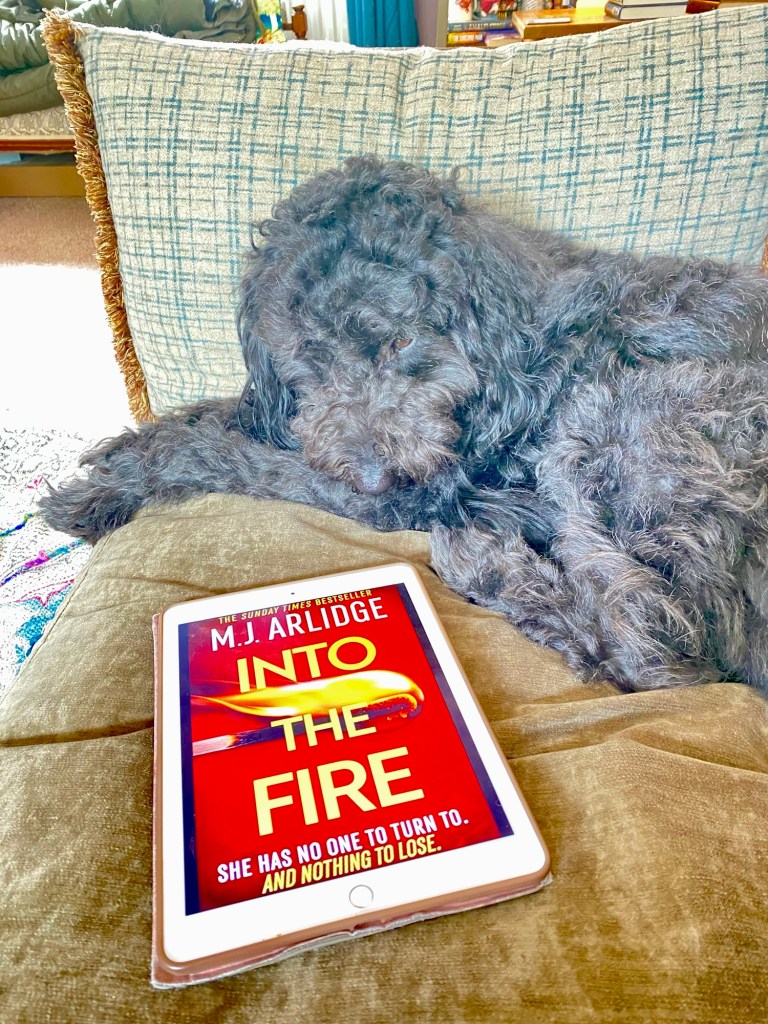
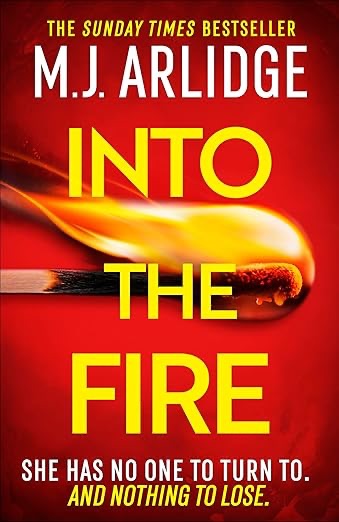
Into the Fire by M.J.Arlidge

This book opens with a heart-stopping scene that sets the pace for the rest of the story. Helen is relaxing after meeting her lover in a luxury hotel. While he has a shower, she is in her nightgown and robe enjoying the night time view over downtown Southampton. Movement suddenly catches her eye and she’s drawn to a woman who’s running down a darkened street towards a precinct of shops, pursued by two men. As they catch up, one of them pulls out a bicycle chain and starts to beat the woman. Helen doesn’t wait or think, tearing out of the hotel room and down several flights of stairs as she’s too impatient to wait for the lift. She runs down the dark street hoping that the only shop she saw with a light on has a customer or staff who’ve called the police. Helen flies at one of the attackers, who is taken completely by surprise and she soon disables the second, turning to the woman who has been badly beaten. She looks like she’s from the Middle East perhaps, with two very distinctive tattoos placed on her forehead and chin. Unfortunately, Helen has committed the cardinal sin of combat and has turned her back on her attackers. The next thing she feels is a huge bang to her head and then everything goes dark. This opening scene tells me this will be a gritty, modern thriller with a kick-ass heroine. 

This is the thirteenth novel in the DI Helen Grace series and I’m seriously out of touch with the character, having only read the first couple of novels after picking them up in a book swap. I’m sorry I didn’t read the rest. Helen is working on her own initiative in this novel. She handed in her notice at the end of the last, with her protege Charlie being promoted in her place. Helen doesn’t know what the next step is, but she’s been enjoying the break. The only thing she misses is the camaraderie of a team and although she has enough money to really think about what’s next, she is anxious about it. Although life will bring it’s own answer soon enough and it might be the last thing she’s expecting. She starts to investigate alone, feeding into Charlie who is trying to target traffickers and their victims coming through the port in lorries and containers. The story is told mainly through Helen’s eyes, but also through the narratives of two other women. Viyan is another trafficked Kurdish Syrian woman and Emilia is a journalist whose father is dying in prison. At first we’re not sure how all of these narratives fit together but slowly they form a cohesive picture. Viyan’s narrative is grim and brutal. I wanted everyone who moans about asylum seekers to read this novel and understand the desperation and the lies of the traffickers that drive them here.

This operation involves a Dutch trafficker and then a gang master who provides their labour for specific contracts, this one in the NHS. I was furious with the NHS procurement manager who has simply turned a blind eye when accepting an obviously low quote for services, knowing that somewhere along the line someone is being exploited. I think many people might be surprised if all migrants were removed from the labour market, because I think the care sector and the NHS would collapse. Here the migrants are working an NHS contract disposing of clinical waste. Not only are corners being cut where safety is concerned, but if she saw the conditions, the state of the workers and the brutality meted out the procurement manager would be ashamed. The beatings and whippings with chains are only the first in a series of punishments, leading up to the ultimate solution – the incinerator. In fact after hearing the horrific death of her friend, Viyan sees a chance to escape and takes it. Will she be able to escape the minders this time and if they catch up with her can she survive? 

Emilia is a journalist on the crime beat but we meet her as she visits her elderly father in hospital. He tells her he’s dying but wants her to know he has hidden some of his ill gotten gains at the home of his most recent partner. He wants Emilia to talk her way into the woman’s home, find his hiding place and bring out whatever’s inside the hold-all. Emilia knows there’s more to this than he’s saying, but sets out to try. This mission puts her in the path of Helen and the villains linked to her trafficking case. Having such strong women as our main characters was great and Viyan had all my empathy and admiration. I was so desperate for her to make it back to her family. Helen is formidable! Despite having horrendous violence dished out to her, she keeps going and can definitely hold her own when she’s not outnumbered. What I loved most about her, was her inability to turn away from injustice and suffering. She sees a terrible crime occurring and although she’s no longer in the force, she doesn’t walk away and hope someone else might deal with it. Where in the world could she use these natural skills that isn’t in the force? She’s also great at supporting and boosting other women, like her replacement Charlie, making sure she knows everyone has imposter syndrome and she does have what it takes. You will hold your breath for the final showdown and all the women involved. The short punchy chapters are action packed and keep you reading ‘just the next chapter’ until it’s 2am. I now need to set aside time and read the ten novels between this and the last one I read. I’ll probably load up the kindle with them before I go on holiday so I can carry one without interruption. This was a belting, action-packed, female led, crime thriller and I recommend it highly. 

Out 3rd July from Orion Books

Meet the Author

M.J. Arlidge is a novelist, screenwriter and producer. He is the author of the bestselling DI Helen Grace thrillers including: Eeny Meeny, Pop Goes the Weasel, The Doll’s House, Liar Liar, Little Boy Blue, Hide and Seek, Love Me Not, Down to the Woods, All Fall Down and Truth or Dare.

M.J. Arlidge has also worked in television for many years, specialising in high end drama production. In the last five years he has produced a number of prime-time crime serials for ITV, including TornThe Little House and Undeniable. He has written for Silent Witness and also pilots original crime series for both UK and US networks.

Posted in Netgalley

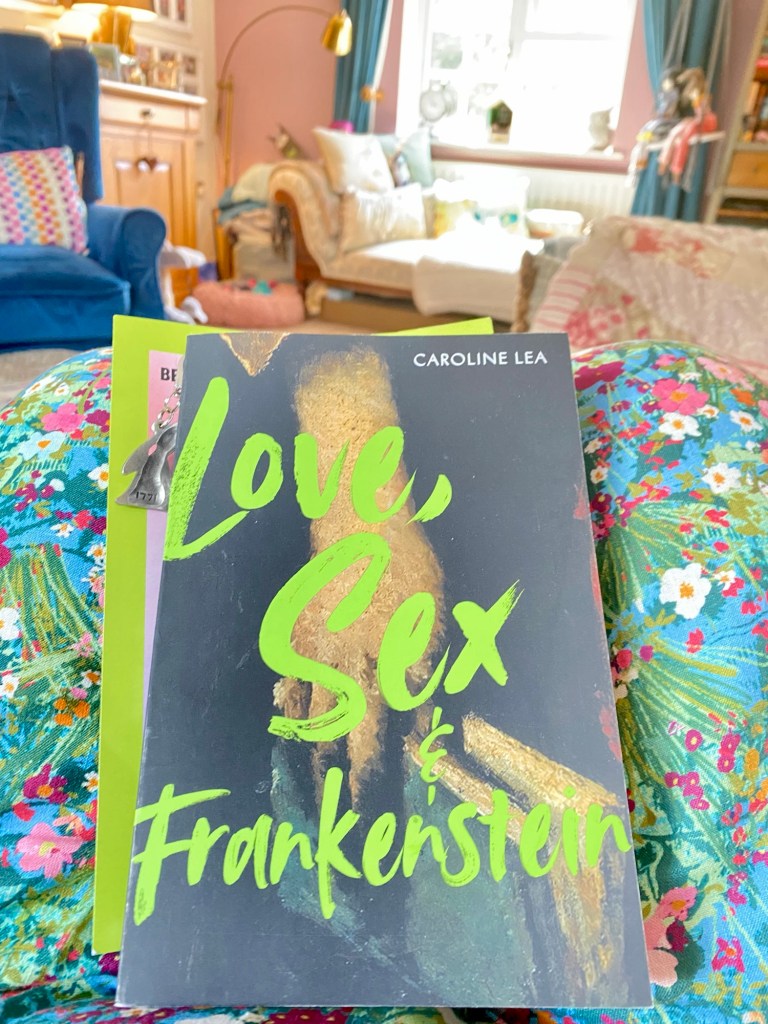
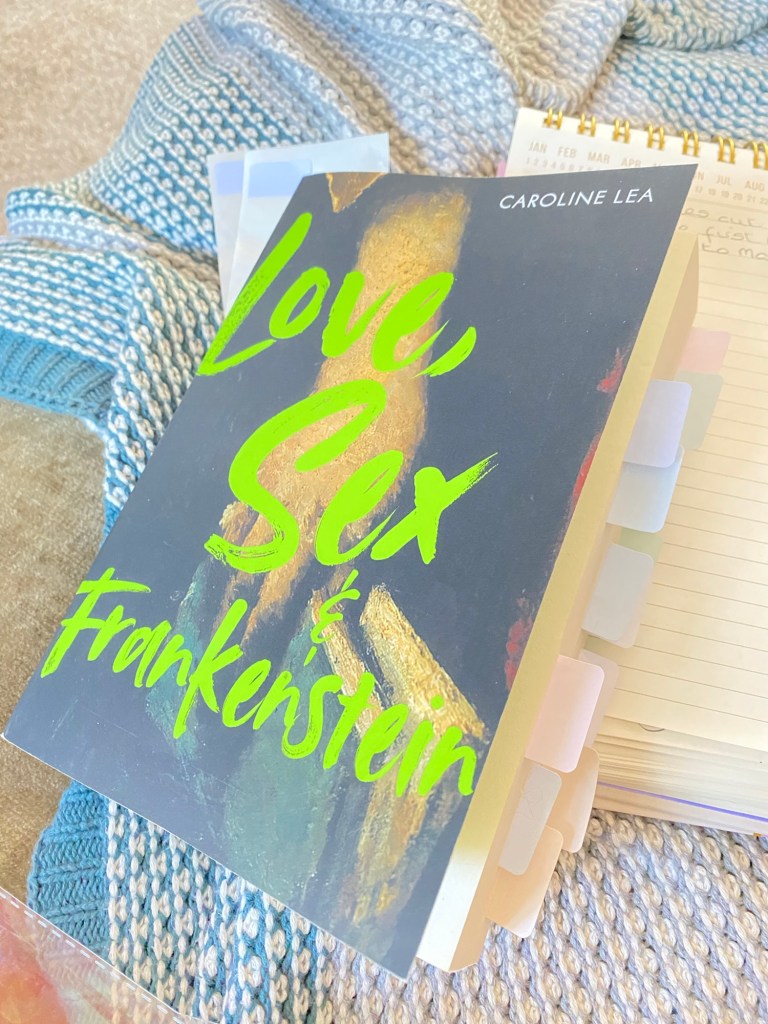
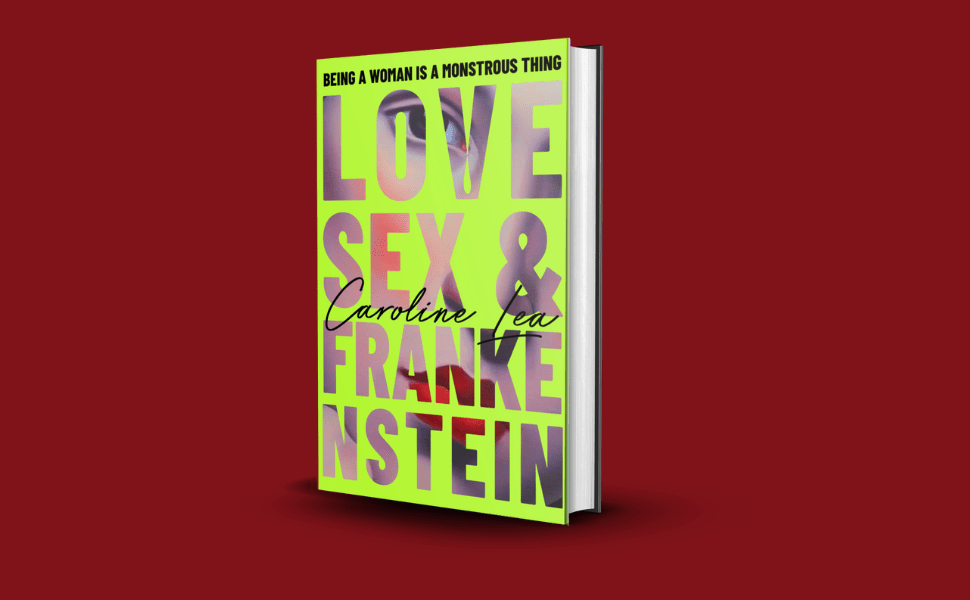
Love, Sex and Frankenstein by Caroline Lea

Mary Shelley, the author of Frankenstein, was born in 1797 to politician and writer William Godwin and his wife and fellow writer, Mary Wollstonecraft who wrote The Vindication of the Rights of Women. In her book she made, possibly the first, claim that women were not naturally inferior to men. It was a feminist manifesto centuries ahead of it’s time. Sadly Mary’s mother died only eleven days after she was born from puerperal fever, leaving Godwin to raise Mary as a single father. However, he remarried in 1801 to a widow with two children of her own, Clare being very near in age to her stepsister Mary. In 1841 Mary became connected to the poet Percy Bysshe Shelley, a well-known writer who was already married with three children. Shelley was 22 and Mary was 16. Facing nothing but criticism and social sanctions in London, the couple decided to escape to the continent along with Mary’s step-sister Clare. They then settled for a time on Lake Geneva, sharing a house with Lord Byron and his doctor Polidori. As the weather changed they become snowed in for a period of time and one of the diversions thought up by Byron was that each of them write a ghost story. Up until this point, Mary has only written in her journal but she can feel something stirring within her and in this strange place, Frankenstein’s monster is born. 

Probably every English Graduate who specialised in Gothic Fiction has fantasised about a stormy night, in a house on the edge of a lake near Geneva. That night was supposedly the genesis of the first vampire story – Polidori’s The Vampyre – and Mary Shelley’s classic horror, Frankenstein. It always seemed strange to me, how two iconic horror legends were conjured up in the same place on the same night. Of course it was a longer period of time and everything these writers experienced in their young lives so far was fuel for their creativity. The setting is definitely strange and unsettling. Caroline Lea paints a picture of the lake becoming monstrous, magical but evil too and no longer a place where children paddle and dive underwater. The sky is dark, trees look like ‘funeral lace’ and ash rains down from above. Local people have noticed that at times the lake throws up strange shadows and clouds, some that look like sky cities floating in the air. When they find a man called Karl Vogel drowned in the lake with his eyes turned from brown to blue – they are shocked, but this is a place of transformation. It’s as if nature is creating the perfect circumstances for monsters to be born. 

This incredible book. is a brilliant combination of historical and horror fiction, with a large side order of feminism – all of my favourite things. Every time I put the book down I would look at my husband and say ‘wow’ then try to write down everything that struck me. I ended up with ten pages of notes that I now need to build into coherent sentences and do this novel justice! Firstly the historical settings were incredible. When we first meet Mary and Clare, they are living in lowly lodgings in London. Mary’s baby is born and they are desperately trying to avoid the bailiffs that seem to follow Shelley wherever he goes. The author really captures 18th Century London with the girl’s filthy lodgings a bleak place to look after a baby. They’re also struggling to sleep, worried that any moment their flimsy door will be kicked down. This is the reality of being the mistress and illegitimate child of a well-known poet who does not pay his debts and has retreated back to his family home. I never imagined that Shelley left her in this position. I’d imagined them living on Lake Geneva complete with servants and all the excesses that Byron was famous for, then travelling around Europe, leaving their troubles behind them. Their relationship would probably be considered abusive now, not just because of their age difference but because of the way Shelley manipulates her. Something that only worsens when Byron and his peculiar brand of chaos are on the scene. When Mary tries to stick up for herself, all the qualities he supposedly loved about her – her independence, her spirit, her intelligence – are thrown back at her, in order to control, manipulate and punish her. He calls her a good mother, but also accuses her of fretting and becoming boring. It is her independent spirit that landed her in Shelley’s arms but he’d rather she didn’t have the independence to question him, refuse him or leave him. His threat is very clear:

‘Women who leave their children, will never see them again’. 

Of course Shelley wouldn’t give up his carefree life to look after his child. He would probably hire a string of nursemaids to seduce then discard, until his only option is to dump his son on his long suffering wife who is pregnant again. Mary starts to realise that although he professes to love her, once she has become a mother she is always expendable. My urge to slap Mary’s step-sister Clare started early in the book and flared up very frequently. She has absolutely no girl code. She had left with Mary in the hope of rekindling a brief liason with Byron. However, it’s clear she’s happy to switch affections if he isn’t there, even onto Shelley. She flirts and simpers, touching his arm and holding his hand to guide her outside. Byron’s treatment of Clare is utterly cruel, he manages to ghost her even when they’re finally face to face. He refuses to acknowledge she exists and then only picks her up again when the weather descends and there are no other prospects. Despite this it is hard to like her, especially when she gains snippets of information from Shelley only to drop them on Mary when they’ll hurt the most. The arrogance of both poets is endless! Byron isn’t just a seducer of women, he drinks and takes laudanum at every opportunity too. He abuses his supposed friend and doctor Polidori, considering him dull and mimicking his stutter in front of the women. His own disability is never mentioned by anyone – the limping stride he’s had since childhood is overlooked or even compensated for as Mary notices some people unconsciously falling into step next to him, slowing their stride to match his. His impulsivity is like that of a toddler, moving mid-week from a hotel to the house on the lake, determined not to pay for the weeklong stay he originally booked. It will cost more for the hotelier to clean up after his bizarre animals, including two eagles, a huge dog and a monkey. He sets his sights on Mary and despite his magnetism she can see what he truly is – a boy throwing mud at windows to detract from his own badness and shortcomings. 

The setting is glorious and it’s clear why frozen mountains, cavernous lakes and the arctic weather feature heavily in Frankenstein. It’s where Mary goes to have time to think, away from the chaos and hedonism indoors. The seemingly magical weather conditions are explicable, even though they feel supernatural. Lake Geneva is known for throwing up mirages called ‘Fata Morgana’. They take the form of distorted boats just above the horizon or even ‘castles in the air’, where a whole city seems projected into the clouds. Named after Morgan Le Fay the mirages are created by rays of light pass through air layers of different temperatures. The sheets of ice on a lake keep the surface air cooler than in the layers above. It’s easy to see why people might by unnerved by something that appears so otherworldly. A more psychological phenomenon that’s clearly takes hold within the house is cognitive dissonance, felt strongly by Mary in particular. The villa is starting to feel like a place she doesn’t belong because her emotions and reactions don’t seem to match anyone else’s in the group. 

‘She feels like a stranger in the foreign land of this room, unable to understand their bright chatter and loud laughter […] every moment takes her further away from these awful people who carry on as if she isn’t there at all’. 

Motherhood and the reality of being Shelley’s mistress has changed Mary and it’s so relatable. She wonders whether all women feel pulled in so many different directions at once. She also wonders if she ever had a true understanding with Shelley. A fire that lit up her heart and her mind is now glimpsed very rarely and she wonders if it ever truly existed. Has she fallen in love with her idea of Shelley – the one who creates the grand illusion of romance in his poems. He doesn’t love her, merely the idea of love itself. In disappointment with all men she turns to the wisdom of women, particularly her mother’s work. Mary Wollstonecraft was the first woman to write a feminist manifesto and she truly understood what needed to change for women – the problem of having to depend on a man. She realised that nurturing women’s learning was the first step: 

‘Strengthen then the female mind by enlarging it and there will be an end to blind obedience’. 

Women could only overcome their dependence on men if they were educated and could earn their own living. In Mary’s dark night of the soul she hears her mother’s voice encouraging and coaching her and the minute she does Mary’s able to breathe again and see a clear way to support herself – by selling her writing. Once she can do that, it no longer matters whether Shelley is inconstant or distant – she does not depend upon him for security and stability. She is ashamed that despite her intellect she has allowed this man to reduce her. Yet she has to tread a fine balance and think these things rather than say them outright. She fears that Polidori’s friendship with the two men, means they have convenient access to a doctor. If she fully expresses what she feels might Shelley think her mad and seek to have her committed? However, she is furious that she might be asked, yet again, to grant forgiveness to a man who is not sorry. She feels that both poets have taken and ruined promising young women, not caring that the consequences of their actions will rest solely on the girl’s shoulders. She wonders what it must be like to take up space in the world, to believe it is your birthright to dictate the temperature of every room they’re in. It is Byron’s arrogance that becomes her blueprint for a future self, allowing herself to be angry and consequences to be damned. She wants to be more like him, true to her emotions and principles and saying exactly what she thinks without worrying about the outcome. In fact it’s a dalliance with Byron where Mary seems to find more strength. It’s an uncomplicated exchange of desire, full of passion, but at no paint does he take anything from her. It gives her the strength to confront Shelley about returning to his wife and leaving both women at the mercy of debt collectors, out of sight and out of mind. She finds her voice and addresses Shelley as a man, rather than the great poet, making her feelings about his infidelity very clear, but also pointing out his cowardice and the times he hasn’t been there for her. 

I loved how the story of Frankenstein’s monster is psychological fragments stitched together, just like the monster himself. Through writing Mary processes her own emotions and thoughts which then feed into the emotions of the abandoned monster. She remembers stories of medical students digging up bodies and stealing them for dissection. Then she gives the creature an internal monologue, ripe with the emotions she has felt, but never expressed. Frankenstein leaves his monster just as Shelley left Mary and their baby in squalor. She’s writing a criticism of men who create with no thought for the thing they’ve created. Victor Frankenstein goes to sleep expecting his creature to die and feels nothing. The creature meanwhile feels a combination of Mary’s grief and abandonment, first losing her mother and then the loss of her father, a man who brought her up to have a rebellious spirit and think for herself, but rejected her when she lives by these principles. Mary is this bewildered and angry creature and that’s perhaps why she gives her monster the equivalent of philosopher John Locke’s tabula rasa – the blank slate of a small child ready to experience nature, love and all that is beautiful. Frankenstein’s monster embodies the nature/nurture debate in that the creature isn’t born evil, it’s other people’s cruel treatment of him that makes him monstrous. Her writing has processed all these feelings and working through them makes her feel hopeful for the first time. She might return to London with her son and instead of being beholden to Shelley or her father, she could keep them both with her own writing. 

Typically, blinded by his own arrogance Shelley doesn’t see himself in Victor Frankenstein at all. At first Mary thinks he’s feigning ignorance, but he genuinely can’t see his own reflection. He sees too much ambiguity in the story, thinking either the creature should make Victor look at his own shortcomings or she should make it so monstrous that no reasonable person would expect Victor to care for it. I loved the way she takes his criticism, because it shows us how much Mary has grown up. She realises that at every stage on the way to publication there will be a man who wants to shout his opinion. It doesn’t matter, because she knows they will all be mistaken. The book, like the creature at it’s centre, will be sent out into the wilderness looking for a creator. She’s fairly sure it will find one, because she knows her book is special. As for Caroline’s book, this is an absolute masterpiece and made me think about Frankenstein from so many different angles. Caroline Lea’s Mary take us through the psychological trauma and brings to life her relationship with Shelley, often told in a rather salacious or romantic way without any thought to the inequality between them. Through this experience she guides the reader through the genesis of this incredible novel. It is stitched together from so many different parts, but here we can see them all and understand the circumstances they come from. What Caroline has written is a Bildungsroman, a novel of Mary’s rebirth from girlhood to womanhood. Frankenstein is the chronicle of that birth, as messy, terrifying, horrific and momentous as it is. This birth being the genesis of Mary Shelley as a woman but also as a writer of one of the most important novels in literature.                                                                                                                                                                                                                                                                    

Meet the Author

Caroline Lea grew up in Jersey and gained a First in English Literature and Creative Writing from the University of Warwick, where she has also taught on the Creative Writing degree. Her fiction and poetry have been longlisted for the BBC Short Story Prize and Sunday Times Short Story Award, and shortlisted for the Bridport Prize, the Fish Short Story Competition and various flash fiction prizes. Her novel, THE GLASS WOMAN, was published to critical acclaim and shortlisted for the HWA Debut Crown. Her next novel, THE METAL HEART, was Scottish Waterstones Book of the Month. Her most recent novel, PRIZE WOMEN was featured and acclaimed on BBC Women’s Hour. Caroline is passionate about helping other writers to grow and succeed: she teaches creative writing both privately and, currently, for Writing West Midlands and is often recruited to give talks at literary festivals and events. She currently lives in Warwick with her partner and children and is working on her next novel about Mary Shelley writing Frankenstein. Her books often feature ordinary women in extraordinary circumstances.

Posted in Netgalley

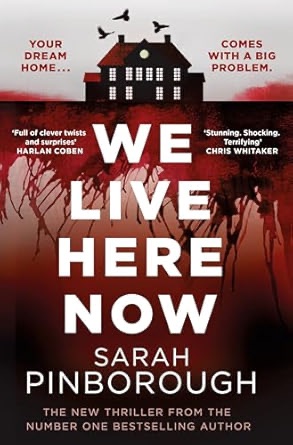
We Live Here Now by Sarah Pinborough

Emily and Freddie have been through the mill of late. After a terrible accident when they were on holiday, Freddie has surprised her with the home of their dreams. Emily fell from a cliff on a group holiday and not only did she break her leg in several places, she then developed sepsis and almost lost her life. Now she’s in recovery, still walking on a stick and has been thrust into a whole new life. Larkin Lodge sits just outside a village on the edge of the moors and could be their dream home, but Emily can’t believe Freddie made this huge decision without her. The house is gothic and in the mists and murk of winter it looks a little isolated and spooky. However, she can see that in spring the views will be incredible. As Freddie continues to work in London, Emily spends a lot of time alone and starts to feel uneasy. Sudden drafts and disgusting smells, then heavy footsteps moving across the second floor are unnerving. Freddie is convinced she’s struggling with post concussion syndrome and calls her ITU consultant for advice – much to Emily’s disgust for doing this behind her back. As she starts to look into the history of the house and questions some of the locals, all the different parts of her life start to fall apart. Secrets start to come to light and Emily wonders if the house is having an influence on her. 

Freddie made me angry and I couldn’t understand what had kept them together so long. We hear both his and Emily’s viewpoint in alternate chapters. We don’t know how he felt about the ‘pre-accident’ Emily, but here he seems irritable and edgy. He makes Emily doubt her own sanity and even when he has experience of the same things he keeps it to himself. He talks behind her back to the vicar and her consultant – but we can’t help but wonder if it could it all be in Emily’s head? Yet even when she tries to forgive him for his actions he seems strangely disappointed and even angry. He says he hates her superior tone and victim mentality. Is he determined to think the worst of her or is he just a concerned husband looking for answers? They meet a married couple who once lived at the lodge and now live elsewhere in the village. They seem unscathed by their years at the house. He is an artist and loves to paint young models, with his incredibly chilled wife seemingly happy with any potential dalliance. Emily can’t imagine being that accepting of the same with her own marriage. How do they fit in to this strange puzzle?

Emily is a sympathetic narrator although she’s not entirely reliable. It must be so disorientating to wake from a coma and know that your body has been present but your mind has been somewhere else. Added to that is the risk of ICU psychosis – a common condition causing auditory hallucinations, nightmares, sleep disturbances and paranoia. One in three ICU patients are affected after spending five days in the unit so one of her experiences could be explained away. However it’s important that those who love her, listen to her and believe her experience, otherwise it feels like a betrayal. She is desperately looking for answers, researching the archives and talking to locals. Being disturbed in her sleep means she’s up and about in the night and after they throw a party at the lodge she stumbles across another secret and doesn’t know who trust. Would she ever have had thoughts like this before the house? The author cleverly creates tension between what we know about Freddie and Emily and what they know about each other. They’re both keeping secrets and Freddie projects all their problems on to her. Even when she’s quite measured and reasonable or accepts his apologies he becomes angrier. Just occasionally he pauses and wonders where these thoughts are coming from? Is it the shock of Emily’s fall still working on him or is something more insidious at work? 

Of course it wouldn’t be a Sarah Pinborough novel without a supernatural element and this one is genuinely scary. It begins with the window on the landing, seemingly opening of it’s own accord. Then sounds on the stairs to the top floor where Emily can’t reach at the moment without severe pain. When she starts talking to older locals about the house there’s a moment that genuinely made the hair stand up on the back of my neck! The chapters from the raven’s perspective are very touching as well as creepy. He has lost his mate at the house and can’t seem to leave her, even with the promise of a new life with a beautiful young raven called Bright Wing. She can’t tempt him from the corpse of his mate, even though she’s no more than papery bones. His grief is so real and I was deeply sad for him. I was very keen to find out what link they both have to Larkin Lodge.  Was this an edge of the seat thriller or a ghost story? We’re never quite sure, but i felt compelled to keep reading and find out. Sarah Pinborough is the Queen of this type of gothic thriller and this was another brilliant read, keeping you guessing till the very end. 

Meet the Author

Sarah Pinborough is a New York Times bestselling and Sunday Times Number one and Internationally bestselling author who is published in over 25 territories worldwide. Having published more than 25 novels across various genres, her recent books include Behind Her Eyes which will air on Netflix in January 2021, Cross Her Heart, in development for UK television, and 13 Minutes in development with Netflix.

Sarah was the 2009 winner of the British Fantasy Award for Best Short Story and also the 2010 and 2014 winner of the British Fantasy Award for Best Novella, and she has four times been short-listed for Best Novel. She is also a screenwriter who has written for the BBC and is currently working on three TV projects and the film adaptation of her novel The Death House.

Her latest novel, DEAD TO HER and is a dark and twisty, sexy tale of hidden secrets and revenge in high society Savannah and has been sold for TV in the US.

Sarah lives in the historic town of Stony Stratford, the home of the Cock and Bull story, with her dog Ted.

You can follow her on Twitter @sarahpinborough

Posted in Squad Pod Collective

Girl Falling by Hayley Scrivenor 

Finn is taking her girlfriend Magdu climbing for the first time. Magdu is nervous about heights so Finn is taking extra special care to explain everything about the abseil they’re attempting. As Finn lowers herself over the edge to control the descent from beneath, she is sure she has Magdu ready and composed on the blue rope, with friend Daphne on the red rope. She’s waiting to feel the weight of someone lowering them selves over the edge, but is surprised when it seems to be the wrong side. Magdu was meant to come over first but this is the red rope so it must be Daphne. The next thing Finn sees is Magdu hurtling towards her and then towards the ground, with a haunting scream. As both Finn and Daphne are taken in to the police station for questioning, Finn starts to think of an earlier time in her life when someone else she loved fell to their death. The truth of that day is something she’s only ever shared with Daphne. This time it’s a potential murder investigation so she’s going to have to protect herself, but might that mean the end of her friendship with Daphne?

My goodness this was a deliciously toxic friendship to get my therapist’s mind whirring. Finn and Daphne meet at school after a very traumatic occurrence in Finn’s family life. Finn is so vulnerable and hasn’t shared with anyone what truly happened when her little sister Suzy lost her life on a family camping trip. Suzy fell from a cliff edge in the night, but is that all there is to it? Daphne, who has also suffered the loss of a sibling, so knows exactly what to do with someone in that state of mind. She can’t change anything but she can sit with Finn and share her sadness and guilt. Finn is our narrator and we see everything through her eyes and she’s also been struggling with her sexuality, until Magdu comes along.  However, I could also see how the combination of Finn’s kindness and fear of being exposed, left her open to exploitation. I didn’t fully bond with Finn as a narrator, I was unsure whether to trust her or not. She did set off my maternal streak though, because I wanted to see her safe and protected. She’s kind and cares about the environment, her family and climbing. My instinct was that she needed to be as far away from Daphne as possible. She’s manipulative, knowing exactly what and how much to tell Finn to draw her into her confidence and keep her beholden. I wasn’t even sure whether it was the truth. 

I felt, very early on, that Daphne wanted Finn all to herself. When Finn first introduces her to Magdu at a club, its not long before Daphne finds a way to get Magdu alone. She lets slip a secret, making sure Finn doesn’t know exactly how much of the story she’s revealed. As Magdu leaves after the confrontation, Daphne tells Finn it’s her own fault. If she’d wanted Daphne to lie she could have just told her. I was unsure whether Daphne and Finn’s relationship is platonic or romantic, but I was sure about it’s complexity. There’s no room for a third person. Finn tells us about Daphne’s hair and how beautiful she is, there’s clearly an attraction but Daphne also likes to flirt with the male climbers in front of Finn. On the day of the accident there’s a very handsome climber hanging around at the top of the cliff with a huge hunting knife and Daphne makes a bee line for him. She’s used Finn’s grief and guilt and their shared loss of a sibling, to keep her constantly on a tight rein. I felt like Daphne was absolutely capable of harming Magdu. She potentially harms their relationship then reminds Finn that she is the only person who truly knows her, that it’s the two of them against the world. Yet Finn isn’t innocent in this toxic mix, she is complicit by not telling Magdu the same secrets that Daphne knows. Finn is a troubled soul, plagued with insomnia and often going for midnight walks. I thought she needed to choose between her friend and her lover, but I also wondered what Daphne was capable of doing if Finn  chose Magdu. In amongst all the psychological machinations and flashbacks the author keeps bringing us back to the present and the more precise methods of the police investigations. 

The flitting back and forth between the narrators gives rise to the tension that keeps you reading. Both are utterly unreliable and untrustworthy, especially when we think about the enormity of their secrets. The two are bonded and no one else could come between them, it’s as if Finn has been in a relationship with Daphne all along without realising. I craved some input from Daphne’s perspective because I imagined her version of events would look very different, although not necessarily true. They would also be a fascinating insight into her mind. I kept coming back to personality disorders and the way people portray their lives to the rest of the world. Daphne genuinely struck me as a person with potential narcissistic personality disorder. She has a version of the long held friendship she’s had with Finn and she’s keen on putting that version in front of others, especially Magdu. To use an inelegant phrase it’s like a dog marking their territory. The question is, how much of that version is actually true? One of the markers of NPD is the person’s manipulation of both people and events, but it isn’t a conscious action. They believe in their truth wholeheartedly, sometimes repeating a made-up narrative over and over until it actually becomes a the truth in their mind. When they first meet, Daphne and Finn discuss their shared experiences and Daphne explains how she chose to rewrite her story as an ancient myth, invoking Greek gods and particularly epic poetry. She has taken the heightened and exaggerated heroism of these stories to spin her own life narrative and has rewritten her personality to match. I wasn’t sure about the ending I would get, but there was a twist and it was a satisfying conclusion. My only criticisms of the book would be that it was slow in parts and I felt the author could have used the setting more, because apart from a mention of the Blue Mountains I didn’t feel the characters connected with it enough, especially Finn. However, this was a very character driven thriller which really enjoy and it’s deep delve into the motivations and desires of Finn and Daphne were absolutely compelling. 

Meet the Author

Hayley Scrivenor is the author of DIRT TOWN, which published internationally in 2022 (published as DIRT CREEK in the U.S., where it was a USA TODAY bestseller) and quickly became a #1 Australian bestseller. The novel has been shortlisted for multiple national and international awards. In 2023, it won a Lambda Literary Award and General Fiction Book of the Year at the Australian Book Industry Awards. DIRT TOWN has been translated into several languages. GIRL FALLING, described as “a remarkable exercise in complex storytelling written in Scrivenor’s idiosyncratic, metaphorically vivid prose”, is her second novel.

Hayley has a PhD in Creative Writing from the University of Wollongong and lives on Dharawal country, on the east coast of Australia.

Posted in Random Things Tours

Double Room by Anne Sénès

London 1990s – An up and coming French composer called Stan is invited to arrange music for a stage production of Dorian Gray. Although the play is never staged, he does meet Liv and she becomes the love of his life. They live together, joined by a daughter called Lisa. Their happiness fuels his senses with vibrant colours and melodious music.

Paris, Present Day – Stan lives in France at the Rabbit Hole, a house left to him by his aunt. He now shares his life with Babette, a lifeguard and mother of a teenage boy of Lisa’s age. They also share their home with Laïvely, a machine built by Stan and given Liv’s voice. As Stan becomes more engrossed in his past Laïvely starts to take on a life of her own. His life is about to implode.

This is, at heart, a love story. Told in flashbacks Stan reminisces over a golden period of his life when he and Liv fall in love. It’s no accident that they meet through a production of Dorian Gray because the author does bring it’s style and it’s moral into her novel. The first thing I noticed was the fact that Stan has synaesthesia, a fascinating neurological condition where colours or images evoke tastes or smells. The opening of Dorian Gray is so heady with scent it could conjure a symphony:

“The studio was filled with the rich odour of roses, and when the light summer wind stirred amidst the trees of the garden, there came through the open door the heavy scent of the lilac, or the more delicate perfume of the pink-flowering thorn.”

Some of Stan’s descriptions, as colour turns to scent and then turn to melodies, bring the senses alive in a similar way. For Stan, music is simply an extension of his sensory abilities, like a form of ESP. There is also the doubling aspects of both novels, captured in the book’s title. Dorian Gray’s portrait is the sum of his dissolute lifestyle, freeing him to experience more and more without it showing on his face. Stan presents his life in two narratives, the present in France and the past where he was at his most creative, happy and in love. His relationship with Liv is almost idyllic. They seem to be naturally suited, in total harmony and without a cloud in the sky. Anything he relates of his present can only suffer in comparison. We learn that he and Babette are compatible, but there is none of the life and vivid colour that comes from his reminiscence. We are all nostalgic about the past, but no relationship can be perfect especially when cramped into the average London apartment with a small baby. While it is touching and romantic, the cynic in me wondered was this a true picture? As for Liv, she is in technicolour in Stan’s flashbacks with her vivid red hair. However, all that life is now reduced to a communication device and no matter how Stan cuddles Laïvely to him, she is inanimate, merely a machine. In what way is this a fitting representation of the love of his life? It seems like, in the present, neither Stan or Liv is truly alive. When Stan trips one morning the giggle that comes from the device is strange, a laugh he’s not a encountered before. Could it be there is a hint of malice?

The other book mentioned heavily is of course Alice in Wonderland, inspiration for the name of Stan’s home in France. Another book where there are versions of the self and a blurring between what is real and unreal, something the author has carried into this novel successfully. Stan’s past has all the colour that his present is missing, but there’s something equally unreal about his present. It’s not that there isn’t a fulfilling life to be had. It’s just that Stan isn’t fully engaged. I felt as if the rest of his family had a life, but Stan has started to detach from it. The author’s layers of description evoke the 1990s in a nostalgic way, something I’m apt to do from time to time because it was my era. Laïvely is meant to bring Liv into the here and now, but it feels more like a conduit to the past dragging Stan further and further away from reality. He rarely mentions his or Babette’s child, until he and Téo have a row. He tells us Babette organises everything: celebrations, days out and holidays. Is this a natural division of their lives or is it simply that if Babette didn’t do it their life would run aground? Their relationship seems more about companionship and choice rather than love. It’s as if he has found a calm, steady presence who won’t overpower his senses.

The author cleverly fragments things, very slowly. When I turned a page and realised Stan had been injured by a cupboard door, I had to go back and work out how this had happened. The story continues in past and present chapters but the past starts to feel more coherent and real. Loss is a strange thing, even when you’ve moved on in life because the previous one is still there, haunting you. It becomes a parallel existence where you think about what life would be like now if you hadn’t lost that person. Stan can tell us long detailed passages about what Liv was wearing, the colour of her hair barrettes. He can relate details of their friend Henry’s visits, the eccentric musician has a good relationship with Stan’s daughter Lisa and is there to the end of their relationship. At Rabbit Hole Stan is becoming as inanimate as Laīvely. He’s eating and playing music, often in the same room as his family without hearing a word they say. At times he seems almost catatonic, unable to answer Babette when she knocks at his door. Then she tells him she has booked a holiday without him, choosing to take her son. Stan says nothing, the tension rising. I felt we were building towards something with our past timeline catching us up to why he and Liv are no longer together. I could understand him coming apart a little as he relives his story but this is complete disassociation. I was ready to be heartbroken for him and his daughter, but things are not always as they seem.

The author brings the truth to light brilliantly and I feared Stan’s mind was splitting. He has always remembered his and Liv’s relationship as an ideal. Often when we lose someone the tendency is to rewrite history and paint them as a good person who everyone loved, even glossing over addictions, criminality and all manner of bad behaviour. I’ve occasionally been to a funeral and wondered if the speaker and me knew different people. I can’t see the point of remembering something that isn’t real. Stan seems to imagine that he and Liv would have lived in this harmonious way forever, then as the truth emerges Stan’s perception of himself starts to shatter. Babette finds him catatonic and soaking wet, having to place him in a hot bath and slowly bringing him back to himself. It’s the most nurturing, selfless and loving part of the book and it’s all the more sad that he hasn’t before recognised or rewarded her love and loyalty.

“My partner has behaved like a mother, a loving and devoted wife. She had cared for me, comforted me, given me all the tenderness she could muster”.

He also realises that there were times he was too distant and distracted with Liv, that he stopped paying her attention. It was as if he had imagined them always walking towards a common goal but truthfully, he knows they were out of pace with one another. As the ‘tick, tock’ of the clock at the Rabbit Hole reminds us that the end is approaching we fully comprehend this heartbreaking story. This is no ordinary loss and it’s clear that Stan has never faced the truth of their final days until now. This is an emotional end that has one final twist to impart and it is devastating. It seems that Stan has always held on to Liv’s portrait, but is was a ‘painting turned against the wall’, keeping it’s secrets until that final terrible reveal.

Out Now From Orenda Books.

Meet the Author

Anne Sénès is a writer, translator and former journalist. She was born in Paris and studied at the Sorbonne, where she obtained a PhD in English studies. Her passion for Anglo-Saxon literature and culture has taken her all over the world, from London to Miami, via the south of France. She is currently based on the French Mediterranean coast. Chambre Double (Double Room) is her first literary novel.

Posted in Random Things Tours

Happy Is The One by Katie Allen

Robin is exactly half way through his life. Like Mark Twain before him, Robin came into the world with Halley’s Comet in 1986 and fully expects to go out again when it returns in 2061. Recently he’s had a huge life change. He’s moved back to his home town of Eastgate to care for his sick father, who due to a disability has had one accident too many. Robin had a well-regimented life in London with girlfriend Gemma. He also had a boring well-paid job as an accountant. Now everything has been thrown up in the air and he’s living in a tiny bedroom surrounded by boxes he hasn’t unpacked. He’s trying to forge a relationship with a father who can’t communicate and who he never connected with as a child. There are childhood ghosts to face and a new connection with Astrid, fellow outsider and professor at a nearby university. She’s brutally straightforward and Robin has never met anyone like her. She’s also hiding something, but he’s hiding even more from her. Can Robin make friends, help his father and accept this is the next chapter of his life?

This was a great book that’s simply joyful to read, even while addressing some really difficult themes. Robin is a great character to spend time with. I found myself feeling quite protective of him, despite his rather pernickety ways. I could honestly feel his anxiety and he copes by planning for eventualities that might never happen. He ekes out money, setting a daily amount for a minimal food plan and then bulk shopping at Costco. He’s worked out how long his savings will last, trying to keep Dad’s care to a minimum so he can afford it for longer. He seems at odds with everyone; not communicating with his father, bickering with Jackie who is his father’s man carer, and not even trying to find old friends. I’ve been a carer and I felt how overwhelmed he is by everything when he climbs up on the roof for some peace. He has to connect in order to get this new chapter of life started. However, to do that he has to accept that this is his life for now. The daytime telly shows, the sorting of meds and lifting his dad off the loo is life. He doesn’t seem to realise that while he fights it, he remains standing still. If he accepts Astrid’s friendship, unpacks the boxes and breathes, life will get better. 

My two favourite characters are the forthright Astrid and Jackie. Astrid is a strong character and has a lot to say, but enough quirks to humour Robin and push him just a little into enjoying life. She embraces and accepts where he is in life, happily trawling Costco for savings. His relationship with her little boy is lovely too. No one can go through life as an island though and Eastgate is a small place. It’s almost inevitable that these new relationships are uncomfortably entangled with others he’s been trying to avoid. Jackie is wise and more of an asset than Robin realises as he spends weeks trying everything to avoid her – even climbing onto the roof. She’s brilliantly written because I’ve met carers like this and they’re worth their weight in gold. Nothing phases her and she is soon onto Robin’s ways. She reminded me of an incredible carer called Barbara who worked in a pair looking after my late husband. She was wider than she was tall and smoked like a chimney between calls. She was also matter of fact, never allowing him to be embarrassed about any aspect of his care. Barbara had seen it all and her stories had him in fits of laughter. I knew he was in safe hands with her, an incredible weight off my mind when I had to go in to University. Barbara passed out one day at work and died only a few days later, from a brain tumour she didn’t know she had. She was caring for people at the end of their lives, not knowing she was close to her own.

The wonderful relationship between Robin and old friend Danny felt so genuine and the way they talked to each other felt exactly like people who’ve known each other from childhood. There’s a shorthand and we start to realise some of Robin’s quirks have been there a while. You get the sense that if they were going on a bike ride Robin would spend so long getting prepped with wet weather gear and a puncture repair kit that they’d run out of time. Danny on the other hand would set off as is and get soaking wet, then tell everyone the story for years. Danny is full of life and has a great business idea to run past Robin, but can he be tempted to take the risk? Robin is eking out an existence that goes way off into the distant future, but our futures change all the time and one day he’ll start living yet another chapter. Living is right now! It’s not when we have money, or have lost weight, or when we have better health. It’s now, when we’re skint, fat and feeling ill. Whatever life looks like right now, we absolutely must live. Many people don’t get the time to waste. Of course, when we find out why Robin is so adamant about his comet theory – while being forced to evaluate his choices by a strident Astrid – it all becomes clear. A heart-breaking tale emerges, just as Robin is faced with yet another loss. He’s forced to admit why he jumped off a cliff into the water when he was a child. He thinks he can’t die, because once he survived something and can’t make sense of it. In fact immortality is the only explanation that does make sense to him. He’s doing what humans do, we subscribe meaning to events that have none. It’s just messy, terrifying, random and heart-breaking life. Katie infuses this difficult truth with beauty, humour and hope because life is beautiful and joyous too, if you let it be. 

Out 22nd May from Orenda Books

Meet the Author

Katie Allen was a journalist and columnist at Guardian and Observer, starting her career as a Reuters correspondent in Berlin and London. Her warmly funny, immensely moving literary debut novel, Everything Happens for a Reason, was based on her own devastating experience of stillbirth and was a number-one digital bestseller, with wide critical acclaim. Katie grew up in Warwickshire and now lives in South London with her family.

Posted in Netgalley, Throwback Thursday

Missing Pieces by Laura Pearson

I’ve read a little bit of Laura Pearson before, so I did come to this expecting a moving and powerful story. It didn’t disappoint. When Bea is born it should have been a healing, new chapter for the family – mum, dad and older sister Esme. However, Bea was born to a family struggling in the aftermath of a tragedy. Esme was only seven years old when her sister Phoebe died suddenly and unexpectedly. It hits Esme hard because she was supposed to be looking after her sister. Their dad Tom feels an immense weight of guilt because he shouldn’t have stayed out later than expected. Esme’s mother is also wrestling with guilt and blame, she’d briefly popped next door to help a neighbour knowing that Tom would be home imminently. This is a story of a family, years later, struggling with unimaginable loss. How can they learn to forgive each other, or themselves?

Laura splits the story into two sections: the first months after Phoebe’s death interspersed with a narrative where Bea is trying to understand what happened to her family a couple of decades later. These feelings are coming to the surface because she herself is pregnant. I really enjoyed the section in the present day as Bea searches for the truth when her parents won’t ever talk about it. It reminded me of something my mum has recently done. Her first sister, Teresa, died on Bonfire Night 1959 and although she doesn’t remember everything she does have a memory of a tiny coffin that my grandad was carrying and putting in a black car. Mum tracked down a community group who were looking for the resting place of their stillborn babies in the same area where she grew up. Back then, if there was no money for a funeral or a grave plot then a baby might have been buried in a coffin with someone else or in a grave for several bodies. Three years ago she was able to take my grandma to a ceremony at the graveyard in Liverpool where a memorial was finally in place for babies lost and buried in a pauper’s grave on the site. It’s easy to underestimate how much the death of a baby affects other children in the house and i think we all underestimated how it still affected my grandma who is now 91. 

Bea feels like she’s lost part of her identity. This loss is part of their joint family history and no one is addressing or memorialising it. Of course this is tough for other family members, all of whom blame themselves. The loss for Bea and her older sister Esme is threefold: they lost a sister, they lost the relationships and life experiences they would have had as three sisters and they lost the happy family life they might have had if their parents hadn’t been carrying the weight of all that grief and guilt. As for the other characters in the book, I did find Linda a bit of a struggle. It’s clear she’s never fully connected with Bea and when we go back in time we can see her conflicting emotions over being heavily pregnant. She is buried by her grief for Phoebe and feels bad for being pregnant again. She doesn’t want to replace Phoebe and sometimes wishes she wasn’t pregnant. A combination of fear, guilt, sadness and anger take over and she really wasn’t there for Esme or Bea, once she’s born. In the past sections there’s an oppressive atmosphere that hasn’t fully lifted, even in the girl’s adulthood. Esme can’t talk with her father so Bea doesn’t stand a chance when wanting to ask questions. It would mean delving back into the pain and communicating honestly, but no one wants to go back into the raw grief and horror of that day. Bea wonders how she can be a good mother when she has no relationship with her own. Will the family be able to rally around her, find a way to talk and become a united family again?

It’s a trademark of Laura’s books that characters are forced to talk about difficult and frightening experiences or situations they find themselves in. I love the openness and honesty these issues need and it is like a counselling process if people can start sharing and healing. I did shed some tears at times. I thought the author’s depiction of the parent’s grief was realistic and raw. We’re let into every aspect of a characters mind, no matter what their thoughts might be. I could genuinely feel these character’s emotions and pain. Yes, this is intense. Somehow through, this isn’t off-putting. We’re given just enough glimpses of hope to lift the story, personified by the new start Bea’s baby brings to the family. I found myself gripped, willing these people to give themselves a break and stop being angry with themselves and each other. This is an emotional but satisfying novel that shows healing is possible, if we’re willing to do the work. Beautifully written, emotional and ultimately hopeful. 

Out now from Boldwood Books

Meet the Author

Laura Pearson is the author of five novels. The Last List of Mabel Beaumont was a Kindle number one bestseller in the UK and a top ten bestseller in the US. Laura lives in Leicestershire, England, with her husband, their two children, and a cat who likes to lie on her keyboard while she tries to write.