Posted in Publisher Proof

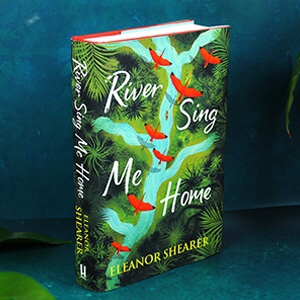
River Sing Me Home by Eleanor Shearer

This incredible debut novel grabbed hold of my mind and heart, never letting go until the final paragraph. I shed tears at several points in Rachel’s journey and she’s a character I won’t forget. We meet her working on a plantation in Barbados, at that strange point after slavery when plantations were instructed to free slaves, but their sense of freedom was short-lived as masters were able to keep slaves for a further six years as apprentices. So, despite being freed the day afterwards started just the same, at the crack of dawn and walking to the cane fields for a day of back breaking work. Having nothing meant that most had no other choice. Rachel is thinking of her children, several lost before they had a chance to live but others scattered to the four winds. Her boys Micah and Thomas Augustus and her girls Cherry Jane, Mary Grace and Mercy all taken from her in different ways. Only Cherry Jane spends a few years nearby as a house slave, but in her superior position she doesn’t acknowledge Rachel who is merely a field hand. One day she decides that she must find her children, she must know where they are and what happened to them, even if the news is that devastating final loss. Rachel says that as a slave she plants cane but nothing of her own. However her children came about, Rachel feels that they anchor her in this world and she can’t rest until she finds them. So she runs and with our hearts pounding we follow her.

As Rachel took her journey I kept thinking about my own mum. She always feels at her happiest when we’re all under her roof, all four generations. She told me that she feels like we’re all safe and there’s a feeling of completeness. I am not a mother, so until recently I hadn’t experienced anything like this, but now I am a step-mum and I do get a sense of relief when both my stepdaughters are here under my roof. There’s a feeling that I could close the curtains and we’d all be safe. I couldn’t imagine how it must feel to have those children stripped from you as commodities to be sold. As I finished reading the book on Holocaust Memorial Day, my mind was also taken to an account by a survivor on TikTok where she described her family being split apart into separate queues as they reached Auschwitz. She was placed in one queue bound for a factory sewing uniforms, but her mother and sister were deemed unsuitable for work and in the chaos was the final moment she saw them. It’s a similar atrocity, so huge that it’s hard to imagine or compute. A whole race of people are deemed as expendable and discarded with no more regard than swatting a fly. In amongst some powerful and distressing scenes in the book, one thing that hit me really hard was Rachel’s realisation that her emotions didn’t matter. As a younger woman she had held herself proudly and resolutely, determined that the actions of the overseer wouldn’t make her cry. As an older woman she realises that she could have owned her grief, it wouldn’t have satisfied or pleased the overseer to see her distress because she simply didn’t matter to him.
Rachel’s journey is a long one, across Barbados and over to Trinidad, and we experience every moment with her. The author provides vivid descriptions of each place Rachel experiences down to the way the earth feels under her feet. Cities give her a certain anonymity, but it’s in nature that I really felt Rachel’s freedom. The author layers sounds of birds, running water and wind through the trees with the feel of leaves or water against the skin. The water of the rivers are welcoming and help her journey: kayaking up the Demerara to look for runaway communities in the forest and Thomas Augustus; rushing down river holding an uprooted tree to avoid capture; feeling cocooned and supported by the water in a bathing pool. The runaway community are made up of escaped slaves and indigenous tribesmen who have survived the colonisation of their island and the forest both hides them and supports them. There is a sense of abundance in the food, the company and the mix of cultures that comes out in musical form. The ancient songs of Rachel’s African heritage come alive for her when mixed with slave songs and the music of the indigenous tribes represented. It seems fitting that it is in the forest that a marriage takes place and a baby is born – these are the building blocks of the future and that future is truly free.

I found some of the characters Rachel comes across on her travels fascinating and they add something to the tale by bringing their own experience, adjustment and acceptance of their situation. Nobody has adopted the very part of his identity forged by the slave experience, the sense that he is no one and belongs nowhere. Despite the negative connotations of the name, being nobody allows him to take his power back, to be anonymous, to escape unseen and leave a mark nowhere. He has been transitory ever since he started running, living a transitory life on the ships that travel between the islands, perhaps feeling more at home in the water than on the land he was enslaved by. I wondered whether Rachel’s quest would make a mark on him and if he would find a true home, whether that be a place or a person. I was also intrigued by Hope, whose very name embodies looking forward. She has found her place in Bridgetown by entertaining paying gentlemen. She is beautiful, impeccably dressed and seems to have found a independent way of living she’s at peace with. While some people don’t want to be seen with her, Rachel is not so judgmental. After all, Rachel tells us, men have been inside her but there she was the one who paid the price. The threat of sexual violence is alluded to but never explicit. Rachel won’t discuss or ask another woman how her children have come into being, because she knows the pain of a pregnancy where you pray the child you carry has no resemblance to it’s father. Equally she knows what it’s like to dread the birth of a child who might bear a resemblance to a man greatly loved and lost forever. We don’t know about the conception of any of Rachel’s children. Her ‘pickney’, as she calls them, are hers and hers alone and it is this that makes it imperative that she finds them. She needs to find them, in order to feel whole.
The whole journey is littered with joys and terrible grief, but Rachel knows she must keep going. She meets others who have started to build a new life, placing the past firmly behind them and never pining for it. They live firmly in the here and now with questions left unanswered and people left behind. For Rachel that isn’t enough. Her children are like the scattered pieces of a broken vase. She doesn’t expect her family to be perfect and knows that there will be cracks and missing pieces. Rachel is putting her broken vase back together and she will pour a substance into the cracks, bringing the pieces together until her past is whole again. The binding substance used in Japanese Kintsugi pottery is usually gold, each crack making the piece more beautiful. In Rachel’s case the binding substance is love. Love for those here, those found but far away and those gone forever. An all encompassing love symbolised by the birth of a baby in the forest.

There was a ‘feeling of complete, absorbing, unqualified love. The baby was a stranger, without speech, unknowable. It would be years before he could say what was on his mind. And yet, love did not wait. Love was there in the beginning – even before the beginning. Love needed no words, no introduction. Existence was enough.’

Published on 19th Jan by Headline Review

Meet The Author

Eleanor Shearer is a mixed race writer from the UK. She splits her time between London and Ramsgate on the coast of Kent, so that she never has to go too long without seeing the sea.

As the granddaughter of Caribbean immigrants who came to the UK as part of the Windrush Generation, Eleanor has always been drawn to Caribbean history. Her first novel, RIVER SING ME HOME (Headline, UK & Berkley, USA) is inspired by the true stories of the brave woman who went looking for their stolen children after the abolition of slavery in 1834. 

The novel draws on her time spent in the Caribbean, visiting family in St Lucia and Barbados. It was also informed by her Master’s degree in Politics, where she focused on how slavery is remembered on the islands today. She travelled to the Caribbean and interviewed activists, historians and family members, and their reflections on what it really means to be free made her more determined than ever to bring the hidden stories of slavery to light.
Posted in Sunday Spotlight

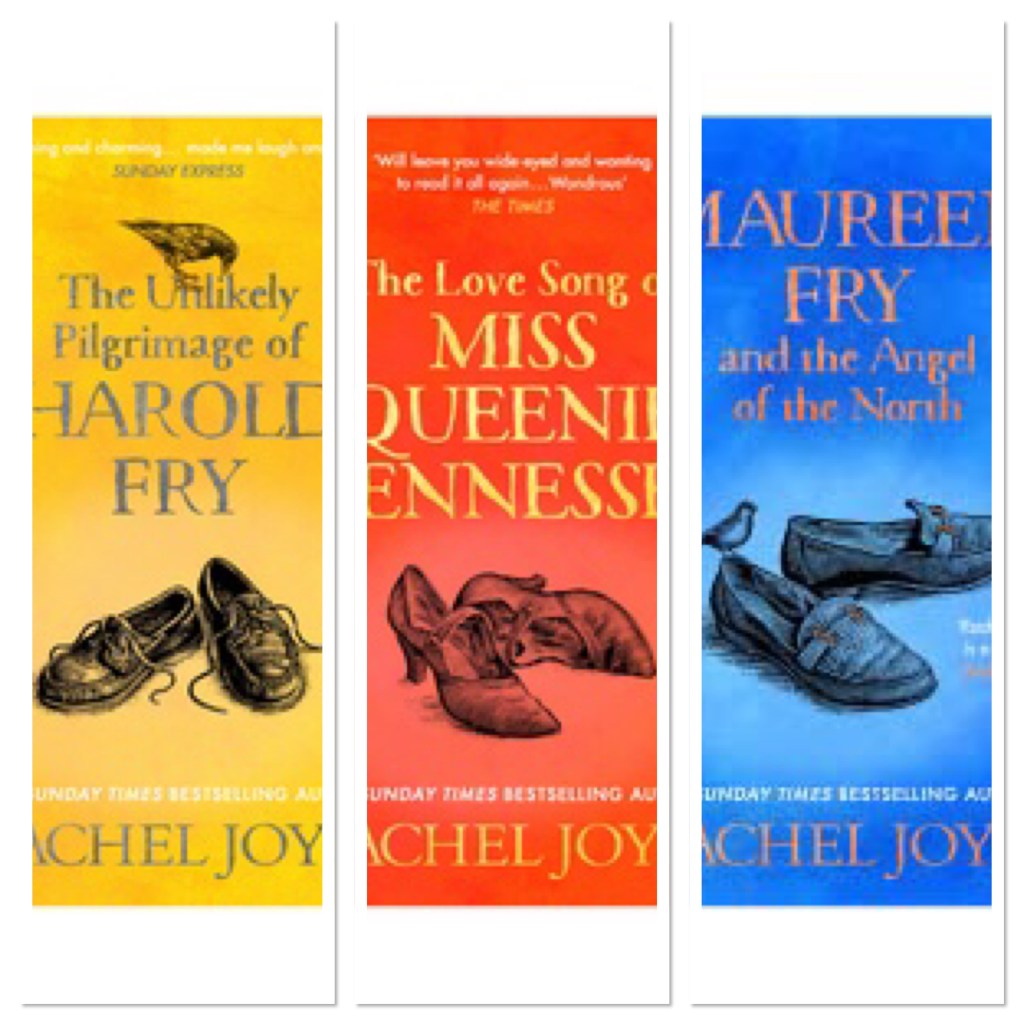
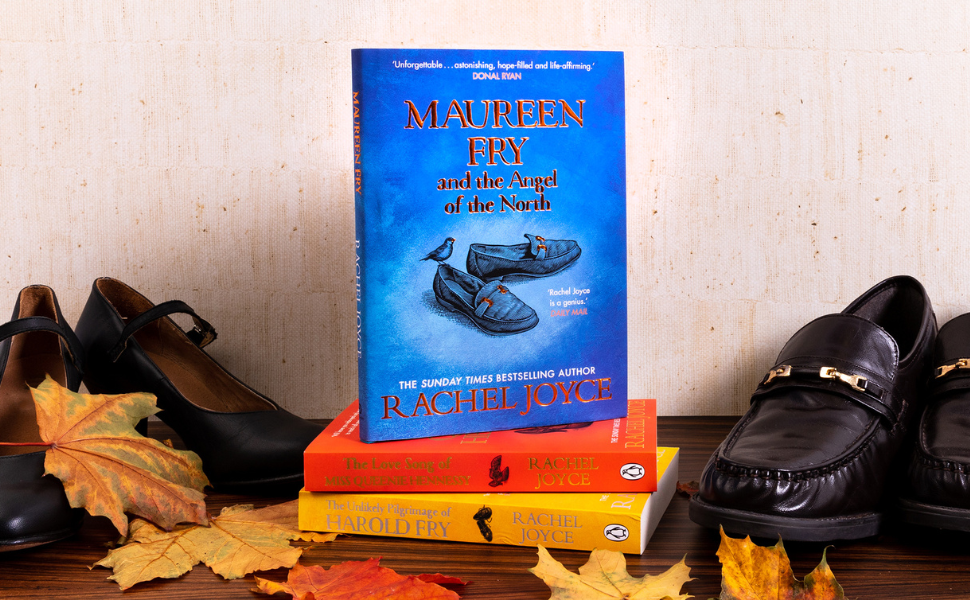
Sunday Spotlight! The Harold Fry Series by Rachel Joyce.

It has been my honour to meet this incredible writer and lovely lady on more than one occasion. The one that really stays with me is her visit to Lindum Books in Lincoln, at a time when caring responsibilities really cut into my ability to have a normal life. Having waited some time for a late carer to arrive I telephoned the book shop to enquire whether Rachel was still there. I was told she would be leaving in a few moments, so I explained what had happened and said I’d rush to get there. When I arrived, she was sat holding her coat and bag, clearly ready to leave, but she had waited for me to arrive because she didn’t want me to miss out. She signed my book and my friend’s book too, chatted about her writing and never showed impatience or a need to rush. I absolutely treasured that thirty minutes, because it showed such kindness and respect for her reader, but also because it was something I managed to do that was just about me. It was about me as a person and something I loved, nothing to do with my caring role. When meeting the NHS or social services about my husband and his care, I often felt overlooked and under appreciated by the powers that be and my personal needs didn’t matter. I often felt that I had lost myself and the things I enjoyed, so this moment mattered and showed an understanding that can be seen in her writing of this trilogy. The latest, Maureen Fry and the Angel of the North, was published late last year and it seems a perfect time to look back on these characters.

The first in the series, The Unlikely Pilgrimage of Harold Fry came out in paperback in 2013. Harold Fry is a retired gentleman living quietly with his wife Maureen. One morning he pops out to post a letter, with no idea he is about to walk the length of the country. If it had entered his head he might have left with better clothing and something more robust than canvas shoes. We know nothing about Harold when he starts his journey, an idea that pops into his brain during a conversation at a petrol station in the time it takes for the microwave to heat a burger. Rachel trusts her reader and her story, she knows the reader will want to read on, to know more about this man and what has happened in his life to create his need to walk. We begin to understand that what looks to outsiders like a ‘little life’ hides a torrent of emotion and experiences, because as Harold walks and runs he processes his life choices and the feelings that have been building up under the surface. We see his memories of meeting Maureen, set against her current, curtained off, attitude to Harold and to life. His difficult relationship with his son David. The closest friend he has ever had. All of this beautiful, painful and un-examined emotion comes out as Harold walks and his canvas shoes fray. We also get to enjoy his outer world, the people he meets and the kindnesses afforded to him on his journey. We gradually get the context of the letter Harold was replying to, a letter from that closest friend, Queenie Hennessy. Queenie was there for Harold when he most needed someone, but twenty years have passed and she is in a hospice in Berwick-Upon- Tweed in her final weeks. So, Harold’s pilgrimage is towards Queenie. He thinks that as long as he keeps walking and running, Queenie will wait for him.

Rachel is telling us to look beyond the surface for the context of things, starting with the assumption that Maureen and Harold are a settled old married couple with little more going on than their housework routine and fetching the paper every morning. Both are people, with a lifetime’s worth of events, emotions, gains and losses, just like you or me. Elderly people don’t cease to have ups and downs and their marriage, once we know what they have faced, is miraculously intact but still needs tending. I was desperately hoping that Harold’s pilgrimage and some time with Queenie might restore their connection in some way and bring Maureen from behind her barricades. That the further apart they become on the map, the closer they can become emotionally. We are taken through a changing landscape too, noticing nature and seasonal change as well as the sheer beauty of the country we live in without being twee or whimsical. Harold’s journey is a reminder that we can get up and change things, we can renew our relationships with others and ourselves and we can find meaning between the lines. Rachel Joyce reminds us that, if we choose to look, there is always something extraordinary in the every day.

For even more context, Rachel then takes us into the life of Queenie Hennessy – moving her from the sidelines as part of Harold’s story, to the centre of her own intersecting narrative. The Love Song of Miss Queenie Hennessy is my favourite in the series, because it shows how someone can seem to have such a small part in your life, while you can be at the absolute centre of theirs. I also love how Queenie’s story unfolds, as she learns that Harold is making his way up the country on foot towards her, she doesn’t know whether she can hang on for him to arrive. When she confides in one of the hospice volunteers, she comes up with a brilliant suggestion and one that makes so much sense from this writing therapist’s perspective. To alleviate her anxiety and be sure that Harold knows the whole story, the volunteer suggests she writes to him. Not like the first letter, these letters should be honest and atone for the past in a way she hasn’t done for twenty years. So, from her hospice bed, Queenie makes a journey into the past with Sister Mary Inconnue at the keyboard. She admits to her love for Harold, a love given freely and without reward for decades. She tells him of her friendship with his son David and how she tried to help him. She tells him about her cottage and the beloved garden she has created by the sea and its meaning to her and those who visit. Again, the author takes us into an experience we could see as depressing and final, but is actually a beginning that’s both vital and life affirming. Harold’s impending visit and her letter rich with memories and context that may help both Harold and Maureen, allow Queenie to live while dying and create even more meaning to her life.

The final part of this trilogy seems like such a slight novel, when it arrived from the publisher I thought I’d been sent an extract rather than the full book. However, it packs a hefty emotional punch and brought a lump to my throat as we explored Maureen Fry’s inner world and her need for healing as a mother. In Maureen Fry and the Angel of the North, it is time for Maureen to take her own pilgrimage, ten years after her husband’s famous 600 mile journey. Again it’s a letter that sparks the change, a postcard from Kate who helped Harold on his journey telling them about Queenie’s garden which has become the Garden of Relics in Embleton Bay, Northumberland. Kate said there was a monument there that Queenie had built for their son David and this niggled away at Maureen as the months passed. Lots of questions and emotions started to buzz around her head: why had Queenie built this monument? Who gave her the right to do that? Why hadn’t Harold known about the friendship between Queenie and David? When she looked up the garden on the internet, Maureen found lots of people who had visited and enjoyed it enough to comment. Why had they seen this monument to David when she hadn’t? She felt angry and displaced somehow. After a terrible nightmare, where she found David lost and alone in the earth, Harold suggests that perhaps Maureen needs to see this garden for herself? She could see Kate and visit with her. Maureen knows that Harold cares about Kate and that she was kind to him on his journey. She’s some sort of activist and Maureen can’t imagine what she would say to someone like that. They wouldn’t get along.

When Maureen resolves to drive up to Northumberland and see the garden, she prepares for her journey in complete contrast to Harold. It shows the differences in their character and as she packs her sandwiches and her thermos flask I realised that Maureen believes everything can be prepared for and organised. This is why those unexpected side swipes that life deals out from time to time have affected her so badly. She tries to work them out, questions what she could have done differently and potentially blames herself. She learns very quickly, as roadworks take her off the A38 and she’s completely lost, that you can’t prepare for everything and sometimes you have to rely on the kindness of strangers. A lesson that’s repeated until Maureen simply has to give in and be wholly dependent on someone else, perhaps the last person she expected. These experiences open her up to the world in a way she hasn’t before. I won’t reveal what Maureen finds in the garden, but I felt it could be taken two different ways. Before her journey there was a void at her centre that she believed could never be filled and she held it close as a symbol of all she had lost. My hope was that after the journey that void would be become an opening, creating room for all the people she could let in. That’s the thing with Rachel Joyce’s writing, it may seem whimsical, charming and light, but it isn’t. While it might not be dramatic, it deals with the biggest themes in life; growing old, love, identity, birth, death, friendship and personal growth. To borrow that phrase again from Shirley Valentine, these are not ordinary ‘little lives’, they are extraordinary.

Meet The Author


Rachel Joyce is the author of the Sunday Times and international bestsellers The Unlikely Pilgrimage of Harold Fry, Perfect, The Love Song of Miss Queenie Hennessy, The Music Shop, and the New York Times bestseller Miss Benson’s Beetle, as well as a collection of interlinked short stories, A Snow Garden & Other Stories. Her books have sold over 5 million copies worldwide, and been translated into thirty-six languages. Two are currently in development for film.

The Unlikely Pilgrimage of Harold Fry was shortlisted for the Commonwealth Book prize and longlisted for the Man Booker Prize. Rachel was awarded the Specsavers National Book Awards ‘New Writer of the Year’ in December 2012 and shortlisted for the ‘UK Author of the Year’ 2014.

Rachel has also written over twenty original afternoon plays and adaptations of the classics for BBC Radio 4, including all the Bronte novels. She lives with her family near Stroud.

You can follow Rachel on Instagram at rachelcjoyce, and find out more news at https://www.rachel-joyce.co.uk

Posted in Squad Pod

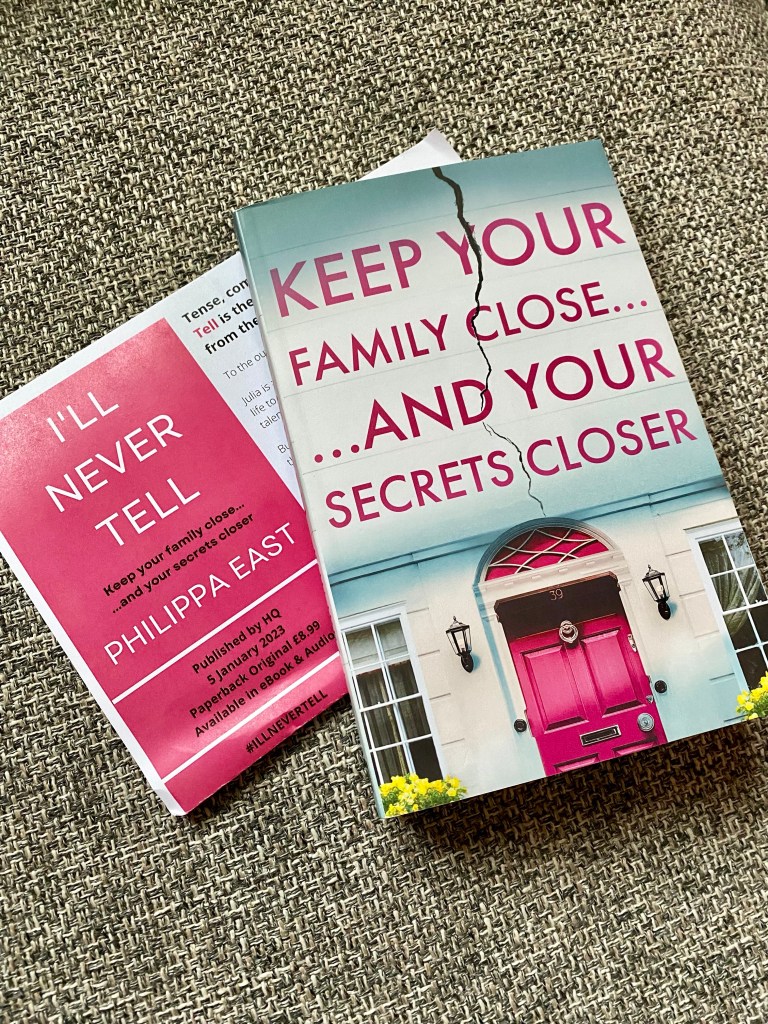
I’ll Never Tell by Philippa East

Keep your family close and your secrets closer….

To the outside world, the Goodlights are perfect.

Julia is a lawyer, Paul a stay-at-home dad who has dedicated his life to helping their daughter Chrissie achieve her dreams as a talented violinist. But on the night of a prestigious music competition, which has the power to change everything for Chrissie and her family, Chrissie goes missing. She puts on the performance of a lifetime, then completely disappears. Suddenly every single crack, every single secret that the family is hiding risks being exposed.

Because the Goodlights aren’t perfect. Not even close.

Wow this book is tense! Tense enough to give you a migraine. East has a way of writing that flows so well, but is paced to give a really slow drip drip of information. It’s clear from just the day to day activities of the Goodlights that something is ‘off’ and my brain was skittering all over the place to work it out, rather like Bambi on the ice. The author pulls off a clever trick, by letting the Goodlights speak for themselves. She’s not explicit, but their inner talk and actions allow the evidence to pile up; something is badly wrong here, but the author withholds just enough that we don’t know what is that is. As I read on, my brain was coming up with more and more questions. What’s with Julia’s parents and their strange attitude towards women’s behaviour? Why is Paul so obsessed with his stepdaughter’s career and so rigid with her regime? Is it the result of a thwarted desire in his own life and will Chrissie snap under the pressure? What’s with the strange background conversations between Julia’s mother and Paul? I’m not surprised at all when Chrissie goes missing, the only surprise is that she didn’t go sooner.

I found Paul’s attitude with Chrissie really disturbing. I understand wanting the best for your child, but this is creepy. Not only does he control her potential career and keep her practicing, he looks after her diet, her free time and leaves her with no privacy – even policing her phone, from quickly checking the screen when a notification comes in, to demanding to look through all her messages and emails. Does he have her on such a short lease to prevent something happening, or is he reacting to something that’s happened before? There’s a strange dynamic between Chrissie’s grandmother and Paul. I was disturbed by her attitude towards her daughter and granddaughter with her suggestion that certain behaviours are in the blood and there’s something tainted in their DNA. It’s almost as if they appreciate Paul more than their own flesh and blood. At times Celina speaks to him as if he’s a member of staff. There are pictures hidden in Julia’s childhood bedroom of a time at university when she appears free and perhaps part of a hippy group, implying experimentation with drugs and promiscuity. Celina is concerned that her ‘tainted blood’ has passed to Chrissie and tells Paul ‘I can smell it on her’ giving an unpleasant image of an animal in heat. Was she the instigator of the rigid regime Paul imposed on his stepdaughter or was she merely the gatekeeper? Patriarchies often depend on women to uphold their rules. I felt uncomfortable all the way through this novel, but in retrospect I think this was down to my own experience in an abusive relationship. There’s now something in me that is repulsed by males like Paul exerting power over the women in their family, exerting coercive control and gaslighting those they are supposed to love most. This tells me that the author’s depiction is successful, or it wouldn’t have made me feel this way.

Throughout the novel my brain was drifting back to Jane Eyre and Jean Rhys’s response Wide Sargasso Sea and the anti-heroine Bertha Mason. Bertha (whose name is actually Antoinette) is Mr Rochester’s first wife, doomed to a life locked in an attic, because of her unnatural passions and hereditary madness. She works as a contrast to the still and quiet Jane, who was constantly told to rein in her passionate nature when she was a child. Bertha’s fate could have been Jane’s. However, in her book Wide Sargasso Sea, Jean Rhys gives Bertha a back story where Rochester marries then rejects the wife who was too passionate in the bedroom and enjoyed his advances – the inference being that a wife should meekly accept sexual advances, but not relish them. I felt throughout East’s novel, that a similar misogynistic double standard is at play. When we delve into Julia’s inner world we can see how insidious emotional abuse is, because these ideas are running through her head constantly. She doubts her own instincts and worries that Chrissie’s disappearance is a consequence of her failure to ‘behave’ in the way she’s been taught. Paul and Julia don’t fully communicate either, operating in completely different spheres with him at home and her at work. Law is such a demanding career and Julia works constantly, almost like it’s a penance, rarely interacting with Paul or Chrissie and never involved in her daughter’s strict regime. It’s almost as if she’s abdicated all responsibility for her to Paul, but is that choice or a mistaken belief that he’ll do a better job than her? There’s also the shadowy figure of Francis, someone she doesn’t want near her family and seems to fear. This really is a toxic mix, a family who seem shielded from scrutiny by their money and once you delve beyond appearances, are a million miles away from the ordinary. Will Chrissie be found and is her disappearance down to a malign outside influence as they all suspect? Whatever has happened to Chrissie, you’ll not stop reading till you work out what is so deeply wrong at the heart of this family?

Published on 12th January by HQ

Thanks to HQ and the Squad Pod Collective for my proof copy.

Posted in Netgalley

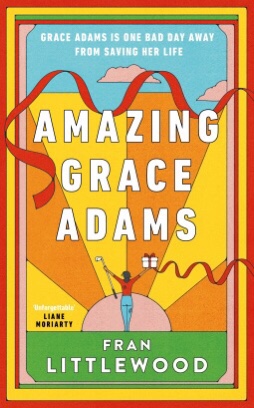
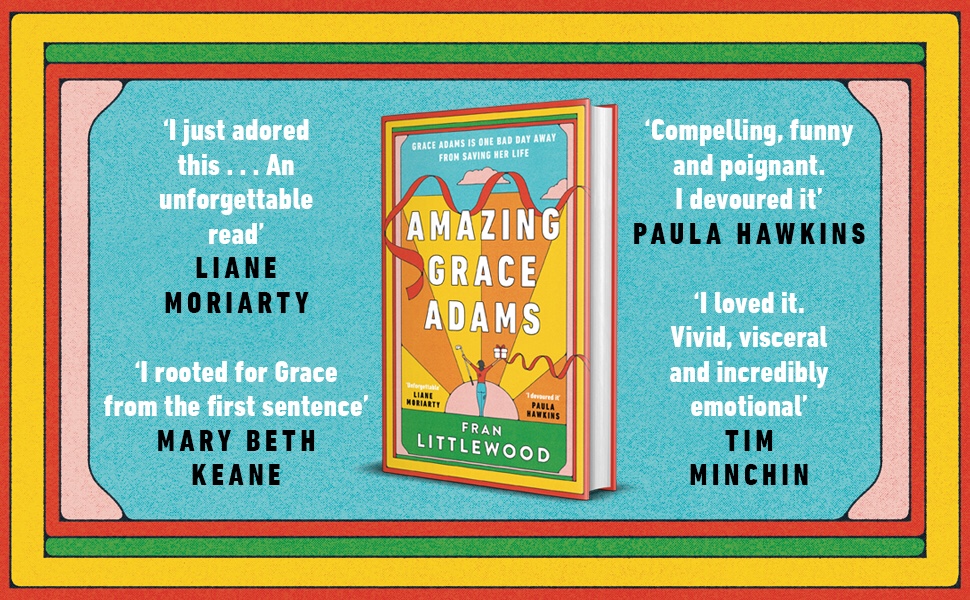
The Amazing Grace Adams by Fran Littlewood

It’s possibly way too early to start picking candidates for favourite books of 2023 – I’m still deliberating over 2022 – but I think this book is certainly going to be in contention. Grace is one of those characters that you fantasise about having cocktails with and you already know you’d have the best time. Grace is stuck in traffic, it’s a boiling hot day and she’s melting. All she wants to do is get to the bakery and pick up the cake for her daughter’s birthday. This is one hell of a birthday cake, not only is it a Love Island cake; it has to say that Grace cares, that she’s sorry, that will show Lotte she loves her and hasn’t given up on their relationship. It’s shaping up to be the day from hell and as Grace sits in a tin can on boiling hot tarmac, something snaps. She decides to get out of the car and walk, leaving her vehicle stranded and pissing off everyone now blocked by a car parked in the middle of a busy road. So, despite the fact her trainers aren’t broken in, she sets off walking towards the bakery and a reunion with Lotte. There are just a few obstacles in the way, but Grace can see the cake and Lotte’s face when she opens the box. As she walks she recounts everything that has happened to bring her to where she is now.

When we first meet Grace she’s living alone, estranged from husband Ben and even from her teenage daughter Lotte. She’s peri-menopausal, wearing trainers her daughter thinks she shouldn’t be wearing at her age and she’s had enough. There’s that sense of the Michael Douglas film Falling Down except when the meltdown comes all she has is a water pistol filled with river water, an embarrassingly tiny Love Island cake and a blister on her heel. Then in flashbacks we can follow Grace all the way back to the start, to when she and Ben met at a competition for polyglots. We also get Ben’s point of view here too, so we see her through his eyes and fall in love with her too. He describes her as looking like Julianne Moore, her hair in a messy up do with the odd pencils tucked in. She suggests that, should she win the prize of a luxury hotel break in Cornwall, they should go together. It’s a crazy suggestion, but deep down, he really wants to go with this incredible woman. Once there, the first thing she does is dive into the sea to save a drowning woman. Ben has never met anyone so free and fearless. Yet on their return four months pass before Grace tracks him down and they meet at the Russian Tea Room. There Grace tells him that he’s going to be a father, he doesn’t have to be in, but can they come to an agreement? Of course Ben is in, he was never out. There love story is touching and yet honest at the same time, it’s not all schmaltzy romance – for example after coming together in Cornwall, Grace’s bed is full of sand. It’s so sad to contrast these early months with the distance between them now, what could possibly have brought them to this place.

I eagerly read about Grace and Lotte’s relationship because I’m a stepmum to a 13 and 17 year old girl. I thought this was beautifully observed, with all the ups and downs of two women at either end of a battle with their hormones. There’s that underlying sadness, a sort of grief for the child who called out for her Mum, who let Mum play Sutherland her hair and would lie in an entwined heap on the sofa watching films. Grace aches to touch her daughter in the same way she did when she was a toddler, but now Lotte watches TV in her bedroom and shrugs off cuddles and intimacy of the physical or emotional life. Pulling away is the normal process of growing up and reminds me of the ABBA song ‘Slipping Through My Fingers’. In the film Mamma Mia, Meryl Streep plays Donna as she helps her daughter get ready for her wedding. In the cinema with my Mum I could see she was emotional and now with my own stepdaughters I can understand it. I just get used to them being a certain age and they’ve grown, with one going to university next year I’m going to be so proud of her, but I’m going to miss her terribly. There’s also a terrible fear, as Grace sees her daughter’s behaviour at school deteriorate and her truant days start to add up, she’s desperate to find out what’s wrong, but Lotte won’t talk. She’s torn between Lotte’s privacy and the need to find the problem and help her daughter, but some mistakes have to be made in order to learn. Grace might have to sit by and watch this mistake unfold and simply be there when it goes wrong. No doubt, she thinks, Grace is involved with a boy and it will pass, but the reality is so much worse.

The truth when it comes is devastating, but feels weirdly like something you’ve known all along. Those interspersed chapters from happier times are a countdown to this moment, a before and after that runs like a fault line through everything that’s happened since. As Grace closes in on Lotte’s party, sweaty, dirty and brandishing her tiny squashed cake, it doesn’t seem enough to overturn everything that’s happened, but of course it isn’t about the cake. This is about everything Grace has done to be here, including the illegal bits. In a day that’s highlighted to Grace how much she has changed, physically and emotionally, her determination to get to Lotte has shown those who love her best that she is still the same kick-ass woman who threw caution to the wind and waded into the sea to save a man she didn’t know from drowning. That tiny glimpse of how amazing Grace Adams is, might just save everything.

Published by Michael Joseph 19th Jan 2023.

Posted in Netgalley

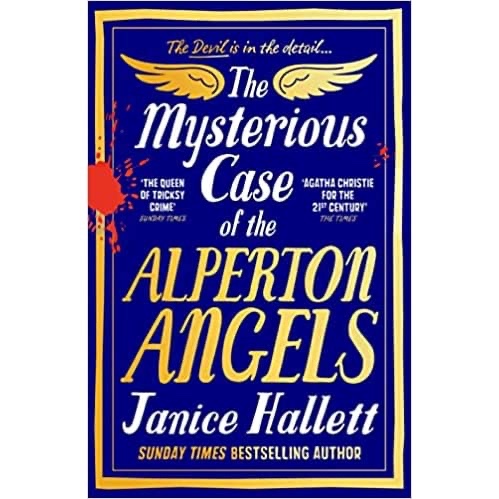
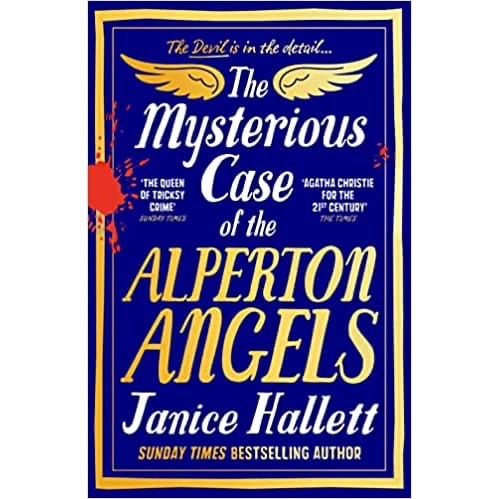
The Mysterious Case of the Alperton Angels by Janice Hallett

I’m going to start with a bold statement. This is my favourite Janice Hallett novel so far. I’ve been lucky enough to finish my blog tours very early this year, so I now have free reading time until January. That doesn’t mean I don’t have a bulging TBR though. My shelves are groaning with books I’ve purchased and physical proofs that I’m behind on. Similarly, my Netgalley shelves are embarrassing! So I still have things to read, its just I can read them in the order and at the speed I want. I’ve also had my usual autumnal multiple sclerosis relapse ( one at the spring equinox and one in the autumn like clockwork) so I’m rarely able to go out and I’m sat resting for long periods. So thanks to that combination of circumstances I was able to pick this up on Friday and I finished it within twenty-four hours. I was enthralled, addicted and so desperate to find out what actually did happen on the night when the police found a strange cult massacre in a deserted warehouse.

Open the safe deposit box. Inside you will find research material for a true crime book. You must read the documents, then make a decision. Will you destroy them? Or will you take them to the police? Everyone knows the sad story of the Alperton Angels: the cult who brainwashed a teenage girl and convinced her that her newborn baby was the anti-Christ. Believing they had a divine mission to kill the infant, they were only stopped when the girl came to her senses and called the police. The Angels committed suicide rather than stand trial, while mother and baby disappeared into the care system. Nearly two decades later, true-crime author Amanda Bailey is writing a book on the Angels. The Alperton baby has turned eighteen and can finally be interviewed; if Amanda can find them, it will be the true-crime scoop of the year, and will save her flagging career. But rival author Oliver Menzies is just as smart, better connected, and is also on the baby’s trail. As Amanda and Oliver are forced to collaborate, they realise that what everyone thinks they know about the Angels is wrong. The truth is something much darker and stranger than they’d ever imagined. And the story of the Alperton Angels is far from over.. After all, the devil is in the detail…

This author is an absolute master of this genre, adept at throwing all the pieces of a puzzle at you, in an order that will intrigue and tempt you to solve it. Eventually I always feel like I’m holding the equivalent of those giant boards used by TV detectives and CSIs to record all the facts of a case, but mine is in my head. We are then fed these snippets of information by different narrators, who we’re not always sure about and might be there to mislead us. In this case, our main narrator is writer Amanda Bailey and we are privy to all her communications: letter, emails, WhatsApp conversations and recorded conversations or interviews. Her transcripts from interviews are typed up by assistant Elly Carter – who brilliantly puts her own little asides and thoughts into the transcript. Amanda seems okay at first, but there are tiny clues placed here and there that made me doubt her. As she starts research for her book on the so-called Alperton Angels, she finds out that a fellow student from a graduate journalist’s course many years before, is working on a similar book for a different publisher. Maybe she and Oliver should collaborate, suggests the publisher, share information but present it from a different angle. Over time, through their WhatsApp communications, we realise that Oliver is far more susceptible to paranormal activity. In fact he seems to be a ‘sensitive’, often feeling unwell in certain locations or with people who have dabbled in the occult or in deeply religious beliefs.

I spent a large part of my childhood in a deeply evangelical church, a sudden switch from the Catholic upbringing I’d had so far. Even though I’d been at Catholic School, had instruction with the nuns at the local convent and went on Catholic summer camps, I never felt like an overwhelming or restrictive part of life. It felt almost more of a cultural thing than a religious thing, and no matter what I was being taught to the contrary I would always be a Catholic. Many people would dispute that evangelical Christianity is a cult, but my experience with it did flag up some of the warning signs of these damaging organisations. We were taught to avoid friendships or relationships with people not from the church, even family. Our entire social life had to be within church circles, whether that be the Sunday double services with Sunday School inbetween, or mid-week house groups, weekly prayer meetings, women’s groups and youth club on Friday nights. If you attended everything the church did, there wasn’t a lot of time for anything else. I was told what music I could listen to, the books I could read and suddenly my parents were vetting all my programs for pre-marital sex and banning them. They even burned some of their own music and books because they were deemed unsuitable or were ‘false idols’. I worked out at the age of twelve that something was very wrong with this way of life, but the hold of a group like this is insidious and it has had it’s long-term effects. Talking about angels and demons fighting for our souls and appearing on earth was quite normal for me, although it sounds insane now. So, the premise of Gabriel’s story and his hypnotic hold over his followers felt very real too. I was fascinated to see whether something divine was at work or whether Holly. Jonah and the baby were caught up in something that was less divine and more earthly, set in motion by the greed of men.

It’s hard to review something where I don’t want to let slip any signal or clue, so I won’t comment on the storyline. It’s drip fed to you in the different communications and I loved how we were presented with other people’s opinions and thoughts on the discoveries being made. Who to trust and who to ignore wasn’t always clear and the red herrings, including the involvement of the Royal Family, were incredible. I felt that Amanda had an agenda, that possibly had nothing to do with the story at hand and was more about a personal grudge. Janice Hallet’s research is impeccable and here she has to cover the early 1990’s and 2003, as well as the workings of the police, special forces and the social services – some of which is less than flattering and even corrupt. The e-copy I had from NetGalley was a little bitty in it’s format and I can’t wait to read my real copy when it arrives and see if there’s anything I’ve missed. It wouldn’t be surprising considering the detail and different versions of events the author includes. I found delving into the True Crime genre fascinating considering how popular it is these days, something I’m personally very conflicted about. This has all the aspects of a sensational True Crime investigation with a more nuanced perspective from other characters to balance things out. I was gripped to the end and the end didn’t disappoint.

Published by Viper 19th Jan 2023.

Janice Hallett is a former magazine editor, award-winning journalist and government communications writer. She wrote articles and speeches for, among others, the Cabinet Office, Home Office and Department for International Development. Her enthusiasm for travel has taken her around the world several times, from Madagascar to the Galapagos, Guatemala to Zimbabwe, Japan, Russia and South Korea. A playwright and screenwriter, she penned the feminist Shakespearean stage comedy NetherBard and co-wrote the feature film Retreat, a psychological thriller starring Cillian Murphy, Thandiwe Newton and Jamie Bell. The Appeal is her first novel, and The Twyford Code her second. The Mysterious Case of the Alperton Angels is out in January 2023.

Posted in Netgalley

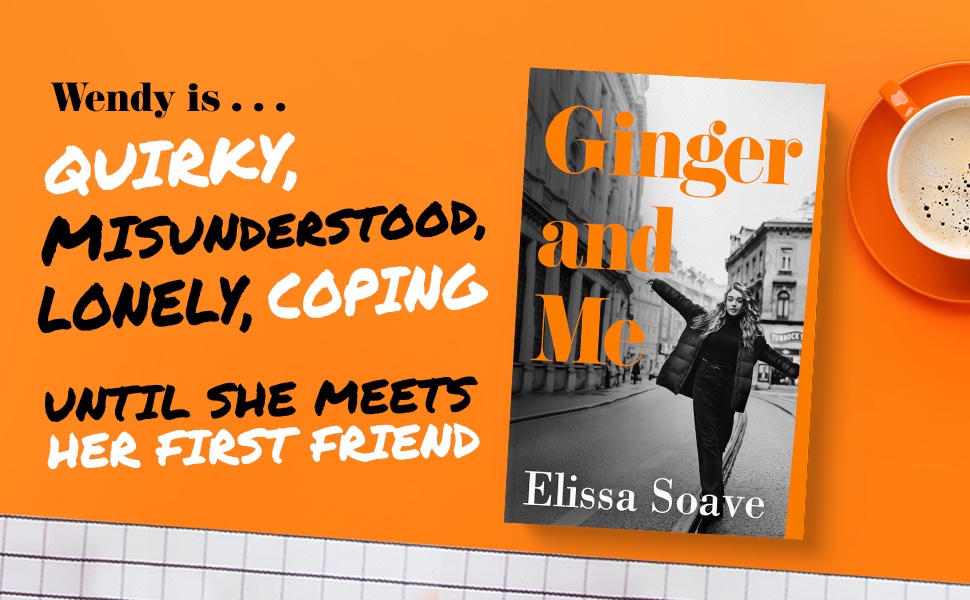
Ginger and Me by Elissa Soave.

Wendy is lonely but coping. All nineteen-year-old Wendy wants is to drive the 255 bus around Uddingston with her regulars on board, remember to buy milk when it runs out and just to be okay. After her mum died, there’s nobody to remind her to eat and what to do each day. And Wendy is ready to step out of her comfort zone. Each week she shows her social worker the progress she’s made, like the coasters she bought to spruce up the place, even if she forgets to make tea. And she even joins a writers’ group to share the stories she writes, like the one about a bullied boy who goes to Mars.

But everything changes when Wendy meets Ginger.
A teenager with flaming orange hair, Ginger’s so brave she’s wearing a coat that isn’t even waterproof. For the first time, Wendy has a real best friend. But as they begin the summer of their lives, Wendy wonders if things were simpler before. And that’s before she realizes just how much trouble Ginger is about to get them in…

I’ve worked for 25 years in mental health and one thing I’ve learned is that there are almost always reasons people behave the way they do, but also that there is no such thing as a ‘normal’ life. I love books that relate the extraordinary lives of ordinary people and Wendy certainly lives a simple life. She’s happy driving the 255 bus through Uddingston, reading books and having a good go at writing her own. Concerned that her social worker thinks she’s stagnating a little, since the death of her mother, Wendy makes a decision to reach out. She joins a writing group to build her confidence and starts to make friends with some of her passengers, but then Ginger comes along. Ginger is going to push Wendy completely out of her comfort zone.

This is a great novel that shows how mental health issues can creep up on young girls and when they’re as alone as Wendy is, there’s no one to notice things going wrong. Life is hard for her, because she feels like she doesn’t fit anywhere. She can see that society has rules, but she doesn’t understand them and her ignorance of the rules means she’s socially awkward. Instead of upsetting others, it sometimes seems easier to withdraw altogether. There is a sense in which Wendy’s being failed by the system, plus the double bereavement of losing her mum and dad has left her especially vulnerable. Being stepmum to two teenage girls I know only too well how problems can suddenly escalate and be made worse by social media. This is a gritty story and I knew very early on that something bad has happened to Wendy, so I did have a certain amount of suspicion most of the time. It felt to me like Wendy was heading down a dark road, but the addition of the rather wild Ginger seems to accelerate the downfall. I felt immediately protective of this girl, because it felt like she was out in the world with a layer of skin missing. I wanted to give her a big hug and have a heart to heart over a mug of tea. I found myself thinking about her long after the book finished, so bravo to the author for creating such an incredible character in her debut novel.

Posted in Netgalley

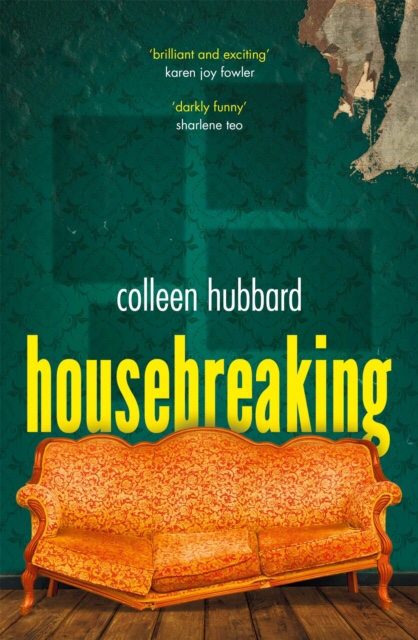
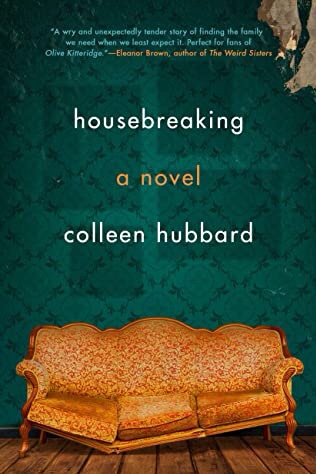
Housebreaking by Colleen Hubbard

Following a long-standing feud and looking to settle the score, a woman decides to dismantle her home – alone and by hand – and move it across a frozen pond during a harsh New England winter in this mesmerizing debut. Home is certainly not where Del’s heart is. After a local scandal led to her parents’ divorce and the rest of her family turned their backs on her, Del left her small town and cut off contact. Now, with both of her parents gone, a chance has arrived for Del to retaliate.

Her uncle wants the one thing Del inherited: the family home. Instead of handing the place over, and with no other resources at her disposal, Del decides she will tear the place apart herself – piece by piece. But Del will soon discover, the task stirs up more than just old memories as relatives-each in their own state of unravelling – come knocking on her door.

This spare, strange, magical book is a story not only about the powerlessness and hurt that run through a family but also about the moments when brokenness can offer us the rare chance to start again.

I spent much of yesterday afternoon in the attic searching for Christmas decorations and our tree, but inevitably raving through boxes unearthed an awful lot of history. As usual I found myself poring over my old high school yearbook, reminiscing on other lives such as the time I spent in Milton Keynes with my late husband, and having that strange bittersweet feeling. It’s smiling about memories of the past but also a pang of sadness because it’s so long ago and there was the realisation that I’ve now spent more years without him than with him. When I return to Milton Keynes that feeling of nostalgia is even stronger and I even get the feeling I might bump into him, having a coffee and living a life that carried on without me. It’s these feelings we have when we return to a place that has huge significance in our lives and for Del that’s her home town and the family home she’s now inherited. Fate seems to be laughing at her though, because she’s never wanted to return to the small town in Maine where she grew up but she has nowhere else to go. Her friend and room mate Tym would like his boyfriend to move in and since Del has been sacked she can’t pay the rent anyway. Her uncle wants to buy the house and develop the plot, but with no other choice Del finds herself on a bus back to a place she’d left behind long ago and holds some of the worst memories of her life.

After dreading the house for a long time, Del is surprised that although it’s in a terrible state of repair, the house is conjuring up some good memories too. All relate way back, to the time before the scandal that forced her parent’s divorce. She’s surprised to find that she’s loathe to give the house up, even though she’s desperate for the money. Her uncle has inherited a lot of land around the house, but the house itself was the only thing her mother inherited from Del’s grandparents. Then an idea presents itself, what if she sells the site but keeps the house? To me, Del’s idea feels like an act of protest at first. However, as time goes on, I can see that the physical exertion seems to illicit a change in Del. I loved her grit and determination in taking the house apart, especially during the Maine winter. Her family can’t believe that she will succeed, fully expecting her to abandon the project and disappear again. Del surprises them all, but she also surprises herself. The house is almost a metaphor for the wall Del has built up to cope with mental anguish. With clients I always equate our ‘selves’ as wall built up of bricks, each one represents something about our development or experience. Here and there, are bricks that represent a trauma and they are often unstable. If we continue to build on top of that trauma without dealing with it, the foundations of the wall will be unstable. It’s only by dismantling the wall, brick by brick, that we can go back to the trauma and process the pain. Then the wall can continue on a strong base that will last. Del’s dismantling of her family home is the equivalent of therapy. Each brick represents a memory and Del needs to make peace with each one before she can move on.

I really enjoyed Del as a character. She’s beautifully written and is a bit of a ‘hedgehog’ person – covered in prickles, not to hurt others but to protect herself. She’s not great at sharing her feelings, with Tym being her only friend she’s effectively isolated herself. I really enjoyed Tym, who is a wonderful friend to Del despite his own sadness and tragedy. I thought the author depicted the physical and mental struggle that comes with working on ourselves really well. It’s wonderful to watch as Del puts down these huge burdens she’s been carrying and sloughs off those prickles and extra skins she’s used as a defence. I loved how more people started to form relationships with Del as she becomes more approachable and open. Her determination to move the house and move on in her emotional life touches other people. This is a quiet book, but don’t mistake that as a criticism. I love quiet books that follow the pace of life, that takes us into the heart of real life and how we make human connections. What I loved more than anything, after the reality of hard psychological graft, were the little glimmers of hope. It made me think of a couple of my favourite lines of poetry.

‘Hope is a thing with feathers, that perches in the soul,

And sings the tune without the words,

And never stops at all’.

Emily Dickinson.

Posted in Random Things Tours

Ahead of the Shadows by A.B. Kyazze

When a photographer witnesses war crimes, will she have to abandon her calling to save herself?

As Lena and Kojo work in conflicts across East and Central Africa, there is immense psychological pressure, and it’s not certain if their relationship will survive.

Eighteen years later, Bene walks the gritty back streets of Paris for one night in a music festival. He is on his way to meet his father in Kenya, a man he’s never met.

Ahead of the Shadows is about the intense relationships that come from work in war zones, the transmission of trauma from one generation to the next, and how one unconventional boy might be able to break the cycle.

It’s such a pleasure to close the blog tour for this small but powerful book about the dangers and struggles of working in conflict zones. I had a period in my teens where I wanted to be a journalist and was in awe of Kate Adie and Feargal Keane. My life didn’t go that way, but I remember reading Feargal Keane’s memoir and a long piece by Italian correspondent Janine di Giovanni that really impressed upon me the life long effects of being and working surrounded by danger. There are the effects of what they’ve seen such as PTSD and a terrible restlessness left over from living such an adrenaline fuelled existence. Many can’t overcome that restlessness and choose to live a peripatetic existence, endlessly wandering from one crisis to the next, using drink to avoid the worst of their memories. It destroys people and their relationships. So, when I saw the blurb for this novel I was interested to read it.

I think the author really captured how adrenalin fuelled these jobs can be as we follow Lena into the Democratic Republic of Congo. With her group she settles into their temporary accommodation for the night, only to be woken by the sound of a dozen phone alarms going off raised voices and activity. With very quick thinking she pushes a piece of furniture across her door and sits against it, eventually falling asleep on the floor. It shows the reader how alert Lena is to the possibility of violence at a moment’s notice. With no clear sides in the country’s conflict, as well as soldiers for hire, child soldiers and rape regularly used as a weapon, Lena doesn’t know from which side danger might come. There’s no clear wrong or right and danger could come from local bandits, not just men engaged in conflict. The next day, with most of her party having left in the night, Lena rings her lover Kojo for advice on what to do. He advises her to walk to the border and cross to Kigali in Rwanda where he can send someone to meet her. As she walks alone towards to border my heart was in my throat. The author creates so much tension and our own knowledge of corruption and violence in these regions adds to our fears for Lena. It seems to take forever for her to cross the no man’s land between the two countries and she seems so defenceless. Hours later in Kojo arms, she is awake as he sleeps, aware that she feels so much safer with him present, but she still has adrenaline coursing through her body.

When writing about such dramatic events and heightened emotions in one timeline of the book can leave the present day sections feeling flat by comparison. However, as we go to Paris with Bene who is on his way to meet his father for the first time in Kenya, the author doesn’t try to compete. She lets Bene’s world seem almost dreamlike in comparison, at least on the surface. As he wanders in Paris he meets a beautiful young woman called Fatima who takes him on a tour of her city. These sections are like a dream sequence within the harsh realities of Africa from almost two decades before. There’s a sense of going with the flow as Bene goes out with Fatima into the evening. This stop has been a hiatus in his journey out to Kenya to meet his father for the first time. He should be carefree, but here and there we get traces of anxiety. When she takes him to a party at her ex-boyfriend’s place he doesn’t look forward to being with strangers, especially if they’re fakes. Most are out on the apartment balcony, watching a singer in the square below. It’s not his type of party. He goes to find Fatima as he wants to leave and steps onto the heaving balcony and wonders at how easy it would be to throw oneself over the railings and what it would take to turn that urge into a reality? I wondered where these dark thoughts and anxieties came from in such a young man. As if he’s only just running one step ahead of the shadows.

Lena’s time in Sudan is a tough read, but an important one. There was a period of time when family and friends were fed up of hearing me ask why news programs and governments had forgotten what was happening in Sudan. I remember George Clooney funding a satellite to view areas where rumours abounded about the mysterious ‘Janjaweed’. The UN seemed reluctant to use the word genocide but it was happening. The author captures the fear these masked murderers on horseback generated in the villages. They were thought to be mercenaries, appearing with no warning, except for the sound of pounding hooves. They left no time for people to flee and showed no mercy. Men were killed, young boys rounded up and recruited or killed, young girls and women gang raped. Then the survivors rounded up and placed in camps. Lena travels there as an NGO worker, trusted to bring back her clear observations for Kojo’s project.

Kojo has trusted Lena to see exactly what’s happening, she has experience of travelling through conflict regions and knows how to find the truth. Even he is taken aback by her phone call, when she tells him that no other place they’ve travelled to holds the amount of fear expressed by survivors. She tells him there’s something more going on here, that even the workers are scared and the people to scared to speak. They’re petrified. Kojo has never known Lena use hyperbole, so when she suggests people are being rounded up, Kojo suggests they talk in person. The longer Lena spends in Darfur the more she thinks about her friend Stefan, another photographer, the one who killed himself. Kojo notices when they’re reunited, a mental distance, and a physical one too – as if she’s constantly on alert and ready to flee. It takes a catalyst to set, what has only been a feeling up till now, into reality. Something to force her into taking flight. The author brings all these strands together beautifully, a full eighteen years since Lena and Kojo were in Sudan. Will Kojo come to understand her urge to flee and find safety all those years ago? Will he forgive her for keeping secrets? This is a beautiful book about the horrors humanity is capable of and what it means to bear witness to these atrocities. It is about being broken down with no joy in life and a sense of despair that can kill and how those responses to trauma can pass to the next generation. However, it’s also about those things that happen to bring us back to ourselves. The things that help us to see the future again with a sense of joy and hope.

Meet The Author

A.B. Kyazze is a British-American writer and photographer. She spent two decades writing and taking photographs around the world in conflicts and natural disasters – in the Democratic Republic of Congo and Darfur, Sudan, where Ahead of the Shadows takes place, and other parts of Africa, Asia and the Balkans. Her photographs and non-fiction work have been published in travel magazines, The Huffington Post, The Washington Times, The International Review of the Red Cross, and by Oxfam, Save the Children, and the British Red Cross.Into the Mouth of the Lion, A.B. Kyazze’s debut novel, was published in May 2021. She has also published the Humanity in the Landscape photography book series, and a number of short stories, articles and book reviews. Today, she lives in southeast London with her young family. There she writes, mentors other writers, runs a freelance editing business, and facilitates creative writing workshops in schools and libraries. She serves as a Trustee for the Oxford Centre for Fantasy, a creative writing charity. For more information go to http://www.abkyazze.com

Posted in Netgalley, Publisher Proof

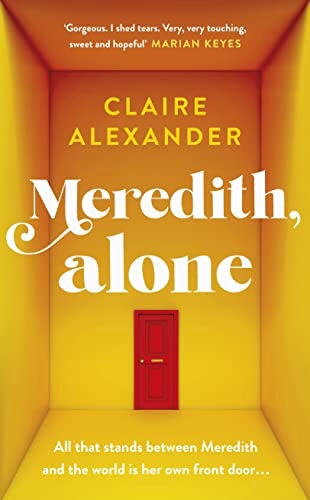
Meredith Alone by Claire Alexander.

This was one of those books where it only took a couple of pages for me to be ‘in’ the author’s world and completely convinced by her main character. Meredith hasn’t left her house for more than a thousand days, but her inner world is so rich and full. She was absolutely real to me and I could easily imagine having a coffee and a catch up with her. We meet her at a crossroads in life. She’s trying to make changes. Her daily life is quite full, she works from home as a writer and between work she bakes, exercises by running up and down the stairs, reads and fills in jigsaws of amazing places from all over the world. The jigsaws are the key. Meredith doesn’t stay inside from choice, just standing outside her front door gives her a wave of rising panic. Meredith feels a terrible fear, her heart starts hammering out of her chest, her throat begins to close and she feels like she’s going to die. However, as she looks at yet another jigsaw of something she’d love to travel and see in person, she becomes determined to live a fuller life. Meredith has sessions with an online counsellor and a new addition to her weekly calendar is a visit from Tom, who is a volunteer with a befriending society. With this support and that of her long time best friend Sadie, can Meredith overcome her fear and come to terms with the events behind her phobia?

The author tells Meredith’s story on a day by day basis, with the amount of days she’s spent indoors at the beginning of each chapter. There are also flashbacks that take us to Meredith’s childhood, living at home with her mum and sharing a room with big sister Fi. Underpinning her childhood is such a well-constructed tale of psychological dysfunction. Of course all families are dysfunctional in their own way, but Meredith’s broke my heart. Her mother is inconsistent in the way she treats her daughter, as Fi later says, their mother was horrible to both of them, but saved her fiercest venom for Meredith. She would insult her youngest daughter’s dark hair and withheld medical attention when Meredith developed eczema. She tells her itchy, uncomfortable child that she has faulty genes and it takes Fi to engineer a visit to the GP without their mother knowing. Meredith can remember happy times or at least times where she felt safe, such as a memory of being freshly bathed and drying off in front of the fire with hot chocolate. Fi and Meredith lie in bed at night conjuring up a future where they leave home and get a flat together, finally leaving their Mum to her bitterness and the alcohol. If it’s true that our self image is made up of those rules our parents tell us about ourselves and life, then Meredith is left with low self-esteem, no sense of security and the sense that she is strange or tainted in some way. It’s a recipe for mental ill health and it’s amazing that Meredith grows into such an intelligent and kind-hearted woman. It’s even more amazing that it’s Meredith who has the strength to leave.

I truly enjoyed the friends Meredith manages to make along the way and the resourceful way she tries to make herself part of the outside world from her living room. She chats in a forum of people struggling with their mental health and Celeste becomes a particular friend, even going as far as visiting Meredith and cementing their friendship in person. I loved how her befriending visits with Tom develop, because at first Meredith is slightly suspicious of his motives and keeps the extremities of her condition to herself. They have a drink together and stay in the kitchen doing one of her jigsaws, but soon they’re baking together and the relationship is becoming more of a two way street. Less befriending and more of an actual friendship. They share and Meredith realises that other people around her struggle too in their own ways. She even strikes up a friendship with a little boy who comes to ask if she wants her car washed. The upsurge of positivity in her current life is exhilarating to read, but it’s also necessary because I knew that I was also getting closer to finding out what had brought Meredith home one day, close her door and not go out again. Claire Alexander balances this beautifully and where many authors might have gone for the schmaltzy ending, she doesn’t. She keeps it realistic and in doing so made me aware of everything that Meredith has had going for her all along. She’s so self-aware, independent and knows who she is. Above all, even as she starts to overcome her demons she’s determined to do it on her own two feet. She appreciates support, but gives it as well. She doesn’t want to become dependent on an emotional crutch. Meredith is perfectly ok. Alone.

Published by Penguin 9th June 2022

Meet the Author

Claire Alexander lives on the west coast of Scotland with her husband and children. She has written for The Washington Post, The Independent, The Huffington Post and Glamour. In 2019, one of her essays was published in the award-winning literary anthology We Got This: Solo Mom Stories of Grit, Heart, and Humor. When she’s not writing or parenting, she’s on her paddle board, thinking about her next book.

Posted in Netgalley

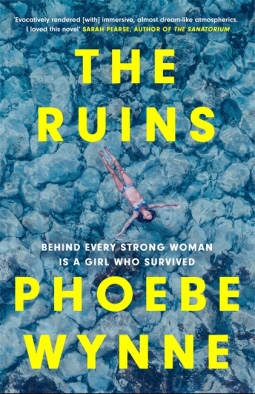
The Ruins by Phoebe Wynne

At about 40% into the kindle version of this book it started to become very uncomfortable reading. I’d no idea where it was going to go and I wasn’t sure if I wanted to be along for the ride. I was glad I stayed with it, because of the truth it shows about the effects of trauma. They are life long. Now I’m finding it very difficult to review in my usual way. It felt like reading a client’s journal work, the sort I might ask them to write as part of their counselling journey. There was something prurient about reading Ruby’s account, because it was so intimate and harrowing who could gain pleasure from reading it? Perhaps this is exactly the effect that Phoebe Wynne was hoping to evoke in the reader? Not all reading is pleasurable, sometimes it has a different purpose. To educate, to shock, to show people they are not alone in their experience. In the author’s first novel Madame we were introduced to some of the same themes: the super rich who are above the law and practice exploitation like a religion; young teenage girls being groomed to become Stepford wives to the millionaire class; a creepy gothic school where the girls are educated; the complicity of women in this continuous cycle. Yet with that book the creepy undertones suggested a supernatural element and the malice of some of the pupils was just enough for dislike to creep in. Both help us look past the true horror of what is going on. Once I’d finished the book I felt like I’d glimpsed behind life’s curtain to see the decadent and corrupt inner workings of society. This book felt different. The girls were younger, the setting perhaps more realistic, so the flashbacks to what should have been a blissful summer for three girls at a French château, felt claustrophobic, exploitative and very dark indeed.

Ruby and her family are spending the summer at their Château in France, as usual they are joined by her father’s two best friends; Harley and Angus, with his daughter Imogen. However, added to their party this year are the Fullers and their daughter Annie, plus a woman called Georgina and her teenage daughter Ned (Edwina). Their normal equilibrium is disturbed immediately when one of the Fullers drives back to the château after a few drinks and hits a child in the village. With their combined power and influence, the men ‘handle’ the problem, but Mrs Fuller is not so easily silenced. Was she driving or is she reacting to her husband’s callous disregard for life? Whatever the reason she returns to the château screaming and crying. She has to be sedated and removed back to England as soon as possible. From there the holiday descends into decadence – heavy drinking becomes the norm, little jibes and full blown arguments ensue.

Make no mistake these men are in charge and however they choose to behave, no one will rebuke them. The author creates a sense of powerlessness in the women of the party, from the hysterical Mrs Fuller to the passivity of Ruby’s mum. Within this patriarchy, women are policing the borders. Whether it’s because they believe in the system or because they are keeping quiet to stay safe, every woman here is reacting to male dominance. Ruby’s mum is a walking list of instructions – keep up your flute practice, stay quiet at the table, don’t ask questions and above all don’t read books. Ruby’s love of Agatha Christie is frowned upon by the men and that disapproval is acted on by her mother who eventually stops her. At first her reading is tolerated and admired by Angus. Harley cruelly ruins the end of Murder on the Orient Express, making the point that reading fiction is not the best use of Ruby’s time. Then a seemingly kind birthday present of Death on the Nile becomes tainted – it’s intentions called into question by later events. Events that suggest someone might have been using her love of reading as a way to groom this young girl. Then eventually, the book becomes part of a terrible traumatic memory. I don’t have any personal experience of what Ruby and Imogen go through that summer, but it’s still shocking to read. It was the neglect that bothered me most, the fact that none of these mothers, except perhaps Ned’s mother Georgina, are on their daughter’s side. Not only do they seem curiously detached from how their husbands behave – until it’s in front of other people – they don’t intervene with their daughters, spend time with them or speak up when they are treated badly. Their silence makes them complicit. As a reader I felt powerless to stop what was happening.

In between the flashes of that summer we follow another trip to France, many years later, with Mrs Cosgrove. She’s come to visit the château that’s for sale along with the coast, the venue of childhood memories and events that still haunt her today. Some locals seem to recognise her but she denies being here before, claiming to be taking a holiday. Yet Mrs Cosgrove is jumpy, looking out for particular cars and appearing frightened when two men appear also claiming a link to the château. Does this place and it’s memories still have power over her? Or is she hoping to finally breathe, so that what happened here is no longer such an influence on her life? She might not be the only one who has ghosts to lay here. I found the mood of these sections very different from the tension and seedy atmosphere of the past. Mrs Cosgrove is tense, but curiously I wasn’t even though her story takes us back into the truth of that summer. Maybe because I knew the worst had already happened. Maybe because the after effects of trauma are something I’m more used to, where I have some power to help. Considering the scandals that haunt the headlines these days, whether it’s Harvey Weinstein, Jimmy Saville, Jeffrey Epstein and Ghislaine Maxwell, no one can be surprised by a constructed reality in which the rich and entitled behave as if anything they want they can take. Perhaps my reluctance to read about it says a lot about why these abusers were free to commit crimes against those less powerful for so long – no one wants to face the reality that people can and do act this way. The men in this novel are grotesque, we want to think of them as monsters in order to distance them from ourselves, but sadly they are not. The author wants us to see and not look away, otherwise we are complicit too. In the blurb, Phoebe Wynne says that very little is made up and with my twenty years experience of working in mental health I sadly confirm that childhood abuse is more common than most realise. Perhaps my struggle with reading it is because I’ve seen what abuse does to people and witnessing the effects of trauma is hard to forget. The author also says she wrote the book so that it might ‘provide some consolation for the darkest moments of female experience’ and I truly hope it does that.

Meet the Author

Phoebe Wynne worked in education for eight years, teaching Classics in the UK and English Language and Literature in Paris. She left the classroom to focus on her writing, and went on to hone her craft in Los Angeles and in London. She is both British and French, and currently spends her time between France and England.‘Madam’ is her debut novel, and ‘The Ruins’ is her second.