Posted in Random Things Tours

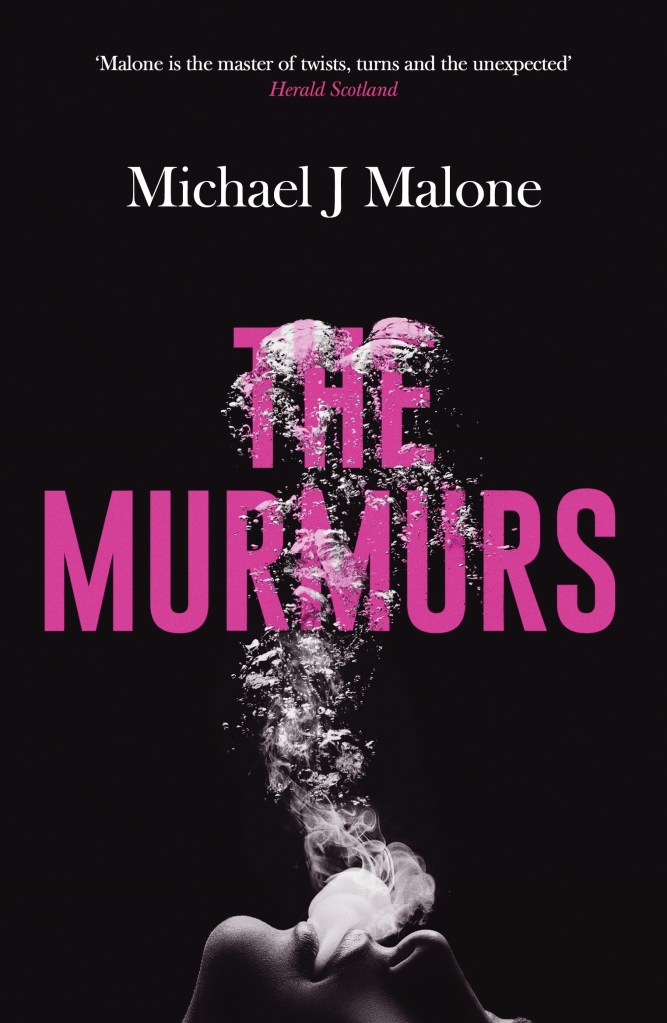
The Murmurs by Michael J Malone

I quickly became fascinated with this mix of historical fiction, psychological suspense and the paranormal. We meet Annie Jackson as she tentatively starts her new job in a nursing home in the West End of Glasgow, hoping to get her life back on track. Annie suffers with terrible nightmares where she’s stuck in a car underwater. She also has the sensation that someone is holding her head under water until her lungs feel ready to burst. She also has debilitating headaches and she can feel one threatening as her new manager introduces her to resident Steve. Then something very odd happens, as a blinding pain in Annie’s head is followed by Steve’s face starting to shake, then reform. A whispering sound begins in her head and she sees Steve as a skull, followed by a vision of him falling in his room and suffering a debilitating stroke. She desperately wants to tell him but how can she without seeming like a lunatic? He becomes agitated and upset, as Annie starts to describe the layout of Steve’s bathroom and he asks her to stop. As she’s sent home from another job she starts to think back to her childhood and the first manifestations of her debilitating problem. Annie survived the terrible car accident that wiped her childhood memories and killed her mother. This strange supernatural phenomenon is why Annie is alone and struggles to make friends. These are ‘the murmurs’.

I felt so much compassion for Annie, as the story splits into two different timelines: we are part of Annie’s inner world as a child, but also 0in the present as fragments of memory slowly start to emerge. We also go back even further to the childhood of Annie’s mother Eleanor and her two sisters Bridget and Sheila. We experience their lives through other people’s stories and written correspondence, especially that of a nun who also works in a residential home. I enjoyed how this gave me lots of different perspectives and how the drip feed of information slowly made sense of what was happening in the present day. Different revelations have a huge effect on the adult Annie and because her memories have been buried for so long she experiences the shock and surprise at exactly the same time as we do. This brings an immediacy to the narrative and I felt like I was really there alongside her, in the moment. With my counselling brain I could see a psyche shattered by trauma, desperately looking for answers, she is piecing herself back together as she goes.

Teenage Annie had a similar vision about a girl called Jenny Burn, who went missing never to return. The murmurs awakened when her mum’s sister Aunt Sheila came to visit them. She tried to openly discuss an Aunt Bridget who also had a ‘gift’ but has ended up in a home. Eleanor, Annie’s mother, asks Sheila to leave, but it’s too late because Annie has already seen that her aunt is dying of cancer. Annie evades her mum and makes her way to the hotel, the only place Sheila can be staying. Unfortunately, Jenny is working on reception. Annie can see her climbing into a red car and she desperately wants to warn her, but she knows she’ll come across as a crazy person. Eleanor is desperately looking for a way to deal with her daughter, she’s a person of importance in the church and she can’t be seen to have a daughter who has visions. Pastor Mosley has Eleanor exactly where he wants her. There’s a control and fanaticism in him that scared me much more than Annie’s murmurs. When Eleanor takes Annie to the pastor, he demonstrates his control by holding her head firmly under his head as he prays for her. When she almost faints, he’s convinced there’s a demon in her. Annie is scared of him, she gets a terrible feeling about him but doesn’t know why. Religion is portrayed as sinister and controlling, with fervent followers who never question, but live in the way they’ve been instructed is Christian? story takes an interesting turn when Annie’s brother Lewis, a financial advisor, becomes involved with the church once more and it’s new pastor Christopher Jenkins, the son of their childhood neighbour. He’s revolutionised the church and through the internet he’s turning it into a global concern. He’s not just interested in saving souls though, he’s also amassing money from his internet appeals. He also seems very interested in meeting Annie.

As the book draws to a close the revelations come thick and fast as both past and future collide. The search for Aunts Bridget and Sheila seems to unearth more questions than answers. Annie finds out that Jenny wasn’t the only woman who went missing in Mossgaw all those years ago. As she starts to have suspicions about her childhood home, Chris seems very keen to draw her back there. Might he be planning a huge surprise? I was a bit confused at first with all these disparate elements, but as all the pieces started to slot together I was stunned by the truths that are unearthed. Then as Annie’s childhood memories were finally triggered I felt strangely terrified but also relieved for her all at once. I hoped that once she’d regained that past part of herself she would feel more confident and free, despite the strange gift she seemed to have inherited. Maybe by facing the past and leaning in to her relationship with her brother, she might feel more grounded and strong enough to cope with her ‘gift’. I thought the author brought that compassion he’s shown in previous novels but combined it with a spooky edge and some intriguing secrets. I really loved the way he showed mistakes of the past still bleeding into the present, as well as the elements of spiritual abuse that were most disturbing. This book lures you in and never lets go, so be prepared to be hooked. Michael Malone is a natural storyteller and the fact this is billed as Annie Jackson Number One makes me think there may be others. I certainly hope so,

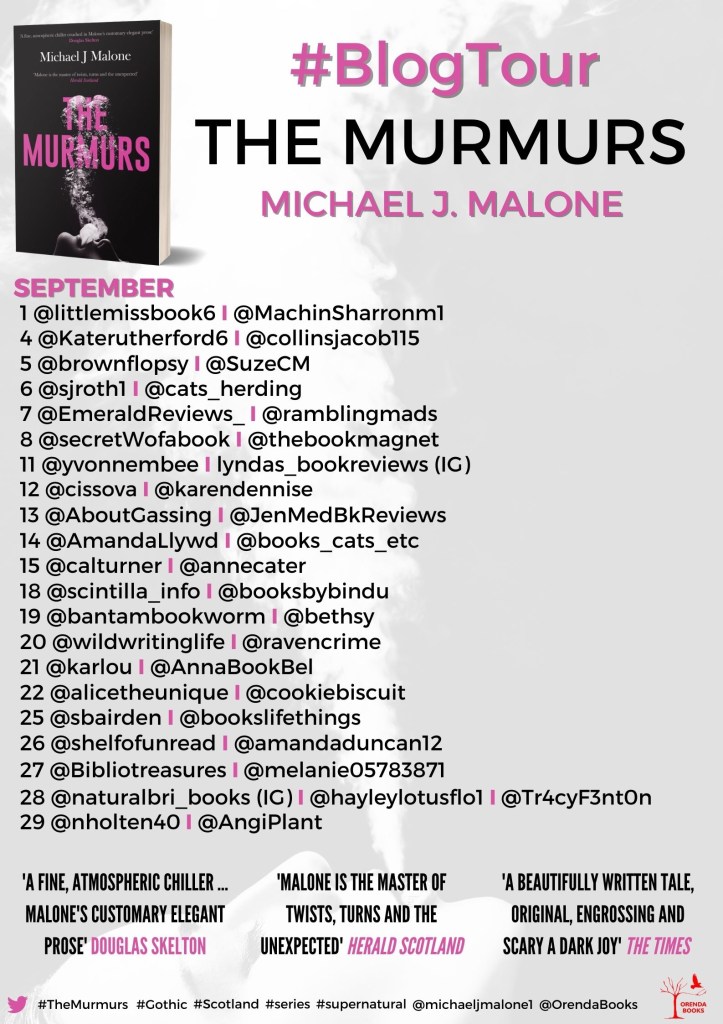
Out Now from Orenda Books.
Meet the Author

Michael Malone is a prize-winning poet and author who was born and brought up in the heart of Burns’ country. He has published over 200 poems in literary magazines throughout the UK, including New Writing Scotland, Poetry Scotland and Markings. Blood Tears, his bestselling debut novel won the Pitlochry Prize from the Scottish Association of Writers. Other published work includes: Carnegie’s Call; A Taste for Malice; The Guillotine Choice; Beyond the Rage; The Bad Samaritan; and Dog Fight. His psychological thriller, A Suitable Lie, was a number-one bestseller, and the critically acclaimed House of Spines and After He Died soon followed suit. Since then, he’s written two further thought-provoking, exquisitely written psychological thrillers In the Absence of Miracles and A Song of Isolation, cementing his position as a key proponent of Tartan Noir and an undeniable talent. A former Regional Sales Manager (Faber & Faber) he has also worked as an IFA and a bookseller. Michael lives in Ayr.
Posted in Squad Pod Collective

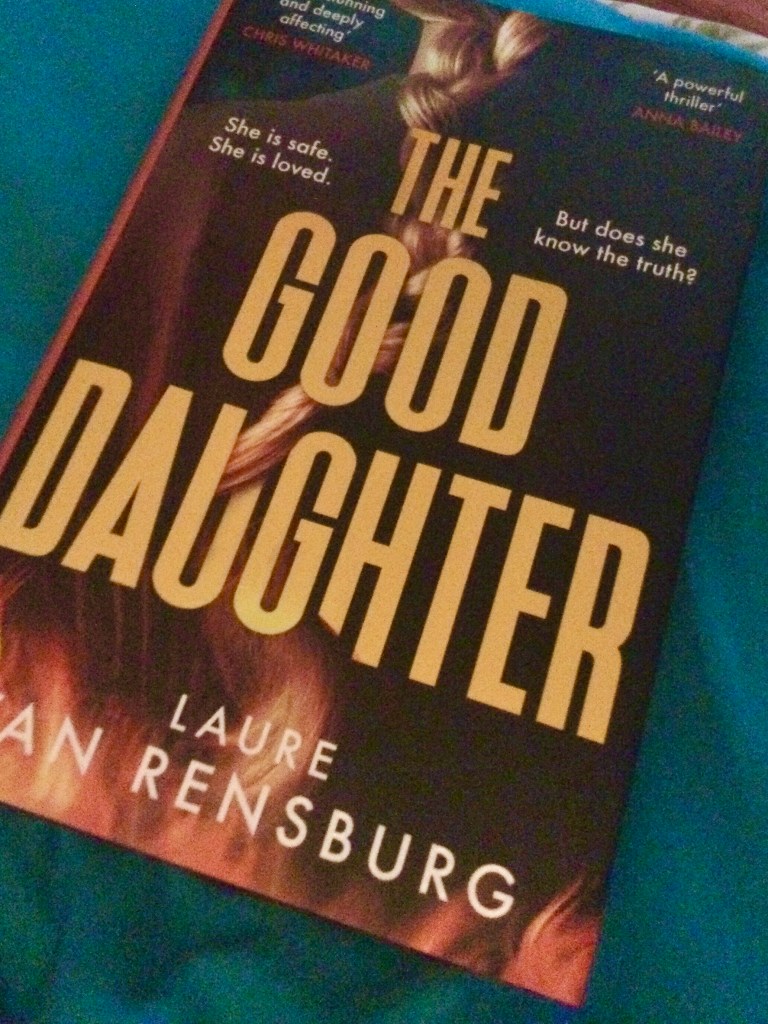
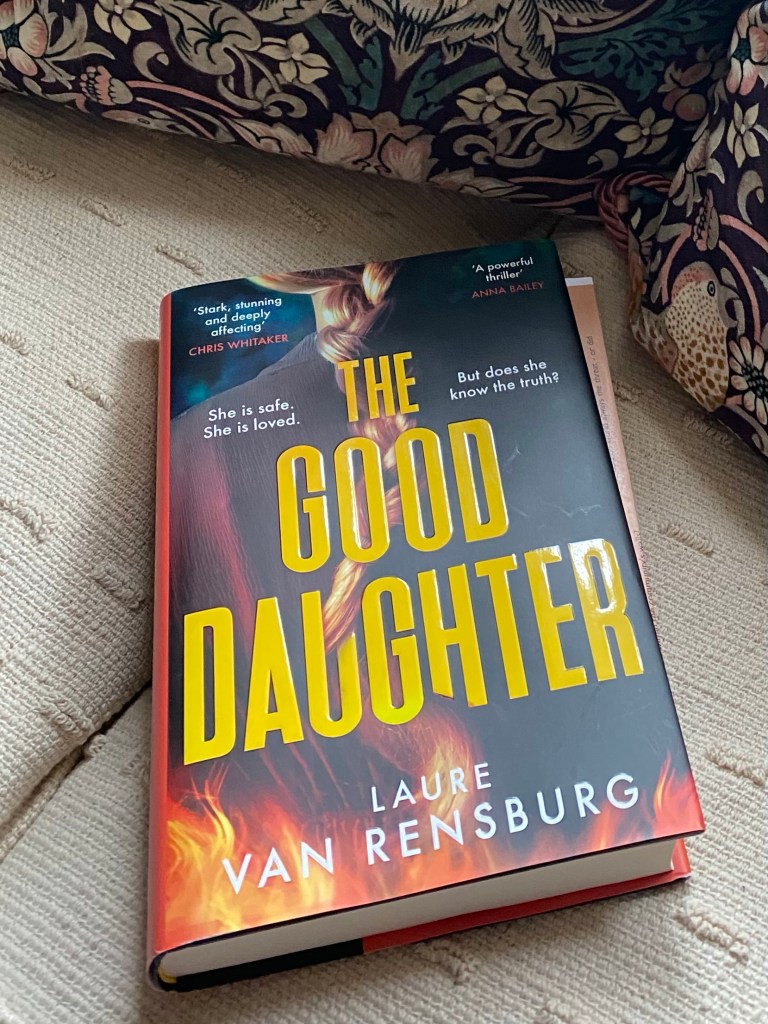
The Good Daughter by Laure Van Rensburg

Abigail is a proud member of the New America Baptist Church. A Christian community miles away from the nearest town in South Carolina, she is safe from the depraved modern world.

She is a good daughter. A valued member of the community.


So when she is the sole survivor of a fire that burns her family’s home to the ground, it seems like a tragic accident.

Until a surprising discovery is made: before the fire, Abigail let a stranger in.

Who was the stranger? What started the fire? And was the outside world always the threat – or did danger lurk within the community’s walls?

I became completely immersed in this fascinating story about faith and the complexities of memory while on holiday. Having spent part of my childhood in a church from the American Christian Fundamentalist tradition, I am always alert to the insidious nature of spiritual abuse and cultish techniques used to entrap converts in evangelical churches. The book opens with a death, immediately filling the reader with questions and drawing them into the story. A document tells us about the wreckage of the house, following a fire. From there the author tells her story in two parts: the present day and then back to three weeks before the fire happened. In between these two timelines there are more documents and discussions that work like ‘real life’ pieces of evidence. There are news reports, public comments and podcast transcripts, all working to verify the story and establish a factual perspective opposing the emotion and confusion of our narrator. The opening is dramatic and emotive, as we realise Abigail has lost her parents; Genevieve and Pastor John Heywood were discovered dead after the fire. Yet Abigail survived. Her parent’s congregation are secretly suspicious about Abigail and think she may have started the fire. The police are beginning to think the same, but what reason does Abigail have for doing something so awful? She’s always been a good girl, dutiful and obedient. Or is that just an act? We experience everything through Abigail and her mind is a complex and intense place to be. She felt like a real person to me very quickly.

Their neighbourhood, in a remote part of South Carolina, is entirely made up of New American Baptist church members. The church members, including Abigail’s family, live according to strict rules based on the Bible. They don’t mix with non-church members and have a domestic life where the man is the head of his household. He goes out into the world to provide for his family and the wife is the homemaker, looking after the house and their children according to the principles laid down by her husband. This is a philosophy I’m very familiar with and I remember, even from a young age, wondering how could I possibly defer to my husband if he happened to be a complete idiot? Abigail doesn’t question the religious rules that govern her life, but then she meets a stranger who changes everything. Summer comes to the community to interview church members for a podcast she’s making about the New American Baptist Church. She asks to interview Abigail. They are completely different in terms of life experience but a friendship starts to grow. It’s fascinating watching the changes in Abigail and her characterisation is excellent, as is that of Summer. She is a catalyst of so much and the storytelling is strong, but follows an unpredictable path. It’s a slow start, then as Summer arrives the story takes off and becomes the pacy and addictive psychological thriller I expected from this writer.

Laure Van Rensburg has taken a very sensitive, difficult subject and has managed it with a great deal of care and empathy. It’s hard to tell such a powerful story with the right amount of sensitivity, while also creating a gripping narrative that keeps readers turning the pages, but I think the author has managed that balance well. We’re taken deeper into life on the plantation with brilliant descriptive passages that create insight into the group. There’s a lot here that wasn’t weird to me, although I think it would be for most readers. If I say to people religious fundamentalism most people don’t really know what that means. I was taught to take every word in the Bible as the absolute truth: Noah built an ark, we all come from Adam and Eve and the world was created in 7 days. Every word comes direct from God with no room for interpretation, symbolism, or the historic period or culture it was written in. Years later, when studying literature at university, I was asked to consider the Bible as a book. I had to research how it was produced, when and by whom. It’s obvious why all books included in the New Testament are written by men. It became a written text in AD325 and powerful men decided what went in (at least that explains the prominence of St. Paul the misogynist). Emperor Constantine and a council of men had the final say, but when the reformation swept through Europe in the 16th Century there was a further split on the books included by the existing Roman Catholic Church and the newly formed Protestant belief system. It’s no wonder then, that the New Testament preaches female modesty and subservience; it suited the church and the men in control of it.

When you imagine that that belief system preached to you every Sunday, borne out by the way your home functions it’s clear to see the damage it can do to self-esteem and the way young women form relationships. That was certainly the case for me. It’s a potent recipe of coercive male control and dominance over women and I could feel a familiar conflict brewing within Abigail as she tries to follow the path forced upon her by both the religious group and all the families around her, but starts to wonder if there’s more. Of course the church is judged and treated with suspicion from outside the community, but there’s no room for questions inside. Questioning the status quo is seen as rebellion, a loss of faith or even a spiritual battle going on within the soul. However, as with all organisations, there are disturbing secrets that lies beneath. I will admit that this was difficult to read in parts, because it set off a chain of little light bulb moments for me. Although, I think it would be an emotional experience for any reader. There’s a creeping sinister feeling, but the increasing tension and twists in the tale keep you glued to the page. I came away feeling so many emotions, but mainly I was so angry, for Abigail and the other young women in the community. Of course some of that anger was for me and the other young women who grew up in my church, many of whom I’m in contact with and who, despite all of them leaving the church in their teens and twenties, are still affected by the experience and their internalisation of the church’s teachings. As Amber’s real memories began to appear I was hooked and had to know what had happened and how she was going to move forward.

I am so impressed by the level of research Laure Van Rensburg has done into this type of church and the sinister way it works. She has really captured the narrative that’s constructed, using the Bible to create an outmoded and illusory vision of the world. If you follow their teachings and actively apply them to your life, God will protect you and keep you safe. The loneliness felt by church members when something bad happens to them or their family is heart-breaking; I was told that my multiple sclerosis would be healed by prayer and when it wasn’t it couldn’t be a failure of God, or their prayer. It was my lack of faith. I found Laure’s writing absolutely mesmerising, the Newhaven community felt just as real as Abigail. I could see it vividly in my mind’s eye. Then when she allowed the outside world to encroach on the narrative it came as a shock, because you realise just how far these people are removed from modern society and even reality. Your mind will flit between whether Abigail is genuinely traumatised by the community and the terrible night of the fire, or whether she’s a psychologically astute and proficient liar. It has a slow start, but by the end I was questioning everything! For me, although it’s at the extreme end of experience in a church like this, the teachings and the coercion were no surprise at all. Most readers will be familiar with these but see them as the practices of cults or churches like the Latter Day Saints. I think they might be a lot more comfortable imagining this mistreatment of women is confined to religions like Islam. It will surprise a lot of readers to learn that a modern Christian church could be like this. They do exist, both here and in USA. As both the restriction of women’s rights over her own body and book banning is in progress now in some US states, the timing of this book is just right. It’s not much of a leap from here to The Handmaid’s Tale. I found this a disturbing, dark and addictively intense read that you really won’t want to put down.

Meet the Author

Laure Van Rensburg is a French writer living in the UK and an Ink Academy alumna. Her stories have appeared in online magazines and anthologies such as Litro Magazine, Storgy Magazine, The Real Jazz Baby (2020 Best Anthology, Saboteur Awards 2020), and FIVE:2:ONE. She has also placed in competitions including 2018 & 2019 Bath Short Story Award.

The Good Daughter is out now from Michael Joseph Books

Posted in Random Things Tours

In Bloom by Eva Verde

‘This is my family story. From all I’ve sown together, through all I couldn’t ask. I want to be the bud who makes it.’

In Blooms tells of strength, survival, forgiveness, resilience and determination, and the fierce love and unbreakable bonds between mothers and daughters.

Ever since Sol’s untimely death left her pregnant and alone at twenty-two, Delph’s kept herself small as a form of self-protection. Now, over a decade later, she lives with their daughter Roche and her new partner Itsy, a kind and protective cabbie, on the fourteenth floor of Esplanade Point on the Essex coast.

But Delph’s protective bubble bursts when Roche moves in with her estranged nan, Moon. Feeling on the outside of the bond between her fierce-yet-flaky tarot-reading mother and volatile martial-arts-champion daughter, Delph begins questioning her own freedom. And when Roche’s snooping into her grandmother’s past unearths a familial line of downtrodden women; a worrying pattern emerges. Has keeping small and safe truly been Delph’s choice all these years…?

I don’t believe in trigger warnings, despite their intended purpose to flag up material that may ‘trigger’ difficult emotions in the reader, I feel that they might stop someone experiencing a connection with a text. It might well be a trigger, but that doesn’t always have to mean it’s a negative one. It might be a trigger that starts a healing process. If anyone should have avoided this book it was me, because I was Delph. I lost the love of my life in my early thirties and then sleepwalked into a coercive and damaging relationship. Yes, it was a hard read at times, but it wasn’t remotely negative. Moon, Delph and Roche are three generations of a family. Each woman has her own issues, but they all stem from one place. Right back at the beginning. As the book opens Roche can no longer live with her mother and Itsy, the man she’s been living with for most of Roche’s life. So she decamps to her grandmother Moon’s house. Roche can’t stand Itsy, he dislikes her and wishes she wasn’t there. In fact what he wants is Delph all to himself, it’s easier to control someone who’s isolated. Delph has had a glazed over look ever since he arrived in her life and she doesn’t seem like her mum anymore. Delph has done everything she can to keep Itsy happy. She’s changed how she dressed, made herself less beautiful, stayed at home and stopped going out with friends. Every day she makes herself smaller to make more space for him and Roche can’t watch it anymore. However, things are changing slowly. Delph has a job she enjoys at B & Q, new connections with her colleagues and today she has made a choice. Delph is pregnant and she knows deep down in her soul that ‘the thought of more years, more life, tied to him’ is more than she can bear. She goes secretly on her own for an abortion, the quietest but most powerful act of rebellion she can make. Then comes her opportunity, Itsy receives a phone call from Jamaica to tell him his mother is dying. He must jump straight on a flight, so Delph lets him go alone, knowing that now she has several weeks to herself. She doesn’t stop Roche from moving out and accepts this as her time to heal, time to be the parent that so often Roche has to be for her. However, this isn’t the only recovery needed in the three generations of this family thanks to the actions of men.

I felt at first that I was slowly piecing together the story of a client. Being a person- centred therapist means letting the client choose what they want to talk about. I would use my counselling skills to tease out that story and ask questions where it needs to be clarified or where I might only be getting one perspective. Here the story has it’s own pace and each woman narrates her own section. We flit back and forth between the women, also delving into the past here and there. It’s like doing a jigsaw puzzle but only being handed one piece at a time, then another from a different place. It takes some time to perceive the whole and that was definitely the case here. Only we the reader can see where they all are in relation to one another. The reality of being a woman in today’s world is explored fully, there is no doubt that these women’s lives would have been immeasurably better had they not encountered the men they do. It takes Roche to articulate this properly with the words and wisdom of her generation.

“Roche knows, remembers, how her life changed at around the time she started secondary, and her bubble of invisibility popped. How, despite the school uniform screaming otherwise, she very suddenly became the inhabitant of a woman’s body, complete with a depressing self-awareness that this was now Roche’s life until one day men deemed her invisible again. In fairness, it’s not her contemporaries who usually do the perving – no, it’s men, grown–ass men who have always done the bulk of the wolf–whistling, the innuendoes and basic compliments that they expect her to ‘smile, love’ and be grateful for.”

As a middle aged woman I now know the power of that invisibility and how, in many ways, it’s a blessing.

I love how carefully the author drew the threads between generations, those behaviours that create a pattern of intergenerational trauma. There are moments in her journey where Delph needs her daughter by her side, but she recognises that it’s a selfish need. Delph’s lived experience stops her; “is not for a child to fix the parent. Nor is Roche the ointment to Delph’s current troubles”. She’s spent enough time trying to help Moon. Then we go back into Moon’s early years, when her grandmother is in hospital, suffering from mental ill health. Her name was still Joy back then and her job is to dispense sunshine to a women who can’t even remember her name. ‘Come on,’ Ma says, in a giddy-up way. ‘You know how happy your little face always makes her.’ This a learned behaviour, people pleasing and exactly what Delph is trying to avoid for her own daughter, three generations later. By sitting with her own pain, Delph is avoiding instilling that behaviour in Roche, she’s actively breaking the cycle. Yes, there are traumatic moments in these women’s lives, Moon’s story being particularly harrowing, but we can also see the women’s determination to change. It’s that change and what it means for Roche that brings such an uplifting feeling to the book. For me it’s Delph’s struggle that touched me deeply. The loss of Sol, who’d been there her entire life, is devastating. So moving out of Itsy’s orbit and the mental paralysis she’s been living with means opening up her emotions. That’s all of the emotions including her grief, but it’s a process that needs to happen so that Roche can talk about her father openly and in a joyful way. I found myself more engrossed in the later stages of the book as I had to see whether these women could heal together. This is beautifully written and manages to be funny, moving and hopeful.

Meet the Author

Eva Verde is a writer from East London. Identity, class and female rage are recurring themes throughout her work and her debut novel Lives Like Mine, is published by Simon and Schuster.

Eva’s love song to libraries, I Am Not Your Tituba forms part of Kit De Waal’s Common People: An Anthology of Working-Class Writers. Her words have featured in Marie Claire, Grazia, Elle and The Big Issue, also penning the new foreword for the international bestselling author Jackie Collins Goddess of Vengeance.

Eva lives in Essex with her husband, children and dog.

In Bloom will be published in August 2023.

Twitter @Evakinder

Instagram @evakinderwrites

Posted in Netgalley

The Stargazers by Harriet Evans

The Stargazers does something I’ve been trying to put across in my own WIP. It shows us that our own story, as we have experienced it and tell it to others, is only one strand of an infinite tapestry. Sarah Fox and her husband Daniel are moving in to their new house on The Row. It’s a ‘proper house’, meaning that as you walk through it you can imagine your child taking their first steps in the hallway or using the tree swing in the garden. It reminded me of when we were looking at houses and we viewed an incredible place that felt to me like a grown up house. It had all the children’s heights written on the wall next to the kitchen door and also a little family of llamas, painstakingly cut out and coloured in, then clear varnished onto a beam in the living room. It was a proper family home and I think this is a little bit of what Sarah feels as they cross the threshold of No 7. Does this make them grown-ups? Perhaps amplified by the fact that Sarah has never known a real family home until now. Sarah and her sister Victoria (Vic) spend their early childhood in the family home of Fane Hall, one of the most splendid stately homes in the south of England. When their grandfather, the heir, dies. They are awaiting the return of Great Uncle Clive. He will become the Earl because Sarah’s mother, Iris, cannot inherit the house being a woman. Iris has doubts, but hopes that since the death of both her father and her husband, Uncle Clive will be benevolent and allow them to remain living in the west wing of Fane. Yet the man who returns from war with a new wife, Aunt Dotty, does not see things the same way. Fane is his, and instead he grants them a small flat in Kensington.

Years later, after Iris has repeated endlessly to her daughters that Fane is her house regardless of inheritance law, they fall on hard times. So she tells the girls to pack and brazenly moves into Fane, occupying a different wing to Clive. Time has been hard on Fane and it seems like her Uncle has allowed it to fall down around him. Every room feels ransacked and amazing collections like the taxidermy animals have been thrown on the floor, their glass cases broken and the smell emerging into the house. There’s also a far worse smell. Many of the toilets are blocked, the bathrooms unusable and their smell permeating throughout. This is the legacy of WW2 and Fane being used by the British forces, not very carefully it would seem. Uncle Clive is dirty, shambling and penniless. A game seems to resume between her Uncle and her mother Iris, with the girls caught in-between, often forgotten and at times completely neglected. Then Iris sends the girls to boarding school and settles in at Fane waiting for him to die. This means that for long periods Sarah has to leave her only friend in the world. The only one who understands her home situation and gets to know her one to one. They are the stargazers. Sarah climbs out of her window in the middle of the night to meet him at a large tree, big enough to sit in and watch the night sky. There they don’t have to talk about their home lives, it’s simply understood. This young boy lives with the lady who runs the post office, but she’s a foster mum. He tells her they need to look forward to their futures not their pasts, to their dreams of being a musician and a film maker.

As we work our way through these different layers of family history, it works like a set of Chinese boxes, one story tucked inside another and we learn a little more from each. Sometimes, an event in Sarah’s childhood helps us understand the present. Then we read a snippet from Iris’s past that informs us about why she treats her own children badly. The adult Sarah we meet in her house in London is very different, as her life shrinks a little. She has two small children and spends all day taking care of them. She doesn’t have time for daily music practice and her hands become stiff so she can’t stretch to pluck the cello strings. Where once she played cello professionally, it now sits in the corner of a room upstairs untouched. Husband Daniel is a bit clueless about how Sarah feels. He’s a fellow artiste, but he’s an actor and television producer and he still gets to leave the house each day. He also starts a long Sunday lunch tradition for the neighbours which seems to a euphemism for come into the house, drink all day and neglect to clear up after themselves. Sarah struggles a bit in this chaos, especially when something outside of their daily routine happens – like her sister turning up to stay when Sarah had completely forgotten them. Instead of embracing the chaos and simply saying ‘I’ve forgotten completely, come on into the madhouse’ she tries to cover the fact that she’s not remembered, putting untold pressure on herself.

There’s a saying in counselling that no two children have the same parent, that applies strongly to Vic and Sarah. They are very different people, possibly due to the way they responded to emotional abuse as children: one was compliant and the other, despite being scared, was defiant. Not only was Iris psychologically damaging, she was neglectful. She is constantly forgetting to feed them, doesn’t buy them the right clothes for school and ensures they are seen as different both by the children of the village and even their school friends. At school Vic becomes a huge hit with the popular group and seems worshipped by the younger girls. When asked to show her loyalty to the group she doesn’t hesitate, even when that loyalty means shunning her little sister. There is bullying that’s uncomfortable to read and gave me the shivers. In choosing the popular girls, Vic has ensured her safety but has also signed up for a lifetime of putting on a front. Sarah may be shunned but at least she can be herself. I felt sorry for Vic, after all she is also the product of abuse, but in turning into an abuser herself she started to lose my sympathy. Especially when it comes to their treatment of Sarah’s music teacher and an act that has lifelong repercussions.

I thought this book was fascinating from a psychoanalytic perspective showing how we find ways of surviving abuse childhood that become part of our personality. In a twist I didn’t expect, a Sunday dinner at Sarah and Daniel’s goes south fast when their little girl disappears. The reasons why surprised me, because I was never quite sure where the stories were going to join up or who might be lurking from the past. Sarah’s eventual return to Fane in adulthood doesn’t work out in the way she might have hoped, but it helps her finally face up to what happened there. The final paragraphs show us the irony of Iris clinging to Fane and to life. She is still muttering to herself that Fane is hers and what would have happened had she been a boy? Did she get what she wanted in the end? Is the estate viable or have terrible compromises been made? As we find the answers to these questions we also see Iris’s decline as compared with the little girl she must have been when she first visited the house. This final flashback is brilliantly thought out and placed. That first visit can’t fully vindicate Iris, there is never an excuse for her actions towards her own children, but it could shed some light on what happened to set these wheels in motion. It might even explain her unshakable belief that Fane is hers. This is a great book about family, intergenerational trauma and the adults we grow up to be, because of the children we once were.

Published by Headline Review 14th September 2023

Harriet is the author of thirteen novels, two of them are Richard and Judy book club selections, several have been Top Ten Bestsellers, one won the Good Housekeeping Book of the year prize, but the accolade she’s most proud of is the lady on Twitter who wrote last month that she thought my books were real ‘knicker grippers’. As Harriet says on her Amazon author page ‘I suppose that’s all you can hope for isn’t it?’

Her first novel, Going Home, came out in 2005 and her last was The Beloved Girls, published in paperback in April 2022. She wishes she’d tried another job sometime but she can’t imagine not writing. She has written since she was a child, first on books I stapled together with paper then notebooks, then a laptop that crashed and lost all of the novel she was writing in secret back in 2002. (So now she backs her work up properly) Her first novels were more about relationships and people in London and had more chicklit themes and the later ones are darker and more about families and secrets and houses and the past. Those themes have always been in her books, but as she’s grown older she’s enjoyed exploring them more. She has so many stories in her head all the time and adores knowing that her job means that she can carry on telling them.

If asked how she’d describe her books she’d say she wants them to be gripping, involving, heartwarming stories about families and mysteries in the past with a Gothic tinge. This one definitely fits that description.

Posted in Netgalley

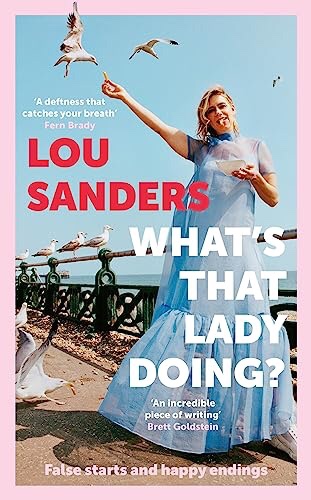
What’s That Lady Doing? By Lou Sanders

I’ve felt over the last year that every comedian has a book out. This is the result of the pandemic, where comedians could write material but had no way of testing it out on audience. It seems that a lot of them decided to use this time to write a memoir and this is up there with the best of them. One of the most important things about a memoir written by a celebrity is that it feels authentic and this book feels like a rambling conversation with Lou. She has such a strong narrative voice. I must admit to being a bit fascinated with Lou Sanders for a while now. I’d seen snippets of her stand-up, appearances on panel shows and a gloriously deranged turn as Mel Giedroyc’s sidekick on Unforgivable. However, it was her appearance on another Dave comedy show that cemented her in my memory as someone I’d like to know more about. On Outsiders, she was in a team with Ed Gamble, tackling activities out in the woods to earn Scout-style badges devised by David Mitchell. It was her effect on Ed that absolutely floored me. She slowly drove him to distraction by agreeing a plan, then as he struggled with it, she would get bored and wander off to start a Plan B by herself. His exasperation is delightful. Similarly, on Chris and Rosie Ramsay’s BBC2 show, she dissolved the presenters to puddles of uselessness by beautifully relaying a story about a dog’s back end while visibly gagging! I felt like this was a lady with a gloriously quirky and unapologetic way of being herself in the world that I simply loved. I learned while reading this memoir that her ease with herself, her authenticity, has been very hard won. I now admire her all the more and plan on buying this book for all the teenage girls in my life by the bucketload.

Lou tells her story with no frills or filter and that led to a really intimate reading experience. I could hear her voice immediately and that is the best thing about it. She tells the story of a difficult early life – struggles with ADHD and a very late diagnosis, coupled with devastatingly low self-esteem. Totally misunderstood at home, she was drinking and drug-taking from an early age. All to mask feeling different and as if she didn’t belong anywhere. Leaving home at 15 and working in pubs, she learned to use drink to create a new persona, one that made people laugh. She used whatever it was that made her feel different and strange for laughs. Drama followed her and some of her stories, especially around the opposite sex are starkly told and are all the more devastating for their honesty. She only realises in reverse that it’s impossible to give consent when you’re incapacitated. She’d learned that it was sometimes easier to give in and drink numbed the reality of what had happened. Each wound is almost unnoticed and that’s not just because she was obliterated. She’s totally unaware that she has the ability to keep to her boundaries, in fact I don’t think she was aware of her ability to set them. People who are worth nothing can’t ask for things. They’re not even aware they have the right to say no.

Lou is very matter of fact and unshowy about choosing to get sober and change her life. She credits AA with her success and it took a few false starts to get passed the times she kidded herself – ‘I’ve not had a drink for months, surely one or two would be okay?’ She learned that for her, one leads to many so she can’t have any. Ever. It only became clear for her when she realised she was ruining her own chances, self-sabotaging her career. She would ask comic friends why new comics were getting TV gigs and she wasn’t. After shows where she was obliterated, threw things into the audience and even bit someone, it took a good honest friend to tell her the truth. TV producers didn’t trust her, she was too unpredictable. That friend probably saved her career, in act they saved her life. I found her clarity around this part of her life really admirable, but she doesn’t want to see herself as a heroine or an example. This book doesn’t have a self-help vibe. She knows that she is a work-in-progress and only sticking with AA and practicing abstinence will work for her. In fact she also realises that therapy keeps her life ticking over, it gives her a release – like the pressure valve for her life. I loved the raw honesty of Lou’s writing. This is a book that never could have happened if she hadn’t learned to love every bit of herself. Well, most bits anyway. Some celebrity books are a list of achievements or a ‘how I became famous’ journey, but you don’t really meet the person. I’m not very good at surface stuff. Small talk is impossible for me, because it feels totally inauthentic. I put this book down feeling like I’d really met the person between it’s covers and we’d had a long, honest conversation about life.

Meet the Author

Lou Sanders is a British comedian. She is the champion of series eight of Taskmaster, co-hosts Mel Giedroyc: Unforgivable and has made a host of other television appearances from Live at the Apollo to The Late Late Show.

Lou has performed stand up around the world, including venues in New York, LA, Berlin and sell-out runs in Edinburgh and Soho. Lou has written articles for The Guardian, Time Out and GQ magazine.

More from Lou

Cuddle Club – The podcast where each week Lou Sanders (Taskmaster, QI, Would I Lie To You) asks a special guest the hard hitting questions that other non-cuddle based podcasts don’t dare to. Hot stuff like: Which kid did your parents prefer? Why are we all pretending massages are normal? And, can you ever trust anyone to order for you?

https://www.lousanders.com/gigs

Posted in Netgalley, Publisher Proof

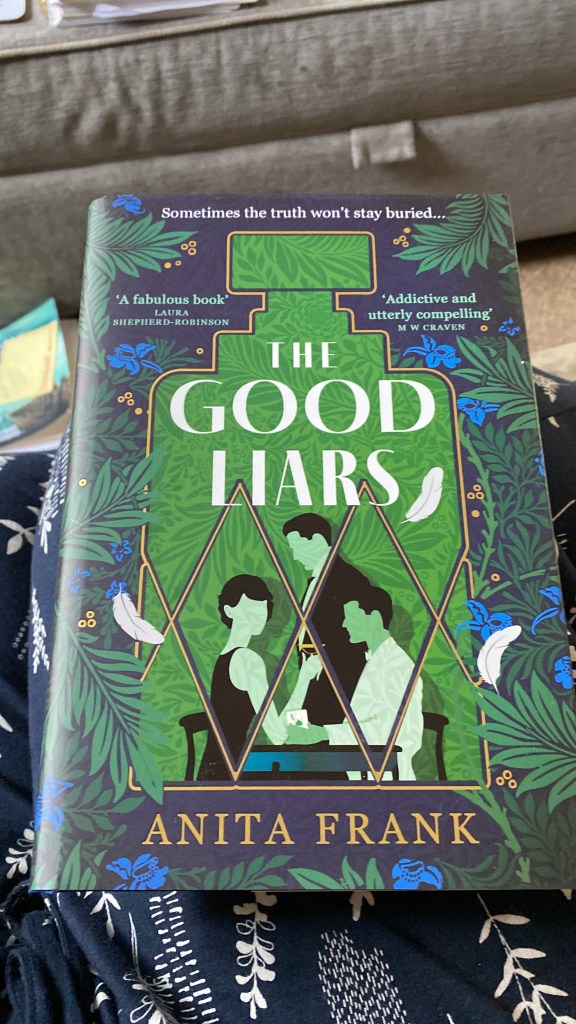
The Good Liars by Anita Frank

This is my favourite of Anita Frank’s novels so far. She’s chosen a fascinating period of history to set this gothic mystery and it adds something a little different to the ‘new servant in a creepy old house’ story. This is time when the country is traumatised, mired in grief and adjusting to the changes wrought by World War One. A time when loss looms large and people are searching for answers. Sarah is the new employee arriving at Darkacre, the family seat of the Stilwells. Like many aristocratic families, WW1 has wreaked havoc on the men in this family. When their father died, the eldest son Hugo became the heir of Darkacre. Yet his time as heir was very short, as he was killed on his return to the front leaving middle brother Maurice as heir to the Stilwell estate. Maurice was not prepared to be the master of the house and with double death duties already crippling the estate, he has learn fast. Unfortunately Maurice has returned from war a changed man, plagued by nightmares, flashbacks and extreme responses to loud noises, he has PTSD or what was then referred to as shell shock. With youngest brother Leonard severely disabled by his war injuries and struggling to come to terms with the loss of his limbs, the family are depleted and barely coping. However, as Leonard so cryptically tells us, perhaps it is no more than they deserve? Sarah’s arrival is the catalyst for this story and it isn’t just the relationship between family members that points to there being issues at Darkacre, soon a series of unexplained happenings start to gnaw away at the nerves of even the most stoic inhabitants.

Darkacre is the perfect gothic setting for the story and to some extent she represents the changes wrought on the aristocracy during this time period. Where before the war the family would have had several house servants, as well as gardeners, land agents, farm managers and so on, there is now just the brothers, Maurice’s wife Ida and Victor, a lifelong friend of Maurice. Due to the way army units were organised, Hugo Stilwell would have found himself the officer to a group of men he knew well, comprised of his brothers, tenants, young men and boys from the village. The losses were astronomical and not a single family in the parish missed out on their share of grief. This also left Maurice facing families of the young men he led to their deaths on a regular basis, including the upcoming ceremonies at the new war memorial. Servants were now in short supply and the tradition of going ‘into service’ had started to decline. We can see how social groupings have become blurred in the way Ida invites Sarah to eat with the family, instead of in the kitchen alone. They converse as equals, often as sitting together after dinner in the parlour. We can see how Ida has been craving female friendship and where it would be unsuitable to be passing confidences on to village women, Ida does start to confide in Sarah. Up till now it has very much been Victor’s role to inject a little levity into the proceedings and to amuse Ida. He confides to Sarah that both he and Maurice fell in love with her on sight, but she was more interested in Maurice and possibly the house and land that have her a title she craved.

On Sarah’s part there are few confidences shared and I found her rather mysterious and enigmatic. I was at first sure this was only a residue of the deference she had always shown employers in the past, but perhaps there is more to it than that. In a therapy situation, silence tends to draw the client forward and share confidences. In fact silence has often been my most powerful skill in terms of growth for the client and Sarah seemed to be using it for good effect. Is she simply trying to forge good relationships with her employers or is there something more sinister going on? The growing closeness between her and Leonard definitely feels genuine and I wondered what it was about their relationship that made Sarah relate to him differently. Was it that she saw him differently due to his disability, or is it a natural affinity? He seems to have different world views to the rest of the group, more compassionate and accepting of human imperfections. This is ironic given the family skeletons hiding out in closets and cupboards all over Darkacre. What was behind the sense of collaboration I felt between Ida and Victor? Why was Maurice so disturbed, not just by flashbacks and dreams, but possibly by his own conscience? Why is Ida unwelcome at the village’s ceremony for the new war memorial and does it have something to do with the disturbing parcel of an animal’s heart covered feathers that she receives?

Since I have a disability it would be remiss of me not to mention the veterans of WW1 left disabled by this horrifying war. Over one million men were killed in combat, but a further two million were left with some form of disability, 40,000 of which were amputees like Leonard Stilwell. He sits alongside such contemporary literary characters as Clifford Chatterley with a lot of the same emotional issues coping with the change of self-identity. Sarah represents a new stage in Leonard’s recovery, one he might resent, but yet they do become friends. On her first morning, Sarah arrives at Leonard’s room to find Victor smoking and Maurice laid across his brother’s bed rather like they’re still in barracks or the hospital. It’s a little glimpse into the institutionalisation of the men, more used to other male company in a military setting than the domestic sphere. Sarah could be seen as a barrier between Leonard and his fellow veterans, whereas before his care was kept within the sphere of the family now it is contracted out for money. Leonard could have felt as if he belonged, that his brother and Victor were still in the trenches with him, sharing the seismic shift his life has taken. His getting up routine was part of family life, whereas now it’s a job. A stranger has to perform the most intimate care for him and they are obliged to do it for money. He is now facing his disability alone. Yet he and Sarah muddle on quite well together, helped in part by Sarah’s training and professionalism, but also because they perhaps share the same anger and disdain for the futility of war.

Early on in the novel we see that Maurice is tormented by the memory of a young soldier who has half his face blown away. He can’t forget the horror of it, so it is perhaps fitting that the visiting Sergeant who arrives in the storm has a facial disfigurement. It’s as if Maurice’s worst nightmare has come knocking on the door. The inspector has only visited the day before and the sergeant seems to be following up, carrying out orders by interviewing the family. His disfigurement is covered by a copper mask, it’s smoothness belying the tangled and complex injuries underneath. For Maurice it almost seems worse that his injury is covered, because he can imagine in detail what’s actually there and imagination is worse than the reality. His mask also gives that element of disguise, it conceals his expression and leaves people wondering what he’s really thinking. There’s a definite Agatha Christie feel as a storm cuts the house off from civilisation and the family are trapped with these two outsiders. One of them a detective, trained to uncover secrets and the other has shown herself to have psychic tendencies. There are twists and turns, more than I expected in fact! I loved the atmosphere and Anita is brilliant at those little creepy happenings, that might have an innocent explanation, but start to unnerve you. The battle scenes are so well written too, perfectly capturing the chaos, the fear and a different kind of horror. This is a great read and Anita goes from strength to strength.

Published 17th August by HQ Stories.

Meet the Author

Born in Shropshire, Anita studied English and American History at the University of East Anglia. She now lives in Berkshire with her husband and three children.

You can connect with Anita via social media:

Twitter – @Ajes74

Instagram – @anitafrankauthor

Posted in Netgalley

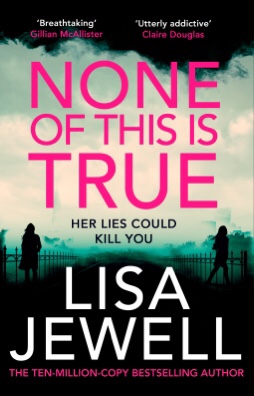
None Of This Is True by Lisa Jewell.

I always look forward to a new novel by Lisa Jewell, because I know I’m going to be engrossed in it for the weekend, oblivious to everything else that’s going on around me. This new novel was so addictive I’m not sure I looked up and luckily my other half knows when to disappear into his workshop and to deliver a hot brew on the hour. I have no idea how this writer manages to be so prolific, but thank goodness she does! She always manages to find a new angle to the thriller and this novel has a really interesting premise based around the phenomenon of podcasts. One of our protagonists, Alix, has been running a successful weekly podcast based around women’s lives and interviewed women who would inspire her listeners. However, it was time for some new ideas and so far Alix hasn’t had one. Then she meets Josie Fair. Josie is celebrating her forty-fifth birthday with her husband in a restaurant that’s a little more upmarket than they would usually book. She notices a group at a large table celebrating the birthday of a rather glamorous woman. Later in the night, the women bump into each other in the lady’s loo. Josie mentions to Alix that they share a birthday and is surprised to discover they are both 45 years old. They make a joke about being birthday twins then go back to their tables where the huge contrast between them becomes clear. Alix’s table is filled with friends, flowers and balloons whereas Josie is having a quite dinner, just her and her husband Walter. A few days later they accidentally meet again outside Alix’s children’s school. This time they chat about Alix’s work and Josie admits she’s been listening to some of Alix’s podcast since they met. Alix has made a successful series interviewing inspiring women, but admits she’s now looking for a change of direction. Josie volunteers herself as a subject, admitting that she’s about to go through some major life changes and seemingly convinced that Alix’s listeners will want to hear her story. They swap contact details and each comes away feeling positive, but Josie wasn’t exaggerating. Big changes are on the way, just not in the positive, life-affirming way Alix is used to. After interviewing Josie once Alix knows her story will appeal to listeners, because despite being very unsettled by her subject, she can’t help wanting to dig further.

The format really does work, with the interviews providing so much information to unravel and tantalise the reader. In-between we see the effect Josie’s revelations have on her own family life and on Josie’s as well. Each interview works very like a counselling session, but perhaps most like the early sessions when the client is telling you their story so far and what brings them to therapy. Alix is a fantastic listener and allows Josie to tell her story in her own way and at her pace, only asking questions to clarify or encourage her interviewee to expand on a point. I detected a subtle shift as the interviews progressed, but it’s almost imperceptible. While at first Alix is in control of the project, Josie starts to take charge both of the content and how often they meet and work together. This could simply be a woman finding her confidence or having an emotional need to offload her story quickly, while she has the courage. Josie weaves a tale of grooming and domestic abuse that’s not easy to listen to. Her husband Walter is much older and very set in his ways, they started their relationship when Josie was a teenager and Walter was in his thirties. There are little clues to the control he has over his wife, such as wearing double denim to please him and not having a job, even though their daughters are beyond school age. At this point I feared for Josie, but also for her daughters: why has one left home at 16 and why does the other one seem locked in her bedroom with a diet that consists of nothing but baby food? One tiny act of Josie’s made me go cold. Each time she visits, she starts to take small items from Alix’s home, starting with a coffee pod that she hides in her underwear drawer.

As Josie becomes more involved in Alix’s life, Alix’s Instagram lifestyle seems to erode.

“She thinks of Alix’s home: from the front, a neat, terraced house with a bay window, no different to any other London Victorian terraced house, but inside a different story. A magazine house, ink-blue walls and golden lights and a kitchen that appeared weirdly to be bigger than the whole house with stone-grey cabinets and creamy marble counters and a tap that exuded boiling water at the touch of a button. A wall at one end reserved purely for the children’s art!”

Her husband Nathan has always had issues with alcohol, but they really come to the fore. He’s always had a line he doesn’t cross, but now he starts to stretch to one more drink, staying out later with work colleagues, going out for a normal lad’s night then not coming home. Alix knows that once it reaches a certain time, it’s likely he will be on a bender, only coming home when he’s run out of funds or sobered up. Where is he when he doesn’t come home? Alix starts to doubt Nathan’s fidelity and finds herself searching for evidence. As the stress at home cranks up a notch, Alix notices that Josie is pushing the boundaries of their agreement. She turns up where Alix doesn’t expect her, stays longer than their agreed session and Alix can’t tell if she’s becoming subsumed by Josie’s world, or if Josie is starting to take over hers. There’s a claustrophobic feeling and a sense of menace starts to creep in, as Josie controls her story and will only let it unfold in the way she has planned. I sensed something was very wrong and wanted Alix to back off the story, even though it could make her name in the world of podcasts. Alix seems transfixed by Josie’s story, her life is like a car crash you can’t look away from and although part of Alix has the journalistic interest in a great story, another part is fascinated by the horror of what Josie is telling her. In much the same way as the reader is fascinated too, I genuinely couldn’t put the book down until I’d worked out what was going on. Were Josie’s revelations putting herself and Alix in danger from Walter? Will telling her story change Josie, acting as the catalyst to leave the situation and get help for her daughter? I kept wondering about the other daughter, the one who left home. I couldn’t help but think she might be the key to the truth about Josie and Walter’s marriage.

I thought the structure, using the podcast for Josie to tell her story, was really clever considering how popular true crime podcasts are these days. I thought the idea for Alix’s podcast, interviewing inspirational women was very like the Megan podcast in tone showing how up to the minute Lisa Jewell has been in the creative way she frames her story. As coercive control is now so well known, as compared to four or five years ago. Everyone understands what it means and terms like ‘gaslighting’ have become the norm, showing up in soap storylines and all over social media. I think what Lisa has tapped into here is the overuse of these terms, so much so that they’ve become diminished. It seems that daily someone is claiming their ex was a narcissist but these are huge psychological labels that shouldn’t be used lightly – in the same way people say ‘I’m a bit OCD’ the real understanding of the disorder has become lost. It isn’t all about arranging your kitchen shelves so the labels show at the front. We are all educated into believing the victim of abuse, but in a society where these terms are so misused, should we reserve a little bit of judgment? If I was Alix I might have been inclined to walk away from the story – especially as she starts to have questions and doubts – to concentrate on my own problems. Josie’s story and it’s fallout are almost too messy and she seems very adept at knowing when Alix is doubting her, on one occasion turning up on the doorstep having apparently confronted Walter, and definitely outstaying her welcome. Lisa Jewell really is a master at these dark, almost nightmarish, stories about women’s lives while weaving so many twists and turns the reader can’t stop guessing until they’ve reached the final page. While I’ve enjoyed her recent novels I was absolutely gripped by this one and think she’s outdone herself. The setting and situation are so believable, the characters are incredibly well drawn, full of enough flaws and contradictions that you’ll be questioning everything they tell you.

Published by Random House 20th July 2023

Thank you to the publisher for allowing early access to the novel in exchange for an honest review.

Meet the Author


LISA JEWELL was born in London in 1968.

Her first novel, Ralph’s Party, was the best- selling debut novel of 1999. Since then she has written another nineteen novels, most recently a number of dark psychological thrillers, including The Girls, Then She Was Gone and The Family Upstairs and The Night She Disappeared, all of which were Richard & Judy Book Club picks.

Lisa is a New York Times and Sunday Times number one bestselling author who has been published worldwide in over twenty-five languages. She lives in north London with her husband, two teenage daughters and the best dog in the world.

Posted in Squad Pod Collective

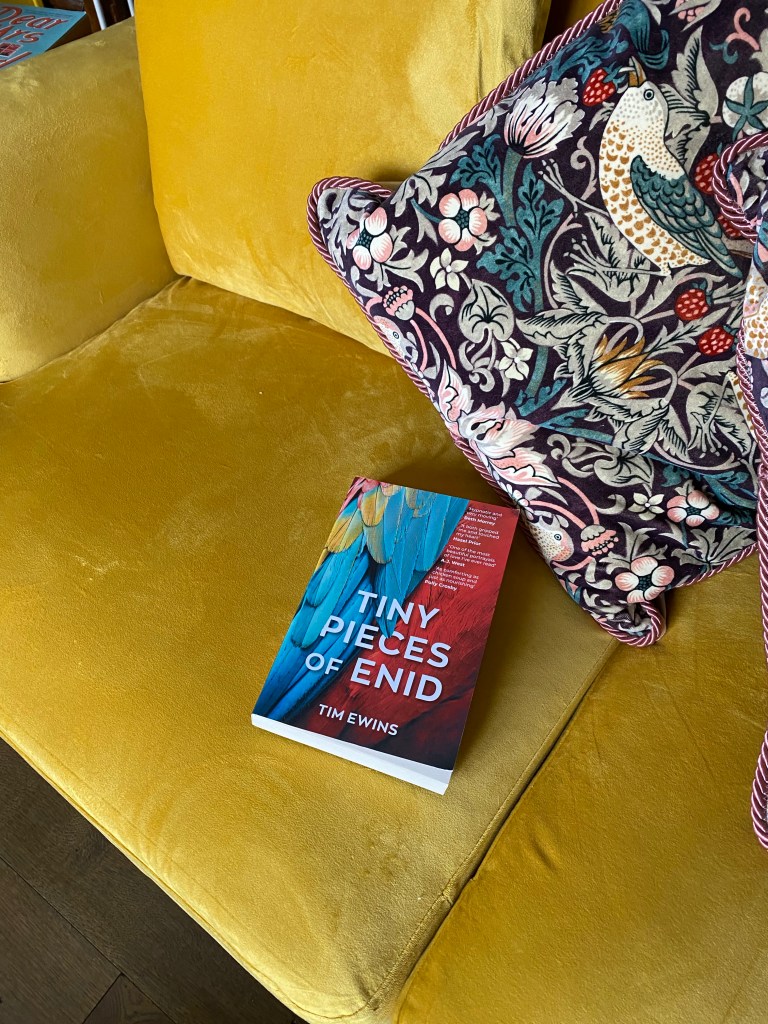
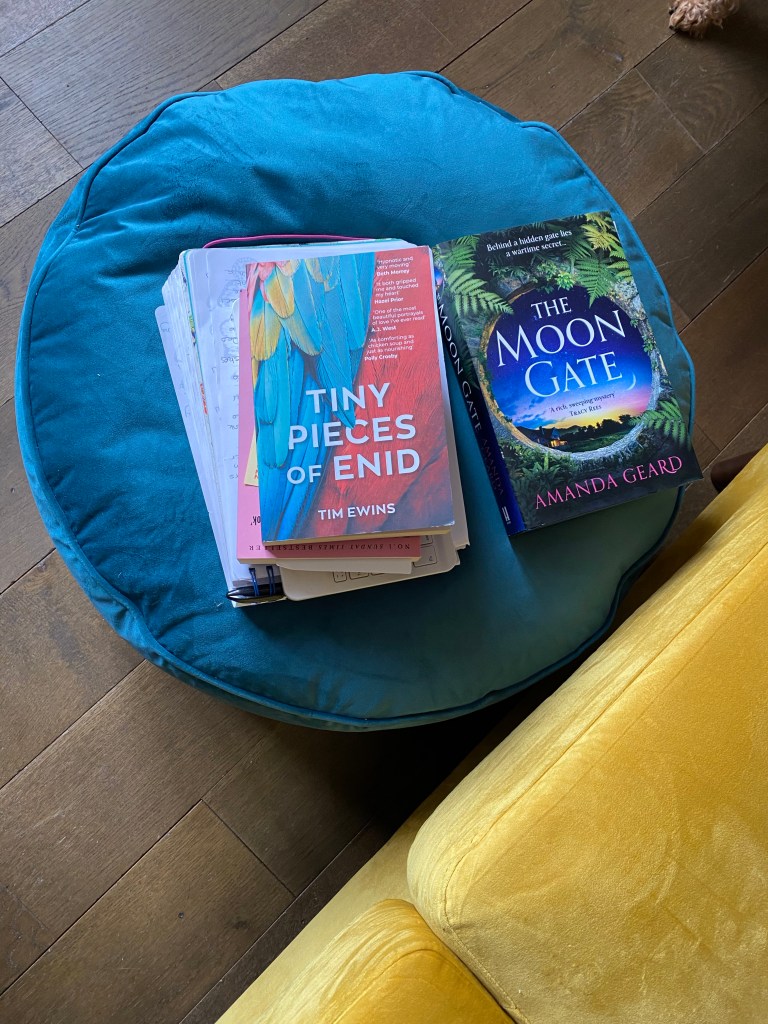
Tiny Pieces of Enid by Tim Ewins

I was so emotionally invested in this deeply moving story, written with such care and empathy for the characters, but also the people who are going through similar experiences in real life. I would also suggest hankies or tissues, a big bar of chocolate and a cat to cuddle. This is an incredible read – but you will cry, in fact if you don’t there’s probably something wrong with you. Our heroine Enid has had a stroke and also has a diagnosis of dementia. She has aphasia causing problems with comprehension and formulation of words. Often, people with aphasia know what they want to say, but find something stops them expressing it. Having looked after people who’ve had a stroke I know it is one of the most frustrating neurological symptoms someone can have. The author has set the book inside Enid’s brain – we learn that she’s not completely senile, in fact she has moments of incredible clarity and is often witty, with a great sense of humour. However, she is forgetful and shows a lot of frustration about her lot. Enid has lived with husband Roy for many years, but after another incident at home their daughter Barb has to make a horrible decision. She decides her mum would be better in a specialist nursing home, but this means separating her from her beloved husband. Enid believes that this is a temporary separation and that soon Roy will come live with her in the nursing home. Meanwhile Roy is trying to cope alone, missing his wife terribly but having to plod on without her.

In the home Enid meets Olivia, a young mum who frequently visits another resident and they have an affinity. While they might seem to be very different on the surface, they connect on a deep emotional level. Every time Olivia visits, Enid is reminded of her first marriage and the memories are painful. Enid’s husband was violent and she can see that Olivia’s husband is also a very angry man. She wants to help, to explain that she doesn’t have to stay with him, that there is happiness beyond here. The fact that Olivia and Enid become friends, despite all of Enid’s challenges is so important because Enid’s life experience could help Olivia make a definitive decision. To save her own life. Their experience shows that friendship comes in so many forms and we shouldn’t make snap judgements about who can bring something meaningful to our lives. It made me think of an observation I made a long time ago, when someone has a long term illness their life doesn’t stop at the time of diagnosis. Some people seem to think that an unwell person steps out of life, has treatment, then comes back when they’re cured but it isn’t so. There are so many of us out here, like Enid, living with an illness and even if our lives look different they’re still meaningful and worthwhile.

When Enid isn’t watching life pass by she’s remembering, it’s like her own personal movie running behind her eyes. She sees Roy, from their earlier life together and when they’re falling in love after the trauma of her first marriage. There’s her old home and her daughter Barb who was fascinated with birds, her Tom Jones & Elvis records waiting to be played. She then remembers a scar she has on her forehead. When was that from? It feels like another life. Then she’s back with Roy. Remembering their love story. Roy is her best friend.

The way the author has constructed Enid’s inner world is brilliant. All the information is there, but it’s fractured and complicated. It isn’t always there when she needs it. She’s a time traveller, not present in the moment but enjoying her early years with Roy. Then she’s with a little girl, her daughter. These memories are so clear, but the moments of lucidity are so fleeting and we’re aware that eventually they may disappear altogether. I’ve worked in a dementia unit and every week I would push one of our residents down through the village to the home he’d shared with his wife. He seemed to have no idea where we were, he was rarely, fully in the room. Mostly we would do jigsaws and he would try to wipe his nose on my cardigan. One day we were sat with his wife in the kitchen and I was helping him with his cup of tea when he looked over at her. Then he looked at me and said ‘I don’t know who this lady is, but isn’t she kind? I like her’. It made me cry that they had a whole history that he couldn’t recall, but in that moment he knew she was special. There was a little glimmer of feeling. It’s hard to live separately from someone you’ve had a life with, especially when the relationship hasn’t ended. You’re living like a single person again and while you can always visit your partner (and appreciate the respite from being a full time carer) there are parts of that person you miss. The tragedy is you didn’t need to separate from the person, just their condition. So it was easy to understand Roy’s decline without Enid, he’s lost the shared jokes, the conversational shorthand and that sense of it being the two of them against the world. Although Enid is safe, part of Roy will wish she was still at home with him. I would imagine he must miss her sense of mischief more than anything. Enid will try anything to be with Roy again, and she relies on an imaginary parrot to help her.

Tim Ewins has written a really special book with such fully rounded characters who have busy inner lives, including Enid. I have a long-term illness and it’s great to read a writer who understands that journey and shows how rich our lives can be, even if they are different. My late husband had the same illness as me and this book reminded me of the snatched moments we spent together between carers, district nurses, palliative stays and hospital admissions. Despite all of that ‘stuff’ no one could take away that connection we had and some of my happiest memories were in those snatched moments; the tiny pieces of life that Enid remembers might seem commonplace, but they are the very moments I’ve treasured and remembered ever since. This is a special book, written with such heart and compassion.

Meet The Author

Tim has enjoyed an eight-year stand-up career alongside his accidental career in finance.

He has previously written for DNA Mumbai, had two short stories highly commended and published in Michael Terence Short Story Anthologies, and enjoyed a very brief acting stint (he’s in that film Bronson, somewhere in the background). We Are Animals is his first novel.

When not writing, he enjoys travel, reading (of course), cycling and spending time with his wife, son and dog in Bristol. Follow him on Instagram @timewins and @quickbooksummaries where he writes inaccurate but humorous book reviews.

Posted in Squad Pod

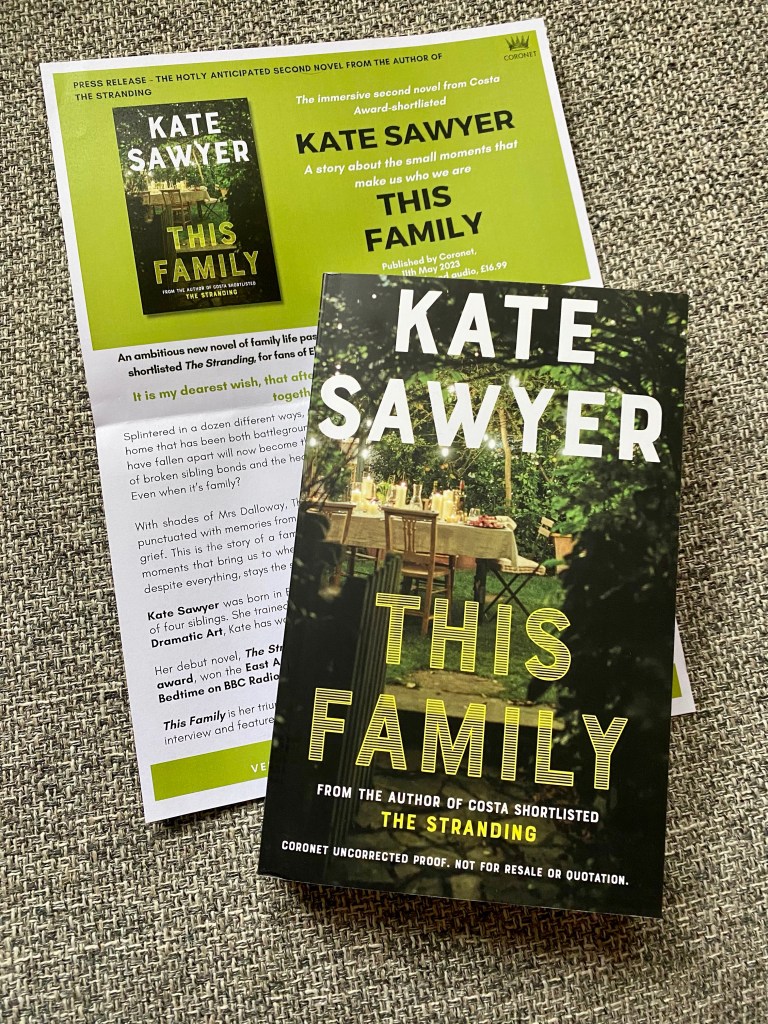
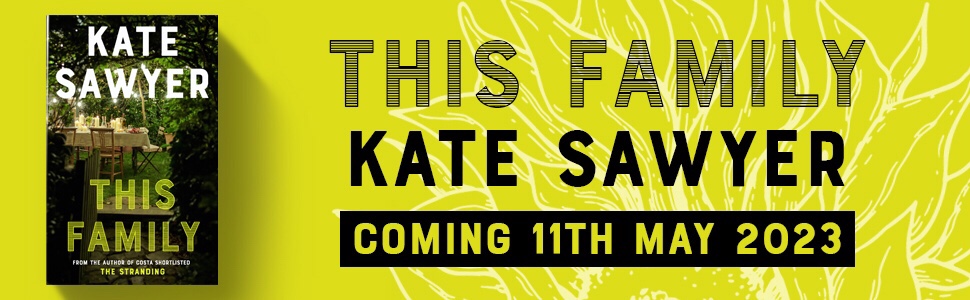
This Family by Kate Sawyer

I fell in love with Kate Sawyer’s imagination and writing skill when I read her debut novel The Stranding, so I was excited when the Squad Pod were able to confirm her new novel for our May book club. I didn’t know what to expect, whether there would be more of the same dystopian themes and emotional intelligence that I’d loved before or something completely different? This Family is different in that it’s set on one day where a family, with all it’s fractures and memories, are celebrating a wedding day. I often read books where I know I’m getting only a fragment of a much bigger picture. Kate Sawyer writes on several levels at once, from the personal to the universal. Each character has their inner world, their current outer world, other times and events, other people’s perspective on the character and events, then national and international concerns. It’s like someone shaking out the contents of my mind into a big jumble and seeing every single thought: I need to get some bread, last night’s dinner party was boring, thoughts of another dinner party years ago where I said something stupid, a worry about my dad’s health, thoughts on the book I’m reading, concern about the state of the health service and the war in Ukraine. Kate constructs her characters with all those levels creating a tapestry of this family’s life and how they all fit together to make a beautiful whole.

This was one of those books where I was conscious of empathising with an older character – Mary – who is getting married today and wants to have just one day where everyone behaves and is thinking of her happiness above their own concerns. She wants Phoebe to stay sober. She wants Emma to speak to her sister. Could her first husband Richard not be a dick? That’s all she wants. Just one day. As the family come together we see aspects of the day from different perspectives with all of the details I’ve mentioned. We see Phoebe’s inner thoughts. Then Mary’s thoughts and impressions of Phoebe. Rosie brings up a global concern – usually climate change, but Mary says it’s banned for one day. There is talk of COVID, the financial crisis, and even small boats crossing the Channel. Life is a tapestry of all these things, multi-layered and with contrasting colours. Kate gives each character their section, but she includes those events over the last few years that have stopped us all in our tracks like 9/11, theBoxing Day tsunami, the London terror attacks. Mary’s thread of worry when she hears of the tsunami, knowing one of her daughters is in Thailand. The thought she might be hurt pushing aside all irritations and harsh words. As a worker in the NHS Rosie’s proximity to the terror attacks and the pandemic cause other’s concern. This family is a jumble of memories, hurts caused, joint history, change, and then those moments of sharp focus when all that matters is their love for each other.

Their relationships are complex and at first it’s hard to know who everyone is and how they relate to each other. In fact the story of Mary is told so slowly I didn’t know who she was marrying until at least half way through the book. Going back over time, characters were married to different people and the relationships change. Even the sisters relationships with each other turn out to be complicated, yet they are still family. Emma’s story hit me deeply, because it was a story of childlessness and grief tearing lives apart. Emma married Michael, who was Phoebe’s best friend at university. Their marriage suffered due to pregnancy loss and when they lose their son, just as Emma was starting to think everything would be okay, it’s Mary that she asks for. She shuts Michael out and starts divorce proceedings, holding tightly to her feelings and unable to take on anyone else’s feelings of loss. Yet Michael will be at the wedding and will Emma be able to face him? There’s also her sister Phoebe to face and she has had a family, including a newborn. There’s a lack of communication between these two sisters, all pent up anger, jealousy and loss that they must put aside at least for today. When the truth of their rift is revealed the scene physically winded me. I felt for Emma, but could also see she’s her own worst enemy at times. It made me think about my own childlessness and the things people have said to me that hurt deeply at the time, but I could see if I held on to them I was hurting myself. At a time of great loss Emma cuts out the very people who might have helped and has missed seeing her niece and nephew.

Phoebe is a real talking point to and discussing her with other members of the squad has been enlightening, with many disliking her intensely. I could see where she’s hurt people with her reckless temper and with her addiction. Phoebe is now sober and married with a family, somewhere it’s hard to imagine her being when we delve into her past. I could understand how the family feel cannibalised by Phoebe’s successful newspaper column and her book, Mary particularly. She tried not to read it because she didn’t want to be blindsided by something her daughter recalls, in her own inimitable way. Phoebe needs her family, but their relationships with her are being slowly devoured, sentence by sentence. I found it interesting that when others recall terrible things Phoebe has done in the past, she really couldn’t see their position because she’s clouded by drink. She feels sorry for herself and can’t see past the self pity to wonder how others feel. As she recalls the terrible thing she said to her sister all the feelings of shame come bubbling to the surface, but she repeats a mantra to herself – ‘I do not hate myself; I hate the actions of my addiction’. She accepts that even though she has made amends, Emma doesn’t have to forgive her or accept her apology. Phoebe can only forgive herself.

I loved the meta-fiction element of how the story is told. Mary comments on the nature of stories, how the same event can be viewed differently by every person who was there just as the book’s structure shows. The wedding, when it finally arrives, feels like a natural full stop. As Mary looks out of the kitchen window and sees the three sisters laughing under the tree that made her want this house, she sees closure. As they laugh in the dappled un light and Emma holds her nephew Albie for the first time something has healed. This beginning – the start of Mary and her husband’s married life – is also an ending. He commits to a new chapter, leaving his first wife behind, but knowing that both he and Mary share their memories. Mary is moving from the house that the sisters have spent their whole lives in. She knows she will miss that tree. But she will no longer have the care of her previous mother-in-law, Irene. She observes that this day is only the end of a chapter, not the end of the book. More will happen, shown in that surprising fragment of an ending. We long for the closed answer, the neat and tidy ending, but that’s not life. Life is unexpected, messy, cruel and joyous. Then the author throws in a shock we aren’t expecting and despite Phoebe having done so much damage to this family, I didn’t want this ending for her. Yet her daughter Clara is only looking back, a memory she grasps at but can’t fully know. Is it a true memory, or is it a memory constructed from other people’s stories of that day? The author is always questioning how we construct reality, whether there is one true account of an event, or whether the story is fragmented, fluid and ever changing? This was a fascinating read psychologically and really made me think about how others see events we’ve shared and how families choose to overlook each other’s faults and bad behaviour, to come together and choose love, again and again.

Published by Coronet 11th May 2023

Kate was born in Bury St Edmunds, Suffolk, UK where she grew up in the countryside as the eldest of four siblings, after briefly living with her parents in Qatar and the Netherlands. 

Kate Sawyer worked as an actor and producer before turning her hand to fiction. She has previously written for theatre and short-film. Having lived in South London for the best part of two decades with brief stints in the Australia and the USA she recently returned to East Anglia to have her first child as a solo mother by choice.

Posted in Netgalley, Publisher Proof

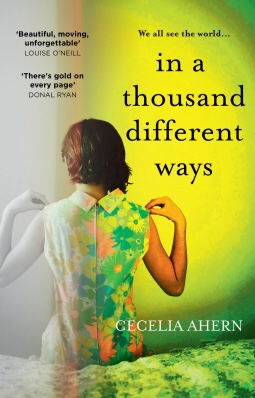
In A Thousand Different Ways by Cecilia Ahern

Cecilia Ahern gets better and better. I loved Freckles, which I’d tried despite hating her early books (especially P.S. I Love You, a book I hated with such a passion I wanted to throw it on the fire). This was such a profound book and touched me deeply. It was no stretch to believe in our heroine Alice and her ability to see people’s emotions as colours. I could also empathise with how difficult it is for her to cope with. I identified with our heroine so strongly, both physically and mentally. To explain, ever since I was diagnosed with MS I get strange crossed wires with my senses, especially around sight and taste. If I see a beautiful display of daffodils, I suddenly taste delightfully sour sherbet lemons and my mouth waters to the point of pain. Every so often, if I’m anxious, the smell and taste of Mum’s cottage pie drifts in and I can actually experience it as a physical sense. It’s obviously something that’s comforting to me. These experiences are as vivid and real as if what I smell and taste is directly in front of me. I think this ability to make strange connections and perceive senses in different ways also stretches to other people’s emotions. There are times when someone walks into a room when I can feel their emotion as strongly as my own. It goes beyond a knowledge of body language, I can actually feel their anger, confusion, grief or joy in my own body. As you can imagine this has been incredibly useful in my counselling work, but it’s also completely exhausting, especially when a lot of people are around.

Alice is from a dysfunctional family and we’re thrown directly into their daily life, where elder brother Hugh and Alice are desperately trying to keep their family together. Alice has to get her younger brother up and ready for school, trying so hard not to wake their mother Lily and incur her wrath. Sometimes when they return Lily still hasn’t surfaced, but if she has it’s still best to remain under the radar because she’s usually irritable, lethargic and unable to connect with her children. Other days they may come home and find Lily up, dressed and full of energy. She may be frantically cooking pancakes, multiples of them, while working out the overheads of running a mobile pancake van. This tendency to flit between extremes is spoken of in whispers between the children, quick warnings to brace themselves or expect the worst. One day after school Alice comes home and finds Lily still in bed, even worse there’s an eerie blue mist emanating from the bed and filling the room. Alice fears the worst and rings an ambulance, then runs into her room and hides. It’s only when she hears her mother screaming and swearing at the paramedics that she realises Lily is alive. What’s baffling to Alice is that no one else seems to see the blue colour emanating from her mum.

I absolutely loved the way the author described Alice’s adjustment to having this vivid colour display wherever there are people. In the school environment it’s a nightmare for her, everyone gives off a different mix of colours, moving and flashing at her eyes until she starts to suffer migraines. Her insistence on wearing sunglasses to school brings her to the teacher’s attention and they think she’s playing up and being insolent. Hugh knows though and seems to realise instinctively that it’s part of Alice’s hyper-sensitivity; the colours are simply a physical manifestation of her ability to feel other’s emotions. Alice is what might be called an empath, she has a highly tuned radar for the moods and sensitivities of people in close proximity to her. As a child she sees the negatives in her situation, mainly because she doesn’t have autonomy. If Lily is blue, red, or at worst black, there’s nothing Alice can do to avoid it. She can get out of the house if Lily hasn’t seen her, but that’s not always possible, leaving her at the mercy of her mother’s mood. The author brilliantly conveys Alice’s feeling of powerlessness and the fear she feels as she comes home, unsure of what will happen when she goes inside. Scenes where Lily is at her most angry, in one scene towards Hugh and his plans to go to university, the furious and messy black colour Alice can see is really menacing. Yet they go on hiding Lily’s condition, because the alternative is social services and possibly having to split the family up.

I found myself really worried for Alice, because in the swirl of colours and emotions that assail her every hour of the day how can she ever find peace? Between that and the terrible situation at home there’s never a moment for her to develop herself. We only know who Alice is in relation to everyone around her. She becomes subsumed by their emotions, needs and wants to such an extent that her own don’t get a look in. I was devastated by her choice to stay at home after leaving school with Lily and her little brother, who’s rapidly becoming a violent criminal. His antagonism towards Alice comes from being the baby of the family and not yet being able to view his mum objectively. Lily has the ability to threaten and manipulate quietly, deliberately under the radar of her youngest son. So he only sees Alice’s attempts to stick up for herself, which cause such a furore that in his eyes Alice is the problem. I was worried that she would never be able to leave home, follow a career or get married and have her own children. She has become so emotionally literate though and still worries about her family members, even the ones who treat her badly. I was worried she wouldn’t be able to discover her authentic self and develop the life she wants without leaving. One catalyst for change is the man she happens to see on his way to work. He stands out instantly because he isn’t giving off any colours and Alice is so fascinated that she follows him. Andy is a strange mix of both restful and mysterious. Alice has never had to work so hard on getting to know someone, it’s both scary and intoxicating to peel back the layers. However, when they’re just ‘being’ – taking a walk or watching a movie – Alice can relax fully, because she can’t sense all the colours lurking underneath the surface. I was intrigued to know whether this could mean he is Alice’s ‘one’, but also whether there were other colourless people in the world.

From the perspective of this reader with a disability it was so interesting to watch someone negotiate the world with a difference like this. I’d probably call it an ability rather than a disability. I loved discovering whether Alice grows to cope with her colours or moves beyond the difficulties of her childhood. As we moved through her life I forgot she wasn’t a real person, that’s how well-rounded a character she is. I felt like I was having a conversation with one of my counselling clients because of the depth the author goes to and the richness of her inner world. It was a surprise to see how her age and experience changes her relationships with other characters. I found the final sections of the novel, deeply moving and strangely comforting. I felt privileged to have moved through life with this extraordinary woman.

Meet the Author

After completing a degree in Journalism and Media Communications, Cecelia wrote her first novel at 21 years old. Her debut novel, PS I Love You was published in January 2004, and was followed by Where Rainbows End (aka Love, Rosie) in November 2004. Both novels were adapted to films; PS I Love You starred Hilary Swank and Gerard Butler, and Love, Rosie starred Lily Collins and Sam Claflin.

Cecelia has published a novel every year since then and to date has published 15 novels; If You Could See Me Now, A Place Called Here, Thanks for the Memories, The Gift, The Book of Tomorrow, The Time of My Life, One Hundred Names, How To Fall in Love, The Year I Met You, The Marble Collector, Flawed, Perfect and Lyrebird. To date, Cecelia’s books have sold 25 million copies internationally, are published in over 40 countries, in 30 languages.

Cecilia Ahern writes on her Amazon author page that the thread linking her work is in capturing that transitional period in people’s lives. She is drawn to writing about loss, to characters that have fallen and who feel powerless in their lives. She is “fascinated and inspired by the human spirit, by the fact that no matter how hopeless we feel and how dark life can be, we do have the courage, strength and bravery to push through our challenging moments. We are the greatest warriors in our own stories. I like to catch my characters as they fall, and bring them from low to high. My characters push through and as a result evolve, become stronger and better equipped for the next challenge that life brings. I like to mix dark with light, sadness with humour, always keeping a balance, and always bringing the story to a place of hope.”