Posted in Random Things Tours

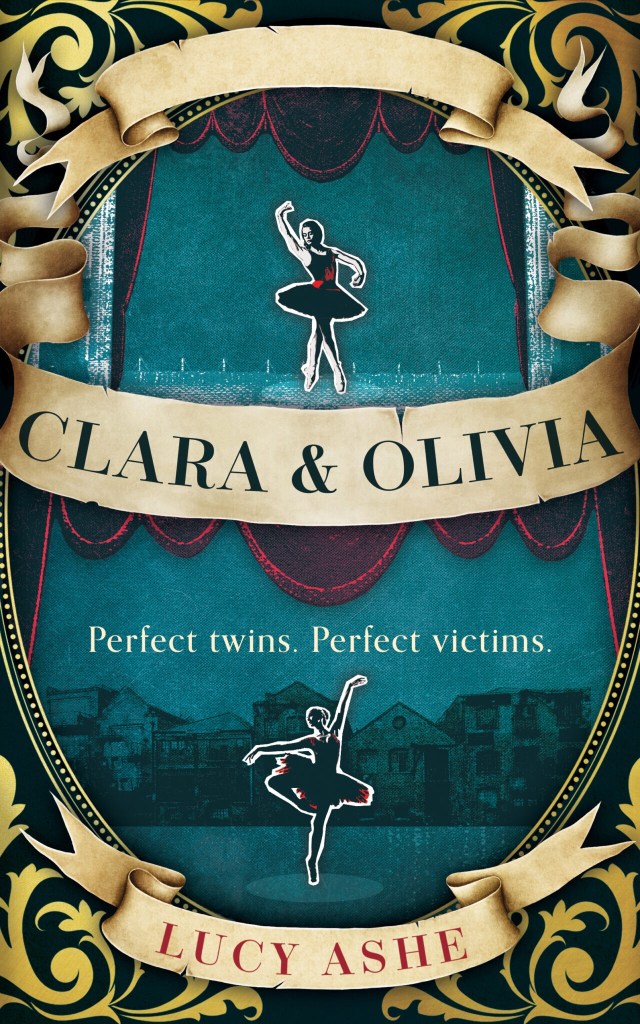
Clara and Olivia by Lucy Ashe.

“Surely you would like to be immortalised in art, fixed forever in perfection?”

I would kill to dance like her.

Disciplined and dedicated, Olivia is the perfect ballerina. But no matter how hard she works, she can never match identical twin Clara’s charm.

I would kill to be with her.

As rehearsals intensify for the ballet Coppélia, the girls feel increasingly like they are being watched. And, as infatuation turns to obsession, everything begins to unravel.

We’re in Black Swan territory here with the company at Sadler’s Wells as they rehearse Coppélia, which couldn’t be more apt for the story of Clara and Olivia. Clara and Olivia are identical twins, shaped by their ballet mad mother to become the perfect ballerinas. The girls are so identical that in order to assert her own identity Olivia wears her hair in a higher bun than her sister, with a rose attached. There are ballerinas who must be the epitome of perfection and blend in with the chorus so the audience sees perfectly synchronised ballet; the company as one rather than individuals. Olivia has taken her mother’s lessons to heart and is that perfect ballerina, she blends perfectly into the company, but she’ll never be the prima ballerina. Clara has that something extra.

Coppelia is about a man who creates a dancing doll, the image of a perfect ballerina. It’s so beautiful that Franz, a young man from the village, falls in love with it and sets aside his real sweetheart Swanhilda. To teach him a lesson Swanhilda dresses as the doll and pretends it has come to life. While the ballet is a comic one there is a more disturbing similarity, between the doll and the ballerina when each dancer stands at the barre every morning, identical in uniform and in movement. These are the parts the audience doesn’t see, that daily dedication to the same movements over and over until they are second nature. We are also blind to the years before this, where each dancer has persevered through pain and injury or given up sleep overs with friends, teenage boyfriends and even school work to become as light as air on the stage. To move like butterflies, while their worn out and broken shoes are the equivalent of Dorian Gray’s picture in the attic. When watching a ballet it’s not hard to imagine a giant puppet master behind the scenery controlling this whole row of ballerinas so they move as one. With the echoes of Black Swan in my head I was feeling a creeping sense of unease and psychological drama, both around the sisters and whoever it is who watches them.

There are two men in the book, employed or contracted by the ballet company and they too are caught up in this theme of appearances being deceptive. Samuel is a giant. A large, ungainly man whose looks mark him out as different. People would struggle to imagine that it is he who makes their pointe shoes; something that looks so delicate should not be made by people who look like him. When he finds out that the shoes he’s making are for Olivia Marionetta he knows he must find some way to mark them out as different from all the others, just as he noticed her among the other dancers in the company. He always writes the dancer’s name across the sole in pen, but her shoes should have something more. He takes his inspiration from the white rose he has seen pinned just about her bun and engraves it into the sole then, as he leaves the shoes in her pigeon hole, he places a white rose on top. Samuel is lucky that despite his size he can travel around the theatres and dance studios largely unnoticed. His contribution is unseen and therefore, he is invisible. So he has no doubt that Olivia won’t guess who has paid her this tribute, even if he has been hanging around the rehearsal room. He noticed that despite looking identical, the girls are not the same. Olivia is obedient and keeps her eyes cast down during rehearsals, not daring to challenge the dance mistress. Whereas Clara scares him, she knows she is an excellent dancer and there’s a challenge in her moves and the way she looks directly at the dance mistress. When given direction, she turns away and rolls her eyes at the other dancers. Clara knows she outshines the others, but he hopes his shoes will make Olivia feel adored too.

Nathan is even closer to the dancers during rehearsal because he is their practice pianist. He and Clara go out with the company at night while Olivia stays home, soaks her feet and mends her shoes for the following day. Her legs will be refreshed and her bag carefully packed, whereas Clara knows her feet will ache from practice, followed by dancing through the clubs till the early hours. She also knows that when she opens her bag, her tights will be full of hair grips. Usually the girls share clothes, but Clara has been wearing a dazzling green coat that Nathan bought her. Of late she has started to find the coat a little claustrophobic, the belt too restrictive and the shoulders too heavy. Nathan too seems to get a little closer each time, his hand always at her waist and his knee pressed tightly against hers under the table. She was also a little unnerved at the line of verse he scribbled when they were playing a game – ‘A lovely apparition, sent to be a moment’s ornament’ – while she isn’t sure what it means, something about it bothers her and I thought back to the puppet ballerina Coppelia. Nathan appears to be the perfect companion for a beautiful young dancer, but the closer he gets the more she wants to pull away. She imagines his houseboat, the ideal home for a young bohemian musician, but despite it being a few moments away from her flat he never takes her there. Is the look and idea of her more alluring than the reality? In their own private rehearsal he pushes her, far beyond tiredness and hunger. In the dressing room after he apologises, she notices how he looks at the dancer’s jumble of make up, jewellery and bits of costume that haven’t been returned to wardrobe. The one thing he becomes fixed on is a tiny figurine of a ballerina, like the ones you might find in a girl’s jewellery box, permanently on point and turning endlessly without exhaustion or hunger to mar her beauty. No real woman could be so perfect.

Although I found the novel a little slow at first, but I soon realised that the inner thoughts and feelings are slowly building towards action. Once strange things start happening around the theatre the pace picks up and I became intrigued. In the well under the theatre, where the dancers like to go for pre-performance rituals, a single shoe is found floating in the water like an evil portent. Then life changes start to come tick and fast. Clara receives an offer she has never imagined, but it will mean moving away from Nathan and choosing independence from her sister. Their mother, the woman who inspired their career choice, is deteriorating in a nursing home. Her imminent passing is another sign – do they still need to be in each other’s pockets? Usually they need their combined strength but without their mothers rigid ideals to live up to could they go it alone? The author hints at these changes of identity, with one sister choosing to borrow the other one’s clothes, perhaps hoping for a little of their attitude too. She often feels like a mere echo of her sister, but I worried that this ‘doubling’ would land one or both of them in further danger. This tension is offset by Samuel’s story, of being led away from an obsession towards something more real. Living instead of watching. If the ballerinas represent perfect objects of desire, he is being offered a real relationship. But is it Samuel who watches the twins and can he see that someone to love and support you is more important than appearance? As the hidden desires and obsessions of these characters come to the surface and explode into action more than one of them will be in danger. This thriller has real atmosphere and characters with fascinating psychological issues that drive the plot.

Published 2nd Feb by Magpie Publishing.

Meet the Author

LUCY ASHE trained at the Royal Ballet School for eight years, first as a Junior Associate and then at White Lodge. She has a diploma in dance teaching with the British Ballet Organisation. She decided to go to university to read English Literature at St Hugh’s College, Oxford (MA Oxon), while continuing to dance and perform. She then took a PGCE teaching qualification and became a teacher. She currently teaches English at Harrow School, an all-boys boarding school in North London. Her poetry and short stories have been published in a number of literary journals and she was shortlisted for the 2020 Impress Prize for New Writers. She also reviews theatre, in particular ballet, writing for the website Playstosee.com.

Posted in Random Things Tours

Expectant by Vanda Symon

Expectant is the fifth novel in Vanda Symon’s Detective Sam Shephard series and I finished this late last night so I can reveal it’s brilliant and full of tension as the countdown to catch a murderer coincides with the last weeks of Sam’s pregnancy. This great series, set in Dunedin New Zealand, never lets me down. Sam is a fantastic character, who I’d happily go for a drink with. She’s professional and has one of those faces that people trust immediately, meaning she can elicit new leads and confessions from the unlikeliest criminal. She’s stubborn and outspoken, very ballsy and, although she tries her best not to use it, has an incredible swearing vocabulary. She and partner Paul are expecting their first child and she’s working up to two weeks before her due date. They haven’t found time to organise their endless piles of baby kit into a nursery when a case comes in that Sam can’t help but be drawn into. A group of kids who are hoping to tag the wall down a quiet side street find a woman covered in blood and only one of them has the conscience to stay and ring an ambulance. He’s willing to face the music for the graffiti if he can save her. At first it’s thought to be a stabbing, but it soon becomes clear this is something more sinister. A pregnant woman has been subjected to a rudimentary Caesarian and left for dead, even worse there’s no sign of the baby. This must be someone with a certain amount of medical skill. For Sam, who’s at her most vulnerable, it’s scary to think this might have been someone the victim trusted and it makes her more determined to catch her killer.

I found the pace slightly slower than previous novels, but I found that fitting considering that Sam is slowing down too. The days are winding down towards her maternity leave and her due date. In fact the days are dragging as her boss is reluctant to have her start something as important as a murder case before her leave starts. He feels it would be disruptive to the family and her colleagues, so she’s on desk duty, trawling through evidence. That’s before we factor in her physical condition, she’s so big that she gets stuck in some automatic barriers; a brilliant comic moment in this dark subject matter. Luckily it’s partner Paul on hand to lift her clear. Also, with unusual sensitivity, the boss thinks that placing a pregnant woman with the family would be distressing for them. Especially until they find the baby. This isn’t just a murder case, the baby is missing and the reasons why someone would steal a newborn baby are running through the heads of every team member. However, this is where Sam’s pregnancy could be a super power, being an expectant mum means her thoughts are different to the others. Could they provide a breakthrough?

The theme of mothers and their children, particularly daughters, is front and centre in this story. Whether it is Sam’s relationship with her own mother who has concerns about her working this close to her due date. There’s also Sam’s best friend, currently still living with her but due to move away imminently. She has a unique position in Sam’s life and is always there as a shoulder to cry on, but here she provides some important psychological insight. Sam’s need to be involved with this case could be linked to the spare room full of decorating supplies and boxed nursery furniture. There are so many changes coming, might Sam be paralysed from moving forward? Of course it is Sam who makes some major breakthroughs in the case in the final moments before she clears her desk. One of which seems to be a coincidence at first. As the final chapters started to race and fill with tension my heart was pounding. Just as Sam has let her guard down and accepted what’s next in her life, everything she’s looking forward to could be ripped away from her. In fact, if you are pregnant, maybe keep this one for after the birth. I was genuinely scared for her and even though she’s the one who most understood the killer’s motivations, will she still be shocked by their identity? You’ll be holding your breath to the very end with this one. Sam’s vulnerability is terrifying and I was praying that she would be okay while reading. As if she’s a living and breathing human being. That’s the power of Vanda Symon’s writing and how much of that magic she’s poured into this brilliant character.

Published 16th Feb 2023 by Orenda.

Meet the Author

Vanda Symon lives in Dunedin, New Zealand. As well as being a crime writer, she has a PhD in science communication and is a researcher at the Centre for Pacific Health at the University of Otago. Overkill was shortlisted for the 2019 CWA John Creasey Debut Dagger Award and she is a three-time finalist for the Ngaio Marsh Award for Best Crime Novel for her critically acclaimed Sam Shephard series. Vanda produces and hosts ‘Write On’, a monthly radio show focusing on the world of books at Otago Access Radio. When she isn’t working or writing, Vanda can be found in the garden, or on the business end of a fencing foil.

Posted in Personal Purchase

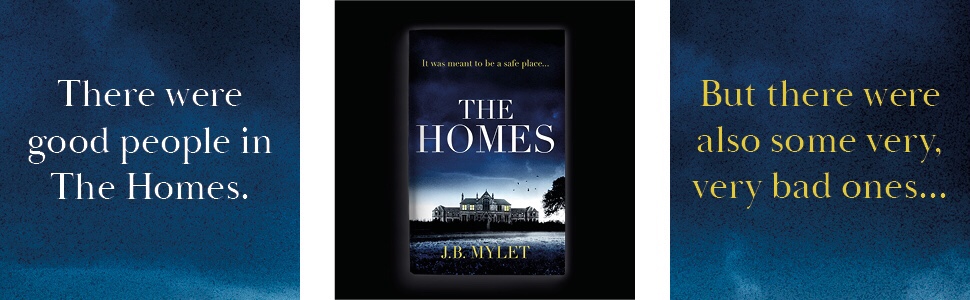
The Homes by J.B. Mylet

Lesley and Jonesy have been in foster care together ever since they can remember, in the same room and often in the same bed if Jonesy creeps in late at night. Our narrator is Lesley and she stands out as a little different from the other girls in the homes. She’s clever and goes to the grammar school instead of the one on site. She’s good at maths and seeing patterns in things, so what starts happening at the homes seems to her like a puzzle she can solve. Because someone at the homes is killing girls, possibly raping them and killing them. Who could it be?

The Homes are a sprawling institution made up of 30 cottages filled with the orphans of Glasgow and those needing care. So large, it has it’s own hospital, church and school, with every cottage run by a house mother and father with a Christian ethos. Set in the 1960’s and based on the Quarrier’s orphan village near the Bridge of Weir, where the author’s mother spent some of her childhood. He writes these girls as very isolated and dealt with at a distance, not just from their families, but from the staff too. He throws us in at the deep end with a morning that Lesley’s been dreading. Today she has to face the school bully Glenda, who lives a few cottages up. The adults know that Lesley is very likely to take a beating, but they do nothing. As she leaves for her school bus, Lesley can see a crowd of girls gathering at Glenda’s gate hoping for blood. It’s fair to say they get a bit of a surprise when the encounter doesn’t play out the way they expect. I felt as if the children were treated like animals, like when I’ve brought rescue cats home and left them to sort out their hierarchy amongst themselves. Even so, I would worry if any of them were distressed or fighting. These kids are fed, watered and disciplined, but they’re not cherished.

Only once called by her Christian name, Morag is known as Jonesey and she is a larger than life character. I loved the little characteristics that Lesley relates to us, such as the giggling in church, the constant chatter, and the way she often slips into Lesley’s bed at night but still isn’t restful. Even in her sleep Lesley is often woken by Jonesey’s jerking limbs, she’s like a puppy whose brain is asleep but whose body is still on the go. She’s absolutely irrepressible and incredibly loyal to Lesley, often waiting outside for her bus to arrive in the early evening, wriggling like that excited puppy again. By contrast, Lesley is outwardly very quiet. Her inner world is lively though, bright and full of questions. She has a dogged determination that helps her at school with tricky maths problems, but proves to be a nuisance to the police and the perpetrator of these terrible murders. Unfortunately, her amateur sleuthing is not quick enough to save the third victim. In between the case we learn a lot about the upheaval Lesley has suffered in life. She’s visited by her gran mostly, but she isn’t great at answering all the questions Lesley has. She’s clearly very fond of her granddaughter, but doesn’t want to get into the minutiae of why her mother placed her in care. Her mother visits less, but when the answers finally come there are painful truths to process. I was so glad she had Jonesey and her therapist Eadie but I worried for her going forwards and eventually leaving care. I bonded with Lesley, enjoying her intelligence and sense of fun as well as the way she coped with difficult situations.

A bit like Lesley I suspected every character along the way, knowing that people who work with children are not always doing it for the right reasons. There are people at the homes who are there for their own ends. There are various levels of abuse going on in the community. They’re forced into a religious upbringing they may not want and the expectations, particularly of girls, is tied up in that Christian morality. The discipline is down to each house parent and is always strict, but could also be violent and humiliating. At worst these children are preyed upon by the most horrific kinds of abuser and the tension builds towards a conclusion that not only unmasks a killer, but blows the lid open on everything that is wrong with the institution. I thought the historical setting was captured incredibly well, not so much the location but the emotional landscape of the 1960s. This was a time of secrets, when children were seen and not heard and definitely didn’t have rights. A time when young women were still shamed for their burgeoning sexuality and perfectly normal urges and their consequences. This was the time when my mother was growing up and it felt as if the author had the context just right. I thought the author perfectly balanced Lesley’s personal realisations and growth, with the tension of the murder investigation. As the inhabitants of Lesley’s cottage sit down for Sunday lunch with their houseparents, the Pattersons, she has a very grown up revelation. In the space of her week, this is the only time they feel ‘like a big normal family’ and it’s becoming apparent that all adults will eventually let her down. By the end I realised Lesley had drawn me into her story to such an extent I was wondering about her future. Despite the murders being solved, I was reluctant to close the book and leave her behind.

Published by Viper, 26th May 2022.

Meet the Author

J.B. Mylet was inspired to write The Homes based on the stories his mother told him about her childhood. She grew up in the infamous Quarrier’s Homes in Scotland in the 1960s, along with a thousand other orphaned or unwanted children, and did not realise that children were supposed to live with their parents until she was seven. He felt this was a story that needed to be told. He lives in London.

You can follow James on Twitter @JamesMylet, or find him on Facebook.

Posted in Netgalley

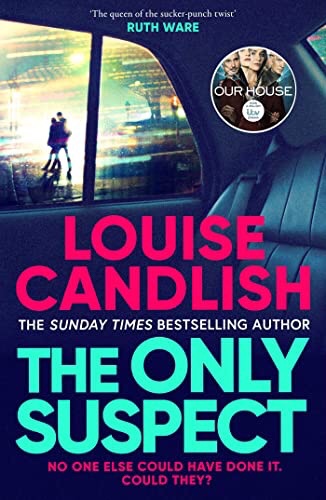
The Only Suspect by Louise Candlish

Alex lives in one of a row of cottages, once intended for workmen, now homes for middle class Londoners looking for more space in the suburbs. He lives with wife Beth and their dog Olive, enjoying quite a settled and peaceful existence. Even Alex’s job as an auditor has a certain amount of quiet respectability about it – some might even say boring respectability. However, when Beth’s pregnant friend Zara ends up without a roof over her head, she becomes a catalyst for change in the house and in Alex and Beth’s marriage. She becomes a third party in the relationship, staying much longer than expected and even worse, she and Alex don’t get on. They start to butt heads over his indifference to Beth’s interests, such as trying to get the pathway opposite them opened up and turned into a community nature trail. As Zara and Alex continue to clash, Beth notices things – for example his indifference to Zara’s pregnancy, especially considering they’ve been told they can’t have children – and this starts to bother her. He has no social media presence, won’t have his photo taken and is very threatened by Zara’s questions about his past. When he explodes, after Beth buys him an Ancestry DNA kit for his birthday she seriously starts to wonder. What is her husband so scared about?

The author sets this uneasy dynamic in the present day, but interweaves it with another timeline, around twenty years in the past. A young man called Richard narrates his own love story with a temp girl he meets in the foyer of their offices. She has just started to eat lunch in the foyer because there’s a new frozen yoghurt machine. After a few lunchtimes chatting in the building, they start meeting for lunch, either sitting outside or taking strolls into St. James’s Park. As they get to know each other, Richard is starting to fall for Marina, but their time together is so rationed. He can never take her out after work, she goes straight home. She can never stay the night, except for Thursdays, but even then she arrives later in the evening and disappears early next morning. They never go to Marina’s flat. In fact he’s surprised when she agrees to come to his birthday party, organised by new flatmate Rollo. Rollo is sure he knows what’s going on and can’t believe Richard is so naïve- Marina is hiding something, or perhaps someone.

Louise Candlish really is clever when it comes to twists and turns and this novel has a couple of whoppers. Some I didn’t see coming at all, both in the past and the present. There are a couple of red herrings too, just to make the story more interesting and send the reader down a few blind alleys. The characters are nuanced and full of faults, making it harder to work out which ones have the normal human flaws and which are just downright evil. I found Beth’s friend Zara so annoying, she’s inquisitive and inserts herself into private conversations and really does seem to have a bee in her bonnet about Alex. She’s manipulative too, using Beth’s grief at being unable to have a child to get comfortable in their home. It felt like she had no intention of leaving, involving Beth more and more in the pregnancy and actively baiting Alex in front of his wife. It could be that she just thinks Alex treats her friend badly, but it could be that she wants Beth and the house to herself. In our past section I felt some sympathy with Richard because he was just so trusting and is let down badly. As the events in the past start to escalate the book becomes so tense. I was addicted, reading the last half in one long session. Alex is as tense as we are and his desperation to stay in the background of Beth’s community venture starts to look very suspicious. Beth is angry because he’s being unsupportive, but it’s possibly much more than that. I could see that he was experiencing real fear, but what does he think will be discovered and what is the link to the nature trail? It’s a labyrinthine plot but I didn’t miss a thing, totally focused on the outcome of this mystery. Candlish has an incredible knack for creating these middle class communities that look the height of respectability from the outside and turn out to be anything but. Thankfully, I didn’t get attached to any of the characters so I could take a twisted sense of pleasure in watching this particular house of cards come tumbling down. This book is addictive, intense and as always, an absolute treat.

Published 2nd February 2023 by Simon and Schuster UK

Meet The Author

Louise Candlish is the Sunday Times bestselling author of fourteen novels. Our House, a #1 bestseller, won the Crime & Thriller Book of the Year at the 2019 British Book Awards, was longlisted for the 2019 Theakston Old Peculier Crime Novel of the Year, and was shortlisted for the Goldsboro Books Glass Bell Award. It is soon to be a major ITV drama made by Death in Paradise producers Red Planet Pictures. Louise lives in London with her husband and daughter. Visit her at LouiseCandlish.com or connect with her on Twitter @Louise_Candlish.

Posted in Squad Pod

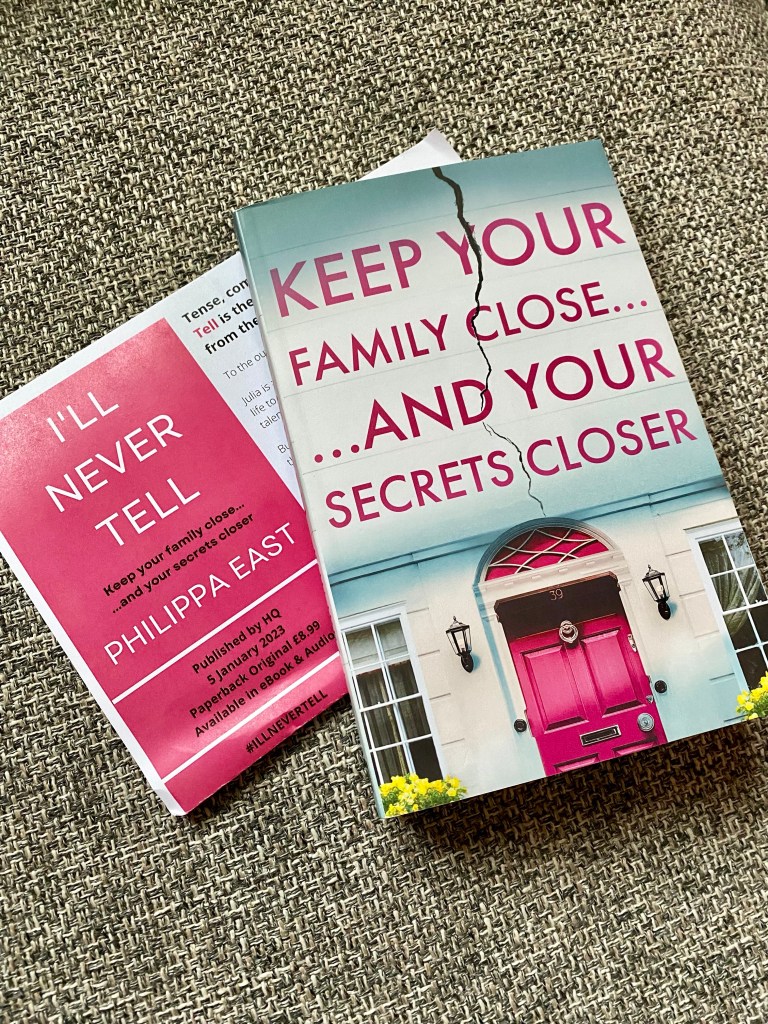
I’ll Never Tell by Philippa East

Keep your family close and your secrets closer….

To the outside world, the Goodlights are perfect.

Julia is a lawyer, Paul a stay-at-home dad who has dedicated his life to helping their daughter Chrissie achieve her dreams as a talented violinist. But on the night of a prestigious music competition, which has the power to change everything for Chrissie and her family, Chrissie goes missing. She puts on the performance of a lifetime, then completely disappears. Suddenly every single crack, every single secret that the family is hiding risks being exposed.

Because the Goodlights aren’t perfect. Not even close.

Wow this book is tense! Tense enough to give you a migraine. East has a way of writing that flows so well, but is paced to give a really slow drip drip of information. It’s clear from just the day to day activities of the Goodlights that something is ‘off’ and my brain was skittering all over the place to work it out, rather like Bambi on the ice. The author pulls off a clever trick, by letting the Goodlights speak for themselves. She’s not explicit, but their inner talk and actions allow the evidence to pile up; something is badly wrong here, but the author withholds just enough that we don’t know what is that is. As I read on, my brain was coming up with more and more questions. What’s with Julia’s parents and their strange attitude towards women’s behaviour? Why is Paul so obsessed with his stepdaughter’s career and so rigid with her regime? Is it the result of a thwarted desire in his own life and will Chrissie snap under the pressure? What’s with the strange background conversations between Julia’s mother and Paul? I’m not surprised at all when Chrissie goes missing, the only surprise is that she didn’t go sooner.

I found Paul’s attitude with Chrissie really disturbing. I understand wanting the best for your child, but this is creepy. Not only does he control her potential career and keep her practicing, he looks after her diet, her free time and leaves her with no privacy – even policing her phone, from quickly checking the screen when a notification comes in, to demanding to look through all her messages and emails. Does he have her on such a short lease to prevent something happening, or is he reacting to something that’s happened before? There’s a strange dynamic between Chrissie’s grandmother and Paul. I was disturbed by her attitude towards her daughter and granddaughter with her suggestion that certain behaviours are in the blood and there’s something tainted in their DNA. It’s almost as if they appreciate Paul more than their own flesh and blood. At times Celina speaks to him as if he’s a member of staff. There are pictures hidden in Julia’s childhood bedroom of a time at university when she appears free and perhaps part of a hippy group, implying experimentation with drugs and promiscuity. Celina is concerned that her ‘tainted blood’ has passed to Chrissie and tells Paul ‘I can smell it on her’ giving an unpleasant image of an animal in heat. Was she the instigator of the rigid regime Paul imposed on his stepdaughter or was she merely the gatekeeper? Patriarchies often depend on women to uphold their rules. I felt uncomfortable all the way through this novel, but in retrospect I think this was down to my own experience in an abusive relationship. There’s now something in me that is repulsed by males like Paul exerting power over the women in their family, exerting coercive control and gaslighting those they are supposed to love most. This tells me that the author’s depiction is successful, or it wouldn’t have made me feel this way.

Throughout the novel my brain was drifting back to Jane Eyre and Jean Rhys’s response Wide Sargasso Sea and the anti-heroine Bertha Mason. Bertha (whose name is actually Antoinette) is Mr Rochester’s first wife, doomed to a life locked in an attic, because of her unnatural passions and hereditary madness. She works as a contrast to the still and quiet Jane, who was constantly told to rein in her passionate nature when she was a child. Bertha’s fate could have been Jane’s. However, in her book Wide Sargasso Sea, Jean Rhys gives Bertha a back story where Rochester marries then rejects the wife who was too passionate in the bedroom and enjoyed his advances – the inference being that a wife should meekly accept sexual advances, but not relish them. I felt throughout East’s novel, that a similar misogynistic double standard is at play. When we delve into Julia’s inner world we can see how insidious emotional abuse is, because these ideas are running through her head constantly. She doubts her own instincts and worries that Chrissie’s disappearance is a consequence of her failure to ‘behave’ in the way she’s been taught. Paul and Julia don’t fully communicate either, operating in completely different spheres with him at home and her at work. Law is such a demanding career and Julia works constantly, almost like it’s a penance, rarely interacting with Paul or Chrissie and never involved in her daughter’s strict regime. It’s almost as if she’s abdicated all responsibility for her to Paul, but is that choice or a mistaken belief that he’ll do a better job than her? There’s also the shadowy figure of Francis, someone she doesn’t want near her family and seems to fear. This really is a toxic mix, a family who seem shielded from scrutiny by their money and once you delve beyond appearances, are a million miles away from the ordinary. Will Chrissie be found and is her disappearance down to a malign outside influence as they all suspect? Whatever has happened to Chrissie, you’ll not stop reading till you work out what is so deeply wrong at the heart of this family?

Published on 12th January by HQ

Thanks to HQ and the Squad Pod Collective for my proof copy.

Posted in Sunday Spotlight

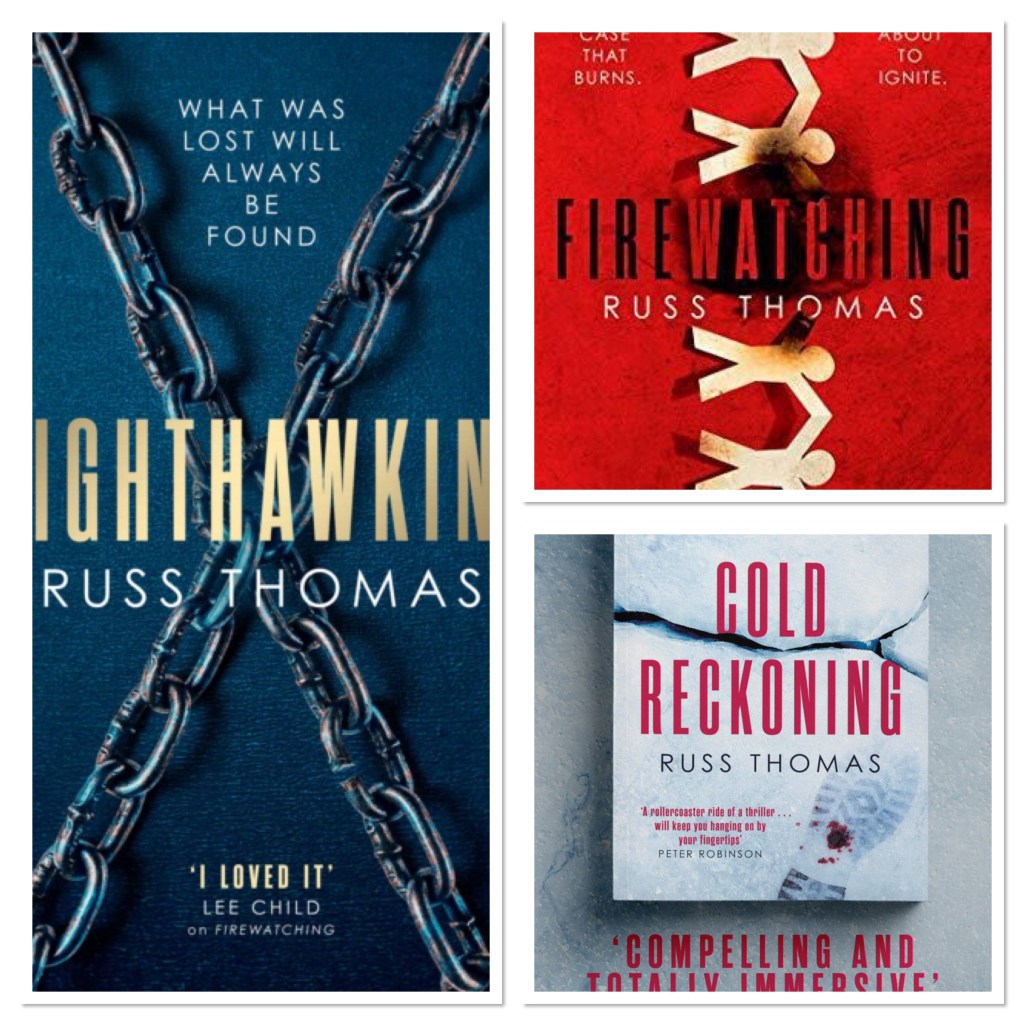
Sunday Spotlight! D.S. Adam Tyler Series by Russ Thomas

I picked Russ Thomas’s last novel on NetGalley because I noticed it was set in Sheffield. Since I live just across the river from South Yorkshire, Sheffield is our nearest big city. It’s my ‘go to’ place for the theatre, concerts and decent shopping. In fact Meadowhall was vital when I was a teenager, because we were pre-internet and if you didn’t shop further afield you would find yourself at a club in the same Dorothy Perkins top as everyone else. So my introduction to DS Tyler was actually the second book in the series called Nighthawking and it was set around the Winter Gardens. I found myself drawn in by the case being investigated, but also by Adam himself. He’s a rather complicated character with a difficult childhood and the trauma of finding his father hanging in the family home when he came home from school. Subsequent investigations into Richard Tyler’s death concluded it was a suicide, brought about by corrupt dealings with organised crime and the fear of being discovered. As if that’s not hard enough to live down, Adam’s godmother and the woman who brought him up is now DCI Diane Jordan. Adam is either treated with suspicion for being corrupt like his father or for being the DCI’s pet. Finally, there’s his sexuality, which shouldn’t have a bearing on his work relationships, but probably does in a macho environment like the police force.

Since I had organised time to spare this December to read freely – a true Christmas gift for a book blogger – I decided to read both the first and the latest instalments of the series. In the first novel, Firewatching, Adam picks up a case that’s both cold and red hot. A body is found bricked up in the walls of a country house, a house that’s lain empty since the disappearance of the owner several years before. From the injuries to the fingers of the body, it’s clear the victim was walled in alive. DI Dogget is on board for the murder case so Adam is called in to work alongside him. However, it’s soon clear that the case does have a connection to Adam and he’s soon hopelessly compromised. Matters in his personal life also become tangled in the case, but most disturbing is that the reader knows someone close to Adam is not what they seem. They’re a blogger, but their muse is fire. How far will they go to entertain their readers? This is a fantastic start to a series, managing to establish a character and his back story, while still presenting a solid and tricky crime to solve. I loved the two elderly ladies linked to the big house, living close by in their little bungalow. They have lived together nearly all of their lives, after a friendship cemented by helping out in the horror of the Blitz where fire destroyed large swathes of London. Adam’s friend was also interesting, a woman civilian in the station who wants to get him involved in the LGBTQ+ group and improve his social life. She is dragging him out pubbing and clubbing when she can persuade him. Police officers have to tread very carefully though in their local pubs and clubs. You never know who you might meet. This is an incredible Russian doll of a case with one crime inside another needing to solved before they get to the truth of the house’s terrible history.

The third and latest novel, Cold Reckoning, is now available in paperback and starts with a very effective cold isolated country walk. Matilda Darke is escaping the claustrophobic house she shares with her mum and the caring role she has now her mum has fibromyalgia. It’s a clear, crisp morning near the lake and Matilda hears a gunshot. Making her way home she stumbles across a man coming out of a cabin. Neither expected the other to be there, but his cold hard stare sends an immediate chill through Matilda and she knows this man means her harm. So she runs and never stops to even look behind her. This opening leaves us asking so many questions. Was this where the gunshot came from? Was she right to be scared? Does the man know Matilda and her walking routine, or was she just in the wrong place at the wrong time? Adam’s life is also upside down, because DCI Diane Jordan, his godmother, has gone missing. This is so out of character he knows something is terribly wrong and with the search for her on his mind he’s called on to help DI Doggett with a very strange case. In a lakeside cabin there are signs of a struggle and blood spatter consistent with a gunshot wound, but there’s no body. Nearby though, a body is suspended in a frozen lake. The man has no wounds and has been dead a lot longer than this lake has been frozen. How do these two things fit together or are they a complete coincidence?

I thought this latest novel was clever, not just the case which again strays close to home for Adam, but the details of the characterisation. From their rather gruff and begrudging start back in the first novel Doggett and Tyler have become a team. There’s a trust that’s built between them and they are keeping a lot of information close to their chests, the knowledge of a possible conspiracy between the police, local dignitaries and organised crime. It might even have a bearing on Adam’s father’s death, but there’s still a lot to unravel. Their close conversations and sudden silences when others enter the room has been noticed. DC Rabbani has come a long way since Tyler seconded her to CID in the first novel. She has great instincts, is good with people and she’s furious that the other two members of the team have been keeping something from her. So furious that she could be persuaded to keep the acting Chief Constable in the loop about their suspicions. Rabbani wants to be part of the team, and although the two detectives only want to protect her, she sees their secrecy as a lack of trust. Tyler is a conundrum. Seeing him try to take steps towards improving his mental health is great, but he can only let some of his guard down. He’s also not learned a lesson about keeping his private life and working life separate. By this third instalment I felt like I’d really come to know these characters and care about them. Added to that, the cold cases really are complex, taking us back into the past and into situations that people have tried to leave behind. Witnesses are reluctant and when they’re being asked to remember twenty years ago their memories can be shaky. DI Tyler is a flawed hero, but he does want to find the truth and bring justice to those who have been wronged. However far back he has to dig to find the answers. Im now looking forward to our fourth instalment.

Meet the Author

RUSS THOMAS was born in Essex, raised in Berkshire and now lives in Sheffield. After a few ‘proper’ jobs (among them: pot-washer, optician’s receptionist, supermarket warehouse operative, call-centre telephonist, and storage salesman) he discovered the joys of bookselling, where he could talk to people about books all day. Firewatching is his debut novel, followed by Nighthawking and Cold Reckoning.

Posted in Netgalley

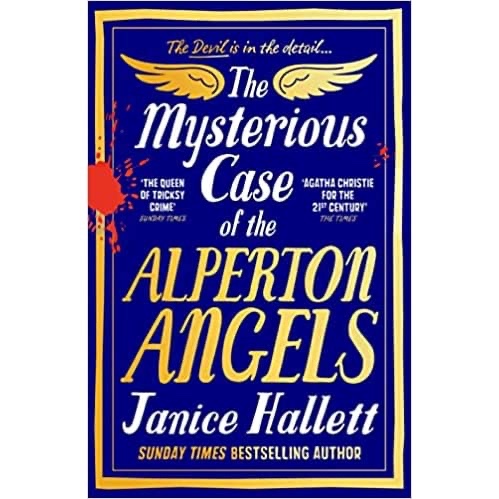
The Mysterious Case of the Alperton Angels by Janice Hallett

I’m going to start with a bold statement. This is my favourite Janice Hallett novel so far. I’ve been lucky enough to finish my blog tours very early this year, so I now have free reading time until January. That doesn’t mean I don’t have a bulging TBR though. My shelves are groaning with books I’ve purchased and physical proofs that I’m behind on. Similarly, my Netgalley shelves are embarrassing! So I still have things to read, its just I can read them in the order and at the speed I want. I’ve also had my usual autumnal multiple sclerosis relapse ( one at the spring equinox and one in the autumn like clockwork) so I’m rarely able to go out and I’m sat resting for long periods. So thanks to that combination of circumstances I was able to pick this up on Friday and I finished it within twenty-four hours. I was enthralled, addicted and so desperate to find out what actually did happen on the night when the police found a strange cult massacre in a deserted warehouse.

Open the safe deposit box. Inside you will find research material for a true crime book. You must read the documents, then make a decision. Will you destroy them? Or will you take them to the police? Everyone knows the sad story of the Alperton Angels: the cult who brainwashed a teenage girl and convinced her that her newborn baby was the anti-Christ. Believing they had a divine mission to kill the infant, they were only stopped when the girl came to her senses and called the police. The Angels committed suicide rather than stand trial, while mother and baby disappeared into the care system. Nearly two decades later, true-crime author Amanda Bailey is writing a book on the Angels. The Alperton baby has turned eighteen and can finally be interviewed; if Amanda can find them, it will be the true-crime scoop of the year, and will save her flagging career. But rival author Oliver Menzies is just as smart, better connected, and is also on the baby’s trail. As Amanda and Oliver are forced to collaborate, they realise that what everyone thinks they know about the Angels is wrong. The truth is something much darker and stranger than they’d ever imagined. And the story of the Alperton Angels is far from over.. After all, the devil is in the detail…

This author is an absolute master of this genre, adept at throwing all the pieces of a puzzle at you, in an order that will intrigue and tempt you to solve it. Eventually I always feel like I’m holding the equivalent of those giant boards used by TV detectives and CSIs to record all the facts of a case, but mine is in my head. We are then fed these snippets of information by different narrators, who we’re not always sure about and might be there to mislead us. In this case, our main narrator is writer Amanda Bailey and we are privy to all her communications: letter, emails, WhatsApp conversations and recorded conversations or interviews. Her transcripts from interviews are typed up by assistant Elly Carter – who brilliantly puts her own little asides and thoughts into the transcript. Amanda seems okay at first, but there are tiny clues placed here and there that made me doubt her. As she starts research for her book on the so-called Alperton Angels, she finds out that a fellow student from a graduate journalist’s course many years before, is working on a similar book for a different publisher. Maybe she and Oliver should collaborate, suggests the publisher, share information but present it from a different angle. Over time, through their WhatsApp communications, we realise that Oliver is far more susceptible to paranormal activity. In fact he seems to be a ‘sensitive’, often feeling unwell in certain locations or with people who have dabbled in the occult or in deeply religious beliefs.

I spent a large part of my childhood in a deeply evangelical church, a sudden switch from the Catholic upbringing I’d had so far. Even though I’d been at Catholic School, had instruction with the nuns at the local convent and went on Catholic summer camps, I never felt like an overwhelming or restrictive part of life. It felt almost more of a cultural thing than a religious thing, and no matter what I was being taught to the contrary I would always be a Catholic. Many people would dispute that evangelical Christianity is a cult, but my experience with it did flag up some of the warning signs of these damaging organisations. We were taught to avoid friendships or relationships with people not from the church, even family. Our entire social life had to be within church circles, whether that be the Sunday double services with Sunday School inbetween, or mid-week house groups, weekly prayer meetings, women’s groups and youth club on Friday nights. If you attended everything the church did, there wasn’t a lot of time for anything else. I was told what music I could listen to, the books I could read and suddenly my parents were vetting all my programs for pre-marital sex and banning them. They even burned some of their own music and books because they were deemed unsuitable or were ‘false idols’. I worked out at the age of twelve that something was very wrong with this way of life, but the hold of a group like this is insidious and it has had it’s long-term effects. Talking about angels and demons fighting for our souls and appearing on earth was quite normal for me, although it sounds insane now. So, the premise of Gabriel’s story and his hypnotic hold over his followers felt very real too. I was fascinated to see whether something divine was at work or whether Holly. Jonah and the baby were caught up in something that was less divine and more earthly, set in motion by the greed of men.

It’s hard to review something where I don’t want to let slip any signal or clue, so I won’t comment on the storyline. It’s drip fed to you in the different communications and I loved how we were presented with other people’s opinions and thoughts on the discoveries being made. Who to trust and who to ignore wasn’t always clear and the red herrings, including the involvement of the Royal Family, were incredible. I felt that Amanda had an agenda, that possibly had nothing to do with the story at hand and was more about a personal grudge. Janice Hallet’s research is impeccable and here she has to cover the early 1990’s and 2003, as well as the workings of the police, special forces and the social services – some of which is less than flattering and even corrupt. The e-copy I had from NetGalley was a little bitty in it’s format and I can’t wait to read my real copy when it arrives and see if there’s anything I’ve missed. It wouldn’t be surprising considering the detail and different versions of events the author includes. I found delving into the True Crime genre fascinating considering how popular it is these days, something I’m personally very conflicted about. This has all the aspects of a sensational True Crime investigation with a more nuanced perspective from other characters to balance things out. I was gripped to the end and the end didn’t disappoint.

Published by Viper 19th Jan 2023.

Janice Hallett is a former magazine editor, award-winning journalist and government communications writer. She wrote articles and speeches for, among others, the Cabinet Office, Home Office and Department for International Development. Her enthusiasm for travel has taken her around the world several times, from Madagascar to the Galapagos, Guatemala to Zimbabwe, Japan, Russia and South Korea. A playwright and screenwriter, she penned the feminist Shakespearean stage comedy NetherBard and co-wrote the feature film Retreat, a psychological thriller starring Cillian Murphy, Thandiwe Newton and Jamie Bell. The Appeal is her first novel, and The Twyford Code her second. The Mysterious Case of the Alperton Angels is out in January 2023.

Posted in Publisher Proof

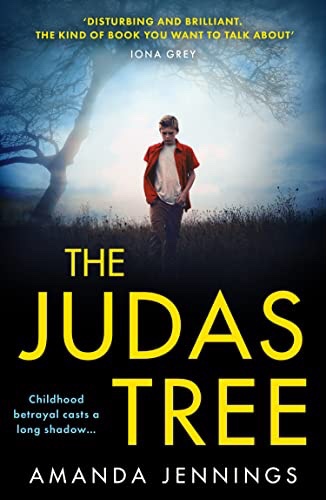
The Judas Tree by Amanda Jennings

Harmony and Will have been together for a long time and live in a garden flat in London. They are the couple that most of their friends and family would say are meant to be together. Harmony’s closest friend, Amanda and her husband, throw a party where Harmony bumps into a man she feels an instant chemistry with. They talk for a while and when he suggests they just get into the car and leave together, she’s shocked to find that part of her responds to his suggestion. Harmony goes to find Will and imagines she will never see this man again. It’s only a few days later, that the couple go to lunch with Amanda who explains that they are also entertaining one of her husband Ian’s clients. Client Luke isn’t new to Harmony, he’s the man from the party, but much to her surprise, Luke isn’t new to Will either.

In fact Will’s reaction goes far beyond his explanation that he knew Luke at School. I knew immediately there was something much worse. Harmony has always wondered why Will is so cagey about his past, especially because he’s very stubborn in his outlook about becoming a parent himself. His childhood was so bad, he can’t imagine being a good parent. He is great with Amanda’s kids, but adamant he and Harmony should remain childless. So when Harmony became pregnant a few months ago he wasn’t going to be overjoyed. In fact when she tragically lost their baby, Harmony was devastated and Will’s first emotion was relief, not that he’s told her this. She has now realised how much she wants a child, but isn’t hopeful of changing his mind. It was while they were slightly at odds with each other, that Luke had bumped into a confused and vulnerable Harmony. Luke continues to be charming, intelligent and very forthright about his attraction to Harmony, including turning up at her work. Her head is turned, but despite that she knows she loves Luke. She wants to be his wife, but what if they don’t want the same things any more? When Ian introduced Luke has such a charismatic way about him. She could see though, that Will was horrified to see Luke again. His explanation that they were at boarding school together seems plausible, but she knows there’s more and so do we.

Amanda Jennings has a clever way of introducing you to characters and they don’t grab you immediately, because you’re taking in the world they’re in and the clues about the story. Then suddenly, by about the fifth page, she’s got you caught in a vice like grip. That was certainly the case here, as the sophisticated city lives these characters live is a world away from a country mouse like me. Yet as soon as Luke met Harmony, I knew there was something off and that he had an agenda. He intervenes between the couple at the perfect time too, not that he could have know that – or could he? Luke has a strange magnetism around him even when he’s at school. Will’s early life is sad and his father is abusive. I could understand why he didn’t want to relive it, but when we don’t talk about things they gain an importance they often don’t warrant. We know that whatever is at the root of the animosity between Luke and Will, it’s something humiliating, shameful and life changing. Jennings beautiful times her chapters so we get a bit of the present day and then a snippet of Will’s story. They way it’s eked out keeps you reading and it’s a story that’s horrifying and devastating for these young boys. I won’t say any more, but when we meet a classmate of theirs later on in the novel I wanted to push him under a bus! The fact that things like this happen at boarding school isn’t surprising, but creating or turning a blind eye to an environment like this should be criminal.

Harmony is an interesting character because she almost acted as if she had no choices. I think she’s still in that numb stage of grief and in this vulnerable state people make bad decisions. She seemed to have low self-esteem and really struggled to create boundaries. When Luke starts to encroach on her workplace and not take no for an answer, I was mentally screaming at her to say no and walk away. I wanted her to make a scene and call the police. Especially at first, because she’s done nothing wrong in chatting to a man at a party. I also wanted her and Will to communicate. The key to everything are those secrets that Will has been keeping, things that have happened that make him sure he’s unloveable and unfit to be a parent. It’s Harmony’s fear of encroaching on those boundaries that leads to her keeping her own secrets in turn. The author slowly turns the screw and the tensions rise, making it impossible to put the book down. I was glued to the story, hoping for the couple to break their silence and come together. This had all the ingredients of a great thriller and has real psychological insight into bullying and trauma. It was also brilliant to read a thriller where psychological healing is such an important part of the equation, as well as the thrilling twists and turns.

Meet The Author

As opposed to this latest novel, Amanda’s previous novels The Storm, In Her Wake and The Cliff House, are all set in Cornwall, in Newlyn, St Ives, and Sennen respectively. Cornwall is where her heart truly lies! Her mother’s side of the family is from Penzance and she holds many blissful memories of long summers spent there. She is never happier than when she’s beside the sea, though she’s also fond of a mountain, especially when it’s got snow on it. When she’s not beside the sea or up a mountain or sitting at my desk, you can usually find her chatting on the radio as a regular guest on BBC Berkshire’s weekly Book Club, or loitering on Twitter (@mandajjennings), Facebook and Instagram (@amandajennings1). She loves meeting and engaging with readers, whether that’s on social media, or at libraries, book clubs and literary festivals. If you see her out and about at an event do say hello! You can find more information on her webpage: http://www.amandajennings.co.uk

Posted in Random Things Tours

The Pain Tourist by Paul Cleave

‘In movies the monsters are always zombies, vampires, or some weird kind of mutant, but in this moment his eleven year old brain tells him he was wrong all this time. What he’s looking at now are monsters. Real monsters.’

I loved the central premise of this novel from Paul Cleave, the idea that there are pain tourists – people who gain satisfaction from soaking up the pain and misery of others. I’ve always used the term ‘emotional vampires’ to describe something similar and it has levels, from those who revel in reading lurid tabloid coverage of a celebrity break-up to something much more disturbing. We all know those people who have a tendency to insert themselves into other people’s life dramas and grief or who get a kick out of watching true crime or the accounts of serial killers, such as the page after page of obscene detail that filled the pages of tabloids following the discoveries at Cromwell Street, the home of Fred and Rose West. It seems lately as if everyone is watching serial killer documentaries and actors from Dominic West to David Tennant are queueing up to play them. I think here, by imagining the more disturbing lengths someone might go to in order to feel part of that crime or tragedy, the author really made me think about this trend.

The novel opens as a tense and violent crime is being committed. An eleven year old named James is watching his parents being threatened at gunpoint by three masked men who have broken into the family home in the night. As the intruders try to obtain the whereabouts of a safe from his parents, using whatever means to make them talk, James is trying to set up an escape plan for his sister Hazel. As both James and his mother’s lives were threatened, my heart was racing wondering why his parents don’t tell the gunmen! James’s quick thinking saves his sister, in a heart-stopping escape she gets to a neighbouring house, but it earns him a bullet to the head after watching both his parents killed. The terrible tragedy is compounded by the fact James’s family did not have a safe. However, one had been recently fitted a few doors away where a diamond dealer had just moved in with his family.

Cleverly, Cleave then splits the narrative in two directions, in an almost ‘sliding doors’ type story. James’s life continues into the future with his family intact or James comes out of a nine year coma, convinced he’s been living a life way beyond the four walls of his hospital room. For the cops who worked the case, a lot has happened in the last nine years since they failed to solve the murder of Hazel and James’s parents. Theo Tate left the force and is now a private investigator after a terrible tragedy touched his own family. Rebecca Kent is still a police officer, but is marked by tragedy in a more physical way, every reaction from strangers reminds her she now has a scar running down her face. The pair come together to revisit the case, when Kent is informed that James has woken up. Now, despite her relentless hunt for a serial killer nicknamed Copy Joe, Kent is tasked with reopening the cold case. Feeling hopeful that James may remember some new detail to add to existing evidence she also wonders if he could become a target for the killers, who are still at large? James can’t speak, but can communicate with pen and paper. The investigators are shocked by the detail packed into James’s story as he starts to write more. His ‘ComaWorld’ diary seems to flow out of him with very little thought or res. Nine notebooks, one per year, document a life unlived by anyone but James. Familiar names and events start to become apparent to his sister, such as his accuracy on each day’s weather or the book she was reading to him slipping into the narrative. What nobody expected him to reveal is that Kent has more than one serial killer on her hands.

This was such an original and complex thriller. As you might expect, considering I’m a writing therapist, the ‘Coma World’ stories were fascinating to me. The aspects of real life that Hazel notices are brilliant plot devices, but also play with the idea that the unconscious mind is still very much alive and picking up on what’s going on around it. From a therapy angle, James’s narrative could be seen as the mind’s way of healing itself while his body is asleep. One therapy technique I’ve seen involves the client writing a different narrative ending to something that’s happened. It helps the client discuss how a different ending might feel – would they feel more closure about the event for example? By exploring this, we can then discover and discuss why the real ending caused so many problems. The way James writes, in longhand and over a period of days fascinated me too. Is he scared if he doesn’t write it down it will be lost to the truth? The complex level of detail is incredible, as if he’s still seeing it running like a movie in his mind’s eye. I wondered how he kept it so rigidly to one year per book, suggesting there was a lot of detail he chose not to record. What we choose to edit out of a narrative is sometimes as important as what we leave in. When it becomes clear he’s been aware of other patients in the room, we can see how his mind is weaving their names and other facts into his narrative – he’s heard all their conversations too.

Tate and Kent were great characters to guide us through these complex interwoven cases. Kent is driven, but slightly less idealistic than Tate. She’s made peace with the fact that some cases don’t get solved in a way he hasn’t. It’s clear why she’s stayed inside the police force and he’s preferred to forge his own path. He’s an incredible investigator but perhaps not so good at office politics and coping with an imperfect system. Kent is desperately trying to solve the case of Copy Joe, a serial killer who copies the methods of previous serial killers, like the Christchurch Carver. Whoever he copies, he likes to leave the crime scene exactly the same way, almost like an homage to the murderers, showing his admiration. Are they looking for a fan of the ‘True Crime’ genre? Someone who perhaps started with the odd book, the podcasts, and the documentaries until he’s had to experience the same thrill. It’s an uncomfortable concept and made me question our enjoyment of such narratives, especially when true crime documentaries are constantly in the daily top ten on Netflix or other streaming service. When it comes to curiosity, how far is too far? When does an interest become an urge, an action. Tate’s private life was so devastatingly sad and I was moved by his visit with his wife. He loves her still and they sit and talk like any other married couple, the difference being, that as soon as Tate walks out of the room she will forget everything all over again. He chooses to bear a terrible loss alone. This showed another, devastating, side of brain injury -a patient who is physically capable, but with a brain that erases every interaction leaving a blank slate. She is happy in the moment, but that present moment is all she has.

From the explosive opening, which really gets the adrenaline flowing the tension ebbs and flows depending on the narrative or case we’re following that chapter. Towards the end, as all these cases come together in one terrible night, the heart really started pounding again. I did get a bit confused between locations and who was where towards the end. So I had to keep going back, desperately trying not to miss a moment as the twists and turns came thick and fast. I found it was Tate and Kent I was rooting for, not just that they would solve their cases, but that they would survive! I found the way James was constantly moved around in these final chapters a bit concerning. My experience in occupational health and care needs had me asking all sorts of questions. If James couldn’t walk how was he managing in these different spaces, using various different surfaces to sleep on from beds to couches? I kept wondering how he was getting to the loo – I’m laughing at myself as I write this, because honestly the way my brain works! This says so much about my inner life. I just kept thinking ‘how has he been discharged from hospital without an occupational therapy assessment and a multi-disciplinary meeting?’ Of course these facts are like the days James edits out of his narrative, not very interesting or helpful to the plot. The details of a character’s loo habits tend to dissipate the tension and excitement. This was an incredibly fast read, giving you some idea of the pace and that addictive pull you want in a thriller. Each character is cleverly written to draw you in, but you’re always left on edge and unsure. The multiple endings are brilliant, I just thought it was solved and I could breathe, then the author pulled the rug out from under me. Yet I loved that we get to have multiple endings, as James’s doctor suggests they write a book together, framing the narrative in yet another way.

Meet The Author


Paul is an award-winning author who often divides his time between his home city of Christchurch, New Zealand, where his novels are set, and Europe, where none of his novels are set. His books have been translated into over twenty languages. He’s won the won the Ngaio Marsh Award three times, the Saint-Maur Crime Novel of the Year Award, and Foreword Reviews Thriller of the Year, and has bee shortlisted for the Ned Kelly, Edgar and Barry Awards. He’s thrown his Frisbee in over forty countries, plays tennis badly, golf even worse, and has two cats – which is often two too many. The Pain Tourist is his (lucky) thirteenth novel

Posted in Paranormal Reads

Halloween Reads! Books That Gave Me Nightmares.

When thinking about reads for Halloween I started thinking about books that genuinely scared me. The ones I couldn’t stop thinking about and made me look over my shoulder as I popped to the loo in the middle of the night. I blame the Brontë’s for my love of the gothic, from the terrible creature who visits Jane Eyre’s room in the night and tears her wedding veil, to the icy cold hand of a child that reaches into Mr Lockwood’s bedroom window in Wuthering Heights. I even studied gothic literature at university, that’s how much I love the genre. What scares us doesn’t always mean the traditional ghosts, vampires and witches we’re used to. It can be a really tense thriller, a mystery or even novels that defy genre. Here are a few books that genuinely gave me the creeps!

A.M.Shine was a completely new writer to me when I picked up this novel, so I had no expectations. Since reading this I’ve been so creeped out by his second novel, The Creeper, I had to stop reading it! The Watchers was an incredible read and such an unnatural situation for the characters to be in. Lost in a deep forest in rural Ireland, Mina feels unnerved, when she hears a scream that isn’t human, but isn’t like any animal she’s ever heard either. As the shadows gather she is beginning to panic, when suddenly she sees a woman beckoning her and urging her to hurry. Mina decides it’s better than staying out here to be found by whatever made that terrible noise. As the door slams shut behind them, the screams grow in intensity and volume, almost as if they were right on her heels. They’re in a concrete bunker and as Mina’s eyes adjust to the light, she finds herself in a room with a bright overhead light. One wall is made entirely of glass, but Mina can’t see beyond it and into the forest because it is now pitch dark. Yet she has the creeping sensation of being watched through the glass. A younger man and woman are huddled together, so there are now four people in this room, captive and watched by many eyes. Their keepers are the Watchers, dreadful creatures that live in burrows by day, but come out at night to hunt and to watch these captive humans. If caught out after dark, the door will be locked, and you will be the Watcher’s unlucky prey. Who are these creatures and why do they keep watching? I have to say that just when I thought my nerves were calm, this author found a way to leave me with a creeping sense of dread.

The Beresford is my favourite Will Carver novel, because it really does get under your skin without a single ghost in sight!

Abe Schwartz lives in a one-bed furnished flat. An apartment building called The Beresford. The bell rings and he’s the one opening the front door to a stranger. Before that, he’s dragging a dead body into his room, mopping up blood and asking himself, What the hell just happened?

The Beresford is an apartment building with a difference. It has a certain atmosphere and it’s not long before you dread the door bell ringing. Mrs May is the landlady, an incredibly sweet old lady who has a daily routine from her eggs and cold coffee first thing, to her rose pruning every afternoon. As anyone who has watched The Ladykillers knows, little old ladies should not be underestimated. Does she know more about what’s going on in her building than we think? Even worse, this is only one side of the building, and what’s going on next door is even more unsettling. I’ve been waiting for Carver to elaborate on the other side of the Beresford and I’m told I will only have to wait till next summer. I know one thing for sure – I’m definitely going to be reading it in the daylight.

This is the copy of William Blatty’s book that I would sneak off the bookshelves when my parents went out. I would read as much as possible, then as soon as I heard the gravel crunching on the drive, I’d pop it back and wonder how I was going to sleep that night. When I was about 13, this book had the combination of being both terrifying and taboo – a teenage bibliophile’s holy grail. My parents had joined an evangelical church and became very restrictive in my teens, so the fact this book was even on our shelves felt transgressive. The book works because of atmosphere and tension the author creates. This is a child, so that innocence contrasts sharply with the creature Regan becomes. At first her mother Chris thinks Regan is ill. While Chris has been shooting a movie in Georgetown, there has been poltergeist activity in their rented house, but as time goes on Regan has been refusing to eat, unable to sleep and aggressive in her behaviour. Could it be psychological? The deterioration in Regan is horrific and the sense of horror that starts to come over Chris as she prepares to enter her daughter’s room can be felt. The icy cold, the smell and the violent expletives really hit home and when even a priest is struggling to contain the evil inside the girl, it’s power is still terrifying over fifty years later.

When people ask me if I believe in ghosts I always say no, not in the traditional sense of apparitions, but I do believe in energy and how a building’s past can be felt within it’s walls. Events leave an imprint behind, the emotional equivalent of muscle memory, and perhaps sensitive people can tap into those emotions. That’s the feel of this novel from Diane Setterfield and for me it conjures up dark winter afternoons and the warm fireside but outside of that cozy circle there may be something lurking and waiting to surprise you with it’s presence. Angelfield House stands abandoned and forgotten, but is full of atmosphere. It was once home to the March family: fascinating, manipulative Isabelle; brutal, dangerous Charlie; and the wild, untamed twins, Emmeline and Adeline. But the house hides a chilling secret which strikes at the very heart of each of them, tearing their lives apart…

Now Margaret Lea is investigating Angelfield’s past, and its mysterious connection to the enigmatic writer Vida Winter. Vida’s history is mesmering – a tale of ghosts, governesses, and gothic strangeness. But as Margaret succumbs to the power of her storytelling, two parallel stories begin to unfold…What has Angelfield been hiding? What is the secret that strikes at the heart of Margaret’s own, troubled life? And can both women ever confront the ghosts that haunt them…? Prepare to read this with a sense of unease, but a need to unravel the story.

Laura Purcell’s debut was so good it made her my ‘go to’ author immediately! It taps directly into those Brontë themes of atmospheric houses with creepy nighttime visitations. It builds beautifully, from a young woman who is bereaved and pregnant to the huge ancestral home, this is one of those tales that slowly and imperceptibly creates unease in the reader. When newly married Elsie Bainbridge finds herself a widow. and pregnant she is dependent on the kindness of his family. Once she reaches her husband’s family estate, she is disappointed, because far from being awed by the house, the villagers fear it and believe the Bainbridge family are cursed. Elsie pays no mind to servants talk, but maid Sarah seems intent on scouring the creepy house. in order to learn more of her family history. Then strange sounds disturb their sleep, leading Elsie and Sarah to discover a life size wooden figure. It’s like the prop for a play, but yet it has an uncanny similarity to Elsie. They decide to move it to the Great Hall, rather than leaving it hidden in the attic. They’ve also found two notebooks which turn out to be the diaries of Anne Bainbridge beginning in 1635.

Anne has written about her hope to charm King Charles I and his Queen on a forthcoming visit and support her husband, Josiah who wants to make connections. The royal couple’s daughter Henrietta Maria was supposedly conceived using white magic. Anne writes about a shop of curiosities and the Dutch heritage of the ‘silent companions’ she purchased ahead of their visit, subsequently discovered in the attic by Sarah. The figures slowly started to resemble their real life counterparts. Elsie starts to fear she is losing her mind as more figures appear and the mystifying question of what’s going starts to consumer her. This is such an original idea and much like Jessie Burton’s The Miniaturist, anything that starts to magically resemble it’s owner is downright creepy! I love Purcell’s ability to create an eerie atmosphere and a very uneasy reader.

Melmoth the Witness is a figure from mythology, or is she? Known as one of the woman who witnessed the tomb on the morning that Christ resurrected, she is now an eternal traveller. Wandering the centuries she lures people into following her, whereupon they too become damned to an eternity of itinerant, solitary wandering. Set in the beautifully, atmospheric city of Prague we meet a woman called Helen and her friend Karel on the street. Agitated and enthralled, he tells her he has come into possession of a mysterious old manuscript, filled with personal testimonies taken from 17th-century England to wartime Czechoslovakia, the tropical streets of Manila, and 1920s Turkey. All of them tell of being followed by a tall, silent woman in black, bearing an unforgettable message. Helen reads its contents with intrigue and some scepticism, but everything in her life is about to change. We follow Helen’s story, but within it are all the other stories and lives, creating a Russian doll style tale, but where each incarnation has the same sense of menace and impending doom.

I think what scared me would have scared any ‘listener’. It’s the toll witnessing takes on a person. This book takes in the breadth of the horrors experienced in Prague throughout the 20th Century. It made me imagine being present to witness the trenches of WW1, the Holocaust, and so many other atrocities and personal tragedies. I’ve worked in mental health for twenty years and I’m taking a break at the moment to study. I know the emotional toll that listening to people’s stories can take on the listener or observer. For Melmoth, this would be so much worse because she has to sit back and witness all of humanity’s horrors. Even worse, she has no power to change anything, but is doomed merely to witness. No wonder she wants other souls to witness with her, she must feel the weight of the horrors yet to come. By the end of this novel so did I.