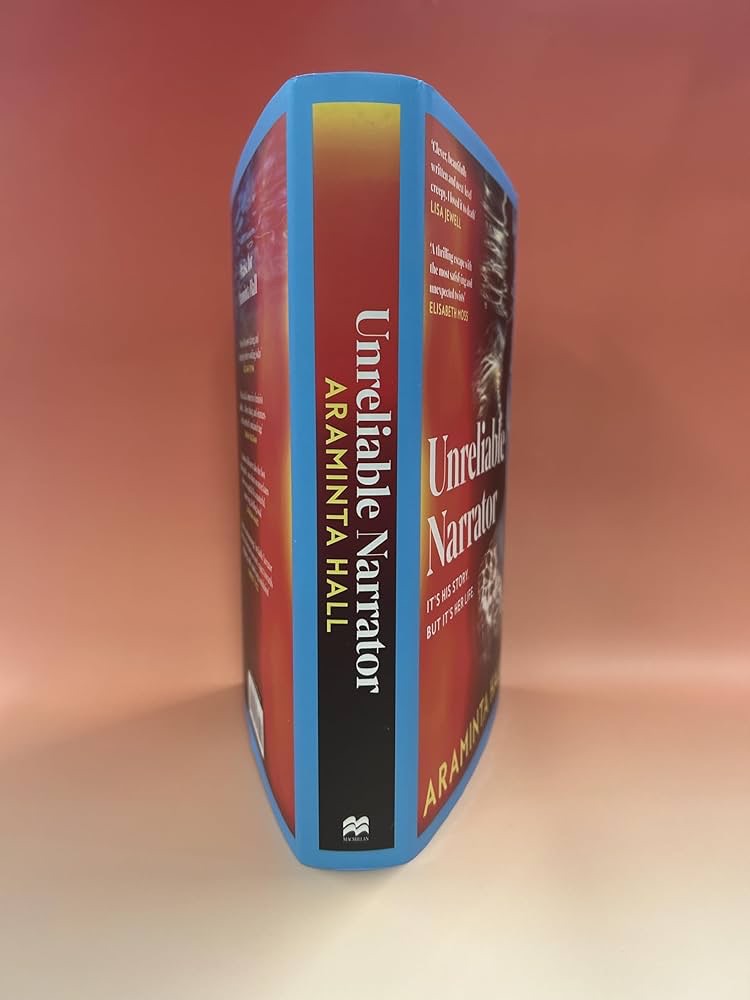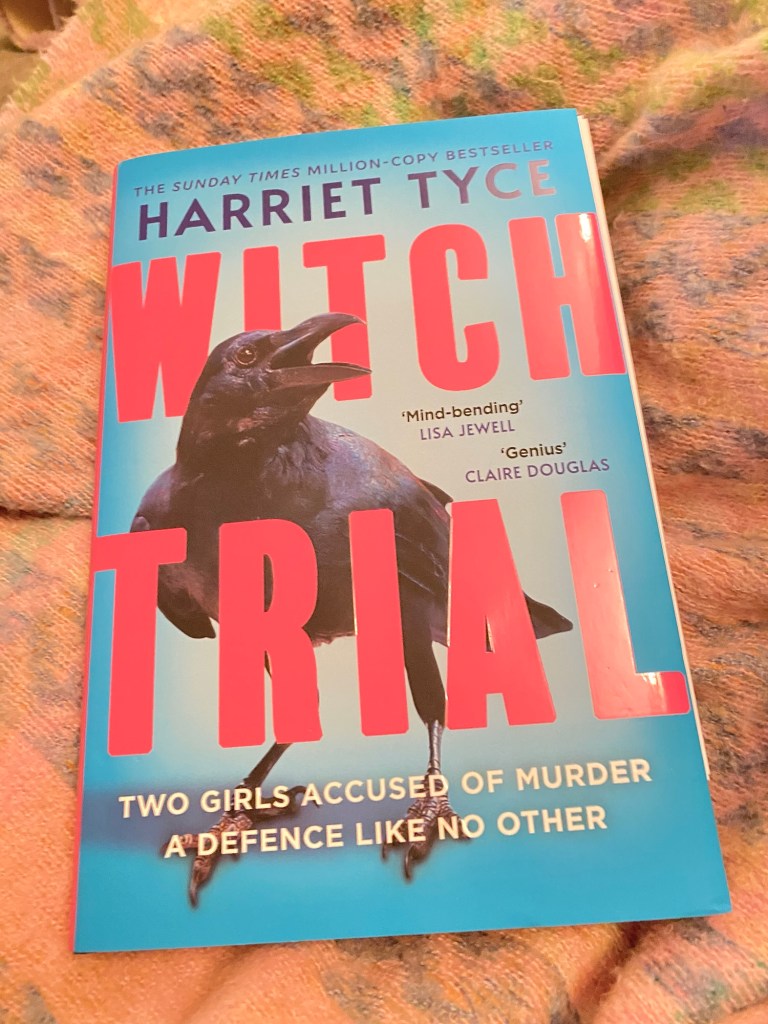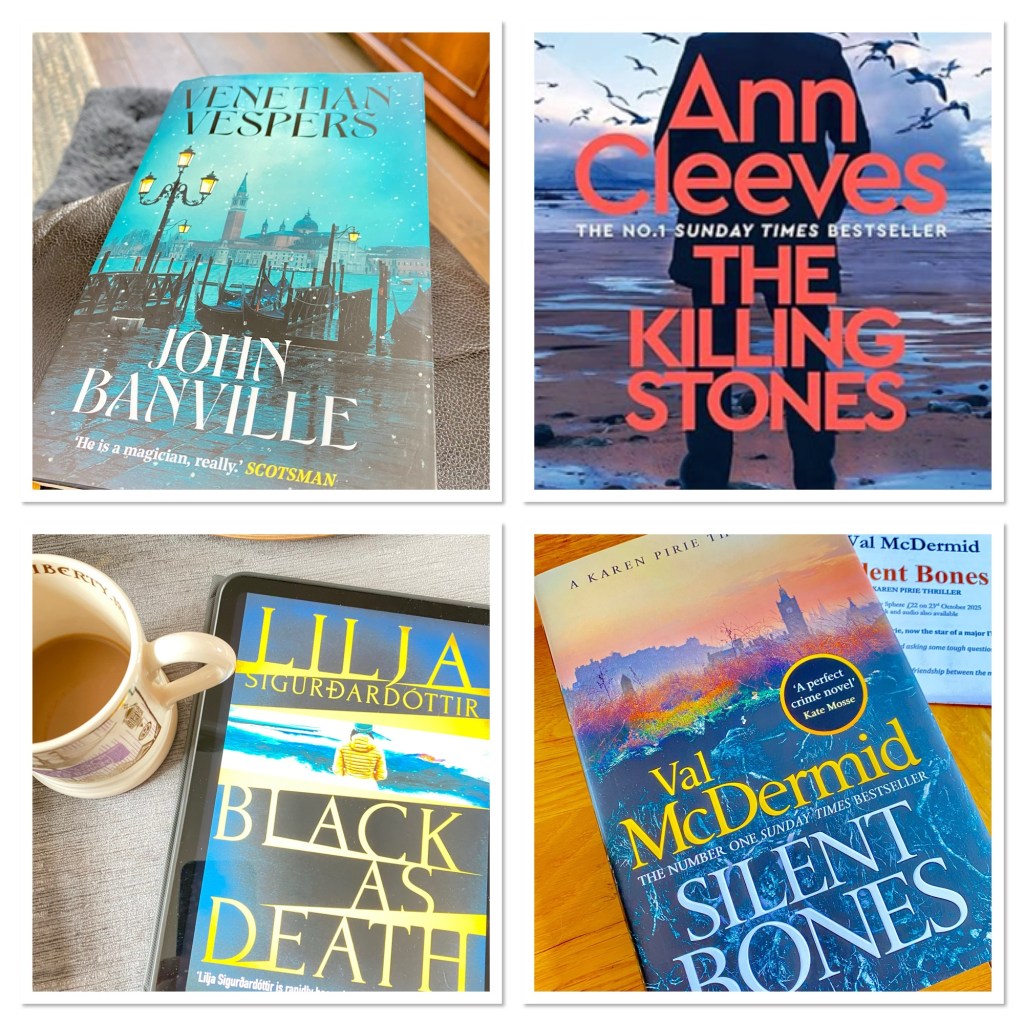
When 18-year-old Christian Shaw is found dead in an Edinburgh park, the city reels – and the shock only deepens when police charge her best friends, Eliza Lawson and Isobel Smyth, with her murder.
As social media explodes and headlines scream for justice, rumours of bullying spiral into something darker: whispers of rituals, obsession, and a teenage pact gone wrong.
Matthew Phillips, a respected heart surgeon, is called for jury duty on the case. But as the trial unfolds – and the girls reveal a chilling defence no one saw coming – he begins to question everything: the motives, the evidence, even his own judgement.
Who’s telling the truth? Who can be trusted?
And what really happened to Christian Shaw?
Let the Witch Trial begin . . .
I finished this book and had to give my head a little shake wondering what I’d just read. Harriet’s one of those writers where I end up devouring the book in a couple of sittings and then wish I’d taken my time because it’s come to an end! This grabs you from the very start as we follow Matthew, an esteemed heart surgeon, for jury duty. He is without question the perfect juror – intelligent, used to making life and death decisions and level headed. However, due to his job he could have easily been excused from jury duty so why does he stay? His colleagues seem incredibly annoyed that he has disappeared and is uncontactable for the foreseeable, because it turns out this is a complex murder case. Although Matthew seems an upstanding character he does seem remarkably keen on having a murder case and with this one he’s truly found the most intriguing. This is one of the most complicated and unlikely cases threaded with fanciful notions of devil worship and witchery. Matthew is our eyes so we view the case at the same time he does, as each witness takes the stand for cross examination. What they must prove is this point of Scottish law:
“Murder is constituted by any wilful act causing the destruction of life, whether wickedly intended to kill, or displaying such wicked recklessness as to imply a disposition depraved enough to be regardless of consequences.”
Put simply, the prosecution must prove that the defendants Isobel and Eliza knew that their friend Christian had a heart condition but were reckless enough to bully and fill her with such fear it killed her. Because of the immediacy of the narrative, the reader drinks in each gasp from the gallery and every revelation from the witness box, so much so that it was halfway through the book before I stopped to wonder how such a case could have made it’s way to court? Can someone deliberately frighten someone to death?
Matthew is observant, he has weighed up his fellow jurors and which ones might be trouble. He has checked out the defendants and wonders whether their appearance might prejudice the witnesses and jurors. Eliza is dressed well, whereas Isobel’s demeanour is surly and uncooperative. She looks down at the floor mostly and has a gothic appearance. She is being painted as the ringleader, but is she or are people being swayed by how she looks? The author adds small details that you barely notice at first such as Matthew’s own appearance. Fully suited and booted on his first few days, he is soon without a tie and then in jeans. His hygiene slips too and a rash starts to affect his hands, itching so badly during the evidence he struggles not to move. He drinks more and avoids his family, staying in his small apartment in the city. There’s also the strange journalist who catches his eye, then seems to disappear. One night she appears at his flat with a bottle and an ouija board, wishing to discuss the more gothic aspects of the case. The suggestion that the girls are practising witches is salacious enough to gain the headlines, but Matthew knows he shouldn’t be talking about the case at all. However, we as the reader are compelled to enjoy the suggestions of animal sacrifice, tarot cards and trying to summon the devil. It’s easy to forget that at the heart of this case are two young girls, who may have been unpleasant and even wicked but surely not criminal? We believe our narrator still, but should we? There are multiple layers to the books final chapters, something that this writer excels at. The occult elements are truly vivid and I found myself engrossed and even believing them in part. This is one of those books, where, like The Sixth Sense, you’ll be going back to see how you missed certain things. The final twists left me awe struck. This is a belting thriller, utterly addictive and compelling to the final page.
Out now from Wildfire Books
Meet the Author
Harriet Tyce was born and grew up in Edinburgh. She graduated from Oxford in 1994 with a degree in English Literature before gaining legal qualifications. She worked as a criminal barrister for ten years, leaving after having children. She completed an MA in Creative Writing – Crime Fiction at UEA where she wrote Blood Orange, the Sunday Times bestselling novel, winner of a gold Nielsen Bestseller Award in 2021. It was followed by The Lies You Told and It Ends At Midnight, both also Sunday Times bestsellers. A Lesson in Cruelty was published in 2022 and met with great critical acclaim and her fifth novel Witch Trial will be published on 26 February 2026. She is a contestant on series 4 of The Traitors. Follow Harriet on Instagram @harriet_tyce and find her Facebook page @harriettyceauthor.
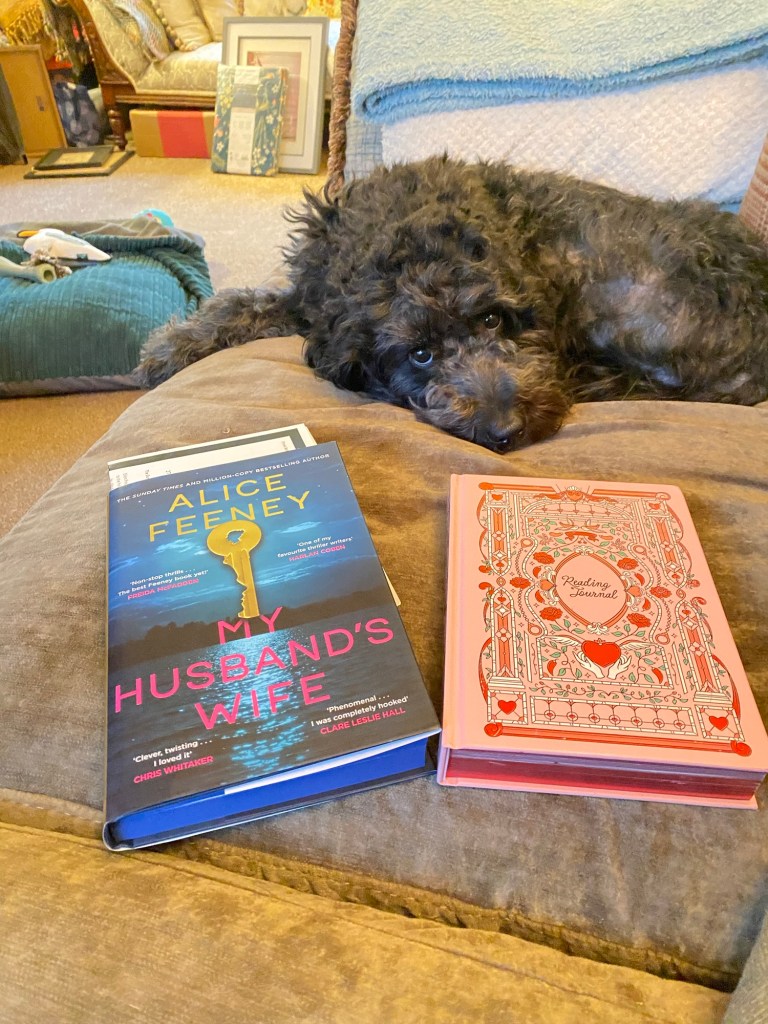
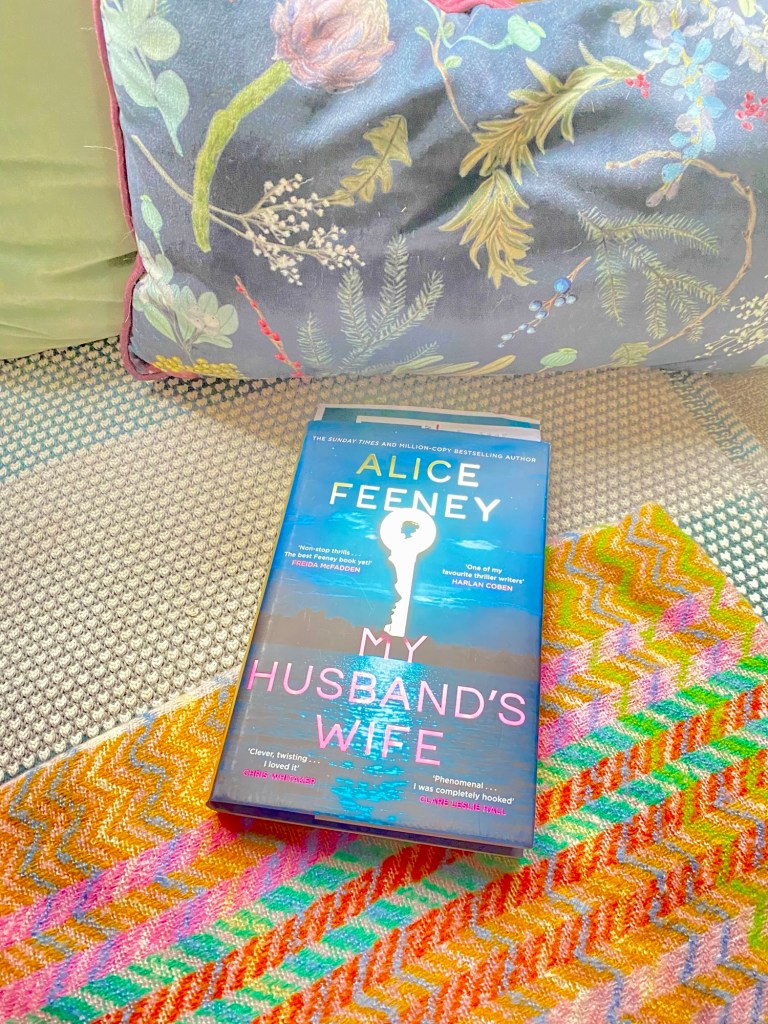
Eden Fox, an artist on the brink of her big break, sets off for a run before her first exhibition. When she returns to the home she recently moved into – Spyglass, an enchanting old house in the pretty seaside village of Hope Falls – nothing is as it should be. Her key doesn’t fit. A woman, eerily similar to her, answers the door. And her husband insists that this stranger is his wife.
One house. One husband. Two women. Someone is lying.
Six months earlier, a reclusive Londoner named Birdy, reeling from a life-changing diagnosis, inherits Spyglass. This unexpected gift from a long-lost grandmother brings her to Hope Falls. But then Birdy stumbles upon a shadowy London clinic that claims to be able to predict a person’s date of death, including her own. Secrets start to unravel and, as the line between truth and lies blurs, Birdy feels compelled to right some old wrongs.
My Husband’s Wife weaves a tangled web of deception, obsession and mystery that will keep you guessing until the last page. Prepare yourself for the ultimate mind-bending marriage thriller and step inside Spyglass – if you dare – to experience a story where nothing is as it seems.
My goodness this thriller messed with my head! From the very first time Eden Fox returns from her run, puts her key in the door and finds it doesn’t fit, I was utterly hooked. I couldn’t imagine how this had happened and what the hell was going on. Even her own art exhibition has been hijacked by a woman who looks exactly like her and as the village’s police officer Sergeant Carter is brought into the mystery, he’s also at a loss. He goes to meet Harrison Wolf at his home, a beautiful house called Spyglass set on the cliffs with a panoramic view of the sea. Harrison is Eden Fox’s husband and he insists that the woman at home with him is his wife. So who is the woman left at the police station? We’re then taken six months earlier and introduced to Birdy, a young woman living in an apartment above a bookshop in London. She receives a strange letter addressed to her recently deceased grandmother, it’s so strange Birdy is fascinated and wants to investigate further. It’s from a company called Thanatos who claim to be able to predict your death day. Birdy decides to become a client of the company, run by Harrison Wolf. Birdy is interested to see if they are as accurate as they suggest. She wants to know what the company told her grandmother, before she died. Her grandmother lived in a house looking out to sea, in a small village in Cornwall and Birdy has inherited it. How are all these people connected? I had so many questions I didn’t know where to begin, but the short chapters and their drip feed of information kept me reading. I just had to find out what was going on!
I loved Birdy as a character and was surprised by the part she played in the investigation around Eden Fox. Her dynamic with Sergeant Carter is comical and brings light relief to the complications of the plot. She is so very sure of who she is and has a specific look from her plaited hair to her brogues. She also loves reading with always endears a character to me and enjoyed her dog companion too. She’s very ballsy and soon has the measure of Carter who really doesn’t stand a chance against this intelligent and forthright older woman. Carter is our representative of this sleepy village in Cornwall and through his family we see the difficulties facing villagers as more and more housing is being turned into holiday accommodation. They have lost their home and livelihood at the Smuggler’s Inn. Young people have very little chance of settling where they’ve grown up which affects the passing down of traditions and social history. Our book is set around the time of All Soul’s Day and the village tradition is like a Day of the Dead parade with everyone dressed up as skeletons, or dead pirates and mermaids. This touch of folklore lets us know we’re somewhere unique, with a long history and old loyalties. Could this be an explanation for what’s going on here? Something magical or something more sinister and human?
I’m in awe of people who can write like this and keep track of all the threads. I imagine a room with one of those see through boards covered with pictures, lists and cross-referencing. Spyglass is a brilliant backdrop for all these odd goings on and reminded me a little of the home in the first Knives Out film that one detective refers to as a life size game of Cluedo. There’s something mesmeric about its view that inspires both Eden Fox and her stepdaughter Gabrielle who still paints nothing but the house and it’s surrounding despite living elsewhere, in a home for dependent young adults. Ever since an accident when she was a child Gabrielle hasn’t spoken and only communicates through her art, which sounds very eerie. Spyglass’s library sounds incredible and it’s no surprise to know that Birdy’s grandmother had a love of classic crime fiction. Like me, I’m sure other thriller readers will devour this addictive thriller that delivers great characters, a seemingly unsolvable mystery and twist after twist.
Out now from Pan MacMillan
Meet the Author
Alice Feeney is the New York Times and Sunday Times multi-million-copy bestselling author of novels including HIS & HERS, SOMETIMES I LIE, ROCK PAPER SCISSORS, DAISY DARKER, BEAUTIFUL UGLY and MY HUSBAND’S WIFE. Her books have been translated into forty languages, and have been optioned for major screen adaptations. HIS & HERS was an instant Global #1 Netflix show in 2026, starring Tessa Thompson and Jon Bernthal.
Alice was a BBC journalist for fifteen years before becoming an author. MY HUSBAND’S WIFE is her eighth novel.
You can follow Alice on Instagram or Facebook. To be the first to know about her tours, TV shows, and books, visit her website: alicefeeney dot com.
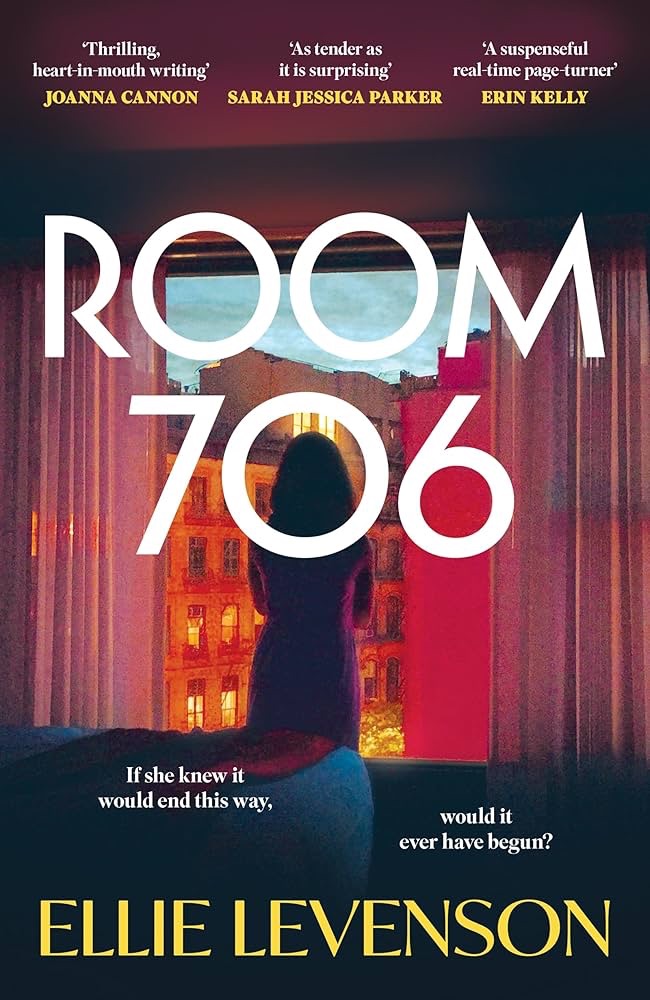
Kate and Vic have been married for a few years after meeting when she was studying in Rome. After a normal morning rush at home she travels into London, on the pretext of doing an interview. However, she has a different destination in mind. This is an appointment she’s been keeping for several years like clockwork. Now she’s caught in the wrong place at the wrong time. She should be travelling home later this afternoon – picking up the kids from school and collecting the rabbit from the vets. Instead she’s trapped in room 706, in a luxury hotel that’s under siege by a terrorist group. How can she explain why she’s here? Even if her body is discovered in the aftermath, everyone will wonder what she is doing here? She has always been very careful, leaving no trace. Now she wonders whether her husband Vic will understand why? As she tries to summon the words that convey just how much Vic and her children mean to her, Kate reflects on all the choices that brought her here.
I’d read so many great reports of this book and I couldn’t wait to read it, as soon as it arrived last year. It’s such a great premise and has a woman who doesn’t enjoy the constraints of marriage and motherhood. I can honestly say that even I’ve fantasied about holidaying alone for a fortnight, never mind an afternoon in a hotel. Although I couldn’t be bothered by a lover either. This is one of those books that makes the reader go back and forth on what they think of the characters and I can imagine book clubs having long conversations about Kate particularly. After all, society judges women far more harshly than men, especially those who express dislike or even ambivalence about motherhood. I didn’t just focus on Kate, because I felt if I was to understand I needed to look at the whole of her life and the people who’d had the most influence on her. The author takes us beyond those Instagram selfies with the new baby and the false idea it can give of other people’s perfect lives. Here we look at the reality of family life for Kate and how the way we parent is often based on the example of our parents or grandparents. Our ability to parent is also dependent on our work situation as well as the personality or parenting style of the other parent. The author cleverly tells Kate’s story in her own words and then shows through memories, alerts and messages on her phone, as well as mental conversation with people she’s lost, who Kate is and what happened to bring her here.
We know she loves her husband Vic. While studying in Rome she lived in his Nonna’s apartment, while Nonna had her own place with her grandson Vic who has suffered a nervous breakdown. Despite being ten years older than Kate, Vic is treated as the vulnerable one who needs protection. His brother Tom pleads with her not to hurt his brother and I felt the weight of that placed upon her. Yet Kate has just lost her mother, will she ever get to be the vulnerable one? They are happy and Kate relives so many beautiful memories that show us how much she loves him and their children. Yet there isn’t anyone apart from Vic’s brother to be their support network. Kate and her mum were a duo, no dad around and no siblings either. I loved one moment where Kate asked her mother what it’s like being a single mum. Her mum replies honestly that it’s hard work, but she can choose how they live and the values they have. There’s no one else to negotiate with, no clashing parenting styles or being let down by someone not doing their bit. If you contrast this with the evidence of Kate’s own phone it’s telling. She has an app that divides her ‘to do’ list into things that need to be done now, in the next couple of months, or sometime in the future. She sets reminders to coordinate her life, so ‘to do’ reminders join the reminder to check her breasts, to do her kegel exercises, to do the weekly food order. Meanwhile she places family photos into folders, makes lists of bank passwords, Christmas gift lists and house maintenance jobs. If she dies here, Vic will need to know this stuff. By contrast her male lover simply sleeps. Because he can.
Kate reminisces about a family holiday they took to Italy and reassesses the hours spent on research, price comparing, insurance, bite and sunburn cream, swimwear for the kids and so on. Vic would have simply bought a couple of T-shirts and booked the second or third package deal they saw and it would still have been a good holiday. Vic’s laidback parenting style and his vulnerability mean she’s he person who carries that mental load. Of course some of this is on Kate, as she’s clearly risk averse and overthinks decisions but she also has no significant female support. Since she lost her mum and then best friend Eve, all her relationships outside the home are superficial. Do these things excuse adultery? It will still hurt the ones they love, never mind the psychological reasons for the decision. However, all of that juggling made me understand a little. She has a need for something – rather like an old-fashioned pressure cooker needs to blow off steam. In this time, in an anonymous hotel room what she needs is no strings, no judgement and no backstory. It’s just completely selfish pleasure. Her sex life at home is tender and loving, they consider each other and everything they’ve built together as a couple is part of their sex life. From that unexpected first time with her lover it’s been about taking her pleasure and asking for exactly what she wants. This afternoon, that happens once every few weeks, enables her to be the wife and mum the family need her to be. She’s trying to recapture that carefree young woman who went off to study in Italy, who has clearly been totally changed by everything that’s happened since. It seems ironic that someone who plans everything so carefully, finds herself in a situation that’s absolutely out of her control.
This is an incredible debut! It’s absolutely pitch perfect. The author carefully lets the tension mount so slowly that while reminiscing we can almost forget where Kate is in the here and now. A prisoner in this room, she has to be silent so they can’t put the television on and they can’t flush a toilet. When the lights and electricity go they’re almost totally cut off from the outside world. It’s an eerie muffled silence, but a quiet that is sometimes broken by heavy footsteps or other hotel guests meeting their fate. You will hold your breath at times. The forced intimacy means she asks questions of her lover that she’s never asked before. She knows nothing about his life, only that he’s married and has been sleeping with her in this way for several years. We know the terrorists are stalking the corridors, one floor at a time, but we don’t know whether they have a master key or a bomb. I realised that despite her family unit, Kate is lonely. What she wants is for someone to see and appreciate her as Kate the woman, not the mum, wife or journalist. You will be compelled to read this as I did, long into the night. It has the pitch perfect pacing and tension of a thriller, but so many psychological layers. Women will identify with Kate, at least some part of her. She very simply wants to be seen, desired and receive pleasure. Surely though, at some point, Room 706 will be next. Kate has had an opportunity to assess and understand her life, to possibly make changes and live more. You’ll have to read to the end to find out whether she gets that chance.
Out on Jan 15th 2026 from Headline
Meet the Author
Hi, I’m Ellie Levenson. I’m the author of the novel Room 706 which comes out in January 2026. It’s my debut novel, though you may see other books by me online as I was previously a freelance journalist and during this time wrote some non fiction books including one on feminism and one on how to get ideas for features. I have also written various books for children using the name Eleanor Levenson.
Room 706 tells the story of Kate, a happily married mother who meets her lover, James, in hotels every few months as a form of me-time. It might as well be a facial or a shoe-buying habit, she tells herself. Except this time, while cleaning up and getting dressed, she turns on the television and looks at her phone and realises the hotel has been seized by terrorists. How do you tell your spouse that you won’t be home to pick up the kids because you’re at the centre of the incident on the news?
It comes out in January 2026. In the meantime do give this page a follow if you’d like to be kept up to date with my work, and any special offers. And if you do feel able to pre-order, that is super helpful.
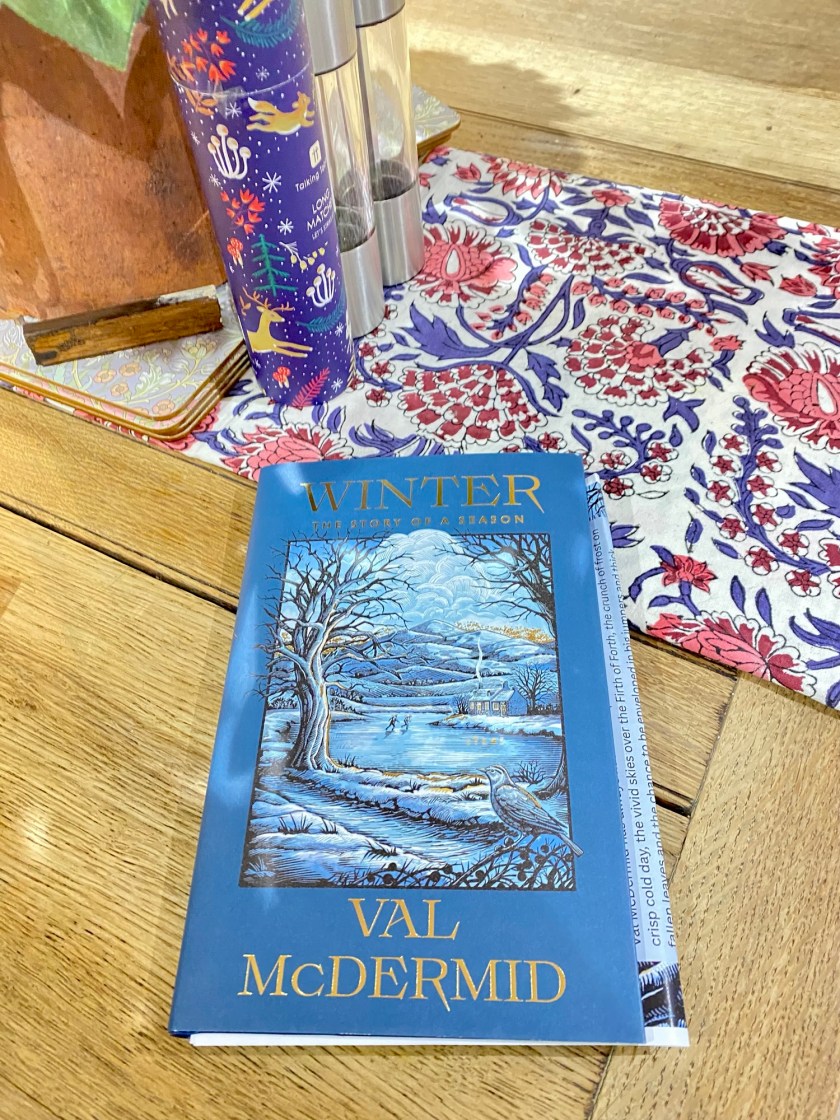
Winter is the time to snuggle indoors without guilt; to curl up on the sofa with a good book or a box set, a hot drink or a wee whisky to hand.
Val McDermid has always had a soft spot for winter: the bitter clarity of a crisp cold day, the vivid skies over the Firth of Forth, the crunch of frost on fallen leaves and the chance to be enveloped in big jumpers and thick socks.
In Winter, she takes us on an adventure through the season, from the frosty streets of Edinburgh to the windblown Scottish coast, from Bonfire Night and Christmas to Burns Night and Up Helly Aa. She remembers winters from childhood, the thrill of whizzing over a frozen lake on skates, carving a ‘neep’ (swede) for Halloween and being taken to see her first real Christmas tree in the town square, lights twinkling bravely in the dark Scottish winter night.
I was really interested to read Val McDermid’s Winter because I feel like it’s such a maligned season and it’s one that I enjoy. I’m a big fan of cozying up by the log burner with a mug of tea and a great book or film. I love crisp mornings where your cheeks feel pinched and seeing your own breath is still a novelty. I find myself able to do more in Winter, because somehow I feel invigorated by the cooler weather. I love winter festivals like Bonfire Night and a proper long Christmas – the full twelve days. It was joyous to find someone else who is able to enjoy winter in the same way I do and this book is definitely a celebration of the season I hear a lot of moans and groans about. Using creative non-fiction Val takes us through her favourite elements of winter in Scotland touching on nature, local customs and the memories they bring, as well as the comfort of resting and enjoying winter food.
The narrative was personal and very intimate too, like a stroll with a wise and knowledgable friend. There’s also a forthrightness in her character that I relished. One of my favourite things was her idea of being in step with the season because it’s an important part of how I live my life. I think we are part of an earth that has its rhythms and tides so it’s better for our wellbeing if we live with what our season and body tells us to. This season tells us to eat hearty stews and soups. It tells us to hibernate like bears – nights in watching films with a fire and sofa blankets. It tells us to gather with friends and celebrate light shining in the darkness. Whether we celebrate Hanukkah, the winter solstice, Christmas, Diwali or enjoy a good burn up on Bonfire Night it’s about lighting up the darker months and staving off the melancholy that can come in winter. Val tells us about Scottish traditions of carving turnips at Halloween and the incredible sight of the Norse festival Up Helly Aa which takes place across several islands in January, culminating in the Lerwick torch lit procession which is a real spectacle. I felt nostalgic for a time when the twelve days of Yule were just that and concluded with Twelfth Night festivities where the Lord of Misrule takes charge for a few hours. It was this and the Orkney Christmas Day tradition of The Ba’ that remind me of an old tradition called the Haxey Hood that at least three generations of my family participated in. It takes place on January 6th every year in the small village of Haxey in the Isle of Axholme. There is a Lord of Misrule and a Lady who drops her leather hood so two competing teams can play a long, arduous game to return it. The two teams have to get it back to whichever village pub they play for and it can carry on till nightfall. It’s best described as a cross between rugby and tug of war and results in a few hundred sweaty and muddy men either celebrating or commiserating in the pub.
My dad’s days of playing are over now but I loved that it elongated Christmas into January and I still keep to that tradition – in fact I can get quite grumpy when people ask me how my Christmas was when it’s Boxing Day! Or when I see people on Facebook who have their tree back in the loft on the 27th December. I spend the whole week saying ‘it’s still Christmas!’ I also get annoyed when people announce a diet on New Year’s Day! What a ridiculous idea it is to diet when our bodies are naturally telling us to eat as if we’re hibernating and there’s a mountain of Christmas food left to eat. Spring is the obvious time for renewal and rebirth, the perfect time to start new resolutions. We should be slower instead of wishing our lives away. We should stop and listen to what the season and our bodies are telling us, instead of being regulated by what’s in the supermarket. I found myself having these dialogues with the author in my head and I can easily see how I’d use the book as prompts for writing therapy. She tells us about Mardi Gras in New Orleans, a February festival, and it reminded me of the carnival and a particular February week in Venice when it unexpectedly snowed. It was magical and there was an excitement in the air as soon as we woke up. Someone had built a snowman outside with olive tree branches for arms and we walked to Florian, the famous cafe on St Mark’s Square and had a very indulgent afternoon tea and a hot chocolate that was thick, silky and warmed me to my boots.
It’s impossible to read or write a review of this beautiful little book without it conjuring up memories of your own. The illustrations are beautiful too and complement the writing perfectly. It felt like sharing winter memories with a friend and Val’s love of puffins has further cemented her place at my fantasy dinner party. The narrative rambles but it works, perfectly echoing her plea for a steadier and quieter pace of life in this season. Her writing style is lyrical and she draws you into something as simple as a winter walk, a skill I’ve always loved in her crime fiction. It’s perfect for keeping by the bed and dipping in and out of, rather like poetry. I was taken back to childhood and felt like I was given permission to claim this season for resting, relaxing and taking stock of- something I tend to do in that odd week of ‘betwixtmas’. I believe that the more we can go with the natural world rather than allowing the media, retail industry and other people to set our rhythms, then the healthier we’ll be mentally. Celebrate this season, relish its festivals and that Scandinavian hygge that we all read about a few years ago. If we accept this season for what it is, instead of wishing it was something else then we’ll be a lot happier. If you’re looking for a last minute Christmas present for a reader in your life then this is the perfect option.
Meet the Author
Val McDermid is a number one bestseller whose novels have been translated into more than forty languages, and have sold over eighteen million copies. She has won many awards internationally, including the CWA Gold Dagger for best crime novel of the year and the LA Times Book of the Year Award. She was inducted into the ITV3 Crime Thriller Awards Hall of Fame in 2009, was the recipient of the CWA Cartier Diamond Dagger in 2010 and received the Lambda Literary Foundation Pioneer Award in 2011. In 2016, Val received the Outstanding Contribution to Crime Fiction Award at the Theakstons Old Peculier Crime Writing Festival and in 2017 received the DIVA Literary Prize for Crime, and was elected a Fellow of both the Royal Society of Literature and the Royal Society of Edinburgh. Val has served as a judge for the Women’s Prize for Fiction and the Man Booker Prize, and was Chair of the Wellcome Book Prize in 2017. She is the recipient of six honorary doctorates and is an Honorary Fellow of St Hilda’s College, Oxford. She writes full-time and divides her time between Edinburgh and East Neuk of Fife.
October brought many several wonderful things, as birthday months so often do. As always we went away, this time for two weeks in Dumfries and Galloway for book shopping at Wigtown and fishing for my other half. We knew we were onto a winner as we turned off the single track road onto a farm track that was a mile long! I’ve never stayed somewhere so quiet and because it was a Dark Skies area we got to stargaze too, with a meteor shower being a high point of the fortnight. I finally got to check out The Bookshop, run by author Shaun Bythell. The daily occurrences in the shop are depicted in his three books and I grabbed the latest one along with some second hand purchases too. As well as all the shops in Wigtown we stumbled across a little gem called Gallovidia Books in Kircudbright. This was a treasure trove of new fiction, poetry and children’s books as well as a good collection of biographies. The owner was very knowledgeable, definitely a real book lover and he recommended one of my choices above as his wife was reading it and was torn between savouring and devouring it. We alternate on holiday, when it’s a fishing day I stayed on the farm and had a fabulous view to enjoy while reading and getting some of my own writing done. After a couple of months without a kitchen it was a joy to come home to everything finished so I now have a functional kitchen again.
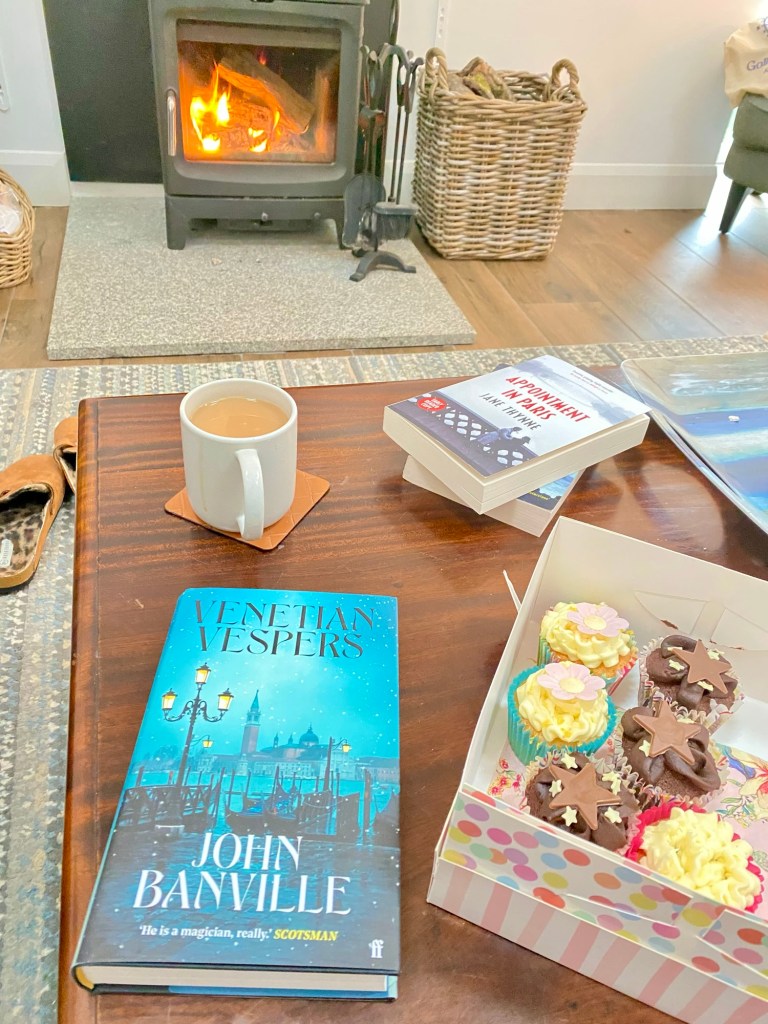
Bought on recommendation from the owner of Gallovedia Books I couldn’t wait to read this atmospheric book so dived straight in, This felt like the perfect autumn read – a sinister mystery filled with atmosphere and a slowly building sense of menace. Evelyn Dolman embarks on his honeymoon with his new wife Laura and it proves to be anything but the honeymoon he expected. With Laura settling in early for the night at Palazzo Dioscuri he decides to go for a walk and perhaps a drink somewhere close by and she suggests Florian, a cafe that first opened in 1720 and still serves Venetian visitors today. A chance meeting is followed by a night of drinking and one unforgivable act. So when he wakes in the morning, sluggish and nauseous and finds his wife isn’t next to him in bed, he imagines she has taken herself to another room. However, as the morning progresses it becomes clear that Laura has simply disappeared.
There are clues to what is transpiring here but they are subtle. The writer has incredible sleight of hand and they seem inconsequential or at list explicable. Some completely passed me by. As I opened the book again for writing this review it made me think of The Sixth Sense and how no one saw the clues on their first watch of the film but when they watched for a second time they couldn’t believe they’d missed them. Each character is slippery and elusive with an unpredictable quality that felt dangerous. I lived this uncanny feeling the author created which grows organically from the city. This is a sparking jewel of a city that’s risen from the mud and brackish waters of the lagoon. Evelyn mentions the fin de siécle, that time of decadence towards the end of the 19th Century and that timing certainly informs some of the events in the book, particularly the fluid social order and sexual licentiousness. We’re told constantly that Venice is decaying and sinking. One day it may be completely under water, but the decay isn’t what you see when you first visit. Venice bewitches you with its golden domes, Morrison arches, coloured glass and the way sparkling light from the surface of the water bathes everything in a soft light. Then suddenly, only a street away you notice a tree growing out of someone’s house and at night most residences seem in darkness now that families can no longer live in the water logged lower floors. Banville captures this ‘double’ city utterly, describing the timeless romance of a gondolier serenading his passengers but also the jarring sound of the vaporetto. We see the sparkling water but also smell the mud as the passing boats churn it up. He links this duality with human nature, our surface selves and the real us, even the parts we avoid and keep locked away. Everything about this novel is a conjuring trick and I fell head over heels in love with it.
I can barely contain my happiness at being back in the world of Jimmy Perez, this time in the Orkney islands where he grew up. Jimmy is living with partner Willow Reeves, who’s both his boss and heavily pregnant with his child. It’s Christmas and the couple are looking forward to the celebrations. Jimmy’s stepdaughter Cassie is spending the holidays with her father Duncan and his family on Shetland, so it just the two of them and son James. For the police, Christmas isn’t a holiday and as a huge storm passes across the islands, terrible discoveries are made. Everywhere there’s storm damage, but when a body is found at an ancient archaeological site Jimmy is devastated to find out it’s his childhood friend Archie Stout. Archie is a well known ‘larger than life’ character who’s the centre of every gathering and runs the family farm with a wife and two teenage sons. Jimmy finds that Archie has suffered a blow to the head and the murder weapon is a Neolithic stone covered in ancient runes and Viking graffiti, one of a pair taken from the heritage centre. Now Willow and Jimmy must investigate their friends and neighbours to solve the murder in the run up to Christmas, where events will traditionally bring the whole island together. The uncomfortable truth is that the murderer is likely to be someone they know and that means nobody is safe.
I really loved Willow and the atmosphere she creates at home, particularly around Christmas. Just as dedicated to her work as Jimmy she takes an active role in the investigation, her pregnancy not holding her back at all. She knows it’s a delicate situation, working together and being in a relationship, especially when she’s the boss. Somehow they manage to keep the personal and the work life separate and she seems to know which responsibilities she must let Jimmy bear and those she’s happy to share. As Christmas Eve approaches fast she’s not running around like a headless chicken trying to make sure they have all the right things, they have food and she points out something I say every year – the shops are only closed for one day. It’s the traditions and being together that are the most important thing. She’s a great interviewer though, brilliant at picking up what people are not saying. She reads their body language and their tone, plus knowing each islander’s history helps too. What she picks up on are the unexpected or secret alliances, such as Archie’s investment in the hotel or his in-law’s apparent friendship with a regularly visiting academic. The case is fascinating, covering potential adultery, family tensions, environmental disagreements and historical conflicts, as well as academic jealousy. As everyone gathers on Christmas Day for The Ba and someone goes missing, my nerves were like violin strings! It’s this gradually rising tension alongside the beautifully drawn relationships that make Anne Cleeves’s novels. Jimmy has always had incredible empathy for others, feeling his own loss alongside theirs and understanding behaviour that might at first glance seem inexplicable. This is a hugely welcome return for Jimmy, both in a different landscape and place in life. Hopefully it’s the first of many.
The haunting final chapter to an award-winning series…
And a final reckoning…
With the fate of her missing sister, Ísafold, finally uncovered, Áróra feels a fragile relief as the search that consumed her life draws to a close. But when Ísafold’s boyfriend – the prime suspect in her disappearance – is found dead at the same site where Ísafold’s body was discovered, Áróra’s grip on reality starts to unravel … and the mystery remains far from solved. To distract herself, she dives headfirst into a money laundering case that her friend Daníel is investigating. But she soon finds that there is more than meets the eye and, once again, all leads point towards Engihjalli, the street where Ísafold lived and died, and a series of shocking secrets that could both explain and endanger everything…
I’ve been hooked on the story of Áróra and the case of her missing sister Ísafold for a few years now and the tension has slowly gripped the reader ever tighter with each novel as each one has brought it’s revelations. With this being the reason Àrora is in Iceland, it’s always been the over-arching narrative, but other cases run alongside. The combination of Áróra’s skills as a financial investigator plus the skills and powers of Daniel and Helena who are detectives, complex cases are profiled and attacked from different directions, making them a formidable team. We meet everyone after the discovery of Ísafold’s body in a suitcase deep within a fissure in a lava field. They were directed to it by an unusual little girl who claimed to be the reincarnation of Ísafold, something that was difficult for Daniel to accept. There’s so much more to understand and we get the narrative through different viewpoints, aside from Áróra, Daniel and his colleague Helena. Felix has fallen into working for a local dealer and we see his fear as the bag he has been sent to collect has disppeared from the car while he was getting some food. There are also flashbacks to the last few months Ìsafold was alive and we finally hear her story in her own voice, which I loved.
We’ve always had suspicions but have never known who killed Ísafold. The novel is gripping and of course we want this mystery resolved, but I didn’t feel any of that racing tension or triumph that I often get from thrillers when the killer’s revealed, especially when I’m right. This was just so desperately sad. I found myself taking a moment for this under confident woman who was so far out of her depth. A woman whose emotions dictated her life decisions. I was harrified and had that strange empty feeling of loss. A loss I knew Áróra would feel. The question is, if she does get all the answers she needs, what will Áróra do next? Unlike her sister Áróra has a clear sense of what she wants and needs to be happy and fulfilled. She makes decisions based on self-knowledge and it remains to be seen whether Daniel is a part of that eventual happiness.
It’s delightful to be back in the hands of a consummate storyteller like Val McDermid. She takes us straight into the story and I always feel like these characters are real, going about their lives and then we drop into their world from time to time. Here the Historic Cases Unit are working two cases: the death of a high-end hotel manager and a body found after a landslip in heavy rain on the M73. Tom Jamieson’s death is flagged up by his brother in New Zealand. Thought to be an accidental death, Tom’s brother has footage that shows someone was behind Tom as he left the hotel after his shift and in the staircase where he met his death. If this man entered the steps after Tom and can be seen exiting then he must at least have seen Tom’s fall, or is there a more sinister explanation? The body in the M73 has to have been placed there deliberately. It turns out to be the body of investigative journalist Sam Nimmo, thought to have killed his pregnant girlfriend Rachel before going on the run about eleven years ago. The discovery opens up her murder case as well as Sam’s. I was hooked by the evidence that leads to a secretive book club of successful men who meet once a month in Edinburgh. They’re named the Justified Sinners, alluding to a James Hogg book that is based on the Calvinist principle that once a person is ‘saved’ they can commit any sin, even murder, and still enter the kingdom of heaven. Is this a joke between literary friends or something more sinister? Have they stumbled upon an unofficial Freemasons’ club where the members share business tips and inside knowledge? The team start to wonder about the potential benefits of becoming one of the twelve members and whether those benefits are worth subterfuge or even criminal acts.
The book is rooted in the now with cancel culture, the MeToo movement, Covid and the corruption around it and the cost of living crisis all pertinent to these cases. I think the team are feeling overwhelmed, even without the quagmire surrounding the Justified Sinners and Sam’s quest for the truth. I thought that some characters did behave unpredictably, just like they do in life. The outcome isn’t straightforward and there were people to blame that I genuinely didn’t expect. This is an enthralling read from a writer at the very top of her game. Someone who knows exactly how to pitch a story and keep the reader engrossed until the final pages. She knows that the joy of a book is in the journey and that sometimes we don’t get the answers we expect.
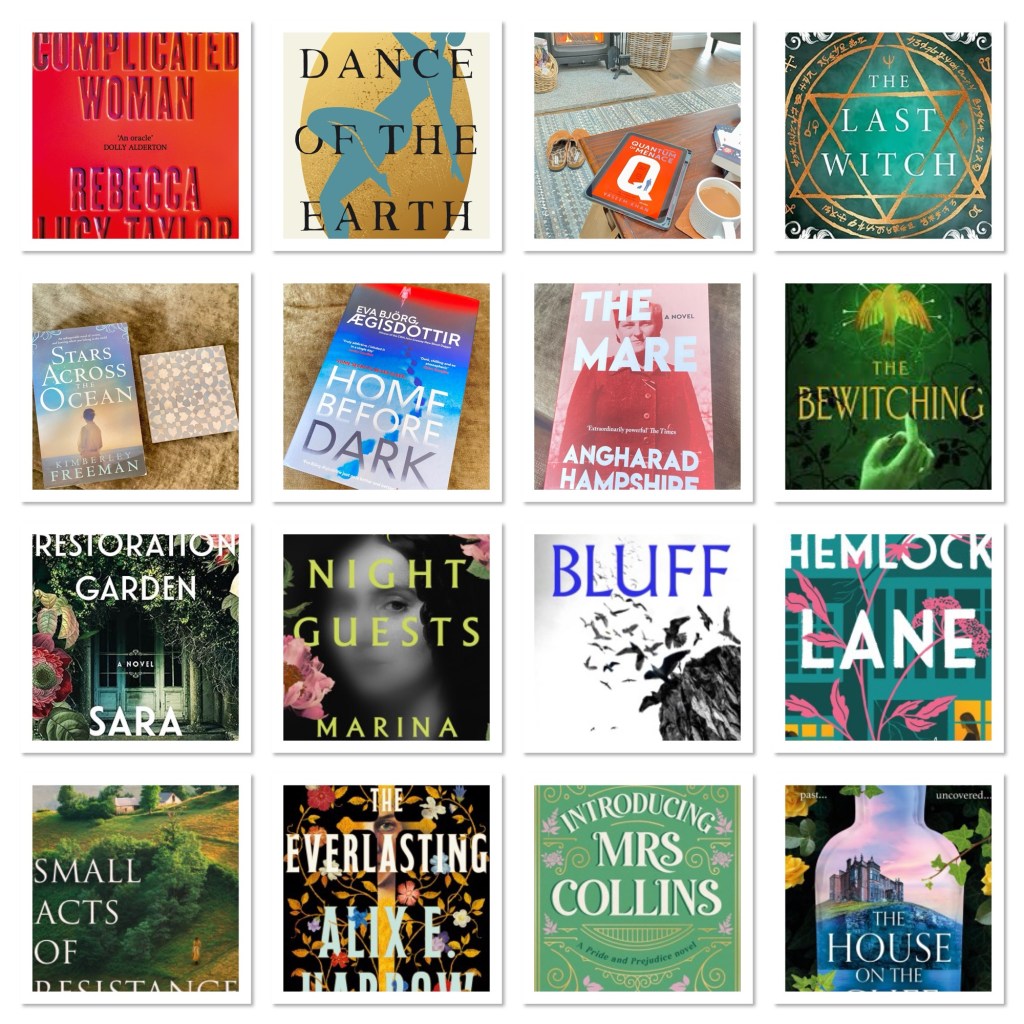
It’s getting quieter as we move into the last months of the year but here’s my expected reading for November:
Whoever fights monsters should see to it that in the process he does not become a monster. And if you gaze long enough into an abyss, the abyss will gaze back into you.
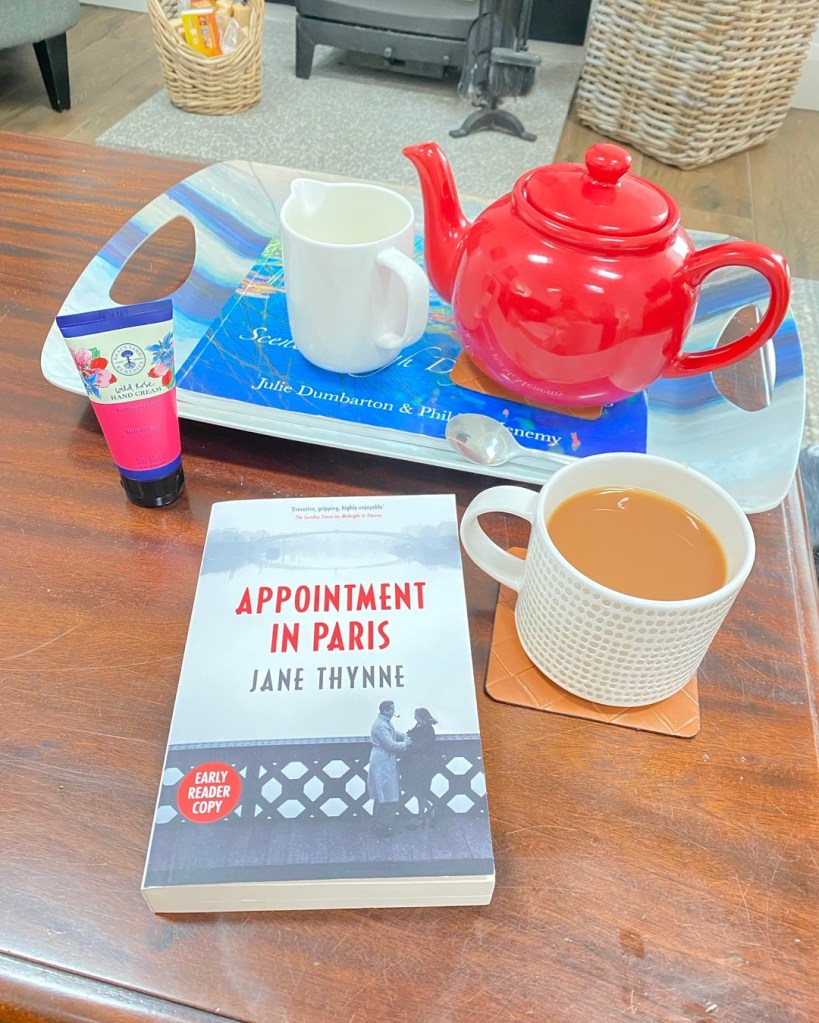
1938. Stella Fry is walking home from her job at the film institute and surprised to find a crowd gathered near her home. It’s clear there’s been an accident, but when Stella enquires she’s shocked at the reply. ‘It’s someone called Stella Fry’ a woman whispers and with great presence of mind she doesn’t identify herself. She simply turns and walks away, thinking that Harry Fox is involved. After a night on the sofa at her friend’s flat she’s deciding what to do next when she’s called in for an assignment with Harry Fox, who she’s worked with before. This is a very sensitive case, looking into the death of a man at the POW camp at Trent Park. A man wearing Luftwaffe uniform was found dead in the grounds with a gunshot wound. It’s vital to know what’s happened because Trent Park isn’t just a POW camp, it’s a huge intelligence gathering centre and one of their listeners has gone missing. Stella is enrolled in the ATS to become a ‘listener’ at Trent Park. She will join other German speakers, listening to cellmates through state of the art microphones. The women are recording and transcribing anything of interest and sending it up the chain. It’s an important tool to learn about Nazi positions, their plans to invade Western Europe and their treatment of Jewish communities. However, Stella must also listen to her colleagues, because they have no idea where the murder weapon came from and there is a possibility that the missing operative has been turned. There’s also intelligence about three German spies living within the immigrant community close by. Harry will be on the trail of the spies which brings Lieselotte Edelman into his path, a beautiful young Jewish woman who fled her own country before war broke out. Could she be a spy and could Harry’s desire for her cloud his judgement about her true purpose?
This is an interesting thriller based on true events and the second to feature Harry and Stella as a team, although this time they’ll be working different lines of enquiry on the same case. Stella comes across as the ideal operative, she blends in well and seems to secure people’s confidences very easily. She’s competent and able to keep secrets, even from those closest to her. As for her own feelings, they’re a little more complicated. She has feelings for her best friend’s brother but he’s become engaged to an American he met through the Kennedy family. Harry also has complex feelings. I wondered how he felt about Stella, but would he ever be able to admit to it? He seems to enjoy his bachelor lifestyle and never gets caught up with one woman. Both take comfort from people they meet in the course of their investigation, but these are war time affairs belonging to people who pass in the night never to be seen again.
I found the psychological dynamics at Trent Park really interesting. The POWs are treated very well, but that’s designed to lull them into a false sense of security. If they’re treated well and have some freedoms they’ll never imagine that their every word is being scrutinised. One man observes that Stella’s job reminds him of the Nietzsche quote that’s the book’s preface – when we look into the abyss the abyss also looks into us. It’s easy to think their inmates are just ordinary men forced into fighting for their country and some are, but others are sadists and enjoy exerting their power over civilians. The stories of beatings, rapes, casual slaughter and the mistreatment of Jews is horrifying. It shows how people’s basest instincts are woken up and distorted by power. Listening to this everyday must chip away at the transcribers as they process these horrors from German into English. I was utterly drawn into this because it’s a very heightened version of working with in the mental health sector, listening to the worst things that have happened to people takes its toll and it’s vital to take breaks and even extended leave in order to do the job well. I wondered how people coped with the roles they were forced to take during the war and whether we would be equally selfless. My grandad missed the war but did his National Service in Germany in the aftermath and I know what he saw affected him. I can’t imagine how a country heals after such horrific events. Those ordinary people who turned on their Jewish neighbours must suffer from terrible guilt when the full truth emerges, whether they believed the propaganda or participated to save their own skin. I was sure that the truth lay somewhere in this sea of human suffering and I was sure Stella would find it.
I found Stella’s narrative more compelling than Harry’s, possibly because the historical detail and background were so brilliant. Harry js delving into the criminal underworld on the trail of a gun as well as the spies but Stella’s narrative takes us to Paris as the Nazis are on the verge of invading and taking control. The author really captures the sense of fear and disbelief combined, there’s a sense of unreality as if it could never happen to them. It’s something I feel personally with the rise in far-right politics. We always think it couldn’t happen again or it couldn’t happen here, but it can. It’s very tense as Stella gets closer to the man she needs to bring in, but also make sure she gets out of Paris in time. Another feeling the author captured beautifully was the nostalgia for a time before the war, for Stella it’s a party she attended at Trent Park as she is falling in love with her friend’s brother. Since then they’ve both had roles to fulfil and perhaps sacrificed happiness for duty, it’s the story of many people who missed their chance or passed only briefly, never to see each other again. When Harry and Stella are together they’re a formidable team and there is just a tiny hint of chemistry. This was a great historical mystery and I’m very curious to know where this team go next.
Meet the Author
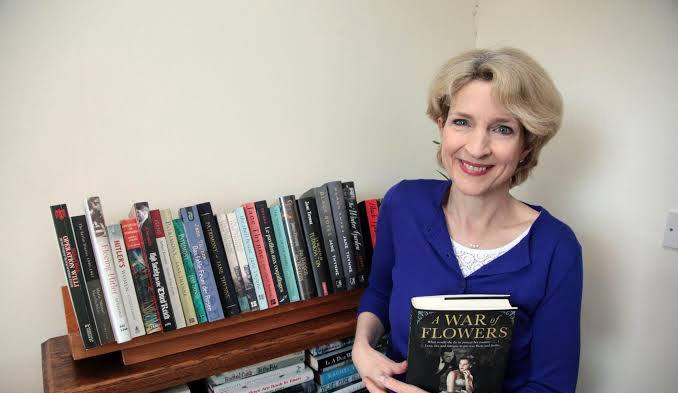
Jayne has a passion for historical fiction and loves the research that involves. The first in her Clara Vine series, Black Roses, became a number One Kindle Bestseller. In the UK the series is published by Simon & Schuster. Outside Britain, my novels have been translated into French, German, Greek, Russian, Polish, Romanian, Turkish and Italian. In France the series is published by J.C Lattes and in Greece by Kedros. In the US and Canada the series is published by Random House. The TV rights have been optioned by Hillbilly Films who are producing the pilot for an eight part series.
The Words I Never Wrote is published in the US by Ballantine and in the UK by Sharpe Books.
I have also written two alternative history novels under the pen name C.J. Carey, Widowland and Queen High (published in the US by Sourcebooks as The American Queen). I chose that pseudonym because it’s a reversal of my own initials, coupled with my mother’s maiden name. In the UK, the novels are published by Quercus and in France by J C Lattès.
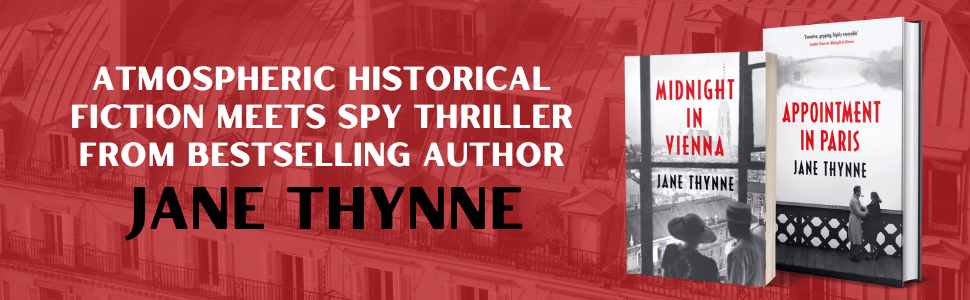
My most recent novels, the Fox and Fry series, feature Harry Fox, a suspended MI5 surveillance operative, and Stella Fry, a former tutor, who are thrown together to solve mysterious murders on the eve of WW2. Midnight in Vienna and Appointment in Paris are both published by Quercus.
As well as writing books I freelance as a journalist, writing regularly for numerous British magazines and newspapers, and also appear as a broadcaster on Radio 4 and Sky. I have been a guest reader at the Arvon Foundation and sat on the broadcasting committee of the Society of Authors. I’m a patron of the Wimbledon Bookfest and live in London.
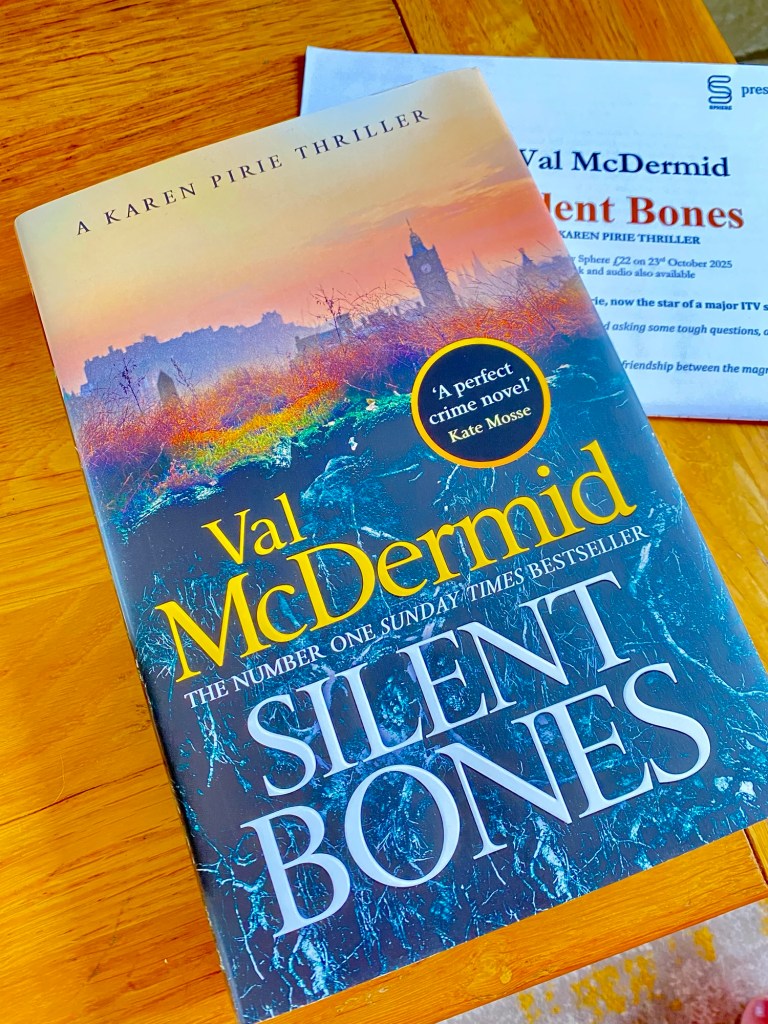
It’s delightful to be back in the hands of a consummate storyteller like Val McDermid and to be reading with my fellow Squad Pod friends. She takes us straight into the story and I always feel like her characters are real people going about their business and we just drop into their world from time to time. Here the Historic Cases Unit are working two cases: the death of a high-end hotel manager and the identity of a body found after a landslip in heavy rain on the M73. Tom Jamieson’s death is flagged up by his brother in New Zealand. Thought to be an accidental death, Tom’s brother has footage that shows someone was behind Tom as he left the hotel after his shift and in the staircase where he met his death. If this man entered the steps after Tom and can be seen exiting then he must at least have seen Tom’s fall, or is there a more sinister explanation? The body in the M73 has to have been placed there deliberately. It turns out to be the body of investigative journalist Sam Nimmo, thought to have killed his pregnant girlfriend Rachel before going on the run about eleven years ago. The discovery opens up her murder case as well as Sam’s. I was hooked by the evidence that leads to a secretive book club of successful men who meet once a month in Edinburgh. They’re named the Justified Sinners, alluding to a James Hogg book that’s based on the Calvinist principle that once a person is ‘saved’ they can commit any sin, even murder, and still enter the kingdom of heaven. Is this a joke between literary friends or something more more? Have they stumbled upon an unofficial Freemasons’ club where the members share business tips and inside knowledge? The team start to wonder about the potential benefits of becoming one of the twelve members and whether those benefits are worth subterfuge or even criminal acts.
Every time I pick up one of the books in this series the same thing happens. I start off slowly, savouring each chapter until about halfway, then I’m racing all the way to the end. It’s superbly plotted, creating a build-up of tension through the short chapters. Each chapter flits to a different viewpoint or separate lead in the cases, causing cliffhangers that last for three or four chapters. This means ‘just one chapter’ at bedtime becomes just three more and finally – I may as well finish. As we near the end of the book those revelations come thick and fast and I had to keep reading till I couldn’t keep my eyes open. I loved the red herrings thrown up in Sam Nimmo’s case as they try to find out what story he was working on. Every lead has to be followed and Jason is tireless on his match fixing leads but is this the story that got Sam killed? The political intrigue is as always murky and fascinating. Between the Independence Referendum and COVID there are plenty of possibilities for corruption and cover-ups.
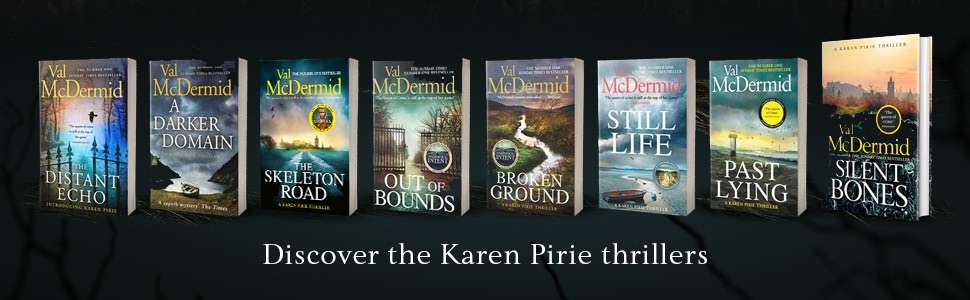
What I love most about Karen is her tenacity and absolute belief in her own skills as a police officer. She knows she’s a good detective and believes in the team she’s built, even if Jason and Daisy do bicker and become competitive. She knows how to use their skills and how much free rein to give them. I loved her conversations with the boss, the Fruit Gum and other men who outrank her. She doesn’t allow them any room for misogyny or sexism. When she’s told mockingly that the force can do better than rely on ‘women’s intuition’, she’s quick to tell him that it’s no different from a hunch or copper’s nose, a phrase male officers use frequently. She also won’t be bulldozed into moving their office, stating that it would mean longer commutes and distance from the research and forensic teams they rely on most. She also pushes for what she wants in the course of the investigation. When she doorsteps the Justified Sinners, their facilitator mentions they have plenty of pull with the Chief Constable who calls Karen and tells her to back off. She insists on him supplying a list of members before she does and even follows up in the morning to make sure she wasn’t fobbed off. Even in her private life she’s very sure of what she needs. She is still involved with Syrian refugee Rafiq who’s currently working as a surgeon in Canada. With British and US politics ‘beyond satire’ and political funding becoming ever more shady Karen does worry about their future. She’s flown to Montreal several times but she can’t wait until he has Canadian citizenship and can visit Scotland again, maybe even returning for good at some point. When she has a heartbreaking choice to make she faces it by staying true to herself, because she can be romantic but has a hefty dose of realism too. She can also be ruthless, at one point perhaps a little too ruthless for a softy like me. She has her eye on the end goal, not the other person’s feelings because in her eyes the end justifies the means. The truth is not found by treading lightly.
I enjoyed getting to know more about Daisy and Jason’s home lives and it’s here where a bit of humour creeps in. Jason and Meera’s stake-out of a football match with the aftermath being a ‘follow that cab’ tour of Scotland’s motorways made me smile. Especially when the reward that clinched Meera’s attendance was a match day pie. Food looms large in Daisy and Stephanie’s relationship too, in fact Daisy eats so much that Jason is sure she has a tapeworm. That’s not a problem for Daisy, in fact she ponders that it might be the only thing that ensures she stays thin. She’s always scoring leftovers from lunches out and between Italian biscuits, french pastries and the South Indian curry that lures a suspect out of hiding I kept feeling hungry. All of this is to balance the darkness at the heart of these cases, where we see powerful and rich people doing what they like, safe in the knowledge that their status and privilege will always protect them from answering to their crimes. It’s also set in dark times and the weariness Karen feels about what’s happening in the world is something I’ve felt myself for the last couple of years, finding myself thinking the world can’t get any worse. Not only is a sex offending, fraudulent, narcissist running the biggest country in the world, but we have politicians here happy to emulate him. The book is rooted firmly in the now with cancel culture, the MeToo movement, the Covid pandemic and all the corruption surrounding it, as well as the cost of living crisis all pertinent to these cases. I think the team are feeling overwhelmed, even without the quagmire surrounding the Justified Sinners and Sam’s quest for the truth. Some characters did behave unpredictably, just like they do in life. The outcome isn’t straightforward and there were people to blame that I genuinely didn’t expect. This is an enthralling read from a writer at the very top of her game. Someone who knows exactly how to pitch a story and keep the reader engrossed until the final pages. She knows that the joy of a book is in the journey not just those final revelations and that sometimes we don’t get the answers we expect and it’s a better read for that.
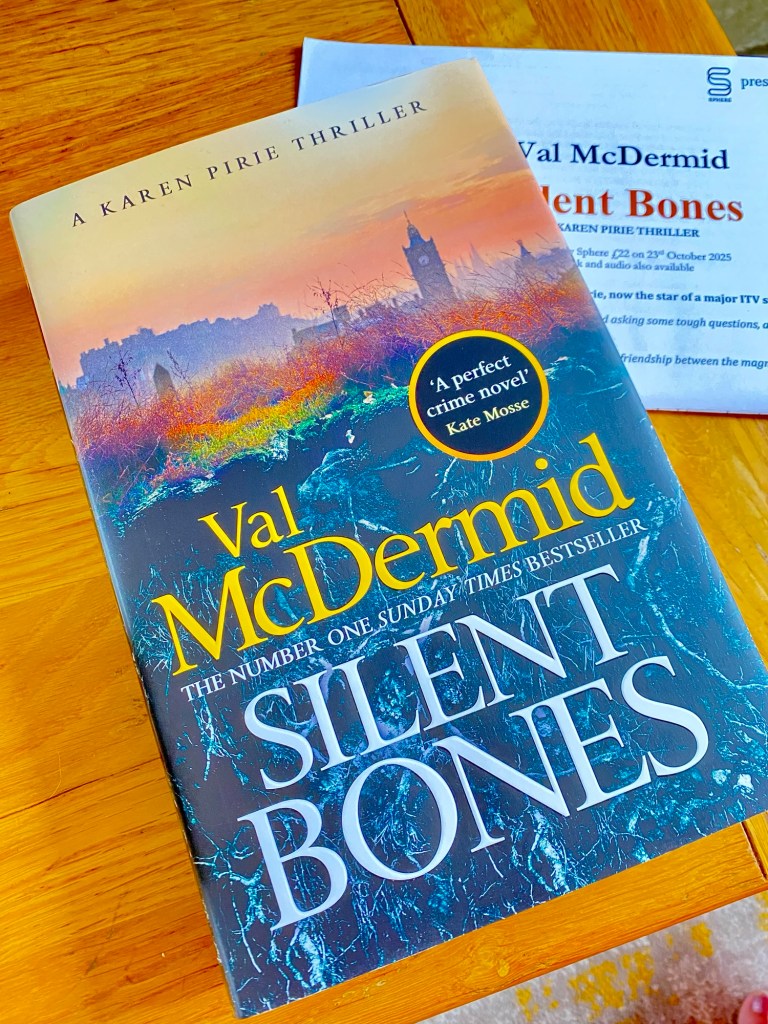
Out on 23rd October from Sphere
Meet the Author
Val McDermid is a number one bestseller whose novels have been translated into more than forty languages, and have sold over eighteen million copies. She has won many awards internationally, including the CWA Gold Dagger for best crime novel of the year and the LA Times Book of the Year Award. She was inducted into the ITV3 Crime Thriller Awards Hall of Fame in 2009, was the recipient of the CWA Cartier Diamond Dagger in 2010 and received the Lambda Literary Foundation Pioneer Award in 2011. In 2016, Val received the Outstanding Contribution to Crime Fiction Award at the Theakstons Old Peculier Crime Writing Festival and in 2017 received the DIVA Literary Prize for Crime, and was elected a Fellow of both the Royal Society of Literature and the Royal Society of Edinburgh. Val has served as a judge for the Women’s Prize for Fiction and the Man Booker Prize, and was Chair of the Wellcome Book Prize in 2017. She is the recipient of six honorary doctorates and is an Honorary Fellow of St Hilda’s College, Oxford. She writes full-time and divides her time between Edinburgh and East Neuk of Fife.
It’s been a month of crime/thriller reads and historical fiction, plus a couple of crime and historical combinations which I really enjoy. It’s also been a month where I found it difficult to concentrate because finally, after five years of brown tiles, lime green walls and cupboards with no handles we have been able to afford to renovate the kitchen. So for two weeks we have had no ceiling, no floor and no hob. As of Monday, we will be cooking in the garden until everything is back together again. I am not good with chaos so if you can imagine me wedged into a corner on the sofa with the contents of every kitchen cupboard taking up the study and other end of the living room. Hopefully only two weeks left to go. It can’t come soon enough. The other half is building the seating area under the pergola at the bottom of the garden. It feels like a symphony of drills and hammers at times but it will be lovely to be able to go and sit outside and read with roses growing around me. So much to look forward to in September with some fantastic reads on the list too. ❤️ 📚
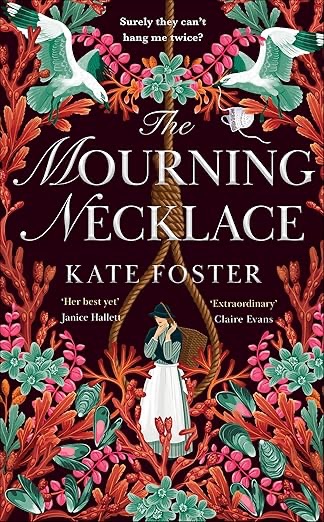
Unbelievably this is the third novel from Kate Foster and firmly puts her on my ‘must-buy’ authors list. They’ve all been worthy of a place on my best reads list but I think this is her best yet. Maggie is a young girl from Fisherrow whose father is a fisherman and her mother ons of the fishwives who help bring in the catch, clean it for market and then repair nets ready for the next day’s fishing. She, her parents and sister Joan live in a one bedroom cottage but Maggie dreams of a life so different to this, where there isn’t back breaking work and she’s not at the mercy of her father’s drunken temper. So when ambitious trader Patrick turns up at the door, looking for somewhere to keep goods for making perfume she senses a chance. She knows Joan is prettier but she would make a far better wife to help him in his business. Luckily he sees this in her and after a short courtship they become married and set up home in a cottage in the village. They are happy until suddenly Maggie gets the news that a press gang has been to the hotel and Patrick was one of the men taken for the navy. Somehow Maggie finds herself travelling to London, to build her new life. At a stopover in Kelso she takes a couple of weeks to stay and earn some money. She knows now she is pregnant and conceals it, to keep on working. So how does she come to be in Edinburgh a few months later, being sent to the gallows on charges of concealing a pregnancy and killing her baby. Yet miraculously she survives the hanging, how and what she chooses to do with her second chance at life are the main contents of this brilliant novel. I loved the history, the growing up that Maggie does on her journey and how brilliant an advocate Kate Foster is for these women she finds in historical documents, often in dire situations at that time for ‘crimes’ it’s hard to comprehend today. Most of all I loved the bold, feminist take on Maggie’s life and the links that could be made with modern day politics. Brilliant.
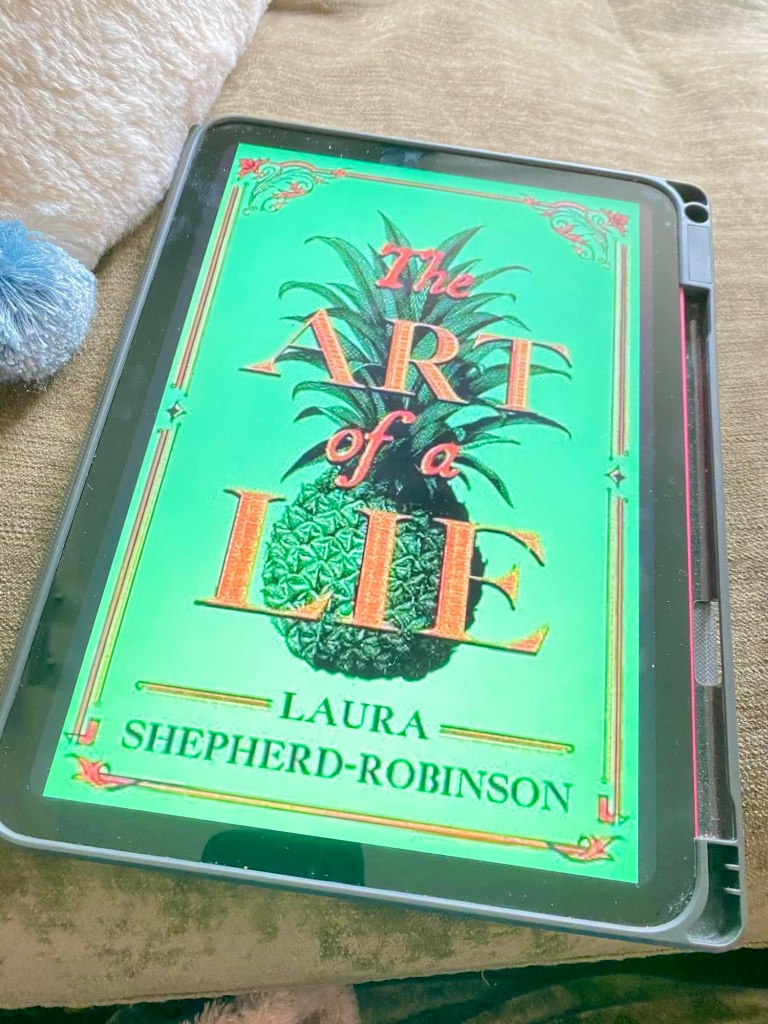
My second historical fiction read of the month was this mesmerising and clever thriller from Laura Shepherd-Robinson that’s jumped straight onto my books of the year list. The Art of A Lie begins in a confectioner’s shop called the Punchbowl and Pineapple, run by the newly widowed Hannah Cole. This is the late 18th Century and Hannah grew up in the shop that was started by her grandfather. Her husband Jonas had been her father’s apprentice and now she must keep their shop running for it to be handed to his cousin. Jonas was found down river, washed up by the Thames with head injuries and missing anything of value including a watch given to him by Hannah that used to belong to her grandfather. Novelist and magistrate Joseph Fielding visits Hannah to say he is investigating Jonah’s murder, for he doesn’t think it’s as cut and dried a case as it might seem. Thank goodness for the lovely William Devereux, a friend of Jonas’s who introduces himself ar the funeral. He calls on Hannah at the shop, hearing of Joseph Fielding’s interference in the case and hoping to be of help. He gives her his grandmother’s recipe for iced cream, thinking it may be a hit with her customers and could tied her over until the case is closed and Jonas’s estate is released. Laura tells this tale so cleverly, drifting between narrators and shocking us with an aspect of their characters or the case. Both are fascinating and not necessarily what they appear to be at first. With each revelation I became more and more intrigued with this cat and mouse game and the psychological make up of those involved. Hannah is an astute businesswoman, good at reading people quickly and usually accurately. It’s hard to tell at times who is scamming who and I was so utterly entranced I was still thinking about it a week later. Simply brilliant in its setting, historical background and the constant simmering tension.
A modern thriller this time from one of the Queens of the genre and this really was an up to the minute tale of secrets, lies and murder. Gwen is an older widow, living in a complex of smart apartments in a nice area. She has decent neighbours, some of whom she might call friends. When her nearest neighbour Alex is looking for a new lodger she meets one of the candidates, Pixie. They start chatting and she is pleased to hear when the Britpop one hit wonder decides to offer her the room. Pixie gets a job at the bakery and cafe that Gwen frequents and they get on very well, so Gwen is disturbed to hear what sound like arguments from across the hall. She also catches a phrase that sounds like ‘you knew the deal when you moved in. When she catches up with Pixie she’s disturbed to hear that the deal involves sex in lieu of rent. She confronts Alex and takes Pixie in, writing a complaint to the building’s governing board. Her neighbour Dee tells her that she talked to her daughter Stella about it and she’s been making a documentary news item about the growing ‘sex for rent’ scandal. Would Pixie like to be interviewed? Soon the story is out of control, Alex is angry and denying everything and Gwen is public enemy number one. I loved how ‘of the moment’ this was with Gwen at a loss when it comes to freelance investigative journalism, sex for rent, trad wives and influencers. As she starts to feel out of her depth, those around her continue to manoeuvre and manipulate until life will never be the same again. This was so tense and the eventual murders most unexpected indeed.
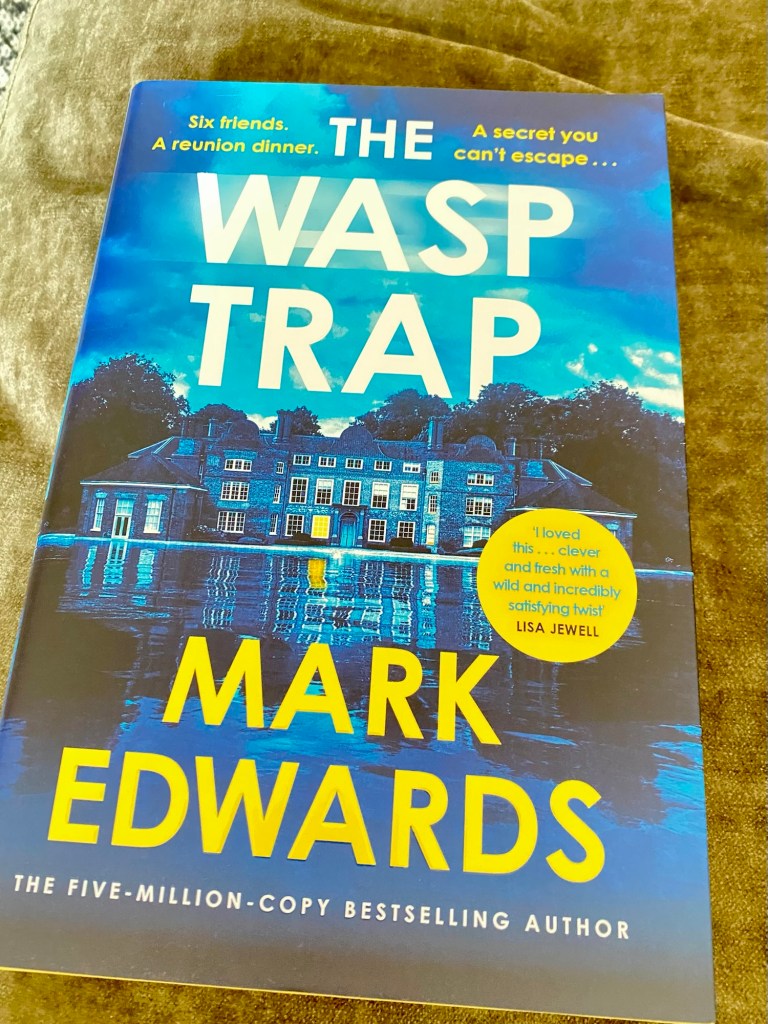
I had the luck to read two Mark Edwards novels in August. a throwback to last year and this, his brand new thriller. The Wasp Trap was the jokey name given to a side project. While trying to form an algorithm for one of the first ever online dating apps, a group of university students have another idea. Each one specifically chosen by their professor, Sebastian, they are the best in their fields and are spending their summer at his mansion in the country. Will tells our flashback story, the creative who is meant to be coming up with a name for their site he is also hopelessly un love with Sophie but too scared to make a move. Together they come up with ‘butterfly.net’ but it’s Lily who comes up with a side project – an algorithm that could identify psychopaths. Statistically one of them could be and since they’re serving as guinea pigs for the dating apps why not for this? Now decades later they are gathered again, this time at Theo and Georgina’s mansion – the couple got together that summer and are married with two daughters. Strangely, they announce that one of their daughters is missing so it seems an odd time to have a dinner party. They also have caterers which is unusual for them, so Will isn’t shocked when it turns out to be a cover. The fake chef is Callum and he gives them an ultimatum- he’s giving them an hour to think and when he returns he wants to know the secret from that summer. If the secret isn’t divulged then someone will die. The tension rises as the hour ticks down, who has a secret? How do they know which is the right one? As Callum comes back into the room they’re left in no doubt that he means business. The rising and falling of tension is pitch perfect and in between the action we get flashbacks to that summer where more than one person is holding a secret and we start to wonder who exactly was the psychopath that Lily was searching for.
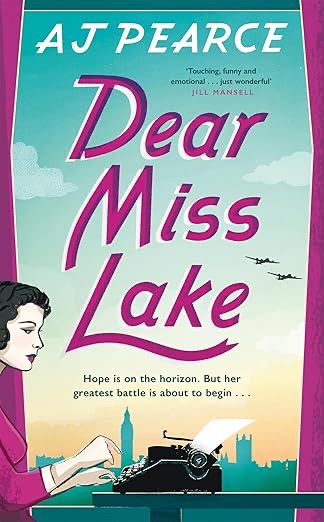
My final recommendation for last month is this last novel in the historical fiction quartet about the agony aunt of the Women’s Friend, a magazine running during WW2. It was lovely to be back with the gang and particularly Emmy Lake as they enter the final and arguably most difficult stretch of WW2. After five years of war both the team and their readers are tired. As a way of boosting morale at the magazine Emmy suggests they all decamp to Bunty and Harold’s in the countryside. As Hitler’s V1 and V2 bombs start to hit, it will certainly be safer. Emmy strongly feels they all need a boost in order to keep supporting and inspiring the women who read their magazine. If they’re tired and the magazine suffers, how will their readership keep the fight going? Emmy throws herself into rural life and is soon organising games nights, competitive knitting and planning the very important wedding of their officer administrator Hester and her fiance Clarence. She also has a phone call from the ministry to travel abroad and report from the French field hospitals and even manages to mastermind a break into husband Charles’s barracks before they’re both deployed. Emmy has no idea how much she’s going to need those around her in the coming months as her hardest test is yet to come. On their return to London she receives a telegram to say that Charles is missing, presumed captured in enemy territory and she has the agonising wait for the confirmation letter. Then Hester receives a blow when Clarence calls to say he’s being deployed in three days, two days before their planned wedding. Hester is inconsolable and after catching Emmy in a moment of frustration, she disappears. However, Emmy isn’t one to dwell on her misfortunes for long and I wondered what schemes and plans she would hatch next.
The author doesn’t let us forget the sacrifice and loss in people’s lives, but still manages to bring in humour and a defiantly upbeat, make do and mend attitude. This is the closest I’ve seen Emmy come to breaking point and it’s hard to when you’re the one whose role it is to buoy everybody else up. As she finds out though, those who she’s helped and supported are so happy to be able to return the favour and support her. This is a set of books I always recommend, to women of all ages, because it’s so easy to relate to one of the characters and absolutely root for them. The main impression I take away from them is that sense of female solidarity. The instinct we have to come together, share the load and make each other’s lives a little easier from taking on someone’s children all the way down to being there with a meal or a shoulder to cry on. Emmy uses her writing to do the same and triumphs in being exactly what the magazine promises – the Woman’s Friend.
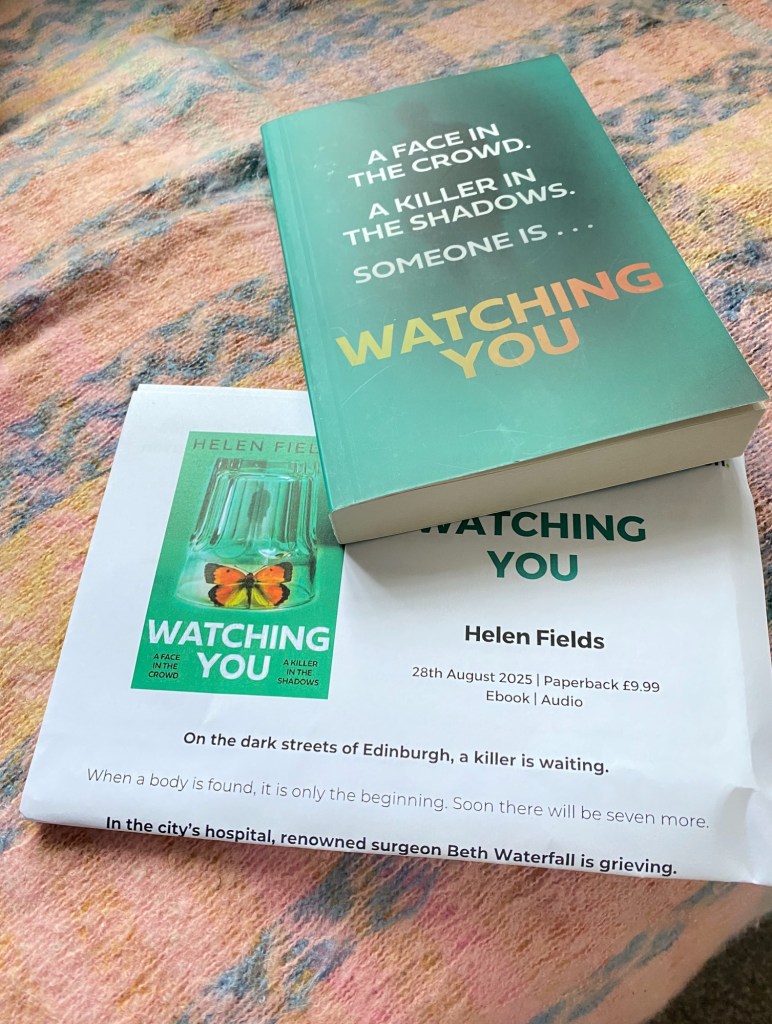
Here’s a hint of what I’ll be reading in September:
A few of Helen Field’s characters come together in this gripping novel that starts with someone being stalked in Jupiter Artland, the park where Laura Ford’s ‘Weeping Girls’ statues are situated. They become the only witnesses to an unspeakable act. It’s a great setting for a murder with five sculptures, each one of a little girl weeping in different poses. I’m a lover of public art but these are genuinely creepy and have an uncanny quality to them. I can’t think of a more fitting place to be hit with a shovel and buried alive – one of my worst ever fears. It’s a bold beginning and we get three more murders like this, each with a narrator who sounds almost bored and melancholy. It’s as if they’re present, able to recount every detail, but detached at the same time. They’re the literary equivalent of the archetypal TV pathologist weighing a pair of lungs one moment and eating a sandwich the next. It’s clear that Lively, Salter and the MIT have a serial killer on their hands but with each murder so different, how will they build a case? Superintendent Overbeck engages Dr Connie Woolwine to profile the killer and run the investigation, but it does seem to the team that the crimes and potential suspect don’t fully fit.
The story has several threads, each focusing on different characters. We go back a few years to a young artist named Molly who is being stalked and harassed with even parcels of rotting fruit and maggots turning up on her doorstep. She feels watched when outside and inside she is harassed by parcels and online rumours, or even worse deep fake videos. There’s the usual porn, but stranger and more sinister scenarios like her hurting an animal. It’s taken a toll on her mental health and her career. With the police unable to help she sinks further. We also have a character called Karl Smith, a carer for his father who had a stroke not long after his wife had a cardiac arrest. While surgeon Beth Waterfall tries everything to save her she dies on the operating table. So when his complaint against the hospital isn’t upheld Karl starts to see his mother. It’s mainly at home and she’s very unsettling. She’s clearly never been a nice woman to her son. She is a grotesque figure who Karl finds repellent. Not only is she unkempt and smelly, she likes to unsettle Karl by sitting very close and wafting her rotten breath into his face. She is cruel and determined that he keep up his campaign against Beth Waterfall. DI Sam Lively watches Beth try to save one of the victims, a homeless man with multiple stab wounds, and they strike up a friendship and a fledgling relationship. So when Sam receives a wound to his neck and it’s Beth that treats him, she takes him home afterwards to recover. It’s a gentle romance that works really well and he finds out Beth had a daughter, who took her own life after a campaign of stalking and harassment. The puzzle pieces are coming together, but I knew there would still be some surprises in store and I was gripped, waiting to find out if my suspicions were right. Desperately hoping they weren’t.
Dr Connie Woolwine is an acquired taste, but is always fascinating. Here I could see how she could really get under the skin of both suspects and colleagues. Brodie accuses her of snobbery, but it’s not that simple. Connie seems to relish having her suspicions about someone, then having them confirmed. She often tells people what she thinks without considering their reaction and it’s this compulsion to see what makes someone tick that might come across as thinking she knows better. It’s not a class snobbery, it’s an intellectual snobbery. I just love working people out, because the complexities of our brains are simply amazing. I’ve recently been reading up on Functional Neurological Disorder where neurological symptoms are present in the patient, without any disease activity. It’s as if the brain simply forgets how to send and receive messages from certain parts of body but without any of the disease activity common to neurological diseases like MS or Parkinson’s Disease. Symptoms range from functional weakness in a limb, to dramatic paralysis and seizures. It’s amazing how powerful the brain is and how it can be doing something so disabling in the background without knowing why, although it’s thought that the brain processes might mental stress or trauma as physical pain. However, this is nothing compared to Connie’s findings about the brain producing a brilliant twist at the end. I’m always pulled in two directions with Connie, she’s utterly brilliant but more than a little odd (talking to corpses) and manipulative, particularly where Brodie is concerned. She knows the power she has over him, but isn’t honest about it. She seems to fully relax and be herself when she visits Midnight, who is living a bucolic existence in Devon with her sister Dawn who has CP. With Dawn, ‘Wooly’ can drop her ‘therapist’s demeanour’ and just be in the moment. Dawn has no guile and has never learned to hide her emotions.
There’s some heart-stopping action here, especially in the finale which is brilliant. Salter and Connie are quite the team, with Salter able to jump in and secure a suspect while Connie has them otherwise engaged. I love that Helen’s female characters are mothers, carers and wives, whilst also competent at work, even formidable. Overbeck is brilliant, always holding MIT to a high standard, ready with a stern talking to and wears three inch heels all day! She tells Connie she’ll give her the name of the her nail technician because her nails are disgusting and it did make me smile. It’s a novelty to see Connie on the back foot for a change. The murder scenes are genuinely scary or moving. I was especially affected by the murder of Mrs Singh who is a lonely older lady, the victim of her own success. She made the huge move from India to Scotland in the hope of her children having a better life and he does, but that means they’re usually far away from you. She describes a boy who grew up with a Scottish accent, as if he was already moving away from her. The many pictures of her grandchildren attest to the distant between them. Her death is brutal and desperately sad. I loved how Helen brought all the puzzle parts together, despite such disparate victims who had nothing in common, not even their deaths. I could see Karl Smith had a rage in him but it mainly seemed to be for his own parents, could he be murdering complete strangers? I became more addicted as the novel went on until last night when I couldn’t leave the last few chapters and stayed up till 2am. Now I keep falling asleep. This is such a psychologically fascinating thriller that’s given me lots of side reading to keep up with Connie’s final verdicts. I can’t wait to see where she and Brodie end up next.
Out now from Avon Books
Meet the Author
A Sunday Times and million copy best-selling author, Helen is a former criminal and family law barrister. Every book in the Callanach series has claimed an Amazon #1 bestseller flag. ‘Perfect Kill’ was longlisted for the Crime Writers Association Ian Fleming Steel Dagger in 2020, and others have been longlisted for the McIlvanney Prize, Scottish crime novel of the year. Helen also writes as HS Chandler, and has released legal thriller ‘Degrees of Guilt’. In 2020 Perfect Remains was shortlisted for the Bronze Bat, Dutch debut crime novel of the year. In 2022, Helen was nominated for Best Crime Novel and Best Author in the Netherlands. Now translated into more than 20 languages, and also selling in the USA, Canada & Australasia, Helen’s books have won global recognition. She has written standalone novels, The Institution, The Last Girl To Die, These Lost & Broken Things and The Shadow Man. She regularly commutes between West Sussex, USA and Scotland. Helen can be found on X @Helen_Fields
When she hears a man has been killed by a Great White shark, Gwen races to the beach only to find that all that remains of her husband is his swimming cap and a piece of torn, blood-stained wetsuit. Her grief is soon interrupted by Tish, screaming for information about the accident. When Gwen reassures her that it’s her husband, Jason Riley, who’s perished, Tish’s response is earth-shattering for them both: Jason was her husband too.
The women’s mutual animosity is not assuaged when they learn that Jason recently sent all his – make that their – money to a mysterious ‘business partner’ in Egypt called Skye. But when they fly to Cairo to confront her, they find another grieving widow whose life-savings have gone missing…
As this double-crossed threesome cross continents in their search for truth and retribution, they start to realise they’re embarking on a journey of self-discovery, renewal and friendship too.
I’ve read Kathy Lette before so I was expecting ballsy women, lots of wit, perhaps some raunchy behaviour and definitely laughter. I wasn’t disappointed. I’ve seen this described as a revenge caper and that is the perfect description. Gwen has a happy life with her children and second husband Jason, who’s a real hottie. He is a big blonde surfer type with a sprinkling of grey, but a body honed to perfection by Iron Man training. She sometimes wonders how they got together. She sees herself as a rather ordinary widow nearing her sixties, while he’s a lot younger and so fit. However, tragedy comes along when Jason is training. Gwen hears on the radio that there’s been a shark attack in the bay and she makes her way there immediately. When she arrives, she knows by the scrap of wetsuit on the sand that the lost man is Jason. She hardly has time to breathe before a leather clad ball of fury catapults herself into the situation. Tish is there because she thinks her husband is missing too, she’s married to a tall, blonde hunk called Jason. Surely they can’t both be married to the same man?
Gwen wants to quietly go home and cope with the double shock of Jason’s death and the news that he’s a bigamist. Tish has the grip of a small terrier and has about a million questions that Gwen is incapable of answering. She’s totally gobsmacked by Tish’s biker girl style, they couldn’t be more different so why was he attracted to both of them? It seems that when Gwen thought he was working or training, he was with Tish and vice versa. They’ve been together a similar amount of time. They make a very uncomfortable trip to Jason’s lawyer, Tish is adamant there should be a will and she wants to see it. She invested a large amount of money in a business start-up he was working on. Gwen is keeping her cards close to her chest but she too has invested some of her widow’s inheritance in his endeavours. Where has it gone? They soon find out. His lawyer tells them that Jason signed a document that transfers their joint investment to a woman in Cairo. Tish wants to be on the next plane and wants Gwen to go with her. Can they find this woman, solve the mystery of her connection to Jason and retrieve their money?
I found the novel intriguing and funny at first. Tish is an absolute ball of energy and her power as a character did overpower everyone else slightly. I wonder if Kathy based Tish on her most extrovert side. I felt a little bit like the momentum of the story was lost in long verbal exchanges between the two women that seemed more about the jokes than developing characters or their relationships. Some are admittedly very funny, but when they come thick and fast the humour sometimes misses the mark. It’s also difficult to change the tone and I think the novel could have done with some light and shade. However, it’s a madcap caper that takes on an escapist feel as we travel all over the world with the women and try to work out if Jason faked his own death and whether they’ll be able to retrieve their money. Cairo brings even bigger surprises, leading to Tanzania, the Maldives and throughout Europe. It’s an absurd plot, but it is fun and a great escape read. I read this in one afternoon and had some laugh out loud moments. There’s also some lovely female camaraderie as these women start to come together, overcoming their differences to bond and keep chasing their love rat husband. I really enjoyed the suggestion that there’s a re-evaluation of life as women reach middle-age. A realisation that if we are going to do the things we’ve always wanted we need to start planning now. It’s the chance to throw off things that no longer suit us – not just in our wardrobes! In amongst the action and the laughs is the very profound idea that just when you learn to make the most of your life, it is almost over.
For more information on Kathy Lette and her books visit