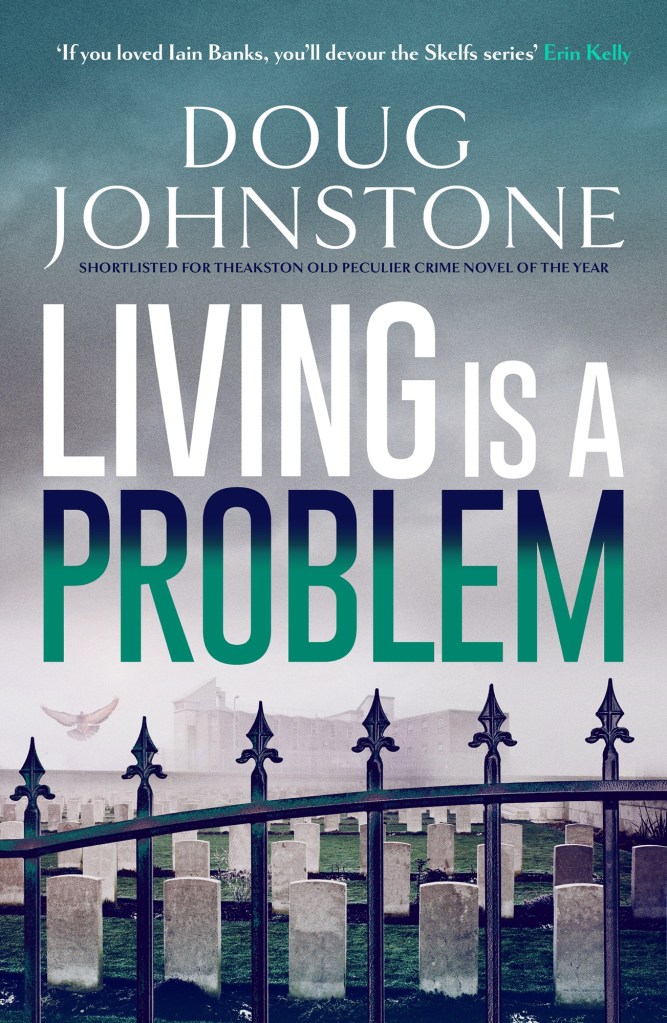
Living is a problem, because everything dies. Biffy Clyro
Every Skelf novel begins with a funeral, but they rarely go off without a hitch. This one is no exception, with a drone buzzing the ceremony. Could it be to do with the deceased or has someone got it in for the Skelfs? Jenny’s following the case from the last book, keeping an eye on the cops they investigating for sexually abusing young girls in the travelling community. Both are inexplicably out on bail and Jenny likes to know where they are, talking to Webster’s wife and setting up surveillance cameras. Hannah’s case also links back to the last book, concerning Brodie the new recruit to the undertaking business. Brodie had been living on the streets since the loss of his baby son broke his world apart. He has found strange scrabbled marks around his son’s grave that don’t look like they’ve been done by an animal. Hannah agrees to set up a camera, but being told that Brodie hears voices she wonders if he might have gone to the grave and acted subconsciously. Dorothy’s case comes from her involvement with a community choir that includes some Ukrainian war widows. One of the women, Yanna, has gone missing. Her husband Fedir was killed over a year ago and now she’s left her two small children with her mother-in-law. Could she have returned to Ukraine to fight, or has something happened to her? Each of the Skelf women feel vulnerable this time and I felt like the author was playing on my emotions a little. I could sense we were on the verge of a huge change and it left me on tenterhooks throughout.
Hannah’s vulnerability comes from finishing her PhD and feeling a bit lost. While there’s always work in the family businesses she doesn’t know if it’s what she wants to do forever. She’s happily married to Indy but worries about her fascination with powerful older women, such as the astronaut Helen in the last novel and now a professor, Rachel Tanaka who researches into people who hear voices. Is it simply that she’s attracted to their power and position in academia or is it a sexual attraction? I wondered whether it was their competence and their certainty in their career and outlook that she craved. Having Jenny for a mum can’t always have been easy, especially when she was drinking. Then there was her relationship with Hannah’s dad Craig, which was full of fighting and volatility. It could have been scary for her. Maybe these older women feel more stable and dependable and she’s craving what she missed as a child? Jenny felt vulnerable throughout the novel. Part of this was entering into a new relationship, a time when your feelings are on the line and you’re not sure whether it will work out or not. This relationship comes with the extra pressure of knowing him for a long time. She is aware that if it does go wrong, more than her own feelings are at stake. Also Webster and Low, the police officers Jenny is a witness against, are piling on the pressure. They’re facing accusations of sexual assault and the beating of Dorothy and Thomas, but are on bail. Jenny feels unsafe, especially when Webster pulls a knife on her in the street. She petitions the officer in charge to have them dealt with for intimidating a witness. Until they’re remanded everyone is vulnerable. Thomas is not coping and Jenny has started having the odd drink or two. Where will it end?
Dorothy feels the most vulnerable to me. She’s still working on funerals and investigating, and it’s clear how much her drumming and being part of a band is a solace for her. Usually, Dorothy and Thomas have been a united front. It’s always been a strong relationship, based on friendship, but now she can feel a shift in him. The beating they took from Webster has left them both at a low ebb, but instead of coming together to recover, she feels that their experience has separated them. Thomas seems distant and inward looking, he’s also started the process of Swedish Death Cleaning – sorting through his belongings and giving away what he no longer needs. Even though he explains that it is not just for those who are dying, Dorothy is uneasy that he appears to be putting his affairs in order. She has suggested PTSD and counselling, but he wants to deal with things in his own way. His way started to scare me. What happens when an experience changes your partner beyond recognition? I sensed impending doom and I was on high alert as Dorothy tried to find out what his plans were. I was genuinely scared for her and every time she seemed close to danger my heart skipped a beat. I realised just how fond I was of this badass grandmother. As we moved towards a potentially terrible conclusion I could barely breathe. Could I cope with losing the amazing matriarch of this family? Within her thoughts was a counsellor’s lament:
‘Sometimes she got it wrong, but she always attempted to have empathy. She tried to see things from the point of view of Yana, Oliver, Veronika and Camilla. She tried to understand Thomas, as well as Griffiths and Webster and Low, their victims Billie and Ruby’.
Sometimes we have so much empathy for others that we forget about ourselves. Our own anger and sadness gets pushed to the bottom of the pile as we try and try to understand why people do what they do. Each of the Skelf’s cases has a surprising ending and a particularly devastating one for all the women.
As usual the author included his mix of science, philosophy and spirituality. The phone box in the garden is still doing it’s bit, helping the bereaved speak to their loved ones. The funeral business is changing towards being even more sustainable, signified by the new wording on their business information. The Skelfs are now ‘natural undertakers’ rather than funeral directors. It changes the focus and places the dead person and their family at the centre of planning the funeral they want, rather than a stranger dictating what happens. Their resomation rather than cremation system is going well, they’ve stopped embalming altogether and they have mushroom suits that speed up the process of decomposition and improve the soil. They also have their own funeral site for burials and the move towards wicker and cardboard coffins is becoming accepted practice. They are still working with the council on the Communal Funeral Project, providing funerals for people who are homeless or destitute. Hannah is interested in the concept of panpsychism, the idea that everything in the universe has consciousness. Therefore every element is conscious, earth, air, water and fire. Even a rock has an essential spirit. I was also fascinated with the Hearing Voices movement, something I’ve been aware of from working in mental health, but the statistic that one in ten people hear voices or have auditory hallucinations was surprising. I have a medication that causes auditory hallucinations and I only take it at night, so as I’m going to sleep I can hear a constant murmur as if someone is having a conversation downstairs or the radio has been left on. Luckily I know what it is, but for people with direct and often damaging voices it must be so hard to ignore. I loved that there are other cultures where hearing voices is more accepted, normal even. Maybe people who hear voices are simply more in tune with the essential spirit in all things?
Sometimes, the only thing that keeps the Skelfs (and us) going is hope. There’s usually a wellspring of hope in these novels. A hope for recovery from addiction. Interesting and unusual ways of coping with grief, such as the wind phone. The people these women lift up, like Archie and now Brodie, leaves the reader with a sense that they are on the right side, a glimpse of a more compassionate and inclusive future – something that feels all too distant these days. No other workplace would have employed Archie who has Cotard’s Syndrome, the delusion that he’s dead. Brodie is a risk, he’s been homeless and is in deep grief for his little boy Jack. When his ex, Phoebe, tells Hannah that he hears voices she has to think about this carefully. Could Brodie be mentally unwell? Is this that one time when their trust and nurturing instinct is wrong? I felt there was a little less hope here. Along with the vulnerability comes doubt and there seemed to be a lot of it. Although that’s no surprise when the very people we expect to serve and protect, like Webster and Low, are capable of using that trust and abusing it. Or when the person we share our most intimate moments with can change beyond recognition. Sometimes we have to grieve for those still living. One of the most hopeful things mentioned in the novel was The Future Library Project, which is commissioning new books by writers every year for the next one hundred years. They won’t be read until 2114. This seemed like such an act of hope. The assumption that in a hundred years people will still be hungry for stories, for novels that help them make sense of the world and the people in it. Yet, I kept thinking back to the title of the novel, a quote taken from a Biffy Clyro song that is tattooed on a homeless man whose funeral they’re planning. The full quote is ‘living is a problem, because everything dies’. It felt like an acceptance that life is a series of seasons, or chapters in a book and the story must have ups and downs in order to feel complete. There are beginnings and endings, but some ending arrive before we’re ready. I’m always hoping for one more book in this incredible series and I know whenever the end comes it will be too soon and I’ll miss these incredible women so much.
Published by Orenda Books on 12th September 2024
Meet the Author
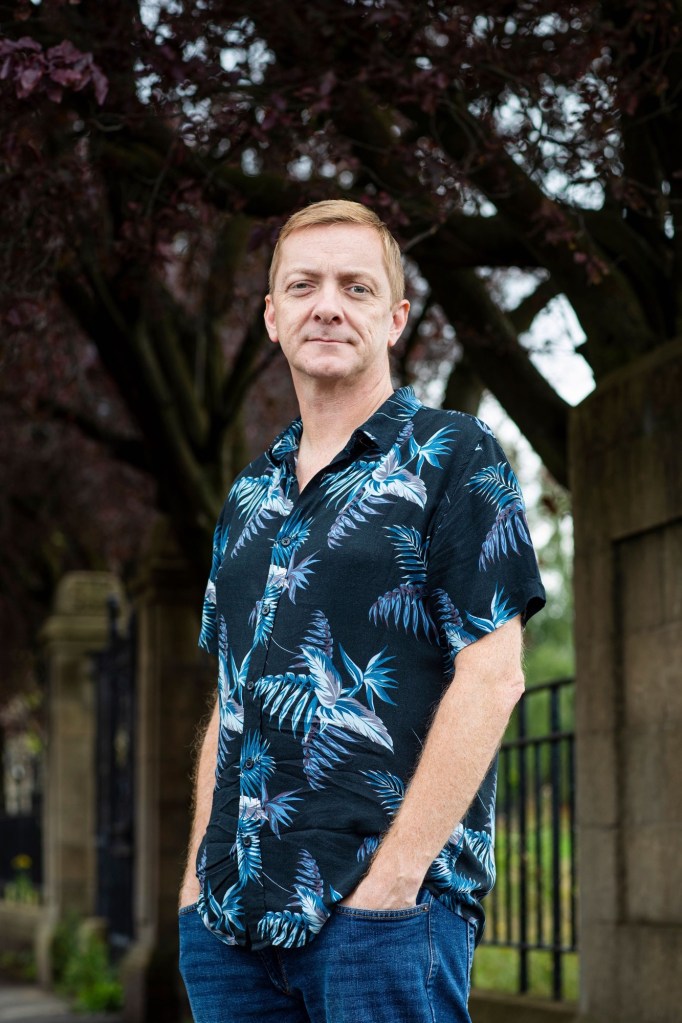
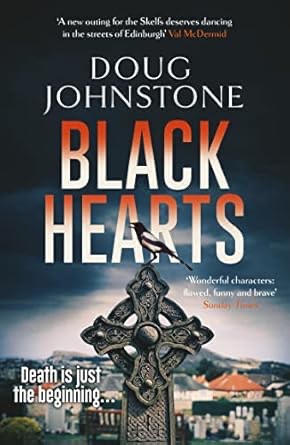
Doug Johnstone is the author of seventeen novels, many of which have been bestsellers. The Space Between Us was chosen for BBC Two’s Between the Covers, while Black Hearts was shortlisted for and The Big Chill was longlisted for Theakston Crime Novel of the Year. Three of his books – A Dark Matter, Breakers and The Jump – have been shortlisted for the McIlvanney Prize. Doug has taught creative writing or been writer in residence at universities, schools, writing retreats, festivals, prisons and a funeral home. He’s also been an arts journalist for 25 years. He is a songwriter and musician with six albums and three EPs released, and he plays drums for the Fun Lovin’ Crime Writers, a band of crime writers. He’s also co-founder of the Scotland Writers Football Club and lives in Edinburgh with his family.


 The Lotus Readers