I started the year wanting to read more non-fiction, something I usually do when I need a literary ‘palate cleanser’. We all get those slumps or brain fog moments because we’ve not stopped reading for weeks. My usual pick -me-up is to grab a memoir or psychology book and for some reason that always works. So I want to share with you a few of the books I’ve read or that are on my TBR and wishlist.
Books I Re-Read
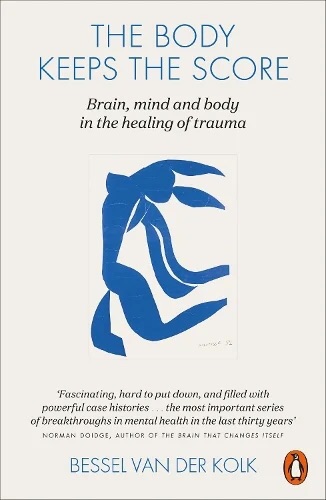
This book was one I picked up during my training in counselling. I was working with people who have acquired a disability through disease or trauma and I was really interested in how people process such a huge change in life. There’s such a long grieving process for what is lost, including the life they were expecting to have. This is the effect of a physical illness or disability on mental health. This book made me think about the opposite effect though, the effect thar emotional trauma has on the body. Mental pain, felt bodily, can be devastating for sufferers, their families and future generations. If you think about something mentally painful that has happened to you – the loss of a loved one or pet, workplace or exam stress, the breakdown of a friendship or relationship – now think about your behaviour or responses at that time. Some of them will be mental but others will be physical: feeling sick or losing your appetite; having a headache or migraine; sleeping more than usual or insomnia. Some people are unable to feel mental pain until they feel it in the body, in fact most of you will have thought about how stressed you’ve been when your shoulders feel tense or a headache is creeping up on you. It’s believed some people never feel mental pain immediately when the trauma is happening and the body stores it, converting it into physical symptoms. Written by one of the world’s experts on traumatic stress, this book offers a bold new paradigm for treatment, moving away from standard talking and drug therapies and towards an alternative approach that heals mind, brain and body.
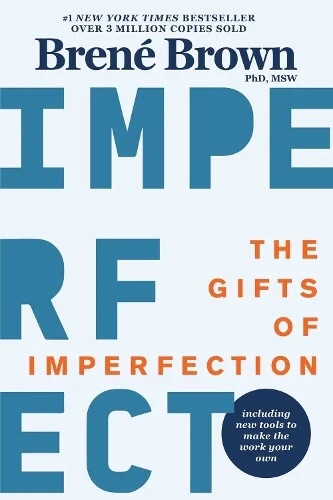
I’m a huge fan of Brené Brown and as a perfectionist I get a lot out of her work on accepting imperfection. I’ve always wanted to write a book but I’m impeded by imposter syndrome and fear of failure. In this book she approaches this as both a social scientist and a friend. She tells the truth, makes us laugh, and even cry with you. And what’s now become a movement all started with The Gifts of Imperfection. She doesn’t just give us statistics and words on a page, but creates effective daily practices called the ten guideposts to wholehearted living. These guideposts help us understand the practices that will allow us to change our lives and families, they also walk us through the unattainable and sabotaging expectations that get in the way. I found this incredibly helpful and I dip in and out of the book when I’m having imposter moments or have fallen out of practice with my writing.
My Non- Fiction TBR
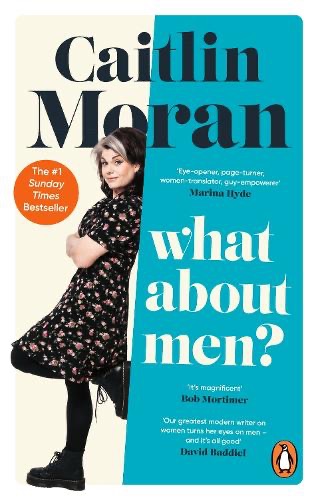
I am a huge fan of Caitlin Moran and have been since her NME days in the 1990s. Her How to be a Woman book is my go to gift for teenage girls. Her writing is frank, raw, informative and hilariously funny. She lays out her teens for us as she struggled with identity, menstruation, weight gain and having so many siblings exploring masturbation was almost impossible. She talks about the things no one talks about openly and with my book group it really opened up some difficult conversations. Here she takes a look at men, at a time where misogyny is a daily occurrence and men like Andrew Tate are inciting hatred of women online. Written before the recent drama Adolescence, she proposes it has never been a more difficult time to be a teenage boy. And, therefore, there has never been a more difficult time to be the parent of a teenage boy.
We’ve all read the headlines, boys are failing in education; facing a hopeless jobs market; getting their sexual education from violent pornography; and being endlessly targeted by online influencers who, yes, tell them to make their beds, and go to the gym – but also push dodgy cryptocurrency schemes, and think the best place for a woman is ‘working in a Romanian sex-dungeon’. She opens with a group of angry teenage boys claiming feminism has ‘gone too far’, and asks: what do boys actually mean when they say that? Are all angry boys, underneath everything, scared? What happens when your son becomes a fan of Andrew Tate? And why do one-in-ten gym-going boys say they’ve felt ‘suicidal’ about their bodies?
Having spent a decade writing about women, girls, and their problems, Caitlin Moran found that, in reality, boys and girls have more in common than they think. Women have spent decades trying to feel better about their bodies; trying to find positive role-models; and feeling angry, and scared, about their place in the world. If feminism has ‘gone too far’ is it because we have started to solve these problems? And, if so, what can boys, and men, learn from this? I am possibly the only person who hasn’ t watched Adolescence yet and I’d like to read this first.
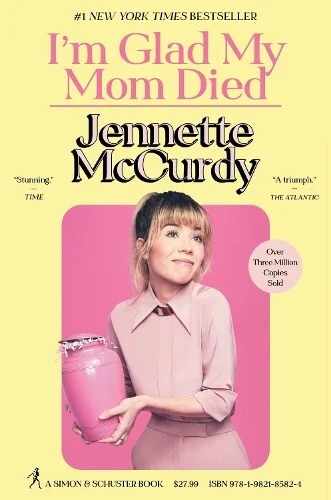
I’m a big believer, whether it’s with friends or in therapy, I’m giving people permission to say the unsayable. In fact this is probably most useful in my conversations with Mum who has to deal with a parent who’s definitely in denial and is so focused on appearing nice to others that it’s pretty much impossible to have an honest conversation. So we make an effort as I’m in middle age and she’s in old age, to be honest with each other and say ‘this made me angry’ or ‘that made me feel sad.’ I thought the title of this book was definitely one of those unsayable things! This memoir by iCarly and Sam & Cat star Jennette McCurdy about her struggles as a former child actor—including eating disorders, addiction, and a complicated relationship with her overbearing mother—and how she retook control of her life.
I didn’t know Jennette until my stepdaughters explained she’d been acting since she was six years old when she had her first audition. Her mother’s dream was for her only daughter to become a star, and Jennette would do anything to make her mother happy. So she went along with what Mom called “calorie restriction,” eating little and weighing herself five times a day. She endured extensive at-home makeovers while Mom chided, “Your eyelashes are invisible, okay? You think Dakota Fanning doesn’t tint hers?” She was even showered by Mom until age sixteen while sharing her diaries, email, and all her income.
Jennette recounts all this in unflinching detail—just as she chronicles what happens when the dream finally comes true. Cast in a new Nickelodeon series called iCarly, she is thrust into fame. Though Mom is ecstatic, emailing fan club moderators and getting on a first-name basis with the paparazzi (“Hi Gale!”), Jennette is riddled with anxiety, shame, and self-loathing, which manifest into eating disorders, addiction, and a series of unhealthy relationships. These issues only get worse when, soon after taking the lead in the iCarlyspinoff Sam & Cat alongside Ariana Grande, her mother dies of cancer. Finally, after discovering therapy and quitting acting, Jennette embarks on recovery and decides for the first time in her life what she really wants. I received this for Christmas and I know I’m going to love it.
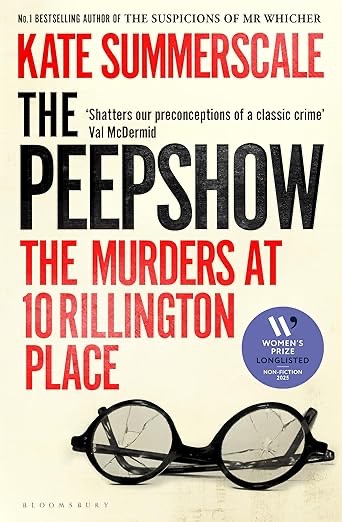
Another book I bought at Christmas, but I haven’t managed to read it yet. I had heard of 10 Rillington Place as a murder site but hadn’t read the story. In London, 1953. Police discovered the bodies of three young women hidden in a wall at 10 Rillington Place, a dingy terrace house in Notting Hill. On searching the building, they found another body beneath the floorboards, then an array of human bones in the garden. But they had already investigated a double murder at 10 Rillington Place, three years ago, and the killer was hanged. Did they get the wrong man?
A nationwide manhunt is launched for the tenant of the ground-floor flat, a softly spoken former policeman named Reg Christie. Star reporter Harry Procter chases after the scoop. Celebrated crime writer Fryn Tennyson Jesse begs to be assigned to the case. The story becomes an instant sensation, and with the relentless rise of the tabloid press the public watches on like never before. Who is Christie? Why did he choose to kill women, and to keep their bodies near him? As Harry and Fryn start to learn the full horror of what went on at Rillington Place, they realise that Christie might also have engineered a terrible miscarriage of justice in plain sight. In this riveting true story, Kate Summerscale mines the archives to uncover the lives of Christie’s victims, the tabloid frenzy that their deaths inspired, and the truth about what happened inside the house.
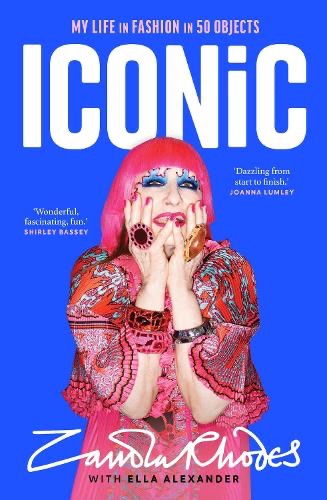
I love fashion and have quite a collection of fashion books, mainly from visiting exhibits and museums. Zandra Rhodes is fascinating because she’s an unapologetic maximalist. In this insightful memoir, Zandra shares her life story for the first time. Told through a variety of mementos collected over the years, it is a vibrant account filled with rockstars and royalty, of life-changing friendships and poignant reflections on her personal triumphs and tragedies, as well as the fears, sacrifices and pressures that come with being an era-defining designer.
Full of poignant reflections and life lessons on achieving success while defying convention, Zandra takes the reader right alongside her as she recounts being inspired by her avant-garde mother to her time at the Royal College, from a road trip to Rome with Ossie Clark and Celia Birtwell, to opening her first London store thanks to a kind loan from Vanessa Redgrave with Joe Cocker singing With a Little Help From My Friends, from hanging out with Andy Warhol and Halston in New York’s Studio 54 to lifelong friendships with legends such as Karl Lagerfeld and Diana Vreeland; from designing for everyone from Freddie Mercury to Diana Ross, Princess Dianato Barbra Streisand to founding the Fashion and Textile Museum.
Capturing the rich and unexpected life of a British icon, this memoir explores what it is to defy the norm.
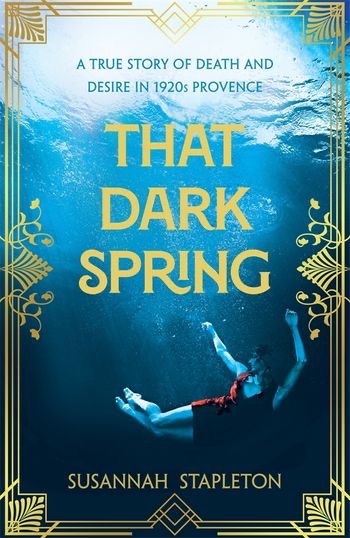
I must admit that the cover drew me to this book and I didn’t initially realise this was a true crime book. In April 1929, the body of British artist Olive Branson was found submerged in a water tank outside her farmhouse in a picturesque Provence village. Dressed only in a pink shirt and stockings, she had a bullet hole between her eyes and a revolver by her side.
Was it suicide – or murder?
The initial investigation concluded suicide, but under pressure from Olive’s family to conduct a murder enquiry, city detective Alexandre Guibbal was brought in to reopen the case. Examining never-before-seen evidence, acclaimed true crime writer Susannah Stapleton builds a vivid and absorbing picture of an unconventional life and a violent death, and an investigation that shines a bright light on a village simmering with resentments and dangerous rivalries . . .
On My Wishlist
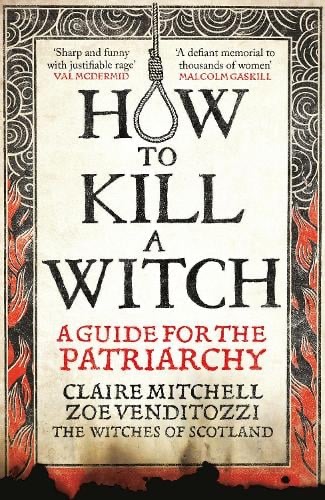
Last year I read two books based within the history of witch hunters in Scotland and I became fascinated with the truth behind these stories so I’ve been waiting for this to come out. As a woman, if you lived in Scotland in the 1500s, there was a very good chance that you, or someone you knew, would be tried as a witch. Witch hunts ripped through the country for over 150 years, with at least 4,000 accused, and with many women’s fates sealed by a grizzly execution of strangulation, followed by burning.
Inspired to correct this historic injustice, campaigners and writers Claire Mitchell, KC, and Zoe Venditozzi, have delved deeply into just why the trials exploded in Scotland to such a degree. In order to understand why it happened, they have broken down the entire horrifying process, step-by-step, from identification of individuals, to their accusation, ‘pricking’, torture, confessions, execution and beyond.
With characteristically sharp wit and a sense of outrage, they attempt to inhabit the minds of the persecutors, often men, revealing the inner workings of exactly why the Patriarchy went to such extraordinary lengths to silence women, and how this legally sanctioned victimisation proliferated in Scotland and around the world.
With testimony from a small army of experts, pen portraits of the women accused, trial transcripts, witness accounts and the documents that set the legal grounds for the hunts, How to Kill A Witch builds to form a rich patchwork of tragic stories, helping us comprehend the underlying reasons for this terrible injustice, and raises the serious question – could it ever happen again?
Out on 15th May from Monoray
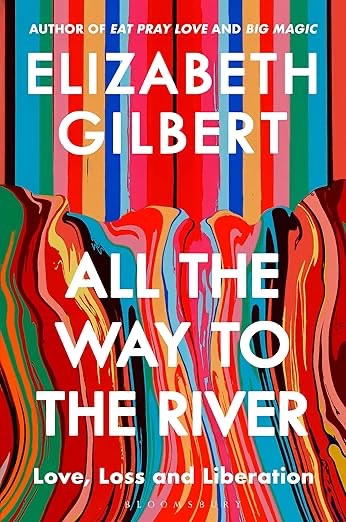
I loved Eat, Pray, Love when I read it and hoped Elizabeth Gilbert had found happiness with the man she met in Bali towards the end of the novel. Then I was vaguely aware that her life had become tumultuous. This memoir details that time. In 2000, Elizabeth Gilbert met Rayya. They became friends, then best friends, then inseparable. When tragedy entered their lives, the truth was finally laid bare: the two were in love. They were also a pair of addicts, on a collision course toward catastrophe.
What if your most beautiful love story turned into your biggest nightmare? What if the dear friend who taught you so much about your self-destructive tendencies became the unstable partner with whom you disastrously reenacted every one of them? And what if your most devastating heartbreak opened a pathway to your greatest awakening?
All the Way to the River is a landmark memoir that will resonate with anyone who has ever been captive to love – or to any other passion, substance or craving – and who yearns, at long last, for liberation.
Out on 9th September 2025 from Bloomsbury Publishing
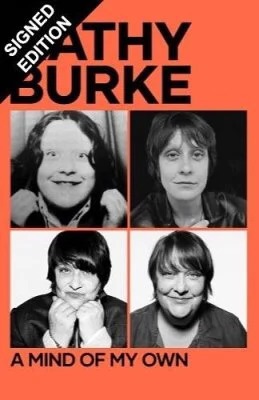
Who doesn’t love Kathy Burke? She’s an absolute treasure. I loved the documentaries she did for Channel 4. Just following her on X keeps me amused so the idea of a memoir is so exciting. There’s only a short blurb for this one but it’s already on my birthday list.
Even when she was a kid in Islington, Kathy Burke did things her own way. After gaining a place at the Anna Scher Theatre when she was a teenager changed the course of her life, she became an actor in 1982. By the mid-1990s Kathy was a household name. Whether you know her as the beloved Perry, for her award-winning acting, or for being proudly woke and calling out tw*ts on social media, Kathy has always had a mind of her own. Funny and wise, this is her memoir.
Out on 23rd October from Gallery UK




 The Lotus Readers