Posted in Netgalley

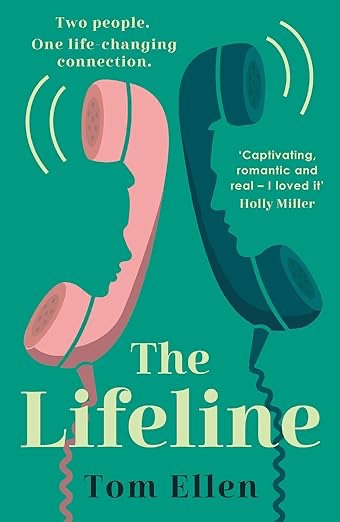
The Lifeline by Tom Ellen

If I learned one life lesson from Tom Ellen’s lovely romance novel, it’s that I’m not the only one who has a weird celebrity crush on Richard Ayoade. What a relief! Usually I get quizzical looks and awkward questions when I admit this, so I felt vindicated. I often say I don’t like romances, but I really did enjoy this story about Annie and Will. They met one day in Paris when Will’s band The Defectors were the next up and coming Indie band. Annie is sent out to interview them before a gig and hits it off with cute frontman Will Axford, who I was imagining as my Indie crush Damon Albarn. Annie finds his floppy hair, dimples and the gap between his front teeth very sexy. He seems to be clicking with her, but she’s still surprised when he catches up with her after the interview and suggests they spend the day together. Later as they watch the sunset from the Pont Alexandre III bridge, he asks if they can meet after his gig on the same spot. So, Annie is standing there at 11pm waiting for Will to arrive but when he still isn’t there at 11.30pm she gives herself a good talking to, fancy falling for the patter of a rock star. He’s probably with another girl already or tries this on every girl he meets. How stupid to think he would genuinely like her! As she pays for an extortionate last minute hotel room on her credit card, she’s already mentally writing up her interview full of anger and disappointment.

Fast forward five years and Annie works for an internet magazine, one of those that suck us into a blur of 1980’s celebrities and what they look like now or the best ever one hit wonders. It’s not what she wanted to do when she started out, with a pile of short stories and novel proposals, but it pays the bills and she loves her colleague Lexi. So, when she’s asked by her boss to write a new “Where Are They Now?’ series to go with some very lucrative advertising revenue, she jumps at the chance to do something more interesting. Then her boss asks her to track down The Defectors. Behind the scenes Annie is having a hard time. Her father died just over a year ago and her different approach to his cancer diagnosis has left her estranged from her mother and sister. Her live-in boyfriend Dom isn’t her dream man, they’re just muddling along while friends are making huge life changes like marriage and baby. The thought of losing Dom or her job scares her, but maybe a big change is exactly what she needs? As she tries to track down The Defectors she sees one of them has shared a phone number on a black background, which stands out in the usual technicolour of Instagram. It’s for a lifeline called Green Shoots, a listening ear for those who are bereaved, anxious and lonely. Annie needs someone to listen to everything that goes round in her mind, so decides to call using her middle name Pia. When Jack answers she finally feels she can open up.

Jack volunteers at the lifeline as often as he can but he doesn’t use his real name. Of course he has regulars and I fell in love with these callers, perhaps because they reminded me so much of my own work in mental health. Work I’m not well enough to do at the moment. I understood that fondness for certain callers, because it’s hard to avoid clicking with people, however we meet them. There’s Eric who calls and often makes hilarious commentary on whatever he’s watching. Some of these programmes, despite his advanced years, are things like Love Island and Made in Chelsea. I fell in love with him straight away and those times when he called feeling low I was heartbroken. Then there’s the breathing lady, who calls just to have someone to breathe with, until she feels calmer. Jack and Pia hit it off on the phone straight away, there’s energy between them. So when she says she’ll call back, he finds himself looking forward to her call. I really felt for Jack because working with people and their deepest emotions can forge strong connections, it’s hard to be detached from some callers. I loved that his friend and colleague Tanvi felt the same way too. He had been avoiding the get togethers and catch ups with other volunteers, mainly because he’s struggling with making friends and being social. Years before, there was a friend that Jack wished he could have been there for and he finds the guilt is crippling.

I felt for Annie too, especially her journey through grief and the struggle to cope when her father was diagnosed with terminal cancer. The author presents beautifully how even the closest people can grieve in their very different ways. There’s a need to give each other space and respect what they need to do in order to cope. It’s so hard when someone is terminally ill and perhaps their wishes don’t align with our own. It’s hard to let go of someone we love, even when we know they’re ready. I thought the author paced the story perfectly and the misunderstandings on the road to romance were believable, rather than formulaic ones that sometimes make me groan in romance novels. I really liked and understood these characters, so I was truly into their story and didn’t notice the romance tropes as much. Equally, I loved the revelations along the way, because as Annie found more dead ends in her search for Will Axford and his band, I began to wonder whatever did happen to him? This was a thoughtful, bittersweet novel about love and the people we lose along the way, and I read every word hoping our two main characters would find each other.

Out now from HQ

Meet the Author

Tom is an author and journalist from London, England. He is the co-writer of three critically acclaimed Young Adult novels: LOBSTERS (which was shortlisted for The Bookseller’s inaugural YA Book Prize), NEVER EVERS and FRESHERS. His solo adult debut novel is the romantic comedy ALL ABOUT US (HQ/HarperCollins, published October 2020). His books have been widely translated and are published in 20 countries. He is a regular contributor to Viz magazine, and has also written for Cosmopolitan, Empire, Evening Standard Magazine, The Daily Mash, Glamour, NME, ESPN, ShortList, Time Out London, Vice, Stylist and many more.

Posted in Netgalley

The Women by Kristin Hannah

I was completely engrossed by this incredible piece of historical fiction, covering a period of history and viewpoint I’d never read about before. All the Vietnam stories I’ve encountered have fallen into two categories and were made for the big screen; combat movies like Platoon and Full Metal Jacket, or the more domestic based aftermath of war at it’s best in the excellent Coming Home with Jane Fonda and Jon Voigt. I’d never considered that there would be women in Vietnam, which seems crazy since I’d avidly watched MASH when it was rerun in the 1980’s. The series set in a field hospital showed women in the operating theatres, as members of the US Army Medical Corps. Yet, I’ve never encountered anything that showed them in Vietnam, so I was fascinated by Frankie’s story; her personal experiences as well as the politics and societal changes around her tours of duty. What struck me most was how this war ripped the generation gap wide open. Most people my age will remember the Paul Hardcastle single ‘19’ and for me the most stark line in it was ‘none of them received a hero’s welcome’. It struck me how different the government and public response was to these veterans, the majority of whom were no less brave or noble than the WW2 veterans their fathers had been. The author deals with all these themes in a story about the women that served in Vietnam, the women that America forgot.

Frances McGrath is your typical All American teenage girl, living with her family on Coronado Beach. She has memories of growing up on that beach, swimming and surfing with her brother Finley. She is from a good family and expectations are that she will have the ‘right’ marriage and become a mother. However, things change when Finley makes a huge decision. He’s enlisted for Vietnam. It’s no surprise that he might go into military service at some point. Frankie’s dad has a wall in his office called the ‘Hero’s Wall’ where every family member’s military service is celebrated with cuttings, photos and medals. All the men, anyway. Yet not many of their friends and family members have sons who’ve voluntarily enlisted for Vietnam. There are ways of avoiding the draft, depending on who you know. Yet Finley enlists of his own accord, possibly believing the American government’s assertions that they must fight communism in Vietnam, lest it become even more widespread. Within weeks there’s a knock at the door; Finley has been killed in action. In a whirlwind of grief Frankie starts looking into her options. She wants to honour her brother and become a hero worthy of her father’s wall. Both the Air Force and Navy need a nurse to complete a long period of training before they’re posted to work in the field. However, if she enlists in the US Army, they’ll post her out to Vietnam after basic nursing training. Much to her parent’s shock Frankie is soon on her way to Vietnam.

The author creates such an incredible sense of place, I was in Vietnam with Frankie. The all pervading humidity and dampness of everything actually made me feel grubby. There’s a red dust blowing everywhere, that sticks to the constant sheen of sweat on Frankie’s skin and gets into every wrinkle. Frankie’s kitbag and everything she owns takes on the smell of mildew and she never feels dry. At first the bursts of gunfire and explosions in the jungle are surprising and Frankie is anxious, but soon they just become the everyday backdrop to her work. The ‘whump- whump’ of the helicopters arriving with MASCALS (mass casualties) control when she eats, sleeps and relaxes. The first experience of a MASCAL is shocking and Frankie does freeze, but the surgeon she’s working with talks her through it, let’s her know that he trusts her and she can do it. Gradually it becomes easier, although their injuries and the emotions of triaging these men can stay with her. If someone is beyond saving they are left to die, while they operate those they can save. It isn’t just the soldiers though, the unit treats Vietnamese soldiers and locals caught in the crossfire. The use of napalm and the injuries it caused really has stayed with me, the jelly like substance sticking to the casualty’s skin and keeps burning. Frankie is soon a first class combat nurse, that’s not to say these experiences become easy, they just become the norm. When we tuck trauma away in a box without processing it, it sits until we’re ready to open the lid or until a new experience forces that lid open. Usually when we least expect it. Her new relationships keep her going, especially those with her friends and fellow nurses Ethel and Barb. They are the glue that hold each other together and while men may come and go, the bond these women build is lifelong and loyal. That’s not to say there aren’t men. Frankie falls in love with Jamie, the surgeon she works with and the war only intensifies those feelings. There’s also the constant fear of losing them. Later on, a face from the past reignites feelings of first love but brings with it so many complications.

Frankie’s return and adjustment to everyday life on her return from war becomes yet another battle. Now she’s completely safe it’s as if all the feelings she had in Vietnam are bubbling to the service, manifesting in physical and mental symptoms. Her parents are relieved she’s home in one piece, but they don’t seem proud of what she achieved and her accolades don’t make the hero’s wall. She doesn’t seem to fit anywhere. Here Barb and Ethel are worth their weight in gold, taking Frankie in when she needs to get out of California and spending time talking through their experiences. No one else will ever get her like these women. Their lives do move forward though and Frankie just seems stuck. I thought this part of the story was beautifully done and represents so much research and care on the author’s part. She is very aware that although Frankie isn’t real, women did live through these experiences and had to find ways to reconcile their memories of war and their hurtful return to an ungrateful homeland they’d put their lives on the line for. It was as if the world had shifted on it’s axis while they were in the jungle. I was longing for Frankie to have a happy ending, because I thought she deserved it and I thought she still had so much to offer. I learned so much about a conflict I’d only experienced through film and usually from a male perspective. I was completely immersed in Frankie’s world and didn’t want to let it go.

Out now from MacMillan

Meet the Author

Kristin Hannah is the award-winning and bestselling author of more than 20 novels. Her newest novel, The Women, about the nurses who served in the Vietnam war, will be released on February 6, 2024.

The Four Winds was published in February of 2021 and immediately hit #1 on the New York Times, Wall Street Journal, USA Today, and Indie bookstore’s bestseller lists. Additionally, it was selected as a book club pick by the both Today Show and The Book Of the Month club, which named it the best book of 2021.

In 2018, The Great Alone became an instant New York Times #1 bestseller and was named the Best Historical Novel of the Year by Goodreads.

In 2015, The Nightingale became an international blockbuster and was Goodreads Best Historical fiction novel for 2015 and won the coveted People’s Choice award for best fiction in the same year. It was named a Best Book of the Year by Amazon, iTunes, Buzzfeed, the Wall Street Journal, Paste, and The Week.

The Nightingale is currently in pre-production at Tri Star. Firefly Lane, her beloved novel about two best friends, was the #1 Netflix series around the world, in the week it came out. The popular tv show stars Katherine Heigl and Sarah Chalke.

A former attorney, Kristin lives in the Pacific Northwest.

http://www.kristinhannah.com

Posted in Netgalley

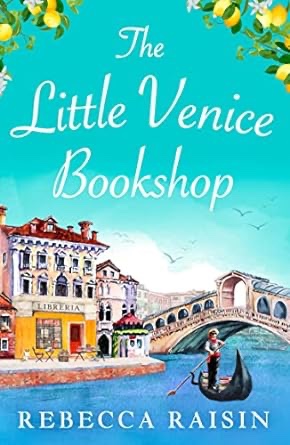
The Little Venice Bookshop by Rebecca Raisin

A bundle of mysterious letters, a trip to Venice, and a journey that will leave a lasting impression.

When Luna loses her beloved mother, it feels as if she’s lost her identity She’s rootless and can’t ground herself. Once she has these doubts, she’s begins to question everything around her. They have enjoyed a rather nomadic way of living up till now, probably because home has been where her mother was, but as she tries to cope with grief, the lack of roots is a struggle.The discovery of a collection of letters in her mother’s possessions seems to signal the way forward and she embarks on a most unexpected adventure. Taking clues from the letters, Luna travels to Venice, in the hope of unraveling her mother’s mysterious past. Maybe if she finds the answers, she might find her own place in the world.

I love Venice. I’ve been lucky enough to spend two weeks there, once in the spring and then a couple of years later in the winter when it actually snowed. I actually travelled with my mum the first time and it was wonderful to see this place we’d always dreamt about come to life in front of our eyes. Venice is obviously a place of wonder, but it’s also got a spooky edge that’s been explored in literature many times. This is more of a ‘cozy’ Venice and I think the cute cover really sets the tone for that. It focuses on the quaint and romantic side of the city, so it’s an easy read, but enjoyable nevertheless. The bookshop is a lovely setting for the story and the rather grumpy owner is clearly crying out for something new, perhaps an antidote to loneliness? As Luna begins to work at the shop mentioned in her mother’s letters she tries to work out how her bohemian mother and the owner, Giancarlo, were connected. She also persuades him to let her develop the shop, improving its visibility through use of social media – to make it a destination place for bookish travellers.

There’s nothing better for an avid reader than a book about books. Luna is definitely a lover of stories and she appreciates what books mean to their readers and collectors. I love that this celebrated second hand books too, something I love too, especially ones that have dedications or messages inside them. Often they tell a story that’s all their own, separate from the printed pages. It’s an interesting thought that these books have been through so many different hands, each with their stories to tell. It was a joy to spend time with a character who’s so passionate about books and Luna’s bookish initiatives are great fun. The family of cats named after authors are particularly whimsical. The idea that her bereavement has made her think about her own life is such a relatable one and the realisation she wants her own family is understandable. The urge to set down roots comes from wanting to make connections, permanent ones that are entirely opposite to the traveller’s existence she’s grown up with. I enjoyed the romance between Luna and Oscar and wondered if perhaps she’d found her forever home?

Although I normally enjoy books that go a little deeper, I did come away from this with a smile on my face. This was a relaxing and soothing read for me. It had a magical feel and I guess it does read like a book lover’s fairytale. I have often daydreamed of a life far different to my own and Italy, books and handsome men are an irresistible combination for this reader. Yes there’s the sadness of loss, but the emphasis is on healing and the result is hopeful and uplifting.

Published on 30th March by HQ

Meet the Author

Rebecca Raisin writes heartwarming romance from her home in sunny Perth, Australia. Her heroines tend to be on the quirky side and her books are usually set in exotic locations so her readers can armchair travel any day of the week. The only downfall about writing about gorgeous heroes who have brains as well as brawn, is falling in love with them – just as well they’re fictional. Rebecca aims to write characters you can see yourself being friends with. People with big hearts who care about relationships and believe in true, once in a lifetime love. Her bestselling novel Rosie’s Travelling Tea Shop has been optioned for film with MRC studios and Frolic Media.

Come say hello to Rebecca on her Facebook page : https://facebook.com/RebeccaRaisinAuthor

Posted in Personal Purchase

The Invisible Hour by Alice Hoffman

After a few years building on the Practical Magic series, I was looking forward to seeing what Alice Hoffman would come up with next. She has based her story around the writer Nathaniel Hawthorne and his classic novel The Scarlet Letter and introduces us to two young women facing difficulties. Ivy is from a rich Boston family and when she finds herself pregnant at 16, she truly expects support. The father of her baby retreats into his wealthy family and the elite university he’s due to attend, taking no responsibility for the predicament they’re both in. Facing her pregnancy alone she talks to her parents who also wash their hands of her, not wanting the stigma or embarrassment. Ivy decides to leave home and climbs out of the bedroom window, setting out to see a friend who she knows will have an idea. She suggests they leave together and make their way out to a religious community she’s heard of in Blackwood, Massachusetts, with a charismatic leader called Joel Davies. When her father decides to look for her several months later he finds the worst, Ivy has a little girl called Mia and has become the leader’s wife. Mia grows up in Joel’s community and he decides who is in favour and what is a transgression. Everyone is punished, but the women particularly so – they might have their hair cut off or even be branded with a letter. Women are not allowed reproductive rights, but nor do they get to keep their children. Children belong to everyone and after a few days with their mother, sleep in dormitories. Books are not allowed and as she grows up books are Mia’s particular downfall. She finds her way to the public library and starts to read American classics like Little Women and Huckleberry Finn. Then she finds a copy of The Scarlet Letter, beautifully bound and very old. On the fly leaf is a dedication:

To Mia. You were mine and mine alone.

Is it perhaps her mother, who does show her special attention despite the rules. She tucks the book into her dress and keeps it. Reading in the barn, where she has loosened a board to keep her treasures behind. She has a small landscape painting of the view from the community’s buildings. Land that was left to Joel by his first wife Carrie. Carrie was also a rich girl, but one who had assets to bring to this Puritan community. Carrie was a great painter, but was often punished lest she become too vain about it. On the back of this painting is an inscription about the lands she owns and a promise that Joel will get to keep it ‘as far as the eye can see’.

One day during the apple harvest, a terrible accident happens and Ivy is killed. Mia is distraught, but as her mothers body is carried away she grabs the red boots that Joel uncharacteristically bought for her mother to have as a keepsake. She knows that now it’s either run or stay forever. Grabbing The Scarlet Letter and the painting she takes a leap, out of the bedroom window and across the fields to the library. The librarian had noticed Mia lurking in there, reading in the warmth. She had a feeling the girl was in trouble so she gave her a key and invited her to let herself in if she is ever in danger. She understands that to keep Mia safe they must move quickly, so she packs up the car and takes her somewhere he won’t know, because nobody knows. She has a long-term partner, a woman she doesn’t live with but trusts implicitly. She knows that with them, Mia should be able to thrive without the community breathing down her neck, to go to school and read to her heart’s content and have the life she has dreamed up for herself.

She also sensed that Joel was a man who wouldn’t give up Mia without a fight.

Of course it wouldn’t be an Alice Hoffman without something magical happening and here Mia experiences a time slip and finds herself in the same time and place as her hero Nathaniel Hawthorne. He hasn’t yet written The Scarlet Letter, in fact he’s on the verge of giving up writing altogether. When he meets Mia their connection is instant despite the centuries between them. They start a love affair, but what will the consequences of that be? Anything they do will change the future. Could her presence in his world mean that the very book that brought her here, no longer exists? In fact the consequences of their love could be even more life changing for both of them. Can she stay in his world? Is there any way he could come into hers? Mia is becoming aware that Nathaniel may have to sacrifice his writing for them to be together and she’s not sure she can let him do that. All the while, her father Joel is still watching and waiting.

I loved the play on The Scarlet Letter here because it shows us how powerless women have been across the centuries. I loved how Alice Hoffman creates this magical setting. The landscape, particular the woods and river, feel like something out of A Midsummer Night’s Dream. It would be easy to dismiss her work as whimsical and romantic, but underneath is a fierce feminist manifesto and an equally fierce defence of the written word. I was aware as I read the novel that it could go the same way as other books that have supported women’s reproductive rights and end up banned. The way the religious community prevent women from controlling their own fertility is a representation of what’s happening in some states of America. Abortion has always been a controversial topic in the US and the rights of women in some areas have reverted back to the early 20th Century. Jodi Picoult often cites Alice Hoffman as her favourite writer and a huge influence on her own work. In some states of America Jodi Picoult’s work is banned from libraries and schools because it concerns issues like abortion, teenage pregnancy, fertility treatment and same sex marriage. Here Hoffman is hugely critical of a community that doesn’t value women’s education, burns books and leaves them with no rights over their own bodies. There’s a part of her magical landscape where desperate women have taken matters into their own hands. They’ve taken herbs or potions to end their pregnancies and have created a burial place for the children they’ve lost and those they can’t bear to have.

Mia’s surrogate parents are the antithesis of Joel’s community. They are intelligent and progressive women who actively encourage questioning and reading. They remind Mia that no matter how moral and righteous a community might seem, if it restricts education, burns books and controls women, believing them to be inferior to men, then it is on the way to being fascistic. It’s so sad that Joel won’t let women read but then uses letters to punish them and control their behaviour, by literally branding them into the skin in a ceremony. Instead of wearing a scarlet letter, an adulteress would be branded on the upper arm with a letter ‘A’. Words and books are the source of our knowledge and that scares men like Joel. This is a brave book and will probably be underestimated, but women have been speaking their truth in ways that fly under the radar for centuries; films or books dismissed as ‘chick lit’ or ‘rom coms’; jingly, bright pop music with dark or subversive lyrics; pretty pink fashion branding the wearer as stupid, like Elle in Legally Blonde. I think there are people who will see the beautiful landscape, the time travel and magical feeling of this nook and underestimate it. I’m hoping readers look for the deeper themes here and see what Alice Hoffman was doing when choosing to use The Scarlet Letter. It’s a much beloved classic that she clearly loves, but it’s also a perfect basis for a story about these women. The ending is perfect for the autumn in that it’s bittersweet. We love the beautiful fall colours, particularly in the part of the USA where the book’s set. Those brightly coloured leaves bring us joy, but they’re also signalling an ending. The beauty of loss. 🍂

Published on 17th August by Scribner

Meet the Author

Alice Hoffman is the author of thirty works of fiction, including Practical Magic, The Dovekeepers, Magic Lessons, and, most recently, The Book of Magic. She lives in Boston. Her new novel, The Invisible Hour, is forthcoming in August 2023. Visit her website: http://www.alicehoffman.com

Posted in Publisher Proof

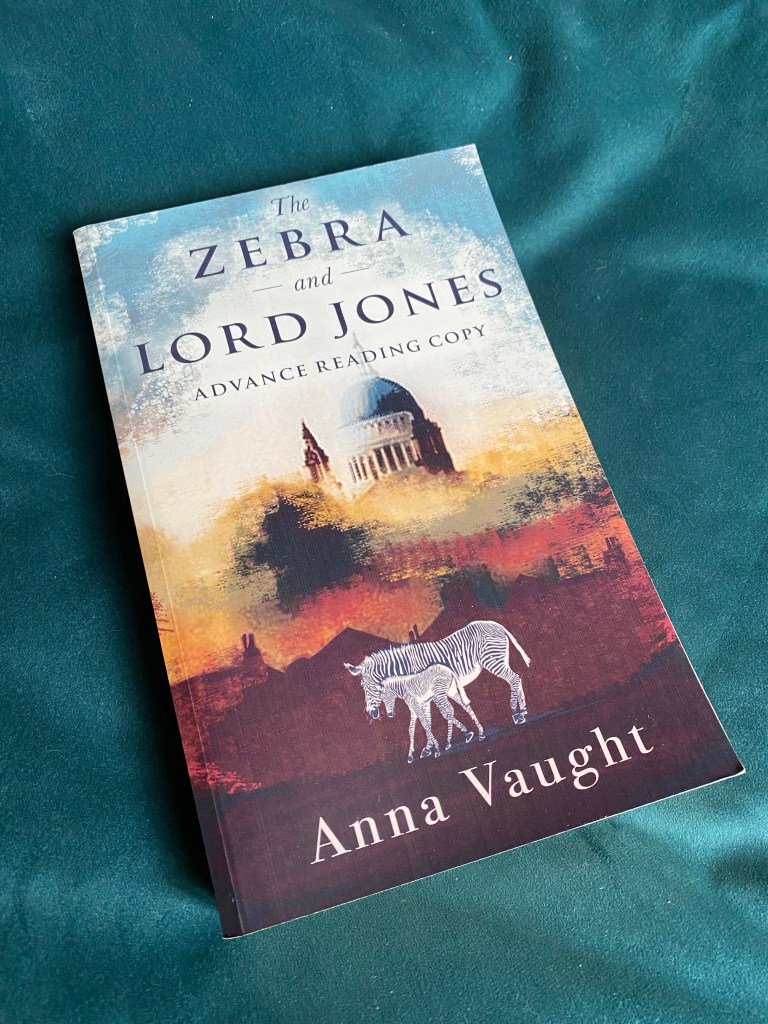
The Zebra and Lord Jones by Anna Vaught

Autumn, 1940. As the Blitz rages in London, Lord Ashburn (known as Lord Jones) is conducting some family business in the capital. As he walks the streets of Knightsbridge he finds himself confronted with an amazing and incongruous sight; a zebra and her foal are sharing the sights and sounds of the city. They have have escaped from London Zoo after their enclosure is damaged. A strange but unforgettable connection is formed between Lord Jones and the animal, who begins to follow him. The instant connection sparks a rebellion in him and he can’t leave her, so decides to do the unthinkable instead. He takes the zebra and her foal, Sweetie, back to his family’s estate in Pembrokeshire.

These beautiful and exotic animals arrive at Cresswell Manor in rural Wales and immediately start working their magic. Slowly, they start to transform the lives of those who live on the estate. Lord Jones seems inspired and has a thriving sense of purpose for the first time in his life. He finds the courage to put some distance between himself and the family that have always treated him with coldness and disdain. Strangely he finds himself forming a friendship with Anwen Llewelyn, the feisty and independent housekeeper at Cresswell, while all the time these wise creatures look on…

I love books that are hard to pigeonhole into one category and this is a mix of personal growth, historical fiction, romance, and a sprinkle of magic realism. Anna Vaught seems to choose these fascinating and unusual events in history to explore a familiar trope from a unique perspective. Half of the appeal is in the beautiful way she writes, something that grabbed me with her novel Saving Lucia. The Zebra and Lord Jones is a simple boy-meets-girl, but made magical by the dangerous backdrop of bombs falling from the sky and one man’s destiny with two zebras. The zebra’s escape from London Zoo is part of historical record, but with her unique style and talent Anna uses this one event to explore so many aspects of life. She weaves these strands together, slowly creating a tapestry of love and loss, threaded with some much needed hope.

I had so much empathy for Lord Jones, who contracted polio as a child and has always had a limp. His aristocratic family have looked down on him all his life, withholding love and physical affection. In this historical period, the aristocracy in this country really were dreadful. Many were instrumental in the plan to appease Hitler prior to WW2 and Lord Jones’s father was friends with Mosley and his wife Diana Mitford, even attending their wedding at Joseph Goebbel’s home in Germany. The way they’ve treated their son has left him depressed and with low self-esteem. Despite being tremendously privileged materially he is emotionally malnourished and desperately in need of a focus, preferably something he can become good at and build his confidence. It is perfect timing for these beautiful creatures to appear in his life and his plan to take them back to Wales with him is his first confident and decisive step into a new way of living. A more hopeful one.

Hope is a precious commodity at this point in the war and it isn’t just London where people are in need of a magical uplift. Anna has woven some of these characters into her story, such as Ernest the evacuee, Talbot the dedicated zookeeper and his counterparts in Germany. All of them are just trying to live their ordinary day to day lives in extraordinary times. There’s even an unexpected cameo from the Emperor of Ethiopia, Haille Selassie. Most interesting of all to me is Anwen, who has a keen sense of justice and a fierceness that I admired immediately. The characters are the stars of this particular show and they are a joy, including Lord Jones and his slow transformation into a different man. At the centre, drawing all of these people together, are the beautiful zebras Mother and Sweetie, who feel like characters in their own right.

I love magic realism, it’s one of those genres that make me a little bit giddy when I’m reading. It’s possibly the closest thing an adult reader can have to the stories we encounter as children that fill us with wonder. It has a different effect to all out fantasy because it creates what I call ‘literary glimmers’ – those shimmery moments of wonder amidst the drudgery and routine of the everyday. The contrast between the magic and the ordinary, elevates the themes and emotions of the story. The narrator is also playing with the reader, they walk us through the story showing us what happens like a puppeteer, deciding what to show us and when to draw the curtain. They display a giddiness and excitement at what’s happening, as they place in front of us a new snippet of gossip or historical document. It’s as if they’re discovering it at the same time we are, so we’re inspired by their immediacy and excitement. It’s as if they run up to us, waving a letter and saying ‘wait till you hear this!’

I felt inspired by this childlike curiosity and I found myself actually smiling on the outside at the playful details, ghosts, owls and zebras communicating with humans. I felt comforted, provoked, happy and full of hope about life, which is a gift in itself. The backdrop is hard hitting. I’ve always remembered the Stephen Poliakoff piece Glorious 39 because it depicted people in London queueing up to have their animals put to sleep and our main character Anne feeling unable to part with their cat. I’d never seen this depicted in a war drama before or after, so to see it as part of the narrative here made it real for me. I couldn’t imagine letting go of my animals even for the war effort and it made me think about the all domestic sacrifices being made for the public good. This historical detail, as well as the changes being made at the zoo, were so important to include, but absolutely heartbreaking to read. This is the hard part of surrendering to her mix of reality and fairy tales, but it was beautifully offset with the humour around Operation Zebra too. In all this is a wonderful tale, told by a unique and playful writer at her most skilful.

Thanks to Renard Press for inviting me to join the tour. The book is out on 27/9/23. You can buy The Zebra and Lord Jones

http://www.annavaughtwrites.com for recent articles and news!

Meet the Author

Anna’s next publication is her new novel, Saving Lucia, about the Honourable Violet Gibson who tried to kill Mussolini; this will be published by Bluemoose Books in April, 2020. Anna also publishes her first short story collection in September 2020; this is Famished and published by Influx Press. At the time of writing, Anna has three further books in the area, various short fiction coming and is writing a new book. She is an English teacher, tutor and mentor to young people, volunteer with young people, editor, short fiction writer, creative writing tutor and copywriter. She currently lives in Wiltshire, with her husband and three boys.

Posted in Squad Pod

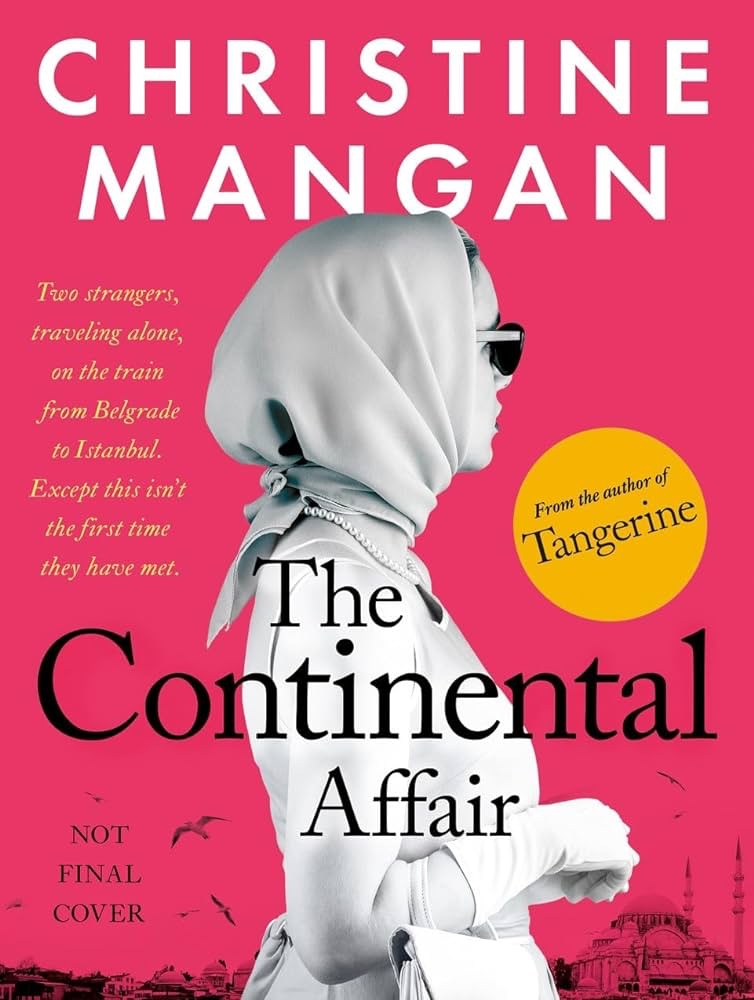
The Continental Affair by Christine Mangan

Meet Henri and Louise.

Two strangers, travelling alone, on the train from Belgrade to Istanbul. Except this isn’t the first time they have met. It’s the 1960s, and Louise is running: from her past in England, from the owners of the money she has stolen―and from Henri, the person who has been sent to collect it. Across the Continent―from Granada to Paris, from Belgrade to Istanbul―Henri follows. He’s desperate to leave behind his own troubles and the memories of his past life as a gendarme in Algeria. But Henri soon realises that Louise is no ordinary traveller.

As the train hurtles toward its final destination, Henri and Louise must decide what the future will hold―and whether it involves one another. Stylish and atmospheric, The Continental Affair takes you on an unforgettable journey through the twisty, glamorous world of 1960s Europe.

All the way through the novel I kept thinking of The Thomas Crown Affair, the glamorous and seductive 1960’s film starring Faye Dunaway and Steve McQueen as a rich playboy suspected of stealing a priceless painting and the insurance investigator sent in to catch the thief. The Continental Affair had that same mix of incredible style, plot twists and wonderful locations. I mustn’t forget the sexual tension – that chess scene alone is a masterclass in seduction! Christine Mangan’s third novel is similarly alluring, from the Hitchcock-esque cover design to the incredible cat and mouse tale within.

The story is told through a dual timeline narrative, enhancing the sense of cat and mouse between the characters. Yet they have more in common than we might initially think. Yes, the chase has this cat and mouse running in the same direction but it’s not just about the chase, they’re both trying to escape their past as well. From the moment they ‘meet’ in a train compartment on the way to Istanbul they’re playing a game. They might be acting as if they’ve never met, with their polite conversation, but Henri knows who she is because he’s been tracking her from country to country. Similarly, Louise knows exactly who Henri is and why he’s there. She first ventured into Europe as an escape from a cruel and restrictive family life in England. Then, in Granada she stole from a criminal gang and went on the run. Henri was related to the criminal gang who sent him to collect an amount of money, only to witness Louise stealing it right in front of him. Yes, he’s been sent to retrieve the money but he’s also driven by a fascination in Louise and the more he follows her, the more fascinated he is. Interestingly, Henri worked in Algeria as a gendarme and this past plays on his mind constantly, yet once he starts pursuing Louise he’s distracted from his own demons. This is a police officer who finds himself on the wrong side of the law. Henri is the first narrator and once I got to know him I expected to be on his side. Then I heard Louise’s back story and I felt sorry for her, struggling with her disabled father after her mother left the family home. The only joy and escape she had was in books and I was torn between my understanding for her and my knowledge that she’s taken someone else’s money.

Reading this book felt like the Saturday afternoons I spent with my grandad watching old black and white films, where he’d teach her me who all the actors and actresses were. This could have been the gentleman Cary Grant pursuing Grace Kelly with her sleek, sophisticated glamour. I’m now waiting for a gap in reads so I can go back and read the author’s previous novels on the strength of this one. I enjoyed all the settings, the incredible landmarks, the food and the two intriguing people I was travelling alongside. I was glued to this tale wondering whether Henri would overcome his fascination and retrieve the money or whether this developing relationship would take our pair to becoming friends, or even more. I’d had this book on NetGalley for quite a while and I can’t believe I left it until the Squad Pod got the chance to read and review? It’s the sort of book I love to get lost in because it combines such evocative descriptions of European destinations and the 1960’s era. I felt like I was there for every moment and I when I was away from the book, I missed it. I loved the journey, the actual and the emotional one. Henri and Louise want the same things and it was delicious watching them realise this and become ever closer. I was transfixed, waiting to see if Henri would actually complete his mission to retrieve the family money, or whether he’d forget their game of cat and mouse. Christine Mangan has created two such intriguing characters who despite their mistakes are incredibly likeable and memorable. This a wonderful escapist read full of both style and substance.

Meet the Author

Christine Mangan has a PhD in English from University College Dublin, where her thesis focused on eighteenth-century Gothic literature, and an MFA in fiction writing from the University of Southern Maine. Tangerine is her first novel

Posted in Netgalley

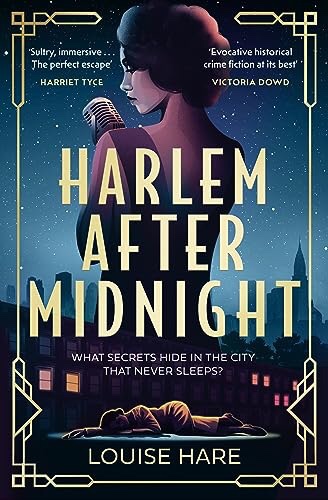
Harlem After Midnight by Louise Hare

Ever since the final page of Miss Aldridge Regrets I’d wondered what would happen next to Lena, who had managed to escape the clutches of a murderer, find her birth mother and become the lover of band leader Will all on board ship. She was sailing to New York to audition for a new musical on Broadway, but became embroiled in the life of a rich NYC family after being placed with them for dinner. Now in New York, what would become of her relationships – both with her mother and with Will? Would she be able to find work after finding out the Broadway job was a ruse to get her on the voyage? I was shocked when the novel began with a woman, sprawled on the sidewalk after failing from a high rise window. As the police arrived and start to look at the body they notice she’s clutching something in her hand. It’s a passport in the name of Lena Aldridge. The author then takes us back to Lena’s arrival in NYC nine days earlier, when Will had taken her to stay with friends of his until the return voyage. What could possibly have gone so wrong?

Lena has found herself dragged into Will’s world, perhaps a little sooner than would be expected in a conventional relationship. As Will takes leave she wonders if this will give them time to test their relationship out and whether they could have a future. His friends Claudette and Louis are a lovely couple who live in a good neighbourhood in Harlem. Claudette is a librarian and she settles Lena into their spare bedroom, telling her about how long they have known Will and that they’re looking forward to getting to know her. Will’s only family is his sister Belle and niece Joey, who he stays with when the ship’s on a fortnight turnaround. The five are pretty close knit, apart from the obvious tension between Will and his sister, despite which he absolutely adores his niece. Even though she’s wary, Lena and Belle get along enough to go out shopping and have cocktails in a fancy bar. I started to feel this creeping sensation that Lena was on the outside of something. The three friends have secrets and so does Belle, is it because Lena is new to the group and maybe not quite trusted yet? Is there something about her being British that makes them think she won’t get it? She is surprised to find out That despite their animosity, Will does go to any lengths to protect his sister. Lena is patient though, she has concerns about her own situation and doesn’t want to delve too far into their secrets, without knowing what’s going to happen between her and Will. It’s too early to say love or talk about permanence. She doesn’t even know if she could find herself living in Harlem. Lena’s also looking for people who knew her father to learn about his early life and if there’s family that Lena’s never met. There are also financial and emotional issues in her relationship with her mother that must be resolved. It’s a huge crossroads to negotiate and the tension builds as we start rooting for her future and worrying she’s plummeted to her death.

I love this combination of historical crime mystery, especially those set in such a stylish city and time period. I think in a lot of ways this was a more successful novel than the first and I definitely felt the time period in the social life of Harlem and the contrasting Sunday church going. The glamour of New York was set beautifully against those less fortunate and I was interested in the way colour had some bearing on this; Lena and Belle can ‘pass’ as white enough to get into a fancy bar, but the much darker skinned Will would have struggled. I enjoyed these deeper looks into racial divisions, class and privilege, as well as how they differed in the earlier timeline. Lena being bi-racial didn’t seem to have the same complexity in London as it did in New York, but she is reminded a few times that it would be worse in the south. There are references to lynchings, the prejudice around mixed race relationships (both for Alfie and his daughter) and the exploitation of black women by wealthy white men. In this earlier timeline I enjoyed this exploration of young black women’s lives as well as the contrast with the relative freedom Lena and Belle are enjoying. Have things changed or is it their lighter skin?

I thought the historical element really came to life and I enjoyed these sections that went back even further to 1908, when her father Alfie suddenly fled New York for London. As both of these storylines started to reveal their secrets, the novel became intense and gripping. I had suspicions around both Claudette and her husband, because although they were there for Lena in a practical sense they didn’t give much of themselves emotionally. There were also certain morals to their way of life, such as Will not staying with Lena at their flat. I wasn’t sure that they actually liked her, but wanted to do a favour for Will. The central mystery really held my attention and remained tense even with the flashbacks in-between. The more building blocks we had to construct Lena’s, the more I felt I knew her and the hope she’d have a happy ending grew for me. I would suggest reading the first novel before this one as there are links and recurring characters throughout. There was an open ended feel to the final chapter so who knows we may be able to spend time with Lena again. I’d be more than happy to join her.

Meet The Author

Louise Hare is a London-based writer and has an MA in Creative Writing from Birkbeck, University of London. Originally from Warrington, the capital is the inspiration for much of her work, including This Lovely City, which began life after a trip into the deep level shelter below Clapham Common. This Lovely City was featured on the inaugural BBC TWO TV book club show, Between the Covers, and has received multiple accolades, securing Louise’s place as an author to watch.

Posted in Publisher Proof

The Moon Gate by Amanda Geard.

1939 – Grace Grey lives in Grosvenor Place in London, with her mother Edeline who is a friend of the notorious Mosleys and wears the uniform of the Blackshirts. As war comes ever closer, Edeline makes the decision to send Grace and the housekeeper’s daughter Rose Munro to stay with her brother Marcus and his wife Olive in the north west coast of Tasmania. After an eight week voyage the girls are welcomed to Towerhurst, an unusual house with a whole tower where Uncle Marcus writes his poetry. Olive immediately takes to the beautiful Rose, but Marcus forms a bond with Grace over the poems of Banjo Patterson, an Australian ballad poet. Grace is reserved and shy, but is slowly coaxed out of her shell by Daniel McGillycuddy an Irish lad working at his aunt and uncle’s sawmill for Huron Pine. As war creeps ever nearer to their part of the Pacific there are dangerous emotional games at play between these young people with fall out that will extend over the rest of the century.

1975 – out of the blue Willow and Ben have been summoned to the north west of Tasmania because of a mysterious legacy. Willow has been left a house called Towerhurst, by an anonymous benefactor who placed it in trust. They decide it’s a great place for Ben to write and Willow to paint, but on their first visit Ben goes missing in the rainforest having fallen down an old mine shaft. What he finds there sends him on a quest that ends in London chasing a story about two young girls who lived at Towerhurst during WW2.

2004 – Libby has flown from Tasmania to London, wanting to claim the belongings of her father who died in the Moorgate Tube Station accident before she was born. Staying with her eccentric aunts in Grosvenor Square, she starts to follow the clues she finds in her father’s satchel: a publisher’s address, a book of ballads by poet D. McGillycuddy and the name Molly Munroe. Her quest will take her to a gentleman’s club, a narrow boat and eventually out to Ireland to solve a mystery that’s been laid buried for half a century.

I enjoyed Amanda Gerard’s first novel last year, so looked forward to reading her new one for a while. I was interested to see how her writing had developed over the last couple of years. To undertake a novel that takes in most of the 20th Century, three timelines and three different settings takes enormous confidence and she has definitely grown in confidence. This is a more complex novel, combining historical fiction with mystery and some romance too, but she pulls it off beautifully and I’ve absolutely loved it. From the historical perspective I learned a lot about living through WW2 in the Pacific Ocean, a completely different experience compared to Europe and the U.K. particularly. I thought Amanda beautifully captured how transient lives were at that time. This wasn’t just about the two English girls, Grace and Rose, uprooted from everything they knew and sent to the other side of the world. It was about the chaos of war, never knowing where your loved ones were, particularly if they were away fighting and whether they would ever come home again. For women that was especially difficult, left at home to wait but also left outside the experiences their men were having. Many women did their own war work, both to do their bit but also to feel a little closer to their men and as if they’re helping them to fight. War displaces people and there were huge shifts across the years of WW2 and afterwards as prisoners of war were slowly released and women who’d married a G.I. or perhaps a Polish airman travelled back to their native countries to start a new married life. It was a good time for people to disappear or slip away under the radar. I already knew a lot about the Blackshirts and their admiration of Hitler’s Nazi Party, but here I learned more about the women recruits and their activities. There was a breadth of research here, underpinning and enhancing the story across three different generations.

The main love story is so touching as the slightly awkward Grace is lured down to the beach by neighbour Daniel where he tries to kiss her. Sadly though it’s for a five shilling bet and as his mates turn up in a boat to witness her humiliation she runs away into the sea. It’s his friend Puds who has to rescue her, as she can’t swim and finds herself caught in an undertow. Daniel regrets his actions deeply, apologising the very next day and asking if Grace would perhaps share the book of ballads she’d been telling him about. They pass through the Moon Gate, a perfectly round doorway made of Atlantisite that leads to the waterfall and a small freshwater pool. Uncle Marcus claims that to pass through the gate is to become a new person and that certainly seems the case with Grace who not only forgives Daniel, but shares the ballad poems and agrees that he can teach her to swim. It’s so beautiful to watch them become close friends, but Grace knows that it’s Rose that Daniel finds attractive as everyone does at first. I felt for Grace deeply and I think a lot of other bookworms will too because she’s so uncomfortable in company, prefers solitude and loves words so much. My therapist side wanted to help her, because how does she learn to be herself and be confident in that, when even her own mother preferred Rose? When we’re not shown love from our parents, a child can’t understand that it’s a fault of the parent, so they learn there is something wrong with themselves. Grace is shocked by the help and affection she gets from Uncle Marcus, because her own mother is so austere and critical.

It was Rose who spent time with Edeline and became a member of the Blackshirts alongside her. Whereas Rose’s mother, the housekeeper Molly, can see something wonderful in Grace and so can her Uncle Marcus, it just needed to be coaxed out and nurtured. I was so invested in her feelings for Daniel and desperate for him to be clear about whether he had feelings for her. Rose is doing her bit in undermining and leading Grace to believe that Daniel only has eyes for her. She makes sure Grace knows when he writes from wherever he is in the world and if Grace shares news of her friend, Rose makes it clear she knew first. I’ve never wanted to slap a book character more! I wasn’t even sure that she genuinely loved Daniel, she’s just so used to getting one over on Grace that she hasn’t stopped to think it through. There are rumours in town about Rose and Uncle Marcus, she even winds Puds round her little finger but I wasn’t sure to what end? She certainly keeps her cards close to her chest, but when Rose takes up war work and isn’t around as much Grace can actually breathe. As I read I wasn’t sure what Rose was up to but I was certain there was something behind her manipulations and out of character support for the war effort. It’s a shock when her name comes up again in Libby’s investigations, was her father Ben simply interested in her fascist connections or is it something more personal?

There are definite echoes through the different time periods and motherhood is one of those themes that recurs. It’s an inter-generational trauma that starts with Edeline’s treatment of her daughter. Grace knows she isn’t her mother’s favourite, but is confused when this animosity seems to recur with her Aunt Olive. She asks a devastating question of her Uncle Marcus – ‘am I unloveable?’ because if her own mother can’t love her, why would anyone else? Willow has never known her birth parents, instead brought up with her two sisters who are twins. She never asked the question, even though she can see how different she is physically from her sisters. So when Towerhurst comes along, she starts to be intrigued by who created the trust and whether it could be one of her real parents. She finds out she’s pregnant alone, while Ben is over in London, but manages to tell him on the phone just before he is killed and they are both so happy in that moment. To then become a single parent, in such tragic circumstances must have been so difficult to come to terms with. Willow has never tried to collect Ben’s belongings despite knowing they were found and Libby clearly thinks her mother will disapprove of her choice to follow in his footsteps. Willow hasn’t been a terrible mother, just rather aloof and deeply engrossed in her work as a painter, where she demonstrates her terrible grief by only painting in black and white. She hasn’t grieved fully and I could see that Libby’s findings might bring those feelings to the surface. Luckily, Libby has had her eccentric aunts for support and it’s clear they adore her, but I hoped that Libby and Willow would have chance to talk and heal together.

As the mystery begins to unravel, there are revelations about these three generations that keep coming and a twist I truly didn’t expect. There are small disclosures, like the local police sergeant who helps the search for Ben is actually Puds, Daniel’s best friend who suffered a serious injury in the war and had to return home. How will he go about investigating what Ben finds in the mine shaft, when it might be better if they’d stayed buried? I was desperate to find the whereabouts of Rose, because all the hints are pointing to an answer I simply couldn’t bear! It seems possible that Grace never returned to England, but when Rose’s mother tells Ben she definitely saw Grace after the war he starts his search afresh. Could she have disappeared on this side of the world? I was constantly holding out a little bit of hope for the ending I wanted, so I had to keep reading – up till 2am again! There are so many layers to this story and often with dual timelines there’s a weaker section, but every timeline is intriguing, evocative and emotional. Tasmania sounds wild, dangerous, magical and atmospheric all at once. I loved the reference to the creature that lurks around the pool beyond the moon gate, could it be a shy Tasmanian devil? There’s such a massive difference between Tasmania and London, which feels more domestic than wild with very curated spaces like the old fashioned gentleman’s club and the minimalist narrow boat where Libby meets Sam. Then there’s Ireland, waiting like a promised land with all the answers and the beauty that Daniel shares with Grace right back at the beginning. We are left with an incredible tapestry of places and people full of colour, emotion and a yearning for home whether home is a place or a person.

Meet the Author

I have always loved dual-timeline novels, where stories from the past weave with those of the present day. I want to write books that transport you to another time and place, where secrets lie just beneath the surface if only the characters know where to look.

My new novel, The Moon Gate, is set across three locations I ADORE: Tasmania (my home state), London (where I rented a houseboat for many years) and County Kerry, Ireland (where I now live with my family). Each of these places is special to me and I hope you’ll feel you’re entering the temperate rainforest with Grace, opening the door to Towerhurst with Willow, walking through London’s layered history with Libby and stepping out to the heather-clad hills of County Kerry with … well, with several characters, the names of who I won’t reveal here!

The inspiration for my first novel, The Midnight House, appeared in the rafters of our Irish home, a two-hundred-year-old stone building perched on the edge of the Atlantic. Hidden there was a message, scratched into wood: ‘When this comes down, pray for me. Tim O’Shea 1911’. As I held that piece of timber in my hands, dust clinging to my paint-stained clothes, I was humbled that a person’s fingerprint could, in a thousand ways, transcend time, and I wanted nothing more than to capture that feeling of discovery on the page.

I’m also a geologist who loves to explore the world’s remote places. Luckily for me, writing novels provides a similar sense of wonder and discovery; but the warm office, fresh food and a shower in the evening make the conditions rather more comfortable! It’s also the perfect excuse to regularly curl up by a fire with a great book (often by the wonderful authors who write in my genre). I treasure my reading time, and I know you do too, so thank you for taking a chance on my books.

Come over to Instagram and Twitter (@amandageard) where I share plenty of photos of the wild settings in The Midnight House. You can also find me on Facebook (@amandageardauthor).

I love hearing from readers, so please get in touch!

From Amanda’s Amazon author page.

Posted in Squad Pod

Mrs Porter Calling by A.J. Pearce.

I was new to A.J. Pearce’s world and her character Emmy Lake, so before reading Mrs Porter Calling, I decided to read the previous two novels; Dear Mrs Bird and Yours Cheerfully. Set in WW2, the books follow Emmy as she moves to London to start a career in journalism and soon finds herself in the middle of the Blitz, working for the fire brigade by night and living in her friend Bunty’s grandmother’s house. In Dear Mrs Bird, Emmy has taken up a job offer from Woman’s Friend magazine, working on the problem page. The formidable Mrs Bird is the agony aunt and Emmy must sort through the letters and weed out those that are deemed unsuitable – no funny business at all, not even a hint! Through the novel she moves from being engaged to single status, takes big risks in her job and works hard for the fire service at night dealing with the aftermath of the German bombing. I fell in love with this brave young woman who wants to move with the times and use her writing to help an extraordinary generation of women cope with the difficult situations they find themselves in. Over this and the next book, Yours Cheerfully, Emmy faces some serious challenges: being in love with someone far away and in danger; dealing with terrible loss; helping other young women who have been widowed or find themselves without a home. Yet this isn’t a tale of misery and hardship, there’s an almost relentless positivity to Emmy Lake that I absolutely loved. She’s perky, but not brittle. Her optimism and resilience seem to come completely naturally.

Yet in this latest book, Mrs Porter Calling, she will be facing some of her biggest challenges yet. Emmy has settled into being the lead on the magazine’s problem page and is continuing her series of articles on women who have taken on war work. Everything changes when the owner gifts Women’s Friend to his niece Mrs Porter in lieu of her inheritance. At first the team are optimistic about having a woman at the helm, but it soon becomes clear that Mrs Porter doesn’t want the magazine because of what it is. She wants to turn the magazine into her own scrapbook with society weddings and events alongside beauty and fashion articles that are a distraction from the war. Telling women what they should be rather than being a support. For a team who are used to teaching their readers to reuse and repurpose, this jump to expensive fashions and aspirational articles feels all wrong and Emmy thinks Mrs Porter has missed the whole point of the magazine. Women’s Friend is not aspirational, they don’t want to be dangling fripperies in front of their readers who can’t afford them. Emmy knows that if they change this much they will lose their readership. Even worse, Mrs Porter doesn’t want any more ‘dreary’ war work articles either. It seems that the realities of war haven’t reached her, the nightly bombs Emmy deals with must be muffled by all that jewellery and designer clothing. The team make a pact, to try and keep their beloved magazine as normal as possible while also introducing Mrs Porter’s ideas. In the meantime they will try everything to dishearten their new owner. Hopefully, if things become boring or difficult, she might drop her new hobby and move on. They just have to hope they have enough of a readership left when she does.

Away from the magazine, Bunty is still grieving for her fiancé and continuing her rehabilitation following the bomb blast they were caught in. However, there are signs that she is stating a tentative friendship with another fireman and Emmy has her fingers crossed that things may develop. Emmy and her husband Charles only had a two night honeymoon before he had to return to his posting, now he is moving into North Africa and Emmy depends on his letters. Both girls are forging new friendships with the women who work in a munitions factory and finding out it isn’t always easy to do your bit. I loved this aspect of the novel, because it taught me a lot about what WW2 was really like for women. Despite advocating that all women should find war work, to support their men overseas or help out on the home front, there were difficulties with this that the government seem to have overlooked. The author shows this through the factory women who have issues with childcare and finances. I was shocked to learn that when a Navy husband went missing his salary stopped immediately, but because he was missing and not dead, his wife couldn’t receive a widow’s pension. This loophole left women with no income and potentially homeless. If the factory women had children and worked awkward hours, they often couldn’t get childcare. Some women sneak their children into the factory and hide them so they can still work their shift and get paid, but if found they would be dismissed immediately. Emmy becomes involved in campaigning for factories to apply for the government grants available to set up a nursery for worker’s children. These are the women she wants to celebrate and help in her own time, but also in the magazine. These factory women don’t care about the lavish wedding of some honourable or other, they care about doing their bit, being able to keep a roof over their head and their man coming home.

Emmy has become a team player. Long gone are the early days of her career where she ran away with an idea without thinking of what it meant for those around her. What struck me so strongly was this sense of camaraderie and the sharing of everything – not just the hard stuff that the fire service go through together, but the food, celebrations, home, shelter and even families. I could see that Emmy was in exactly the right place to help when an unexpected loss devastates the factory women and Emmy herself. This tragedy could bring her the biggest challenge she’ll ever have, but I had no doubt she would rise to the occasion. I asked my partner whether he thought our current generation would pull together as well as this generation did and we weren’t sure, although we hoped so. Watching Emmy, exhausted from a day working, change into her uniform and put in a night shift on the fire service switchboard, then go home and reassure children whose house has been bombed out, made me wonder if I could do the same. The perky, excitable girl has become a woman, a woman with a core of steel. If you love historical fiction or just want an uplifting read about women dealing with daily adversity then this is the perfect book for you. I loved all three novels and have happily added them to my forever bookshelves.

Weekend breakfast and a great book. Bliss!

Meet The Author

Pearce

AJ Pearce is the author of the Sunday Times Top 10 bestseller DEAR MRS BIRD, which was a Richard and Judy Book Club pick and shortlisted for Debut of the Year at the 2019 British Book Awards. It has been translated into fifteen languages and optioned for development for TV.Born in Hampshire, her favourite subjects at school were English and History, which now (finally!) seems to be making some sense. Her novel, Yours Cheerfully is the sequel to Dear Mrs Bird and is now available in paperback. AJ has just released the third novel in the Emmy Lake Chronicles series, Mrs Porter Calling. Follow AJ on Twitter, Instagram and Facebook: @ajpearcewrites

Posted in Squad Pod

Three Nights in Italy by Olivia Beirne

As this novel opens Zoe has just lost her grandmother, a larger than life, charismatic artist who lived in Italy. Zoe and her mum Ange are left grieving in Cornwall, but they grieve differently and Zoe is worried about her mum, who appears to be in a trance but answers ‘fine’ when anyone asks how she is. Fine is a word banned in my counselling room, so I could understand Zoe’s concern. It’s a form of masking how we truly feel. Uncle Reg is dealing with all the legal and financial stuff, holding an auction of his mother’s belongings only a week after her funeral in Italy. Zoe and Ange plan to stay in Cornwall, but Zoe is uneasy about Uncle Reg and so was I. Her grandma promised her the beautiful emerald engagement ring that she claimed had magical properties. So, when Aunt Fanny turns up after being missing for fourteen years, she encourages them to travel out to Italy. She should know if it’s necessary, after all she was once married to Uncle Reg. With a reluctant agreement from Ange, they agree to travel to Italy for three nights only. They must go to grandma’s house and search for the ring before Uncle Reg even knows they’ve left the country.

Our young heroine Zoe shares the narrative in short, snappy sections with her friend Harriet, Mum Ange, and of course, Aunt Fanny. There are times when her voice gets a little lost amongst these other sparky and formidable women, especially Fanny who has chosen this diminutive of her true name Fenella just to see the blushes it causes. Zoe has stayed in her home town since school and works as a high end wedding coordinator. It’s as if she hasn’t really started in life, adept at creating and delivering the dreams of others she has forgotten her own. I loved her sparky little assistant Kitty who was giving off perky Reece Witherspoon vibes. Zoe hasn’t travelled, had a long term relationship or been to university. Her most important relationship is with close friend Harriet who also seems stuck, but we’re given more access to her inner world and she knows she’s treading water. It’s always been just Harriet and her mum, so it was a shock when Mum met someone and now has a newborn baby. They feel like a family and Harriet has felt like she doesn’t belong. Zoe has also had an all female upbringing made up of Mum and Aunt Fanny, along with holidays in Italy with her grandmother. Mum Ange remembers meeting Fanny just after she married her brother Reg and despite being so different they clicked instantly. Fanny is distinctly upmarket and while Reg always seemed embarrassed that his sister and niece were dressed by Next, Fanny never made her feel like that. With Reg working away the two women became Zoe’s parents and Zoe remembers the shock they felt when Fanny left suddenly and never contacted them till now. Zoe doesn’t have the pizzazz or individuality of her aunt or grandmother and it seems she has really suffered from the absence of these women in her life.

I enjoyed the women’s camaraderie and the way they supported each other. Despite seeming a bit disconnected from Mum at the moment, Zoe is devoted to her and wouldn’t think of leaving while she’s in this trancelike state. Aunt Fanny is the backbone of this group and such a formidable woman in her stilettos and her trademark ice-blonde bob that’s never out of place. She is loud, flirtatious and determined to live life to the full. She seems unbreakable and undaunted, buying everyone’s ticket to Italy, convincing Ange to come, overcoming obstacles and hiking in four inch heels! She grabs every opportunity to have fun and takes adversity in her stride, she even encourages the others to let their emotions out. Yet there are so many questions: where has she been for fourteen years? How does she keep her bob so immaculate? Does she really have a fortune from inventing a nail file? Why does she have other people’s credit cards? And why did she leave in the first place?

There is some romance too, with a love interest for Zoe in red-headed Sam who she meets by knocking a drink over him at the airport and pops up in the most unexpected places. They have a first date in Grandma’s town and I loved the women helping her get ready, just like they would when she was younger and going out. Even our older ladies (my age actually) have their flirtations, but this book is mainly about personal transformation though and finding your authentic self – something that’s not always easy for women who are bombarded with messages about who and how they should be. This is personified by Zoe’s grandmother whose presence is huge, despite her absence. I felt the book would have really benefited from more flashback moments between her, Ange and Zoe. She’s present in the laidback town where she lives, in her hillside home, and most of all in her paintings. The painting that’s a self-portrait of grandma in dungarees with her paint brushes in her pocket, seems to leap off the page with her life force. The depth and number of vivid colours show how vivacious she is and captures her love of life. It’s just so perfectly her, living her best life. I couldn’t bear to think of this stunning painting being sold at the auction. Even more than the engagement ring, it would have been the thing I had to keep. All I kept hoping was that Zoe could take some of grandma’s magic and apply it to her own life, to find out who she truly was and live her own fabulous, authentic life.

Thank you so much to Headline Review, Olivia Beirne and the Squad Pod Collective for the chance to read this book.

Meet the Author

Olivia Beirne is the bestselling author of The List That Changed My Life, The Accidental Love Letter and House Swap. She has worked as a waitress, a (terrible) pottery painter and a casting assistant, but being a writer is definitely her favourite job yet. Three Nights in Italy is her fourth novel.