Posted in Publisher Proof

The Midnight Hour by Eve Chase.

I was looking forward to the new Eve Chase novel, but really surprised to win a competition for a hardback copy plus a vase of my favourite flowers, peonies. All I’d done was describe what I loved about Eve’s writing: her female characters; the secrets from the past just waiting to spill out; the gothic feel and atmosphere she creates, especially around old houses; lastly, it’s the dynamics she creates between the characters particularly the mothers and daughters. I feel that in this novel she has gathered all those aspects together beautifully with an intriguing plot and such a relatable central character in Maggie. Maggie is an author, living in Paris and struggling with writer’s blog. Something from her shared past with brother Kit keeps coming into her mind. Her mother Dee Dee died from cancer recently and Maggie was there for her, until her last moments. Her mind keeps being drawn back to her late teenage years when Dee Dee was a famous model, living in the Notting Hill area of London, close to the Portobello Road with it’s antique and collectible traders.

One summer morning, Maggie wakes up to find that Dee Dee hasn’t come home. This isn’t too unusual, late parties and sometimes modelling shoots can drag on into the night and she isn’t worried. She loves spending time with Kit anyway. Kit is using his skateboard when he has a fall, breaking one of the wheels. A stranger comes to their aid, dusting Kit down and trying to repair the wheel. He introduces himself as Wolf and when his eyes lock with Maggie’s they’re the clearest blue she’s ever seen, his name becomes him. There’s also an instant spark between them and for Maggie it’s instantaneous, first time and first sight love. He recognises the connection too. It’s what makes him take the skateboard back to his uncle’s antique shop so he can use his tools to fix Kit’s skateboard properly. Just so he has an excuse to go back. These are emotional days as Maggie navigates this new feeling, but also concern for her mother who still hasn’t come home. She calls Dee Dee’s friends and they rally round but still no one knows where she is. Maggie needs to leave her Paris flat and travel back to England and Aunt Cora’s house in the country. It’s time to ask some questions and catch up with Kit. Once in London she makes her way to the old Notting Hill house with the pink door and bumps into a man on his way out. She’s surprised to see this is a much older Marco, Dee Dee’s hairdresser. He tells Maggie he’s digging out the basement of the house, sending her into a complete panic. Maggie knows that secrets lurk in the garden of their old home and it might not be long before they’re found.

Eve really gives us time to get to know Maggie and Kit. As a child Kit was the baby of the family, adopted by Dee Dee when Maggie was a little older. His blonde curls and sunny disposition give him an angelic demeanour and he’s certainly noticed by Wolf who dotes on him. Even grumpy Gav at the antiques shop falls under Kit’s spell, especially when he sees his polishing skills! As an adult Kit is more wary, now a dealer and collector himself, he has learned that not every customer is as honest as they appear. He does have a big heart though, so when an old gentleman comes into his life asking Kit to source some pieces for his new home, he wants to help. Roy appears a little down on his luck and Kit senses a loneliness under the surface. Of course someone’s appearance isn’t necessarily indicative of how wealthy they are, so Kit takes his request at face value. It’s only when Roy starts to turn up unannounced, wants to go for dinner and then talks his way into Kit’s flat that he starts to wonder if Roy is what he appears to be. In fact he isn’t even sure he likes him. He needs to be firm to shake him off but Kit dislikes confrontation and wonders whether he should trust his instincts, or is he just being paranoid? It’s lovely to have Maggie back in the country, they’re still close, but she seems consumed by that summer years ago when they first met Wolf. Kit isn’t sure what happened that summer, but he knows that one night Maggie took him from their home in a hurry and they ended up on a train to Aunt Cora’s in Paris. He knows she was protecting him but doesn’t know why and he knows his mum was missing for a while. They never returned to the Notting Hill house, instead moving to Cora’s in the country, into the house of their grandparents. Kit promises to look for Wolf, finding his real name helps and soon Kit has him tracked down to one of the better auctioneers in London. Will seeing Wolf again put Maggie back on track?

I fell in love with Maggie. I was a similar age when I first fell I love and reading about her summer with Wolf brought back all those feelings. The wonderment when someone suddenly becomes your absolute world. The beautiful surprise when they feel exactly the same. The discovery of sexual chemistry, totally losing yourself in another person, being vulnerable physically and emotionally, it’s all here. In very delicate strokes Eve sketches a teenage girl who is emotional and intelligent. Little hints about her physical appearance makes us aware that she is a curvy girl, she wears glasses and is a little lacking in confidence. She’s astonished that Wolf loves these things about her and Eve captures that self-consciousness, the apprehension about revealing her body to this young man totally swept away by his obvious desire for her. It’s honestly so beautifully captured that it took me right back there. Maggie’s an incredible sister to Kit and nurtures him with a fiercely maternal love that I think comes from him being so much younger. It takes days before she starts to struggle a little with the responsibility, because Kit’s that age where he’s on all the time. Her feelings for her mother range from concern, to anger and incomprehension. It’s Aunt Cora who has always been the fuck-up of the family, an addict who would arrive at Christmas and grace everyone with her acerbic tongue and disappear again. However, she’s been clean for some time when Maggie and Kit arrive in Paris and it seems strange to Maggie that she’s so together and furious with Dee Dee for leaving them alone. Cora concentrates everything on Kit and Maggie, who is heartbroken and possibly hiding something about the last days they were in London.

You will be swept up by the romance, the mystery and the relationships between the women. I loved the atmosphere of the Notting Hill setting and I always love the smell and sound of an antique or junk shop: the library feel of quietness and reverence; the smell of beeswax; the ticking and chiming of several clocks. I always find myself drifting into another time when I’m in an antique shop. The mystery of adult Kit’s visitor grabbed me too, because his influence is subtle and I found myself questioning just like Kit does. Is he being manipulative or is this a coincidence? Did he intend to do that? Is he lingering for genuine reasons or for some other nefarious purpose? I wasn’t sure, but felt an undercurrent of danger for Kit if he didn’t keep his wits about him. What the story tells us is a therapist’s mantra really – unresolved emotions and trauma will always bring themselves to the surface. Whether through a similar event happening or a big change in our lives, these memories float to the surface with more resonance than they should all this time later. This is because they weren’t processed properly the first time. So Maggie is feeling a torrent of emotions as if she’s still a teenager and they’re just as confusing, painful, beautiful and overwhelming. She and Wolf never had a proper ending and I found myself longing for that closure to happen when she comes back to England. This was a wonderful read, deeply emotional but also a compelling mystery. I honestly think this is Eve’s best novel yet!

Out Now from Michael Joseph.

Meet the Author


Eve Chase is an internationally bestselling British novelist who writes rich, layered and suspenseful novels, thick with secrets, unforgettable characters and settings. Her latest novel, The Midnight Hour – ‘Her best yet…I loved every word’ – Claire Douglas – publishes June ’24, in the UK. Other novels include, The Birdcage, The Glass House (The Daughters of Foxcote Manor, US) a Sunday Times top ten bestseller and Richard and Judy Book Club pick, The Vanishing of Audrey Wilde (The Wildling Sisters, US) which was longlisted for the HWA Gold Crown Award, and Black Rabbit Hall, winner of Paris’ Saint-Maur en Poche prize for Best Foreign Fiction. She works in the Writer’s Shed at the bottom of her garden, usually with Harry, her golden retriever.

Say hello @evepollychase on Instagram, X, and Facebook

Posted in Publisher Proof

The Burial Plot by Elizabeth MacNeal

I was so lucky to be offered a proof for this book after waxing lyrical about the author’s work on social media and I loved it so much that I’ve already splurged on the Goldsborough Books special edition with the most gorgeous spredges, for my collector’s cabinet. This novel pulls together so many things I love in one incredible story: the Victorians; a touch of the macabre; a spooky and unique house; a heroine who has her consciousness raised and a simmering tension that builds to a heart hammering conclusion. Bonnie is our heroine, a young woman who resides in St Giles and earns a living running a scam with her lover Crawford and their friend Rex. Crawford is handsome and a bit of a dandy as far as their limited means allow. The trio hang around public houses looking for their latest mark, a man that Bonnie can lure to a quiet alley with the promise of sex, only for Crawford and Rex to appear just in time to rough him up and steal anything they can sell on. However, one night as Bonnie lures a red-headed man to their usual place, Crawford and Rex don’t appear. Pressed up against the wall while the man tries to haul up her skirt, she realises they’re not coming and has to fight him off herself. As the mark falls and hits his head, the men suddenly appear but far too late. Bonnie knew that as soon as head hit brick, he was dead. Crawford tells her to leave and lie low, he and Rex will tidy this away. In the aftermath, Crawford shows her an advert for a lady’s maid at Endellion – a labyrinthine Gothic house on the outskirts of London. Maybe she could apply for this job and stay out of sight for a while? Bonnie goes to meet the owner, a Mr Montcrieffe. He’s a widower with a teenage daughter who desperately misses her mother and spends rather more time alone with her scrapbook than is healthy. To her surprise, Bonnie gets the job and looks forward to working with Cissie. Yet there is so much more to these unrelated events than she knows and so much about Crawford that’s been hidden by her love for him. Now events are set in motion, Bonnie is caught in a spider web of lies, betrayals and the very darkest of intentions.

I’ve already read one book this month that deals with this part of London and a burial ground known as Cross Bones where the prostitutes of the Southwark district were buried. Known as the Winchester Geese, due to being licensed by the Bishop of the parish, upon their deaths they were still banned from a burial in consecrated ground. The burial ground then became a place for the poor of the surrounding area to be buried, but in an area overrun with diseases like typhus and cholera it was soon over subscribed. Half decayed bodies were disinterred to make way for the new, with grave diggers losing their respect for the dead and using their bones as skittles and their skulls as balls! When Bonnie sees Mr Montcrieffe’s sketches of a mausoleum for his late wife, she encourages him to build it on an empty patch of land on the edge of the gardens of Endellion. She knows that the rich would pay to take their eternal rest in such beautiful surroundings and away from the miasma of death and sewage in the city. Between them they sketch out a cemetery, with Bonnie creating a planting scheme for the project. She’s inspired by the old greenhouse where she’s been spending her few hours of leisure potting up abandoned orchids and other cuttings. Bonnie also makes a difference with Cissie, who seems happier to have a mother figure in the house and spends more time outdoors. Her scrapbook of imaginary love letters sent from Lord Duggan are left aside for a time. Bonnie even enjoys her time spent with the kitchen maid Annette, building a female friendship that’s been missing from her life. Then there is news from Mr Montcrieffe that he’s received a letter from a man who worked on the cemetery at Highgate recently. He claims to know all the administrative loopholes and potential investors to benefit their endeavours at Endellion and he’s invited to stay. As soon as Bonnie enters the office she knows who their new guest is and the smell of peppermint and aftershave she knows so well fills the room. Crawford is keen to establish himself in the house, like a cancer at it’s centre. Although he claims to wish for Bonnie back in his life, she knows that isn’t the only reason. He wants Endellion and he doesn’t care about the chaos and pain he might cause to achieve his aim.

Horace Walpole’s Strawberry Hill

The setting is beautifully drawn by the author and modelled on Strawberry Hill, Horace Walpole’s gloriously gothic mansion near Twickenham. It’s a very fitting choice for this story, considering that Horace Walpole was the writer of the very first Gothic novel The Castle of Otranto. With it’s crenellated roof and romanticised interiors Endellion was extended and decorated to the taste of Mr Montcrieffe’s first wife Josephine who drowned in the garden pond. The house is labyrinthine in design with plenty of places to hide out, in fact Bonnie spends a lot of time looking for Crawford and wandering through these rooms following the scent of cigarette smoke or his distinctive aftershave but never quite seeing him. The redecoration of the Montcrieffe’s marital bedroom is done by Cissie but very in her mother’s style with it’s overblown and romantic pink. Only to be expected from a girl who writes imaginary love letters to herself in an ornately decorated scrap book. Bonnie prefers working in the earth, transforming the greenhouse and the cemetery with her more natural planting schemes when compared with Josephine’s fondness for cultivating pineapples. The gardener shows Bonnie the exotic plants grown before, including a Venus fly trap, which he opens up to reveal a partially digested beetle. There’s no more fitting metaphor for the situation Bonnie finds herself in, or for the house itself and it’s ability to draw someone like Crawford in and inspire envy.

Crawford is a classic abuser. He sought out Bonnie, as a girl with no prospects, money or family and using his romantic wiles has love bombed her into depending on him for everything. The death of the man in the alley has allowed him to hold something over her, using her fear of the hangman’s noose and of losing him to manipulate her. The pace of the novel changes when he joins her at Endellion; the fear and excitement of snatching moments together and his desire for her are like a drug. He tells a story of his early years, living in poverty on a barge just down the river from this house and an injustice linked to his parentage. This invokes pity in Bonnie and he hopes it gives him a sentimental Robin Hood feel – he wants to take things that aren’t his legally, but argues that morally he has every right to them. The risky behaviour builds and when Bonnie won’t go along with what he wants he suggests she doesn’t love him, that she’s falling in love with Mr Montcrieffe and when neither of those work he threatens, becoming more menacing than Bonnie has ever seen. He takes the household apart bit by bit, removing those who might oppose him, charming those who are taken in by his looks until his dirty boots are carelessly marking the floors and the furniture as if he owns them.

When he proposes a scheme to Bonnie that will make their situation more permanent and tells her his history with the house she believes that this is the reason he came here and feels obliged to help. However, he reckons on the Bonnie he knows from St Giles not expecting that her time at Endellion might have changed her. I loved Bonnie’s development through the book and Crawford has definitely underestimated her. She has developed self-worth from having the raised status of a steady job, earning honest money and using her skills on the cemetery project with Mr Montcrieffe. His belief in her abilities is touching and improves her self-esteem. She starts to feel a loyalty to him and to Cissie who has brought out strong maternal feelings in Bonnie and mothers always protect their cubs. Yes she feels trapped by Crawford but she’s unhappy with his plans, she wants to remove deceit from her life at Endellion and the constant feeling of being on edge is killing her. I started to wonder whether Crawford didn’t have the same hold over her he once did, she’s questioning his plan and his motives and decides to do some digging of her own. The revelations keep coming in the latter half of the book, some expected and others a complete shock to Bonnie and to us. I felt a physical sensation of holding my breath in parts and I devoured the final three sections in one afternoon, desperate to find out what happened. The scales fall from our eyes at the same time as Bonnie as bit by bit the revelations about Lord Duggan and the scrapbook, Crawford’s nocturnal adventures and even the red- headed man in the alley make us see everything in a new light. Bonnie will have to be super-resourceful to survive and create a better life for herself. I was desperate for her to succeed! This novel is a brilliant thriller with an atmospheric and beautiful backdrop. We also have a resourceful heroine with more strength and intelligence than she realises. This is definitely in my top five books of the year so far and an absolute must read for those who love Gothic and historical fiction.

Out now from Picador

Meet the Author


Elizabeth Macneal is the author of two Sunday Times-bestselling novels: The Doll Factory, which won the 2018 Caledonia Novel Award and has been adapted into a major TV series on Paramount+, and Circus of Wonders. Her work has been translated into twenty-nine languages. Born in Scotland, Elizabeth is also a potter and lives in Twickenham with her family. She can be found on instagram @elizabethmacneal.

Posted in Squad Pod Collective

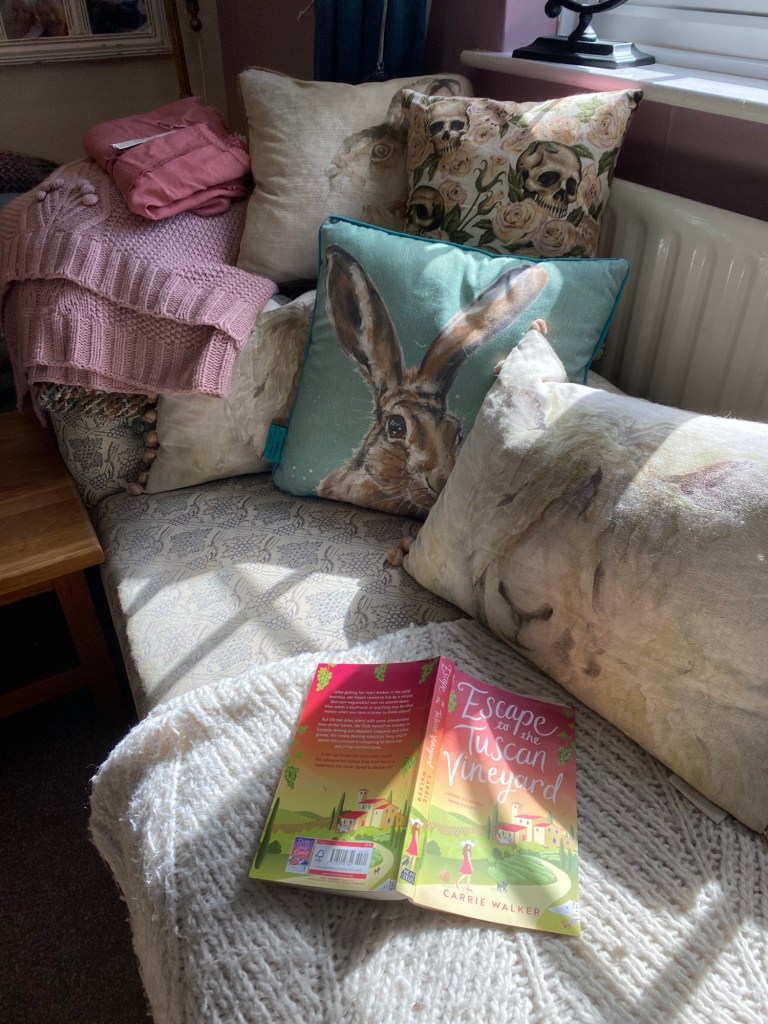
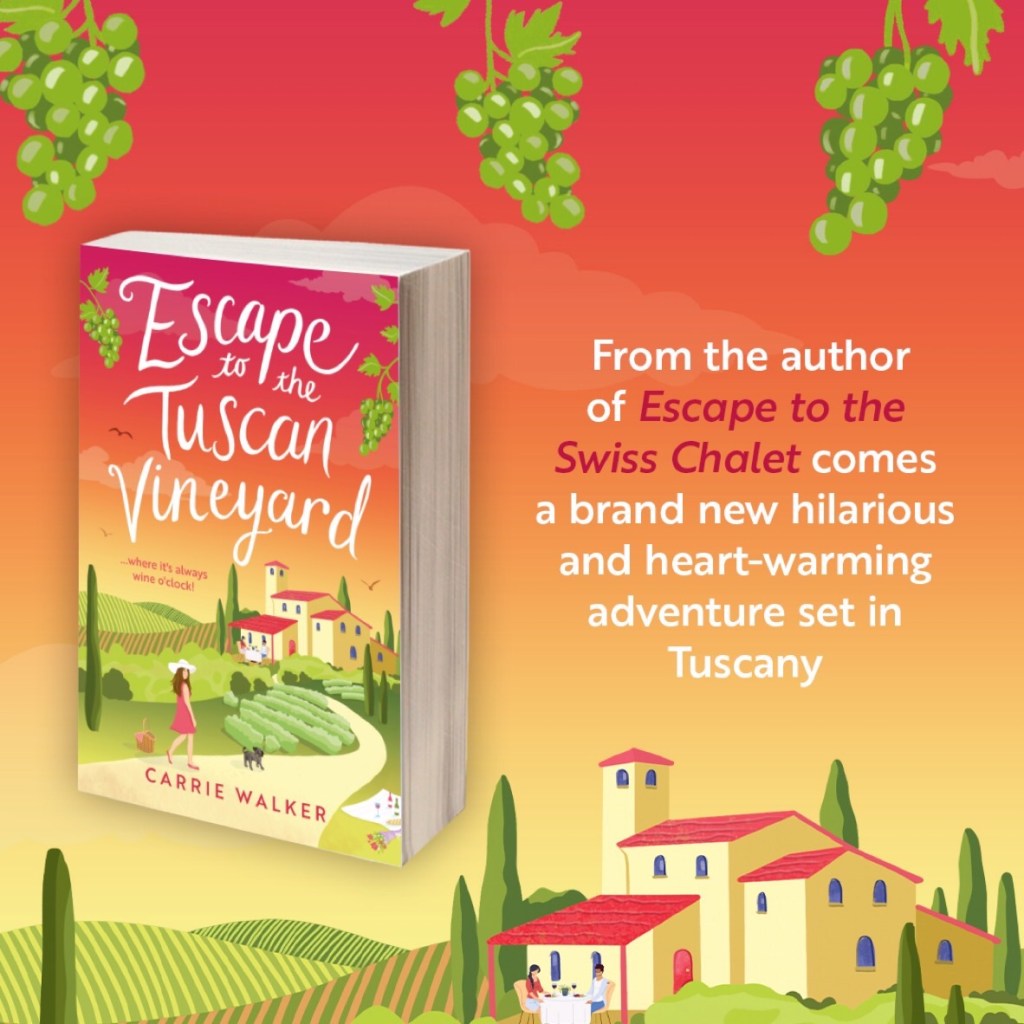
Escape to the Tuscan Vineyard by Carrie Walker

Just when Abi thinks she’s getting her big break as a movie make-up artist, everything starts to go wrong. When she’s told her booking on Moonmen was a mistake, she wonders if it had anything to do with her encounter in a sauna with a good looking guy who wasn’t honest about who he was. Nevertheless she has been paid for a month and when she tells her best friend Holly, she says there’s no excuse not to fly out to Tuscany and pay her a long overdue visit. When she makes it to San Gimignano she’s charmed by the ancient town and the lovely B and B that she’s booked into. The owners, Mia and Paulo are just starting out and Abi has the chance to be a guinea pig, sampling their food, activities and the wine from the attached vineyard. Then she meets Tony, a handsome American Italian man at Holly and her boyfriend Xavier’s restaurant and she decides to have a little holiday fling. Since the heartbreak she encountered in her last long term relationship, Abi has a rule when it comes to affairs of the heart; single encounters only because then she can’t get attached and can’t be hurt. However, something told me that Tony might not be discouraged as easily as she thinks.

Well this novel is a lovely slice of Italian sunshine! It can be read in a day and is the perfect escapist read. I’m not a usual romance reader so this wasn’t something I’d normally pick up. I wasn’t even sure I was going to like it at first because Abi was the type of person who rubs me up the wrong way. In fact there were moments I wanted to give her a slap. When we first meet her she’s running everywhere, helping her Mum out with hair and make-up when an ill advised spray tan and hair tint have left her looking like an Oompa Loompa. Luckily Abi has all the fixes to get her glowing again then she’s off picking up balloons and cake, getting changed and decorating a party room ready for her friend’s surprise birthday ‘do’. She’s so precise and controlled about everything. The discipline she has to get up every morning and pull on her running gear, even when she isn’t working, made me shudder.

‘A quick shower and I was in full make-up by 7.35am and ready for the day ahead. Which suddenly felt like a lot of time to fill. I made the pot of chamomile tea and opened my notepad to start a fresh, new list and get myself organised. I loved a list. It helped me feel in control.’

Abi is all routine and organisation, with no fun or relaxation. Luckily I’m a huge fan of transformation and I had a feeling that this one was going to be worth waiting for. I really enjoyed the humour in the story and I knew if anything could change someone Italy could. Abi loosened up by slow degrees – with a cake for breakfast here and a lie-in there. This is mainly because Italy forces her to be spontaneous. Despite a well planned itinerary Abi can’t sightsee because the buses don’t always run on time and sometimes don’t turn even up. People often close their shops to pop for lunch or an afternoon nap when the heat becomes too much. There’s nothing to do some days except be in the pool and the shade. She soon realises that La Dolce Vita is the only way and she’ll have to get on board with it. I started to enjoy this more relaxed Abi and as we hear more of her story and her feelings of loss and heartbreak the more we understand her.

The setting is simply magical. The vineyard view with the red roofs of the town in the distance sounded idyllic and the food made my mouth water. I’m also a massive fan of Glow-Up even though I rarely use make-up myself, so I loved all the detail about Abi’s career and how skilled she is creating everything from a face painted with bunches of grapes to a full Venetian mask with feathers and gold detailing. When she’s using her skills to help the vineyard and the people she loves, Abi really does shine. I did get drawn in by the romance because it’s impossible to dislike Tony. He’s a straight forward decent man who doesn’t play games and respects Abi’s boundaries. I wanted him to be able to break them down, but I didn’t know if he’d be able to. Ironically, in her desperate need to avoid being hurt, she’s hurting herself. I felt like I’d had a holiday myself when I finished the book. I’d thoroughly enjoyed the villa, especially the wine festival with its incredible food and a fairy lit pergola – the perfect venue for dancing the night away. The family of puppies were pretty irresistible too. Venice was the absolute crowning glory of the story, with Abi making-up the movie stars she’s longed to work with and dealing out some sweet revenge at the same time. Plus it’s my favourite place in the world so that helps. It’s wonderfully uplifting to see someone leave behind painful and negative patterns, it’s one of the reasons I love counselling. Even more than I wanted Abi to find romance, I wanted her to truly live life again instead of trying to control it. I could see a whole new world opening up for her and that made for a very satisfying read. I remember a bit of Eat, Pray, Love by Elizabeth Gilbert where she’s done the praying and the eating and falls in love on the island of Bali. She goes to her herbal doctor who listens as she panics that she’s not kept to her meditation routine and she’s going to lose the balance she’d worked so hard for. Her doctor smiles at this and points out that if we look at our lives overall there has to be some imbalance, otherwise it won’t be balanced. This is something Abi has had to realise for herself.

‘I didn’t want to slip back into my old, controlling ways. I needed to start taking chances again. My lists had to be less about cleaning and more about trying new things and going to new places. I’d wasted so much time…’

And what about Tony? I’ll leave you to find that out for yourself.

Meet the Author

Carrie Walker is a Brummie born romcom lover with a lifelong passion for travel. She has lived in a ski resort, by a beach, in the country and the city, and travelled solo through Asia, South America and Europe.

Her own love life was more com than rom until she met her husband a few years ago and settled down with him and her dog Ziggy in a pub-filled village in Essex.

Longlisted for Helen Lederer’s Comedy Women in Print prize in 2021, writing has long been Carrie’s side hustle, penning columns and features for newspapers and magazines, while working in many other jobs. She has been the CEO of a global disability movement, a board director of a brand agency, the editor of a newspaper, a radio presenter, a football mascot, dressed up as a carrot for the BBC and now she is writing books. Escape to the Swiss Chalet was her debut novel.

Posted in Netgalley, Personal Purchase

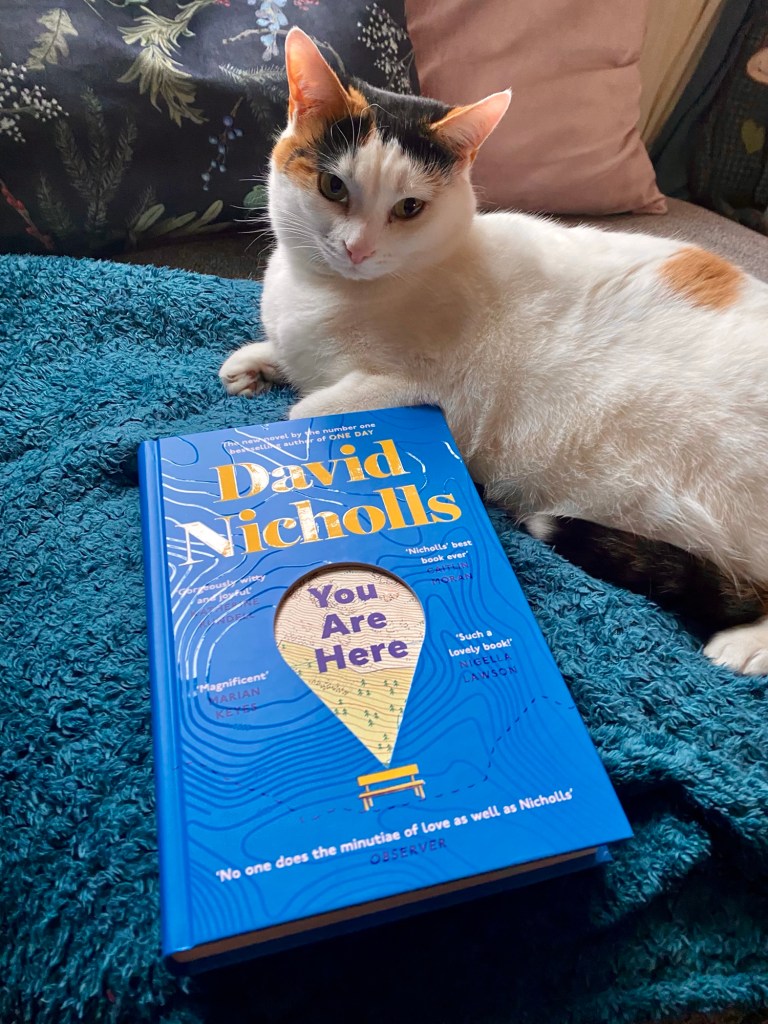
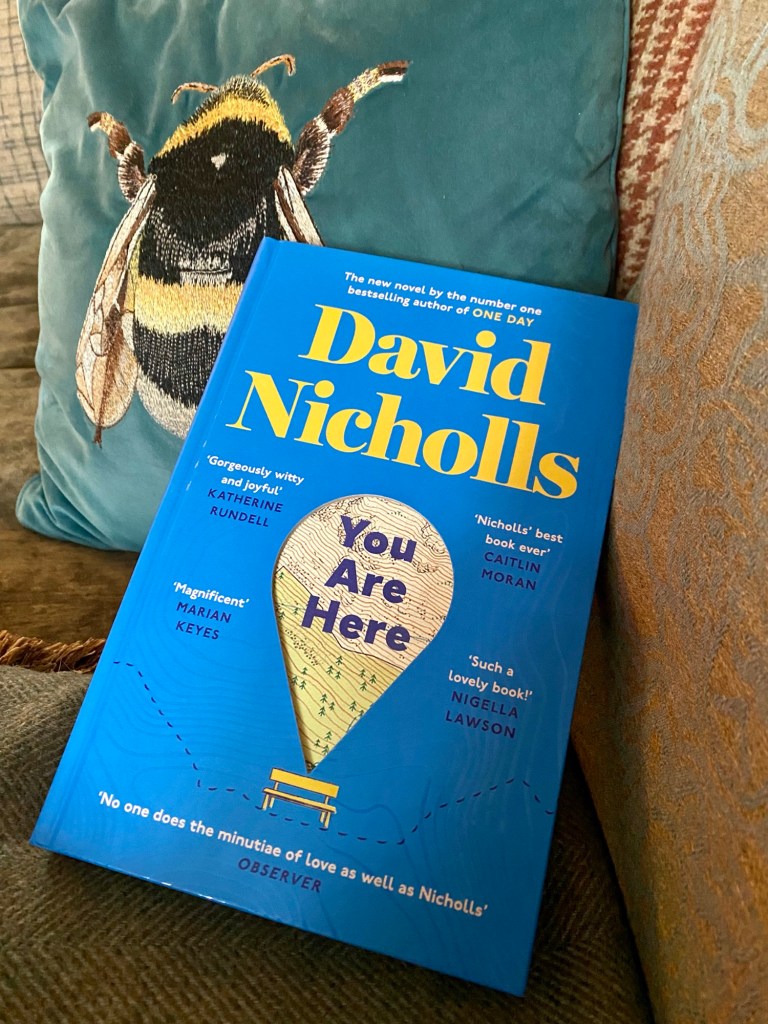
You Are Here by David Nicholls

I have had the joy of reading two books, each by one of my favourite authors, back to back on my holidays and I have genuinely loved it. David Nicholls has been a household name thanks to the new production of One Day on Netflix. The beauty of Nicholls’s novel about friends Emma and Dex makes it one of my favourites of all time and I’m definitely not alone. There was a time back in the 2000s where if you were on a train journey most of the people in your carriage were reading One Day. It was a book that utterly broke my heart because I believed in those characters so much and the shock of what happened is still with me, to such an extent that I haven’t been able to watch the last two episodes of the series. I can’t bear what’s coming. Similarly, both the book and BBC adaptation of his novel Us was deeply moving but utterly real. With the wonderful Tom Hollander as his lead, we become so emotionally invested in this couple, then just as they’re ready set to out for a once in a lifetime trip his wife asks for a divorce. Their plan, to spend all summer travelling around Europe, would be their last trip as a family, before their son leaves home for university. Can they set aside this bombshell and continue with their holiday? The set up in both these earlier novels is so simple and You Are Here is no different. A group of friends travel from London to the Lake District to walk some of Wainwright’s routes through Cumbria towards the Pennines. Cleo has invited four single friends; Conrad is meant for copy editor Marnie and Tessa is intended to get on with geography teacher and dedicated walker Michael who is extending his trip to walk the entire coast to coast, ending in Robin Hood’s Bay. Michael is still getting over separating from his wife so finds these social occasions difficult, much preferring solitude. Marnie spends much of her time alone too, so this will be a step out of their comfort zone for both of them. When the others bail out after a day of endless rain, Marnie and Michael are left to walk together. Can they both strike up a friendship?

David Nicholls has this amazing ability to articulate the minutiae of conversation and communication between the opposite sexes. He’s also brilliant with those tiny moments of shared humour, stolen glimpses and the body language of love. It may seem strange that a whole book is about two people walking across the country, but everything happens within that time spent together. After a couple of days Michael can see that Marnie is an inexperienced walker but determined, intelligent and well-read. She has been in relationships that eroded her confidence, has a keen sense of humour but tends to lose it a little when tired and hungry. Marnie is surprised by Michael. Although she knows little about geography she can appreciate how passionate he is about his subject, he wears his beard as a mask so that people keep their distance, is perfectly comfortable in his own company and is hurt very badly by the break-down of his marriage. This isn’t two young people swept up in the blind passions of love at first sight. This is a slow burn. It’s a potential romance that grows slowly and unexpectedly for both of them. It’s lovely to read a ‘real’ love story about people who are older and have been kicked about a bit by love in the past. Nicholls has alternated each character’s chapters, so we’re also taken into Marnie and Michael’s inner worlds. Within these chapters we have flashbacks through their lives and their past relationships, slowly learning what has built these people who are in front of us, trying to bring their lives together. We are also privy to private thoughts that let us know this couple could be perfect for each other. When bullied into social activity by friends we can see that they’re both introverts. Michael agrees to a plan just to make Cleo shut up. She means well, it’s just that for her the answer to a empty weekend is the presence of others, while it’s their absence that floats his boat. Similarly Marnie knows that a bit of socialising is expected, however…

‘She had become addicted to the buzz of the cancelled plan […]for the moment no words were sweeter to Marnie than ‘I’m sorry, I can’t make it.’ It was like being let off an exam that she expected to fail.’

I understood Marnie. I was the kid at school who was so excited to have finished the reading scheme by age eight, because while everyone else was reading to the teacher I had free library time. I would pull up a beanbag and disappear into the world of the Little Women or Jane Eyre, loving that I was alone, out of the hustle and bustle of the classroom I was free to be anywhere just by opening a book and stepping through a wardrobe. Marnie gives a similar description of her early reading years to mine, the weekly library visits and the devouring of anything I could find and making no distinction between what was deemed literature and what wasn’t. My only criteria was that I enjoyed it. I learned to enjoy activities with friends – ice skating, horse riding, cinema – but nothing beat that thrill of knowing a delicious book was waiting in my room.

‘Private, intimate, a book was something she could pull around and over herself, like a quilt.’

Reading is a little like Michael’s walking in that it takes me on a journey, but also helps me unplug from the stress of daily life. If I’m reading a physical book it’s even more separate from the world because it’s not alerting me to things on social media, emails or messages from friends with cat videos. Marnie wonders if her reserve and need for alone time comes from her upbringing with parents she’d describe as cautious and timid:

‘At no point did her parents move house, gamble, use an overdraft, change jobs, have affairs, go abroad, shout in public, park illegally, eat on the street or get drunk, and while they must have had sex at some point, this was covered up as carefully as a past murder. Marnie was the only evidence.’

Michael is taking in the world around him, but at a totally different pace. He can stop and concentrate slowly on a beautiful bird song or the reflection of the hills in a still lake. He is a Romantic with a capital ‘R’, perhaps not a flowers and surprise trip to Paris sort of man, but he can see poetry in the everyday. As they stroll the hills he truly does understand the Romantic poets, engaging Marnie in conversation about routes that William Wordsworth and his sister Dorothea might have taken. He tries to feel the state of the sublime and thinks he often finds it in a spectacular view that couldn’t have been seen any other way than walking off the beaten track. He is still so caught up in the breakdown of his last relationship, still to some extent thinking as part of a couple although it’s clear to his friends that his wife has definitely moved on. He’s been so disconnected from his wife, for so long that he didn’t know anything was wrong and the shock of the split was seismic. This is why Cleo invites him on the weekend in the first place, to try and point him forwards, rather than backwards. This is a spiritual and mental journey for him, as well as a physical one. Michael has that symptom of depression where you feel like you’re looking at the world through a thick pane of glass, removed from reality. This is a protective barrier too, he keeps his pain so deep inside himself he thinks no one can see it. It stops him from being able to express himself and he finds Marnie so performative at first. She rails against her sore feet, the weather, the mud – all things that are so part and parcel of hiking it wouldn’t occur to him to do the same. Her humour does break through occasionally.

‘You’re funny, but I’m the one with the lighter rucksack so who’s laughing?’ ‘That is true. I’ve got twelve pairs of pants in here, for three nights.’ ‘Why?’‘I don’t know. Maybe I worried I might shit myself four times a day.’ ‘Has that ever happened?’ ‘Not since my honeymoon.’

By the end my heart was breaking for these fledglings. I so wanted them both to be happy, even if they simply ended as friends. David Nicholls throws in one last obstacle that takes us by surprise, even while my heart was racing I could see how much it was needed for that character to have a final epiphany. He’s brilliant at creating that bittersweet feeling that comes as we’re older and have romantic baggage. At first when we lose someone the shock and pain is everything, then after time and doing a little bit of work on ourselves a day hopefully comes where we can look back and it not hurt. We can acknowledge the pain but not let it overwhelm us. In fact, eventually, we can look back and smile about the good times, the love that was shared and how glad we are that we experienced it. That we’re able to move forward and enjoy new adventures. I really understand this from my own life and I genuinely closed the book with a smile on my face, knowing that both Marnie and Michael have so much life to look forward to whether together or apart on their journey.

Out now from Hodder & Stoughton (Sceptre)

Meet the Author

David Nicholls is the bestselling author of Starter for Ten, The Understudy, One Day, Us, Sweet Sorrow and now You Are Here. One Day was published in 2009 to extraordinary critical acclaim: translated into 40 languages, it became a global bestseller, selling millions of copies worldwide. His fourth novel, Us, was longlisted for the Booker Prize for Fiction.

On screen, David has written adaptations of Far from the Madding Crowd, When Did You Last See Your Father? and Great Expectations, as well as of his own novels, Starter for Ten, One Day and Us. His adaptation of Edward St Aubyn’s Patrick Melrose, starring Benedict Cumberbatch, was nominated for an Emmy and won him a BAFTA for best writer.

He is also the Executive Producer and a contributing screenwriter on a new Netflix adaptation of One Day. His latest novel, You Are Here, is out now in hardback.

Posted in Squad Pod

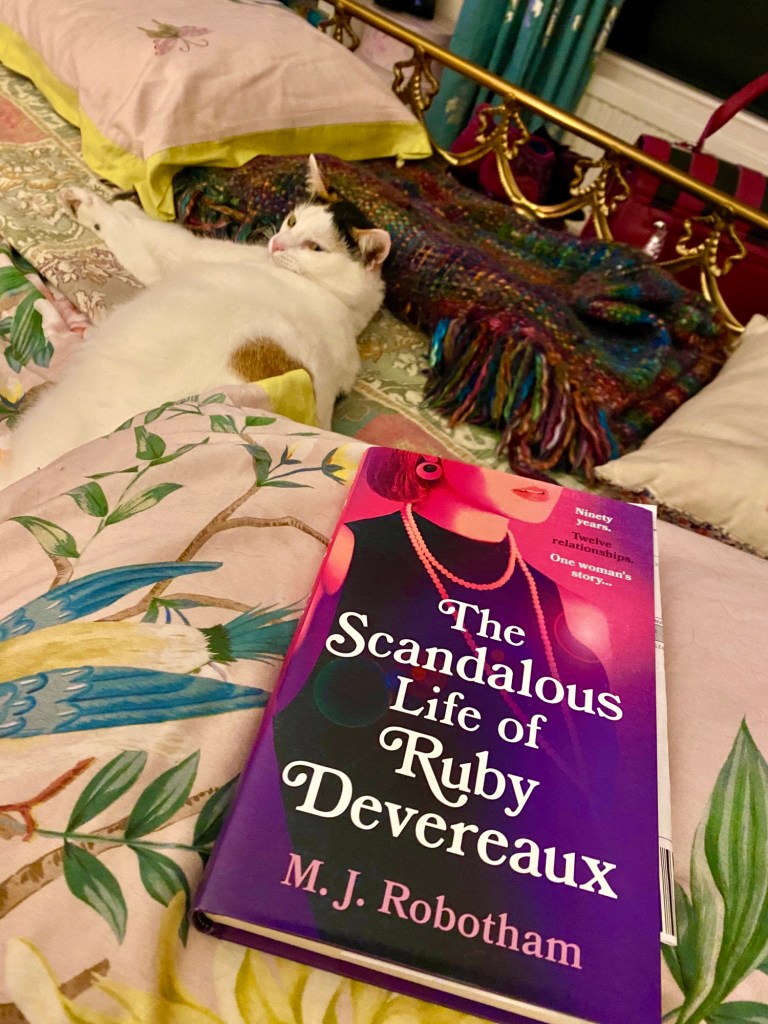
The Scandalous Life of Ruby Devereaux by MJ Robotham

Everyone knows Ruby Devereaux’s books. But no one knows her story… until now.

From a teenager in wartime England to a veteran of modern-day London – via 1950’s New York, the Swinging Sixties, Cold War Berlin, Venice and Vietnam – Ruby Devereaux has lived one hell of a life: parties, scandals and conflict zones, meeting men and adventure along the way. In a writing career spanning seven decades and more than twenty books, she’s distilled everything into her work. Or has she?

There were times during this novel where I wished I was the transcriber in the room, just so I could be the first to hear this lifetime of stories. Ruby Devereaux’s editor is under pressure from above. Ruby is almost 90 years old and the publisher is determined to get the one last book she owes them. So her editor suggests that she closes her illustrious writing career with a memoir. Ruby was on the verge of packing up her typewriter, but she does perhaps have one story left in her, or maybe twelve…

The bulk of the book is Ruby’s memoir as told to her transcriptionist Jude, each chapter named after a man in her life and telling the story of their relationship. Although it’s not as simple as that, through these affairs she takes us through the latter half of the 20th Century and right across the world. It takes us through one woman’s history, but also the ever changing landscape of the world around her, taking in those unforgettable moments and some fascinating social history too. I used to be fascinated with my 90 year old grandmother and the changes she’d seen over a lifetime in the countryside: from horse drawn ploughs to huge tractors; from cycling everywhere to her children owning cars; from handwritten letters to online communication. This has similar vibes, but on a bigger scale as Ruby moves from peacetime to war and across three continents with the world constantly changing beneath her. The author weaves together the social history, world events and Ruby’s growing up with romance and scandal. Ruby has spent seventy years telling her character’s stories, but now it’s time for her own. It’s definitely a life well lived as it’s taken her to the 1950’s New York of the Mad Men, Berlin and Budapest during the Cold War, into Vietnam and into relationships with twelve different men. These are the men who’ve inspired her novels. Make no mistake though, this isn’t really about the men in her life, this is about Ruby. Each relationship captures where Ruby is at that point in her life; a chapter in her personal growth. Ruby easily outshines her male counterparts because she has such a zest for life and breaks society’s rules and expectations about women everywhere she goes. As a young girl in post-war England she’s very matter of fact about her first sexual experience, wanting it out of the way before she leaves home. She’s an incredibly resilient character, despite experiencing loss and heartbreak at a very young age. She makes a promise to herself and the person she’s lost to keep going, grabbing opportunities whenever they arise. Never realising that all along she’s writing the most exciting story she’ll ever tell.

It’s this resilience and insistence on saying yes to experiences that take her across the globe. Starting in London, she lives and falls in love in the romantic city of Venice, via a terrible experience in New York that spawns her second book. She then explores Saigon and Budapest, before finally ending up in Cornwall. She spends time in a commune, dabbles in the world of spying and has assignments in war zones. Just as in her love life, she’s tough and doesn’t dwell on failures or knock backs, she chalks it up to experience and moves on. There is a danger of some of the men in her life becoming a mere backdrop to Ruby and her escapades, it’s very hard to keep up with her energy. However the later sections in England felt a little more detailed and because they’re not as filled with adventures, the men have more room to develop. Their relationships with Ruby feel deeper and more real. Ruby is always at the centre though and I loved following her character development. We can see which experiences have given her strength and a sense of boundaries. I love a scandal so this was definitely a fun romp in parts, whilst also having a sense of reflection and self-awareness as Ruby becomes an older lady. There’s a bravery in her willingness to share her life, particularly her emotions and those difficult parts of her life – relationships that went wrong, the loss, motherhood and her mental health. However, despite this we’re caught up in Ruby’s humour and ability to heal. I think the author has created a brilliant character and blended actual history with her life very well. Ruby is such an incredibly memorable character and I enjoyed spending time in her company.

Published by Aria 11th April 2024

Meet the Author

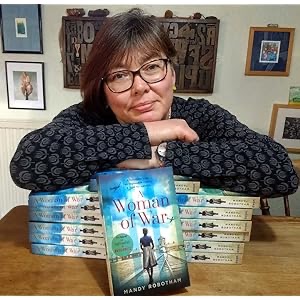
M J Robotham had wanted to write from a very young age, inspired by the book ‘Harriet the Spy’. However life got in the way and it was journalism and having a family keeping her occupied. She was a midwife for several years, but started to write seriously after completing an MA in Creative Writing. her first novel was A Woman of War followed by The Secret Messenger set in occupied Venice.

Her next two books were set in pre and post war Berlin, then wartime Norway, both are places she loves to visit. In her spare time she visits the gym, to knit unusual things and enjoys the music of Jack Savoretti,

Posted in Personal Purchase

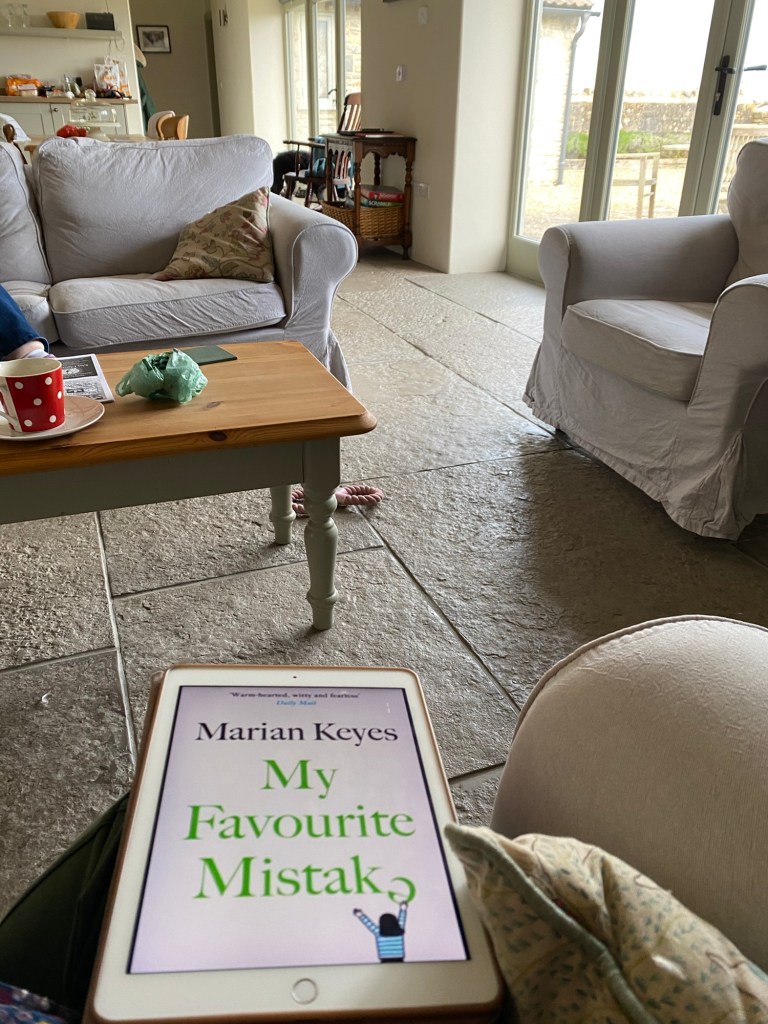
My Favourite Mistake by Marian Keyes

I’m going to say it.

I am a Marian Keyes superfan.

I love her tweets or whatever the hell we call them now. I love her honesty. I love her Strictly fandom. I especially love her sense of humour. I love that her books have drawn my stepdaughter into daily reading, because of course more than anything I love her writing. She puts all her quirk, wit and self-awareness into the characters she writes. She is a writing goddess! She gets better year on year and I loved this dive straight back into the Walsh family after Again, Rachel. Rachel has always been my favourite Walsh, but in this latest novel Anna really did steal my heart. Anna is nearing her fiftieth birthday and her high flying PR role in the beauty business is wearing a little thin. Although she’s always loved living in NYC, the pandemic left her feeling the distance from her family in Ireland. After losing her husband Aidan in a terrible car accident several years ago, her contact with his family in Boston has waned. Her subsequent relationship with Angelo – a ‘feathery stroker’ – has been conducted with respect, equality and a deep fondness, but never passionate, all consuming love. With a need to be near those she loves, she gives notice on her job, her apartment and her relationship.

Her family think she’s gone mad and she almost starts to think she’s made a huge mistake when a sudden job opportunity comes her way. Her sister’s friend Bridie has been building a luxury hotel and spa on farmland near the coast, but the project has hit the buffers. Locals have vandalised the site leaving machinery sabotaged and the luxury bungalows daubed with paint. Bridie and her husband have had the worst news, their daughter has been diagnosed with cancer and needs their total focus. What they need is an experienced but down to earth PR who will be able to converse with the locals in town, find out what their grievances are and hopefully, get the project moving forward again. Anna is booked into the local hotel and can be ready to hit the ground running, but there’s just one snag. The finance broker who has put together the deal for Bridie’s project is Joey Armstrong. Joey was part of the Irish ex-pat community in New York when Anna and Rachel first moved out there. He was also one of the ‘Real Men’, a group of long haired, tight jeaned, rock gods who included Rachel’s husband Luke. Joey was hot. All tawny haired, with the most kissable mouth Anna had ever seen, not to mention his jeans which were just on the wrong side of decent. The first night they met Anna felt an immediate vibe and was full of anticipation until her sister Helen walked in. She saw Joey’s eyes immediately slide over her and become laser focused on her beautiful sister. Anna was immediately slighted and when Helen and Joey left together she decided to dispel this particular lean hipped rock god to the back of her mind. However, this wasn’t the last time their paths crossed. Joey has always been a mix of old flame and thorn in Anna’s side. Can she put aside their past and work together on this project?

Anna has that wonderful characteristic that can’t be taught, she has an easy charm and an ability to talk to anyone from building contractors to the lady of the manor. She takes to M’town straight away, working out who are the cornerstones of the community and who has something to lose from the development at Bridie’s farm. Knowing that her NYC clothes won’t work in rural Ireland, she dresses in jeans and a waterproof coat and pulls her hair back in a ponytail. Minimal make-up leaves her looking fresh-faced and the facial scar from her accident with Aidan is exposed. She’s shrewd enough to realise that it gives her an advantage, no matter whether they people feel sorry for her, are curious or think it shows honesty and openness. She’s smart and has similar skills to her sister Rachel when it comes to communication. The openness, lack of judgement and appreciation that Rachel shows her clients in the counselling room, is equally fruitful when trying to get to the bottom of why certain people in town are against the development. Anna genuinely cares and within days can see where mistakes were made, where a concern was overlooked or an individual was inconvenienced. She can make the most insignificant person feel like the centre of her world and is soon making friends. We follow her investigation and watch her become more and more embedded in this quirky but beautiful little place. In between we see glimpses into Anna’s past, from the before and after devastation of Aidan’s death to her relationship with best friend Jackie and her daughter Trea. Jackie has been her best friend, a relationship that even survived Jackie’s fraught relationship with Joey. When Jackie becomes pregnant, Anna puts aside her own feelings for Joey and becomes her birthing partner and almost a co-parent to Trea. However, something happens to jeopardise their friendship and the women have barely spoken since.

A Marian Keyes romance is never just heart and flowers. It’s always about the heroine’s personal baggage and need for self-growth too. Often I prefer the inner growth to the potential relationship, but not in this case. I absolutely loved this couple and their story. We all have that someone who got away. For me it was a lanky and eccentric music lover called Glynn who would turn up at the door unannounced – often sporting flowers from the graveyard or my dad’s own flowerbeds. There was rarely any warning with Glynn, he might be waiting for me at school having invited himself for tea or have walked five miles from town with some song lyrics scribbled on a postcard that I just had to have. We would lie on my bed and listen to the Cocteau Twins, Ride and The Smiths. My dad would despair at his Joe Bloggs wide leg jeans with frayed hems that dragged mud and grass into the house. He had hair like Clint Boon from the Inspiral Carpets and a huge billowing parka that I stole and wore for two years straight. He also had a complicated home life and often reminded me of Snufkin from The Moomins, who loved the solidity and dependability of Moomin House but also needed time to wander alone whenever it suited him. I was hopelessly in love with him, but it took him three years to finally ask me out and I was scared that it was finally happening that I panicked and refused. Even now, every few months or so he sends me a Spotify track by House of Love or Northside and I love that little reminder of teenage love. Similarly, Joey and Anna have a very long history with several near misses and a deep friendship when he let her close. Although they’ve never had a romantic relationship it is Anna and not one of his many lovers who knows the truth about his upbringing and how damaging those years were. He has trusted her with his deepest secrets, but he has also hurt her, possibly more than anyone else in her life. He has also caused her to lose her closest friend. Yet Anna knows that once she also wounded Joey deeply, the details of which we only find out late in the story.

I loved the pace of the romance, with Marian Keyes knowing exactly when to drop in a flashback that explains everything and keeping that ‘will they/ won’t they’ tension without it seeming artificial. Often with rom coms I feel like obstacles are there just for the sake of it, but the flow is natural and I never felt like the outcome was a done deal. There were so many obstacles and items of baggage it felt like they were on the luggage conveyor belt at Gatwick. There’s everything from the past – him choosing Helen, then Jackie and then most of NYC if Mrs Walsh is to be believed, before Anna. Joey has so much work to do, not just about his childhood but about the here and now. Blending families isn’t easy and he has three adorable boys as well as Trea to think about. They’re both temporarily working on this project and in M’town so what happens when the hotel is built or if Birdie has enough and changes her plans? Anna might be healed physically, but her scar does bother her and has changed her life in ways she didn’t imagine. It does work as a filter, anyone it clearly bothers has no place in her bed. However, at times it does play on her confidence and when she sets up an online suggestion inbox for the locals there are enough hurtful comments to remind her of a time when she wasn’t okay. Joey is fit to murder the culprits but Anna rises above it and keeps moving forward, despite the hurt and the reminder that Joey didn’t even choose her before the accident. So, why would he choose her now? Is it possible to remain friends when they’re so close? Finally, there’s the beautiful setting, nobody does small town Ireland like Keyes and these people are imperfect, but hilarious. Some of their concerns are petty, but others are grounded in years and years of tradition. Work is hard to find in a small town so local tradesmen not being asked to contract was a huge mistake, but easily smoothed over once Anna explains the artistry and level of finish expected. Could Anna thrive somewhere like this, or is she just passing through? I loved, loved, loved this book and being on holiday I had the luxury of sitting in the garden in Glastonbury and reading right through to the end. This is peak Marian Keyes and if you don’t fall in love with Anna or her love story with Joey there’s clearly something a little bit wrong with you.

Meet the Author

Marian Keyes is the international bestselling author of Watermelon, Lucy Sullivan is Getting Married, Rachel’s Holiday, Last Chance Saloon, Sushi for Beginners, Angels, The Other Side of the Story, Anybody Out There, This Charming Man, The Brightest Star in the Sky , The Mystery of Mercy Close, The Woman Who Stole My Life, The Break and her latest Number One bestseller, Grown Ups. Her two collections of journalism, Making it up as I Go Along and Under the Duvet: Deluxe Edition are also available from Penguin.

Posted in Random Things Tours

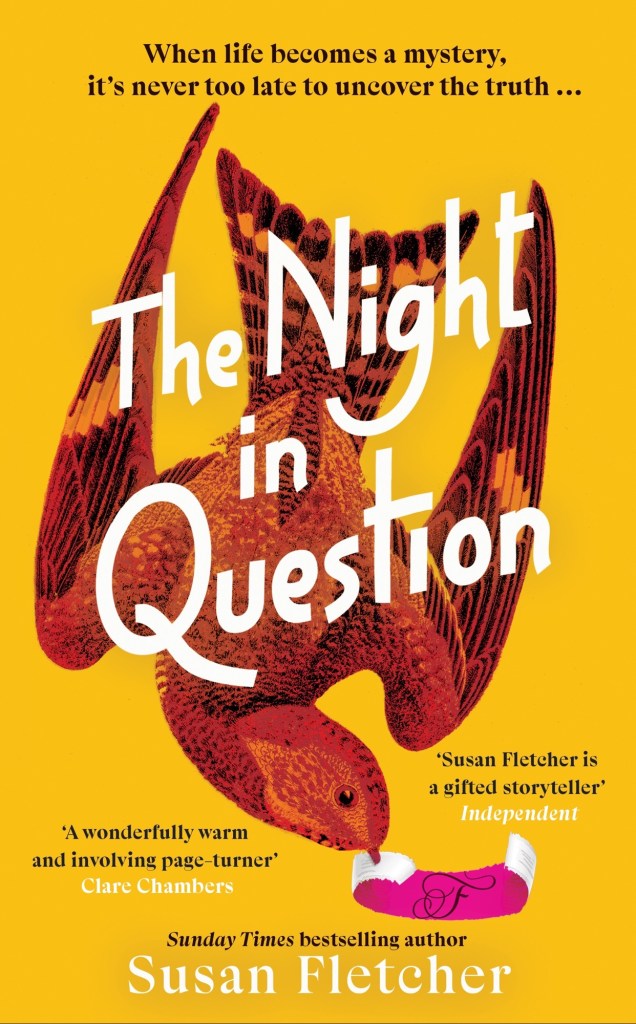
The Night in Question by Susan Fletcher

“Florrie learned, long ago, that society forgets an old person was ever young.”

When I was nineteen I started a summer job in a nursing home and went back to the work on and off for several years, both as a carer and an activities organiser. I was so fond of the first set of ladies I looked after, in fact I still have photos of them all and remember their quirks and their stories. I was deeply fond of Mary, an eighty year old lady with hair she could sit on. Other carers didn’t want to be bothered washing and drying her hair, but I loved it and would plait it for her and arrange it into the topknot she liked that left her looking like Little My from the Moomin books! She was convinced I was a boy, despite the dress that was our uniform. This was the nineties and I think she was confused by the crop I’d had, inspired by Demi Moore in Ghost. Having listened to a lot of stories from all my ladies, when I became an activities organiser I was determined to show carers that the people they looked after had once been young and full of dreams too. So many times I’d watched carers get someone out of bed and talk over them to each other instead of including them in their conversation. I worked with each resident on collecting photos and telling stories about their lives for a display that would hang outside the door on their room. It would give carers and visitors subjects to ask about but also help them see people instead of bodies. This lovely, gentle novel from Susan Fletcher reminded me of these times and some of the stories I uncovered from the residents I worked with – amazing, heart-breaking and life changing stories. Florrie Butterfield is one such resident. At the age of 87 and after losing her leg, she has decided to take charge of her future and move into a rather smart residential home called Babbington Hall, set within the beautiful Oxfordshire countryside with a church nearby. She’s now a wheelchair user, but still wants to keep some independence so chooses a place where she can have a ‘suite’ allowing her to manage for herself as much as possible. Florrie has just settled in to her new home in a converted apple store when one of her new friends, Arthur, is found dead in the gardens.

Suffering a bout of insomnia later that night, Florrie decides to take a look at an advancing thunder storm and makes her way over to the window. As she throws open the window she hears a scream and something falls heavily from the third floor of the hall. When Florrie looks down she realises with horror that it is Renata Green, the home’s young manager. Surely she can’t have survived such a fall? In the ensuing moments Florrie is helped back to bed, with many entreaties from the staff not to stand and wander around. Inside she is cursing her disability, she wants to race up the stairs to Renata’s room immediately and find whoever pushed this lovely young woman to what must surely be her death. As the day goes on, she is interviewed by the police and is confused by their questioning, they seem to be suggesting that Renata was depressed and had nothing to live for in the lead up to her fall. However, Florrie knows different, because that very day Renata had approached for for a discussion about matters of the heart. Renata was in love with someone and had singled out Florrie as a woman who might understand. Their exchange had made Florrie feel hopeful that she might make a friend, that she might be of some use. Renata chose her confidante well because Florrie does indeed have hidden depths. In her room is a box of keepsakes that remind her of the love affairs she’s had with some very different men. Florrie is pleased to be asked, charmed that Renata could see underneath her age and disability to the woman inside. The reader is taken on the journey into Florrie’s past lives and loves, while in the present she works alongside fellow resident Stanhope Jones to uncover the truth about what happened to Renata, treating it as attempted murder. She also hints at an incident in her past that she’s spent a lifetime trying to keep covered up, one night that looms so large in her life it splits it into before and after. Will we find out what happened on the night in question?

Florrie is a fascinating character and I loved that an elderly lady, who are often completely invisible to those younger than themselves, becomes our guide through this journey. She has a kindness and approachability about her that seems to set people at ease, but we shouldn’t let her sunny nature disarm us, because inside is a razor sharp mind. As she investigates the mystery I could see how good it was for her to have such a responsibility in her life again. Alongside the present mystery, we also get to know how Florrie reached this point in her life and I loved reading about her childhood, wondering which events shaped her into the woman she is today. There’s a depth and strength to her character that’s built up of so many layers and for me it was like working with a counselling client – while keeping the presenting issue in mind I delve deeply into the past, drawing out those events that have had the biggest impact and contribute to the client’s current problems. It’s rare to find book characters that are so reflective and self aware. The author also fills the rest of Babbington Hall with some interesting characters, each one detailed and with their own role in the community. While Florrie lives in her own apartment converted from an old apple store, residents with more complex needs are based within the main hall. There are those who are more introverted and keep to their own rooms, while others are the life and soul of the place. The so-called ‘Elwood twins’ keep the gossip mill in action, while simultaneously claiming that they never stick their nose where it isn’t wanted. Stanhope is also one of the more ambulant residents and is a great foil for Florrie, able to investigate parts of the home that Florrie can’t reach. She immediately dispatches him to Renata’s third floor room where she wants him to note the details of the crime scene and any clues to Renata’s last moments before the fall. He is equally unconvinced and confused as to why the police are willing to write the incident off as a fall. Florrie knows that any clues or evidence might be ruined if the staff get to Renata’s room first and start cleaning. However the only clue seems to be a single magenta envelope. It feels like Florrie has sensed a kindred spirit in this quietly spoken, kind woman who has found love in her forties. She wonders if Renata also has keepsakes that might hint at the person beyond her working role. Is she another woman who has lived an interesting life, grabbing hold of chances at love and adventure that might seem unexpected for someone so unassuming.

The pace and structure of the novel are perfectly crafted; the author reveals a little at a time, just enough to move the story along but keeping us waiting for the next clue. Florrie reveals her own story through the six loves of her life, from her diplomat husband of thirty years Victor Plumley, all the way back to her first love Teddy Silversmith. Of course Teddy was involved with ‘the night in question’, the happenings in Hackney that anchor this story and provide it’s title. Only when we know what happened that night and the cause of the scars on Florrie’s knuckles that have silvered with time, can we truly understand her life since. It was interesting to see that her childhood was governed by two very individual women, her mother Prudence who is probably best described as an eccentric and her Aunt Pip. Her father was a policeman, killed on duty when Florrie was very young and Aunt Pip moved in to help look after her and her older brother Bobs who was injured during WW2. It is lovely to read about Florrie’s relationship with her brother and how it changed after his return from war. We also find out that Aunt Pip left an abusive marriage to come live with them, showing a great strength and willingness to forge her own path that possibly brushed off on her niece. In all Florrie can count six loves in her unconventional life, all of whom are very different: the charming Gaston Duplantier who she meets in Paris: Jack Luckett, a very physical, good looking man in Africa; the mysterious sounding Hassan abu Zahra and Dougal Henderson. Through each love we learn about Florrie’s globe trotting life and her freedom of spirit, culminating in a wealth of experience and wisdom that might seem unexpected in the octogenarian lady she is now. It is these very experiences, that would probably go ignored by most younger people, that help Florrie and Stanhope solve the mystery of Renata’s ‘fall’. The author judges perfectly where to reveal the Hackney business, when it has most impact and brings a lump to the throat. It is a gift to be able to bring such depth and feeling to what could have been just another cozy crime novel about charming elderly residents playing detective. This book is so much more than that, revealing a rich and eventful life that could teach us so much about taking chances and not missing out on our potential. It also explores the corrosive nature of secrets, especially for the person holding on to them. I left Florrie the same way I used to feel after looking into the past with a resident – that I’d uncovered a treasure trove of experiences and met their young selves. I felt like I’d met a friend.

Meet the Author

Susan Fletcher was born in Birmingham and studied English Literature at the University of York. 

Whilst taking the MA in Creative Writing at the University of East Anglia, she began her first novel, Eve Green, which won the Whitbread First Novel Award (2004) and Betty Trask Prize (2005). Since then, Susan has written seven novels – whilst also supplementing her writing through various roles, including as a barperson, a cheesemonger and a warden for an archaeological excavation site near Hadrian’s Wall. Most recently, she has been a Royal Literary Fund Fellow at the University of Worcester.

She lives in Warwickshire. 

Thank you to Transworld Publishing, Alison Barrow, Susan Fletcher and Random Things Tours for inviting me to join the blog tour.

Posted in Random Things Tours

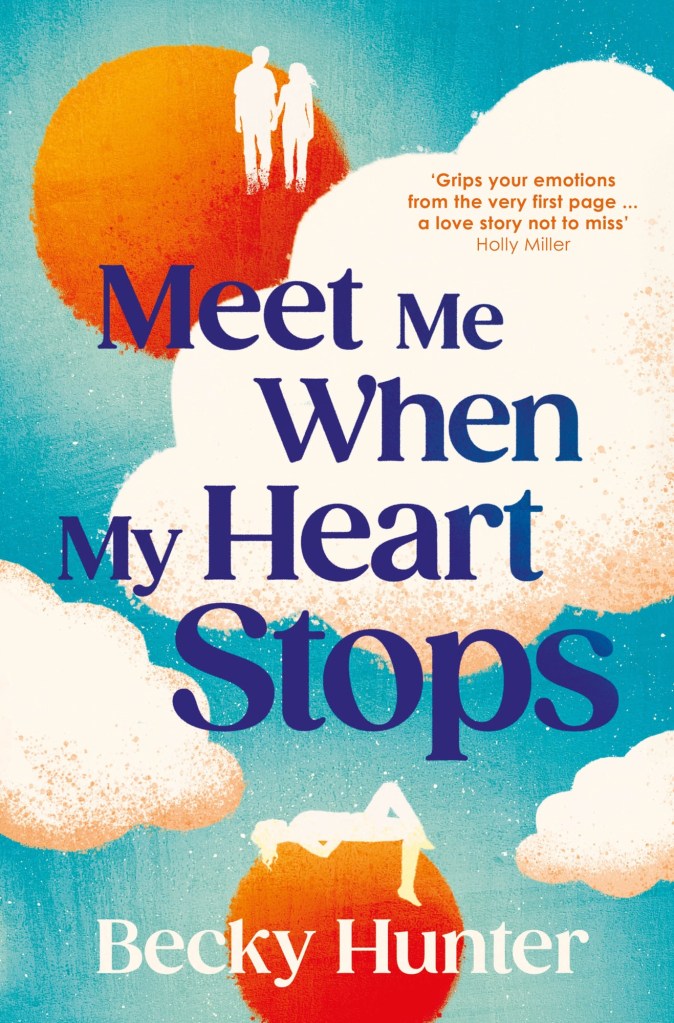
Meet Me When My Heart Stops by Becky Hunter

What if your soulmate could only ever be the love of your afterlife?

The first time Emery’s heart stops, she is only five years old…

Emery is born with a heart condition that means her heart could quite literally stop at any moment. The people around her know what to do – if they act quickly enough there will be no lasting damage, and Emery’s heart can be restarted. But when this happens, she is briefly technically dead.

Each time Emery’s heart stops, she meets Nick. His purpose is to help people adjust to the fact that they are dead, to help them say goodbye, before they move on entirely. He does not usually meet people more than once – but with Emery, he is able to make a connection, and he finds himself drawn to her.

As Emery’s life progresses, and she goes through ups and downs, she finds that a part of her is longing for those moments when her heart will stop – so that she can see Nick again.

This is the story of two fated lovers who long for each other, but are destined never to share more than a few fleeting moments – because if they were to be together, it would mean the end of Emery’s life.

I recently got married. Kev is my best friend and I can’t imagine daily life without him. Seventeen years ago I could never have imagined this scenario. Seventeen years ago my soul mate was taken away from me. Jerz and I had been together for seven years and I lost him by slow degrees over that time, as he slowly succumbed to breathing complications due to multiple sclerosis. One of the things I found so difficult about his death was just how final it was. I’ve often heard bereaved people say that they can feel their loved one’s presence, that they communicate with them or that they feel visited by them in some way. I felt nothing. I couldn’t believe that we could be so close in life, then have nothing. Somehow I thought our love could transcend death. I still love him of course, but nothing comes back. I wondered if our connection wasn’t as close as I imagined, or were those other people just kidding themselves? Unable to face the reality of death had they imagined the robin visiting their garden was a loved one? I had one night where I was so close to joining him. I couldn’t imagine carrying on. But somehow we do and I felt I would be letting him down if I didn’t fully live my life. Kev and I talk about him often and he knows that if he goes first he must find Jez and share stories of what it’s like to be married to me. So, in a way I felt I had some investment in this story. I have my very own Nick in the afterlife, but I’ve met mine before. I wasn’t sure about a love with someone completely new in the hereafter. I wasn’t even sure what Nick was – Death, the Devil, an angel? However, I was fascinated with Emery’s real life.

When someone is diagnosed with a condition that’s life limiting or ending, it doesn’t just affect the individual. The whole of that person’s family and friends have to get used to the diagnosis and what it means for them. For my late husband and me ( I also have MS) it meant a closeness with our family that possibly wouldn’t have happened without those periods of illness and uncertainty. I think it makes us appreciate each other more and make the most of being together. Yet for Emery’s parents it’s even worse. My parents felt guilty that I’d been diagnosed, relieved, scared and incredibly sad all at once, but whatever happened we knew that I’d still be around. Emery’s family have to accept that they might lose their daughter, but have no idea when it’s going to happen: it could be when she’s 6 years old on her way to school, it could be when they’ve just had a teenage row, it could be when she’s at university and no one’s there to help, it could be on her wedding day. It’s hard to live with such uncertainty. It’s hard to just carry on and live a normal life, but it’s also hard to continually treat someone as if you might lose them, every single day of your life. Sadly Emery’s parents react in different ways. While her mother is scared and grieving, she believes in carrying on as normally as possible. Whereas her father becomes anxious and hyper-vigilant. He wants to know where Emery is at all times, which risks he can eliminate, for everyone around Emery to know about her heart condition and that she only hangs out with those who know and can do CPR. This isn’t so much of an issue at a primary school age, but as Emery becomes a teenager she wants to spend time with new friends, go on school trips and maybe meet with boys. All of this is completely normal for her friends, but Emery has to ask and then listen to her parents tearing each other apart downstairs. For her dad there are no negotiations and no compromises. Until, in the end, it just becomes too much to cope with and her mum leaves. Emery lives with the guilt of feeling that it was her condition that caused her parents to split up.

I wondered throughout how much of Nick was real and how much was a subconscious invention. Something her mind created so that in those first moments after death Emery doesn’t feel alone. It’s also easier to be in love with someone who isn’t in your everyday world, especially when you have a hidden illness. As Emery learns, dating in the real world is much more complicated. When do you ‘come out’ to that new person about your invisible illness? What if you collapse on a date? Then as time goes on the bigger questions start to come up. How can you move in or marry someone and give them this terrible burden to carry? How can you live a normal life together when at any time they could lose you? Look what her illness did to her parent’s marriage? How do you tell someone that if they pick you, they’ll have to sacrifice having their own children? Isn’t it too big an ask? Nick knows everything, in fact when she’s with him she’s already dead so that removes the risk. It is the easiest relationship she has. I could see how it would be easier to be in love with him than someone in real life. Emery’s trusted friends are Bonnie and Colin who live nearby, they know everything and are trained for the worst eventuality. It’s clear that Colin has feelings for Emery, but he’s the boy next door. He’s probably the only boy that her dad would feel she was safe with and that’s a real turn off! As Emery gets more rebellious and starts to test her limits she doesn’t always understand that she’s more than just one individual – she’s the sum of the people who love and care for her too. The consequences of her risky actions are not just hers; there are consequences for her parents, her sister Amber and her niece, her friends Bonnie and Colin, who clearly has feelings for her. If she made the decision to be with Nick, it would mean all these people losing her.

I was truly fascinated by how the author portrayed Emery’s journey. It was full of emotion and beautifully written. I can testify that it really isn’t easy coping with a life-limiting condition. I was 21 when I was diagnosed and could reason things out, but I still struggled with my self-image and how other people saw me differently. I’d had my wild teenage years not knowing, but Emery has to go through all of that never knowing if this is her last day. It polarises life by making some things feel completely futile and others soul- searchingly important. There’s not much room for the everyday when every day might be your last. I’m not sure if it was the author’s intention, but I didn’t fall in love with Nick and Emery’s love story. I fell in love with Emery herself, this beautiful, bright and vibrant girl who dies for the first time age 5. I understood her and more to the point, I felt like the author truly understood Emery’s experience. I felt seen. I was also rooting for Colin. I wanted Emery to choose real life, the ups and downs and every day with all it’s messiness and complicated feelings. To share life with someone instead of the afterlife.

Published by Corvus 21st April 2024

Becky grew up in Berkshire, UK, and has loved reading since before she can remember. After studying social sciences at Cambridge university, this love of reading led her to a career in publishing, where she worked as a book publicist in London for several years before taking a career break and moving to Mozambique to volunteer with horses. It was here that she decided to give writing a proper go, though it was still a few years, a few more destinations, and a couple more jobs before she had the idea that would become ONE MOMENT, her debut novel.

She currently splits her time between London, Bristol and Falmouth, and works as a freelance book publicist and editor, alongside her own writing.

Find Becky on Twitter (@Bookish_Becky) or Instagram (beckyhunterbooks) – she’d love to hear from you!

Posted in Netgalley, Personal Purchase

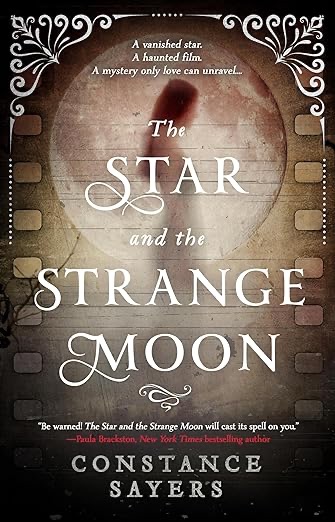
The Star and the Strange Moon by Constance Sayers.

Constance Sayer’s latest book has a lot of her literary trademarks: time slip narratives; a mystery to solve; magic realism and romance. She places her story in the world of Hollywood and film-making, with two main characters – the actress Gemma Turner and young film-maker Chris Kent. In 1968 Gemma is staying in London with her rock star lover Charlie Hicks when she is offered an unexpected film opportunity. Until now Gemma has been making a series of surfing films based in California, but she’s been longing to make something that has more critical acclaim. French director Thierry Valden is part of the nouvelle vague or new wave movement and has offered her the lead role in his next film L’Etrange Lune a vampire film set in 19th Century France. He seems open to changes and often works with improvisation so her long held skills as a writer might be needed too. However, when she gets to Thierry’s chateau the mood seems to have changed. She is greeted by Manon Valden, who warns Gemma off her husband immediately which isn’t very welcoming. Thierry doesn’t seem like the man she met before and when she reads the up to date script it still has the same stilted dialogue, despite the potential changes she had sent him. When she finally speaks to Thierry alone, he makes it clear that something has changed. He had envisioned more of a collaboration both on the script and possibly in the bedroom, but L’Etrange Lune will be his final film and he can’t afford to take risks. Gemma will have other opportunities for scriptwriting but he won’t. The next day as they’re filming in the nearby town of Amboise, Gemma has a scene where she runs down a darkened and cobbled alleyway, seconds after calling action the camera has suddenly lost her. Has she fallen on the cobbles? Are the dark shadows concealing her? Maybe she’s walked off in a huff. Yet it seems Gemma is genuinely gone and as they look back over the scene on film, frame by frame, she’s simply disappeared in front of their eyes.

Christopher Kent has had a strange fascination with the actress Gemma Turner since he was a child. Now at film school in 2007, his attachment to the actress stands out because she was never one of the greats – students aren’t usually hung up on obscure actresses from a handful of surf films. He remembers the day he first saw her, in a hotel where vintage black and white photos of actors were hung next to every door. In a very chaotic and traumatic childhood, this was one of those moments where he and his mum were without a roof over their heads. Chris could sense his mum was edgy and on the verge of a mood change, but as they approached their room and she saw the photo by the door she flew into a rage. She pulled the picture of Gemma Turner off the wall and smashed it, shouting personal insults and expletives. What was her link to the actress? Knowing Chris’s fascination with Gemma, his girlfriend and fellow student Ivy comes to him with a strange proposition. Every ten years Gemma’s final film, L’Etrange Lune, is shown to a select group of 65 guests at a randomly chosen cinema. Ivy’s father is one of the 65, but for this viewing he has offered Ivy his two place. They must wear a mask and cloak, but most importantly of all they must never approach or try to identify other members, nor can they talk about what they’ve seen. Chris doesn’t know what to make of the film. It seems to be a rather formulaic vampire movie, but there’s something odd about Gemma’s performance, almost haunting in fact. While in some places it’s fairly average, in other scenes there’s an incredible intensity to her acting. It’s almost as if she’s genuinely terrified.

I found the book a little slow at first, but once we reached Gemma’s disappearance I was hooked by this strange story. As we reach Gemma’s timeline in France and Chris starts investigating her disappearance several decades later, the pace of both timelines really picks up. There are suddenly enough strange and impossible happenings for the reader to start wondering what’s coming next. To be honest it felt like anything might happen! I loved the sense of evil created by the film – the strange melancholy that falls over those who see it, something that worsens if you keep going back every ten years. The rumours that the film changes in that decade are intriguing and suggest someone is still behind the lens. Could one of the 65 be playing tricks on the rest? Perhaps not letting on they have extra scenes that Thierry discarded, or that they have found an actress who is the double of Gemma Turner. Is something magical at work here? Despite all the warnings, I did understand Chris’s need to investigate, even when those he interviews start to feel the consequences of talking. This is such a clever concept and the author creates a real sense of mystery with wonderful period detail, especially in the 19th Century when there’s much discussion on the restriction and discomfort of women’s fashion especially in the summer. I also enjoyed 1960’s London where Gemma’s lover Charlie is part of a Fleetwood Mac-esque band where partners are swapped as readily as song lyrics. There’s even a very unexpected romance woven within this magical and unexpected series of times and worlds. What I wanted to see more than anything was for Chris to overcome the trauma of his childhood and fulfil his potential, wherever and whenever that might be.

Out in paperback from Piatkus 28th March 2024

Meet the Author

Constance Sayers is the author of A Witch in Time, The Ladies of the Secret Circus, and The Star and the Strange Moon from Hachette Book Group.

A finalist for Alternating Current’s Luminaire Award for Best Prose, her short fiction has been nominated for the Pushcart Prize and Best of the Net.

She received her master of arts in English from George Mason University and graduated magna cum laude with a bachelor of arts in writing from the University of Pittsburgh. She attended The Bread Loaf Writers Conference where she studied with Charles Baxter and Lauren Groff. A media executive, she’s twice been named one of the “Top 100 Media People in America” by Folio and included in their list of “Top Women in Media.”

She splits her time between Alexandria, Virginia and West Palm Beach, Florida.

Posted in Netgalley

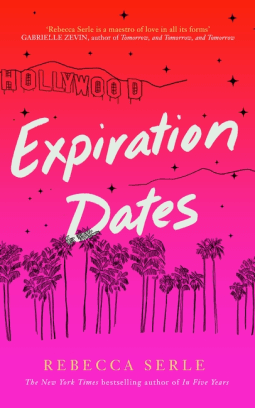
Expiration Dates by Rebecca Searle

It’s been a while since a romantic novel has made me shed tears but I reached just over half way through Rebecca Searle’s new novel and I felt a lump forming in my throat. My reaction was possibly more emotional than the average, because I felt seen. Rebecca has this habit of taking what seems like a simple romance and adding an element that immediately elevates it to something more. Daphne lives in L.A. and works as an assistant to a film maker, outside of work she is a busy bee flitting between visiting her parents, spending time with her dog Murphy and roaming flea markets for quirky household items. However, her favourite weekend mornings are those she spend with her ex-boyfriend Hugo: he wakes her early, they get to an early farmer’s market for the best choices such as the sunflowers that are always gone by ten am. Her career hasn’t changed much over time and she has chosen to stay in the area to be close to her family. Daphne is single, at a point in life where people she knows are staying together, having babies and getting married. Daphne tends to have short term relationships, but she is starting to wonder about all these things. Are they something she’ll ever find? Her friends can’t understand it, she’s a great girl, and have started to offer to their friends and work colleagues as potential dates. What they don’t know is that Daphne keeps a box under her bed and in it are post-it notes, drinks coasters and theatre tickets all which have the name of a boyfriend and a length of time, an expiration date. From one night to several months these cards enter her life around the same time as a new man and Daphne knows the finite amount of time they have together. This bit of magic from the universe is amazing in some ways, but in other ways she’s starting to think they hold her back. Are they starting to become a self fulfilling prophecy? Then her friend Kendra sets her up with Jake and Daphne waits for her expiration date to arrive. This time though, it’s just a name; no date. Does this mean Jake is the one?

Aside from the magical expiration dates, I was beginning to wonder whether this was a straightforward romance. Much as I was enjoying Daphne’s life, I was missing that extra element that grabs me and makes me feel something. I shouldn’t have doubted the author, because when it did arrive the impact was huge. Having had a similar experience at the same age as Daphne made her story even more compelling because I ‘got’ it and completely understood her emotions and reasoning. There are momentous experiences in life that divide it into a very clear before and after and you can never return to who you once were. Yet on the outside, the change isn’t visible. There is always something there to be revealed, something that can be ‘outed’ and only you can choose when and if you reveal it. Jake’s open ended expiration date is ambiguous, but what it does is leave Daphne to make choices in a way she never has before. Previously, short expiration dates have meant she doesn’t have to make a choice. If it’s one night, the chance to know another person is limited. If it’s three months Daphne doesn’t have to invest too much emotionally. It’s both freeing and restricting at the same time. Daphne doesn’t have to change or make too much effort, because whatever she does or doesn’t do it changes nothing. However, her emotions are restricted. If she didn’t see the expiration date, might she have invested more, took a risk or perhaps even fallen in love?

That’s why being with Jake is so different, it’s the only open ended relationship she’s ever had. Don’t get me wrong, Jake couldn’t be more perfect. He’s attractive and intelligent. More importantly he’s kind and considerate. At first, Daphne isn’t sure but for once they have all the time in the world for her to explore and see where the relationship and her feelings go. Jake has emotional depth and a willingness to put those emotions on the line. Jake was married once and his wife died. Daphne marvels at his ability to be vulnerable when he has lost so much. It also worries her, because she holds a secret that has the ability to shatter this fragile and tentative relationship they’ve built. She has a perfect man who wants to live together, to marry and build a future. Everyone says he’s perfect, but is he perfect for Daphne? I couldn’t help but keep thinking back to Hugo, who seems like the one who got away. He knows everything about Daphne, the secret and the expiration dates, but he’s still here. Their official romantic relationship may have come to an end at their proscribed three month deadline, but he’s still here and to me he felt like the person who is closest to Daphne. If they’d had the chance of an open ended relationship, might they have been perfect for each other? There were things I didn’t like about Hugo, but to me he felt more vibrant and alive than Jake. I felt like Daphne glows when she’s with Hugo, whereas with Jake she is the epitome of the phrase ‘settled down’. For Daphne, falling in love has never been simple and I really related to that. I think a lot of other readers will too.

Out on 14th March from Quercus

Meet the Author

Rebecca Serle is the New York Times bestselling author of Expiration Dates, One Italian Summer, In Five Years, The Dinner List, and the young adult novels The Edge of Falling and When You Were Mine. Serle also developed the hit TV adaptation Famous in Love, based on her YA series of the same name. She is a graduate of USC and The New School and lives in Los Angeles with her husband.