Posted in Publisher Proof, Random Things Tours

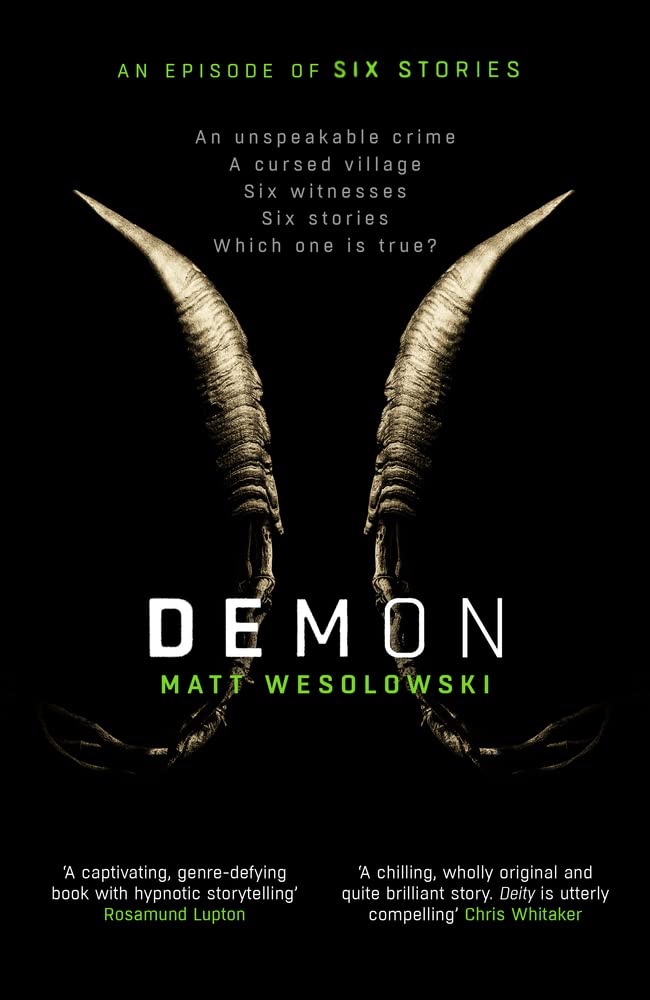
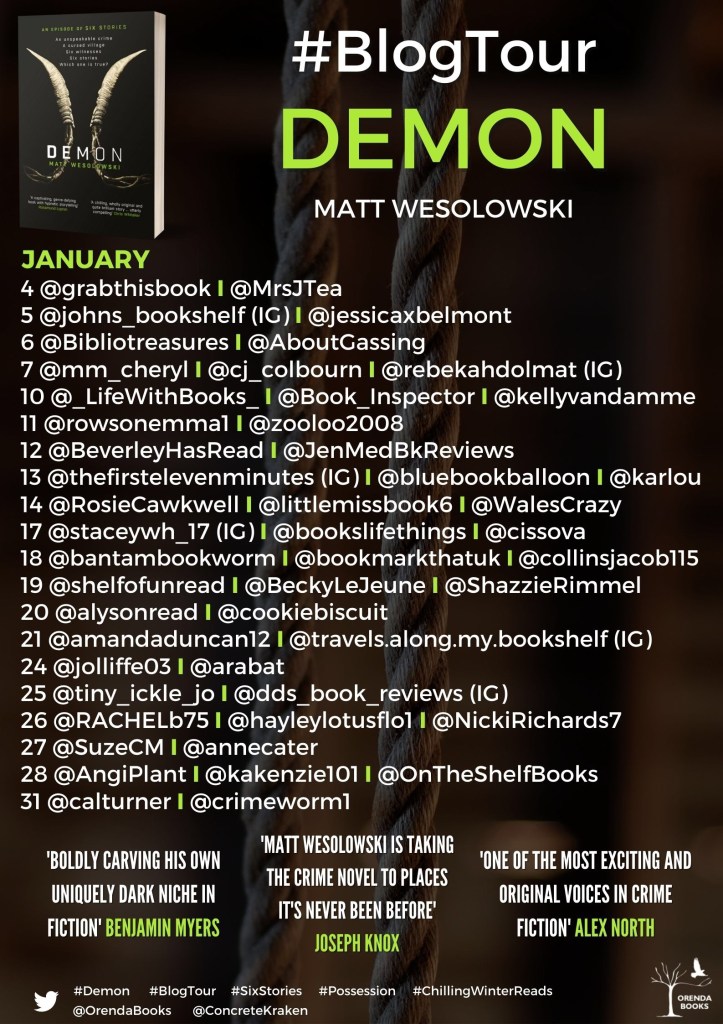
Demon by Matt Wesolowski

I was fascinated and blown away by this sixth novel in the author’s Six Stories series. As always the novel’s structure is based on a podcast format, where Scott King presents his investigation into a true crime case. Each podcast consists of six stories told by six people associated with the case, with additional emails, news reports and documents on the crime. This time King has chosen a highly emotive crime that reminded me of the James Bulger case. The novel takes us to the old mining village of Usslethwaite in Yorkshire, where a terrible crime was committed, one that shocked the world. In 1995 the murder of twelve year old Sidney Parsons, by two boys his own age, was front page news. The murderers were dubbed the ‘Demonic Duo’ by the press and as well as the usual speculation about both the boy’s upbringing and mental state, there was a whisper of something more sinister. The hills above Usslethwaite were reknowned as a place where witches congregated, all the way back to the 17th Century when witch-hunting was rife. Rumours of something dark and disturbing lurking in the caves near the crime scene had plagued the village for centuries, as well as more contemporary plagues of flies, animal deaths and a strange black shape seen nearby. Is there something supernatural and demonic about this crime? Or are they just hysterical excuses for a crime so savage no one can understand it? Now that the murderers have reached adulthood, they’re quite possibly rehabilitated and living somewhere in the U.K. Maybe now it’s time to hear the truth about what happened when Robbie and Danny formed a friendship and proceeded to commit this unspeakable crime.

I love the originality of this author’s work and his audacity in writing about subjects other writers might avoid. I was 20 years old when Robert Thompson and Jon Venables lured James Bulger away from his mother at a Liverpool shopping centre, then murdered him and left him on the train line in Walton. Everything I remember from that case also comes up in the course of King’s interviews about Usslethwaite. I remember being shocked by the murder, the age of Thompson and Venables, but also the savagery of the press and public towards the accused who were still children. Whilst the anger the crime aroused was understandable, I couldn’t understand grown men gathering outside a court to attack the prisoner transport. I kept wondering what their goal was. What would they do if they actually broke through to those boys? Even now, the mention of either boy, their incarceration or the new lives they now have kicks up a frenzy of controversy and rage. While Demon isn’t based on the Bulger case I did wonder if Wesolowski had it in mind, because he has managed to capture a lot of those conflicting feelings in this novel. Through his podcast guests we can look at different aspects of the Usslethwaite murder, and consider the differing perspectives on what happened. Although there is outrage that Scott King is even featuring this case, I can see that all he is trying to do is answer that universal question: Why? What drove these two boys to kill?

The psychological and paranormal aspects of the case are carefully intertwined here. Robbie is a newcomer to the village, fostered by a lovely, community minded couple who haven’t been able to have children. There is speculation on what Robbie went through before he was taken into care and whether he is the disruptive force behind the crime, with Danny simply taken along for the ride. However, Danny is quite a sad, lonely and disturbed little boy even before Robbie comes along. He found his mother when she had hung herself from the rafters of the barn. Rumours abound about his mother who was a herbalist and reiki healer – something rather frowned upon and misunderstood by some members of the village. In fact she was well regarded by her patients and it could be said that the suspicion was raised due to her occupation and how lucrative it seemed to be, more than anything she did. There were reports of her coming down from the caves with another person, scandalously naked. She was also thought to set fires and dance around them. However, to Danny she was the parent who brought warmth, love and softness to his life. Without her, he is left in the care of his father who is not a bad man, but is absorbed by work and struggles to show affection. Danny visits the caves to speak to his Mum, and thinks he might hear her, but in this dark place it’s hard to know who or what might reply.

The author is incredibly skilled at ratcheting up the tension, whether with more detail of the case or the next eerie happening. I often found myself reading yet another chapter so I could find out what was next. I found the paranormal elements clever, I wasn’t scared at first, but after a while the atmosphere built and I found myself uneasy. One night, my other half asked me to turn the bedside light off since it was late and I found myself unsure whether I wanted to carry on reading in the dark. The strange happenings in Robbie’s room at his foster home were very unsettling, from phantom footsteps to flies and a horrible smell that seems to permeate everything. There’s so much in this village that can’t be explained and is witnessed by lots of different people. Were these boys influenced by demons or was this a case of two very mixed up and lost boys doing something so terrible it would destroy the village, the victim’s family, and the rest of their lives. I loved the varied perspectives, especially those unexpected ones that took our understanding to another level. While never losing sight of the victim and his family’s loss, we get to explore the ideas of rehabilitation and how a perpetrator lives with their crime, especially ones so young. Can they ever make a life for themselves and get over the guilt? Or are they forever doomed to keep moving, constantly looking over their shoulder for fear of being exposed? I was fascinated with the question of whether a demon influenced these boys or whether we could call the boys demons. They are labelled monsters, but are they? Perhaps we just label them this way, because we can’t accept one human being could do this to another, let alone a child. This is another incredible read from this inventive and original author. I devoured it so quickly that I’m buying the whole series with this month’s book budget.
Meet The Author.

Matt Wesolowski is an author from Newcastle-Upon-Tyne in the UK. He is an English tutor for young people in care.

‘Six Stories’ was published by Orenda Books in the spring of 2016 with follow-up ‘Hydra’ published in the winter of 2017, ‘Changeling’ in 2018, ‘Beast’ in 2019 and ‘Deity’ in 2020.

‘Six Stories’ has been optioned by a major Hollywood studio and the third book in the series, ‘Changeling’ was longlisted for the Theakston Old Peculier Crime Novel of the Year, 2019 Amazon Publishing Readers’ Award for Best Thriller and Best Independent Voice.

‘Beast’ won the Amazon publishing award for Best Independent voice in 2020.
Posted in Random Things Tours

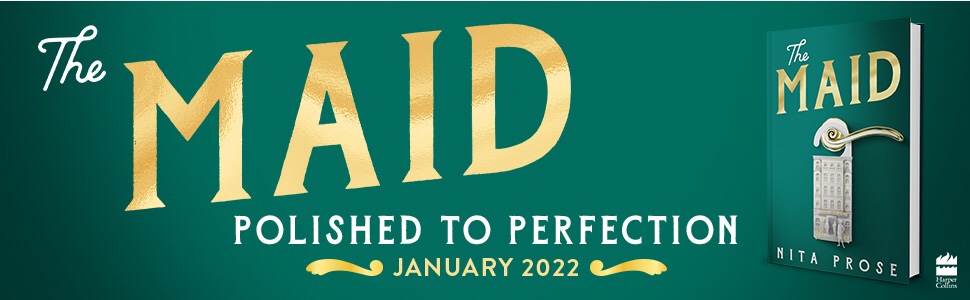
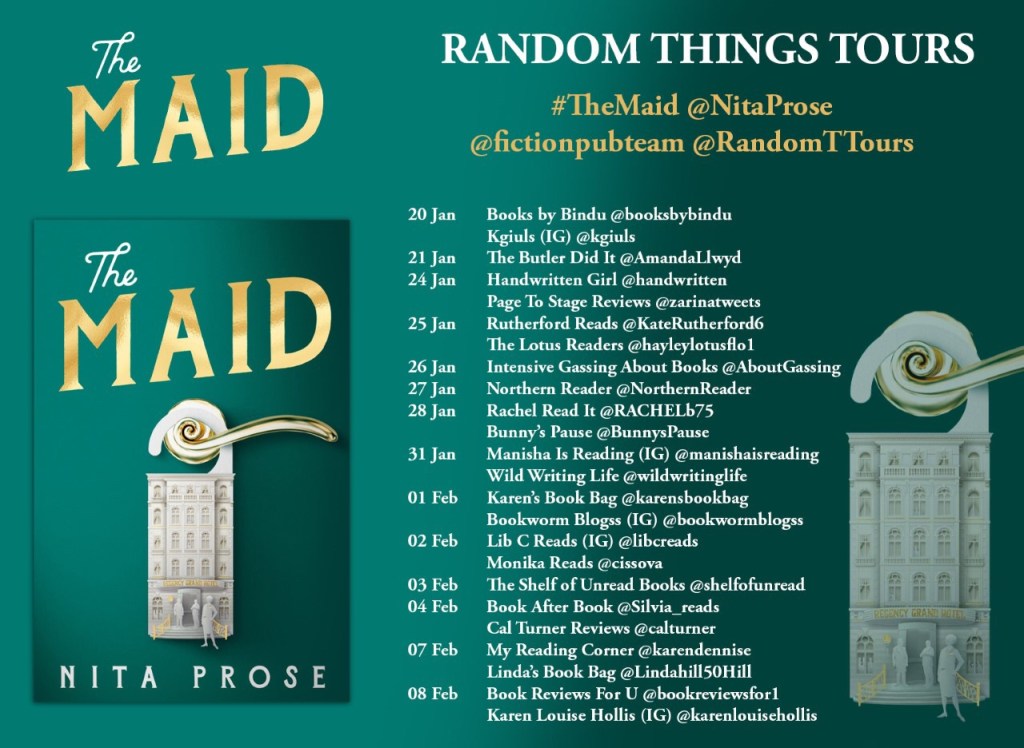
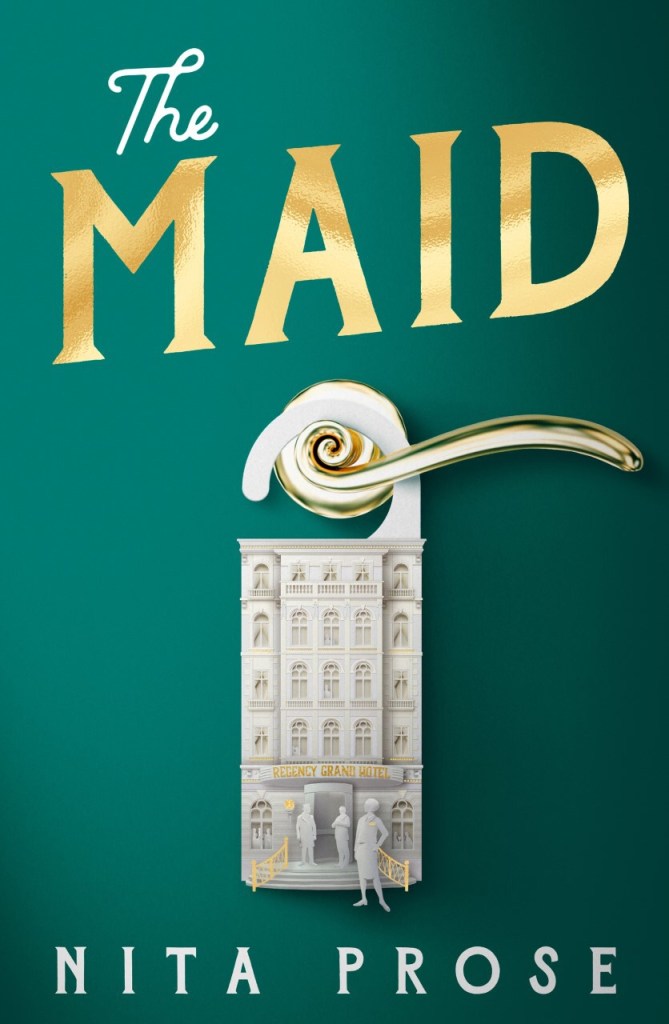
The Maid by Nita Prose.

I’m an absolute sucker for books where the narrator addresses the reader directly. I loved Molly the Maid from the first page and the book was an absolute delight from start to finish. Molly works as a maid at the Regency Grand Hotel and she is very proud of her skills as a cleaner, skills she learned from her grandmother who died a few months ago. Many of her colleagues find Molly a little bit odd – in fact she knows they call her Roomba after a robot hoover – but she thinks they call her Rumba after the dance on Strictly although she doesn’t know why. Molly likes things to follow a routine, things must be in their place and there are ways to clean everything. In fact her Gran said that cleanliness was next to Godliness. Even at home they had a cleaning schedule, something different each night before dinner, and Molly has carried that into her work. She does have some friends, Mr Preston who works on the door, Juan who washes dishes in the kitchens and Rodney who works behind the bar. Her friends are very important to her and if it does good, it’s occasionally okay to bend the rules. So, when Rodney takes her out for a meal and asks for a favour she’s only too happy to help.

Juan has lost his work visa and needs a place to stay, so could she slip him a key each day to an unoccupied room? Rodney gives her a bag, she doesn’t check, but assumes they are Juan’s things and deposits them in the chosen room on her rounds. Her last friend is Giselle, the glamorous second wife of Mr Black, who stays in a suite at the hotel so regularly that Giselle and Molly have interacted a lot. She has all those qualities that Molly values in a person – she acknowledges the little people, she’s polite and treats Molly like a real human being, rather than looking past her. The story begins as one day Molly doubles back on her normal route to clean the Black’s bathroom. She’s done the rest of the suite, but Giselle was in the shower. Molly makes her way through the suite, noticing that cushions are disturbed, the safe is open and Mr Black is taking a nap on the bed. Yet when she looks closer, perhaps he isn’t sleeping? Maybe he’s dead?

This was a clever way of merging a thriller, with a genuinely uplifting story about someone who has gone through an enormous change in her life. I truly felt gripped by the thriller aspects of the story, but also touched by the personal journey that Molly is facing. She has lost someone close to her and is learning to negotiate life as a fully fledged adult. She doesn’t have that ability to read people’s moods and motivations so she’s perhaps an easy mark for people who want to exploit her. I thought the author had a very difficult line to tread with the tone of the novel. We know that Molly thinks in an individual way and there are times when we do understand more than she does about what’s going on at the hotel. Molly refers to this with a jigsaw analogy – she knows she has all the pieces, but hasn’t put them in the right order yet. This could have been disastrous if the reader was superior to Molly, but we never are. The author keeps us firmly with our heroine, even while other characters treat her badly and underestimate her intelligence. The story was gripping and I wanted to know what was really going on at the hotel, and which of Molly’s friends were truly fighting her corner. Molly is a heroine who will stay with me a long time. Even though the goings on at the hotel are sleazy and dangerous, her personal story is touching, charming and ultimately joyful.

Meet The Author.

NITA PROSE is a long-time editor, serving many bestselling authors and their books. She lives in Toronto, Canada, in a house that is only moderately clean.

http://www.nitaprose.com
@NitaProse

Posted in Random Things Tours

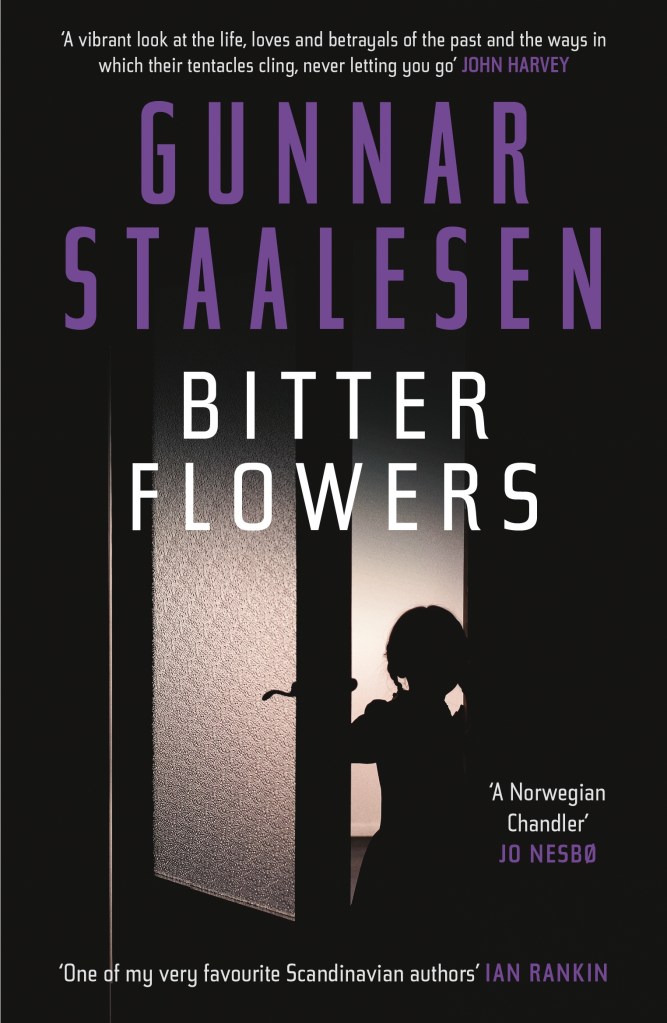
Bitter Flowers by Gunnar Staalesen

PI Varg Veum has returned to duty following a stint in rehab, but his new composure and resolution are soon threatened when a challenging assignment arrives on his desk. He is offered a job by his physical therapist Lisbeth, with whom he has built a friendship during treatment. She has a friend who needs a house sitter and she drives Varg out there to look around, only to find a man dead, floating in the elite swimming pool. As Varg leaps in to check for signs of life, Lisbeth goes missing. Most chillingly, Varg Veum is asked to investigate the ‘Camilla Case’: an eight-year-old cold case involving the disappearance of a little girl, who was never found. As the threads of these apparently unrelated crimes come together, against the backdrop of a series of shocking environmental crimes, Varg Veum faces the most challenging, traumatic investigation of his career.

This is one of those slow burn thrillers and we find Veum at a pivotal moment in his life, just out of rehab and fighting a reliance on Aquavit. Whilst not fully back to his investigative peak, Lisbeth’s idea of a simple house sitting would have suited him perfectly, with no pressure. The circumstances he then finds himself in are really not going to help his recovery, it’s enough to find himself embroiled in a murder investigation, but even worse, could he actually be a suspect? Instinct takes over though and Varg can’t help looking into the victim’s life, once he is identified as Tor Aslaksen. He is also very concerned about the disappearance of Lisbeth, as he battled to save the dead man’s life. Needless to say he faces some very awkward questions from Inspector Hamre about how he ended up there, alone in a strange house with a dead man. His digging reveals a connection to a case from some years before, that of a missing child. As if that wasn’t enough, when he looks into the victim’s employer, his company is under suspicion for environmental crimes, namely the alleged improper disposal of toxic waste. There are noisy protestors demonstrating on site and within the conflict there are two brothers, who were childhood friends of Aslaksen and stand on opposing sides of the demonstration. These strands seem so disparate, but the author cleverly threads them back to the murder victim with so much care, taking his time to unwind the truth. Yet, he also keeps a steady tension and occasionally surprises the reader as Varg’s curiosity takes him into dangerous and threatening places. is enough to heighten Veum’s interest. Nobody’s fool and uncompromisingly persistent, Veum is intrigued enough to take a closer look, thereby uncovering a connection to the unsolved disappearance of a seven-year-old girl nearly a decade earlier in the dead of night. Casting his net wider and following the threads back to their fruition, Veum tries to make sense of the past and it’s significance on current events, specifically the murder of Tor Aslaksen and all that follows.

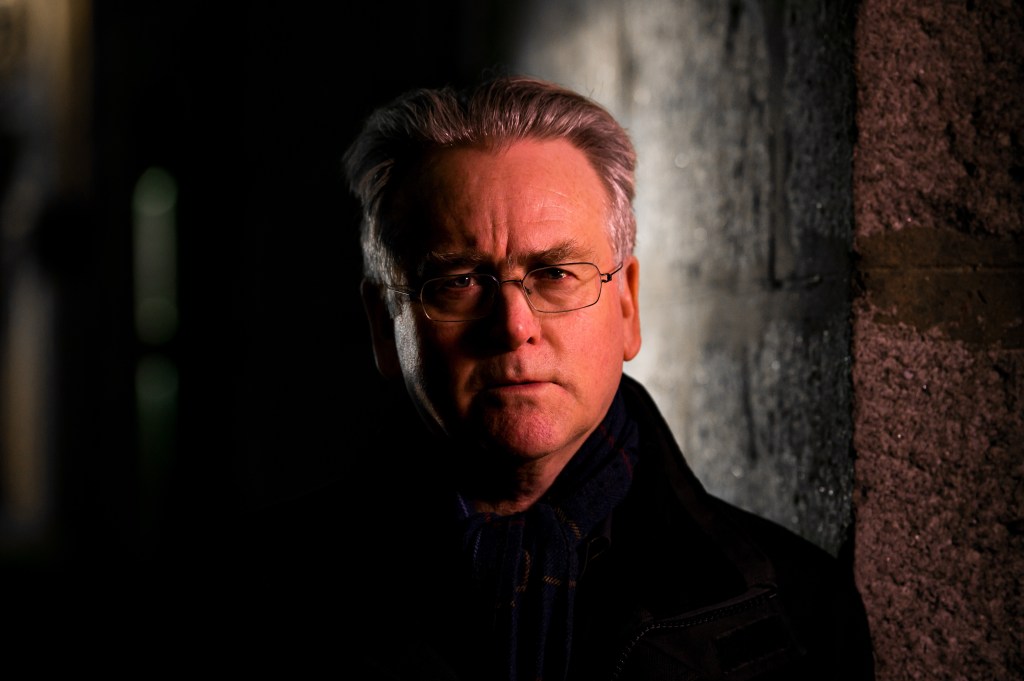
Gunnar Staalesen

I gradually started to bond with Varg, possibly due to the first person narrative; we’re with him all the way because we make discoveries at exactly the same time he does. His narrative can be abrupt at times, but always questioning and challenging those around him. As we experience his inner voice, unedited and raw, we can feel his struggles and the way his personal demons affect his life and his investigations. Yes, he has weaknesses, but his intelligence and determination are undimmed. I felt that, despite these struggles, I was safe with him as a narrator. I was firmly on his side throughout and didn’t doubt his innocence once. I didn’t work out the reasons for the murder, nor the tragic events which followed, but I did feel a constant sense of foreboding even from the first chapter. The author has a good grasp of human nature and how trauma affects people in very different ways. The psychology of addiction was also well observed and I enjoyed seeing Varg’s progress as he tries to recover while investigating a complex and emotional case. His developing relationship with Karen and friendship with Siv are handled with care and a gentleness I didn’t expect.

The case itself is emotive, allowing the reader to learn about Varg’s fragility, as he faces the horror of a child missing for eight years. By taking us back into Varg’s past, we can really see progression in his character; how did he get from there to his current stint in rehab? His previous career in child welfare has left him cynical, but he isn’t completely jaded yet. Everything he has experienced makes him more humane with an automatic reflex to fight for the underdog. I loved his underlying thirst for social justice too, something that could remain hidden from others, behind that calm and focused exterior. Staalesen provides the reader with a steady drip feed of Varg’s discoveries and this pace helps us understand the key characters better, especially where he becomes a nuisance by popping up to question certain people time and again. Even threats and constant police pressure can’t stop him from interfering and he is dogged in his determination to discover the truth. This is not a high octane thriller, but it’s more thorough and compelling because of that. Varg is not one of those showy, ‘on the edge’ investigators either, but the gradual opening up of his character allows us to trust him and truly know him. This felt like to me like a real PI might have worked back in the 1980’s, investing the time and noting the small details that crack a case. We never get the sense, as with other, flashier, P.I. characters, that he is more important than the case. There’s only a hint of fast action and real danger, but it has more impact and authenticity because of that restraint. This is complex, intelligent and authentic storytelling with a hero I enjoyed getting to know.

Posted in Random Things Tours

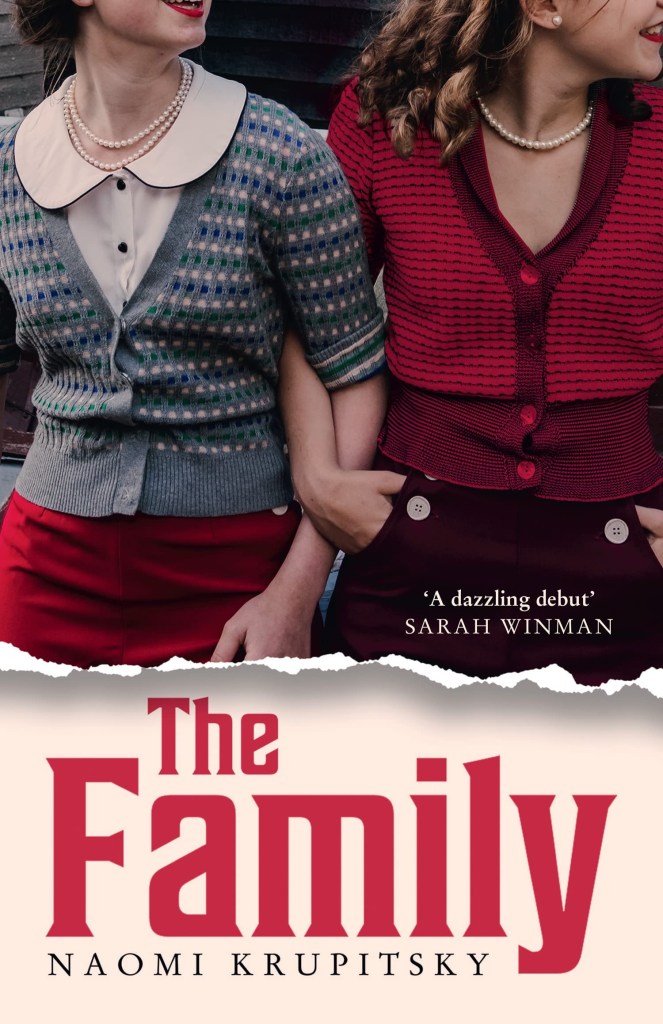
The Family by Naomi Krupitsky

A captivating debut novel about the tangled fates of two best friends and daughters of the Italian mafia, and a coming-of-age story of twentieth-century Brooklyn itself.

Two daughters. Two families. One inescapable fate.

Sofia Colicchio is a free spirit, loud and untamed. Antonia Russo is thoughtful, ever observing the world around her. Best friends since birth, they live in the shadow of their fathers’ unspoken community: the Family. Sunday dinners gather them each week to feast, discuss business, and renew the intoxicating bond borne of blood and love. But the disappearance of Antonia’s father drives a whisper-thin wedge between the girls as they grow into women, wives, mothers, and leaders. And as they push against the boundaries of society’s expectations and fight to preserve their complex but life-sustaining friendship, one fateful night their loyalty to each other and the Family will be tested.

I loved the way Naomi Krupitsky embedded me emotionally into the heart of Sofia and Antonia’s world, two little girls belonging to two Italian immigrant families. However, the term ‘family’ has two meanings in this community: your immediate family, or that you are a family with connections. Sofia Colicchio and Antonia Russo, live in side by side apartments and are best friends. Of course it was pre-ordained that they’d be best friends, because their fathers work together and their mothers were pregnant together. We join them at an innocent time in their lives and they’re both oblivious about what their fathers do, even if they do notice their mother’s tension and even tears when their fathers work late. Sofia and Antonia are focused on playing together, making each other laugh by making up silly games. By bringing the reader into their lives at this age we feel their innocence, and I found myself thinking about my girls and other young family members. I felt bonded to these girls and immediately felt a strong sense of foreboding. What fate might their parents have wrought on these girls?

They have been enough for each other and haven’t needed a wider group of friends, but when they start school that they notice that they are treated differently. On the first day they make friends with two other little girls from the neighbourhood and run towards their mothers at the school gates holding hands with their new playmates. Next day they’re excited to see their new friends again and are surprised when they don’t reciprocate, pointedly joining different girls at lunchtime. It seems that mothers will warn their sons and daughters to stay away from Antonia and Sofia and gossip about their fathers. However, the girls are mostly innocent to the to the world they live in. They don’t know that in 1920s New York City ‘The Family’ and their influence spreads far and wide. They know that on Sundays they have to join other families for lunch with their father’s boss in his huge Manhattan apartment. These children play with them and they’re told to call the men ‘Uncle’, but these people are not blood family, no matter what they call them. The truth shatters their lives one day when Antonia’s father goes missing and his body is never found. Of course the girls don’t understand what the adults know; the reason for the sudden fracture between the Russos and the Colicchios. Of course the truth does come out over the following years, but will the two girls struggle to keep that friendship?

As she turns into a woman, Antonia becomes reserved and sees a different life for herself. She can’t live with the people she knows were responsible for her father’s death. Her mother doesn’t recover from the trauma and as a result Antonia lives a very lonely life. This absence of parental support allows Antonia to slip away from reality into the worlds of her books. She wants to go to university and be someone other than herself. However, not even the loss of her father and the warnings of her mother can stop her heart being won by a Family man. It is love that takes her back to where she comes from. As for Sofia, she never left. She is in awe of The Family and has grown up bold and ambitious. Sofia seems fated to make dangerous, reckless, decisions. Their friendship is distant at times, eroded by the past, but it never seems to break. Underneath the trauma and complicated history, inside these women are two little girls who swore friendship and loyalty to each other. What they have is like a marriage, a promise to always be there even when life’s at it’s toughest. Perhaps it’s an even stronger bond than that. I love how this is a family drama, with the tensions all families have, but the author concentrates on that very specific tension between mother and daughter. Then there’s that outer layer of family, applying yet more pressure and creating a massive fissure between these girls born into something they never asked for. The Mafia is not open to everyone, but once you’re in that’s it. This is family with extra power and benefits, but with a sense of fear that always keeps you looking over your shoulder. With power comes terrifying risks and the knowledge there’s only one way to leave.

This is unlike any other Mafia story I’ve ever read because it concentrates on what it’s like to be female in this most macho of worlds. Here the gender roles are predetermined due to the time period and the set rules of the organisation. It’s a coming-of-age novel where these two girls are always going to be chafing against the confines of the roles the Family will allow. As the story moves from the 1920’s into 1940’s and WW2, we can see how Antonia and Sofia change from young girls to women, but also how society’s expectations of women change in that time period. Krupitsky also writes a realistic portrait of how the Mafia changed during the war. This historical detail and the character of Saul made me think about people fleeing Europe who bring with them their own strong sense of identity. Can they identity survive in a new place, where the opportunities may not always be the escape they were looking for? This made me think of my late husband’s family who ended up displaced separately, affected by their loss and wanting to grow up honouring their heritage, but finding themselves shaped by the society they’ve joined too. I felt so involved in these girl’s lives and the organisation they’ve grown up in, schooled in the essentials of staying loyal and keeping secrets. It was strange to leave their world and I wonder if there will be more from Antonia and Sofia in the future. This is a great Mafia novel, one that sets the organisation in social and historical context, but also gives us a rare female perspective on growing up as a mob daughter.

Meet The Author

Naomi Krupitsky attended NYU’s Gallatin School of Individualized Study and is an assistant editor at the Vida Review and a bookseller at Black Bird Bookstore. She lives in San Francisco
but calls many places home. The Family is her first novel.

Posted in Random Things Tours

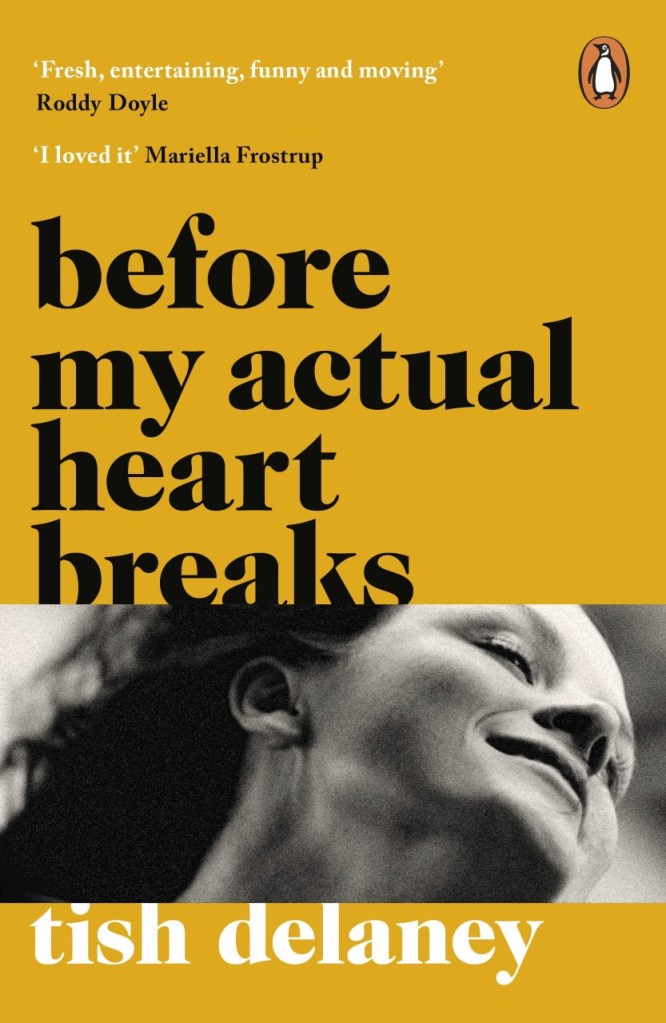
Before My Actual Heart Breaks by Tish Delaney.

‘If I could go back to being sixteen again, I’d do things differently.’

‘Everyone over the age of forty feels like that, you total gom,’ says my best friend Lizzie Magee.

Oh my goodness, my heart did break for the intelligent, spirited and strangely beautiful Mary Rattigan. She is a character who will stay with me, especially the childhood Mary and her battles with Mammy – a woman who I hated so strongly it was as if she was a real person! The Rattigan’s life on her parent’s farm in Ireland is at odds with her romantic and wild nature. She wants to fly. She will not be satisfied until she flies out of her dirty and dangerous surroundings, leaving ‘The Troubles’ behind her. She doesn’t care where she goes, as long as she’s free and lives happily ever after. However, life has a way of grounding us and Mary is no exception. In a life punctuated by marriage, five children, bombings, a long peace process and endless cups of tea Mary learns that a ten minute decision can change a whole life. These lessons are hard won and she’s missed a hundred chances to make a change. Can she ever find the courage to ask for the love she deserves, but has never had?

This book really did play with my emotions and there were times I felt completely wrung out by Mary’s life. It was emotionally and physically exhausting. Her Mammy is physically and psychologically abusive. Not above a slap, when hateful words aren’t having the effect she wants, Mammy is a ‘bitch’. Often turning up at the tea table with a bruised face or black eye, Mary longs for her father to intervene. However, he never opens his mouth, unless it’s to smoke his pipe. She loves him but at the same time, hates him for his silence and his cowardice. Mammy is a hypocrite, playing the perfect Catholic matriarch on the surface – always loving or feeding her sons, cooking perfect chicken roasts for her family and getting out the best china when the priest comes for tea. It broke my heart when she left Mary without tea, then next morning as the boys all line up for their lunch boxes Mary is given an empty one. I felt so emotional for this girl, who doesn’t expect any better. There are two women she can rely on for a little bit of maternal support and love, her Aunt Eileen who ruined herself and now lives with her illegitimate daughter Bernie and Bridget Johns who lives at the next farm across and is always ready with a cuppa and a shoulder to cry on. Both know what’s going on at Mary’s home and have taken her under their wing. Eileen goes as far as bringing the priest down to the farm when she feels Kathleen has gone way too far in disciplining Mary.

I was desperate for Mary’s eventual flight from the farm, following in the footsteps of her brothers. Sadly, she doesn’t get to fly as far as she expects; it seems she swaps one imprisonment for another. The emotionally gutting thing about Mary is that she always has a tiny kernel of hope. She underestimates her mother’s capacity for evil – but as long as everything looks ok to others and the parish priest, then her daughter’s happiness is Mammy’s top priority. There’s a point where Mary knows she’s done wrong, she expects to be punished and is willing to take it, but she hadn’t banked on giving up everything – her dreams, her education, her future. She doesn’t dream that her Dad would let that happen even if she does expect it from her Mammy. As a result she’s more angry with him than anyone. I don’t want you to think that this book is a drag to read. It really isn’t. There are some passages that are hilariously funny. Mary is irreverent, mischievous and has a few sayings that made me laugh out loud. I loved her description of her Mum backing out of the room so she didn’t ‘show her backside to the priest’. I went to a Roman Catholic primary school, but when we moved to a different area for my Dad’s work there wasn’t a school close enough and I went to the local school, followed by a grammar school when I passed my eleven plus. My mum was worried that I wouldn’t have the same teaching I did at primary, so I did lessons at the convent after school. Then I got to go on a Catholic kid’s retreat, in Derbyshire. We did loads of outdoor activities and had mass every evening at 6pm, with a young monk called Declan who everyone fancied and a rather bohemian priest who played guitar and had us singing every night. I remember being very proud that when the bishop came for tea, I was chosen to sit next to him. Our idea of fun was pretending to baptise each other in bed! So, Delaney’s description of Mary’s school holiday felt very familiar and made me laugh.

‘The groups would be mixed so we could hear what boys our own age, from the same religion, and the same class background for the most part, had to say about the Troubles and how they affected life in Carncloon, and what we had to say back. Fascinating stuff. Then after dinner, when we’d settled the cons and cons of people blowing ten bags of shite out of each other on a daily basis for twenty years, we were going to have a sing-song. Hymns and popular folk songs as Father Kevin, apparently, was a dab hand on the guitar’.

There’s a blasé tone to Delaney’s writing about ‘The Troubles’, but it’s clear from Mary’s narration that they have a huge impact on those that live alongside the unpredictability, hate, protests and rising violence. It comes very close to home on a couple of occasions and Delaney describes historical events that I remember vividly, particularly the murder of two undercover police officers who drove into an IRA funeral. I remember the headlines, the pictures and the descriptions of violence that no one could condone and how they caused friction in our family, between the Irish Catholic background of my Mum and the loyalty to the British Army instilled in my father. There were subjects we didn’t venture into or talk about. The hunger strikes were something I was very aware of and the conditions of the Maze Prison. I had a huge amount of admiration for Mo Mowlam who negotiated a peace process despite her cancer diagnosis. I am probably a similar age to Delaney so I felt an affinity with her and understood her. Mary’s need to be loved is so raw she can’t even articulate it. How can she understand or recognise love when she’s never felt it? She has been told she’s nothing, so nothing is what she deserves. Delaney writes about love and the realities of marriage with such wisdom and tenderness that I was rooting for Mary Rattigan till the very last page.

Meet The Author.

Tish Delaney was born and brought up in Northern Ireland at the height of the Troubles. Like a lot of people of her generation, she left the sectarian violence behind by moving to England. After graduating from Manchester University, she moved to London and worked on various magazines and broadsheets as a reporter, reviewer and sub-editor. She left the Financial Times in 2014 to live in the Channel Islands to pursue her career as a writer. Before My Actual Heart Breaks, her debut novel, will be published by Hutchinson in 2021.

Posted in Random Things Tours

On the Edge by Jane Jesmond.

I was thoroughly gripped by this tense thriller set in Cornwall and concerning Jenifry Shaw – an experienced free climber who is in rehabilitation at the start of the novel. She hasn’t finished her voluntary fortnight stay when she’s itching for an excuse to get away and she finds one when her brother Kit calls and asks her to go home. Sure that she has the addiction under control, she drives her Aston down to her home village and since she isn’t expected, chooses to stay at the hotel rather than go straight to her family home. Feeling restless, she decides to try one of her distraction activities and go for a bracing walk along the cliffs. Much later she wakes to darkness. She’s being lashed by wind and rain, seemingly hanging from somewhere on the cliff by a very fragile rope. Every gust of wind buffets her against the surface causing cuts and grazes. She gets her bearings and realises she’s hanging from the viewing platform of the lighthouse. Normally she could climb herself out of this, most natural surfaces have small imperfections and places to grab onto, but this man made structure is completely smooth. Her only chance is to use the rapidly fraying rope to climb back to the platform and pull herself over. She’s only got one go at this though, one jerk and her weight will probably snap the rope – the only thing keeping her from a certain death dashed on the rocks below. She has no choice. She has to try.

I don’t know about you, but my heart was racing and this was just the opening! I thoroughly enjoyed this intense thriller, so much in fact, I read it in one sitting. This was too good to put down. Jen can trust no one, as she tries to investigate her own attempted murder. The dark, taciturn, Nick Crawford has to be dodgy. He’s not from the village and claims to be a carpenter, but Jen has her suspicions that his business is a cover. After all, she should know, she has been dealing with drug dealers her whole life. Could it be him who drugged her, then left her for dead at the lighthouse not knowing about her past; the talent for climbing she inherited from her father and the buzz she’d get from free climbing the seemingly impossible. Even man made structures were no match for her and the rush was incredible, hanging out with other adrenaline junkies – the base jumpers, the parkour and free running enthusiasts. The way the author wrote about this world was fascinating and very beguiling. I’m fond of saying to clients in workshops that as adults we forget to play, I now fulfil that by crafting, sewing and writing stories. My early readers will know that I broke my back when I was 11 doing somersaults in the playground when I should have been high jumping. The author truly made me think of a time before my accident when I was largely free to do as I liked. My brother and I would climb a pair of willow trees, bent so far over one of rural Lincolnshire’s many drainage dykes, that a child could lie full length in them. He would be fishing. I would take a sketchbook or journal and spend the day scribbling or sketching flowers. In the descriptions of Jen’s climbing days I remembered the freedom of a body that was loose and easy to use. The body that took me up Snowdon and other mountains, or went wild swimming and could take on any challenge without fear of pain or exhaustion. Times where it’s just you and nature. Jen promised her brother Kit that she would give up free climbing after a terrible accident left one of their friends paralysed. I understood giving up something that’s such a huge part of who you are and the need to replace that adrenaline rush with something, to self-medicate.

The sense of place was incredible. The author conjured up my Cornwall almost immediately with her descriptions of the tin mine, the crashing sea on the cliffs and fog on the moors. I recognised the sea mist that seems to coat your car and your windows. The weather was hugely important, with storms amping up the tension in the opening chapters and the fog of the final chapters adding to the mystery. Will we find out who is behind the strange and dangerous events Jen has uncovered or will it remain obscured? Cornwall is the perfect place to hide criminal activity, hence the history of smuggling and piracy, so why would it be any different today? Has the cargo changed? I loved that the author wove modern events and concerns into the story, because it helped the story feel current and real. The concerns around development and tourism are all too real for a county, dependent on the money tourism brings, but trying to find a balance where it doesn’t erode the Cornish culture. Local young people are priced out of the property market and we get a sense of that here with Kelly who left to become a dancer until a knee injury forced her home to live with her brother Talan. Kit and Jen both left in order to make their way in life, setting up a climbing business that Jen managed. Yet they are in financial dire straits after Kit and his wife try to renovate the family home into a well-being centre. Jen and Kit’s home, Their house is more of a stately home, but not an attractive one – Jen refers to it as a grey block or brick with none of the embellishments expected of a historic building. Their mum says Kit has renovated the soul from the house, and since the family spend most of their time in the unrenovated kitchen I was inclined to agree. However, without the new business opening and attracting tourists they’ll be ruined. It’s a constant love hate relationship between Cornishman and incomer.

The final chapters, as Jen discovers what’s going on in her home village, is absolutely nail-biting. I was also holding my breath in parts. I won’t give anything away but the revelations are startling and no one is who they seem. I was surprised by most of the twists and it made for a fantastic conclusion. As I usually do with a author thats new to me, I didn’t read any of the promo stuff until I’d finished the book. When I’d recovered from holding my breath, I looked the author up because I was keen to read her back catalogue. Surprisingly, this is her first novel. I’d be incredibly proud of it. It’s well-paced, exciting, and has a great central character who doesn’t need a rescuer. She can save herself. I loved the way the author built atmosphere and that simmering tension that grabs you at the outset and doesn’t let up. I’m not surprised this was picked out of a pile of submissions; it stands out. If this is what Jane Jesmond is opening with, I can’t wait to see what she’s doing next.

Meet the Author

On The Edge is JANE JESMOND’s debut novel and the first in a series featuring dynamic, daredevil protagonist Jen Shaw. Although she was born in Newcastle Upon Tyne, raised in Liverpool and considers herself northern through and through, Jane’s family comes from Cornwall. Her lifelong love of the Cornish landscape and culture inspired the setting of On The Edge. Jane has spent the last thirty years living and working in France. She began writing steadily six or seven years ago and writes every morning in between staring out at the sea and making cups of tea. She also enjoys reading, walking and amateur dramatics and, unlike her daredevil protagonist, is terrified of heights!

Why not check out some more reviews from these lovely bloggers.

Posted in Random Things Tours

The Quiet People by Paul Cleave

Whenever I go to literature festival or author events through my local bookshop, people always ask where the writer gets their ideas from. In the case of crime writers we really want to know, because we’re thinking: is this what real life crime is like? Are there people who commit these terrible (and usually highly creative) crimes? How does the writer know this much about the crimes they depict? We want to know if they have ever been tempted to commit a crime and if anybody could commit the perfect crime, surely it’s people who’ve been writing and researching it for years? They know the pitfalls and have the forensic know-how to get away with it. So,could a crime writer commit the perfect crime? This is the corner that Cam and Lisa Murdoch find themselves in, when their son Zach goes missing one night. As a crime writing duo the two are well known, but live a quiet family life with their son in Christchurch, NZ. In a meltdown the night before, Zach has told his father he wants to run away and in an exasperated moment Cam tells him to go ahead. Could he really have climbed out of the window and gone? Cam and Lisa don’t think so, then when a footprint is found outside his bedroom window their fears are confirmed – this must be an abduction. Yet everyone knows, in child disappearances, the first suspects are always the parents. But will they be the last?

This is my first Paul Cleave novel, and I was drawn in by the premise. We read the story through the narration of Cam and one of the investigating officers DI Rebecca Kent. The chapters are short and alternate between the two perspectives, creating an interesting narrative where one moment I was on the Murdoch’s side and the next moment I could understand the police’s outlook. The first half of the book was really slow, with a drip feed of information. The second half was like a car with no brakes, careering towards an inevitable explosion. I thought DI Kent was a decent, honest officer, with great instincts and a lot of compassion for the Murdochs. I loved being inside her professional mindset, seeing how she kept a polite demeanour with suspects, while questioning or even disbelieving everything they’re telling her. The author shows how every action can have multiple interpretations. Early on in the book, when Zach is playing on a bouncy castle, Cam’s attention wanders for a moment and he can’t see his son anywhere. Frantically looking for him, he goes onto the bouncy castle looking for him, accidentally knocking a girl over in his hurry. He then grabs hold of another boy and tries to show him a picture of Zach on his phone, an actions that’s completely misinterpreted by the boy’s father. Is Cam just an anxious, frantic parent who isn’t thinking clearly or is he a deliberate abuser of children? It depends on who you are in the scenario. Kent keeps an open mind – suspect everyone, expect anything and don’t take one person’s word. She’s always calculating in her head, checking and balancing actions and behaviour.

Cam is an interesting character who goes through an enormous amount of change in the novel. We see how his son’s disappearance slowly alters his personality and he’s hard to root for. It’s as if he’s woken up inside one of his own books, fully experiencing what he might put one of his characters through. He depends on Lisa, his writing mate and wife, but are they going to be made stronger by this tragedy or does it have the power to tear them apart? They certainly have different temperaments, with Lisa being the calmer one, but I was fascinated to see how she would respond when Cam tells her about Zach’s threat to leave and his answer. The author creates such a tense atmosphere building both inside and outside their home. He depicts the frenzied attention around the case of a missing child, that reminded me of the public’s interest in the Madeleine McCann or the Shannon Matthew’s cases. It was horrible to see how the general public congregated outside the family’s homes, shouting for justice and piling pressure on the family and police alike. This chaos was so well depicted in the novel and ended up spawning one of the most explosive and memorable scenes.

This was a compulsive page turner, especially once you reach the half way point. The short, snappy chapters help with this, there’s always that temptation of just one more. There were also brilliant cliff hangers, places where it felt the book was about to end, but didn’t, and then took things in another direction entirely. I loathed the journalist Lockwood who starts out with a vendetta against the Murdochs for apparently stealing a book idea from him. Could he be taking the ultimate revenge? Could the Murdochs really be the villains after all? The truth, when it is finally laid bare, is a massive shock for the reader. I couldn’t have suspected and even DI Kent is completely taken by surprise. This is the sort of case that would never leave the investigating officer and I felt that so much about her would change from this point. I loved the way that Cleave showed the influence of the press and social media on cases that catch the public imagination. No one is innocent until proven guilty any more. Worryingly, it felt like there was no privacy either with devices like mobiles, spy cameras and our addiction to social media placing so much of our private sphere into the world. It also makes things more difficult for Cam and Lisa, who have been recorded at festivals and on TV for a number of years. It’s so easy to watch them and to discredit the couple with a well chosen statement taken totally out of context. It’s also scary to see the influence and tragic consequences that the media circus can have. Although, I did laugh at the pyramid of nuns and priests that turn up in the mob, it’s the image from the book that will stay with me. This was a fascinating thriller, with a complex investigation at it’s centre. Prepare for a twisty tale, full of red herrings and tiny clues, where you’ll struggle to trust anyone.

Meet The Author


Paul Cleave is currently dividing his time between his home city of Christchurch, New Zealand, where all of his novels are set, and Europe, where none of his novels are set. His eight novels have so far been translated into over a dozen languages and nearly 20 territories. He has won the Saint-Maur book festival’s crime novel of the year in France, has been shortlisted for the Ned Kelly award, the Edgar Award, the Barry Award, and has won the Ngaio Marsh award for NZ crime fiction three times.

Posted in Random Things Tours

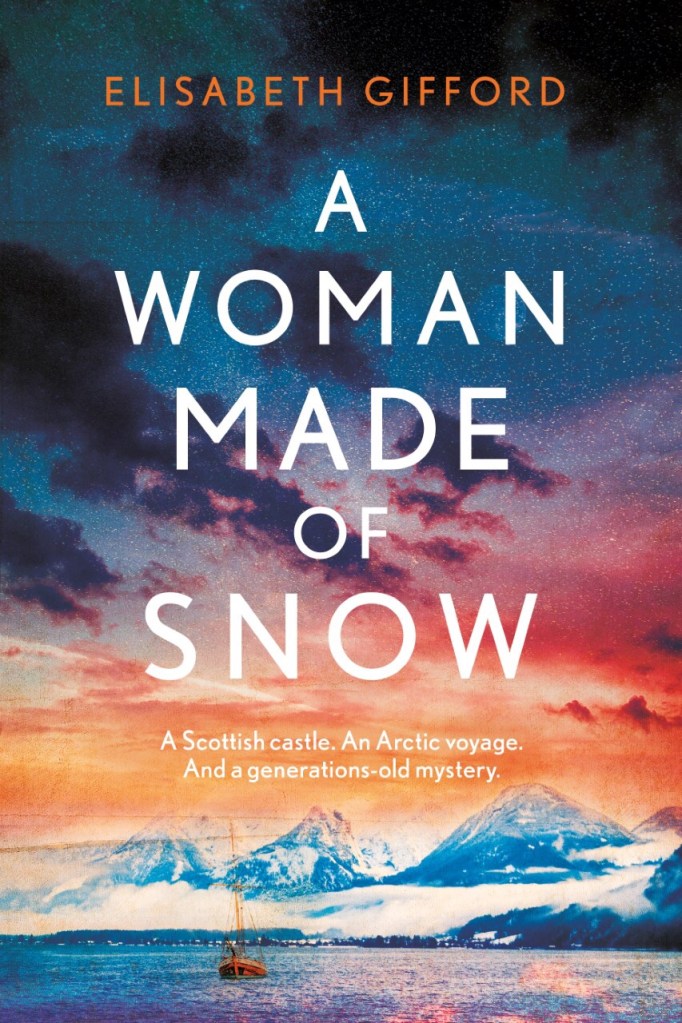
A Woman Made of Snow by Elizabeth Gifford.

I slowly became more and more intrigued by Elizabeth Gifford’s new novel. Even the title whetted my appetite for more of the same beautiful writing that made The Lost Lights of St Kilda such a memorable book. We’re still in Scotland, this is the late 1940’s and our heroine Caro lives with her husband Alasdair and baby Felicity in the Laundry Cottage situated in the grounds of his ancestral home. They met at Cambridge University and married less than six months later much to his mother Martha’s surprise. She was expecting him to marry someone of their class, maybe even their family friend Diana who’s valuing heirlooms at the family’s castle. Caro’s mother-in-law wanted her and Alasdair to live at the castle with her, but Caro wanted a little bit of privacy and distance. At Laundry Cottage she can still be in her dressing down at lunchtime or having a sleep while baby Felicity has a nap. Yet, the past is about to make it’s way into the present both physically and mentally. Caro is asked to research the family archives for a mysterious, missing member of the family. A great-grandmother seems to have been scrubbed from the archives, along with a missing diary from her husband Oliver’s trip to the Arctic. When the Laundry Cottage floods suddenly and workers inspect the Victorian drainage system they find a body of a woman. Could this be the missing bride?

It seems formidable mothers are the norm at Castle Kelly, because when I read the second narrative it took me back to the late Victorian period and tension between Oliver and his mother. From early childhood Louisa and Charlotte Strachan have been summer visitors to the castle and Oliver’s playmates. However, as they get older it’s clear that feelings have developed between Oliver and Louisa. Could she be the missing grandmother from the archives and the body found in the grounds? How come Oliver ended up in the Arctic? What effect will Caro’s findings have on the family and her marriage? With so many questions I was compelled by the story and some of the characters caught up in these dramatic circumstances. Also the historical shifts behind these stories was fascinating too, showing how much the world changed over two world wars.

Caro is such a sympathetic character and I felt immediately on her side in this very difficult situation she finds herself in. She’s an intelligent woman and understands a lot about how the world is changing. Her expectation of life after the war is that she and Alasdair will live in London as lecturers at one of the city’s universities. She didn’t bank on having Felicity so quickly or for Alasdair’s only offer of employment coming from St Andrew’s university. She describes feeling ‘ambushed’ by her own fertility, but she loves Felicity and wants to be a good Mum. I understood her need to be separate from the castle – it’s a compromise between his obligations and the total freedom they expected in London. I also empathised with her feelings of struggling as a new mum and being isolated from everyone and everything she knows. It’s a huge leap from being organised, full of energy, totally independent and career minded, to living in a cottage with a new baby feeling tired and slightly inadequate. She can’t understand why looking after Felicity seems so arduous and exhausting, when she’s always been so lively and alert. She also finds her emotions difficult; she’s struggling to understand why she wants to keep mother-in-law Martha at bay, or why she feels threatened by the presence of Diana. Her interest in the missing grandmother is linked to these emotions, maybe they were both outsiders in this family. It’s painful to her when she hears Martha say she’d hoped Alasdair would marry someone of his own class, surely those barriers don’t exist any more?

When I started to compare it with the 1940’s I could see that there is change, but within the Gillan family it has been minimal compared to the rest of society. Early in the novel Caro remarks that ‘she was secretly rather proud of her ability to make good friends across the classes’ because ‘once the war was over, class was not going to mean anything after all the country had been through together’. This was probably true in more metropolitan areas, but it hasn’t reached the upper class residents of rural Scotland. Martha is trying, but her true feelings are old-fashioned. The mistress of Kelly Castle in the Victorian period is Sylvia and she resents her husband’s adherence to an old obligation. He invites the daughters of old family friends, Charlotte and Louisa Strachan, to the castle every summer. Whereas Louisa tries desperately to fit in, Charlotte is a more fiery and independent character and I fell in love with her. As soon as she cut her own hair off I knew I would enjoy her way of being in the world.

To Sylvia’s disgust, Charlotte brings a young girl called Mary into the children’s circle. They run wild in the grounds and don’t seem to notice the differences between them. This changes as they get older until one summer Mary’s aunt asks Charlotte not to run in and out of Laundry Cottage where they live, tempting Mary to play when this year she had to work. As far as Sylvia’s concerned the girl is lucky to be merely helping her aunt, because the true destiny of the poor girls of Dundee is in the jute mills that pay for Kelly Castle. When Charlotte defies her, bringing Mary along on an outing to see the family’s new whaling ship and dinner in the Castle Hotel. When Sylvia asks Charlotte to remove her beret at dinner, she sees her unseemly cropped hair. Charlotte knows a punishment is coming, but what her aunt does next makes her sick and heartbroken. Without any emotion she tells the driver to take them home via the jute mill. There, she ushers Mary into the office as a new mill girl for the foreman to set to work. Sylvia has wanted Mary in her proper place for some time, but the opportunity to put Charlotte in her place at the same time was too good to miss. Charlotte is devastated. Sylvia now has to find a way of dealing with the Strachan girls, she has her eye on a young lady for Oliver and she doesn’t want her plans scuppered by a crush on someone unsuitable.

I found it interesting how patterns seemed to have formed down the generations. Some brides were suitable to be the next mistress of Kelly Castle, and others were not. Caro’s mother-in-law kept her misgivings and disappointment over her son’s choice to private conversations. Sylvia had been so determined and cruel in her treatment of Charlotte and Louisa that I wondered what fate awaited Oliver’s unsuitable bride, whoever she was. Since there are family rumours surrounding the Arctic voyage with hints of cannibalism, I was worried for this unnamed woman.

This author always creates an incredible sense of place and the beautifully atmospheric opening is reminiscent of Daphne Du Maurier’s Rebecca and the ghostly walk up the drive of Manderley. A woman sees Caro and tries to call out to her from her place beneath the earth.

‘Wrapped in darkness beneath the trees I watch rain falling on the earth where I have slept for so long. Light from the Cottage windows stretches across the lawns, but it does not reach me. Find me, I whisper. Give me my name.’

Her need for Caro to hear her showed a spirit undimmed by death. I was really interested in this and the theme of women being controlled or even erased by forces or expectations beyond their control. As the unnamed woman sits beneath the earth, Caro feels removed from the life she wanted by motherhood. Mary is taken from a carefree childhood to the responsibilities and restrictions of adulthood overnight. It had been hoped that she might be given a maid’s position in the castle, but her destiny is at the jute mill. Charlotte isn’t even allowed to cut her hair, and she hates the prissy dresses she’s expected to wear as a guest of the Gillan family. She doesn’t understand why her friendship with Oliver has to change, just because she’s older.

‘Angry tears pricked her eyes.While they were away at school that year it seemed that someone had decreed that childhood was over, a closing down of what a girl may or may not do – and a forewarning of the hardening of roles to come that she saw in the lives of the adults around her. Well, Charlotte was not going to accept it. She would stay true to herself and true to the things she loved.’

I was sad for her, and her sister Louisa. It’s interesting to see how both girls react to the effects of being from a poorer and lower class background. I was compelled to read on and find out about these girls in adulthood, not just their relationship with Oliver, but how they were making their way in the world. I wanted Charlotte to have retained that fire and attitude and hoped that circumstances hadn’t tamed her. There is just so much to love about this novel: the well written characters; the intriguing mystery of the unnamed woman; the depth of research into the two time periods especially into societal changes, class difference and the lives of women. I heartily recommend it to all lovers of historical fiction, women’s lives and family secrets. This is one of those books that I loved so much, I will be buying a finished copy, despite having the proof. It’s so atmospheric, romantic, and deeply poignant.

Meet The Author.

Elisabeth Gifford grew up in a vicarage in the industrial Midlands. She studied French literature and world religions at Leeds University. She has a Diploma in Creative Writing from Oxford OUDCE and an MA in Creative Writing from Royal Holloway. She is married with three children, and lives in Kingston upon Thames. A Woman Made of Snow is her fifth novel.

Posted in Random Things Tours

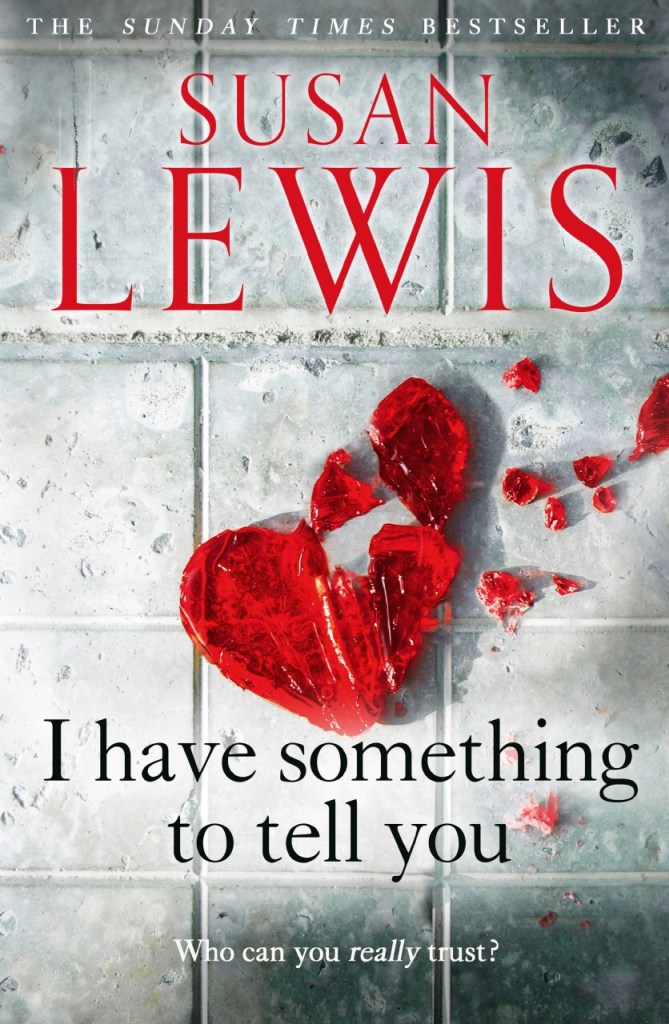
I’ve Got Something To Tell You by Susan Lewis.

With her usual focus on families and relationships, this prolific author has turned her hand to crime fiction for new novel I Have Something To Tell You and she’s created a very competent murder mystery. Jay and her husband Tom work in the law; Jay is the senior solicitor in her father’s old law firm and Tom is a barrister in chambers across town. They live in Clifton, and have two teenage children who are very excited to be taking a gap year in their education and going travelling. When a new case comes to Jay, everything in her perfect world starts to shift. Edward Blake, local architect and property developer, has been arrested for the murder of his wife Vanessa. The details are perfect tabloid fodder, young beautiful wife is found strapped to her bed with stirrup straps, naked and it looks like she’s been strangled. Jay knows this is going to be an interesting case and immediately leaves for the police station, where she meet DI Ken Bright and his right hand woman DS Hamble. He’s quite clear that it does not look good for her client. Last night he had arrived home, realised his wife was not there but didn’t find that odd. Possibly because their house splits at the top of the stairs – to the right is a master bedroom suite where Edward Blake retires and to the left the guest bedrooms. It is only the next morning when Blake starts to become concerned for his wife’s welfare and when checking the guest bedrooms, just in case she came in late and didn’t want to disturb him, he finds his wife’s body. He now finds himself the prime suspect and he’s relying on Jay to keep him out of jail. Who has killed Vanessa and can Jay succeed in helping her client?

I enjoyed the double storyline, as time was split equally between the case and Jay’s personal life which hits rock bottom as she works with her client. With their children’s imminent departure on their travels, Jay and husband Tom have been looking forward to some quality time together. Both work long hours and this is their chance to slow down, maybe take some time off here and there, and start to enjoy their time together again. Daughter Liv has been struggling in an ‘on again – off again’ relationship with the son of one of their friends and Jay is there as a listening ear. However, it’s Tom who lobs an absolute bombshell into their lives and we get to see how Jay copes under the double pressure of a tough murder case, and trouble at home. At home Jay finds it difficult to sleep and to keep her head. At least work, tough as it is, gives her some respite from troubles at home. She finds an unlikely listener in her client, no matter what state his case is in, Blake notices if Jay is off colour or has things on her mind. He enquires whether she is ok and Jay admits to feeling emotional and being concerned for her marriage. However, this is only a moment of weakness, I was fascinated by the way Jay is usually able to put her game face on and lose herself in the case, undertaking investigations with her trusty P.I. Joe, and becoming embroiled in all the twists and turns.

I thought I’d identified the murderer at the halfway point, but I got it wrong which was a great surprise. Blake and Vanessa’s lives were complicated by another death in the family, and grief had eaten away at their lives and relationship. Vanessa is very troubled and vulnerable from that point on. I found myself a little uneasy with Blake and his position as ‘victim’ in their marital problems. Motives range from sexual jealousy to wrangling over money and potential inheritance. We meet a whole host of characters during the investigation, some of them real horrors that it must have been great fun to write. Vanessa’s stepmother sticks in my mind, because she’s a manipulative and vindictive old woman. She’s sitting on a fortune thanks to the ruined, Gothic, pile she insists on living in even though she can barely afford to heat it. This should be inherited by Vanessa, but could other members of the family have resented that? Especially since Blake and Vanessa already own three incredible properties where they live.

The author pitched her characters perfectly, whether it’s the professional, middle-classes or those who’ve had their money a bit longer. These characters all have beautiful, elegant, homes that sport giant kitchens/ family rooms where they can cook, dine and watch TV together. Blake’s a property developer so his own home is spectacular and very seductive. It’s real Country Homes and Interiors perfection, with it’s well placed riding boots in the hallway and bifold doors in the rear extension with incredible views of the Cotswolds. I wanted to live there. I’d have even taken the guest bedroom where the body was found! Each character had something that made the reader suspicious of them, and I looked forward to each new revelation in the case. I liked Jay’s relationship with her investigator Joe, ex police officer and friend of her father’s, he is a solid presence in her life when everything else is shifting. The author brings in themes of empty nest syndrome, infidelity, betrayal, and the impact of trauma. I thought her portrayal of long-term relationships was probably very realistic. She showed how we change as we get older, but also how life events change people and their priorities, creating the potential to derail even the strongest of marriages. The ending was unexpected, leaving one final twist for last which is always satisfying and not tying up every loose end neatly in a bow. This was an enjoyable read and a successful foray into crime fiction and domestic noir.

Published 16th Sept by Harper Collins.

Posted in Monthly Wrap Up

Books of the Month! August 2021.

This month’s reading has been less frenetic than the last two months. There are a couple of reasons for this: I consciously wanted to take on less blog tours; I was expecting to have a procedure on my spine this week. Then crashing into this came my father’s illness flaring up and I’m still supporting my husband who has been struggling with PTSD. There’s always a lot going on in life, but this was just too much. I couldn’t think clearly, so reading anything that I hadn’t chosen was a chore. So aside from books I’d already read and had scheduled, I decided to spend the rest of the month reading exactly what I wanted. I’ve enjoyed just browsing the (overstuffed) shelves and picking something out purely because it suited mood. After a literature degree and half way through an MA, I’ve learned to read things I’m not enjoying or find challenging, but this month life was challenging enough. I didn’t have my procedure in the end, but I know it will happen soon. Things have settled but I am continuing to choose blog tours carefully and instead get through my proofs and the NetGalley checklist for the next couple of months. These were my favourite reads for August.

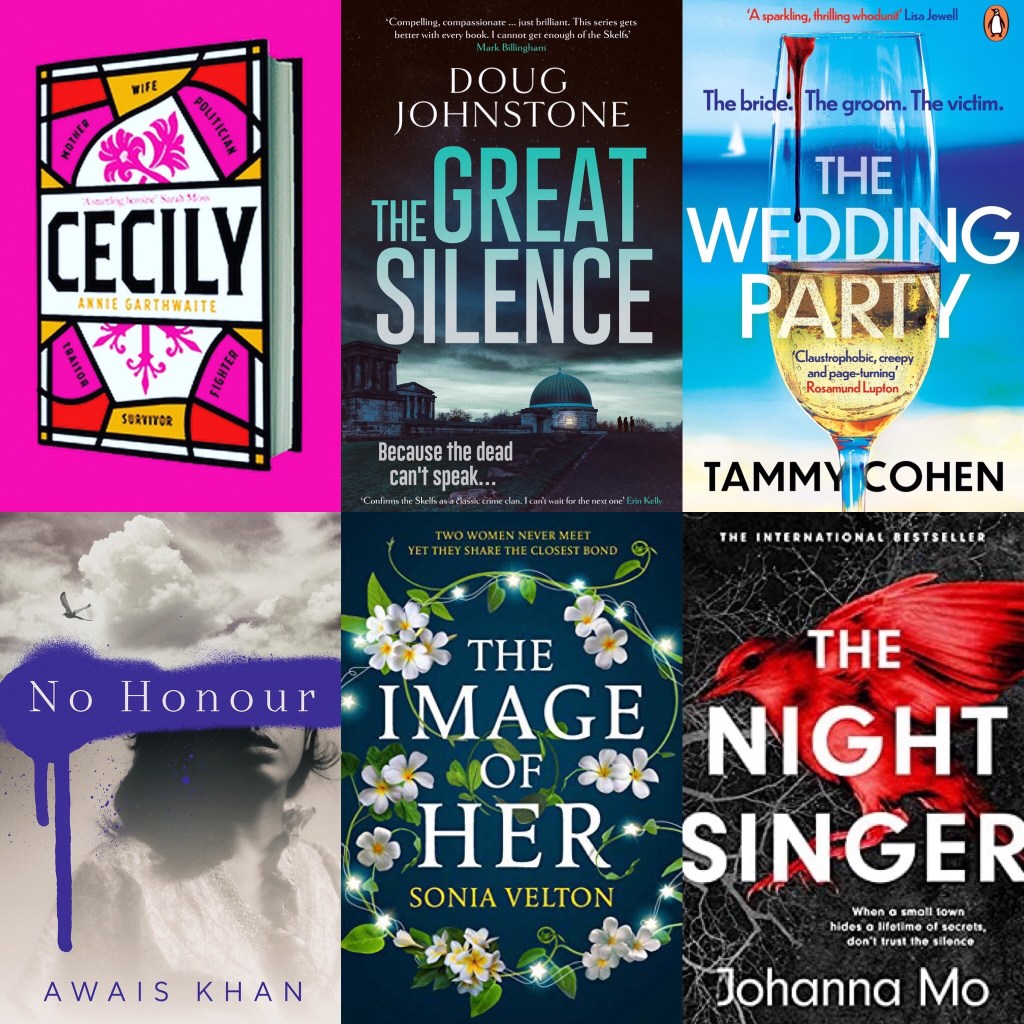
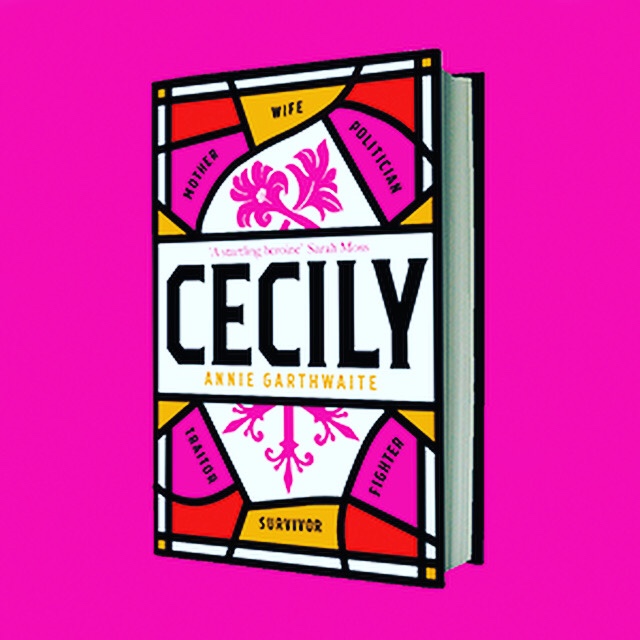
Cecily was a fascinating read about a woman I didn’t know well, but who turned out to be an ancestor of mine. Her grandmother was Katherine Swynford who was the mistress then the wife of John of Gaunt, Earl of Lancaster. She lived in Lincolnshire at Kettlethorpe Hall which is about seven miles from me. She’s now buried at Lincoln Cathedral with her eldest daughter Joan, who happens to be Cecily’s mother and my great-great-great (x infinity) grandmother too. It was fascinating to meet this strong, principled woman who has much more political sway than I imagined. Beginning with her front row seat at the execution of Joan of Arc, we see Cecily’s resolve in her determination to witness the event, to not look away. We then delve into the court of Henry VI and see the beginnings of the cousin’s war, with Cecily firmly on the white rose side of Yorkshire. She gives birth to two kings of England, lived to see her granddaughter marry Henry VII combining the houses of York and Lancaster, and was great-grandmother to Henry VIII. There is so much more to her story, this is just background, so if you love strong heroines and the intrigues of the Royal court this is the one for you.

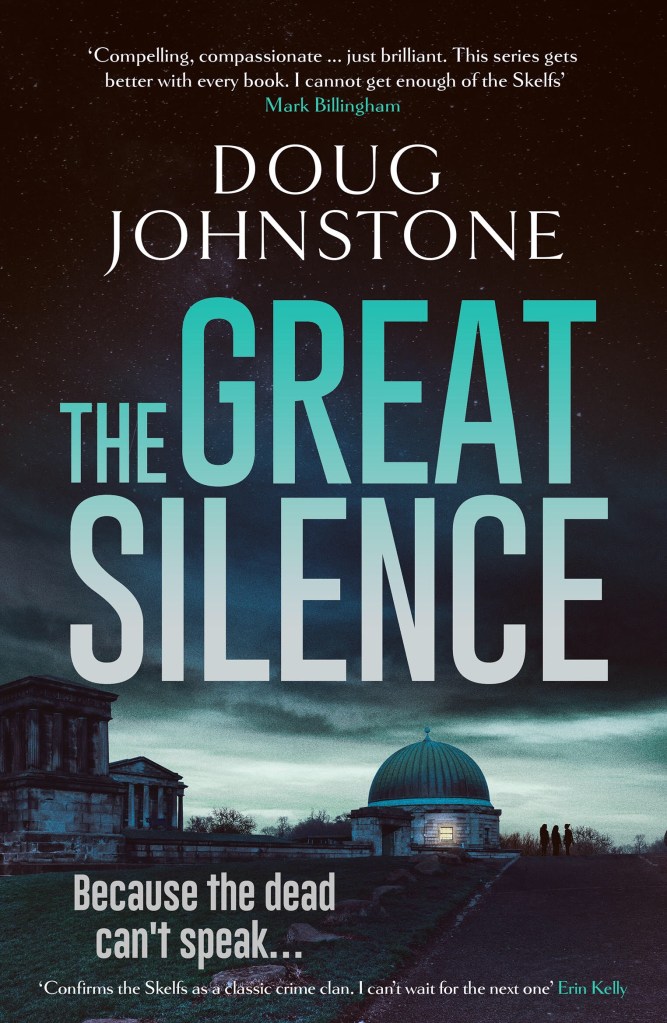
I’m sure regular readers are totally fed up of me banging on about how wonderful the Skelfs are, but I’m never going to stop. There are more feisty women here, in fact a whole family of them. Dorothy is the grandmother and she runs the family funeral business from her home in Edinburgh. Daughter Jenny also lives above the business, but she concentrates on the private investigation business. Granddaughter Hannah lives with her girlfriend Indy, and is just starting her PhD in the astrophysics department. The book starts with a curious find, when the Skelf’s dog fetches a human foot in the park! This sets Dorothy on a mission to find out where it came from and what had been chewing it. Hannah is investigating for her supervisor, because he’s had a reply to one of his messages sent into outer space. Aliens have never contacted us before – the Great Silence of the title – so why now and who could it be really? Finally, Jenny is investigating an elderly lady who appears to have an a Italian gigolo. Yet, her ex- husband Craig still looms large. Could he have escaped prison and gone into hiding somewhere close to home? Doug Johnstone is a magician who holds the threads of these stories and combines them in perfect harmony. His women are real and quirky – pensioner Dorothy teaches drumming, goes to clubs, has a younger lover and thinks nothing of stepping into danger when necessary. I love the calm, quiet Indy too. Gritty, feminist, philosophical and a great crime novel.

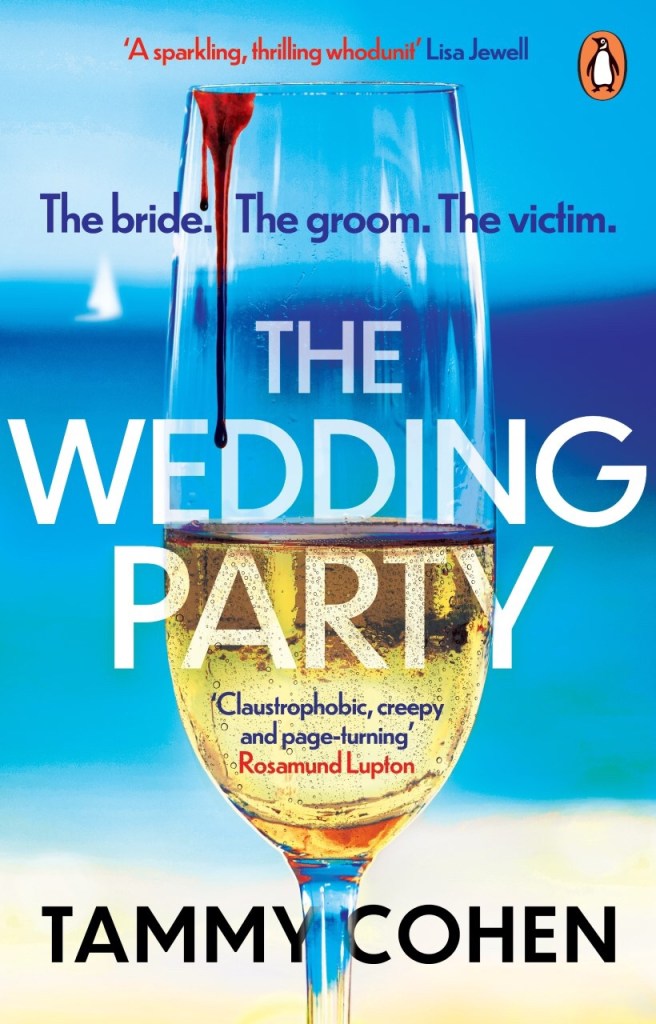
Tammy Cohen was a new author for me, so I was pleased to have the time to try her novel The Wedding Party. Lucy and Jade are getting married in Kefalonia, and thanks to her eye for detail everything is going to be perfect. It’s close family and friends only, so the only wild card should be her sister Jess who has never really played by anyone else’s rules. There are a couple of last minute hitches – Jess pulls a double whammy by wearing a psychedelic dress instead of the dusky pink they agreed for the matron of honour and brings a random stranger she met the day before. Jase’s mum could have caused another row by turning up in a white dress – ‘it’s called bone darling’. Lucy manages to overlook these setbacks, she’s more worried about the costs that have really added up alarmingly. Wedding planner Nina is asking for the next instalment, but she’s got her own problems involving money lenders. In-between the wedding weekend chapters, there are transcripts of police interviews so we know there’s an incident to come. The writer sets each character up so we can see their secrets, but which ones will be exposed? We also get to know a character through their therapy journal, with a terrible upbringing and so much trauma to process, what chaos will she bring to the wedding? More to the point, who is she? Also, who is the old lady they see washing her breasts in the airport toilets and why is she hanging around them in worryingly immodest swimwear? This is a great thriller, and is appallingly addictive. I read it in four hours straight one Sunday. It also left a lasting impression with regards to not judging others and being kind. This was like opening a big bar of chocolate in my house; dangerous, delicious and you know everyone will love it.

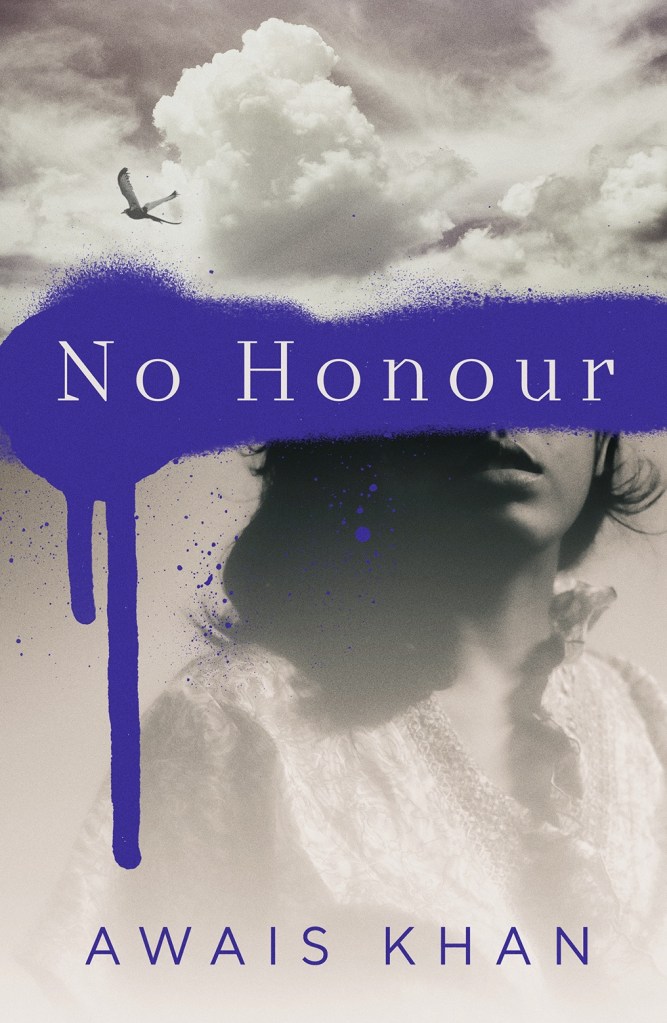
This is an incredible story of one girl’s fight to be who she is and make her own decisions about her life. Awais Khan has written a compelling story around the issue of honour killings in Pakistan. There are thought to be around 1000 of these killings every year in the country, and these are just the ones that the authorities get to know about. In an interview with EasternEye.com Khan said he’d chosen fiction to tell this story instead of non-fiction or journalism, because it has room for imagination, but also creativity and it’s his creation of this wonderful character Abida, that brings to life the real horror of how women can be treated in Pakistan. Through falling in love with her spirit and determination, we feel connected and emotional about what she goes through. Some scenes are tough to read, but they need to be. I will hold up my hand and say I didn’t fully understand the moral code that allows a man to feel honour at killing one of their own. However, in such a deeply patriarchal society a woman loses her honour through immodesty – dressing in a Western way, staying out late, meeting with a man, sexual activity before marriage, refusing an arranged marriage. A man’s honour is based on his masculinity and that means being the head of his house, but by ignoring an immodest woman in the family their honour is lost. What’s most moving though, is Abida’s father Jamil and his quest to find his daughter. That one man is willing to stand up for his daughter, rather than obey an outdated code of masculinity, means so much. Their relationship is like an oasis within what she goes through. Hard hitting, but ultimately very uplifting.

I’ve waited a little while to read this one, through lack of time and too many blog tours. It was a wonderful surprise with its depth of characterisation and psychological insight. Connie and Stella are strangers. They live thousands of miles apart, but two traumatic events bring the two of them together and they begin to talk. When they come together, it’s in a way nobody would expect. Connie lives in Dubai with her husband and children, struggling to get used to being an ex-pat, not working, and the social injustice she sees. Stella is sole carer for her mother, a smothering narcissist who is now struggling with dementia. As Stella recovers from her trauma she finds it hard to talk about it, but feels like she’s talking to Connie in her head, so it’s easier. I really enjoyed this exploration of identity and how we construct our ‘self’. The characters tell the story and I felt completely drawn into their world. I thought the author really explained what happens when there’s a gap between who we are and who we present to the world. Very different to her debut novel, but showed the author’s range and skill. Will linger long after you’ve read the final page.

This was another novel I’d been wanting to read for a long time and in one of my favourite genres – Scandi Noir. This is the first in the author’s Island Murders trilogy, which is already a hit in the author’s native Sweden. We follow detective Hannah Duncker as she returns to her home town, a place where she’s renowned for being the murderer Lars Duncker’s daughter. Needless to say not everyone is happy to have her back in town. Her first case brings another blast from the past when she realises that the victim is the son of her best school friend Rebecka. It’s well known that Rebecka’s ex-husband Axel was violent towards her, so they need to talk to him, but he seems antagonised by the police and Hannah in particular. Could he have killed his own son? Told in dual timelines, we follow Hannah and the investigation as well as the 24 hours before Joel’s death, told entirely from his perspective. The reason I originally started to read and watch Scandi Noir, was because it depicted how violent crime affected the families and friends involved. Instead of an action-packed macho thriller, this book used a more feminine gaze, choosing to show the devastation caused emotionally instead. From Joel’s nuclear family and slowly tracking outwards to friends, teachers, neighbours we see all the victims of a murder. As each narrative came closer to revealing the answers, the tension started to build. I thought the story dealt with a very timely issue and all aspects of the case felt well resolved. However, when it came to Hanna’s own story, there were enough loose ends left to explore in more detail over the next couple of books. I would recommend this to all crime lovers, but particularly those who enjoy an intelligent, complex and emotional crime novel that focuses on the victims rather than fetishising the killer.

A Look Ahead to September

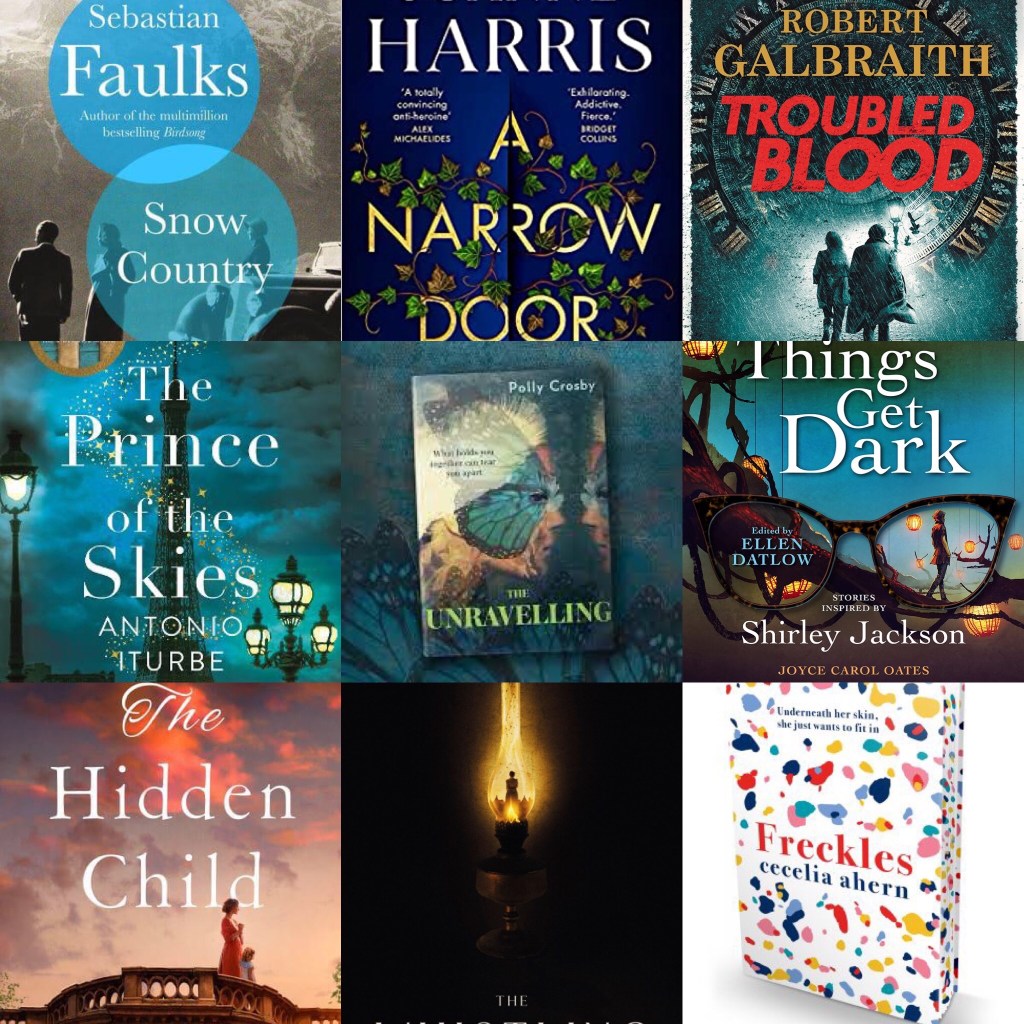
So, with less to read for blog tours I will be concentrating on proofs and NetGalley this coming month. Here are some of the books I’m hoping to read next month, some of which have a slightly autumnal feel and look forward to Halloween.

Happy Reading ❤️📚