Posted in Random Things Tours

The Art of Creativity: Seven Powerful Habits to Unlock Your True Potential by Susie Pearl.

I was so excited to be offered a copy of this book to review because, when I’m not blogging, I’m a counsellor and writing therapist. Trying to unblock people’s potential is exactly what I do. I’m in the middle of an MA in Creative Writing and Well-being, so I’m also discovering the blocks to my own creativity too. I was looking forward to getting stuck into some of the exercises in Susie’s book and I was delighted to find they were more in depth and helpful than expected. They don’t just delve into the psyche, but give solid, practical advice too. This works like a one stop guide to taking risks, ignoring critics, releasing blocks and forming daily creative habits. It looks after the artist physically, mentally and even spiritually. I had expected a simple gift book, but it soon proved this was much more than that.

One exercise involved confronting fear and I decided to try this out because I have a lot of fears around the creative process – mainly lack of confidence in my writing ability, fear of revealing too much, offending someone or just embarrassing myself. Being an artist exposes us, not just to criticism, but to being really seen as we are – good and bad bits. It was interesting to write about things I fear – I have a terrible fear of clowns thanks to Stephen King – but in writing about it I realised it’s not the clown, but the disguise that’s the problem. Any sort of mask, face make-up or disguise had a similar effect. It’s a fear of people not being authentic, not showing me their true selves. So, the very thing I fear in other people, is what I fear in my writing. I had to ask if maybe I was the one wearing the disguise. I was then asked to use a journal to answer questions about the creative process and what scares me about it, and what my inner voice was like. I remembered trying a different handwriting when I was at primary school, only to have my work held up as an example of what not to do with our work. By trying something different I had ruined my work and needed to return to my usual writing. I remembered being so embarrassed. The same teacher used to make us do Mastermind every Friday morning where we would sit in a black chair at the front of the class and he would fire times tables sums at us on the clock. I used to dread Friday mornings and wanted to be ill so I didn’t have to take part. To move forward I need to work out my negative core beliefs about my creativity and then challenge them with positive affirmations.

Since encouraging people to journal is a major part of the work I do – in fact I’ve been teaching journaling and scrapbooking for mental health for eight years now – I was pleased to see it here as a cornerstone for creativity. I loved this explanation of why it works:

Allowing ideas and words to flow naturally from your brain to the page, without editing, helps the unconscious mind to swim to the surface and become seen and heard.’

It allows us to explore unfettered, not only the contents of our day and how we’re feeling, but in a creative context to explore what stops us creating. Surely if we can journal, we can write? The author suggests we use lists to determine what creative activity we want to do, list everything we think stops us from carrying this out, whether it’s an internal or external block. Then we can work out and suggest solutions for these blocks – I often find it helps to imagine to blocks and issues belong to someone else because that gives us the right mindset to solve them. If solving our own issues, we can have unconscious blocks that follow us even into our journal. In fact the author herself suggests it can help to imagine we are trying to help a friend rather than answering our own problems.
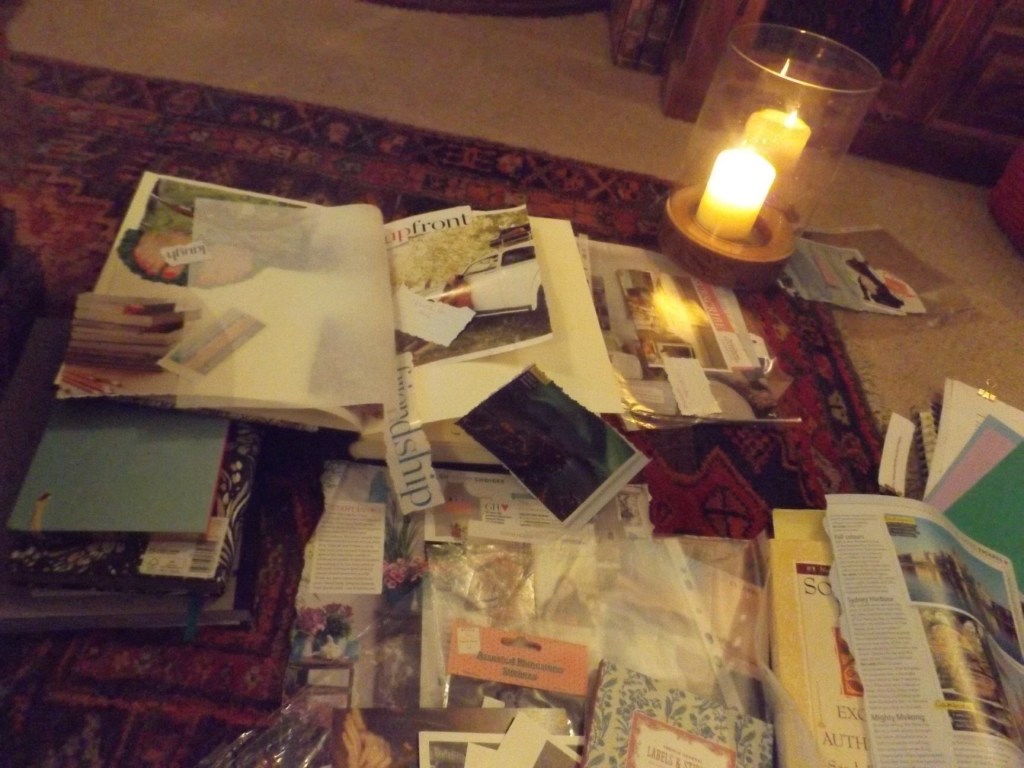
Scrapbooking on my authentic self

For me, the most useful section on a practical level is the section on mind maps. I am currently writing a series of pieces for my MA that explore my experiences nursing my late husband, but also the dynamics within his family and their flight from Poland during WW2. I hope that this will become a novel, because I have always wanted to be a writer. The author suggests a mind map and I use my scrapbook for these so I can use colour and collage and make it a piece of art in its own right. I want it to inspire me when I’m struggling, so aim to use family photos and pictures of the places I need to research or visit. She suggests using meditation for 15 minutes before starting, something I do in writing workshops because it stops chatter, calms the room and lets people focus on their own intentions. Usefully, she suggests key questions to ask yourself such as key themes, chapters and intention. However, she also suggests including questions about yourself such as – what are my unique credentials for writing this book? Why does it need to be written? What has inspired me to write this book? These are really positive questions because they get us to think positively about our skills and knowledge and can be used as encouragement when we’re feeling like we don’t have the skills, knowledge, or talent to do this! Something all writers feel at times.

At the back there’s a brilliant section on references and further reading that I know are really helpful because they’re all in my reference library at home. I think this is a really useful little book, great to fit in a bag to carry with you and will be useful for the future, not just as you work through it the first time. I’m looking forward to using it alongside my upcoming work, but also adding it to the libraries of other potential creators I know. It delivers much more than it promises as first glance. The most important concept it introduces is that of the ‘flow-state’ – ‘the mental state of being completely immersed in a task’. This stage isn’t just important for people creating a specific piece of work, because it links to that other buzz word for mental well-being- mindfulness. When we become so immersed in a task we lose track of time, we are practising mindfulness because we’re focused on only one thing at a time. We’re not checking the time, or social media and becoming distracted by everyday cares. We are simply being. This is something that everyone can benefit from.

Completed collages

Connect with the author by signing up for a newsletter at:

http://www.susiepearl.com

You can also connect with her at:

@susiepearlwriter

info@susiepearl.com

Posted in Random Things Tours

Winterkill by Ragnar Jonasson (Dark Iceland Book 6).

Publisher: Orenda Books (21 Jan. 2021)

ISBN:1913193446

When given the opportunity to read an Orenda book I rarely pass it up. My only misgiving with this one, was that it was the sixth in a series I didn’t know whether I’d ever be able to catch up and fully understand what was going on. Once I’d done my research and read a few reviews of the Dark Iceland series, I was in! Described as ‘creepy, chilling and perceptive’ by Ian Rankin and full of ‘poetic beauty’ by Peter James, this instalment comes highly recommended. The New York Times review blew me away and made this a must read.

Jónasson’s true gift is for describing the daunting beauty of the fierce setting, lashed by blinding snowstorms that smother the village in a thick, white darkness that is strangely comforting’ New York Times

That image of the setting grabbed me because I’ve lived in some isolated locations here in the U.K. and have written myself about that strange sense of safety a huge snow fall brings. All falls quiet and you are safe, sheltered and warm. The world becomes muffled as you are slowly cut off from civilisation, under a think blanket. I knew I would connect with the setting at least. Of course, I shouldn’t have worried, because this was a great read in its own right and I managed perfectly well without the reading the others first – obviously as soon as I finished this one I ordered them all since so I could have an Orenda Christmas!

The hero of the Dark Iceland series is Ari Thor Arason, the police inspector of a small town in Iceland called Siglufjörður. He is recently separated from his girlfriend, who now lives in Sweden with their three year old son. As Easter approaches Ari Thor is looking forward to spending some time with them both when they come to stay for the weekend. However his plans are thrown into disarray when the body of a young girl turns up to claim his attention. A nineteen year old girl appears to have jumped from the balcony of a building, but seems to have no connection to anyone who lives there. Why would she travel to this particular building to commit suicide? Ari can’t help wondering and his wondering leads him to dig a little deeper and find out whether she was pushed. His suspicions are aroused further when an old flame, now working in a local nursing home, gives him a call because she’s concerned about an elderly resident. She shows Ari the old man’s room, and he’s shocked to see the words ‘she was murdered’ written over and over again. As a huge storm heads towards Siglufjörður, Ari is left pondering whether these two events are connected and also whether he can salvage his family or even reconcile any sort of private life with his job.

Ari Thor isn’t an ‘action man’ type hero, he’s thoughtful, perceptive and investigates gently. The awkwardness of his Easter plans are really painful; he books his ex-partner and son in at the hotel, but is excited when they want to stay at the house. Ari misunderstands and thinks they might all stay together, but he ends up in the hotel. He feels excluded, but also awkward as other guests and staff know him well (this is a small remote town after all). He wonders what they will be thinking about their local detective. He knows that the job he loves has to command all his attention, when an important case comes in and so does his estranged partner. However, there is a large gap between knowing this and the reality of living it. Can he ever promise his family what they need? This conflict becomes ever clearer over the weekend when he is pulled from one place to another as new evidence comes to light.

I loved the atmosphere of this small town, where everyone knows each other. Yet there’s also the uneasy thought that many residents could be in this remote place to disappear and keep secrets. There’s so much going on under that polite layer of familiarity, even where Ari thinks he knows someone well. In one sense Siglufjörður has changed enormously, new road links have made it more accessible so even tourists have started to visit for ski-ing and to stay in new luxury holiday chalets. However, once the blizzard descends it becomes bleak, remote and strangely more beautiful. Ari’s investigation takes him into the even more rural area of Siglunes, where two men live in a small wood cabin inaccessible by road. I found Siglunes quite sinister, but Siglufjörður feels remote too and even claustrophobic as the weather pulls in. The author skilfully ratchets the tension up a notch, just at the same time as the community becomes more isolated. Yet we never feel rushed, Ari Thor does not panic or hurry the investigation- every move is well thought out and measured and he shows great compassion to the bereaved and those involved.

I thought it was so clever that, without knowing it at first, Ari is slowly uncovering more than one crime. We are forced to learn the lesson that people are not always what they seem, as the manager of the nursing home is called on for questioning. Ari Thor would say he knows him, likes him even and there has been no indication that he has been doing anything but noble, humanitarian work for the elderly of the town. However, just under the surface are financial worries, difficulties gaining government funding and enough residents to make the venture pay. If you’re looking for high octane action, or the endless twists and turns of a convoluted plot then this is the wrong book for you. The pace is gentle, the motive uncomplicated, and our detective is a contemplative sort rather than an action hero. What compels here (as it should) is the human tragedy – the loss of a girl on the brink of adult life and full of promise, for her family and the whole town. There is even an element of humanity and complex, conflicting, motives within our criminals too, when they are unmasked. This doesn’t take away from the chilling nature of their crimes though – in fact I find the thought that killers walk among us, with the same worries and preoccupations that we have, even more disturbing than some of the more obvious monsters we see in crime fiction. I would recommend this book and the whole series, as a fabulous introduction to Nordic Noir, and I could easily imagine sitting with my feet up, a glass of whiskey in hand, being compelled by these stories on BBC4. This book was beautifully written, has an evocative setting and a detective I truly enjoyed spending my Christmas with.

Meet The Author

Ragnar Jónasson was born in Reykjavík, Iceland, where he works as a writer and a lawyer and teaches copyright law at Reykjavík University. He has previously worked on radio and television, including as a TV news reporter for the Icelandic National Broadcasting Service, and, from the age of seventeen, has translated fourteen of Agatha Christie’s novels. He is an international Number One bestseller

Posted in Random Things Tours

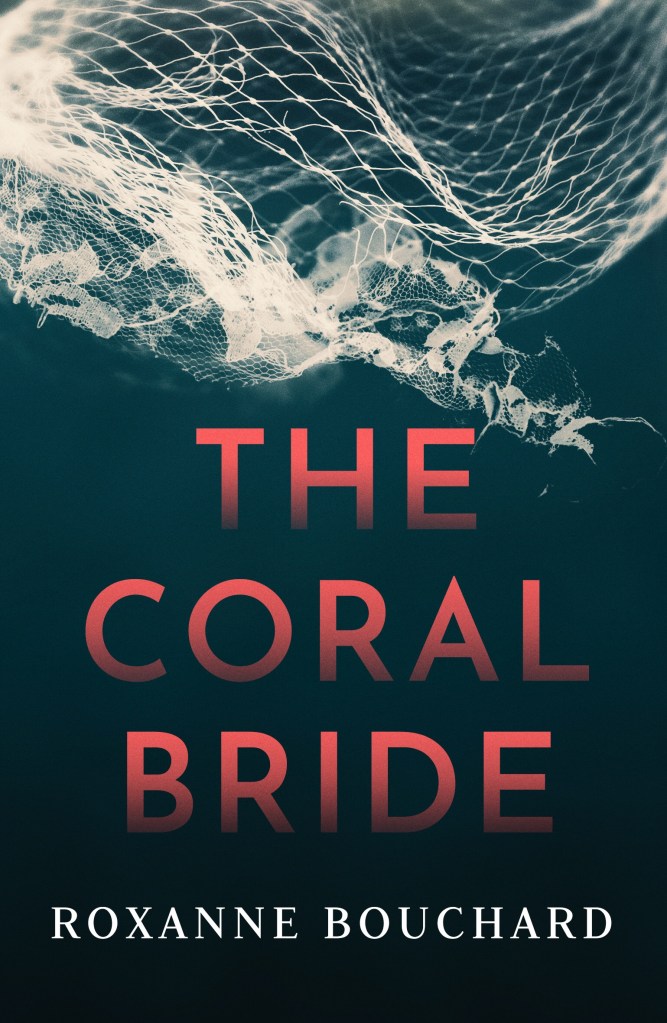
The Coral Bride by Roxanne Bouchard.

Publisher: Orenda

Published:

ISBN:

The Coral Bride is the second novel in Roxanne Bouchard’s D.S Morales series, the first being We Are The Salt Of The Sea. I think this easily read as a stand alone novel, but I enjoyed it so much that I’m going to read the first one. I’m not surprised, because I’ve never met an Orenda book I didn’t like!

The opening to the novel is haunting as a woman lies on the deck of a fishing boat. Somehow she has been rigged up so that she will eventually be dragged from the trawler and under the freezing cold water. She knows these are her final moments. As an opening it is very effective and sets up the main character in the novel: the sea. The sea is the life’s blood of people in this region – a small fishing village in Quebec. Angel Roberts is a very rare thing in this community, a woman with her own trawler who fishes for lobster. She’s named her boat Close Call II showing a good sense of humour too. The sea is her livelihood and there’s definitely an affinity with it. She is treated with suspicion by the rest of the trawlermen, because fishing here has always been a male dominated industry. However, the sea doesn’t just separate, it also brings people together, even Detective Morales and his son Sebastien.

Another recurring character is the moon, depicted as a silvery path reflecting off the water. Angel has always been told the moon is a liar and not to be trusted. However, it seems there may be another character in Angel’s life who isn’t what they seem. Morales finds out that every year Angel and her husband would dress up in their wedding finery and have a celebration on their anniversary. If her husband is to be believed he drove his wife home when she was tired and then returned to the bar. Then after 1am, it seems that Angel drove herself down to the harbour and took the boat out, still in her wedding dress? Detective Morales is a quiet and thoughtful man, who doesn’t jump to conclusions and I loved the way the author let the mystery breathe in the same way. You have chance to really think about peope’s stories alongside Morales, and I liked that the pace seemed to fit with the landscape and community. This is much more than a ‘whodunnit’. It explores the spirit of this community, and I especially enjoyed the loyalty and bravery of the fisherman. They really respect the sea and I respect them because it is such a tough way to earn a living. We get to explore the tribal aspects of this community, how relationships between people develop and change over the years. But as always, where there are old relationships there are old resentments.

Familial relationships are explored too as Morales’ son Sebastien has turned up unexpectedly with his car full of pots and pans. He’s a chef and he’s had a fall out with his girlfriend. I got a sense that Morales doesn’t really know his son, or Sebastien is acting out of character. Sebastien flirts with a female constable on his team; Morales has only seen her buttoned up, but ten minutes in Sebastien’s company and her hair is down and she’s doing salsa. There was sense that Sebastian will bring chaos to his life. Yet they have a shared experience, Morales is currently living alone and away from his wife. Maybe this is where father and son could understand each other better. These relationships gave the book depth and elevated it above the average thriller. I enjoyed the police team, the conflicts and allegiances. I loved the section where Morales was shown to his temporary office and it’s packed to the rafters with files stacked everywhere. It’s like this quiet, thoughtful, man has escaped to an out of the way place and people are challenging him on all sides. The space he has enjoyed is being encroached upon – Sebastien inviting him to salsa and let his hair down, the chaos of police files surrounding him, his son sleeping on his couch. It’s not long before, in his life and the investigation, he feels blocked in on all sides. I found this novel had a great sense of place and a thoughtful, intelligent hero. It was atmospheric, lyrical in parts and emotionally literate. The image of a woman being slowly pulled into the water, with her wedding dress glowing in the moonlight until she is swallowed up by the dark will stay with me for some time.

Meet the Author

Ten years or so ago, Roxanne Bouchard decided it was time she found her sea legs. So she learned to sail, first on the St Lawrence River, before taking to the open waters off the Gaspé Peninsula. The local fishermen soon invited her aboard to reel in their lobster nets, and Roxanne saw for herself that the sunrise over Bonaventure never lies. We Were the Salt of the Sea is her fifth novel, and her first to be translated into English. She lives in Quebec.
Follow Roxanne on Twitter @RBouchard72 and on her website: roxannebouchard.com

Posted in Random Things Tours

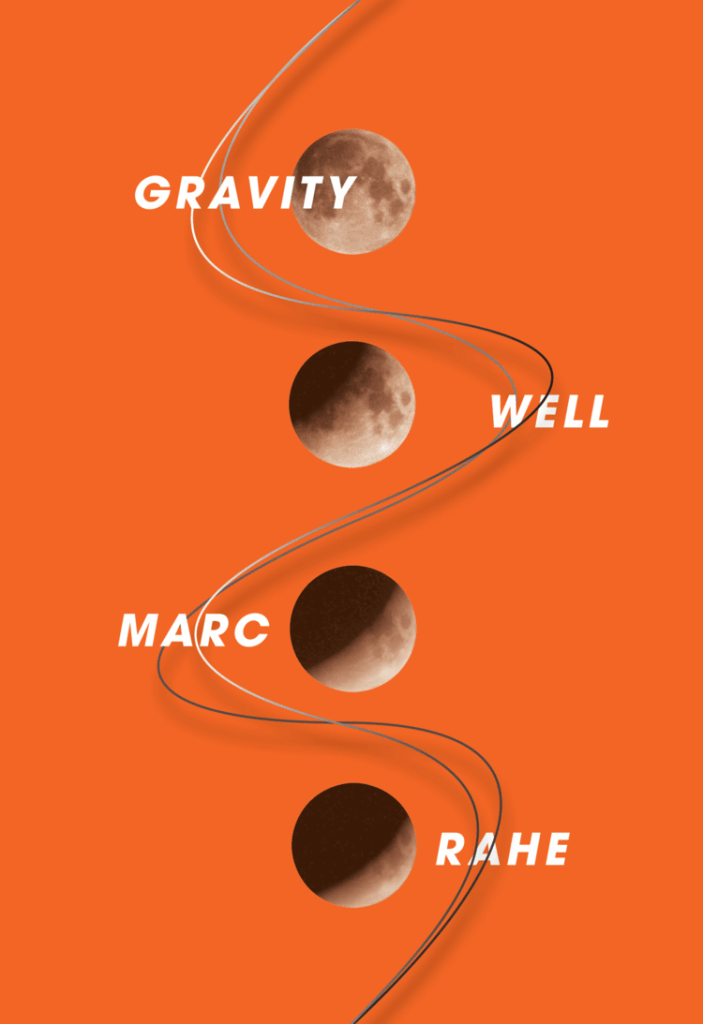
Gravity Well by Marc Rahe

#RandomThingsTours #GravityWell #Poetry #BlogTour

My Thoughts | I haven’t read any new poetry for a long time so I jumped at the chance to read this new collection. For me, poetry is very emotional. It’s about whether a poem connects with my feelings in some way; is the poet describing something I recognise, something I’ve felt or seen? There tend to be certain images that make me stop and think and Marc Rahe’s new collection Gravity Well did all of these things and resurrected my interest in poetry.

Some images made me smile because of how clever they were or because of the beautiful combination of words. In Writer Friend the narrator describes an unsettled afternoon as a ‘forecast-come-true afternoon of cloudy and scattered’. I also loved the Schroedinger reference in Our Shared Life of ‘The bee trapped with you inside/ your helmet in traffic, will or will not’. It made me think of that moment before something happens. In that moment, playing simultaneously in the biker’s mind, are the bee that stings and the bee he successfully releases back into the world unharmed. We get another sense of the in-between reading his poem Stellar, as if moments in time are simply Russian dolls with each possibility stacked within each other – touching but separate:

‘This tree was my favorite the day it rained during my walk. Uncanny when it’s raining and it’s sunny at the same time. As if being in someone’s presence and feeling the presence of their ghost’.

Another line I loved was ‘the air was as wet as dog’s breath’ because it made me feel the humidity of a wet day in August, that moisture hangs like warm misted breath in the air.

There were also themes running through the work that interest me greatly, because of my own writing work which is focused on how the body, particularly a faulty or malfunctioning body, interacts with the world. Rahe has a way of describing age and the changes of the body that are surprising and moving. In his poem Appetite I loved the following section:

‘I’ve been reopened along the same incision

and though metal plates and wires, metal screws,

can only be said to ache, I say

it is the metal in this leg that tells me

the sky is so full of mountains and trenches

as the ocean, metal that warns me

of my own weight held past a certain angle from the center.’

I love how he describes the constant ache of the structure that holds the speaker’s leg together, but it isn’t a negative statement, it’s just something that’s there. Also it’s a way of gauging the world, like I know if my joints ache it’s going to be wet or if my muscles seize it’s going to be cold. The unnatural pins and wires he needs for his limb to work naturally, actually link him to the natural world too – to the heights and lows of the lands, and even how the force of gravity can be sensed as he finds the balance of walking with these metal supports.

In Fable of the Cephalopod he uses humour to describe a sense of coughing up a foreign body, something that feels like ‘an octopus that was trying to wear a sweater’ giving the reader a sense of how stuck it feels, trying to force eight woollen legs from the ‘wrong bronchial tree’. Later he describes the moment of having a blood test, very routine for me and others who are ill, but tense all the same. He perfectly describes that moment when you almost hate yourself for trying to make the medics life easier. When you feel guilty for being difficult, as if you could control the way your veins and body work:

‘at a blood draw my vein resisted the needle. The needle

slipped aside inside my arm, despite repeated attempts. I made,

for the phlebotomist, a joke I hoped would defuse her growing anxiety.’

I felt a connection with parts of the work, and as always with poetry, I know that re-reading will bring further meaning and interpretation, depending on my mood. Poetry’s meaning lies with the readers once it has left the author’s pen. It may well have had an original meaning, but really the beauty of poetry comes out when the reader brings their ‘stuff’ to the poem. I’m sure there are other bloggers who have had totally different experiences with the images and themes but that’s the beauty of it, it can touch a multitude of people very differently. I thought this was an imaginative and thoughtful collection from a poet I’d never read before. It sparked my interest in poetry again and I am looking forward to reading more for the blog and for my own enjoyment.

Other Reviews | Marc Rahe’s luminous poems find grace in acts of intentional remembrance, in turning back to sing ‘what can be seen / looking behind.’ The speaker’s world resembles our own fraught moment–fallen, divided–but never numb. These poems hum with moments of transcendence, between body and weather, air and breath, between today’s pain and the deep wounds of the past. In precise, lucid lyrics, this voice insists that our capacity to feel is what binds us, ecstatically, to our planet and to one another.–Kiki Petrosino

Ever since his first book, THE SMALLER HALF, was published, I’ve kept my eyes open for new work by Marc Rahe, and whenever new work has come, I’ve celebrated, actually celebrated. No poet writing in English today is better at making poems stuffed full of being and of things seen, things heard, things touched, things tasted, and things thought hard about nonetheless quiet. And yet, though they approach silence, these poems resonate, and, like Rahe’s previous work, they will resonate for years.–Shane McCrae

Biography | Marc Rahe is the author of THE SMALLER HALF (Rescue Press, 2010), ON HOURS (Rescue Press, 2015), and GRAVITY WELL (Rescue Press, 2020). His poems have appeared in The Iowa Review, jubilat, MAKE Literary Magazine, PEN Poetry Series, Sixth Finch, and other literary journals. He lives in Iowa City.

Posted in Random Things Tours

Throwback Thursday! The Accidental Medium/ Gin Palace by Tracey Whitwell.

Synopsis | Tanz is living in London and still grieving her friend Frank, who died in a car crash three years ago. As acting jobs dry up, she has to find a normal job to fund her cocktail habit. When she starts work in a new age shop, Tanz discovers that the voices she’s hearing in her head are possibly real psychic messages, not the first signs of schizophrenia. Alarmed, she confronts her little mam and discovers she is from a long line of psychic mediums. Despite a whole exciting new avenue of life opening up to Tanz, darkness isn’t far away and all too soon there’s murder in the air. In book two, after her fast paced introduction to the world of clairvoyance, Tanz is hiding in bed, having nightmares about a suicidal psychopath, drinking red wine, irritating her cat and waiting to be evicted. Life as she knew it seven months ago has turned on its head and only the prospect of a new TV job in Newcastle and a month with her best friend Milo can help pick her up off the floor. But when she gets home, the Newcastle of more than a century before decides to haunt her bringing all kinds of spooks and horrors with it

Review | Tanz is a cocktail drinking, straight talking, Geordie actress, with a talent for swearing. She is an absolute breath of fresh air. Within pages she felt like my long lost friend and I was mentally inviting her to my fantasy dinner party (alongside Mr. Tumnus, Ruth Galloway, Sugar from The Crimson Petal and the White, Jo March, and Vianne Rocher).

I read both of these short novels in a weekend and have been left longing for more. The story begins as Tanz is working at a new age shop, between acting jobs. She has made friends with one of the ‘readers’ in the shop, but is starting to have an inkling that her own family might have their own gift. Her Mam seems to have prophetic dreams, but doesn’t make a big thing of it even though her grandmother was a Romany. Tanz had started hearing voices, but wondered if it was a symptom of grief following the sudden death of her friend Frank three years before. She even starts to worry if she could he schizophrenic. Luckily she has a great mentor at hand – Sheila is another reader at the shop, an older woman with years of experience in this strange world of mediumship. She describes Tanz as a ‘natural’ and her strong reaction to an odd couple who visit the shop seems to set them on an investigative path. Sheila is vital to Tanz and their friendship grows as the mystery becomes disturbing and dangerous. What are this strange couple hiding and why is Tanz hearing a woman wailing every time they’re near? Despite being terrified Tanz and Sheila let their spirit guides lead them towards the answers and into danger.

Gin Palace situates Tanz back in her hometown of Gateshead, where she has a role in a TV series after months without work. She would have loved the main role, but is playing the tart with greasy hair, dark circles under the eyes and the shortest skirt. She’s the only one with a genuine Geordie accent. After her introduction to clairvoyance, she was hoping for a quieter time, but it seems the spirits aren’t ready to leave her alone. Tanz finds herself haunted by visions of an 18th Century Gateshead and the tenements down by the docks. On a ghost walk she finds out about the brutal murder of a prostitute, the terrible warehouse fire that razed the tenements to the ground, and the role gin played in the lives of these unfortunate residents. This gives her some background but doesn’t explain the violent man who keeps beating her to death in terrifying dreams. Nor does it explain her visions of a little boy who looks like the Artful Dodger, with the face of a pitiful waif one moment, and eyes that burn like the coals of hell the next. Is she being warned off? Or is there another mystery the spirit world like her to unearth?

I loved both of these books for their characters and the company of Tanz. I loved her Mam and Dad, who are traditional Northerners through and through. They were very like my parents – always half way down a cup of tea, have tea at 5pm and seemingly happy to potter at home together. Tanz’s dad has his shed to tinker in, but her ‘little Mam is always there with some very down to earth and wise advice. I love how Whitwell presents mediumship and it’s effects on the practitioner. Sheila teaches Tanz how to protect herself against certain types of spirits, but there are still times when she is terrified by what transpires in her own mind and in front of her. Her nightmares affect her sleep, she feels unnerved and often wonders if her gift is worth it. It’s great if it helps someone, but otherwise it’s very inconvenient and not making her any money. It made me think of taking a counselling session, it can be exhausting and the counsellor needs a self-care regime in place to replenish their reserves. I enjoyed Tanz’s loyalty, not just to her close friends, but to those people she picks up along the way and even those from the spirit world who need release. Her bravery in confronting the scarier paranormal events, while being absolutely terrified, is endearing. By the second book she is starting to trust her powers a little, to understand the strength of her gift and her guides. These books are fresh, modern and comfortingly Northern. The mix of gothic and supernatural subjects, with this down to earth, 21st Century heroine is different and such great fun. Tanz is a woman you’d like to go for a few cocktails with and the mingling of her familiar worldly worries and her other worldly gift is irresistible.

Biography|Tracy Whitwell was born, brought up and educated in Gateshead in the north east of England. She wrote plays and short stories from an early age, then had her head turned and ran off to London to be an actress. By 1993 she was wearing a wig and an old fashioned dress and pretending to be impoverished on telly in a Catherine Cookson mini-series, whilst going to see every indie/rock band she could afford.

After an interesting number of years messing about in front of the camera and traveling the world though, Tracy discovered she still loved writing and completed her first full length play. A son, many stage-plays, screenplays and two music videos followed until one day she realised she was finally ready to do the thing she’d longed to do since she was six. She wrote her first novel. A crime/horror/comedy tale about an alcohol-soaked, gobby, thrill-seeking actress who talks to ghosts. (Who knows where the inspiration came from, it’s almost like she based it on her own ridiculous life.) Then she wrote a follow up and realised she couldn’t stop writing books.

Now Tracy lives in north London with her son, still travels whenever possible and has written novel number four. Now being edited.

Posted in Random Things Tours

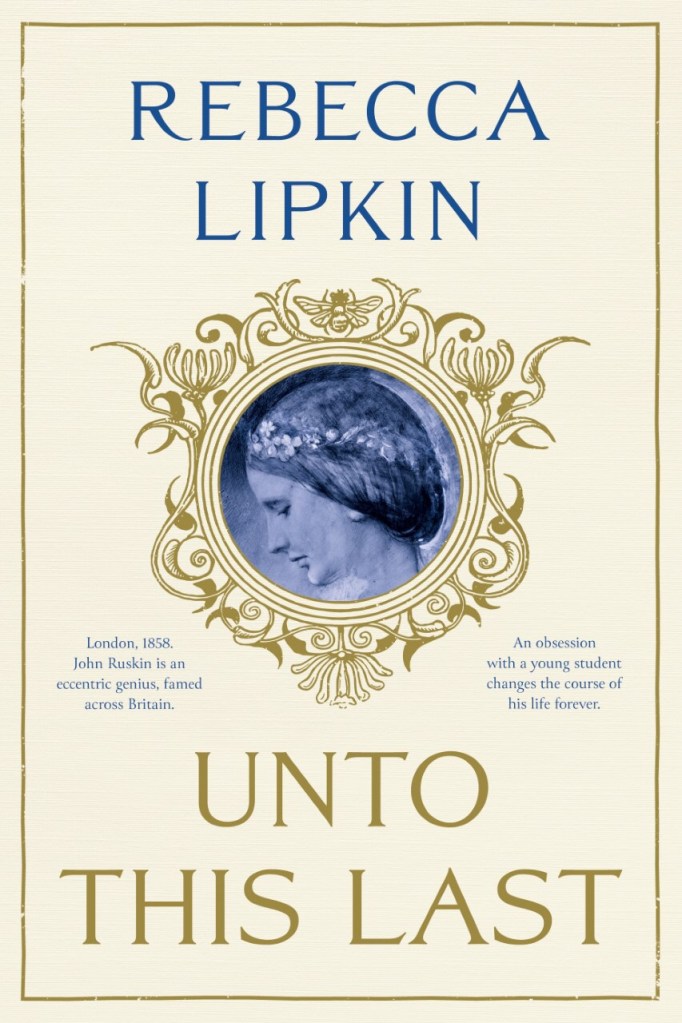
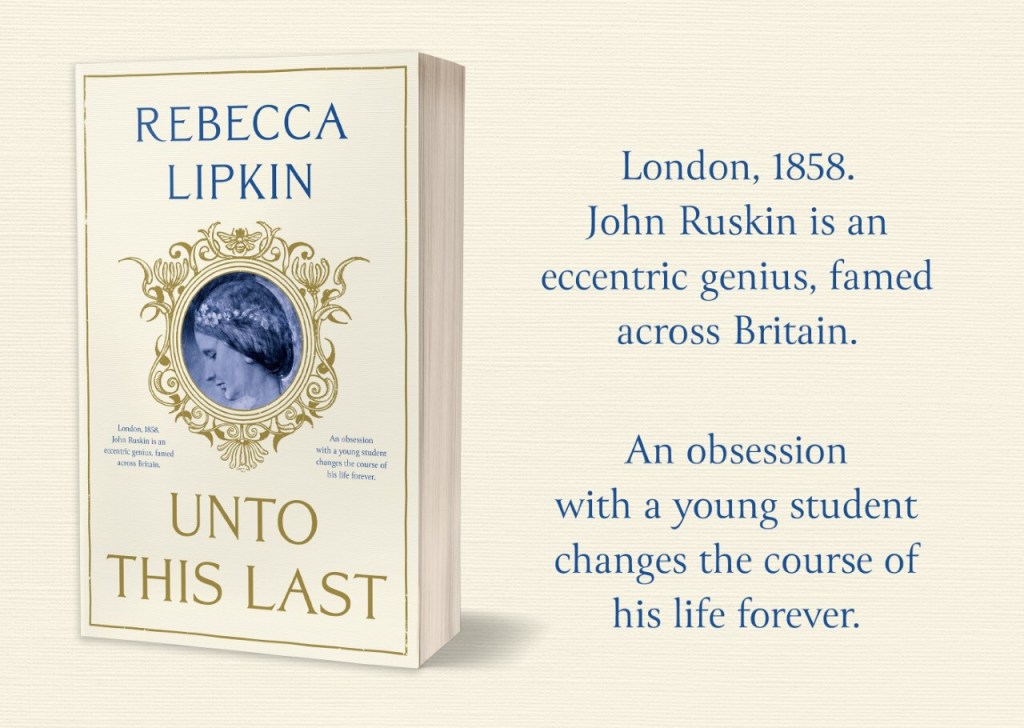
Unto This Last by Rebecca Lipkin.

#RandomThingsTours #BlogTour #UntoThisLast

Publication Date: 28th August 2020

Publisher: Book Guild Publishing Ltd

ISBN: 1913208826

Background and Synopsis |John Ruskin was a complicated and controversial man, mostly with regards to his relationships with young women. However, he was also a brilliant artist, important patron and critic of art and architecture. He championed the painter J.M.W Turner and the Pre-Raphaelite Brotherhood whose progressive work had all but barred them from the Royal Academy and polite society. In 1860 he shifted focus from writing about art and architecture, towards social issues including inequality within society. In a series of essays published under the title ‘Unto This Last’ he wrote that the only true wealth is society is the happiness of its people.

‘That country is the richest which nourishes the greatest number of noble and happy human beings’.

Rebecca Lipkin’s novel focuses on Ruskin’s personal happiness, in the period after the disastrous annulment of his marriage to Effie Gray, followed swiftly by her marriage to Pre-Raphaelite painter John Everett Millais. Ruskin was asked by the Marchioness of Waterford if he would give art lessons to her friend’s two daughters. Maria La Touche was a poet and novelist, and her daughters Emily and Rose are interested in art. Rose is only ten years old but shows prodigious talent. Ruskin plans to politely refuse the job, but something about Rose touches him deeply and before he knows it he’s soon visiting their mansion three times a week to give art tuition and spend time with the girls. This novel focuses on that relationship, but within the wider context of their families, his previous marriage and the views of the wider Victorian society.

My Thoughts | Ruskin’s affections for Rose La Touche were a bewildering source of joy, but also anxiety and depression at times. He found that he looked forward to her company and suffered greatly when she was away. Her mother Maria, was astonished by the usually reserved Ruskin allowing Rose to tease him, draw him into childish games and even lure him into a snowball fight in the garden. It was rare to see such a fastidious and serious man, so out of breath and disheveled. However, it is only when Rose takes a three month trip to Europe and falls ill that he truly realises the depth of his feelings. Yet, Rose is still only an adolescent and Ruskin is just over forty years old. The author takes us deep into the mind of this brilliant but troubled man, as he wrestles with himself and feelings he’s deeply unsure about.

Having read Ruskin’s work at university, I was worried that the prose would be long-winded and laborious to read in order to establish it within the Victorian setting. Yet the author made Ruskin’s mind accessible and uncluttered, while still grounding us firmly in the 19th Century. I have always been very interested in the strange relationship between Ruskin and his parents and there was plenty to think about here. Ruskin has an increasingly fractious relationship with his father John James, especially arguing about the placing of the Turner paintings owned by the family. In the 2014 film Effie Gray, written by Emma Thompson, we see a very dysfunctional relationship between Ruskin and his mother; when Effie and Ruskin return from honeymoon he is whisked upstairs by his mother for a bath. This novel shows a more nuanced relationship, but still a stifling only child/over-involved mother dynamic. John has been the apple of their eyes and their entire lives have been devoted to ensuring he excels in his field. They do worry about his feelings for this young girl and whether his life’s work is being side-lined so he can teach a child to draw a still life. They are also sceptical about the teaching he does for working class men, but he is adamant that it helps them lead fuller and happier lives.

John Ruskin painted by John Everett Millais

There are times when it’s hard to reconcile the man who has this type of empathy for those in a more lowly position, with the man who has developed feelings for such a young child. There is no record made of when Ruskin’s feelings begin to change towards her. I kept wondering why Mrs La Touche allowed the developing friendship, knowing the rumours surrounding the collapse of his first marriage? In fact we know that Effie Gray did contact and warn Rose’s family. He had also known Effie from childhood, befriended the family and eventually married when she came of age. This troubled part of his life is covered in the third part of the book so we can make comparisons. His devotion seems to be known in society because he even reproduced some of Rose’s earliest letters in his writings to preserve them. The scandal resonates through the decades and is even alluded to in Nabokov’s Lolita. He is such an introspective man and seems so earnest in his feelings that I actually worried about his mental health – what would happen if this should go wrong? I was impressed with the author’s ability to take us so deep within the psyche of this complicated man, to the point where I started to feel as if I knew him.

Rose is presented so vividly that it’s easy to see why Ruskin might be innocently charmed by her. Ruskin write of her:

‘Sometimes she had a surprising understanding of adult attitudes: at the next moment she was once more completely a child. She had a pretty way of making herself engaging, even coquettish, but could also be rather solemn […] I don’t know what to make of her […] She wears her round hat in the sauciest way possible—and is a firm—fiery little thing.’

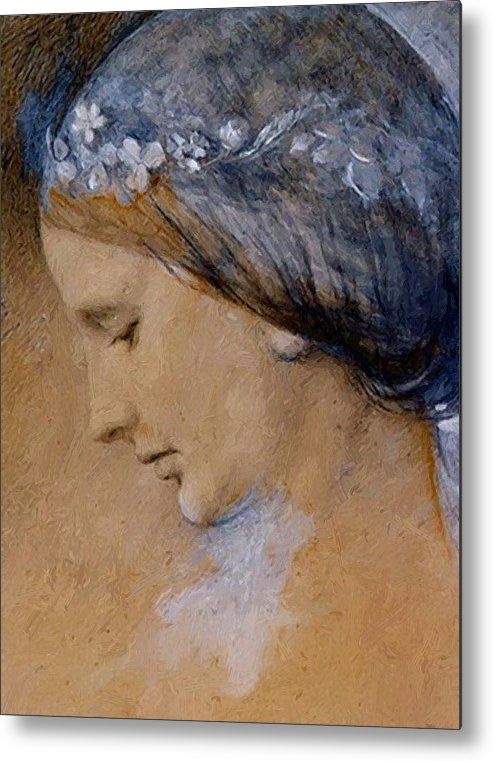
Rose La Touche

So in his mind she is a precocious young lady with a very definite character. It’s hard to know if this is how all adults viewed her or whether this is Ruskin’s mindset showing; the words ‘coquettish’ and ‘sauciest’ suggesting a sexual connotation. Is this what he perceives because he has a troubling attitude towards girls? Or is it his life’s quest to find a wife who will behave as he wants? If he is looking for the Victorian ideal of an ‘Angel in the House’ maybe he feels he can mould a younger girl into this image of saintly womanhood.The author brings Rose to life so we are not confined to Ruskin’s gaze. I felt for this ‘fiery’ girl because she is so controlled, by Victorian society, but also by her very religious and dominant father. Her mother often seems elusive, which may be why Rose has such an independent air about her. However, Mrs La Touche also controls – through manipulation. I enjoyed the scenes where Rose lets go and plays with Ruskin and her sister, she needs to let loose and she is teaching him to do the same. Because of this sense of release they get from each other I found myself looking forward to those scenes where they can do this, he allows her to tease him and seems to drop his rather pompous guard. Yet, if he does propose marriage, would he continue to let Rose be this free and determined? I found myself alternating between relief that Ruskin was able to get outside his own head and enjoy himself in the moment, and concern that marriage to Ruskin would confine and depress Rose.

The author really has produced an amazing piece of work here; as rich in historical research as it in imagination I enjoyed the way the book includes letters between them and the atmosphere created as Rose moves through different countries from France to Italy and Switzerland. The vivid descriptions of these places are very painterly and I could really see how it must look to Rose. I didn’t fully know the ending to the story and won’t reveal it here, but as we compare the older man with his younger counterpart in part 3 we can see that Ruskin has mellowed with age. Yes his inner world is full of angst but outwardly he seems less petulant and guarded. I found empathy for him, where previously I thought he was a dreadfully pompous and repressed individual with a strange mix of arrogance and lack of confidence. The depth this author has gone to in order to uncover the hidden aspects of Ruskin is admirable. He now has some sympathy from me, despite my concerns about his need to control and perhaps groom young girls whose personality is not yet fully formed. This book has been an incredible undertaking and is an intelligent, interesting and admirable piece of work.

Meet The Author | Rebecca Lipkin had a passion for Victorian art and literature from a young age. She first discovered John Ruskin through E.M. Forster’s novel, ‘A Room with a View’, and later joined the Ruskin Society at the age of seventeen to learn more about Ruskin’s work. Rebecca pursued a career in journalism, specialising in arts writing and theatre reviews, and has worked for a number of national publications.