Posted in Random Things Tours

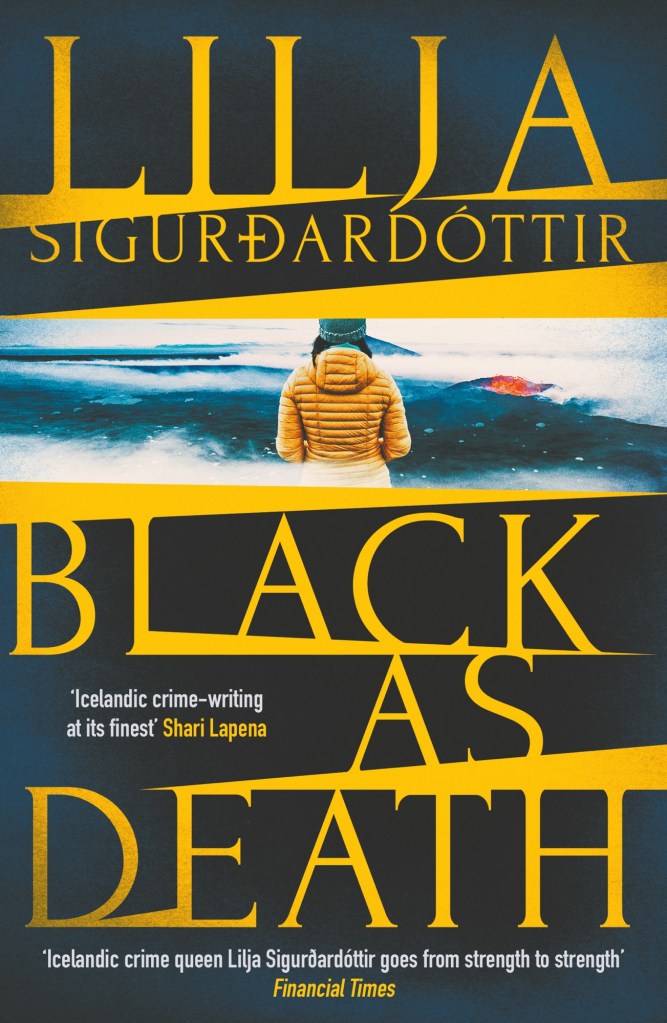
Black as Death by Lilja Sigurdardóttir  

The haunting final chapter to an award-winning series…

And a final reckoning…

With the fate of her missing sister, Ísafold, finally uncovered, Áróra feels a fragile relief as the search that consumed her life draws to a close. But when Ísafold’s boyfriend – the prime suspect in her disappearance – is found dead at the same site where Ísafold’s body was discovered, Áróra’s grip on reality starts to unravel … and the mystery remains far from solved. To distract herself, she dives headfirst into a money-laundering case that her friend Daníel is investigating. But she soon finds that there is more than meets the eye and, once again, all leads point towards Engihjalli, the street where Ísafold lived and died, and a series of shocking secrets that could both explain and endanger everything…

I’ve been hooked on the story of Áróra and the case of her missing sister Ísafold for a few years now and the tension has slowly gripped me ever tighter as each novel has brought its revelations. With her disappearance being the reason Àrora is in Iceland, it’s always been the over-arching narrative, with other cases running alongside. The combination of Áróra’s skills as a financial investigator plus the skills and powers of Daniel and Helena who are detectives, means complex cases are profiled and attacked from different directions, making them a formidable team. We’re back with everyone after the discovery of Ísafold’s body in a suitcase deep within a fissure in a lava field. They were directed to it by an unusual little girl who claimed to be the reincarnation of Ísafold, something that was difficult for Daniel to accept. As Áróra’s boyfriend, his hackles were raised particularly with her parents who he suspected of feeding ideas and information to their daughter with the aim of deceiving them. But what possible motive could they have? As we meet our characters again, Áróra occasionally has the urge to go back and visit the family, but there’s been nothing new from her reincarnated sister for some time as if the thread that bound them has broken or the little girl’s age means the channel that was open between this life and the next has now closed. With Bjorn found in the same fissure as Ísafold many new questions are thrown up. Not least the one aspect of Ísafold’s death has remained a secret up till now. Daniel doesn’t know how to tell Áróra that her sister’s body was found without a heart. 

There’s so much to understand here and we get the narrative through different viewpoints, not just from Áróra, Daniel and his colleague Helena. One narrator named Felix has fallen into working for a local dealer and we see his fear as the bag he was sent to collect disappears from the car while he’s getting some food. This theft draws his ties to this man ever closer, with no real chance of escape. There are also flashbacks to the last few months Ìsafold was alive and we finally hear the story in her own voice, which I loved. There’s a lot of crossover between these two narratives in terms of control and manipulation. The means used to tie Felix to the drugs gang are diabolical, making sure he ‘owes’ the boss and keeping him firmly onside. On one hand the boss demands total loyalty from its operatives but on the other he uses treachery to keep everyone in their place. Bjorn’s treatment of Ísafold feels even worse, because this is someone is supposed to love her. We have always known that Ísafold’s partner was violent, in fact Áróra’s guilt about her sister is based around their last phone call when for the first time Áróra decided not to run to her sister’s aid. The downstairs neighbour Grimur had also testified to the violence his neighbour suffered, but hearing it from the victim adds another layer to the narrative. We can feel how vulnerable Ísafold is and the tenderness Bjorn treats her with from time to time, that glimmer of a meaningful connection he drip feeds to her guarantees her forgiveness again and again. Almost more than the violence I hated that he took away her only bit of independence by making her leave the job she loved, to work with elderly people. At first it’s a suggestion, then he flatters her by saying how good she would be in a caring role, but the truth is he wants to coerce her into stealing their drugs. There’s a realisation that Bjorn is a low level dealer, just doing enough to get by but slowly coming to the attention of the bigger players who feel their territory has been encroached upon. Could this be the beginning of the end for the couple?

The tense and twisty parts narrative also follows Daniel’s investigation into a local coffee chain, where every barista seems to tell customers that their other sites are busier. What he finds is a company with a large turnover but no real evidence of where that money is coming from. None of their shops are in tourist areas and they seem to take a large amount in cash, an unusual thing these days. He also finds a couple of complaints from the director’s home of criminal damage, that they later chose not to pursue. This seems like a case where Áróra’s financial skills could be utilised and she throws herself into it, with dangerous consequences. This is where the couple work so well together, although there’s a recklessness to Áróra that Daniel finds difficult. He would never get in her way, she’s tough and quite capable of looking after herself physically but it’s in his nature to worry about those he cares for. He knows that her weight training and work are her ways of sublimating her frustration that she still doesn’t have all the answers about her sister. With Helena currently working the case he has a choice to make, if answers come does he let Helena break the truth to her, or does he choose to do that himself? Although he could have the chance to comfort and support her as he’s wanted, will she let him? Or will he always be the man who told her the harshest and most painful truth she will ever hear? 

We’ve always had suspicions but have never known who killed Ísafold. The novel is gripping and of course we want this mystery resolved, but I didn’t feel any of that racing tension or triumph that I often get from thrillers when the killer’s revealed. This was just so desperately sad. I found myself taking a moment for this under confident woman who was so far out of her depth. A woman whose emotions dictated her life decisions. I was horrified and had that strange empty feeling of loss. A loss I knew Áróra would feel. The question is, if she does get all the answers she needs, what will Áróra do next? Unlike her sister Áróra has a clear sense of what she wants and needs in order to be happy and fulfilled. She makes decisions based on self-knowledge and it remains to be seen whether Daniel is a part of that eventual happiness. This has been an incredible series from the author, combining a good mystery with real intelligence and depth of emotion played out on a bleak and forbidding landscape.

Out now from Orenda Books

Meet the Author

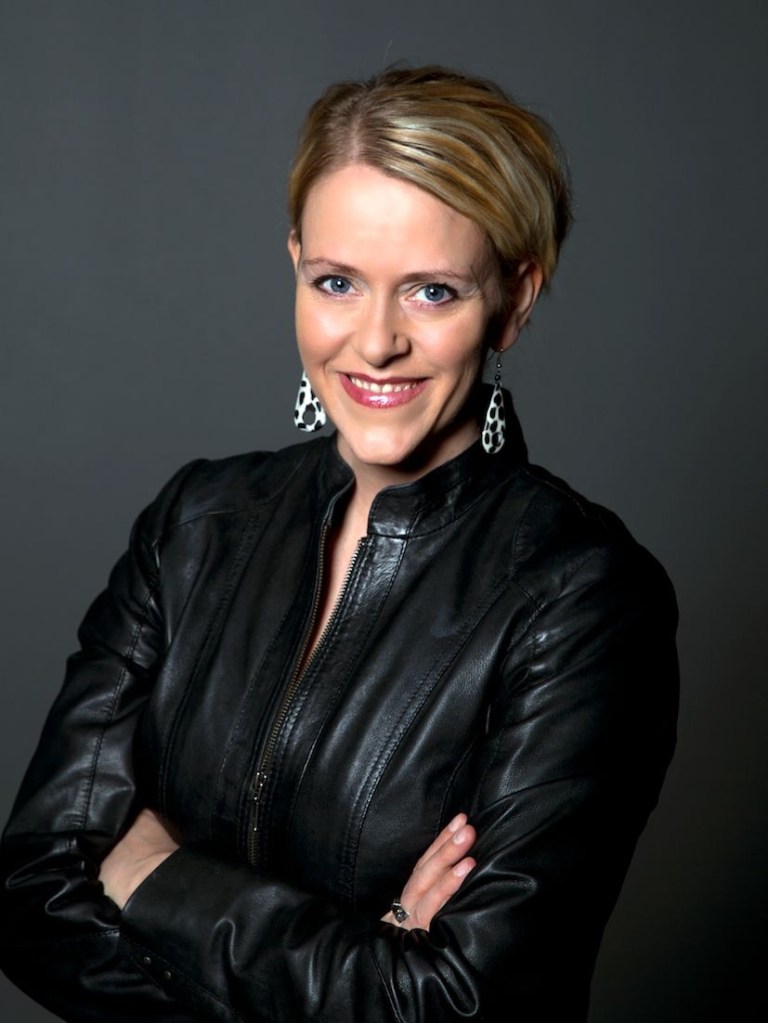
Icelandic crime writer Lilja Sigurðardóttir was born in the town of Akranes in 1972 and raised in Mexico, Sweden, Spain and Iceland. An award-winning playwright, Lilja has written eleven crime novels, including Snare, Trap and Cage, making up the Reykjavík Noir trilogy, and her standalone thriller Betrayal, all of which have hit bestseller lists worldwide. Snare was longlisted for the CWA International Dagger, Cage won Best Icelandic Crime Novel of the Year and was a Guardian Book of the Year, and Betrayal was shortlisted for the prestigious Glass Key Award and won Icelandic Crime Novel of the Year. The film rights for the Reykjavík Noir trilogy have been bought by Glassriver. Cold as Hell, the first book in the An Áróra Investigation series, was published in the UK in 2021 and was followed by Red as Blood, White as Snow and Dark as Night. TV rights to theseries have been bought by Studio Zentral in Germany. Lilja lives in Reykjavík with her partner and a brood of chickens.

Posted in Random Things Tours

The Transcendent Tide by Doug Johnstone 

The Enceladons are back! We left them on the up, having destroyed the American facility that captured and tortured them with a tsunami wave. Lennox, Heather as well as Ava and her daughter Chloe were recovering from the torture they suffered and had to make a big decision, to leave for the Arctic as part of the Enceladon community or stay on land. Heather chose to leave with them. Now the remaining friends have established new lives. Lennox and his girlfriend Vonnie are studying together at university. Ava and Chloe are settled with Ava’s sister, but they all miss the group especially Heather, Sandy and Xander. It’s hard not to miss the extraordinary experiences they had, such as Lennox becoming part of Xander and flying off into space. It is Ava who brings everyone back together after Chloe appears to suffer a stroke, only to return back to normal, just as the friends did after first meeting Sandy. A follow-up MRI shows a brain tumour and Ava has a difficult decision to make: does she stay put and follow the medical route or does she try to find the Enceladons? She wonders whether the torture Chloe endured or her communications with the creatures could have caused this illness? She also remembers how Sandy cured Heather’s cancer and decides to take her daughter to Greenland. At the same time, Lennox and Vonnie are approached by an Norwegian tech billionaire who wants to meet the enceladons. Even the logo of his new company is a moon being held in giant tentacles. The couple are very unsure and inside I was screaming at them not to work with him, but when Ava contacts them about Chloe they both agree to work with him under certain conditions. Will those conditions be met and is this man as trustworthy as he seems? 

Niviaaq is our first new character, an Inuit woman who has lived in her small community on Greenland her whole life. The community still live like their ancestors with the principals of working with nature, not against it and they are feeling the effects of climate change. Glaciers are melting and species like polar bears are unable to hunt for food. Out on her boat, Niviaaq encounters another vessel, upturned and badly damaged. She also finds a man floating upside down in the water, hypothermic and barely alive. His coat has a symbol of a moon and octopus with the word ‘Sedna’, the name of an Inuit sea monster. She drags the man into her boat and takes him for medical help. The Inuit people have several legends of strange monsters  but lately the Northern Lights have been very active and people have seen strange glowing objects on the ice. Are these signals that something is going to happen? I loved this character throughout the book, mainly because she is so wholly and unselfconsciously her self. She is a strong woman, mentally and physically. She can take care of herself, taught from a young age how to use a rifle, to sail boats and fish on the ice floes. She doesn’t show off about this strength, it is simply part of her that can be used whenever it’s needed. She is used to long spells of time alone so she comes across as self-contained and very grounded. She is calm and gentle, not chatty but only speaking when necessary. I loved that she and Ava had an instant affinity and I could see how cozy and safe Ava would feel when with her, something she needs after her experiences with her violent husband. 

As always with Doug there are politics behind the actual story and setting it in Greenland, when it has been a constant topic in the media since Donald Trump came back into power had to be deliberate. It brought back to me how brash and ignorant the US Vice-President JD Vance appeared when he visited earlier this year. His first comment, that nobody had warned him how cold it was, just made me groan with embarrasment. It was no surprise that he was only welcome at the US Airforce Base. Their blatant and greedy desire for Greenland and parts of the Ukraine is all about mineral mining, taking what they need and further damaging the fragile ecosystem for its human and animal inhabitants. There are only two reasons a multi-billion dollar organisation would build a base there, either to exploit Greenland or the Enceladons. Probably both. Even though the business owner Karl Jensen initially impresses Lennox with his reaction to meeting the enceladons, while I was still very wary. He calls Sandy and Xander ‘they’ without prompting, because they don’t see themselves as individuals but as a collective. I loved this because it shows how easy it is to shift your perception and take care with other people’s feelings – it reminded me of the series of Taskmaster where I pointed out to my husband that Greg Davies had been using ‘they’ as Mae Martin’s pronoun for the whole series and he hadn’t even noticed. 

He seems to have a deep and profound experience on their first dive and when Sandy connects with him telepathically he suddenly understands everything that is wrong with the world. It’s the capitalism, the greed and simply exploiting every resource the earth has to give, without once considering whether it is ours to take. We don’t treat our fellow creatures as equals but as something we have dominion over and the right to kill for resources or for pleasure. We kill for yet more, when we already have so much. It’s an absolute tour de force of a speech and for a moment life is hopeful. However, as is pointed out by Vonnie, no one becomes a billionaire through philanthropy. Human nature intervenes suddenly and with finality, because it’s just so much easier to carry on as we are instead of making those personal and political changes. This is where Niviaaq is a brilliant contrast to mankind in general. When she and Ava have to take shelter in the hunting hut – one of several up and down the glacier, always ready for anyone to use – it made me realise how much the Inuit people have in common with the Enceladons. As she’s offered whale blubber to eat, Ava refuses it with a shudder. Niviaaq explains that the whale is suited to the environment they both live in and if they do hunt a whale, every single part of it is used. Eating two tiny chunks of it will give them the calories they need to survive the cold and the exertions of the journey ahead. To kill it, then refuse to use it for the purpose of staying alive is an insult. It made me realise that if people had stayed in their tribes and clans and used their original principles in this way – just like the Aboriginal and Māori people, and the Native Americans – we would have always lived in harmony with the earth. It’s possible certain animals wouldn’t be extinct and we might not have faced climate change. Their creation myths are so different too, not giving us dominion over the animals but being a harmonious whole. Or is human nature always determined to chase money and progress until we wipe ourselves out? 

I won’t divulge any more of the plot because that would ruin it for you. I get so excited about reading Doug’s books because reading them is a little like connecting with one of Sandy’s tentacles for a second. Ideas and light bulb moments appear in my brain and I have to write down all these weird notes and things to look up before I can review. Then I rabbit on about them to anyone who will listen for months to come! You can read these books on a surface level and they are still brilliant. The characters are full of heart and love for each other and their Enceladon friends. It’s also full of heart racing action sequences that would be amazing on screen – especially when all of the animals come along. You become so absorbed that you forget it’s all a bit weird, then you read a sentence like ‘Chloe was playing ball inside Sandy’ and it blows your mind. However, if you do delve under the surface it’s a profound comment on our times, our politics and capitalist lifestyles. Read the whole series and you’ll see how the author balances profundity, action, romance, sci-fi and humour like a magician. You’ll finish them, as I did, with a tear in your eye for these extraordinary creatures and a world with so much more variety and beauty than we’ll ever deserve. The Enceladons wake people up – yes I’m using that word ‘woke’ often thrown about as an insult these days, but why wouldn’t you want to shake an alien octopus’s tentacle and become enlightened, compassionate, open and perhaps your very best self? 

Out Now from Orenda Books

Meet the Author

Doug Johnstone is the author of 18 previous novels, most recently Living Is a Problem (2024) and The Collapsing Wave (2024). The Big Chill (2020) was longlisted for Theakston Crime Novel of the Year, and Black Hearts was shortlisted for the same award. Three of his books, A Dark Matter (2020), Breakers (2019) and The Jump (2015), have been shortlisted for the McIlvanney Prize for Scottish Crime Novel of the Year.

He’s taught creative writing and been writer in residence at various institutions over the last decade, and has been an arts journalist for over twenty years. Doug is a songwriter and musician with six albums and three EPs released, and he plays drums for the Fun Lovin’ Crime Writers. He’s also co-founder of the Scotland Writers Football Club, and has a PhD in nuclear physics. He lives in Edinburgh.

Posted in Random Things Tours

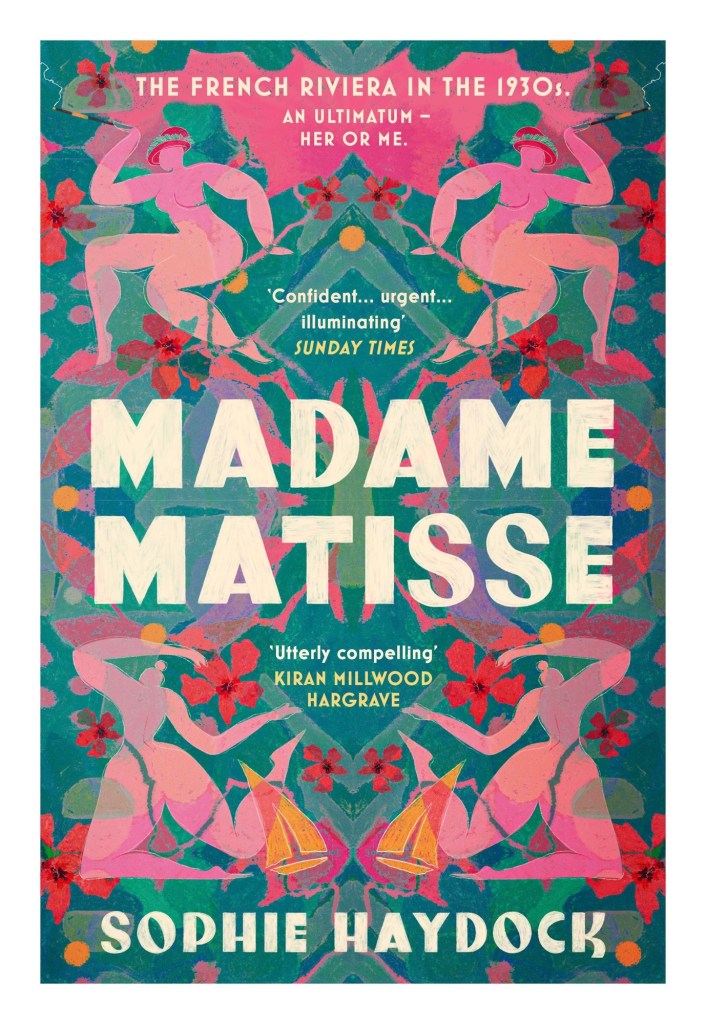
Madame Matisse by Sophie Haydock 

This is the story of three women – one an orphan and refugee who finds a place in the studio of a famous French artist, the other a wife and mother who has stood by her husband for nearly forty years. The third is his daughter, caught in the crossfire between her mother and a father she adores.

Amelie is first drawn to Henri Matisse as a way of escaping the conventional life expected of her. A free spirit, she sees in this budding young artist a glorious future for them both. Ambitious and driven, she gives everything for her husband’s art, ploughing her own desires, her time, her money into sustaining them both, even through years of struggle and disappointment.

Lydia Delectorskaya is a young Russian emigree, who fled her homeland following the death of her mother. After a fractured childhood, she is trying to make a place for herself on France’s golden Riviera, amid the artists, film stars and dazzling elite. Eventually she finds employment with the Matisse family. From this point on, their lives are set on a collision course….

Marguerite is Matisse’s eldest daughter. When the life of her family implodes, she must find her own way to make her mark and to navigate divided loyalties.

Based on a true story, Madame Matisse is a stunning novel about drama and betrayal; emotion and sex; glamour and tragedy, all set in the hotbed of the 1930s art movement in France. In art, as in life, this a time when the rules were made to be broken…

Almost eleven years ago my lovely arty friend Mandy wanted to visit the Matisse exhibit at Tate Britain. I really hope I didn’t ruin it for her. I probably did. I confess I’m not a lover of modernist art. We went to the Guggenheim in New York and I proclaimed it disappointing. We had to go across to the MET and see their collection of Impressionists to cheer me up. My loves are the Pre-Raphaelites and the Art Nouveau/ Arts and Crafts period so we’re a long way away from each other in preference. Art is her subject so I’m happy to own that she certainly knows a lot more than me. I was interested to read in her afterword that the author has always had an interest in Matisse, with a black and white postcard of him on her notice board for several years. I have one of Gustav Klimt wearing an artist’s smock and clutching a cat, with a look of devilment on his face. It makes me smile whenever I see it so I understand how a particular artist can inspire your imagination. Sophie’s first novel, The Flames, was about a protégé of Klimt. It was narrated by the women in the life of Egon Schiele, the subjects of four of his paintings. Here she takes a similar look at the women who surrounded Henri Matisse, showing how they advised, supported and sustained him in his endeavours, but remained completely in the background to his talent. 

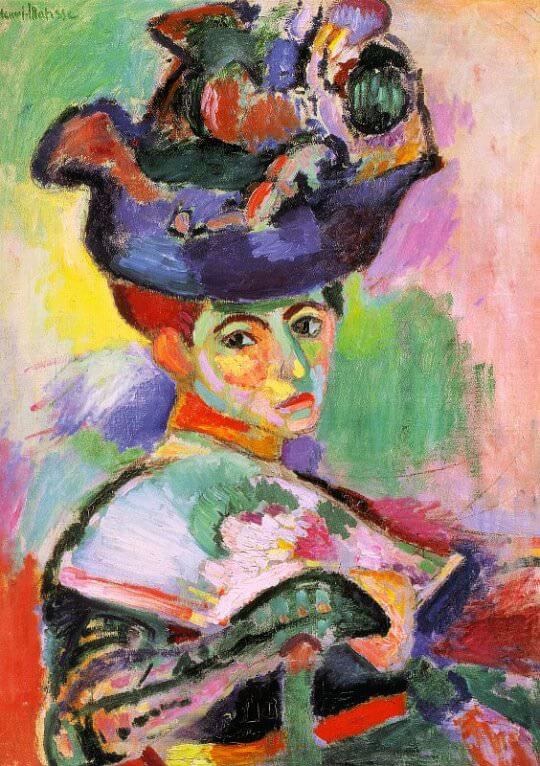
The story starts with Amélie, an incredibly brave young woman who takes a chance on marrying an artist rather than a more conventionally acceptable partner. She sees something in Matisse’s paintings, recognising the way his work could be at the forefront of modernism. Previously his colourful style has been rejected for exhibition in Paris, but Amélie knows that innovative artists often take a while to break through. In fact it is a painting of Amélie that is the catalyst for Henri’s career to take off. Woman in a Hat is exhibited in Paris and bought by siblings Gertrude and Leo Stein, a bohemian pair central to the art world throughout the early 20th Century. This is where Amélie makes the bravest and most important decision of her husband’s career. The Stein’s offered only two thirds of the asking price. Eager to make a sale to the influential pair, Henri is willing to give the discount but Amélie advises him to wait and hold out for the asking price. He takes her counsel and they go and meet the Steins, convincing them that Henri is central to the next great artistic movement. The Steins pay the full price. The couple are a great team with Amélie making all the household and business decisions, freeing Henri to paint and become a famous member of the Fauvist Movement. She also brings Henri’s daughter Marguerite into their growing family, when her own mother is struggling to care for her. Yet, not everything about their relationship runs smoothly. Once they are able to afford a family home with a garden and studio for Henri, Amélie’s help is no longer needed. Henri takes on a series of young assistants and Amélie has the more traditional wife’s role which doesn’t suit her. It’s fascinating to read about the changes, once their joint struggle is over they cease to become a team and the problems begin. 

Woman in a Hat

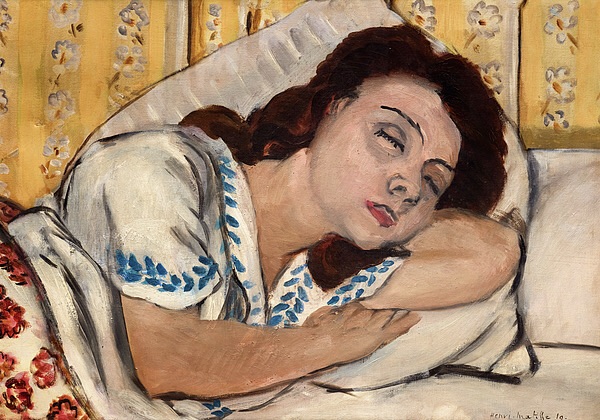
Another section of the novel is devoted to Marguerite, Henri’s illegitimate daughter. Once Amélie has brought her to live within their family, Marguerite seems to blossom under the care of her stepmother. She also makes herself useful to her father, tidying his studio and anticipating his needs. It is interesting to hear about Amélie and Henri’s relationship from her perspective and her anxieties that the family she’s been brought into, stays together. She shares a lot of Amélie’s suspicions about some of the assistants who breeze in and out of their lives. She’s also a strong advocate for her stepmother, even into her parent’s old age. Yet there were times when I felt she was taken advantage of by Amélie and her father. There’s a sense in which, despite seeming kind, loyal and trustworthy, Matisse does use the women around him. The household was entirely groomed to anticipate his needs and the women are sacrifices for his artistic genius. 

Most interesting to me was Lydia Delektorskaya, born in Tomsk, Russia, in the tumultuous period after the revolution. After the murders of the Royal family, Lydia has just lost her mother when her father decides she must leave the country. He gives her a gun with three bullets left in their chambers and sends her to China on the Trans-Siberian Express with her Aunt Berthe. After building a life there Lydia must make a choice between the Sorbonne in Paris or to marry her lifelong friend and stay. Lydia takes neither choice and instead aims for the South of France, a place that couldn’t be more different to the place she was born. She spends time working in a bar but when she sees a job with the Matisse family she decides to apply. The job is to look after Henri’s wife Amélie who has a chronic illness and is confined to their apartment. Lydia has experience of working with her mum and her aunt and felt fulfilled by her caring role. Once she starts work though, some of her duties are to assist Henri in his studio, eventually sitting for portraits and sketches. Amélie eyes their relationship with suspicion despite there being no evidence of impropriety. This is more than an affair, it’s a meeting of souls and when ultimatums are made they have terrible consequences. 

Marguerite Asleep

I loved reading about these fascinating women, all of which step outside the traditional role of most women of the time. Sophie beautifully situates Matisse within his peer group, especially his great rival Picasso. She situates each woman perfectly within their history, the most in depth being Lydia’s Russian background and Marguerite’s incredible bravery in WW2. Both are fascinating to read and show us the extreme cruelty and playbook of totalitarian regimes. She also shows us how incredibly brave and resourceful each woman is, more involved in the world and bigger risk takers than Matisse. Lydia’s realisation of what her father truly sacrificed to stay in Russia happens when she is older. First they came for the royal family and aristocracy, then those with intelligence and  the ability to challenge them, just as the Nazis did in Poland. This perhaps has more resonance thanks to current world events. I thoroughly enjoyed looking up the paintings mentioned and seeing Matisse’s representation of the three women who were closest to him and I found myself reading articles about him and Picasso. It left me with a sense of anger and empathy for how much women sacrifice so that men can excel at what they do, realising their ambitions while their wive’s ambitions are forgotten or buried under a suffocating mental load – still the thing women in my group talk about most. These women never take the limelight away from Matisse, even while stripped bare for people to view. The focus is always on the painter, their brush strokes, choice of colour and artistic decisions. I love that in this novel they are more than body parts, they’re shown as the vital, brave, complex and generous women they clearly were.  

Lydia Delectorskaya

Meet the Author


Sophie Haydock is an author, editor and journalist (Sunday Times, Financial Times, Guardian), based in Folkestone, Kent, where she is curator of Folkestone Book Festival. Her debut, The Flames – about the women who posed for the scandalous artist Egon Schiele in Vienna a century ago – was named by the Times as one of the Best Historical Fiction Books of 2022. It was longlisted for the HWA Debut Crown Award, and the Italian translation, Le Fiamme, won the Premio Letterario Edoardo Kihlgren for debut novels. She worked for the Sunday Times Short Story Award and is associate director of the Word Factory. Her Instagram @egonschieleswomen has 110,000 followers. Visit: sophie-haydock.com

Posted in Orenda, Random Things Tours

Son by Thomas Enger and Johana Gustawsson

The blurb on the back of this novel promises an electrifying blockbuster that will be the start of a ‘nerve shattering’ new series. So there’s a lot to live up to, but don’t worry Son definitely delivers. To use a rather impolite phrase, this is a therapist’s wet dream of a novel – hidden characters, unexplained black outs, grief, trauma and an investigator who is dubbed ‘The Human Lie Detector’. I was definitely in my element here. Kari Voss is the centre of this tangled web, a psychologist who specialises in memory and body language making her a perfect consultant to Oslo’s police force. When two girls are brutally killed in a summer house in the village of Son, it’s a crime that’s closer to home than she would want. The girls, Eva and Hedda, were best friends with Kari’s son Vetle when they were younger. In fact it was while on a holiday seven years ago that Vetle disappeared in nearby woods and was never found. The girls are now teenagers and were planning a Halloween party for their friends, but were found tied to dining chairs with their throats cut. They were found by a third friend, Samuel Gregson, when he turned up to start the festivities. However, there was someone else there, someone who left slippery marks in the blood that has poured onto the floor. He’s the first person that police chief Ramona Norum arrests and starts to question. When Kari is asked to consult she knows this will be difficult, not only is she friends with the girl’s families, but their lives are inextricably linked to her missing son. How will she negotiate all the emotions this case will unleash and stay focused enough to find the girl’s killer? 

Often with thrillers, I find they’re full of action, twists and turns that are really addictive, but have no emotional depth. The characters are often one dimensional and it’s hard to care about what happens to them. There’s no danger of that here. This is the perfect combination of twisty and unexpected, but underpinned with huge emotional weight. It’s deeply unsettling, with a questionable suspect and an equally unreliable narrator. Not only is Kari still dealing with the trauma of losing her son, she’s also grieving for the more recent loss of her husband. She can’t sleep and seems to running on empty from the start. Yet, the way she observes people is so detailed and it seems almost effortless. This goes way beyond the basics like crossed arms meaning someone feels defensive. In a lecture she tells students that in the space of an ordinary conversation we give away over eighty-five non – verbal signs about the mood we’re in. She’s not afraid of giving an unpopular opinion either. She absolutely backs the science and her ability to analyse people, whether they’re claiming to be innocent or guilty. I loved the tension created by the authors as they played with her expertise and her emotions. Is she detached enough to make a sound judgement here? As if that isn’t enough, there seem to be instances where Kari loses time. She wakes up in the car on her own driveway with no recollection of the journey home. She seems to have been on autopilot, so caught up in her own thoughts she hasn’t noticed the journey. She had similar blackouts after her husband died, but what has triggered them? When the young man arrested at the scene of the crime also seems to have experienced a black out I wondered whether he knew her history. Could he be deflecting attention from himself because he knows Kari’s secret? Or is Kari more liable to believe a story like that because she’s experienced it herself? It’s this complexity that makes the plot and Kari herself more fascinating. 

No one is what they appear here. As Kari starts to ask questions about Eva and Hedda, it turns out that they aren’t always the polite children or young teenagers they appeared to be to the adults in their lives. Everyone has different layers, choosing what to reveal and to whom they reveal it. The authors are very clever about the amount of introspection they use, creating a hidden layer to the crimes and a breathing space between the character driven chapters and the ones filled with nail-bitingly intense action. Then they throw in another twist, to keep you engaged, leaving me unsure of my own deduction skills. There’s even subterfuge in the title, Son is a place that’s slightly north of Oslo, steeped in Nordic history and full of that unsettling atmosphere that I find Nordic Noir is so good at. Yet it’s also a person, so missed by those who love him and inextricably linked to this landscape, that has potentially become his final resting place. I was compelled to read this to the end, taking it everywhere with me on holiday so I could grab a chapter in a coffee shop or even in the car. This is an engrossing and addictive start to a promised new series and I’m already craving the next instalment.  

Out on 13th March from Orenda Books

Meet the Authors

Known as the Queen of French Noir, Johana Gustawsson is one of France’s most highly regarded, award-winning crime writers, recipient of the prestigious Cultura Ligue de l`Imaginaire Award for her gothic mystery Yule Island. Number-one bestselling books include Block 46, Keeper, Blood Song and her historical thriller, The Bleeding. Johana lives in Sweden with her family. A former journalist, Thomas Enger is the number-one bestselling author of the Henning Juul series and, with co-author Jørn Lier Horst, the international bestselling Blix & Ramm series, and one of the biggest proponents of the Nordic Noir genre. He lives in Oslo. Rights to Johana and Thomas’ books have been sold to a combined fifty countries and, for the first time, two crime writers, from two different countries, writing in two different languages, have joined forces to create an original series together.

Posted in Random Things Tours

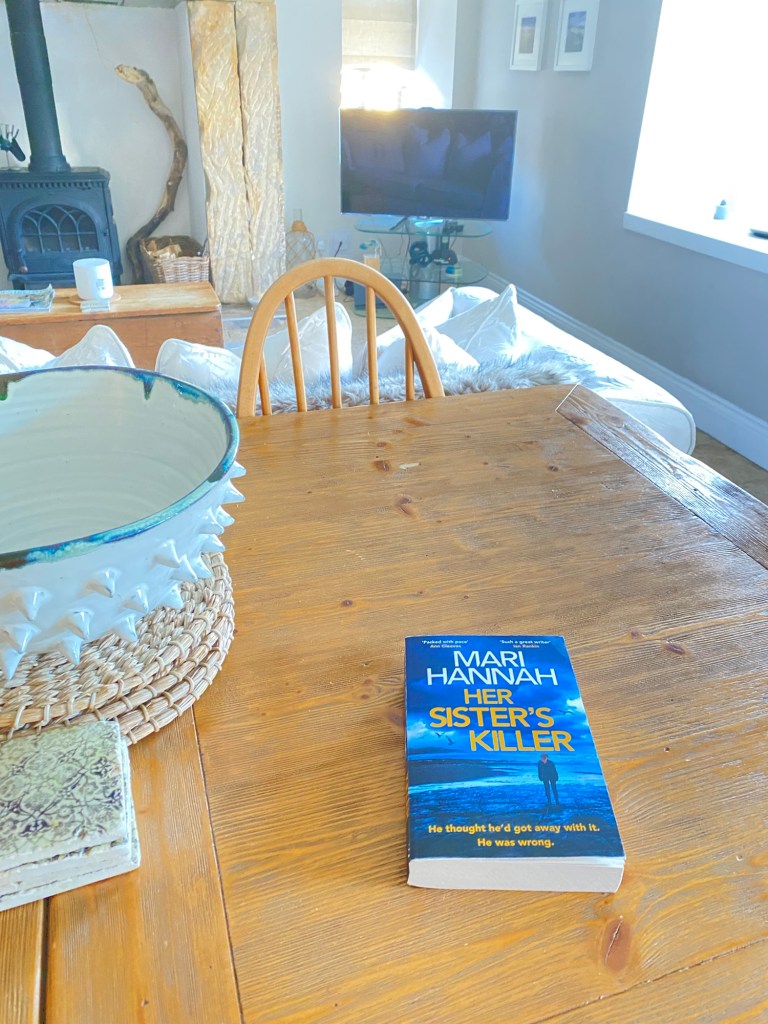
My Sister’s Killer by Mari Hannah

I’ve slowly been collecting the Stone and Oliver series over the past year, after one took my fancy in Northumberland’s famous Barter Books in Alnwick. Since then I’ve grabbed the paperbacks wherever I found one so I could read them all in order. Then this blog tour offer came along so I jumped at reading one completely out of sequence. Now I can’t wait for the rest of the story! 

Frankie Oliver and David Stone have been working together in the same MIT for the a few years, in their Newcastle headquarters jokingly referred to as ‘Middle-Earth’. However, the novel starts in a much darker place, many years before, when another detective is called to a body found on some waste ground. Horrified, he drops to the floor unable to contain his devastation. The body on the ground is his daughter. It’s such a powerful and emotive opening, leaving us in no doubt that this is a defining event for the loved ones of this girl. An absence that they still feel every day. For her dad it’s complicated by the fact he’s a murder detective and he missed Joanna’s last call. It’s arguable that this case is the very reason that her sister, Frankie Oliver, became a detective. She and David are an incredible team at work and have the potential to take their relationship further. It’s clear there’s been some ‘will they won’t they’ over the course of the previous novels. Now Frankie is taking a break from the team in Newcastle, a promotion to DI means she must fill a post back in uniform for a while, based out of the most northerly police station in the county, Berwick-Upon-Tweed. Frankie accepts and the team organise a leaving ‘do’. It’s there that Dave overhears an argument that immediately propels him back to the murder of Frankie’s sister. What’s said between the two men outside the venue sparks an idea in Dave’s mind. He has had an idea of how to investigate the cold case, but knows that he doesn’t want to bring more pain to the family. Hopefully Frankie’s secondment to Berwick means they won’t have to. 

Meanwhile Frankie’s first job is an RTC on the A1 and in the total chaos she finds a little boy handcuffed in the back of a van. The driver and passenger are dead and the van is a write off so Frankie can’t believe this little boy has survived. As she rescues him, an onlooker tells her that a man escaped out of the back doors straight after the crash. This opens up a trafficking case that might take her straight back out of uniform again. The boy, Amir, takes to Frankie. Possibly the first person in a long time who has made him feel safe. She shows a real maternal side with him and her sister-in-law Andrea is sure that Frankie’s sister Rae will feel the same. Andrea and Rae have been looking at fostering, much to Frankie’s surprise. Could they be the right fit for this terrified boy? Dave has been missing Frankie’s presence but he knows that solving the case of what happened to Joanne matters to her more than anything. He has just one officer -Indira- and a limited time scale to investigate. Frankie is the only person he wants to talks to but she can’t know until and if, they make an arrest. Especially since he suspects the murderer may have been closer than they ever imagined.

This really is a nail-biting story, written in very short chapters that are easy to devour very quickly. So many have a cliff-hanger ending too. The setting is beautifully captured in it’s contradictions: the modernity and buzz of Newcastle with the contrast of the wild countryside and beautifully rugged coastline. There are differences in policing too as we can see from Frankie’s time on the Scottish Borders. I really fell in love with Frankie’s family, because they are so loving and nurturing with each other. I could see how taking in Amir could be the best thing for him, but it could also put the tightly knit Olivers under stress or even into danger. I kept thinking about how distraught the family would be if something happened to him or to those like Andrea and Frankie who are trying to put the child trafficking gang out of business. The author cleverly uses these family dynamics, as well as Dave and Indira’s gentle and nuanced interviewing on the murder case, as a contrast or perhaps a breather between Frankie’s more nail-biting action sequences. The only drawback was that I’d be so desperate to know what happened next for Frankie that I might not take in all the detail of the quieter chapter in between. Of course that says more about my lack of patience than the book. As for the relationship between Frankie and Dave, I was very much invested despite not knowing everything that’s gone before. I can see both their perspectives and there are so many reasons not to take a risk, but if we never take a risk we might never know what might have been. It reminds me of the inspirational quote about fear of falling; ‘but imagine, what if you fly?’ 

Meet the Author

Multi-award winning Mari Hannah is the author of the Stone & Oliver crime series, the Ryan & O’Neil series and the DCI Kate Daniels series.

In July 2010, she won a Northern Writers’ Award for Settled Blood. In 2013, she won the Polari First Book Prize for her debut, The Murder Wall. She was awarded the CWA Dagger in the Library 2017 as the author of the most enjoyed collection of work in libraries. In 2019, she was awarded DIVA Wordsmith of the Year. In that same year, Mari was Programming Chair of the Theakston Old Peculier Crime Festival. In 2020, Mari was named as DIVA ‘Wordsmith of the Year’ and won Capital Crime’s ‘Crime Book of the Year’ award.

She lives in Northumberland with her partner, an former murder detective.

To find her or see where she’s appearing, visit her events page at: marihannah.com or follow her on Twitter @mariwriter.

Posted in Random Things Tours

The Blackbirds of St Giles by Lila Cain

Our story starts in 1768 on a sugar cane plantation in Jamaica, where a slave rebellion has been brewing. The signal will be sent to all the slaves by drum and Daniel has heard their rhythm. He needs to get to the house where his sweetheart Adanna works for the mistress, the house slaves aren’t in on the secret and he wants to get there in time. The field slaves might harm the house slaves along with their masters, perceiving their lives to be easier and their loyalties divided. When Daniel realises the house is already ablaze he leaves with his little sister Pearl, hoping to find a way to get off the island. His story then jumps to 1782 and the aftermath of the War of Independence where free slaves who fought for the British were promised a new life in England. Daniel was one such soldier fighting with the British under Major Edward Fitzallen, whose life he saved. Edward and his wife Elizabeth have taken Daniel and Pearl under their wing, meaning that both brother and sister have a level of education and independence one might think unusual for Jamaican slaves. When Edward is wounded he knows he won’t make the voyage home and calls Daniel to his side. He wants to ensure that Daniel and Pearl have a future in England and calls witnesses to his signature on a new will and testament. It hands all his worldly goods over to Daniel, telling him to call on his brother James to inform him of Edward’s demise and Daniel’s new position as his heir. Daniel naively expects the Fitzallen brothers to be equally honourable and he underestimates James who drugs Daniel, then throws the new will and all proof of Daniel’s claim and rank into the fire. Now Pearl and Daniel are abandoned in London with nothing.

There were many black soldiers shipped over here with the promise of a new life, without any provision made for them when they arrived. Many ended up in the area of St Giles, home to the infamous Rookery which was a warren of corridors and rooms under Covent Garden and accessed through St Giles church crypt. Here lived those forgotten black slaves, Irish immigrants escaping famine and others who had no means to live. People like Daniel and Pearl were outcasts from civilised society and known as the Blackbirds of St Giles, living in dark caves where sewage ran in channels through the rooms. The book was so beautifully detailed, taking us effortlessly into the late 18th Century like time travellers. I could sense absolutely everything from the steady thrum of the drums in Jamaica to the smells of London squalor and it’s poorest residences. The divide between those in poverty and those who are rich is a deep canyon, all the more shocking to Daniel who has become used to a certain deference and to Pearl who barely remembers the plantation and has grown up by Elizabeth Fitzallen’s side with all the privileges of a middle class young woman. Daniel and Pearl’s new home is a dark underground cave where it’s a choice between breathing or being cold because smoke from the fire can’t dissipate and simply sits in the room with them, making them cough and their eyes water. The rooms are filled with a sense of dark foreboding, worsened when Daniel sees the first ceremony with their self-styled King. I loved how the Black Apollo club is a haven by contrast with such an open and accepting feeling. Here black men are relaxed, having a drink or playing chess with friends. It’s a glimpse into the far future, because many of their customers can only dream of a time they’re not a servant, regarded with suspicion or hidden as a dirty secret. There’s also a contrast with Elias’s lodgings as King of the Rookery, he doesn’t share the dark caves of his subjects but instead enjoys plush lodgings policed by a beautiful, prowling cheetah called Infanta. 

The sense of terrible injustice is palpable and I was desperate for Daniel to get what is owed to him. Daniel and Pearl have been defrauded and it all feels worse because of the dignity and command he’s had under Edward Fitzallen. I found myself rooting for them both pretty quickly. Their friendship meant that Pearl was always well-dressed and learned to read, something of a privilege for a young black woman born into slavery. The only man who could have corroborated Daniel’s claim is back on his ship by the time Daniel wakes from being drugged. There’s no way to get what he’s owed now. It’s only when he starts training with ex-boxer Melkie Trimme at his St Giles gym that Daniel starts to feel a sense of purpose and pride again. If he can beat the European champion then he and Pearl can get better lodgings and start to repay the kindness shown to them by young girl Jen who has organised their place at The Rookery, brought them food from her pub job and introduced him to some of the most influential men she knows. Daniel is drawn to her, but is still plagued with guilt about Adanna.

For me the women were particularly interesting. In the literature written or set in the 18th Century we’re used to the upper and middle classes, not people like these at the bottom. If we think of the Regency novels of Jane Austen and the more contemporary Bridgerton series the women are accomplished, but it’s all focused on making a good marriage. Women who are poor have no time for accomplishments as they’re too busy surviving, but they have more agency and autonomy. Jen is such a pretty girl but she’s fiery and used to making her own decisions. She has very little but she’s surviving and shows kindness and generosity to those she cares about. Having survived an horrific childhood she is keen for rebellion and knows that Daniel might have what it takes to lead people out of The Rookery and end Elias’s tyranny. She also takes Pearl under her wing and guides her into earning her own money for herself. Daniel wants to protect Pearl and keep her in the middle-class propriety she’s been used to, but this is no use to her when they’re living in a squalid underground cavern. Pearl really rises to the occasion with very little complaint, starting to work at the pub with Jen, then sneaking out in the evening for singing engagements. She has a beautiful voice and Jen thinks it might be her ticket out of the slums. As for the Marquise, she has used her beauty and poise to get where she is. When we’re let into her opulent townhouse Daniel is shocked at the squalor most black immigrants are living in compared to her. How could a black woman reach the heights she has? That’s without mentioning the residence in France or her wardrobe, full of all the gowns and perfumes she can wear. Could there be hints of a darker truth underneath the opulence?

All in all this is a fantastic historical novel; vivid and dark, but ultimately hopeful. I love it when authors take a character and write them back into the period of history they’ve been erased from. Middle class writers would rarely write about the people of The Rookery. Even Charles Dickens didn’t hint at this underground life, despite his interest in those living in poverty. Obadiah is such a great character, a disabled resident of the Rookery whose intellect and philosophies are articulate and inspiring. The fact that he runs the brotherhood at the Black Apollo and has a place at the head of the planning table is amazing. The other men do look up to him as their oracle. It seems strange to imagine that the novels of Jane Austen are only a few years away, because in them we never hear of people like this. It’s easy to forget that not everyone lives in the countryside and working class women are out there making things happen, working everyday and not at home with an embroidery hoop on their lap hoping for a gentleman caller. There’s no one from a different country and even the poor are ‘distressed gentlefolk’. Comparing this world with Austen’s shows how urban, dynamic and exciting London is, especially if women and people of all races have an opportunity to create their own future. Some did, like Olaudah Equiano who was enslaved to a master and a role in the Royal Navy. He came to Britain at the same time as Daniel and once he’d bought back his freedom had become a merchant. Sadly he had to stop travelling when he was almost captured and sold back into slavery in Georgia. However, he did write a memoir that’s still in print today. I came away from this book with everything crossed for Daniel and Pearl, as well as Jen. I was so immersed in the story that it felt strange to look up and find myself back in my own living room. 

Meet the Author

Writing together as Lila Cain, Marcia Hutchinson and Kate Griffin are the co-writers and creators of The Blackbirds of St Giles, the first of two books centred on the lives of members of the little-known black community in Georgian London. United by their passion for history and a strong desire to tell an unfamiliar – and hugely resonant – story, Kate and Marcia are delighted that ‘Blackbirds’ and its sequel will be published by Simon & Schuster.

Marcia Hutchinson worked as a lawyer before founding educational publishing company Primary Colours and was awarded an MBE for services to Cultural Diversity in 2010. Her solo debut novel Mercy is due for publication in summer 2025. 

Kate is the author of Fyneshade (Viper), a stand-alone Neo-Victorian gothic novel of witchcraft in a house of dark secrets. She is also the writer of the popular Kitty Peck thriller series (Faber and Faber) set in the Music Halls of Victorian London. After studying English Literature at university, Kate worked as assistant to a London antique dealer, as a journalist and in PR. Until recently she was Head of Communications for Britain’s oldest conservation charity, The Society for the Protection of Ancient Buildings (SPAB). Her love of old buildings and the stories they tell continues to inspire her.

Posted in Orenda, Random Things Tours

Living is a Problem by Doug Johnstone.

Living is a problem, because everything dies. Biffy Clyro

Every Skelf novel begins with a funeral, but they rarely go off without a hitch. This one is no exception, with a drone buzzing the ceremony. Could it be to do with the deceased or has someone got it in for the Skelfs? Jenny’s following the case from the last book, keeping an eye on the cops they investigating for sexually abusing young girls in the travelling community. Both are inexplicably out on bail and Jenny likes to know where they are, talking to Webster’s wife and setting up surveillance cameras. Hannah’s case also links back to the last book, concerning Brodie the new recruit to the undertaking business. Brodie had been living on the streets since the loss of his baby son broke his world apart. He has found strange scrabbled marks around his son’s grave that don’t look like they’ve been done by an animal. Hannah agrees to set up a camera, but being told that Brodie hears voices she wonders if he might have gone to the grave and acted subconsciously. Dorothy’s case comes from her involvement with a community choir that includes some Ukrainian war widows. One of the women, Yanna, has gone missing. Her husband Fedir was killed over a year ago and now she’s left her two small children with her mother-in-law. Could she have returned to Ukraine to fight, or has something happened to her? Each of the Skelf women feel vulnerable this time and I felt like the author was playing on my emotions a little. I could sense we were on the verge of a huge change and it left me on tenterhooks throughout.  

Hannah’s vulnerability comes from finishing her PhD and feeling a bit lost. While there’s always work in the family businesses she doesn’t know if it’s what she wants to do forever. She’s happily married to Indy but worries about her fascination with powerful older women, such as the astronaut Helen in the last novel and now a professor, Rachel Tanaka who researches into people who hear voices. Is it simply that she’s attracted to their power and position in academia or is it a sexual attraction? I wondered whether it was their competence and their certainty in their career and outlook that she craved. Having Jenny for a mum can’t always have been easy, especially when she was drinking. Then there was her relationship with Hannah’s dad Craig, which was full of fighting and volatility. It could have been scary for her. Maybe these older women feel more stable and dependable and she’s craving what she missed as a child? Jenny felt vulnerable throughout the novel. Part of this was entering into a new relationship, a time when your feelings are on the line and you’re not sure whether it will work out or not. This relationship comes with the extra pressure of knowing him for a long time. She is aware that if it does go wrong, more than her own feelings are at stake. Also Webster and Low, the police officers Jenny is a witness against, are piling on the pressure. They’re facing accusations of sexual assault and the beating of Dorothy and Thomas, but are on bail. Jenny feels unsafe, especially when Webster pulls a knife on her in the street. She petitions the officer in charge to have them dealt with for intimidating a witness. Until they’re remanded everyone is vulnerable. Thomas is not coping and Jenny has started having the odd drink or two. Where will it end? 

Dorothy feels the most vulnerable to me. She’s still working on funerals and investigating, and it’s clear how much her drumming and being part of a band is a solace for her. Usually, Dorothy and Thomas have been a united front. It’s always been a strong relationship, based on friendship, but now she can feel a shift in him. The beating they took from Webster has left them both at a low ebb, but instead of coming together to recover, she feels that their experience has separated them. Thomas seems distant and inward looking, he’s also started the process of Swedish Death Cleaning – sorting through his belongings and giving away what he no longer needs. Even though he explains that it is not just for those who are dying, Dorothy is uneasy that he appears to be putting his affairs in order. She has suggested PTSD and counselling, but he wants to deal with things in his own way. His way started to scare me. What happens when an experience changes your partner beyond recognition? I sensed impending doom and I was on high alert as Dorothy tried to find out what his plans were. I was genuinely scared for her and every time she seemed close to danger my heart skipped a beat. I realised just how fond I was of this badass grandmother. As we moved towards a potentially terrible conclusion I could barely breathe. Could I cope with losing the amazing matriarch of this family? Within her thoughts was a counsellor’s lament: 

‘Sometimes she got it wrong, but she always attempted to have empathy. She tried to see things from the point of view of Yana, Oliver, Veronika and Camilla. She tried to understand Thomas, as well as Griffiths and Webster and Low, their victims Billie and Ruby’. 

Sometimes we have so much empathy for others that we forget about ourselves. Our own anger and sadness gets pushed to the bottom of the pile as we try and try to understand why people do what they do. Each of the Skelf’s cases has a surprising ending and a particularly devastating one for all the women.

As usual the author included his mix of science, philosophy and spirituality. The phone box in the garden is still doing it’s bit, helping the bereaved speak to their loved ones. The funeral business is changing towards being even more sustainable, signified by the new wording on their business information. The Skelfs are now ‘natural undertakers’ rather than funeral directors. It changes the focus and places the dead person and their family at the centre of planning the funeral they want, rather than a stranger dictating what happens. Their resomation rather than cremation system is going well, they’ve stopped embalming altogether and they have mushroom suits that speed up the process of decomposition and improve the soil. They also have their own funeral site for burials and the move towards wicker and cardboard coffins is becoming accepted practice. They are still working with the council on the Communal Funeral Project, providing funerals for people who are homeless or destitute. Hannah is interested in the concept of panpsychism, the idea that everything in the universe has consciousness. Therefore every element is conscious, earth, air, water and fire. Even a rock has an essential spirit. I was also fascinated with the Hearing Voices movement, something I’ve been aware of from working in mental health, but the statistic that one in ten people hear voices or have auditory hallucinations was surprising. I have a medication that causes auditory hallucinations and I only take it at night, so as I’m going to sleep I can hear a constant murmur as if someone is having a conversation downstairs or the radio has been left on. Luckily I know what it is, but for people with direct and often damaging voices it must be so hard to ignore. I loved that there are other cultures where hearing voices is more accepted, normal even. Maybe people who hear voices are simply more in tune with the essential spirit in all things? 

Sometimes, the only thing that keeps the Skelfs (and us) going is hope. There’s usually a wellspring of hope in these novels. A hope for recovery from addiction. Interesting and unusual ways of coping with grief, such as the wind phone. The people these women lift up, like Archie and now Brodie, leaves the reader with a sense that they are on the right side, a glimpse of a more compassionate and inclusive future – something that feels all too distant these days. No other workplace would have employed Archie who has Cotard’s Syndrome, the delusion that he’s dead. Brodie is a risk, he’s been homeless and is in deep grief for his little boy Jack. When his ex, Phoebe, tells Hannah that he hears voices she has to think about this carefully. Could Brodie be mentally unwell? Is this that one time when their trust and nurturing instinct is wrong? I felt there was a little less hope here. Along with the vulnerability comes doubt and there seemed to be a lot of it. Although that’s no surprise when the very people we expect to serve and protect, like Webster and Low, are capable of using that trust and abusing it. Or when the person we share our most intimate moments with can change beyond recognition. Sometimes we have to grieve for those still living. One of the most hopeful things mentioned in the novel was The Future Library Project, which is commissioning new books by writers every year for the next one hundred years. They won’t be read until 2114. This seemed like such an act of hope. The assumption that in a hundred years people will still be hungry for stories, for novels that help them make sense of the world and the people in it. Yet, I kept thinking back to the title of the novel, a quote taken from a Biffy Clyro song that is tattooed on a homeless man whose funeral they’re planning. The full quote is ‘living is a problem, because everything dies’. It felt like an acceptance that life is a series of seasons, or chapters in a book and the story must have ups and downs in order to feel complete. There are beginnings and endings, but some ending arrive before we’re ready. I’m always hoping for one more book in this incredible series and I know whenever the end comes it will be too soon and I’ll miss these incredible women so much. 

Published by Orenda Books on 12th September 2024

Meet the Author

Doug Johnstone is the author of seventeen novels, many of which have been bestsellers. The Space Between Us was chosen for BBC Two’s Between the Covers, while Black Hearts was shortlisted for and The Big Chill was longlisted for Theakston Crime Novel of the Year. Three of his books – A Dark Matter, Breakers and The Jump – have been shortlisted for the McIlvanney Prize. Doug has taught creative writing or been writer in residence at universities, schools, writing retreats, festivals, prisons and a funeral home. He’s also been an arts journalist for 25 years. He is a songwriter and musician with six albums and three EPs released, and he plays drums for the Fun Lovin’ Crime Writers, a band of crime writers. He’s also co-founder of the Scotland Writers Football Club and lives in Edinburgh with his family.

Posted in Random Things Tours

This Motherless Land by Nikki May.

This book was an absolute joy to read, which may sound strange considering the subject matter but somehow it awakened my senses, stirred my emotions and kept me reading. In fact I read it so quickly I was finished in an evening that turned into morning before I knew it. Funke lives in Nigeria with her mother, known as Misses Lissie to most people, her father and brother Femi. Mum is a teacher and Dad works at the university. Their entire world is shattered one morning as they make their normal run to school when their mother’s car fails to stop and ploughs directly under a lorry. The drivers side of the car is destroyed but Funke’s side is left completely unscathed. She loses her mother and brother in a moment. In his grief, her father Babatunde is inconsolable and he takes it out on Funke. How did she get out without a scratch? Encouraged by his superstitious mother, he calls Funke a witch and insists she must be protected by some magical being. Seeing how Funke will be treated by her grandmother, her aunties put their heads together and decide she should be sent for a while to her mother’s family in England. Her white family. Funke is ripped away from everything she knows and sent to The Ring, the mansion where her mother and Aunty Margot grew up. There, although she isn’t being hit or accused of evil spells, she feels the resentment of Aunt Margot and her cousin Dominic. They call her Kate, after all it’s easier than pronouncing Funke isn’t it? There’s no colour, bland food and where she was accused of being white in Nigeria, here she is seen as black – with all the racist connotations that come alongside it. Especially in white, upperclass Britain. England’s only saving grace is her cousin Liv. Liv scoops her up and feeds her comfort food. The problem is it’s not the food or the comfort she’s used to.

This is a book about being in between. Funke’s mother was ostracised by her family for marrying a Nigerian man. Aunt Margot sees Lizzie’s relationship with Babatunde as the reason for her own engagement being called off just before the wedding. In her eyes Lizzie was selfish, pursuing her own feelings at the expense of her family. She feels Lizzie had the looks, the charisma and the man she loved, while Margot was left heartbroken and with parents who seemed to miss Lizzie more than they enjoyed Margot’s presence. She sees Funke as her mother’s daughter and a threat to her own children. Her parents seem to love Kate, as they’ve christened her, and Margot doesn’t want her to take all the attention, the love and their eventual inheritance. She’s a bitter woman who is very hard to like. Sadly for Funke, history repeats itself and on the night of their prom a series of events mean they must drive home early. Liv is drunk and high. Yet even Funke, who is teetotal, feels unwell. Dominic throws caution to the wind and decides to drive them home, despite his own drinking, and a terrible accident occurs. Everyone survives but Liv suffers a bad break to her leg. In the aftermath Dominic asks Funke to admit to driving, which she agrees to, not knowing that covering for her cousins will lead to her life being uprooted for the second time.

Funke feels like she belongs nowhere. In Nigeria when her mother was alive they had a wonderful life, even if children would follow her singing a song about her pale skin. That’s nothing to the blatant racism she faces in England, but she faces it down and it fuels her will to succeed. Then she’s back in Nigeria and is again the odd one out. This time she’s in her dad’s new family and their lifestyle in the village is very different to the childhood she remembers on the university compound. His new wife and their children eat and live in ways her dad would have dismissed as ‘bush’ when Funke was a child. Her small brother and sister are black and fascinated with her pale, mixed race skin. Things are familiar, such as the spicy red stew and the heat, but it’s a changed land without her mother in it. At least in England she didn’t expect her mother to be there. Now she faced with the shock of her absence all over again. Will she ever find home? Meanwhile, back in Britain, when Liv finally comes round from the accident she asks for Kate. What will her mother tell her?

I thought the author brilliantly showed how different people cope with mental pain. Funke takes a bottle top from her mother’s hoard (for craft projects) and holds it in her hand so hard that it cuts into her palm. Liv is horrified that she’s hurt herself like this, but for Funke it’s the only thing that distracts her from the grief of losing her and her brother. Liv also deals with motherly absence, but externalises her feelings in a different way. She has a mother who is present, just not for her. Liv starts to drink excessively, uses marijuana and acid tabs to blank out the feelings that she isn’t loved and therefore isn’t worth anything. When we’re children and we’re rejected by a parent, we never assume it’s the parent’s fault and we don’t stop loving them. Instead we internalise their criticism and think we are the problem. Liv has a lot of casual sex because she thinks it sex is all she really has to offer. Meanwhile Funke struggles to give love and truly trust someone. She is in a relationship with a young man who is keeping his true sexuality under wraps, because it’s not accepted in his family or community. The younger people are aware he’s gay and call Funke his ‘beard’, but how far can she take this relationship? What if he suggests a more permanent arrangement and is Funke willing to give her life away so easily? The the same root cause, a loss of the mother figure they so needed, affects both girls, it just manifests in different ways. With them both on opposite continents, how will they ever find each other again? The spaces between can be painful and isolating places to be and the author depicts that with such tenderness and understanding. However, liminal spaces are also freeing. Being in-between gives us the space to choose, to take bits and pieces from each place, each family and make our own identity. I found the end chapter so uplifting and it gave me hope that we can each forge our own identity, once we’ve explored who we truly are. This is a fascinating, touching story about growing up and how we become who we are. It’s vibrant, atmospheric and an absolute must read.

Meet the Author

Born in Bristol, raised in Lagos, I’m proud to be Anglo-Nigerian. I ran a successful ad agency before turning to writing and now live in Dorset with my husband, two standard schnauzers, and way too many books.

My debut novel WAHALA was inspired by a long (and loud) lunch with friends. It was published around the world in January 2022 and is being adapted into a major BBC TV drama. This Motherless Land is my second novel.

Posted in Random Things Tours

The Silence In Between by Josie Ferguson

‘Evil demanded little of me. It merely asked me to stay silent – to do nothing. And I complied.’

Imagine waking up and a wall has divided your city in two. Imagine that on the other side is your child…

Lisette is in hospital with her baby boy. The doctors tell her to go home and get some rest, that he’ll be fine.

When she awakes, everything has changed. Because overnight, on 13 August 1961, the border between East and West Berlin has closed, slicing the city – and the world – in two.

Lisette is trapped in the east, while her newborn baby is unreachable in the west. With the streets in chaos and armed guards ordered to shoot anyone who tries to cross, her situation is desperate.

Lisette’s teenage daughter, Elly, has always struggled to understand the distance between herself and her mother. Both have lived for music, but while Elly hears notes surrounding every person she meets, for her mother – once a talented pianist – the music has gone silent.

Perhaps Elly can do something to bridge the gap between them. What begins as the flicker of an idea turns into a daring plan to escape East Berlin, find her baby brother, and bring him home….

This book filled me with such complex and difficult emotions I had to put it aside for a couple of weeks and read it when I felt stronger. I don’t know whether it was the theme of baby loss, something I’ve sadly experienced, or whether it was because I felt unwell but the response was visceral. There’s a scene in Friends where Joey finds the emotion of Little Women so upsetting he has to put the book in the freezer, something he’s only done with books that terrify him before. As I clicked out of my digital ARC and snapped the cover of my iPad closed with a snap, I felt like I needed to bury it under a few pillows so it couldn’t reach me. As Lisette realises that she can’t get to her son, I felt that maternal bond stretched to it’s limit. Until it begins to tear. When I started to feel better I restarted it and it really is an exceptional piece of writing. If you love historical fiction and work that really burrows into the human psyche and our complex emotions then this is an absolute must read for you. The quote above really hit home with me because this is something Lisette expresses when she sees Jews being marched out of Berlin to an unknown but terrible fate. In fact the family seem to avoid rumour and talk about them being placed somewhere else, whether that’s another city or country. During the war, when Lisette stumbles across the mass movement of Jewish people from her neighbourhood a woman calls out in desperation, pleading with Lisette to take her baby. Lisette feels so much guilt for looking away, for pretending not to hear, but I put myself in her shoes and couldn’t see what else she could do. If she’d been seen taking the baby she could have been arrested or killed. I thought she was so hard on herself.

The author sets her story across two timelines: one at the end of the WW2 and the other is set in the months following the erection of the Berlin Wall in 1961. She starts her story in the hours between Lisette leaving her sick baby son in the West Berlin hospital and the authorities beginning to build the wall. It really is a matter of hours. The panic when she realises she can’t get back to him is devastating and I felt her grief so deeply. Then we go back Berlin in 1945, when the war is really beginning to bite. The promised victory seems more and more distant: food is scarce; more men are being called up; bombs are starting to fall on Berlin. This is where ordinary German people, at least those who haven’t bought into Hitler’s rhetoric, are starting to realise that victory is a long way away. Maybe, they might even lose. Often in dual timeline novels I am drawn to one story line more than the other, but here the author strikes a perfect balance. Both timelines are compelling, evocative, terrifying and deeply moving.

The depth of research behind these wonderful characters and their devastating story is clear from the outset. It was brilliant to be able to read more in the author’s notes because if you’re like me and only remember the Berlin Wall coming down, there’s a lot to learn here. Firstly I had no idea of the geography. In my brain there was a wall running through the capital because Berlin was fairly central to Germany. That is not the case at all. The county was divided, but Berlin was within the East German side of the country. Previously, people living in East Germany could openly travel to the West of the country. Comparing the two sides, Lisette is aware of her side of Berlin seeming like a monochrome version of the world but they could travel across to the more colourful and vibrant side. This colour wasn’t just to do with Western money, Lisette is aware of living in fear of the Stasi, a network of agents who spy on their own citizens. I had no idea that West Berlin was essentially split amongst the allies so there were distinct areas patrolled by the French, American and British forces. It’s the small horrific details that hit home though – there were streets on the edge of the new barrier that provided an escape route if you passed through one of the houses but as the days go by the windows are slowly bricked up. These facts ground the author’s story in it’s time and place, both timelines showing a city divided. From the rhetoric of 1945 that slowly separates the Jewish residents using derogatory language and propaganda, the targeting of their businesses and homes, forcing them to wear a yellow star and subjecting them to violence before removing them from their neighbourhoods towards the trains that will take them to Belsen and Auschwitz. Then we’re thrust into the paranoia of the 1960’s where even your neighbour might be a Stasi spy and I had my suspicions about their neighbour with her budgie in it’s cage – a metaphor for the new cage they find themselves in. They sell the wall as an ‘anti-fascist barrier’ with strange echoes of Putin’s excuses for the invasion of Ukraine. Elly’s father isn’t the only one who realises that this is not for keeping others out, it’s for keeping them in. The city’s buildings are still peppered with bullet holes and bomb damage, a visual representation of it’s residents who bear the internal scars of war. War is indiscriminate. Once it comes to ordinary people there’s never a bad and good side, every resident is affected by poverty, trauma and loss.

I loved the more unusual aspects of the characters, such as Lisette’s daughter Elly, who has a synaesthetic way of encountering the world. She knows that the people of this city have lost their music. She experiences others in terms of a melody only she can hear that expresses their emotional state. It is the first thing that connects her to the Russian soldier she meets. They don’t speak each other’s language but Elly can feel his music and for the first time it combines with hers creating a beautiful harmonious melody. Along with her mother’s silenced voice, people have lost that unique way of expressing themselves through sound. In East Germany there are many ways to be silenced and the Stasi have instilled a fear in their own people, that they’re always being listened to. I loved reading the notes at the end of the book and it has already inspired me to read further. I knew about the Berlin Wall of course but not where it was situated and how the rest of Germany was divided was totally new to me. I sort of knew one side was communist and the other wasn’t, but that was all. I hadn’t even realised that Berlin was situated inside the East part of the country. I’d imagined just one long dividing wall down the country that also separated Berlin, with a no man’s land between. I hadn’t known that until the 1960’s people could pop easily between East and West Berlin, giving them the possibility of escaping into the west permanently. With the hospital on one side of the wall and their home on the other Lisette starts to fall apart, but not all was rosy in this household to begin with. We get a glimpse into how things have been for all three generations in the flat, there are so many memories weighing these people down, one more haunting than the other. Yet we are given a little hope when one family decides they must get to the other side. Adventurous and thrilling as it is, their life is at stake, something that really hits home when they see someone try to swim across. The author takes us effortlessly back and forth in time to understand this family and my heart kept breaking for them over and over for. While I struggled to read this at first, I’m so happy that I went back to it because it was breathtaking. It was as if someone had bottled both moments in time and simply poured them onto the page, raw and confronting. This is an absolute must read for historical fiction fans and a book I will definitely go back to in the future.

Meet the Author

Born in Sweden, to a family of writers and readers, Josie Ferguson moved to Scotland when she was two. She returned to Sweden in her twenties, where she completed a vocational degree in Clinical Psychology (MSc). Upon graduating, she moved to London to pursue a career in publishing, something she had dreamed about since delving into fictional worlds as a child, hidden under the duvet with a torch.

She later moved to Asia in search of an adventure and a bit more sun. She currently works as a freelance book editor in Singapore, where she lives with her husband and two young children. While training to become a clinical psychologist, Josie learned about the complexity of human nature, something she explores as a writer. She believes books about the past can change the future and she aspires to write as many as possible. The Silence in Between is her debut.

Posted in Random Things Tours

Toxic by Helga Flatland

When Mathilde is forced to leave her teaching job in Oslo after her relationship with eighteen-year-old Jacob is exposed, she flees to the countryside for a more authentic life.

Her new home is a quiet cottage on the outskirts of a dairy farm run by Andres and Johs, whose hobbies include playing the fiddle and telling folktales – many of them about female rebellion and disobedience, and seeking justice, whatever it takes.

Toxic was a perfect read for me because the author creates such psychologically detailed characters and a setting so real I felt like I was there. Helga never underestimates the intelligence of her readers, assuming we’ll make sense of these complex characters and their backgrounds. The story is structured using two narrative voices, that of Mathilde and Johs. Johs’s narrative establishes both his family and the setting of the farm where Mathilde will make her new home. At first the narratives seemed completely divorced from each other; life at the farm is only just starting to undergo change after the rather stifling management of their grandfather Johannes, whereas Mathilde is a city dweller who seems hellbent on pushing boundaries and pursuing freedom. It is that search for freedom, during the COVID pandemic, that starts Mathilde hankering after a more rural life and losing her job is the catalyst for taking action. Quickly I became so drawn in by the two narratives that I stopped worrying about a link and once Johs and Mathilde are on the same farm their differences create a creeping sense of foreboding.

Mathilde is a teacher by profession, teaching students up to the age of 18. She is approached by a student, Jakob, and doesn’t even seem to stop and think about what the consequences of a potential affair might mean either for him or for her job and reputation. I was shocked that when called in by the school’s principle she doesn’t even try to deny it. She rationalises that he’s an adult, over 18, so it isn’t illegal. Everything was consensual and in fact Jakob approached her and she has proof of his pursuit in their messages. She was no longer teaching him directly when their affair began. Yet she doesn’t seem to be defending herself with an underlying awareness that what she’s done is at least unethical and an abuse of power. It’s as if she really can’t see the problem. Mathilde has very few boundaries it seems and allows her wants and needs to become her driving force. She doesn’t seem to recognise that she’s made an active choice, instead assuming their encounters were inevitable or ‘just happened’. Her indifference in the meeting at work, becomes obsession afterwards as she messages Jakob frantically wanting to talk. Jakob isn’t an innocent party in this, to me he seems largely indifferent emotionally even when the relationship is at it’s peak. It’s lust rather than an emotional connection on his part and I even felt there was an element of pride that he’s bedded a teacher. He rather likes the status the conquest gives him amongst his friends. He comes across very cold. I was interested to see if she would hear from him again, once she leaves Oslo.
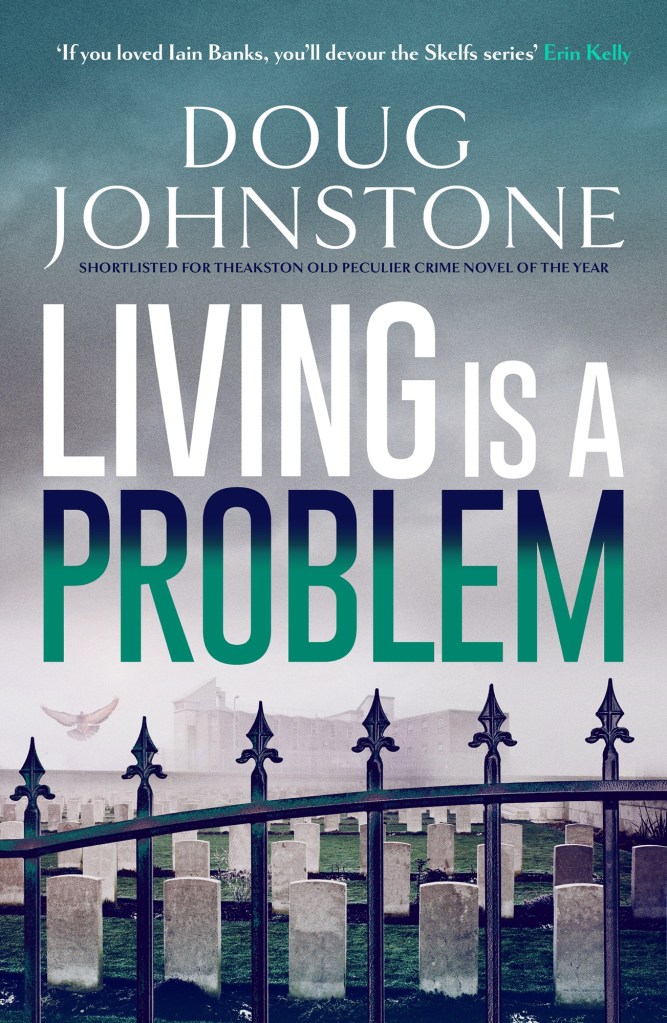
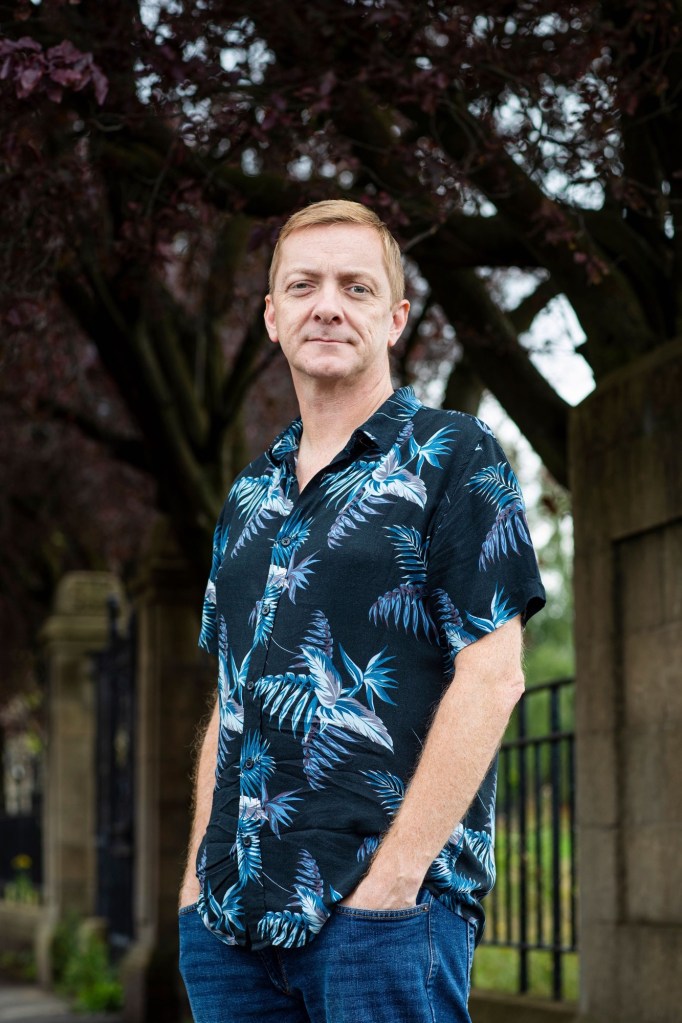
The farm and it’s family are a world of difference to Mathilde’s city routine. Their life is regimented, ruled by the routine of the dairy cattle and the calendar for their arable crops. Andres is the brother who inherited the farm, but it is a family concern and even their elderly mother has the same hardened attitude and work ethic. Even if Johs has decided to take his day off, he often sees his mother rather pointedly starting tasks she thinks he should be doing. There’s a definite imbalance between the way Johs and Andres are treated by their parents. Johs is often quietly infuriated by his brother, who is paranoid about COVID symptoms and often takes sick days when there’s very little wrong. Yet on those days their mother happily picks up Andres chores without any of the attitude she gives Johs. He sees his mother as a cold woman and I would have to agree. She doesn’t show her love for her husband or Johs and even though she appears to spoil Andres she sometimes barely talks to them, just silently follows the routine the farm has always had probably since she was a little girl. Grandfather Johannes looms like a dark shadow over everything, not just the small house where he lived his final years, but the main house too. Johs feels his presence strongly in the living room, where he spent his final days in a hospital bed largely silent except for sudden, shocking expletives and insults about their grandmother. One evening he suddenly yells that he doesn’t want to spend eternity in the same grave as that ‘whore’. There’s an unspoken code here, one that’s different for men and women.

The author uses local Nordic myths and songs to give us a sense of the history of the area, but also the attitudes towards modernity and women. I found these songs harmless at first, simply an understandable part of a community where families have remained for generations. However, the more I heard, especially with their interpretations from granddad Johannes who performs them on his Hardinger fiddle, the more the content felt controlling and misogynistic. He seems to prefer women who are seen and not heard, who don’t interfere in the business of men but work hard and remain loyal to their husbands. All the songs seem to reference young women who want more than the traditional life, who might fall in love with the wrong man or try to leave. They always end with the woman suitably punished, imprisoned somewhere or even killed. I felt that Johannes actively believed in these values and indoctrinated his family with them. That’s not to say his grandsons had an easy life, because he expected hard work on the farm, excellence on the fiddle (Johs is considered not good enough) and feats of strength and masculinity when out in nature, such as making them dive naked into a high waterfall when they were only boys. Johannes was a bully and I hate people who bully. Johs believes his grandad is responsible for his mother’s coldness, towards him and his father. If you never receive love, how can you give it? While Andres has a wife and child, Johs has remained single and lives alone in the big house. He wants to make changes to modernise how they farm and has succeeded in getting the milking process mechanised. Now he wants to rent their grandparents small house next door to his and this brings Mathilde into their orbit.

This is where the book’s tension starts to build and I couldn’t imagine how Mathilde’s lack of boundaries and open sexuality would fit in here. Johs is drawn to her and watches her from his windows that overlook her garden. He seems to find her differences fascinating, although the more everyday aspects of her character do irritate him. She wants to make changes to the house, which he doesn’t mind, in fact the more she erases the smell of his grandfather the better. It’s her lack of work ethic and her waste that he finds difficult. In the spring she asked to plough up some of the lawn to create a vegetable patch, but then never plants anything. By the autumn it’s a muddy patch of weeds but still she sits by it reading a book with no attempt to clear it. She doesn’t cut the lawn and the property is looking shabby. This brought back a reminder of living with my Polish father-in-law who couldn’t understand why we were remodelling our garden but not planting a single vegetable. I was creating a garden we could sit in, enjoy the fresh air and beautiful flowers. He saw it as a waste of land when we could have been self-sufficient. He loved that his other son had bought a property and immediately ploughed up the tennis courts and planted potatoes. It was simply a different background and life experiences coming up against each other. It’s the same here, two totally different upbringings have created different values and lifestyles. Yet I felt that an antipathy was building towards Mathilde and that one wrong move could cause this tinder box to ignite. With her lack of boundaries, that wrong move seemed very possible. I was surprised by where the ending came, although not shocked. As I took a moment and thought back, every single second we spend with each character is building towards this moment. Utterly brilliant.

Meet the Author

Helga Flatland is one of Norway’s most awarded and widely read authors. Born in Telemark, Norway, in 1984, she made her literary debut in 2010 with the novel Stay If You Can, Leave If You Must, for which she was awarded the Tarjei Vesaas’ First Book Prize. She has written six novels and a children’s book and has won several other literary awards. Her fifth novel, A Modern Family (her first English translation), was published to wide acclaim in Norway in August 2017 and was a number-one bestseller. The rights have subsequently been sold across Europe and the novel has sold more than 100,000 copies. One Last Time was published in 2020 and also topped bestseller lists in Norway. Helga lives in Oslo.

Out on 23rd May from Orenda Books