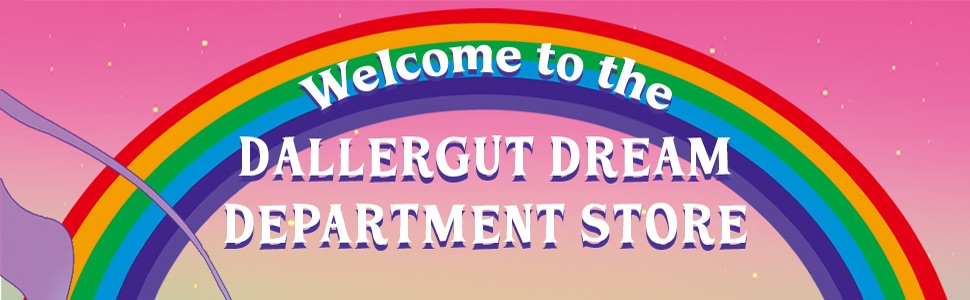
I’m a little late and probably too old for the sudden popularity of Korean culture. I’m aware of BTS and Squid Game, but have never listened to or watched either of them. Despite that, I’m aware from my step-daughters, nieces and nephews that Korean music and film-making are innovative and unique, two words I’d apply to these novels. I loved the premise, that there is a department store that supplies people with dreams. Our heroine Penny gets a job at the Dallergut Dream Department Store, somewhere she’s dreamed of working. There’s something hypnotic about the world this author has created, because it’s fantastical and unlike anything I’ve read since childhood. As Penny finds her feet we start to see the way the store works: the communication between the menagerie of unusual creatures who run each department and the actual dream makers who craft their dreams to the individual. These are the upper echelon of the organisation, craftsmen who have to weave a narrative that answers life’s questions, builds hope of love in the air and solves problems. When the dreamer comes in they are served by one of the staff in the store. As soon as I realised this, my mind drifted to the hope they were wearing pyjamas. Some don’t and have to be given something to put on, which maybe explains the strange clothes I’m often wearing I’m my dreams. After a spell of flying dreams I always wear pyjamas!
I really loved the quirkiness of how the store and the system worked. Each sleeper then discusses their needs or can be given hints by those who work in the store – sort of like an Apple Genius, but with dreams. We’re also shown how their dreams pan out with in the real world and whether they help the dreamer make a decision or help them unravel a sticky situation. The dreamer does have to pay for their nighttime adventure and they pay with emotions, which are then recycled by the dream-makers into even more detailed and elaborate dreamscapes. I’m such a sucker for whimsical stories and characters that are complex and quirky. The author delivers on both fronts here.
Return to Dallergut Dream Department Store
If you wish to delve deeper into the Dallergut Dream Department Store this is the second instalment. It takes the reader back to Penny and her colleagues drafting dreams. Penny has finished her first year at the store which means she is now officially part of the dreams industry. She can now go behind the scenes to the Company District, on a special express train of course, where the raw materials for dreams are stored. She’s hoping to have some of her questions answered by this peek behind the scenes. She wants to understand more about customers, especially those that buy a dream but don’t return to the store. It would be great if she could find a way to improve repeat custom. As always though, when we delve deeper behind the scenes of any industry, we see it’s darker side. There is a complaints process for customers and they end up at the Civil Complaints Centre where Penny starts to find answers about those non-returning customers. Their concerns were very relatable and it was interesting to see how customers with disabilities were being accommodated. They are striving to be inclusive and I loved that, having had many discussion with friends who have disabilities about whether they have a disability in their dreams (sometimes I do and sometimes I don’t). Alongside the emotional and slightly darker elements was the usual whimsical and quirky world of the first book, alongside the tiniest hint of romance. Ultimately, this is a warm-hearted fantasy that’s like a hug in a book.
One week in Cape Cod. The perfect family holiday. What could possibly go wrong…?
For the past two decades, Rocky has looked forward to her family’s yearly escape to Cape Cod. Their rustic beach-town rental has been the site of sweet memories, its quirky furniture and mismatched pots and pans greeted like old friends.
Now, sandwiched between her children who are adult enough to be fun but still young enough to need her, and her parents who are alive and healthy, Rocky wants to preserve this golden moment forever. This one precious week when everything is in balance; everything is in flux.
But every family has its secrets and hers is no exception.
With her body in open revolt and surprises invading her peaceful haven, the perfectly balanced seesaw of Rocky’s life is tipping towards change…
Rocky and her husband Nick have reached that middle point in life where adults seem to be at their most stretched. They’re coping with children who have left home or are living at university as well as increasingly elderly parents who need more help than they have before. This is the sandwich of the title. The emotions are conflicting, from the parental support a fledgling teenager still needs to the worry about their independence, as well as the feelings of loss that that come from empty nest syndrome. As for parents, it’s like a whole new stage in the relationship defined in the novel as ‘anticipatory grief’ because as they become increasingly frail there’s a constant reminder that the clock is ticking. This reminder of their mortality brings up feelings of loss and a sense of our own life being at their point where more is behind us than in front of us. I’m saying ‘we’ because I fall bang in the middle of this category. I have parents who have endless medical appointments, particularly Dad who seems to have surgery on a yearly basis like some sort of annuity. However, I also have one stepdaughter away at university, really stretching her wings as she ends her second year and moves in with her boyfriend. We’re only a quick call away though and we’ve gained a third child in the boyfriend. We miss her more than I can express. Then we have my other stepdaughter, one of the generation whose education has been massively affected by COVID. She has so many plans with friends that we now see her less so the loss is twofold. Then there’s the menopause, from sweating to vaginal atrophy it’s a veritable shitshow of symptoms that we’re just supposed to manage alongside everything else. To say I felt a kinship with our narrator Rocky, is an understatement. Again Catherine Newman has managed to put something on the page that’s raw, emotional and relatable. So much so that there were points in the book where I burst into tears.
Rocky is a great narrator in that I was immediately comfortable with her and believed in her world. This book was such an easy read and flowed so beautifully that I finished it in a day. A family trip to the Cape Cod holiday home they’ve rented since the children were small throws a family that’s scattered to the four winds, under one roof. Eldest child Tim is there with girlfriend Maya and student Willa has travelled from her college and meets them there. Later in the week grandma and grandad will join them for two days and of course there’s the ancient cat. They are rather piled in on tap of one another but they couldn’t come here to a different, bigger rental because so many of their memories have been made in this house. During the course of the week Rocky will learn and divulge some secrets, all of them filtered through her anxiety and what husband Nick calls a hint of narcissism. This family were so like my own that I deeply appreciated my upbringing, even though some of it wasn’t easy – we never had money, found a secret sibling then happily lost them again, mum and dad had their turbulent years. Yet I always felt loved and that’s what there’s a surfeit of in this family, everyone loves everyone else even when they disagree. Rocky is a passionate and emotionally intelligent mother, the sort of mum you might go to with a secret. She also happy to be schooled where she gets it wrong, especially where daughter Willa is concerned. She might use the wrong pronouns and need to check her privilege occasionally but largely she’s the sort of mum you want. She feels things almost too deeply and I understood that in her. She wants to breathe in her children when they’re little. She reminds me a little of something my mum and Mother, my great-grandmother, used to say when my brother and me were little: ‘ I could eat you on a butty without salt’.
I think Catherine Newman is brilliant when it comes to trauma and intergenerational family dynamics. There was a moment, as Rocky was reminiscing about a time when she miscarried that made me feel like she’d read my mind. I had recurrent miscarriages in my twenties and I’d never been desperate for children till I lost the first one. No one explained that grief can manifest in strange ways, in fact after my operation (which I’d had to consent to on a termination form) I was told when it would be physically possible to try again, but never that it might be a good idea to grieve first. To take time. As far as emotions went I was given a leaflet of phone numbers of women who’d had miscarriages – with the warning that in a lot of cases I might hear children in the background. I couldn’t bear to hear that so I didn’t call. What I do remember from that time was buying pregnancy tests in bulk and checking frequently whether I might be pregnant again, even if I’d already checked yesterday and knew I wasn’t. The author writes about Rocky staring at pregnancy tests, imagining she can see the second line in the window and trying again for the answer she really wants. I truly felt her pain in those moments and my own. I felt slightly less mad. To realise this was an understandable response to grief was so comforting. Every emotion I felt in those terrible couple of years was due to grief. I felt a failure, defective and terribly separate from people as if I was looking at life through a glass screen. Now thirty years later I’d like to thank Catherine for the way she handled this difficult story line because I finally felt less alone. I really admired the way she wrote about post-natal depression too. When my mum had my younger brother I was only four years old, but for years afterwards she had a morbid obsession that he was going to die. Every time something happened in his life she worried that this would be it. Now he would be taken away from her. I have to say that sometimes this felt very dismissive of me. Her explanation when I asked if she’d ever thought the same about me was that I could look after myself, despite me spending a long time in hospitals. This aspect of PND is something I’d never considered before and helped me to understand where she was coming from a little better.
I thought the author beautifully described how women are more aware of their bodies because we’re trained to be. In a medical world that’s often dismissive of things like period pain ( or anything that falls into the category of gynaecology and obstetrics) as a natural process, the author shows how these things truly feel physically and mentally. We have to ‘know’ as soon as we’ve got our period because the shame of being seen to bleed is fierce, especially as period shaming seems to be rife in secondary schools. Our minds and bodies are connected so we know if something is a normal pain or a pain that has a different feeling or intensity. As Rocky loses the idea of the baby she’s carrying, she’s also physically losing the baby. These moments are raw because the emotions are. There’s a desperation in physically losing a baby. The mind does gymnastics trying to find a way to keep them inside you where it’s safe. As Rocky reminisces about this time, the unresolved emotions are clear and perhaps stirred up by menopause symptoms and having her babies under one roof. I enjoyed Rocky and Nick’s marriage too. It’s not perfect and they haven’t really connected for a while, physically or mentally. When he stumbles on a long held secret it throws their dislocation into the spotlight and gives them the opportunity to talk. He still loves her, despite the fact she’s a bit of a narcissist. She recognises that throughout the holiday Nick has been cooking, organising, driving everyone and just quietly looking after everyone. They’ve been in their mum and dad roles for so long they’ve forgotten how to be Rocky and Nick. It’s something of a relief for Rocky to know that Nick still desires her, despite the expanding waistline and loss of libido. Also, as Nick points out, it’s hard to get close to someone when there’s a huge secret between them.
I connected with this novel so deeply and I raced through it in a day. I simply sat and read without music or any other distractions, that’s how engrossed I was in this family’s story. Each generation had it’s own issues to deal with. The grandparents are facing health issues and their eventual loss of each other, brought into sharp focus when grandma faints at the beach. Ricky’s son and his girlfriend are facing some huge life choices. Even great-grandparents cause a drama when Rocky’s dad lets slip that they were in a concentration camp, something Rocky’s never known. Rocky and Nick are the meat in this emotional sandwich. Catherine Newman has once again written a novel about family that is truthful, funny and life-affirming. I can easily see this being on my end of year list.
Published on 6th June by Doubleday
Meet the Author
Catherine Newman is the author of the kids’ how-to books How to Be a Person and What Can I Say?, the memoirs Catastrophic Happiness and Waiting for Birdy, the middle-grade novel One Mixed-Up Night, and the grown-up novels We All Want Impossible Things (Harper 2022) and Sandwich (Harper 2024). She edits the non-profit kids’ cooking magazine ChopChop and is a regular contributor to the New York Times, O, The Oprah Magazine, Cup of Jo, and many other publications. She lives in Amherst, Massachusetts, with her family.
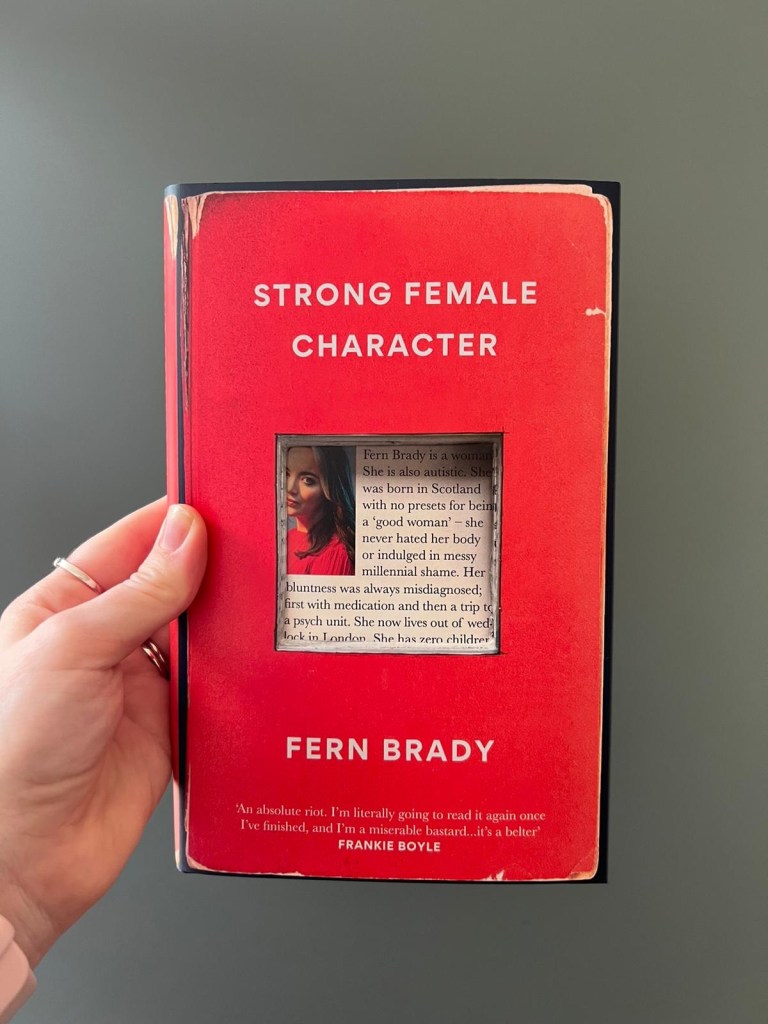
When I received an email asking if I’d be interested in a finished copy of Fern Brady’s memoir I was typing ‘Yes please’ before I’d even finished reading the email. Something about Fern made me sit up and take notice when I was half-watching a late night showing of Live at the Apollo. She was such an interesting mix of intelligence, wit, forthrightness and that little bit of indefinable magic that captures an audience and takes them with you. By the time she appeared in Taskmaster I was a big fan. If you listen to my partner, this was because of her approach to tasks, which is very like my own. She dissected tasks in a very analytical way that was completely obvious to her, then when her team mates didn’t catch on (quite often in one case) she would speak to them as if they were insufferably stupid. Apparently the look in Fern’s eyes and her tone of voice reminded him of me watching a quiz show or reality series. Every Monday I become inexplicably wound up by Mastermind, especially when contestants pass questions instead of just throwing an answer out there. It’s obvious to me that if passes count against you in the tie-break situation, it would be better to simply shout ‘banana’ if you don’t know the answer. They might look stupid but they’d have no passes. So I guess I felt something of a kinship with her and the way our brains work, although in other respects we couldn’t be more different.
I had heard that Fern was recently diagnosed as on the autistic spectrum, a very hard won diagnosis for women and something I’ve had some experience of in my mental health work. Any mental health team has it’s share of people who are neuro-divergent, especially older people whose schools were simply unaware of the condition, whatever gender the individual might be. I’ve seen first hand the devastation that can be caused by undiagnosed autism. The inability to fit in at school, the crippling ‘shyness’ that leads to bullying, subsequent depression and anxiety, institutionalisation from long periods on psychiatric wards, coping strategies such as self-imposed isolation, drinking or drug taking. Then all the social issues that come along with these difficulties, like struggling to find or keep employment, poverty, neglect or even being preyed upon by those in society who look out for people to cuckoo or subject to modern slavery. This may sound extreme to some, but I’ve personally seen all of the above happen to people who were not diagnosed early. Not that diagnosis is the cure for all of these terrible life circumstances, but labelling does help because it enables the individual to access benefits, housing, support and some degree of protection in society. Fern was one of these people, born in an era when diagnosis was more common, but usually reserved for boys. The problem is that autism looks very different in women – women don’t fall into the Sheldon Cooper, no girlfriend, obsessive, Star Trek loving, nerd stereotype.
Fern was diagnosed exactly twenty years after she first told a doctor she had autism. Prior to that doctors told her she couldn’t possibly be autistic because she made eye contact and she’d had boyfriends (as if the ability to maintain a heterosexual relationship inoculated you from being neuro-divergent). One night after performing, Fern told her boyfriend that an audience member thought she might have Asperger’s and she should read a book called Aspergirls. She wasn’t sure she wanted to, but as her boyfriend started to read up on it he said to her ‘this is an exact description of you’. Often the signs of autism are simply missed in women because we have become too good at disguising or masking how we truly feel in a situation. Women are able, particularly in a work environment, to put on a mask. For example, all through school and university I was terrified of public speaking. I didn’t want everyone’s eyes on me, I would start to feel hot, sweaty and go completely purple in the face. Eventually I became so embarrassed about being purple in the face I became anxious about that too. These symptoms were exacerbated by a terrifying exercise at the beginning of teacher training where we had to pick a song that told a story and then sing it, unaccompanied in our seminar group. I felt like my mum’s pressure cooker, shuddering with heat and pressure until it gave a high pitched whistle and she would let the steam out. It felt like that but with nobody on hand to release the pressure. When things like this happened and even now when I’m involved in confrontation I’m right back there sweating, with a face like a giant blueberry. I didn’t last a term. However, if I am teaching a whole class of people, like one of my therapeutic writing workshops, I barely break a sweat. I have put on the mask of an expert, someone who knows what they’re talking about and how much it can help. So, as an expert, I can do the task.
Fern struggles to fit in wherever she goes in life, whether it’s school, college or work. She can’t fathom the unspoken social codes that govern our existence, especially in groups of women. Her obsessions are not the archetypal trains, sci-fi or comics. As a child she was obsessed with learning languages, culminating in a successful application to Edinburgh University to study Arabic and Persian. She had no desire to visit the countries where these languages were spoken, she just loved doing verb drills and was running out of languages. She played the piano incredibly well at a young age too, but because these were seen as ‘positive’ pastimes it never occurred to anyone to label them as autistic tendencies. She funded her studies at university by stripping, somewhere she felt that she fitted in. Although that was probably due to the fact that most stripper’s dressing rooms have their fair share of misfits. She didn’t have to be herself in the club, she put on a persona and got on with it. The early years of her comedy career were harder, mainly because there were more social codes to navigate, such as having to pretend she would like to have coffee and ‘get to know’ someone instead of just asking if she could be considered for a panel show slot. Sometimes it felt as if people wasted years playing games just to work with someone, when a simple ‘do you want to work together?’ Would have sufficed. She noticed that people didn’t like her to be so direct, particularly standing up in meetings and asking what the point was? This was something I used to do regularly in my last job as an advocate for people with disabilities. I had a huge case load on part-time hours so if someone called a meeting with no obvious point I would ask if they could quickly get to the point so I could assess if it was worth me sitting there. I remember saying that I’d like to get back to my desk and ‘do some real work’. I was there for the clients who needed me, not my colleagues. In hindsight I can see why our receptionist was terrified of me.
I loved the honesty of this book. Fern is brutally honest, even about those things that perhaps don’t show her in the best light. Her frankness about the autism, but also the mental health problems and addictions she experienced as a result of remaining undiagnosed, is admirable because it will help people who are in that destructive cycle. Her teenage years are particularly fraught and painful to read, mainly because she’s totally misunderstood by those who are supposed to love her. I found Fern’s retrospective take on those years and her post-diagnosis discussion with her mother was particularly moving. Fern is staunchly feminist and I loved that her inability to read social cues meant she didn’t internalise some of the bullshit that still exists in society about how women should behave. When in a shared flat at university, her flat mates basically slut-shamed her for having too many men at the flat. Hilariously, Fern replies that there seven days in a week and she’s shown restraint by only bringing a man back four times. There are other laugh out loud moments like this, where Fern is more than happy to create humour from her situation. There were some similarities in religious upbringing that resonated with me and made me smile.
This is not the typical redemptive narrative arc memoir where someone transcends their illness/situation in order to tie up any loose ends and become the ‘superhuman’ that we should all emulate. I have a disability and this is a narrative trope I can’t stand to see in disability memoirs. People don’t overcome a permanent disability, whether it’s visible or invisible; physical or mental. We learn to accommodate it and live alongside it if we’re lucky. Fern shows that beautifully by describing her difficulties working within her industry with her diagnosis. She describes the Taskmaster experience brilliantly and it’s refreshing to read a celebrity admitting to ongoing issues with their health. It’s more of that brutal honesty she’s famous for and it helps to know that what we see on TV doesn’t come without it’s difficulties, particularly the meltdowns which are a result of the stresses and strains of filming. As you can probably tell I identified strongly with this book and I have wondered if it might be worth mentioning to my GP that I have struggled with social codes; have been told that people are scared of my rather forthright opinions and ideas; have physical crashes after periods of stress; avoid parties; have repetitive mind games or movements that calm me and help me go to sleep; prefer to deal with people in writing; watch repetitive programs that are calming to me; prefer to see friends one to one rather than socialise in groups of women. These may just be personality quirks, but I have wondered and could see how a label might help me understand some of my behaviours. I really welcomed Fern’s story in terms of understanding myself better, whether diagnosed or not, but I also admired her ability to bare her soul and find the funny in her difficulties.
Meet the Author
Fern Marie Brady (born 26 May 1986) is a Scottish comedian, podcaster, and writer. Before becoming a stand-up comedian Brady worked as a journalist. She achieved fame as a stand-up comedian by entering stand-up competitions such as at the Edinburgh Film Theatre. As a result of her success as a stand-up she was invited on to comedy panel shows such as 8 Out Of Ten Cats. In 2020 she became a podcaster when she co-created a podcast entitled Wheel of Misfortune.
Brady was diagnosed as being on the autistic spectrum in 2021, as an adult. She has been active within the field of autism education since learning of her diagnosis. She has written how she has been dealing with the diagnosis in her 2023 memoir Strong Female Character.
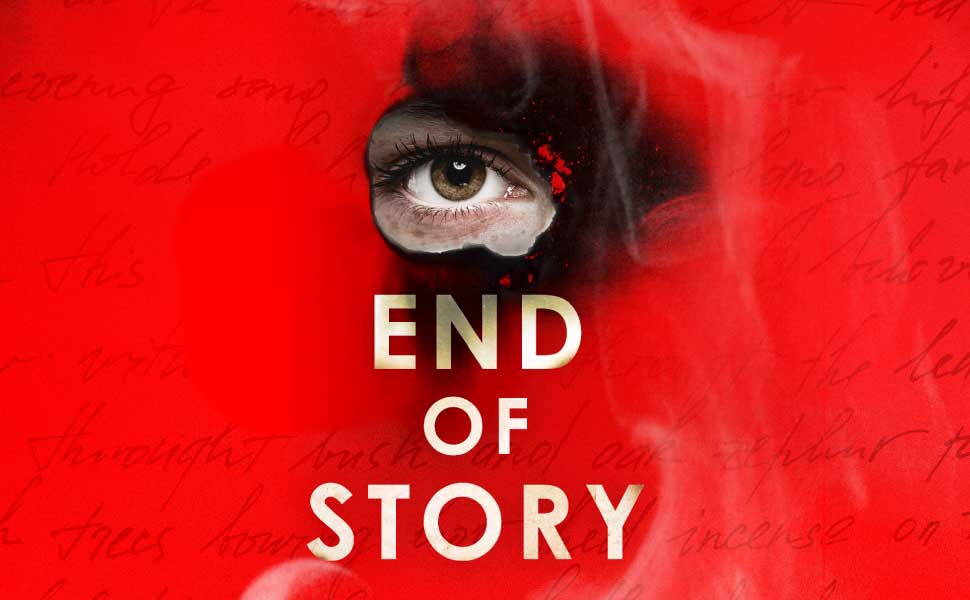
There are times when I think I could write a book. Why not? I have a first in English and I’ve been reading voraciously since I was 5. I have even started a memoir. Surely I could do it. They say everyone has a book in them don’t they? Then I read this. This astounding, raw, unflinching and inspirationally creative novel is proof that some of us were born to write. This book, is quite simply astonishing.
I can’t write much about the content of the book without ruining it for others and that’s the last thing I want to do, So I’ll tread carefully…
Our narrator Fern Dostoy is a writer, one of the ‘big four’ novelists of the not too distant future. This is a future where the Anti-Fiction Movement’s campaign to have all fiction banned has been successful. It was Fern’s third novel, Technological Amazingness, that was cited as a dangerous fiction likely to mislead and possibly incite dissent in it’s readers. She had created a dystopian future where two major policies were being adopted as standard practice. To avoid poor surgical outcomes, only patients who are dead can have an operation. Secondly, every so often, families would be called upon to nominate one family member for euthanasia – leading to the deaths of thousands of elderly and disabled people. All fiction authors, including Fern, are banned from writing and the only books on sale are non-fiction. The message is that fiction is bad for you, it lies to the reader giving them misleading ideas about the world and how it’s run. Facts are safe. AllBooks dominated the market for books until it became the only bookshop left, state sanctioned of course and only selling non-fiction. From time to time they hold a book amnesty where people can take their old, hidden novels to be pulped. Fern now cleans at a hospital and receives unannounced home visits from compliance officers who question her and search her house to ensure she’s not writing. Added to this dystopian nightmare are a door to door tea salesman, an underground bedtime story organisation, a mysterious appearing and disappearing blue and white trainer, re-education camps for non-compliant writers and a boy called Hunter. All the time I was reading about this terrible new world, I was taking in the details. and trying to imagine living in it.
Yet there was a little voice in the back of my mind telling me this wasn’t the real story. I’d figured that out, even though I was confused, this was one of those books where it would all come together and I would understand. I had strange feelings of anger and frustration with the narrative, not because it isn’t brilliantly and vividly brought to life, but because I could sense something else going on underneath. I couldn’t quite get to the bottom of it. As the pressure built and the compliance officers started to push Fern into telling the truth, I inexplicably felt a lump building in my throat. I’d no idea why I was feeling so choked up. I read the final third with tears streaming down my cheeks, followed by full-on sobbing. I hadn’t known my emotions were so engaged with Fern’s story until my husband came home and I couldn’t even speak to explain why I was crying. It was like I’d known this was where the story was going all along.
I want to say thank you to Louise. Thank you for this incredible book and the emotions it unleashed. I can’t even say why the book had this effect on me without ruining it. This is a real work of genius. It shows us how strong our minds can be at protecting us from things we don’t want to face. I understood Fern and her story moved me deeply. This is, without doubt, a contender for book of the year and an unparalleled look at allowing ourselves to be vulnerable and open; to be human. This is an incredibly powerful novel about storytelling, creativity, grief and fear. It also asks the question: who are we when everything that defines who we are, is taken away?
Published by Hodder and Stoughton 23rd March 2023.
Meet The Author
Louise Swanson is the pen-name of bestselling author Louise Beech, who has published seven novels with Orenda Books. Her work has previously been longlisted for the Not the Booker and Polari prizes and shortlisted for the Romantic Novel awards. She also won Best’s Book of the Year with her 2019 psychological thriller CALL ME STAR GIRL. Aside from being a novelist, she regularly writes travel pieces for the Hull Daily Mail, where she was a columnist for ten years. She also recently worked as the Front of House for the Hull Truck Theatre.
Louise Swanson’s debut End of Story arrives in March 2023. She wrote the book during the final lockdown of 2020, following a family tragedy, finding refuge in the fiction she created. The themes of the book – grief, isolation, love of the arts, the power of storytelling – came from a very real place. Swanson, a mother of two who lives in East Yorkshire with her husband, regularly blogs, talks at events, and is a huge advocate of openly discussing mental health and suicide.
Her memoir, Daffodils, was released in audiobook in 2022, and the paperback version, Eighteen Seconds, will be out April 2023.She blogs regularly on louisebeech.co.uk, and is on Twitter under the name @LouiseWriter.
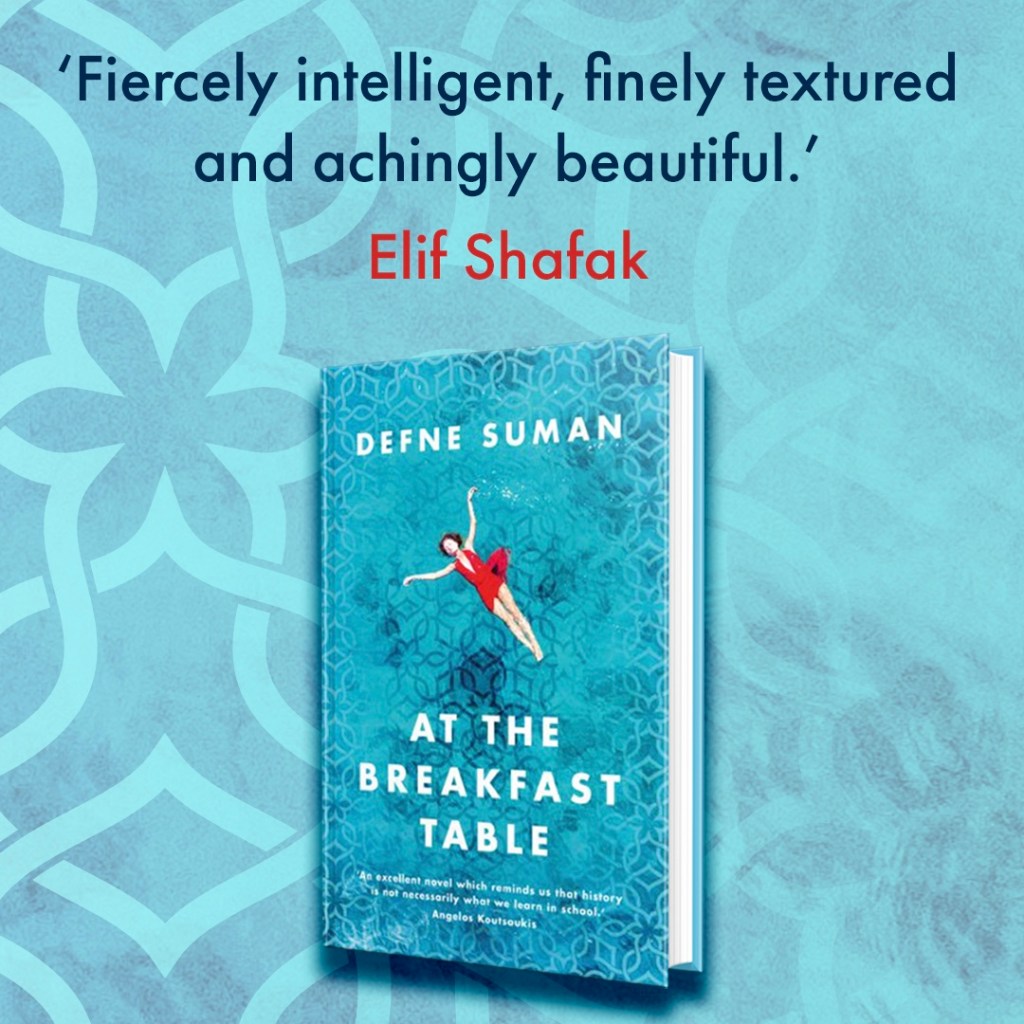
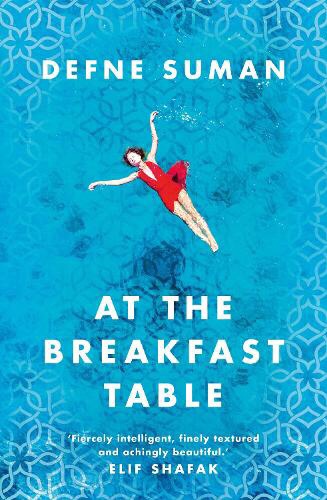
I don’t know a lot about Turkey, so I jumped at the chance to read this book that delves into Turkish history and the heart of it’s people. Set in 2017, at Buyukada in Turkey we watch as a family gathers to celebrate the 100th birthday of the famous artist Shirin Saka. They are expecting reminiscences that are joyful, with everyone looking back on a long and succesful artistic career, and on family memories spanning almost a century. Some members of the family are set on this opportunity to delve into family history. However, for Shirin, the past is a place she has been happy to leave behind. In fact she has concealed some of her experiences even from her closest family. In particular her children and great-grandchildren have no idea what those experiences were, despite being aware of their psychological consequences. Some are thinking of Shirin and hoping she can open up and heal. Others want, perhaps, to find answers for their own struggles. In an attempt to persuade her into telling her full story, one of her grandchildren invites family friend and investigative journalist Burak, to celebrate her achievements but in the hope of helping her too. Burak has his own reasons for being there – he was once the lover of Shirin’s granddaughter. I wondered if the younger members of the family truly understood the well of pain that Shirin has kept from them? They have never gone through the type of experience and turbulence Shirin and those of her generation have. Unable to express her pain any other way, Shirin begins to paint her story. Using the dining room wall she reveals a history that’s been kept from her family, but also from the public’s consciousness, an episode from the last days of the Ottoman Empire.
As a believer in the healing power of many different art forms, including writing, I was very interested in how her family’s plan would work out. We don’t always know how people will react to opening up in this way, it’s why trained therapists like me are taught to create a safe space for people to talk and reveal their secrets. Even the client has no idea how they will react, so I felt Shirin’s family were playing with something they didn’t understand. Why would they think their grandmother would want to delve into her trauma on her birthday, let alone divulge her history to Burak? Surely therapy would have been more appropriate first? To tell her history, the author splits the narrative across four characters, each one is a member of Shirin’s family and friend group. This gives us a wide angle lens on the past. I loved the atmosphere created and the way the author didn’t exoticise Turkey. She still showed us a place of vibrancy and colour, but this wasn’t a tourist’s view. It was the Turkey of the people who work and live there. I felt there could have been more balance between the past and the present, because I was interested in Shirin’s recovery from these memories being dragged up, especially at such an emotional time. As it was, the book felt off balance, more heavily weighted in the past and from four different perspectives rather than just Shirin’s.
However, the four narrators did work in terms of showing the same events from different perspectives. There were times when one character’s view of the facts was so far from the truth it had an emotional effect on me! This is an emotionally intelligent author at work, she wants us to feel that dissonance so we can understand the painful consequences of these misunderstandings. I’m a big believer in generational trauma and how strong it’s effects can be. We see that, despite Shirin thinking she’s shielded her children and grandchildren from these events, they have still been deeply affected by her trauma. They are traumatised because of her pain and how it influenced her personality and her actions, without ever knowing the full story. I could imagine the relief of understanding why a parent has behaved a certain way, especially if it caused you pain. Despite me wishing I could have spent more time with them, we do see enough of the present to know that despite the stress fractures in this family, they still love each other. Their playfulness and sibling banter was realistic and touching. The dynamics of their interactions were so deeply rooted in the past, but we’re the only ones who can see it all with our privileged 360 degree view. This was a fascinating look at a family’s history and how their intertwined lives spiral out from one single event so long ago.
Translated by Betsy Göksel. Published by Apollo 1st September 2022
Meet The Author
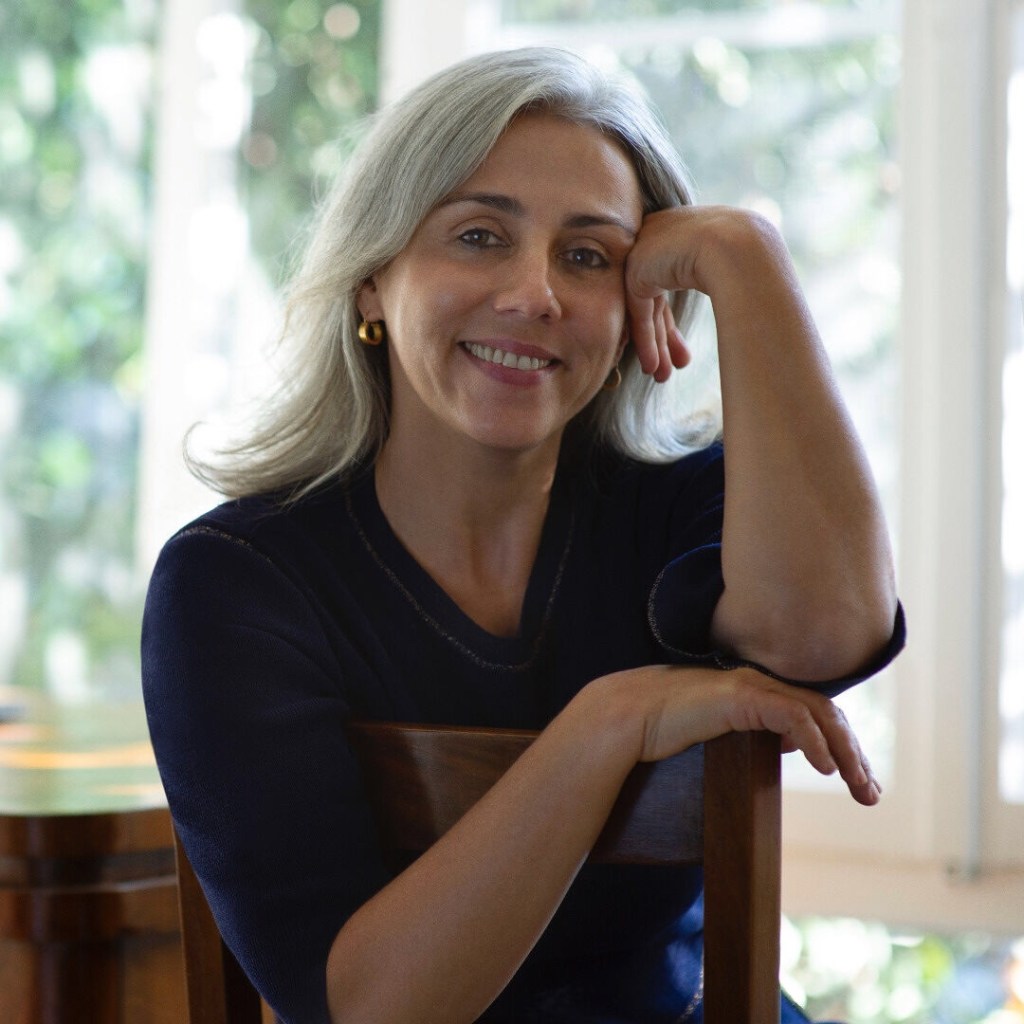
Defne Suman was born in Istanbul and grew up on Buyukada Island. She gained a Masters in sociology from the Bosphorus University and then worked as a teacher in Thailand and Laos, where she studied Far Eastern philosophy and mystic disciplines. She later continued her studies in Oregon, USA and now lives in Athens with her husband. Her books include The Silence of Scheherazade and At The Breakfast Table. Her work is translated to many languages all around the world.
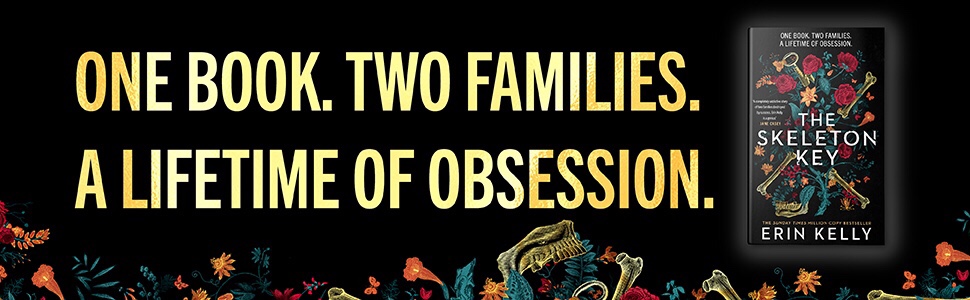
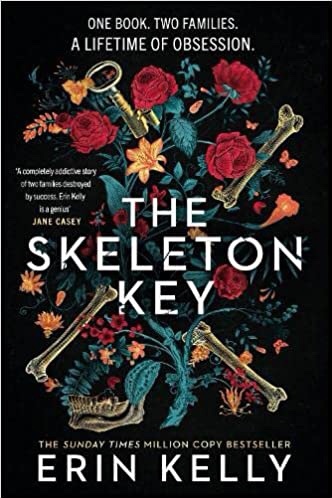
I’ve been reading Erin Kelly since her debut The Burning Air and she’s pretty much unbeatable in her ability to grip the reader and immerse them in her world of domestic noir. This was read in a very enjoyable weekend with Alice Feeney’s Daisy Darker so I was knee deep in my favourite territory – arty, bohemian families, with big rambling houses, full of eccentricities and dark secrets. I was ready for skeletons to start tumbling out of closets and that was almost literally the case here. The Churcher’s and the Lally’s have a history that goes back decades and now they live in each other’s pockets, in two adjoining houses on Hampstead Heath, smelling of oil paint and weed. Back in the the 1970’s, when their friendships and marriages began, artist Frank used some old folk verses to create a picture book full of clues to hidden treasure. The story is macabre, as a young woman named Elinore is suspected of infidelity and murdered by her husband. He then scatters her bones in sites across the British Isles. The verses in the book, The Golden Bones, contain clues to the whereabouts of hidden treasure – a one off, tiny gold skeleton with a jewel set in it’s pelvis. When the book caught the public imagination, a group calling themselves The Bonehunters emerged and with the birth of the internet hunters and enthusiasts could solve clues together, pass on information and stoke rumours. Unfortunately, for some it became an obsession and twenty years later, Frank’s daughter – also named Eleanor- is attacked outside her school by a knife-wielding woman who is certain the final piece of treasure – the pelvis – resides within her actual body.
It’s no surprise that as the book reaches it’s fiftieth anniversary, speculation and concern from some parts of the family, has reached fever pitch. With the help of son Dom, the book has been re-issued in a Golden Anniversary edition, complete with locations for people to check in online. The families come together at the houses on the heath, to film for a television special about the book, including a secret unveiling that Frank’s been planning. As he gives a speech, under a tree on the heath, to everyone assembled and on camera, it’s clear he’s planned a publicity stunt. Could this be the final piece of treasure? However, even Frank is shocked when one of his grandchildren climbs the tree and instead of treasure pulls free a woman’s pelvis. The book follows the aftermath of this gruesome discovery, how it affects both families and starts a police investigation. Everyone is under suspicion. The author takes us back into the past, shows us events from different characters point of view, and turns the reader into a Bonehunter of sorts, trying to work out who this woman was and how her pelvis ended up buried in a tree on the heath.
We meet Eleanor again, but this time as a woman and she prefers it when people call her Nell. She weirdly had my dress sense, although I might draw the line at dungarees from now on having read the criticisms about them on middle-aged women! Anything to do with the book raises Nell’s blood pressure and it’s hardly surprising. It has influenced how she lives, as anonymously as possible on a narrow boat that she moves every so often on the London waterways. She claims this is to avoid mooring rates, but it also feels part of her PTSD, the need to keep moving and be hyper-vigilant. She has more than one reason to stay safe these days, because her step-daughter from a previous relationship is living with her. Unbeknown to social services her father left a long time ago. Nell hasn’t had much luck with friends or relationships and she blames the book for this too. She feels she can’t trust anyone since she fell in love with Richard when she was a teenager and he turned out to be an investigator, hunting the final bone on behalf of a rich Bonehunter. His protestations that he loved her anyway fell on deaf ears and she was left heartbroken. Now she’s more paranoid than ever and terrified that the police investigation will bring social services back into their lives.
I was fascinated with the dynamics of these two families living on top of each other in a way that was almost like a commune. The children would flit between houses, gravitating towards the parent who seemed most able to give that parental attention that they needed. Their friendship starts in the 1970’s as they shared ideas, drugs and a desire to create art. The families are so close that when Frank’s son Dom and Lal’s daughter Rose are found kissing it almost feels incestuous. Now there are shared grandchildren, linking them through blood. Where once there was equality, even if they were so poor there was nothing to share, now it seems like everyone functions for Frank. He is the successful artist and his whims should be accommodated. He felt like a law unto himself to me: working when he wants; neglecting his family; indulging his sexual appetites wherever he can. His mercurial temperament is excused because of his talent, but some family members already find him unbearable. Lal’s drinking seems to distract everyone from Frank’s bad behaviour and his decline has been very useful. It eliminates him as artistic competition too. We travel back to one particular night several times from different viewpoints. Wanting to break away from The Golden Bones Frank has created a collection of beautiful nude paintings. However, unable to let them show on their own merits, Frank has let it be known that every model in the show is one of his conquests. The tongues start to wag and by opening night it’s at fever pitch. I can’t work out whether he underestimates the family, or whether it’s a deliberate attempt to humiliate and dominate, but one of the models seems familiar. If Frank’s suggestion is true, he has betrayed everyone close to him. To make things worse he’s openly flirting with a waitress, in front of his wife and children. Luckily, Lal gets predictably drunk, drawing the attention and concern elsewhere.
In the present day both Lal and Frank are arrested, leaving the family scrabbling for the truth. Will it pull them all together or apart? The psychological interplay between family members is brilliantly done. Nell and Dom mean everything to each other, working as each other’s stability since both parents are absent when consumed by their work or drink and drugs. Dom and Rose’s relationship is borne out of the same impulse, desperately seeking stability and being steadfast in providing it for their own children. Nell has to decide whether this family is healthy for her and her daughter. The dynamic between Frank and his family becomes clearer as the novel goes on, with a wife seemingly dependent on medication to cope and Dom desperately trying to protect her. Frank is like a puppet master, in a strange echo of his role in the book, he’s choreographing events and controlling how they act, using distraction to hide what he doesn’t want them to see. He uses friend Lal as a whipping boy, in a terribly destructive dynamic. Frank can do what he wants as long as Lal is drinking and flying into rages, alienating his family. I felt there was a rivalry there and even a contempt for Lal, whose use is to be the comparison point – as long as Lal’s life and work is worse, then Frank is okay. Lal is, quite simply, a scapegoat. Even so, it is Nell’s character arc that I loved because she has to confront a lot of her past and start to build a better future as a family of two. Her strength is shown in the real quest of the book, not for golden bones, but for the truth. However messy, unexpected and inconvenient that might be.
Published 1st September 2022 by Hodder and Stoughton.
Meet The Author
Erin Kelly is perhaps best know for her novel He Said/She Said, about a young couple who witness a rape and, after the trial, begin to wonder if they believed the right person. Her first novel, The Poison Tree, was a Richard and Judy bestseller and a major ITV drama starring Myanna Buring, Ophelia Lovibond and Matthew Goode. She’s written four more original psychological thrillers – The Sick Rose, The Burning Air, The Ties That Bind.
She read scores of psychological thrillers before she heard the term: the books that inspired me to write my own included Endless Night by Agatha Christie, Rebecca by Daphne du Maurier and A Fatal Inversion by Barbara Vine. Her books are atmospheric thrillers, always about people trying to atone for, escape, or uncover a past crime. She says she’s more interested in what happens before the police arrive – if arrive they ever do – than how murder is solved.
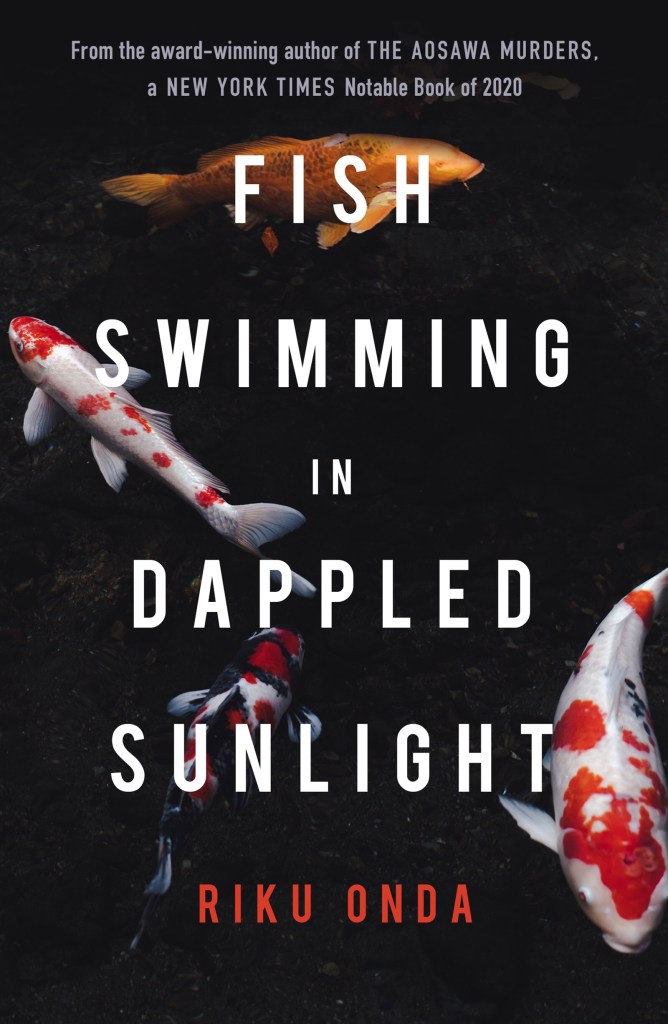
This book was an incredibly different reading experience considering it followed an historical fiction novel and a Regency romance. All that lush description and melodrama, followed by this very spare and quiet novel set over one night and mainly in one empty apartment. The contrast was stark and showed that we don’t need very much to convey a story and engage the reader. So short that I read it in one afternoon, this is a story of two people moving out of a flat and agreeing to spend their final night of the tenancy together. Aiko and Hiro are our only characters and their relationship has broken down since taking a trip together, trekking in the mountains of northern Japan. During the trek their mountain guide died inexplicably and both believe the other to be a murderer. This night is their last chance to get a confession out of each other and finally learn the truth. Who is the murderer and what actually happened on the mountain? This is a captured evening where a quiet battle of wills is taking place and the shocking events leading up to this night will finally be revealed.
My first assumption was that Hiro and Aiko are a couple, breaking up after living together, perhaps during their university years. The author conveys an eerie atmosphere, the couple are quite subdued and it’s almost as if they aren’t fully there. Have their minds sprung forward to their next step in life, or backwards to when things were different? There are those annoying marks and shadows on the walls that show where their furniture and pictures once were. The couple feel similar to those marks, like ‘ghostly shadows’ on the rug they’re merely an imprint of what was once present. Even their conversation is sparse, but when we’re taken into their minds we can see that’s where they really live. So much is going on emotionally and intellectually that I could imagine them giving off a sound, like a hum or buzz to signify the intensity of their inner thoughts. We never move out of the room, but we delve into the recent and distant pasts through their inner world. In the room with each other, they start in a quiet and measured way, then with each new piece of information they start to calculate and consider the other. This is where the tension builds, we can feel it inside them and it’s only a matter of time before it spills over into the room. Then comes the first accusation and the pace picks up. It’s not long before the first revelations begin.
I thought that the author used metaphors and memories beautifully and wove them into the psychological game being played. One is the ‘Pearl Earring’ song by Yumi Matsutoya that Hiro remembers an old girlfriend listening to when he was at school. The memory is triggered by Aiko saying she lost an earring while packing. In the song the girl throws her pearl earring under her lover’s bed when she knows it’s the last time she’ll be there. Aiko suggests she doesn’t want this reminder of her lover so throws it away, perhaps after ceremonially throwing the other at a place with special meaning. Hiro gives it more of a metaphorical meaning – one half of a pair is no use without the other. Is this what he thinks about him and Aiko. Aiko hasn’t lost her earring, she has stuffed it in his backpack and claims not to know why. She describes it as a landline, just waiting for him to find it. I think we leave things behind when we want to return or be remembered. The one that resonated most with me was the fish metaphor, where the title of the book comes from:
I see sunlight flickering through the trees. Fragments of the stifled emotions and desire we do not put into words, flit across them, like shadows moving through the wavering light. Deep below the dappled sunlight, fish twist and turn at the bottom of a dark-blue pool […] it is impossible to see them clearly or count them.
Aiko notices their presence, in and out of this room as she thinks of the fish. She sees Hiro has retreated mentally, he’s deep inside his own head just like the fish who disappear into the darker reaches of the pool with a flick of their fins. They are completely present with each other only fleetingly, as dappled sunlight dances across and illuminates them. They come together, then scuttle into the darkened corners, nursing their wounds and planning their next move. The same metaphor occurs at a pivotal point in the novel and gives a sense of the light illuminating different worlds, universes and possibilities.
I’m being so careful not to give away a single revelation or twist, but there are a few and they are unusual and surprising. This is a really unique psychological thriller, it seems sparse, but actually has so much depth and richness. I found myself completely immersed in this couple’s story, both the visible and the invisible. Still playing with memory, the pair delve into their childhoods, trying to work out what makes each other tick and discover how they ended up here. One has more memories of their childhood than the other, but can we trust what we remember? Our impression of something, may be no more than a fleeting glimpse of a much bigger picture. We may have based a lifelong idea of a situation or person on a mere fragment. Even the things we use to jog our memory can be misleading, such as photographs. Hiro muses on how we’re pushed into smiling for photos, to look like we’re enjoying ourselves and love the people we’re with. If we believe our photo albums, the picture we have of the past is distorted. There are so many things going on behind the scenes that are never captured – the moments in the deep blue water.
Published by Bitter Lemon Press 16th June 2022.
Meet The Author
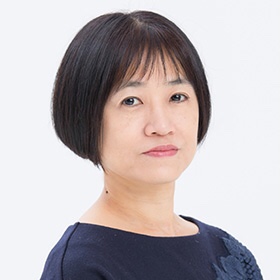
Author: Riku Onda, born in 1964, has been writing fiction since 1991 and has published prolifically since. She has won the Yoshikawa Eiji Prize for New Writers, the Japan Booksellers’ Award, the Yamamoto Shūgorō Prize and the Naoki Prize. Her work has been adapted for film and television.
Translator: Alison Watts is an Australian-born Japanese to English translator and long time resident of Japan. She has wrote the translation of The Aosawa Murders, Aya Goda’s TAO: On the Road and On the Run In Outlaw China and of Sweet Bean Paste by Durian Sukegawa. Published by BITTER LEMON PRESS•E: books@bitterlemonpress.com Distributed by TURNAROUND PUBLISHER SERVICES•T: 020 8829 3000 PR by Alex Hippisley-Cox• T: 07921 127077 E: alex@ahipcoxpr.co.uk
It’s been another bumper book month at The Lotus Readers and it looks like 2022 is going to be an amazing reading year, in fact I’m already worrying about how I’m going to choose between these books when it comes to my end of year list. Can I really do 22 books this year? It’s also a year of fantastic debuts with another four debut novels being top of my list this month. There’s been a few tears shed over some of the stories and characters within these pages, but I’ve been uplifted too by these stories of overcoming. Surviving trauma and recovering through the support of others, particularly where women are supporting women, has been a theme here too. Its been the first month where I’ve been able to sit in the garden with a book, so most of these have accompanied me outside and onto my recliner, usually ending with me falling asleep under a dog and a cat! So here are some shortened reviews, to whet your appetite for these wonderful novels,
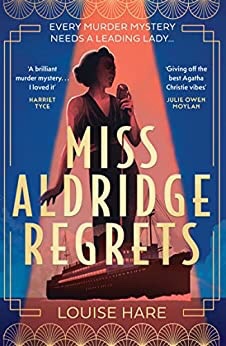
Reminiscent of those stylish novels of the great Agatha Christie, this was a brilliant mystery with a glamorous location, wealthy passengers and sumptuous clothes and jewellery. The period detail is spot on whether it’s the latest bathing suit or 1930’s politics. It’s not just a whodunnit either, because woven within are themes of identity, belonging, family and class division. It’s gripping without being showy or depending on shocks, or endless twists and turns. It’s elegant and allows it’s secrets to unfurl slowly. Lena is a sympathetic character, who has sacrificed starting her career to care for her father Alfie who has recently died. To pay the bills Lena has been singing in a club band, but she has always wanted to work on the West End or Broadway. Her chance comes in the aftermath of a death at the club. A favour from a an old friend of her father. She’s found by theatre producer’s assistant, Charlie Bacon, whose boss is offering Lena the chance of a lifetime, a part on Broadway in a new musical. As they set off across the Atlantic in their first class accommodation, they make the acquaintance of a very wealthy family with an ailing patriarch. What follows is intrigue, murder, mayhem and the realities of being a black performer. Lena is now caught up in a murder plot, and doesn’t know if she’ll be the next suspect, or victim.
Incredibly strong women, three generations of a Memphis family, are the focus of this amazing debut by Tara Stringfellow that made me angry, made me cry and somehow helped me feel uplifted all at the same time. Grandma Hazel is the first resident of the house in Memphis, a house her sweetheart Myron builds for their family. When he is lynched by his own police squad, Hazel is nine months pregnant and left heartbroken, angry and scared. Her daughters, Miriam and August, then call this place home and it also becomes August’s place of work. When Miriam leaves home, travelling with her husband Jax who is in the military, August turns the back of the house into a hair salon for a community of black women who gather there to laugh, to support each other and to plan activism. When Miriam returns with her own daughters, Joan and Myra, she has mixed feelings. She needs a roof over her head, she loves where she grew up, but something happened here that daughter Joan can’t quite remember. Yet she feels I’ll, deep down. There’s fear and shame in this place, but she doesn’t know why and we follow her quest to process and heal from this hidden trauma. With a backdrop of the biggest events of the 20th Century from the Kennedy and Martin Luther King assassinations to 9/11, this is a story of what it means to be a black woman in 20th Century America. Simply outstanding.
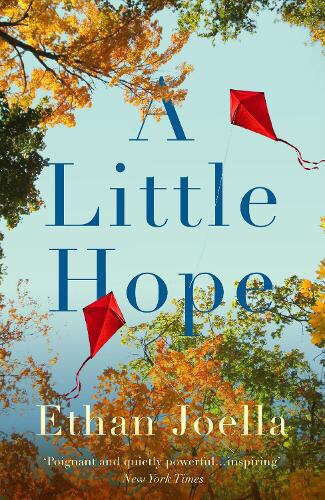
Ethan Joella’s novel was perfect for this moment in life. Set in an idyllic Connecticut town over the course of a year, our story follows the intertwining lives of a dozen neighbours as they confront everyday desires and fears: an illness, a road not taken, a broken heart, a betrayal. Freddie and Greg Tyler seem to have it all: a comfortable home at the edge of the woods, a beautiful young daughter, a bond that feels unbreakable. But when Greg is diagnosed with a rare and aggressive form of cancer, the sense of certainty they once knew evaporates overnight. Meanwhile, Darcy Crowley is still coming to terms with the loss of her husband as she worries over her struggling adult son, Luke. Elsewhere, Ginger Lord returns home longing for a lost relationship; Ahmed Ghannam wonders if he’ll ever find true love; and Greg’s boss, Alex Lionel, grapples with a secret of his own. We are all familiar with the hashtag #BeKind and through these stories, what seems like a platitude, is brought home to the reader. Our characters touch on each other’s lives, sometimes without knowing what each other are coping with just under the surface. Despite taking us through every experience from infidelity to loss, the book never feels overwhelming or melancholy. Yes I wanted to shed tears from time to time, but somehow there is always a ray of hope. It reminded me that things like community, friendship, shared experiences and compassion can change everything. The author doesn’t hold back on how difficult and painful life can be, but yet always finds some element of joy that reminds us what a gift it is too. This book is poetic, achingly beautiful and full of empathy for the human condition.
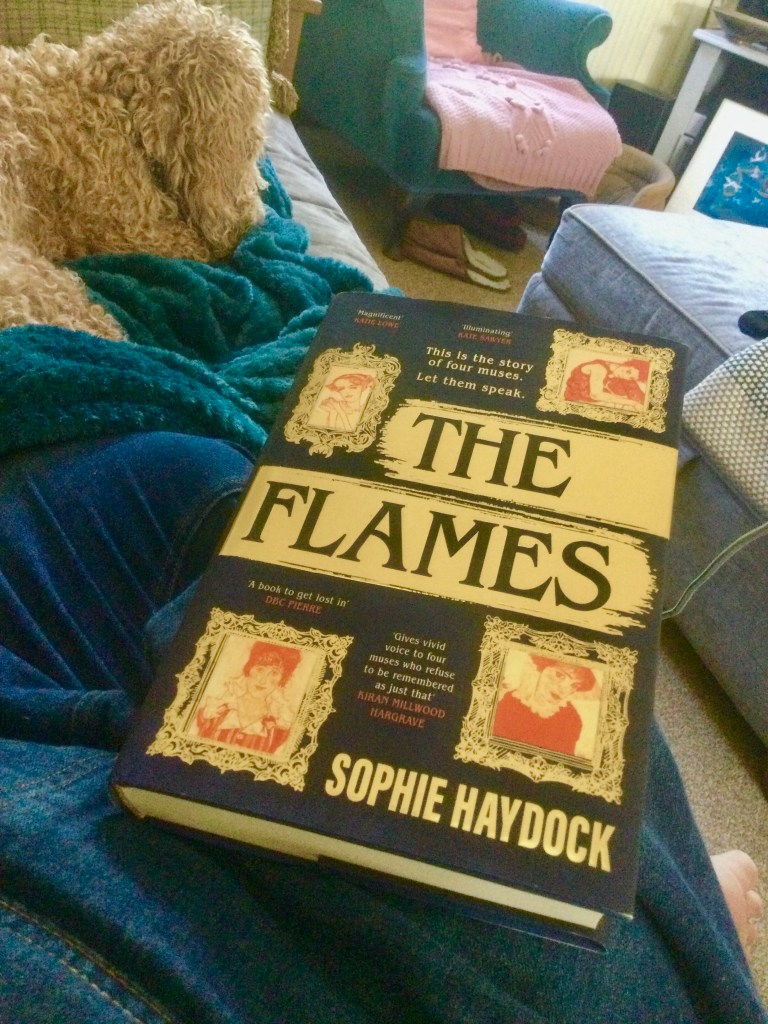
I knew this book would be one I enjoyed, after all it encompasses some of my favourite things: History between the World Wars; the Vienna Secession and Gustav Klimt; Art Nouveau; a feminist narrative. However, I didn’t expect it would grab hold of me in the way it did! I sat down with it in the garden one Sunday afternoon and read two thirds straight away. When duty and blog tours called that week I had to set it aside, but I kept glancing over at it like a lost lover all week. Haydock takes four of Egon Schiele’s portraits and explores the women depicted – society sisters Adele and Edith, artists model Wally and his younger sister Gertie. Schiele’s portraits are not life-like reproductions of his model and while they might shed light on aspects of their characters, they can only ever be the artist’s view of that woman with all the prejudices and biases of his time. Haydock is challenging Schiele’s representation of these women and here we get to hear the women’s stories, how they see themselves and their relationship with Schiele. Some of his life choices felt like betrayals to those women who risked everything by literally laying themselves bare before him and the world, for his sake and for the sake of art. I thought Haydock beautifully captured this sacrifice and it’s consequences, something she picks up beautifully in the short interludes from the 1960’s where an elderly woman searches for a painting she’s glimpsed of someone she loved. Desperate to give an apology she never heard in life. Haydock beautifully captures a rapidly changing Vienna between two World Wars where barriers of class and gender are breaking down. She also captures the complexities of the barriers for women and those who have the pioneering spirit to break them. She gives a voice to their silent gaze. This is one of the best books I’ve read so far this year and I read it greedily in just two sessions. I’m already looking forward to entering Haydock’s world and savouring these wonderful women again.ok”
My interest in 19th Century freak shows, Sarah Baartman (the Hottentot Venus), disability and difference, made Lianne Dillsworth’s debut novel a perfect fit for me. Our setting is a theatre and a performing troupe including singers, magicians and dancers who perform a variety show under the watchful eye of Mr Crillick. His current headline act is Amazonia – a true African tribeswoman, dressed in furs and armed with a shield and spear, her native dancing brings down the house in Crillick’s show. The audience watch, transfixed with fear and fascination, never realising that she is a ‘fagged’ act. Zillah has never set foot in Africa and is in fact of mixed race heritage, born in East London. She is making her money by pretending to be what the, largely white, audience wants to see. It doesn’t sit well with Zillah, but she is alone in the world and does need to make money. Besides it’s better than the other options for a young woman who finds herself in poverty. She’s used to slipping between worlds on stage and in her private life, renting a room in the rough St Giles area of the city, but regularly making her way to a more salubrious area and the bed of a Viscount by night. However, when Crillick brings a new exhibit to his London home, dubbed the Leopard Lady, Zillah’s eyes are opened to the politics and misogyny of displaying difference. A meeting with an activist forces her to think about her own performance, but also the danger that Crillick’s new exhibit might be in, especially his ‘private’ audiences complete with medical equipment. Can Zillah help this woman and what does her own future hold, because in good conscience she can no longer perform? This is a brilliant novel, doing for race and disability, what Sarah Water’s novels did for the representation of sexuality in the 19th Century.
I’d never read a novel by Dolen Perkins-Valdez and she pulled me into her story from the very first page, with Civil seeming real almost immediately. I’ve been interested in eugenics since I wrote my undergraduate dissertation on disability and 20th Century literature. I knew a lot about the movement in the U.K., US and Germany in the lead up to WW2, but this book shocked me because I had no idea that forced sterilisations were still happening in the 1960s and 70s. I knew this had happened in earlier in the century with Native American communities, so I shouldn’t have been surprised that it was still happening to African American women, especially where the woman had a disability too. The writer shows how our biases and emotions feed into the work we do within the caring professions. Having worked in mental health and disability as a support worker, advocate and counsellor, I did identify strongly with Civil and the way she became involved with the Williams family. The Williams girls are her very first patients and she is sent out on a home visit to give them a Depo Provera injection, a long term method of contraception. When she notices that India is only 11 years old her brain immediately starts questioning, who put this little girl on this injection, has anyone asked if she has a boyfriend or worse, is she being preyed upon? Is this an assumption that young African-American women are promiscuous or that African- American men can’t be trusted, even within their own families? The judgement that bringing a child into this family would be disastrous comes from a lack of knowledge around India Williams’s learning disability, but is also an assumption about race too. The fall out from Civil’s discoveries is huge and life-changing, not just for the Williams family but for Civil too. This book sheds light on an important hidden history and took me through a rollercoaster of emotions.
I fell utterly in love with Dot Watson, a rather abrupt and persnickety member of the staff at London Transport’s lost property office. It took me about five pages to be drawn into Dot Watson’s quirky world and her love for the lost property office where honest people bring their found items. Dot is like the backbone of the office and the other workers would be lost without her. A lover of proper procedure and organisation, Dot is the ‘go to’ employee for anyone starting work with the team, or just to answer a question about an item. Dot thinks lost things are very important, almost like an extension of that person. Their lost item can tell her a lot about the person they are and she fills the lost luggage tags with as much detail as possible so that they have the greatest chance of locating it. Dot believes that when we lose a person, their possessions can take us right back to the moment they were with us. When Mr Appleby arrives at the office to find his lost leather hold-all it is what the case contains that moves Dot. Inside is a tiny lavender coloured purse that belonged to his late wife and he carries it everywhere. Something inside Dot breaks for this lonely man and she is determined she will find his hold-all. Her search becomes both the driving force of Dot’s story and the key to unlocking her own memories. I loved our journey into Dot’s past, her relationship with her father and the trauma that she’s tried to lock away for so long. This book has difficult emotions, but also glimpses of humour and is ultimately an uplifting journey with an unforgettable woman.
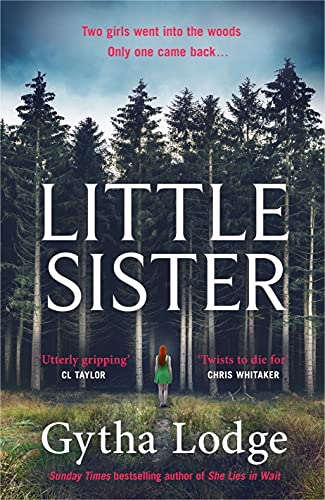
A teenage girl wanders out of the woods. She’s striking, with flame-red hair and a pale complexion. She’s also covered in blood. She appears in the pub’s beer garden as Jonah is enjoying a beer after a walk with his baby son. Detective Jonah Sheens quickly discovers that Keely and her sister, Nina, disappeared from a children’s home a week ago. Now, Keely is here – but Nina’s still missing. Keely knows where her sister is – but before she tells, but first she wants Jonah’s full attention. Is she killer, witness, or victim? The opening scene is absolutely brilliant, vivid and shocking at the same time. As the girl’s history starts to unfold, they hear about several failed placements and a long stay in a children’s home. The girls made complaints about two of their homes, but were thought to be troublemakers. Jonah and his excellent team have to tread a very fine line. Keeley comes across as cold and calculating one moment, but then like a broken little girl the next. Which is an act? There are some very dark stories here and they could be distressing for people who’ve gone through a similar experience, but it’s that darkness that keeps the reader wanting the truth and to see those responsible punished. If Keeley has planned how to elicit sympathy from the police, she certainly knows what she’s doing. As readers we are pulled along with Jonah, from distress and empathy to disbelief and a sense that something is very, very wrong either with Keeley or the system. This is a great mystery, with huge twists in store and a police team I enjoyed getting to know. Now I’m looking forward to going back to the first novel in this series and filling in the gaps in my knowledge, while enjoying even more of this talented writer’s incredibly creative plots and dark, brooding atmosphere.
So these were my favourite reads in a very busy reading month. I read seventeen books which surprised even me! Next month I’m looking forward to a slightly quieter month with some great thrillers to read, some historical fiction from another of my favourite historical periods – the beginnings of the Tudor dynasty, and hopefully a few choices from NetGalley too so I can keep on beating that backlog. I hope you enjoy these choices as much as I did and i’ll see you again next month.
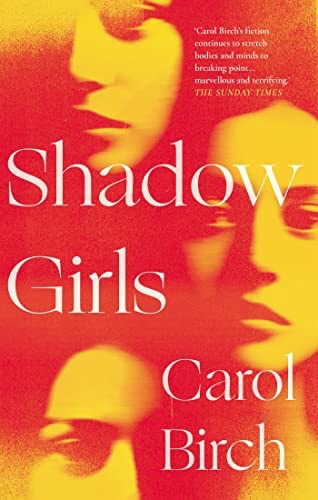
Manchester, 1960s. Sally, a cynical fifteen-year-old schoolgirl, is much too clever for her own good. When partnered with her best friend, Pamela – a mouthy girl who no-one else much likes – Sally finds herself unable to resist the temptation of rebellion. The pair play truant, explore forbidden areas of the old school and – their favourite – torment posh Sylvia Rose, with her pristine uniform and her beautiful voice that wins every singing prize.
One day, Sally ventures (unauthorised, of course) up to the greenhouse on the roof alone. Or at least she thinks she’s alone, until she sees Sylvia on the roof too. Sally hurries downstairs, afraid of Sylvia snitching, but Sylvia appears to be there as well.
I was drawn to reading this novel by the promise of a ghostly story, but it wasn’t at all what I expected. The novel is split into three parts: penumbra, umbra and anteumbra. All I understood from this and my teenage Latin lessons was that part two would be shadowy and opaque, umbra being the shadow cast during an eclipse. So the opening section would be the lead up to these events and this was the unexpected part. Birch begins her novel with an ordinary everyday tale of Sally’s school days. Set in Manchester in 1960’s, the author spends a lot of time setting up her characters and letting us get to know them. Sally and her best friend Pamela are fifteen years old and somewhat rebellious. Pamela is troubled and disliked by most of the pupils as well as Sally’s family, who are concerned about this girl’s influence over their daughter. There was a lot about this opening that I recognised from my own school days 20 years later; pushing the boundaries, forming friendships, first relationships and a bit of bullying. Together they bend the rules by playing hooky from P.E, climbing on the roof at lunchtime to smoke and eat their pack-ups and eating all the free samples in the food hall at Lewis’s Department Store. Like all girls of this age she is coping with the challenges of growing up, and has doubts about her first serious boyfriend, Rob. However, they really enjoy tormenting Sylvia Rose, an old-fashioned, slightly upper-class girl in their class who has a promising classical voice. Sally could have made a friend of Sylvia, because they do have some of the same interests, but instead she follows Pamela and makes fun of Sylvia. The girls do escalate, so some of their tricks go too far, leaving Sylvia humiliated in front of the entire school.
The girls are attracted by superstition and obtain a ouija board to secretly use during their breaks. The ouija board predicts a dark season approaching, but the girls do not want to believe it. They are also warned by one of their teachers, but the unthinkable does happens and the consequences could haunt Sally for the rest of her life. The author, slowly and cleverly, charts the course of these fun loving and boisterous girls as they become anxious and fearful young women. Since we’re told the story from Sally’s point of view, we get to know her best and her inner world is built. It is not easy to be a teenager, because we’re always in conflict and easily influenced by others through peer pressure. It’s a time when mistakes are made and we have to hope we don’t regret them forever. I was drawn to the novel because of the blurb that describes it as having “elements of the ghost story” and these all take place in the second part of the book. Rather than a ghost story, I would call suggest that there are uncanny or supernatural events within a story about adolescence and growing up. There is so much emotional energy around teenagers and that definitely plays into this story. The terrible tragedy that ensues will affect Sally badly, but also the whole school and in the final part of the book, set around twelve years later, the past really does start to haunt her. Sally returns to Manchester after working around the country and starts to re-connect with old school friends. the area where she grew up and reconnects with several of her old schoolmates. The pace picks up here and we’re definitely in “ghost story” mode, as the author really does use supernatural elements to terrify, quite effectively in parts. What’s most effective for me is that underlying ambiguity; do we take these events literally or does this narrator have some serious mental health issues?
Carol Birch’s novel is a clever combination of school tale, coming of age drama and ghost story. I think that readers coming to this for a straightforward ghost story, should be warned that the thrill and the fear do come, but not for a while. It’s a slow burn rather than a twisty, turny thriller that keeps readers on the edge of their seat. When the ghostly elements did come, they were effective and left me feeling a bit edgy, not knowing what was real and what was a figment of Sally’s imagination. There is a feeling of foreboding, something is going to turn out badly; but is that a ghostly payback or the just the product of Sally’s diseased imagination? The final part also has important reflections on mental health and the psychological aftershocks of grief. The haunting atmosphere will stay with you long after I turned the final page.
Children’s books aren’t my usual fare, but I decided to make an exception for this book based around childhood fears just in time for Mother’s Day. This is the third book in Fransie Frandsen’s Alexander’s Questions series, written with the purpose of helping parents and children explore emotions. Frandsen’s work as an art psychotherapist has given her so much insight into the need for tools like this for opening up communication. From my experience as a counsellor for adults, I know that it isn’t always an event that affects a child into their adult years, but being unable to talk about it. Frandsen knew that to foster healthy bonding or attachment good communication is vital so made these books in the form of questions and answers the cornerstone of her book series.
There are many reasons why healthy communication isn’t established. It could be through lack of opportunity to talk or a parent who doesn’t know how to initiate that conversation. Children may also lack the emotional language to express how they’re feeling. This is where a picture book like this is an incredible tool for establishing healthy communication between parent and child. It allows parent and child to look at the book and make meaning out of the pictures alongside the words together. Small children don’t always have a word for how they feel emotionally, but might recognise physical symptoms of that emotion such as crying and sadness. Reading together helps to explore feelings and start to put names to them. Frandsen believes this is an investment into their future, teaching them to have open conversations about emotions both with you and within their own adult relationships.
The book has lovely illustrations that introduce us to Alexander and his observations about monsters. He starts to make a list of all things monstrous – the monster under his bed, Daddy’s monstrous problems at work. Baby T is scared of his rumbling tummy and cries for his dinner. The neighbour is scared of finding poo in his garden. What he really wants to know though, is about Mummy, is she afraid of monsters? He finds out there are famous monsters and she’s not scared of those. He realises some monsters can be hidden, others can be seen and some live only in our heads. I think probably the most important thing he learns is that everyone’s monsters are different. They are in unusual shapes and different sizes, but what some people are scared of others don’t find frightening at all. We are all individuals with different monsters and that’s okay.
Frandsen’s experience as an artist makes this a thoroughly engaging book full of colour, different fonts, photographs and illustrations to engage young children. The story is funny – Alexander’s quest is started so he can avoid eating his broccoli. It showcases all of Frandsen’s skills in her field, working as a story while also helping parents foster better communication with their child. She has used the form of reading a book together, common in most households, so it doesn’t put pressure on the child to speak directly about their fears. It just opens the door to exploring what can be seen as a negative emotion, something that as adults we might dismiss (there are no monsters under the bed) or take away (mummy will keep the monster away). It is better to be there and help the child to conquer their own fear. Perhaps by inviting them to talk about what scares Alexander and whether it scares them. It could go onto interesting work in drawing or making their monster – something I’ve done just as successfully with adults who have disabilities. This lets the child know we all have things we’re scared of and ways of coping with that, the first one being to talk.


















 The Lotus Readers