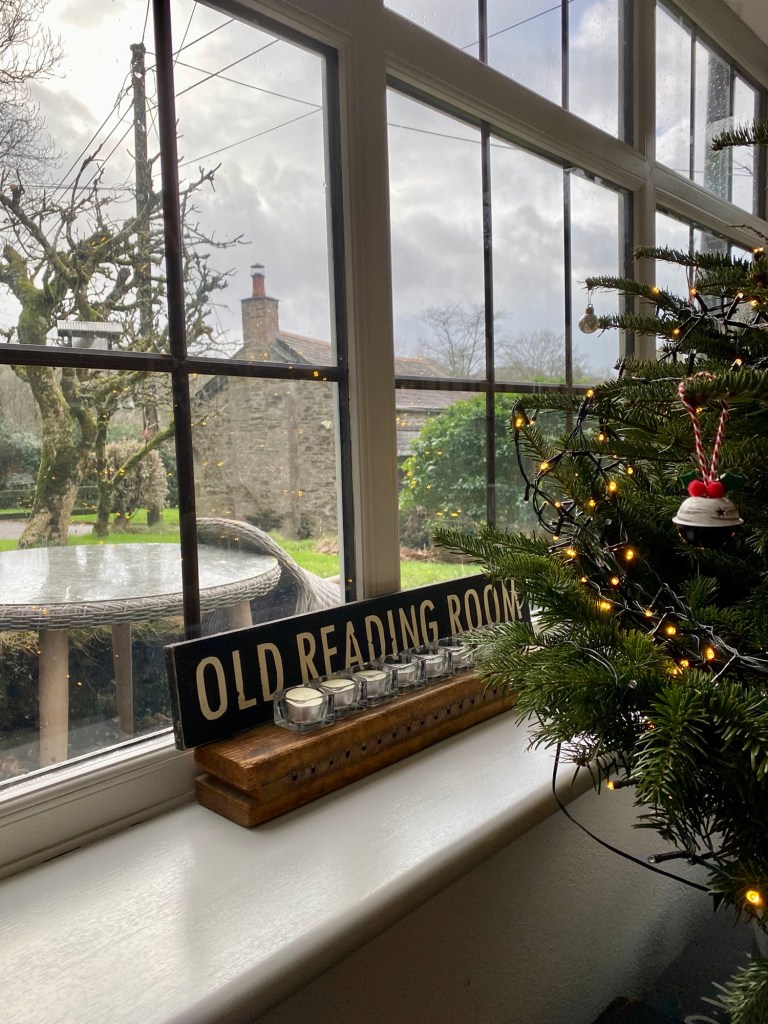
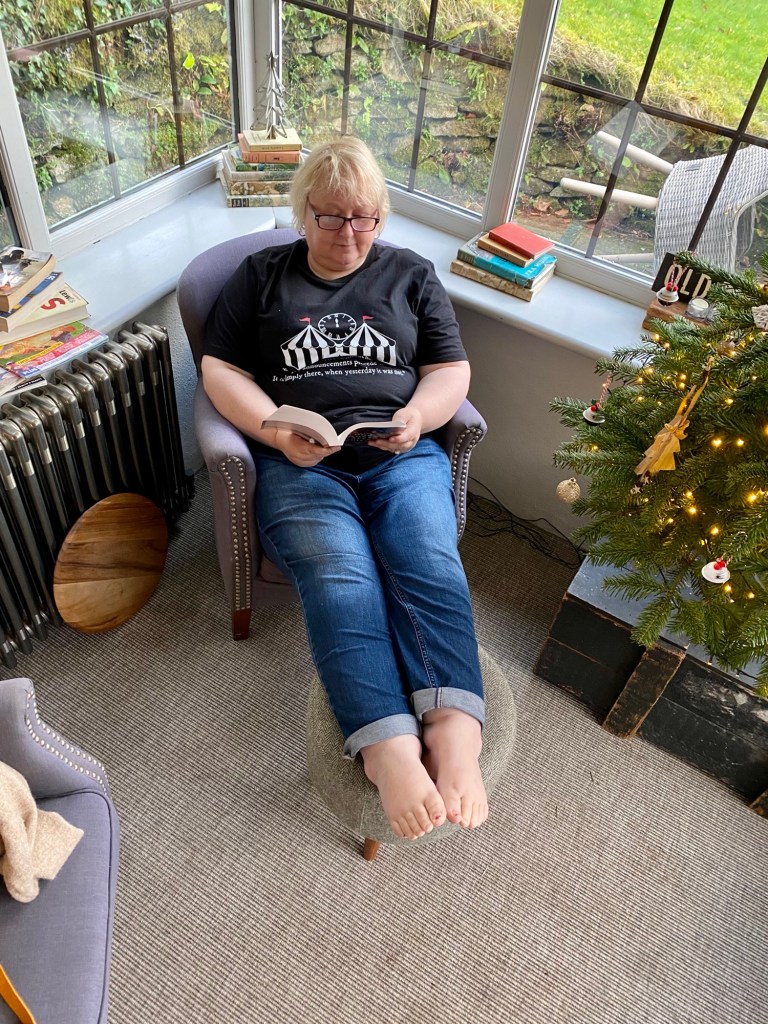
I’ve spent the last two weeks celebrating both the New Year and our recent marriage in a little cottage in Cornwall. We were married on the 22nd December and although I’ve always fancied a Christmas wedding, the reality was a little more stressful than I anticipated. So rather than wander off abroad we decided to stay in the U.K. and find somewhere special to stay with our new puppy ( I know, utter madness) down in Cornwall. I was very lucky to find this rustic and relaxing cottage several months before and had been hoping for an excuse to go, because it was a little more expensive than we usually go for. Aside from the cottage’s look, rustic and relaxing, there was a special meaning for me because of what the building was originally used for; a reading room for local miners and their children, who were often working alongside them.
Cornish mines employed children for many different roles, but usually for ‘surface’ work which might include washing down the mined stones in long troughs. In the middle of the 19th Century, the working day for a child was very long, usually between 7am and 5.30pm, with a daylight hours working arrangement in the winter. Many children also had a long walk to work of up to several miles, meaning the day didn’t end at 5.30pm. For example, a young woman called Martha Buckingham, was working at Consolidated Mines at the age of ten. In order to reach work for 7am she had to get up at 4am ready for a two mile walk. She would retire to bed at 9.30 pm, leaving little time for anything but sleeping, walking and working. Sundays were the only days that might provide leisure time. With little to no schooling many of these children would have been illiterate and while reading rooms were often set up to create an alternative to the pub for adults, some seem to have focused on encouraging reading for children. Reading Rooms were provided even in small villages and towns, funded by often the church and local landowners, mainly for the working classes and their children, reflecting contemporary attitudes to philanthropy, recreation and self-help. Of course the mines benefitted from having sober and literate workers too.
Books, magazines and newspapers became more accessible for everyone and learning to read was encouraged. It amazed me that even in such a small, isolated area this place had been providing a haven for people to read. Essentially a small cottage that had been left derelict is now a holiday home and everywhere in the cottage there was a sense of it being like an old school room. The slate floor and rustic wood finish everywhere felt authentic and even the cupboards and shelving wouldn’t have looked out of place in an old school or library. Everything was worn, a little bit battered, but serviceable. It had a really quiet feel to it and when I was reading in the garden room all I could hear was the gentle tick of the clock and the sound of the river flowing past (although it did become a bit of a roar on about day 4 and I wondered if I should have taken flippers and a snorkel).
Styled everywhere with old books, lamps and an incredibly old typewriter it was the perfect place for a bookish person to feel at home. Thankfully while there I even got my reading mojo back and managed to read the following books with reviews on the way:
Preloved by Lauren Bravo
The Collapsing Wave by Doug Johnstone
First Lie Wins by Ashley Elson
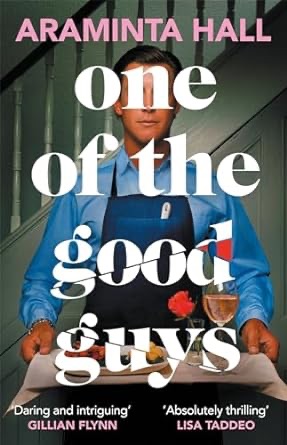
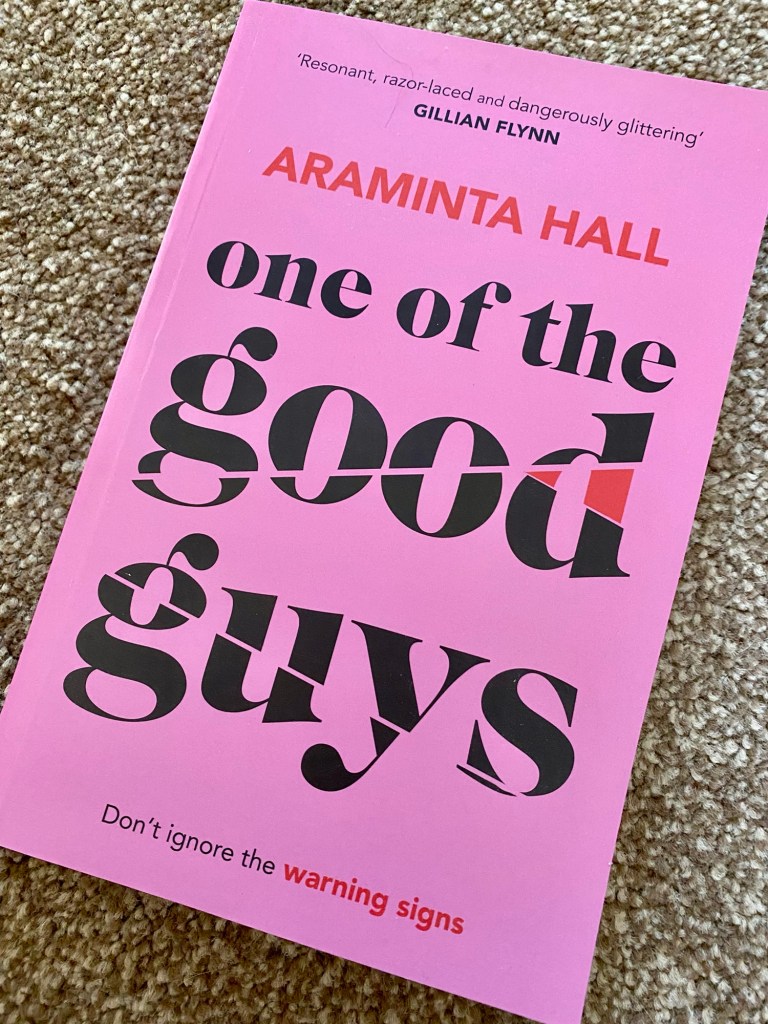
One of the Good Guys by Araminta Hall
Into the Uncanny by Danny Robins
Meet Me When My Heart Stops by Becky Hunter.
The Guests by Agnes Ravatn.
If you’d like to look at The Old Reading Room the link to the holiday site is listed below. It is expensive but I wanted my honeymoon to be special and with a nine month old goldendoodle on our hands there was no way we could go abroad. It was worth it to stay somewhere with that history and feel about it, it made me feel that rather than rushing around to see this or that attraction I could just read and take in my surroundings instead.
Cole is the perfect husband: a romantic, supportive of his wife, Mel’s career, keen to be a hands-on dad, not a big drinker. A good guy.
So when Mel leaves him, he’s floored. She was lucky to be with a man like him.
Craving solitude, he accepts a job on the coast and quickly settles into his new life where he meets reclusive artist Lennie.
Lennie has made the same move for similar reasons. She is living in a crumbling cottage on the edge of a nearby cliff. It’s an undeniably scary location, but sometimes you have to face your fears to get past them.
As their relationship develops, two young women go missing while on a walk protesting gendered violence, right by where Cole and Lennie live. Finding themselves at the heart of a police investigation and media frenzy, it soon becomes clear that they don’t know each other very well at all.
This is what happens when women have had enough.
Wow! This blows your eyes wide open. I warn you not to start reading at night, unless like me you have a total disregard for tomorrow. Even if I wasn’t actively reading it, I was thinking about it. Cole has moved to a remote part of the coast for a total life change after the collapse of his marriage. Cole considers himself one of the good guys. In fact he would probably call himself a feminist. So the marriage breakdown and Mel’s reasons are inexplicable to him. He was proud of Mel, who was launching her own business, but as they crept towards their late thirties he was starting to wonder if they were leaving it a bit late to start the family they both wanted. After trying for a while, they’d decided on IVF which he knows was more gruelling for Mel than him, but was she really giving their embryos their best chance? Always working late, not eating properly and popping back to work after implantation were all endangering their chances of a viable pregnancy. Despite cooking and caring for her, and supporting her business dreams, Cole is now facing a pile of legal papers on the kitchen table – divorce papers, financial settlements and perhaps most hurtful, a form agreeing to destruction of their final three embryos. What can he have done to deserve this?
As he slowly heals he notices someone is living in the old coastguard’s cottage, a woman he can’t stop watching. She seems so feminine, but yet grounded enough to put her wellies on with her dress while she’s gardening. She is an artist and when they meet a party she introduces herself as Lennie. When he asks what it’s short for she tells him it’s Leonora. No one calls her that but Cole insists. It suits her better he tells her, softer and more feminine. Could the two of them strike up a friendship, or even more? In the background, getting air time on radio and television, are two young women in their twenties who have decided to take on a challenge – a fitting continuation of the work done by women’s movement in the 1970’s. They want to highlight the daily misogyny and violence against women that’s endemic in society. So they plan to walk over 300 miles of the coastal path, camping out each night in a tent. They know that this is dangerous but they want to support a domestic violence charity and raise as much awareness as possible for those women and girls living in daily fear of violence. However as the girls go missing one night it seems they may have fallen victim to their own cause. Could they have become lost and died from exposure? Could they have misjudged their steps and fallen from the cliffs? Or has something far more sinister happened – one of their online trolls following through on comments like ‘you deserve to be raped’.
I loved the way the author put her story together, using fragments from lots of different stories and different narrators. Just when we get used to one and start to see their point of view, the perspective shifts. I thought this added to the immediacy of the novel, but also reflected life and the constant bombardment of information and misinformation we sift through every day. As well as Cole we have narration from Lennie and Mel interspersed with transcripts of radio shows and podcasts, Twitter threads and TV interviews. All give their perspective or commentary on the casual misogyny and violence against women that almost seems like the norm these days. Just like real life the book sometimes felt like a merry-go-ground of opinion, counter argument and trolling. Sometimes I was left so twisted around I wasn’t sure what I thought any more. The only thing I was sure about was much I disliked every single character, but I couldn’t stop reading them either. I would believe one narrator, but then later revelations would blow what I thought right out of the water. As the missing person’s case continues, everyone is weighed up then torn apart on social media and in the press. It made me ask questions: about the nature of art and it’s ethics; about whether all men truly hate women; to what lengths do we go to protest; when is enough, enough? It’s been over a week since I finished this extraordinarily controversial story and I still can’t stop thinking about it. Is it too early to predict a book of the year? I don’t think so.
Thanks to Macmillan and The Squad Pod Collective for my proof copy of this amazing novel.
Meet The Author
Hello, I’m a writer of thrillers and a lover of stories.
My latest book, ONE OF THE GOOD GUYS, was inspired by a groundswell of anger I’ve been feeling myself and amongst the women I know. Because if we don’t feel safe in the world, then it’s still a very unequal world. This is my answer to what happens when women have had enough of being scared.
I hope you enjoy this tense story set in a remote seaside location. I’d love to know if you guess the twist – I’m on instagram and X @aramintahall
And, if you do enjoy this one, I’ve published five other novels, EVERYTHING & NOTHING (2011), DOT (2013), OUR KIND OF CRUELTY (2017), IMPERFECT WOMEN/PERFECT STRANGERS (2019) & HIDDEN DEPTHS (2021
White lies. Dark humor. Deadly consequences… Bestselling sensation Juniper Song is not who she says she is, she didn’t write the book she claims she wrote, and she is most certainly not Asian American–in this chilling and hilariously cutting novel from R.F. Kuang
June Hayward and Athena Liu were in the same year at Yale and both debuted in the same year in publishing. Yet that’s where the similarities end. Athena is picked up immediately in the world that’s always looking for the next big thing. Stories about basic white girls just aren’t cutting it any more, so Athena is a cross genre literary darling. Her death is a freak accident that allows June an opportunity, she acts impulsively and steals Athena’s work in progress. Her work is an interesting novel about Chinese labourers and their part in WW1 helping the British and the French. Could she perhaps edit the manuscript and submit it to her own agent? Would it be wrong to start a new pseudonym? Enter the ethnically ambiguous new novelist June Song.
This was a brilliant inside look at issues and timely arguments within the publishing industry. In the past couple of years I’ve seen the question of authentic voices rage back and forth, especially interesting to me when it comes to writers with disabilities and the way disabled characters are written. Is it more important that a marginalised story is told or is who tells it the vital issue? This can be especially urgent when it’s a previously untold story or a hidden part of history. June has so much success with the book, but struggles to protect her secrets. One wrong word could expose her, so how far will she go to protect her new identity?
I’m always fascinated with books where I don’t like any of the characters because it usually means I’m learning something. I think some readers are uncomfortable with this. Athena is the wronged party and should therefore be ‘likeable’. In fact racist or more accurately model minority thinking means that a Western audience might expect the Athena to be sweet, pretty, docile and diligent just because she’s Asian. The qualities are positive, but allow no room for difference unlike the endlessly unique white characters created every day by Western writers. Huang broaches the idea that the industry’s criteria for deciding which Asian writers to publish is based within this flawed expectation. There’s also an issue around the type of subject matter chosen by publishers. In the wake of George Floyd’s death a lot changed in the publishing industry and we all talked a lot about diversity, but when I think of the subject matter of books I’ve read from ethnically diverse writers, particularly African American or Black British writers, they have all contained sexual abuse, violence or intergenerational trauma. Can we say this is a true reflection of the experience of people from those communities? Or do publishers expect this type of story from black writers and favour publishing them over other narratives? Do we only accept marginalised voices when they’re saying things we expect, things that make us comfortable because they echo our ideas about that particular community?
June truly believes that she’s becoming the minority in the writing world. That unless you’re a BIPOC writer you can’t get a look in from agents and publishers. The focus is on ‘own voice’ fiction and no one wants to hear from yet another white girl. I thought about the controversy around the book American Dirt when reading this. Writing is all about imagination and an author can imagine anything. An author can also research anything, but is research enough when you’re attempting to write from the perspective of someone with a disability, or someone LGBTQ+. I have to mention the proliferation of books from a neuro-divergent perspective by writers who have experience in this area, but who aren’t neuro-divergent themselves. I can understand the concern about it, but I’ve also really learned from some of these books and been led to other reading so I could educate myself. Where does ‘own voice’ writing end? Are we saying that a male writer can’t write in the voice of a female character? Writing is all about creativity so if we can only ever write from our own viewpoint wouldn’t it get a little boring? Should publishers accept a manuscript from a white writer who’s writing outside their own experience, if they are inundated with own voice manuscripts of equal merit?
“She’s using the pen name Juniper Song to pretend to be Chinese American. She’s taken new author photos to look more tan and ethnic, but she’s as white as they come. June Hayward you are a thief and a liar. You’ve stolen my legacy and now you spit on my grave’.
I loved that this book addressed those big issues, but it was also entertaining, delicious and disturbing in equal measure. I really enjoyed the ins and outs of the publishing world and the gossipy social media ‘blow-up’ feel of the book. Then there were moments that were more uncomfortable and challenging. It addressed what a lonely job it is to be a writer and how that isolation magnifies other aspects of being an author such as the negativity of social media and the perils of comparison. I wasn’t sure about June but that meant her character stayed with me. On one hand I felt she deserved to be exposed, but when I saw the reality of that I felt really bad for her. This was such a clever novel, so complex, full of amazing contemporary issues and always entertaining.
Meet the Author
Rebecca F. Kuang is the #1 New York Times bestselling and Hugo, Nebula, Locus, and World Fantasy Award nominated author of Babel, the Poppy War trilogy, and the forthcoming Yellowface. She is a Marshall Scholar, translator, and has an MPhil in Chinese Studies from Cambridge and an MSc in Contemporary Chinese Studies from Oxford. She is now pursuing a PhD in East Asian Languages and Literatures at Yale.
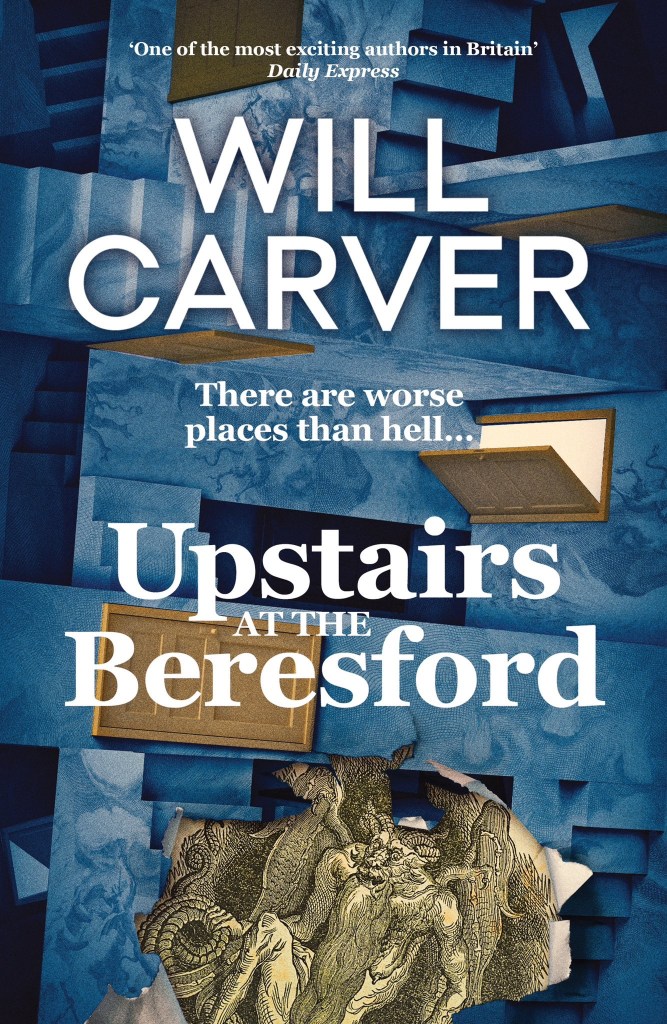
“The entrance to Hotel Beresford is art deco. Strict lines, geometry and arches showing cubist influence. The monochrome carpet screams elegance as it leads towards the desk that stretches the length of one wall, marble with chrome embellishments. Or, at least, it once looked that way. Back when writers and poets and dignitaries roamed the hallways and foyer. It still feels lavish. Glamorous, even. But faded. And a little old-fashioned.”
Ever since I read The Beresford I’ve been wondering what was going on through the other entrance. The entrance merely hinted at in one of it’s scenes. If what was going on up there was more weird or dangerous than the apartments at the front, I dreaded to think! In my review for the first book I wrote about the Dakota Building in New York City, because my mind kept drifting towards it while reading. It has just the atmosphere for this particular den of iniquity, it has a brooding sense of menace or presence of evil. Yet inside it reminds me of the Chelsea Hotel, a NYC landmark where in the mid Twentieth Century writers, musicals and artists lived. Arthur Miller, Bob Dylan, Arthur C. Clarke, Andy Warhol and Edie Sedgwick all inhabited the hotel in the 1960’s.
“Each floor looks the same yet somehow has its own unique landscape; it’s known for something particular. A celebrity affair. A mysterious death. A legendary party. Rumours that a serial killer crashed there between sprees. Rock stars smashing up rooms. Writers creating their masterpieces. Some is legend, much is true. All is talked about. With fondness, fascination and morbid curiosity.”
The author tells his story through a series of fascinating characters who live or work in the building. A young boy called Otis who lives on the seventh floor with his parents, who are constantly at war. Sam is an angry man who lets everyone feel his displeasure, often taking out his anger on wife Diane and son, Otis. Diane is turning tricks while Sam is at work in order to have an escape fund, often leaving Otis hanging round the building trying to avoid what’s going on. His favourite place to hang out is at their neighbours, but knows his mum would go crazy if she found out. Neighbour Danielle is a jazz singer with a voice so smokey it immediately conjures up exactly the kind of bar that would employ her. She likes to sit on her couch, under the window with one leg dangling out into the street. Along the corridor are the Zhaos, a sweet Chinese couple who also like to dangle out of their window, smoking something a little stronger than Danielle. Then, living in the penthouse on the top floor, is Mr Balliol. He owns the building and has the disconcerting ability to know everything that’s going on in the rooms he rents out and often sidles up to guests and his staff with no warning or sound. His unique staff are working on a business conference which will keep the hotel busy for a couple of days, but today is going to be an unusual day. Many different rumours swirl around the Beresford Hotel, some more fantastical and darker than others. It’s had more than it’s fair share of deaths, some accidental and some less so. Today is going to test the people who dismissed those darker rumours as impossible. Anything is possible at The Beresford Hotel.
“Peeling paint and faded hopes. Much like Carol. Carol seems to age with the building. For every strip of wallpaper that gets ripped or falls away, Carol gets another wrinkle. When the front facade gets uplifted with a new paint job or some detail on the masonry, Carol turns up with a Botoxed forehead or facelift. But not from a reputable surgeon. From somebody she saw advertising in the back of a magazine.”
Of all the characters I was absolutely transfixed by hotel manager Carol who seems like part of the building. She is that wonderful mix of unobtrusive, but yet ever present when needed, that all the best hotel employees have. No one notices the person who quietly sits in her office or on reception, but Carol has an uncanny way of knowing most things that go on in the hotel. She can probably guess at the rest, but doesn’t share Mr Balliol’s seemingly supernatural abilities. She has the world weariness of having seen it all before; most guest’s behaviour is not as unique as they would like to think. So she’s adept at covering up minor indiscretions all the way up to the accidentally dead: the husband who’s beaten his wife for years and finally gets his comeuppance, a solo sex game gone wrong or prostitutes- who end up accidentally dead more than most. Nothing much surprises Carol, even if a business conference does turn into a wild party or bacchanalian orgy. Yet behind the secret door to her inner office we see a softer Carol, perhaps the real woman beneath he hard nosed employee. It’s clear she’s suffered a loss. One guest who has spied Carol’s profile on a website has noticed this crack under the surface:
“He remembers Carol’s profile among the twenty that he settled on. He could see her former beauty, but this isn’t about going deeper than the surface, it isn’t some outreach programme. It isn’t benevolence or sensing someone’s spirit. Danny can see that Carol is broken. And he likes that. She had loved somebody so completely and then they died, and she has never recovered.”
Her soulmate and husband Jake is almost fatally injured in an accident and hasn’t come out of a coma since and as the weeks go on she begins to realise that the Jake she knew and loved was gone. His body was here, but not his mind, and the more time that passes the more it dawns on her that he is going to need help with his most basic human functions – he will have to be fed and piss into a bag for the rest of his life, if it can be called that. In desperation she calls on God, she will do anything if it will save the man she loves. God doesn’t answer. Yet bargaining is her only hope and if God won’t answer ……
Will Carver is one of the most unique writers I’ve ever read and this latest novel is no exception. He understands human nature. Not that all of us are checking into hotels and choking the life out of prostitutes, but he gets the smallest most innocuous and innocent thoughts as well as the darker side of our nature. His narrative voice is conspiratorial, it lets us into every corner of the hotel and also gives us curious little asides about the world we live in. Many of the speeches are recognisable as things we’ve thought and said about the absurdities and horrors of our world.
I loved his insight into writing through the character of I.P. Wyatt who also lives on the seventh floor and is struggling with that difficult second novel after a very successful first. His words are probably self-reflexive – where an author writes their own experience of writing the novel into their novel – although I do hope Carver isn’t applying Wyatt’s method.
“Some days he writes without breathing for hours, others he spits four perfectly formed words onto the page. And each evening, he deletes everything. He can’t stay in love with his words. He had it so perfect. Anything less than that and he will be chewed up by the press and readers and strangers online who just want to vomit vitriol with no personal consequence. Even if he can replicate the quality of that last book, it won’t be that book, that surprise success. And too much time has passed now. It will never live up to the hype. He should have just churned something out quickly. Something that could be torn apart that he wouldn’t care about.”
Carver has taken the age old tale of the Faustian pact and brought it up to date, into the 21st Century where despite all the advances in science and technology there are still terrible events we can’t control. As we all know, especially if we’ve watched Peter Cook and Dudley Moore’s film Bedazzled, making that sort of bargain or deal rarely benefits the desperate petitioner. The brilliance of Carver is that when we think we’ve worked out what’s going on, just like the twelve elite businessmen at their conference find out, a whole new level opens up before us. This is a daring novel, with a deep vein of human emotion at the centre. Yet it’s also playful, thrilling and dangerously dark indeed. If you’re not convinced by me then I’ll let Carver persuade you in his own words.
“When you watch a television soap opera, things are hyperreal. It’s unfathomable to have that many murderers and fraudsters and adulterers living on one street as part of one of three largely incestuous families. Life isn’t like that. Things don’t happen in that way. Hotel Beresford makes television soap operas look like a four-hour Scandinavian documentary about certified tax accountancy.”
Published 9th November 2023 by Orenda Books
Meet the Author
Will Carver is the international bestselling author of the January David series and the critically acclaimed, mind-blowingly original Detective Pace series, which includes Good Samaritans (2018), Nothing Important Happened Today (2019) and Hinton Hollow Death Trip (2020), all of which were ebook bestsellers and selected as books of the year in the mainstream international press. Nothing Important Happened Today was longlisted for both the Goldsboro Books Glass Bell Award 2020 and the Theakston Old Peculier Crime Novel of the Year Award. Hinton Hollow Death Trip was longlisted for Guardian’s Not the Booker Prize, and was followed by four standalone literary thrillers, The Beresford, Psychopaths Anonymous, The Daves Next Door and Suicide Thursday. Will spent his early years in Germany, but returned to the UK at age eleven, when his sporting career took off. He currently runs his own fitness and nutrition company, and lives in Reading with his children.
THE BERESFORD is currently in development for TV.
If you would like to get in contact, I can usually be found on TWITTER/X @will_carver but who knows how long that will last..?
You could always check out my website where you can join the MAILING LIST to stay updated with deals and competitions and which EVENTS I will be attending throughout the year. (There are also many hidden easter eggs within the site, just as there are in my books. Feel free to click around and see what you find.)
Recently, I have also become a podcaster and present the LET’S GET LIT podcast with fellow writer SJ Watson, where we discuss books and writing each week while sharing a drink. (Find us wherever you get your podcasts from.)
Oh, and just in case TWITTER implodes, I can also be found here…
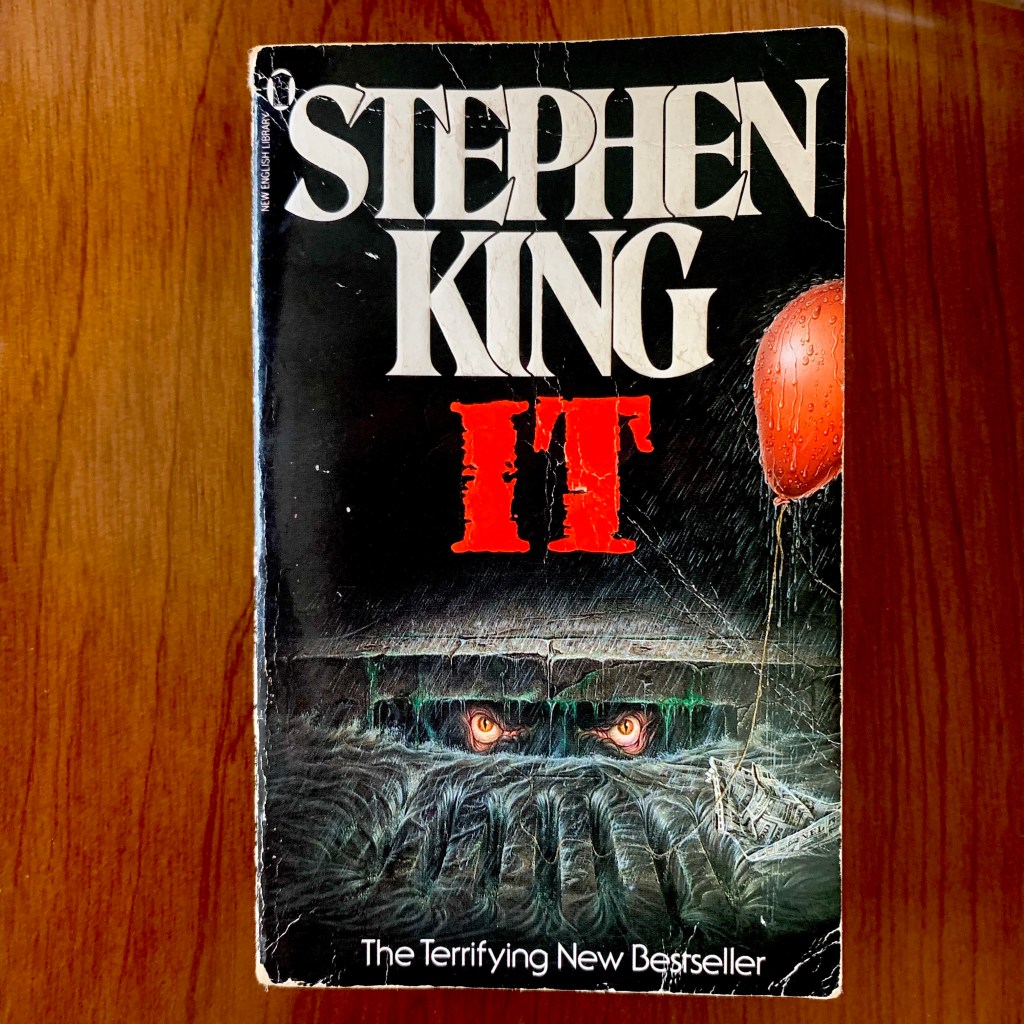
It by Stephen King. There are a lot of problems with this book, mostly the fact that his villain, Pennywise the Clown, is way more terrifying than the ‘It’ eventually encountered by the gang underground. I don’t think reading It started my clown phobia, but reading it as an impressionable teen certainly didn’t help. Now I’m terrified of anything that doesn’t show it’s real face, so masks, hoods, and make up always send a shiver up my spine. The scariest scene has to be when little Georgie Denborough, in his yellow Macintosh and hat, goes outside in the rain to play with his paper boat. The boat slips into the gutter and is washed into the storm drain. As Georgie approaches the drain he can see red tufted hair and floating balloons. They float, says Pennywise the clown. This clown has teeth and as Georgie reaches into the drain for a balloon he loses his arm. They all float down here.
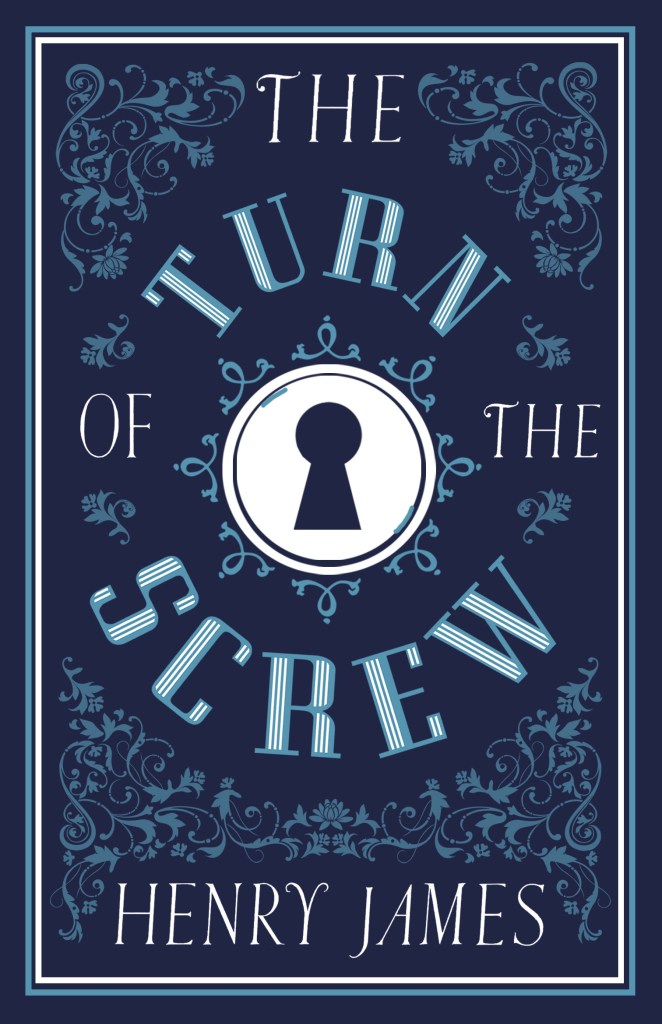
The Turn of the Screw by Henry James. This is a distinctly odd book, with no real answers or clarity about what is happening at Bly. Are there real ghosts at the house with malicious intent? Is it the children, Flora and Miles, who are possessed by demons or just evil and manipulative towards their governess? Is the governess mad, hallucinating the ghosts of Bly’s former employees and terrifying the children? I definitely err on the side of the children being the problem, they are far too knowing and precocious for their years. It may be that the children have been affected by their time with previous employees Peter Quint and the last governess. Whichever it is the two children make me shiver and the final scene where Peter Quint appears at the window to the governess is doubly scary because we don’t know if they can both see him, or just the governess. As Miles falls down dead I wondered whether their aim to send the governess mad has worked and backfired spectacularly. Henry James plays with the Victorian ideal of childhood innocence and that’s what makes it so creepy, the thought that we might be in danger from those we consider vulnerable and incapable of evil is incredibly subversive.
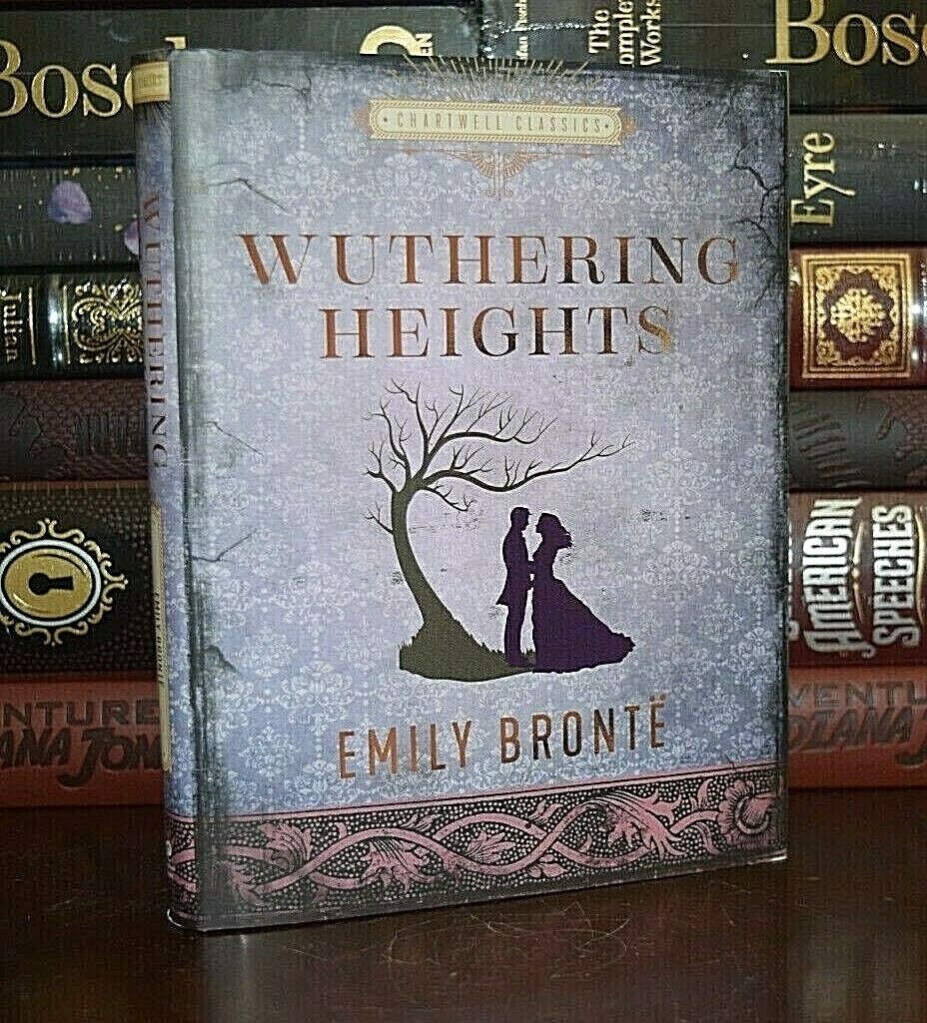
Wuthering Heights by Emily Brontë. Wuthering Heights is a story narrated by the family servant Nelly Dean, as told to a visitor to the farm, one of Heathcliff’s new tenants called Mr Lockwood. The weather worsens dramatically during his visit and as night falls it is clear that it’s unsafe to travel on horseback and he must stay. Heathcliff begrudgingly gives Lockwood a bed for the night, an old oak bed set under a window that overlooks the Moors. He wakes in the night, disoriented and disturbed by a tapping at the window. It is merely a branch and he concludes that he has been dreaming, influenced by Nelly’s tragic story of Catherine Earnshaw. He cannot unfasten the window, then resorts to breaking the glass to grasp the branch. The moment he reaches out to grab the branch but instead grabs an ‘ice-cold hand’ never fails to lift the hairs on the back of your neck. As he sees her white little face through the window he tries to pull his hand away but she won’t let go, begging him to let her in as she has lost her way on the moor. His solution is to grind the child’s wrist across the broken glass of the window until blood runs onto the bedclothes. This scene ensured that for my whole childhood I closed the curtains of any room I was in as soon as it was dark.
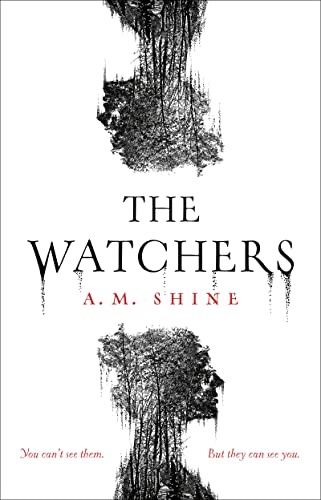
The Watchers by A.M. Shine. There’s so much to love in A.M.Shine’s debut novel, but one scene stands out for me, leaving me unsettled and unable to sleep. Set in rural Ireland, our heroine Mina is stranded in the middle of nowhere after her car breaks down as she does a strange favour for a friend. As sets off on a walk towards civilisation, she takes a wrong turn and ends up in the woods. The trees seem never ending and as afternoon starts to move towards dusk she has a strange sense of being watched. An unusual screeching noise unnerves her as she reaches a clearing and sees a woman shouting, urging Mina to run to a concrete bunker. As the door slams behind her, the building is besieged by screams. Mina finds herself in a room with a wall of glass, and an electric light that activates at nightfall, when the Watchers come above ground. These creatures emerge to observe their captive humans and terrible things will happen to anyone who doesn’t reach the bunker in time. This opening scene is so tense that when she reaches safety there’s a moment of relief, but only a moment. As the light comes on we realise that the glass window is full of creatures, staring in at their prey. I think the fact we never fully see a watcher makes it scarier as our imagination fills in the blanks. There is a twist to the ending that I can’t reveal, but I assure you it’s just as terrifying.
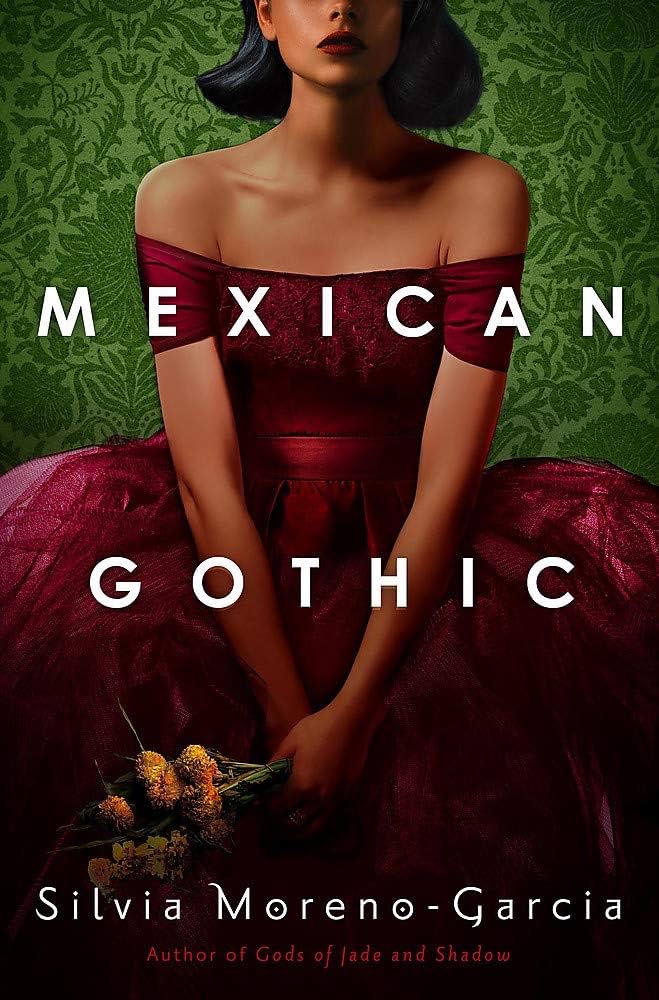
Mexican Gothic by Silvia Moreno-Garcia. I loved this brilliant horror novel that explores colonialism, feminism and eugenics as well as being downright scary. Noemi is a guest at High Place, wanting to spend time with her friend Catalina who has married into the wealthy Doyle family. Yet all is not well in the Doyle household. Noemi finds her time with her friend is very tightly controlled because Catalina has succumbed to a mystery illness. The family patriarch spouts his vile views on race and eugenics at the dinner table and what is going on with the mushroom wallpaper? It was Noemi’s strange dreams that I found most terrifying: she wanders the house covered with spores, has deeply sexual encounters with her friend’s husband and is haunted by a woman with a golden glow for a face who tries to communicate despite not having a mouth. However, nothing is more terrifying than coming face to face with the reality of the patriarch’s existence. Just as Noemi dreamed of the house becoming a mass of sores, his body is rotting to the touch. We are faced with blood, pus, bile and many other grotesque images, but even worse for Noemi there’s a threat of sexual violence culminating in the sort of kiss she really didn’t want. This made me physically retch! Oh, and you’ll be put off mushrooms for a little while.
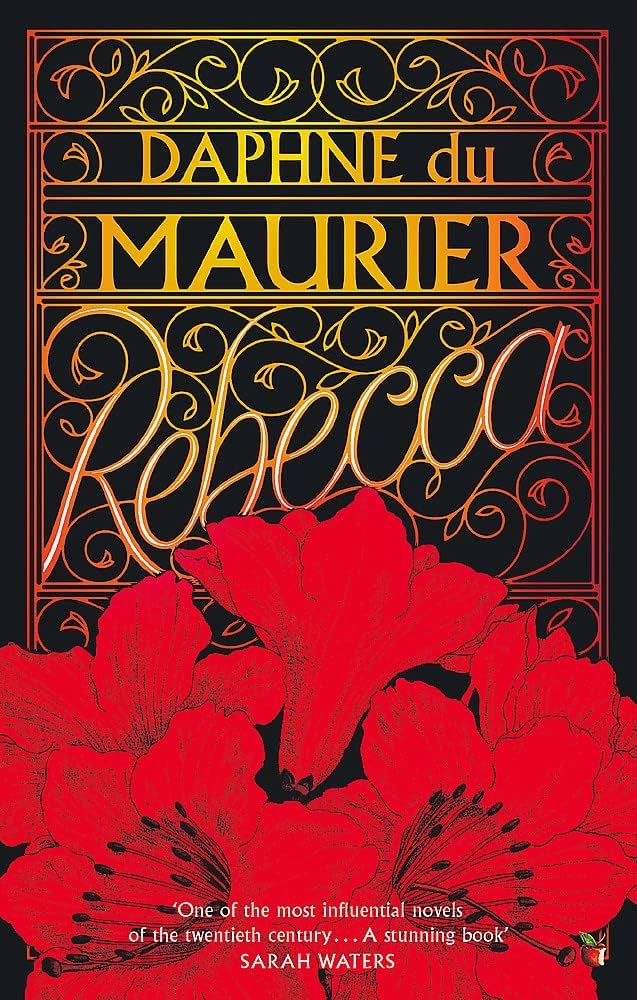
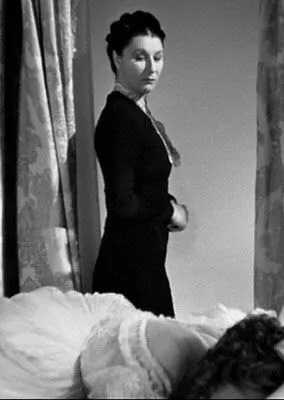
Rebecca by Daphne Du Maurier. I would argue that Daphne Du Maurier’s classic thriller is a ghost story, in fact in some ways both the women married to Maxim De Winter are haunting his home Manderley. Rebecca is dead, killed in a sailing accident, but her presence is still very much alive in the mansion: the west wing upstairs is off limits, still set up as her bedroom complete with her nightclothes laid out on the bed; her correspondence and address book is still out on her desk in the morning room with a huge ‘R’ on the cover; she even inhabits the cottage on the beach that her dog Jasper escapes whenever he can. The new Mrs De Winter is lost in this grand stately home and simply wanders to whichever room the servants direct her, servants who are still following the Rebecca’s routine. She doesn’t even have a name. However, the scariest part of Manderley is Rebecca’s servant Mrs Danvers installed as housekeeper after the to move to Maxim’s Cornish home. Described as wearing a long black dress, with gaunt features and deep set eyes that made her look like a skull she seems to slip between room silently, always seeing precisely the moments that the young Mrs De Winter would rather she didn’t. She encourages her new mistress to hold a costume ball like the old days and as an extra favour she suggests that she copies a costume from an ancestral painting on the stairs, not mentioning that Rebecca wore the same costume at the last ball. When Maxim first glimpses his wife on the stairs he thinks for a dreadful moment it is his dead wife and he is unnecessarily harsh. As she flees to the banned West Wing, Mrs Danvers torments her with Rebecca’s flimsy nightwear and the details of their routine. Her voice is hypnotic as she urges her new mistress to open the window to lean out for some air. The suspense as she tells her to jump, that she’s no use, she’s not loved and Maxim will always love Rebecca. A well timed shout and flare from a ship in distress are the only things that save her. This is the moment we know what this terrifyingly obsessed woman is capable of. Is Rebecca working through her, was she in love with her mistress, or was she simple unable to accept her death? Either way she is deadly dangerous and very creepy indeed.
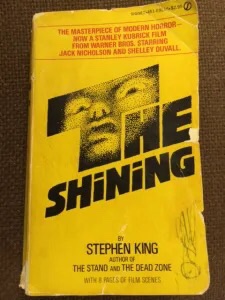
Shining by Stephen King. We’re back to King now, the ultimate horror writer and one of my favourite novels in his back catalogue. Everything about this book is creepy, from the wasp’s nest to the twins in the corridor, but there’s one scene that puts the fear into me and that’s the woman in room 217. Jack Torrance has been slowly sinking into his alcoholism ever since his family arrived at The Overlook Hotel and his son Danny has been exploring the place, often unchecked since they’re so isolated they know there’s no one else around. The problem is that Danny has the ability to see things his parents can’t and while they’re sure no people are around, they can’t say the same about dead people. In a scene that’s written so well I can feel Danny’s terror, he makes his way into room 217 and notices the curtain drawn around the bathtub. As he pulls the curtain back, hoping his parents have left a surprise for him, he is horrified to see the grey, lifeless flesh of a woman. Except she’s not so lifeless. As Danny desperately tries to exit the room he hears the sound of her body slipping and sucking over the side of the bath. Her squelching footsteps as she chases him. Obviously King writes so much better than me, so when I first read this scene my heart was hammering in my chest so hard! I felt sick. Ever since, if I enter a bathroom and the shower curtain is pulled across my mind immediately goes back to this scene and I do feel a little unnerved.
Frankenstein by Mary Shelley ‘It was already one in the morning; the rain pattered dismally against the panes, and my candle was nearly burnt out, when, by the glimmer of the half-extinguished light, I saw the dull yellow eye of the creature open; it breathed hard, and a convulsive motion agitated its limbs.’ The various film adaptations of Frankenstein rarely do justice to the true horror of Mary Shelley’s words. I must admit that the 1990’s Kenneth Branagh version made me vomit, quite literally, into my popcorn bucket! Not a great look for a date, but there we are. That was about the way the creature slipped out of the bath of fluid he’d been kept it. It’s hard to describe but I have a horrible revulsion towards snotty egg whites and this was like a bath full of them and a naked Robert de Niro was sliding about in them like Bambi on a frozen pond. The sound was enough to induce retching and I’ve never been able to watch it without that reaction. The original words though strike fear into me, the sheer horror of what he’s created and the realisation that he’s concentrated all his efforts into achieving life, without once thinking what would happen next. The dull yellow eye feels reptilian to me and that fear of what exactly this creature is swirls around the mind.
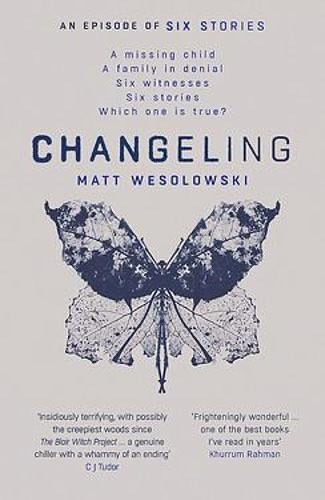
Changeling by Matt Wesolowski. This book really did get under my skin, possibly not helped by reading it in an unfamiliar and remote house where we were on holiday, not a million miles away from the forest in question. This starts as a missing child case, when Sorrel Marsden stops his car in a lay-by on the Wentshire Forest Pass on the Welsh Borders. As he investigates under the bonnet, hoping to find the cause of a strange knocking noise he has heard in the engine, he leaves son Alfie in his car seat. Minutes later, when he closes the bonnet, he glances up to see Alfie and finds him gone. He is never found. Scott King fronts a true crime podcast, a new one explored in each book of Wesolowski’s Six Stories series. Usually, the cases that Scott explores have a supernatural element and that’s definitely he case here, with the forest seemingly a hot spot for unusual unexplained noises, glitches in machinery and possible fairy sightings. However, room is also left for a more human explanation and it was the human aspects that really chilled here. A trainee teacher and her journals and reports form part of his investigation and her research into Child A takes on a sinister significance. She records a time when she was supervising the child alone and his lack of communication is a little unnerving. Then she starts to hear noises, strange knockings that she assumes are Child A banging under the desk. However, he isn’t moving. Then she hears muttering, as if he is talking under his breath to someone or taking instructions. Yet he is utterly still, eyes completely blank as if he has tuned out or is tuned in to something else. This scene did make me shiver. I didn’t know what scared me more: a child possessed or used as a conduit for something supernatural or a child that’s rather too knowing, deliberately setting out to unnerve their teacher.
The Ghost Woods by C.J. Cooke. We’re back in the gothic territory of monstrous births in this novel from C.J. Cooke and I loved the strange mix of the horrors of nature with the supernatural. In a room where he keeps his favourite specimens, Mr Whitlock has a wasp that’s been taken over by a fungus. The life cycle starts when the creature breathes in the spores, but then they slowly grow inside the insect until it bursts out of their body. It feels like there may be parallels here, especially for resident Mabel who is expecting a ghost baby. When our heroine Pearl arrives, this mini example of a parasitic fungus is overshadowed by the incredible fungal takeover in the west wing. Despite being closed off, she finds spores growing and multiplying on the outer stairs. Will it eventually take over the whole of Lichen Hall? There is a creeping sense of dread about the girl’s pregnancies because they do seem monstrous in their movements as seeing a tiny feet stretch out the skin of their abdomens. Mabel’s boy is beautiful, but its not long before she notices the strange lights appearing from under his skin. What do they signify? Is this the legacy of the ghosts? The atmosphere feels isolated and wild, but weirdly suffocating and claustrophobic at the same time. Everything builds slowly, keeping you on edge, but for sheer heart stopping terror it’s when walking outside in the woods that a shadowy figure awaits. I realised I was holding my breath when one of the girls fell trying to escape this creature and it grabbed her leg. In the seconds before she kicked it away she felt it’s purpose very clearly, a terrible intention to get ‘inside’ her skin.
NewSpooky Recommendations
New releases to check out are Alix E. Harrow’s new novel Starling House from Tor Books out on November 1st and The Haunting in the Arctic by C.J.Cooke which is out now from Harper Collins.
I was first introduced to Macbeth thanks to my crush on Sean Bean. I was living in Milton Keynes at the time and studying for my English Lit degree. We knew that Macbeth was coming in our final year and when we found out that Sean Bean would be playing the title role at our local theatre we had to see it. It was a production that had some unusual choices, but an incredibly clever banquet scene that has stayed with me. However, it was the more recent Michael Fassbender and Marion Cotillard film that I found absolutely spellbinding and moving in it’s depiction of Macbeth and his wife as two grieving parents. It gave some context to their actions in the play, particularly Lady Macbeth who is often depicted as a power hungry harpy who coerces her husband into a violent act that he’s unable to live with. I’ve always thought Lady Macbeth was done a disservice, depicted rather like Eve in the garden of Eden as a woman dissatisfied with her lot who convinces her husband to eat apples from the only tree God expressly told them not to touch. According to most dramatists she’s greedy, dissatisfied and power hungry. She was ripe for a rewrite and here it is in Lady Macbethad.
Gruoch has druid heritage and her grandmother prophesied that she would be Queen of Alba. She believes in this prophecy and will try her best to fulfil it. She was born the daughter of a King, even though her father has now been ousted. Her heart and desires are with Macbeth but she is the betrothed of Duncan, the heir elect and marriage to him should enable her to fulfil her destiny. Yet life at court comes with it’s difficulties, it’s lonely and uneasy to know every woman at court would do anything to be in her position. He coronation approaches, with the women keeping her at a distance and giving her the cold shoulder. An unexpected turn of events tears her plans apart and she’s forced to run for her life and leave her ambitions for the crown behind. Now she must fight just to survive, never mind the crown.
This was a really interesting take on the tale of Macbeth and a woman whose motivations are always unclear. There’s a feel of Eve about her, it is Macbeth who wields the knife yet in many depictions I’ve seen, the emphasis is on Lady Macbeth as the instigator of the killings. The evil temptress whispering in the blameless man’s ear. I was intrigued by a retelling of the story, based on a real woman who did marry a man called Macbethad who became the king of Scotland. The book starts as a fiction about Gruoch, but becomes an origin story for the character of Lady Macbeth. I thought these two women were brought together well, creating one character. She does have aspects of character that Shakespeare establishes in the play, becoming a scheming, power hungry woman. She’s also rather paranoid and even violent in her own right. However, whereas in the play we don’t know why she is this way, here we get her back story and have an opportunity to understand her a little better. Even if we don’t necessarily like her.
Macbethad seemed to be more balanced and measured in character. He stands out for this, which seems an irony when I expected to respond to Gruoch more sympathetically. There are other characters in the book based on real people from history, covering their family allegiances and their conflicts. I think it’s so difficult to marry historical facts with a fictional story in this way and I was impressed with the author’s attention to detail. She sets the book firmly in it’s Scottish setting by using Scottish Gaelic, as well as the stories and folklore of the area. She brought to life the conflict between the established pagan traditions and the growing practice of Christianity, something I found really interesting. Her descriptions of the place felt vibrant and alive, I could actually see it. She is equally vivid when it comes to the more brutal aspects of the story. There were parts of this book that I enjoyed immensely and I would definitely recommend it to those interesting in historical fiction and Shakespeare.
Meet the Author
Isabelle Schuler is a Swiss Hawaiian-American actress, writer and former Waterstones bookseller. She has a BA in Journalism and her screenplayQueen Hereafter was longlisted by the Thousand Films Screenwriting Competition in 2019. In 2020, Schuler adapted Queen Hereafter into her debut novel, Lady MacBethad. She lives in Hertfordshire.
“When the house was complete, in February of 1870, Eleanor Starling took up residence and stayed there until her death in 1886. There is substantial evidence that she devoted the remaining years of her life to the study of the place she later called “Underland.” She believed, according to the notes and journals found by her successors, that there was another world beneath, or maybe beside, our own—a terrible, vicious world, populated by monstrous beings. She believed that there were cracks between that world and our own, places where things might leak through, and that one of these rifts lay underneath Eden, Kentucky.”
Starling House sits on Starling land and can’t be fully seen from the roadside, except for a pair of iron gates that are so intricate and sinuous it wouldn’t be a surprise if they started to move and become a living, writhing being. Opal passes the house daily as she takes a short cut from one of her jobs to another and she’s intrigued by the house, especially the one amber lit window, high up in the attic room. There she imagines Eleanor Starling, living the solitary life of an author trying to follow up their first extraordinary book. Opal loved Eleanor’s children’s book Underland described as a much darker Alice in Wonderland where a girl called Nell is under the ground with a weird array of beasts (all of which look like a member of the animal kingdom, but at the same time not at all). Opal’s life is a gruelling slog from the motel room she shares with brother Jasper, to her cleaning jobs then back to supervise homework and share their measly evening meal. It only takes one small difference in their routine to shake everything up and bring huge change to their lives. Opal pauses her route home and stops at the iron gates of Starling House. She holds on to the iron, but immediately finds her hand is slick with blood. More disturbingly, she feels the gates give, almost as if her blood is the key. She looks up to see that a tall, thin and rather bedraggled man has appeared in front of her. He looks her in the eye and says one word. Run!
[The town] “liked the Starlings even less. They’re considered eccentrics and misanthropes, a family of dubious origin that has refused for generations to participate in the most basic elements of Eden’s civil society (church, public school, bake sales for the volunteer fire department), choosing instead to stay holed up in that grand house. […] It’s generally hoped that both they and their house will fall into a sinkhole and rot at the bottom, neither mourned nor remembered, and—perhaps—release the town from its century-long curse.”
Arthur, the bedraggled man, is the current Starling living in the house and it isn’t long before Opal is drawn back into his presence. Arthur seems to be torn. He’s drawn to Opal, but so is the house. It seems unfair to strike up a friendship with her knowing that the house wants her and what that will mean for her life. Yet he asks her if she will clean for him and offers enough money that Opal can’t refuse. He is concerned about this flame haired waif that is now in his midst and he can’t help but offer her a winter coat, then his old truck. Are these genuine gifts, or is Arthur trying to assuage his guilt for doing the house’s bidding? The house almost seems to sigh and settle as Opal cares for it, like a cat stretching with pleasure when stroked. She does wonder about the crude symbols scratched into the wooden doors, that match Arthur’s tattoos. Every conceivable symbol to ward off evil is either scratched, painted or hung around the house. How do you ward off something that strikes from within? Opal is then approached by a woman in a suit, who seems to know a lot about Opal and the Starling House. She wants Opal to take photographs and pass on information from the inside of the house. Firstly she seems like any old local official, but becomes more sinister when Opal is reluctant to help, finally making threats against Jasper. Now she has no choice, but she’s surprised by her own emotions; it’s harder to betray Arthur Starling than she expected. Is it really the house she’s drawn to, or is it Arthur?
“Eleanor Starling left no record of why she built such a vast and strange house, but the oldest and best-loved book in her collection was a copy of Ovid’s Metamorphoses. It has been suggested by subsequent Starlings that she was not building a house but a labyrinth, for much the same reason the King of Crete once did: to protect the world from the thing that lived inside it.”
Opal isn’t easily afraid and I knew, just from that opening, she wasn’t done with Starling House. More to the point, the house isn’t done with her. I admired this plucky girl who is only just getting by in life and does everything for her brother Jasper. She desperately wants him to get away from Eden, Kentucky, because he has so much talent but also because nobody with any sense stays in Eden. She is saving for the fees of a private school she has seen, somewhere that would give him prospects and he would meet the right sort of people. She’s so set on this plan, she hasn’t bothered to ask what Jasper wants. Her heart is in the right place though. She doesn’t love many things, but when she does Opal loves like she does everything else – fiercely. Her existence is all work, striving just to survive but Opal is so intelligent, in fact one of the only places in town she visits religiously is the library. The librarian Charlotte is perhaps the closest thing to a friend she has. The truth is that Opal feels enormous guilt over the terrible car accident that killed their mother and what she sees as the decision she made to survive:
“ I’m fifteen and cold water is pouring through the windshield. The glove box is open, spewing pill bottles and plastic utensils. Mom is beside me, her limbs drifting gently, her hair tangling with the tacky dream catcher she pinned to the car roof. I’m reaching for her hand and her fingers are slick and limp as minnows and I might be screaming—Mom, come on, Mom—but the words can’t make it past the river? Then it goes very quiet and very dark. I don’t remember letting go of her hand, but I must have done it. I must have crossed her name off the list in my head and swum for the surface, abandoning her to the river bottom.”
I loved the psychological aspects of the story. The house has an identity and it knows who has the right stuff to live there and keep up the fight. I wondered whether the monsters were real or a manifestation of the occupant’s mental state. The thought of the monsters in our heads being able to run free in the world is definitely a terrifying one. The author builds the two worlds within the novel with contrasting techniques: short, blunt descriptions create Eden with it’s power plant and functional buildings, whereas Starling House and it’s labyrinthine tunnels are given long, descriptive passages that bring it to life. If something in Opal or Eleanor’s world is inexplicable she allows it to be unfinished or confused. Some of the monsters are beautifully described as ‘like a cat, but not quite’ or other strange combination that leaves gaps in the image for the reader to fill with their own imagination. This is an author that knows, the things we can’t see or comprehend are the most frightening.
When we finally get to Eleanor’s life story it is disturbing and sad, showing how unresolved trauma can project outwards into something monstrous. There’s a feminist thread here too in the truth about Eleanor’s life with the Gravely men and Opal recognition that her mother was shunned by the town, not just for liking sex but for not being sorry about it. In a reversal of the usual damsel in distress story, Opal is the architect of her own life and is determined to rid Starling House of it’s monsters and save Arthur. I was biting my nails in the final chapters, desperately wanting her to succeed! I’ve never doubted Alix E. Harrow’s talent or imagination. I’ve been a fan since her first novel, but this is her best yet. I’ve been reading that it’s a reimagining of Beauty and the Beast, and I can see that. However, Underland felt like the very darkest Alice in Wonderland to me. In both cases, all the ‘Disney-fied’ prettiness has been swept away. In it’s place are monsters that defy all description and a love story that’s more swords and thorns than hearts and flowers. It’s an absolute feast for the imagination and the perfect dark fantasy read for October.
I wouldn’t have imagined back at the beginning, that we would get this many books down the line with private investigators Cormoran Strike and Robin Ellacott. In fact after the last book I thought the author had hit a wall with ideas or was trying to hard to be up to the minute with technology and new trends. I was pleased to find that this was a much better investigation. Full of tension and very dark in tone, this book delves into a church that’s really a cult, every bit as huge and secretive as Scientology. This is a tale of abuse: financial, physical, sexual and spiritual. In parts it is hard to read but compelling and fascinating to see how it’s teaching affect the people who follow it, but also our investigative duo. Sir Colin Edensor approaches Strike to try and bring his son home from the United Humanitarian Church’s compound in Norfolk. Chapman Farm claims to be self-sufficient, growing fields of vegetables and keeping animals, as well as undertaking evangelical work on the streets of Norwich. Sir Colin’s son Will has been part of the UHC for several years and would seem completely indoctrinated. He’s failed to get him out before, but desperately wants him home to see his mother who is dying of cancer. How will Strike and Robin go about their task?
The best way to discredit the church and get close to Will would be for someone to go in undercover. It would be better if that was a woman and Robin volunteers. Strike is reluctant to agree, but can’t come up with a sensible reason for that instinct, knowing his reluctance is probably down to his growing feelings for his partner. However, their other female investigator Midge is covering a famous actress who has a father and son stalker team who want to kidnap her. Robin is adamant it should be her and creates a persona called Rowena, who visits their London base for a ‘service’ with just the right clothes to suggest she has money, borrowed from Strike’s half-sister Prudence. It’s agreed that Robin will go to Chapman Farm for an induction period but they pick a place on the perimeter fence to leave a fake rock. Every Thursday Strike will leave a letter under the rock for Robin to find and she will leave a reply, if she wants to come out she can let them know and they will use blot cutters on the fence and bring her out.
As regular readers will know, Strike and Robin are one of my favourite literary couples, but I’ve been wondering during the last two novels how long she can keep them apart? There’s also a trend for putting Robin in danger to evoke feelings in her partner. Here I was genuinely worried for Robin before she even went into the farm. I could understand her wanting to assert her ability to go undercover and her authority as partner to make the choice – it shouldn’t have to be okayed by Strike. Yet as a person Robin has certain life experiences that a church like this could see as weaknesses to exploit: the rape she suffered at university, the knife attack on her first case that left her with PTSD, there’s also the fall out from her marriage to Matthew and her undisclosed feelings for Strike. These chinks in her armour will be seen by people used to exploiting others. I think there are times when asserting your authority and taking a feminist stance are admirable, but not at the expense of your own safety. ‘Rowena’ is noticed straight away by recruiters at the London temple and after a few attendances, Rowena is taken to Chapman Farm and starts at the bottom of the pile, working in the fields and mucking out the animals. In between there are services or talks about the church’s purpose, bombarding new recruits with images of everything that’s wrong in the world until their current place seems like one of safety. Then a process of breaking recruits down begins – lack of sleep, restricted food or fasting, manual labour and strange interventions and group therapy where the individual is broken down mentally. All of this starts to have a detrimental effect on Robin, but the most disturbing practices are around familial relationships. Children are taken to a dormitory and school so they are no longer a family unit but belong to everyone. Family groupings outside the UHC are rubbished as false attachments that should be broken immediately. Then there’s the spirit bonding. On the farm there are pods called ‘retreat rooms’ there expressly for the purpose of when someone approaches you and asks for sex. Emotional bonding is not the norm, sex is just another form of service, given freely with no ties. What will Robin do if approached?
There were times when I found myself a bit lost on who was who because the cult has so many members and their relationships are complex. There are also complications about the names they have for themselves. I think the author could have achieved the same effects and build up of tension within the farm with less characters and a shorter process of indoctrination. I also felt that Robin would have struggled to come out more than she did. The PTSD seemed mild considering what she’s seen and heard. The experience of looking after a disabled child who isn’t receiving the medical care he should was horrifying and was the main experience she struggled to shake off. The neglect was terrible and Robin desperate wanted him found by the police. However, she was cornered in the retreat room by a naked Will Edensor and was sexually assaulted by the church leader, but once she’s out it’s never mentioned and she doesn’t even tell Strike or Detective Murphy, her boyfriend. I wondered if this might be revisited in the future but it did seem odd to leave it hanging. I also started to be confused by the ex members that Strike was interviewing and where they’d fit into the hierarchy. There was so much detail surrounding the doctrine of the cult and it’s different prophets that I felt the other cases disappeared into the background. In fact one case seemed to be there only to serve as a distraction for Strike at a strategic point. Nevertheless, the tension built as Strike started to unravel the truth and Robin was still inside.
All that being said this was a much better novel than the last in the series. I was totally engrossed in it by half way through and barely surfaced till the end. Of course there is the question of Robin and Strike’s relationship. Ex-girlfriend Charlotte comes to the fore again, trying to lure him back in with an unforgivable lie. I was hoping he would see the manipulation, especially since he’s on his own and can’t run anything past his best friend. He’s wrestling with risking all that he’s built in terms of his business and their friendship if he tells Robin that Charlotte has been right all along, he does love her. Can he find the courage to tell her?
Meet the Author
Robert Galbraith’s Cormoran Strike series is classic contemporary crime fiction from a master story-teller, rich in plot, characterisation and detail. Galbraith’s debut into crime fiction garnered acclaim amongst critics and crime fans alike. The first three novels The Cuckoo’s Calling (2013), The Silkworm (2014) and Career of Evil (2015) all topped the national and international bestseller lists and have been adapted for television, produced by Brontë Film and Television. The fourth in the series, Lethal White (2018), is out now.
Robert Galbraith is a pseudonym of J.K. Rowling, bestselling author of the Harry Potter series and The Casual Vacancy, a novel for adults. After Harry Potter, the author chose crime fiction for her next books, a genre she has always loved as a reader. She wanted to write a contemporary whodunit, with a credible back story.
J.K. Rowling’s original intention for writing as Robert Galbraith was for the books to be judged on their own merit, and to establish Galbraith as a well-regarded name in crime in its own right.
Now Robert Galbraith’s true identity is widely known, J.K. Rowling continues to write the crime series under the Galbraith pseudonym to keep the distinction from her other writing and so people will know what to expect from a Cormoran Strike novel.
He took you and you have been his for five years. But you have been careful. Waiting for him to mess up. It has to be now.
Reading this novel was quite an experience! I didn’t want to put it down, I was reading so fast to get to the next bit that I sometimes had to go back and re-read a paragraph. I had to tell myself to read slower and take it in, because the urge to devour this story is so strong. The writer has chosen an interesting viewpoint, that of the women in a killer’s life. I loved that contrast to other serial killer novels where a male serial killer and a male detective often narrate the story. Where the only women are the dead ones. Women are not expendable here. Even the murdered ones.
This is still the story of Aiden, a serial killer, but told from the perspective of the women in his life: his daughter, the woman he has abducted and imprisoned in a shed, and the bartender who is infatuated with him. There are also small sections from the women he imprisoned before, now dead. Each woman’s narrative gives the reader a different side to this hidden monster. It’s an intimate reading experience, because I felt like I knew everything about this woman: how she thinks, how she feels and even the details of her dreams. It feels like you’re with her in that tiny space, sharing her experience. It’s a very tense existence, knowing that you’re here at the whim of a man who’s already killed so many times you mean nothing to him. As someone who gets claustrophobic it felt almost too close and I felt her fear that it might just take one wrong move for him to kill again.
Aiden’s wife has just died, so he and his daughter Cecelia need to move house and his captive moves with them. She goes from her place in the garden shed to being chained to a radiator in the house. If she puts a foot wrong he will kill her and somehow he does know everything she’s doing even while he’s out of the house. How is he watching her? Incredibly, he has a daughter in the main part of the house as well as a souvenir stash in the basement. This only adds to the tension. What is hard to understand is how he rationalises his killing of women when he’s father to a daughter.– to a place with no shed. After years of isolation, Rachel is allowed inside a house again, and meets her captor’s child. I had so many questions though. Why is she still alive? It’s been five years now and he’s always killed his victims. He also seems to be out stalking a new victim, Emily, a local restaurant owner. Is this good news for the captive, or is he looking for a replacement?
Since the book Rebecca I’ve always been intrigued by characters that we don’t see, but even more so, by characters without the right name or a name at all. We know this woman as Rachel, but the choice not to use her own name makes you think. It seems common sense that he wouldn’t use it, he’s trying to distance himself. To make her an object rather than a human being. Yet she doesn’t mention her name either. Maybe even she can’t remember it or maybe every one of his captives is ‘Rachel’. This is part of the mystery that I wondered about when I was going about my day. It has allowed the author to place emotion and the victims at the centre of this thriller, making it stand out. As others have noted there’s a hint of Emma Donoghue’s Room here, where the four walls you’re in become your whole world and you become whatever you’re called. Rachel is a complicated character, and it’s clear that she’s suffered at the hands of Aiden. There are moments where I was rooting for her escape. She has time and opportunity, but can’t take it out of fear. From reading cases of abductions and long captivity, this isn’t unrealistic. Yes, she’s a strong woman, but she’s been manipulated and terrorised by this man so has to be sure before she takes a chance.
In the local area Aiden is seen as a good husband and father, in fact there’s probably an element of hero worship. So, local restaurateur Emily is aware of him already and might even be a little into him. She’s also young and alone, so it doesn’t take long for till she’s under his spell completely. Through these three narratives, Aiden’s captive, his daughter and the new love interest, Aiden’s dark truths are unravelled. This is not about considering his motivation or perspective, all of this story is about his victims and the mess the man like this leaves in his wake. I loved how the style of the author’s writing, which is mesmerising and poetic contrasts strongly with the dark subject matter. I doesn’t rush like thrillers often do. The contrast shows us that life can be beautiful, but what Aiden does is twisted and sadistic. I was desperately hoping that Rachel would survive and we might know who she really is.
Meet the Author
Clémence Michallon was born and raised near Paris. She studied journalism at City University of London, received a master’s in Journalism from Columbia University, and has written for The Independent since 2018. Her essays and features have covered true-crime, celebrity culture, and literature. She moved to New York City in 2014 and recently became a US citizen. She now divides her time between New York City and Rhinebeck, NY.
From listening to blogger’s conversations over the last couple of weeks I’ve learned a lot about reactions to this book and it seems to have completely divided readers. Maybe all bookworms can be divided into Lauras and Roaches – I certainly found a few clues about which on I was, so that made me smile at my own ridiculousness!
“I knew she was a bookseller as soon as I saw her. She wore a green beret, the colour of fresh pine needles, and a camel raincoat like a private detective in a film noir. Over one shoulder, the grubby straps of a shabby tote bag. It was decorated with a quote in a typewriter font, and although I couldn’t quite read it, I knew what it would say: Though she be but little, she is fierce, or Curiouser and curiouser, or Beware for I am fearless and therefore powerful.”
Brogan Roach works at a small London branch of Spines – the ubiquitous high street bookshop. She pretty much runs her own workday, keeping a close eye on her precious true crime section and sneakily reserving books, but secreting them in the staff room to read later. Things are about to change though, when a new team move in to pick up sales and improve the store. They’re like bookshop troubleshooters. Sharona is the manager and her team Laura and Eli are very experienced booksellers, eager to help the public and make sure the pyramid displays are perfect. Laura Bunting is just one of those people born to work with the public. She has an easy manner, quick to smile and engage customers in conversation, magically able to sell the book of the month. People warm to her immediately, but she hasn’t warmed to Roach.
“Laura Bunting. Her name was garden parties, and Wimbledon, and royal weddings. It was chintzy tea rooms, Blitz spirit, and bric-a-brac for sale in bright church halls. It was coconut shies and bake sales and guess-the-weight-of-the-fucking-cake.”
Laura and Roach are incredibly different characters anyway, but the rot sets in on a poetry evening. All the staff go, but Laura is performing. Her poetry takes the killer out of the murder narrative. She performs found poetry created from serial killer narratives, but telling the story of the women instead. Roach seems to miss the point though and as Laura comes off stage she greets her with excitement as if she’s a fellow true crime enthusiast. She wants to engage Laura in a debate over whether adding the violence she’s omitted might make the poems more exciting, or appeal to a larger audience. This would be fine if they were both enthusiasts, but they’re really not. For Laura, this is personal. Years before, Laura’s mother was the victim of Leo Steele, a prolific strangler. Laura hates true crime because it always tells the killer’s story. The whole point of her poetry is to right that wrong so she becomes furious when Roach misses the point. Other than that the pair just don’t click, not everyone does. Laura is the type of bookworm I know and love – she has the tote bag with the literary quote and all the book paraphernalia that signals to others she’s a bookworm. Roach sneers at this, she loves her genre but she seems to be reading exactly the same book throughout. It’s unforgivable when Roach re-inserts the violence and torture into Laura’s poetry, especially when it ends up published online. She has no concept of how much pain this will cause Laura, both personally and professionally. Laura’s full of memories of her mum that have nothing to do with her death or her killer and she thinks of her every time she walks to work.
“I think about the rhythm of my feet on the cracked path and about Patti Smith in New York, and of Joan Didion in Sacramento, and how each footstep is another connection between me and my neighbourhood, the streets on which I learned to ride a bike, where I walked hand in hand with my mother, and that despite all the pain, and the loss, and the grief, I’m tethered to Walthamstow because she still exists in the fabric of it, a ghost imprinted on every familiar sight. She knew these streets, these trees, these bricks, these bollards. These paving stones remember the bounce of her running shoes. I still can’t quite bring myself to walk past her old shop, even though it’s changed.”
Laura takes opportunities to dig at Roach and the genre she holds dear, but on Roach’s end there are sinister acts of sabotage. I found them disturbing, targeting Laura’s very sense of self. Both women are vulnerable in their own way with binge drinking and destructive sexual encounters shown as symptoms of low self-esteem. Laura’s encounters with Eli are particularly painful and indicative of relationships we settle for when we’re young and unsure of ourselves. Roach seems to have the confidence to embrace who she is, but is constructing her entire identity around her true crime fandom. There’s clearly either a jealousy or deep obsession where Laura is concerned. Is it Laura’s charm, her easy way with customers, her talent? Or is this much darker, an obsession with Laura’s proximity to a real life true crime story? Instead of seeing Laura’s work as an inspiration and a starting point for her own creative path, she decides to steal it. She even reasons that it isn’t theft, because many writers use other works in their own process. I was gripped, waiting to see if this would go further. I was unsure whether Roach even had her own identity, an idea of her authentic self, or whether this was another aspect of Laura she was willing to steal.
The book is fast paced and so addictive I read it in two short bursts over a Friday night and into Saturday morning. I was bleary eyed, but had to know. The title alludes to a death and I needed to know who would die and whether it was murder. Ironically, I found myself intrigued by the potential killers, just like any true crime fan. I loved the author’s sarcastic jibes about the book world and couldn’t help but laugh, even when I recognised myself. I thought she captured the loneliness of living and working in London as a young woman, especially in a relatively low paid job and the poor housing they find affordable. Locked in a solitary, damp flat with only books for company is a breeding ground for mental health issues, with heavy drinking used to self-medicate. It was tense towards an ending that could only be devastating for someone, but who? This was a brilliant debut thriller, that kept me rapt throughout.

















 The Lotus Readers