Posted in Publisher Proof

Spring And Being Your Authentic Self

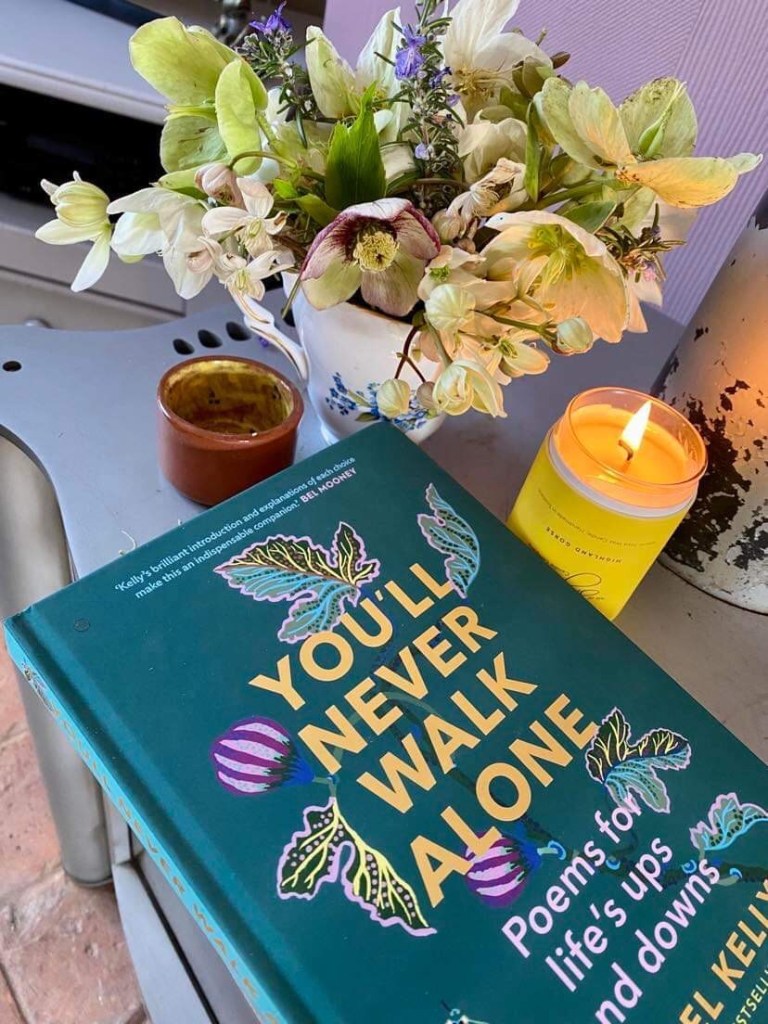
I’m continuing my series with Rachel Kelly’s collection of poetry for each season of the year. Today I want to share with you another poem from ‘You’ll Never Walk Alone’ because it speaks to me about being authentic and I know how liberating that can be.

Wild Gees by Mary Oliver

You do not have to be good.

You do not have to walk on your knees

For a hundred miles through the desert, repenting.

You only have to let the soft animal of your body

Love what it loves.

Tell me about despair, yours, and I will tell you mine.

Meanwhile the world goes on

Meanwhile the sun and the clear pebbles of the rain

Are moving across the landscapes,

Over the prairies and the deep trees,

The mountains and the rivers.

Meanwhile the wild geese, high in the clean blue air,

Are heading home again.

Whoever you are, no matter how lonely,

The world offers itself to your imagination,

Calls to you like the wild geese, harsh and exciting –

Over and over, announcing your place,

In the family of things.

In You’ll Never Walk Alone – Poems for Life’s Ups and Downs. Ed. Rachel Kelly. Yellow Kite. November 2022.

I love that we come to this poem in the middle of a conversation. Editor Rachel Kelly suggests that it might feel odd at first, to hear this voice telling us we do not have to be good – a lesson we are taught from being a small child. In order to be loved these days we are told we must be good, but also to behave in certain ways and look a particular way. We must have no body hair, thick lustrous hair on our head, the perfect figure and whitened teeth. But this poem says no, a goose only has to be a goose, the natural way a goose is meant to be. It follows it’s inner instincts, to fly to warmer climates in winter and back home in the spring. It isn’t trying to be something it’s not. It is unapologetically itself.
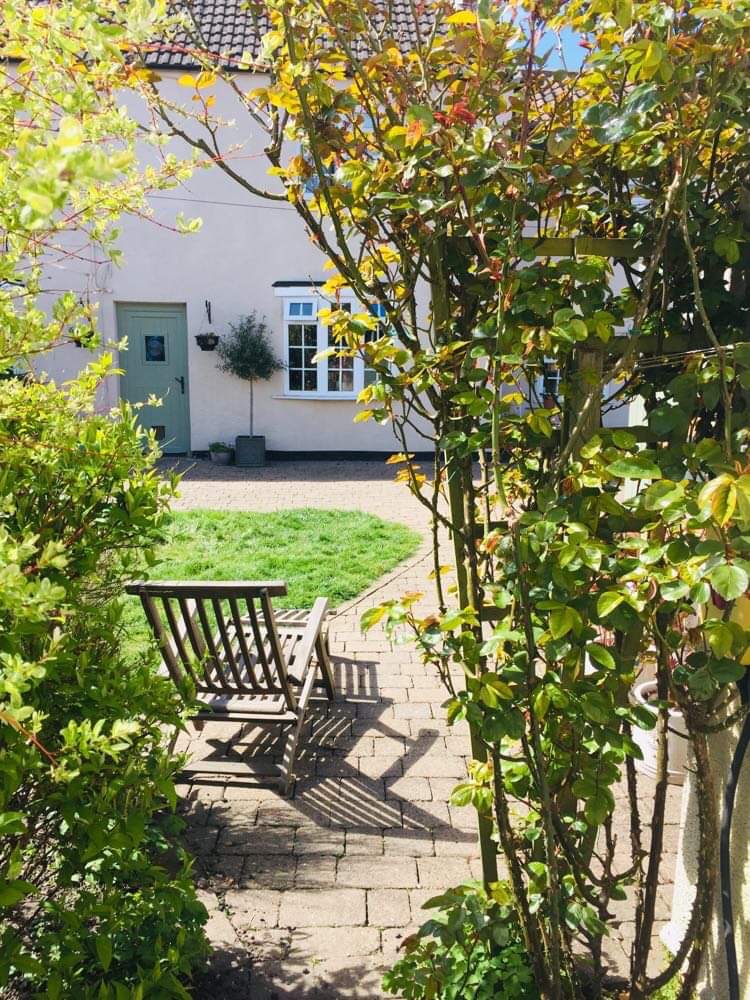
At this time of year I can go out with a cuppa into the garden and I identify the different clumps of leaves, what will become the aquilegias, daffodils, tulips and even foxgloves. Every year they are in the same place in the garden and will bloom at their set time, bringing bursts of scent and beautiful colour into my world. Even when I’m struggling with pain and I can’t walk far, I can get into my garden and enjoy my flowers. The consistency of their blooming brings me so much hope: of warmer days coming, having the doors and windows open, reclining in my garden chair with a good book – usually with a cat or two in my lap. When I did an authentic self workshop this was one of the activities when I felt most like my true self, just being outdoors with my animals and enjoying a good book. Nature is the backdrop to this and is grounding in a way. ‘The natural world unfolds anyway’, Kelly tells us not because it was told it must or should be a certain way. She goes on to talk about the metaphor of the geese, flying freely, following their instincts and but also being part of something bigger. It’s a powerful message, that we have a place in nature and can return to it any time for sustenance and to quieten that constant noise we’re bombarded with.

To listen to your inner self I ask clients to get out a notebook and write down the times in life when they’re at their most comfortable with themselves. ‘When you’re not questioning how to be or whether you’re wearing the right thing. When you feel totally in tune with what you’re doing and in the present moment’. This will be different for everyone but my first list was:

When I’m with my dog walking on the beach or in a forest

When I’m at a concert, caught up with the singing and the crowd

Sitting in the garden with a good book and my cats with me

At the theatre watching a ballet or a compelling play

Watching wildlife

From that I could pick up certain patterns, such as I like quiet or activities where people aren’t expecting conversation. I like solitary activities or being in a crowd that’s in tune with each other. I like to observe more than participate or perform. I find animals and nature soothing. This meant I could lean more towards activities that felt natural rather than activities that made me anxious or feel out of place. I will look back to this poem from time to time and probably use it in sessions, because it does remind us to take time in nature but mainly to stop trying to be what others tell us we should be. Be who you are and love what you love.

Happy Easter everyone.
Posted in Writing Therapy

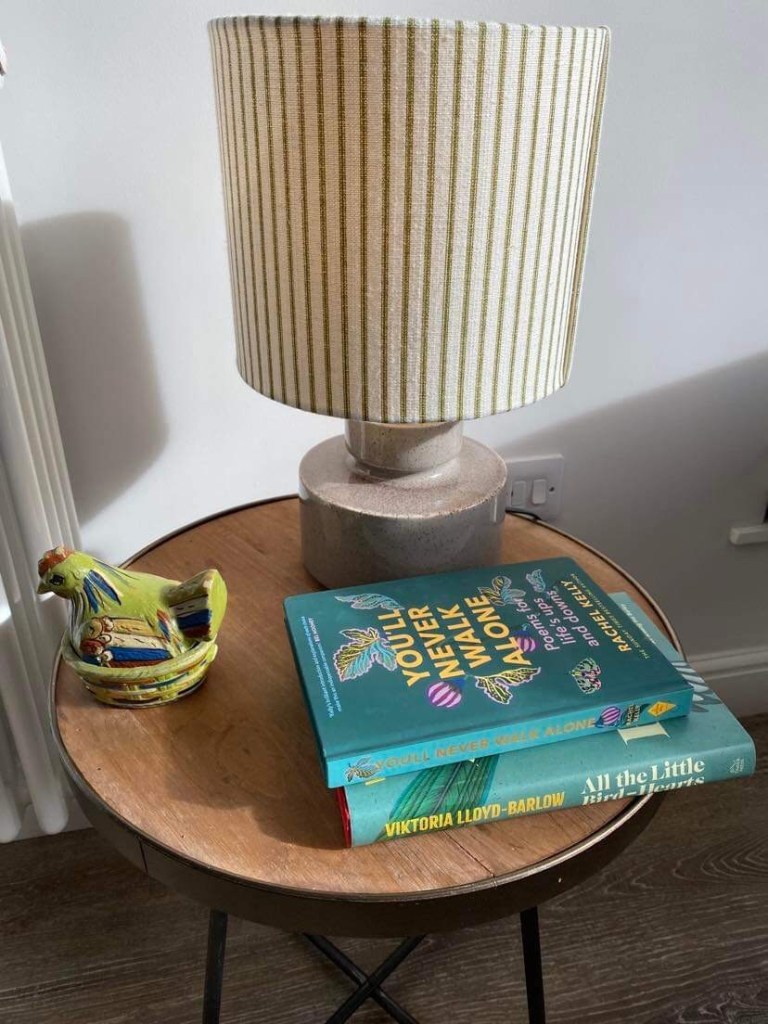
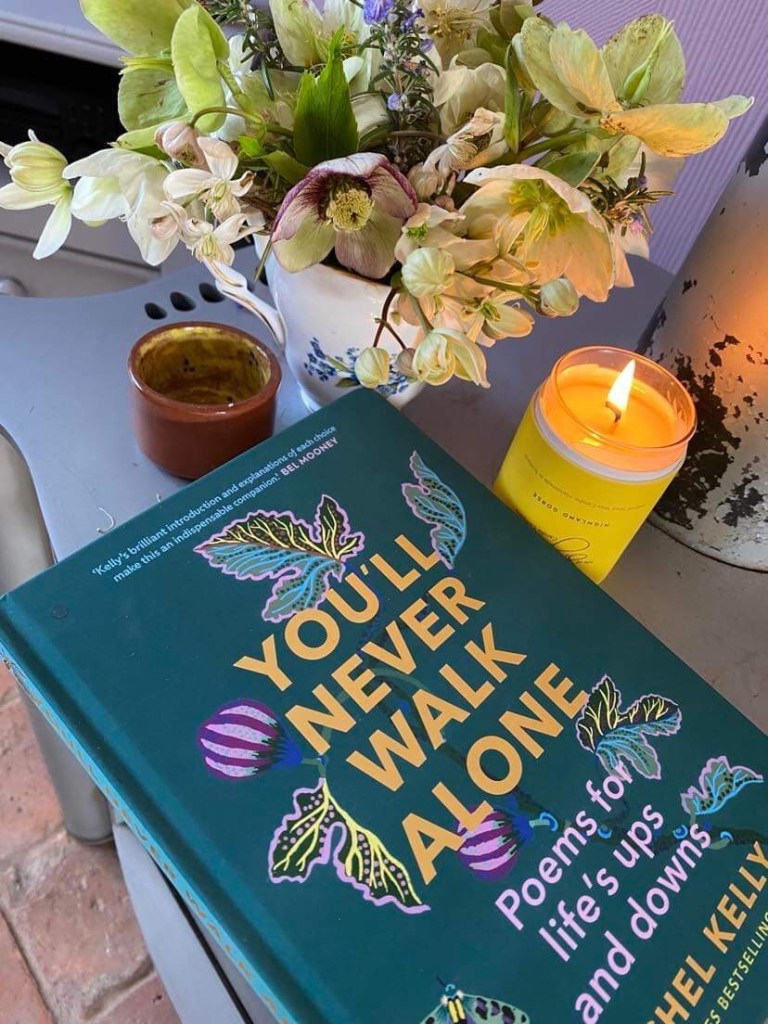
Springtime: You’ll Never Walk Alone – Poems For Life’s Ups and Downs by Rachel Kelly.

When I was offered this book of poetry to review I wanted to do more than just a basic review. This is the sort of book I would use when working with clients and the collection has been gathered with writing therapy in mind. For me spring is the perfect time to start working with clients, because it’s naturally a time of growth and change. It’s a much more natural time to make life changes or start to challenge ourselves rather than the dead of winter. Our moods tend to lift and we want to be outside enjoying the milder weather. So over the next few Sundays I’m going to use this book to show how I work with clients and some exercises you might want to try. Firstly, I’m going to write about how I felt about the collection and how it’s been framed by the editor and then look at how we respond to poetry.

Review

This is a fantastic collection of poetry, cleverly sectioned into seasons and the emotions those seasons might inspire in us. Alongside her chosen poems are illustrations and a thoughtful reflection on how each poem has come to mean so much both to the author and to years of readers. As Kelly starts off in her introduction, ‘words can be a way to make sense of our feelings’ and I would definitely back that up from the writing workshops I’ve held. Even when we can’t find our own words, reading someone else’s can light a spark of recognition in us. Not only does it help identify feelings, it shows us that someone else has felt how we do, We are not alone. This is where this book excels, it’s a companion. It would be a great bedside table book, then if we wake in the night feeling sad or anxious we can flick through and find someone who expresses exactly how we’re feeling. It’s good to keep a notebook to hand as well, to jot down your responses. The book also excels in the way it’s laid out, split into seasons of the year. There are specific emotions that we attach to the seasons and with it being early spring I noted how hopeful spring poems are. They signify beginnings, new growth, the banishing of winter and hopefulness. As growth appears in the garden, we hear the new dawn chorus or smell a hyacinth, it can’t fail to raise our spirits. So the seasons in the book can follow the emotional seasons we experience – for example, we can sink into hibernation when feeling low or depressed. The poetry chosen really does suit it’s season well. As a writing therapist I can see how I could use this book when designing short courses on identifying feelings, beginnings and endings, how to use poetry to boost your well-being and so much more. As a reader I think it’s a great collection, beautifully illustrated and a fantastic bedside book to dip in and out of from time to time when you need support.

Response To Poetry

One of the most astonishing things about working with words is that the simplest things work. I sometimes felt, early on in my practice, that I wasn’t writing nearly enough for a session. With experience I learned that just doing a couple of exercises – a check-in, warm up write, then a longer piece – is more than enough. You have to factor in feedback time and sometimes that can take longer than the writing itself. It’s vitally important, because not only does it help the participants process what they’ve written, it bonds the group together and lets that person feel safe and listened too. Putting something down on paper then sharing it aloud is a double process where we get to see it in black and white, then say it, releasing it into the world instead of keeping it hidden inside. Either or both can unleash incredible and unexpected emotions.

Responses to poetry are a simple and powerful way for a group to get to know each other and share where we are in our life journey. Spring poems are great for this opening moment because spring is a season full of the things we might identify with – beginnings, trepidation, light, promise, hope and relief. We might be putting down a heavy burden, perhaps for the first time, so we feel lighter, we’re letting sunshine in and we’re trusting things might get better. We might be skeptical, stunned by the sherbet lemon yellow in a clump of unexpected daffodils, yet reminding ourselves there might be frosts to come. It also sounds so easy doesn’t it? So we write down how we feel and miraculously feel better? The answer is yes, it’s a process of course, but I’ve never had a participant feel substantially worse.

So, the idea is to pick up an anthology of poetry like this one or search online for poems about spring, then simply flick through until something grabs your attention. Read it through a few times then make some notes. Ask yourself a few questions about the poem, here are a few ideas:

Note down any words or phrases that jump out at you. Is it the meaning of the words or their sound that grab you? What images jump out in your head? Does the poem conjure up pictures of people or particular memories and what’s their significance? Do any words lift your spirit and which ones? What meanings come to mind for the poem’s imagery or for the poem as a whole?

I did this for my favourite poem that evokes spring and is included in Rachel Kelly’s collection. Emily Dickinson’s ‘Hope is the thing with feathers’ is so meaningful to me that I had it turned into a decal for my bedroom wall. It was the first thing I saw when I woke up in the morning, alongside some carved wooden wings.

Hope is the thing with feathers/ that perches in the soul/ and sings the tune without the words/ and never stops at all.

This is so meaningful to me because when I first moved into the house I’d gone through the hardest years of my life. My husband had died from complications due to multiple sclerosis. A while later I’d met up with someone I’d known a long time before, when I was a teenager. We had a whirlwind relationship and married about two years after my husband died. What followed was two years of confusion, emotional pain, self-loathing and feeling like I was going mad. It took two different periods of counselling and re-education to realise I’d married an abuser. Someone who enjoyed dragging women down, eroding their confidence and telling them something was wrong with them. It took a terrible betrayal for me to leave, because if I’d stayed he would have succeeded in taking me away from my closest family members. I have no doubt the abuse would have worsened had I stayed. So I started a period of self- healing and it was hard, because I had a distorted sense of who I was, how I looked and my own worth. I thought that waking up to that poem every morning would help, would lift my mood and give me that grain of hope. It gave me that lift in mood, experienced when we hear the dawn chorus in spring. I also felt held safely by the promise that the bird’s song will never stop. That even when I was depleted and depressed, the bird would keep singing for me. Hope will always come, just like spring always follows winter. I have a tattoo on my back of a birdcage with an open door and the bird flying off into the distance. It represents this time too and my eventual ability to fly and sing for myself.

Meet The Author


Rachel Kelly began her career as a journalist at The Times. She is the author of four books covering her experience of depression, recovery and her steps to wellbeing. Rachel writes for the press, gives interviews and public talks sharing her motivational and holistic approach to good mental health. Her memoir ‘Black Rainbow: How words healed me: my journey through depression’ (Hodder & Stoughton, 2014) on the healing power of the written word was a Sunday Times bestseller and won the Best First Book prize at the Spear’s Book Awards. All author proceeds from the book were donated to mental health charities – Rachel is an ambassador for SANE, Rethink and The Counselling Foundation and campaigns to reduce the stigma surrounding mental illness. ‘Black Rainbow’ is published in Sweden and the USA and in 2020 it will be published by Larousse in France. She has also written about the holistic approach which helped her recover – her second book, ‘Walking on Sunshine: 52 Small Steps to Happiness’ (Short Books, 2015) is an international bestseller and has been published in Canada, Croatia, Germany, Poland, Turkey, the USA, Korea and China. In 2016, Rachel co-wrote ‘The Happy Kitchen: Good Mood Food’ (Short Books, 2017) with the nutritionist Alice Mackintosh, a happiness-focused cookbook which offers over sixty recipes that promote mental wellbeing. ‘The Happy Kitchen’ has been published in the USA and Canada. Her latest publication is titled ‘Singing in the Rain: An inspirational workbook – 52 Practical Steps to Happiness’ published by Short Books in January 2019. 

Follow Rachel on Twitter @RachelKellyNet or visit http://www.rachel-kelly.net.

Posted in Random Things Tours

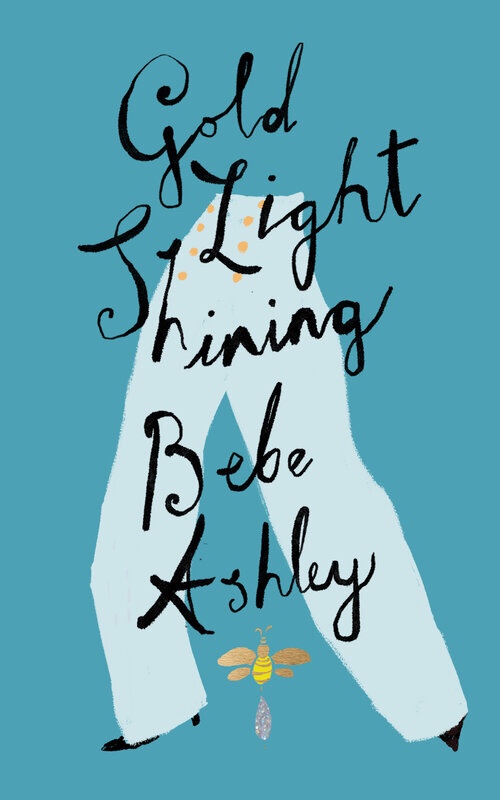
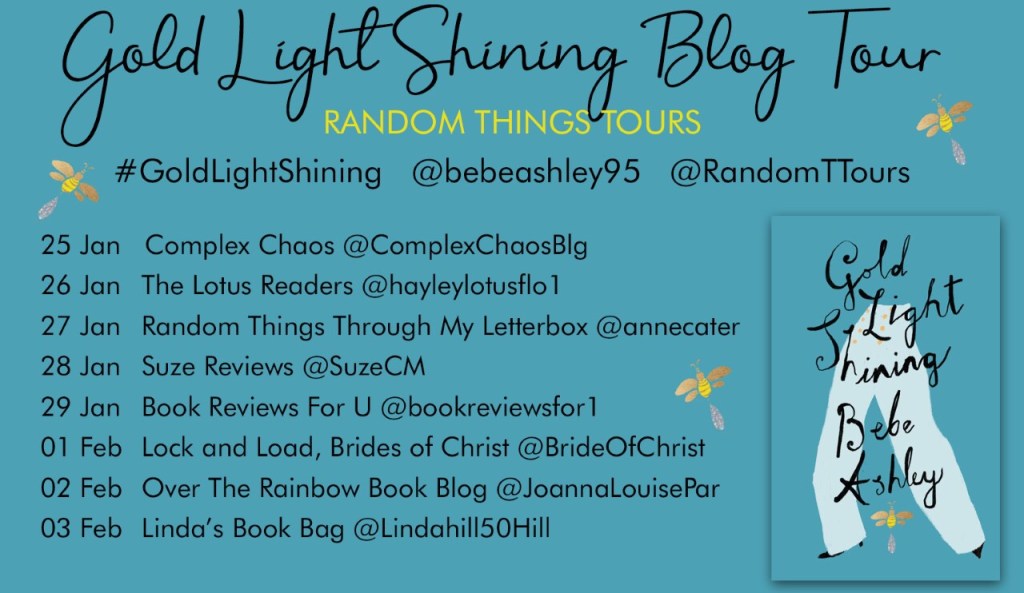
Gold Light Shining by Bebe Ashley.

I would describe Bebe Ashley’s collection as a poetic collage. It ranges across subjects as diverse as fashion, fandom, and families. Ashley elevates the internet into a poetic subject, puncturing the enduring snobbery of high and low culture. She shows us that the internet and some of its subjects are not the cultural wasteland people fear. Rather it is a window on whatever we choose to view from celebrity culture, to youthful yearnings, obsession, awakening sexuality and Harry Styles. The internet can be the cultural rainbow that lights up our grey lives. The focus may well be on our journey into adulthood, but there is another, wiser, voice too. The voice that knows some of this is momentary and that it is in building connections and communities that we find meaning. She also never forgets the meaning in our own families.

I grew up in the eighties, and we had to drive five or six miles to another village to the newsagent who reserved my copy of Look-In magazine, and then Smash Hits. This was my little window into the world and more specifically Adam Ant. My life might have been very different had I been able to access information and my fingertips. I loved the poem ‘Give Pop Music, Give Peace a Chance.’ It’s a grandmother, standing on a hill with her grandchildren reminiscing about this place, the seasons and her awakening to music and celebrity. As she sits in a sunken garden amongst the bluebells a young ranger starts to point out the beauty of the place. She knows. She knew it was beautiful before he was even born. She remembers that age of listening to music and feeling full of potential:

‘’a telegram from John and Yoko/ The thrill of running coloured chalk through the ends of her hair/She remembers sticking her thumb pad against the pin back/of a badge that served as her first concert ticket.’

She includes notes and allusions to Harry Styles, suggesting listening to his music while reading the poetry here. She starts the book with a quote of what looks like song lyrics, where he talks directly to his fans saying that he doesn’t understand or feel exactly what they do, but that he does ‘see’ each and every one of them. This assures the fans that they are noticed, that he appreciates them and this state of ‘fandom’ which is such a strong feeling as a teenage girl. In her poem The Boy Who the narrator gives a brilliant depiction of the chaos of a teenage party. She meets a boy in a Jesus T-shirt who is hiding in the bathroom to get away from people, but to enjoy the music. She lays in the bath and she listens to a tale of finding a friend ‘who he met in a gay club that he definitely didn’t know was a gay club’ and how this friend offered him their couch to sleep on while things were difficult at home.

Although these are longer poems than haiku, it feels like the poet is trying to do the same thing. All of these are brief moments in time, beautifully observed, and structured. The Boy Who is written as a long stream of consciousness with no punctuation or breaths. It’s like a story you’d quickly tell a friend about the party you attended the other night and where you disappeared to. In the final poem she imagines the object of her fandom in Japan, wearing an embroidered hoody and curls that are in need of a cut. The last two lines describe one such moment:

This is the one I’d most like to meet /Of all the moonstruck moments

This is a beautiful collection of poetry that imagines that rush of teenage hormones, burgeoning sexual feelings and the perfect pop star as an object of affection. There is a reverence and respect to how she describes Harry Styles here that I found really endearing. I loved though how the poet describes he importance of music and how we use it to complement or change our emotions. In Breakdown she brilliantly pinpoints the way we might use songs for heartbreak and it reminded me of my friend who was heartbroken and kept playing Coldplay’s The Scientist over and over in the car until me and her other friend stole the CD to break her mood. We were worried that the repetitive playing of it, was hampering her recovery. Here Ashley writes:

‘There was something serendipitous/ About being heartbroken during the release/ Of a heartbreak album, with the postman/ already tired of square sleeved parcels/ And the neighbours already sick of hearing/ Heartbreaker’s twelve songs on repeat.’

Music does affect and influence our emotions profoundly. If I hear certain Snow Patrol songs I’m reminded of a bereavement I had. If I hear ‘Yes’ by McAlmont and Butler it reminds me of feeling positive, hopeful and full of excitement for a new start in my life. Like most of us I even have mood playlists on Spotify for when I need cheering up, motivating or having a good cry. Ashley captures that feeling as well as teenage fandom and the inspiration she gets from Harry Styles’s lyrics. It’s a very readable and relatable collection, that I can tell I’m going to enjoy with further readings.

Meet The Author

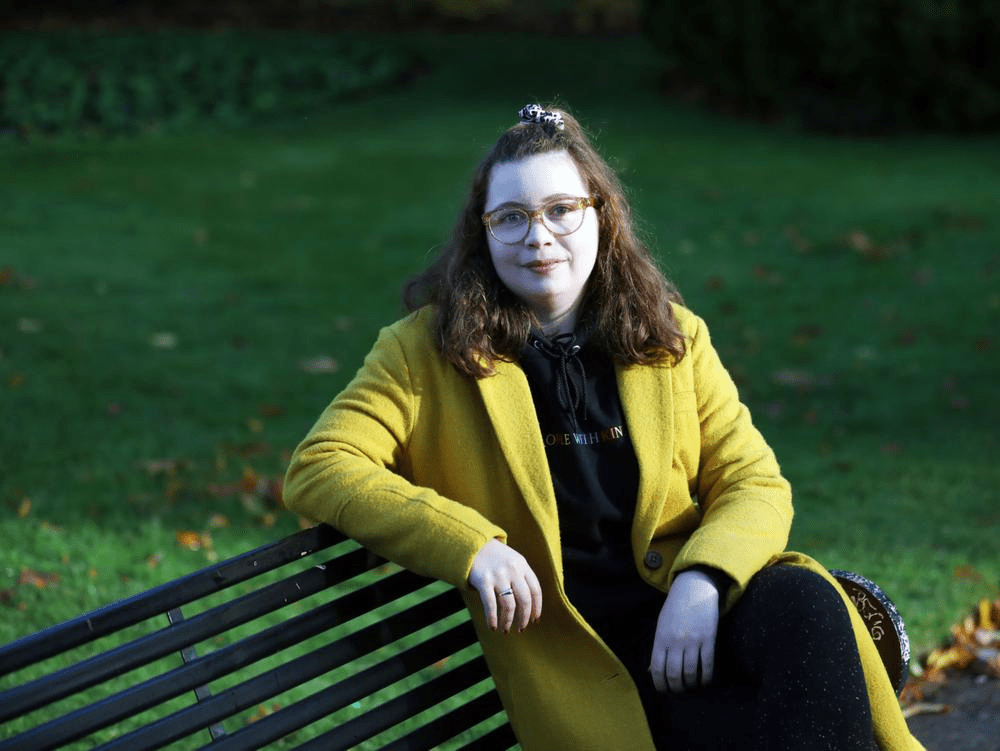
Bebe Ashley lives in Belfast. She is a AHRC – funded PhD candidate at the Seamus Heaney Centre for Poetry. Her work can be found in Poetry Birmingham Library Journal, Poetry Ireland Review and others. When procrastinating from her PhD she takes British Sign Language and Braille classes, and writes pop culture articles for United by Pop, specialising in Harry Styles.

Posted in Random Things Tours

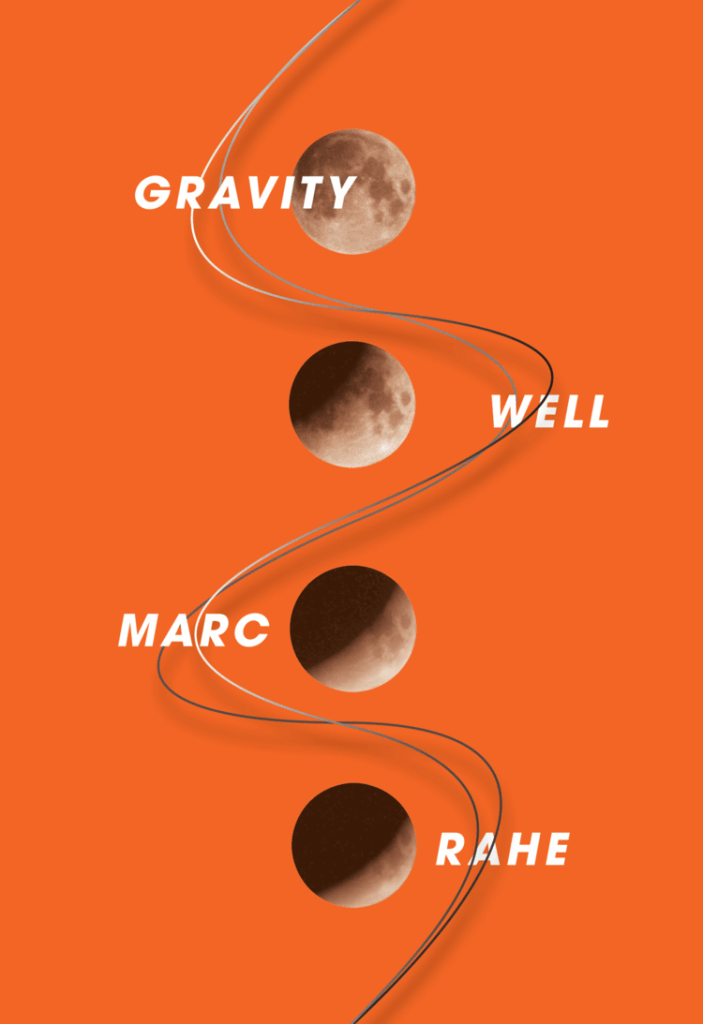
Gravity Well by Marc Rahe

#RandomThingsTours #GravityWell #Poetry #BlogTour

My Thoughts | I haven’t read any new poetry for a long time so I jumped at the chance to read this new collection. For me, poetry is very emotional. It’s about whether a poem connects with my feelings in some way; is the poet describing something I recognise, something I’ve felt or seen? There tend to be certain images that make me stop and think and Marc Rahe’s new collection Gravity Well did all of these things and resurrected my interest in poetry.

Some images made me smile because of how clever they were or because of the beautiful combination of words. In Writer Friend the narrator describes an unsettled afternoon as a ‘forecast-come-true afternoon of cloudy and scattered’. I also loved the Schroedinger reference in Our Shared Life of ‘The bee trapped with you inside/ your helmet in traffic, will or will not’. It made me think of that moment before something happens. In that moment, playing simultaneously in the biker’s mind, are the bee that stings and the bee he successfully releases back into the world unharmed. We get another sense of the in-between reading his poem Stellar, as if moments in time are simply Russian dolls with each possibility stacked within each other – touching but separate:

‘This tree was my favorite the day it rained during my walk. Uncanny when it’s raining and it’s sunny at the same time. As if being in someone’s presence and feeling the presence of their ghost’.

Another line I loved was ‘the air was as wet as dog’s breath’ because it made me feel the humidity of a wet day in August, that moisture hangs like warm misted breath in the air.

There were also themes running through the work that interest me greatly, because of my own writing work which is focused on how the body, particularly a faulty or malfunctioning body, interacts with the world. Rahe has a way of describing age and the changes of the body that are surprising and moving. In his poem Appetite I loved the following section:

‘I’ve been reopened along the same incision

and though metal plates and wires, metal screws,

can only be said to ache, I say

it is the metal in this leg that tells me

the sky is so full of mountains and trenches

as the ocean, metal that warns me

of my own weight held past a certain angle from the center.’

I love how he describes the constant ache of the structure that holds the speaker’s leg together, but it isn’t a negative statement, it’s just something that’s there. Also it’s a way of gauging the world, like I know if my joints ache it’s going to be wet or if my muscles seize it’s going to be cold. The unnatural pins and wires he needs for his limb to work naturally, actually link him to the natural world too – to the heights and lows of the lands, and even how the force of gravity can be sensed as he finds the balance of walking with these metal supports.

In Fable of the Cephalopod he uses humour to describe a sense of coughing up a foreign body, something that feels like ‘an octopus that was trying to wear a sweater’ giving the reader a sense of how stuck it feels, trying to force eight woollen legs from the ‘wrong bronchial tree’. Later he describes the moment of having a blood test, very routine for me and others who are ill, but tense all the same. He perfectly describes that moment when you almost hate yourself for trying to make the medics life easier. When you feel guilty for being difficult, as if you could control the way your veins and body work:

‘at a blood draw my vein resisted the needle. The needle

slipped aside inside my arm, despite repeated attempts. I made,

for the phlebotomist, a joke I hoped would defuse her growing anxiety.’

I felt a connection with parts of the work, and as always with poetry, I know that re-reading will bring further meaning and interpretation, depending on my mood. Poetry’s meaning lies with the readers once it has left the author’s pen. It may well have had an original meaning, but really the beauty of poetry comes out when the reader brings their ‘stuff’ to the poem. I’m sure there are other bloggers who have had totally different experiences with the images and themes but that’s the beauty of it, it can touch a multitude of people very differently. I thought this was an imaginative and thoughtful collection from a poet I’d never read before. It sparked my interest in poetry again and I am looking forward to reading more for the blog and for my own enjoyment.

Other Reviews | Marc Rahe’s luminous poems find grace in acts of intentional remembrance, in turning back to sing ‘what can be seen / looking behind.’ The speaker’s world resembles our own fraught moment–fallen, divided–but never numb. These poems hum with moments of transcendence, between body and weather, air and breath, between today’s pain and the deep wounds of the past. In precise, lucid lyrics, this voice insists that our capacity to feel is what binds us, ecstatically, to our planet and to one another.–Kiki Petrosino

Ever since his first book, THE SMALLER HALF, was published, I’ve kept my eyes open for new work by Marc Rahe, and whenever new work has come, I’ve celebrated, actually celebrated. No poet writing in English today is better at making poems stuffed full of being and of things seen, things heard, things touched, things tasted, and things thought hard about nonetheless quiet. And yet, though they approach silence, these poems resonate, and, like Rahe’s previous work, they will resonate for years.–Shane McCrae

Biography | Marc Rahe is the author of THE SMALLER HALF (Rescue Press, 2010), ON HOURS (Rescue Press, 2015), and GRAVITY WELL (Rescue Press, 2020). His poems have appeared in The Iowa Review, jubilat, MAKE Literary Magazine, PEN Poetry Series, Sixth Finch, and other literary journals. He lives in Iowa City.