Posted in Orenda, Random Things Tours

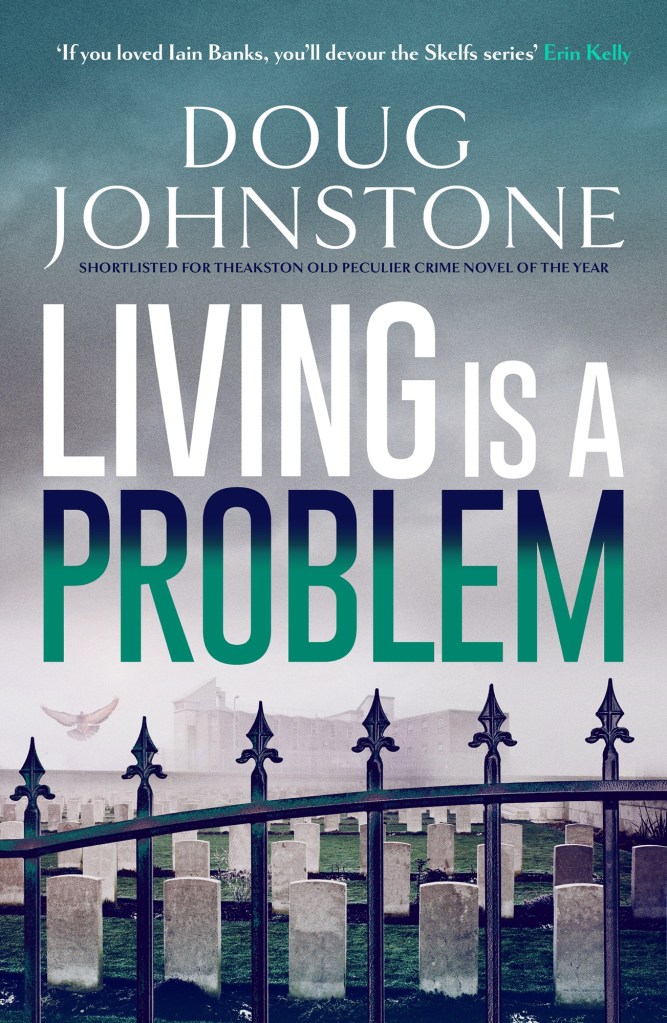
Living is a Problem by Doug Johnstone.

Living is a problem, because everything dies. Biffy Clyro

Every Skelf novel begins with a funeral, but they rarely go off without a hitch. This one is no exception, with a drone buzzing the ceremony. Could it be to do with the deceased or has someone got it in for the Skelfs? Jenny’s following the case from the last book, keeping an eye on the cops they investigating for sexually abusing young girls in the travelling community. Both are inexplicably out on bail and Jenny likes to know where they are, talking to Webster’s wife and setting up surveillance cameras. Hannah’s case also links back to the last book, concerning Brodie the new recruit to the undertaking business. Brodie had been living on the streets since the loss of his baby son broke his world apart. He has found strange scrabbled marks around his son’s grave that don’t look like they’ve been done by an animal. Hannah agrees to set up a camera, but being told that Brodie hears voices she wonders if he might have gone to the grave and acted subconsciously. Dorothy’s case comes from her involvement with a community choir that includes some Ukrainian war widows. One of the women, Yanna, has gone missing. Her husband Fedir was killed over a year ago and now she’s left her two small children with her mother-in-law. Could she have returned to Ukraine to fight, or has something happened to her? Each of the Skelf women feel vulnerable this time and I felt like the author was playing on my emotions a little. I could sense we were on the verge of a huge change and it left me on tenterhooks throughout.  

Hannah’s vulnerability comes from finishing her PhD and feeling a bit lost. While there’s always work in the family businesses she doesn’t know if it’s what she wants to do forever. She’s happily married to Indy but worries about her fascination with powerful older women, such as the astronaut Helen in the last novel and now a professor, Rachel Tanaka who researches into people who hear voices. Is it simply that she’s attracted to their power and position in academia or is it a sexual attraction? I wondered whether it was their competence and their certainty in their career and outlook that she craved. Having Jenny for a mum can’t always have been easy, especially when she was drinking. Then there was her relationship with Hannah’s dad Craig, which was full of fighting and volatility. It could have been scary for her. Maybe these older women feel more stable and dependable and she’s craving what she missed as a child? Jenny felt vulnerable throughout the novel. Part of this was entering into a new relationship, a time when your feelings are on the line and you’re not sure whether it will work out or not. This relationship comes with the extra pressure of knowing him for a long time. She is aware that if it does go wrong, more than her own feelings are at stake. Also Webster and Low, the police officers Jenny is a witness against, are piling on the pressure. They’re facing accusations of sexual assault and the beating of Dorothy and Thomas, but are on bail. Jenny feels unsafe, especially when Webster pulls a knife on her in the street. She petitions the officer in charge to have them dealt with for intimidating a witness. Until they’re remanded everyone is vulnerable. Thomas is not coping and Jenny has started having the odd drink or two. Where will it end? 

Dorothy feels the most vulnerable to me. She’s still working on funerals and investigating, and it’s clear how much her drumming and being part of a band is a solace for her. Usually, Dorothy and Thomas have been a united front. It’s always been a strong relationship, based on friendship, but now she can feel a shift in him. The beating they took from Webster has left them both at a low ebb, but instead of coming together to recover, she feels that their experience has separated them. Thomas seems distant and inward looking, he’s also started the process of Swedish Death Cleaning – sorting through his belongings and giving away what he no longer needs. Even though he explains that it is not just for those who are dying, Dorothy is uneasy that he appears to be putting his affairs in order. She has suggested PTSD and counselling, but he wants to deal with things in his own way. His way started to scare me. What happens when an experience changes your partner beyond recognition? I sensed impending doom and I was on high alert as Dorothy tried to find out what his plans were. I was genuinely scared for her and every time she seemed close to danger my heart skipped a beat. I realised just how fond I was of this badass grandmother. As we moved towards a potentially terrible conclusion I could barely breathe. Could I cope with losing the amazing matriarch of this family? Within her thoughts was a counsellor’s lament: 

‘Sometimes she got it wrong, but she always attempted to have empathy. She tried to see things from the point of view of Yana, Oliver, Veronika and Camilla. She tried to understand Thomas, as well as Griffiths and Webster and Low, their victims Billie and Ruby’. 

Sometimes we have so much empathy for others that we forget about ourselves. Our own anger and sadness gets pushed to the bottom of the pile as we try and try to understand why people do what they do. Each of the Skelf’s cases has a surprising ending and a particularly devastating one for all the women.

As usual the author included his mix of science, philosophy and spirituality. The phone box in the garden is still doing it’s bit, helping the bereaved speak to their loved ones. The funeral business is changing towards being even more sustainable, signified by the new wording on their business information. The Skelfs are now ‘natural undertakers’ rather than funeral directors. It changes the focus and places the dead person and their family at the centre of planning the funeral they want, rather than a stranger dictating what happens. Their resomation rather than cremation system is going well, they’ve stopped embalming altogether and they have mushroom suits that speed up the process of decomposition and improve the soil. They also have their own funeral site for burials and the move towards wicker and cardboard coffins is becoming accepted practice. They are still working with the council on the Communal Funeral Project, providing funerals for people who are homeless or destitute. Hannah is interested in the concept of panpsychism, the idea that everything in the universe has consciousness. Therefore every element is conscious, earth, air, water and fire. Even a rock has an essential spirit. I was also fascinated with the Hearing Voices movement, something I’ve been aware of from working in mental health, but the statistic that one in ten people hear voices or have auditory hallucinations was surprising. I have a medication that causes auditory hallucinations and I only take it at night, so as I’m going to sleep I can hear a constant murmur as if someone is having a conversation downstairs or the radio has been left on. Luckily I know what it is, but for people with direct and often damaging voices it must be so hard to ignore. I loved that there are other cultures where hearing voices is more accepted, normal even. Maybe people who hear voices are simply more in tune with the essential spirit in all things? 

Sometimes, the only thing that keeps the Skelfs (and us) going is hope. There’s usually a wellspring of hope in these novels. A hope for recovery from addiction. Interesting and unusual ways of coping with grief, such as the wind phone. The people these women lift up, like Archie and now Brodie, leaves the reader with a sense that they are on the right side, a glimpse of a more compassionate and inclusive future – something that feels all too distant these days. No other workplace would have employed Archie who has Cotard’s Syndrome, the delusion that he’s dead. Brodie is a risk, he’s been homeless and is in deep grief for his little boy Jack. When his ex, Phoebe, tells Hannah that he hears voices she has to think about this carefully. Could Brodie be mentally unwell? Is this that one time when their trust and nurturing instinct is wrong? I felt there was a little less hope here. Along with the vulnerability comes doubt and there seemed to be a lot of it. Although that’s no surprise when the very people we expect to serve and protect, like Webster and Low, are capable of using that trust and abusing it. Or when the person we share our most intimate moments with can change beyond recognition. Sometimes we have to grieve for those still living. One of the most hopeful things mentioned in the novel was The Future Library Project, which is commissioning new books by writers every year for the next one hundred years. They won’t be read until 2114. This seemed like such an act of hope. The assumption that in a hundred years people will still be hungry for stories, for novels that help them make sense of the world and the people in it. Yet, I kept thinking back to the title of the novel, a quote taken from a Biffy Clyro song that is tattooed on a homeless man whose funeral they’re planning. The full quote is ‘living is a problem, because everything dies’. It felt like an acceptance that life is a series of seasons, or chapters in a book and the story must have ups and downs in order to feel complete. There are beginnings and endings, but some ending arrive before we’re ready. I’m always hoping for one more book in this incredible series and I know whenever the end comes it will be too soon and I’ll miss these incredible women so much. 

Published by Orenda Books on 12th September 2024

Meet the Author

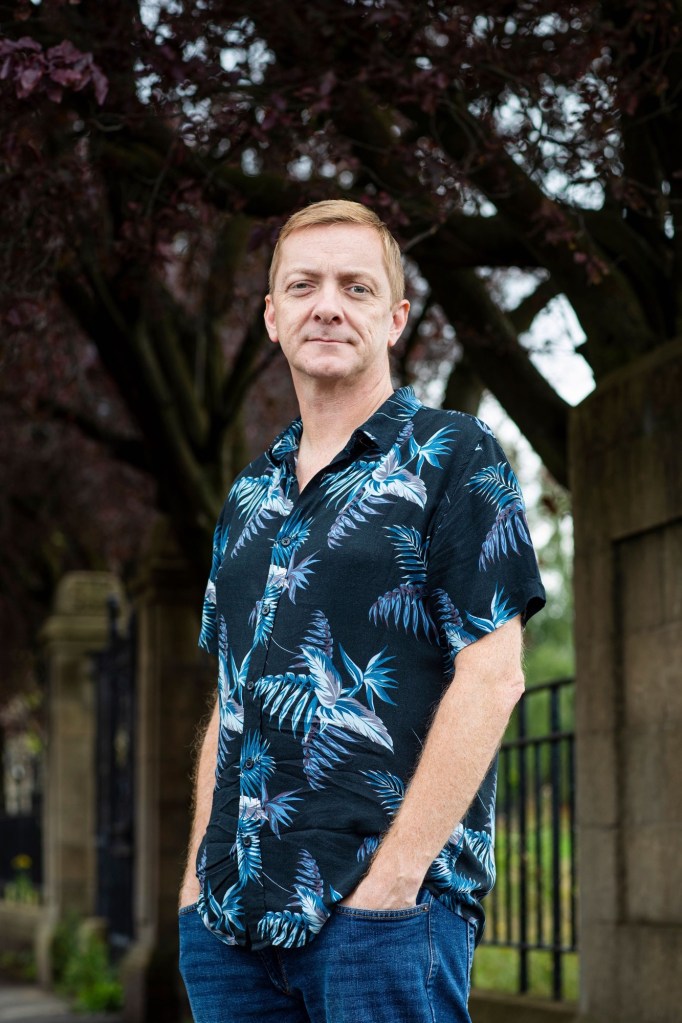
Doug Johnstone is the author of seventeen novels, many of which have been bestsellers. The Space Between Us was chosen for BBC Two’s Between the Covers, while Black Hearts was shortlisted for and The Big Chill was longlisted for Theakston Crime Novel of the Year. Three of his books – A Dark Matter, Breakers and The Jump – have been shortlisted for the McIlvanney Prize. Doug has taught creative writing or been writer in residence at universities, schools, writing retreats, festivals, prisons and a funeral home. He’s also been an arts journalist for 25 years. He is a songwriter and musician with six albums and three EPs released, and he plays drums for the Fun Lovin’ Crime Writers, a band of crime writers. He’s also co-founder of the Scotland Writers Football Club and lives in Edinburgh with his family.

Posted in Orenda

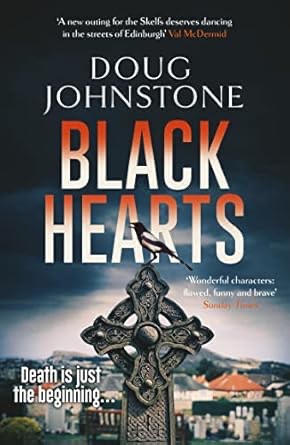
Black Hearts by Doug Johnstone

As all subscribers and Twitter followers must know by now, I am a huge fan of The Skelf series. I’m a Skelfaholic and it’s become a strange cycle of waiting for the next book to be published, devouring it overnight then longing for the next one. It’s even worse this time because I have it on good authority that this might be the penultimate book in the series. So one more book and no more Skelfing! I’m going to be like a weasel with a sore head when I have to go cold turkey. It has been wonderful to be back in Edinburgh with this family: part private investigators, part undertakers and all round incredible women. For those who haven’t met them yet, the Skelfs are three generations of one family. Grandmother Dorothy is in her seventies, but is still active in both the investigative and the funeral parts of the business. In her spare time she still drums like a badass and has a lover almost twenty years her junior. Daughter Jenny is back home, living above the business and struggling with memories of psychopath ex- husband Craig. She’s drowning her pain with alcohol and sex. Jenny’s daughter Hannah is now a PhD student, working in the astrophysics department, but still finding time to help out. She’s now married to Indy, feeling settled and starting to move past what happened to her father. The women are brought some unusual cases, both for funerals and PI work. A gentleman approaches Dorothy after his wife’s funeral, to ask if they can help him with a nighttime visitor. He believes his wife’s spirit is punishing him and he has the bruises to prove it. Hannah is approached by Laura, a young woman who claims to know her, but Hannah has no recollection of her. When Laura starts to turn up wherever Hannah goes, she suspects mental health problems. She stops being harmless the closer she gets to the family, especially when Hannah drops into the funeral parlour and finds Laura talking to Indy. Laura wants them to do her mother’s funeral, but Hannah thinks it’s unwise. How can she let this fragile girl down gently? 

Aside from their cases Johnstone picks up those storylines that weave throughout the novels. In the main we are drawn back to Craig, Jenny’s ex-husband and Hannah’s father, who is still haunting the family. Jenny is most visibly affected by her interactions with Craig’s family, most notably his sister, who seems to have inherited his ability to manipulate and turn to violence to get what she wants. Will Craig ever leave them alone and will Jenny be able to tread the line between her own pain as his ex and Hannah’s pain as his daughter. Both tend to overlook the grief that Dorothy still feels at the loss of her own husband Jim, complicated now by her relationship with police detective Thomas. Indy’s grief is also overlooked a lot, especially since she’s just gone through disinterring her parents in order to give them the cremation in line with their faith. Hannah and Jenny bring the drama and it’s Jenny I was particularly worried about. She’s getting messy, day drinking and embarking on a highly controversial sexual relationship with the wrong person. She never wakes up feeling better, but in the moment she has to drown out the constant pictures in her head. This is PTSD and she’s in danger of drawing others into her drama, especially Archie who works for the funeral business. Can she rein in her behaviour? Even professional help seems doomed to failure at this point. 

Aside from these incredible women, and the lovely Indy of course, the things I most love about these books is Doug Johnstone’s love for Edinburgh and the way he weaves incredible ideas, philosophy and physics into his novels. I’ve not been to Edinburgh since I was in my twenties, but the way he describes the city makes me want to go back. He doesn’t sugar coat the place either, there’s good and bad here, but as a whole it’s a poem to a place that’s in his soul. Dorothy muses on her home town a lot in this novel and considering she was born in America, this place is her heart’s homeland. She ponders on the people this city produces, including her husband and child, the history, the architecture almost as if she’s taking stock. She concludes that she’s a person who always looks forward to where life’s going, but grief is like the tide and there’s no telling when those waves will wash ashore again. Jenny tends to frequent the less salubrious areas of the city. She’s stuck. Her past has quite literally washed ashore and the problem with losing someone is you’re not the only one grieving and everyone grieves differently. She’s not mourning Craig as he truly was. She’s grieving the loss of all that hope; the hope they both had for the future on their wedding day and when Hannah was born. Similarly Craig’s mum and sister aren’t missing the Craig who committed all those terrible crimes. Violet misses the little boy she had and the life she wanted for him and his sister misses her baby brother. Hannah seems to be the person most resigned to the loss of her father. She always seems older than she is and with Indy alongside her she has the support she needs. There’s so much wisdom in these two young women, honed from a combination of Indy’s spirituality, years of working with grieving families and Hannah’s physics knowledge, especially where it tries to explain the universe. The supermassive black holes that are thought to be at the heart of every galaxy are mysterious. We know that they have a huge power that acts like a magnet, drawing in items from across the universe. 

I loved the element of Japanese spirituality and having read Messina’s novel The Phonebox at the Edge of the World, I loved the concept of the wind phone. I’ve always thought that a good way of letting go of the past, especially when you’re struggling emotionally, is to make a physical gesture or step in the direction you want to go. That might mean taking off a wedding ring when you’re getting divorced, or moving house where it’s full of old memories. I found talking to my late husband in my head a bit strange and it only made me miss him more. So I wrote to him in my journal instead. To have a phonebox dedicated to speaking with those who have died seems a very effective way of keeping them in the present with you, but in a controlled and deliberate way. Samuel Beckett said: 

“Memories are killing. So you must not think of certain things, of those that are dear to you, or rather you must think of them, for if you don’t there is the danger of finding them, in your mind, little by little.” 

Each of the Skelf women have their own grief to bear, a black hole at the centre of their heart. Each must find their own way to remember a little, to prevent becoming overwhelmed by their memories. Only by reconciling this, can they live in the present moment and make plans for their altered future. 

Meet the Author

Doug Johnstone is the author of fifteen novels, most recently The Space Between Us (2023). Several of his books have been bestsellers, The Big Chill (2020) was longlisted for the Theakston Crime Novel of the Year, while A Dark Matter (2020), Breakers (2019) and The Jump (2015) were all shortlisted for the McIlvanney Prize for Scottish Crime Novel of the Year. He’s taught creative writing and been writer in residence at various institutions over the last two decades including festivals, libraries, universities, schools, prisons and a funeral directors.

Doug is a Royal Literary Fund Consultant Fellow and works as a mentor and manuscript assessor for many organisations, including The Literary Consultancy, Scottish Book Trust and New Writing North. He’s been an arts journalist for over twenty years and has also written many short stories and screenplays. He is a songwriter and musician with six albums and three EPs released, and plays drums for the Fun Lovin’ Crime Writers, a band of crime writers. He’s also co-founder of the Scotland Writers Football Club.

Posted in Orenda

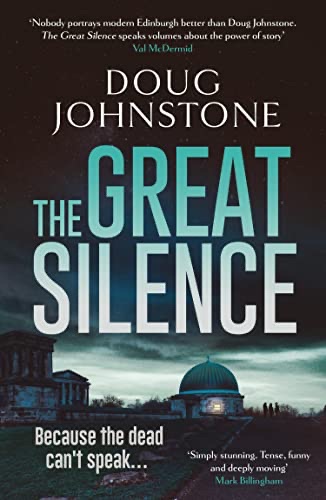
The Great Silence by Doug Johnstone

I have already created two new hashtags for this third novel in the Skelf family series. The first was #bookbereavement, because when I finished it I wanted to turn straight back to the first page and start again. The second was #Skelfaholic and I am a fully paid up member. It is agreed that if this series ends (please no!) then we Skelfaholics will be holding a wake by drinking whiskey in a funeral home, followed by star-gazing at the observatory. It’s hard to put across how much I love the Skelf women, their cases, the way they conduct their funeral business with such dignity, and their investigation business with more balls than most men. I read this book almost as soon as I received it, and I’ve been sitting on it excitedly ever since, desperately trying not to say anything until the blog tour. Now I can happily say Doug Johnstone has done it again. This is a fantastic read. 

For those who are new to the series, the Skelf women are three generations living under the same roof: Dorothy the grandmother, Jenny the mother, and Hannah the granddaughter. They ‘live above the shop’; their businesses being a strange mix of funeral directors and private investigators. Oh and Dorothy is a music teacher too, so there are often teenagers wandering in and out and playing the drums. In fact there are often waifs and strays under the Skelf’s roof. Hannah’s girlfriend Indy was one of their waifs, brought into the fold when her parents died and the Skelf’s organised their funeral. She now looks after the funeral business with the same calm and dignity she brings to Hannah’s life. Einstein the dog arrived when a police chase ended with a van crashing nose first into one of their graves, during the funeral. The dog was in the van and with his owner dead, he became part of the household and a companion of Schrodinger, the cat. Jenny mainly works on the private investigation side, but has a lot of her time taken up by her ex and Hannah’s father, Craig who escaped prison and is now closer than they think. Finally, there’s Hannah, starting her PhD with the astrophysics department and pondering the question of why other life in the universe has never tried to contact us – the ‘Great Silence’ of the title. 

The book begins with a strange event. Dorothy takes Einstein for a walk in the park and he fetches a human foot, even more strange is that it appears to be embalmed. This embroils Dorothy in a very unusual case that could be deadly. Jenny is dealing with the aftermath of her ex-husband’s actions in the last book, she’s still healing emotionally and potentially regretting the end of her relationship with painter, Liam. She misses him, and wonders if perhaps they could rekindle something. Then the other daughter of her ex-husband disappears and Jenny wonders if her life will ever be free of this man, as she joins forces with the other woman in his life to find her daughter. Finally, Hannah is facing massive changes in her academic and personal life. In a sense she’s being pulled between past and future. Her graduation becomes a double celebration when Indy proposes, but then she’s pulled into the past when their flat is broken into and someone makes it clear they still want to be part of her life. Her academic supervisor asks her if she’ll look into one of the central questions of astrophysics, if there is extraterrestrial life, why haven’t they replied to our messages? José has had a reply, but doesn’t know where it’s come from. Is it really from another life form or is someone playing game with him? 

There’s so much packed into this novel, but Doug Johnstone never loses a thread. Each storyline is given equal time and care. As I was reading the novel and writing this review, my husband saw my search history on my iPad and looked confused. I had tabs open for SETI (an institute set up to search for possible extraterrestrial life), the embalming process, numbers of big cats kept in domestic homes in the U.K, and Hindu funeral rites. Yes, the author does go to all these different places in the novel, not to mention the Italian gigolo and elderly lady, and they all interweave harmoniously.  I love the unexpected situations they find themselves in, such as Indy and Hannah taking a walk in the park and encountering a black panther. I also love how these women throw off expectations and be themselves. Dorothy is an elderly lady, but she goes to clubs when one of her students is playing a gig, and has a healthy sex life with her long time friend and police contact, Thomas. She’s investigating the ‘foot’ incident, which becomes more urgent once another foot turns up belonging to someone different. She’s also investigating the panther incident and visits experts keeping wildcats at their homes. In between she’s supporting Abi, now living with the Skelfs, who gets a huge shock when a man claiming to be her birth father shows up. 

Jenny has to face her ex- husband and there is a sense that this might be their final showdown. They had originally thought he’d be far away in another country, but with huge estates covering thousands of acres in Scotland, it’s not inconceivable that he’s been hiding close by all along. The strength of both Hannah and Jenny in facing him again, is amazing.  They’re scared – so much so that Hannah and Indy move back in to the family home – but know that the only way to stop this man ruling their lives is to find him and have him locked away again. I felt for Jenny, who had just turned a corner emotionally and was considering her life moving forward, and whether she wanted to remain alone. She’s also investigating on behalf of a brother and sister who are concerned their elderly mother is being misled by an Italian playboy. As usual Jenny is professional with her investigation, but uneasy about her clients and their motives. Meanwhile, behind all these fireworks, the kind and loyal Indy is having a crisis about her grandparents. They are traditional, but to Hannah’s surprise they want to fly over from India for their wedding. They don’t mind their granddaughter marrying a woman it seems, but they do have a huge request relating to the death of Indy’s parents. Leading to some very hard choices for Indy, who I’m especially fond of.  

Doug Johnstone is so many things at once: a gritty crime writer; a poet; a philosopher; a lover of the city where he bases this series; and an incredible writer of women. Johnstone writes real women, women who are intelligent, ballsy and true to themselves which is why I love them so much. One philosophical idea that stood out to me was ‘sonder’. It’s a word I’ve become aware of because it’s the title of my work in progress – where there are people in a difficult situation desperately trying to understand each other. Sonder is the sense I often get in a very busy train station when I look around at all the people and realise that every one of them has a complex and unique life just like mine. It’s the name of a cafe that Hannah visits near the university campus and as she sits there after her graduation, with Indy, Jenny and Dorothy she realises something. These three women come into people’s lives at a terrible moment, but have the ability to treat each person’s grief as if it was the most important thing to them. It reminded me of bringing a client into my counselling room, creating a safe space where, for an hour, the most important thing in the room is this person and whatever they bring to talk about. I think this is possibly why I feel such a strong kinship with these women. Jenny will take a drink with a homeless person and pass the time of day and Dorothy will connect with a young person fifty years her junior and make them feel welcome. I hope a little of the Skelfs rubs off on all of us. There was something about this book that felt like a finale, but I’m hoping against hope there’s more to come from these characters who I love. I’ll miss them, till next time. 

Meet the Author

Doug Johnstone is the author of fifteen novels, most recently The Space Between Us (2023). Several of his books have been bestsellers, The Big Chill (2020) was longlisted for the Theakston Crime Novel of the Year, while A Dark Matter (2020), Breakers (2019) and The Jump (2015) were all shortlisted for the McIlvanney Prize for Scottish Crime Novel of the Year. He’s taught creative writing and been writer in residence at various institutions over the last two decades including festivals, libraries, universities, schools, prisons and a funeral directors.

Doug is a Royal Literary Fund Consultant Fellow and works as a mentor and manuscript assessor for many organisations, including The Literary Consultancy, Scottish Book Trust and New Writing North. He’s been an arts journalist for over twenty years and has also written many short stories and screenplays. He is a songwriter and musician with six albums and three EPs released, and plays drums for the Fun Lovin’ Crime Writers, a band of crime writers. He’s also co-founder of the Scotland Writers Football Club.

Posted in Random Things Tours

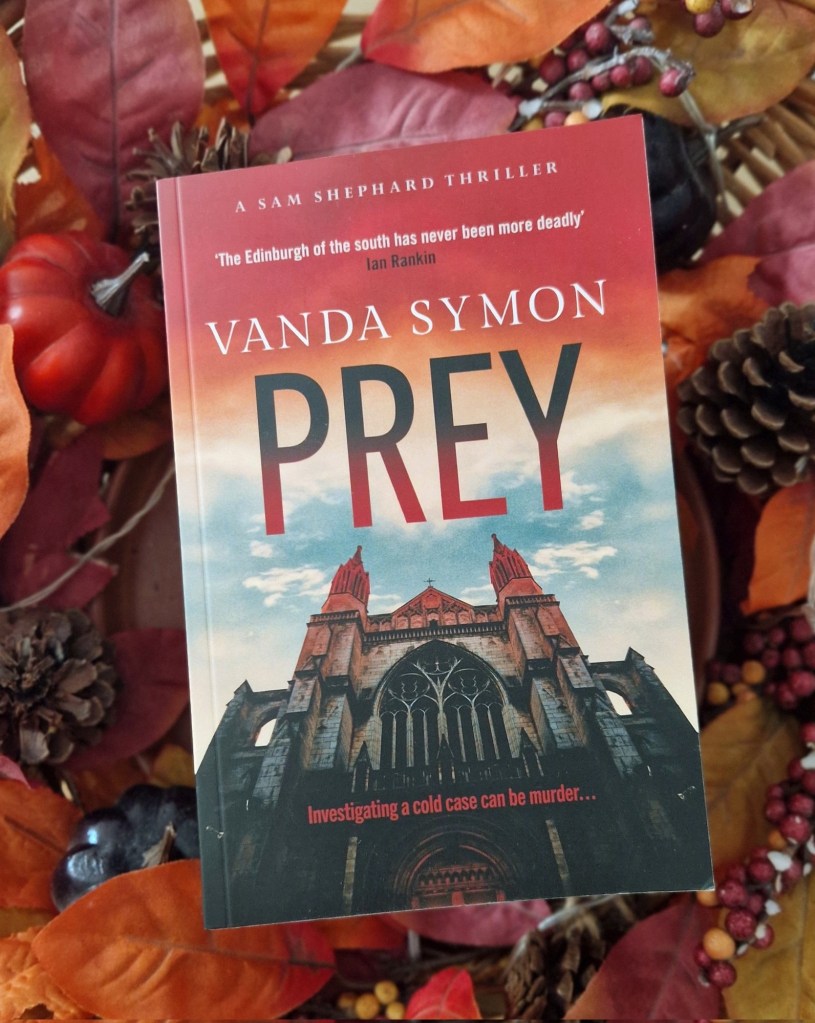
Prey by Vanda Symon 

Sam Shephard is on the verge of returning to work after maternity leave and the traumatic circumstances around Amelia’s birth. In order to make the transition as easy as possible, Paul is staying home with Amelia for the first week Sam returns. As is predictable, her boss DI Johns isn’t the most welcoming and gives her a cold case – the murder of Rev. Mark Freeman outside his own church. There’s one potential issue, Mark Freeman was the father of DI Johns wife Felicity. Felicity’s mother has been diagnosed with cancer and the boss would like her to go to her grave knowing who killer her husband. My first thought was that this had the potential to blow up in his face: he’d be all over her progress, creating conflict of interest for Sam that would be exploited if a case ever went to court. He was also being his typical sensitive self by ensuring that his mother-in-law would spend her final months reliving the most terrible experience of her life. Rev. Freeman was found at the bottom of the stone stairs leading up to the church entrance. He had been stabbed in the stomach by a small knife, but that wasn’t the cause of death. His subsequent fall down the steps broke his neck, immediately cutting off his ability to breathe. Horrifically he was found by his son Callum, who had ventured back out into the pouring rain when his father hadn’t returned home after the service. Yet we know at least one other person witnessed the killing, because the book begins with their anonymous account of the murder. The boss has essentially handed Sam a poisoned chalice and she fears one of two outcomes – she won’t be able to solve the case, so will be held responsible for disappointing his wife and her mother or she will solve it, making the previous investigation seem incompetent and potentially tearing his family apart in the process. If we as readers know one thing, it’s that Sam will not rest until the case is solved. 

I loved the happy family life Sam and Paul have created with baby Amelia. Their relationship feels like a real long-term partnership with the added bonus that Paul is also a detective. They understand that it’s hard for either of them to switch off when they’re working a case, so can happily bounce ideas and theories off each other in the evening. The addition of Amelia to their relationship is something they’ve taken in their stride. It isn’t always easy. There’s a return to work poonami that had me laughing; how do you shit in your own hair? There’s also an afternoon where each thinks the other is picking her up from childcare, but other than this they’re coping well. The author brings home to us the difficulties of being a working mum. Sam misses Amelia and has to call home to check in and hear what they’re doing. There’s also the issue of expressing milk at work, the family room is at her disposal but it feels awkward and isn’t as private as it could be. It doesn’t take long to get used to her new routine though and she’s soon busy using the time to go through interview notes and test out different scenarios. Paul is incredibly supportive, totally backing Sam up in her eventual decision to swap to bottle-feeding. Of course her mother has plenty to say, but she’s besotted with her granddaughter so that helps ease tensions. This is a case that brings up a lot of personal feelings and memories for Sam, because she too was brought up in a church environment and talking to Callum and Felicity, Mark Freeman’s children, brings up some memories of her own that it might be time to disclose. 

“What I hadn’t factored in, though, was the emotional toll it took. The wrench of being away from Amelia when I loved every second of being in her company. The regret about going back to work and putting her into childcare, which felt like paying for someone else to bring up my child. And the guilt over the immense sense of relief I felt at getting away from her and from the relentless demands and responsibility of looking after a baby.”

The Freeman children and their mother are first on the list of people Sam needs to re-interview, but as she suspected, keeping her boss away from her case is difficult. He blows up over the fact she’s interviewed his wife without his knowledge and express permission. He wants all access to the family to come through him, but Sam stands her ground. If his fingerprints are all over this case it doesn’t matter what she finds out. The case would be thrown out of court, a fate even worse than failing to find the killer. I loved how Sam stuck to her guns though and called him out in front of the whole team. He has to stay away from the case and trust her. If he keeps a stranglehold on who she can talk to and what avenue her investigation takes, he will ultimately be responsible for it’s failure. The Freeman family seem lovely, but as Sam knows that’s no indicator of innocence. Sam has had a church upbringing, something I have in common with her, so we know better than anyone that sometimes people hide within a congregation. Their Christianity is a mask, a mask that seems to confer an unquestioning trust on them.  Most people Sam talks to see the Reverend as a saint, but Sam isn’t taken in and knows she just has to ask the right people. Luckily, she has two potential witnesses: Aaron Scott was an operative in an Organised Crime Group and he certainly appears ferocious with his size and his Māori tattoos, then there’s Mel Smythe, former youth leader and now a drunk living in a hostel. What Aaron tells her blows the Freeman’s timeline totally off kilter and gives her a glimpse into an angrier and self-righteous Mark Freeman. Mel was well-known for being a bit of a rebel, mainly because she was gay yet she was still a youth leader. I found myself wondering whether the church was quite progressive after all. Despite her heavy involvement at the church during the time of the murder, she was soon caught up in the aftermath. She also brings throws new light on the case, but only twenty-four hours later she’s dead. Stabbed in the stomach in her lonely and bleak hostel room. 

The author brings up something about church people that I was very aware of as a Christian teenager. They can seem welcoming, hospitable, even saint-like but if you breach one of their most important rules you can meet a completely different side to that person. While they might preach forgiveness, there are certain things they hold true and they are immovable. Aaron certainly places a new spin on the Reverend, with whom he’d had a great friendship. What he overheard that night showed that when faced with a challenge to his Christian values he wasn’t so great at forgiving. Mel Smyth backs up his story with a revelation of her own, a problem that was brought to her perhaps because she was different and lived outside the traditional Christian view of relationships. These new statements show that the original investigation missed so many leads or simply didn’t follow them up. That it took the saintliness of the Reverend and others around him at face value, perhaps because he was a figure of authority in the community. It’s also leading her towards conclusion that the boss isn’t going to like. As the rest of the team, including Paul, take on the Mel Smyth case Sam feels more supported. She knows that Paul and Shortie have her back and trust her methods to get results. I loved how the author gave us more on the relationship between Sam and her mother too, especially now she has a grandchild to dote on. It’s clear to see in any conversation with her mother where Sam’s self-doubt and over-thinking come from. Trying to please a critical parent is a self-defeating task and even here when talking about the Reverend Freeman case, her mother shows a total belief in the church and it’s figures of authority that’s probably hard for us to fathom in this day and age. Yet it gives us some indication of why the original case had been conducted in the way it was and how powerful church figures were several decades ago. 

At the end of the case I felt so sad, that belief in the church and it’s rules were often put before the well-being and love of family and the real and flawed people who make up a congregation. I felt it because I lived it, being a teenager in an evangelical church was no picnic and I got out as soon as I could. I regularly see other waifs and strays who are no longer in the church and thankfully we get a lot of humour and relief or closure from each other. We can say ‘that was a bit mad wasn’t it?’ and hear confirmation that yes, it was utterly bonkers. I was so incredibly proud of Sam to know she was ready to talk to her mother about what happened during those years. It’s common that having your own child triggers feelings about your childhood and how you were parented, especially where there are unresolved issues. It’s no coincidence that in this novel she’s ready to take on the boss and the past, perhaps not just because of Amelia but because of the family unit she’s building with Paul. That was the feeling I took away from this novel overall, it’s main theme is family whether that’s a nuclear family in its most traditional sense, a work family that grows in professions like policing, or a church family. It also gave me a reminder that in all of these relationships, it’s communication and honesty that are the most important facets. If those two things are broken or over-shadowed by authority, a web of secrets and lies are woven that can prove very difficult to unravel. I love Sam, she’s a no bullshit character and at this moment when I am still struggling with my health and keeping up, she gave me some healthy reminders that it’s ok to let things slide a little. This was another great novel in this series, Sam is a character I’d love to go for a drink with and seeing her stand up to her boss was a real highlight! 

“I suspected I’d get bored and frustrated with a life of domestic bliss. I certainly wasn’t cut out to be a domestic goddess. Six months of maternity leave had driven that home. Fortunately for me, I wasn’t aware of anyone dying from a lack of vacuuming, bed-making and not managing to get out of their PJs all day.”

Out in August 2024 from Orenda Books

Meet the Author

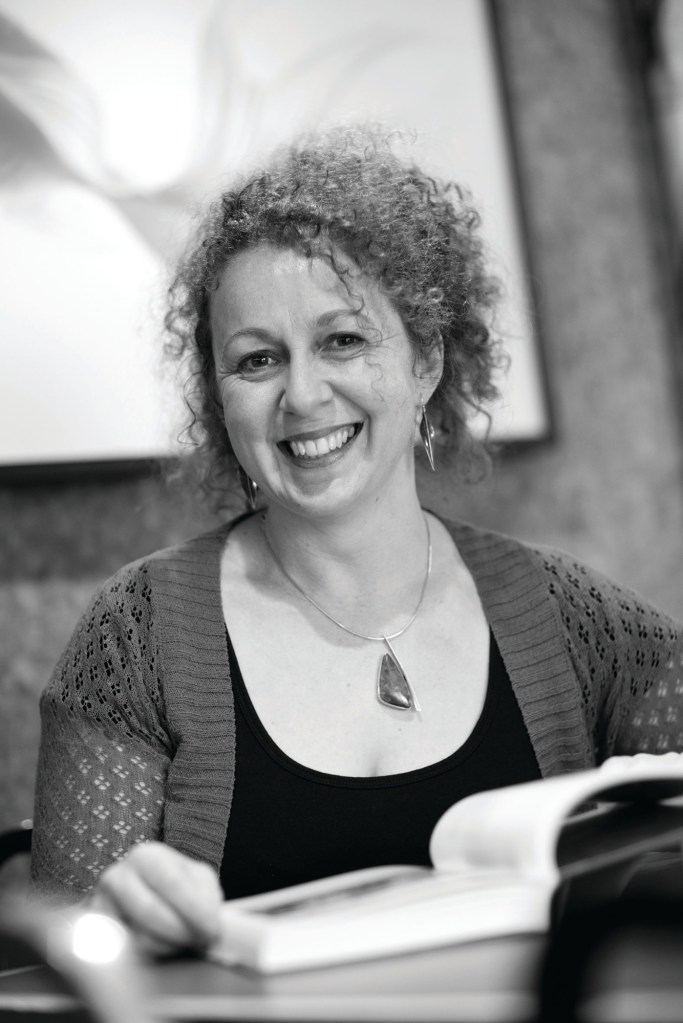
Vanda Symon is a crime writer from Dunedin, New Zealand, and the President of the New Zealand Society of Authors Te Puni Kaituhi o Aotearoa. The Sam Shephard series, which includes Overkill, The Ringmaster, Containment, Bound and Expectant, hit number one on the New Zealand bestseller list, and has also been shortlisted for the Ngaio Marsh Award. Overkill was shortlisted for the CWA John Creasey (New Blood) Dagger and Bound and Expectant have been nominated for USA Barry Awards. All five books have been digital bestsellers, and are in production for the screen. She is also the author of the standalone thriller Faceless, and lives in Dunedin with her family.

Posted in Random Things Tours

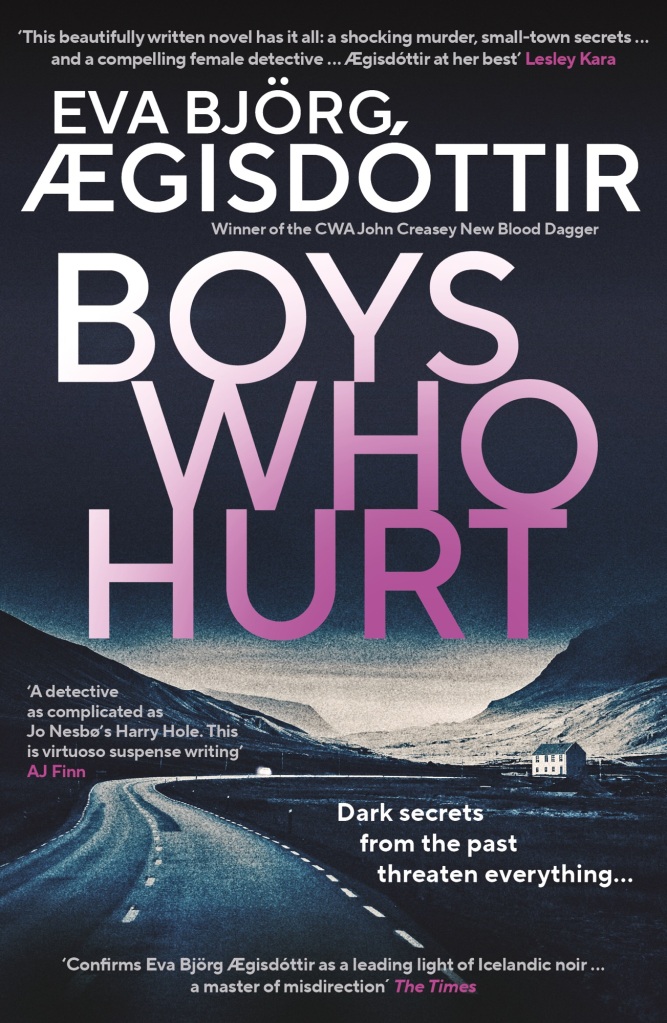
Boys Who Hurt by Eva Björg, Ægisdottir

Translated by Victoria Cribb

We’re back with Detective Elma in the fifth of the author’s Forbidden Iceland series and she is just returning to work from maternity leave when a body is found in a holiday cottage by a lakeside. The victim’s name is Thorgeir, he has grown up in Akranes and in a coincidence typical to small towns, his mother is Elma’s neighbour. The holiday cottage belongs to the family and the evidence suggests Thorgeir was not alone – there were two wine glasses and a lacy thong is found under the bed. He is found in the bed, with stab wounds and the line of a well known hymn written on the wall behind the bed, in blood. With Saever on paternity leave with their daughter Adda, Elma works alongside her boss Hörour to solve the murder. Several leads come to light. Thorgeir was working with his friend Matthías on an exercise and well-being app and had secured a large sum of money as an investment, but from an unexpected source. The hymn is well known, often sung at a popular Christian camp for teenagers and refers to the washing away of sin – had Thorgeir needed such forgiveness? Matthías and his wife Hafdis mentioned a young woman that Thorgeir had been seeing recently, but there is no sign of Andrea anywhere. The friends had often attended camps together as teenagers, but on one such occasion a young man had died out on the lake in the night, in similar circumstances to Thorgeir’s father’s death a few years before. It’s soon clear that many secrets are hidden in Akranes, some of them within Elma’s own home.

I love Elma’s character and what a refreshing change to read about a working woman whose partner is providing the childcare. There’s also none of the usual guilt or tension around her return to work, even as the case becomes more intense and late nights become the norm. She seems to have taken motherhood in her stride and she and Saever seem settled and happy. It’s sad that in the 21st Century this should stand out so much. Usually I read female characters caught between home and work, struggling from lack of sleep and feeling guilty. It’s great to see a woman who is a new mum, as well as a competent detective. The mothers in this novel and their relationships with their children were incredibly complex and psychologically fascinating. I was intrigued by Thorgeir’s elderly mother Kristjana, who happens to live next to Elma and Saever. She’s known as a drinker and is familiar to most people as the owner of a dry cleaners in town. She and Thorgeir didn’t seem close, but she had helped him financially. Was this out of love or guilt? There was something fishy about the business’s finances too, a thread that Höreur picked up and investigated. Kristjana’s home isn’t lavish and she doesn’t look like someone with the sort of money the accounts suggest. Saever finds her behaviour bizarre, even to the point of having to intervene one afternoon when he notices she’s dancing naked with the curtains open. She’s had tablets and alcohol, possibly due to grief and hinting at a troubled inner life but when questioned there’s a wall she puts up that’s metres and years thick. Hafdis is also a fascinating character, she asks for a divorce at the beginning of the book but where has she found the money to move on so quickly. Her relationship with Matthías is already over in her eyes, but I was shocked by her coldness towards her daughter Olof. The family have been having therapy, because Olof has been self-harming but Hafdis doesn’t even seem to have factored her daughter into her plans. Olof confides in her father about her mother, not that she gives her a hard time but that she looks at her daughter as if she’s nothing. What else might such a ruthless woman be capable of?

Saever is at home, but when he’s unpacking he comes across a box that doesn’t belong to them. In fact it belongs to previous residents, full of school exercise books and a holiday journal from the very year that the boy was killed on the lake. It belongs to Mani, one of the group staying in the same cabin as the dead boy, alongside Heioar, Hafdis, Thorgeir and Matthías. This draws him into the investigation and Elma isn’t surprised to find him at the station researching, while bouncing Adda on his knee. I loved the little Icelandic details on child care, such as wrapping the baby up warmly then popping them in the open air for a sleep. I didn’t expect to enjoy Elma working without Saever, but I really enjoyed Höreur being a part of the investigation and found myself amused by his grumpiness. His hip injury brings out a resistant and stoic side to his character, the pain making him increasingly snappish. The case has so many twists and turns that it’s hard to put down and little clues that seem to snag in your brain. I spent most of the book wondering about a second large bloodstain in Thorgeir’s family cottage, strategically covered with a rug. I was sure it was important and every time we got closer to the truth I kept thinking ‘but what about the bloodstain?’

Elma is perfect for the more complex investigative work because she occupies a liminal space in town, she’s both known and not known. Having been born in Akranes and having family that goes back generations in the town, there’s an element of belonging that gets her in the door. However, she’s spent her career so far in Reykjavik meaning she isn’t so involved that she can’t ask difficult questions. She doesn’t have the deference to the elders of the town that others might so she’s bold and doesn’t mind stirring things up a little. She definitely riles the old police chief Otto, so much so that he lets his true nature show. He is so angry that he verbally attacks Elma where it really hurts referring to her previous partner’s suicide and implying she should look closer to home for people who are keeping secrets. It sometimes feels like every home in Akranes holds an ocean of pain and unresolved trauma. There’s so much going on just under the surface, an intergenerational trauma that seems to come partly from religion and partly from rigid expectations. Elma is horrified when Heioar’s parents seem like good people, they adopted him and it seems to have been a good fit, but behind this surface is a very different family life and a total rejection of anything or anyone that doesn’t fit their ideals. I wondered how these women like Kristjana and Heioar’s mother were able to look the other way when their men are treating their children badly. Whether through religious conviction or control the fathers have ruled their homes quite literally with a rod of iron. One of the most complex relationships is between Thorgeir and his new girlfriend. I was fascinated with her narratives showing how attraction and repulsion can co-exist between two damaged people. Also, one terrible deed doesn’t define a person. This was a brilliant thriller, exposing a dark underside to Akranes and keeping me guessing to the very end.

Out from Orenda Books on June 20th 2024

Meet the Author

Eva is an Icelandic author of the bestselling Forbidden Iceland series and her books have been published all over the world. Her first book, The Creak on the Stairs, won the Crime Writers Association New Blood dagger, the Blackbird Award and was shortlisted for the Amazon Publishing Awards and the CrimeFest Specsavers Debut Awards.

In the series she writes about my hometown Akranes, a small town just forty minutes outside of Reykjavík with population of around 8000 people. She writes about dysfunctional families and relationships. She has a degree in Sociology and Criminology and is very much interested in human behaviour, which is perhaps evident in the books.

Eva grew up in Akranes and fell in love with reading at the age of 5. She moved to Norway in her twenties to study her Masters Degree and lived there for two years. When she moved back to Iceland she began writing her first novel, as she had always wanted to write a book. She has been a full time writer ever since it was published!

Posted in Random Things Tours

Toxic by Helga Flatland

When Mathilde is forced to leave her teaching job in Oslo after her relationship with eighteen-year-old Jacob is exposed, she flees to the countryside for a more authentic life.

Her new home is a quiet cottage on the outskirts of a dairy farm run by Andres and Johs, whose hobbies include playing the fiddle and telling folktales – many of them about female rebellion and disobedience, and seeking justice, whatever it takes.

Toxic was a perfect read for me because the author creates such psychologically detailed characters and a setting so real I felt like I was there. Helga never underestimates the intelligence of her readers, assuming we’ll make sense of these complex characters and their backgrounds. The story is structured using two narrative voices, that of Mathilde and Johs. Johs’s narrative establishes both his family and the setting of the farm where Mathilde will make her new home. At first the narratives seemed completely divorced from each other; life at the farm is only just starting to undergo change after the rather stifling management of their grandfather Johannes, whereas Mathilde is a city dweller who seems hellbent on pushing boundaries and pursuing freedom. It is that search for freedom, during the COVID pandemic, that starts Mathilde hankering after a more rural life and losing her job is the catalyst for taking action. Quickly I became so drawn in by the two narratives that I stopped worrying about a link and once Johs and Mathilde are on the same farm their differences create a creeping sense of foreboding.

Mathilde is a teacher by profession, teaching students up to the age of 18. She is approached by a student, Jakob, and doesn’t even seem to stop and think about what the consequences of a potential affair might mean either for him or for her job and reputation. I was shocked that when called in by the school’s principle she doesn’t even try to deny it. She rationalises that he’s an adult, over 18, so it isn’t illegal. Everything was consensual and in fact Jakob approached her and she has proof of his pursuit in their messages. She was no longer teaching him directly when their affair began. Yet she doesn’t seem to be defending herself with an underlying awareness that what she’s done is at least unethical and an abuse of power. It’s as if she really can’t see the problem. Mathilde has very few boundaries it seems and allows her wants and needs to become her driving force. She doesn’t seem to recognise that she’s made an active choice, instead assuming their encounters were inevitable or ‘just happened’. Her indifference in the meeting at work, becomes obsession afterwards as she messages Jakob frantically wanting to talk. Jakob isn’t an innocent party in this, to me he seems largely indifferent emotionally even when the relationship is at it’s peak. It’s lust rather than an emotional connection on his part and I even felt there was an element of pride that he’s bedded a teacher. He rather likes the status the conquest gives him amongst his friends. He comes across very cold. I was interested to see if she would hear from him again, once she leaves Oslo.

The farm and it’s family are a world of difference to Mathilde’s city routine. Their life is regimented, ruled by the routine of the dairy cattle and the calendar for their arable crops. Andres is the brother who inherited the farm, but it is a family concern and even their elderly mother has the same hardened attitude and work ethic. Even if Johs has decided to take his day off, he often sees his mother rather pointedly starting tasks she thinks he should be doing. There’s a definite imbalance between the way Johs and Andres are treated by their parents. Johs is often quietly infuriated by his brother, who is paranoid about COVID symptoms and often takes sick days when there’s very little wrong. Yet on those days their mother happily picks up Andres chores without any of the attitude she gives Johs. He sees his mother as a cold woman and I would have to agree. She doesn’t show her love for her husband or Johs and even though she appears to spoil Andres she sometimes barely talks to them, just silently follows the routine the farm has always had probably since she was a little girl. Grandfather Johannes looms like a dark shadow over everything, not just the small house where he lived his final years, but the main house too. Johs feels his presence strongly in the living room, where he spent his final days in a hospital bed largely silent except for sudden, shocking expletives and insults about their grandmother. One evening he suddenly yells that he doesn’t want to spend eternity in the same grave as that ‘whore’. There’s an unspoken code here, one that’s different for men and women.

The author uses local Nordic myths and songs to give us a sense of the history of the area, but also the attitudes towards modernity and women. I found these songs harmless at first, simply an understandable part of a community where families have remained for generations. However, the more I heard, especially with their interpretations from granddad Johannes who performs them on his Hardinger fiddle, the more the content felt controlling and misogynistic. He seems to prefer women who are seen and not heard, who don’t interfere in the business of men but work hard and remain loyal to their husbands. All the songs seem to reference young women who want more than the traditional life, who might fall in love with the wrong man or try to leave. They always end with the woman suitably punished, imprisoned somewhere or even killed. I felt that Johannes actively believed in these values and indoctrinated his family with them. That’s not to say his grandsons had an easy life, because he expected hard work on the farm, excellence on the fiddle (Johs is considered not good enough) and feats of strength and masculinity when out in nature, such as making them dive naked into a high waterfall when they were only boys. Johannes was a bully and I hate people who bully. Johs believes his grandad is responsible for his mother’s coldness, towards him and his father. If you never receive love, how can you give it? While Andres has a wife and child, Johs has remained single and lives alone in the big house. He wants to make changes to modernise how they farm and has succeeded in getting the milking process mechanised. Now he wants to rent their grandparents small house next door to his and this brings Mathilde into their orbit.

This is where the book’s tension starts to build and I couldn’t imagine how Mathilde’s lack of boundaries and open sexuality would fit in here. Johs is drawn to her and watches her from his windows that overlook her garden. He seems to find her differences fascinating, although the more everyday aspects of her character do irritate him. She wants to make changes to the house, which he doesn’t mind, in fact the more she erases the smell of his grandfather the better. It’s her lack of work ethic and her waste that he finds difficult. In the spring she asked to plough up some of the lawn to create a vegetable patch, but then never plants anything. By the autumn it’s a muddy patch of weeds but still she sits by it reading a book with no attempt to clear it. She doesn’t cut the lawn and the property is looking shabby. This brought back a reminder of living with my Polish father-in-law who couldn’t understand why we were remodelling our garden but not planting a single vegetable. I was creating a garden we could sit in, enjoy the fresh air and beautiful flowers. He saw it as a waste of land when we could have been self-sufficient. He loved that his other son had bought a property and immediately ploughed up the tennis courts and planted potatoes. It was simply a different background and life experiences coming up against each other. It’s the same here, two totally different upbringings have created different values and lifestyles. Yet I felt that an antipathy was building towards Mathilde and that one wrong move could cause this tinder box to ignite. With her lack of boundaries, that wrong move seemed very possible. I was surprised by where the ending came, although not shocked. As I took a moment and thought back, every single second we spend with each character is building towards this moment. Utterly brilliant.

Meet the Author

Helga Flatland is one of Norway’s most awarded and widely read authors. Born in Telemark, Norway, in 1984, she made her literary debut in 2010 with the novel Stay If You Can, Leave If You Must, for which she was awarded the Tarjei Vesaas’ First Book Prize. She has written six novels and a children’s book and has won several other literary awards. Her fifth novel, A Modern Family (her first English translation), was published to wide acclaim in Norway in August 2017 and was a number-one bestseller. The rights have subsequently been sold across Europe and the novel has sold more than 100,000 copies. One Last Time was published in 2020 and also topped bestseller lists in Norway. Helga lives in Oslo.

Out on 23rd May from Orenda Books

Posted in Random Things Tours

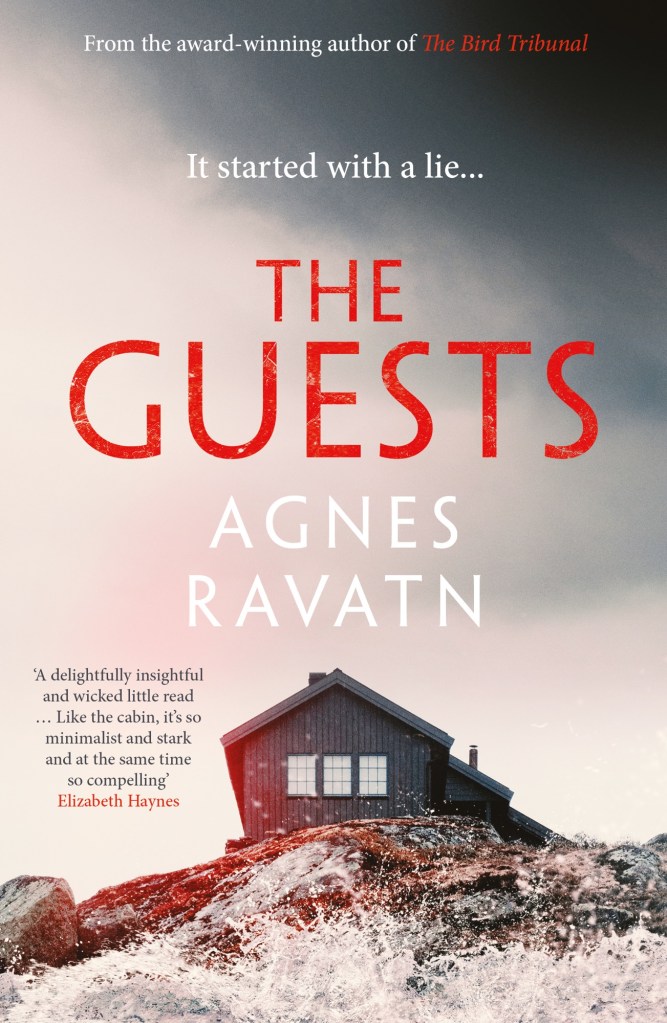
The Guests by Agnes Ravatn


It started with a lie…
Married couple Karin and Kai are looking for a pleasant escape from their busy lives, and reluctantly accept an offer to stay in a luxurious holiday home in the Norwegian fjords.


Instead of finding a relaxing retreat, however, their trip becomes a reminder of everything lacking in their own lives, and in a less- than-friendly meeting with their new neighbours, Karin tells a little white lie…


Against the backdrop of the glistening water and within the claustrophobic walls of the ultra-modern house, Karin’s insecurities blossom, and her lie grows ever bigger, entangling her and her husband in a nightmare spiral of deceits with absolutely no means of escape…

This is a slow burn novel, with a cast of characters that I wasn’t even sure I liked, yet somehow it gets under your skin. It says a lot about the way we want others to perceive us and how appearances can be deceptive. Karin works in local government, in the planning office, and her husband Kai is a joiner by trade and has his own business. Iris, a woman Karin once knew and dislikes, has offered Kai the job of renewing some steps on the jetty of her family’s holiday home. It’s in a very exclusive area of the Norwegian Fjords that’s a playground for the upper middle classes. From the start Kai seems more comfortable about accepting the holiday for what it is – an experience they’d never afford themselves and they might as well enjoy it. Karin is more conflicted and not just because the owner is Iris. Iris found herself a very rich husband, who started out selling solar panels. Karin’s discomfort worsens when she finds out how Mikkel has made his fortune. He invented a search engine with an algorithm that sorts and compiles publicly available data into a report to inform the potential buyer of a new home. However, instead of the usual data we’re used to on RightMove or Zoopla, this provides information that seems a little more intrusive. With the touch of a button the potential buyer can find out:

Salaries, professions, nationalities. Political leanings, religious affiliations, previous convictions, plus links to any social-media profiles they might have. The average grades and results of any national examinations in all schools within the catchment area. The ethnic composition of each individual class at each individual school and nursery in the area. A pie chart showing annual salaries within the neighbourhood, all handily compiled in one diagram. And all of this within a radius of your choosing!

Karin is horrified by the implications of the search. It means people can avoid having neighbours of a different ethnic origin if that’s important to them. They can make sure their children are mixing with others of the ‘right’ class and educational attainment. It allows people’s prejudices to determine their postcode and creates upper class enclaves that exclude people like her and Kai. The children of the buyers would be brought up to look down on others and believe that any weakness in life warrants contempt. There’s a wonderful line where Karin comments on how incredible it is to start your working life selling solar panels and ending up pushing social segregation. While out walking along the water’s edge, Karin comes across some other cabins and a man fishing. As she nears him he tells her she’s on private property. Karin turns back, seething about his rudeness, but she has also recognised him as the author Per Sinding. She hasn’t read any of his novels but she has read and enjoyed those of his wife, Hilma Ekhult. Karin believes Ekhult is a wonderfully authentic author, the ‘real deal’. So when they bump into them later while out on the boat, Karin has a moment of madness and tells the couple that she and Kai own the house and claims to have invented the property search engine she despises. Now seen as the ‘right sort’ of people, they are invited for dinner and now the couple must keep up the pretence.

The tension is incredible as these couples continue to meet. Even just Karin’s internal tension as she veers between thinking she’s getting one over on the famous couple but perhaps underneath she wants to be accepted by them. Kai is a more laid back character, going along with the ruse but really not bothered by what these people think of him. In fact he and Per get along rather well, but would they if they’d met in different circumstances? I was on tenterhooks waiting to see if Karin would break, but in her paranoia she starts to suspect everyone. She views their holiday home on GoogleEarth and sees Kai’s van there, but how could it be? The picture is months ago. Could he have known Iris before they ‘accidentally’ met? The twists are great and though I didn’t like the characters I was fascinated by the way they interact with each other and on what terms. This is beautifully written and very psychologically astute, and the author has her finger on the pulse of modern society’s preoccupations, goals and rules of engagement. If like me you enjoy people, society and how we fit together (or don’t) then this is a great read for you.

Meet the Author

Agnes Ravatn is a Norwegian author and columnist. She made her literary début with the novel Week 53 in 2007. Since then she has written a number of critically acclaimed and award-winning essay collections, including Standing, Popular Reading and Operation Self-discipline, in which she recounts her experience with social-media addiction. Her debut thriller, The Bird Tribunal, won the cultural radio P2’s listener’s prize in addition to The Youth’s Critic’s Prize, and was made into a successful play in Oslo in 2015. The English translation, published by Orenda Books in 2016, was a WHSmith Fresh Talent Pick, winner of a PEN Translation Award, a BBC Radio Four ‘Book at Bedtime’ and shortlisted for the Dublin Literary Award and the 2017 Petrona Award for Best Scandinavian Crime Novel of the Year. Critically acclaimed The Seven Doors was published in 2020. Agnes lives with her family in the Norwegian countryside.

Posted in Random Things Tours

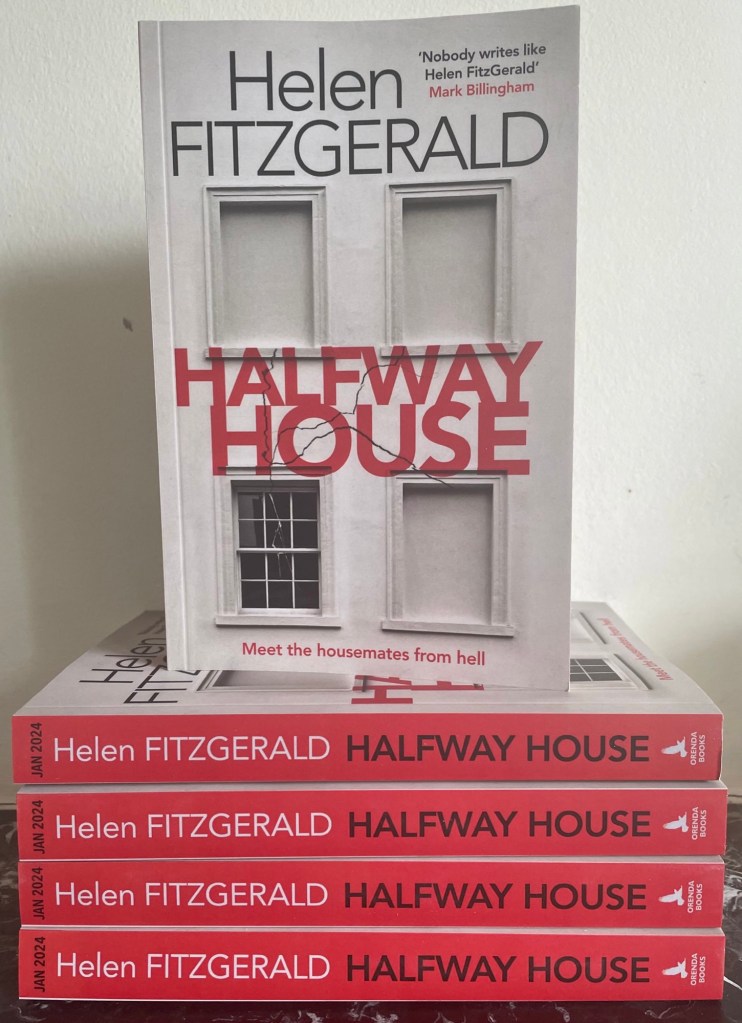
Halfway House by Helen Fitzgerald

Way back in 1997, I started my first job in the mental health field as a support worker for social services. My role was spread between the day centre and the community, covering several of the halfway houses that supported people coming from a period in hospital and back into their lives. I remember being daunted when taken to one of these houses for the first time, not because I was scared of all people with mental health issues, but because there were five men living in the house and I was just a 24 year old little 5 feet 2 inch scrap who suddenly felt like they knew very little! So I felt a very personal sense of trepidation for Lou O’Dowd who travels across the world from Australia to Edinburgh for a job with the organisation SASOL. Her new life will mean living with her cousin and working shifts at a halfway house for high risk offenders including two killers, a celebrity paedophile, and a paranoid coke dealer. After orientation, Lou will be on shift alone dealing with these offenders with little more than her own instinct to guide her. What could possibly go wrong?

I love that Helen Fitzgerald writes characters like Lou O’Dowd. She doesn’t worry about whether the reader will like her heroine or not – I did feel a strange affection for her if I’m honest. She is controversial in a lot of ways. In Australia she has been living on a sugar daddy’s generosity, depending on him for the roof over her head and a monthly allowance that’s enough for her not to work. She has never really known what she wants to do with her life so has jumped at the opportunity to be sheltered by someone else’s money. When this relationship comes to a disastrous end she has no choice but to find a job and with zero skills, Edinburgh seems like a great opportunity. She seems to veer between low confidence and an almost cocky attitude that’s veering on the reckless. Her inability to direct her own life suggests feelings of inadequacy, but when she takes on her job in Edinburgh she really doesn’t seem to comprehend the potential risks of her role. On her first day in Edinburgh she goes out to see her cousin’s play at the matinee and meets a charming man who’s intelligent and personable. He also shares Lou’s attitude to risk, suggesting sex in alleys or doorways rather than either of their homes. It’s as though Lou has met the male version of herself: charming, unpredictable and addicted to taking risks. When she finds out he’s one of the heirs to a Scottish estate she starts to wonder whether they could be more than a quick fling?

As the book builds towards Lou’s solo shifts at the halfway house, I felt so nervous for her. It also felt like the employer didn’t prepare new staff anyone near enough, just one shadow shift then in at the deep end. I didn’t do night shifts, but the thought of staying up all night as the only person in a house of murderers and sex offenders made me jumpy. To the extent that I dreamt people had broken into my own house one night over Christmas. I loved the way Helen mixed the mundane domesticity of working in a place like this, with the fear and all out horror that could potentially take over. On her first shift Lou takes it upon herself to clean the kitchen and throw out the broken crockery. This might seem like a sensible and industrious job to start with, but it takes a senior worker to point out that this isn’t Lou’s home, it’s the resident’s home and their belongings that she’s thrown out. It’s a line a lot of people would have crossed, but takes away the resident’s agency. It would have been better to try and include them. There’s the evening ritual of cocoa for each resident, but it has to be to perfectly timed in order to interrupt one resident’s suicide ritual. These are the extremes a job like this entails, but it’s only the beginning.

There’s still humour to be found though, laced with a few moments of disgust as Lou realises why one of the residents is happy to be roomed in the basement and another’s seemingly excited leg movements, turn out to be the wrong kind of excited. However, with one resident owing money to the type of people who won’t mind being repaid one body part at a time, another just waiting for Lou to drop her guard and close her eyes and one she thought she could trust, displaying his dangerous side and the depths he’s willing to plumb to scratch a powerful itch! By the final showdown my heart was racing, I was holding my breath and had to go make myself a cup of tea at 4am because I needed to finish, but I also needed a comforting brew. This was another great thriller from Helen and Orenda Books and I heartily recommend it for those who like their heroines less than squeaky clean and their danger very real.

Available now from Orenda Books

Meet The Author

Helen FitzGerald is the bestselling author of thirteen adult and young-adult thrillers, including The Donor (2011) and The Cry (2013), which was longlisted for the Theakstons Old Peculier Crime Novel of the Year and adapted for a major BBC drama. Her 2019 dark- comedy thriller Worst Case Scenario was a Book of the Year in the Literary Review, Herald Scotland, Guardian, Sunday Times, The Week and Daily Telegraph, shortlisted for the Theakston’s Old Peculier Crime Novel of the Year, and won the CrimeFest Last Laugh Award. The critically acclaimed Ash Mountain (2020) and Keep Her Sweet (2022) soon followed. Helen worked as a criminal-justice social worker for over fifteen years. She grew up in Victoria, Australia, and now lives in Glasgow with her husband.

Posted in Random Things Tours

Upstairs at The Beresford by Will Carver

“The entrance to Hotel Beresford is art deco. Strict lines, geometry and arches showing cubist influence. The monochrome carpet screams elegance as it leads towards the desk that stretches the length of one wall, marble with chrome embellishments. Or, at least, it once looked that way. Back when writers and poets and dignitaries roamed the hallways and foyer. It still feels lavish. Glamorous, even. But faded. And a little old-fashioned.”

Ever since I read The Beresford I’ve been wondering what was going on through the other entrance. The entrance merely hinted at in one of it’s scenes. If what was going on up there was more weird or dangerous than the apartments at the front, I dreaded to think! In my review for the first book I wrote about the Dakota Building in New York City, because my mind kept drifting towards it while reading. It has just the atmosphere for this particular den of iniquity, it has a brooding sense of menace or presence of evil. Yet inside it reminds me of the Chelsea Hotel, a NYC landmark where in the mid Twentieth Century writers, musicals and artists lived. Arthur Miller, Bob Dylan, Arthur C. Clarke, Andy Warhol and Edie Sedgwick all inhabited the hotel in the 1960’s.

“Each floor looks the same yet somehow has its own unique landscape; it’s known for something particular. A celebrity affair. A mysterious death. A legendary party. Rumours that a serial killer crashed there between sprees. Rock stars smashing up rooms. Writers creating their masterpieces. Some is legend, much is true. All is talked about. With fondness, fascination and morbid curiosity.”

The author tells his story through a series of fascinating characters who live or work in the building. A young boy called Otis who lives on the seventh floor with his parents, who are constantly at war. Sam is an angry man who lets everyone feel his displeasure, often taking out his anger on wife Diane and son, Otis. Diane is turning tricks while Sam is at work in order to have an escape fund, often leaving Otis hanging round the building trying to avoid what’s going on. His favourite place to hang out is at their neighbours, but knows his mum would go crazy if she found out. Neighbour Danielle is a jazz singer with a voice so smokey it immediately conjures up exactly the kind of bar that would employ her. She likes to sit on her couch, under the window with one leg dangling out into the street. Along the corridor are the Zhaos, a sweet Chinese couple who also like to dangle out of their window, smoking something a little stronger than Danielle. Then, living in the penthouse on the top floor, is Mr Balliol. He owns the building and has the disconcerting ability to know everything that’s going on in the rooms he rents out and often sidles up to guests and his staff with no warning or sound. His unique staff are working on a business conference which will keep the hotel busy for a couple of days, but today is going to be an unusual day. Many different rumours swirl around the Beresford Hotel, some more fantastical and darker than others. It’s had more than it’s fair share of deaths, some accidental and some less so. Today is going to test the people who dismissed those darker rumours as impossible. Anything is possible at The Beresford Hotel.

“Peeling paint and faded hopes. Much like Carol. Carol seems to age with the building. For every strip of wallpaper that gets ripped or falls away, Carol gets another wrinkle. When the front facade gets uplifted with a new paint job or some detail on the masonry, Carol turns up with a Botoxed forehead or facelift. But not from a reputable surgeon. From somebody she saw advertising in the back of a magazine.”

Of all the characters I was absolutely transfixed by hotel manager Carol who seems like part of the building. She is that wonderful mix of unobtrusive, but yet ever present when needed, that all the best hotel employees have. No one notices the person who quietly sits in her office or on reception, but Carol has an uncanny way of knowing most things that go on in the hotel. She can probably guess at the rest, but doesn’t share Mr Balliol’s seemingly supernatural abilities. She has the world weariness of having seen it all before; most guest’s behaviour is not as unique as they would like to think. So she’s adept at covering up minor indiscretions all the way up to the accidentally dead: the husband who’s beaten his wife for years and finally gets his comeuppance, a solo sex game gone wrong or prostitutes- who end up accidentally dead more than most. Nothing much surprises Carol, even if a business conference does turn into a wild party or bacchanalian orgy. Yet behind the secret door to her inner office we see a softer Carol, perhaps the real woman beneath he hard nosed employee. It’s clear she’s suffered a loss. One guest who has spied Carol’s profile on a website has noticed this crack under the surface:

“He remembers Carol’s profile among the twenty that he settled on. He could see her former beauty, but this isn’t about going deeper than the surface, it isn’t some outreach programme. It isn’t benevolence or sensing someone’s spirit. Danny can see that Carol is broken. And he likes that. She had loved somebody so completely and then they died, and she has never recovered.”

Her soulmate and husband Jake is almost fatally injured in an accident and hasn’t come out of a coma since and as the weeks go on she begins to realise that the Jake she knew and loved was gone. His body was here, but not his mind, and the more time that passes the more it dawns on her that he is going to need help with his most basic human functions – he will have to be fed and piss into a bag for the rest of his life, if it can be called that. In desperation she calls on God, she will do anything if it will save the man she loves. God doesn’t answer. Yet bargaining is her only hope and if God won’t answer ……

Will Carver is one of the most unique writers I’ve ever read and this latest novel is no exception. He understands human nature. Not that all of us are checking into hotels and choking the life out of prostitutes, but he gets the smallest most innocuous and innocent thoughts as well as the darker side of our nature. His narrative voice is conspiratorial, it lets us into every corner of the hotel and also gives us curious little asides about the world we live in. Many of the speeches are recognisable as things we’ve thought and said about the absurdities and horrors of our world.

I loved his insight into writing through the character of I.P. Wyatt who also lives on the seventh floor and is struggling with that difficult second novel after a very successful first. His words are probably self-reflexive – where an author writes their own experience of writing the novel into their novel – although I do hope Carver isn’t applying Wyatt’s method.

“Some days he writes without breathing for hours, others he spits four perfectly formed words onto the page. And each evening, he deletes everything. He can’t stay in love with his words. He had it so perfect. Anything less than that and he will be chewed up by the press and readers and strangers online who just want to vomit vitriol with no personal consequence. Even if he can replicate the quality of that last book, it won’t be that book, that surprise success. And too much time has passed now. It will never live up to the hype. He should have just churned something out quickly. Something that could be torn apart that he wouldn’t care about.”

Carver has taken the age old tale of the Faustian pact and brought it up to date, into the 21st Century where despite all the advances in science and technology there are still terrible events we can’t control. As we all know, especially if we’ve watched Peter Cook and Dudley Moore’s film Bedazzled, making that sort of bargain or deal rarely benefits the desperate petitioner. The brilliance of Carver is that when we think we’ve worked out what’s going on, just like the twelve elite businessmen at their conference find out, a whole new level opens up before us. This is a daring novel, with a deep vein of human emotion at the centre. Yet it’s also playful, thrilling and dangerously dark indeed. If you’re not convinced by me then I’ll let Carver persuade you in his own words.

“When you watch a television soap opera, things are hyperreal. It’s unfathomable to have that many murderers and fraudsters and adulterers living on one street as part of one of three largely incestuous families. Life isn’t like that. Things don’t happen in that way. Hotel Beresford makes television soap operas look like a four-hour Scandinavian documentary about certified tax accountancy.”

Published 9th November 2023 by Orenda Books

Meet the Author

Will Carver is the international bestselling author of the January David series and the critically acclaimed, mind-blowingly original Detective Pace series, which includes Good Samaritans (2018), Nothing Important Happened Today (2019) and Hinton Hollow Death Trip (2020), all of which were ebook bestsellers and selected as books of the year in the mainstream international press. Nothing Important Happened Today was longlisted for both the Goldsboro Books Glass Bell Award 2020 and the Theakston Old Peculier Crime Novel of the Year Award. Hinton Hollow Death Trip was longlisted for Guardian’s Not the Booker Prize, and was followed by four standalone literary thrillers, The Beresford, Psychopaths Anonymous, The Daves Next Door and Suicide Thursday. Will spent his early years in Germany, but returned to the UK at age eleven, when his sporting career took off. He currently runs his own fitness and nutrition company, and lives in Reading with his children.

THE BERESFORD is currently in development for TV.

If you would like to get in contact, I can usually be found on TWITTER/X @will_carver but who knows how long that will last..?

You could always check out my website where you can join the MAILING LIST to stay updated with deals and competitions and which EVENTS I will be attending throughout the year. (There are also many hidden easter eggs within the site, just as there are in my books. Feel free to click around and see what you find.)

Recently, I have also become a podcaster and present the LET’S GET LIT podcast with fellow writer SJ Watson, where we discuss books and writing each week while sharing a drink. (Find us wherever you get your podcasts from.)

Oh, and just in case TWITTER implodes, I can also be found here…

FACEBOOK – @WillCarverAuthor

INSTAGRAM/THREADS – @will_carver

BLUE SKY – @willcarver

Posted in Random Things Tours

The Murmurs by Michael J Malone

I quickly became fascinated with this mix of historical fiction, psychological suspense and the paranormal. We meet Annie Jackson as she tentatively starts her new job in a nursing home in the West End of Glasgow, hoping to get her life back on track. Annie suffers with terrible nightmares where she’s stuck in a car underwater. She also has the sensation that someone is holding her head under water until her lungs feel ready to burst. She also has debilitating headaches and she can feel one threatening as her new manager introduces her to resident Steve. Then something very odd happens, as a blinding pain in Annie’s head is followed by Steve’s face starting to shake, then reform. A whispering sound begins in her head and she sees Steve as a skull, followed by a vision of him falling in his room and suffering a debilitating stroke. She desperately wants to tell him but how can she without seeming like a lunatic? He becomes agitated and upset, as Annie starts to describe the layout of Steve’s bathroom and he asks her to stop. As she’s sent home from another job she starts to think back to her childhood and the first manifestations of her debilitating problem. Annie survived the terrible car accident that wiped her childhood memories and killed her mother. This strange supernatural phenomenon is why Annie is alone and struggles to make friends. These are ‘the murmurs’.

I felt so much compassion for Annie, as the story splits into two different timelines: we are part of Annie’s inner world as a child, but also 0in the present as fragments of memory slowly start to emerge. We also go back even further to the childhood of Annie’s mother Eleanor and her two sisters Bridget and Sheila. We experience their lives through other people’s stories and written correspondence, especially that of a nun who also works in a residential home. I enjoyed how this gave me lots of different perspectives and how the drip feed of information slowly made sense of what was happening in the present day. Different revelations have a huge effect on the adult Annie and because her memories have been buried for so long she experiences the shock and surprise at exactly the same time as we do. This brings an immediacy to the narrative and I felt like I was really there alongside her, in the moment. With my counselling brain I could see a psyche shattered by trauma, desperately looking for answers, she is piecing herself back together as she goes.

Teenage Annie had a similar vision about a girl called Jenny Burn, who went missing never to return. The murmurs awakened when her mum’s sister Aunt Sheila came to visit them. She tried to openly discuss an Aunt Bridget who also had a ‘gift’ but has ended up in a home. Eleanor, Annie’s mother, asks Sheila to leave, but it’s too late because Annie has already seen that her aunt is dying of cancer. Annie evades her mum and makes her way to the hotel, the only place Sheila can be staying. Unfortunately, Jenny is working on reception. Annie can see her climbing into a red car and she desperately wants to warn her, but she knows she’ll come across as a crazy person. Eleanor is desperately looking for a way to deal with her daughter, she’s a person of importance in the church and she can’t be seen to have a daughter who has visions. Pastor Mosley has Eleanor exactly where he wants her. There’s a control and fanaticism in him that scared me much more than Annie’s murmurs. When Eleanor takes Annie to the pastor, he demonstrates his control by holding her head firmly under his head as he prays for her. When she almost faints, he’s convinced there’s a demon in her. Annie is scared of him, she gets a terrible feeling about him but doesn’t know why. Religion is portrayed as sinister and controlling, with fervent followers who never question, but live in the way they’ve been instructed is Christian? story takes an interesting turn when Annie’s brother Lewis, a financial advisor, becomes involved with the church once more and it’s new pastor Christopher Jenkins, the son of their childhood neighbour. He’s revolutionised the church and through the internet he’s turning it into a global concern. He’s not just interested in saving souls though, he’s also amassing money from his internet appeals. He also seems very interested in meeting Annie.

As the book draws to a close the revelations come thick and fast as both past and future collide. The search for Aunts Bridget and Sheila seems to unearth more questions than answers. Annie finds out that Jenny wasn’t the only woman who went missing in Mossgaw all those years ago. As she starts to have suspicions about her childhood home, Chris seems very keen to draw her back there. Might he be planning a huge surprise? I was a bit confused at first with all these disparate elements, but as all the pieces started to slot together I was stunned by the truths that are unearthed. Then as Annie’s childhood memories were finally triggered I felt strangely terrified but also relieved for her all at once. I hoped that once she’d regained that past part of herself she would feel more confident and free, despite the strange gift she seemed to have inherited. Maybe by facing the past and leaning in to her relationship with her brother, she might feel more grounded and strong enough to cope with her ‘gift’. I thought the author brought that compassion he’s shown in previous novels but combined it with a spooky edge and some intriguing secrets. I really loved the way he showed mistakes of the past still bleeding into the present, as well as the elements of spiritual abuse that were most disturbing. This book lures you in and never lets go, so be prepared to be hooked. Michael Malone is a natural storyteller and the fact this is billed as Annie Jackson Number One makes me think there may be others. I certainly hope so,

Out Now from Orenda Books.

Meet the Author

Michael Malone is a prize-winning poet and author who was born and brought up in the heart of Burns’ country. He has published over 200 poems in literary magazines throughout the UK, including New Writing Scotland, Poetry Scotland and Markings. Blood Tears, his bestselling debut novel won the Pitlochry Prize from the Scottish Association of Writers. Other published work includes: Carnegie’s Call; A Taste for Malice; The Guillotine Choice; Beyond the Rage; The Bad Samaritan; and Dog Fight. His psychological thriller, A Suitable Lie, was a number-one bestseller, and the critically acclaimed House of Spines and After He Died soon followed suit. Since then, he’s written two further thought-provoking, exquisitely written psychological thrillers In the Absence of Miracles and A Song of Isolation, cementing his position as a key proponent of Tartan Noir and an undeniable talent. A former Regional Sales Manager (Faber & Faber) he has also worked as an IFA and a bookseller. Michael lives in Ayr.