Posted in Netgalley

The Unfinished Business of Eadie Browne by Freya North

Eadie lives an unusual life in her garden city home, situated next to a cemetery. Far from being macabre and frightening, the dead are often this lonely little girl’s best friends. They provide her with somewhere to go and talk, without censorship or interruption. Her Mum and Dad work jobs outside the home, one in the day and one at night, but the rest of their time is spent at their desks in the family living room each completely engrossed in their writing work. She is an outsider at school, without friends and a target for kids like Patrick Semple. Patrick is relentless in his bullying of Eadie and it takes her a long time to find her little tribe. Her friend Josh lives with his grandfather who has a convenience shop, he’s also a concentration camp survivor. She also makes friends with Celeste, who’s lived in France and her mother, Sandrine, is an alcoholic. These are her first friends her own age, as up until now she’s mainly hung out with Michael, an elderly man who tidies the cemetery and Ross who plays the bagpipes at funerals. Eadie is feeling so settled with her life, but these three young friends are on the cusp of a huge change. All three will be going to different universities and while Eadie likes to think nothing will change, distance does have an effect on relationships and the whirlwind of Fresher’s Week will immerse them in their new lives. Will they still have time for each other? More importantly, will Eadie be able to leave the difficulties of her childhood behind her and make a life in Manchester?

Freya North beautifully inhabits the world of a young child and the fears and preoccupations that are their daily lives. It immediately swept me back to my own childhood and moments when I was afraid or felt like I didn’t belong. In my first year of primary school at age 5 we lived so rurally I had to get on a public service bus and remember when to get off and how much to pay the driver. It left me anxious about public transport ever since. I was also bullied, being poor but having a place at the local grammar school wasn’t easy and I never had the right clothes. My family also went to an evangelical church which made me different and restricted my social life. I really identified with Eadie, for feeling that her background was less than perfect. I felt Eadie’s pain. As children, if people tell us we’re odd or wrong in some way we internalise that feeling and assume they’re right. Eadie’s parents are not neglectful, but they are a very definite twosome, seemingly unaware that their only daughter is achingly lonely and suffering from immensely low self-esteem. As adults we can step back and see that her bully is probably suffering too, but children don’t realise this. As the group of friends grow towards leaving school, the changes are not easy for Eadie to cope with. What will happen to their trio as they all go their separate ways? While Josh and Celeste are excited about what’s coming, Eadie is anxious. What will Manchester hold? Will she be accepted?

I love the North West of England, my family are originally from Liverpool but my best friend is a Mancunian and we’ve spent an enormous amount of time there over the years, mainly seeing gigs from Manchester bands like Elbow. However, I grew up in the late 1980s and early 1990s and I was an indie kid. I started with The Smiths and Morrissey through to the Madchester scene and although I was too young for the halcyon days of the Hacienda I did love New Order with a passion and Bizarre Love Triangle is one of my favourite ever tracks. I felt immediately transported back to the reign of Tony Wilson, when New Order would be in residence and the club was heaving. North captures perfectly the heady days of the summer of love – the advent of Acid House and Ecstasy. Here, having made friends, Eadie finds her place of worship. She loves ‘the Hac’. She can be found on the dance floor in just a sports bra and shorts combo, able to dance all night with a raging thirst from E and a feeling of well-being to the whole world. This is before and the terrible deaths that occurred. Eadie and her friends rent a house on Hathersage Road, across the road from the amazing Baths with its art nouveau interiors. This is her home now. In fact she becomes so comfortable in her life here that she stops going home, she stops writing to friends and lives completely in the moment. It’s when things start to change that Eadie begins to struggle. Housemates have plans for their second year, placements abroad, moving back into halls and Eadie starts to fall apart. An unexpected face from the past comes back to haunt her too. After a warning from the barman at the local pub where she works, that the Hacienda is being run by drug gangs and that means violence. This leads to an unexpected blast from the past and is the catalyst for a breakdown. Eadie finds herself unable to complete work and even starts to question whether to stay at university. With her housemates making different plans for next year, Eadie can feel the foundations of her life shaking.

Freya North captures perfectly how secrets and traumatic experiences can follow us through life. If left unaddressed, our life is like a wall with a fault in it’s foundations. It can only be fixed by removing the upper layers until you reach and remedy the original fault. Eadie has covered her trauma over with many different layers: her friendships with the residents of the cemetery; alcohol and E; the Hacienda and acid house. I felt something with Eadie’s story, because of my own recent experiences with old friends. We can experience so much difficulty and pain in life that we feel far removed from those friends we’ve had in the past, but often they’re still there, just waiting for a sign that they can help or support us. I loved Eadie’s relationship with Kip, which isn’t perfect but the love is all the more real for those imperfections. His love is shown in actions rather than words and is stretched to it’s limits at times. Eadie is one of those people who takes a long time to work out who she is and what she wants to do in life, that is until she takes care of her unfinished business and then she flies.

Out now from Mountain Leopard Press

Meet the Author

I’m the author of 15 bestselling novels and am so excited to bring you my 16th novel: THE UNFINISHED BUSINESS OF EADIE BROWNE. I know you can read the blurb here – but I wanted to tell you how important and personal this book is to me… Much of it was drawn from my own memories of leaving home for Manchester Uni in the late 80s and remembering what that FELT like. Also, I live outside Welwyn Garden City in Hertfordshire – and I became interested in the visionary ethos of the Garden City movement. Because lockdown cancelled all the lovely centenary celebrations planned for Welwyn Garden City, this novel also serves as my tribute to the town and its Founder. I hope you’ll enjoy the novel – unlike Little Wing, my previous novel which flew out of me in 4 months flat, I really toiled over Eadie Browne; writing and rewriting and REWRITING until I was confident I’d written my best book yet… this much I owe to you, my lovely readers.

2021 marked the 25th anniversary of the publication of my first novel Sally! My 15th novel Little Wing was written during the first lockdown. Set partly in the Outer Hebrides and interweaving the secrets and lies of two families over two time frames – it was a joy to research and write and certainly kept me sane during the Pandemic. I’ve always been focussed on a sense of place being a key feature of my writing – settings being a leading character, not merely a backdrop. Previous locations have included North Norfolk, British Columbia, Derbyshire, Vermont, France, Scotland, Wales, Cornwall… I’m an avid reader too – and the novels of Barbara Trapido, Jane Gardam, Rose Tremain and Mary Wesley inspired me to write. I hope you enjoy my books – please keep in touch via my website, Facebook, Twitter and Insta! Happy Reading! Sign up for my newsletter (via my website)

Posted in Netgalley

Expiration Dates by Rebecca Searle

It’s been a while since a romantic novel has made me shed tears but I reached just over half way through Rebecca Searle’s new novel and I felt a lump forming in my throat. My reaction was possibly more emotional than the average, because I felt seen. Rebecca has this habit of taking what seems like a simple romance and adding an element that immediately elevates it to something more. Daphne lives in L.A. and works as an assistant to a film maker, outside of work she is a busy bee flitting between visiting her parents, spending time with her dog Murphy and roaming flea markets for quirky household items. However, her favourite weekend mornings are those she spend with her ex-boyfriend Hugo: he wakes her early, they get to an early farmer’s market for the best choices such as the sunflowers that are always gone by ten am. Her career hasn’t changed much over time and she has chosen to stay in the area to be close to her family. Daphne is single, at a point in life where people she knows are staying together, having babies and getting married. Daphne tends to have short term relationships, but she is starting to wonder about all these things. Are they something she’ll ever find? Her friends can’t understand it, she’s a great girl, and have started to offer to their friends and work colleagues as potential dates. What they don’t know is that Daphne keeps a box under her bed and in it are post-it notes, drinks coasters and theatre tickets all which have the name of a boyfriend and a length of time, an expiration date. From one night to several months these cards enter her life around the same time as a new man and Daphne knows the finite amount of time they have together. This bit of magic from the universe is amazing in some ways, but in other ways she’s starting to think they hold her back. Are they starting to become a self fulfilling prophecy? Then her friend Kendra sets her up with Jake and Daphne waits for her expiration date to arrive. This time though, it’s just a name; no date. Does this mean Jake is the one?

Aside from the magical expiration dates, I was beginning to wonder whether this was a straightforward romance. Much as I was enjoying Daphne’s life, I was missing that extra element that grabs me and makes me feel something. I shouldn’t have doubted the author, because when it did arrive the impact was huge. Having had a similar experience at the same age as Daphne made her story even more compelling because I ‘got’ it and completely understood her emotions and reasoning. There are momentous experiences in life that divide it into a very clear before and after and you can never return to who you once were. Yet on the outside, the change isn’t visible. There is always something there to be revealed, something that can be ‘outed’ and only you can choose when and if you reveal it. Jake’s open ended expiration date is ambiguous, but what it does is leave Daphne to make choices in a way she never has before. Previously, short expiration dates have meant she doesn’t have to make a choice. If it’s one night, the chance to know another person is limited. If it’s three months Daphne doesn’t have to invest too much emotionally. It’s both freeing and restricting at the same time. Daphne doesn’t have to change or make too much effort, because whatever she does or doesn’t do it changes nothing. However, her emotions are restricted. If she didn’t see the expiration date, might she have invested more, took a risk or perhaps even fallen in love?

That’s why being with Jake is so different, it’s the only open ended relationship she’s ever had. Don’t get me wrong, Jake couldn’t be more perfect. He’s attractive and intelligent. More importantly he’s kind and considerate. At first, Daphne isn’t sure but for once they have all the time in the world for her to explore and see where the relationship and her feelings go. Jake has emotional depth and a willingness to put those emotions on the line. Jake was married once and his wife died. Daphne marvels at his ability to be vulnerable when he has lost so much. It also worries her, because she holds a secret that has the ability to shatter this fragile and tentative relationship they’ve built. She has a perfect man who wants to live together, to marry and build a future. Everyone says he’s perfect, but is he perfect for Daphne? I couldn’t help but keep thinking back to Hugo, who seems like the one who got away. He knows everything about Daphne, the secret and the expiration dates, but he’s still here. Their official romantic relationship may have come to an end at their proscribed three month deadline, but he’s still here and to me he felt like the person who is closest to Daphne. If they’d had the chance of an open ended relationship, might they have been perfect for each other? There were things I didn’t like about Hugo, but to me he felt more vibrant and alive than Jake. I felt like Daphne glows when she’s with Hugo, whereas with Jake she is the epitome of the phrase ‘settled down’. For Daphne, falling in love has never been simple and I really related to that. I think a lot of other readers will too.

Out on 14th March from Quercus

Meet the Author

Rebecca Serle is the New York Times bestselling author of Expiration Dates, One Italian Summer, In Five Years, The Dinner List, and the young adult novels The Edge of Falling and When You Were Mine. Serle also developed the hit TV adaptation Famous in Love, based on her YA series of the same name. She is a graduate of USC and The New School and lives in Los Angeles with her husband.

Posted in Netgalley

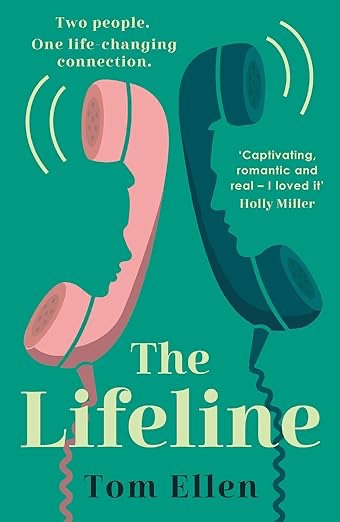
The Lifeline by Tom Ellen

If I learned one life lesson from Tom Ellen’s lovely romance novel, it’s that I’m not the only one who has a weird celebrity crush on Richard Ayoade. What a relief! Usually I get quizzical looks and awkward questions when I admit this, so I felt vindicated. I often say I don’t like romances, but I really did enjoy this story about Annie and Will. They met one day in Paris when Will’s band The Defectors were the next up and coming Indie band. Annie is sent out to interview them before a gig and hits it off with cute frontman Will Axford, who I was imagining as my Indie crush Damon Albarn. Annie finds his floppy hair, dimples and the gap between his front teeth very sexy. He seems to be clicking with her, but she’s still surprised when he catches up with her after the interview and suggests they spend the day together. Later as they watch the sunset from the Pont Alexandre III bridge, he asks if they can meet after his gig on the same spot. So, Annie is standing there at 11pm waiting for Will to arrive but when he still isn’t there at 11.30pm she gives herself a good talking to, fancy falling for the patter of a rock star. He’s probably with another girl already or tries this on every girl he meets. How stupid to think he would genuinely like her! As she pays for an extortionate last minute hotel room on her credit card, she’s already mentally writing up her interview full of anger and disappointment.

Fast forward five years and Annie works for an internet magazine, one of those that suck us into a blur of 1980’s celebrities and what they look like now or the best ever one hit wonders. It’s not what she wanted to do when she started out, with a pile of short stories and novel proposals, but it pays the bills and she loves her colleague Lexi. So, when she’s asked by her boss to write a new “Where Are They Now?’ series to go with some very lucrative advertising revenue, she jumps at the chance to do something more interesting. Then her boss asks her to track down The Defectors. Behind the scenes Annie is having a hard time. Her father died just over a year ago and her different approach to his cancer diagnosis has left her estranged from her mother and sister. Her live-in boyfriend Dom isn’t her dream man, they’re just muddling along while friends are making huge life changes like marriage and baby. The thought of losing Dom or her job scares her, but maybe a big change is exactly what she needs? As she tries to track down The Defectors she sees one of them has shared a phone number on a black background, which stands out in the usual technicolour of Instagram. It’s for a lifeline called Green Shoots, a listening ear for those who are bereaved, anxious and lonely. Annie needs someone to listen to everything that goes round in her mind, so decides to call using her middle name Pia. When Jack answers she finally feels she can open up.

Jack volunteers at the lifeline as often as he can but he doesn’t use his real name. Of course he has regulars and I fell in love with these callers, perhaps because they reminded me so much of my own work in mental health. Work I’m not well enough to do at the moment. I understood that fondness for certain callers, because it’s hard to avoid clicking with people, however we meet them. There’s Eric who calls and often makes hilarious commentary on whatever he’s watching. Some of these programmes, despite his advanced years, are things like Love Island and Made in Chelsea. I fell in love with him straight away and those times when he called feeling low I was heartbroken. Then there’s the breathing lady, who calls just to have someone to breathe with, until she feels calmer. Jack and Pia hit it off on the phone straight away, there’s energy between them. So when she says she’ll call back, he finds himself looking forward to her call. I really felt for Jack because working with people and their deepest emotions can forge strong connections, it’s hard to be detached from some callers. I loved that his friend and colleague Tanvi felt the same way too. He had been avoiding the get togethers and catch ups with other volunteers, mainly because he’s struggling with making friends and being social. Years before, there was a friend that Jack wished he could have been there for and he finds the guilt is crippling.

I felt for Annie too, especially her journey through grief and the struggle to cope when her father was diagnosed with terminal cancer. The author presents beautifully how even the closest people can grieve in their very different ways. There’s a need to give each other space and respect what they need to do in order to cope. It’s so hard when someone is terminally ill and perhaps their wishes don’t align with our own. It’s hard to let go of someone we love, even when we know they’re ready. I thought the author paced the story perfectly and the misunderstandings on the road to romance were believable, rather than formulaic ones that sometimes make me groan in romance novels. I really liked and understood these characters, so I was truly into their story and didn’t notice the romance tropes as much. Equally, I loved the revelations along the way, because as Annie found more dead ends in her search for Will Axford and his band, I began to wonder whatever did happen to him? This was a thoughtful, bittersweet novel about love and the people we lose along the way, and I read every word hoping our two main characters would find each other.

Out now from HQ

Meet the Author

Tom is an author and journalist from London, England. He is the co-writer of three critically acclaimed Young Adult novels: LOBSTERS (which was shortlisted for The Bookseller’s inaugural YA Book Prize), NEVER EVERS and FRESHERS. His solo adult debut novel is the romantic comedy ALL ABOUT US (HQ/HarperCollins, published October 2020). His books have been widely translated and are published in 20 countries. He is a regular contributor to Viz magazine, and has also written for Cosmopolitan, Empire, Evening Standard Magazine, The Daily Mash, Glamour, NME, ESPN, ShortList, Time Out London, Vice, Stylist and many more.

Posted in Netgalley

The Women by Kristin Hannah

I was completely engrossed by this incredible piece of historical fiction, covering a period of history and viewpoint I’d never read about before. All the Vietnam stories I’ve encountered have fallen into two categories and were made for the big screen; combat movies like Platoon and Full Metal Jacket, or the more domestic based aftermath of war at it’s best in the excellent Coming Home with Jane Fonda and Jon Voigt. I’d never considered that there would be women in Vietnam, which seems crazy since I’d avidly watched MASH when it was rerun in the 1980’s. The series set in a field hospital showed women in the operating theatres, as members of the US Army Medical Corps. Yet, I’ve never encountered anything that showed them in Vietnam, so I was fascinated by Frankie’s story; her personal experiences as well as the politics and societal changes around her tours of duty. What struck me most was how this war ripped the generation gap wide open. Most people my age will remember the Paul Hardcastle single ‘19’ and for me the most stark line in it was ‘none of them received a hero’s welcome’. It struck me how different the government and public response was to these veterans, the majority of whom were no less brave or noble than the WW2 veterans their fathers had been. The author deals with all these themes in a story about the women that served in Vietnam, the women that America forgot.

Frances McGrath is your typical All American teenage girl, living with her family on Coronado Beach. She has memories of growing up on that beach, swimming and surfing with her brother Finley. She is from a good family and expectations are that she will have the ‘right’ marriage and become a mother. However, things change when Finley makes a huge decision. He’s enlisted for Vietnam. It’s no surprise that he might go into military service at some point. Frankie’s dad has a wall in his office called the ‘Hero’s Wall’ where every family member’s military service is celebrated with cuttings, photos and medals. All the men, anyway. Yet not many of their friends and family members have sons who’ve voluntarily enlisted for Vietnam. There are ways of avoiding the draft, depending on who you know. Yet Finley enlists of his own accord, possibly believing the American government’s assertions that they must fight communism in Vietnam, lest it become even more widespread. Within weeks there’s a knock at the door; Finley has been killed in action. In a whirlwind of grief Frankie starts looking into her options. She wants to honour her brother and become a hero worthy of her father’s wall. Both the Air Force and Navy need a nurse to complete a long period of training before they’re posted to work in the field. However, if she enlists in the US Army, they’ll post her out to Vietnam after basic nursing training. Much to her parent’s shock Frankie is soon on her way to Vietnam.

The author creates such an incredible sense of place, I was in Vietnam with Frankie. The all pervading humidity and dampness of everything actually made me feel grubby. There’s a red dust blowing everywhere, that sticks to the constant sheen of sweat on Frankie’s skin and gets into every wrinkle. Frankie’s kitbag and everything she owns takes on the smell of mildew and she never feels dry. At first the bursts of gunfire and explosions in the jungle are surprising and Frankie is anxious, but soon they just become the everyday backdrop to her work. The ‘whump- whump’ of the helicopters arriving with MASCALS (mass casualties) control when she eats, sleeps and relaxes. The first experience of a MASCAL is shocking and Frankie does freeze, but the surgeon she’s working with talks her through it, let’s her know that he trusts her and she can do it. Gradually it becomes easier, although their injuries and the emotions of triaging these men can stay with her. If someone is beyond saving they are left to die, while they operate those they can save. It isn’t just the soldiers though, the unit treats Vietnamese soldiers and locals caught in the crossfire. The use of napalm and the injuries it caused really has stayed with me, the jelly like substance sticking to the casualty’s skin and keeps burning. Frankie is soon a first class combat nurse, that’s not to say these experiences become easy, they just become the norm. When we tuck trauma away in a box without processing it, it sits until we’re ready to open the lid or until a new experience forces that lid open. Usually when we least expect it. Her new relationships keep her going, especially those with her friends and fellow nurses Ethel and Barb. They are the glue that hold each other together and while men may come and go, the bond these women build is lifelong and loyal. That’s not to say there aren’t men. Frankie falls in love with Jamie, the surgeon she works with and the war only intensifies those feelings. There’s also the constant fear of losing them. Later on, a face from the past reignites feelings of first love but brings with it so many complications.

Frankie’s return and adjustment to everyday life on her return from war becomes yet another battle. Now she’s completely safe it’s as if all the feelings she had in Vietnam are bubbling to the service, manifesting in physical and mental symptoms. Her parents are relieved she’s home in one piece, but they don’t seem proud of what she achieved and her accolades don’t make the hero’s wall. She doesn’t seem to fit anywhere. Here Barb and Ethel are worth their weight in gold, taking Frankie in when she needs to get out of California and spending time talking through their experiences. No one else will ever get her like these women. Their lives do move forward though and Frankie just seems stuck. I thought this part of the story was beautifully done and represents so much research and care on the author’s part. She is very aware that although Frankie isn’t real, women did live through these experiences and had to find ways to reconcile their memories of war and their hurtful return to an ungrateful homeland they’d put their lives on the line for. It was as if the world had shifted on it’s axis while they were in the jungle. I was longing for Frankie to have a happy ending, because I thought she deserved it and I thought she still had so much to offer. I learned so much about a conflict I’d only experienced through film and usually from a male perspective. I was completely immersed in Frankie’s world and didn’t want to let it go.

Out now from MacMillan

Meet the Author

Kristin Hannah is the award-winning and bestselling author of more than 20 novels. Her newest novel, The Women, about the nurses who served in the Vietnam war, will be released on February 6, 2024.

The Four Winds was published in February of 2021 and immediately hit #1 on the New York Times, Wall Street Journal, USA Today, and Indie bookstore’s bestseller lists. Additionally, it was selected as a book club pick by the both Today Show and The Book Of the Month club, which named it the best book of 2021.

In 2018, The Great Alone became an instant New York Times #1 bestseller and was named the Best Historical Novel of the Year by Goodreads.

In 2015, The Nightingale became an international blockbuster and was Goodreads Best Historical fiction novel for 2015 and won the coveted People’s Choice award for best fiction in the same year. It was named a Best Book of the Year by Amazon, iTunes, Buzzfeed, the Wall Street Journal, Paste, and The Week.

The Nightingale is currently in pre-production at Tri Star. Firefly Lane, her beloved novel about two best friends, was the #1 Netflix series around the world, in the week it came out. The popular tv show stars Katherine Heigl and Sarah Chalke.

A former attorney, Kristin lives in the Pacific Northwest.

http://www.kristinhannah.com

Posted in Netgalley

The Guest by B.A. Paris

I was so glued to this story about a group of friends and the entanglements between them that I read it in one sitting. The action focuses on two couples: Iris and Gabriel who live in a village with their daughter Beth who is currently enjoying a gap year at a dog rescue centre in Greece. Their friends are Laure and Pierre, who reside in Paris. The couples met on holiday, while Laure and Pierre were on honeymoon and Gabriel and Iris had only been married a year. They became firm friends, seeing each other every year and Laure even became their daughter Beth’s godmother. However, this visit is different. Laure has turned up alone, saying Pierre has confessed to having a daughter with a woman he spent the night with at the start of their marriage. Laure needs space to think and so does Pierre, could she stay with them for a short time? Of course the answer is yes, but it’s not an easy time. Gabriel is taking a long period of leave from his job as a GP, because he has struggled mentally after finding a teenage boy who fell into the nearby quarry. He did all he could for Charlie, but sadly he died before the ambulance arrived. Those last moments with the dying boy have weighed heavy on Gabriel, especially his final words. He has decided to use his time off restoring the walled garden that has grown wild over the years. Friends from their village, Esme and Hugh, offer their gardener and handyman Joseph to give Gabriel a hand with the more back breaking jobs. As these people collide over the summer, guests will outstay their welcome, relationships become strained, and huge secrets are on the verge of being disclosed as obsession and jealousy boil over. 

Our story is mainly told by Iris, who throws herself into looking after their new guest in a lull she has between interior design jobs (although she calls herself an ‘enhancer’). Laure is petite and chic, sometimes making Iris feel ungainly by comparison. The irritations are small at first – for some reason Laure hasn’t brought many clothes with her, but when she borrows from Iris’s wardrobe she always seems to pick the very thing Iris was planning to wear and it looks better on their guest. Then after a couple of weeks Laure rearranges their kitchen, meaning everyone is opening the wrong drawers and cupboards and any job takes twice as long. Iris asks her to put it back, but Laure meant no offence, she just thought it made more sense the new way. There are no signs of her seeing Pierre either. In fact no sign of him at all. Gabriel had extended an offer of help, could he perhaps go over to Paris and give him a listening ear? There’s no reply. It’s uncharacteristic of him. When Laure finally goes to Paris for talks, she’s back by evening of the same day saying that he didn’t turn up at the flat. As the summer moves along, the constant presence of another person starts to chafe at Iris’s goodwill. There are only so many times she can listen to the same story, or pull apart their relationship in every detail. Gabriel is also struggling but at least he has his garden escape, but he’s under pressure to speak to the mother of Charlie. He had passed Charlie’s last words to paramedics at the scene, but actually meeting his mother would be difficult. In some ways it might bring closure, but unfortunately Gabriel has kept something to himself. To save his mother more grief he told them Charlie sent his love to her, but that isn’t what Charlie said at all. 

The author has a brilliant way of creating our interest in these characters, even though I wasn’t particularly rooting for any one of them – although I did have enormous sympathy for Iris because Laure felt like an emotional vampire and I’m rubbish with houseguests too. However, I was addicted to finding out what would happen to them next. Which of the various secrets they were keeping from each other would actually be exposed? Joseph is very intriguing and seemingly very tempting for the women who meet him. He feels like a drifter, living in Hugo and Esme’s converted outhouse and picking up gardening jobs here and there. He’s rootless and very tight lipped about his life before arriving in the village, could he have something to hide? Iris certainly thinks so and wonders if there is a secret liaison going on, perhaps with Esme or even Laure as the summer lingers on with no sign of Pierre. As the tension grows and unease develops, you won’t want to stop reading. Even as events implode this small group of friends and you think you have all the answers, you don’t. This is a brilliant thriller, really cementing the author as a definite ‘must buy’ for me. 

Published 20th February 2023 by Hodder and Stoughton.

Meet the Author

B.A. Paris is the New York Times and Sunday Times bestselling author of seven novels including the word-of-mouth hit, Behind Closed Doors, and her latest thriller, The Guest.

Over 7 million editions of her work have been sold worldwide and her books have been translated into 41 languages. Three of her novels have been optioned for major screen adaptations with films of Behind Closed Doors, The Breakdown and The Therapist in development.

Before becoming an author, B.A. Paris, who spent most of her adult life living in France, worked in finance as a trader before retraining as an English teacher. She and her husband then ran a language school together whilst bringing up their five daughters. Today, she writes from her cottage in Hampshire, England.

Follow B.A. on Twitter and Instagram at @baparisauthor. You can also find her on Facebook, Goodreads, and BookBub. Sign up to her newsletter for teasers, giveaways and updates.

Posted in Netgalley

What We Did in the Storm by Tina Baker.

This is my first Tina Baker novel, although I’ve been aware of her others she’s been a new author I hadn’t managed to get on my TBR. Now I feel very stupid and sorry that I haven’t picked up one of her earlier thrillers because I enjoyed this one very much indeed. Tresco is a small island in the Scilly Isles that’s run almost like a club for the wealthy. Owned by ‘the family’ it’s main currency is tourism but often the same families own timeshares or block book the cottages, each named after a seabird, for the same times each year. Those that live there all year round are ‘the workers’ who look after the abbey gardens, work in the pub or the shop, or work directly as gamekeeper or groundsmen for the family estate. This creates a community where everyone knows everyone else, and each is very aware of their status in relation to each other. So when Kit, son of the very wealthy and regular cottage dweller Beatrice Wallace, starts a flirtation with Hannah the barmaid from The Old Ship tongues start wagging. There are many rumours about Hannah: that she’s been dallying with fellow worker Sam who is married with three boys; that she is easy with her favours, especially on poker nights with the boys; that she was spotted dancing naked by the full moon; that she’s possibly a witch. None of that bothers Kit, but as the young lovers become more than a quick fling it bothers other people. Kit’s mother is raging at her son’s choice of girlfriend, knowing the grief of a relationship with someone from a different class to you. She tries to push him towards her goddaughter Charlotte, who might be stupid enough to wear heels and off the shoulder tops on the island, but is at least in the same circles as the Wallace’s. Sam’s wife Christie should be ecstatic, but for some reason she isn’t, still fuming at Hannah any time she comes within an inch of her husband knowing that she has some sort of hold on him. Alison, Hannah’s boss, just wishes that Hannah would stop sleeping with the customers and causing drama in the pub. As a storm approaches and tensions are at their height, two women are attacked at a remote point on the island, but one woman is lost to the sea. But who?

The author uses different narrators throughout the story, which is difficult at first until you get to know each character and their place on Tresco. Interspersed with these voices is a separate narrative entitled ‘After the Storm’ that recounts the events of that day and what the speaker has seen. We don’t know who they are, but they seem to have been in the right place at the right time to have some of the answers, but not all. The rest of the narrative occurs in the lead up to the storm and we get to know all the residents, visitors and workers. Hannah and Kit aren’t the only ones potentially causing problems for the community. There’s John and Mary-Jane from Georgia in the USA, evangelical Christians who seem to have eyes only for each other. Why did they leave their hometown and families and what shameful secret does Mary-Jane impart to the island’s nurse? Thor works in the village shop, where a bottle of wine can cost as much as some of the worker’s weekly salary, but has a rather active internet life that would raise eyebrows. There’s quiet Maisie who cares for her mother’s needs 24/7 and seems devoted, but lays awake at night listening to her sleep apnoea machine helping her breath, just wishing she’d stop. There’s also a strange man who appears at bathroom windows wearing a balaclava and spying on unsuspecting ladies. Even Christie and Sam’s relationship isn’t what it seems, the long suffering wife whose husband drinks more than he should, neglects his family and strays when he can is the accepted narrative, but never assume that what you see is the truth. Beatrice is a horror though, although islanders are sympathetic when she loses her husband, she isn’t perhaps grieving as much as they would assume. She loves her son, but wants him to commit to something more than painting, sailing and cavorting with that barmaid in whichever cottage is free. None of these activities will make a living and although the family have money and he won’t be destitute she still wishes he had some direction.

I loved the way the author created these rigid boundaries between the different groups on the island and how it disrupts everything if they are broken. After the storm, Kit spends more time on the island painting and renting whatever cottage is free. He offers help where needed, even if it’s a shift in the pub or running errands for holiday makers. Yet he’s stuck in limbo. The workers don’t accept him, in fact they wish he’d bugger off and let someone who needs the money have a job. However, they do have to be careful because his mother is a rich timeshare owner and as such must be treated as a guest. As for him and Hannah, a quick bunk-up is overlooked but why did they have to fall in love? There are clever little faux pas that show someone up as an outsider, such as the plague of pink waterproof coats that islanders wouldn’t be seen dead in. Having come from a small village, I enjoyed the way gossip spread, usually via the pub, as one person tells someone else in confidence, then that person tells someone else in confidence, until it’s a chain of Chinese whispers with the truth lost somewhere in the telling. I also loved the incredible sense of place Tina has created, the crashing waves, exotic flora and incredible seabirds are romantic and enthralling to visitors, but islanders know this isn’t some sort of nature’s Disneyland. The wild weather and stormy seas can be lethal and only the workers know the endless maintenance it takes to keep the island to counteract the damage caused by the sea fret. They are stuck in a parasitic relationship, where they can’t do without the tourism but hate it at the same time. There are so many revelations and twists here I made sure I set aside enough time to finish it in one go and I’m glad I did. Right up until the end I was fairly sure what happened during the storm, but how wrong I was! I’m now going back to Tina’s other novels because I think I’ve just become a fan.

Published on 15th February from Viper.

Meet the Author

Tina Baker, the daughter of a window cleaner and fairground traveller, worked as a journalist and broadcaster for thirty years and is probably best known as a television critic for the BBC and GMTV. After so many hours watching soaps gave her a widescreen bum, she got off it and won Celebrity Fit Club. She now avoids writing-induced DVT by working as a Fitness Instructor.

Call Me Mummy is Tina’s first novel, inspired by her own unsuccessful attempts to become a mother. Despite the grief of that, she’s not stolen a child – so far. But she does rescue cats, whether they want to be rescued or not.

Posted in Netgalley, Publisher Proof

Maud Horton’s Glorious Revenge by Lizzie Pook.

Maud’s sister Constance is on a ship sailing to the Northern Passage, on a mission to find Franklin’s expedition ship. She has always craved adventure and climbed out of her bedroom window, taking the disguise of a cabin boy called Jack Aldridge. Does she really comprehend the dangers that could befall her should the men on board discover a woman on their vessel? On the same voyage is the rather strange and macabre Edison Stowe who has managed to get aboard as a scientific officer – mainly involving the killing and gathering of animals, as bone specimens or in jars. When Constance is lost on the voyage, the rather quiet and timid Maud is determined to find out what has happened to her sister. She devises a plan to get close to and expose Edison Stowe. Telling her grandfather she’s on a trip to the country, she embarks on a rather ghoulish steam train journey. Stowe has a money making scheme to turn various public hangings into a tourist attraction and Maud becomes one of his tourists. The author uses three different narrative voices to tell her story. A diary written by Constance on the voyage was returned to her family and gives us a front row seat for the horrors but also the wonders of the voyage complete with edible arctic creatures, ‘esquimaux’ women and the northern lights playing overhead. Then in the present day there’s Edison Stowe’s narrative of his day to day life, living in Mr Inchbold’s bone shop and dodging debt collectors. His debts being the reason behind his execution tourism. Finally, there’s Maud, whose narrative hangs everything together and provides context with memories of the sister’s lives and her own relentless quest for the truth.

Maud and Constance are fascinating characters, both sisters with the hearts of lions and nerves of steel. It just takes Maud longer to realise she is every bit as adventurous and brave as her sister. Maud has the disarming advantage of beauty and a composed, modest manner that makes her seem the ideal ‘Angel in the House’. Her knowledge of pharmacy and toxicology is honed by years of helping her grandfather in his shop. She is proud of her sister and has never believed the official version of her death, but we never realise the extent of her plotting and planning until the final few chapters. What an opponent she has in the villainous Edison Stowe! Not since Uriah Heep have I felt so uncomfortable while reading about a character. He constantly made me want to wash my hands. He’s a strange contradiction in all sorts of ways: dressed like a gentleman but absolutely penniless; seemingly genteel but capable of moments of extreme violence against those weaker than himself, people or animals. He seems oddly unmoved by inflicting violence, but has strange fits of illness, where he appears to pass out as well as seeing and hearing things, including people long dead.

I was absolutely fascinated by this novel from start to finish. I love books that subvert what we think about the supposedly straight laced Victorians, especially women. She doesn’t downplay the dangers women faced, especially those that try and move outside of their boundaries. It was interesting that it was far more successful for Maud to use her strengths as a woman, than to try and be like a man like Constance. I enjoyed the more macabre and decadent tastes of the Victorians such as Mr Inchbold having a shop full of animal skeletons and a bear welcoming people at the door, the popularity of the gruesome murder room at Madame Tussaud’s and the fascination with collecting such ghoulish souvenirs as Staffordshire figures of the people they’ve just watch hang. Lizzie always creates such a fabulous sense of place and I was feeling the arctic cold and really smelling the crowds, both at the hangings and in the pub at the quay where sailors come unwashed and straight off the boats and monkeys are racing round the tables. These little extra details keep you immersed in her worlds. We even get an unexpected love story that further breaks the image people have of the Victorians. This is such an incredible story and a must for people who love their historical fiction to surprise and compel them.

Published by Picador, Hardback and Kindle Editions 1st Feb 2024.

Meet the Author

Lizzie is an award-winning writer and journalist. She is the author of Moonlight and the Pearler’s Daughter, a STYLIST and WOMAN & HOME ‘Best Books of 2022’ pick.

Lizzie began her career in women’s magazines, covering everything from feminist motorcycle gangs to conspiracy theorists, before moving into travel writing, contributing to publications including Condé Nast Traveller, Lonely Planet and the Sunday Times.

Her assignments have taken her to some of the most remote parts of the world, from the uninhabited east coast of Greenland in search of polar bears, to the trans-Himalayas to track snow leopards. She was inspired to write Moonlight and the Pearler’s Daughter, her debut, after taking a road trip through Australia with her twin sister after the death of their father. A chance visit to the Maritime Museum in Fremantle led her to an exhibition about a family of British settlers involved in the early pearl diving industry. Thus began an obsession and a research journey that would take Lizzie from the corridors of the British Library to isolated pearl farms in the farthest reaches of northwest Australia.

She lives in London.

Posted in Netgalley

The Grief House by Rebecca Thorne

‘She searches for ways to stop feeling so lonely you fear your brain will melt and your heart will stop and your skin will never be touched again. She searches for ways to make herself feel better. The online forum has been a lifeline. A lifesaver. She can chat to counsellors when she needs to or other women who struggle with similar issues. Every week she receives a piece of advice to help her on the road to recovery or, as she calls it, the road to normality. The path to living a life.’

Blue makes a decision to deal with her unresolved grief and trauma with a residential course she sees advertised when she’s at a low ebb. At Hope Marsh House participants are offered counselling, art therapy and meditation with married couple Molly and Joshua Park. Blue has been struggling for a long time, culminating in the death of her mother with whom she had an uneasy relationship. However her grief journey begins with the loss of her stepfather Devlin, a rotund man with a fondness for kaftans and a talent with tarot. His own skills are based in clever observation, carefully worded open questions and more than average perception, but in Blue he recognises something he isn’t. A lonely child with strong, natural,psychic abilities. Prior to meeting Devlin, Blue’s mother has managed a rather haphazard upbringing at best with choices for Blue that are based in her own problems and inadequacies rather than what’s best for her child. Blue has been home-schooled but any learning was provided by magazines, television and whatever books Blue could lay her hands on. As a result she had no friends and was thought of as weird by the kids nearby. Her mother is equally isolated, not helped by the fact they move constantly. What exactly are they running from? So, Devlin’s attention is welcomed by both mother and daughter. Losing him to a heart attack was devastating and Blue became parent to her heartbroken mother, taking responsibility for her mum’s worsening mental health, the family’s income and single-handedly running Devlin’s mediumship business. Maybe it will take a place like Hope Marsh House to deal with the lonely and exhausting rut Blue finds herself in? It will be kill or cure….

‘And how long have you had your … talents?’ he said. Blue didn’t know what to say. Was hitting a saucepan with a wooden spoon a talent? Was babysitting a toddler in a dry bath whilst her mother cried herself to sleep a talent? She could wash her own clothes in the steel kitchen sink, she could heat soup and tins of beans, she could sing all the words to ‘May the Circle Be Open’. Is this what the strange man meant? She was five years old. She didn’t know.’

The author tells Blue’s story using different timelines: one gives us the present and focuses in on the retreat at Marsh House, while the others are in flashbacks to Blue’s life before her trip and further back in vignettes of her childhood. The flashbacks give us the building blocks of Blue’s personality and the strange abilities she has. She is a little girl simply longing for love and care, we can see this from the way she blossoms if praised by Devlin. Even more than that, the most powerful thing Devlin does is seemingly very simple – when Blue comes off stage, Devlin simply asks ‘are you ok, lass’? These four words mean more to her than anything else because they bypass the person she is on stage and the money her gift can make them and instead asks how she is. He knows and acknowledges what this gift costs her and how arduous a whole show can be, but mainly it’s just a dad checking in on his daughter. It means a lot to Blue, who has probably never been asked if she’s ok before. No one has ever cared enough. It is his care of her that she misses so deeply. I wondered if there were elements of personality disorder. Does Blue know who she is? When Devlin lives with them she’s at her happiest, but I was confused about her relationship with the other two children who live with them – Bodhi and the baby. They seem to be there, but she rarely relates to them. In fact she actively seems to avoid them and almost looks past them if they appear in her eye line.

Other short sections of the book include a story about a loving married couple who haven’t been able to have children, but look after a little girl who lives in a nearby flat with her elder brother. Unfortunately he is a drug addict and the couple, James and Marie, provide that stable family unit for Jessica. They dread something happening to Jessica’s brother because she could then be taken away from them. I knew that this couple related to Marsh House in some way, but I wasn’t sure how. Why does Blue keep hearing the same three girls names, Jessica, Eleanor and Lauren? Who is the strange long haired girl that appears in Sabrina’s room and opens the door when they’re not there. When she appears Blue starts to feel sick and a feeling of dread comes over her, a couple of times she comes close to passing out. The apparitions also have a way of spoiling her food, making it smell like rotten eggs or rubbish bins. They want to be noticed, but what are they trying to tell her?

The retreat itself is disturbed by a storm and the nearby river bursting it’s banks, threatening the house itself. Instead of the therapy they’re supposed to be receiving Blue and the other able bodied participant Sabina, help Mr Park with unblocking debris from the bridge to help the river flow on it’s normal path. The only other resident is Milton, an older man who uses a wheelchair and seems weakened by a lung disease that causes coughing fits. He’s been to the retreat several times, but seems incredibly grumpy with Molly and her husband. He also avoids any of the activities and even rebuffs Molly’s late night cocoa ritual. Is he just one of life’s misanthropes or is there more going on? Obviously, as a therapist, it’s Molly I’m fascinated with. I’ve been through a major bereavement and have run courses like the ones Molly advocates using a combination of meditation and group therapy using creative writing and art. I found her manner with the participants overwhelming at times. Even before the flood interrupted the normal flow of things there was a boundary issue that I couldn’t put my finger on. As time went on I realised the couple had no children, so who is the little girl in the picture that’s hidden in their own private sitting room? Who is the girl that Blue can see, if no children have lived there? Molly seems to mother her guests. It’s difficult to create clear boundaries when working in your own home and especially when participants are also eating with you and staying overnight. However, there’s something about the way Molly nurtures her clients that feels off. There’s a power imbalance at play, almost as if she is the parent and they are children. It’s this element in her personality and the care she gives that Milton seems to resist or even reject outright. Blue is particularly susceptible to her methods, because she has never had a nurturing mother figure. I felt protective towards Blue (my own maternal instinct at play) and my instinct was telling me she needed to keep her wits about her. The author created a sense of impending doom and as the worst of the storm hit it felt like a warning.

I don’t want to reveal any more, because I think the the story unfolds at the right pace and the truths are revealed slowly. The revelations come in both timelines, as Blue unearths the truths about her mother Bridget by looking through archived newspapers in the library. The secrets come out as if they’ve always been there in Blue’s mind, she just needed something to unlock the door. There will be moments at Hope Marsh House where you wonder what’s going on, placing you in exactly the same position as our main characters. The reader discovers the answers when the characters do so we feel their disorientation, confusion and fear. There were one or two moments that were genuinely terrifying! I enjoyed the growing bond between the three guests at Marsh House, something that Blue has never had before and exactly what she needs. I stayed up late to get to the end and I wasn’t disappointed, although it did lead to some disturbing dreams that night. This was a really great read with a perfect balance between psychological thriller and haunting, gothic tale.

Published Jan 18th by RAVEN Books

Meet the Author

Rebecca lives in the West Country with her family and their cat. She has written two best-selling novels under the name Rebecca Tinnelly: Never Go There and Don’t Say A Word, both published with Hodder.

Posted in Netgalley

The Mystery Guest by Nita Prose

Molly the maid is back! Back in a new adventure, but still living in her grandmother’s apartment, which she now shares with partner Juan Marco, and still working at the Grand Regency Hotel. Juan is on a long awaited trip, visiting family, but Molly decided to stay behind in order to supervise a really important event at the hotel. Mystery writer Mr J.D. Grimthorpe is using the newly decorated Art Deco tea rooms to make an announcement to his fans and the press. Molly knows that Mr Grimthorpe is a very particular man, a knowledge that goes beyond the average bit of research, so it must be her that oversees how he’s looked after. Against most people’s judgement she has chosen her protege Lily to prepare his tea cart, because she’s sure that she’s passed on the requisite skills for her to make a success of it. However, at the crucial moment something goes badly wrong. As Mr Grimthorpe reaches out to his personal honey pot to add just a little sweetness to his tea, a hush descends. As he takes a drink however, chaos ensues. He suddenly plummets to the ground, dead. Molly knows that Lily will be terrified especially since it’s ‘always the maids fault.’ As a detective appears to take on the case, Molly’s skills in observation and brilliant memory turn out to be useful. Yet Molly has another insight that she hasn’t disclosed to her boss or the police. She has met J.D. Grimthorpe before and her memories of that time are not the most flattering to the famous author.

Nita Prose gives us a dual narrative, but both of are Molly. We follow the aftermath of Mr Grimthorpe’s death, but also go back to Molly’s childhood when she is taken to the Grimthorpe mansion by her grandmother who is their maid. Neither narrative is simple, but Molly’s different way of observing the world and her incredible memory create an exciting and complex journey. In one we see Molly’s childhood perspective and we understand that wide-eyed wonder of visiting such a rich house with all its treasures including a Faberge egg! Through a mishap with the egg, Molly is assigned a job in the silver room, polishing all the cutlery. This is supposed to be a punishment, but Mrs Grimthrope has no idea that cleaning is Molly’a idea of fun. I loved following this unique little girl as she uses her privileges to get into every nook and cranny of the house. It’s very atmospheric, quiet with just the steady tap tap of the keys on a typewriter as Grimthorpe creates his next masterpiece. Usually she uses his well stocked shelves to read, particularly the classics like Great Expectations. Molly discovers that if she attempts to take a particular book from the shelf it opens a secret door into his study. This proves to be a vital discovery that will shape their lives forever.

In the present, Molly is making great progress by thinking back to that time all those years ago for clues. When Grimthorpe keeled over nobody noticed what happened to the tea cart, but when it’s inspected they realise two items are missing – his particular honey pot and spoon plus a signed copy of his latest book. With so many super fans and book bloggers around that day, it could have been one of a hundred people, either looking for a macabre souvenir or looking for a good way to make some quick money – the moment Grimthorpe died his books suddenly became more valuable, especially the one he’d only just signed. Molly wants to check out local pawn shops and book collectors to see if anyone has recently brought the book in. Meanwhile suspicion falls on Lily as she knew it would, she needs all the support someone like Molly can give her.

I love Molly as a character and her development in the last novel was an important part of the story. Here we see her take another person under her wing. In the interviews, the others were not impressed by Lily but Molly knew she had all the skills to become the perfect maid. She might be quiet and introverted but that meant she wouldn’t waste time talking with colleagues or guests. She might have a polite and deferential way of talking to the customers too. Molly can clearly see something of her old self in this nervous and slightly strange girl. Molly is now head maid so has the hiring and firing power, and she’s certainly found some brilliant staff for the Regency so she is trusted. Lily shines under Molly’s directions which is lovely to see, but other members or staff are suspicious of her, especially Cheryl who is a loud and greedy chancer! I thought Lily’s manner became confusing, especially after Grimthorpe’s death. She keeps repeating that ‘loose lips sink ships’ but not elaborating on the meaning. She needs careful handling and Molly knows how to manage her. I loved how impressed the detective is with Molly, and the respect that builds between them.

Mr Preston, the doorman at the Regency, is still there and still having lunch every Sunday at Molly and Juan’s flat. His relationship with Molly becomes more significant here, not just because of the investigation but because Molly is delving into her past. Mr Grimthorpe had a very closed circle of people he trusted, including his wife, Molly’s grandmother and the secretary who faithfully turned his notes and verbal ramblings into a proper plot. It was her fingers making the steady clacking sound that was the heart beat of the house. Delving this far back brings up memories for Molly, including the reasons they were banished from this inner circle. She also has to process memories of her mother, someone barely mentioned during her upbringing. Despite having a happy and healthy family unit with her grandmother, Molly still missed her mum desperately and always wondered what happened to her. The mystery is interesting and kept me guessing throughout, with me almost thinking Nita might do something wholly unexpected and pin the blame on Molly. However it’s the love of Molly that will draw readers to this story and the fact that the mystery fills in some holes in her background is a huge bonus. I found myself finishing the book, hoping that Nita Prose would be kind enough to give us at least one more adventure with this charming and unique character.

Out on 18th Jan from Harper Collins

Meet the Author

Nita Prose is the author of The Maid, which has sold more than 1 million copies worldwide and was published in over forty countries. A #1 New York Times bestseller and a Good Morning America Book Club pick, The Maid won the Ned Kelly Award for International Crime Fiction and was an Edgar Award finalist. Her second novel, The Mystery Guest, publishes in November 2023 in North America (January 2024 in the UK). Prose lives in Toronto, Canada, in a house that is moderately clean.

Posted in Netgalley

Yellowface by R.F. Kuang

White lies. Dark humor. Deadly consequences… Bestselling sensation Juniper Song is not who she says she is, she didn’t write the book she claims she wrote, and she is most certainly not Asian American–in this chilling and hilariously cutting novel from R.F. Kuang

June Hayward and Athena Liu were in the same year at Yale and both debuted in the same year in publishing. Yet that’s where the similarities end. Athena is picked up immediately in the world that’s always looking for the next big thing. Stories about basic white girls just aren’t cutting it any more, so Athena is a cross genre literary darling. Her death is a freak accident that allows June an opportunity, she acts impulsively and steals Athena’s work in progress. Her work is an interesting novel about Chinese labourers and their part in WW1 helping the British and the French. Could she perhaps edit the manuscript and submit it to her own agent? Would it be wrong to start a new pseudonym? Enter the ethnically ambiguous new novelist June Song.

This was a brilliant inside look at issues and timely arguments within the publishing industry. In the past couple of years I’ve seen the question of authentic voices rage back and forth, especially interesting to me when it comes to writers with disabilities and the way disabled characters are written. Is it more important that a marginalised story is told or is who tells it the vital issue? This can be especially urgent when it’s a previously untold story or a hidden part of history. June has so much success with the book, but struggles to protect her secrets. One wrong word could expose her, so how far will she go to protect her new identity?

I’m always fascinated with books where I don’t like any of the characters because it usually means I’m learning something. I think some readers are uncomfortable with this. Athena is the wronged party and should therefore be ‘likeable’. In fact racist or more accurately model minority thinking means that a Western audience might expect the Athena to be sweet, pretty, docile and diligent just because she’s Asian. The qualities are positive, but allow no room for difference unlike the endlessly unique white characters created every day by Western writers. Huang broaches the idea that the industry’s criteria for deciding which Asian writers to publish is based within this flawed expectation. There’s also an issue around the type of subject matter chosen by publishers. In the wake of George Floyd’s death a lot changed in the publishing industry and we all talked a lot about diversity, but when I think of the subject matter of books I’ve read from ethnically diverse writers, particularly African American or Black British writers, they have all contained sexual abuse, violence or intergenerational trauma. Can we say this is a true reflection of the experience of people from those communities? Or do publishers expect this type of story from black writers and favour publishing them over other narratives? Do we only accept marginalised voices when they’re saying things we expect, things that make us comfortable because they echo our ideas about that particular community?

June truly believes that she’s becoming the minority in the writing world. That unless you’re a BIPOC writer you can’t get a look in from agents and publishers. The focus is on ‘own voice’ fiction and no one wants to hear from yet another white girl. I thought about the controversy around the book American Dirt when reading this. Writing is all about imagination and an author can imagine anything. An author can also research anything, but is research enough when you’re attempting to write from the perspective of someone with a disability, or someone LGBTQ+. I have to mention the proliferation of books from a neuro-divergent perspective by writers who have experience in this area, but who aren’t neuro-divergent themselves. I can understand the concern about it, but I’ve also really learned from some of these books and been led to other reading so I could educate myself. Where does ‘own voice’ writing end? Are we saying that a male writer can’t write in the voice of a female character? Writing is all about creativity so if we can only ever write from our own viewpoint wouldn’t it get a little boring? Should publishers accept a manuscript from a white writer who’s writing outside their own experience, if they are inundated with own voice manuscripts of equal merit?

She’s using the pen name Juniper Song to pretend to be Chinese American. She’s taken new author photos to look more tan and ethnic, but she’s as white as they come. June Hayward you are a thief and a liar. You’ve stolen my legacy and now you spit on my grave’.

I loved that this book addressed those big issues, but it was also entertaining, delicious and disturbing in equal measure. I really enjoyed the ins and outs of the publishing world and the gossipy social media ‘blow-up’ feel of the book. Then there were moments that were more uncomfortable and challenging. It addressed what a lonely job it is to be a writer and how that isolation magnifies other aspects of being an author such as the negativity of social media and the perils of comparison. I wasn’t sure about June but that meant her character stayed with me. On one hand I felt she deserved to be exposed, but when I saw the reality of that I felt really bad for her. This was such a clever novel, so complex, full of amazing contemporary issues and always entertaining.

Meet the Author

Rebecca F. Kuang is the #1 New York Times bestselling and Hugo, Nebula, Locus, and World Fantasy Award nominated author of Babel, the Poppy War trilogy, and the forthcoming Yellowface. She is a Marshall Scholar, translator, and has an MPhil in Chinese Studies from Cambridge and an MSc in Contemporary Chinese Studies from Oxford. She is now pursuing a PhD in East Asian Languages and Literatures at Yale.