Posted in Netgalley

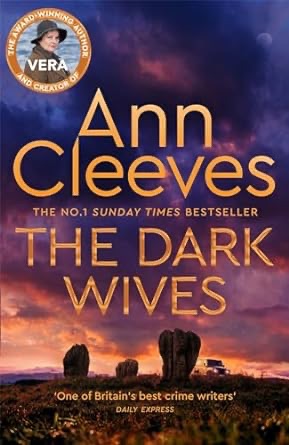
The Dark Wives by Anne Cleeves

Vera is another of my favourite female detectives. She’s like a little, inquisitive bird. She’s generally a bit grumpy and sharp when the occasion demands it. She’s stubborn and lives for her job, knowing instinctively which of her team is best for which task and often expecting long days and nights. That’s definitely the case when a missing person report comes in for a young girl called Chloe living in care. Even more disturbing is the discovery of a body in the nearby park. This young man with a head injury turns out to be a new recruit to the children’s home called Josh Woodburn. Josh was a student but had recently taken a part-time post as a support worker and had worked closely with Chloe. She had come to the home after her mother was hospitalised with mental health problems. Despite the offer to stay with her paternal grandparents Chloe chose the home. She was learning to express herself, trying things on and seeing what fitted. Josh had encouraged her to write about her feelings, so she was journaling daily and dabbling with poetry. The social workers at the home had noticed she maybe had a slight crush on the new worker, so they can’t imagine her harming Josh. On the night Chloe disappeared Josh had come into work and then popped out again, everyone else was enjoying film night and pizza. Their only clue is that a dark, high end Volvo had been seen parked outside the home a few times recently. At the moment, Vera and the team don’t know if they’re looking for a vulnerable witness who is missing or the fleeing perpetrator. Either way they need to find her as soon as possible, before anyone else is harmed. 

The team are getting used to new girl Rosie, as they lost one of their own on the last case. Rosie is what Vera considers a proper Geordie with the obligatory fake eyelashes, fake tan and never going out with a coat. Vera is determined she will have to get used to the breadth of their patch which takes in both cities and vast countryside. Joe is suspicious and is watching her closely, but actually she has good instincts and her empathic manner with the victim’s families yields results and they seem to trust her. Chloe’s grandparents live in Whitley Bay, after selling up their farmhouse in the country. Her granddad tells them how sorry he is that they haven’t made more effort with her. Sadly her parent’s difficult split lead to bitterness and Chloe’s father felt she blamed him for her mother’s mental health. Her grandad would message her and take her out to the hills where they used to live and an old bothy that he still owned with an incredible view. They would take a picnic and simply enjoy being in the open air together. He admits that her relationship with her grandma was more difficult. His wife owns a boutique and was always trying to get Chloe to make more of herself, disliking the Goth look that Chloe had adopted. Vera can see that Chloe doesn’t fit the stereotype of a child in care; she still has connections with family and hasn’t been drawn into drink, drugs or violence. Vera keeps asking herself – what is Chloe running away from? 

Josh’s parents are obviously shocked and grief stricken, but also confused. They had no idea he’d taken a job and financially he didn’t need to work. He could have lived at home and gone into university, but he wanted the full student experience and they could afford it so why not? Josh’s big love was film so the work isn’t even linked to his course at all. His father wonders if he was still trying to impress a girl he’d been involved with called Stella. Stella’s family ran an organic farm where people with mental health issues or who were homeless could help out and gain work experience. Stella seemed almost embarrassed by Josh’s comfortable, middle-class background and put him on the spot. What was he doing to make a difference in the world? Maybe taking this job was a way of showing her he did have a social conscience. Coincidentally the farm is near the village of Gilstead, where Chloe’s granddad’s bothy is. Could Chloe be hiding out there until she can get away. When they arrived at the bothy the next day, Vera is horrified by what they find. There’s another body and the suggestion that someone has been living here. This body must have something that links it to Josh and Chloe, not just that they’re from the same care home but something they seem to be missing at the moment. Gilstead is a pretty village that tourists like to take a look at and this week is no exception. This week sees the annual witch hunt in the village, where children search for the ‘witch’ on the hills and in the dark. Outside the village are three monolithic stones, the so-called ‘Dark Wives’ of the title. Eerie posters of an all seeing eye appear in cottage windows to repel witches and let them know the villagers have their eye on them. It seems a little odd and creepy but essentially harmless. 

The relationships in the team are interesting and Joe’s relationship with Vera is problematic, not least because he feels stuck between his boss and his wife. Sometimes he feels like he’s always trying to please women, whether he’s at work or home. Vera lives alone and doesn’t always understand that responsibility to another person. She seems to assume everyone is as free as she is when she suggests a pie and ping after work. Other times she’s almost motherly and affectionate towards him. It was really interesting how this case seemed to get under Vera’s skin and bring back memories of her father. She still lives in his old cottage with all his things surrounding her and never seems to make it her own. Is she just camping there? Or setting down roots? She thinks about her relationship with her father and how difficult he could be when drunk. Maybe she understands Chloe’s need for a stable and loving parent who’s there for her, instead of the other way round. Sometimes police work is a thrilling chase and other times it’s doing the boring background checks and looking at the detail. This case is a bit of both, but the finale of the Gilstead Witch Hunt is genuinely spooky. With the monolithic Dark Wives in the background and the sun setting, the village comes alive with people taking to the hills to look for the witch. It’s dark and menacing, so as Vera, Joe and Rosie set out with them there’s real tension in the air. Chloe could be out here in the dark, but so could a killer. As they stumble around in the cold, with Rosie finally wearing a coat, it was hard to know whether screams were just excited kids or something more sinister. I love Anne Cleeves’s plots because they’re like a labyrinth, looping round and back on themselves. There are always secrets to unravel within families and these ones are no exception, they’re also emotional because these families are struggling or have broken apart. Most of all I love Vera. She’s like a little terrier and leaves no stone unturned in her determination to find a killer. 

Out now from Pan McMillan

Meet the Author

Ann is the author of the books behind ITV’s VERA, now in it’s third series, and the BBC’s SHETLAND, which will be aired in December 2012. Ann’s DI Vera Stanhope series of books is set in Northumberland and features the well loved detective along with her partner Joe Ashworth. Ann’s Shetland series bring us DI Jimmy Perez, investigating in the mysterious, dark, and beautiful Shetland Islands…

Ann grew up in the country, first in Herefordshire, then in North Devon. Her father was a village school teacher. After dropping out of university she took a number of temporary jobs – child care officer, women’s refuge leader, bird observatory cook, auxiliary coastguard – before going back to college and training to be a probation officer. In 1987 Ann moved to Northumberland and the north east provides the inspiration for many of her subsequent titles.

For the National Year of Reading, Ann was made reader-in-residence for three library authorities. It came as a revelation that it was possible to get paid for talking to readers about books! She went on to set up reading groups in prisons as part of the Inside Books project, became Cheltenham Literature Festival’s first reader-in-residence and still enjoys working with libraries.

In 2006 Ann Cleeves was the first winner of the prestigious Duncan Lawrie Dagger Award of the Crime Writers’ Association for Raven Black, the first volume of her Shetland Quartet. The Duncan Lawrie Dagger replaces the CWA’s Gold Dagger award, and the winner receives £20,000, making it the world’s largest award for crime fiction.

Ann’s books have been translated into sixteen languages. She’s a bestseller in Scandinavia and Germany. Her novels sell widely and to critical acclaim in the United States. Raven Black was shortlisted for the Martin Beck award for best translated crime novel in Sweden in 200.


Posted in Netgalley

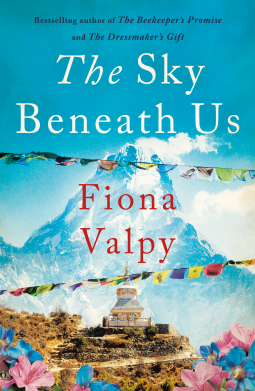
The Sky Beneath Us by Fiona Valpy 

Fiona Valpy is a newish author to me, someone that I’ve come across while blogging and I always request her books on NetGalley. I know I’m going to get a read that’s focused on women, their history and characters going through an experience that changes their outlook on life. I love the psychology behind these stories and this new novel was no exception, taking our main character through her family history to explore her identity and her direction now she’s in middle life. In two timelines we meet Violet Mackenzie- Grant and her great niece Daisy almost a century later. In 1927, Violet is leaving the family estate to focus on a new and exciting career path for women. Having watched her sister settle into the role of wife, Violet wants her life to be different and enrols at The Edinburgh School of Gardening for Women. Manual labour isn’t really what her family had in mind for her daughter, but Violet is so excited especially when she gets the chance to use her drawing skills to sketch plant specimens for the Edinburgh Botanical Gardens. She is thrilled to see the amazing plants being brought back from expeditions all over the world. Little does she know that this work will inspire a journey of her own; the trek of a lifetime to Kathmandu and beyond. In 2020, her great niece Violet Loverack has always dreamed of retracing Violet’s steps ever since she discovered her journals at the family home in Scotland. Her plant hunting exploits inspired Daisy’s own career as a landscape gardener, but from her tiny flat in London, Kathmandu has always seemed a long way away. Now divorced and with her last daughter leaving home for university, she’s made the decision to go on the trip of a lifetime. As she arrives in Nepal, ready for her trek into the Himalaya, fate has a different plan in store for her in the shape of the COVID pandemic. It prevents her mother joining her on the trip and soon after her arrival, the country is shut down leaving her stuck mid-way to the village Violet mentions with her two Sherpas. She must now undertake her journey alone with her guides, hoping for shelter at the same village. As she starts to piece together all the parts of Violet’s story she uncovers long held family secrets, can they inspire Daisy to find her own path forward and build a new life for herself? 

I was so inspired by this story, especially the adaptability and courage of these women. It gave me the travel bug too and I booked a little trip to Venice half way through! Violet is an incredible character, brave and perhaps a touch naïve at first. She doesn’t want to be restricted by what her family and society expect for her, but isn’t quite prepared by how strong their beliefs and rigid class structure is. Even going away to study us a massive step away from that path of marriage and children her parents were hoping for and manual labour for a woman of Violet’s class is possibly unheard of. There’s an openness and freedom to how she thinks that’s partly being young, part never challenging the status quo before and partly her own restless spirit. Things changed rapidly after WW1 for both women and the rigid class structure of the Edwardians. There’s a definite generational gap between those who remember those early years of the early Twentieth Century and those born after the war. Men were more scarce and that applied particularly to women of Violet’s social standing. There were more spinsters at that time, but the war also had an effect on class. It’s a change watchers of Downton Abbey saw between the dowager Duchess played by Maggie Smith and her granddaughter Sybil, who elopes with the young chauffeur. The family also struggled to keep the estate financially viable and many aristocratic families at this time had to give up their stately homes or married American heiresses who were only to keen to gain a British title in return for fixing the stately home’s roof or paying the multiple death duties. Young people of the 1920’s were the flappers and bright young things of the ‘Roaring Twenties’. Violet’s parents seem relatively relaxed about her studying, but probably assume Violet will give it all up when the right man comes along. In finding him, I’m not sure Violet understood how restricted her choices actually were. 

When Violet meets Callum Gillespie at the botanic gardens it’s a meeting of minds as well as hearts. Both love gardens and are inspired by the intrepid plant hunters who travel all over the world to bring back the specimens that Violet is sketching. They are experimenting by cultivating seeds and cuttings to see which plants grow well in the Scottish climate. Violet’s home is situated where the Gulf Stream brings milder temperatures and along with it”s mountainous countryside it could be the perfect site to cultivate plants coming from Nepal. Violet has fallen in love with the stunning Himalayan poppy, it’s sky blue petals and orange centre jumps out from the page and she’d love to grow it back home. Callum is going on the next expedition to Nepal, but first Violet takes him to meet her parents. It’s fair to say she’s stunned by their reaction. They insist that there’s no future in their relationship. He’s so far beneath them in class, that they couldn’t possible give their blessing to the relationship. Violet must break off their relationship. Determined to be with Callum, they both leave and spend the night in a nearby bothy together, cementing their union before a trip to Callum’s parents where they expect a better reception . Sadly things are equally awkward. Callum’s mother is uncomfortable when Violet tries to help out with tea. They are more used to working for people of Violet’s class, and to Callum’s embarrassment they act more like servants than family. They tell Callum he should look for a wife from his own class because this will never work and he could ruin Violet’s chances of a more suitable marriage. As Callum leaves for Nepal the pair are downcast and worry for their future. They continue to write to each other over the weeks and Violet becomes ever more sure that he is her soulmate. Surprise news makes Violet realise she wants to be with him, wherever he is and with the help of her sister she sets off to Nepal where life changing events await her. 

Years later Daisy is setting out on the same journey. She’s recently been very uncertain about the direction of her life now she’s no longer a wife or a full-time Mum. I loved following her journey, taking Violet’s steps into the Himalaya and at such an extraordinary time too. While the landscape itself is unchanged, more and more tourists have made their own attempts to conquer Everest. Previously, the Nepalese people thought it disrespectful to the mountain goddess to climb her, but since then both the Tibetan and Nepalese governments have allowed tourism in the area. Of course this has opened up the small communities to the rest of the world and allowed communication links to and from the area. It was fascinating to read about the effects of tourism on the people and the delicate eco-system around them. Sherpas are now employed to to tackled the most dangerous aspects of climbing Everest. They know the mountain, the weather and the best paths to take. Some are employed to create paths of ladders across the glaciers and many lives are lost, depriving families of their fathers and the income. It was clever to set Daisy’s journey in the pandemic because she gets to see the valley where Violet lived without tourists. The place feels untouched and even more remote as tourists have rushed home and the villages are locked down. So Daisy gets to experience the trek very much like Violet did, it’s quiet, there’s nobody on the same path and when she reaches the village she’s so surprised to a warm welcome. She’ll have to quarantine of course, but she has a family here with so many cousins she’s lost count. She also has access to the rest of Violet’s journals and will be able to read what remains of her life story. Just as these people did for Violet when she arrived a century ago, they now take Daisy in and look after her, 

I loved the equality of the village and I’m sure this is what Violet enjoyed too. There’s no class structure and seemingly no judgement either. She was taken in and as soon as a house becomes available it is cleaned and given to her for as long as she needs it. They don’t find industrious and hard working women an anomaly. This is somewhere Violet can settle and now Daisy can meet Violet’s descendants. Their societal structure is based on community and sharing. No one is without, but equally no one has ownership either. I loved how Daisy is inspired by the villagers and their generosity. It sparks a fire in her for community garden, partly to put something back into this wonderful place, a replacement for what years of visitors have taken. She also thinks it could work back home in Scotland, sharing some of the land that’s been her privileged birthright with the community. She inspires her daughters to improve the estate with an organic gardening project and more ethical values. The settings in the novel are incredible, equally beautiful but it’s hard not to be in awe of the incredible landscapes Daisy uncovers on each day’s trek. The valley between the mountains has its own climate and a unique combination of plants. I was blown away by the author’s description of the flower meadow which I pictured as a living rainbow of roses, rhododendrons and climbers. Of course there are also those vivid blue poppies and yes, I have already sourced some seeds. The idea of being above the clouds was incredible, almost as if it’s a magical, heavenly place. 

Of course there are some darker moments. COVID hits the family hard, just as typhoid hit Violet’s plans a hundred years earlier. The trek is challenging as Daisy struggles with the altitude and the stamina required to reach the village, in fact she’s stunned by how sure footed and physically fit the older members of the community are. This was heartbreaking in parts but also incredibly uplifting. It left me thinking I could start to tick off those bucket list items and fulfil those dreams I had for my life but set aside when I first became ill. Daisy’s Sherpa has a great way of combatting her fears and anxieties about completing the trek. He tells her to keep taking small steps, one in front of the other and I think this is great advice for any overwhelming task and life in general. You only fail if you give up. 

 Out 10th September from Lake Union Publishing.

Meet the Author

Fiona is an acclaimed number 1 bestselling author, whose books have been translated into more than thirty different languages worldwide.

She draws inspiration from the stories of strong women, especially during the years of World War II. Her meticulous historical research enriches her writing with an evocative sense of time and place.

She spent seven years living in France, having moved there from the UK in 2007, before returning to live in Scotland. Her love for both of these countries, their people and their histories, has found its way into the books she’s written. Fiona says, “To be the first to hear about my NEW releases, please visit my website at http://www.fionavalpy.com and subscribe to the mailing list. I promise not to share your e-mail and I’ll only contact you when there’s news about my books.”


Posted in Netgalley

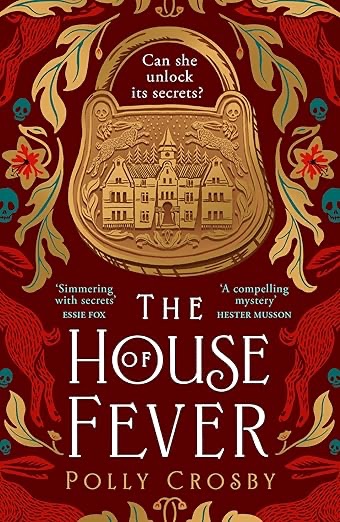
House of Fever by Polly Crosby

On a trip abroad with her mother, Agnes Templeton meets a handsome young doctor called Christian Fairhaven. He seems completely besotted with her and a romance soon develops. Surely his swift proposal can only mean one thing,it must be love or this a relationship of convenience? Dr Fairhaven needs a wife and a stepmother for his daughter Isobel, while Agnes needs an expert in tuberculosis for to look after her mother who is now dying from the disease. Christian is researching a new cure, something he’s working on at the institute he runs called Hedoné. He lives in a cottage alongside the institute, which is split into an infirmary for very unwell patients and ‘spa’ type accommodation for TB patients who can benefit from the fresher air and rest that the institute provides. When Agnes arrives she finds that not everything is as she imagined. The guests are more glamorous and wealthy than she expected, with their part of the building adjoined by a swimming pool, beautiful grounds and many places for parties. Their access to alcohol and gourmet food gives the place a feel of a luxury hotel. Agnes’s mother is taken into isolation, to be monitored closely and have a period of quarantine. Agnes is allowed to visit her mother’s room as she seems to be immune to TB having nursed both her father and mother through the disease without succumbing herself. As she adjusts to the contrasts of lavish dinners and the sound of partying with the very authoritarian Matron and strict quarantine restrictions, Agnes starts to notice things. Isobel seems to flit around largely unmonitored and doesn’t live with them in the cottage. The beautiful actress Juno Harrington holds court here and seems to have unfettered access to Christian, even in his office. There’s nothing Agnes can put her finger on, but she feels uneasy. She senses there are secrets at Hedoné and perhaps in her marriage too. 

The book is largely narrated by Agnes, with small chapters every so often that seem to be narrated by a child. Through this we see the institute in two different ways; Agnes’s conflicting and unexpected impressions alongside those of a person who knows this place inside out and has explored every nook and cranny. I was very interested in the hare motif that repeats itself throughout the book as a symbol for the institute. It’s the keyring on which matron keeps her keys as well as the keys to the cottage, it’s on the signage and repeats throughout the building. I’m very interested in hares as a mystical symbol and a spirit animal, ever since my father found a leveret on the farm and let a four year old me touch it’s silky fur. For me it’s a symbol of huge leaps I have taken in life, some of which paid off and others that didn’t – something you have to accept if you are one of life’s ‘jump in with both feet’ people. I wondered if it had been chosen as a symbol of renewal, recovery and potentially the cure that Christian thinks he may be on the verge of discovering. However, it’s also a fertility symbol, having possible implications for his expectations of Agnes and their marriage. Agnes has jumped in to this marriage with a very short courtship away from the institute that dominates her husband’s life. There is a lot to learn about each other and where Agnes saw a competent and successful doctor, able to run an institute and bring up his daughter alone, the real picture is more complex. Isobel seems to be brought up by whoever is available, but spends a huge amount of time alone. Agnes wants to be a mother to her, but doesn’t want to impose and change what’s clearly a familiar routine. She hadn’t expected formal dinners with a new dress magically appearing each time. Who is choosing them? Christian courts investors for the institute, all drawn in by his claim of a cure. It starts to feel like the 

man she met and married was something of an illusion, incidentally that’s one of the risks of taking ‘hare leaps’. 

I thought the author cleverly placed doubts in the reader’s mind very slowly and strategically. I was immediately alert to a couple of characters: Juno Harrington who seems to run the social aspects of the institute and Matron, who at first gives off Mrs Danvers vibes and reprimands Agnes if she isn’t following the rules. I could see red flags popping up with Christian, who is clearly not as financially successful as the institute might suggest and the revelation that it is Juno Harrington’s family who are the largest investors answers one or two questions. Being very fond of fashion, I didn’t like the fact someone was choosing Agnes’s clothes, always placing just one new dress in her room as her only option for the evening. It showed a element of control that had my senses pinging straight away. Christian’s strange obsession with her colouring and complexion seemed odd too, constantly referring to her as his ‘English Rose’. When she finally sees a picture of Isobel’s mother, Agnes finds herself eerily similar. He’s also very quick to ask whether she could be pregnant. Agnes has been learning to enjoy their love-making and finds herself actively looking forward to it in their honeymoon period. Is his attention to her genuine or purely based on the potential outcome of having a child? He’s also very cagey about his claims of a potential cure and if the graveyard Agnes finds in the woods is a measure of his competence, it clearly isn’t working. 

I wasn’t surprised when the idea of eugenics started to come up, especially considering the period the book is set. It started as a theory in the late 19th Century and was the catalyst for horrific crimes against people deemed genetically inferior. In the USA it was used as the justification for sterilising huge numbers of Native American and young African-American women, especially those living in poverty in the southern states. In the UK it became a way of herding out those who were degenerate, linking criminality to certain facial features. Obviously, the Holocaust was the single biggest crime against humanity based in eugenicist theory. Hitler’s obsession with creating an Aryan master race, was used as a justification for mass murder of those he deemed as ‘life, unworthy of life’. This was mainly those of the Jewish faith, but also included Roma people, Catholics and people with disabilities. His program of sterilising those with disabilities and removing disabled children from their families started in the early 1930’s. In this novel, eugenics are linked to the institute and possibly Agnes’s particular traits – her immunity to tuberculosis and her English Rose colouring. I was becoming worried that the graveyard where Christian’s first wife is buried, alongside so many of his patients, might be the result of experimentation or simply weeding out those too far advanced for him to cure. I loved how these ideas unfolded. We only see what Agnes does so we might suspect, but we 

only discover the truth as she does which brings an immediacy to the revelations. 

I loved Agnes’s burgeoning relationship with Isobel who felt to me like an abandoned little soul, wandering the grounds and all the secret spaces within the institute, trying to to help sick people where she could and spending time at her mother’s grave. Christian seems to have no plan for her and doesn’t even discuss what his parenting strategy is, probably because he doesn’t have one. He leaves Agnes to get on with it and she does well, simply assuring Isobel that she is there for her and showing a willingness to share the memories she has of her mother and their life together. I think Agnes shows her more love than anyone else. Juno Harrington seems very interested in her but treats her almost as a little pet. I thought Sippy was interesting too, a nightclub singer and the institute’s only black patient. She is valued for her entertainment potential and her voice is incredible, but I didn’t feel she was included as part of the creative and bohemian crowd. She could be on display but not one of them, and I had the sense she was quite lonely day to day. Her friendship with Agnes is based on a real understanding and connection between the women. She’s also enough of a friend to warn Agnes that everything here is not as it seems. As the closing chapters began, secrets unravelled and the tension really did build. I loved how these women helped each other and how the most help came from a totally unexpected source. It is a timely reminder that people can surprise you, especially the ones you are most afraid of. One of the most interesting things for me was the subversion of the Romantic trope of the beautiful, frail and young artist wasting away from consumption. This quote from Byron sums it up beautifully: 

‘I look pale. I should like to die of a consumption’. ‘Why?’ asked his [Byron’s] guest. ‘Because the ladies would all say, Look at that poor Byron, how interesting he looks in dying.’

The pale complexion, the fatigue and the ‘rosy’ cheeks of advanced TB were a Romantic staple in fiction, whereas the truth of dying from this disease was different according to gender, race and most particularly, social status. The reality is often saved in literature for those in dire poverty and terrible living conditions. This excerpt from Liberty Hall gives a more accurate picture of the disease: 

‘Her body was bent forward on her knees; the joints of this body so thin, that it was almost deformed, were swelled and red and painful. She laboured and coughed for her breath; each time that she breathed she coughed up blood …’ 

Despite this, TB was a Romantic fashion and the figure of the beautiful, young woman slowly giving her soul up to God was a staple of 19th Century literature – just think of Dora in David Copperfield or Beth in Little Women. I felt like these two contrasting views of TB were embodied by the two types of patient; the free, bohemian and intellectual party-going patients and those locked down in the basement, having a very different experience of the same disease. The visible parts of Hedoné are based on the Romantic ideal and the illusory cure, while the locked and hidden parts contain secrets and patients whose outlook is at best poor and with only matron to tend to them in their final hours. One is an ideal and one is the truth, rather like Agnes’s expectations of her marriage and the strange reality. As the real horror starts to unfold, I was desperate for Agnes to escape and I was desperate for that she not leave Isobel behind, because a definite bond between them. Polly nails the historical background to her story and really emphasises the fate of women between two world wars. Agnes is of a social status where earning a living as a nightclub singer like Sippy or an actress like Juno isn’t possible. In fact she seems in that liminal space where becoming a governess or nurse like matron might be her only working options. I wanted her to be free though, to explore her authentic self and make the life she wants. I wasn’t sure, right up to the final chapters, what her fate would be. This is an entertaining and interesting novel from an author who understands the nuances of relationships and always creates fascinating characters within the most unusual settings. 

Meet the Author

Polly Crosby grew up on the Suffolk coast, and now lives with her husband and son in the heart of Norfolk.

Polly writes gothic historical mysteries for adults. Her first novel for young adults – This Tale is Forbidden – a dystopian fractured fairytale with hints of the Brother’s Grimm and The Handmaid’s Tale, came out in January with Scholastic.

In 2018, Polly won Curtis Brown Creative’s Yesterday Scholarship, which enabled her to finish her debut novel, The Illustrated Child.

Later the same year, she was awarded runner-up in the Bridport Prize’s Peggy Chapman Andrews Award for a First Novel. Polly received the Annabel Abbs Creative Writing Scholarship at the University of East Anglia.

Polly can be found on Twitter, Instagram & Tiktok as @WriterPolly

Posted in Netgalley

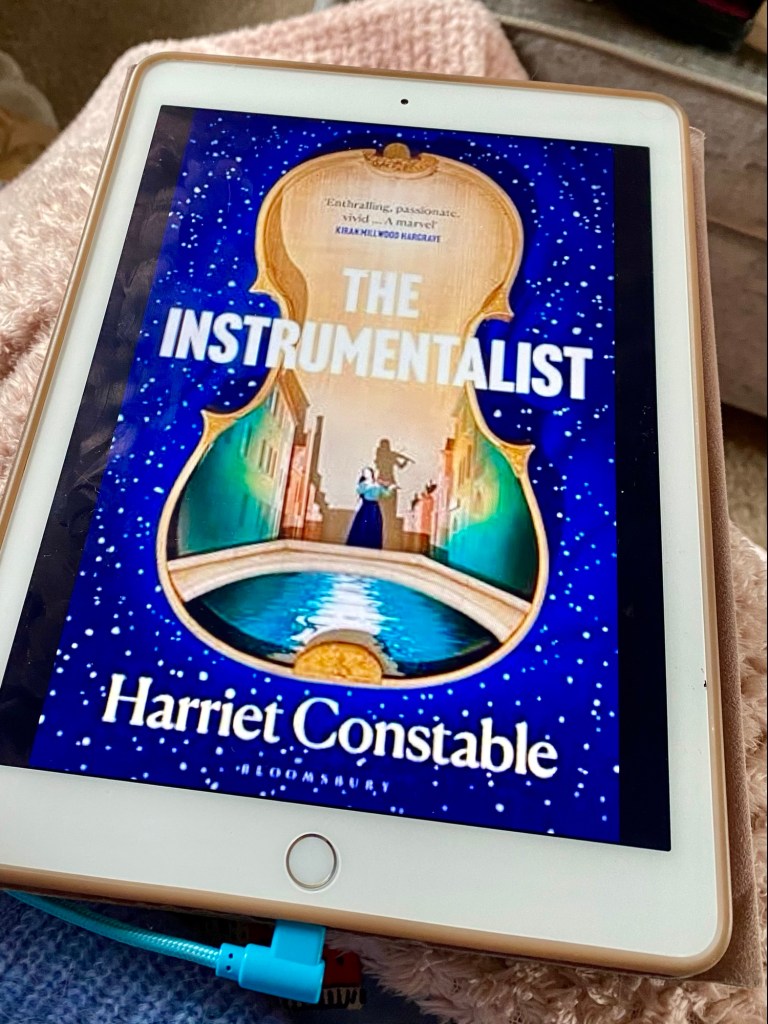
The Instrumentalist by Harriet Constable

Wow! What an incredible debut this is. I absolutely consumed this book and even found myself furtively reading in the middle of the night with a tiny torch. Anna Maria della Piétro is a fascinating heroine and while not always likeable, I found myself rooting for her. Like all the girls at the Piétro, Anna Maria is an orphan, posted through the tiny hatch in the Ospedale Della Pietá often with a note or keepsake from the unlucky girl who had leave her child behind. The author shows us the incredible splendour of Venice, a place I fell completely in love with, contrasted with it’s destitution and desperation. A state that seems more likely for women, especially those from a poorer background. The convent brings up it’s girls very strictly, according to the Catholic faith and the virtues of hard work from scrubbing the floors or working in the nursery. It is also a college of music. Each girl is taught at least one instrument with the best trying out for the orphanage’s orchestra, the figlio. Those chosen will work with the master of music and they will play in the some of the most beautiful basilicas and palazzos in all of Venice. Anna Maria’s great love is the violin and there’s no doubt she will try to become the best.

Anna Maria is a bundle of youthful exuberance, fireworks, talent and ambition. She practically leaps off the page and it seems impossible for her to fail. She starts by aiming to be noticed by the master of music and after that to be the youngest member of the figlio. No sooner is one ambition fulfilled then she’s already thinking of the next. The rewards are also intoxicating – not that Anna Maria cares much for the lace shawls from Burano, but she is partial to the small pastries with candied peel and spices that she loves to share with friends Paulina and ?? Through them we see the girl rather than the musician. They bring out a lightness of spirit, playfulness and a sense of sisterhood. The love she has for her custom made violin is absolutely infectious and when she becomes the favourite of the music master will those girlish aspects of her character remain? Constable shows us a dark underbelly, both to the Ospedale and their music programme. Although the alternatives are even worse. She also shows us huge disparity between the rich and poor in Venice. As visitors we only see the beauty and history of this incredible city, but once I did catch a glimpse of the systems that keep the city going. While waiting on a jetty to catch my water taxi one early morning I met the dustbin men of the city, having to negotiate tiny lanes and creaking jetties to clear up after all the visitors. When Anna Maria gets to play at private palazzos, the grandeur is overpowering. After her performances she is showered with lavish gifts that are at home where she plays but out of place in her bare room. She also notices that those orphans who don’t excel are easy pickings for the rich patrons of the Ospedale. Unsurprisingly, Anna Maria wants to escape the fate of becoming a wife to a much older man and putting aside her talent. As she is taken under the wing of a female patron, Elizabetta ?? She’s impressed by incredible dresses and Elizabetta’s elegant palazzo, but this patron also uses her wealth for good. She shows Anna Maria another fate for the cities’ poor women, by taking her to a brothel where the wealthy woman helps with supplies ensuring these women can make their living in safe and clean surroundings. She points out to Anna the danger in becoming a favourite – there are always people lining up to replace you. When the master is fickle or arrested by a newer, talented young girl what would happen to Anna? It makes her think about the person she replaced for the first time.

I loved the synaesthetic aspect to Anna Maria’s talent because it really added to my understanding of why she loves it so much. I have tastes that are related to colour, so if I see a garden full of beautiful yellow daffodils my mouth begins to water and I get the sensation and taste of lemon sherbet sweets. As Anna Maria plays, colours dance through her and the flurry of colour gives us a sense of how transformative it is for her to play. She is utterly lost in this moments. She’s floating within a rainbow of colour. Even when she begins to compose the written notes on the page are hastily drawn because she’s somewhere else experiencing a unique explosion of sound and colour. Even though she’s not always likeable I was still rooting for her. However some of her tougher decisions are made from within the context of survival. Only by being ruthless and getting to the position of power she craves can she feel safe. Then she can make better, more equitable decisions from a place of safety. This is an incredible story, made all the more powerful because Anna did exist. While this is a novelisation rather than an autobiography she was real and so was her music master . He is a mercurial and sometimes cruel man whose identity remains unspoken – although I did realise who he was part way through. I loved that this is written as a feminist counterpoint to his fame, highlighting a woman of equal talent who is cheated in a creative partnership and ends up with her woke stolen and uncredited. This is an abusive relationship characterised by manipulation, exploitation and a fascination with talented pre-pubescent young girls. Harriet has created a brilliant work of historical fiction that gives voice to one such young woman full of spark, talent and incredible drive to succeed. Her book is totally immersive, plunging us into a world where women were expendable, only there to parrot and enhance a man’s talent. It’s a powerful and compelling tale that I’m sure I’ll still remember when it comes to my end of year favourite books.

Out on 15th August from Bloomsbury

Meet the Author

Harriet Constable is an award-winning journalist and filmmaker living in London. Her work has been featured by the New York Times, the Economist, and the BBC, and she is a grantee of the Pulitzer Center. Raised in a musical family, The Instrumentalist is her first novel. It has been selected as one of the Top 10 Debuts of 2024 by the Guardian.

Posted in Netgalley

Home Truths by Charity Norman

Charity Norman is one of my must-buy authors, because although you don’t see many people talking about her work I find it really intelligent with a particular insight into difficult and dysfunctional relationships of all kinds. She’s also great at bringing the issues of modern day society to bear on those relationships, exploring whether they get stronger or whether they crack. Livia Denby is a probation officer on trial for attempted murder and the jury have reached a verdict. Everything went wrong two years before, on a particular Saturday morning as Livia and her family are celebrating daughter Heidi’s birthday. Livia and husband Scott have bought her a new bike and she’ll get to try it out on her planned bike ride to a local pub with her dad. Scott has promised to take her for a birthday lunch and she’s really excited to have her dad to herself. Scott is one of those people with lots of responsibilities; he’s a father, an English teacher and cares for his brother who has Down’s Syndrome and diabetes. The phone keeps ringing and Heidi can see their outing slipping away, her uncle has already called twice because he’s confused they’re not going to Tesco as usual. So before the phone can ring again, Heidi takes it and slips it down the back of the armchair. It’s a momentary decision with terrible consequences.

Livia awaits their return with terrible news. Scott’s brother accidentally locked himself out of the house and then had a hypo. Despite help from passers by, the paramedics were unable to revive him. He died before he even reached the hospital. When Scott finally finds his phone there are several missed calls and one plaintive, heartbreaking voice mail that Scott can’t stop listening to. Guilt complicates grief and Scott starts looking for answers. He fixates on something one of the passers by said about the ambulance taking a long time and the paramedics taking a while to make a decision. He starts to research medical negligence, watching videos on YouTube and making links with content creators who talk about ‘Big Pharma.’ I could already see the path he was on because it happened to my husband last year when our local air base was requisitioned by the government for asylum seeker accommodation. He did his basic training there and knew it had been used for refugees before after WW2. Sadly, right-wing racist group from a different part of the country hijacked local protests and turned the camp gates into a protest against all asylum seekers. My husband was so angry they were using images and the legacy of the Dam Busters to peddle hatred. It consumed him so much that he was constantly on social media fighting against their viewpoint and became sucked into a hellish echo chamber of Nazism. He felt like the whole world was racist, but he hadn’t realised that the algorithm behind social media channels is simply to give you more of what you’re viewing. I had to explain using BookTwitter which is mostly a lovely, benign and accepting part of Twitter/X. Thankfully he closed his account and instead is taking positive steps to support the asylum seekers when and if they arrive. As I was reading I could see that Scott was so vulnerable, so desperately sad and ripe for manipulation.

Scott finds a content creator called Dr Jack who claims to work in the NHS but in Scotland. He hides behind a mask, a voice simulator and a cartoon avatar. He talks about Big Pharma, the danger of vaccines and how health fears can be used to control the population. Behind it all is the global conspiracy of the New World Order, a shadowy cabal of billionaires, celebrities and politicians who are the real power in the world. They have the ability to control governments and democracy, both of which give us an illusion of control. It’s not long before he is messaging Scott directly and taking him deeper down the rabbit hole. Heidi is due to have her HPV vaccine at school and after contacting Dr Jack, Scott is keen to take direct action. Without talking to Livia he refuses to sign Heidi’s consent form. Then he uses a video suggested by Dr Jack in his English class, making a link between vaccines and fatal consequences. The video shows a supposedly dead girl in the morgue, a girl with long red hair rather like Heidi. By lunchtime the school is full of terrified teenage girls and the head is inundated with calls from angry parents. Poor Heidi is thrown into the spotlight and the head is left with no option but to suspend Scott. When Livia tries to talk to him she can’t get through and Scott tells her she’s just not listening to him. When she looks into her husband’s eyes all she can see is the fervour of the fanatic.

Meanwhile, Livia is acting slightly out of character too. She’s working with an old con called Charlie who’s about to be released from prison into a hostel, where Livia will act as his probation officer. He’s served most of his sentence with time off for good behaviour. Livia is sure they’ll make a strong team and she’s sure Charlie is reformed from his days as a gangland enforcer called The Garotter. Charlie is a great listener and once he’s in the community they meet at a local cafe for lunch and to check in, so it’s easy to slip into confidences. Something personal is disclosed and she immediately checks herself, she must keep her professional boundaries. However, as Scott’s obsession worsens Livia feels like she’s losing her best friend and the usual person she would talk to. Despite being off work, he isn’t pulling his weight at home. He’s up till the small hours, researching his theories and then haranguing people with them at parties. Livia is lost and embarrassed. She needs somewhere to offload and surely it can’t do any harm to disclose to Charlie now and again? At least Scott has his old university friend nearby, giving him someone to talk to and take him to the pub when it all gets too much for Livia. She is the only one keeping the family on track and the pressure is huge. She’s trying to shield Heidi from Scott’s wilder ideas and managing their son Noah’s asthma. The kids seem ok but it’s hard to know. In the section narrated by Heidi we realise she isn’t ok. She’s pouring herself into making music with her friend Flynn, but the guilt is killing her. She thinks she caused her uncle’s death and finds herself drawn to risky behaviour. There’s no doubt that this is a family in crisis; when will these hairline cracks finally give and begin to break apart? Slowly in the background, we learn about a new coronavirus outbreak in China and it creeps ever closer.

The tension built by the author is too much to bear. She builds her characters so well that they feel authentic and I could feel Livia’s heartbreak that the man she loves is slipping away. I could also feel Scott’s desperation as he tries to make sense of a tragedy that’s so difficult to comprehend there must be a reason. When faced with a tragedy humans have to make sense of what’s happened. We’re hard wired to detect patterns in events, because it’s terrifying to accept that life is random and chaotic. There must be a reason, because how could the King of rock and roll come to an undignified end in a bathroom? How could a politician and new president who’s filled his countrymen with hope have his life ended by one lucky shot from a random man? Surely a beautiful Princess can’t meet her end in a Paris tunnel because of a drunk driver? There must be something behind it, an intent, a missing clue, a conspiracy. I enjoyed the clever inclusion of experts in the field of online grooming and brain washing and that they were there to support Livia. When someone we love is behaving so illogically, it’s easy to wonder whether everything you’ve thought is wrong and maybe there’s actually some truth in what they’re saying. Livia needs people to say ‘it’s not you’. I was desperate for this lovely family to get through this. Yet I couldn’t help but think a further tragedy lay ahead and that Scott would fall so far out of reach, Livia wouldn’t be able to catch him. As we came closer finding out why Livia was on trial I wondered whether I would be able to understand her actions. I did understand and I hope I would have the courage to do the same in these circumstances. The author captures this whirlwind of feelings so well that I felt emotional. I thought she captured the strangeness and dislocation of the pandemic incredibly well too. This is a book that takes the most traditional of institutions, a nuclear family, then shows us how the dangers of modern life can literally tear it apart. This was an incredible read and I recommend it very highly.

Out on August 1st from Allen and Unwin

Meet the Author

Charity is the author of six novels. She was born in Uganda, brought up in draughty vicarages in the North of England and met her husband under a truck in the Sahara desert. She worked for some years as a family and criminal barrister in York Chambers, until, realising that her three children barely knew her, she moved with her family to New Zealand where she began to write.

After the Fall was a Richard & Judy and World Book Night title, The New Woman a BBC Radio 2 Book Club choice. See You in September (2017) was shortlisted for best crime novel in the Ngaio Marsh Awards. Her sixth, The Secrets of Strangers, was released on 7th May 2020 and is also a Radio 2 Book Club choice.

Charity loves hearing from readers. Please visit her on facebook.com/charitynormanauthor or Twitter: @charitynorman1

Posted in Netgalley

The Mayor of Maxwell Street by Avery Cunningham

This fascinating debut is set in 1920’s Chicago and concerns an heiress called Penelope ‘Nelly’ Sawyer, described by the author as the ‘wealthiest Negro in America’. Her father, Ambrose Sawyer, has managed to catapult his family into the upper echelons of black society. Nelly is getting over the death of her brother Elder, who has been killed in a road accident but her mother wants her to attend a Cotillien in the city at the end of summer. This is the American equivalent of a Debutante Ball, where the most prominent young women in society are presented in high society. Suddenly, and against her wishes, Nelly becomes the season’s ‘diamond’ – to use a Bridgerton term. This honour means that Nelly is now the most eligible young woman in society, but her ambitions don’t end at a society marriage. For the past year she has been indulging her passion for journalism, researching and anonymously submitting articles to a Black-run newspaper called The Chicago Defender. Her brother Elder was her co-conspirator and sounding board for her articles. He was the go-between, taking Nelly’s articles to the editor Richard Norris. Now she faces a choice, not only is she unexpectedly involved in a love triangle, she must decide to reveal her true identity to the newspaper, or allow her journalistic ambitions to end.

I really enjoy a plucky and transgressive heroine, so I was immediately on Nelly’s side. She’s been looking into the underworld of Chicago society and the leader of an organised crime group called the Mayor of Maxwell Street. This is the prohibition era and the dark but glamorous world of the secret ‘speakeasy’. She has already met one club owner through her brother. Jay Shorey is intriguing and first caught her eye at Elder’s funeral, where they seemed to spark a mutual attraction despite the unusual surroundings. Jay is the archetypal bad boy, but does find many young people from high society visit his club. He doesn’t have their family connections but has access to so many people in Chicago through the club and his ‘god-uncle’ who is a bit of a gangster. His ability to move between the darker parts of Chicago society and her own, more elevated, circles means he’s invaluable to Nelly and her investigations, but is there more to their relationship than that? Yet he isn’t the only suitor on the horizon.

As Nelly bursts onto the socialite scene, she meets Tomás Escalante y Roche at a polo match. He is one of the polo players with an uncle who is a French marquis, and a father who “owns half of Mexico” according to the wonderfully sardonic and witty Sequoia McArthur. Tomás rides a horse that Nelly happened to raise on the Sawyer ranch and she doesn’t mind giving her sharp feedback on what he’s doing wrong! Needless to say he isn’t used to hearing such criticism, especially from a young woman but her honesty makes her memorable. Tomás is hooked and he intends to court her. As far as Nelly’s family are concerned she’d be crazy not to reciprocate his affections and should jump at the chance to come out of the Cotillion summer with a fiancé. So, it’s a bit of a love triangle but also a young woman’s choice between the the life she wants and the life her family wants for her. I was rooting for her.

She chooses to face things head on by meeting Her editor in a cafeteria, and has to convince him that yes, she did write the articles. However, she comes up against a very sharp reality. Norris tells her he can’t publish articles under her real name because of her family’s position in society. He knows that the Ambrose Sawyer would soon be knocking on his door if he did. Nelly is so disappointed that Norris makes a deal. He gives her an assignment and if she succeeds he promises she can publish under her own name. Of course it’s impossible. He tells her about the Mayor of Maxwell Street, a secretive figure in gangland who seems to have achieved the impossible and brought different organisations together across the race divide. Usually Irish, Italian, Jewish and Black gangsters are having turf wars and killing each other, but that’s stopped and he thinks this new Mayor is behind it. He tells Nelly that if she can correctly identify this man he will publish her article and take the consequences of using her real name. Of course she accepts his challenge.

This is a page turner and it’s impossible not to like Nelly and admire her guts. I over the way the author handled the attitudes and outright racism of a hundred years ago. She even highlights the experiences of diverse characters on a spectrum of issues, such as poverty, class, education and skin tone. Jay’s relatively light skin enables him to ‘pass’, yes it opens doors but then you’re participating with your own oppressor. Nelly is very disapproving of living life on those terms. Jay is mixed race and he explains to her:

“There are two candy jars, right? One marked for Negroes, and one for white folk. The Negro — under penalty of death — can only take from one jar. The white man, though, he can take from one or the other. He can take from both. Never mind that the jars have the exact same candy; the white man still gets to choose. That is all I want, Nelly. The freedom to choose. I don’t want to look like them, or act like them, or be them. But I want their options.”

These issues come organically from the characters and they’re inclusion really add some weight to the historical background of the novel. Her depiction of Chicago in the 1920’s feels authentic, rather than the stylised razzle dazzle of the musical, but they come from the same world. There’s even a nod to The Great Gatsby too. This is an entertaining novel with a plucky heroine and some gravitas behind the compelling story and a compulsive need to keep reading. I look forward to seeing what the author does next.

Out Now from Thorndike Press

Meet the Author

Avery Cunningham is a resident of Memphis, TN, and a 2016 graduate of DePaul University’s Master of Arts Writing & Publishing program. She has over a decade of editorial experience with various literary magazines, small presses, and best-selling authors. Avery grew up surrounded by exceptional African-Americans who strived to uplift their communities while also maintaining a tenuous hold on prosperity in a starkly segregated environment. The sensation of being at once within and without is something she has grappled with since childhood and explores thoroughly in her work of historical fiction. When not writing, Avery is adventuring with her Bernese Mountain Dog, Grizzly, and wading waist-deep in research for her next novel. She aspires to tell the stories of complex characters fighting for their right to exist at the fringes of history. THE MAYOR OF MAXWELL STREET is her debut novel.

Posted in Netgalley

The Last Train from Paris by Julie Greenwood

The year is 1939, and in Paris, France a young woman is about to commit a terrible betrayal…

For Iris, each visit to her mother in St Mabon’s Cove, Cornwall has been the same – a serene escape from the city. But today, as she breaths in the salt air on the doorstep of her beloved childhood home, a heavy weight of anticipation settles over her. Iris knows she’s adopted, but any questions about where she came from have always been shut down by her parents, who can’t bear to revisit the past.

Now, Iris can’t stop thinking about what she’s read on the official paperwork: BABY GIRL, FRANCE, 1939 – the year war was declared with Nazi Germany.

When Iris confronts her mother, she hits the same wall of pain and resistance as whenever she mentions the war. That is, until her mother tearfully hands her an old tin of letters, tucked neatly beside a delicate piece of ivory wool.

Retreating to the loft, Iris steels herself to at last learn the truth, however painful it might be. But, as she peels back each layer of history before her, a sensation of dread grows inside her. The past is calling, and its secrets are more intricate and tangled than Iris could ever have imagined.

I always say that we read books at the right time. Having COVID has left me in bed with very little to do except read between doses of Sudafed! So I’ve been catching up on some of those books still languishing unread on my NetGalley shelf, which is always overstuffed. How strange then that this pick had a link to a blog tour book I’m reading this month, both featuring mothers separated from their children but one set in a Cold War Berlin and this one set in pre-WWII Paris. I love books filled with emotion and those based in pivotal moments of history, especially disability history, so this one would sit perfectly within that Venn diagram. I was drawn in immediately by this gripping story, set across two timelines; one set in 1939 and the other in the 1960s. It didn’t take me long at all to get into ‘The Last Train From Paris’. In fact by the time I got to the end of the first few pages, I knew that I was in for a treat and from then on, I found it increasingly difficult to put the book to one side for any length of time. I was spot on too! I was moved by the story and by the bravery of these remarkable women. Nora and Sabine meet and a form a strong friendship in pre-war Paris, after Nora travels from the UK to join a catering course. In the later timeline, the early 1960s, we meet Iris, a young woman who has questions about the circumstances of her birth.

Juliet is a new author to me and I really enjoyed her style. Her characters feel genuine and show such bravery in turbulent times. She doesn’t stint on the gritty detail of wartime life in Paris and the darkness of occupation. She focuses on an aspect of the Nazi’s eugenicist policies that I think is only just coming to light in fiction. Many families were desperate to escape Europe, as the Nazis plans for the Jewish population start to become clear but Sabine’s little family have a different reason. To give you some background, it’s a lesser known fact that the Nazis targeted those with physical and mental disabilities by inciting a belief that they were a burden to the state. A programme of euthanasia was devised at a Tiergartenstrasse 4, the building giving the name of the plan as T4. In 1933 they passed a piece of legislation called The Law for the Protection of Hereditarily Diseased Offspring pushing forced sterilisation of those regarded as ‘unfit’. Their list ranged from conditions like epilepsy, but also suspected long-term illness and mental illness such as schizophrenia or addictions. They targeted nursing homes, asylums and special schools for their victims and over three years, even before the outbreak of war, had sterilised 360,000 people. Once war broke out they started to kill disabled children and adults, for this book the author has concentrated on the children. Children under three who had illnesses like Down’s Syndrome or Cerebral Palsy (or were thought to have an illness) were forwarded to a panel of medical experts to be assessed and approved for euthanasia. Parents were misled, told their children were receiving expert or enhanced care, then told they had died of illness or natural causes. The truth was they killed at least 200,000 people with disabilities in gas chambers that were also used to kill other marginalised people including, overwhelmingly, Jewish people from across Europe. This truth is deeply moving and horrifying to me as a disabled person and as someone who has spent their working life trying to support people coping with long term illness and disability. It is also why the disabled community fight so hard and shout so loud about any rhetoric from government that denigrates or devalues people with disabilities in today’s society. It is why many disabled people breathed a sigh of relief at the recent change in government as many perceive Conservative austerity measures and rhetoric to have led to the deaths of 180,000 disabled people since 2006. So you can imagine why this subject really spoke to my heart and my values.

If this sounds a little heavy, it really isn’t. The author weaves these historical facts into the story beautifully so we see it through the eyes of one of these horrified parents. Many of whom tried different ways of keeping their child away from the T4 programme, especially those who were developing disabilities. In 1939, as the Nazi march on Paris began, Nora is still in the middle of her chef’s training. This dream she has been realising has come to an end as she realises she has to take a last chance to escape. She really has left it until the last train leaving Paris before enemy arrives. As she gathers her things to leave and says goodbye to Sabine, out of the blue her friend has a last request. Having only just given birth, Sabine knows she must leave Paris too and will be travelling away from the city with her husband. She suspects one of her twins may have a disability and has heard about the T4 programme. She knows what could await her daughter if she’s right. Although it will break her heart, she has to put her daughter’s life first and asks Nora if she will take the baby back to England with her. She knows Nora well enough to be satisfied that her little girl will be safe, loved and well cared for. Nora agrees and takes the heart-wrenching choice to say goodbye to one of her daughters. Iris lives away from home, but often visits her adoptive parents in the the little fishing village in Cornwall where she grew up. She has always known she was adopted, but whenever she asks questions about the circumstances surrounding her birth her parents avoid or shut down the discussion. It has left Iris unsure about her identity and that inner feeling she has that something is missing. I kept thinking about the bond that twins have and how not knowing your other half would affect Iris’s sense of self. I desperately wanted her to find the answers she was looking for, but could understand how Nora might worry about how she would take the truth. I could also empathise with Sabine who must be desperately worried about how her daughter feels and also feel a desperate sense of loss for all those moments she wasn’t there. Would Iris feel betrayed? Would she understand the dangers they believed she was facing under occupation?

This was a story about an evil and previously unimaginable situation, faced by two friends whose trust in each other was absolute even at their most terrified. Most readers would empathise with Sabine’s sacrifice, but I could also see the sacrifice that Nora made. She expected to finish her training in the culinary capital of Europe and become a chef, instead she sacrificed all that out of love for her friend and for a little girl who could perhaps be saved from the fate of so many others. As Iris visits her mother, this time, Nora hands over a box full of letters and mementos, and Iris slowly discovers the true story of her life. She must also face the cruelty of what happened to children with disabilities in those years before the Germans invaded Iris’s origin story is one of bravery and a mother’s desperation, with secrets in store. These young women come alive in this story of a deep commitment made from one mother to another. It’s evocative and moving, reminding those of us who have never been in this position that such young women were capable and willing to make decisions like this that were heart-wrenching and ultimately life-saving. It reminds us that duty, often seen as such a dry word, is sometimes an expression of love and hope for the future.

Out now from Storm Publishing

Meet the Author

Juliet Greenwood is the author of eight historical novels, published by Orion and Storm Publishing. She has been a finalist for The People’s Book Prize, and her books have been top 100 kindle bestsellers in the UK and USA.

She has long been inspired by the histories of the women in her family, and in particular with how strong-minded and independent women have overcome the limitations imposed on them by the constraints of their time, and the way generations of women hold families and communities together in times of crisis, including during WW2.

Juliet now lives in a traditional quarryman’s cottage in Snowdonia, North Wales, set between the mountains and the sea, with an overgrown garden (good for insects!) and a surprisingly successful grapevine. She can be found dog walking in all weathers working on the plot for her next novel, camera to hand.

Posted in Netgalley, Publisher Proof

The Paris Muse by Louisa Treger

Treger’s latest novel concerns the life, or more accurately the love, of Dora Maar – a photographer and painter who lived in Paris for most of her life and most notably, during the German occupation in WWII. Born Henrietta Theodora Markovitch in 1907, she was known as a surrealist photographer exhibiting alongside Dali and other notable surrealists. She used her photographic art to better represent life through links with ideas, politics and philosophy rather than slavishly photographing what was naturally there. She was exhibited in the Surrealist Exposition in Paris and the International Surrealist Exhibition in London in 1936. In the same year she was exhibited at MOMA in NYC. He first encountered Picasso while taking photos at a film set in 1935, but they were not introduced until a few days later when Paul Elduard introduced them at Cafe des Deux Magots. They met in quite a dramatic way that showed her intent to catch his eye. She sat alone and using a pen knife she drove the blade between her splayed fingers and where she missed blood stained the gloves she wore. The fact that Picasso kept these gloves and packed them away with his treasured mementoes is a metaphor for their entire relationship – he fed from her emotions.

The author allows Dora to tell her own story and we are inside her mind at all times. We could say this is only her viewpoint of their relationship, but in a world where she is most known through her relationship with a man instead of her own work, Treger is simply redressing the balance. Also you’d have to be utterly blind to think there’s any other way of looking at his treatment of her and the other women he was involved with. But the nine years they were together, she was subjected to mental and psychological abuse. She was underestimated as an influence on his work, particularly Guernica and his politics. I feel on reading the book that he was drawn to what he saw as her masochism and drew on the pain he caused her both for his personal satisfaction and his art. He comes across as a narcissist; constantly told he was a genius he believes everything revolves around his needs and his freedom to work. This is seen in The Weeping Woman series of paintings where she’s depicted as a woman who is constantly tortured and distressed.

Picasso ‘The Weeping Woman’.

We can see how their affair had a distinct honeymoon period. The mistake she made was thinking this would be a template for the rest of their affair. She knew he had a wife, Olga, who’d had a nervous breakdown. There was also Marie Therese, who was his mistress and had his son Paulo. It seems Picasso never turned down an offer, having liaisons with many of their friends and group sexual experiences when they were on holiday in the South of France. These encounters caused Dora extreme emotional distress and being in her head was a painful experience. I desperately wanted Dora to walk away, but she wasnt being true to herself in accepting her behaviour. It felt like their relationship moved in a toxic pattern of infidelity, followed by distress and recrimination. The more distressed she became, Picasso would withdraw, telling her theyd made a bargain, that she was free to leave and that her distress was preventing him from working. Consequently we can see her feelings discounted. He gaslights her by saying she doesn’t have to feel the way she does; her feelings were always the problem, never his behaviour. In one scene in the book Dora suspects her mother is unwell after a dropped phone call but it’s after curfew during the German occupation an they can’t leave the house. Although Dora has paper saying she’s Catholic and Aryan, they won’t save her if she’s found out in the middle of the night. I found Picasso terribly cold towards her when they find her mother dead the next day, he doesn’t touch her and seemed more fascinated rigor mortis and the unearthly sheen of her skin, than comforting Dora. There were times when I felt he was doing things to keep Dora in her place, but there were other times when he seemed genuinely unmoved. It was as if once he looked at something with his artist’s eye it became an object.

The Years Lie In Wait For You by Dora Maar

It was no surprise when Dora’s mental health began to decline and being in that space with her felt suffocating and scary. I loved the way the author had missing sections in the text to signify time Dora has lost and where others have to step in. Treger represents Dora’s declining mental health as a direct product of Picasso’s actions. It’s as if he slowly takes her apart until her mind resembles one of his portraits, distorted and unnatural. Dora is a square trying to fit into a round hole. She is in love with Picasso and craves a life with him based on friendship, passion and fidelity. Picasso wants to have everything Dora is offering, but without the fidelity. He can’t understand why she is unhappy at his visits to Marie Therese, because when he’s with Dora he is wholly with her. His assertion that they should both be free almost sounds plausible until you realise that he holds all the power: he sees Dora when it suits him not her; he reserves the right to sleep with her friends even when she’s there; he also gets to decide when she should return to her apartment and let him work. I almost wanted him to have a taste of his own medicine. I wanted Dora to turn him away when she’s working or sleep with one of her male friends while they were on holiday, but she doesn’t get to dictate in the same way. That’s when you realise that his call for freedom in their relationship, means his freedom. I felt sad for Dora, possibly influenced by some of my own experiences. She seemed like a smaller woman at the end with none of her original vitality and flamboyance. I’m so glad to know that her art lives on and is still exhibited as part of the surrealist canon.

Out now from Bloomsbury Publishing

For more on Dora Maar’s work and legacy…

https://www.dazeddigital.com/art-photography/article/46781/1/why-artist-dora-maar-was-much-more-than-picassos-weeping-woman

Meet the Author

Louisa Treger, a classical violinist, studied at the Royal College of Music and the Guildhall School of Music and worked as a freelance orchestral player and teacher.

She subsequently turned to literature, earning a Ph.D. in English at University College London, where she focused on early-twentieth-century women’s writing and was awarded the West Scholarship ‘for distinguished work in the study of English Language and Literature.’

Louisa’s first novel, The Lodger, was published in 2014, and her second novel, The Dragon Lady, was published by Bloomsbury in 2019. She lives in London.

Find out more about Louisa at louisatreger.com or https://www.facebook.com/louisatregerwriter or @louisatreger

Dora and Picasso

With grateful thanks to Louise Treger for my early copy of this novel.

Posted in Netgalley

Our Holiday by Louise Candlish

Pine Ridge is a small coastal village off the south coast, somewhere near Bournemouth and has that castaway feeling from the moment you cross on the car ferry. However, this idyllic village is the setting for discontent and divided loyalties between those DFL (down from London) residents and those who have grown up in Pine Ridge and mainly work servicing those August visitors. The ridge has a resort hotel, beach bar and spa to keep holiday makers happy, but some visitors have gone away dreaming of their own little slice of south coast heaven. One summer Pine Ridge becomes the centre of a dispute over second home ownership. This is a bad time for Amy and Linus who have just bought their own little bungalow with coastal views up on the ridge. It needs work, having been the home of an elderly couple, but she has a plan and builders starting this summer. She was inspired by friend Charlotte whose banker husband Perry used a huge bonus to buy their perfect holiday home with it’s own summer house overlooking the sea, nicknamed The Nook. It’s people like this that friends Robbie and Tate are angry about. They grew up here but are stuck living in static caravans on a temporary site because they can’t afford to buy or rent anywhere. The private rental market has shrunk as people refurb for the AirBnB market and no new houses are being built. People on service wages can’t hope to pay the prices of houses on the ridge, so they’re snapped up by Londoners who only come in August. This leaves huge homes empty all year while villagers are homeless, this is why the men have set up the NJFA – ‘Not Just For August’ Campaign. As tensions rise towards the August bank holiday, the NJFA are gearing up to make their final public protest of the summer. As the music festival gears up on the beach, people are interested in the design they’ve created on the sand, but they’re stopped in their tracks when half way through the day a summer house is bulldozed from the cliff and into the sea. Was this the NJFA plan all along or is something else going on?

Louise Candlish is brilliant at satirising the middle classes and she’s hit upon an issue that holiday destinations around the world are facing. I’ve always visited Venice in winter or early spring because I can’t stand cruise crowds and I was emotionally drawn in by the problem of keeping that balance between tourists and residents. They’ve addressed the cruise ship issue in recent years, have set up campaigns that show tourists which are the authentic Venetian restaurants and shops rather than the tourist traps. Authorities are now considering curbing numbers. Otherwise, it will become little more than a Disneyland experience; can Venice be the city it is, without it’s people? It’s a problem that areas like Devon and Cornwall have faced for years, with second home owners and holiday cottages turning whole villages into ghost towns in the winter. Even worse, it means the opinions of people who are not even year round residents, hold more sway in local matters than people trying to earn their livelihood. This came to the fore a few years ago in Cornwall where local fishermen’s need for a new jetty was being blocked by second home owners objecting to the planning application. There is always a tipping point and Candlish has demonstrated that exquisitely here. I had so much sympathy for Tate and his girlfriend Ellie, working in the beach bar and spa but not able to buy a home where they were born. They finished long shifts, only to broil all night in the heat of a static caravan. Tate’s friend Robbie is determined to take action and his NJFA campaign starts with throwing eggs and soup at DFL cars at the ferry stop. He pushes his agenda at council meetings and in the press, especially when he parks his caravan on the drive of a Pine Ridge home that’s been empty all year.

When we meet the DFL families their privilege is apparent. Candlish has this brilliant way of creating the stereotype we expect then subverting it. Perry is the archetypal banker – big car, egocentric and totally unapologetic about his banker’s bonus that allowed him to buy their holiday home and retire early. It’s easy to find fault with him; the drinking, the toxic masculinity and the absolute rejection of the type of ‘woke’ causes the younger people are hung up on. His son Benedict has brought girlfriend Tabitha to Pine Ridge, but she’s so ‘woke’ that she gets under Perry’s skin. Her sympathy for the NJFL cause grinds his gears, especially when she criticises his lifestyle while happy to enjoy the benefits for herself. Perry is simply incapable of keeping the peace, tearing up to the caravan park to give Robbie a piece of his mind and his fists. He’s also irritated by Linus, who is more aware of his impact on the world and travels everywhere in the village by bicycle. Perry finds his middle-aged Lycra wearing ridiculous and vents much of his rage on him and his bike. Yet there’s another side to Perry, a fear of being who he really is perhaps? He’s on the wagon after years of alcoholism and has formed an attachment to a resident at the halfway house for addicts where he volunteers in London. Charlotte is suspicious of his weekly drives back up to the city, but it’s fair to say doesn’t suspect the identity or gender of the object of his affections. It’s clear that Perry’s lies are starting to stack up and he won’t be able to hold his perfect life together for very long.

Another interesting character is Linus and Amy’s daughter Beatrice, who at 17 has blossomed into a goddess, something her mother realises when she sees her on the beach in a bikini. Beatrice could be an rich bitch, totally unaware of how privileged she is. Of course they’re not as well off as Perry and Charlotte, but still they can afford to renovate the bungalow as a second home and she has the usual teenage accoutrements of manicured nails, the latest iPhone and enough clothing to dress the whole family. Underneath Beatrice doesn’t seem happy though and when Charlotte notices a wrap she’s wearing on the beach is genuine designer and not the Vinted fake she claimed it was, her mind starts whirring. Where is Beattie getting the money for all these designer items? Candlish has all the right brands here including the designer collaboration Birkenstocks. It turns out that Beattie has a way of acquiring her goods that is less than savoury. I was expecting OnlyFans or an online sugar daddy! Yet what does Amy expect when she’s already going out of her way to keep up with Charlotte and Perry? It’s something that’s very apparent when she purchases her own summer house to sit overlooking the bay and christens it The Niche. Beattie has other secrets too, involving the The Niche and a certain beach barman. All hell will break loose if Linus finds out that this man, with a pregnant girlfriend, is hanging around his daughter. Tate is feeling ever more desperate and utterly trapped. He can’t bear the idea of the winter in the confines of their static with a screaming baby. He isn’t ready. While Ellie is planning to tell her parents and lobbying the council for more permanent housing, he is meeting his teenage lover and planning his escape.

There are so many strands to this story that by the time the summer house slides off the cliff and onto the beach I had no idea who had done it. The shockwaves ripple through the villagers when the police find a body in the wreckage and start a murder enquiry. Tate knows he and Robbie will be in the frame for their activist antics and their ability to use a bulldozer. I couldn’t help but think that it wouldn’t be as simple as that. Despite their circumstances driving them to criminal behaviour, they really aren’t bad boys. My money was on one of the DFL crowd: had Charlotte found out about Perry’s extra-curricular activities? Was Beattie so scared of her secrets coming to light she’d silenced someone? Had Perry been driven to distraction by Linus and his bike? We didn’t even know whose summer house was wrecked at first. This labyrinth of possibilities slowly unravels, including some fascinating twists and turns. I loved how Candlish highlighted a very real injustice, while weaving a unputdownable thriller around it. I genuinely felt for locals having to sofa surf, while huge houses stood empty all year. To then add insult to injury they then have to earn their money servicing these families and their houses, providing their massages in the spa and listening while they complain about their busy lives and seeing how much they spend without thinking on their food and drink. I could see why they were angry and it was interesting to see how those inequalities lead to other ideologies – when locals find out that asylum seekers might be housed nearby they are incensed. Their antipathy comes from fear that someone will jump them in the queue, but they’re missing who the real enemy is. Everybody has to do a lot of learning as we rush towards her conclusion, there’s some learning around respecting differing opinions, understanding why the other person thinks like they do and finding ways of working together. This is a fabulously current morality tale with some delicious satire and lots of secrets to uncover. The perfect summer read.

Out Now in Hardback from HQ

Meet the Author

Hello and welcome! You join me as my new thriller OUR HOLIDAY is published – it is out now in paperback, ebook and audio and was just announced as a Richard & Judy Book Club pick for the summer! It features my favourite ever love-to-hate characters (wait till you meet Perry and Charlotte!), second home owners in an idyllic beach resort who think they’re in town for another summer of sun, sea and rosé… But instead, they’re in for a bit of a reckoning…

I’m also celebrating my 20th year as an author this summer – that’s right, my first book came out in 2004, which somehow manages to feel both like yesterday AND a hundred years ago. 

OUR HOUSE is the one you may know me for as it’s on our screens as a major four-part ITV drama starring Martin Compston, Tuppence Middleton and Rupert Penry-Jones (watch the full series free on ITVX). This is the novel that turned my career around – right when I was about to give up. It won the 2019 British Book Awards Book of the Year – Crime & Thriller and was shortlisted for the Goldsboro Books Glass Bell Award, the Capital Crime Amazon Publishing Best Crime Novel of the Year Award​, and the Audible Sounds of Crime Award. It was also longlisted for the Theakston Old Peculier Crime Novel of the Year Award and the Specsavers National Book Awards. 

It recently received a Nielsen Bestseller Silver Award for 250,000 copies sold and I feel so proud that readers are continuing to discover it and recommend it far and wide.

My 1990s-set thriller THE ONLY SUSPECT just won the 2024 Capital Crime Fingerprint Award for Thriller of the Year and I was recently nominated for a CWA Dagger in the Library Award, voted for by librarians and readers. 

OUR HOLIDAY, THE ONLY SUSPECT, THE OTHER PASSENGER, THE SWIMMING POOL and THE DAY YOU SAVED MY LIFE have all been optioned for the screen – I’ll share development news on those as soon as I can.

A bit about me: I live in a South London neighbourhood not unlike the one in my books, with my husband, daughter (when she’s not at uni), and a fox-red Labrador called Bertie who is the apple of my eye. Books, TV and long walks are my passions – and drinking wine in the sun with family and friends. My favourite authors include Tom Wolfe, Patricia Highsmith, Barbara Vine and Agatha Christie.

Be the first to hear about new releases and price drops by clicking on the ‘Follow’ button under my pic or: 

Website: louisecandlish dot com

X/Twitter: louise_candlish

Instagram: louisecandlish

FB: LouiseCandlishAuthor

Author photos: ©Neil Spence; ©Johnny Ring; ©Joe Lord/Archant

From Louise’s Amazon Author Page.

Posted in Netgalley

The Beasts of Paris by Stef Penney

Anne is a former patient from a women’s asylum trying to carve out a new life for herself in a world that doesn’t understand her. Newcomer Lawrence is desperate to develop his talent as a photographer and escape the restrictions of his puritanical upbringing. Ellis, an army surgeon, has lived through the trauma of one civil war and will do anything to avoid another bloodbath.

Each keeps company with the restless beasts of Paris’ Menagerie, where they meet, fight their demons, lose their hearts, and rebel in a city under siege.

A dazzling historical epic of love and survival, Stef Penney carries the reader captivated through war-torn Paris.

This was my first Stef Penney novel, but it certainly won’t be my last. I was so happy to get an early ARC through NetGalley and thrilled to receive a beautiful proof copy in the post. I must admit I did that thing of being drawn in by the beautiful and eye-catching cover art. I love animals too, so although I’ve come to this later than I should, it was always hovering around and I yearned to read it and see it live up to the promise of that cover. This historical novel opens in May 1870 within the city of Paris. This isn’t the city of culture and romance, it’s a city on the verge of revolution and war. The three characters are also in transition: Anne Petitjean has been released from a women’s asylum and is now trying hard to begin her new life; Lawrence Harper has moved to the city from Canada, running away from a strict and puritanical upbringing and hoping to become known for his photography; Ellis Butterfield has lofty American connections and is an aspiring poetry, but as an Army medic he’s just escaped one civil war and may be about to get stuck in another. These very different figures met at the Paris Menagerie and feel a connection to the animals there.

Probably due to my mental health background and history of supporting a lot of people at this halfway stage of recovery, Anne’s experience really touched me. She tried to come to terms with her experiences in hospital and I thought the benefits she got from spending time with the animals in the menagerie really rang true. Her relationship with the tigress Marguerite was wonderful. I felt sympathy for Lawrence too, trying to come to terms with his homosexuality in a time when it really wasn’t accepted. There were other background characters too, all revolving around animals, but these two seemed to stay on my mind. The author has chosen this turbulent, transition point in history because it throws our characters into change. It’s a tense and dangerous period of unrest but also so complicated period as the city is placed under siege by Prussian forces, until eventually the French force surrender. Following this, radicals who were ordinary Paris citizens, staged a revolution under the banner of the ‘Paris Commune’. They managed to hold the city for several months and I thought the author weaved the tale of her individual characters into this tense historical background with great skill. She manages to represent the reality of this difficult time for the ordinary people in Paris who just wanted to live their lives. To some extent, their energy would have been taken up with basic survival, but our characters are trying to map out a future too. If you are very sensitive towards animals and our treatment of them, I will say there are some themes you might struggle with. The author has included allusions to the keeper’s struggle to feed the animals during the food shortages. Unfortunately, some would have to be destroyed and there were people who traded their meat on the black market. I love animals so this was hard, but I understood that this is a story of survival for the people as well as the animals. I usually read books set in the aftermath of war, but this made me think about the beginnings and how the calm and routine of everyday life is suddenly ripped apart. I thought the author told the tale well and while I was reading I was completely immersed in the powerful sense of place she created and found it very hard to drag myself away. It’s a book I’ve continued to think about in the weeks since and that’s a testament to the evocative atmosphere and the powerful story the author created.

Out now in paperback from Quercus

Meet the Author

Stef Penney is a screenwriter and the author of three novels: The Tenderness of Wolves (2006), The Invisible Ones (2011), and Under a Pole Star (2016). She has also written extensively for radio, including adaptations of Moby Dick, The Worst Journey in the World, and, mostly recently, a third installment of Peter O’Donnell’s Modesty Blaise series.

The Tenderness of Wolves won Costa Book of the Year, Theakston’s Crime Novel of the Year, and was translated into thirty languages. It has just been re-issued in a 10th anniversary edition.