Posted in Netgalley

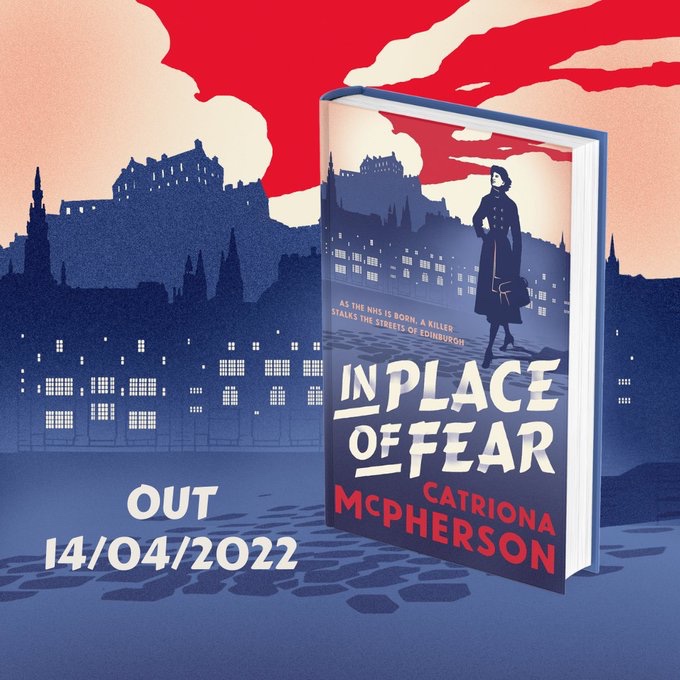
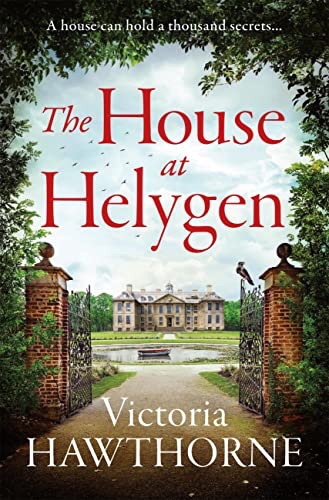
The House at Helygen by Victoria Hawthorne

An atmospheric historical suspense novel rich with familial secrets. The House at Helygen is a twisted tale of dark pasts, murderous presents and uncertain futures.

2019

When Henry Fox is found dead in his ancestral home in Cornwall, the police rule it a suicide, but his pregnant wife, Josie, believes it was murder. Desperate to make sense of Henry’s death she embarks on a quest to learn the truth, all under the watchful eyes of Henry’s overbearing mother. Josie soon finds herself wrestling against the dark history of Helygen House and ghosts from the past that refuse to stay buried.

1881

Eliza is the new bride who arrives at Helygen House with excitement at the new life she’s embarked upon. Yet when she meets her new mother-in-law, an icy and forbidding woman, her dreams of a new life are dashed. And when Eliza starts to hear voices in the walls of the house, she begins to fear for her sanity and her life.

Can Josie piece together the past to make sense of her present, or will the secrets of Helygen House and its inhabitants forever remain a mystery?

1881. Harriet and Edmund Fox were the first owners of Helygen House, a country retreat that, as is the usual in moneyed families, has ever since passed down the to the eldest male heir. From the original owners in 1847, it then passed to Eliza and Cassius Fox in 1881. Eliza has to spend a lot of time alone, because Cassius is away looking after his business interests. Eliza starts to feel lonely and misses her family. Not only that, there’s an eerie feeling in the house and Eliza’s is sure she’s heard voices at night and a baby is crying. Eliza daren’t tell anyone as she thinks she might be going mad.

2019: Henry Fox is found dead at his ancestral home in Cornwall. The police are quick to rule out foul play, because it looks to them like suicide. His wife Josie, who is pregnant, won’t believe Henry has killed himself. Yet his mother Alice is satisfied with the suicide verdict. Josie finds it difficult to deal with this woman, who has always held herself above Josie, as if she wasn’t good enough to be part of the family. She knows how excited Henry was about becoming a father, they had spent so much time getting their apartment renovated and even had plans to start a business together at the house. Something isn’t right and even through her grief Josie is absolutely determined to find the truth. As far as she’s concerned there’s a murderer somewhere at Helygen. Her mother-in-law’s attitude hasn’t helped Josie settle, but she has to admit the atmosphere has always been strange. There’s a strange feeling she can’t place, a haunting perhaps?

I enjoy dual timelines and this is a triple as we alternate between the 1840’s, the 1880’s and the present. It’s important that each timeline is equally interesting so it doesn’t just feel like a narrative device. Here I think they work. It feels as if Eliza and Josie are working together, even though they’re separated by centuries. Both are convinced that Helygen House has a dark past, that still lingers within the walls. The many tragic deaths over the years are starting to look sinister, even if it is just the eerie sensation and the voices driving occupants towards madness. There are enough family secrets to keep the tale moving forward and there is a continuous feeling of suspense to keep the reader wanting one more chapter. I loved the added theme of motherhood and how it might feel to be a new mum in a house like this one, where it really can’t help when sleeplessness and night feeds are brought into the mix. The place feels suitably Gothic whichever timeline you’re in and from the start I believed in this world completely. It does keep the reader guessing and I found myself wanting to know if the storyline resolved itself for both women. It was also interesting to add in the question of women’s rights in past centuries and compare it to the present day. A great, suspenseful and spooky novel with the gorgeous backdrop of Cornwall.

Published 14th April 2022 Quercus

Meet The Author


Victoria Hawthorne is a pseudonym of bestselling psychological suspense author Vikki Patis. She writes atmospheric historical suspense rich with familial secrets and strong female protagonists. THE HOUSE AT HELYGEN will be published in April 2022 by Quercus.

Posted in Publisher Proof

Sunday Spotlight! Autumn Fiction: Fantasy, Magic and all Things Spooky.

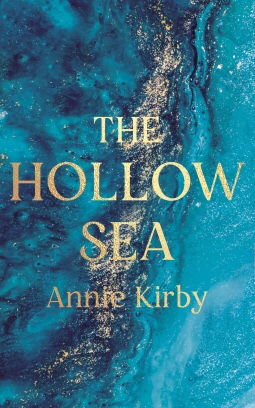
I have to say this sounds like an incredible debut. It’s more of a monstrous fantasy than a spooky, Halloween type book. The story goes that, many years ago, the remote North Atlantic archipelago of St Hia was home to a monster. Her name was Thordis, and she had been adored. But when she was unable to provide her husband with a child, he sought one elsewhere – and Thordis was driven to a terrible act, before disappearing from her home. Today, lashed by storms and far from the mainland, the islands are dangerous. Many have been lost to a wild stretch of water known as the Hollow Sea.

But to one visitor, it feels like a haven. After several years trying to become a mother, Scottie has made the heart-breaking decision to leave her home and her husband in search of a fresh start. Upon her arrival on St Hia, the islanders warn her against asking questions about Thordis – but Scottie can’t resist the mystery of what happened to the woman whose story became legend.

After years of secrecy, can Scottie unravel Thordis’s story? And how will doing so change her own . . . ? I love this mix of motherhood, infertility and the monstrous. In fact monstrous births hark back to one of the most famous gothic novels; Mary Shelley’s Frankenstein. It sounds like such an ambitious debut and I can’t wait to tell you all about it.

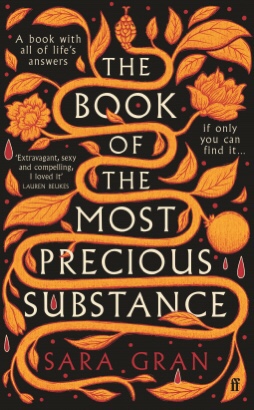
Billed as a horror/ thriller this is one of my favourite themes in fiction – books about books. Rare book dealer Lily Albrecht has just been given a tip-off about The Book of the Most Precious Substance, a 17th century manual rumoured to be the most powerful occult book ever written, if it really exists at all. With some of the wealthiest people in the world willing to pay Lily a fortune to track it down, she embarks on a journey from New York to New Orleans to Munich to Paris. If she finds it, Lily stands to gain more than just money. This could erase the greatest tragedy of her life. But will Lily’s quest help her find some answers, or will she lose everything in search of a ghost?

A book with all of life’s answers, if only you can find it...

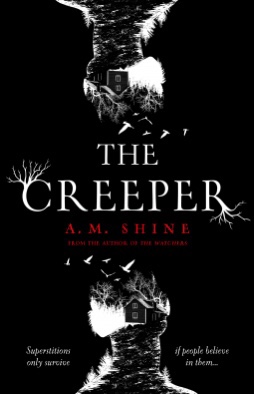
I absolutely loved A.M. Shine’s last novel The Watchers and it had such a killer ending! I chose it as one of my books of the year so my hopes are high for The Creeper.

Superstitions only survive if people believe in them. Renowned academic Dr Sparling seeks help with his project on a remote Irish village. Historical researchers Ben and Chloe are thrilled to be chosen – until they arrive. The village is isolated and forgotten. There is no record of its history, its stories. There is no friendliness from the locals, only wary looks and whispers. The villagers lock down their homes at sundown. It seems a nameless fear stalks the streets, but nobody will talk – nobody except one little girl. Her words strike dread into the hearts of the newcomers. Three times you see him. Each night he comes closer. That night, Ben and Chloe see a sinister figure watching them. He is the Creeper. He is the nameless fear in the night. Stories keep him alive. And nothing will keep him away…

Last Minute Mentions

I’ve just been granted access to these spooky titles so thought I’d give you a quick preview.

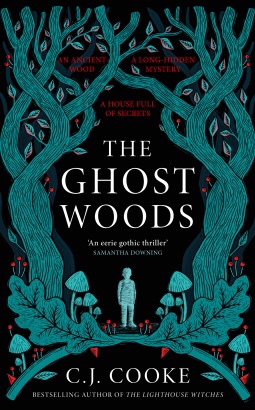
I loved C.J.Cooke’s The Lighthouse Witches, an interesting mix of isolated Scottish location, a history of witches, ghostly apparitions, disappearances and time travel. The Ghost Woods sounds downright spooky.

In the midst of the woods stands a house called Lichen Hall. Even the name starts to conjure up an atmosphere of decay. This place is shrouded in folklore – old stories of ghosts, of witches, of a child who is not quite a child. Now the woods are creeping closer, and something has been unleashed. Pearl Gorham arrives in 1965, one of a string of young women sent to Lichen Hall to give birth. And she soon suspects the proprietors are hiding something. Then she meets the mysterious mother and young boy who live in the grounds – and together they begin to unpick the secrets of this place. As the truth comes to the surface and the darkness moves in, Pearl must rethink everything she knew – and risk what she holds most dear. This sounds like a great mix of the supernatural and women’s history.

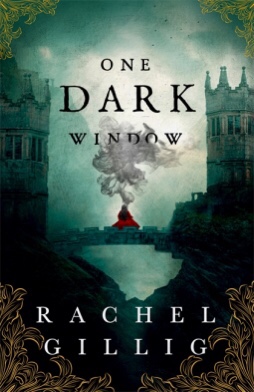
ELSPETH NEEDS A MONSTER. THE MONSTER MIGHT BE HER.

One Dark Window is billed as a gothic fantasy romance. An ancient, mercurial spirit is trapped inside Elspeth Spindle’s head – she calls him the Nightmare. He protects her. He keeps her secrets. But nothing comes for free, especially magic. When Elspeth meets a mysterious highwayman on the forest road, she is thrust into a world of shadow and deception. Together, they embark on a dangerous quest to cure the town of Blunder from the dark magic infecting it. As the stakes heighten and their undeniable attraction intensifies, Elspeth is forced to face her darkest secret yet: the Nightmare is slowly, darkly, taking over her mind. And she might not be able to stop him.

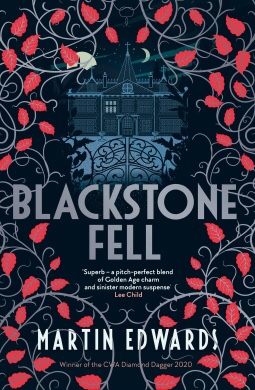
I’m so excited to be on the blog tour for this gothic mystery novel, with such a lush cover I want to frame it.

1930. Nell Fagan is a journalist on the trail of a intriguing and bizarre mystery: in 1606, a man vanished from a locked gatehouse in a remote Yorkshire village, and 300 years later, it happened again. Nell confides in the best sleuth she knows, judge’s daughter Rachel Savernake. Thank goodness she did, because barely a week later Nell disappears, and Rachel is left to put together the pieces of the puzzle. Looking for answers, Rachel travels to lonely Blackstone Fell in Yorkshire, with its eerie moor and sinister tower. With help from her friend Jacob Flint – who’s determined to expose a fraudulent clairvoyant – Rachel will risk her life to bring an end to the disappearances and bring the truth to light. A dazzling mystery peopled by clerics and medics; journalists and judges, Blackstone Fell explores the shadowy borderlands between spiritual and scientific; between sanity and madness; and between virtue and deadly sin. Full of my favourite themes and brimming with all things gothic, this is surely an autumn must—read.

How good do all these picks sound? Look out next Sunday for my look at Historical Fiction and Romance.

Posted in Publisher Proof

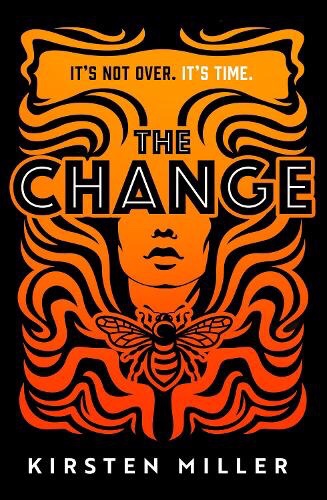
The Change by Kirsten Miller

You have to indulge me with this review, because it’s quite a personal response to Kirsten Miller’s novel. It had to be personal, because as a peri-menopausal woman, I fell in love with the idea of a latent power that women can tap into at an age when we are often dismissed as ‘past it’. An age I’ve now reached. ‘The Change’ was a whispered word in my family. At my Grandma’s house there was a clear dividing line at the front door, right into the living room for my Grandad and left into the dining room for my Grandma. I was the only granddaughter and I did spend a lot of time with Grandad, but the other room with my two aunties, Grandma and Mum was where secret feminine conversations took place. ‘The Change’ was first overheard when I was just getting used to my periods starting. Older family members were struggling with the symptoms of menopause. Now, thirty years later I’m experiencing symptoms of peri-menopause and I realise we never really had full and frank conversations about it. Starting my periods was traumatic. I was constantly worried about leaking through my clothes, particularly at school. I was embarrassed that sometimes I had to take my bag to the toilet with me from the classroom and I was mortified that to get out of swimming I had to shout out, in front of everyone, that I had my period.

I’d started my period in my first week of secondary school, in the same summer that I broke my back so I went through an enormous amount of change. I felt tied down and I certainly wasn’t the same tree climbing, dog walking tomboy I had been up till now. I’m thinking that menopause is going to have another seismic effect. I’m already finding it difficult to contain symptoms like sweating and hair loss, but I don’t want to lose myself. I love that menopause is starting to be talked about thanks to media celebrities like Davina McCall and I’m trying to be open and honest talking about my experiences with friends. So I was really up for reading a book about women who are moving towards middle age. Women become more interesting as they get older, more confident and full of wisdom and experience. I certainly found that in my friends and in the characters of this book who I fell immediately in love with. They are definitely meant to be a trio.

Nessa: The Seeker
Jo: The Protector
Harriett: The Punisher

Each woman finds herself bestowed with incredible powers. When Nessa is widowed and her daughters leave for college, she’s left alone in her house near the ocean. Finally, she has time and quiet hours to herself, and she hears voices belonging to the dead – who will only speak to her. They’ve possibly always been there, but she’s been too busy with her family’s needs to hear them. Harriett is almost fifty, her marriage and career have imploded, and she hasn’t left her house in months. Her house was the envy of the neighbourhood and graced the cover of magazines, but now it’s overgrown with incredible plants. Harriett realises that her life is far from over – in fact, she’s undergone a stunning metamorphosis.

Jo has spent thirty years at war with her body. The rage that arrived with menopause felt like the last straw – until she discovers she’s able to channel it, but needs to be able to control it too. The trio are guided by voices only Nessa can hear and discover the abandoned body of a teenage girl. The police have already written off the victim. But these women have not. Their own investigations lead them to more bodies and a world of wealth where the rules don’t apply – and the realisation that laws are designed to protect villains, not the vulnerable.So it’s up to these three women to avenge the innocent, and punish the guilty…

The time has come to embrace The Change.

I loved these women, they were powerful, sexy, sassy and deeply committed to their fellow women – dead or alive. Some might call them witches, but isn’t that a man’s name for a woman who won’t be controlled? Harriett is wonderful! She’s unapologetically sexy and partakes of beautiful men or women when she fancies, but doesn’t feel a need to be attached. She lets her garden run riot and has her own methods for dealing with those who complain. I loved her fearlessness and sense of humour. Nessa has a gift that’s past down through the generations, but has laid dormant till now. I loved that Nessa’s situation is a positive spin on the empty nest, although her gift is not one most people would want. I loved her compassion for the girls she sees and her drive to help, to the extent of taking a ghost home with her. Jo’s gift felt like the embodiment of the rage a lot of women feel about the injustices of the world we live in. The author tells us tales about what women face every day: husbands who control their lives; young girls preyed on by their sport’s coach; vibrant and intelligent women overlooked for promotion; creative women having their ideas stolen by men; women excluded from the gent’s club where a group of millionaire men rule the world. These women are determined to speak out, be open about what women’s lives are like and educate other women to speak their truth and feel their power. It’s inspiring and exhilarating.

The mystery of the serial killer is compelling and really keeps you reading. I kept picking this up in every spare moment, wanting to spend time with these women and see where their investigations lead. I really loved the clever way the author took on the concept of serial killer stories while writing one. She addresses the popularity of crime thrillers and true crime podcasts and how they appeal to men. They’re written as if the victims are expendable and the killers get special nicknames as if they are comic book villains. I’ve often thought this about the Yorkshire Ripper. He’s notorious, but I couldn’t tell you a single name of his victims. There is a truth about the world right at the heart of her story. It comes to light when the women involve the police. There are women in the world who matter and there are others who are worthless, both to law enforcement and to the powerful men encountered in this book. They can be dismissed, because they’re sex workers, or drug addicts, or live in poverty. The Yorkshire Ripper’s first victims were possibly sex workers, then a young girl was attacked after walking home from a night out. She was perceived, by law enforcement and the media, as coming from a decent family. Media headlines screamed that the Ripper had taken his first ‘innocent’ victim. The implication being that the other victims deserved their fate. The author really got this message across, but without losing any of the power, the tension or the desperate need to see the killer caught. Finally, I have to say something about magic realism and being a huge fan of Silvia Moreno-Garcia and Alice Hoffman, I’ve been reading some of the best writers in the genre. Miller’s story is so strong and the characters so well constructed, that I never felt a sense of disbelief. I have quite a collection of magic realism starting with my teenage love for Fay Weldon’s Life and Loves of a She-Devil and Angela Carter’s short stories. This book can easily sit next to my favourites. It really is that good.

Meet The Author

Kirsten Miller grew up in a small town in the mountains of North Carolina. At seventeen, she hit the road and moved to New York City, where she lives to this day. Kirsten’s first adult novel, The Change, is a feel good feminist revenge fantasy–with witches. The Change is a Good Morning America Book Club pick for May 2022. Kirsten also the author of over a dozen middle grade and YA novels, including the acclaimed Kiki Strike books, which tell the tale of the delinquent girl geniuses who keep Manhattan safe, and How to Lead a Life of Crime. She is not the Kirsten Miller who wrote All That Is Left (which appears on the list of the books she’s written), but she assumes that Kirsten is lovely and talented.

Posted in Netgalley

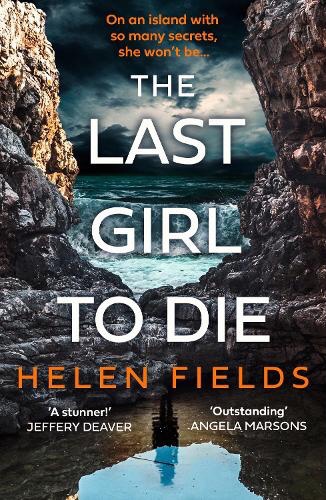
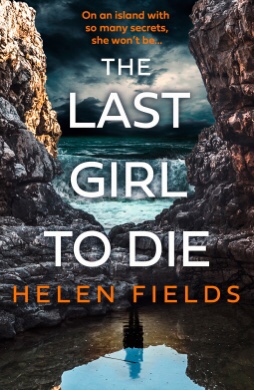
The Last Girl to Die by Helen Fields.

This book is one of my picks for the autumn and I really did pick an absolute cracker of a crime novel. It’s chilling, atmospheric and incredibly clever, especially at weaving the setting into the story. I read this straight through and halfway through my binge read I had to look it up and check that it really was a stand-alone novel. Sadie Levesque is a compelling central character: brave, resourceful, determined, intelligent and ever so slightly impulsive. I could easily imagine her as the backbone of a great crime series. Sadie is a private investigator based in Canada where she’s about to be the birth partner for her sister. She has time to fit in one last job, which takes her to Scotland and the atmospheric island of Mull. The Clark family recently moved to Mull from the United States to start a new life, but their plans have been derailed by the disappearance of their seventeen year old daughter Adriana. With her American accent and dark Latino looks, Adriana caused a stir among the teenagers of Mull and was very noticeable in her job at the local pub. Her desperate parents feel the local police force are doing very little to look for their daughter, possibly because they are outsiders. When Sadie finds the girl’s body while searching local teen hang outs, the police become hostile. Adriana has been drowned. The killer has sexually assaulted her, adorned her with a seaweed crown and filled her mouth and throat full of sand. Sadie’s immediate thought is she’s been silenced. Without police cooperation, Sadie must find the killer and is drawn into a mix of local folklore, witches, a misogynistic priest and a community that looks after it’s own. Will Adriana be the last girl to die?

The island is definitely a character in it’s own right here. It even narrates it’s own chapters. Nature is in every part of the book, starting with Sadie who seems more comfortable outside than in. She feels more powerful out there, sleeping in a tent and lurking around in the dead of night, observing the islanders. For the island’s teenagers, the beaches and stone circles become the backdrop for their vigils and parties. Of course Adriana is also found outdoors, in a cave adorned with the plants and products of the sea. There’s something folkloric about the way she is posed and especially the sand, which Sadie finds out is part of ancient lore dating back to the 16th Century if not further. It is part of a ritualistic killing, if her mouth is full of sand she can’t utter the truth about what or who killed her. It is a method used by witches to silence those who might identify them. The outdoors and the sea is in these people’s DNA for generations, many are fishermen and one of the island’s legends is of a ship from Spain that was wrecked on the coast of Mull. On board was a Spanish princess who had dreamed of a beautiful man on a Scottish island and saw him as they reached the shore at Tobermory and fell instantly in love. The man’s wife saw the look in the princess’s eyes and called on the Mull Witch who destroyed the vessel, killing all 300 souls on board. History tells us that the boat was part of the armada and that islanders sank the vessel, a terrible end for the sailors who were seeking help. These deaths, from the 16th century to the present leave their mark. The island is a living thing, we are told, it feels everything. I loved the poetic way the author writes in the island’s sections:

‘Sea deaths bring furious tides. The waves slap the sides of boats, knocking the sailors from port to starboard, and the fish thrash so hard they break nets. Shells smash, scattering vicious fragments on beaches to slice careless feet. Salty tears form an ocean.’

It’s following her instinct and looking into the death of a young woman years before that first sparks the idea of witchcraft. Flora Kydd’s father laments in the village pub that his daughter’s death was glossed over by the police. Her killer had never been found. Sadie finds the Kydd’s house covered with posies of flowers to deter witchcraft and dark symbols burned into the beams to ward off the evil eye. I loved the way the author paired witchcraft with feminism, showing a deep seated misogyny in some of the islands men, particularly the local priest. Sadie stumbles across a group of women in a forest clearing, late at night. They are naked, but covered in clay, dancing around a fire. Their leader, Hilda, talks to Sadie at length dismissing the idea of darker witchcraft and claiming to be a women’s group, offering support and learning the old healing ways of nature. They protest at a community meeting where women have been told they have a curfew and should stay indoors after dark. Hilda has a strong position on this, maybe men should stop killing women. Sadie’s thoughts are going in two different directions. Could Adriana have been killed by unscrupulous members of Hilda’s group who were pressuring her to join in? Or had she become one of the women dancing around the fire and been killed because she was deemed a witch? There are some twists to the final stages that came as a huge shock. I love to be surprised and I really was here, with my heart sat in my throat at times. Could the truth be more prosaic than the legends? That men kill and could use the excuse of ancient folklore and witchcraft to cover their tracks. I was torn between this more logical explanation and the sense of an ancient evil at play on this remote and wild island. If anyone knows, the island does.
Published by Avon 1st September 2022.

Meet the Author.

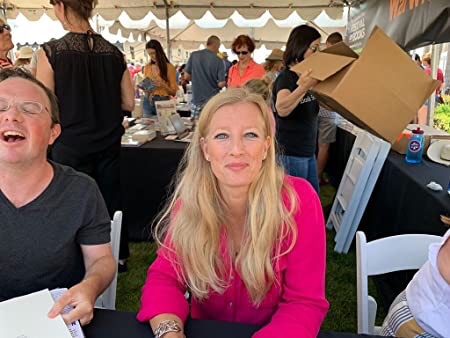
Helen is a former criminal and family law barrister. Every book in her brilliant Callanach series has claimed an Amazon #1 bestseller flag. The last book in the series, ‘Perfect Kill’ was longlisted for the Crime Writers Association Ian Fleming Steel Dagger in 2020, and others have been longlisted for the McIlvanney Prize, Scottish crime novel of the year. Helen also writes as HS Chandler, and has released legal thriller ‘Degrees of Guilt’. Her audio book ‘Perfect Crime’ knocked Michelle Obama off the #1 spot. In 2020 Perfect Remains was shortlisted for the Bronze Bat, Dutch debut crime novel of the year. Now translated into 16 languages, and also selling in the USA, Canada & Australasia, Helen’s books have won global recognition. Her historical thriller ‘These Lost & Broken Things’ came out in May 2020. Her first standalone thriller – The Shadow Man – from HarperColllins was published on February 4, 2021. She currently commutes between West Sussex, Scotland and California. She lives with her husband and three children. Helen can be found on Twitter @Helen_Fields for up to date news and information or at http://www.helenfields.co.uk.

Posted in Netgalley

Small Angels by Lauren Owen

I love a gothic novel, something I put down to my first reading of Jane Eyre. Being only ten years old I read it as a ghost story, full of horrors like the Red Room and the haunted ghost-like creature stalking the corridors of Thornfield Hall, setting fire to Rochester’s bed and rending Jane’s wedding veil in two. So I picked this from the NetGalley shelves, my brain already turning towards the cooler air of September and the dark nights of the autumn. As it is I read it in the middle of a heatwave, but it still managed to send the odd chill up my spine. Chloe and Sam are getting married at Small Angels, a quaint little church in a wooded area with nearby Tithe Barn for their reception. The venue is situated near to Sam’s childhood village and they are the first couple to be married there. The owner has given them a key and they have a few days up to the wedding day to clean the dusty church and decorate both buildings. They’re staying at the Albatross, the village pub, and on the first night they gather to have a drink with their guests among the locals. One local man, Brian, approaches the couple to tell them a story about Small Angels that might make them rethink their plans. Others are more reticent, they don’t want Brian to tell the tale and ruin the couple’s big day. What Sam doesn’t know is that the person best placed to tell this tale is his own sister Kate.

We’re told this story from several perspectives and to be honest I did get a little confused at first. The current perspectives are split between Chloe and Kate. However, Kate also goes back to when she was a child and started a friendship with one of the Gonne girls. The Gonnes lived on a farm, close to Small Angels and Mockbeggar – the local woodland. For years they have kept up a ritual of lighting beacons every evening and ringing the church bells once a year, followed by a candlelight vigil overnight. The rest of the village have traditionally left the Gonnes to their lonely rituals, but Kate knows that the story Brian will tell the wedding party, might not be so far fetched. The Gonnes believe they are appeasing the ghost of Harry Child, a vicious and vengeful phantom who wants to keep the wood for his own, but is also very lonely. Kate is shocked to hear that one of the sisters she knew from childhood is living at the farm. Will all the generations of secrets surrounding the village come to light on her brother’s wedding day? Kate questions her brother’s sense in agreeing to hold it at Small Angels, no matter how much Chloe fell in love with it.

Chloe takes up the narrative, as the innocent bystander thrown into this strange village with it’s spooky history. Chloe has been the driving force behind the week’s celebrations and has no idea of the story Brian tells on the Hag Night. She is amazed that Sam has never told her and has thought Kate doesn’t like her because she’s seemed disinterested in their plans. She’s surprised that Kate has committed to helping out this week, not realising that she’s coming to keep an eye on things. The tension in this section is brilliant as we see Chloe sucked in by the legend and looking for local history at the library. She’s confused by the villagers avoidance of the subject, even her own in- laws are reluctant to discuss it. Chloe start to find her sleep disturbed and with Sam called away to work she’s alone at the Albatross. She can’t shake the feeling she’s being watched after taking a walk into the woods. While cleaning the church she hears an animal scratching at the door, then again at night. Has something or someone followed her? I was intrigued as to what it might want from Chloe and whether the wedding would ever happen.

The Gonnes seem to be the key to solving this mystery so I was fascinated with Lucia’s sections of the book, especially those that go back to her childhood. She lives at the farm with her father, her grandparents and three sisters: Elphine, Helena and Ruby. One day while playing, Lucia goes into the woods and finds a small boy to play with. He becomes her secret friend and his name is Harry. With all the adults working on the vines at the farm and keeping up the family rituals, it’s easy for her to slip away unnoticed. Besides she’s the black sheep of the family, Nan calls her Lucia the Bad, so I felt sorry for her and could understand why she was looking for friends. Years later she meets another teenage girl in the woods and is happy to have a second friend, but Harry isn’t so happy. He wants Lucia to himself and she’s never seen him angry. All the rituals in the world won’t satisfy his wrath and Lucia is terrified. What will happen to the Gonne family now?

As we countdown to the wedding the stakes become greater and the author creates a real sense of fear and horror. Whatever force is in the woods, it’s growing stronger by the day. The real cost of the wedding starts to become clear and I loved how the author brought experiences from the past into the present to terrify the wedding party. I had a real sense of my old Jane Eyre fears when Chloe wakes from a nightmare to find a tear in her wedding dress and her veil fashioned into a noose. I really felt the burden of the Gonne family, ostracised by the village and left with the responsibilities of Mockbeggar. Once I’d reached a third of the way in, I was hooked on the mystery in the same way Chloe was, wanting to find out more about the malicious spirit and why he is determined to terrify her. I was also fascinated by the Gonne sisters and why Lucia is the only one left at the farm. I was also interested in how long the locals had kept their heads in the sand, merely speeding up on the road out of the village to evade the woods. You’ll be asking all the same questions and more. This is a really atmospheric, modern, Gothic tale with enough scares that I kept the bedside light on once or twice.

Published by Tinder Press 2nd August 2022

Meet The Author

Lauren Owen is the author of THE QUICK and SMALL ANGELS. She studied at St. Hilda’s College, Oxford, holds an MA in Victorian Literature from Leeds University, and an MA in Creative Writing from the University of East Anglia, where she was awarded the Curtis Brown Prize. In 2017 she completed a PhD in English Literature with a thesis on vampires and the gothic in fiction.

Posted in Netgalley

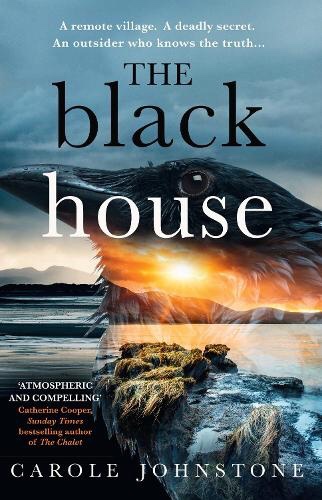
The Blackhouse by Carole Johnstone

I loved this dark thriller from acclaimed author of Mirrorland Carol Johnstone, with its bleak setting, mysterious deaths and Norse folklore. Maggie Mackay is a successful investigative journalist, but has always been held back by a negative inner voice and terrible nightmares. She’s been haunted by the idea that there’s something wrong with her and she can see or sense darkness. She thinks this feeling is linked to her childhood and a small village in the Outer Hebrides called Blairmore. Maggie stayed there with her mother when she was very young and caused a furore when, out of nowhere, she claimed that someone in the village had murdered a man. She left the community in uproar, saying she was really a man called Andrew MacNeil who had lived in the village on the island of Kilmery. Her mother believed and encouraged her claims, but when they returned to the mainland this strange interlude wasn’t referred to again. Now 25, Maggie returns to the island, in search of answers. Mainly, she wants to find out if her claims could possibly have been true, but with her history on the island, Maggie may struggle to get people to talk to her. However, this is an island with few inhabitants, but a wealth of secrets and if Maggie gets too close to the truth she may be in serious danger.

Kilmery is sat across a causeway from Lewis and Harris, and the author makes this incredible place a real character of it’s own. It’s isolated position reinforces the feeling of loneliness that surrounds Maggie. She roams around the island, often alone and there were times she felt like an easy target, especially to someone who knows the terrain better than she does. Shipwrecks litter the coast and the author’s description of a ship coming to harm one stormy night enhances that feeling of danger.

‘It wasn’t the screams he remembered the most, although they crashed to shore inside the howling, furious wind and ricocheted around the high cliffs above the beach for hours. It wasn’t the storm or the roaring, foaming waves that carved great snaking wounds through the wet sand and stole its shape from under his feet.’

For Maggie, the island is changeable and I felt the way it was viewed echoed the journey she’s on through this dark, dangerous investigation to the hint of a possible brighter future. The wind, fog, and storms lashing against the rocks are unnerving, but there are places that Maggie finds peace. At the Oir na Tir standing stones, even with the wind and rain driving against them, Maggie senses their permanence. This is something that won’t be moved and stands like a sentinel, weathering every storm that’s passed over them. This is the kind of permanence Maggie wants in her own mind, a sense of peace that stays despite what life throws at her. Then there’s the meadow, shown to her by Will, one of the locals she befriends.

‘At the bottom of the hill is a vast green meadow stretching as far as the eye can see. It’s gorgeous, dotted with silver-still lochans, gold winter heather, and boulders covered in moss and orange lichen. It opens something inside my chest, precarious and fragile; a sense of longing that I suppose is awe or wonder. At this uncannily beautiful place full of a light and colour so at odds with the bronze desolation of those inland bens and glens […] I can feel the sting of ludicrous tears, and blink them away.’

This is machair, a type of dune grassland formed by sand and broken shells blown over from the beach. In opens up a sense of wonder in Maggie, like the childhood awe we have for Christmas and it’s magic. It’s almost as if this piece of the landscape connects her to the child she was before all of this happened. Can she trust it though?

I loved the link to the supernatural and Norse folklore, particularly the idea of ‘thin places’, something I’ve had a feeling about before. As an avid reader of the Outlander series, this ability to move into a different time or experience a haunting feels synonymous with Scotland. Old fisherman Charlie, who decides to talk to Maggie about the past, describes a thin place as where the space between this and other worlds is the shortest. The chance of seeing, knowing or feeling something from another world is high. There’s superstition within the fishermen, who never say a prayer aboard a boat, but douse it in whiskey and salt or even use burning rags to cleanse every corner of the boat, rather like smudging using sage twigs. It’s the ‘Vándr-varði’ that feel really disturbing, left anonymously outside The Blackhouse, where Maggie is staying. They’re mummified crows, old Norse talismans to guard against evil, but Maggie doesn’t know whether they’ve been left to protect her or whether she’s the evil that needs to be kept at bay. All of this superstition adds to the mystery Maggie is trying to solve, but she wonders whether it’s meant to spook her and warn her off the truth. The tension keeps building and by the time Maggie has a midnight visitor, my heart was racing.

The central mystery is fascinating and makes the book very difficult to put down. Charlie feels like the designated spokesperson for the islanders, he approaches Maggie with an apology for the way they treated her when she was a child and there’s a fatherly feel to the way he talks to her. On one hand I felt he was on Maggie’s side, but I also wondered whether he was a decoy – someone sent to give her just enough information, perhaps to deflect her from the reaching the truth. Other people greet her with outright hostility and I had a lot of admiration for Maggie’s tenacity considering how vulnerable she must feel, staying on the island as a lone woman. Maggie also has a bipolar diagnosis and I thought this was well portrayed by the author, even though it adds another layer of uncertainty – can we trust what Maggie is experiencing? I found Maggie’s narration more compelling than the male narrator, but overall loved the pace and the different perspectives that give us an insight into events back in the 1970’s. There were twists I didn’t expect and the final revelations about the mystery felt satisfying. I love how this author likes to wrong-foot her reader and although this was more gothic than horror, there were parts that were very unsettling and left me listening out for creaks in the dead of night. I came away from it with an uneasy feeling, not about the supernatural aspects, but more about what humans are capable of doing and how isolated communities like this one have the perfect environment in which to plot and keep secrets, in some cases for decades. This cements Carol Johnstone in my mind as an author to look out for and I will be buying a finished copy of this book for my collection.

Published 4th August by Harper Collins UK

Meet the Author

Scottish writer Carole Johnstone’s debut novel, Mirrorland, will be published in spring 2021 by Borough Press/HarperCollins in the UK and Commonwealth and by Scribner/Simon & Schuster in North America. 

Her award-winning short fiction has been reprinted in many annual ‘Best Of’ anthologies in the UK and the US. She has been published by Titan Books, Tor Macmillan, Simon & Schuster, and PS Publishing, and has written Sherlock Holmes stories for Constable & Robinson and Running Press.

Posted in Netgalley, Publisher Proof

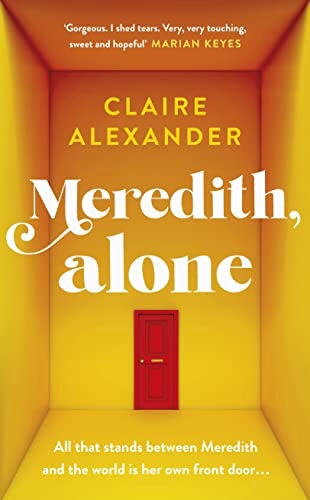
Meredith Alone by Claire Alexander.

This was one of those books where it only took a couple of pages for me to be ‘in’ the author’s world and completely convinced by her main character. Meredith hasn’t left her house for more than a thousand days, but her inner world is so rich and full. She was absolutely real to me and I could easily imagine having a coffee and a catch up with her. We meet her at a crossroads in life. She’s trying to make changes. Her daily life is quite full, she works from home as a writer and between work she bakes, exercises by running up and down the stairs, reads and fills in jigsaws of amazing places from all over the world. The jigsaws are the key. Meredith doesn’t stay inside from choice, just standing outside her front door gives her a wave of rising panic. Meredith feels a terrible fear, her heart starts hammering out of her chest, her throat begins to close and she feels like she’s going to die. However, as she looks at yet another jigsaw of something she’d love to travel and see in person, she becomes determined to live a fuller life. Meredith has sessions with an online counsellor and a new addition to her weekly calendar is a visit from Tom, who is a volunteer with a befriending society. With this support and that of her long time best friend Sadie, can Meredith overcome her fear and come to terms with the events behind her phobia?

The author tells Meredith’s story on a day by day basis, with the amount of days she’s spent indoors at the beginning of each chapter. There are also flashbacks that take us to Meredith’s childhood, living at home with her mum and sharing a room with big sister Fi. Underpinning her childhood is such a well-constructed tale of psychological dysfunction. Of course all families are dysfunctional in their own way, but Meredith’s broke my heart. Her mother is inconsistent in the way she treats her daughter, as Fi later says, their mother was horrible to both of them, but saved her fiercest venom for Meredith. She would insult her youngest daughter’s dark hair and withheld medical attention when Meredith developed eczema. She tells her itchy, uncomfortable child that she has faulty genes and it takes Fi to engineer a visit to the GP without their mother knowing. Meredith can remember happy times or at least times where she felt safe, such as a memory of being freshly bathed and drying off in front of the fire with hot chocolate. Fi and Meredith lie in bed at night conjuring up a future where they leave home and get a flat together, finally leaving their Mum to her bitterness and the alcohol. If it’s true that our self image is made up of those rules our parents tell us about ourselves and life, then Meredith is left with low self-esteem, no sense of security and the sense that she is strange or tainted in some way. It’s a recipe for mental ill health and it’s amazing that Meredith grows into such an intelligent and kind-hearted woman. It’s even more amazing that it’s Meredith who has the strength to leave.

I truly enjoyed the friends Meredith manages to make along the way and the resourceful way she tries to make herself part of the outside world from her living room. She chats in a forum of people struggling with their mental health and Celeste becomes a particular friend, even going as far as visiting Meredith and cementing their friendship in person. I loved how her befriending visits with Tom develop, because at first Meredith is slightly suspicious of his motives and keeps the extremities of her condition to herself. They have a drink together and stay in the kitchen doing one of her jigsaws, but soon they’re baking together and the relationship is becoming more of a two way street. Less befriending and more of an actual friendship. They share and Meredith realises that other people around her struggle too in their own ways. She even strikes up a friendship with a little boy who comes to ask if she wants her car washed. The upsurge of positivity in her current life is exhilarating to read, but it’s also necessary because I knew that I was also getting closer to finding out what had brought Meredith home one day, close her door and not go out again. Claire Alexander balances this beautifully and where many authors might have gone for the schmaltzy ending, she doesn’t. She keeps it realistic and in doing so made me aware of everything that Meredith has had going for her all along. She’s so self-aware, independent and knows who she is. Above all, even as she starts to overcome her demons she’s determined to do it on her own two feet. She appreciates support, but gives it as well. She doesn’t want to become dependent on an emotional crutch. Meredith is perfectly ok. Alone.

Published by Penguin 9th June 2022

Meet the Author

Claire Alexander lives on the west coast of Scotland with her husband and children. She has written for The Washington Post, The Independent, The Huffington Post and Glamour. In 2019, one of her essays was published in the award-winning literary anthology We Got This: Solo Mom Stories of Grit, Heart, and Humor. When she’s not writing or parenting, she’s on her paddle board, thinking about her next book.

Posted in Netgalley

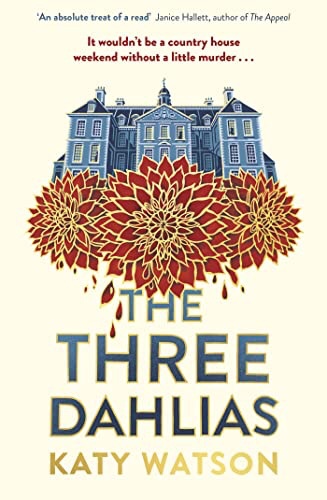
The Three Dahlias by Katy Watson

Dahlia Lively is the redoubtable heroine of a long series of books by crime author Lettuce Davenport. Over the years she has been portrayed on the big and small screen by two actresses Rosalind and Caro, both of whom were well loved. Our novel takes place at a Dahlia Lively convention, held at a stately home called Aldemere, the home of the Davenport family for generations. In fact, Lettuce wrote some of her novels in the study. Now it is home to her nephew Hugh Davenport, his wife Isobel and his stepdaughter Juliette. This is the first time the convention has taken place at Aldemere and VIP attendees have paid to stay in the house for the weekend. In an amazing coup for the convention, organiser Marcus has secured all the Dahlias including Hollywood actress Posy Starling who is about to start filming a 21st Century version of the books. Posy was a child star who became the enfant terrible of the tabloids as she grew up in the glare of publicity. With addiction and criminal convictions behind her, she wouldn’t be everyone’s choice for Dahlia – rather like casting Lindsey Lohan in a young Miss Marple series. Posy is hoping this movie will erase her previous bad girl status and industry insiders will start to take her seriously. With Aldemere House needing repair and money running out, Posy isn’t the only person depending on this film. The Davenport family are getting desperate and are selling heirlooms to stay afloat as Aldemere starts to look a little threadbare. Staying at Lettuce Davenport’s home is an immersive experience, so when murder becomes part of their eleven course dinner many people aren’t surprised, but this is no act and that means one of them is a murderer.

There are so many secrets flying around at Aldemere, you’d need a Dahlia Lively to keep track. Luckily we have three. I enjoyed all three characters and we see the action in three separate sections through their eyes. I felt for Posy who has really been thrown in at the deep end this weekend. Dahlia fans are obsessive and know every detail about their favourite literary character and her creator. Posy is coming into this completely blind and has only just starting reading the books. The film makers have given this adaptation a reboot, casting Posy against type and casting Kit, a young Black British actor, as her police sidekick Johnnie. Traditionalist are complaining, but Rosalind and Caro can see that perhaps each generation needs it’s own Dahlia. Besides, keeping the character in the limelight keeps the royalties coming in for them. I thought Posy really thrived as these two strong women believed in her and almost became Dahlia in front of their eyes as the women embark on some amateur sleuthing of their own. Each woman has also received a blackmail note, because each woman has their own secrets. Rosalind was older and wiser than the other two, really able to sit back and sift through the evidence in her mind until a solution presents itself. Rosalind also has the strongest links with the Davenport family, having dated Hugh before he married Isobel. I felt Rosalind’s sadness and loneliness, but also her confusion that he chose to marry someone else after what they felt for each other. It’s a question she’s never been able to ask, but now she might have to. She regrets staying quiet and wishes she’d been more like Caro who set fire to her ex-husband’s tie – while he was still wearing it. Caro is the firecracker and the driving force behind the Dahlia’s investigative efforts. She likes the centre of attention and relishes the role of interrogator so that she can take centre stage at the end and unmasks a murderer. I did feel like she was playing a role though, and aside from knowing she was married to Annie I didn’t feel we got fully under her skin.

The mystery itself is clever and labyrinthine, at times I started to lose my way with who was where and when. That possibly says more about my brain than the plot. There wasn’t just the murder to solve but lots of smaller mysteries like who the blackmailer was, who had stolen Lettuce’s jewelled loupe from the study and who was making the creepy little dolls left behind to signal the next victim. I loved the dolls, but other than that I never felt this was a creepy or violent murder mystery. It’s more of a cosy puzzle and potentially good Sunday evening viewing on TV. I loved the odd couple who had come to the convention for their 25th wedding anniversary and knew everything there was to know about Dahlia. There was something sweet, but slightly obsessive about them that was fun. I loved the quirky elements of the house too – such as Posy’s room, named the ‘China Room’ for it’s very famous blue and white patterned wall paper that featured in one of the books. We never find out exactly what the wall paper does, but that makes it more scary. I also thought the Murder Spiral was incredible, a garden planted with poisonous specimens featured in Lettuce’s writings and giving her the title ‘Princess of Poison’. It feels wrong to say a murder mystery is fun, but this one was. With nostalgia, vintage fashion, a quirky old house and three formidable heroines this was a clever and well-constructed read with an affectionate nod to the golden age of detective fiction.

Published by Constable on 21st July 2022

Meet the Author

Growing up in a family of murder mystery addicts, Katy learned early to look for means, motive and opportunity.

After studying English Literature – with a sideline in crime fiction – at Lancaster University, she set about teaching herself to write her own stories, while also experiencing enough of the world to have things to write about.

Two careers, a lot of airmiles, one husband, two children, three houses and forty five published books for children and adults later, lockdown finally gave her the means, motive and opportunity to create her own murder mystery – with the aid of her scientist husband’s worryingly thorough knowledge of poisons.

The Three Dahlias is the result.

Posted in Netgalley

The Ruins by Phoebe Wynne

At about 40% into the kindle version of this book it started to become very uncomfortable reading. I’d no idea where it was going to go and I wasn’t sure if I wanted to be along for the ride. I was glad I stayed with it, because of the truth it shows about the effects of trauma. They are life long. Now I’m finding it very difficult to review in my usual way. It felt like reading a client’s journal work, the sort I might ask them to write as part of their counselling journey. There was something prurient about reading Ruby’s account, because it was so intimate and harrowing who could gain pleasure from reading it? Perhaps this is exactly the effect that Phoebe Wynne was hoping to evoke in the reader? Not all reading is pleasurable, sometimes it has a different purpose. To educate, to shock, to show people they are not alone in their experience. In the author’s first novel Madame we were introduced to some of the same themes: the super rich who are above the law and practice exploitation like a religion; young teenage girls being groomed to become Stepford wives to the millionaire class; a creepy gothic school where the girls are educated; the complicity of women in this continuous cycle. Yet with that book the creepy undertones suggested a supernatural element and the malice of some of the pupils was just enough for dislike to creep in. Both help us look past the true horror of what is going on. Once I’d finished the book I felt like I’d glimpsed behind life’s curtain to see the decadent and corrupt inner workings of society. This book felt different. The girls were younger, the setting perhaps more realistic, so the flashbacks to what should have been a blissful summer for three girls at a French château, felt claustrophobic, exploitative and very dark indeed.

Ruby and her family are spending the summer at their Château in France, as usual they are joined by her father’s two best friends; Harley and Angus, with his daughter Imogen. However, added to their party this year are the Fullers and their daughter Annie, plus a woman called Georgina and her teenage daughter Ned (Edwina). Their normal equilibrium is disturbed immediately when one of the Fullers drives back to the château after a few drinks and hits a child in the village. With their combined power and influence, the men ‘handle’ the problem, but Mrs Fuller is not so easily silenced. Was she driving or is she reacting to her husband’s callous disregard for life? Whatever the reason she returns to the château screaming and crying. She has to be sedated and removed back to England as soon as possible. From there the holiday descends into decadence – heavy drinking becomes the norm, little jibes and full blown arguments ensue.

Make no mistake these men are in charge and however they choose to behave, no one will rebuke them. The author creates a sense of powerlessness in the women of the party, from the hysterical Mrs Fuller to the passivity of Ruby’s mum. Within this patriarchy, women are policing the borders. Whether it’s because they believe in the system or because they are keeping quiet to stay safe, every woman here is reacting to male dominance. Ruby’s mum is a walking list of instructions – keep up your flute practice, stay quiet at the table, don’t ask questions and above all don’t read books. Ruby’s love of Agatha Christie is frowned upon by the men and that disapproval is acted on by her mother who eventually stops her. At first her reading is tolerated and admired by Angus. Harley cruelly ruins the end of Murder on the Orient Express, making the point that reading fiction is not the best use of Ruby’s time. Then a seemingly kind birthday present of Death on the Nile becomes tainted – it’s intentions called into question by later events. Events that suggest someone might have been using her love of reading as a way to groom this young girl. Then eventually, the book becomes part of a terrible traumatic memory. I don’t have any personal experience of what Ruby and Imogen go through that summer, but it’s still shocking to read. It was the neglect that bothered me most, the fact that none of these mothers, except perhaps Ned’s mother Georgina, are on their daughter’s side. Not only do they seem curiously detached from how their husbands behave – until it’s in front of other people – they don’t intervene with their daughters, spend time with them or speak up when they are treated badly. Their silence makes them complicit. As a reader I felt powerless to stop what was happening.

In between the flashes of that summer we follow another trip to France, many years later, with Mrs Cosgrove. She’s come to visit the château that’s for sale along with the coast, the venue of childhood memories and events that still haunt her today. Some locals seem to recognise her but she denies being here before, claiming to be taking a holiday. Yet Mrs Cosgrove is jumpy, looking out for particular cars and appearing frightened when two men appear also claiming a link to the château. Does this place and it’s memories still have power over her? Or is she hoping to finally breathe, so that what happened here is no longer such an influence on her life? She might not be the only one who has ghosts to lay here. I found the mood of these sections very different from the tension and seedy atmosphere of the past. Mrs Cosgrove is tense, but curiously I wasn’t even though her story takes us back into the truth of that summer. Maybe because I knew the worst had already happened. Maybe because the after effects of trauma are something I’m more used to, where I have some power to help. Considering the scandals that haunt the headlines these days, whether it’s Harvey Weinstein, Jimmy Saville, Jeffrey Epstein and Ghislaine Maxwell, no one can be surprised by a constructed reality in which the rich and entitled behave as if anything they want they can take. Perhaps my reluctance to read about it says a lot about why these abusers were free to commit crimes against those less powerful for so long – no one wants to face the reality that people can and do act this way. The men in this novel are grotesque, we want to think of them as monsters in order to distance them from ourselves, but sadly they are not. The author wants us to see and not look away, otherwise we are complicit too. In the blurb, Phoebe Wynne says that very little is made up and with my twenty years experience of working in mental health I sadly confirm that childhood abuse is more common than most realise. Perhaps my struggle with reading it is because I’ve seen what abuse does to people and witnessing the effects of trauma is hard to forget. The author also says she wrote the book so that it might ‘provide some consolation for the darkest moments of female experience’ and I truly hope it does that.

Meet the Author

Phoebe Wynne worked in education for eight years, teaching Classics in the UK and English Language and Literature in Paris. She left the classroom to focus on her writing, and went on to hone her craft in Los Angeles and in London. She is both British and French, and currently spends her time between France and England.‘Madam’ is her debut novel, and ‘The Ruins’ is her second.

Posted in Netgalley

The Love of My Life by Rosie Walsh

This is only Rosie Walsh’s second novel, but she’s established herself as one of those authors. Authors who draw you in, leave you wondering what the hell is going on, then pull the rug from under you by turning everything on it’s head. She’s also brilliant at building complex characters, the sort that stay with you. I know that Emma will stay with me for a long time. Emma is an academic, married to Leo and mum to three year old Ruby. Her field of study is the creatures that are brought in by the tide and then swept out again, her claim to fame was finding a new mutation of a Japanese crab. This took her through her masters and eventually resulted in a TV series. Leo adores Emma and the feeling is mutual, but things have been tough lately as Emma has had cancer. Leo is an obituary writer at a newspaper and because Emma was a TV personality the department was writing a ‘stock’ – an obituary they keep on file just in case. Leo asks if he can add some notes that he’d been writing and it’s here that Leo notices something wrong. Emma didn’t graduate from the university she said she did. It’s a minor thing, but along with a lot of messages from very odd male fans and her ‘disappearing times’ when she takes herself away to get her head straight, Leo’s mind is running through hundreds of scenarios. He can’t believe Emma would have an affair, but it’s the simplest explanation. He keeps digging and will have to confront her with what he’s found. Emma is becoming anxious, especially when he starts asking questions. How can she convince him that the life they’ve had together and the love she has for him is true? When everything else has been a lie.

I don’t know any other author who so beautifully combines a tender love story with aspects of a domestic thriller. Usually doubt is cast on the central relationship to such a degree that the reader stops rooting for them. Here I was really confused, because I believed in Leo and Emma. Each character felt so real and they were easy and comfortable together. When we flashed back to their marriage proposal it was probably the wrong moment, rushed and definitely not Insta-ready, but it was touching and honest. I really felt Emma’s eagerness to be with Leo. I couldn’t believe she would then have an affair, but the evidence did point that way. As the truth started to come out I felt so emotional for this young woman, who really had no one left to help her make good choices once she’d lost both parents. No one is harder on Emma than she is on herself and it was sometimes sad and painful to be in her head. I thought the author used the landscape beautifully and knowing Alnmouth well, I could see how it’s cottages and incredible view of the sea would soothe the mind. Although I’ve also been therein the midst of a storm and as the waves lashed against the rocks and driving rain set in, it was very inhospitable. I think this shows the extremes of Emma’s mood as she’s gone through her life, dealing with very deep lows and then sunny, enthusiastic highs.

Her house in Hampstead Heath, which was her grandmother’s, gives us some indication of how her mind feels. She’s never sorted through her grandmother’s things, so is living a new life cluttered with reminders of the past. She feels safe there, it’s possibly the only place she ever has. Leo is coming from a solid background. I loved his relationship with his brother and it’s likely he’s never felt truly lost and alone. Rosie Walsh has created a very rare novel and engrossing novel. So much so that every time I was away from Leo and Emma’s story I longed to back home with my book. She’s packed her book full of twists and turns, but with so much tenderness and love it never fully veered into domestic noir. Despite her secrets and lies, I never stopped wanting Emma to be with Leo and her little girl. I came away feeling that we never truly know another person’s journey, but we can empathise and try to understand. Emma’s mistake was thinking Leo wouldn’t love her if he knew the truth, but maybe she has underestimated the depth of that love.

Published on 23rd June 2022 by Mantle

Meet The Author

Rosie Walsh is the internationally bestselling author of two novels, the global smash hit THE MAN WHO DIDN’T CALL, and – new for 2022 – THE LOVE OF MY LIFE, a heart-wrenching, keep-you-up-all-night emotional thriller, which was an instant New York Times bestseller and stayed in the German top ten for several weeks. 

Rosie Walsh lives on a medieval farm in Devon, UK, with her partner and two young children, after years living and travelling all over the world as a documentary producer and writer. 

The Man Who Didn’t Call (UK) / Ghosted (US) was her first book under her own name, and was published around the world in 2018, going on to be a multimillion bestseller. 

Prior to writing under her own name she wrote four romantic comedies under the pseudonym Lucy Robinson. When she isn’t parenting or writing, Rosie can be found walking on Dartmoor, growing vegetables and throwing raves for adults and children in leaking barns.