Posted in Netgalley

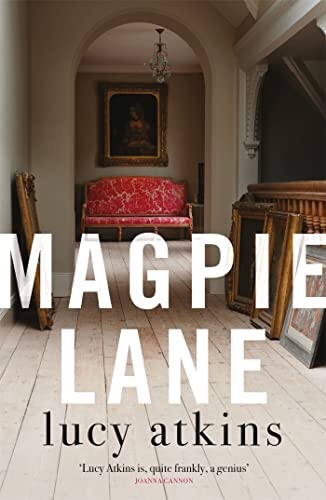
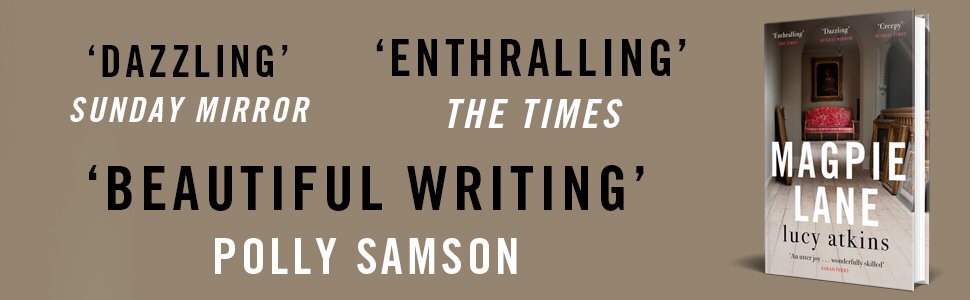
Magpie Lane by Lucy Atkins

One of my April reads is Lucy Atkins’s new novel Windmill Hill, so I thought it was a good opportunity to talk about one of her previous novels. I have been a fan since her very first novel The Missing One and we read it as a book club choice. I have enjoyed all Lucy Atkins other novels and it seems they get better and better. I enjoyed the character of Dee and became drawn in by her straight away. There’s a sense that she doesn’t really belong anywhere, but she is curiously at ease with who she is. Something of an outsider in Oxford, she doesn’t belong to any of the colleges but is one of those invisible people who provide services to those who do belong. Dee is a nanny and makes a very disturbing observation about the academics who use her services – when desperate, people will let a near stranger look after their child. The new master and his wife, Nick and Mariah, hire her after a chance meeting on a bridge early one morning and one hasty conversation. They do not ask for references or do a police check. If they had, they would have found that Dee has a criminal record. It is no coincidence that Mariah restores old wallpaper. She is adept at papering over cracks. She tells Dee that Felicity is selectively mute, that she met Nick after his wife died from a longstanding illness and that they both did everything to get Felicity talking again. There us a stifling atmosphere in the lodgings and the author carefully links the house with the people in it – with both there is a long history being erased and retold through renovation or retelling. Is the start of this couple’s relationship as simple as they portray? Mariah’s chirpy and wholesome exterior might, just like the new decor, hint at a darker, more murky interior world. The house’s history is slowly being unearthed by Linklater, a social historian hired by Nick. It shows how out of step these two characters might really be. Nick wants to disturb and discover the chequered past of their new home, while Mariah is whitewashing it. Linklater discovers family dramas, haunted occupants and a possible answer for the ‘priest’s hole’ in Felicity’s bedroom that may be even more malign than the original poisonous Victorian wallpaper.

Felicity isn’t just mute. She is a very distressed child, seemingly obedient but full of simmering anger and confusion. She roams the house while still asleep, makes patterns on the floor with her collection of bones and artefacts, and seems to be drawn by the ‘priest’s hole’ in the middle of the night. She slowly starts to speak to Dee, but also makes a surprising connection to Linklater when the three of them start to take tea together after school. They are a group of misfits, finding each other and developing trust. There seems to be a distinction made between those who appear genuinely themselves, however odd they may seem, and those who are putting on an act; a natural family forming where there is a forced family unit at home. It has to be significant that the one person Felicity never speaks to at all is Mariah. Dee becomes more than a passing childcare worker, she is deeply involved with this little girl. I like the way the author foreshadows this relationship as Dee sees Felicity for the first time and notices her curls, just like those of another child she once knew. Is this another nanny’s role or is she giving hints of a past we don’t know about? If Dee once had a family what happened to them? This is where we come to discussing Dee’s role as narrator and whether she is not as candid with us as she seems. I kept waiting for a terrible secret to emerge and for Dee’s reaction to being exposed. The tension is ratcheted up when we learn that Felicity has gone missing and the narrative passes back and forth between the present day and what has happened in these character’s pasts.

I enjoyed the ending, although I raced there a little too quickly. I was desperately hoping for a happy ending for both Felicity and Dee. Watching Mariah and Nick’s ‘perfect’ life completely implode was oddly satisfying. With her perfectly calm exterior ravaged by the birth of her first child, Mariah struggles to function normally and seems haunted by Felicity’s mother Ana. She starts to spend days in pyjamas while coping with a colicky baby and this break in her usually ordered world threatens to break her. I was left feeling that Nick and Mariah didn’t deserve Felicity, but was that what the narrator wanted me to feel. I was left wondering whether I’d been manipulated all along. As the police wondered and questioned, the reader does the same. Is Felicity as disturbed as Dee would have us believe? Or was Nick right in his assessment that it was Dee’s presence, her inability to sleep, her encouragement in discovering something supernatural and the constant buckets left in the kitchen to bleach animal skulls that are to blame? Finally, I liked the way maths was used as a theme in their interactions; Dee’s proof is an example of how something seemingly factual and definite can still be manipulated. A maths problem can have two correct answers. It simply has to be worked out differently. Which version do we trust? This is an intelligent, psychological, thriller that keeps you guessing long after reading, Lucy Atkins has done it again! A great read.

Meet the Author

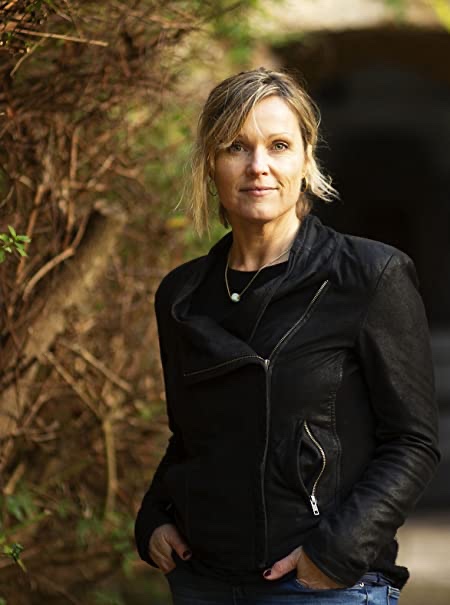
Lucy Atkins is an award-winning British author and journalist. Her latest novel, MAGPIE LANE, was picked as a ‘best book of 2020’ by BBC Radio 4’s Open Book, the GUARDIAN, the TELEGRAPH and GOOD HOUSEKEEPING MAGAZINE. Her other novels are: THE NIGHT VISITOR (which has been optioned for TV), THE MISSING ONE and THE OTHER CHILD. Lucy is book critic for The Sunday Times and has written for publications including the Guardian, the Telegraph, the Times, and many magazines. She teaches on the creative writing Masters degree at the University of Oxford. 

She has written several non-fiction books including the Amazon #1 parenting guide, FIRST TIME PARENT (Collins). 

For news, events and offers see http://www.lucyatkins.com

Follow Lucy on Twitter @lucyatkins Instagram @lucyatkinswriter

Posted in Netgalley, Publisher Proof

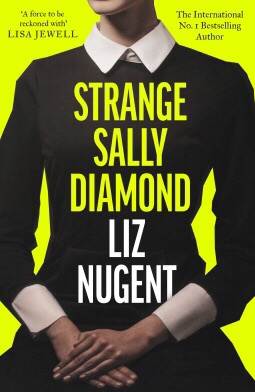
Strange Sally Diamond by Liz Nugent

The first thing I have to say is ‘Wow! What an opening.’ I read the first page then went to find my other half so I could read it to him. He’s one of those people who say ‘just chuck me in a bin bag’ so I thought he’d love it too. Of course it’s horrifying, but I also found it blackly comic and with Irish ancestors myself I can honestly say it’s an Irish trait. We laugh at the story of Mother – my great-grandmother – putting her head in the oven and wondering why it was taking too long. Slowly realising it was an electric oven. Tragic, horrifying, but hilarious at the same time. I felt this all the way through the story of Sally Diamond, a young woman having to negotiate a new life after the death of her incredibly protective father. He was an academic doctor and it turns out Sally was his subject. He leaves Sally letters to read after his death to give her all the information about what to do next. However, Sally can be very literal and by carrying out his verbal wishes to be in a bin bag, it turns out she may have committed a crime. Luckily family friend and GP Angela comes to the rescue, explaining to the police that Sally is ‘different’ she’s been sheltered and her childhood before her adoption was very traumatic. In fact her father left specific instructions in his letters, but as Sally points out he should have labelled the envelope ‘open this as soon as I’ve died’. Sally learns that she was born in terrible circumstances and it’s only chance that saved her. How will Sally cope with the detailed news about her past and how will she integrate into the community and learn how to manage by herself?

I found Sally rather endearing, despite her tendency to ask personal questions and disappearing to play the piano when things get too much. Sally knows that her mother died, in fact she committed suicide after their escape. Sally was born Mary Norton, in a locked extension attached to the home of Connor Geary and his son. Sally’s mother was abducted by Geary and brought back to the specially built annex where he chained her to the radiator. Denise Norton was subjected to all forms of abuse and violence and gave birth to her daughter in captivity. They were only found when a burglar broke into the house and Denise shouted to him ‘I am Denise Norton’ over and over, in the hope he’d tell the authorities. Sally doesn’t remember anything about her earliest years, but when she’s sent a grubby, old teddy in the post she knows instinctively that he’s hers. Sally was adopted by the husband and wife psychologist team who were treating her and her mother after they left hospital. After a short space of time, it became clear that Denise would not recover well and it was decided that in order for her to develop, Mary must be removed from her mother. Tragically, as soon as this happened, Denise committed suicide. Ever since, and with the new name Sally, she has lived an isolated rural life in Ireland. Sally has her quirks: she asks deeply personal questions; she would tear out her hair if upset; she could be extremely violent. As we followed Sally’s journey it started to feel really uplifting and I was so happy for her, finding the ability to live a fuller life would be a real happy ending to the story.

Then the book changes and we’re listening to a boy called Peter from New Zealand, having emigrated from Ireland. I found Peter’s father terrifying, he is a misogynist and incredibly controlling to the extent of telling his son he has a rare disease that means he can’t touch other people. This lie will have terrible consequences, when Peter tries to make connections with others. Slowly a terrifying story emerges about their home in Ireland and the ghost who lived through the wall. Sometimes he’d hear the shrieks and moans from that room. When Peter was left to be looked after by the ghost, something terrible happened and the trauma has stayed with him for life. I felt so moved by Peter’s story, but terrified by what he could become. I felt as if the loss of his friend Rangi that was the turning point. Peter can also be extremely violent and even though he is assailed by guilt afterwards, the damage is done. I hoped and hoped for a point of redemption for him. When his father starts to build a barn and look for another victim he has no choice but to be complicit. If something happened to his father, would he able to come clean and let them victim go? Does he ever wonder about what happened to his mother’s family in Ireland?

I was hoping that these two damaged people would get to meet each other. Both of them need family and a sense of where they’re from, even when the truth is awful to comprehend. The author has such a talent for playing with the reader’s emotions, letting us feel for a character then finding out they’ve done something terrible or making us feel sorry for a character we dislike, because of something they’ve experienced. Her characters are always complicated and flawed, but this was the next level. I loved watching Sally start to thrive with the support of those around her. She uses the money she inherits to renovate a cottage closer to the village. She starts to build relationships with her dad’s sister Aunt Christine and her Uncle Mark too. The high point is a lovely party at Sally’s cottage with a bouncy castle for the kids, which she is even persuaded to try herself. Then a stranger from New Zealand turns up at her door and I was riveted to the story from then on to see how this will affect Sally. Can two damaged people console and support each other, or will they drag each other down? We are about to witness the difference of growing up on opposite sides of the wall. This was a fascinating novel, especially if you love psychological thrillers and studying how someone’s start in life contributes to the person they are. I was also fascinated with the idea that those who heal can also hurt. When your adopted child is also your subject, your academic reputation and possibly even your funding, lines become blurred. I desperately wanted a happy ending for Sally because she’d made so much progress but can so much trauma ever be left behind? The author created a character that I was so emotionally invested in, she will definitely stay with me. She’s so complex and nuanced that she felt completely real to me. The book is incredible and is up there with my top reads of this year, it’s one of those that will keep coming back to me until eventually I grab it from the shelf and read it again.

Meet the Author

Liz was born in Dublin in 1967, where she now lives. She has written successfully for soap opera, radio drama, television plays, short stories and animation for children.

Liz’s first novel Unravelling Oliver was published to critical and popular acclaim in March 2014. It quickly became a firm favourite with book clubs and reader’s groups. In November of that year, it went on to win the Ireland AM Crime Novel of the Year at the Bord Gais Energy Book Awards and was long listed for the International Dublin Literature Prize 2016. She was also the winner of the inaugural Jack Harte Bursary provided by the Irish Writers Centre and the Tyrone Guthrie Centre in Dec 2014. Her second novel, Lying in Wait, was published in July 2016 and went straight to number 1 where it remained for seven weeks. Liz won the Monaco Bursary from the Ireland Funds and was Writer in Residence at the Princess Grace Irish Library in Monaco in Sept/Oct 2016. In Nov 2016, Lying in Wait won the prestigious RTE Ryan Tubridy Listener’s Choice prize at the Irish Book Awards.

Aside from writing, Liz has led workshops in writing drama for broadcast, she has produced and managed literary salons and curated literary strands of Arts Festivals. She regularly does public interviews and panel discussions on all aspects of her writing.

Posted in Netgalley

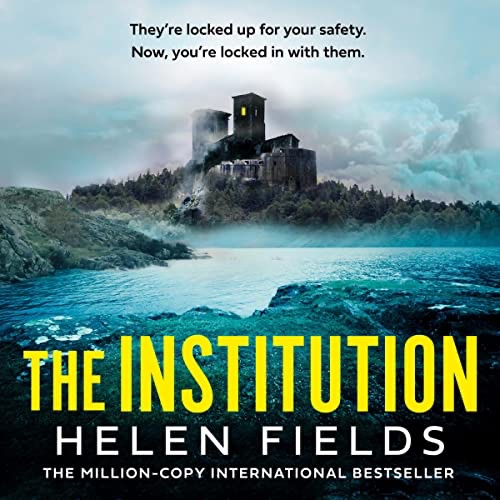
The Institution by Helen Fields.

I was eager to read this having loved her previous novel The Last Girl To Die, so I’ve felt very lucky to be granted early access to it on NetGalley. Our heroine is Dr. Connie Woolwine, a behaviourist and profiler rather than a psychiatrist, she works privately alongside her investigator Brodie. She has access to The Institution to look for a killer within the high security wing. Housed in one of the towers, the wing is known as ‘heaven’ and has six inmates, all of whom are either serial or spree killers. Her cover story is an unusual one. Brodie will go deep undercover as a potential inmate, with Connie as his current therapist. Brodie has been in the millitary and suffers from PTSD amongst other issues, so Connie is there to assess the ward, meet the inmates and decide whether it’s the best place for Brodie to be treated. The truth is a lot more gruesome. A nurse from the ward has been found dead on one of it’s treatment rooms. Tara was restrained and had a rudimentary caesarean performed on her, but was then left to bleed to death. The baby has not been found and the killer could only have been on the unit. With a grieving family waiting for a ransom demand, staff and inmates at the unit have been given a different story about this well-liked member of staff. They are told that Tara will be resting at home for the final stages of her pregnancy. Now Connie is on the clock, desperately trying to find baby Aurora and which one of the killers could have murdered the ward’s most popular nurse in such a brutal way.

Connie seems maverick, with strange methods such as talking to, sniffing and touching Tara’s body. She’s an unusual narrator because I didn’t always feel sure of her. We find out that when she was a young woman she was admitted to a mental health unit after an accident left her mute and doctors couldn’t find a physical cause. She was given ECT and treated by psychiatrists until a new doctor decided to re-scan her brain and found a previously hidden blood clot. Once removed, Connie could speak again. This experience has left it’s mark and it seems very important to her, even when self-disclosing to a patient, that they know she wasn’t really mentally unwell. We’re mainly in Connie’s world with interspersed short chapters on an assessment session, each subject’s name as the title. These sections read like session notes and give us Connie’s views of each inmate. Rubio for example, acts like a baby and wants to be cuddled and nursed. He gave me the creeps, especially when he’s wearing a nappy. The Professor is more on Connie’s level intellectually, but acts very superior. I didn’t feel that the sessions were helping me understand who might have done this. In fact I think I learned more about Connie than the patients. In the meantime, poor Brodie is living with these inmates and has gone through being sedated and restrained by staff. The staff are incredibly suspicious, with orderlies who enjoy their power too much, nurses who seem to resent Connie’s presence and a male doctor who makes a pass at her almost immediately. I kept wondering who would choose to work here, in such a dangerous and bleak place?

I felt it was clever to keep the reader questioning Connie and it wasn’t just her inner world that worried me. There were points in the story where her instincts really concerned me, such as going off alone to very remote places in the building and on the grounds. There was also a major flaw in the plan, in that her investigator is so confined by his role as a patient he can only observe. This really does leave Connie to take on the more dangerous part of physically investigating, but as she’s untrained for this role and potentially more easily overpowered, it left me feeling on edge. Also someone who is thinking ahead of her could use her seemingly erratic behaviour and appearance to make her worst fears comes true. The tension is unrelenting and nowhere is safe, including rooms that have a lock! The claustrophobia is intense and works like a set of Chinese boxes: from the location and the effects of the storm, the compound, the locked building, the high security tower within the whole institution, all the way down to the treatment room and it’s restraints. These layers of confinement did make me uncomfortable and when a character is further confined with drugs or the threat of ECT, it brings it home how powerless patients and the murder victim were. These layers also emphasise the brutality about drugging someone and stealing a baby from the ultimate place of safety, their mother’s womb.

There is a strange fascination in hearing about the inmate’s crimes, mainly because they seem so at odds with the men we encounter through Connie. Her sessions feel slightly strange from a therapy perspective, but of course Connie is not really there to engage in a therapeutic relationship. Unknown to them and the staff, she’s using the session to assess whether they’re behind the crime and I was interested in the ethics of this approach. As disaster strikes and the ward has to be evacuated, the tension jumps up a level with men who are usually in their cells now roaming free. For those left on the ward it becomes a fight for survival, with only a basic knowledge of the inmates to inform them about which ones can be trusted and those who must be avoided. This was an exciting end to the novel and really did keep me gripped to the bitter end, waiting for the perpetrator to admit their role in the murder and kidnap plot. I was biting my nails, worried that Connie wouldn’t find baby Aurora before it was too late. This was an intelligent thriller, full of tension and unexpected twists and turns. It’s cemented my suspicion that Helen Fields really is a must-buy author.

Meet the Author

An international and Amazon #1 best-selling author, Helen is a former criminal and family law barrister. Every book in the Callanach series has claimed an Amazon #1 bestseller flag. ‘Perfect Kill’ was longlisted for the Crime Writers Association Ian Fleming Steel Dagger in 2020, and others have been longlisted for the McIlvanney Prize, Scottish crime novel of the year. Helen also writes as HS Chandler, and has released legal thriller ‘Degrees of Guilt’. In 2020 Perfect Remains was shortlisted for the Bronze Bat, Dutch debut crime novel of the year. In 2022, Helen was nominated for Best Crime Novel and Best Author in the Netherlands. Now translated into more than 20 languages, and also selling in the USA, Canada & Australasia, Helen’s books have won global recognition. She has written standalone novels, The Last Girl To Die, These Lost & Broken Things and The Shadow Man. Her first UK hardback, The Institution, comes out in March 2022. She regularly commutes between West Sussex, USA and Scotland. She lives with her husband and three children. Helen can be found on Twitter @Helen_Fields for up to date news and information or at http://www.helenfields.co.uk.

Posted in Netgalley, Publisher Proof

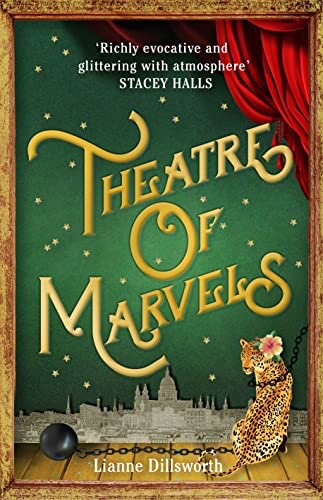
Theatre of Marvels by Leanne Dillsworth

You may have heard of Sarah Baartman, a Khoekhoe woman from South West Africa who was exhibited as a freak show attraction in 19th-century Europe under the name the Hottentot Venus. She was even exhibited after her death, with one showman dissecting her body and keeping her genitalia and skull. Another museum displayed her skeleton and a body cast, which were still exhibited up till the 1970’s. She was exhibited for her steatopygic body type, where body fat is concentrated on the bottom and thighs. This body type wasn’t seen in Europe and was perceived as a curiosity. She was also a subject of scientific interest, but through the gaze of racial bias and erotic projection. In the 19th Century her body could be viewed for two shillings and for a bit extra you could poke her with a stick. Her genitalia were of specific interest as they were said to show her sexual primitivism, although this was more about the men’s erotic projection than Sarah’s own sexuality or libido. Recently, black women in academia and culture have been using her story and reframing it as a source of empowerment, rejecting the ideals of white mainstream beauty, and embracing more curvaceous figures as a source of female beauty. This is the historical and social background that I had in mind while reading this fascinating debut novel from Lianne Dilsworth. I was swept up into her world straight away and my personal academic interest in disability and the display of ‘other’ bodies added to my enjoyment.

Our setting is a theatre and a group of performers from singers to magicians who perform a variety show under the watchful eye of Mr Crillick. His current headline act is Amazonia – a true African tribeswoman, dressed in furs and armed with a shield and spear, her native dancing brings down the house in Crillick’s show. The audience watch, transfixed with fear and fascination, never realising that she is a ‘fagged’ act. Zillah has never set foot in Africa and is in fact of mixed race heritage, born in East London. She is making her money by pretending to be what the, largely white, audience wants to see. It doesn’t sit well with Zillah, but she is alone in the world and does need to make money. Besides it’s better than the other options for a young woman who finds herself in poverty. She’s used to slipping between worlds on stage and in her private life, renting a room in the rough St Giles area of the city, but regularly making her way to a more salubrious area and the bed of a Viscount by night. She and Vincent have been lovers for some time, but he is estranged from his family and can easily keep her a secret, never even walking with her in public. Their shared bed is situated in the middle class home of her boss Crillick. Now, everything is about to change, as Zillah’s consciousness is raised in several ways.

First, she realises that Vincent will never admit to their relationship in public, as he yet again cancels plans to take her to Richmond for the day. Secondly, she meets a young black man called Lucien, who is campaigning in the street. He addresses her in Swahili, with a suggestion this may be the native language of her ancestors, and he places a question in her mind that she can’t shake off. How does it feel to earn money misrepresenting her ancestors? In fact she is representing her ancestors through the gaze of a white audience. The sense that this is wrong, has always been on the edge of her conscience, but Lucien gives her doubts a voice and opens a door towards embracing both sides of her identity. While she dismisses him at first, the thought of him seeing her as Amazonia seems to fill her with shame. Lucien is working on a campaign to relocate black and mixed race Londoners to Africa and the first site is in Sierra Leonne. Meanwhile, Crillick has returned from a trip abroad with shipping containers that suggest he’s been gathering props and it seems he’s been finding new acts too. He taunts Zillah with the suggestion he has found an act that may even eclipse her and one night at his house she sees a new act unveiled to a small group of people. She is horrified to see him parade a terrified women he’s called the ‘Leopard Lady’, with strange white patches all over her dark skin. The men in the party are fascinated, drawing near and touching her skin, even roughly scratching it to see if it comes off. When Zillah notices medical implements laid out on a tray, the horror of what might happen to this woman overwhelms her. She must rescue the Leopard Lady from Crillick’s clutches. There’s a freedom Zillah has compared to a lot of Victorian heroines we might remember, due to her station in life there are certain rules and etiquette of dress and behaviour that don’t apply. Although that freedom does come at a cost – poverty, not belonging anywhere, and the way she is viewed in more polite society. She knows that if she could be with someone like Lucien then she’d be settled in a place society expects of her, still in poverty but at least belonging to a community. Her feelings for Vincent can never come to anything, because his society would never accept her and they would always be a secret.

Through Zillah’s search for the Leopard Lady, we see the truth of a man wiling to make his money treating human beings as objects for display. Whereas before Zillah’s act has at least had the sheen of the theatre world, the Leopard Lady will not be afforded that excitement and sense of performance. This is because Zillah was acting a part, whereas this poor woman is being shown as she is because due to how she looks and where’s she’s from. Zillah chooses to put on her Amazonia costume and take to a stage, if living hand to mouth is ever a choice. Crillick’s plans revolve around his ‘Odditorium’, but in the meantime he plans to show his new acquisition privately to small groups of men. I could imagine these sordid gatherings taking place, with men enjoying an after dinner viewing where the woman is both viewed, potentially sexually assaulted and experimented on. It made me feel sick. I was willing Zillah on in her efforts to find and free the lady, and I found her quest tense and gripping. I thought Zillah’s awakening was handled really well, but I was in two minds about where I wanted her to story to end. Of course there’s an opportunity of relocation to a new life in Sierra Leone, but here I felt strangely similar feelings to those I had about another 19th Century heroine Jane Eyre. We know that Jane’s flight from Thornfield Hall, and the man she loves, is the right move for her. Yet despite the space and time it’s given her to process Rochester’s attempt at bigamy, I never warm to St John Rivers. Although he rescues her from the moors and gives her life purpose again, when he proposes, I can’t be the only reader who’s screaming ‘No’ in her head. As for Zillah, I though Lucien was a good, honest and intelligent man, but to me he feels like the wrong choice. The contrast between him and the passionate relationship she has with Vincent is rather like the two sides of her identity battling against each other. I was hoping that, for a while at least, she could find a way for herself, separate from them both.

This was an exciting and fascinating tale, with elements of the thriller and a central character who is resilient and brave in her quest. I found the settings of the theatre, and Crillick’s home, beautifully rich. Whereas the St Giles area is brought to life with descriptions of sights, smells, many bodies sharing rented rooms and even beds in an attempt to keep costs down. The author has backed up her tale with solid research into freak shows, the many layers of Victorian society and details of food, fashion and leisure time. Through her main character we get an insight into women’s lives, the realities of being bi-racial and the struggles of identity and belonging. I also enjoyed the themes of ‘otherness’ and how outsiders survive in society; the complexities of display and exploitation when weighed against poverty and deprivation. Can freak shows be acceptable if individuals make a choice to exhibit themselves? Or should any exhibition of ‘different’ bodies be unacceptable? This is a question that still needs debate in light of television shows that exhibit overweight and disabled bodies in a prurient way. I really liked Zillah‘s quest to rescue another woman in danger and her own personal journey too. I read this so quickly and will definitely be putting a finished copy on my bookshelves, because I know it’s one I’ll want to read again and again. I just know I’ll find more and more detail in this brilliantly atmospheric exploration of the dark corners of Victorian London.

Published Penguin 28th April 2022.

Meet The Author

Lianne Dillsworth

Lianne Dillsworth has MAs in Creative Writing and Victorian Studies and won a place on the London Library Emerging Writers Programme. She was first runner up in the 2020 SI Leeds Literary Prize for Black and Asian Women Writers in the UK. Lianne lives in London where she works on growing inclusion within the Civil Service. Theatre of Marvels is her debut novel.

Posted in Netgalley

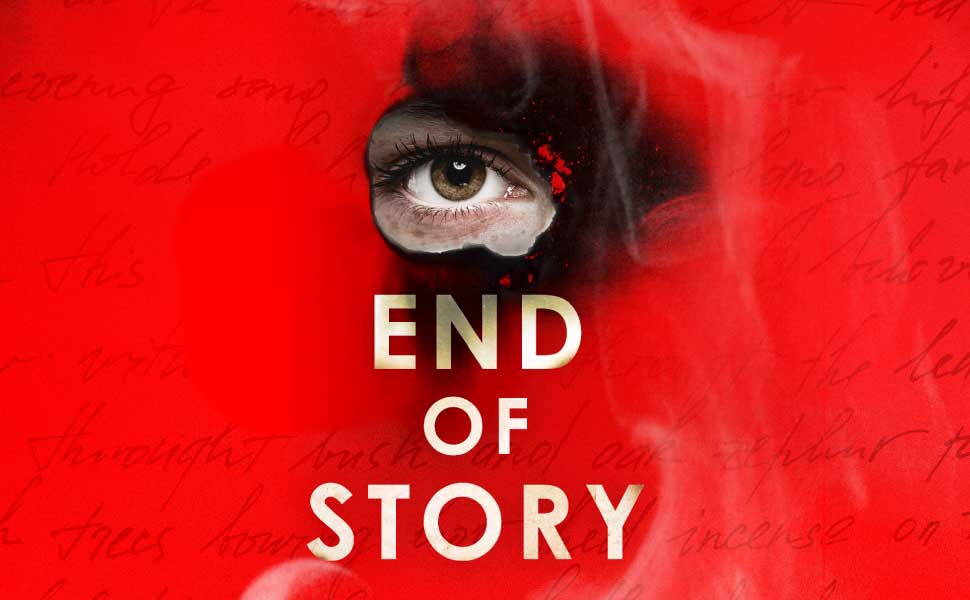
End of Story by Louise Swanson

There are times when I think I could write a book. Why not? I have a first in English and I’ve been reading voraciously since I was 5. I have even started a memoir. Surely I could do it. They say everyone has a book in them don’t they? Then I read this. This astounding, raw, unflinching and inspirationally creative novel is proof that some of us were born to write. This book, is quite simply astonishing.

I can’t write much about the content of the book without ruining it for others and that’s the last thing I want to do, So I’ll tread carefully…

Our narrator Fern Dostoy is a writer, one of the ‘big four’ novelists of the not too distant future. This is a future where the Anti-Fiction Movement’s campaign to have all fiction banned has been successful. It was Fern’s third novel, Technological Amazingness, that was cited as a dangerous fiction likely to mislead and possibly incite dissent in it’s readers. She had created a dystopian future where two major policies were being adopted as standard practice. To avoid poor surgical outcomes, only patients who are dead can have an operation. Secondly, every so often, families would be called upon to nominate one family member for euthanasia – leading to the deaths of thousands of elderly and disabled people. All fiction authors, including Fern, are banned from writing and the only books on sale are non-fiction. The message is that fiction is bad for you, it lies to the reader giving them misleading ideas about the world and how it’s run. Facts are safe. AllBooks dominated the market for books until it became the only bookshop left, state sanctioned of course and only selling non-fiction. From time to time they hold a book amnesty where people can take their old, hidden novels to be pulped. Fern now cleans at a hospital and receives unannounced home visits from compliance officers who question her and search her house to ensure she’s not writing. Added to this dystopian nightmare are a door to door tea salesman, an underground bedtime story organisation, a mysterious appearing and disappearing blue and white trainer, re-education camps for non-compliant writers and a boy called Hunter. All the time I was reading about this terrible new world, I was taking in the details. and trying to imagine living in it.

Yet there was a little voice in the back of my mind telling me this wasn’t the real story. I’d figured that out, even though I was confused, this was one of those books where it would all come together and I would understand. I had strange feelings of anger and frustration with the narrative, not because it isn’t brilliantly and vividly brought to life, but because I could sense something else going on underneath. I couldn’t quite get to the bottom of it. As the pressure built and the compliance officers started to push Fern into telling the truth, I inexplicably felt a lump building in my throat. I’d no idea why I was feeling so choked up. I read the final third with tears streaming down my cheeks, followed by full-on sobbing. I hadn’t known my emotions were so engaged with Fern’s story until my husband came home and I couldn’t even speak to explain why I was crying. It was like I’d known this was where the story was going all along.

I want to say thank you to Louise. Thank you for this incredible book and the emotions it unleashed. I can’t even say why the book had this effect on me without ruining it. This is a real work of genius. It shows us how strong our minds can be at protecting us from things we don’t want to face. I understood Fern and her story moved me deeply. This is, without doubt, a contender for book of the year and an unparalleled look at allowing ourselves to be vulnerable and open; to be human. This is an incredibly powerful novel about storytelling, creativity, grief and fear. It also asks the question: who are we when everything that defines who we are, is taken away?

Published by Hodder and Stoughton 23rd March 2023.

Meet The Author

Louise Swanson is the pen-name of bestselling author Louise Beech, who has published seven novels with Orenda Books. Her work has previously been longlisted for the Not the Booker and Polari prizes and shortlisted for the Romantic Novel awards. She also won Best’s Book of the Year with her 2019 psychological thriller CALL ME STAR GIRL. Aside from being a novelist, she regularly writes travel pieces for the Hull Daily Mail, where she was a columnist for ten years. She also recently worked as the Front of House for the Hull Truck Theatre.

Louise Swanson’s debut End of Story arrives in March 2023. She wrote the book during the final lockdown of 2020, following a family tragedy, finding refuge in the fiction she created. The themes of the book – grief, isolation, love of the arts, the power of storytelling – came from a very real place. Swanson, a mother of two who lives in East Yorkshire with her husband, regularly blogs, talks at events, and is a huge advocate of openly discussing mental health and suicide.

Her memoir, Daffodils, was released in audiobook in 2022, and the paperback version, Eighteen Seconds, will be out April 2023.She blogs regularly on louisebeech.co.uk, and is on Twitter under the name @LouiseWriter.

Posted in Netgalley

The Close by Jane Casey. A Maeve Kerrigan Mystery.

I absolutely loved being back in the world of Maeve Kerrigan. So much so I read this straight through in one day. The set up was brilliant – a modern slavery racket is suspected and Maeve must get close to one of the conspirators, an unlikely criminal. The mayor of London’s assistant has brought a sad case to their attention. A young man called Davey who died after suffering neglect, starvation and physical abuse. He was the perfect target for slavery, an easily influenced man with learning disabilities but physically strong and capable. Strangely, there have been other young men go missing from the system after using the same address, that of an elderly lady in a normal suburban close. There needs to be close surveillance so Una Burt puts her best officers on it, Maeve must move into the close with Josh Derwent as her boyfriend, pretending to dog sit for the usual occupant. Josh thinks Maeve needs a break from her normal routine, because after the court case convicting her partner of domestic abuse Maeve has been drifting and not herself at all. Similarly, Maeve thinks Josh could do with a break away from his live in girlfriend Melissa. How will they fare as a couple on the close and will they be able to flush out the conspirators in the slavery case?

I loved the tension between Derwent and Maeve in this story, close together in the house and away from all their usual distractions it brings their chemistry into focus. Every time they behaved like a couple it felt completely natural, until it was imagining them going back to colleagues was unthinkable. They have had so many obstacles in their time as friends, always something preventing them from becoming more, so could this be the perfect timing? At times the tension in their house was more unbearable than the tension in the case! There are parts of Derwent that I don’t like, but I can see ways in which he’d be good for Maeve and vice versa. They ingratiate themselves with the neighbours easily because they sense this chemistry, they seem like a real couple. The elderly lady in question is tricky, seemingly an innocent and kindly woman but if she is involved with mistreating these men, her kindness is all a front. She reveals that she does provide a bed for young men with disabilities from time to time, but doesn’t elaborate on whether it’s an official arrangement. When Maeve discovers there’s a oreviously unknown son, whose wife runs a care home, the chain starts to come together. However this isn’t the only crime lurking under the respectability of suburbia. The author uses short chapters narrated by a man who is very unpleasant and possibly dangerous. He lurks after dark watching through the windows of those who don’t close their curtains, even Josh and Maeve. He has a very incel vibe, so could he be a lone male with little female attention and experience, or is he hiding his feelings about women under the veneer of a happy family man?

I enjoyed watching these people through Maeve’s eyes as her instincts are usually spot on and her insight seems to be coming back to her as the novel continues. This break is exactly what she needed. Her interactions with a lady with dementia in the close are brilliant because Maeve doesn’t dismiss what she claims to have seen just because of her illness. Maeve knows there are moments of lucidity and keeps thinking about what she’s said and trying to interpret it. When she goes missing in the dark Maeve is desperate to find her, but so is our unknown man and it’s a real heart pounding part of the book, hoping against hope that Maeve gets to her first. It’s clear that this seemingly happy and respectable close is anything but, with the men hiding all sorts from irritating foibles to murder. Towards the end I was powering through the pages to find out who was hurting girls in the close, whether Maeve’s fire and copper’s instinct was returning, but also whether Josh and aMaeve were going to confront their feelings for each other. This was an addictive thriller, focusing on one of my favourite fictional police duos and I loved seeing them in a different environment, but still flushing out crime.

Published by Harper Collins 2nd March

Meet The Author

Jane Casey is a bestselling crime writer who was born and brought up in Dublin. A former editor, she has written twelve crime novels for adults (including ten in the Maeve Kerrigan series) and three for teenagers (the Jess Tennant series). Her books have been international bestsellers, critically acclaimed for their realism and accuracy. The Maeve Kerrigan series has been nominated for many awards: in 2015 Jane won the Mary Higgins Clark Award for The Stranger You Know and Irish Crime Novel of the Year for After the Fire. In 2019, Cruel Acts was chosen as Irish Crime Novel of the Year at the Irish Book Awards. It was a Sunday Times bestseller. Stand-alone novel The Killing Kind was a Richard and Judy Book Club pick in 2021, and is currently being filmed for television. Jane lives in southwest London with her husband, who is a criminal barrister, and their two children.

Posted in Netgalley

One Italian Summer by Rebecca Searle

When Katy’s mother dies, she is left reeling. Carol wasn’t just Katy’s mum, but her best friend and first phone call. She had all the answers and now, when Katy needs her the most, she is gone. To make matters worse, the mother-daughter trip of a lifetime looms: two weeks in Positano, the magical town where Carol spent the summer before she met Katy’s father. Katy has been waiting years for Carol to take her, and now she is faced with embarking on the adventure alone.

But as soon as she steps foot on the Amalfi Coast, Katy begins to feel her mother’s spirit. Buoyed by the stunning waters, beautiful cliffsides, delightful residents, and – of course – delectable food, Katy feels herself coming back to life.

And then Carol appears, healthy and sun-tanned… and thirty years old. Katy doesn’t understand what is happening, or how – all she can focus on is that somehow, impossibly, she has her mother back. Over the course of one Italian summer, Katy gets to know Carol, not as her mother, but as the young woman who came before.

But can we ever truly know our parents? Soon Katy must reconcile the mother who knew everything with the young woman who does not yet have a clue.

I enjoyed Rebecca Serle’s last novel rather unexpectedly, as it became so much more than the simple romance I was expecting. Her new novel One Italian Summer also had some unexpected elements and was an interesting look at the relationships between mothers and daughters, the endurance of long term relationships and coping with grief. As the book opens Katy is married to Eric and has just lost her Mum to cancer. Katy is broken as her Mum has been her best friend, her shopping buddy, her sounding board, her arbiter of taste and so many other things and now she doesn’t know what to do without her. In a strange way she sees her mother as her partner in life, rather than her husband. Eric is also grieving, having been a part of Katy’s family since they were at college. However, when her mother started receiving end of life care, Katy went to live at her parent’s home sleeping on a sofa to keep her mother company while her father slept in a chair next to his wife. As the couple meet again at her mother’s funeral, Katy still feels unsure about their marriage. She wonders if her mother was right and they married far too soon. Katy needs some space, to grieve her mum and think about her marriage and an obvious opportunity presents itself. When her mother was younger she spent a summer living on the Amalfi coast at the picturesque town of Positano renovating a hotel. To surprise her mother Katy had bought them tickets to spend a week in there and the thought comes into her head. What if she went ahead and travelled to Italy by herself?

Katy finds herself in a beautiful hotel where she feels immediately embraced by the family who run it. She meets a man at breakfast called Adam who works for the large luxury hotel chain. He would love to acquire the hotel and his bosses would like a piece of this beautiful coastline for their portfolio. He charms Katy and offers to show her around a little, he has been coming to Positano for many years in his time off and can suggest some great places to eat and explore. Katy has felt totally cut off from her mother, but here she feels closer to her as if part of her mother’s spirit has always been here waiting for her. One morning as she wanders through reception she sees a woman who has brought a parcel to put into the hotel’s outgoing post. She looks strangely familiar and as she turns around Katy can’t believe her eyes. This is her mother Carol, full of life and only thirty years old. I loved the way the author creates this strange time loop in such a magical setting. I never once questioned it, because I was so involved with Katy’s feelings that she might just turn the corner and see her mum as if she’d never left. It was such an interesting chance for her to meet her mother as a young woman and understand more about her. This Carol is young, carefree and full of passion for her goal of becoming an interior designer. There’s so much that Katy wants to know, but is this going to change her view of her mother and their relationship?

I loved the Italian setting of this novel, having just read Adriana Trigiani’s new novel also set on the Tyherrenian Sea I am now dying to visit this beautiful coastline. The way the town is nestled into the cliff side and every balcony makes you feel you’re hanging over the sea. I could literally feel the sunshine and the warm sea on my skin. The descriptions of food had my mouth watering and I found myself longing for Italy. Meeting her Mum at this age was always going to throw up things Katy didn’t know. Carol doesn’t recognise her, so her actions are completely unguarded, whereas Katy has the knowledge of who Carol is. I wondered how long she would be able to keep it to herself. It was interesting to see Katy starting to question whether all aspects of their relationship were positive. Carol has always been so opinionated and matter of fact about how things should be done. As a couple, Katy and Eric have always gone to her for advice when making decisions and she is the family’s anchor, keeping them grounded and safe. However, was this safety always a positive thing? Katy starts to see that she’s never been left to make her own decisions, that she and Eric have rarely made their own choices as a couple. Carol has always weighed in on everything from what clothes to buy and whether they should have children yet. She always seemed so sure of what to do and Katy has felt inadequate to an extent, unable to weigh up the options and make her own mistakes. There is a bit of anger and resentment here; if she’s never been allowed to stand on her own two feet, no wonder Katy feels lost. As her mother’s story unfolds, will Katy get the answers she’s looking for? Why does this Carol seem so ‘go with the flow’ when her mum always planned everything, even a family picnic, with military precision?

This was another beautiful book from Rebecca Searle, concentrating on the relationships between women and perhaps the most complex female relationship we have. This shows beautifully the effect our parents have on our development as people and how one mistake can change the way someone approaches life forever. All set in the beautiful Italian sun, with a lot of personal reflection and even a little bit of romance thrown in. I loved how the space and the experience gives Katy a chance to re-evaluate her life and the way she’s been living it. This is the perfect summer getaway book and if you’re not going anywhere this year I definitely recommend it for vicariously enjoying Italy.

Rebecca Serle is an author and television writer who lives in New York and Los Angeles. Serle developed the hit TV adaptation of her YA series Famous in Love, and is also the author of The Dinner List, and YA novels The Edge of Falling and When You Were Mine. She received her MFA from the New School in NYC. Find out more at RebeccaSerle.com.

Posted in Netgalley

The Empire by Michael Ball

1922. Jack Treadwell arrives at The Empire in the middle of a rehearsal and he is instantly mesmerised. Once you look past the glitz and glamour, the true magic of the theatre lies in its cast of characters – both on stage and behind the scenes. There’s stunning starlet Stella Stanmore and Hollywood heartthrob Lancelot Drake; and Ruby Rowntree, who keeps the music playing, while Lady Lillian Lassiter, theatre owner and former showgirl, is determined to take on a bigger role. And then there’s cool, competent Grace Hawkins, without whom the show would never go on . . . could she be the leading lady Jack is looking for? When long-held rivalries threaten The Empire’s future, tensions rise along with the curtain. There is treachery at the heart of the company and a shocking secret waiting in the wings. Can Jack discover the truth before it’s too late, and the theatre he loves goes dark?

Jack is our eyes in this unfamiliar world, explaining the theatre whilst also representing the issues a man of his age would face post WW1. He outlines the theatre for the reader as a physical space first, both backstage, front of house and as a performer. There are three distinct aspects to the magic we see created on the stage. There’s the physical building and it’s structure, the artists and stagehands who build the scenery and then there’s the money. Without any of these aspects it’s impossible to create the business we call show. As Jack learns so do we and it brings a brilliant sense of wonder to the reading experience. The author also uses him to make the language of the theatre accessible to us, so we can understand everything that’s going on. Finally, Jack brings to life an aspect of life that affects all men of his age in the early twenties; learning to cope in the post war world. The trauma of war is explored through Jack and Danny Moon, with both young men very reluctant to discuss their experiences. However, as the story progresses it’s clear there are physical and emotional scars that can’t be seen.

Danny Moon in particular embodies a sad truth about war, men go into battle as one person and come out of as someone completely different, someone we may not recognise. All of the characters in the book have their own quirks and personality traits, making them feel real and individual in a large cast of characters. Often in casts like this people get lost but not here, where even if they are slightly stereotypical they’re still memorable. There’s a nice class distinction between upper and lower class characters and how they interact with each other too. The author even touched on the changes in women’s lives in the early Twentieth Century in a subtle but effective way. The issue of women’s legal and political equality was only one aspect of the volatile social change women faced at this time. In fact their social mobility had changed during the war and there were elements in society who wanted their roles to revert to pre-war tradition. Women were not so easily persuaded and the author represents this with headstrong female characters who struggle against the belief that women should return to the home. The role of actress had traditionally been synonymous with women of easy virtue and those attitudes still persist in the 1920s, as well as mistaken beliefs that women can’t think and therefore act as well as men. The women here definitely prove those theories wrong! Finally, there were returning soldiers struggling with their mental health and Billy Barlow represents this wave of men with depression, anxiety and P.T.S.D. His struggles are enacted on the stage, bringing real meaning to his performance. Of course the author isn’t aiming to make these issues the focus of the novel, but by adding it as background he has grounded the story in it’s place and time.

Whilst I’m not specifically a Michael Ball fan, I am a huge fan of musical theatre and I know what an incredible talent he is in that world. I figured if anyone knows how to put the magic of the theatre into words then it’s him. I had a certain amount of scepticism though – as a lover of books I’ve looked on with dismay at brilliant writers struggling to get publishing deals, when celebrities seem to find it easy. Just because someone is a celebrity doesn’t make them a great writer. However, here Michael Ball’s warmth and love of his subject comes across beautifully and I really enjoyed the book. For a first novel, the story is long with many different avenues to explore, but I found that despite the complexity it wasn’t hard to follow and I didn’t have to go back over earlier sections to keep track. The structure helped, because in addition to chapter breaks there were clever changes in tone, setting and description. His story immerses the reader in the world of theatre, but the author has also created sympathetic characters and opened a window on the social issues of the 1920s. I look forward to more adventures at The Empire.

Published by Zaffre 13th October 2022

Meet The Author

Michael Ball OBE is a singer, actor, presenter and now author. He’s been a star of musical theatre for over three decades, winning the Laurence Olivier Award for Best Actor in a Musical twice, he’s also won two BRIT awards and been nominated for a Grammy. Michael regularly sells out both his solo tours and his Ball & Boe shows with Alfie Boe and has multiple platinum albums. The Empire is his first novel.

Posted in Netgalley

Picture You Dead by Peter James

Detective Superintendent Roy Grace finds himself plunged into an unfamiliar and rarefied world of fine art. Outwardly it appears respectable, gentlemanly, above reproach. But beneath the veneer, he rapidly finds that greed, deception and violence walk hand-in-hand.

It was lovely to be back in the world of Roy Grace, a character I was introduced to by a lovely new neighbour nearly ten years ago. When she moved in across the road from me with her English teacher daughter, they both had an extensive library. So, she asked me over for a cup of tea and to look through their boxes of duplicate books. She’d noticed I had a substantial library of my own when she popped round to introduce herself. This unexpected rummage through their cast offs brought both Elly Griffiths and Roy Grace to my notice. Luckily for me, both mum and daughter had a full set of Grace novels so I was able to spend a few weeks slowly working my way through his entire story. I managed to get access to Peter James’s latest through Netgalley a couple of months ago, but have been a little late in writing up my review.

This time Grace’s case takes him into the world of art collecting and finds that when a collector wants a particular painting, they might pursue it using any means at their disposal, even murder. Everything is set in motion by a couple called Harry and Freya Kipling, an ordinary couple who work as a builder and a teacher. On their weekends they like nothing more than browsing car boot sales for bric a brac and on one particular day Harry brings home a hideous painting of an old hag. He explains to Freya that he bought it for the ornate frame, hoping they could use it for a different painting. He leaves it in the conservatory, but on a sunny day the heat coming through the glass starts to burn the painting. That’s when the couple notice there’s something completely different underneath and after asking an expert Harry cleans the picture with acetone. Underneath is a fêtes galantes style painting of a couple in a garden that looks like others by Fragonard. Of course Harry doesn’t imagine for a minute that it’s worth anything, but for fun they attend a local filming of the Antiques Roadshow. As they queue up in front of the painting expert, they’re shocked to be taken aside and told the he would like to do some quick research on the their picture before filming. He then drops a bombshell, that this painting could be a missing Fragonard; the Spring painting in a series on the seasons. Alone it’s worth upwards of a million pounds, but with the others in the series it’s worth much more. The Kipling’s treat the painting almost like a ticking time bomb, something that worsens when their episode of the roadshow is televised. Now everyone knows they own this painting, including people who want it and will stop at nothing to obtain it.

This is an incredibly tough time for CSI Grace and his wife Cleo, he has only just lost his son Leo in a tragic accident and they are preparing for his funeral. Leo had only lived with Roy and Cleo for a few months, after his mother Sandy’s death in Munich. Sandy was Roy’s first wife who went missing early on in his career, causing so many problems and putting Roy in a position as suspect in her disappearance. He hadn’t even known Sandy was still alive, let alone he had a son, so it’s been a rollercoaster of combined grief and joy. To find out he had a son was shocking and to lose him so soon afterwards has been terrible, plus Cleo is close to giving birth to their second child together. His DI Glen Branson is at loggerheads with his fiancé over her job as a journalist, specialising in crime. Her ambition can mean criticising the force, something Glen is very sensitive about. With all this at home, at work Roy and Glen are looking at a cold case, the murder of an antiques and art dealer on his return home one evening. He was killed in his car on his own drive, as he waited for his electric gates to open, by someone who knew his movements very well. When the Kiplings have their house broken into, with nothing taken, it seems certain to be linked to their appearance on the Antiques Roadshow. Then when another body turns up, this time outside the home of renowned art forger Dave Hegarty, the coincidences start to pile up. As Roy’s team work their way through the collectors of Fragonard, will he find one who’s willing to kill to complete their collection?

This is a very different world to the one Roy’s team usually inhabit, but as always where huge amounts of money are involved, people are ruthless. The author is an absolute master at giving us moments of personal joy and anguish, alongside extreme tension and fear. One section of the book has a home invasion that’s absolutely heart-stopping! Then next we’re at Leo’s funeral, an incredibly personal moment where we’re taken into Roy’s anger over Sandy’s disappearance and guilt about his relationship with his son. Alongside this is the anticipation about the birth of his second child with Cleo, due in the next few weeks. The case is fascinating and I fell completely into this world of art collecting, from those who can afford the real thing to the world of forgeries where being as good as Dave Hegarty can bring plaudits and plenty of cash too. I felt so bad for the Kiplings, who had simply bought a painting at a boot sale and didn’t deserve any of the horror and stress that followed. It was good to be back with the team again; Tanya showing her usual organisation and Norman’s terrible jokes from the 1980’s really bringing the reader back into their world. Then of course there’s Brighton, with the usual mix of the seedy and strange that comes with Roy’s job and how it contrasts with the quieter rural life he’s chosen for his family. I only hope from here on there’s less personal turbulence for a character I’ve come to enjoy so much.

Meet The Author

Peter James is a UK No.1 bestselling author, best known for his Detective Superintendent Roy Grace series, now a hit ITV drama starring John Simm as the troubled Brighton copper. Much loved by crime and thriller fans for his fast-paced page-turners full of unexpected plot twists, sinister characters, and accurate portrayal of modern day policing, he has won over 40 awards for his work including the WHSmith Best Crime Author of All Time Award and Crime Writers’ Association Diamond Dagger.

To date, Peter has written an impressive total of 19 Sunday Times No. 1s, sold over 21 million copies worldwide and been translated into 38 languages. His books are also often adapted for the stage – the most recent being Looking Good Dead.

Visit Peter James http://www.peterjames.com

Follow Peter on Instagram > @peterjamesuk

Follow Peter on Twitter > @peterjamesuk

Follow Peter on Facebook > http://www.facebook.com/peterjames.roygrace

Posted in Netgalley

The Book of the Most Precious Substance by Sarah Gran.

This was one of the most unusual books I’ve ever read, with a mix of history, mystery, philosophy, magic and erotica that was most unexpected. Lily Albrecht is a writer turned book dealer who lives in a farmhouse in upstate New York. Several years ago she met husband Abel, the love of her life. Abe was a brilliant man, a writer and professor who inspired others and drew friends and colleagues to their home as guests. Then he started to forget things and after spending a fortune on neurologists, tests and treatments she’d come to accept that Abe was not getting better. It was like a form of dementia. He was now using a wheelchair and was completely mute, and Lily was left grieving for him while he was still alive. With full time nursing care from Awe, Lily is able to travel into NYC to run a stand at a book fair. It’s there she runs into Lucas, a librarian and book dealer friend, and it’s through him that Lily first hears of the book.

They are approached by a third party who knows someone willing to pay upwards of half a million dollars for the book. Some of the most wealthy book collectors in the world tend to covet books about magic or sex. Dissatisfied with the paltry millions they have, they want to look at ancient ways to manipulate and accumulate power. This book has both, something Lily jokingly refers to as ‘sex magic’, but as she listens to how the book works she does feel a stirring. Sex is something she and Abe had to lay aside a long time ago. She’s used to early nights, flannel pyjamas and a bed to herself. She wouldn’t consider herself sexy, but as she sits with Lucas and they talk about the steps to the magic of the book. It contains a symbol, something that’s not quite a circle and not quite a triangle. The first step requires the sweat from a woman’s neck and from there each step requires a bodily fluid elicited during sex. The final step is to anoint the book with the most precious substance – a substance that a woman produces at her most aroused. Once all the steps are complete, the pair will receive the thing they most wish for which is usually money and power beyond their wildest dreams.

Finding this book takes them on an erotic odyssey from New York to LA, the humidity of New Orleans, then on to Munich and Paris. Lily and Lucas will find the book, convince the collector to sell it to their buyer and hopefully make a lot of money. They will also embark on a sexual relationship with no boundaries and no restrictions and neither tells the other what they’re hoping for from the book. Of course the money will be incredible, it would help Abe enormously, but Lily wants something more. She wants Abe back. More than that, she wants Abe to return to himself with all the vitality, intelligence and allure he’s always had. She wants them to spend evenings talking about books and watch him hosting friends at their home. She wants Able to have his life back. In the meantime she’s going to enjoy her first vacation for a long time, staying in five star hotels and experimenting with Lucas while they try to find the elusive book.

This is an incredible, escapist, fantasy and travelogue, that could have been quite shallow and empty without the skill of the author. She has put so much genuine emotion and compassion into the story, along with the gritty realism of living with a loved one who is leaving you piece by piece. Lily’s memories of Abe and their relationship are heartbreaking when you realise he is now a motionless, mute, man unable to do anything but watch TV. Lily emphasises the loss of this man’s intelligence. He looms large in her memory and there’s a little bit of hero worship with the love she has for him. She describes the loss of his voice, their friends slowly disappearing, the loneliness of separating their sleeping arrangements and the torture of Abe being there, but not. It’s heartbreaking and I’ve been through exactly this experience as I slowly lost my husband fifteen years ago. Perhaps this is why I empathised with Lily so strongly and I understood why she was taken in by this adventure and by being desired for the first time in a long time. It’s like watching a flower bloom as she slowly awakens again, but even though I could understand her need I worried that somehow the book was exploiting her vulnerability. I didn’t get to know Lucas as well as Lily, so his motivations were slightly unclear. He mentioned being used to a five star lifestyle, but his money running low. This felt greedy or shallow when compared to Lily’s motivation. I worried that most people wanting to acquire the book were greedy and materialistic and there would be some sort of come-uppance, but I didn’t know if Lily deserved that. Each time they performed a step, the magic felt dark and it seemed to have an addictive quality. A new avenue would open up as if the book was drawing them closer and making their path easier. It wanted to be found, but why?

The pace towards the end really picks up and I was racing through the action with my jaw dropped open. However, it was the chapter after Paris that really hit me emotionally. It emphasised how much we look at the people we’ve lost with rose tinted spectacles. No matter how much we feel nostalgic for a certain place and time in our lives, it can’t be replicated. It reminded me of the saying ‘you can’t wade into the same river twice; because you have changed and so has the river’. I’ve read erotica where it’s all sexual acts with barely any story in between. This was an incredible story that I could have read happily without the sex, but to make the sexual acts an integral part of the story and the search was clever. The author has achieved an intelligent and fantastical book, that succeeds in being both erotic and a fascinating mystery.

Published 30th August 2022 by Faber and Faber

Meet The Author

Sara Gran is the author of The Book of The Most Precious Substance. Previous work includes Saturn’s Return to New York, Come Closer, Dope, Marigold, and the Claire DeWitt series. She is the founder of small press Dreamland Books and writes for television and film.