Posted in Random Things Tours

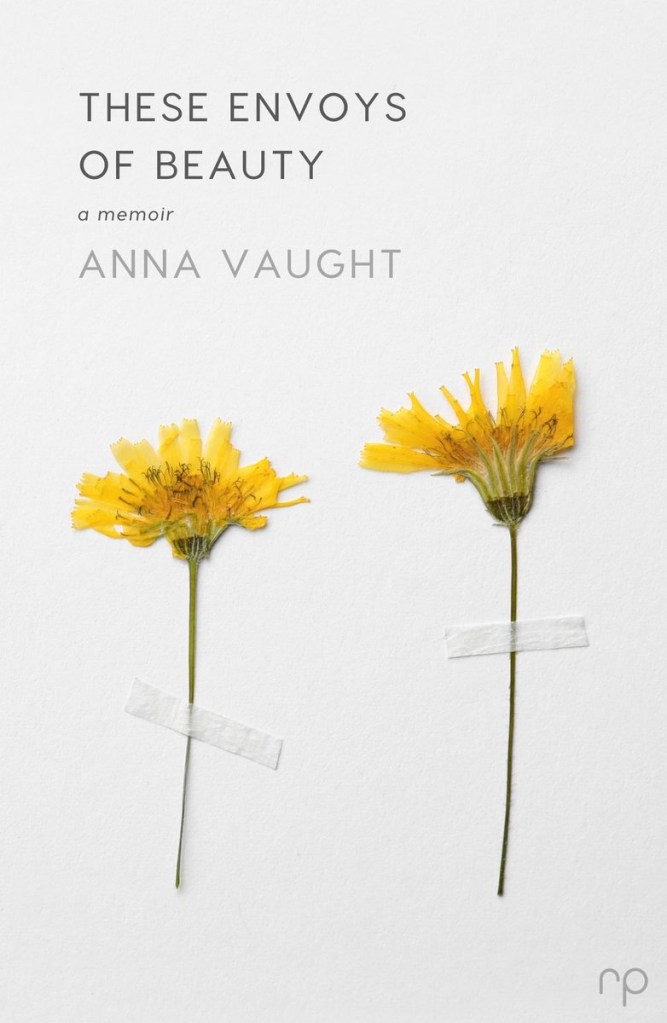
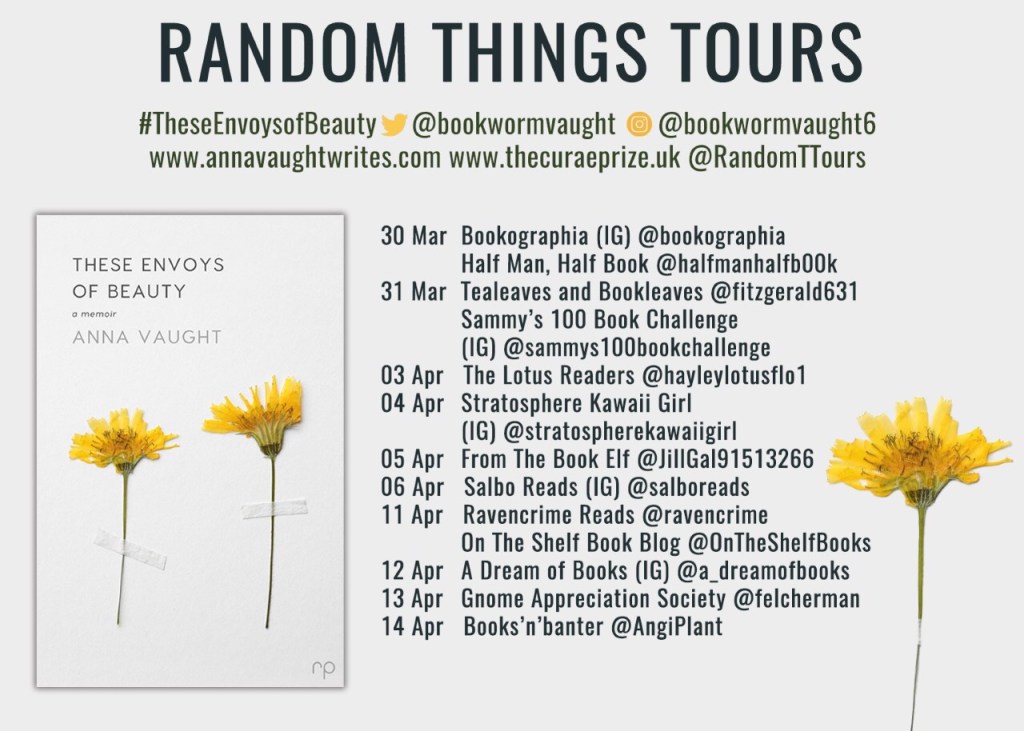
These Envoys of Beauty by Anna Vaught

It was only yesterday on the blog that I was welcoming spring by talking about a book of poetry aimed at helping people with their mental health. Nature was one of the main ways we could boost our well-being, so it seems very fitting that I was also reading this beautiful memoir by Anna Vaught where she shares her very personal mental health journey and how nature became her best coping mechanism from a very young age. The book is made up of a series of essays, each one beginning with a quote from Ralph Waldo Emerson’s Nature including the book’s title.

If the stars should appear one night in a thousand years, how would men believe and adore; and preserve for many generations the remembrance of the city of God which had been shown! But every night come out these envoys of beauty and light the universe with their admonishing smile.

Ralph Waldo Emerson. From Nature, Chapter One.

His words bring a sense of wonder to the natural world, and if kept and nurtured, that sense of almost childlike wonder is an amazing antidote to the hurried and stressful way of life we now have. In fact if we still have that ability to stop and be with the natural world around us, it becomes a time out of time. We come out of those moments and back to reality amazed at how much time has passed and how everything else in life receded and allowed us that enjoyment. As some of my bookish friends know, I have recently been struggling with my mood due to the frustration of having a multiple sclerosis relapse. While I am in pain and battling fatigue, my very busy brain is desperate to carry on writing my book. Basically my body can’t keep up with the breadth of my imagination and the desire to put it down on paper. Yesterday, we drove to our local farm shop and on the way home we passed a field that’s had a winter crop harvested and is only just growing a short covering of grass. From a distance away I suddenly saw two young hares – my favourite animal – chasing each other, weaving and winding around each other at speed then every so often stopping to stand on their hind legs and attempt to box. We pulled over and for a short while we lost ourselves watching these mystical creatures performing the rituals of their ancestors. My partner commented on how my face lit up while watching them, possibly because one of my earliest memories involves a leveret found by my dad that I was able to hold in my palm. I remember the softness of it’s fur, the cartilage of it’s ears and the way the light shone through the pink inside of the ear to show blood vessels coursing their way through.

Like Anna Vaught’s family we were rural working class, with my father either a farm labour or working in land drainage – a very important role in Lincolnshire where the 14th Century system of dykes designed by Vermuyden still keeps the county’s land drained for farming. As children, my brother and I would leave the house in the morning and not return till late afternoon. Vaught’s description of her childhood reminded me of those days where we would lie and read in trees, suck the nectar from sweet nettle flowers and watch the wildlife. I was obsessed with the Country Diary of an Edwardian Lady, so while my brother was fishing I’d do botanical sketches of foxgloves, campions and cow parsley. These countryside hours feel idyllic, but the truth was my mum struggled with untreated depression till I was a teenager. Since then my brother and I have both had our own bouts of depression, but thanks to better treatments and to my training in mental health I had the skills to know what was happening and ask for help. I have also developed my own toolbox for days when my mental health and physical health are having a battle with each other. Like the author, spending time in nature is definitely a large part of that. I truly bonded with this incredible, honest and moving book and was profoundly moved by the author’s decision to share her more painful life experiences. This is partly why my response is also very personal.

The author bases each chapter on a plan, such as Rosebay Willowherb or lichen and moss. She writes about the wonder of each living thing, but it’s also a kicking off point for her own memories and feelings at the time. She writes a deeply moving section in the first chapter where she admits that she was reciting the Latin names of plants in her head to calm herself and try to get to sleep. She told many different adults – the dinner lady, the teacher, the vicar – that she felt compelled to say them out loud ‘so as not to make the dreadful thing happen’ possibly the emergence of OCD. These little glimpses of the child Anna show how lost and unsafe she felt with her parents:

If, as a child you are surrounded by a sort of passionate morbidity, by a frightening psychiatric incident in the family – which is frightening because it is spoken of behind closed doors and euphemism – it may be that you need to latch on to things around you which provide stability and reassurance. Much of this was in the natural world for me.

P26

Vaught is open, raw and deeply moving in the sections where she writes about her childhood experience and it is worth mentioning that the book contains childhood mental illness, emotional abuse, suicide, depression and anxiety. She places her own warning for these subjects at the beginning of the book so I felt they were worth mentioning here. It is emotionally devastating to read someone crying out for help, but receiving nothing from the people expected to care for her most. She describes feeling dissociated, cut off from the world and the people in it as if she was living behind a sheet of glass. She writes quite bluntly that her parents did not talk about it or try to help her. Her mother’s view was the depressed people were indulging themselves. Teenage moods and PMS were imaginary and people who professed to be mentally I’ll had ‘failed to control themselves.’ I felt this in my core. To be so dismissed and gaslighted to this extent in your own family must be devastating to self – esteem and leaves you questioning and testing yourself permanently. She writes that she felt, not just unwanted, but a malevolent creature that might easily do someone harm, an idea that meant making friends and keeping relationships with extended family was quite difficult. It was also instilled in her that it wasn’t just her mum, that other family members and visiting friends had notice she was different too. Her father was distant, but when she was allowed to go out with him she felt chosen and would chatter away to him, probably making up for lost time, until he would snap and tell her to be quiet. On one occasion telling her that they preferred to spend their time with their ‘Number One Son because he listens and likes to be with us, and he never says a word. And you should know you are here under sufferance.’ How crushing must it have been to hear that, especially with her mother so angry with her, something she can only say now after years of therapy.

However, this is far from a misery memoir. I would say it is a story of resilience, of finding the things that boost it and removing from your life those things that crush your spirit. She provides possible mindful exercises that might calm and lists the places she finds most inspiring to visit and experience nature. She signposts the reader to other books that might give you coping mechanisms, while being mindful there is no one size fits all approach because we are all very different. One thing that caught my eye was something I have taught to my groups with chronic ill health and pain; that even in the depths of depression we must be mindful without our bodies and our emotions. We must observe how depression is making us feel both physically and emotionally. What is it about the weeks leading up to this bout of illness that you notice? Were you under stress at work? Were there financial pressures? Were you worried about someone else in your life? Then also make notes on what you did during the worst weeks that made you feel okay? Which strategies brought calm when your mind was spiralling with anxiety? Which people were the best to have around and vice versa? So in this way, a bout of depression or mental ill health has taught us something – what are the best ways to live that might help boost our resilience in the future? As with illnesses like MS, M.E. and various types of chronic pain, stress does worsen symptoms. Using these personal strategies may not totally remove the mental or physical ill health, in fact we may live our lives in seasons ( I always know I will have a short relapse in spring and another in the autumn) but we can be resilient, we can keep in mind that despite being in the depths of winter we can always come out the other side. This is one of the main lessons that the author has always taken from nature, it’s ability to heal itself and come back in the spring. We have faith that at this time of year, plants will start pushing through and now the hellebores and snowdrops of late winter are giving way to tulips, daffodils and bluebells. We plant our brown, unpromising bulbs in the late autumn into cold soil with complete faith they will push through and bring us joy, just when the winter has seemed so long.

If you can cope with the internal winter of depression then depression can be your friend’.

P 117

Not that we would wish depression on anyone, but that it can be a learning experience. It can teach us how to manage the next time it recurs and realise that even a life with limits has richness. This is something I’ve taken on board while reading and it started me off writing a short journal piece about what my bouts of MS can teach me and again it’s resilience. That just as it’s sure to happen again, I can also be sure that it will pass. I can use it to rest, to read and scribble notes, perhaps even to read solely for pleasure. My relapses are simply my body’s winter. To finish I loved her reference to Wilson A. Bentley who lived in Vermont and gave a great deal of his life to studying snowflakes, a natural phenomenon that’s so transient, simply melting away as though it never existed. Bentley felt they were a reminder of how transient earthly beauty can be, but that rather than rendering his study of them pointless, it made it more special because:

‘In the ephemeral nature of phenomena, however, he also found comfort, because while the beauty of the snow was evanescent, like the seasons or the stars he saw in the evening sky, it would fade but always come again.’

Introduction, The Envoys of Beauty.

Meet the Author.

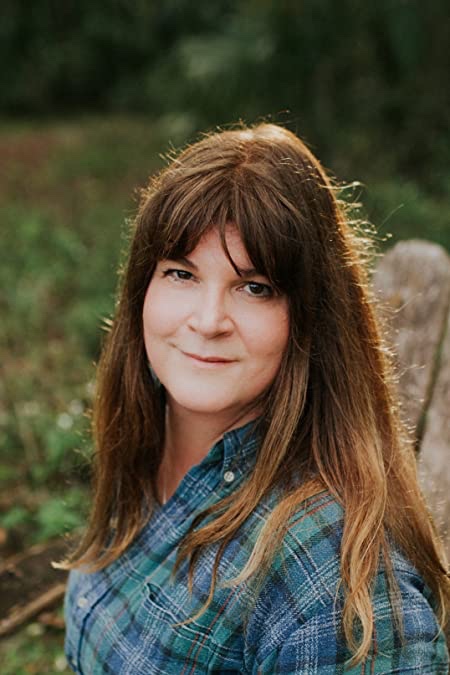
Anna Vaught is an English teacher, mentor and author of several books, including 2020’s Saving Lucia. She has also written a short story collection, Famished. She is currently a columnist for MsLexia and has written regularly for The Bookseller. Anna’s second short fiction collection Ravished was published by Reflex Press in 2022 and 2023 will see five books including this one published across Europe. She volunteers with young people and is founder of the Curae prize for writer-carers and edits it’s journal. She works alongside chronic illness and is a passionate campaigner for mental health provision. Anna is published by Reflex Press and is currently working on another novel.

Posted in Netgalley

The Oceanography of the Moon by Glendy Vanderah.

After the untimely deaths of her aunt and mother, young Riley Mays moved from Chicago to her cousin’s Wisconsin farm. Here she found solace in caring for her extraordinary adoptive brother, exploring the surrounding wild nature, and gazing at the mystical moon—a private refuge in which she hides from her most painful memories. But ten years later, now twenty-one, Riley feels too confined by the protective walls she’s erected around herself. When a stranger enters her family’s remote world, Riley senses something he’s hiding, a desire to escape that she understands well.

Suffering from writer’s block, bestselling novelist Vaughn Orr has taken to the country roads when he happens upon the accommodating, if somewhat unusual, Mays family. He’s soon captivated by their eccentricities—and especially by Riley and her quiet tenacity. In her, he recognizes a shared need to keep heartbreaking secrets buried. As the worst moments of their lives threaten to surface, Riley and Vaughn must find the courage to confront them if they’re to have any hope of a happy future. With the help of Riley’s supportive family, a dash of everyday magic, and the healing power of nature, can the pair let go of the troubled pasts they’ve clung to so tightly for so long?

This is a book about people who have tragic secrets and a real need to process their experiences and heal. Both farm dwelling Riley and writer Vaughan have a similar need to disappear and escape from their physical four walls and the boundaries of their minds. Both are affected by trauma and really need to face it rather than avoid it, if they want to recover. Perhaps these two people with secrets in their past could attempt a slow recovery together. As is the norm for this writer, healing comes from nature, nurture, friendship, family and understanding.

The book is so beautifully written it’s easy to become mesmerised by the language and it’s this that first pulled me into the novel. I love atmosphere and description so this lyrical start was perfect for me. The story is definitely a slow burn, but the sense of place and emotion is hypnotic. The author plays with ideas of darkness within people and how we see ourselves – do we ever see ourselves as we truly are? People who’ve experienced trauma might find it hard to be their authentic selves, because how they feel can be dark, sad and fearful. Riley and Vaughan seemed to have embraced that darkness as part of their identity, when actually there’s so much about them that is lightness and joy. Sometimes, it’s easier to say you love the darkness than it is to do all the work it takes to cast it off. The novel is mainly that personal journey, moving towards the light with the help of family, nature and a little touch of spirituality too.

The moon imagery is interesting, because there is something magical about it: it’s pull on the earth, the seemingly magical way it controls tides and perhaps even moods. There is an otherworldly feel to the author’s imagery that takes us to an earth that is ours, but with some interesting quirks and a touch of surrealism. Here the love of the family is connected firmly to nature, space, and the galaxy. I didn’t need to believe this, I just went with it and enjoyed the journey. I was also touched by a couple of minor characters, Sachi and Kiran. Sachi has such a passion for Indian food and surrealist art and I love people who are passionate and excited about things. She is open hearted and happy to take in anyone, which she does with Riley and Vaughan. There’s an earth mother element to her nature which I loved. Kiran is only eight years old, but is an outstanding little fellow with so much character packed into his meagre years. He feels more comfortable dressed in girl’s clothing, collects fossils and takes apart clocks in order to make magic!

Around her own love of nature and spirituality, Vanderah weaves the story of two strangers who somehow understand each other deeply. The author takes the reader on a lyrical journey from the very depths of their tragic childhoods towards a place of healing; a healing that comes from the consolation of nature, the love of family, the nurturing of self-worth and the understanding that they deserve full and happy lives. I love description, atmosphere and characters who are unique and full of depth, so this story of emotions, regrets, and haunting memories, not to mention the glimpse of hope, was bound to capture my heart.

Published 22nd March 2022 from Lake Union Publishing.

Glendy Vanderah worked as an endangered bird specialist in Illinois before she became a writer. Originally from Chicago, she now lives in rural Florida with as many birds, butterflies, and wildflowers as she can lure to her land. Where the Forest Meets the Stars is her debut novel. Visit Glendy online at http://glendyvanderah.com/

Posted in Netgalley, Publisher Proof

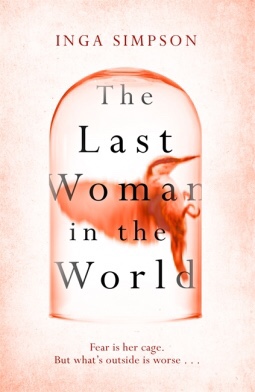
The Last Woman in the World by Inge Simpson

Fear is her cage. But what’s outside is worse…

It’s night, and the walls of Rachel’s home creak in the darkness of the Australian bush. Her fear of other people has led her to a reclusive life as far from them as possible, her only occasional contact with her sister.

A hammering on the door. There stand a mother, Hannah, and her sick baby. They are running for their lives from a mysterious death sweeping the Australian countryside – so soon, too soon, after everything.

Now Rachel must face her worst fears to help Hannah, search for her sister, and discover just what terror was born of us. . . and how to survive it.

I felt slightly breathless reading this story of destruction and apocalypse. So much so, that by the end I had very mixed feelings. I was glad to have finished the book, because I’d been feeling a low level panic and despair. However, it was so prescient and close to our current existence that I felt it needed to be read, however uncomfortable. This is a book borne of a fury that we treat our world the way we do. I write this as I’m laid on my bed – I’ve been unwell this week – watching Storm Eunice attempting to tear the roofing felt from the neighbour’s shed. It was only yesterday that I watched in disbelief as a town in Brazil was completely engulfed by a massive landslide. As I think of the state of our politics, the dreaded virus and the scenes from the Australian bushfires that left me distraught I know that the world Inga Simpson is writing about isn’t something far off future Armageddon. This could happen tomorrow. It is our now, not our future.

Yet still I veer between thinking I must do better and feeling that whatever I do will never count while those who actually have power can hold a ‘landmark’ climate change summit and not decide on anything worth the paper it’s typed on. Simpson has clearly felt a need for change for a very long time and this novel is her retort to our complacency and really does hit home. She uses the medium of the thriller to make our hearts race, our fears run rampant and spells out that this is our future if we don’t change right now. Where the films and books of my childhood concentrated on possible threats from outside – nuclear war in War Games, aliens in Close Encounters of the Third Kind and Alien. Here the threat is so real, because it’s already coming true. It comes from within. We are killing our own planet.

The setting is the city of Canberra, but it’s the incredible and unique flora and fauna of the Australian bush that’s so powerful in the novel. The author’s love for her homeland is so evident in her descriptions of the bush and it’s clear that the basis of the novel comes out of those terrible bushfires and the pandemic. I felt her pain at the loss of wildlife and their habitat. There are themes that flow through all of the authors writing – solitude, the need for quiet, a dislike of large crowded spaces and a total mistrust of elements of modern culture such as social media. The way Rachel feels as one by one these aspects of modern life disappear shows exactly how dependent we’ve all become on constant information and confirmation of events, beliefs and what other’s think.

‘It was a world gone silent. Silenced. There was no help. No news. No advice. No solution.’

I know people who might implode if they were left by themselves without a constant echo chamber of validation. Who do we become when our self is not reflected back to us? Already we can all see people’s standard of living slipping, their security eroded, their sense that someone is in charge and knows what to do about this, is shattered. We have all slipped down the scale from trying to be fully self-actualised beings, to being unable to keep ourselves warm. If there is no one to tell us how to cope we become very basic versions of a human – scraping by to survive and without the tools we once had to be self sufficient or alone. These are the aspects Simpson considers between the action and the conclusion the reader draws might be confronting and upsetting for some. At the very least it will make you think about the way you treat the world and your fellow humans, especially those who have to live in the future we’ve created. I have to say I felt like a product of capitalism when I read the following section:

‘Now it was too late and Isaiah, if he survived, would never see half the things she had seen, taken for granted, gulped down.’

There’s a great thriller here that is addictive, frightening and full of heart-stopping moments. Underneath is just as powerful, but quietly so. For this reader, that made it even more profound.

Published 24th Feb 2022 by Sphere.

Posted in Random Things Tours

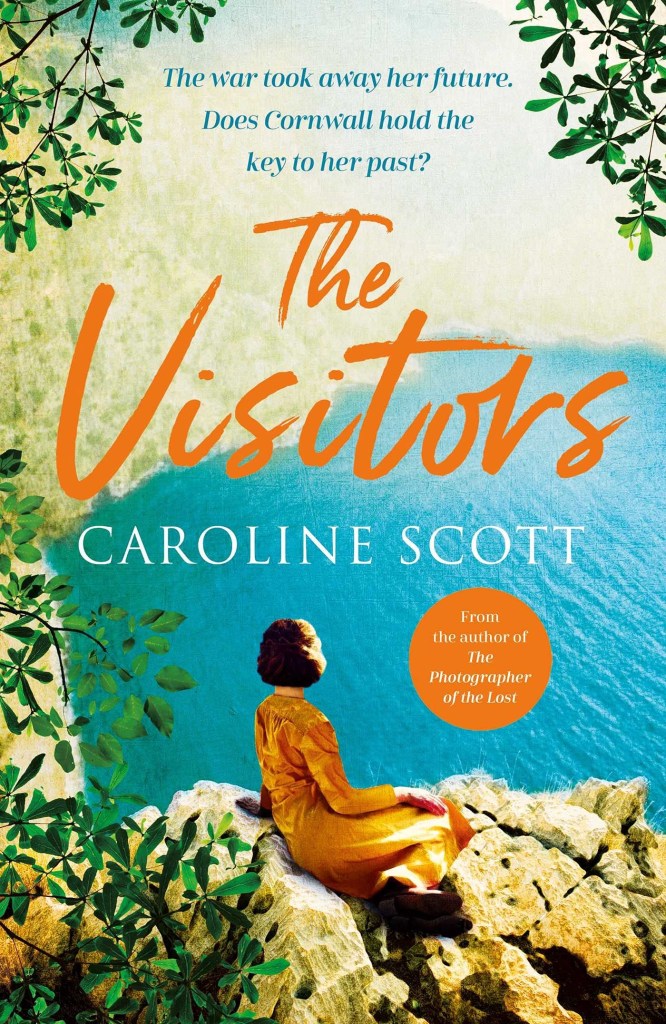
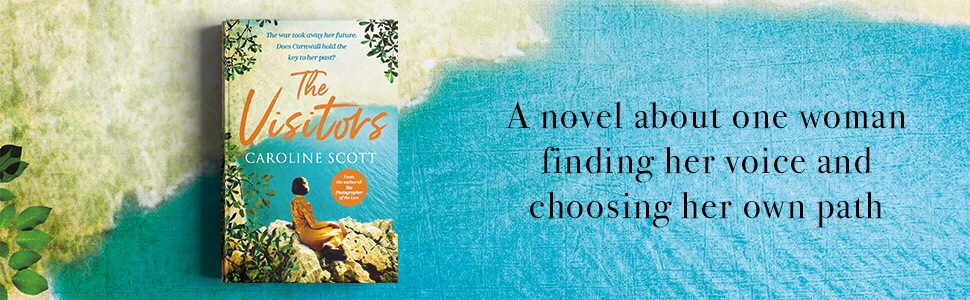
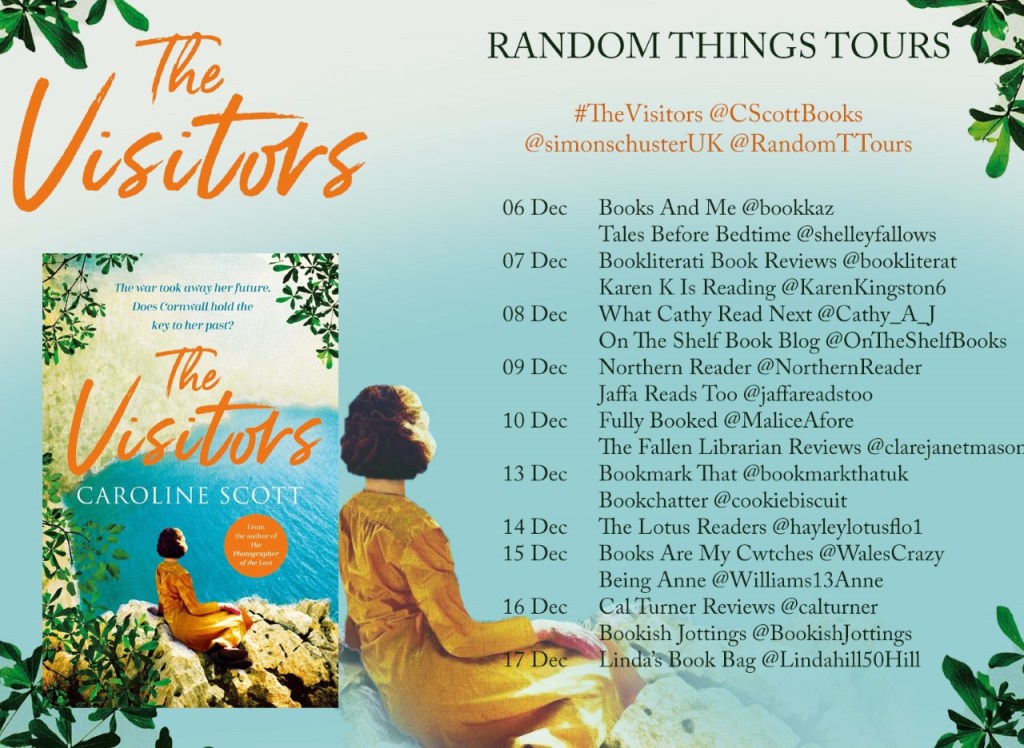
The Visitors by Caroline Scott.

I’ve been a huge fan of Caroline Scott’s last two novels and share an interest with her in the historical period following WW1. This novel touches upon some of the most important issues of the period, while telling a story that touches the heart strings and holds some surprises for the reader. It shows just how chaotic relationships can become during and post wartime, as well as how much people change when faced with terrible and traumatic experiences. We follow one young war widow called Esme whose whole life changed after she received news that her husband Alec had been killed. No longer able to afford to live in their marital home and needing to find work, Esme finds herself in the employment of Mrs Pickering as companion and helper, while also writing nature columns for her local newspaper. As the summer of 1923 approaches Esme is packing her employer’s clothes for a trip down to Cornwall. Mrs Pickering’s brother Gilbert, has established an artist’s residence in his large country house, and the artists have all served together in the war. As Esme meets Gilbert, Rory and the others she hopes to get an insight into what Alec might have experienced and maybe feel closer to him. What she finds there is certainly transformative, but in a very different way.

Esme is a very likeable character. She’s intelligent, resourceful and has really struggled to pick herself up again from nothing. She’s had no support system to help in her grief or her financial difficulties, in fact this is something she and Alec had in common, they were each other’s family. The author tells us this story in three separate narratives and each gives us a new perspective on the characters. Alongside the main narrative in which we follow Esme to Cornwall, we read the nature column she writes and it’s sublime in its descriptions of this place she’s visiting for the first time. We can see what a talented writer Esme is and how much nature means to her. I kept thinking how lovely these passages will sound on audiobook, almost like poetry. The observations she makes made me feel Cornwall again and in quite an emotional way considering I first visited there almost fifteen years ago when I was newly widowed. I felt like Esme’s Cornwall and mine were the same. I remember consciously walking round thinking that this was the first new memory I was making without my husband and Cornwall’s beauty seemed to make that even more poignant. The third narrative is a book written by Rory, one of Gilbert’s residents and close friend, in which he describes his experience of fighting in France. I was interested in the way he also describes nature as a blighted landscape, ruined by the ravages of warfare. There are vivid descriptions that will stay with me, such as the corruption of the very soil from constantly being churned up, contaminated by mustard gas and almost viscous in it’s consistency. Rory ponders whether this land would recover and how long it would take nature to return. It shows us the utter destruction caused and creates a link between the land the war was fought on and the men who fought it; how long might it take them to recover from the terrible things they have seen and done?

The author depicts PTSD in all of the men who live together in Cornwall, they are each affected by their experiences, but show that in different ways. There’s a vulnerability to them and a need to be with others who have shared their experiences. How else can they be understood and allowed to heal without the pressures of having to find work and cope with the demands of returning to a family? They are each very lucky to have Gilbert and this idyllic setting to slowly recover in. Although each must have another life, one that they belonged to pre-war, potentially leaving behind people who needed or might have asked something of them. It places them in a slightly privileged position over those who had returned straight into full-time work or job seeking by necessity, either because they belong to a different class or have a family to support. The excerpts of Rory’s book are also beautifully written, but don’t hold back from the horrors these men have seen. His descriptions are both vivid and visceral, and through reading his book Esme gains more understanding of these men than perhaps a lot of women would have at the time. How many times do we hear of war veterans who have kept all of this bottled-up inside with family member’s noting they didn’t like to talk about it much? At least here the men have a therapeutic outlet, whether by painting or writing, through which to understand or process these memories, but also communicate them to others without having to say them outright.

All of this would have been enough for a great novel, but the author also places a huge surprise part way through that I hadn’t expected. Through this we see the strength and restraint of Esme, the way she thinks things through before acting and never puts her own needs first. She needs a therapeutic outlet too, showing how the initial effect of war on the person who served ripples outwards to effect their loved ones and even future generations. Just as the land needs time to recover from the physical effects of warfare, there is a shockwave created that blasts through society as a whole. We are shown: how rigid Edwardian class structures are broken down; how marriage as an institution and way of constructing society is outdated and broken; how gender roles become more fluid allowing women more freedom and choice. I really did enjoy seeing how Esme negotiates this new world and makes bold choices for her life moving forwards. This book is another triumph for the author, because it’s a beautiful piece of historical fiction that tries to capture a moment in time where everything’s in flux. These constantly shifting sands of time show us the formation of our 20th Century and the resilience of the human spirit. It gave this reader hope that, just as nature found a way and those battlefields are now meadows and farmland, humans do have the capacity to heal and be reborn.

Meet The Author.

Caroline completed a PhD in History at the University of Durham. She developed a particular interest in the impact of the First World War on thelandscape of Belgium and France, and in the experience of women during the conflict – fascinations that she was able to pursue while she spent several years working as a researcher for a Belgian company. Caroline is originally from Lancashire, but now lives in southwest France. The Photographer of the Lost was a BBC Radio 2 Book Club pick.