Posted in Netgalley

The Island of Longing by Anne Griffin

One unremarkable afternoon, Rosie watched her daughter Saoirse cycle into town, expecting to hear the slam of the door when she returned a few hours later.

But the slam never came.

Eight years on, Rosie is the only person who believes that her child might one day return home. Will this belief come at the cost of everything she has left?

My previous work in mental health and my counselling training always lead me towards books that either portray dramatic life events or feature characters that are deep and three dimensional, with a flourishing inner life. Anne Griffin delivers this and more, so I was interested to read her latest novel because it goes into the character’s reactions to a highly dramatic and distressing event. The worst thing that can happen to a parent is to lose their child and this happens to Rosie. Her daughter, Saoirse Dunne, disappeared eight years ago and since then she has been unable to think straight or get on with life. Her heart and spirit are broken, So she heads back home, an island off the coast of Cork. There she’s hoping to find solace and some sort of healing from the natural world around her and the community she knows on the island. She and her husband Hugh have grieved differently over the last eight years, the loss has slowly separated them emotionally and now they continue to need different things. When we see a comparison of their relationship, before and after their daughter’s disappearance, the difference is stark.

Rosie still holds on to the belief that Saoirse might return and she isn’t ready to let go of this. She’s also taking her son Cullie with her and they share so those questions many people ask in grief – ‘what if I’d just…’ and ‘if only I had …’. There’s a sense of survivor’s guilt in these thoughts and I was hoping that they would both find some peace too. Rosie’s decision to return home to where she grew up and even her old work operating the ferry to the mainland, could be seen as a way of cutting out the most painful part of my life and returning to a time when life was more simple. When she’s operating the ferry she feels closer to her daughter than she has in a long while. Of course this gives her solace, but it’s also a barrier to her accepting reality.

I really enjoyed the sense of place created by the author and it’s meaning in the novel. I could visualise Roaring Bay Island completely and the surrounding sea even feels soothing. It’s a refuge, but only for the summer. I worried that after this idyllic interlude in her grief, going back to reality would be a terrible shock. The author acknowledges this, writing that it’s merely a chance to ‘step out of the world for a while’. I loved the freedom she feels while piloting the ferry, with the rocking motion of the waves like a cradle. It was wonderful to witness the kindness and thoughtfulness of the people on the island too. Is this something she isn’t getting in her current home. The place where Saoirse is still missing.

The author keeps Saoirse’s disappearance at the heart of the novel and the family’s experience of loss and pain is devastating but beautifully done. I have experienced loss and this was so raw and real, with incredibly authentic dialogue. I did feel tears coming here and there because Rosie’s feelings were so close to my own. It gives the reader a window into an experience they hope never to share. Please don’t be put off though, there are moments of lightness in the community, they really are an example of humanity at it’s best. There’s also such resilience in the characters, in the face of a loss that is unthinkable. When she returns from the island, she’s moved forward emotionally and Dublin feels like a dark place. It feels like the past. I loved the author’s addition of a sentence from Saoirse, on it’s own page and in a larger font. This lets us get to know Saoirse a little. It also seems to amplify that feeling that she’s gone, yet always there for those who love her. I won’t say this is an easy read. In fact some people may be uncomfortable witnessing the family’s grief. If people do push through that, they’ll gain an understanding of a universal human experience. We all experience loss. For people like me who have had their lives, like Rosie’s, divided into a before and after, this type of emotionally literate writing is a God send. A comfort and a reminder that we’re not alone.

Meet the Author

I’m the international bestselling author of three books: ‘The Island of Longing’, 2023, ‘When All Is Said’, 2019, and ‘Listening Still’, 2021.

I’ve been published all over the world, from the UK to the US and from Taiwan to Lithuania. It has been published in twenty-five territories. In 2019, I was honoured to be awarded Newcomer of the Year at the Irish Book Awards.

To me, writing is all about great storytelling and I hope you find that within the pages of my books, from Maurice Hannigan in ‘When All Is Said’ who sits to the bar of his local hotel to raise five toasts to the five most important people in his life, to Jeanie Masterson in ‘Listening Still’ who is struggling under the weight of obligation to the family funeral directors, and to Rosie Driscoll trying to find her daughter Saoirse who has been missing for eight years.

Thanks so much for all of the great support.

From Anne Griffin’s Amazon Author Page 1/11/23

Posted in Personal Purchase

Starling House by Alix E. Harrow

“When the house was complete, in February of 1870, Eleanor Starling took up residence and stayed there until her death in 1886. There is substantial evidence that she devoted the remaining years of her life to the study of the place she later called “Underland.” She believed, according to the notes and journals found by her successors, that there was another world beneath, or maybe beside, our own—a terrible, vicious world, populated by monstrous beings. She believed that there were cracks between that world and our own, places where things might leak through, and that one of these rifts lay underneath Eden, Kentucky.”

Starling House sits on Starling land and can’t be fully seen from the roadside, except for a pair of iron gates that are so intricate and sinuous it wouldn’t be a surprise if they started to move and become a living, writhing being. Opal passes the house daily as she takes a short cut from one of her jobs to another and she’s intrigued by the house, especially the one amber lit window, high up in the attic room. There she imagines Eleanor Starling, living the solitary life of an author trying to follow up their first extraordinary book. Opal loved Eleanor’s children’s book Underland described as a much darker Alice in Wonderland where a girl called Nell is under the ground with a weird array of beasts (all of which look like a member of the animal kingdom, but at the same time not at all). Opal’s life is a gruelling slog from the motel room she shares with brother Jasper, to her cleaning jobs then back to supervise homework and share their measly evening meal. It only takes one small difference in their routine to shake everything up and bring huge change to their lives. Opal pauses her route home and stops at the iron gates of Starling House. She holds on to the iron, but immediately finds her hand is slick with blood. More disturbingly, she feels the gates give, almost as if her blood is the key. She looks up to see that a tall, thin and rather bedraggled man has appeared in front of her. He looks her in the eye and says one word. Run!

[The town] “liked the Starlings even less. They’re considered eccentrics and misanthropes, a family of dubious origin that has refused for generations to participate in the most basic elements of Eden’s civil society (church, public school, bake sales for the volunteer fire department), choosing instead to stay holed up in that grand house. […] It’s generally hoped that both they and their house will fall into a sinkhole and rot at the bottom, neither mourned nor remembered, and—perhaps—release the town from its century-long curse.”

Arthur, the bedraggled man, is the current Starling living in the house and it isn’t long before Opal is drawn back into his presence. Arthur seems to be torn. He’s drawn to Opal, but so is the house. It seems unfair to strike up a friendship with her knowing that the house wants her and what that will mean for her life. Yet he asks her if she will clean for him and offers enough money that Opal can’t refuse. He is concerned about this flame haired waif that is now in his midst and he can’t help but offer her a winter coat, then his old truck. Are these genuine gifts, or is Arthur trying to assuage his guilt for doing the house’s bidding? The house almost seems to sigh and settle as Opal cares for it, like a cat stretching with pleasure when stroked. She does wonder about the crude symbols scratched into the wooden doors, that match Arthur’s tattoos. Every conceivable symbol to ward off evil is either scratched, painted or hung around the house. How do you ward off something that strikes from within? Opal is then approached by a woman in a suit, who seems to know a lot about Opal and the Starling House. She wants Opal to take photographs and pass on information from the inside of the house. Firstly she seems like any old local official, but becomes more sinister when Opal is reluctant to help, finally making threats against Jasper. Now she has no choice, but she’s surprised by her own emotions; it’s harder to betray Arthur Starling than she expected. Is it really the house she’s drawn to, or is it Arthur?

“Eleanor Starling left no record of why she built such a vast and strange house, but the oldest and best-loved book in her collection was a copy of Ovid’s Metamorphoses. It has been suggested by subsequent Starlings that she was not building a house but a labyrinth, for much the same reason the King of Crete once did: to protect the world from the thing that lived inside it.”

Opal isn’t easily afraid and I knew, just from that opening, she wasn’t done with Starling House. More to the point, the house isn’t done with her. I admired this plucky girl who is only just getting by in life and does everything for her brother Jasper. She desperately wants him to get away from Eden, Kentucky, because he has so much talent but also because nobody with any sense stays in Eden. She is saving for the fees of a private school she has seen, somewhere that would give him prospects and he would meet the right sort of people. She’s so set on this plan, she hasn’t bothered to ask what Jasper wants. Her heart is in the right place though. She doesn’t love many things, but when she does Opal loves like she does everything else – fiercely. Her existence is all work, striving just to survive but Opal is so intelligent, in fact one of the only places in town she visits religiously is the library. The librarian Charlotte is perhaps the closest thing to a friend she has. The truth is that Opal feels enormous guilt over the terrible car accident that killed their mother and what she sees as the decision she made to survive:

I’m fifteen and cold water is pouring through the windshield. The glove box is open, spewing pill bottles and plastic utensils. Mom is beside me, her limbs drifting gently, her hair tangling with the tacky dream catcher she pinned to the car roof. I’m reaching for her hand and her fingers are slick and limp as minnows and I might be screaming—Mom, come on, Mom—but the words can’t make it past the river? Then it goes very quiet and very dark. I don’t remember letting go of her hand, but I must have done it. I must have crossed her name off the list in my head and swum for the surface, abandoning her to the river bottom.”

I loved the psychological aspects of the story. The house has an identity and it knows who has the right stuff to live there and keep up the fight. I wondered whether the monsters were real or a manifestation of the occupant’s mental state. The thought of the monsters in our heads being able to run free in the world is definitely a terrifying one. The author builds the two worlds within the novel with contrasting techniques: short, blunt descriptions create Eden with it’s power plant and functional buildings, whereas Starling House and it’s labyrinthine tunnels are given long, descriptive passages that bring it to life. If something in Opal or Eleanor’s world is inexplicable she allows it to be unfinished or confused. Some of the monsters are beautifully described as ‘like a cat, but not quite’ or other strange combination that leaves gaps in the image for the reader to fill with their own imagination. This is an author that knows, the things we can’t see or comprehend are the most frightening.

When we finally get to Eleanor’s life story it is disturbing and sad, showing how unresolved trauma can project outwards into something monstrous. There’s a feminist thread here too in the truth about Eleanor’s life with the Gravely men and Opal recognition that her mother was shunned by the town, not just for liking sex but for not being sorry about it. In a reversal of the usual damsel in distress story, Opal is the architect of her own life and is determined to rid Starling House of it’s monsters and save Arthur. I was biting my nails in the final chapters, desperately wanting her to succeed! I’ve never doubted Alix E. Harrow’s talent or imagination. I’ve been a fan since her first novel, but this is her best yet. I’ve been reading that it’s a reimagining of Beauty and the Beast, and I can see that. However, Underland felt like the very darkest Alice in Wonderland to me. In both cases, all the ‘Disney-fied’ prettiness has been swept away. In it’s place are monsters that defy all description and a love story that’s more swords and thorns than hearts and flowers. It’s an absolute feast for the imagination and the perfect dark fantasy read for October.

Posted in Publisher Proof

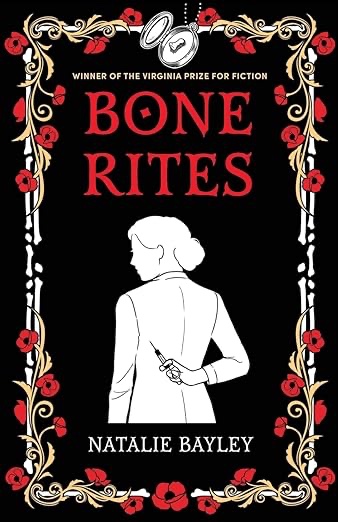
Bone Rites by Natalie Bailey

“I collected the first bone when I was twelve… Such a tiny little bone, more like a tooth. I only kept it to keep him safe.” Kathryn Darkling, imprisoned in Holloway, is facing death by hanging for her vengeance killing. Haunted by a spirit, she still hopes to perform the ancient black magic that will free her soul, or her struggle to punish the mighty will have been in vain. Will the love of her life come to her aid? Or can she find a way to escape her fate?

Bone Rites is a dual timeline story, split between the early 1900s and 1925 when Kathryn Darkling is in Holloway, the women’s prison, where she awaits the date of her own execution, by hanging. While waiting Kathryn starts to tell her story to a priest, assigned to hear her final words and offer solace as she awaits death. She begins with the first time she found a bone and performed a rite, then works her way through to her training as a doctor in Edinburgh. All the while she is developing her practice of performing bone rites, a black magic focused on freeing her soul. As she tells the stories of her bones, I started to wonder about her version of events. Clearly she’s an incredibly intelligent and determined woman and I admired that, but should I be taking the owned of a convicted murderer? Is she a reliable narrator? She seems to be slipping into madness as the tale goes, but does that mean everything she’s telling us is a lie? The thing I most enjoyed was getting inside Kathryn’s head and trying to work out what makes her tick, rather like holding a counselling session with this imaginary character. As we drifted back into her early childhood, I became won over by this obstinate little girl who won’t be deterred from her purpose. We learn about how tough her upbringing was, alongside her little brother Freddie. I love a dark story with a sense of foreboding and I thought this was perfectly pitched for a Halloween read. It’s not a traditional ghost story but Kathryn is certainly haunted, like many of us are by our pasts. I thought the book perfectly fitted it’s timelines, one before and one after WW1 considering how much change and trauma happened in-between. I also enjoyed the LGBTQ+ representation in the novel, it’s fascinating when authors ‘write back’ to a time where minority groups are under represented. All in all this was a well- written piece of historical fiction with a rather macabre edge and an admirable heroine.

Out on Nov 1st from Aurora Metro Books

Meet the Author

Natalie Bayley is author of ‘Bone Rites’, ‘Lolita’s Daughter’, ‘The Secret Life of Grandmothers’, ‘The Witch Who Saved Paris’ and ‘The Lady Lyttle Murder Mystery’ series. Her dark thriller ‘Bone Rites’ was selected for the 2019 Blue Pencil long list, went on to be shortlisted for the 2021 Blue Pencil First Novel Award and was long listed for the 2021 Caledonia prize before becoming the Winner of the Virginia Prize for Fiction. Natalie lives in NSW, Australia and enjoys ocean swimming and whispering to cats. Born in the UK, she’s been in sunny Australia since 2000. Her books are always about justice and how a seemingly powerless underdog can always find a way to fight back. My spooky historical fiction novel, BONE RITES, won the prestigious Virginia Prize for Fiction and is being published by Aurora Metro books October 2023. Enjoy!

Posted in Netgalley

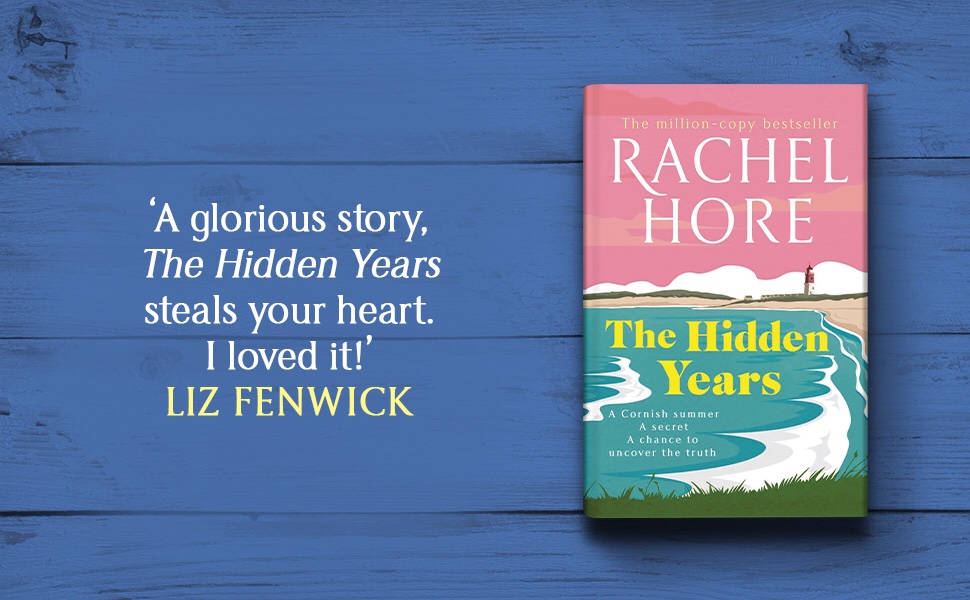
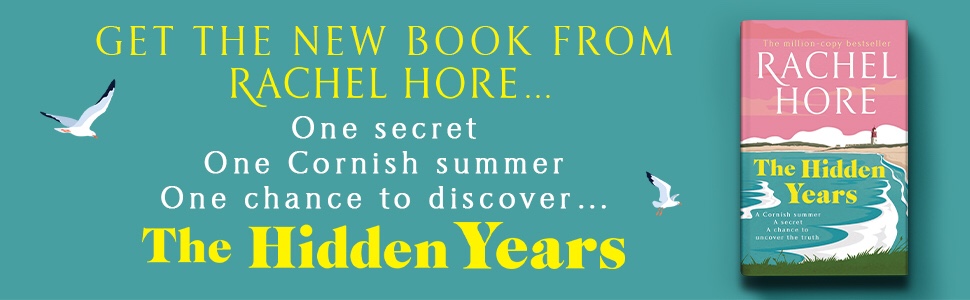
The Hidden Years by Rachel Hore

The Hidden Years is a tender-hearted and bitter sweet tale about how life can take unexpected turns. In fact John Lennon was right, life is what happens when you’re busy making other plans. She also explores how patterns emerge in life: we might find ourselves unconsciously choosing a path that repeats a pattern or takes us to somewhere that has a hidden importance in our lives. Belle has done something very impulsive. From the moment she met Gray they had a connection and now he’s invited her to Silverwood, a mansion next to the Helford River, where a group of his friends are living a different life. They are a creative collective, living as self-sufficiently as possible but dependent on the kindness of the house’s owner. Luckily he’s very fond of his nephew Arlo, one of the residents at Silverwood. As she leaves university and misses her exams for this uncertain life she has no idea that Silverwood holds secrets and some of them are quite close to home.

The author tells her story through a dual timeline; Belle’s story set in the 1960’s and then Imogen’s story, a young woman who visits Cornwall in the 1940’s. Imogen has been working for an agency that secures placements for young women who work with children. It’s mid- WW2 and Imogen is tasked with taking two young brothers down to Silverwood, a boy’s boarding school in beautiful and relatively safe surroundings. She soon finds out that life can change in an instant when she’s asked to temporarily for the school’s Matron who has fallen ill. Imogen takes the booking and finds she loves working with the young boys in the sick bay, feeling unwell and far from home. So, when she’s offered the chance to stay on she decides to take a chance and loves her work. She also makes friends with one of the teachers, Ned. They explore Cornwall on their days off and as the war comes ever closer Imogen makes the huge choice to serve her country, by training in nursing at a hospital in Truro. A bomb narrowly missing the school pushes her to use the skills she’s gained for the war effort. Meanwhile in the 1960’s Belle settles into life at Silverwood with Gray’s friends, trying to help out where she can and joining in with meditation sessions where the incense is more than a bit potent. She’s drawn naturally to Mrs Kitto, a lady of her parent’s generation who lives in a cottage on the estate. She’s slightly taken aback by Belle, because she reminds her of someone she once knew. Their afternoon visits become story sessions as Mrs Kitto tells Belle about a woman she used to know, back in the war.

I enjoyed both sections of this lovely story. Often with dual timelines the novel suffers because one narrative is much stronger than the other. Here I thought the author got the balance just about right. Since Imogen’s story is set during WW2 there’s obviously heightened drama and the decisions made can be life and death. However, I think the differences in the timelines complimented each other. The difference in moral expectations and behaviour is huge. There’s also a difference in how people make choices, creating a huge generation gap like the one between Belle and her parents. The fact that she leaves uni with her lover and is clearly living with him at Silverwood is difficult for her parents to understand and would have been unthinkable in the 1940’s when they were Belle’s age. It would be understandable to think that the 1960’s characters have it so much easier compared with their parents. Yet I could empathise with Belle, in fact without WW2 her generation wouldn’t have the freedom to make choices in the same way. Her father has high expectations for her and he wants her to buckle down and make life choices. After all, his generation had to lay their lives and their hearts on the line with often very little understanding of the person they were making promises to. Belle’s not quite ready to make a choice. Should Belle follow duty, when she could be an idealist and follow her heart? Singing with Gray’s folk band The Witchers comes very naturally to her when she’s got over her nerves. There are so many opportunities, how do you know which is the right path?

Imogen is doing her duty in her working life, but her heart is torn. She has a best friend in Ned. They love the same things, they’re comfortable together and have a similar outlook in life. She knows he’s starting to feel more for her than friendship, but also teaching at Silverwood is the rather enigmatic Oliver Dalton and there’s an immediate frisson between them. Although they don’t spend any time together, the pull towards him is hard to resist. When they finally do get a chance to spend time together during her work in Truro, could their spark develop into something more lasting? I found myself rooting for Ned, because he’s so kind and supportive. I thought they’d make a great team. There’s no denying her attraction to Oliver, but he’s more of a closed book and I felt life with him might be more turbulent. Which way would she choose?

I know this area of Cornwall well and it was very easy to imagine myself there as the author explores the scenery. The area was a Mecca for artists in the 1960’s and I loved the ideas that the Silverwood residents had for the place. It’s ripe to be an artistic retreat, offering creative and self- care workshops such as meditation. It’s such a now idea that I wanted to do it myself. I thought it was interesting how Belle reacted to these ideas, making decisions about which parts she’s supports and which isn’t for her. She’s intervened with one resident’s treatment of her son and calls an ambulance rather than watching her continue with homeopathic medicines and see the boy suffer, or perhaps die. That takes bravery and faith in her own convictions. When her family turn up in Cornwall will she get the space she needs to work out what’s best for her. As to Mrs Kitto, how does her story connect to Belle and what impact will this wartime story have on her choice? The historical detail shone through and seeing through Imogen’s eyes the arrival of the American soldiers, the preparations along the Cornish coastline for the D-Day landings and the bombing of Truro really does bring it alive. There’s a realisation that we’re all the product of our experiences and trauma can take a long time to heal, even several generations. I thought this was such such a bittersweet ending and it left me feeling a bit autumnal, sort of melancholy but glad for the experiences of love both women had known.

Out now in hardback from Simon and Schuster U.K.

Meet the Author

I came to writing quite late, after a career editing fiction at HarperCollins in London. My husband and I had moved out to Norwich with our three young sons and I’d had to give up my job and writing was something that I’d always wanted to try. I originally studied history, so it was wonderful finally to put my knowledge to good use and to write The Dream House, which is partly set in the 1920s in Suffolk and London.

Most of my novels are dual narrative, often called ‘time slip’, with a story in the present alternating with one set in the past. I love the freedom that they give me to escape into the past, but also the dramatic ways in which the stories interact. My characters are often trying to solve some mystery about the past and by doing so to resolve some difficulty or puzzle in their own lives.

The books often involve a lot of research and this takes me down all sorts of interesting paths. For The Glass Painter’s Daughter I took an evening class in working with coloured glass. My creations were not very amazing, but making them gave me insight into the processes so that my characters’ activities would feel authentic. For A Week in Paris I had to research Paris in World War II and the early 1960s through films and books and by visiting the city – that was a great deal of work for one novel. Last Letter Home involved me touring a lot of country houses with old walled kitchen gardens in search of atmosphere and to explore the different kinds of plants grown there.

Places often inspire my stories. The Memory Garden, my second novel, is set in one of my favourite places in the world – Lamorna Cove in Cornwall – which is accessed through a lovely hidden valley. A Place of Secrets is set in a remote part of North Norfolk near Holt, where past and present seem to meet. Southwold in Suffolk, a characterful old-fashioned seaside resort with a harbour and a lighthouse, has been a much loved destination for our family holidays and has made an appearance in fictional guise in several of my novels, including The Silent Tide and The Love Child.

Until recently I taught Publishing and Creative Writing part-time at the University of East Anglia, but now I’m a full-time writer, which felt like a bit step. My boys are all grown up now and finding their way in the world, but we still see a lot of them. My husband David is a writer, too (he writes as D.J. Taylor), so we understand each other’s working lives.

I find I have to have a regular routine with my writing, not least to keep the book in my head. My aim is to sit down at 9am every morning and write till lunchtime, then again the afternoon, but there is often something ready to interrupt this, not least our Labrador girl Zelda, so I go with the flow.

I hope that you are able to find my books easily and enjoy them – I am always happy to hear from readers!

Taken from Rachel’s Amazon author page on 18th Oct 23.

Posted in Netgalley

The Haunting in the Arctic by C.J.Cooke

All I could say after reading the final sentence of the book was WOW! I couldn’t stop reading, the housework is completely neglected and I even forgot to eat lunch! Yes, I read this in 24 hours. This is the absolute best of her novels and I’ve enjoyed them all.

Dominique is making her way through Iceland to an old whaling ship called the Ormen. Stranded in a bay, the ship is going to be sunk out at sea and Dom wants to document it before it disappears from view together. Ormen was an unusual whaling ship being a sail and steam hybrid that became beached in the early days of the 20th Century near the small village of turf houses called Skúmaskot. When she reaches the ship she sets about turning the cabin into a base to explore from and puts up her tent. There’s one door in the ship that she wonders about, it’s made of carved oak and when she touched the handle it emitted such a feeling of evil she was taken aback. As she settles, she hears someone walking about on deck and she realises she’s not alone. Three more explorers join her – Jens, Samara and Leo. They have more up to date equipment and soon the four are documenting the ship and their discoveries as well as Leo’s parkour sessions. The questions start to mount though, is she wrong or are the other three suspicious or even slightly scared of her? What are the strange noises she can hear – banging could be gunfire or chains banging against the ship? There’s also a strange mix of footsteps and dragging something heavy in a steady rhythm. Who is the woman in the dress that she’s seen standing in the shallows? This is a strange place where light is limited, the village is deserted and there is a strange stone throne by the beach, said to be a Mermaid’s Throne. These are not Disney mermaids though, these mermaids have teeth and a song that will lure a man to his death.

There are different types of haunting in this tale. I could see examples of my own theory of hauntings in the woman seen by the edge of the sea. She feels like an imprint on the landscape. A place where heightened emotion and terrible events have left such a strong imprint that defies time. The sounds also seem to come from another place, a repetitive echo from time past. This is what I call a proper ghost story. It isn’t gory or a slasher’s tale, it’s old-fashioned creepy and blended beautifully with local folklore. The ship is from Scotland and this is where the folklore of selkies comes from, a race of seal women who have a dual nature. They can be nurturing and helpful, such as saving a child who’s in trouble in the sea. They can communicate with other aquatic creatures and assume a human form when on land. However, selkies can also be seductive luring men to her and often having hybrid children. At their worst Selkies can be violent and vengeful, but their need for revenge gives us a clue about why; people seeking revenge have usually been wronged in some way. Mermaids are also depicted as sirens, luring ships and men with their singing and often thought to lure ships onto the rocks. However, there is also a terrible element of coercion in their mythology, stories where a man steals an item from the mermaid and while he has that item in his possession she belongs to him and lives as his wife. If she finds the object the spell is broken and she can return to the sea. Of course in the fairy tale we have a mermaid who has to choose between her land and sea lives, she can have love but to have legs she must suffer excruciating pain and she can never use her voice. It’s a hard price to pay. Icelandic mermaids have all these qualities, but use their seductive charms to lure sailors to their deaths – a nice reversal of their capture by human men. The author describes Icelandic mermaids as having rows of pointed teeth too. There’s a sense of devouring their enemies, particularly those who have wronged them. Is this Nicky’s end?

I loved the tension between the group of four on the Ormen. Samara seems fine with Dom, but then she overhears a conversation with Leo where Samara seems terrified of her. She talks about ‘this time’ being different, but Dom can’t remember meeting them before. I loved this mix of psychological tension, the real dangers of the landscape around them and then the truth of what has happened to the previous crew of the ship and previous explorers who’ve also left their echoes here. I sensed a possible kinship between Jens and Dom, almost as if he already knew her. I was scared of Leo. There’s so much nervous energy in him, a rage running just under the surface that I feared might ignite at any point. Yet they’re also dependent on each other for their survival creating what feels like a truce between them, but how can a truce exist if they’ve never met? There are so many strange happenings, such as Dom’s dream of ponies running off a cliff followed by finding the skeletons of Icelandic ponies in a deep cave. I loved the bits of magic realism, such as Nicky’s leg. Everything about the voyage from Scotland is historically accurate and gives us such an incredible sense of place I can see it. However, Nicky’s broken ankle and wound start to heal in an usual way. She notices the grey colour of her newly healing skin and thinks she has an infection. The sensation is altered too, feeling rubbery and a little cold. As time goes on this patch of skin grows and she’s aware that the gap between her legs is becoming webbed. Could her legs be joining together? This could be a magical sort of protection against the assaults she suffers on a daily basis. It could also be a transformation. As the past starts to inform Dominique’s present I couldn’t leave the story and I was left with the worst kind of book hangover where I was stuck in the world and the feeling of the ending. It’s taken me two days to start another book but I can’t stop thinking about this one. In fact I’m already thinking about reading it again, a bit like watching The Sixth Sense again once you know the twist. This is a dark, disturbing ghost story of hauntings but also about the worst things human beings can do to one another, particularly men against women and the extraordinary ways they exact their revenge.

Out in Hardback now from Harper Collins

C J Cooke (Carolyn Jess-Cooke) lives in Glasgow with her husband and four children. C J Cooke’s works have been published in 23 languages and have won many awards. She holds a PhD in Literature from the Queen’s University of Belfast and is currently Senior Lecturer in Creative Writing at the University of Glasgow, where she researches creative writing interventions for mental health. Two of her books are currently optioned for film. Visit http://www.cjcookeauthor.com

Posted in Netgalley

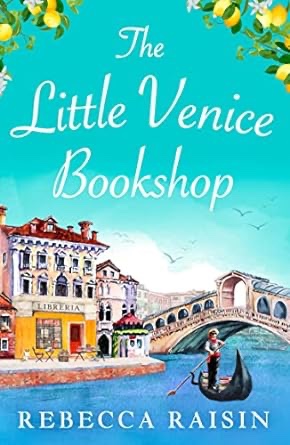
The Little Venice Bookshop by Rebecca Raisin

A bundle of mysterious letters, a trip to Venice, and a journey that will leave a lasting impression.

When Luna loses her beloved mother, it feels as if she’s lost her identity She’s rootless and can’t ground herself. Once she has these doubts, she’s begins to question everything around her. They have enjoyed a rather nomadic way of living up till now, probably because home has been where her mother was, but as she tries to cope with grief, the lack of roots is a struggle.The discovery of a collection of letters in her mother’s possessions seems to signal the way forward and she embarks on a most unexpected adventure. Taking clues from the letters, Luna travels to Venice, in the hope of unraveling her mother’s mysterious past. Maybe if she finds the answers, she might find her own place in the world.

I love Venice. I’ve been lucky enough to spend two weeks there, once in the spring and then a couple of years later in the winter when it actually snowed. I actually travelled with my mum the first time and it was wonderful to see this place we’d always dreamt about come to life in front of our eyes. Venice is obviously a place of wonder, but it’s also got a spooky edge that’s been explored in literature many times. This is more of a ‘cozy’ Venice and I think the cute cover really sets the tone for that. It focuses on the quaint and romantic side of the city, so it’s an easy read, but enjoyable nevertheless. The bookshop is a lovely setting for the story and the rather grumpy owner is clearly crying out for something new, perhaps an antidote to loneliness? As Luna begins to work at the shop mentioned in her mother’s letters she tries to work out how her bohemian mother and the owner, Giancarlo, were connected. She also persuades him to let her develop the shop, improving its visibility through use of social media – to make it a destination place for bookish travellers.

There’s nothing better for an avid reader than a book about books. Luna is definitely a lover of stories and she appreciates what books mean to their readers and collectors. I love that this celebrated second hand books too, something I love too, especially ones that have dedications or messages inside them. Often they tell a story that’s all their own, separate from the printed pages. It’s an interesting thought that these books have been through so many different hands, each with their stories to tell. It was a joy to spend time with a character who’s so passionate about books and Luna’s bookish initiatives are great fun. The family of cats named after authors are particularly whimsical. The idea that her bereavement has made her think about her own life is such a relatable one and the realisation she wants her own family is understandable. The urge to set down roots comes from wanting to make connections, permanent ones that are entirely opposite to the traveller’s existence she’s grown up with. I enjoyed the romance between Luna and Oscar and wondered if perhaps she’d found her forever home?

Although I normally enjoy books that go a little deeper, I did come away from this with a smile on my face. This was a relaxing and soothing read for me. It had a magical feel and I guess it does read like a book lover’s fairytale. I have often daydreamed of a life far different to my own and Italy, books and handsome men are an irresistible combination for this reader. Yes there’s the sadness of loss, but the emphasis is on healing and the result is hopeful and uplifting.

Published on 30th March by HQ

Meet the Author

Rebecca Raisin writes heartwarming romance from her home in sunny Perth, Australia. Her heroines tend to be on the quirky side and her books are usually set in exotic locations so her readers can armchair travel any day of the week. The only downfall about writing about gorgeous heroes who have brains as well as brawn, is falling in love with them – just as well they’re fictional. Rebecca aims to write characters you can see yourself being friends with. People with big hearts who care about relationships and believe in true, once in a lifetime love. Her bestselling novel Rosie’s Travelling Tea Shop has been optioned for film with MRC studios and Frolic Media.

Come say hello to Rebecca on her Facebook page : https://facebook.com/RebeccaRaisinAuthor

Posted in Random Things Tours

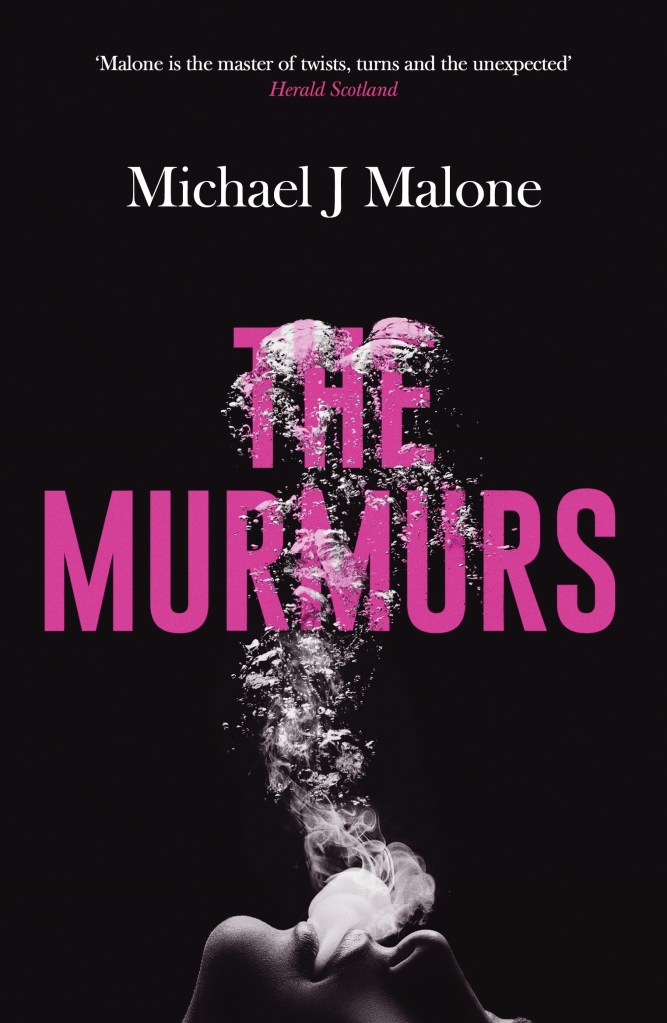
The Murmurs by Michael J Malone

I quickly became fascinated with this mix of historical fiction, psychological suspense and the paranormal. We meet Annie Jackson as she tentatively starts her new job in a nursing home in the West End of Glasgow, hoping to get her life back on track. Annie suffers with terrible nightmares where she’s stuck in a car underwater. She also has the sensation that someone is holding her head under water until her lungs feel ready to burst. She also has debilitating headaches and she can feel one threatening as her new manager introduces her to resident Steve. Then something very odd happens, as a blinding pain in Annie’s head is followed by Steve’s face starting to shake, then reform. A whispering sound begins in her head and she sees Steve as a skull, followed by a vision of him falling in his room and suffering a debilitating stroke. She desperately wants to tell him but how can she without seeming like a lunatic? He becomes agitated and upset, as Annie starts to describe the layout of Steve’s bathroom and he asks her to stop. As she’s sent home from another job she starts to think back to her childhood and the first manifestations of her debilitating problem. Annie survived the terrible car accident that wiped her childhood memories and killed her mother. This strange supernatural phenomenon is why Annie is alone and struggles to make friends. These are ‘the murmurs’.

I felt so much compassion for Annie, as the story splits into two different timelines: we are part of Annie’s inner world as a child, but also 0in the present as fragments of memory slowly start to emerge. We also go back even further to the childhood of Annie’s mother Eleanor and her two sisters Bridget and Sheila. We experience their lives through other people’s stories and written correspondence, especially that of a nun who also works in a residential home. I enjoyed how this gave me lots of different perspectives and how the drip feed of information slowly made sense of what was happening in the present day. Different revelations have a huge effect on the adult Annie and because her memories have been buried for so long she experiences the shock and surprise at exactly the same time as we do. This brings an immediacy to the narrative and I felt like I was really there alongside her, in the moment. With my counselling brain I could see a psyche shattered by trauma, desperately looking for answers, she is piecing herself back together as she goes.

Teenage Annie had a similar vision about a girl called Jenny Burn, who went missing never to return. The murmurs awakened when her mum’s sister Aunt Sheila came to visit them. She tried to openly discuss an Aunt Bridget who also had a ‘gift’ but has ended up in a home. Eleanor, Annie’s mother, asks Sheila to leave, but it’s too late because Annie has already seen that her aunt is dying of cancer. Annie evades her mum and makes her way to the hotel, the only place Sheila can be staying. Unfortunately, Jenny is working on reception. Annie can see her climbing into a red car and she desperately wants to warn her, but she knows she’ll come across as a crazy person. Eleanor is desperately looking for a way to deal with her daughter, she’s a person of importance in the church and she can’t be seen to have a daughter who has visions. Pastor Mosley has Eleanor exactly where he wants her. There’s a control and fanaticism in him that scared me much more than Annie’s murmurs. When Eleanor takes Annie to the pastor, he demonstrates his control by holding her head firmly under his head as he prays for her. When she almost faints, he’s convinced there’s a demon in her. Annie is scared of him, she gets a terrible feeling about him but doesn’t know why. Religion is portrayed as sinister and controlling, with fervent followers who never question, but live in the way they’ve been instructed is Christian? story takes an interesting turn when Annie’s brother Lewis, a financial advisor, becomes involved with the church once more and it’s new pastor Christopher Jenkins, the son of their childhood neighbour. He’s revolutionised the church and through the internet he’s turning it into a global concern. He’s not just interested in saving souls though, he’s also amassing money from his internet appeals. He also seems very interested in meeting Annie.

As the book draws to a close the revelations come thick and fast as both past and future collide. The search for Aunts Bridget and Sheila seems to unearth more questions than answers. Annie finds out that Jenny wasn’t the only woman who went missing in Mossgaw all those years ago. As she starts to have suspicions about her childhood home, Chris seems very keen to draw her back there. Might he be planning a huge surprise? I was a bit confused at first with all these disparate elements, but as all the pieces started to slot together I was stunned by the truths that are unearthed. Then as Annie’s childhood memories were finally triggered I felt strangely terrified but also relieved for her all at once. I hoped that once she’d regained that past part of herself she would feel more confident and free, despite the strange gift she seemed to have inherited. Maybe by facing the past and leaning in to her relationship with her brother, she might feel more grounded and strong enough to cope with her ‘gift’. I thought the author brought that compassion he’s shown in previous novels but combined it with a spooky edge and some intriguing secrets. I really loved the way he showed mistakes of the past still bleeding into the present, as well as the elements of spiritual abuse that were most disturbing. This book lures you in and never lets go, so be prepared to be hooked. Michael Malone is a natural storyteller and the fact this is billed as Annie Jackson Number One makes me think there may be others. I certainly hope so,

Out Now from Orenda Books.

Meet the Author

Michael Malone is a prize-winning poet and author who was born and brought up in the heart of Burns’ country. He has published over 200 poems in literary magazines throughout the UK, including New Writing Scotland, Poetry Scotland and Markings. Blood Tears, his bestselling debut novel won the Pitlochry Prize from the Scottish Association of Writers. Other published work includes: Carnegie’s Call; A Taste for Malice; The Guillotine Choice; Beyond the Rage; The Bad Samaritan; and Dog Fight. His psychological thriller, A Suitable Lie, was a number-one bestseller, and the critically acclaimed House of Spines and After He Died soon followed suit. Since then, he’s written two further thought-provoking, exquisitely written psychological thrillers In the Absence of Miracles and A Song of Isolation, cementing his position as a key proponent of Tartan Noir and an undeniable talent. A former Regional Sales Manager (Faber & Faber) he has also worked as an IFA and a bookseller. Michael lives in Ayr.

Posted in Squad Pod

The Continental Affair by Christine Mangan

Meet Henri and Louise.

Two strangers, travelling alone, on the train from Belgrade to Istanbul. Except this isn’t the first time they have met. It’s the 1960s, and Louise is running: from her past in England, from the owners of the money she has stolen―and from Henri, the person who has been sent to collect it. Across the Continent―from Granada to Paris, from Belgrade to Istanbul―Henri follows. He’s desperate to leave behind his own troubles and the memories of his past life as a gendarme in Algeria. But Henri soon realises that Louise is no ordinary traveller.

As the train hurtles toward its final destination, Henri and Louise must decide what the future will hold―and whether it involves one another. Stylish and atmospheric, The Continental Affair takes you on an unforgettable journey through the twisty, glamorous world of 1960s Europe.

All the way through the novel I kept thinking of The Thomas Crown Affair, the glamorous and seductive 1960’s film starring Faye Dunaway and Steve McQueen as a rich playboy suspected of stealing a priceless painting and the insurance investigator sent in to catch the thief. The Continental Affair had that same mix of incredible style, plot twists and wonderful locations. I mustn’t forget the sexual tension – that chess scene alone is a masterclass in seduction! Christine Mangan’s third novel is similarly alluring, from the Hitchcock-esque cover design to the incredible cat and mouse tale within.

The story is told through a dual timeline narrative, enhancing the sense of cat and mouse between the characters. Yet they have more in common than we might initially think. Yes, the chase has this cat and mouse running in the same direction but it’s not just about the chase, they’re both trying to escape their past as well. From the moment they ‘meet’ in a train compartment on the way to Istanbul they’re playing a game. They might be acting as if they’ve never met, with their polite conversation, but Henri knows who she is because he’s been tracking her from country to country. Similarly, Louise knows exactly who Henri is and why he’s there. She first ventured into Europe as an escape from a cruel and restrictive family life in England. Then, in Granada she stole from a criminal gang and went on the run. Henri was related to the criminal gang who sent him to collect an amount of money, only to witness Louise stealing it right in front of him. Yes, he’s been sent to retrieve the money but he’s also driven by a fascination in Louise and the more he follows her, the more fascinated he is. Interestingly, Henri worked in Algeria as a gendarme and this past plays on his mind constantly, yet once he starts pursuing Louise he’s distracted from his own demons. This is a police officer who finds himself on the wrong side of the law. Henri is the first narrator and once I got to know him I expected to be on his side. Then I heard Louise’s back story and I felt sorry for her, struggling with her disabled father after her mother left the family home. The only joy and escape she had was in books and I was torn between my understanding for her and my knowledge that she’s taken someone else’s money.

Reading this book felt like the Saturday afternoons I spent with my grandad watching old black and white films, where he’d teach her me who all the actors and actresses were. This could have been the gentleman Cary Grant pursuing Grace Kelly with her sleek, sophisticated glamour. I’m now waiting for a gap in reads so I can go back and read the author’s previous novels on the strength of this one. I enjoyed all the settings, the incredible landmarks, the food and the two intriguing people I was travelling alongside. I was glued to this tale wondering whether Henri would overcome his fascination and retrieve the money or whether this developing relationship would take our pair to becoming friends, or even more. I’d had this book on NetGalley for quite a while and I can’t believe I left it until the Squad Pod got the chance to read and review? It’s the sort of book I love to get lost in because it combines such evocative descriptions of European destinations and the 1960’s era. I felt like I was there for every moment and I when I was away from the book, I missed it. I loved the journey, the actual and the emotional one. Henri and Louise want the same things and it was delicious watching them realise this and become ever closer. I was transfixed, waiting to see if Henri would actually complete his mission to retrieve the family money, or whether he’d forget their game of cat and mouse. Christine Mangan has created two such intriguing characters who despite their mistakes are incredibly likeable and memorable. This a wonderful escapist read full of both style and substance.

Meet the Author

Christine Mangan has a PhD in English from University College Dublin, where her thesis focused on eighteenth-century Gothic literature, and an MFA in fiction writing from the University of Southern Maine. Tangerine is her first novel

Posted in Publisher Proof

The Mystery of Yew Tree House. The Detective’s Daughter Series – Book 9

As Stella Darnell arrives at Yew Tree House, it seems like an idyllic little place to spend the summer. Like any village, Bishopstone has it’s past and a dark side lurking beneath the surface. The holiday is a trial of sorts for her, partner Jack Harmon and his seven-year-old twins, Milly and Justin, not forgetting Stanley the dog. Stella‘s thoughts and feelings around a more permanent living arrangement with Jack is always changing, but what better way to trial the arrangement? As they disembark and start to explore it’s clear that the house is a little dilapidated once you look closer. Stanley and Millie, both as lively and full-on as each other, are soon tramping round the garden making discoveries. The house belongs to the Stride family, two sisters Stevie and Rosa live in the annex while eking out their state pension by renting the main house for holidays. Perpetually single, the two women can’t afford to run Yew Tree House, but can’t afford to leave either. It’s clear that some parts of the house are past their best, but cleaning company owner Stella, can see past that and once the place has had a good scrub it will be adequate for a family holiday. However, the house has a complex history, especially the period during WW2 when Stevie and Rosa were girls, living with mum Adelaide and an evacuee called Henry. Their Dad Rupert is called up but loses his life at Dunkirk, leaving his family to make their own way in the midst of rationing and the bombings while their house is also used as a meeting place for the Home Guard. When Millie is exploring one day she finds an old pill box in the garden (a concrete guard post or dug-out from where volunteers would defend the coastline) putting past and future on a collision course. Inside is a skeleton, with a hole in it’s skull that’s been caused by serious force. Jack and Stella may have fallen upon a murder mystery for their popular podcast, but as the aged vicar glares at them from his cemetery across the road, it could be that not everyone wants the truth to be discovered.

This is a book within a series based around Jack’s true crime podcast and I would recommend reading the others to better understand the relationships in this story. I felt I connected better with the wartime section of the story and I think it was because regular readers will know these characters well. Jack is rather blindly optimistic about their first family holiday, leaving readers and Stella as the more doubtful parties on this journey, especially when we meet the redoubtable Milly. Despite being of primary school age, Millie is possibly in charge of every room she walks in and if I were Stella, I’d be imagining what this exuberance might look like when ramped up by teenage hormones! A terrifying thought. I didn’t pick up the chemistry between Stella and Jack at first, but they clearly have a joint passion for solving mysteries and presenting true crime stories that’s rather infectious. I really liked the fact that both characters were connected to the area, bringing an added element to their sleuthing as I felt they had a stake in the village’s history and a real thirst for the truth. I thought the author created an interesting balance, not only between the two timelines, but with a contrasting lightness and shade of the plot. Family life is very lively and full of fun, especially with Stanley’s antics, and there was an almost Famous Five style coziness to the mystery. However, as foreshadowed by the glowering vicar in the book’s opening, there are darker undertones that become even more pronounced as we travel back to the 1940’s.

War isn’t the only cloud over Rosa and Stevie’s family, there is a missing girl too and the anxiety felt by Adelaide Stride about her two girls is very real. I felt Adelaide’s uneasiness around some of the guard, who move freely around the downstairs at night. The house is split between normal family life upstairs, with the realties and tension of war downstairs. There’s a sense this is men’s business and the presence of them in her family home must have added to her worries about her girls. Can Adelaide trust them? It seems clear she has her instincts and one character definitely raised her hackles (and mine). Tension and suspense build in both timelines, with some creepy moments but the wartime sections were the more disturbing. The present day sections have plenty of humour, the directness and attitude of Miliie, as well as plenty of twists to keep the reader on their toes. The fact that some of the characters from the 1940’s still live in the vicinity added to the tension towards the end of the book, as I wondered if any of them were still a danger in the present day. What might they do to keep certain secrets buried? Stella and Jack would need to keep their little family safe, all the while uncovering a tale that holds the heartbreak and tragedy of WW2, alongside a vengeful and murderous secret.

Meet the Author

Lesley Thomson was born in 1958 and grew up in London. She went to Holland Park Comprehensive and the Universities of Brighton and Sussex. Her novel A Kind of Vanishing won The People’s Book Prize in 2010. Lesley combines writing with teaching creative writing. She lives in Lewes with her partner.

Posted in Netgalley

Harlem After Midnight by Louise Hare

Ever since the final page of Miss Aldridge Regrets I’d wondered what would happen next to Lena, who had managed to escape the clutches of a murderer, find her birth mother and become the lover of band leader Will all on board ship. She was sailing to New York to audition for a new musical on Broadway, but became embroiled in the life of a rich NYC family after being placed with them for dinner. Now in New York, what would become of her relationships – both with her mother and with Will? Would she be able to find work after finding out the Broadway job was a ruse to get her on the voyage? I was shocked when the novel began with a woman, sprawled on the sidewalk after failing from a high rise window. As the police arrived and start to look at the body they notice she’s clutching something in her hand. It’s a passport in the name of Lena Aldridge. The author then takes us back to Lena’s arrival in NYC nine days earlier, when Will had taken her to stay with friends of his until the return voyage. What could possibly have gone so wrong?

Lena has found herself dragged into Will’s world, perhaps a little sooner than would be expected in a conventional relationship. As Will takes leave she wonders if this will give them time to test their relationship out and whether they could have a future. His friends Claudette and Louis are a lovely couple who live in a good neighbourhood in Harlem. Claudette is a librarian and she settles Lena into their spare bedroom, telling her about how long they have known Will and that they’re looking forward to getting to know her. Will’s only family is his sister Belle and niece Joey, who he stays with when the ship’s on a fortnight turnaround. The five are pretty close knit, apart from the obvious tension between Will and his sister, despite which he absolutely adores his niece. Even though she’s wary, Lena and Belle get along enough to go out shopping and have cocktails in a fancy bar. I started to feel this creeping sensation that Lena was on the outside of something. The three friends have secrets and so does Belle, is it because Lena is new to the group and maybe not quite trusted yet? Is there something about her being British that makes them think she won’t get it? She is surprised to find out That despite their animosity, Will does go to any lengths to protect his sister. Lena is patient though, she has concerns about her own situation and doesn’t want to delve too far into their secrets, without knowing what’s going to happen between her and Will. It’s too early to say love or talk about permanence. She doesn’t even know if she could find herself living in Harlem. Lena’s also looking for people who knew her father to learn about his early life and if there’s family that Lena’s never met. There are also financial and emotional issues in her relationship with her mother that must be resolved. It’s a huge crossroads to negotiate and the tension builds as we start rooting for her future and worrying she’s plummeted to her death.

I love this combination of historical crime mystery, especially those set in such a stylish city and time period. I think in a lot of ways this was a more successful novel than the first and I definitely felt the time period in the social life of Harlem and the contrasting Sunday church going. The glamour of New York was set beautifully against those less fortunate and I was interested in the way colour had some bearing on this; Lena and Belle can ‘pass’ as white enough to get into a fancy bar, but the much darker skinned Will would have struggled. I enjoyed these deeper looks into racial divisions, class and privilege, as well as how they differed in the earlier timeline. Lena being bi-racial didn’t seem to have the same complexity in London as it did in New York, but she is reminded a few times that it would be worse in the south. There are references to lynchings, the prejudice around mixed race relationships (both for Alfie and his daughter) and the exploitation of black women by wealthy white men. In this earlier timeline I enjoyed this exploration of young black women’s lives as well as the contrast with the relative freedom Lena and Belle are enjoying. Have things changed or is it their lighter skin?

I thought the historical element really came to life and I enjoyed these sections that went back even further to 1908, when her father Alfie suddenly fled New York for London. As both of these storylines started to reveal their secrets, the novel became intense and gripping. I had suspicions around both Claudette and her husband, because although they were there for Lena in a practical sense they didn’t give much of themselves emotionally. There were also certain morals to their way of life, such as Will not staying with Lena at their flat. I wasn’t sure that they actually liked her, but wanted to do a favour for Will. The central mystery really held my attention and remained tense even with the flashbacks in-between. The more building blocks we had to construct Lena’s, the more I felt I knew her and the hope she’d have a happy ending grew for me. I would suggest reading the first novel before this one as there are links and recurring characters throughout. There was an open ended feel to the final chapter so who knows we may be able to spend time with Lena again. I’d be more than happy to join her.

Meet The Author

Louise Hare is a London-based writer and has an MA in Creative Writing from Birkbeck, University of London. Originally from Warrington, the capital is the inspiration for much of her work, including This Lovely City, which began life after a trip into the deep level shelter below Clapham Common. This Lovely City was featured on the inaugural BBC TWO TV book club show, Between the Covers, and has received multiple accolades, securing Louise’s place as an author to watch.