Posted in Squad Pod Collective

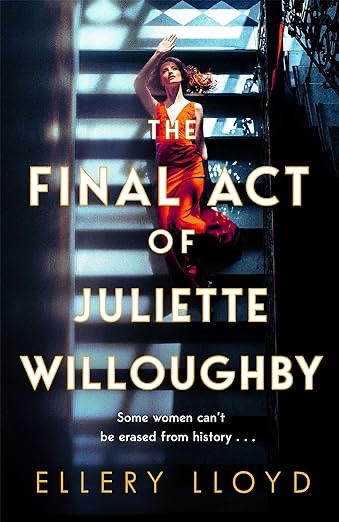
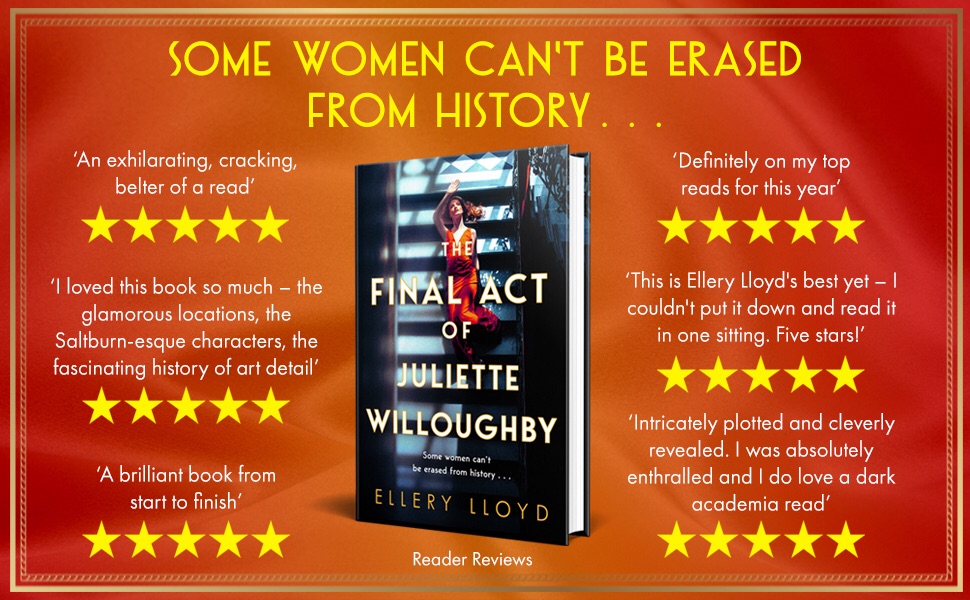
The Final Act of Juliette Willoughby by Ellery Lloyd

Having just read about female surrealist artists in The Paris Muse by Louise Treager I was so ready for this story about the art world, women painters and a mystery surrounding British artist Juliette Willoughby. The writers tell their story across three timelines. In 1938, Juliette Willoughby is living and painting alongside her lover Oskar in Paris. A British heiress, she left her family and their money behind for a life as an artist who is best known for her painting ‘Self-Portait as Sphinx’, thought to be lost in a studio fire where she also lost her life. We meet our main characters Caroline and Patrick at Cambridge in 1991, where they are both studying art history and specialise in the Surrealists. They are sent to the same dissertation supervisor and while researching come across something sinister about Juliette’s death. Their investigations may expose terrible secrets about the Willoughby family, who are acquaintances of both students and aristocrats who don’t want their family history out in the open. Our final timeline is present day Dubai where Patrick is an art dealer and lives with his wife. Caroline is now an academic and expert on Surrealism, especially Juliette Willoughby so when a new Self-Portrait as Sphinx is uncovered he asks her to fly to Dubai and authenticate the painting. A sale is on the cards and Patrick needs to know if this painting is a second version by the artist and potentially worth millions. He plans a night for collectors to view the painting and offer sealed bids, but the night ends with Patrick in a cell accused of murdering one of his closest friends – the last surviving member of the Willoughby. There are now three suspicious deaths linked to this painting, but can Caroline unlock the mystery before Patrick is charged with a crime he didn’t commit?

I have a real interest in art history and the lives of artists, probably formed when I studied Victorian art history as part of my literature degree. My particular interests are the Pre-Raphaelites, the Arts and Crafts movement, Klimt and Frida Khalo, so it was brilliant to learn more about the Surrealists who are outside of my experience. My only understanding is that the artists may be representing the contents of their subconscious rather than the conscious. I can be a little bit scathing of some modern art, having my teenage years in the 1990s we were in the world of the YBAs – such as Damien Hurst and Tracey Emin. I have been to gallery openings where I could only conclude that other people had an ability to see something I couldn’t or that everyone was affected by a dose of the Emperor’s New Clothes – too scared to say anything negative they just nodded along and agreed it was good. I will never grasp why people spend a fortune on paintings that are nothing more than a red square on a beige background. As you can imagine, I drove my artist friend crazy when we visited the Guggenheim in NYC. I understand a piece that hits you in the emotions or a true passion to own and look at something incredibly beautiful every day, but it seems that more often than not investors pay millions for something that will sit in a storage unit. I thought I might find the art world in the book pretentious, but I could understand Caroline’s deep fascination with Juliette. There’s something about a female artist, often overshadowed by the man she lives with, that brings out the feminist in me. From Dora Maar whose photography and painting was eclipsed by Picasso to authors like Zelda Fitzgerald, thought to have contributed greatly to F. Scott Fitzgerald’s writing, there’s an urge to uncover their talent and put them in their historical context. This is the passion of Caroline, but Patrick is definitely complicit in trying to solve the mysteries the this particular painting found at a party in the Willoughby mansion.
This story has all the ingredients of a good old-fashioned mystery with the archetypal eccentric aristocratic family at it’s centre. Juliette’s father is an Egyptologist who never got over the death of her younger sister Lucy who drowned in the lake. Juliette is aware that she can never measure up to the baby of the family, who never reached her teenage years or tested her family. After her death, her father built a pyramid shaped sarcophagus on the island in the middle of the lake. Close to Lucy’s death, a maid disappeared from the house and then Juliette’s cat went missing too. Keeping the Egyptian theme was the club the Willoughby men formed at university, which had several similarities to the Bullingdon club. It was like an American college fraternity with it’s own initiation tests, pranks and hazing rituals. All members wear a signet ring with an Egyptian hieroglyph. Patrick was friends with both Harry and Freddie Willoughby, but the brother’ enmity for each other ran deep. At the party attended by Caroline and Patrick, Freddie disappeared after falling from some scaffolding during an argument with his brother. The amount of blood left behind would indicate a severe head injury but he is nowhere to be found, much to the distress of his girlfriend Athenia. It’s this same night when Caroline finds Juliette’s masterpiece and her diary. On impulse she takes the painting, wraps it carefully and places it in the boot of Patrick’s MG. What can she do with it from here and will the Willoughby’s know that it’s gone? Patrick suggests it’s placed in a small country sale where it’s value will go under the radar and they should be able to legitimately buy it, yet the unthinkable happens and the painting soars above when they can afford. Caroline still has the diary though and through it we can hear about her life with Oskar and the inspiration for the painting. She brings 1930s Paris alive for us a d provides clues to the symbolism of her Sphinx painting.

Finally, these sections are interspersed with the present day where Patrick has asked Caroline to come to Dubai. This is all the more tense because she is his ex-wife and Patrick has remarried. He wants her in Paris to answer questions that potential investors might ask. How can she know this piece is by the same artist as the 1930’s painting and is it from the same time period? There are differences in the smaller narrative parts of the painting in the background, why would the artist change them? Soon the presence of the painting brings other people from the past into Dubai, including Freddie’s girlfriend from the 1990’s Athenia. She is advising one investor who wants to remain nameless and as they all gather to make their bids in just one night it becomes clear that Patrick and Caroline’s reputations hang in the balance. However, it’s Patrick who finds himself in a cell, losing his standing, his financial future, his liberty and possibly even his marriage. What could have gone so wrong? This is such a complex mystery and as we get closer to unravelling some of the secrets, the tension starts to build. It definitely grips you and keeps the pressure on. I loved the history unravelled through Juliette’s diary and her take on what it’s like to live and work alongside another artist. There’s a certain point where I found myself reaching for the book in my downtime more than putting on the TV or radio. It’s a real skill to build tension like these authors do, slowly but surely sucking you in. You will find that you want the answers as much as Caroline and Patrick do. I also thought there were more tangled questions than they could ever resolve, but keep going. It’s definitely worth it and there are no loose ends left untied. I found myself focused on Juliette, Caroline and Patrick more than any other characters. Others are definitely hard to like – especially those with the hint of the Bullingdon Club in their pasts and a sense of elitist entitlement in their characters. These are people who will commit any sort of crime to keep their status and the respectability of their family. I found this attitude strangely believable in the recent political climate where lies and cover-ups seem to be the norm. I was amazed how well it was all tied-up and how the author used distraction and first person narrative to make sure we only read what they wanted us to. The novel moves effortlessly from writer to writer and I wouldn’t have known it was a writing team. They are masters at letting us into some secrets while shielding others until later on, right up until the last few pages.

Out now from Pan MacMillan
Meet the Authors

Ellery Lloyd is the pseudonym for New York Times bestselling husband-and-wife writing team Collette Lyons and Paul Vlitos.

Collette is a journalist and editor, the former content director of Elle (UK) and editorial director at Soho House. She has written for The Guardian, The Telegraph, and the Sunday Times.

Paul is the author of two previous novels, Welcome to the Working Week and Every Day is Like Sunday. He is the program director for Professor of Creative Writing at the University of Greenwich.
Posted in Monthly Wrap Up

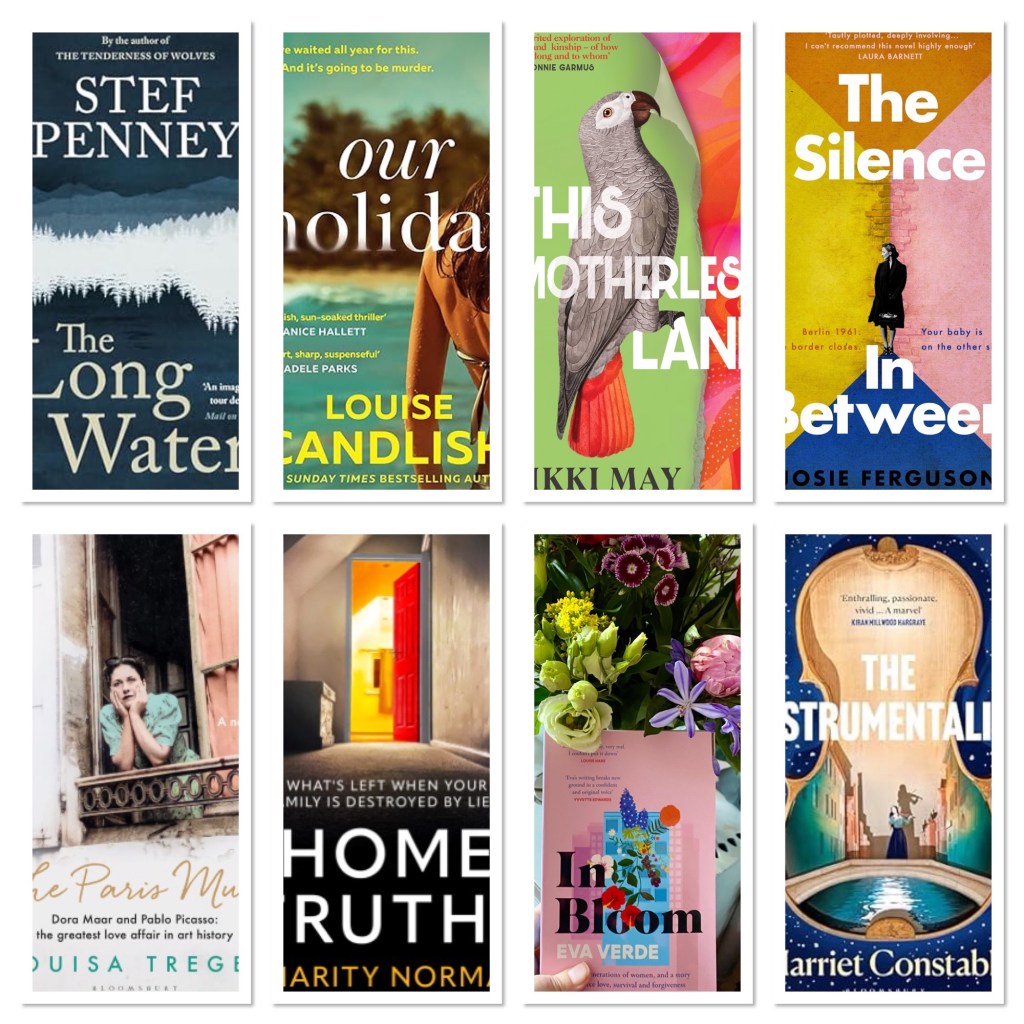
Best Books July 2024.

Every month this year seems to drift far away from my plans, for life in general and for reading! This last month my husband and I finally caught COVID as we welcomed his daughter back from university for the summer. We were both consigned to bed for a few days in his case and a whole week in mine. I’ve since had a sinus infection that’s caused nose bleeds and facial pain, plus I’m still struggling with my breathing so am on steroids, antibiotics and have an inhaler. We took a holiday to Wales and thankfully, took my carer and her children too. I spent a lot of time looking out at the view, reading and resting – what a view it was! While everyone else took turns looking after me. I did manage to get a couple of days in my favourite haunts of Beddgelert and Porthmadog, where I went to a favourite bookshop – Browsers Books. I made some great purchases from their second hand collection that I’ll show you in a few days when we’re fully unpacked. My dog Bramble had a lovely walk in the morning with my carer Louise before getting me organised and my husband managed to get some fishing done. I watched a lot of films that had been clogging up my watchlist on Netflix too. I came home on Thursday night and went straight to hospital on Friday morning for a radio frequency denervation on my back, so I’m now in bed recovering and trying to stay off my feet. I’ve managed to catch up on some Squad POD reads this month, which I was terribly behind on and I was late with blog tours. Sometimes book blogging doesn’t go according to plan, but luckily book people are some of the kindest I’ve ever met. Thanks to everyone for your patience and kindness this month ❤️❤️❤️

I loved this wonderful debut from Harriet Constable. Set in the magical city of Venice in the 18th Century, this shows a different side to the same place where Casanova was prowling the richest parties. We follow the fortunes of Anna, an orphan who was passed into the care of nuns at the Ospedale Della Pieta. The orphanage has a hatch in the wall, just big enough to accommodate a newborn baby and this is how Anna came to be at the orphanage with her friends. The girls are schooled but the specialism is music and Anna is playing the violin. She is a bright, sparky and ambitious girl absolutely bristling with energy and promise. When she catches the eye of the music master she hopes to reach the level where she can audition for the orphanages elite orchestra. Everyone knows that orchestra girls get special treatment, perform in the best venues in the city and receive gifts from patrons. She has definitely caught the eye of the master, who has organised for her to have her very own custom made violin. However, it isn’t until she’s a little older that she sees how precarious her position is. Those girls who don’t become elite musicians are introduced to eligible men, often rich but very old. For Anna this seems a fate worse than death, all she wants is to play the piano and be the best. In order to get there she will sacrifice everything… but will it be worth it? This is a fantastic debut, full of rich historical detail and brimming with tension.

In a remote region of the Norwegian arctic, a community struggles with its secrets when a young man called Daniel goes missing. This is the period called the Russ when teens who are about to leave school go through a period of partying, practical jokes and letting off steam. Svea is an elderly woman who has lived in the area for all her life. She has a simple life with her dog Aster and heads down to the cafe for her breakfast each morning. More often than not Odd Emil joins her, not that they have an arrangement. They’ve known each other all their lives and he was once in love with Svea’s beautiful younger sister Norah who disappeared many years ago, thought to be drowned. There are so many secrets here that it’s hard for the police to find Daniel. A fancy dress Russ party took place that weekend, Svea’s granddaughter Elin and her best friend Benny decide to attend in drag, with Elin surprised to find herself kissing Daniel despite her pink beard. Benny sees Daniel’s friends abandoning his car at a local hotel, so it looks like he started out on a walking trail. Can Benny tell the police what he’s seen without disclosing what he was doing there himself? When a body is found in a cave during the search, the police release that it has been there too long for it to be Daniel. But if it isn’t the missing teenager, who can it be? This was a brilliant thriller, depicting a seemingly ordinary town full of secrets and lies.

I loved this tale of Nigerian girl Funke, living a happy life on the university campus with her father and mother, plus brother Femi. Her life is turned upside down one ordinary morning on the way to school, when an accident kills both her mother and brother. Funke’s mother kept her in-laws at bay most of the time, knowing that her mother-in-law disapproved of her son’s marriage to a white woman. Now, with her father in shock, her grandmother is in charge and her ‘bush’ ways are having an influence. How could Funke have come out of the same crash without a single mark on her? Funke’s aunties can see which way the wind is blowing and make a decision that it would be best to send her to her mother’s family in England. The white side of her family. Totally out of her depth, Funke has never met her mum’s family or been to England. The Ring, her mum’s childhood home is an old mansion and not the fairy tale place she talked about to Funke and her brother. Even worse is Aunty Margot, a bitter and angry woman who blames her sister Lizzie for ruining her wedding; when Margot’s fiancé found out Lizzie had run away with a Nigerian man he broke off the engagement. If it wasn’t for her cousin Liv, Funke would have felt lost. She was determined to make Funke feel at home and wants to become her best friend. Can she succeed or is Funke’s life always going to be turbulent and changeable? This is a gorgeous book, vibrant and life affirming.

Pine Ridge is an idyllic coastal village on the south coast and it’s almost August so it’s time for the ‘Down from London’ crowd to start arriving on the ferry. This is one of those places struggling due to the amount of local property bought up as second homes and holiday lets. This August the two sides are set to clash more than ever as locals have set up a campaign group – the NJFA or Not Just For August movement. They have a series of publicity stunts set up for the coming month, starting with egging visitors cars as they come off the ferry. Amy and Linus are coming to stay in their new holiday home for the first time, sharing a week’s holiday together until work starts on their renovation. Having been introduced to Pine Ridge by friends Perry and Charlotte, Amy was determined to have a home with a sea view and a summerhouse just like theirs. Perry bought their house outright with his banker’s bonus and Charlotte created The Nook where everyone congregates for drinks in the evening. Locals Robbie and Tate live in the caravan park, only just able to afford the rent on a static home, which is boiling during the summer. They and their girlfriends have jobs that serve the incomers, but they’re not well paid and even the smallest flats have been pulled off the rental market to become AirBnB lets. The two sides will clash, but everyone seems shocked when a summerhouse is bulldozed over the cliff and on to the beach. Even more so when the police find a body inside! This a smart contemporary thriller with a perfect satirical look at the upper middle classes.

This is one of the most moving books I have ever read. Lissette’s baby son has been unwell and she’s had to take him to hospital on the west side of Berlin. When the medics try to get her to go home and sleep she’s very unsure, but they convince her to get some sleep and bring more supplies back in the morning. Lisette makes her way back to East Berlin, feeling more confident about her baby son’s recovery. When the household wakes the next morning a seismic change has happened. A barrier has been created between East and West Germany overnight. Lissette runs to where soldiers are guarding entry to the west and begs them, surely if she just explains that her baby is in a hospital just a few streets away they’ll let her through. He needs his mother. As the hours turn into days Lissette is grieving for her son and daughter Ellie wants to find a way to make things right again. She has a gift for music and hears people’s emotional state as a melody, but her mother’s music has gone. She makes a decision. She is going to find a way of getting across the new border and into the west. There she will find her brother. The historical research for this book is clearly extensive and I was actually ashamed of how little I knew about this time in history. We also go back to WW2 and Lissette’s teenage years in a city at war, giving us background on the family and how Berlin and Germany came to be separated. This is a heart-rending and emotional story showing how an historical event affected the real people living through it. Really exceptional writing.

I’m a big fan of Charity Norman because she’s great at bringing the conflicting issues of society into family relationships, exploring whether they grow stronger or whether they crack. Livia Denby is a probation officer on trial for attempted murder and the jury have reached a verdict. Everything went wrong two years before, as Livia and her family are celebrating daughter Heidi’s birthday. Her gift is a new bike and she’s planned a bike ride to a local pub with her dad. Scott has promised to take her for a birthday lunch and she’s really excited to have her dad to herself. Scott has lots of responsibilities; he’s a father, an English teacher and cares for his brother who has Down’s Syndrome and diabetes. As Scott’s phone keeps ringing, Heidi can see their outing slipping away. Her uncle has already called twice because he’s confused they’re not going to Tesco as usual. Before the phone can ring again, Heidi slips it down the back of the armchair. It’s a momentary decision with terrible consequences. Livia awaits their return with terrible news. Scott’s brother accidentally locked himself out of the house and had a hypo. Despite help from passers by, the paramedics were unable to revive him. He died before he even reached the hospital. When Scott finally finds his phone there’s one plaintive, heartbreaking voice mail he can’t get over and his guilt complicates his grief. Scott starts looking for answers and fixates on one witness who said the ambulance took a long time and the paramedics were slow to act. He starts to research medical negligence, watching videos on YouTube and making links with content creators who talk about ‘Big Pharma.’ Before long he has fallen down the rabbit hole into conspiracy theories that separate him from his family. This is such a hot topic at the moment and the author has brilliantly portrayed how people can be brainwashed and radicalised by social media. I thought this was a fantastically tense and incredibly intelligent read.

This is a fascinating story about Dora Maar, a photographer and artist who exhibited alongside some of the greatest artists in the Surrealist movement. She lived in Paris for most of her life, most notably, during the German occupation in WWII. Born Henrietta Theodora Markovitch in 1907, she used her photographic art to better represent life through links with ideas, politics and philosophy rather than slavishly photographing what was naturally there. She was exhibited in the Surrealist Exposition in Paris and the International Surrealist Exhibition in London in 1936. In the same year she was exhibited at MOMA in NYC. She first encountered Picasso while taking photos at a film set in 1935, but they were not introduced until a few days later when Paul Elduard introduced them at Cafe des Deux Magots. Dora is intent on catching his eye and sat alone, using a pen knife to stab between her splayed fingers. Where she missed, blood stained the gloves she wore and Picasso kept them with his most treasured mementoes. The gloves are a metaphor for their entire relationship – he fed off her emotions. We are inside Dora’s mind at all times giving her control of her story. In a world where Dora is known best through her relationship with a man, instead of her own work, Treger is simply redressing the balance. You’d have to be utterly blind to think there’s any other way of looking at his treatment of her and the other women he was involved with. In the nine years they were together, she was subjected to mental and psychological abuse. She was underestimated as an influence on his work, particularly Guernica and his politics. I felt that Picasso was drawn to her masochism and fed on the pain he caused her for his personal satisfaction and his art. Picasso comes across as a narcissist; constantly told he was a genius he believes everything revolves around his needs and his freedom to work. This is seen in The Weeping Woman series of paintings where she’s depicted as a woman who is constantly tortured and distressed, when she’s so much more than this. This is a brilliantly researched piece of art history told as a memoir.

This isn’t the first time I’ve read Eva Verde’s novel but I was asked to read it again for the paperback publication on 1st August. I worry about trigger warnings, they stop people reading books they might connect with emotionally and potentially prevent a healing process. If anyone should have avoided this book it was me, because I was Delphine. I lost the love of my life in my early thirties and then sleepwalked into a coercive and damaging relationship. So this was a hard read at times, but that wasn’t remotely negative. Moon, Delphine and Roche are three generations of a family. Each woman has her own issues, but they all stem from right back at the beginning. As the book opens Roche can no longer live with her mother and Itsy, the man she’s been living with for most of Roche’s life. So she decamps to her grandmother Moon’s house. Roche feels like Itsy dislikes her and wants Delphine all to himself. Of course it’s easier to control someone who’s isolated. Delphine has a ‘glazed over’ look and has done everything she can to keep Itsy happy. She’s changed how she dressed, made herself less beautiful, stayed at home and stopped going out with friends. Every day she makes herself smaller to make more space for him and Roche can’t watch it anymore. However, Delphine is changing, she has a job she enjoys at B & Q, new connections with her colleagues and today she has made a choice. Delphine is pregnant and she knows deep down in her soul that ‘the thought of more years, more life, tied to him’ is more than she can bear. She goes quietly on her own for an abortion, the quietest but most powerful act of rebellion she can make. Then comes an opportunity, Itsy receives a phone call from Jamaica. His mother is dying and he must jump straight on a flight. Delphine lets him go alone, knowing that now she has several weeks to herself. She doesn’t stop Roche from moving out and accepts this as her time to heal, time to be the parent that so often Roche has to be for her. However, this isn’t the only recovery needed in the three generations of this family thanks to the actions of men. This was such a real, emotionally engaging story that focused on relationships between mothers and their daughters especially those responses to trauma that we pass on to the next generation. This was so emotionally intelligent and uplifting.

This was a fascinating mystery, set within the art world and told from different points of view within three timelines. In 1938, Juliette Willoughby is living and painting alongside her lover Oskar in Paris. A British heiress, she left her family and their money behind for a life as an artist who is best known for her painting ‘Self-Portait as Sphinx’, thought to be lost in a studio fire where Juliette also lost her life. We meet our main characters Caroline and Patrick at Cambridge in 1991, where they are both studying art history and specialise in the Surrealists. They are sent to the same dissertation supervisor and while researching come across something sinister about Juliette’s death. Their investigations may expose terrible secrets about the Willoughby family, who are acquaintances of both students and an aristocratic family who don’t want their family history out in the open. Our final timeline is present day Dubai where Patrick is an art dealer and lives with his wife. Caroline is now an academic and expert on Surrealism, especially Juliette Willoughby so when a new ‘Self-Portrait as Sphinx’ is uncovered he asks her to fly to Dubai and authenticate the painting. A sale is on the cards and Patrick needs to know if this painting is definitely a second version by Juliette and potentially worth millions. He plans a night for collectors to view the painting and offer sealed bids, but the night ends with Patrick in a cell accused of murdering one of his closest friends – the last surviving member of the Willoughby family. There are now three suspicious deaths linked to this painting, but can Caroline unlock the mystery before Patrick is charged with a crime he didn’t commit? This book creeps up on you, a slow building tension grabs you and doesn’t let go. You will find yourself desperate to know about the painting and what happened in the Willoughby family.

Here’s my view on holiday:

Posted in Squad Pod

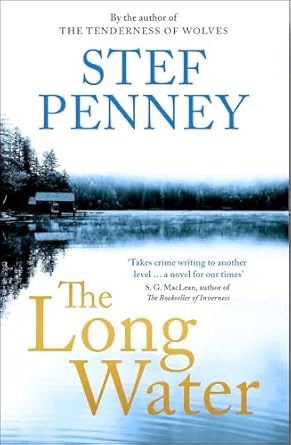
The Long Water by Stef Penney

Nordland. A region in the Norwegian Arctic; a remote valley that stretches from the sea up to the mountains and glaciers.

It is May in what was once a prosperous mining community. The snows are nearly gone and it’s a time of spring and school-leavers’ celebrations – until Daniel, a popular teenage boy, goes missing. Conflicting stories circulate among his friends, of parties and wild behaviour.

As the search for Daniel widens, the police open a disused mine in the mountains. They find human remains, but this body has been there for decades, its identity a mystery.

Everyone in this tight knit, isolated community is touched by these events: misanthropic Svea, whose long life in the area stretches back to the heyday of the mines, and beyond. She has cut all ties with her family, except for her granddaughter, Elin, an outsider like her grandmother. Elin and her friend Benny, both impacted by Daniel while he was alive, become entangled in the hunt for answers, while Svea has deep, dark secrets of her own.

After a move into historical fiction with her fabulous The Beasts of Paris, this feels like a more pared back novel set in modern day Norway. It is a crime novel, based around a missing teenage boy called Daniel. We see a lot of the action through the eyes of an elderly woman called Svea, who has lived here all her life with her two younger sisters. Her youngest sister Nordis, went missing many years ago, thought to have drowned herself in the sea. Svea lives with her puffin hound Asta and has a simple routine of walking into town with her dog for a coffee and pastry, often sharing her breakfast with Odd Emil, another elderly resident of the town who was once in love with the very beautiful Nordis. Daniel is Emil’s grandson and he’s struggling with his inability to do anything, he can’t help. Svea’s granddaughter Elin had been to a russ ball, a little like a senior prom. During russ, school leavers play pranks on each other and issue dares. It’s a time period that teachers tolerate with a roll of the eyes, but never usually goes too far. Both Elin and her friend Benny go in drag and become celebrated for the evening, the heroes of the popular kids. Elin even has a interlude with Daniel – she’s surprised to find this beautiful boy kissing her despite her pink beard! In the early hours of the next morning, Benny is having a liaison of his own when he sees Daniel’s friends parking his car behind the hotel. Then Daniel is reported missing on the trail and Benny is torn, he should mention that Daniel wasn’t in the car but what excuse can he give for being there? Benny has a secret, but he isn’t the only one and some secrets have lasted a lifetime.

I loved the sense of place the author created here. There’s a stillness and isolation about the landscape, it’s beautiful but unforgiving territory. It is like a lot of towns in the north of England, where mining was once the major industry and now they’re closed. There’s something missing in these places, a community that was once focused around the work they shared is gone. I felt this dislocation was an important part of the novel, because although it’s primarily a crime narrative it’s also a look at how much the small community has changed. As the mines closed and the outside world starts to bleed in through the internet and individual mobile phones the town has something of an identity crisis. It explores these contemporary changes in the younger characters like Elin and Benny, but by having Svea as our narrator we can see how seismic the changes have been within her lifetime. Also she breaks the fourth wall a lot which I love in a narrator. For Svea and Emil, who meet for coffee each day, their relationship is loose and undefined. They don’t even say they’ll see each other tomorrow, but usually do. It’s an understanding that’s taken a lifetime. Yet her narration, where she talks directly to us, is more conversational and intimate. Then the author lapses into text speak and emojis for the younger people’s communication. It’s instant, punchy and sometimes indecipherable by someone over forty.

“If you constantly express love as a red tiny heart – ‘bounceable’ and unbreakable – does that diminish the complexity and subtlety of your feelings?”

Svea doesn’t fully understand everything her granddaughter Elin is telling her, but there is an acceptance that shows wisdom rather than comprehension. On the evening of the ball with Benny in his dress and Elin in a suit complete with the pink beard, Elin informs her grandmother that she feels gender fluid. This is possibly an issue at home where her father is the local minister. Benny is openly gay, but his love life is extremely private. He has caught the eye of a hotel guest, a man much older than Benny. He sneaks out to the hotel to meet him, only Elin knowing where he’s going. There can’t be anything wrong with it, because the sex was enjoyable. He didn’t feel forced or taken advantage of, but it did feel strange when he left a huge sum of money for him as if it was a tip. He knows if he admits where he was when he witnessed Daniel’s friends, people will be jumping to all sorts of conclusions.

When a body is found in a cave, during the search for Daniel, people start to speculate. It’s been there for some time and it will take DNA testing to find the answers. I did wonder if it might be Svea’s sister Nordis, who didn’t succumb to the sea after all. The past is coming back to haunt them all and what a past it is. Svea explains that her own mother fell in love with a German prisoner of war, much to the disgust of villagers. Svea was known as a Nazi girl and this heritage stayed with her for life in more ways than one. We know something terrible happened because Svea’s father was the enemy, but she leads up to it very slowly, keeping us abreast of the investigation but also delving back into the past. It was this mystery as much as the unsolved crime that drew me in and kept me reading. This is a slow burn, but Svea relates the story as if we’re a friend or acquaintance. It’s as if she’s the spider at the centre of a very dark web and we’re drawn further and further in. The tension of Daniel’s disappearance starts to build as the days go by too. However, it’s not just this that’s fascinating. The interesting relationship between Elin’s father and Marylinn from the school, being conducted in secret so they don’t upset Elin who already has an inkling. Also, being let into the lives of these young people who are so vulnerable, dealing with their emotions, the pressures of school and popularity and trying to work out who they are when there are so many options. Then we’re shot back to Svea’s teenage years and the reminder of all that adolescent angst makes us realise the full implications of what she went through. This is a novel of relationships, romantic and familial as well as the deep bonds of friendship. We see both ends of the spectrum too, those trying to make sense of where they are by harking back to the past and those working themselves out for the first time. It’s also about how we love, whether in secret, in the open, with fireworks or a quiet love that doesn’t even identify itself.

Published by Quercus.

Meet the Author

Stef Penney is a screenwriter and the author of three novels: The Tenderness of Wolves (2006), The Invisible Ones (2011), and Under a Pole Star (2016). She has also written extensively for radio, including adaptations of Moby Dick, The Worst Journey in the World, and, mostly recently, a third installment of Peter O’Donnell’s Modesty Blaise series.

The Tenderness of Wolves won Costa Book of the Year, Theakston’s Crime Novel of the Year, and was translated into thirty languages. It has just been re-issued in a 10th anniversary edition.

Posted in Netgalley

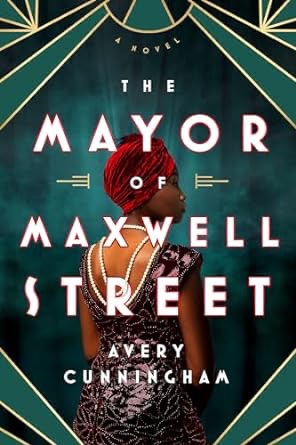
The Mayor of Maxwell Street by Avery Cunningham

This fascinating debut is set in 1920’s Chicago and concerns an heiress called Penelope ‘Nelly’ Sawyer, described by the author as the ‘wealthiest Negro in America’. Her father, Ambrose Sawyer, has managed to catapult his family into the upper echelons of black society. Nelly is getting over the death of her brother Elder, who has been killed in a road accident but her mother wants her to attend a Cotillien in the city at the end of summer. This is the American equivalent of a Debutante Ball, where the most prominent young women in society are presented in high society. Suddenly, and against her wishes, Nelly becomes the season’s ‘diamond’ – to use a Bridgerton term. This honour means that Nelly is now the most eligible young woman in society, but her ambitions don’t end at a society marriage. For the past year she has been indulging her passion for journalism, researching and anonymously submitting articles to a Black-run newspaper called The Chicago Defender. Her brother Elder was her co-conspirator and sounding board for her articles. He was the go-between, taking Nelly’s articles to the editor Richard Norris. Now she faces a choice, not only is she unexpectedly involved in a love triangle, she must decide to reveal her true identity to the newspaper, or allow her journalistic ambitions to end.

I really enjoy a plucky and transgressive heroine, so I was immediately on Nelly’s side. She’s been looking into the underworld of Chicago society and the leader of an organised crime group called the Mayor of Maxwell Street. This is the prohibition era and the dark but glamorous world of the secret ‘speakeasy’. She has already met one club owner through her brother. Jay Shorey is intriguing and first caught her eye at Elder’s funeral, where they seemed to spark a mutual attraction despite the unusual surroundings. Jay is the archetypal bad boy, but does find many young people from high society visit his club. He doesn’t have their family connections but has access to so many people in Chicago through the club and his ‘god-uncle’ who is a bit of a gangster. His ability to move between the darker parts of Chicago society and her own, more elevated, circles means he’s invaluable to Nelly and her investigations, but is there more to their relationship than that? Yet he isn’t the only suitor on the horizon.

As Nelly bursts onto the socialite scene, she meets Tomás Escalante y Roche at a polo match. He is one of the polo players with an uncle who is a French marquis, and a father who “owns half of Mexico” according to the wonderfully sardonic and witty Sequoia McArthur. Tomás rides a horse that Nelly happened to raise on the Sawyer ranch and she doesn’t mind giving her sharp feedback on what he’s doing wrong! Needless to say he isn’t used to hearing such criticism, especially from a young woman but her honesty makes her memorable. Tomás is hooked and he intends to court her. As far as Nelly’s family are concerned she’d be crazy not to reciprocate his affections and should jump at the chance to come out of the Cotillion summer with a fiancé. So, it’s a bit of a love triangle but also a young woman’s choice between the the life she wants and the life her family wants for her. I was rooting for her.

She chooses to face things head on by meeting Her editor in a cafeteria, and has to convince him that yes, she did write the articles. However, she comes up against a very sharp reality. Norris tells her he can’t publish articles under her real name because of her family’s position in society. He knows that the Ambrose Sawyer would soon be knocking on his door if he did. Nelly is so disappointed that Norris makes a deal. He gives her an assignment and if she succeeds he promises she can publish under her own name. Of course it’s impossible. He tells her about the Mayor of Maxwell Street, a secretive figure in gangland who seems to have achieved the impossible and brought different organisations together across the race divide. Usually Irish, Italian, Jewish and Black gangsters are having turf wars and killing each other, but that’s stopped and he thinks this new Mayor is behind it. He tells Nelly that if she can correctly identify this man he will publish her article and take the consequences of using her real name. Of course she accepts his challenge.

This is a page turner and it’s impossible not to like Nelly and admire her guts. I over the way the author handled the attitudes and outright racism of a hundred years ago. She even highlights the experiences of diverse characters on a spectrum of issues, such as poverty, class, education and skin tone. Jay’s relatively light skin enables him to ‘pass’, yes it opens doors but then you’re participating with your own oppressor. Nelly is very disapproving of living life on those terms. Jay is mixed race and he explains to her:

“There are two candy jars, right? One marked for Negroes, and one for white folk. The Negro — under penalty of death — can only take from one jar. The white man, though, he can take from one or the other. He can take from both. Never mind that the jars have the exact same candy; the white man still gets to choose. That is all I want, Nelly. The freedom to choose. I don’t want to look like them, or act like them, or be them. But I want their options.”

These issues come organically from the characters and they’re inclusion really add some weight to the historical background of the novel. Her depiction of Chicago in the 1920’s feels authentic, rather than the stylised razzle dazzle of the musical, but they come from the same world. There’s even a nod to The Great Gatsby too. This is an entertaining novel with a plucky heroine and some gravitas behind the compelling story and a compulsive need to keep reading. I look forward to seeing what the author does next.

Out Now from Thorndike Press

Meet the Author

Avery Cunningham is a resident of Memphis, TN, and a 2016 graduate of DePaul University’s Master of Arts Writing & Publishing program. She has over a decade of editorial experience with various literary magazines, small presses, and best-selling authors. Avery grew up surrounded by exceptional African-Americans who strived to uplift their communities while also maintaining a tenuous hold on prosperity in a starkly segregated environment. The sensation of being at once within and without is something she has grappled with since childhood and explores thoroughly in her work of historical fiction. When not writing, Avery is adventuring with her Bernese Mountain Dog, Grizzly, and wading waist-deep in research for her next novel. She aspires to tell the stories of complex characters fighting for their right to exist at the fringes of history. THE MAYOR OF MAXWELL STREET is her debut novel.

Posted in Publisher Proof

Spitting Gold by Carmella Lowkiss

What a year it’s been for debuts!! This is another excellent read that I’d put on the back burner because I had over committed myself to blog tours. I’m so sorry I didn’t read it sooner because I absolutely LOVED it. This is my absolute favourite genre – gothic, historic fiction – but when added to the elements of spiritualism, transgressive females and dysfunctional families this would definitely come up on Goodreads as highly recommended. In Paris, 1866, a couple of sisters are living very separate lives; Sylvia who is now Baroness Devereaux and Charlotte Mothe, the sister she left behind with a drunken, violent father. When Charlotte pays a heavily disguised visit to Sylvie’s home she assumes their father is ill, but it’s a different aspect of her past she’s bringing to her sister’s door. Their mother had a business as a spirit medium, but Sylvie promised to put such shady dealings in the past when she married the Baron. Charlotte needs her sister for one last con, to pay her father’s medical bills. The aristocratic de Jacquinot family think they are being haunted by an aunt killed in the revolution. They will need to use all their tricks to frighten money out of this family, but they didn’t bank on being absolutely terrified too.

The Perrault fairy tale underpinning this story is ‘The Fairies’ but the sisters don’t necessarily agree on the interpretation. One sister is asked a favour by an old crone, a glass of water from the well, but she ignores her and is cursed to expel toads every time he opens his mouth. On the next day the other sister is commanded to provide a glass of water by a young beautiful woman and grants her the favour. The second sister opens her mouth and gold coins spill out. Perrault says one sister is good and one is bad and Sylvie accepts this, but Charlotte thinks changing her disguise was a mean trick.

“The test is rigged from the start – even before the fairy turned up, when Perrault labelled one sister good and one bad on the very first page, before either got a chance.”

However, by the end Sylvie has changed her perspective. She muses that if she had a daughter would she be toads or gold? She decides not to read her Perrault; ‘I think I will let her decide for herself how a girl should be.”

The de Jacquinot family are dysfunctional and have narrowed all their problems down to the daughter, Josephine. They are clearly struggling to stay afloat, with clear spaces on the wall where there used to be paintings. Yet none of them are working or making any money, still living like the aristocrats they once were. The grandfather seems grumpy but is convinced they have a visiting spectre – Aunt Sabine who died in the revolution when her throat was cut. Brother Maximilien is cynical, in his book there is no such thing as spirits and his sister is suffering from a prolonged bout of lunacy brought on by a dalliance with a once trusted friend of his. Josephine is absolutely convinced there’s a spirit. Charlotte and Sylvie started their routine and I’d not expected them to be charlatans! I loved the details of their routine – the snuffing out of candles, the ring of salt. I thought that the story of creating waxed spectral hands with their mother was a brilliantly quirky childhood memory! Charlotte adopts the patter again straight away, talking about “penumbral disturbances” and “liminal spaces”. Sylvie almost admires her sister as she weaves a tale around the de Jacquinot home and their errant daughter.

However, everyone is shocked when Sabine appears to possess her niece. Josephine has become a different person, babbling about something being taken from her and spitting with anger at her grandfather. Then she’s overcome, with ectoplasm pouring from her mouth. This is something they’ve heard of but have never seen spontaneously like this. That night the library walls are trashed and the ancestral paintings are slashed to pieces, all expect Sabine’s. The family suspect a poltergeist but how could they have slept through such destruction? After this even Maximilien is on board, yet Sylvie suspects something isn’t what it seems. Charlotte was vociferous in her defence of Josephine, almost as if she actually cares. Sylvie knows that her sister has become unnaturally attached to young women before. Before they can go any further Sylvie’s husband confronts her at home. He’s had her followed and suspects an affair with Maximilien de Jacquinot who is closer to Sylvie in age. Sylvie tries to protest her innocence, but it’s difficult when she has betrayed her husband, just in a different way. She can’t reason with him and can only do what he asks, to leave. Now she is back in her miserable childhood home, listening to her father snoring as she lays awake and bereft.

Here the author pulls a brilliant ‘Fingersmith’ style twist, with a change of narrator and perspective of the same events. This narrative is what happens to the girl who spews toads and doesn’t conform. Charlotte is the daughter who stayed behind and still nurses the father who she suspects of killing her mother. In Charlotte’s story, instead of the aristocracy we meet an interesting set of characters who live and love outside the norms of society. I loved meeting Mimi who could fill a book of his own! The atmosphere and settings in the book are brilliant and give a very varied look at the city of Paris, from the poverty Sylvie and Charlotte come from to the remaining aristocrats and their crumbling mansions. This is a society recovering from the shock of revolution and a shift in the existing hierarchy. The de Jacquinot family are like their mansion, falling apart. I loved the dual staircase too, with Josephine and Charlotte using the servant’s exit together when surely they should use the main stairs? There’s are further tantalising hints of people who live outside the rules, quite lavishly if Mimi’s quarters are the example. I could see why Sylvie had opted to disappear into the money classes, because the difference between her rooms and the home she came from is stark. She also truly loves her husband and hasn’t married him for a comfortable life as her sister thinks. Charlotte does feel the dice was loaded when it came to their differing fortunes and I think she sees the Perrault fairy tale as an allegory for her sexuality. Sylvie is able to conform in this way and Charlotte can’t, she’s born the way she is into a world that doesn’t accept her. I was also sympathetic to her situation at home, trying to care for a man who is hard to love and has been violent towards them all. This was an amazing read, genuinely spooky but also a novel about families. Those who fit into their family and those who don’t. This is a fabulous ghost story with an unexpected twist and a wonderful glimpse of a society in flux.

Meet the Author


Carmella Lowkis grew up in Wiltshire and has a degree in English literature and Creative Writing from the University of Warwick. After graduating, she worked in libraries, before moving into book marketing. Carmella lives in North London with her girlfriend. You can follow her on social media @carmellalowkis. Spitting Gold is her first novel.

Posted in Publisher Proof

The Midnight Hour by Eve Chase.

I was looking forward to the new Eve Chase novel, but really surprised to win a competition for a hardback copy plus a vase of my favourite flowers, peonies. All I’d done was describe what I loved about Eve’s writing: her female characters; the secrets from the past just waiting to spill out; the gothic feel and atmosphere she creates, especially around old houses; lastly, it’s the dynamics she creates between the characters particularly the mothers and daughters. I feel that in this novel she has gathered all those aspects together beautifully with an intriguing plot and such a relatable central character in Maggie. Maggie is an author, living in Paris and struggling with writer’s blog. Something from her shared past with brother Kit keeps coming into her mind. Her mother Dee Dee died from cancer recently and Maggie was there for her, until her last moments. Her mind keeps being drawn back to her late teenage years when Dee Dee was a famous model, living in the Notting Hill area of London, close to the Portobello Road with it’s antique and collectible traders.

One summer morning, Maggie wakes up to find that Dee Dee hasn’t come home. This isn’t too unusual, late parties and sometimes modelling shoots can drag on into the night and she isn’t worried. She loves spending time with Kit anyway. Kit is using his skateboard when he has a fall, breaking one of the wheels. A stranger comes to their aid, dusting Kit down and trying to repair the wheel. He introduces himself as Wolf and when his eyes lock with Maggie’s they’re the clearest blue she’s ever seen, his name becomes him. There’s also an instant spark between them and for Maggie it’s instantaneous, first time and first sight love. He recognises the connection too. It’s what makes him take the skateboard back to his uncle’s antique shop so he can use his tools to fix Kit’s skateboard properly. Just so he has an excuse to go back. These are emotional days as Maggie navigates this new feeling, but also concern for her mother who still hasn’t come home. She calls Dee Dee’s friends and they rally round but still no one knows where she is. Maggie needs to leave her Paris flat and travel back to England and Aunt Cora’s house in the country. It’s time to ask some questions and catch up with Kit. Once in London she makes her way to the old Notting Hill house with the pink door and bumps into a man on his way out. She’s surprised to see this is a much older Marco, Dee Dee’s hairdresser. He tells Maggie he’s digging out the basement of the house, sending her into a complete panic. Maggie knows that secrets lurk in the garden of their old home and it might not be long before they’re found.

Eve really gives us time to get to know Maggie and Kit. As a child Kit was the baby of the family, adopted by Dee Dee when Maggie was a little older. His blonde curls and sunny disposition give him an angelic demeanour and he’s certainly noticed by Wolf who dotes on him. Even grumpy Gav at the antiques shop falls under Kit’s spell, especially when he sees his polishing skills! As an adult Kit is more wary, now a dealer and collector himself, he has learned that not every customer is as honest as they appear. He does have a big heart though, so when an old gentleman comes into his life asking Kit to source some pieces for his new home, he wants to help. Roy appears a little down on his luck and Kit senses a loneliness under the surface. Of course someone’s appearance isn’t necessarily indicative of how wealthy they are, so Kit takes his request at face value. It’s only when Roy starts to turn up unannounced, wants to go for dinner and then talks his way into Kit’s flat that he starts to wonder if Roy is what he appears to be. In fact he isn’t even sure he likes him. He needs to be firm to shake him off but Kit dislikes confrontation and wonders whether he should trust his instincts, or is he just being paranoid? It’s lovely to have Maggie back in the country, they’re still close, but she seems consumed by that summer years ago when they first met Wolf. Kit isn’t sure what happened that summer, but he knows that one night Maggie took him from their home in a hurry and they ended up on a train to Aunt Cora’s in Paris. He knows she was protecting him but doesn’t know why and he knows his mum was missing for a while. They never returned to the Notting Hill house, instead moving to Cora’s in the country, into the house of their grandparents. Kit promises to look for Wolf, finding his real name helps and soon Kit has him tracked down to one of the better auctioneers in London. Will seeing Wolf again put Maggie back on track?

I fell in love with Maggie. I was a similar age when I first fell I love and reading about her summer with Wolf brought back all those feelings. The wonderment when someone suddenly becomes your absolute world. The beautiful surprise when they feel exactly the same. The discovery of sexual chemistry, totally losing yourself in another person, being vulnerable physically and emotionally, it’s all here. In very delicate strokes Eve sketches a teenage girl who is emotional and intelligent. Little hints about her physical appearance makes us aware that she is a curvy girl, she wears glasses and is a little lacking in confidence. She’s astonished that Wolf loves these things about her and Eve captures that self-consciousness, the apprehension about revealing her body to this young man totally swept away by his obvious desire for her. It’s honestly so beautifully captured that it took me right back there. Maggie’s an incredible sister to Kit and nurtures him with a fiercely maternal love that I think comes from him being so much younger. It takes days before she starts to struggle a little with the responsibility, because Kit’s that age where he’s on all the time. Her feelings for her mother range from concern, to anger and incomprehension. It’s Aunt Cora who has always been the fuck-up of the family, an addict who would arrive at Christmas and grace everyone with her acerbic tongue and disappear again. However, she’s been clean for some time when Maggie and Kit arrive in Paris and it seems strange to Maggie that she’s so together and furious with Dee Dee for leaving them alone. Cora concentrates everything on Kit and Maggie, who is heartbroken and possibly hiding something about the last days they were in London.

You will be swept up by the romance, the mystery and the relationships between the women. I loved the atmosphere of the Notting Hill setting and I always love the smell and sound of an antique or junk shop: the library feel of quietness and reverence; the smell of beeswax; the ticking and chiming of several clocks. I always find myself drifting into another time when I’m in an antique shop. The mystery of adult Kit’s visitor grabbed me too, because his influence is subtle and I found myself questioning just like Kit does. Is he being manipulative or is this a coincidence? Did he intend to do that? Is he lingering for genuine reasons or for some other nefarious purpose? I wasn’t sure, but felt an undercurrent of danger for Kit if he didn’t keep his wits about him. What the story tells us is a therapist’s mantra really – unresolved emotions and trauma will always bring themselves to the surface. Whether through a similar event happening or a big change in our lives, these memories float to the surface with more resonance than they should all this time later. This is because they weren’t processed properly the first time. So Maggie is feeling a torrent of emotions as if she’s still a teenager and they’re just as confusing, painful, beautiful and overwhelming. She and Wolf never had a proper ending and I found myself longing for that closure to happen when she comes back to England. This was a wonderful read, deeply emotional but also a compelling mystery. I honestly think this is Eve’s best novel yet!

Out Now from Michael Joseph.

Meet the Author


Eve Chase is an internationally bestselling British novelist who writes rich, layered and suspenseful novels, thick with secrets, unforgettable characters and settings. Her latest novel, The Midnight Hour – ‘Her best yet…I loved every word’ – Claire Douglas – publishes June ’24, in the UK. Other novels include, The Birdcage, The Glass House (The Daughters of Foxcote Manor, US) a Sunday Times top ten bestseller and Richard and Judy Book Club pick, The Vanishing of Audrey Wilde (The Wildling Sisters, US) which was longlisted for the HWA Gold Crown Award, and Black Rabbit Hall, winner of Paris’ Saint-Maur en Poche prize for Best Foreign Fiction. She works in the Writer’s Shed at the bottom of her garden, usually with Harry, her golden retriever.

Say hello @evepollychase on Instagram, X, and Facebook

Posted in Netgalley

Cross Bones (The Accidental Medium 3) by Tracy Whitwell

There’s a queue at her door, and not all of them are living …

If you haven’t had the pleasure of meeting Tracy Whitwell’s character Tanz yet, you’ve been missing out. This bold, sweary Geordie actress and accidental medium is a delight and this is her third adventure in the series. Tanz is being torn in two directions as she reluctantly agrees to do a fringe play in London, but is also suddenly ‘activated’ as her spirit guide Frank explains. She is sent a new guide who she calls ‘Soft Voiced Lass’ and her flat is suddenly teeming with visions and apparitions, including a nurse who is on duty and walks through the wall into Tanz’s bedroom, which is quite a feat when you don’t have any legs! Luckily she has friend and fellow medium Sheila to rely on, but there’s a lot of sleeping with the light on too. As the play she’s been cast in becomes more dramatic off stage than on, Tanz has time on her hands and is guided down to Southwark and a cemetery known as Cross Bones. This is the burial place of the Winchester Geese, so called because they were prostitutes licensed by the Bishop of Winchester. After their deaths it was decided they could not be buried in consecrated ground and so this small burial ground became theirs and many of the poor in the same parish. Tanz is greeted by a horrific vision of the ground in the Victorian period, when overcrowded tenements spread diseases like wildfire and deaths from cholera, typhus and consumption were the daily norm. What Tanz sees isn’t an ordinary graveyard though. The smell hits her first; death, smoke and sewage creates a miasma that seems to cling to your clothes. In the yard Tanz can see a grave digger with a woman screaming at him, when she looks down she can see some fingers and a skull where he has been digging a body up to make room for more. She is overwhelmed and doesn’t really know what her purpose is here, just that it isn’t going to be easy.

The gates at Crossbones Graveyard

I love Tanz because she’s one of the most real people I’ve ever met in a book, despite the spooky stuff that surrounds her. She’s very down to earth, independent and has a few vices. She’s also very compassionate with the living people she helps and the dead ones too even if they do scare her. She has a couple of solid friends, especially Sheila, but sometimes she gets lonely, especially as she gets older and sees friends pairing off and making new lives together. She’s in the same flat, still scraping by with no big break in sight. The play she’s rehearsing is comical and the small company has such vivid characters they leap off the page. Gerald is a particularly fun addition to her circle – an elderly actor with the old school manners of a man who was inspired to act by Olivier and Gielgud. Everyone except the playwright knows the play is rubbish and the sexual politics in the company are impossible to work with. At home different visions pop up, from an Irish family who look like they’re starving, to a woman at a sewing machine and very strangely, a ghost that lurks in the hallway with a blackened face. She knows all of this must make sense to someone and keeps visiting Southwark and doing her research into the area. The history behind the story is fascinating and had me searching and reading for information afterwards. Eventually the graveyard was used for all the poor in the area and with an influx of families from Ireland, escaping the dreadful famine ( to quote Sinead O’ Connor ‘there never really was one’) overcrowding was common. The place inside that should have been somewhere to view the dead, especially for Catholic families who prefer to have an open coffin, became a charnel house. There were rotting bodies everywhere from those they had no room to bury and those who’d been dug up to make room for more. It’s a vision of hell, made worse when the traumatised gravediggers, dulled by compassion fatigue and possible PTSD, started playing skittles with human skulls. No wonder the woman in Tanz’s vision is screaming.

No 2 in The Accidental Medium Series

Tanz thinks her visions relate to a single Irish family, the family she sees in a tenement room starving and looking completely shell-shocked by their circumstances and their losses. When Tanz sees a soldier called Robert, shot in the head and looking for his wife she starts to piece things together. Could this be several generations of the same family and could any of them still be alive? Between the spooky action there’s a huge injection of dark humour that I really appreciated. I love Tanz’s slightly prophetic phone calls from her ‘mam’ who strangely seems to always know when her daughter’s up to something while scolding Tanz for meddling in spooky situations. Thank God she doesn’t find out about the black faced woman, the homeless man and the knife! There’s also a side order of romance in this novel, with a younger police officer stirring up rather unexpected feelings for Tanz. Usually she wouldn’t consider a younger man, especially one of the good guys, but maybe now is the time for changing habits. It’s nice to see Tanz meet someone who likes and respects her for a change. Maybe Tanz has developed some boundaries and boosted her self-worth enough to accept that someone like this could like her. She’s also stopped the habit of always keeping her eye on the exit in her romantic affairs. She’s taking her gift seriously and maybe has to accept that it’s this type of work that she finds most fulfilling. Although, she also makes a radical move in her acting career too. It’s lovely to see Tanz in such a strong position in life, she’s ready to take on the world and I can’t wait for her next adventures.

Out on 17th July from MacMillan

The first novel in the series.

Meet the Author

Tracy Whitwell was born, brought up and educated in the north-east of England. She wrote plays and short stories

from an early age, then moved to London where she became a busy actress on stage and screen. After having her son, she wound down the acting to concentrate on writing full time. Many projects followed until she finally found the courage to write the first in her Accidental Medium series, a work of fiction based on a whole heap of crazy truth​. Apart from the series, Tracy has written novels in several other genres and also writes mini self-help books as the Sweary Witch.

Tracy is nothing like her lead character Tanz in The Accidental Medium. (This is a lie.)

If you’d like to know more about Crossbones Graveyard this is a great site to start with:

Posted in Netgalley

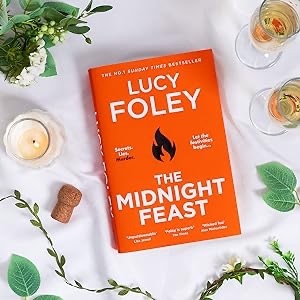
The Midnight Feast by Lucy Foley

I started this book in bed at night, which turned out to be a big mistake because I didn’t want to go to sleep once I’d started. There was a lot of yawning the next day. We’re introduced to the village of Tome (pronounced ‘tomb’ by the locals just to add a sense of foreboding) and the new wellness retreat created there by Francesca Woodland who inherited The Manor and it’s land from her grandfather. Her husband Owen is the architect on the project and has created woodland ‘hutches’ for guests, featuring outdoor showers and luxurious linens. The Manor itself is the central hub where there are classes in meditation and yoga, with a spa that has reiki alongside all the usual treatments. The opening weekend looms and while there’s a hint of anxiety around the late building of the tree houses, Fran is sure she has everything under control. On the final night of the stay she has planned a mini-festival with live music, a meal out in the woods and strange wooden sculptures. Every guest must wear a crown fashioned from twigs creating the look and feel of a pagan celebration. While the music is at it’s loudest she has given Owen the go ahead to start digging the foundations for the tree houses, in the hope the music drowns out the noise. However, that’s not the only problem on the horizon. In order to build the houses, they must take down some of the ancient trees and when Owen arrives the workmen are confused by the new symbols on their bark. They look like seagulls in flight. By the morning there’s a burned effigy and a body on the beach, a wrecked Aston Martin with blood inside and the manor hiss been rased to the ground by a ferocious fire. There’s also an elderly fisherman rambling on about seeing giant birds. It looks like the midnight feast was a rather Bacchanalian event, with discarded drink bottles, feathers and clothes littering the ground, but something went badly awry. Everyone in Tome knows the local saying- ‘Don’t disturb the birds’. Could Francesca’s dream be over when it had only just begun?

The book starts with the aftermath of the festivities, but there are two more timelines: fifteen-twenty years ago when Francesca was a teenager living at the manor with her grandparents and twin brothers and the beginning of the weekend leading up to the feast twenty-four hours later. This multi-layered effect is multiplied with several narrators – Bella who is befriended by a young Francesca and later becomes a mystery guest at The Manor’s opening weekend; Owen who is Francesca’s husband but also hides a secret past; a young man called Eddie who is the retreat’s kitchen help and Francesca, the founder. It seemed like a lot of perspectives and timelines at first but the author is very skilled at creating distinctive characters so I soon got to know them and I didn’t feel lost. Francesca radiates a sense of calm and purity. However, like many people who put up a facade like this, it’s only so long before they blow and I was waiting for that moment. Bella is very secretive, realising she isn’t The Manor’s target demographic she’s worried she might stand out. Owen is very successful architect, wealthy and absolutely in love with Francesca, but seems to know a lot about local folklore and knows his way to a secret beach. Eddie, who I was rather fond of, lives in the shadow of his older brother who went missing years ago after becoming an addict. He lives at home with his parents on the family farm and feels his father’s despair that the son who loved working the farm is gone. Eddie wants something different, but given his parent’s disapproval of the retreat, he hides his job there while hoping to work up the organisation. Finally there’s the DI on the case, who is trying to piece together the night before and recovering a body from the beach, while the only witness to the death is the elderly man who still blaming giant birds.

There’s a sinister ‘them and us’ feel to this novel, a distinction that’s in one way about class and in another way about belonging. Locals are different from tourists and even though Francesca is local because she comes from the big house she can’t be one of them. Bella’s mother scolds her for spending her summer up at the manor and wishes she would make more friends from the village. Those at the big house don’t understand the village ways. When Bella bumps into a good-looking surfer down on the secret beach there’s an instant attraction, but when she takes him to the manor Francesca and her brothers tease him as if he’s a yokel. Bella starts to wonder where she fits in at all. There are those who have transcended where they came from, but the transformation was painful and has left it’s scars. I could sense a lot of references, such as The Wicker Man and Midsommer where a seemingly pastoral and innocent celebration slowly builds towards violence. The note left for Francesca, the marked trees and the chicken nailed to her door could have been someone disgruntled with the retreat, but it felt more personal. Francesca struck me as a powder keg. When younger, she appears to have very little empathy, especially for those she views as beneath her. Her brothers have a similar outlook, convinced they can do whatever they like to the locals and it will be swept up by the family as if it never happened. Francesca was like a cat playing with a mouse and the pleasure she got from hurting others gave the impression of a psychopath in the making. Then at the opening weekend, the local kids make their protest felt by pelting the pool with stones and building fires on the section of the beach reserved for guests only. They have bigger plans too, but they’re saving them all for the night of the Midnight Feast. They want to make clear that Tome’s forest and it’s beaches are for the villagers and not to be fenced off for the use of rich visitors.

Bella wants her revenge to be more permanent than a simple one-off disturbance and she’s determined. With bleached, short hair she’s not easily recognisable as the girl she was and manages to be under the radar. When she first sees Eddie she’s taken aback, he looks so much like someone she used to know. Is she seeing ghosts everywhere? She is psychologically haunted by what happened all those years ago at another midnight feast and she’s appalled by Francesca’s decision to name the event after their final night as friends. Bella wants to make sure that the perfect, pious Sunday supplement Francesca is shown up for who she really is. By this time I was desperate for her to get her comeuppance to as we slowly see the consequences of that night long ago spreading into several local families. Each one has their own grudge: a father who’s been drinking ever since; a baby growing up without it’s mum; a young man with an addiction so strong he’s willing to lie and steal. Yet Francesca and her twin brothers are still rich, successful and as insufferable as ever. So it isn’t just our narrators who have reason to hate The Manor and some of them exact their revenge in amusing ways, while others want to end the retreat and Francesca for good. I loved the folk ritual element, reminiscent of Thomas Tryon’s Harvest Home mixed with a dose of Hitchcock’s killer birds. They are the size of a human, covered in black feathers and under their cloak is the huge beak. The villagers take them seriously, even the contractors who turn up to remove the trees don’t want to mess with those marked by the birds, they’d rather give the money back. Are the birds a simple folk tale that keeps Tome safe or are they real? As we countdown to what happened on the big night, two parties twenty years apart reveal their secrets and the birds will have their final say. The ending is terrifyingly final for some, while others will wake up hungover and wondering what exactly they witnessed. As for me, I devoured this book overnight and the final page reveal really made me smile.

Out now from Harper Collins

Meet the Author

Lucy is the No.1 New York Times and Sunday Times bestselling author of The Hunting Party, The Guest List and most recently The Midnight Feast. It’s set at a luxury new countryside resort built on old secrets beside an ancient wood. The opening weekend takes place during a heatwave (and with a big summer solstice celebration) and temperatures and tensions are rising, the local community is incensed by the influx of wealthy newcomers and some unexpected guests have come to stay. Then a body is found… 

Lucy always knew wanted to work with books somehow, so studied English at university before working in a bookshop, a literary agency and then as a fiction editor at a big publishing house, during which time she realised that every book starts off as a messy first draft full of plot holes and mistakes. She thought she’d have a go at writing herself — the result of which was her first historical fiction novel, The Book of Lost and Found. She wrote two more historicals, The Invitation and Last Letter to Istanbul, before turning to the dark side and writing her first crime thriller, The Hunting Party: her first Sunday Times and New York Times bestseller and Waterstones Book of the Month, set over New Year’s Eve at a remote, snowy spot in the Scottish Highlands. 

Next came The Guest List, a murder mystery set at a wedding on an island off the coast of Ireland, which was a Reese’s Book Club pick, a Goodreads Choice Awards winner, a Waterstones Book of the Month, and has sold over three million copies. Then came The Paris Apartment, which is a number one New York Times bestseller and Sunday Times bestseller. Her books have been translated into over 40 languages and all three murder mysteries are currently being adapted for TV and film. 

She’s also written a short story for the brand new Marple collection, a brand new series of short stories featuring Agatha Christie’s legendary detective Jane Marple, alongside writers such as Val McDermid, Kate Mosse, Alyssa Cole, Ruth Ware and Leigh Bardugo, out September 2022 to coincide with Christie’s birthday! 

If you enjoy her books or want to say hi, she’d love to hear from you: She’s @lucyfoleytweets on Twitter and @lucyfoleyauthor on Instagram, or you can check out her Facebook author page @lucyfoleyauthor

Posted in Netgalley, Publisher Proof

The Small Museum by Jody Cooksley

A shiver thrilled my spine at the thought of what might be contained in collections to be kept away from ordinary eyes…

London, 1873. Madeleine Brewster’s marriage to Dr Lucius Everley was meant to be the solution to her family’s sullied reputation. After all, Lucius is a well-respected collector of natural curiosities. His ‘Small Museum’ of bones and specimens in jars is his pride and joy, although firmly kept under lock and key. His sister Grace’s philanthropic work with fallen women is also highly laudable.

However, Maddie soon finds herself unwelcome in what is meant to be her new home. The more she learns about both Lucius and Grace, the more she suspects that unimaginable horrors lie behind their polished reputations.

Framed for a crime that would take her to the gallows and leave the Everleys free to continue their dark schemes, Maddie’s only hope is her friend Caroline. She will do anything to prove Maddie’s innocence before the trial reaches its fatal conclusion.

When choosing novels I have two favourite genres, historical and crime fiction. Author Jody Cooksley has combined the two in his compelling novel that was the winner of the Caledonia Novel Award. In Victorian London 1873, Madeleine Brewster, the daughter of a doctor, is courted by Dr. Lucius Everly a man seemingly intent on finding the missing link that will prove the evolutionary step between fish and mammals. He collects fossils and curiosities at his London home, hidden away in his ‘Small Museum’. His sister Grace undertakes work with fallen women at a house called The Evergreens which is held in high regard.

Madeleine accepts his proposal, imagining her life as a doctor’s wife will be similar to that of her mother and father. However, when she reaches her new home, life is very different to what she expected. She feels unwelcome in her new home, with housekeeper and gardener Mr and Mrs Barker seemingly in charge, keeping exactly the same routine from when Lucius’s father was alive. There is no space for her to organise or manage her own house and if it isn’t the Barkers, her sister-in-law Grace drops in unannounced and chooses the drapes or orders tea as if she is the mistress of the house, despite having her own. Having dreaded the wedding night, Lucius begs her forgiveness for his tiredness and departs to his own bedroom. Despite their reputations, Madeleine starts to suspect Lucius and Grace of unimaginable horrors. She hears a baby’s cry in the night, her husband arguing with his sister and items seem to appear and disappear from her room with alarming regularity. Despite trying to help her husband in his work and fitting in with the Barker’s schedule, Madeleine finds herself labelled as ‘nervous’ and then framed for the most terrible of crimes. A crime she did not commit. As she faces a trial Madeleine’s only hope is her friend Caroline, but can she prove her friend’s innocence before she is hanged?

This was an absolute cracker of a gothic mystery with a heroine who is in a terrible catch 22; either shut-up and be complicit in something horrific, or keep asking questions and be labelled mad by her in-laws. She is utterly powerless, but tries everything within her limited options to improve her situation. Madeleine is intelligent and no one could say she hasn’t tried in her marriage. When finally Lucius does come to her room it is a perfunctory act where she might as well have been an inanimate object. She tries to get used to these new couplings but there is certainly no love or even tenderness in it. The outcome is further tragedy for Madeleine and a means for Lucius to control her movements even further and an excuse for their nightly encounters to stop. Once physically recovered, she tries to use the only gift she has, her ability to draw in a style that would work for scientific illustrations. She is then let into Lucius’s small museum, a veritable treasure trove of nature’s oddities and anomalies, but also bleached bones of various different creatures that he hopes will prove his theory that fish developed into birds and mammals. He is gratified that Madeleine has a strong stomach, able to converse freely about the best ways of bleaching bone. He has lost many a servant girl who accidentally discovered the museum or his workshop where he prepares the animals whose bones he uses. They embark on a trip to Dorset together where he is showing his latest finds to his peers and Madeleine hopes they will enjoy combing the beach for fossils and she can do some more sketching. However, she has underestimated Lucius’s fanaticism about his theory and the terrible lengths he will go to in order to prove it.

The author brings all of these strands together beautifully, the glimpses into the past finally catching up with the present and Madeleine’s terrifying predicament. Will she be found guilty of infanticide? Caroline is desperately trying to uncover the truth and proves herself to be an incredibly loyal friend. I had so many questions as the book neared it’s end and the tension was riveting. Was Madeleine really seeing her sister Rebecca in the streets around Evergreens? Were items genuinely disappearing and appearing in her room? Was she sane or had she succumbed to mental illness? What were the noises in the house at night and can she really hear a baby crying? In fact the answers involved new maid Tizzy, a down to earth girl who’d had her baby at Evergreens and she provides an incredible light bulb moment! Everything around me disappeared (including the housework and cooking tea) as the first glimmer of truth came to light. I had to finish this book right now! I loved the elements of feminist thinking that were brought into the text including the use of Christina Rosetti’s poem ‘Goblin Market’ which tells of men who will take away and ruin any young maiden who isn’t on her guard:

‘Dear you should not stay so late, Twilight is not good for maidens; Should not loiter in the glen In the haunts of goblin men.

‘Goblin Market’,Christina Rosetti, 1862

Rossetti worked as a volunteer in a religious house helping ‘fallen women’ for eleven years, women like Tizzy and Madeleine’s sister Rebecca. Although Rebecca is seen as the fallen woman by respectable people, Madeleine realises that her own marriage simply gives her a mask of respectability. It does not mean they are happy, in fact it disguises what is truly going on behind closed doors. She knows it would take irrefutable evidence to save her and this is why she is in utter despair during her trial. She can’t imagine anyone breaking through that polite veneer of respectability to help her, because they risk their own reputation. Yet she needs someone respectable to vouch for her because housemaids and fallen women hold no power. Caroline is a liminal person in this respect, she is accepted in society as the daughter and wife of doctors, but her father and Ambrose are psychiatrists, dismissed as ‘mind benders’ by Lucius and this sets them apart. They’re respectable enough to be believed, but not so restricted by their standing in society that they daren’t speak up. Caroline is well aware of how powerless women are and the fates that can befall them. When she first sees marks on Madeleine’s wrists she knows she’s seen them before, on Ambrose’s recovering patients; ‘they were women too’. I loved Madeleine’s relationship with Tizzy too, they clicked immediately and talked with a freedom Madeleine’s never had before. She is her one friend in a house where the wife’s place is to keep quiet and only appear when necessary. All in all, this is a really well written and researched novel with all the ingredients I love in an historical novel: a fantastic sense of time and place; strong female characters that break through the Victorian ‘Angel in the House’ stereotype; those Gothic elements to bring a sense of mystery. Then added to this are the addictive twists and turns of a crime novel. What an incredible debut this is!

Out now from Allison and Busby.

Meet the Author

Jody Cooksley is an author represented by literary agent Charlotte Seymour at Johnson & Alcock.

In 2023 she won the Caledonia Novel Award with The Small Museum, a chilling Victorian thriller that’s due for publication with Allison&Busby in May 2024. Sequel to follow in 2025.

Previous novels include award-nominated The Glass House, a fictional account of Victorian pioneer photographer, Julia Margaret Cameron (Cinnamon Press, 2020), and How to Keep Well in Wartime (Cinnamon Press, 2022)

She is currently working hard on her next novel, another Victorian gothic set by The Thames. She has previously published essays, short stories and flash fiction.

Jody works in communications and lives in Surrey with her husband, two sons, two forest cats and a dangerous mountain of books.

Posted in Netgalley

Bonjour Sophie by Elizabeth Buchan

Can she escape the darkness of her past in the City of Light?

It’s 1959 and time for eighteen-year-old Sophie’s real life to start. Her existence in the village of Poynsdean, Sussex, with her austere foster-father, the Reverend Osbert Knox, and his frustrated wife Alice, is stultifying. She finds diversion and excitement in a love affair, but soon realizes that if she wants to live life on a bigger canvas she must take matters into her own hands.

She dreams of escape to Paris, the wartime home her French mother fled before her birth. Getting there will take spirit and ingenuity, but it will be her chance to discover more about her family background, and, perhaps, to find a place where she can finally belong.

When Sophie eventually arrives in the Paris arising from the ashes of the war, it’s both everything she imagined, and not at all what she expected…

Most readers will know I have a fascination for the period directly after WWI, but recently I’ve been looking at books and films that have explored the aftermath of WW2. Originally I watched a film called The Aftermath starring the brilliant Jason Clarke and Alexander Skaarsgaard that followed a British colonel posted out to Nuremberg after the war ends. His job is to help rebuild and I remember being shocked that people were living in homes where their outer walls were missing, almost like looking into a doll’s house. Since then I’ve read novels set in the occupied countries like Poland and France and gaining other viewpoints makes you remember that the majority of people are caught up in a war they don’t want to fight, are tormented with memories of things they’ve done to survive and are still waiting for the return of those they love. I think we imagine that once the war was over, everything went back to normal, but that was far from the truth. Prisoners of war were kept, by us, for several years after the war ended, rationing only ended in 1954 and we were still rebuilding London till the mid 1970’s. It’s in this aftermath that we meet our heroine Sophie, just finishing boarding school in England with her friend Hettie. Sophie has a complicated past and her school years have been a temporary period of fun and friendship. Now she must return to the home and parish of clergyman Osbert Knox, an English village where her French mother ended up in dire straits during the war. Camille was pregnant and had fled Paris during the occupation, leaving behind Sophie’s father who was fighting in the Resistance. Lucky for the Knoxes, Camille had great housekeeping skills and she repaid their kindness in cooking, cleaning and implementing a household system that enabled them to concentrate on their parishioners. Sadly, Camille died and now the Knoxes are expecting Sophie to return from school and pick up where her mother left off, learning to keep house and support the couple. Sophie needs to earn back her keep and education, only then will Osbert return her mother’s precious savings book. This was money that Camille managed to save from her meagre allowance, knowing that Sophie would need something to restart her life with. Sophie dreams of returning to Paris, the home of her parents, but there’s only problem. She is sure that money is being taken from her mother’s savings. So she makes a decision to bring her escape forward, to find the savings book and flee with whatever is left to France and look for her father.

Sophie is a resilient girl, intelligent and able to read people. She doesn’t trust Osbert, but is still horrified to find that he expects her thanks to extend to much more than cooking and cleaning. Now she must escape and sooner rather than later. Sophie wants to build an independent life for herself, full of new experiences. She isn’t afraid about change, she’s quite matter of fact about those experiences she wants to try. She has a friendship with Johnny from the nearby farm and plans to lose her virginity with him, rationalising that it’s something she wants to get out of the way. This ability to single out what she wants and succeed in getting it will stand her in good stead once she gets to Paris. She has a deep yearning to connect with her history, even if her father hasn’t survived, she wants to know what he did during the war. Was he the hero that her mother painted him to be? Sophie knows that the scars of war run deep, that her father might have done terrible things to survive. The author writes about the moral compromises people make in war without judgement, allowing the reader to make their own decisions, but also reinforcing the point that no one knows what they’re capable of until they’re under duress. Finding her father isn’t easy though. She takes work in an art gallery and uses her wage to hire a private investigator. She finds out about the paintings looted from Jewish families during the occupation, removed by the Germans as the owners were transferred to concentration camps. However there were French collectors and gallery owners who collaborated in these deals, using a terrible atrocity as a business opportunity. She also finds that there are so many people looking for someone: husbands who never returned from the battlefield but are not amongst the dead; resistance fighters executed and thrown in a shallow grave; women killed for their collaboration with German soldiers during the war. There are vendettas and grudges still playing out and Sophie is warned that she might not like what she finds. Some secrets should remain buried. The buildings in Paris echo the the trauma still felt by the people, from a distance they look okay but close up it’s clear that there’s been no maintenance. The paintwork is peeling and the stone is damaged, but there is still beauty.

I really enjoyed the friendship between Sophie and Hettie, who has returned home to constraints of her own. She is trapped in within the expectations of her parents and her class. Hattie is expected to be a ‘deb’ and be presented for the London season. If she shines she might attract the right sort of husband. Her only route is marriage and children, no independence or career path. She has to be engaging but not appear too clever and put suitors off. Neither girl has any type of sex education, is not allowed her own bank account or make decisions about her own fertility. It’s scary to me that a lot of these restrictions lasted into my mother’s lifetime! Thankfully Hettie has a belated rebellion. I loved that the girl’s friendship lasts a lifetime and they give each other support and strength. This feel like a transitional period in time, where the world is trying to recover from war and it was a huge realisation to me that it took this long. I remembered reading that it was Ed Balls who, as chancellor, paid the final debts from WW2 and being so shocked. It takes people a lot longer to heal and return to themselves. My own father in law took many years after WW2 moving from the Siberian forest through the Middle East and North Africa and into Europe. He eventually settled in London, but his wartime experience still haunted him when he lived with us in the 2000s. I think Elizabeth Buchan has a way of writing about how we come to terms with generational trauma like this. Here she has mixed a thoughtful and complex historical period with a coming of age story. Just as Sophie is becoming a woman, the country she escapes to is also in the midst of a change. It is by finding out about WW2 and the terrible stories of living in Paris under occupation that she starts to understand her parent’s story and the courageous choices they made. Despite the pain and loss, Sophie’s experiences have a joy about them as she attempts to build herself a life with resilience and happiness. Buchan’s writing always has a melancholic, bittersweet feel. There’s a sense that life and the greater world are imperfect, even dangerous, but we can still live happily within it.

Out now from Corvus Books

Meet the Author

Elizabeth Buchan was a fiction editor at Random House before leaving to write full time. Her novels include the prize-winning Consider the Lily, international bestseller Revenge of the Middle-Aged Woman, The New Mrs Clifton and Two Women in Rome. Buchan’s short stories are broadcast on BBC Radio 4 and published in magazines. She has reviewed for the Sunday Times, The Times and the Daily Mail, and has chaired the Betty Trask and Desmond Elliot literary prizes. She was a judge for the Whitbread First Novel Award and for the 2014 Costa Novel Award. She is a patron of the Guildford Book Festival and co-founder of the Clapham Book Festival.