Posted in Sunday Spotlight

Sunday Spotlight: Uplifting and Comforting Reads From Adriana Trigiani.

You know the world has really gone to hell when you click on a streaming service and they highlight a section as uplifting and good for your mental health. What with WW3 seemingly round every corner, every news programme hijacked by the antics of Trump and his attack dog JD Vance, Elon Musk waving a child or a chainsaw over his head and for me personally, the threat of losing my disability benefits. I’m also averaging at least one medical appointment every week as each test throws up something we never expected! Life is a wee bit stressful for all of us at the moment and I wondered whether it might be nice to spotlight some of my favourite authors who write uplifting and joyful fiction. I’m going to spotlight a few different authors on Sundays, suggesting some older novels and some that are worth keeping an eye out for through the rest of 2025. I will point out where there are tough themes in a novel, but even where there’s a lot to overcome in these novels the ending is always ultimately uplifting and inspiring.

I think it was my mum who first gave me one of Adriana Trigiani’s books to read and I think she got it from Oprah. My first taste of her work was one of her Valentina books, a series of books following an American Italian young woman as she starts to make her way in the world. Her family have been makers of custom wedding shoes since 1903. The Angelini Shoe Company trades from Greenwich Village, NYC and is one of the area’s last family run businesses. Now it’s in trouble and Valentina, working as apprentice to her grandmother Theodora, wants to bring their years of craftsman’s experience into the twenty-first century market. Valentine is juggling a lot of different commitments: her romance with chef Roman Falconi, her duty to her family and entering a design competition for a very prestigious competition for a department store. When she accompanies her grandmother to Italy they hope to find inspiration, she spends time in Tuscany and Capri. She’s overjoyed to find her artistic style but the trip changing her life in ways she never expected.

In the second book of the trilogy, Valentina’s plans have go awry. We start with a celebration as her grandmother marries the love of her life in Tuscany, but Valentina’s own romance is not going so well. It’s a second blow when her grandmother announces thar her brother Alfred is becoming her partner in the family business, not Valentine. She decides to devote herself to work and takes a trip to Buenos Aires for new connections and ideas. Emotionally though she’s caught between two loves, one who’s always nurtured her and another that promises to sustain her future. In the final book Valentine is living out her choices and continuing to modernise the firm. As she prepares to marry the man she has chosen, she is faced with painful choices and a fight for what she wants from life. Can the Angelina Shoe Company make it’s mark and will Valentine be able to savour the wonderful things she deserves. These books really are sumptuous, full of gorgeous fashion details and since I love shoes I really appreciate Valentine’s designs. We get the bustle and modernity of Manhattan, contrasted with her trips to Italy and Argentina to small artisan shoemakers. We get to be an armchair holiday maker too as we drink in the wonderful sights and food that she enjoys too. Of course there are challenges in Valentine’s life, some of the hardest life can throw at her, but ultimately we know she will triumph and get her happy ending.

Big Stone Gap is a sleepy village where kids get married and start families at eighteen, and stay for ever. So thirty-five-year old Ave Maria Mulligan is something of an oddity. A self-proclaimed spinster, as the local pharmacist she’s been keeping the townsfolk’s secrets for years. But Ave Maria is about to discover a scandal in her own family’s past that will blow the lid right off her quiet, uneventful life. Soon she’s juggling two unexpected marriage proposals and conducting a no-holds-barred family feud. The thought of spending the rest of her life in Big Stone Gap is suddenly overwhelming . .

In our second instalment, eight years have passed since town pharmacist and self-proclaimed spinster Ave Maria Mulligan married the man of her choice. Now they have a beautiful daughter, but for some reason her husband seems distant. In their comfortable stone house in the mountains there’s an empty room where their son slept. Ave and Jack haven’t found a way past their sadness and are struggling to share their feelings. In the town change is coming and is causing concern among the residents. With this backdrop, Ave must make decisions for her family and try to find a way back to her husband.

In the third part of the trilogy, Ave Maria feels time is slipping through her fingers as she watches her daughter growing up. It seems like a period of change for her friends too and her husband is desperate to reinvent himself in ways nobody could have predicted. Are they experiencing a mid-life crisis? Ave is about to have her foundations rocked and face the true test of love: letting go. I love this series because it’s so cozy and has that small town heart-warming feel. I found myself so invested in her family and seeing how they grow over time is a joy. I believe there is now a fourth novel in the series and I’m really looking forward to reading it.

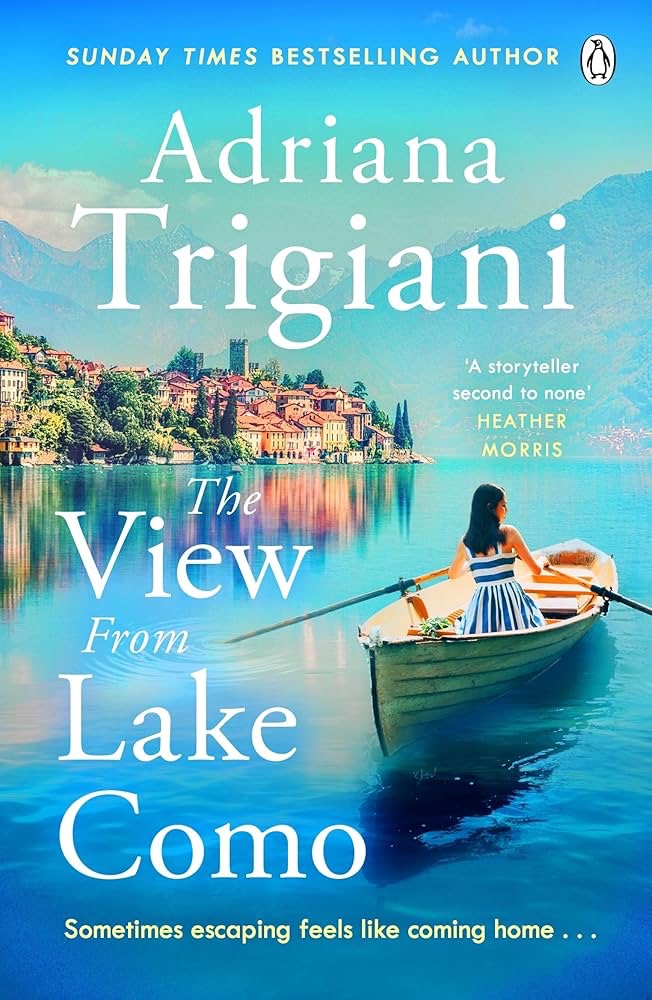
More recently the author has moved to historical fiction and mid-century Italy, as well as a fascinating look at the golden age of Hollywood and a real-life scandal about Clark Gable. I’m so looking to her new novel out in July this year and perfect for summer holidays. Recently divorced, Jess Capodimonte Baratta helps her Uncle Louie with his marble business from her parents’ basement in Lake Como, New Jersey. An unexpected loss within the family unearths a long-buried secret and Jess questions where her loyalties lie. Deciding a change of scene is needed, she escapes to Italy – her ancestral home. We will be swept away to the majestic marble-capped mountains of Tuscany to the glittering streets of Milan and the enchanting shores of Lake Como, which despite a shared name could not be more different from her hometown, Jess soon feels a sense of belonging. And when she meets dreamy Angelo Strazza, a passionate artist, she know that this is where she is meant to be. But as further revelations about her family history come to light, it’s clear that Italy cannot be Jess’ hiding place forever. This sounds like the perfect comfort read to me.

Recently divorced, Jess Capodimonte Baratta helps her Uncle Louie with his marble business from her parents’ basement in Lake Como, New Jersey. But when an unexpected loss within the family unearths long-buried secrets, Jess questions where her loyalties lie. Deciding a change of scene is needed, she escapes to Italy – her ancestral home.

From the shadows of the majestic marble-capped mountains of Tuscany to the glittering streets of Milan and the enchanting shores of Lake Como, which despite a shared name could not be more different from her hometown, Jess soon feels a sense of belonging. And when she meets dreamy Angelo Strazza, a passionate artist, she know that this is where she is meant to be.

But as further revelations about her family history come to light, it’s clear that Italy cannot be Jess’ hiding place forever.

Will the dark truths of her ancestral past send her back home?

Or help her finally live life on her own terms?

Coming July 2025 from Penguin Books

Posted in Random Things Tours

My Sister’s Killer by Mari Hannah

I’ve slowly been collecting the Stone and Oliver series over the past year, after one took my fancy in Northumberland’s famous Barter Books in Alnwick. Since then I’ve grabbed the paperbacks wherever I found one so I could read them all in order. Then this blog tour offer came along so I jumped at reading one completely out of sequence. Now I can’t wait for the rest of the story! 

Frankie Oliver and David Stone have been working together in the same MIT for the a few years, in their Newcastle headquarters jokingly referred to as ‘Middle-Earth’. However, the novel starts in a much darker place, many years before, when another detective is called to a body found on some waste ground. Horrified, he drops to the floor unable to contain his devastation. The body on the ground is his daughter. It’s such a powerful and emotive opening, leaving us in no doubt that this is a defining event for the loved ones of this girl. An absence that they still feel every day. For her dad it’s complicated by the fact he’s a murder detective and he missed Joanna’s last call. It’s arguable that this case is the very reason that her sister, Frankie Oliver, became a detective. She and David are an incredible team at work and have the potential to take their relationship further. It’s clear there’s been some ‘will they won’t they’ over the course of the previous novels. Now Frankie is taking a break from the team in Newcastle, a promotion to DI means she must fill a post back in uniform for a while, based out of the most northerly police station in the county, Berwick-Upon-Tweed. Frankie accepts and the team organise a leaving ‘do’. It’s there that Dave overhears an argument that immediately propels him back to the murder of Frankie’s sister. What’s said between the two men outside the venue sparks an idea in Dave’s mind. He has had an idea of how to investigate the cold case, but knows that he doesn’t want to bring more pain to the family. Hopefully Frankie’s secondment to Berwick means they won’t have to. 

Meanwhile Frankie’s first job is an RTC on the A1 and in the total chaos she finds a little boy handcuffed in the back of a van. The driver and passenger are dead and the van is a write off so Frankie can’t believe this little boy has survived. As she rescues him, an onlooker tells her that a man escaped out of the back doors straight after the crash. This opens up a trafficking case that might take her straight back out of uniform again. The boy, Amir, takes to Frankie. Possibly the first person in a long time who has made him feel safe. She shows a real maternal side with him and her sister-in-law Andrea is sure that Frankie’s sister Rae will feel the same. Andrea and Rae have been looking at fostering, much to Frankie’s surprise. Could they be the right fit for this terrified boy? Dave has been missing Frankie’s presence but he knows that solving the case of what happened to Joanne matters to her more than anything. He has just one officer -Indira- and a limited time scale to investigate. Frankie is the only person he wants to talks to but she can’t know until and if, they make an arrest. Especially since he suspects the murderer may have been closer than they ever imagined.

This really is a nail-biting story, written in very short chapters that are easy to devour very quickly. So many have a cliff-hanger ending too. The setting is beautifully captured in it’s contradictions: the modernity and buzz of Newcastle with the contrast of the wild countryside and beautifully rugged coastline. There are differences in policing too as we can see from Frankie’s time on the Scottish Borders. I really fell in love with Frankie’s family, because they are so loving and nurturing with each other. I could see how taking in Amir could be the best thing for him, but it could also put the tightly knit Olivers under stress or even into danger. I kept thinking about how distraught the family would be if something happened to him or to those like Andrea and Frankie who are trying to put the child trafficking gang out of business. The author cleverly uses these family dynamics, as well as Dave and Indira’s gentle and nuanced interviewing on the murder case, as a contrast or perhaps a breather between Frankie’s more nail-biting action sequences. The only drawback was that I’d be so desperate to know what happened next for Frankie that I might not take in all the detail of the quieter chapter in between. Of course that says more about my lack of patience than the book. As for the relationship between Frankie and Dave, I was very much invested despite not knowing everything that’s gone before. I can see both their perspectives and there are so many reasons not to take a risk, but if we never take a risk we might never know what might have been. It reminds me of the inspirational quote about fear of falling; ‘but imagine, what if you fly?’ 

Meet the Author

Multi-award winning Mari Hannah is the author of the Stone & Oliver crime series, the Ryan & O’Neil series and the DCI Kate Daniels series.

In July 2010, she won a Northern Writers’ Award for Settled Blood. In 2013, she won the Polari First Book Prize for her debut, The Murder Wall. She was awarded the CWA Dagger in the Library 2017 as the author of the most enjoyed collection of work in libraries. In 2019, she was awarded DIVA Wordsmith of the Year. In that same year, Mari was Programming Chair of the Theakston Old Peculier Crime Festival. In 2020, Mari was named as DIVA ‘Wordsmith of the Year’ and won Capital Crime’s ‘Crime Book of the Year’ award.

She lives in Northumberland with her partner, an former murder detective.

To find her or see where she’s appearing, visit her events page at: marihannah.com or follow her on Twitter @mariwriter.

Posted in Random Things Tours

Black Woods Blue Sky by Eowyn Ivey

“Now are the woods all black, but still the sky is blue. May you always see a blue sky overhead.”  Proust. 

I was utterly mesmerised by this unusual grown-up fairy tale. Having read the author’s work before I was expecting a certain strangeness and this story definitely delivered. It’s hard to write about without revealing anything and you need to go into this book without spoilers. The story is told through the eyes of Birdie and her little girl Emmaleen. Birdie is a young, single mum. She’s living in a cabin out behind the bar where she works for Della. Birdie is just getting by. She has a wild spirit and although she loves Emmaleen, she’s not the most consistent parent. We meet her on a beautiful morning where she has woken up from the night before relatively unscathed. Yes, she’s a bit hungover and she knows Della is going to have words for her when she goes into work. For now though, the woods and creek are calling her, so she takes her fishing rod and leaving Emmaleen asleep and alone she walks through the trees and down to the water. She rationalises that she won’t be long and Emmaleen will sleep for a while yet. She catches a rainbow trout, guts and cleans it in the creek, before setting off back to the cabin. When she gets there, Emmaleen is gone. Birdie goes into panic mode, desperate to find her daughter but terrified to admit to Della that she’s left her alone. It’s a man called Arthur who eventually emerges from the woods with Birdie’s daughter on his shoulders and she’s never been more relieved. She knows Della will have something to say about this, but for now she’s just happy that Emmaleen is safe. When Della moves her onto the day shift, it’s a comment on her partying and parenting lifestyle. She has to bring Emmaleen into the lodge with her, but she sits colouring and doesn’t pester while she’s trying to work. 

Arthur comes in most mornings, he sits through the bar side of the lodge alone and orders toast. She’s fascinated by this strange, wild man. He has scarring and only the remains of an ear one side of his face. Birdie thinks he smells of wild places, never artificial scent. He smells mossy and like earth. From time to time she brushes his shoulder and if Della is out getting supplies, she might take a moment and sit with him. He’s so natural and gentle with Emmaleen too. He’s quiet and when he does say something it’s strangely, always in the present. She asks him why and he tells her that for him the world is like that. He’s always in the here and now. He understands the wildness in Birdie and her yearning to be out in the mountains. His parents have had a cabin in the woods since before he was born and it’s become his more or less. For several months of the year he takes himself up into the mountains and lives off the land and whatever supplies his dad flies in. It’s total isolation, off grid and without comforts. When he asks Birdie if she and Emmaleen would like to make a home out there in the mountains, there is only one answer. Yes.

“That’s how it was with Arthur. Getting close to him, feeling his eyes on her – like touching something dark and wild, then watching it dart away.’

Between the pages of this book I was totally lost in the wildness of Alaska. The author’s descriptions are vividly beautiful and I found myself wondering about a place I’d imagined as being full of snow. All of my senses were engaged and I became entranced by Emmaleen’s discovery of nature as Arthur shows her the forest floor with it’s springy moss and tiny wildflowers. There’s a strangeness and even a danger to being so far away from civilisation. Arthur’s cabin has been needing a woman’s touch for a long time. The floor is covered with leaves and dirt from the forest and mosquitoes are squeezing through the gaps round the windows. Birdie sets about cleaning the cabin and Emmaleen gets used to her environment, playing with her gnome friends and tasting bluebell flowers. The days are harsh, but Birdie’s enjoying the challenge of cooking and laundry out here without heating or electricity. She likes not knowing what time it is and working to her own body clock. She feels like part of the place. Yet underneath these drowsy and idyllic warm days, there’s a sneaky sense of unease. Arthur’s father Warren seems reluctant to leave the woman and her daughter alone in such a secluded place with Arthur. He’s never seen his son  be so tender as he is with this little girl. He even flies over 48 hours later and sees all three of them hiking up one of the mountains and they wave to him. Maybe he’s worrying about nothing. Yet Arthur does disappear and reappear without warning and sleeps on the floor. He seems curiously unsure when it comes to sex. There’s a mound near the cabin where Arthur yells at Emmaleen, telling her not to play there.
There’s a hidden animal pelt under the earth and caribou bones under the bed. How long before Birdie and Emaleen learn the terrifying truth about Arthur? 

This incredible story fits it’s unusual background perfectly. I loved how accepting Birdie was, despite the fact that she’s making risky decisions she doesn’t doubt Arthur for a moment. She accepts his unusual and seemingly inexperienced caresses without question. I didn’t know what to expect from the sections where we’re in Emmaleen’s world, but they are really strong, with bags of imagination and inventiveness. She’s so innocent and precious. I’ve lived in rural Lincolnshire as a child, mainly on farms so her wanderings and imaginary games reminded me of being small. I used to draw flowers and bark patterns or lie in a willow tree that hung over the water and read all day while my brother fished. I was fascinated with wild flowers so the details of plants and berries, which to eat and which were poisonous are so familiar. I also grew a strong stomach, having sat and watched my Dad gut rabbits and pheasants. I loved that Birdie could do these things, she has basic survival skills but that’s for expected dangers. I had a feeling that the potential threat would be out of the ordinary. Even though she makes mistakes I had a real maternal fondness for this young woman and her acceptance of this taciturn young man. Love comes in so many different forms and even though I could feel something looming on the horizon for this new little family I was hoping against hope for the transformative power of love. 

Out Now from Tinder Press

Meet the Author

Eowyn Ivey’s debut novel, THE SNOW CHILD, was published in twenty-six languages, and became an international bestseller. It was a finalist for the Pulitzer Prize 2013, and Eowyn won the International Author of the Year category at the 2012 National Book Awards. A former bookseller, Eowyn lives in Palmer, Alaska, with her family.

Posted in Netgalley

Sycorax by Nydia Hetherington

Seer. Sage. Sorceress.

“I know the power of stories and of voices. Even silenced ones. So let me end mine with what I have seen of Sycorax, and assure you again that once, she had a voice, and it was loud and melodious and filled with magic”. 

I was entranced by this beautifully lyrical tale of the unseen sorcerous of Shakespeare’s The Tempest. This is my favourite Shakespeare play because I love its atmosphere and the use of musical sounds to conjure up this enchanted island, ruled by the magician Prospero. Sycorax isn’t even present in the play, but is mentioned as a sorcerous and mother of Caliban, who is depicted as a monster and a slave to Prospero. The author wants to give Sycorax a voice, one that she doesn’t have in the play, to tell us in her own words what it was like to be treated with suspicion and cruelty. Sycorax’s story is an emotional one as she wrestles with her identity, her powers and the loneliness of being an outcast. Each time her powers grow the more isolated she becomes.The author is clearly so passionate about this book and giving her central character a voice and I think she achieves it beautifully. 

The story unfolds slowly while the author immerses us in the world Sycorax inhabits, at first with her parents. Taking her cue from Shakespeare her prose is lyrical and poetic. I really felt like I was in the presence of a magical being and it was the sounds that really grabbed me – the tinkle of sea shells on her mother’s anklets, the sounds of the sea, the lazy buzz of the honey bees they keep. I felt as if I was cocooned on a Caribbean island and strangely relaxed too. Everything is so aligned with nature and nothing interrupts, because even the market is just laying a blanket at the side of the road and selling in the open. By creating this mindful and harmonious background the author makes sure that when something does interrupt, it tears through this idyll and comes as a shock. So when Sycorax goes down to the marina and sailors are unloading goods, the noise is a huge contrast and the roughness of these men who are filthy and covered with lice makes us realise what a feminine energy the rest of the book has. This assault on her senses is violent and the unmistakably male. Despite the beauty of it’s language there are tough subjects here, that are based in misogyny and how women with healing skills are misunderstood by society. There’s also an element of colonialism here, over women’s bodies as well as where they live. 

“Women are used as an instrument of war. Our bodies are another land to be invaded, destroyed and conquered.”

There’s a big hint that her mother was aware of men’s need to conquer and control. In fact, her mother blindfolds Sycorax from a young age, covering the incredible violet colour – I imagined them like Elizabeth Taylor’s amazing eyes. Yet she doesn’t hide them because something is wrong with them, but more because they are extraordinary and it might draw male attention. This could mean a sexual possession, such as the attention Sycorax experiences from Afalkay the Beautiful. However, nothing makes men more fearful than a woman with knowledge and if she won’t behave or remain hidden might they attempt to silence her? In spite of everything she faces, Sycorax remains strong, a strength that could be attributed to her upbringing with her tenacious and otherworldly mother. Sycorax’s ongoing inner strength and determination to find her own identity in a world that shuns her, is something to truly admire. Because of this she is vehemently hated among the townsfolk, especially men because she won’t disappear.

I admired Sycorax’s strength, just her ability to keep getting up each day and going on. Everything they try to be rid of her just doesn’t work. Described as born of the sun and moon and shaped by fire and malady gives us a sense of her resolve, she’s hard as forged iron. Of course my main interest would be disability and chronic illness, being a fellow sufferer. I wrote my English Lit dissertation on disability representation and my Renaissance literature exam on Caliban and a potential reading of his character as someone with a disability. Yet somehow I hadn’t picked up on his mother and here we see her as stiffened, bent over and in chronic pain. This is Nydia’s purpose in writing this story, she beautifully dedicates her book to readers with chronic illness. This is so moving to me because we’re so rarely seen these days in an empathic or positive way. We’re so rarely seen at all. I mean really seen by someone who knows our struggle. It’s important to point out that Sycorax is a woman with chronic illness and this is a very different experience to a man – it’s shown in research that women’s pain is taken less seriously when presenting at A and E. Even when when women visit multiple times, doctors are slower at ordering tests or referring to a consultant. 

There’s a constant sense of give and take between Sycorax and her universe. Strangely the more she’s affected by illness, the more powerful she becomes. The power comes in the shape of wisdom, because people with chronic illness understand things about life that other people won’t get in a lifetime. It’s also about resilience, something that comes with time and getting to know how your illness affects you. By working with it, Sycorax knows what her body can do and how much activities will take out of her. Everything is a bargain and when she has to take to her bed she counts rest as an activity. I love that Nydia puts her own wisdom into the character, in the need to measure out energy daily and live with constant pain. Everything Sycorax goes through and learns about her illness, we follow and it was moving to hear words that have gone through my own head. I’ve woken up in agony, out of nowhere, trying to work out what tasks are absolutely necessary and which can wait. I was moved when Sycorax was taken to a woman in labour by a friend of her mother’s, teaching her how to help and support. The woman is screaming and thrashing, so Sycorax goes and kneels by her head, holding it gently and singing a song in a rhythm. She slows down the woman’s breathing and draws her attention to the ebb and flow of the pain. It calms the woman and allows her to work with contractions rather than fight them. This is something I do when in pain and something I’ve taught clients with chronic pain. Even severe pain is rarely continuous agony. It has a pattern, a shift, an ebb and flow. If you tune into the ebb and flow of pain you can go with it rather than fight it. That’s what I’m going to take away from this beautiful book, to remind myself of the ebb and flow in life and in my own body. Nydia has written a beautiful piece of work that takes us full circle to The Tempest. She’s managed to bring 21st Century injustices to the forefront without losing any of the magical beauty of the original play.

Meet the Author

From Leeds — although born on Merseyside and spending the first few years of life on the Isle of Man — Nydia Hetherington moved to London in her early twenties to embark on an acting career. Later she moved to Paris where she created her own theatre company. When she returned to London a decade later, she completed a creative writing degree graduating with first class honours.


Posted in Publisher Proof

The Lifeline by Libby Page

Libby Page novels always touch on interesting and difficult subjects, but through a very cosy lens – a balance that’s very hard to achieve. Her focus is women’s lives and here our main characters are Kate and Phoebe, both of whom are going through big life changes. Kate has recently given birth to daughter Rosie and moved from London to a small village, nearer to her family. Kate and her husband wanted Rosie to grow up with a garden and to spend time with her wider family. While her husband sets up his photography business, Kate has found the first few months of motherhood hard and hasn’t bonded with her daughter in the way she hoped. She’s also missing her job in journalism, her best friends and the buzz of her London life. Phoebe has lived in the village for a while, in a flat above some shops with her boyfriend Max. She is a mental health nurse with flame red hair and visits her patients on a motorbike. It’s all change when Max decides he’s leaving and takes all the furniture. Phoebe doesn’t give herself time to process the break-up and keeps pushing herself to visit patients. She doesn’t realise that right now, she also needs help. Could the village’s wild swimming group be what both women need to restore them back to themselves? 

I was immediately attracted to the character of Phoebe, having worked in similar roles most of my life. I thought this was a slightly sugar coated version of mental health work, that touched some of the realities without changing the feel of the book. It did show that no two days are the same and the difficult juggling act of seeing regular patients when another has a crisis and needs to seen immediately. Phoebe is very conscientious and usually ends up working longer hours and eating into her own downtime to ensure everyone is seen. I could see Phoebe was heading for burn out, always putting her own needs last and missing the people and activities that restore her soul. Ive never had a baby, but I have seen what a seismic change it is from my friend’s experiences. Their world’s shrink because they’re so overwhelmed by this small person who is so dependent on them. I didn’t always understand why friends hadn’t called or couldn’t come to events, but having stepdaughters has made me realise how all consuming parenthood is. I’ve definitely seen less of friends and sacrificed my own needs for theirs, and babies need so much more. What I noticed about both women was how difficult it was for them to admit they’re struggling. Phoebe is conditioned by her job to always put someone else first. Kate has been influenced by the Instagram yummy mummies and the perfection of her sister’s life. She feels inadequate next to them, not realising that social media is edited to show the best photos and most interesting experiences. It’s a case of comparison is the thief of joy. Could both these women change their lives by finding a moment for themselves by the river? 

The story is set in an idyllic little village with cozy details like a coffee and cake van down by the river, an Italian deli under Phoebe’s flat and picturesque stone cottages. It’s clearly affluent but as Phoebe’s clients show, sorrow and illness can come into any home. It’s these cute and cozy details that make the book feel like a warm hug. I loved the camaraderie of the wild swimming group and the way they all pulled together when their swimming spot is threatened due to contaminated water. There’s a touch of romance too, in the rather gorgeous shape of Italian Luca from the deli. I enjoyed the humour too, especially the bridal boutique incident – the most disturbing boutique incident since Bridesmaids. Above everything it’s the female friendship that absolutely sings in this novel, confirming something I know to be true; it’s the women in our lives that hold us up when we fall, celebrate when we’re happy and stick with us through the seismic changes women experience in life. 

Meet the Author

Libby Page is the Sunday Times bestselling author of The Lido and four other warm-hearted novels. She lives in Somerset, England with her family. Before becoming an author she worked in journalism and marketing. When not writing she can be found reading, and swimming outdoors.

Posted in Orenda

The Big Chill by Doug Johnstone

First posted on publication and being shared as part of #SkelfSummer.

How have I come this far in my reading life without reading Doug Johnstone? The Skelfs are the family I didn’t even know I was missing. To prepare for reading the second novel in Johnstone’s Skelf series, I made the decision to read the first novel entitled A Dark Matter. I couldn’t have imagined this incredible group of women, but now I feel like I know them personally. Set within the city of Edinburgh, this is a family of undertakers and private investigators. Just to set up the kind of family they are, the author places their residence and place of work at No 0 – somewhere that doesn’t exist. Grandmother Dorothy is a Californian lured to Edinburgh after falling in love with Jimmy Skelf who has passed away at the beginning of book one. Dorothy works in the funeral business with employee Archie, but also takes on PI duties and in her spare time teaches spunky young girls to play the drums. Mum Jenny is at a loose end so comes into the family business after her father dies. She jumps into the PI business with both feet, which is how she seems to do most things. Granddaughter Hannah is studying physics at Edinburgh University and lives with her girlfriend Indy. She has a good relationship with her parents and her grandmother. The first book concerns the disappearance of Hannah’s uni friend Mel and the shock when her killer is revealed is seismic, hitting all the Skelf family hard. 

The beginning of The Big Chill reads like the explosive ending of most books. In a scene as comical as it is tragic, Dorothy and Archie are overseeing a routine funeral at the cemetery when sirens start moving closer and drowning out the service. The guests and undertakers stare aghast as a van driven at high speed forces its way through the cemetery gates followed by the police. As the van careers towards them, mourners start to scatter and Dorothy narrowly misses being ploughed into ground, as the van speeds straight into the grave nose first. Dorothy clambers in to check on the driver and finds he has died instantaneously from a head injury. However, what does survive is a scruffy Collie dog she names Einstein to sit alongside Schroedinger the cat. She immediately offers the Skelfs’ services for the man she names Jimmy X but she would like to find a little more out about him before she conducts his funeral. So, Dorothy sets out, with Einstein in tow, to find out how Jimmy X ended up living in a van that literally ‘ended up’ in an open grave. 

Of course, this is only one of the mysteries the women are investigating. Hannah makes friends with an elderly physics professor at university when he asks if she’ll help with a memorial for Mel. Not long after they are performing dual duties for him too, when he dies suddenly and unexpectedly. Hannah can’t accept his death and even if it is just a displacement activity, begins to look into his personal life for answers. Dorothy is overstretched with cases when one of her drumming students doesn’t turn up for practice. This is so unusual because Abi loves to drum and has never missed a lesson. When she visits Abi’s home she is told that she was unwell, but Dorothy senses an undercurrent in the air and eventually finds our that Abi has run away. In order to find her, 70 year old Dorothy will have to start thinking like a 14 year old girl, which isn’t easy when the back ache doesn’t go away as quickly as it used to. The scars of her assault in the previous novel are not just mental. 

Hanging over them all is the trial of Mel’s killer, known intimately to the Skelf women and still keeping a hold over them where he can. Not only did he kill the pregnant Mel but when found out he attacked Jenny. He stabbed her in the stomach and beat Dorothy too. He has found a psychiatrist to claim he was incapacitated by mental illness at the time of the original killing. Even worse he lures Jenny to visit him, then presses charges when she assaults him. In the aftermath, Hannah is drowning. She’s well supported by Indy, but can’t sleep, feels anxious and when under pressure has panic attacks and passes out. It may take a seismic change to shake her from personalising all these difficult life experiences and thinking she is the only victim. She is having counselling, but there’s so much to unpick and she is in danger of ignoring the one person who helps her most. The women usually gather at the end of the day in the kitchen and catch each other up on the days events, but when even that ritual starts to fall apart Dorothy knows her family are stretched to breaking point. Yet, everyone has to heal in their own time and in their own way. She is wondering whether there is life after Jimmy, and whether her long held friendship and working relationship with a certain Swedish police officer, could become more? 

These women are great characters. They’re tough, but still vulnerable. Full of quirky detail and boundless energy. They are also wonderfully good at picking up ‘waifs and strays’. They try not to judge people. I loved Jenny, trekking round homeless shelters and approaching groups in the street, but stopping to pass the time of day or joining them in beer. As someone who is also very good at collecting people, I know how much it widens horizons, teaches us about our own preconceptions and sometimes brings unexpected but wonderful friends. Their arms and their home are open. I found myself thinking a lot about the wonderfully patient and wise Indy, who comes into contact with the Skelfs as a teenager organising her parents funeral after a car accident. She is always quietly working in the background: cooking mouthwatering curries when Hannah hasn’t eaten; taking the reins at funerals when private investigating takes over; listening to bereaved family and respecting the person who died with so much attention to detail. There are such hidden depths here and I found myself hoping that’s explored more in later novels. 

I loved the Edinburgh backdrop. In fact it becomes a character in its own right from the touristy areas, to the student quarter, to the areas that missed regeneration, this is such a varied and richly atmospheric city. I don’t know it well but I feel this has taken me under that tourist facade to find something more interesting. We also see such a variety of people from those on the streets to those who in academia or in private education. Death is a great leveller though and these people are often side by side once they reach Skelf’s undertakers. We also see that these extremes can all be found in one person; there isn’t a ‘type’ that becomes homeless or commits a murder. I also find the way Hannah makes sense of her world through science really interesting. She muses on quantum suicide and whether we, like Schroedinger’s Cat, can be alive and dead at the same time. People often think that science is anathema to concepts like faith, hope and a belief in God. However, there is beauty and wonder in everything Hannah knows about space. 

What I take away most from this book is the way the author writes with bluntness, but also kindness, acceptance and wonder about the human condition and the strange galaxy we call home. Hannah muses on the end of the universe with her counsellor: 

‘stars will stop forming, the sun will wink out, the solar system will collapse. Then in the black-hole era galaxies disband, all proton matter decays, supermassive black holes swallow everything, then they’ll evaporate too, all the energy and matter in the cosmos gone […] it’s called the big chill’. 

Hannah comments that it’s not such a bad way to go, but her counsellor reminds her that it’s a long way into the future. Dorothy has the same thoughts as her mind is flooded with images of everything they’ve experienced. She has felt the cold, icy creep of death: 

‘death so close that she could feel its breath on her neck, could smell it every day when she woke, could feel its icy touch spreading from her mind to her limbs’. 

So she sits behind her drums, plays the Black Parade album by My Chemical Romance, and starts to tap out a rhythm until she can feel the music within her, warming her veins and bursting to life. While we’re here we have to find a way to keep living. 
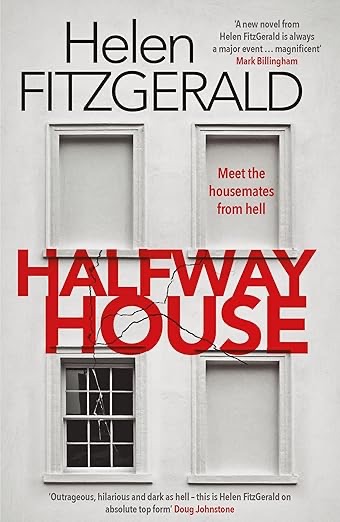
Shared as part of #SkelfSummer

Meet the Author

Doug Johnstone is the author of fifteen novels, most recently The Space Between Us (2023). Several of his books have been bestsellers, The Big Chill (2020) was longlisted for the Theakston Crime Novel of the Year, while A Dark Matter (2020), Breakers (2019) and The Jump (2015) were all shortlisted for the McIlvanney Prize for Scottish Crime Novel of the Year. He’s taught creative writing and been writer in residence at various institutions over the last two decades including festivals, libraries, universities, schools, prisons and a funeral directors.

Doug is a Royal Literary Fund Consultant Fellow and works as a mentor and manuscript assessor for many organisations, including The Literary Consultancy, Scottish Book Trust and New Writing North. He’s been an arts journalist for over twenty years and has also written many short stories and screenplays. He is a songwriter and musician with six albums and three EPs released, and plays drums for the Fun Lovin’ Crime Writers, a band of crime writers. He’s also co-founder of the Scotland Writers Football Club.

Posted in Paperback Publication

In Bloom by Eve Verde

‘This is my family story. From all I’ve sown together, through all I couldn’t ask. I want to be the bud who makes it.’

In Bloom tells of strength, survival, forgiveness, resilience and determination, and the fierce love and unbreakable bonds between mothers and daughters.

Ever since Sol’s untimely death left her pregnant and alone at twenty-two, Delph’s kept herself small as a form of self-protection. Now, over a decade later, she lives with their daughter Roche and her new partner Itsy, a kind and protective cabbie, on the fourteenth floor of Esplanade Point on the Essex coast.

But Delph’s protective bubble bursts when Roche moves in with her estranged nan, Moon. Feeling on the outside of the bond between her fierce-yet-flaky tarot-reading mother and volatile martial-arts-champion daughter, Delph begins questioning her own freedom. And when Roche’s snooping into her grandmother’s past unearths a familial line of downtrodden women; a worrying pattern emerges. Has keeping small and safe truly been Delph’s choice all these years…?

I’m hosting the paperback blog tour for this wonderful book today and it’s lost none of its charm and power since I read it last year. I don’t believe in trigger warnings, despite their intended purpose to flag up material that may ‘trigger’ difficult emotions in the reader, I feel that they might stop someone experiencing a connection with a text. It might well be a trigger, but that doesn’t always have to mean it’s a negative one. It might be a trigger that starts a healing process. If anyone should have avoided this book it was me, because I was Delphine. I lost the love of my life in my early thirties and then sleepwalked into a coercive and damaging relationship. Yes, it was a hard read at times, but it wasn’t a remotely negative experience. Moon, Delphine and Roche are three generations of a family. Each woman has her own issues, but they all stem from one place. Right back at the beginning.

As the book opens Roche can no longer live with her mother and Itsy, the man she’s been living with for most of Roche’s life. So she decamps to her grandmother Moon’s house. Roche can’t stand Itsy, he dislikes her and wishes she wasn’t there. In fact what he wants is Delphine all to himself, it’s easier to control someone who’s isolated. Delphine has had a glazed over look ever since he arrived in her life and she doesn’t seem like her mum anymore. Delphine has done everything she can to keep Itsy happy. She’s changed how she dressed, made herself less beautiful, stayed at home and stopped going out with friends. Every day she makes herself smaller to make more space for him and Roche can’t watch it anymore. However, things are changing slowly. Delphine has a job she enjoys at B & Q, new connections with her colleagues and today she has made a choice. Delphine is pregnant and she knows deep down in her soul that ‘the thought of more years, more life, tied to him’ is more than she can bear. She goes quietly on her own for an abortion, the quietest but most powerful act of rebellion she can make. Then comes her opportunity, Itsy receives a phone call from Jamaica to tell him his mother is dying. He must jump straight on a flight, so Delphine lets him go alone, knowing that now she has several weeks to herself. She doesn’t stop Roche from moving out and accepts this as her time to heal, time to be the parent that so often Roche has to be for her. However, this isn’t the only recovery needed in the three generations of this family thanks to the actions of men.

I felt at first that I was slowly piecing together the story of a client. Being a person- centred therapist means letting the client choose what they want to talk about. I would use my counselling skills to tease out that story and ask questions where it needs to be clarified or where I might only be getting one perspective. Here the story has it’s own pace and each woman narrates her own section. We flit back and forth, also delving into the past here and there and it’s like doing a jigsaw puzzle but only being handed one piece at a time, then another from a different angle. It takes some time to perceive the whole and that was definitely the case here. Only we the reader can see where they all are in relation to one another. The reality of being a woman in today’s world is explored fully, there is no doubt that these women’s lives would have been immeasurably better had they not encountered men. It takes Roche to articulate this properly with the words and wisdom of her generation.

“Roche knows, remembers, how her life changed at around the time she started secondary, and her bubble of invisibility popped. How, despite the school uniform screaming otherwise, she very suddenly became the inhabitant of a woman’s body, complete with a depressing self-awareness that this was now Roche’s life until one day men deemed her invisible again. In fairness, it’s not her contemporaries who usually do the perving – no, it’s men, grown–ass men who have always done the bulk of the wolf–whistling, the innuendoes and basic compliments that they expect her to ‘smile, love’ and be grateful for.”

As a middle aged woman I now know the power of that invisibility and how, in many ways, it’s a blessing.

I love how carefully the author drew the threads between generations, those behaviours that create a pattern of intergenerational trauma. There are moments in her journey where Delph needs her daughter by her side, but she recognises that it’s a selfish need. Delphi’s lived experience stops her; “is not for a child to fix the parent. Nor is Roche the ointment to Delph’s current troubles”. Then we go back into her mother Moon’s early years, when her grandmother is in hospital, suffering from mental ill health. Her name was still Joy back then and her job is to dispense sunshine to a women who can’t even remember her name. ‘Come on,’ Ma says, in a giddy-up way. ‘You know how happy your little face always makes her.’ This a learned behaviour, people pleasing and exactly what Delph is trying to avoid for her own daughter, three generations later. By sitting with her own pain, Delph is avoiding instilling that behaviour in her own daughter, she’s actively breaking the cycle. Yes, there are traumatic moments in these women’s lives, Moon’s story being particularly harrowing, but we can also see the women’s determination to change. It’s that change and what it means for Roche that brings such an uplifting feeling to the book. For me it’s Delph’s struggle that touched me deeply. The loss of Sol, who’d been there her entire life, is devastating. So moving out of Itsy’s orbit and the mental paralysis she’s been living with means opening up her emotions. That’s all of the emotions including her grief, but it’s a process that needs to happen so that Roche can talk about her father openly and in a joyful way. I found myself more engrossed in the later stages of the book as I had to see whether these women could heal together. This is beautifully written and manages to be funny, moving and hopeful.

Posted in Random Things Tours

This Motherless Land by Nikki May.

This book was an absolute joy to read, which may sound strange considering the subject matter but somehow it awakened my senses, stirred my emotions and kept me reading. In fact I read it so quickly I was finished in an evening that turned into morning before I knew it. Funke lives in Nigeria with her mother, known as Misses Lissie to most people, her father and brother Femi. Mum is a teacher and Dad works at the university. Their entire world is shattered one morning as they make their normal run to school when their mother’s car fails to stop and ploughs directly under a lorry. The drivers side of the car is destroyed but Funke’s side is left completely unscathed. She loses her mother and brother in a moment. In his grief, her father Babatunde is inconsolable and he takes it out on Funke. How did she get out without a scratch? Encouraged by his superstitious mother, he calls Funke a witch and insists she must be protected by some magical being. Seeing how Funke will be treated by her grandmother, her aunties put their heads together and decide she should be sent for a while to her mother’s family in England. Her white family. Funke is ripped away from everything she knows and sent to The Ring, the mansion where her mother and Aunty Margot grew up. There, although she isn’t being hit or accused of evil spells, she feels the resentment of Aunt Margot and her cousin Dominic. They call her Kate, after all it’s easier than pronouncing Funke isn’t it? There’s no colour, bland food and where she was accused of being white in Nigeria, here she is seen as black – with all the racist connotations that come alongside it. Especially in white, upperclass Britain. England’s only saving grace is her cousin Liv. Liv scoops her up and feeds her comfort food. The problem is it’s not the food or the comfort she’s used to.

This is a book about being in between. Funke’s mother was ostracised by her family for marrying a Nigerian man. Aunt Margot sees Lizzie’s relationship with Babatunde as the reason for her own engagement being called off just before the wedding. In her eyes Lizzie was selfish, pursuing her own feelings at the expense of her family. She feels Lizzie had the looks, the charisma and the man she loved, while Margot was left heartbroken and with parents who seemed to miss Lizzie more than they enjoyed Margot’s presence. She sees Funke as her mother’s daughter and a threat to her own children. Her parents seem to love Kate, as they’ve christened her, and Margot doesn’t want her to take all the attention, the love and their eventual inheritance. She’s a bitter woman who is very hard to like. Sadly for Funke, history repeats itself and on the night of their prom a series of events mean they must drive home early. Liv is drunk and high. Yet even Funke, who is teetotal, feels unwell. Dominic throws caution to the wind and decides to drive them home, despite his own drinking, and a terrible accident occurs. Everyone survives but Liv suffers a bad break to her leg. In the aftermath Dominic asks Funke to admit to driving, which she agrees to, not knowing that covering for her cousins will lead to her life being uprooted for the second time.

Funke feels like she belongs nowhere. In Nigeria when her mother was alive they had a wonderful life, even if children would follow her singing a song about her pale skin. That’s nothing to the blatant racism she faces in England, but she faces it down and it fuels her will to succeed. Then she’s back in Nigeria and is again the odd one out. This time she’s in her dad’s new family and their lifestyle in the village is very different to the childhood she remembers on the university compound. His new wife and their children eat and live in ways her dad would have dismissed as ‘bush’ when Funke was a child. Her small brother and sister are black and fascinated with her pale, mixed race skin. Things are familiar, such as the spicy red stew and the heat, but it’s a changed land without her mother in it. At least in England she didn’t expect her mother to be there. Now she faced with the shock of her absence all over again. Will she ever find home? Meanwhile, back in Britain, when Liv finally comes round from the accident she asks for Kate. What will her mother tell her?

I thought the author brilliantly showed how different people cope with mental pain. Funke takes a bottle top from her mother’s hoard (for craft projects) and holds it in her hand so hard that it cuts into her palm. Liv is horrified that she’s hurt herself like this, but for Funke it’s the only thing that distracts her from the grief of losing her and her brother. Liv also deals with motherly absence, but externalises her feelings in a different way. She has a mother who is present, just not for her. Liv starts to drink excessively, uses marijuana and acid tabs to blank out the feelings that she isn’t loved and therefore isn’t worth anything. When we’re children and we’re rejected by a parent, we never assume it’s the parent’s fault and we don’t stop loving them. Instead we internalise their criticism and think we are the problem. Liv has a lot of casual sex because she thinks it sex is all she really has to offer. Meanwhile Funke struggles to give love and truly trust someone. She is in a relationship with a young man who is keeping his true sexuality under wraps, because it’s not accepted in his family or community. The younger people are aware he’s gay and call Funke his ‘beard’, but how far can she take this relationship? What if he suggests a more permanent arrangement and is Funke willing to give her life away so easily? The the same root cause, a loss of the mother figure they so needed, affects both girls, it just manifests in different ways. With them both on opposite continents, how will they ever find each other again? The spaces between can be painful and isolating places to be and the author depicts that with such tenderness and understanding. However, liminal spaces are also freeing. Being in-between gives us the space to choose, to take bits and pieces from each place, each family and make our own identity. I found the end chapter so uplifting and it gave me hope that we can each forge our own identity, once we’ve explored who we truly are. This is a fascinating, touching story about growing up and how we become who we are. It’s vibrant, atmospheric and an absolute must read.

Meet the Author

Born in Bristol, raised in Lagos, I’m proud to be Anglo-Nigerian. I ran a successful ad agency before turning to writing and now live in Dorset with my husband, two standard schnauzers, and way too many books.

My debut novel WAHALA was inspired by a long (and loud) lunch with friends. It was published around the world in January 2022 and is being adapted into a major BBC TV drama. This Motherless Land is my second novel.

Posted in Publisher Proof

The Bookshop Ladies by Faith Hogan

One sure way to entice us bookworms is to write a book about books and this one has all the warmth, friendship and female empowerment we would expect from a Faith Hogan novel. It’s like receiving a big warming hug, but in book form. Our central character is Joy and we meet her at a hugely traumatic point in her life. Joy lives in Paris with her husband Yves Bachand, a well-known art dealer who has made the career of many a new struggling artist. Joy has a very successful career of her own in public relations. Everything is turned upside down when Yves suffers a massive heart attack and in his dying moments manages to tell Joy he has a daughter. Over the next few weeks as Joy starts to comes to terms with losing her husband, she’s also trying to get her head around his dying words. Could he possibly have been unfaithful? The whole idea adds a new level of devastation because Joy and Yves couldn’t have children of their own. Their solicitor approaches Joy about an unusual request in his will, he has bequeathed a painting he owned to a girl called Robyn. When Joy returns home she goes into Yves’s office where the painting hangs and studies it, trying to see what he saw in this particular work of the Seine. Joy takes in the muddy coloured water, the litter and the green surroundings and thinks it could be a river anywhere. There is nothing to suggest this is the Seine that lovers travelling to Paris dream of walking along. Where are the honey coloured stones, the lampposts and the bridges? It takes time for her to notice anything about it she likes, but there is a streak of light that catches her eye in the top corner. The more she looks at it the more she wonders whether it was this glimmer that kept bringing Yves back to the painting. A promise that the grey cloud would lift and the sun would break through changing the whole scene to something altogether more hopeful. In this moment she makes a decision, she will travel to a Ireland and put this painting in the hands of Robyn herself.
We’re back in the gorgeous coastal village of Ballycove, where our other main character Robyn lives. Robyn has a small bookshop, with largely second hand books on various subjects from rare birds to trains. It’s been just ticking over for several years and while Robyn’s family own the building, including her flat above the shop, she has taken over the stock from it’s previous owner Douglas who has retired. To say the shop is a little tired is an understatement and it really needs some pizzazz to bring it back to life again. Yet it is lovely in it’s own way with it’s floor to ceiling bookshelves and their carvings of animals, little rooms for every subject and a darling little children’s section in a small nook. Although Robyn has put the stock onto online book sites she isn’t exactly turning a profit and she wonders if she’s made a big mistake. Her grandfather Albert suggests that she hire someone or find a volunteer to do a few hours in the shop to free Robyn up for business planning and working on her vision for the shop. Into this scenario walks Joy, renting the flat above Albert’s and hoping to stay for only a couple of weeks in order to pass on the painting. She can see that it belongs with Robyn as it was painted by her mother Fern. Joy both welcomes and dreads meeting Robyn and definitely her mother. If she can do it quickly, almost like ripping off a band aid, she can get the painting handed over and be back on a plane to Paris in no time. However, she hadn’t factored Robyn into the equation. She walks past the shop twice plucking up courage and when she does finally walk in she’s so taken aback by this girl who looks so much like Yves she could only be his daughter. Stunned into silence, Robyn’s chatter takes over and she assumes that Joy is there to apply for the position she advertised in the window. In her stunned state Joy doesn’t argue and soon she is Robyn’s new book assistant. Joy walks away wondering what on earth she’s done and how she’ll cope if Robyn’s mum turns up before she leaves.

I really enjoyed the women in this novel, especially Joy who is so resilient and generous with her time, her emotions and her heart. I felt like Ballycove worked it’s usual magic, but Joy matches it, bringing her enthusiasm and joie de vive to the bookshop. She’s using her professional skills of course, but there is just that touch of enchantment about her too. She’s like a bookish Mary Poppins, thinking up events and little touches to brighten the place including a toy train track which is one of my favourite parts of the brilliant Barter Books in Alnwick, Northumberland. Yet it’s the fact that she’s giving her time and expertise freely to her husband’s secret daughter that makes her all the more extraordinary. Yet I think she gets something special from Robyn too. Robyn allows her to spend time with someone with the characteristics and mannerisms of Yves and in a sense it seems to comfort her that he’s still here in the form of this shy, bookish girl. I also think Robyn balances some of the grief Joy went through when they lost their own baby who would have been a similar age. I was waiting to see what would happen when Robin’s mother Fern arrived. Would Fern immediately know who Joy was and what would it do to her relationship with Robyn? I felt sad that Joy might lose everything she’s built in Ballycove and the sense of family she’s enjoyed with Robyn and her grandfather. There’s a lovely little romantic subplot and a lot of personal growth on Robyn’s part, particularly the unresolved emotions around being bullied at school. The word that always best describes Faith’s writing is charming. It’s like making new best friends and although her stories are emotional and raise serious issues, they are always uplifting too. This felt like a lovely warm hug in a book and added lots of ideas to my imaginary future bookshop.

Meet the Author

Faith Hogan is an award-winning, million copy best selling author. She is a USA Today Bestseller, Irish Times Top Ten and Kindle Number 1 Best Selling writer of nine contemporary fiction novels. Her books have featured as Book Club Favorites, Net Galley Hot Reads and Summer Must Reads. She writes grown up women’s fiction which is unashamedly uplifting, feel-good and inspiring.

Her new summer read The Guest House By The Sea is out now and it’s a great big welcome back to Ballycove for her readers.

She writes twisty contemporary crime fiction as Geraldine Hogan.

She lives in the west of Ireland with her family and a sausage-loving Labrador named Penny. She’s a writer, reader, enthusiastic dog walker and reluctant jogger – except of course when it is raining!

http://www.faithhogan.com

http://www.Facebook/FaithHogan.com

Twitter @gerhogan

Instagram @faithhoganauthor

Posted in Netgalley

The Mysterious Death of Katherine Parr by June Woolerton.

What killed Katherine Parr? She was the ultimate Tudor survivor, the queen who managed to outwit and outlive Henry VIII. Yet just over eighteen months after his passing, Katherine Parr was dead. She had been one of the most powerful people in the country, even ruling England for her royal husband, yet she had died hundreds of miles from court and been quickly buried in a tiny chapel with few royal trappings. Her grave was lost for centuries only for her corpse to be mutilated after it was rediscovered during a tea party. The death of Katherine Parr is one of the strangest of any royals – and one of the most mysterious. The final days of Henry VIII’s last queen included a faithless husband and rumours of a royal affair while the weeks after her funeral swirled with whispers of poison and murder. The Mysterious Death of Katherine Parr dives into the calamitous and tumultuous events leading up to the last hours of a once powerful queen and the bizarre happenings that followed her passing. From the elaborate embalming of her body, that left it in a state of perfect preservation for almost three centuries despite a burial just yards from her place of death, to the still unexplained disappearance, without trace, of her baby, the many questions surrounding the death of Queen Katherine are examined in a new light. This brand new book from royal author and historian June Woolerton brings together, for the first time, all the known accounts of the strange rediscovery of Katherine’s tomb and the even odder decision to leave it open to the elements and graverobbers for decades to ask – how did Katherine Parr really die?

I do have a fascination with the Tudors and the life of Katherine Parr is one of the more interesting out of all Henry VIII’s wives. Most people focus in on the King’s ‘Great Matter’, which is what advisors called his apparent mental and spiritual battle around his marriage to Katherine of Aragon. A cover-up for the fact he wanted to dispense with a wife who would no longer give him heirs, preferably as quickly as possible and move on to his proposed mistress Anne Boleyn. The ‘Great Matter’ was simply an excuse for divorce and if only Katherine had gone quietly. As it was it didn’t take long for Anne to be out of favour too, but sadly Katherine was too ill to enjoy her replacement’s fall from grace. A few years later, Anne of Cleves would go quietly and in doing so received great favour from Henry and Anne Boleyn’s childhood home of Hever Castle. She was the most shrewd of the wives. It is Anne of Cleves and Katherine Parr that most see as escaping Henry’s barbarous habits of killing off his wives, but Katherine’s life after Henry was far from rosy. I always feel desperately sorry for this woman who loved a man from a very young age, but could never have him because of being married off to various old and infirm men who she nursed till their deaths. Katherine’s entire life is often reduced to these marriages, especially the last two; King Henry who she couldn’t refuse and finally, after Henry’s death, the love match she had always wanted with Thomas Seymour. There are various strange aspects to this last marriage, but the men she married are not really the sum of this intelligent and witty woman.

Courtiers saw Katherine’s marriage to Thomas Seymour as proof that the Queen had intelligence but absolutely no common sense, full of passion for a younger man who was certainly not worthy of her. In this book the author intends to uncover more about this interesting woman, by looking at the circumstances of her death and her burial place. The author clearly has a passion for her subject and has written the book like a true crime novel. This makes it compelling and meant I read it in a day when I was unwell in bed. The opening chapter was well written and placed perfectly to grab the reader and lead them into the mystery by looking at several odd events in the last twenty months of her life. I had always assumed that she’d married Seymour so quickly after Henry’s death, because she didn’t want to wait and be proposed to by someone else she couldn’t refuse. It is often mooted that she wanted to finally have some fun after dealing with an ailing Henry and the terrible ulcer that he received in a much earlier jousting match. The ulcer never healed fully and.was often weeping and painful. It is likely that sepsis from this infected leg eventually killed him. However, the author questions these long accepted facts as well as the assumption that her death was due to childbed fever. From my own reading I was aware of some of the information the author presents here. For example, before Henry’s death Katherine was the wife who managed to reunite him with his children. Most sources mention the close relationship she had with Elizabeth, possibly because Elizabeth left court to live with her stepmother in Gloucester after her father’s death. She also wrote regularly to Mary and Edward, convincing the King to invite his children to court and have them around him in his final years. Edward was of course the son of Henry and his third wife Jane Seymour, making Thomas Seymour the King’s uncle as soon as Edward took the throne. This made Thomas powerful, but it was also suggested he wouldn’t want a dowager Queen still of marriageable age interfering with his protectorship of Edward. What better way to take control than to become her husband?
Another rumour I’ve read in several history books and novels is that Thomas Seymour had his eyes on a much greater prize. Eventually, Edward’s reign would pass on to one of his sisters – an event that might come sooner than most expected since the young king was known to be frail. The Protestant Seymour’s would not want the Catholic Mary taking the throne, so if Thomas could get into the orbit of Elizabeth and start to influence her – no better than grooming – he could go from the King’s Uncle to the Queen’s Consort. I’ve read that Katherine Parr had a difficult pregnancy, with bed rest being recommended for many months. This left Thomas Seymour unoccupied and unsatisfied. He struck up a rapport with the Princess who was only a teenager. Elizabeth’s nurse Kat Ashley observed that he might pop into the princess’s bed chamber and was found ticking her when she was still in her night clothes. Kat made sure she didn’t leave Elizabeth alone for too long, but it is possible that the damage was done. Some sources suggest an absence for the princess not long after Katherine’s confinement. Could the teenage Elizabeth have been pregnant?

It’s only recently while watching a programme on Henry’s queens that I found out about that Katherine’s body had laid in a near perfect state for centuries. This was a fascinating part of the book that detailed the elaborate process of embalming and being interred in lead lined sheets before being placed in her coffin. All this was carried out with unseemly haste only 24 hours after her death from puerperal fever. She was buried only yards from her home of Sudeley Castle in the chapel. Over the years the chapel fell into disrepair and was removed, leaving no marker for her grave – a strange state of affairs for a woman who had been Queen. Her resting place forgotten, it was centuries later when Katherine was disinterred and so well preserved that her body was still perfect. At this point the grave was opened and keepsakes taken from her body, including a section of the lead sheet she was wrapped in. This was a terrible mistake and the natural process of decay followed very quickly. The grave was subject to further vandalism and investigation in a terribly undignified succession of events, including being left in the open on a rubbish heap! It took several decades and more indignities before a rector decided to disinter the Queen one last time and bury her where no one could get to the body again. Finally Katherine was at peace. However, for me the most pressing question about those final years of Katherine’s life is what happened to her daughter Mary, still a newborn baby when Katherine died. The author goes some way towards answering this mystery and shedding new light on Katherine’s final days. I thoroughly enjoyed the new light the author shed on why the Queen might have married Seymour, only months after Henry’s death. I found this new perspective speculative with little evidence to back it up, but it was still an interesting and valid theory.

I found some of the book a little disjointed as well as repetitive. The author jumped around from parts of Katherine’s life which was fine if you knew some of her story. However, if you didn’t the it might be harder to keep up. The author uses repetition and reminders about facts already established in other parts of the book, but for those who’ve read a lot of Tudor history or just have a good memory the reminders were a bit wearing and unnecessary. I do think that as a whole the book provides a thorough and well researched biographical introduction to Katherine. It’s also interesting enough to spark some thoughts for any lover of Tudor history. It also poses important questions about the final 20 months of her life and some I’d never considered, such as why she left court and moved to Gloucestershire far away from her allies and courtly circle? Was the description of her marriage to Seymour as a love match really justified? What was the full medical cause of death? Why was her burial so quick with a state funeral not even considered? I thought the author explored these questions well, as well as Katherine’s relationship with Edward and Mary, her other stepchildren who she wrote to regularly. It’s also interesting to read about her Protestant beliefs and how they led to her being the first woman and Queen to publish a book on her faith. I found this book mostly well researched and gave me new insights into her death, although the whereabouts of her daughter still remains a mystery. It is thought that Mary was entrusted to a noble woman and died in infancy, but that isn’t a proven fact. Also Katherine’s Protestant beliefs were more clearly explained, as was her power at the court before her royal marriage. It left me with a healthy respect for Katherine that I hadn’t had before and despite some repetition I learned some new facts about her life. Katherine Parr was certainly much more than the nursemaid Queen we are led to believe and deserves to be more than a footnote in Tudor history.


Published by Pen and Sword History 4th April

Meet the Author

June Woolerton is an author and journalist who’s spent twenty years reporting on and writing about royalty and royal history. She’s the editor of a major royal website and has written extensively for magazines and publications on history’s most famous monarchies and rulers as well as presenting podcasts and radio shows on royalty. In 2022, her book A History of Royal Jubilees was published. After graduating in history, she enjoyed a broadcasting career before moving into print and obtaining a degree in psychology. She lives near London with her husband and young son.