Fin and his wife Martha are travelling in South America. Their eventual destination are the salt flats in Bolivia, an other worldly natural phenomenon where the horizon becomes endless and you’re standing in the sky. Martha and Fin are not just sight-seeing, although the urge to take photographs and capture the illusion is strong. Having been together for 11 years, lately they’ve struggled as Martha has been in the grip of an obsessive anxiety over the climate crisis. They are booked into a retreat on the salt flats, found by Martha and extortionately expensive, it promises a transcendent experience using salt to purify mind and body. So the couple find themselves crammed into a pick-up truck alongside Rick and Barb, a middle aged and out of shape American couple, and partners Hannah and Zoe. They are now in the hands of their driver who doesn’t speak a word of English and an elusive shaman called Oscar. They will spend the next few days meditating, relaxing in warm salt pools and participating in a series of salt ceremonies where hallucinogenic visions bring them face o face with their subconscious reality. Yet the final ceremony descends into chaos, Martha and Fin need to grapple with Martha’s anxiety and the moral implications of their trip. As for their marriage, could this nightmare bring them together or are some wounds too deep to heal?
I’ve been fascinated with the salt flats after seeing them on an episode of World’s Most Dangerous Roads. It was incredible to see the sky reflected in the shallow saltwater surface, giving the impression of standing in the sky. It’s an image recently repeated on Race Across the World and even on a small screen it’s an incredible landscape. The author recreates that otherworldly and alien environment so well, creating an atmosphere of dislocation from the normal world even before any hallucinogens. It struck me as an odd place for a spa or well-being centre, something I always imagine as comfortable and with lush surroundings. This landscape is hard and barren. It left me dubious about the benefits of such a place and how professional it would be. As they’re collected by a taciturn driver I half expected him to rob them and leave them in the middle of nowhere. When they break down en route it doesn’t help, giving an impression of something run on a shoestring in a very inhospitable place. The building is much less luxurious than the group imagined, considering the high price they’ve paid to be there. It’s an igloo type structure built from blocks of salt. Even the beds in the dormitory have salt bases and the group are less than impressed to be sleeping in the same room. Each of the group have personal reasons to be there and the first salt ritual brings up themes of infidelity, assault and intrusive negative thoughts about the future. By confronting these issues, Oscar tells them they can process the trauma and move on. Trust has to build very quickly between the group who are letting each other into their personal spaces, both physical and mental. They’re baring their souls to each other. It’s clear that none of them will come out of this experience unchanged. Whether that’s a negative or positive change is hard to say. When Fin wakes up with a blooded face he is completely confused about how he got there. He knows he interacted with Zoe and that Barb had an accident, but the rest is fluffy and unclear. Where is the blood from and what horrors has he blacked out from his memory.
I didn’t bond with all of the characters but I was definitely intrigued by them. I could understand why all of them needed change in their lives. It was easy to understand Martha’s concerns about the direction the world is taking. Although her preoccupations are with climate change, Brexit, Covid and wars breaking out across the world have left me with anxieties about the future, especially for the younger members of our family. It only takes a few swipes of the iPad to see how climate is changing the lives of those in low lying countries. However, that proximity to information can radicalise people as the most extreme viewpoints shout loudest online and I felt this had happened to Martha. Finn couldn’t keep living with constant anxiety about the future and needed Martha to meet him in the present every so often. The author’s depiction of their relationship felt very real, showing how people in long term relationship can change over time. Sometimes out takes a conscious choice to re-commit to that person or a bit of compromise that reminds why you committed to each other in the first place. Agreeing to the salt spa was Finn’s act of commitment, to show that he can give Martha a little of what she needs in the hope it will be enough. However, he ruins that a little with his scepticism and his shock at how spartan the spa is for the money spent. As horrors start to unfold will he blame Martha or will everything they’ve experienced bring them closer together? That’s if they both get out alive. The monumental stupidity of allowing themselves to be taken into the middle of nowhere at the mercy of people who don’t speak their language and have taken a huge chunk of their savings, starts to sink in. As things start to unravel you won’t be able to put this fascinating debut down.
Out Now from Hodder and Stoughton
Meet the Author
Rachelle Atalla is a Scottish-Egyptian novelist, short story writer and screenwriter based in Glasgow. Her debut novel The Pharmacist was published by Hodder & Stoughton in May 2022.
The Government have declared a state of emergency in this tense and thought provoking thriller from Louise Swanson. They’re introducing a temporary policy of electricity rationing, so at 8pm every night the lights and all other electrical power will turn off. For Grace this is her worst nightmare, because she’s terrified of the dark and no reassurance or safety measure from her husband is going to change that. She knows that at some point she will be forced to face the dark alone. An experience of being enclosed in the dark as a child has left it’s mark. All she can do is take as many night shifts at the hospital as possible, where they’re exempt from the switch off. In the house she will have to carry a torch and try to be alone as little as possible. When the switch off comes it’s effects are worse than she could possibly have imagined. Someone is coming into her home. Late at night when she’s shivering under the covers, too scared to move. Someone is leaving behind strange gifts – a third goldfish is swimming beside Brad and Jennifer in the bowl, a horrible painting of a dragon has replaced her own photo on the stairs, a pair of candlesticks in the kitchen. With them he leaves a strange and unsettling note:
‘I have you in my sights. Love, the Night.’
Where can Grace feel safe if not in her own home? She’s an interesting character, clearly badly affected by childhood trauma and the memories of her previous, abusive relationship. The author opens with a first person account of being locked in a small pitch black space, it’s so vivid I could feel her fear. Grace tells us she was locked in a cupboard by the other children at school, where they continue taunting her until she wets herself. Since then she has always kept the lights on after dark and her partner sleeps in an eye mask to avoid the constant light. She also works at night where she can and sleeps in the day at home. She works as a carer in the hospice, spending a lot of time sitting beside those who are close to death, once her other tasks are completed. She didn’t go to university because she had a baby boy while very young and he has recently left home to live with his partner. Grace moved in with her own boyfriend and he has promised to be home in time for first big switch off. However, when she’s counting down the minutes, torch in hand, her partner is nowhere to be seen.
The author shows brilliantly how even a strong and capable woman can be triggered by something that others barely notice. She touches on how the lights out policy affects the wider population – hypothermia in the elderly, rotting food defrosting and causing waste, a rise in crime. For others the lack of power has some positives, people can’t hide or be distracted by screens and communication within families will improve. Grace has been a single mum and she works well with people who are dying, so we know she isn’t scared of the big stuff. So why has one experience from childhood left such a huge impression? Her mother had always hoped she’d grow out of it and now the twelve hours of darkness must surely mean she must face the fear? It’s like state sponsored exposure therapy. Then ‘the night’ starts visiting and suddenly the dark covers up worse fears, new ones that are very real indeed. Even worse, her night visitor isn’t breaking in, so surely they must have a key. She is unsure how to deal with it and ringing the police is pointless when they’re dealing with a darkness induced crime wave.
In between Grace’s sections of the story we meet a man who is in therapy. He left me feeling very on edge and I found myself wondering how I’d react if he were my client. He seems very unaware how counselling works, despite it being a fairly common concept these days. He also responds strangely to the therapist’s standard introduction. He fidgets, stands and paces round the room and I was uneasy on the therapist’s behalf. He seemed agitated. He’s convinced that his girlfriend is seeing another man. Is he paranoid? We have no idea how he fits into the story, but I was intrigued by him. Grace’s world becomes even more confusing when someone from her past turns up at the hospice as a patient. She knows she should disclose their connection, but if she does she knows she won’t be able to work with them. She decides to keep it to herself so she can sit with them. What clues, if any, might they have about her childhood and could what they know help her fear of the dark? As the pages turned I became more and more suspicious of her partner. Never home when he says he will be, distracted and very unsympathetic. I didn’t like him from the start and wondered if he was exercising coercive control over her. The moments when she’s under the covers with her heart racing as she hears her intruder moving around downstairs are truly terrifying. Yet he doesn’t seem malicious. He seemed to enjoy her fear and I even wondered if the night was closer to home than she thought. The truth was even stranger than expected and I found myself rooting for Grace, wanting her to get some resolution about her night visitor but also more long term relief from her phobia. That could only come from openness and facing the truth of her childhood and that time in the pitch dark cupboard. This is an enjoyable thriller with interesting insights on how childhood trauma affects us and how early relationships can inform the attachments we form in later life.
Out Now from Hodder and Stoughton
Meet the Author
Louise Swanson’s debut, End of Story, was written during the final lockdown of 2020 – also following a family tragedy, it offered refuge in the fiction she created. The themes of the book – grief, isolation, love of the arts, the power of storytelling – came from a very real place. The second Swanson book will arrive in hardback and eBook spring 2024. Watch this space.
Swanson, a mother of two who lives in East Yorkshire with her husband, regularly blogs, talks at events, and is a huge advocate of openly discussing mental health and suicide.
She also writes as Louise Beech. Beech’s nine books have won the Best magazine Book of the Year 2019, shortlisted for the Romantic Novel of the Year, longlisted for the Polari Prize, and been a Clare Mackintosh Book Club Pick. Her memoir, Daffodils, was released in audiobook in 2022, and the paperback version, Eighteen Seconds, in April 2023..
I quickly became fascinated with this mix of historical fiction, psychological suspense and the paranormal. We meet Annie Jackson as she tentatively starts her new job in a nursing home in the West End of Glasgow, hoping to get her life back on track. Annie suffers with terrible nightmares where she’s stuck in a car underwater. She also has the sensation that someone is holding her head under water until her lungs feel ready to burst. She also has debilitating headaches and she can feel one threatening as her new manager introduces her to resident Steve. Then something very odd happens, as a blinding pain in Annie’s head is followed by Steve’s face starting to shake, then reform. A whispering sound begins in her head and she sees Steve as a skull, followed by a vision of him falling in his room and suffering a debilitating stroke. She desperately wants to tell him but how can she without seeming like a lunatic? He becomes agitated and upset, as Annie starts to describe the layout of Steve’s bathroom and he asks her to stop. As she’s sent home from another job she starts to think back to her childhood and the first manifestations of her debilitating problem. Annie survived the terrible car accident that wiped her childhood memories and killed her mother. This strange supernatural phenomenon is why Annie is alone and struggles to make friends. These are ‘the murmurs’.
I felt so much compassion for Annie, as the story splits into two different timelines: we are part of Annie’s inner world as a child, but also in the present as fragments of memory slowly start to emerge. We also go back even further to the childhood of Annie’s mother Eleanor and her two sisters Bridget and Sheila. We experience their lives through other people’s stories and written correspondence, especially that of a nun who also works in a residential home. I enjoyed how this gave me lots of different perspectives and how the drip feed of information slowly made sense of what was happening in the present day. Different revelations have a huge effect on the adult Annie and because her memories have been buried for so long she experiences the shock and surprise at exactly the same time as we do. This brings an immediacy to the narrative and I felt like I was really there alongside her, in the moment. With my counselling brain I could see a psyche shattered by trauma, desperately looking for answers, she is piecing herself back together as she goes.
Teenage Annie had a similar vision about a girl called Jenny Burn, who went missing never to return. The murmurs awakened when her mum’s sister Aunt Sheila came to visit them. She tried to openly discuss an Aunt Bridget who also had a ‘gift’ but has ended up in a home. Eleanor, Annie’s mother, asks Sheila to leave, but it’s too late because Annie has already seen that her aunt is dying of cancer. Annie evades her mum and makes her way to the hotel, the only place Sheila can be staying. Unfortunately, Jenny is working on reception. Annie can see her climbing into a red car and she desperately wants to warn her, but she knows she’ll come across as a crazy person. Eleanor is desperately looking for a way to deal with her daughter, she’s a person of importance in the church and she can’t be seen to have a daughter who has visions. Pastor Mosley has Eleanor exactly where he wants her. There’s a control and fanaticism in him that scared me much more than Annie’s murmurs. When Eleanor takes Annie to the pastor, he demonstrates his control by holding her head firmly under his head as he prays for her. When she almost faints, he’s convinced there’s a demon in her. Annie is scared of him, she gets a terrible feeling about him but doesn’t know why. Religion is portrayed as sinister and controlling, with fervent followers who never question, but live in the way they’ve been instructed is Christian? story takes an interesting turn when Annie’s brother Lewis, a financial advisor, becomes involved with the church once more and it’s new pastor Christopher Jenkins, the son of their childhood neighbour. He’s revolutionised the church and through the internet he’s turning it into a global concern. He’s not just interested in saving souls though, he’s also amassing money from his internet appeals. He also seems very interested in meeting Annie.
As the book draws to a close the revelations come thick and fast as both past and future collide. The search for Aunts Bridget and Sheila seems to unearth more questions than answers. Annie finds out that Jenny wasn’t the only woman who went missing in Mossgaw all those years ago. As she starts to have suspicions about her childhood home, Chris seems very keen to draw her back there. Might he be planning a huge surprise? I was a bit confused at first with all these disparate elements, but as all the pieces started to slot together I was stunned by the truths that are unearthed. Then as Annie’s childhood memories were finally triggered I felt strangely terrified but also relieved for her all at once. I hoped that once she’d regained that past part of herself she would feel more confident and free, despite the strange gift she seemed to have inherited. Maybe by facing the past and leaning in to her relationship with her brother, she might feel more grounded and strong enough to cope with her ‘gift’. I thought the author brought that compassion he’s shown in previous novels but combined it with a spooky edge and some intriguing secrets. I really loved the way he showed mistakes of the past still bleeding into the present, as well as the elements of spiritual abuse that were most disturbing. This book lures you in and never lets go, so be prepared to be hooked.
Meet the Author
Michael J. Malone was born and brought up in the heart of Burns’ country, just a stone’s throw from the great man’s cottage in Ayr. Well, a stone thrown by a catapult, maybe.
He has published over 200 poems in literary magazines throughout the UK, including New Writing Scotland, Poetry Scotland and Markings.
BLOOD TEARS, his debut novel won the Pitlochry Prize (judge:Alex Gray) from the Scottish Association of Writers and when it was published he added a “J” to his name to differentiate it from the work of his talented U.S. namesake.
As all subscribers and Twitter followers must know by now, I am a huge fan of The Skelf series. I’m a Skelfaholic and it’s become a strange cycle of waiting for the next book to be published, devouring it overnight then longing for the next one. It’s even worse this time because I have it on good authority that this might be the penultimate book in the series. So one more book and no more Skelfing! I’m going to be like a weasel with a sore head when I have to go cold turkey. It has been wonderful to be back in Edinburgh with this family: part private investigators, part undertakers and all round incredible women. For those who haven’t met them yet, the Skelfs are three generations of one family. Grandmother Dorothy is in her seventies, but is still active in both the investigative and the funeral parts of the business. In her spare time she still drums like a badass and has a lover almost twenty years her junior. Daughter Jenny is back home, living above the business and struggling with memories of psychopath ex- husband Craig. She’s drowning her pain with alcohol and sex. Jenny’s daughter Hannah is now a PhD student, working in the astrophysics department, but still finding time to help out. She’s now married to Indy, feeling settled and starting to move past what happened to her father. The women are brought some unusual cases, both for funerals and PI work. A gentleman approaches Dorothy after his wife’s funeral, to ask if they can help him with a nighttime visitor. He believes his wife’s spirit is punishing him and he has the bruises to prove it. Hannah is approached by Laura, a young woman who claims to know her, but Hannah has no recollection of her. When Laura starts to turn up wherever Hannah goes, she suspects mental health problems. She stops being harmless the closer she gets to the family, especially when Hannah drops into the funeral parlour and finds Laura talking to Indy. Laura wants them to do her mother’s funeral, but Hannah thinks it’s unwise. How can she let this fragile girl down gently?
Aside from their cases Johnstone picks up those storylines that weave throughout the novels. In the main we are drawn back to Craig, Jenny’s ex-husband and Hannah’s father, who is still haunting the family. Jenny is most visibly affected by her interactions with Craig’s family, most notably his sister, who seems to have inherited his ability to manipulate and turn to violence to get what she wants. Will Craig ever leave them alone and will Jenny be able to tread the line between her own pain as his ex and Hannah’s pain as his daughter. Both tend to overlook the grief that Dorothy still feels at the loss of her own husband Jim, complicated now by her relationship with police detective Thomas. Indy’s grief is also overlooked a lot, especially since she’s just gone through disinterring her parents in order to give them the cremation in line with their faith. Hannah and Jenny bring the drama and it’s Jenny I was particularly worried about. She’s getting messy, day drinking and embarking on a highly controversial sexual relationship with the wrong person. She never wakes up feeling better, but in the moment she has to drown out the constant pictures in her head. This is PTSD and she’s in danger of drawing others into her drama, especially Archie who works for the funeral business. Can she rein in her behaviour? Even professional help seems doomed to failure at this point.
Aside from these incredible women, and the lovely Indy of course, the things I most love about these books is Doug Johnstone’s love for Edinburgh and the way he weaves incredible ideas, philosophy and physics into his novels. I’ve not been to Edinburgh since I was in my twenties, but the way he describes the city makes me want to go back. He doesn’t sugar coat the place either, there’s good and bad here, but as a whole it’s a poem to a place that’s in his soul. Dorothy muses on her home town a lot in this novel and considering she was born in America, this place is her heart’s homeland. She ponders on the people this city produces, including her husband and child, the history, the architecture almost as if she’s taking stock. She concludes that she’s a person who always looks forward to where life’s going, but grief is like the tide and there’s no telling when those waves will wash ashore again. Jenny tends to frequent the less salubrious areas of the city. She’s stuck. Her past has quite literally washed ashore and the problem with losing someone is you’re not the only one grieving and everyone grieves differently. She’s not mourning Craig as he truly was. She’s grieving the loss of all that hope; the hope they both had for the future on their wedding day and when Hannah was born. Similarly Craig’s mum and sister aren’t missing the Craig who committed all those terrible crimes. Violet misses the little boy she had and the life she wanted for him and his sister misses her baby brother. Hannah seems to be the person most resigned to the loss of her father. She always seems older than she is and with Indy alongside her she has the support she needs. There’s so much wisdom in these two young women, honed from a combination of Indy’s spirituality, years of working with grieving families and Hannah’s physics knowledge, especially where it tries to explain the universe. The supermassive black holes that are thought to be at the heart of every galaxy are mysterious. We know that they have a huge power that acts like a magnet, drawing in items from across the universe.
I loved the element of Japanese spirituality and having read Messina’s novel The Phonebox at the Edge of the World, I loved the concept of the wind phone. I’ve always thought that a good way of letting go of the past, especially when you’re struggling emotionally, is to make a physical gesture or step in the direction you want to go. That might mean taking off a wedding ring when you’re getting divorced, or moving house where it’s full of old memories. I found talking to my late husband in my head a bit strange and it only made me miss him more. So I wrote to him in my journal instead. To have a phonebox dedicated to speaking with those who have died seems a very effective way of keeping them in the present with you, but in a controlled and deliberate way. Samuel Beckett said:
“Memories are killing. So you must not think of certain things, of those that are dear to you, or rather you must think of them, for if you don’t there is the danger of finding them, in your mind, little by little.”
Each of the Skelf women have their own grief to bear, a black hole at the centre of their heart. Each must find their own way to remember a little, to prevent becoming overwhelmed by their memories. Only by reconciling this, can they live in the present moment and make plans for their altered future.
Meet the Author
Doug Johnstone is the author of fifteen novels, most recently The Space Between Us (2023). Several of his books have been bestsellers, The Big Chill (2020) was longlisted for the Theakston Crime Novel of the Year, while A Dark Matter (2020), Breakers (2019) and The Jump (2015) were all shortlisted for the McIlvanney Prize for Scottish Crime Novel of the Year. He’s taught creative writing and been writer in residence at various institutions over the last two decades including festivals, libraries, universities, schools, prisons and a funeral directors.
Doug is a Royal Literary Fund Consultant Fellow and works as a mentor and manuscript assessor for many organisations, including The Literary Consultancy, Scottish Book Trust and New Writing North. He’s been an arts journalist for over twenty years and has also written many short stories and screenplays. He is a songwriter and musician with six albums and three EPs released, and plays drums for the Fun Lovin’ Crime Writers, a band of crime writers. He’s also co-founder of the Scotland Writers Football Club.
First posted on publication and being shared as part of #SkelfSummer.
How have I come this far in my reading life without reading Doug Johnstone? The Skelfs are the family I didn’t even know I was missing. To prepare for reading the second novel in Johnstone’s Skelf series, I made the decision to read the first novel entitled A Dark Matter. I couldn’t have imagined this incredible group of women, but now I feel like I know them personally. Set within the city of Edinburgh, this is a family of undertakers and private investigators. Just to set up the kind of family they are, the author places their residence and place of work at No 0 – somewhere that doesn’t exist. Grandmother Dorothy is a Californian lured to Edinburgh after falling in love with Jimmy Skelf who has passed away at the beginning of book one. Dorothy works in the funeral business with employee Archie, but also takes on PI duties and in her spare time teaches spunky young girls to play the drums. Mum Jenny is at a loose end so comes into the family business after her father dies. She jumps into the PI business with both feet, which is how she seems to do most things. Granddaughter Hannah is studying physics at Edinburgh University and lives with her girlfriend Indy. She has a good relationship with her parents and her grandmother. The first book concerns the disappearance of Hannah’s uni friend Mel and the shock when her killer is revealed is seismic, hitting all the Skelf family hard.
The beginning of The Big Chill reads like the explosive ending of most books. In a scene as comical as it is tragic, Dorothy and Archie are overseeing a routine funeral at the cemetery when sirens start moving closer and drowning out the service. The guests and undertakers stare aghast as a van driven at high speed forces its way through the cemetery gates followed by the police. As the van careers towards them, mourners start to scatter and Dorothy narrowly misses being ploughed into ground, as the van speeds straight into the grave nose first. Dorothy clambers in to check on the driver and finds he has died instantaneously from a head injury. However, what does survive is a scruffy Collie dog she names Einstein to sit alongside Schroedinger the cat. She immediately offers the Skelfs’ services for the man she names Jimmy X but she would like to find a little more out about him before she conducts his funeral. So, Dorothy sets out, with Einstein in tow, to find out how Jimmy X ended up living in a van that literally ‘ended up’ in an open grave.
Of course, this is only one of the mysteries the women are investigating. Hannah makes friends with an elderly physics professor at university when he asks if she’ll help with a memorial for Mel. Not long after they are performing dual duties for him too, when he dies suddenly and unexpectedly. Hannah can’t accept his death and even if it is just a displacement activity, begins to look into his personal life for answers. Dorothy is overstretched with cases when one of her drumming students doesn’t turn up for practice. This is so unusual because Abi loves to drum and has never missed a lesson. When she visits Abi’s home she is told that she was unwell, but Dorothy senses an undercurrent in the air and eventually finds our that Abi has run away. In order to find her, 70 year old Dorothy will have to start thinking like a 14 year old girl, which isn’t easy when the back ache doesn’t go away as quickly as it used to. The scars of her assault in the previous novel are not just mental.
Hanging over them all is the trial of Mel’s killer, known intimately to the Skelf women and still keeping a hold over them where he can. Not only did he kill the pregnant Mel but when found out he attacked Jenny. He stabbed her in the stomach and beat Dorothy too. He has found a psychiatrist to claim he was incapacitated by mental illness at the time of the original killing. Even worse he lures Jenny to visit him, then presses charges when she assaults him. In the aftermath, Hannah is drowning. She’s well supported by Indy, but can’t sleep, feels anxious and when under pressure has panic attacks and passes out. It may take a seismic change to shake her from personalising all these difficult life experiences and thinking she is the only victim. She is having counselling, but there’s so much to unpick and she is in danger of ignoring the one person who helps her most. The women usually gather at the end of the day in the kitchen and catch each other up on the days events, but when even that ritual starts to fall apart Dorothy knows her family are stretched to breaking point. Yet, everyone has to heal in their own time and in their own way. She is wondering whether there is life after Jimmy, and whether her long held friendship and working relationship with a certain Swedish police officer, could become more?
These women are great characters. They’re tough, but still vulnerable. Full of quirky detail and boundless energy. They are also wonderfully good at picking up ‘waifs and strays’. They try not to judge people. I loved Jenny, trekking round homeless shelters and approaching groups in the street, but stopping to pass the time of day or joining them in beer. As someone who is also very good at collecting people, I know how much it widens horizons, teaches us about our own preconceptions and sometimes brings unexpected but wonderful friends. Their arms and their home are open. I found myself thinking a lot about the wonderfully patient and wise Indy, who comes into contact with the Skelfs as a teenager organising her parents funeral after a car accident. She is always quietly working in the background: cooking mouthwatering curries when Hannah hasn’t eaten; taking the reins at funerals when private investigating takes over; listening to bereaved family and respecting the person who died with so much attention to detail. There are such hidden depths here and I found myself hoping that’s explored more in later novels.
I loved the Edinburgh backdrop. In fact it becomes a character in its own right from the touristy areas, to the student quarter, to the areas that missed regeneration, this is such a varied and richly atmospheric city. I don’t know it well but I feel this has taken me under that tourist facade to find something more interesting. We also see such a variety of people from those on the streets to those who in academia or in private education. Death is a great leveller though and these people are often side by side once they reach Skelf’s undertakers. We also see that these extremes can all be found in one person; there isn’t a ‘type’ that becomes homeless or commits a murder. I also find the way Hannah makes sense of her world through science really interesting. She muses on quantum suicide and whether we, like Schroedinger’s Cat, can be alive and dead at the same time. People often think that science is anathema to concepts like faith, hope and a belief in God. However, there is beauty and wonder in everything Hannah knows about space.
What I take away most from this book is the way the author writes with bluntness, but also kindness, acceptance and wonder about the human condition and the strange galaxy we call home. Hannah muses on the end of the universe with her counsellor:
‘stars will stop forming, the sun will wink out, the solar system will collapse. Then in the black-hole era galaxies disband, all proton matter decays, supermassive black holes swallow everything, then they’ll evaporate too, all the energy and matter in the cosmos gone […] it’s called the big chill’.
Hannah comments that it’s not such a bad way to go, but her counsellor reminds her that it’s a long way into the future. Dorothy has the same thoughts as her mind is flooded with images of everything they’ve experienced. She has felt the cold, icy creep of death:
‘death so close that she could feel its breath on her neck, could smell it every day when she woke, could feel its icy touch spreading from her mind to her limbs’.
So she sits behind her drums, plays the Black Parade album by My Chemical Romance, and starts to tap out a rhythm until she can feel the music within her, warming her veins and bursting to life. While we’re here we have to find a way to keep living.
Shared as part of #SkelfSummer
Meet the Author
Doug Johnstone is the author of fifteen novels, most recently The Space Between Us (2023). Several of his books have been bestsellers, The Big Chill (2020) was longlisted for the Theakston Crime Novel of the Year, while A Dark Matter (2020), Breakers (2019) and The Jump (2015) were all shortlisted for the McIlvanney Prize for Scottish Crime Novel of the Year. He’s taught creative writing and been writer in residence at various institutions over the last two decades including festivals, libraries, universities, schools, prisons and a funeral directors.
Doug is a Royal Literary Fund Consultant Fellow and works as a mentor and manuscript assessor for many organisations, including The Literary Consultancy, Scottish Book Trust and New Writing North. He’s been an arts journalist for over twenty years and has also written many short stories and screenplays. He is a songwriter and musician with six albums and three EPs released, and plays drums for the Fun Lovin’ Crime Writers, a band of crime writers. He’s also co-founder of the Scotland Writers Football Club.
This is a fascinating read from Hazel Barkworth, capturing so much about the times we’re in while also exploring themes of identity, obsession, use of social media and modern day witch-hunts. Serena was born to swim. Her body is honed by years of training to be the best. When she thinks about her body, she imagines it sleek and pointed like an arrow shooting through the water. Her trainer Nico thinks she can go as far as the Olympics and within the family her winning streak makes her the centre of attention. Then one day it all goes wrong, because despite her training, focus and visualising the win, she loses. She can’t fathom why or what went wrong, but to add to her shock she then slips in the changing area and damages her knee. Now she’s on crutches and cannot swim at all. She knows she will not be ready to meet the next Olympics and the disappointment is crushing. Even worse, within her family, attention shifts to her cousin Zara. Zara has always had issues with her body image, but started an Instagram account promoting body positivity. Her curated Insta in shades of peach, teal and gold, is gathering momentum. She is blossoming in her success and has enough followers for companies to start sending her free products in the hope she might promote them. Just as Zara is making peace with her body and finding success, Serena has no idea who she is. With most of her time previously taken up with diet, exercise, warm-ups and time-splits, she doesn’t recognise herself. Her body only had one purpose and now it’s let her down. How can she be Serena, when the Serena she knew doesn’t even exist any more?
Serena decides to take up a place at university, at Leysham Hall, where her cousin already has a place. Here they both fall under the spell of their feminist lecturer in history, Jane. Serena meets her entirely by accident when walking the grounds one night. She sees a young woman poised by the edge of the river, that rushes downstream at this point of the campus. There have been warnings about this stretch of water, young women going missing and discussions about lighting the area always come to nothing. When the girl disappears, Serena rushes forward to help her. There is no hesitation when she realises the girl isn’t a strong swimmer and is in serious trouble. She leaps in and then Jane appears, just in time to help Serena bring the girl up to the surface and out. She doesn’t notice much about her that night, but she does end up in Jane’s history tutorial group and from that point on she feels drawn to the academic. It’s not a sexual attraction, she doesn’t want to be with her, it’s more that she wants to be like her. She loves the unfussy but stylish way that Jane dresses. She admires the knowledge and passion she has about her subject. Totally at odds with her dress sense, Jane’s tutorial room is a riot of colour turning the functional and boring space into something cozy and colourful. There are so many mementoes of places she’s been, feminist posters, colourful rugs and cushions. Mostly, I felt Serena is drawn to the fact that Jane seems so entirely sure of who she is.
A few of my reads this year have touched on a couple of very specific themes and when I thought about why, I could see that this is a product of the times we’re in. There’s the theme of witches and the witch hunting of the 17th Century which grew rife due to the obsession of James I /James VI of Scotland. The second was the influence and power gained by becoming part of all-male, elite, private school gangs like the Bullingdon Club, a club in which David Cameron, Boris Johnson and George Osborne were all members. The club carried out ‘pranks’ such as trashing the restaurant they met in and simply fixing the problem with family money. They burned ten and twenty pound notes in front of homeless people. I also believe this club may have been the source of the Infamous David Cameron and pig story. At Serena’s college it’s the Carnforth Club, named after their school founder they are robed from head to foot to keep their identities secret. As far as witches go, the words witch-hunt are being co-opted by men in powerful positions who don’t like it when their actions have consequences. We have seen it in the aftermath of the #MeToo movement, where men who are finally facing courts of law after years of abuse and sexual assault allegations, are claiming they are victims. The most recent is Russel Brand who has used his YouTube channel to protest his innocence, but has the tried to rehabilitate himself by becoming ‘born again’ and hiding within the Trump family, of all places. These and other men like Prince Andrew. Kevin Spacey, Jeffrey Epstein and Harvey Weinstein have all used the excuse that the media want to take them down. However, it’s not a witch-hunt when you’re one of the most privileged demographics of the world. If you’re moaning about witch-hunts you must genuinely be a victim and since most of these men are always punching down, I think we’re being gaslit.
The original witch-hunts were brutal and targeted mainly women. Jane tells them that witch trials took place where they now study and in fact, the place where Serena had jumped in to rescue a student was where witches were ducked. After a brutal interrogation that included torture, coercion and violation, suspected witches were taken to a river and ‘ducked’. If they drowned they were innocent but if they lived they were declared a witch and burned alive. Jane places this within a feminist framework. We know that ‘witches’ were usually women who lived alone, earned their own living from medical and herbal knowledge, often helped deliver babies in their area and helped other women. By offering advice on things like fertility, preventing pregnancy and helping girls in trouble, local ‘wise women’ gave the women around them some control and autonomy when it came to their own bodies. A woman like his is a threat to men and to the teachings of the established church. No wonder James I worked to the edict from Exodus ‘ thou shalt not suffer a witch to live’. Working as a counsellor and in chronic pain management for years I often realise I have quite a few friends who might come under suspicion from the witch finders.
Both Serena and Zara are dazzled by Jane, Serena has even wondered if Jane and Zara may be attracted to each other. Using Zara’s quite considerable social media platform, they encourage young women in the college to speak out about any sexist and misogynistic treatment they’ve suffered there, particularly if linked to the Carnforth Club. They are soon inundated with messages alleging everything from online abuse to sexual assault. Their anger comes to a head one night at a rally where both Zara and Jane will speak to any of the students who will turn up. Round a campfire they start to share their stories, with the evening rounded off with a call to arms. They must campaign for change. At the crucial moment, Zara is expecting the megaphone to be passed over, but instead Jane chooses to hand it to Serena. Fired up by the atmosphere Serena dives in and starts to rally the women and she is inspired. The night ends as Serena starts to lead a ritualistic dance and before she knows it she’s the leader, whipping up the women into a frenzy as they take off their clothes and follow her. Next day Serena is a little bemused at what happened, but it felt right at the time and she went with it. Even as she goes to sleep, someone is sharing a photograph of her naked and marching in the light from the campfire. It’s sent to the whole college. In the aftermath, Jane wants them to keep up the momentum and break into the hall, where a portrait of the college founder and instigator of the Carnforth Club has pride of place. While most of the group are happy to break in and cause mischief, Jane is considering something much darker and more dangerous. Will everyone go along with her plan? Since the rally, Serena has noticed that Zara is not herself. She seems to have lost some of her audience and her confidence seems to be following. Now that Serena is finding herself, it seems that Zara is losing herself.
The tension really builds here as the author takes us into final third of this thriller and I was fascinated to see how it turned out. I felt for Serena who seems to have found confidence and a sense of what kind of woman she wants to be, but is it real? She struck me as one of those children who’ve been pushed into specialising too early in life with no back-up plan. In all those dark, early mornings at the pool and the times she had to say no to social occasions to train, there’s someone who isn’t allowed to explore who she is and what she enjoys. Her time is so limited and she doesn’t form any meaningful friendships either. How do we know what we love in life if we’ve never tried anything else? She also has a very distant relationship with her own body that’s merely an athletic instrument. She’s used to ignoring aches and pains, divorcing her mind from how far she’s pushing her growing body and never seeing her it as a source of pleasure. Then suddenly she’s surplus to requirements and has no other plan. Placed into the chaos of fresher’s week and meeting so many different and strong characters must be bewildering. When people ask about herself, who is she? She struck me as a borderline personality, who takes on the issues and characteristics of whoever she’s with. She’s vulnerable, used to obeying authority figures and having them control everything down to her food. Zara seems equally fragile though, growing up in the shadow of a cousin who might go to the Olympics is not easy. She’s so proud of her influencer award and in a way, her Insta has been as much about her own validation and acceptance of her body, as it has about inspiring others. Once her star begins to fade, Zara’s confidence plummets and she becomes desperate to make her mark. The author shows us how fragile today’s young women can be with misogyny seemingly rife and the added pressure of a global audience on social media. I wasn’t sure how far either of these girls might go to impress their tutor and display who they are. That’s if this is who they are? This was a brilliant contemporary thriller that asks serious questions about how the authentic self forms within this confusing and dangerous world.
Published 1st August by Review.
Meet the Author
Hazel grew up in Stirlingshire and North Yorkshire before studying English at Oxford. She then moved to London where she spent her days working as a cultural consultant, and her nights dancing in a pop band at glam rock clubs. Hazel is a graduate of both the Oxford University MSt in Creative Writing and the Curtis Brown Creative Novel-Writing course. She now works in Oxford, where she lives with her partner. Heatstroke was her first novel and The Drownings is her second.
‘This is my family story. From all I’ve sown together, through all I couldn’t ask. I want to be the bud who makes it.’
In Bloom tells of strength, survival, forgiveness, resilience and determination, and the fierce love and unbreakable bonds between mothers and daughters.
Ever since Sol’s untimely death left her pregnant and alone at twenty-two, Delph’s kept herself small as a form of self-protection. Now, over a decade later, she lives with their daughter Roche and her new partner Itsy, a kind and protective cabbie, on the fourteenth floor of Esplanade Point on the Essex coast.
But Delph’s protective bubble bursts when Roche moves in with her estranged nan, Moon. Feeling on the outside of the bond between her fierce-yet-flaky tarot-reading mother and volatile martial-arts-champion daughter, Delph begins questioning her own freedom. And when Roche’s snooping into her grandmother’s past unearths a familial line of downtrodden women; a worrying pattern emerges. Has keeping small and safe truly been Delph’s choice all these years…?
I’m hosting the paperback blog tour for this wonderful book today and it’s lost none of its charm and power since I read it last year. I don’t believe in trigger warnings, despite their intended purpose to flag up material that may ‘trigger’ difficult emotions in the reader, I feel that they might stop someone experiencing a connection with a text. It might well be a trigger, but that doesn’t always have to mean it’s a negative one. It might be a trigger that starts a healing process. If anyone should have avoided this book it was me, because I was Delphine. I lost the love of my life in my early thirties and then sleepwalked into a coercive and damaging relationship. Yes, it was a hard read at times, but it wasn’t a remotely negative experience. Moon, Delphine and Roche are three generations of a family. Each woman has her own issues, but they all stem from one place. Right back at the beginning.
As the book opens Roche can no longer live with her mother and Itsy, the man she’s been living with for most of Roche’s life. So she decamps to her grandmother Moon’s house. Roche can’t stand Itsy, he dislikes her and wishes she wasn’t there. In fact what he wants is Delphine all to himself, it’s easier to control someone who’s isolated. Delphine has had a glazed over look ever since he arrived in her life and she doesn’t seem like her mum anymore. Delphine has done everything she can to keep Itsy happy. She’s changed how she dressed, made herself less beautiful, stayed at home and stopped going out with friends. Every day she makes herself smaller to make more space for him and Roche can’t watch it anymore. However, things are changing slowly. Delphine has a job she enjoys at B & Q, new connections with her colleagues and today she has made a choice. Delphine is pregnant and she knows deep down in her soul that ‘the thought of more years, more life, tied to him’ is more than she can bear. She goes quietly on her own for an abortion, the quietest but most powerful act of rebellion she can make. Then comes her opportunity, Itsy receives a phone call from Jamaica to tell him his mother is dying. He must jump straight on a flight, so Delphine lets him go alone, knowing that now she has several weeks to herself. She doesn’t stop Roche from moving out and accepts this as her time to heal, time to be the parent that so often Roche has to be for her. However, this isn’t the only recovery needed in the three generations of this family thanks to the actions of men.
I felt at first that I was slowly piecing together the story of a client. Being a person- centred therapist means letting the client choose what they want to talk about. I would use my counselling skills to tease out that story and ask questions where it needs to be clarified or where I might only be getting one perspective. Here the story has it’s own pace and each woman narrates her own section. We flit back and forth, also delving into the past here and there and it’s like doing a jigsaw puzzle but only being handed one piece at a time, then another from a different angle. It takes some time to perceive the whole and that was definitely the case here. Only we the reader can see where they all are in relation to one another. The reality of being a woman in today’s world is explored fully, there is no doubt that these women’s lives would have been immeasurably better had they not encountered men. It takes Roche to articulate this properly with the words and wisdom of her generation.
“Roche knows, remembers, how her life changed at around the time she started secondary, and her bubble of invisibility popped. How, despite the school uniform screaming otherwise, she very suddenly became the inhabitant of a woman’s body, complete with a depressing self-awareness that this was now Roche’s life until one day men deemed her invisible again. In fairness, it’s not her contemporaries who usually do the perving – no, it’s men, grown–ass men who have always done the bulk of the wolf–whistling, the innuendoes and basic compliments that they expect her to ‘smile, love’ and be grateful for.”
As a middle aged woman I now know the power of that invisibility and how, in many ways, it’s a blessing.
I love how carefully the author drew the threads between generations, those behaviours that create a pattern of intergenerational trauma. There are moments in her journey where Delph needs her daughter by her side, but she recognises that it’s a selfish need. Delphi’s lived experience stops her; “is not for a child to fix the parent. Nor is Roche the ointment to Delph’s current troubles”. Then we go back into her mother Moon’s early years, when her grandmother is in hospital, suffering from mental ill health. Her name was still Joy back then and her job is to dispense sunshine to a women who can’t even remember her name. ‘Come on,’ Ma says, in a giddy-up way. ‘You know how happy your little face always makes her.’ This a learned behaviour, people pleasing and exactly what Delph is trying to avoid for her own daughter, three generations later. By sitting with her own pain, Delph is avoiding instilling that behaviour in her own daughter, she’s actively breaking the cycle. Yes, there are traumatic moments in these women’s lives, Moon’s story being particularly harrowing, but we can also see the women’s determination to change. It’s that change and what it means for Roche that brings such an uplifting feeling to the book. For me it’s Delph’s struggle that touched me deeply. The loss of Sol, who’d been there her entire life, is devastating. So moving out of Itsy’s orbit and the mental paralysis she’s been living with means opening up her emotions. That’s all of the emotions including her grief, but it’s a process that needs to happen so that Roche can talk about her father openly and in a joyful way. I found myself more engrossed in the later stages of the book as I had to see whether these women could heal together. This is beautifully written and manages to be funny, moving and hopeful.
Every month this year seems to drift far away from my plans, for life in general and for reading! This last month my husband and I finally caught COVID as we welcomed his daughter back from university for the summer. We were both consigned to bed for a few days in his case and a whole week in mine. I’ve since had a sinus infection that’s caused nose bleeds and facial pain, plus I’m still struggling with my breathing so am on steroids, antibiotics and have an inhaler. We took a holiday to Wales and thankfully, took my carer and her children too. I spent a lot of time looking out at the view, reading and resting – what a view it was! While everyone else took turns looking after me. I did manage to get a couple of days in my favourite haunts of Beddgelert and Porthmadog, where I went to a favourite bookshop – Browsers Books. I made some great purchases from their second hand collection that I’ll show you in a few days when we’re fully unpacked. My dog Bramble had a lovely walk in the morning with my carer Louise before getting me organised and my husband managed to get some fishing done. I watched a lot of films that had been clogging up my watchlist on Netflix too. I came home on Thursday night and went straight to hospital on Friday morning for a radio frequency denervation on my back, so I’m now in bed recovering and trying to stay off my feet. I’ve managed to catch up on some Squad POD reads this month, which I was terribly behind on and I was late with blog tours. Sometimes book blogging doesn’t go according to plan, but luckily book people are some of the kindest I’ve ever met. Thanks to everyone for your patience and kindness this month ❤️❤️❤️
I loved this wonderful debut from Harriet Constable. Set in the magical city of Venice in the 18th Century, this shows a different side to the same place where Casanova was prowling the richest parties. We follow the fortunes of Anna, an orphan who was passed into the care of nuns at the Ospedale Della Pieta. The orphanage has a hatch in the wall, just big enough to accommodate a newborn baby and this is how Anna came to be at the orphanage with her friends. The girls are schooled but the specialism is music and Anna is playing the violin. She is a bright, sparky and ambitious girl absolutely bristling with energy and promise. When she catches the eye of the music master she hopes to reach the level where she can audition for the orphanages elite orchestra. Everyone knows that orchestra girls get special treatment, perform in the best venues in the city and receive gifts from patrons. She has definitely caught the eye of the master, who has organised for her to have her very own custom made violin. However, it isn’t until she’s a little older that she sees how precarious her position is. Those girls who don’t become elite musicians are introduced to eligible men, often rich but very old. For Anna this seems a fate worse than death, all she wants is to play the piano and be the best. In order to get there she will sacrifice everything… but will it be worth it? This is a fantastic debut, full of rich historical detail and brimming with tension.
In a remote region of the Norwegian arctic, a community struggles with its secrets when a young man called Daniel goes missing. This is the period called the Russ when teens who are about to leave school go through a period of partying, practical jokes and letting off steam. Svea is an elderly woman who has lived in the area for all her life. She has a simple life with her dog Aster and heads down to the cafe for her breakfast each morning. More often than not Odd Emil joins her, not that they have an arrangement. They’ve known each other all their lives and he was once in love with Svea’s beautiful younger sister Norah who disappeared many years ago, thought to be drowned. There are so many secrets here that it’s hard for the police to find Daniel. A fancy dress Russ party took place that weekend, Svea’s granddaughter Elin and her best friend Benny decide to attend in drag, with Elin surprised to find herself kissing Daniel despite her pink beard. Benny sees Daniel’s friends abandoning his car at a local hotel, so it looks like he started out on a walking trail. Can Benny tell the police what he’s seen without disclosing what he was doing there himself? When a body is found in a cave during the search, the police release that it has been there too long for it to be Daniel. But if it isn’t the missing teenager, who can it be? This was a brilliant thriller, depicting a seemingly ordinary town full of secrets and lies.
I loved this tale of Nigerian girl Funke, living a happy life on the university campus with her father and mother, plus brother Femi. Her life is turned upside down one ordinary morning on the way to school, when an accident kills both her mother and brother. Funke’s mother kept her in-laws at bay most of the time, knowing that her mother-in-law disapproved of her son’s marriage to a white woman. Now, with her father in shock, her grandmother is in charge and her ‘bush’ ways are having an influence. How could Funke have come out of the same crash without a single mark on her? Funke’s aunties can see which way the wind is blowing and make a decision that it would be best to send her to her mother’s family in England. The white side of her family. Totally out of her depth, Funke has never met her mum’s family or been to England. The Ring, her mum’s childhood home is an old mansion and not the fairy tale place she talked about to Funke and her brother. Even worse is Aunty Margot, a bitter and angry woman who blames her sister Lizzie for ruining her wedding; when Margot’s fiancé found out Lizzie had run away with a Nigerian man he broke off the engagement. If it wasn’t for her cousin Liv, Funke would have felt lost. She was determined to make Funke feel at home and wants to become her best friend. Can she succeed or is Funke’s life always going to be turbulent and changeable? This is a gorgeous book, vibrant and life affirming.
Pine Ridge is an idyllic coastal village on the south coast and it’s almost August so it’s time for the ‘Down from London’ crowd to start arriving on the ferry. This is one of those places struggling due to the amount of local property bought up as second homes and holiday lets. This August the two sides are set to clash more than ever as locals have set up a campaign group – the NJFA or Not Just For August movement. They have a series of publicity stunts set up for the coming month, starting with egging visitors cars as they come off the ferry. Amy and Linus are coming to stay in their new holiday home for the first time, sharing a week’s holiday together until work starts on their renovation. Having been introduced to Pine Ridge by friends Perry and Charlotte, Amy was determined to have a home with a sea view and a summerhouse just like theirs. Perry bought their house outright with his banker’s bonus and Charlotte created The Nook where everyone congregates for drinks in the evening. Locals Robbie and Tate live in the caravan park, only just able to afford the rent on a static home, which is boiling during the summer. They and their girlfriends have jobs that serve the incomers, but they’re not well paid and even the smallest flats have been pulled off the rental market to become AirBnB lets. The two sides will clash, but everyone seems shocked when a summerhouse is bulldozed over the cliff and on to the beach. Even more so when the police find a body inside! This a smart contemporary thriller with a perfect satirical look at the upper middle classes.
This is one of the most moving books I have ever read. Lissette’s baby son has been unwell and she’s had to take him to hospital on the west side of Berlin. When the medics try to get her to go home and sleep she’s very unsure, but they convince her to get some sleep and bring more supplies back in the morning. Lisette makes her way back to East Berlin, feeling more confident about her baby son’s recovery. When the household wakes the next morning a seismic change has happened. A barrier has been created between East and West Germany overnight. Lissette runs to where soldiers are guarding entry to the west and begs them, surely if she just explains that her baby is in a hospital just a few streets away they’ll let her through. He needs his mother. As the hours turn into days Lissette is grieving for her son and daughter Ellie wants to find a way to make things right again. She has a gift for music and hears people’s emotional state as a melody, but her mother’s music has gone. She makes a decision. She is going to find a way of getting across the new border and into the west. There she will find her brother. The historical research for this book is clearly extensive and I was actually ashamed of how little I knew about this time in history. We also go back to WW2 and Lissette’s teenage years in a city at war, giving us background on the family and how Berlin and Germany came to be separated. This is a heart-rending and emotional story showing how an historical event affected the real people living through it. Really exceptional writing.
I’m a big fan of Charity Norman because she’s great at bringing the conflicting issues of society into family relationships, exploring whether they grow stronger or whether they crack. Livia Denby is a probation officer on trial for attempted murder and the jury have reached a verdict. Everything went wrong two years before, as Livia and her family are celebrating daughter Heidi’s birthday. Her gift is a new bike and she’s planned a bike ride to a local pub with her dad. Scott has promised to take her for a birthday lunch and she’s really excited to have her dad to herself. Scott has lots of responsibilities; he’s a father, an English teacher and cares for his brother who has Down’s Syndrome and diabetes. As Scott’s phone keeps ringing, Heidi can see their outing slipping away. Her uncle has already called twice because he’s confused they’re not going to Tesco as usual. Before the phone can ring again, Heidi slips it down the back of the armchair. It’s a momentary decision with terrible consequences. Livia awaits their return with terrible news. Scott’s brother accidentally locked himself out of the house and had a hypo. Despite help from passers by, the paramedics were unable to revive him. He died before he even reached the hospital. When Scott finally finds his phone there’s one plaintive, heartbreaking voice mail he can’t get over and his guilt complicates his grief. Scott starts looking for answers and fixates on one witness who said the ambulance took a long time and the paramedics were slow to act. He starts to research medical negligence, watching videos on YouTube and making links with content creators who talk about ‘Big Pharma.’ Before long he has fallen down the rabbit hole into conspiracy theories that separate him from his family. This is such a hot topic at the moment and the author has brilliantly portrayed how people can be brainwashed and radicalised by social media. I thought this was a fantastically tense and incredibly intelligent read.
This is a fascinating story about Dora Maar, a photographer and artist who exhibited alongside some of the greatest artists in the Surrealist movement. She lived in Paris for most of her life, most notably, during the German occupation in WWII. Born Henrietta Theodora Markovitch in 1907, she used her photographic art to better represent life through links with ideas, politics and philosophy rather than slavishly photographing what was naturally there. She was exhibited in the Surrealist Exposition in Paris and the International Surrealist Exhibition in London in 1936. In the same year she was exhibited at MOMA in NYC. She first encountered Picasso while taking photos at a film set in 1935, but they were not introduced until a few days later when Paul Elduard introduced them at Cafe des Deux Magots. Dora is intent on catching his eye and sat alone, using a pen knife to stab between her splayed fingers. Where she missed, blood stained the gloves she wore and Picasso kept them with his most treasured mementoes. The gloves are a metaphor for their entire relationship – he fed off her emotions. We are inside Dora’s mind at all times giving her control of her story. In a world where Dora is known best through her relationship with a man, instead of her own work, Treger is simply redressing the balance. You’d have to be utterly blind to think there’s any other way of looking at his treatment of her and the other women he was involved with. In the nine years they were together, she was subjected to mental and psychological abuse. She was underestimated as an influence on his work, particularly Guernica and his politics. I felt that Picasso was drawn to her masochism and fed on the pain he caused her for his personal satisfaction and his art. Picasso comes across as a narcissist; constantly told he was a genius he believes everything revolves around his needs and his freedom to work. This is seen in The Weeping Woman series of paintings where she’s depicted as a woman who is constantly tortured and distressed, when she’s so much more than this. This is a brilliantly researched piece of art history told as a memoir.
This isn’t the first time I’ve read Eva Verde’s novel but I was asked to read it again for the paperback publication on 1st August. I worry about trigger warnings, they stop people reading books they might connect with emotionally and potentially prevent a healing process. If anyone should have avoided this book it was me, because I was Delphine. I lost the love of my life in my early thirties and then sleepwalked into a coercive and damaging relationship. So this was a hard read at times, but that wasn’t remotely negative. Moon, Delphine and Roche are three generations of a family. Each woman has her own issues, but they all stem from right back at the beginning. As the book opens Roche can no longer live with her mother and Itsy, the man she’s been living with for most of Roche’s life. So she decamps to her grandmother Moon’s house. Roche feels like Itsy dislikes her and wants Delphine all to himself. Of course it’s easier to control someone who’s isolated. Delphine has a ‘glazed over’ look and has done everything she can to keep Itsy happy. She’s changed how she dressed, made herself less beautiful, stayed at home and stopped going out with friends. Every day she makes herself smaller to make more space for him and Roche can’t watch it anymore. However, Delphine is changing, she has a job she enjoys at B & Q, new connections with her colleagues and today she has made a choice. Delphine is pregnant and she knows deep down in her soul that ‘the thought of more years, more life, tied to him’ is more than she can bear. She goes quietly on her own for an abortion, the quietest but most powerful act of rebellion she can make. Then comes an opportunity, Itsy receives a phone call from Jamaica. His mother is dying and he must jump straight on a flight. Delphine lets him go alone, knowing that now she has several weeks to herself. She doesn’t stop Roche from moving out and accepts this as her time to heal, time to be the parent that so often Roche has to be for her. However, this isn’t the only recovery needed in the three generations of this family thanks to the actions of men. This was such a real, emotionally engaging story that focused on relationships between mothers and their daughters especially those responses to trauma that we pass on to the next generation. This was so emotionally intelligent and uplifting.
This was a fascinating mystery, set within the art world and told from different points of view within three timelines. In 1938, Juliette Willoughby is living and painting alongside her lover Oskar in Paris. A British heiress, she left her family and their money behind for a life as an artist who is best known for her painting ‘Self-Portait as Sphinx’, thought to be lost in a studio fire where Juliette also lost her life. We meet our main characters Caroline and Patrick at Cambridge in 1991, where they are both studying art history and specialise in the Surrealists. They are sent to the same dissertation supervisor and while researching come across something sinister about Juliette’s death. Their investigations may expose terrible secrets about the Willoughby family, who are acquaintances of both students and an aristocratic family who don’t want their family history out in the open. Our final timeline is present day Dubai where Patrick is an art dealer and lives with his wife. Caroline is now an academic and expert on Surrealism, especially Juliette Willoughby so when a new ‘Self-Portrait as Sphinx’ is uncovered he asks her to fly to Dubai and authenticate the painting. A sale is on the cards and Patrick needs to know if this painting is definitely a second version by Juliette and potentially worth millions. He plans a night for collectors to view the painting and offer sealed bids, but the night ends with Patrick in a cell accused of murdering one of his closest friends – the last surviving member of the Willoughby family. There are now three suspicious deaths linked to this painting, but can Caroline unlock the mystery before Patrick is charged with a crime he didn’t commit? This book creeps up on you, a slow building tension grabs you and doesn’t let go. You will find yourself desperate to know about the painting and what happened in the Willoughby family.
Charity Norman is one of my must-buy authors, because although you don’t see many people talking about her work I find it really intelligent with a particular insight into difficult and dysfunctional relationships of all kinds. She’s also great at bringing the issues of modern day society to bear on those relationships, exploring whether they get stronger or whether they crack. Livia Denby is a probation officer on trial for attempted murder and the jury have reached a verdict. Everything went wrong two years before, on a particular Saturday morning as Livia and her family are celebrating daughter Heidi’s birthday. Livia and husband Scott have bought her a new bike and she’ll get to try it out on her planned bike ride to a local pub with her dad. Scott has promised to take her for a birthday lunch and she’s really excited to have her dad to herself. Scott is one of those people with lots of responsibilities; he’s a father, an English teacher and cares for his brother who has Down’s Syndrome and diabetes. The phone keeps ringing and Heidi can see their outing slipping away, her uncle has already called twice because he’s confused they’re not going to Tesco as usual. So before the phone can ring again, Heidi takes it and slips it down the back of the armchair. It’s a momentary decision with terrible consequences.
Livia awaits their return with terrible news. Scott’s brother accidentally locked himself out of the house and then had a hypo. Despite help from passers by, the paramedics were unable to revive him. He died before he even reached the hospital. When Scott finally finds his phone there are several missed calls and one plaintive, heartbreaking voice mail that Scott can’t stop listening to. Guilt complicates grief and Scott starts looking for answers. He fixates on something one of the passers by said about the ambulance taking a long time and the paramedics taking a while to make a decision. He starts to research medical negligence, watching videos on YouTube and making links with content creators who talk about ‘Big Pharma.’ I could already see the path he was on because it happened to my husband last year when our local air base was requisitioned by the government for asylum seeker accommodation. He did his basic training there and knew it had been used for refugees before after WW2. Sadly, right-wing racist group from a different part of the country hijacked local protests and turned the camp gates into a protest against all asylum seekers. My husband was so angry they were using images and the legacy of the Dam Busters to peddle hatred. It consumed him so much that he was constantly on social media fighting against their viewpoint and became sucked into a hellish echo chamber of Nazism. He felt like the whole world was racist, but he hadn’t realised that the algorithm behind social media channels is simply to give you more of what you’re viewing. I had to explain using BookTwitter which is mostly a lovely, benign and accepting part of Twitter/X. Thankfully he closed his account and instead is taking positive steps to support the asylum seekers when and if they arrive. As I was reading I could see that Scott was so vulnerable, so desperately sad and ripe for manipulation.
Scott finds a content creator called Dr Jack who claims to work in the NHS but in Scotland. He hides behind a mask, a voice simulator and a cartoon avatar. He talks about Big Pharma, the danger of vaccines and how health fears can be used to control the population. Behind it all is the global conspiracy of the New World Order, a shadowy cabal of billionaires, celebrities and politicians who are the real power in the world. They have the ability to control governments and democracy, both of which give us an illusion of control. It’s not long before he is messaging Scott directly and taking him deeper down the rabbit hole. Heidi is due to have her HPV vaccine at school and after contacting Dr Jack, Scott is keen to take direct action. Without talking to Livia he refuses to sign Heidi’s consent form. Then he uses a video suggested by Dr Jack in his English class, making a link between vaccines and fatal consequences. The video shows a supposedly dead girl in the morgue, a girl with long red hair rather like Heidi. By lunchtime the school is full of terrified teenage girls and the head is inundated with calls from angry parents. Poor Heidi is thrown into the spotlight and the head is left with no option but to suspend Scott. When Livia tries to talk to him she can’t get through and Scott tells her she’s just not listening to him. When she looks into her husband’s eyes all she can see is the fervour of the fanatic.
Meanwhile, Livia is acting slightly out of character too. She’s working with an old con called Charlie who’s about to be released from prison into a hostel, where Livia will act as his probation officer. He’s served most of his sentence with time off for good behaviour. Livia is sure they’ll make a strong team and she’s sure Charlie is reformed from his days as a gangland enforcer called The Garotter. Charlie is a great listener and once he’s in the community they meet at a local cafe for lunch and to check in, so it’s easy to slip into confidences. Something personal is disclosed and she immediately checks herself, she must keep her professional boundaries. However, as Scott’s obsession worsens Livia feels like she’s losing her best friend and the usual person she would talk to. Despite being off work, he isn’t pulling his weight at home. He’s up till the small hours, researching his theories and then haranguing people with them at parties. Livia is lost and embarrassed. She needs somewhere to offload and surely it can’t do any harm to disclose to Charlie now and again? At least Scott has his old university friend nearby, giving him someone to talk to and take him to the pub when it all gets too much for Livia. She is the only one keeping the family on track and the pressure is huge. She’s trying to shield Heidi from Scott’s wilder ideas and managing their son Noah’s asthma. The kids seem ok but it’s hard to know. In the section narrated by Heidi we realise she isn’t ok. She’s pouring herself into making music with her friend Flynn, but the guilt is killing her. She thinks she caused her uncle’s death and finds herself drawn to risky behaviour. There’s no doubt that this is a family in crisis; when will these hairline cracks finally give and begin to break apart? Slowly in the background, we learn about a new coronavirus outbreak in China and it creeps ever closer.
The tension built by the author is too much to bear. She builds her characters so well that they feel authentic and I could feel Livia’s heartbreak that the man she loves is slipping away. I could also feel Scott’s desperation as he tries to make sense of a tragedy that’s so difficult to comprehend there must be a reason. When faced with a tragedy humans have to make sense of what’s happened. We’re hard wired to detect patterns in events, because it’s terrifying to accept that life is random and chaotic. There must be a reason, because how could the King of rock and roll come to an undignified end in a bathroom? How could a politician and new president who’s filled his countrymen with hope have his life ended by one lucky shot from a random man? Surely a beautiful Princess can’t meet her end in a Paris tunnel because of a drunk driver? There must be something behind it, an intent, a missing clue, a conspiracy. I enjoyed the clever inclusion of experts in the field of online grooming and brain washing and that they were there to support Livia. When someone we love is behaving so illogically, it’s easy to wonder whether everything you’ve thought is wrong and maybe there’s actually some truth in what they’re saying. Livia needs people to say ‘it’s not you’. I was desperate for this lovely family to get through this. Yet I couldn’t help but think a further tragedy lay ahead and that Scott would fall so far out of reach, Livia wouldn’t be able to catch him. As we came closer finding out why Livia was on trial I wondered whether I would be able to understand her actions. I did understand and I hope I would have the courage to do the same in these circumstances. The author captures this whirlwind of feelings so well that I felt emotional. I thought she captured the strangeness and dislocation of the pandemic incredibly well too. This is a book that takes the most traditional of institutions, a nuclear family, then shows us how the dangers of modern life can literally tear it apart. This was an incredible read and I recommend it very highly.
Out on August 1st from Allen and Unwin
Meet the Author
Charity is the author of six novels. She was born in Uganda, brought up in draughty vicarages in the North of England and met her husband under a truck in the Sahara desert. She worked for some years as a family and criminal barrister in York Chambers, until, realising that her three children barely knew her, she moved with her family to New Zealand where she began to write.
After the Fall was a Richard & Judy and World Book Night title, The New Woman a BBC Radio 2 Book Club choice. See You in September (2017) was shortlisted for best crime novel in the Ngaio Marsh Awards. Her sixth, The Secrets of Strangers, was released on 7th May 2020 and is also a Radio 2 Book Club choice.
Charity loves hearing from readers. Please visit her on facebook.com/charitynormanauthor or Twitter: @charitynorman1
Treger’s latest novel concerns the life, or more accurately the love, of Dora Maar – a photographer and painter who lived in Paris for most of her life and most notably, during the German occupation in WWII. Born Henrietta Theodora Markovitch in 1907, she was known as a surrealist photographer exhibiting alongside Dali and other notable surrealists. She used her photographic art to better represent life through links with ideas, politics and philosophy rather than slavishly photographing what was naturally there. She was exhibited in the Surrealist Exposition in Paris and the International Surrealist Exhibition in London in 1936. In the same year she was exhibited at MOMA in NYC. He first encountered Picasso while taking photos at a film set in 1935, but they were not introduced until a few days later when Paul Elduard introduced them at Cafe des Deux Magots. They met in quite a dramatic way that showed her intent to catch his eye. She sat alone and using a pen knife she drove the blade between her splayed fingers and where she missed blood stained the gloves she wore. The fact that Picasso kept these gloves and packed them away with his treasured mementoes is a metaphor for their entire relationship – he fed from her emotions.
The author allows Dora to tell her own story and we are inside her mind at all times. We could say this is only her viewpoint of their relationship, but in a world where she is most known through her relationship with a man instead of her own work, Treger is simply redressing the balance. Also you’d have to be utterly blind to think there’s any other way of looking at his treatment of her and the other women he was involved with. But the nine years they were together, she was subjected to mental and psychological abuse. She was underestimated as an influence on his work, particularly Guernica and his politics. I feel on reading the book that he was drawn to what he saw as her masochism and drew on the pain he caused her both for his personal satisfaction and his art. He comes across as a narcissist; constantly told he was a genius he believes everything revolves around his needs and his freedom to work. This is seen in The Weeping Woman series of paintings where she’s depicted as a woman who is constantly tortured and distressed.
Picasso ‘The Weeping Woman’.
We can see how their affair had a distinct honeymoon period. The mistake she made was thinking this would be a template for the rest of their affair. She knew he had a wife, Olga, who’d had a nervous breakdown. There was also Marie Therese, who was his mistress and had his son Paulo. It seems Picasso never turned down an offer, having liaisons with many of their friends and group sexual experiences when they were on holiday in the South of France. These encounters caused Dora extreme emotional distress and being in her head was a painful experience. I desperately wanted Dora to walk away, but she wasnt being true to herself in accepting her behaviour. It felt like their relationship moved in a toxic pattern of infidelity, followed by distress and recrimination. The more distressed she became, Picasso would withdraw, telling her theyd made a bargain, that she was free to leave and that her distress was preventing him from working. Consequently we can see her feelings discounted. He gaslights her by saying she doesn’t have to feel the way she does; her feelings were always the problem, never his behaviour. In one scene in the book Dora suspects her mother is unwell after a dropped phone call but it’s after curfew during the German occupation an they can’t leave the house. Although Dora has paper saying she’s Catholic and Aryan, they won’t save her if she’s found out in the middle of the night. I found Picasso terribly cold towards her when they find her mother dead the next day, he doesn’t touch her and seemed more fascinated rigor mortis and the unearthly sheen of her skin, than comforting Dora. There were times when I felt he was doing things to keep Dora in her place, but there were other times when he seemed genuinely unmoved. It was as if once he looked at something with his artist’s eye it became an object.
The Years Lie In Wait For You by Dora Maar
It was no surprise when Dora’s mental health began to decline and being in that space with her felt suffocating and scary. I loved the way the author had missing sections in the text to signify time Dora has lost and where others have to step in. Treger represents Dora’s declining mental health as a direct product of Picasso’s actions. It’s as if he slowly takes her apart until her mind resembles one of his portraits, distorted and unnatural. Dora is a square trying to fit into a round hole. She is in love with Picasso and craves a life with him based on friendship, passion and fidelity. Picasso wants to have everything Dora is offering, but without the fidelity. He can’t understand why she is unhappy at his visits to Marie Therese, because when he’s with Dora he is wholly with her. His assertion that they should both be free almost sounds plausible until you realise that he holds all the power: he sees Dora when it suits him not her; he reserves the right to sleep with her friends even when she’s there; he also gets to decide when she should return to her apartment and let him work. I almost wanted him to have a taste of his own medicine. I wanted Dora to turn him away when she’s working or sleep with one of her male friends while they were on holiday, but she doesn’t get to dictate in the same way. That’s when you realise that his call for freedom in their relationship, means his freedom. I felt sad for Dora, possibly influenced by some of my own experiences. She seemed like a smaller woman at the end with none of her original vitality and flamboyance. I’m so glad to know that her art lives on and is still exhibited as part of the surrealist canon.
Louisa Treger, a classical violinist, studied at the Royal College of Music and the Guildhall School of Music and worked as a freelance orchestral player and teacher.
She subsequently turned to literature, earning a Ph.D. in English at University College London, where she focused on early-twentieth-century women’s writing and was awarded the West Scholarship ‘for distinguished work in the study of English Language and Literature.’
Louisa’s first novel, The Lodger, was published in 2014, and her second novel, The Dragon Lady, was published by Bloomsbury in 2019. She lives in London.


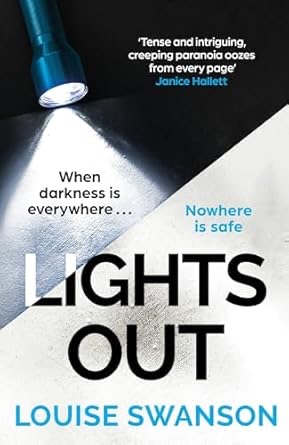

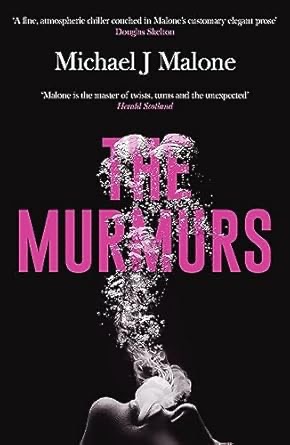

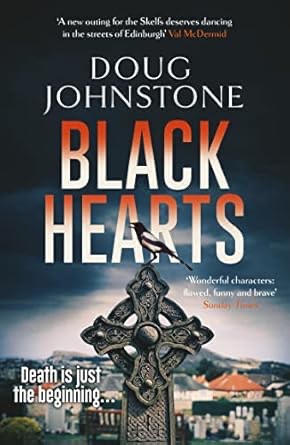


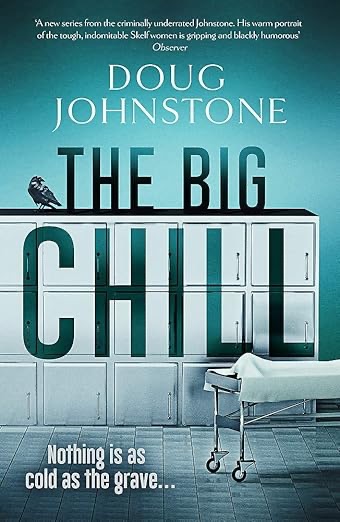


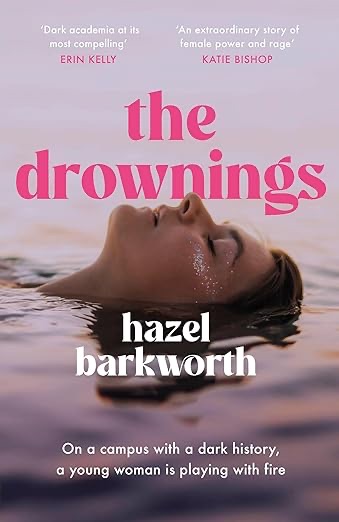

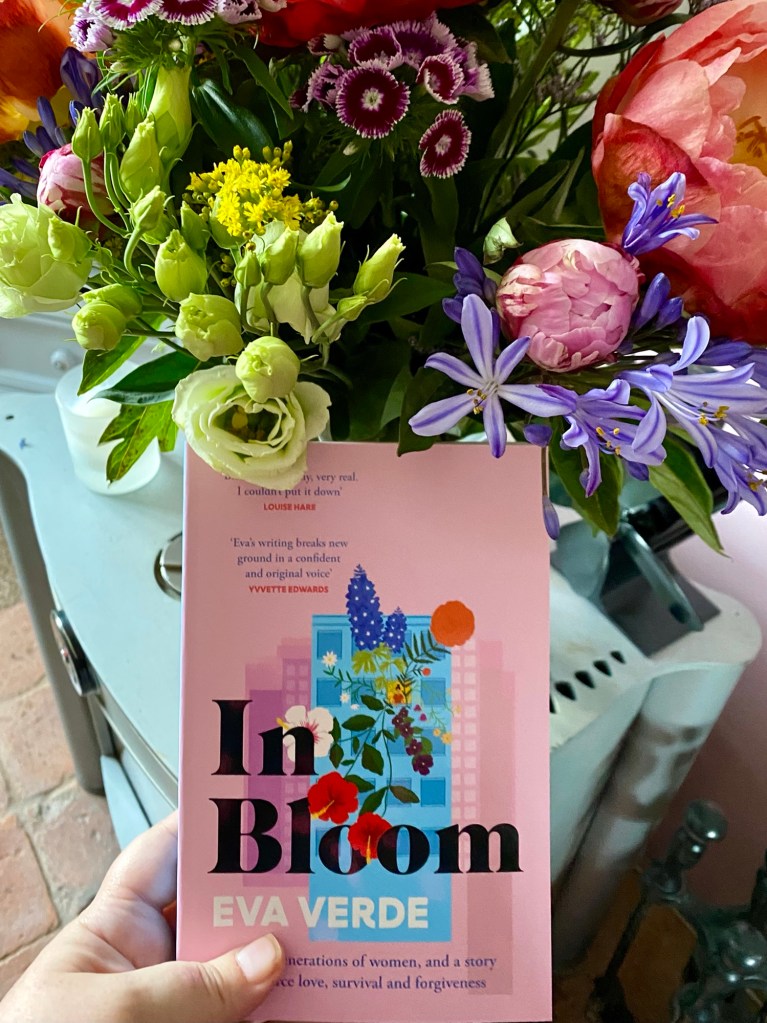

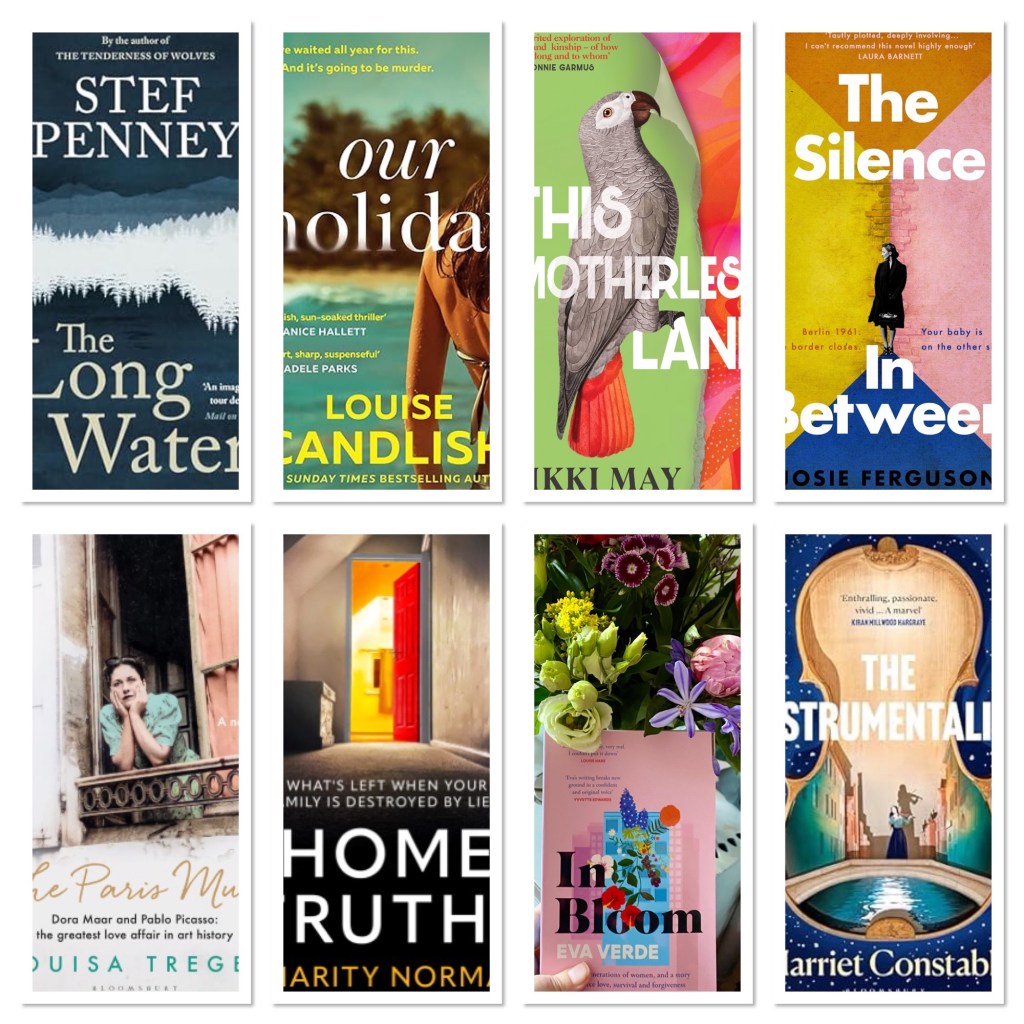



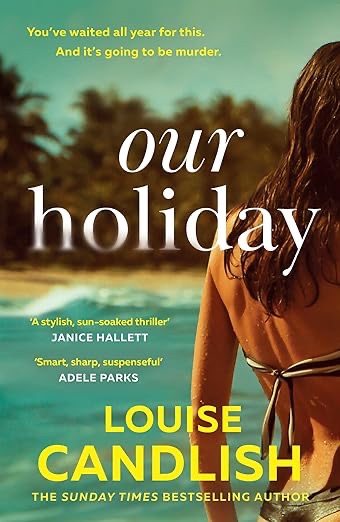
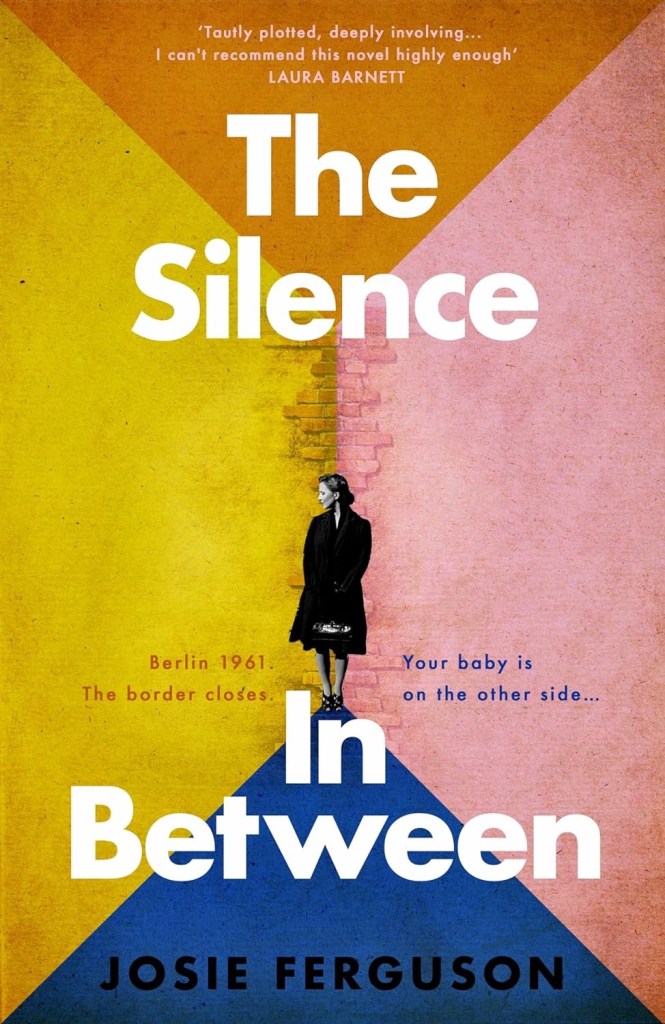
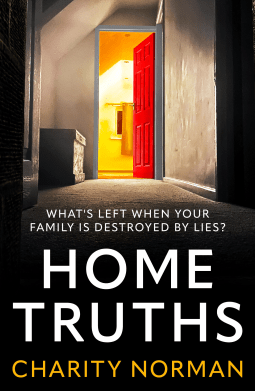
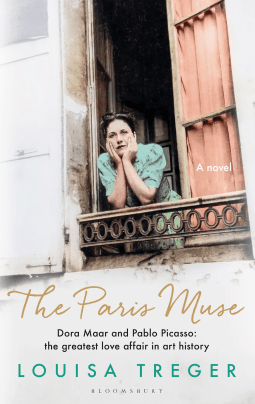








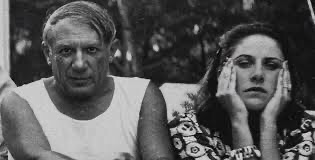
 The Lotus Readers