Posted in Sunday Spotlight

Sunday Spotlight: Uplifting and Comforting Recent and Upcoming Reads

Today I’m talking about the recent reads that I found uplifting or comforting, followed by a reminder of some reads I’m looking forward to this year. These are books I couldn’t put down, not because they were twisty or thrillers but because I loved the characters so much I had to know if they were going to change, to overcome their obstacles or have that breakthrough they needed to make life better.These are books of friendship, life changes, finding ourselves, romance, getting older and communicating with an octopus. I promise you’ll be getting all the feels.

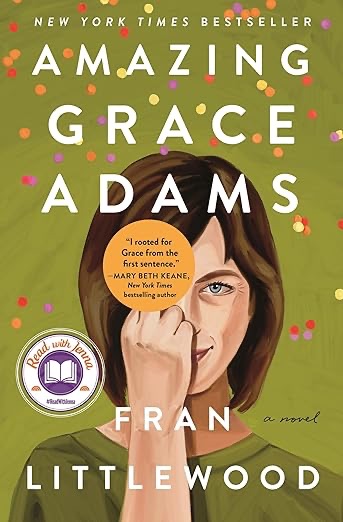
Grace is one of those characters that you fantasise about having cocktails with and you already know you’d have the best time. Grace is stuck in traffic, it’s a boiling hot day and she’s melting. All she wants to do is get to the bakery and pick up the cake for her daughter’s birthday. This is one hell of a birthday cake, not only is it a Love Island cake; it has to say that Grace cares, that she’s sorry, that will show Lotte she loves her and hasn’t given up on their relationship. It’s shaping up to be the day from hell and as Grace sits in a tin can on boiling hot tarmac, something snaps. She decides to get out of the car and walk, leaving her vehicle stranded and pissing off everyone now blocked by a car parked in the middle of a busy road. So, despite the fact her trainers aren’t broken in, she sets off walking towards the bakery and a reunion with Lotte. There are just a few obstacles in the way, but Grace can see the cake and Lotte’s face when she opens the box. As she walks she recounts everything that has happened to bring her to where she is now. 
As Grace closes in on Lotte’s party, sweaty, dirty and brandishing her tiny squashed cake, it doesn’t seem enough to overturn everything that’s happened, but of course it isn’t about the cake. This is about everything Grace has done to be here, including the illegal bits. In a day that’s highlighted to Grace how much she has changed, physically and emotionally, her determination to get to Lotte has shown those who love her best that she is still the same kick-ass woman who threw caution to the wind and waded into the sea to save a man she didn’t know from drowning. That tiny glimpse of how amazing Grace Adams is, might just save everything. 


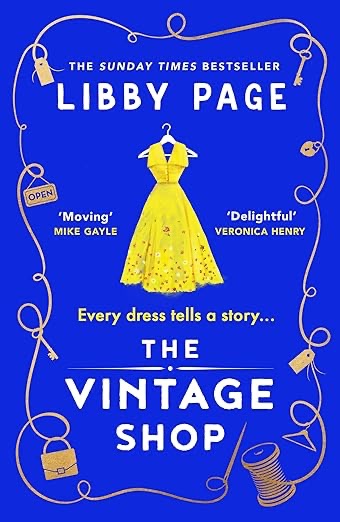
Our heroine is Lou, who moved to a small market town to care for her mother who was terminally ill. Since her death Lou has worked hard, selling the family home and buying a shop with flat above in the town centre. With builder Pete upstairs creating her living space, Lou has opened the shop and is looking at ways to save money and boost business. Pete puts her in touch with Maggie, another lady who has gone through a big change. Maggie’s a grandmother and often looks after her grandchildren in the house that was the family home. Maggie’s husband recently left her for a younger woman and she is rattling round in the big house. So, when Pete suggests that she rents a room to Lou until her flat is ready it turns out to be a lifeline for both of them. Finally, we have Donna, who works at her family’s hotel in the US. When her mother suffers a sudden mini-stroke, her conscience causes her to disclose a family secret – they are not Donna’s birth parents, her mother was a woman from a small market town in England. The thing that links these disparate women is a vintage dress. 1950’s in style and a stunning buttercup yellow this dress has a full circle skirt just made for dancing. Embroidered with meadow flowers, the dress hangs above the counter in Lou’s vintage shop and is the only item that isn’t for sale. It’s flanked by a picture of her mother Dorothy, the owner of the beautiful dress. I love vintage clothes and the descriptions of her shop really did draw me in. This story is about women supporting and inspiring each other and being their best selves. I liked the emphasis on self- care, from the clothing to taking control and finding our passion in life, instead of being the care givers we’re often expected to be. I felt like I’d been given a warm hug and I came away from the story smiling. There were strong female characters, forging friendships and achieving long held dreams. There are deep emotional aspects bringing flavour and depth to her story, but also enough icing and sprinkles to lift the spirits. Here the sprinkles were one of my favourite things, vintage clothing.

Allegra Bird’s arms are scattered with freckles, a gift from her beloved father. But despite her nickname, Freckles has never been able to join all the dots. So when a stranger tells her that everyone is the average of the five people they spend the most time with, it opens up something deep inside. The trouble is, Freckles doesn’t know if she has five people. And if not, what does that say about her? She’s left her unconventional father and her friends behind for a bold new life in Dublin, but she’s still an outsider. Now, in a quest to understand, she must find not one but five people who shape her – and who will determine her future.

Told in Allegra’s unique and vivid voice, this book is so heartwarming and full of humour. It’s about finding your own authentic self and being proud of where you’re from. The author contrasts genuine, warm and accepting people with the false, Instagram brigade who are more interested in how life looks than how it is. I loved the contrast between the city streets of Dublin and the wild Atlantic island Allegra calls home. She has to make a decision about where her home is, which place truly suits the person she is instead of the woman she thought she had to be. All through the novel I found myself smiling and that was exactly what I needed at this moment.

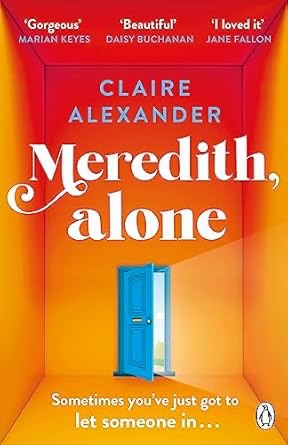
This was one of those books where it only took a couple of pages for me to be ‘in’ the author’s world and completely convinced by her main character. Meredith hasn’t left her house for more than a thousand days, but her inner world is so rich and full. She was absolutely real to me and I could easily imagine having a coffee and a catch up with her. We meet her at a crossroads in life. She’s trying to make changes. Her daily life is quite full, she works from home as a writer and between work she bakes, exercises by running up and down the stairs, reads and fills in jigsaws of amazing places from all over the world. The jigsaws are the key. Meredith doesn’t stay inside from choice, just standing outside her front door gives her a wave of rising panic. Meredith feels a terrible fear, her heart starts hammering out of her chest, her throat begins to close and she feels like she’s going to die. However, as she looks at yet another jigsaw of something she’d love to travel and see in person, she becomes determined to live a fuller life. Meredith has sessions with an online counsellor and a new addition to her weekly calendar is a visit from Tom, who is a volunteer with a befriending society. With this support and that of her long time best friend Sadie, can Meredith overcome her fear and come to terms with the events behind her phobia?

The gradual upsurge of positivity in Meredith’s life is exhilarating to read, but it’s also necessary because I knew that I was also getting closer to finding out what had brought Meredith home one day, close her door and not go out again. Claire Alexander balances this beautifully and where many authors might have gone for the schmaltzy ending, she doesn’t. She keeps it realistic and in doing so made me aware of everything that Meredith has had going for her all along. She’s so self-aware, independent and knows who she is. Above all, even as she starts to overcome her demons she’s determined to do it on her own two feet. She appreciates support, but gives it as well. She doesn’t want to become dependent on an emotional crutch. Meredith is perfectly ok. Alone. 

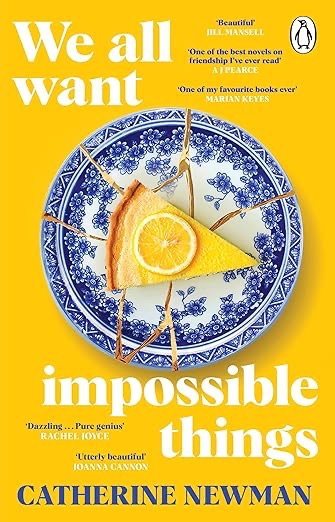
This book was a joy. That’s going to seem odd when I explain what it’s about, but it is joyful and full of life. Even though at it’s centre there’s a death. Ash and Edi have been friends forever, since childhood in fact. They’ve gone through adolescence together: survived school; other girls; discovering boys and even that awkward phase of starting adult life, when one went to college and the other stayed behind. They’ve both married and been each other’s maids of honour and become mothers. Instead of any of these things pulling them apart they’ve remained platonic partners in life. However, now Edi is unwell and decisions need to be made. After years of struggle with being, treatment, remission and recurrence, Edi now has to decide how she’ll be dying. With all the hospices locally being full, Ash makes an offer – if Edi comes to a hospice near Ash, she can devote time to being with her and Edi’s husband can get on with every day life for her son Dash. There’s a hospice near Ash that’s like a home from home, with everything that’s needed medically, but the informality and personal touch of a family. Now Ash and Edi have to negotiate that strange contradiction; learning how to live, while dying.

This is just the sort of book I enjoy, full of deep emotion but also humour, eccentric characters and situations. It takes us through a process of how someone’s life and death changes those around them, with unexpected behaviours and consequences all round. Before you think this sounds schmaltzy and sentimental I can assure you that these characters are not perfect. The author provides us with this loving picture but then undermines it slightly, so it isn’t perfect. We are imperfect beings and no one knows how they will react in a time like this, until we’re there. Catherine Newman shows this with realism, charm, humour and buckets of compassion.

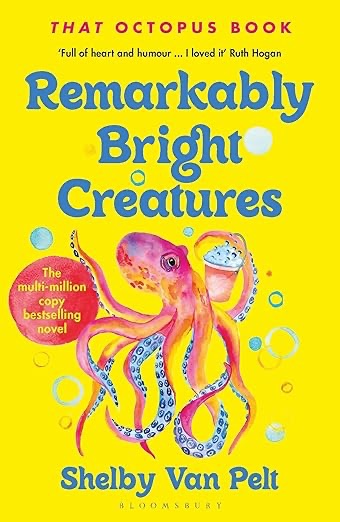
I bought a second hand copy of this book with absolutely no knowledge of what I was getting, but when the first page is narrated by an octopus I’m there. After Tova Sullivan’s husband died, she began working the night cleaner shift at the Sowell Bay Aquarium. Ever since her eighteen-year-old son, Erik, mysteriously vanished on a boat over thirty years ago keeping busy has helped her cope. One night she meets Marcellus, a giant Pacific octopus living at the aquarium who sees everything, but wouldn’t dream of lifting one of his eight arms for his human captors – until he forms a remarkable friendship with Tova. Ever the detective, Marcellus deduces what happened the night Tova’s son disappeared. And now Marcellus must use every trick his old body can muster to unearth the truth for her before it’s too late…

This is a thoroughly charming and unusual story that I happily spent a weekend reading. Our central characters Tova and a man called Cameron are so believable with interesting quirks. There’s a lovely humour to the story and it’s highly original, especially Marcellus who I’ll admit, I did fall in love with. His presence is surreal but adds so much to the story. Backed up by a cast of family and friends who really care for our characters, Cameron and Tova take us through grief, loss and regret towards new opportunities. This is a thoughtful story and Marcellus is worth the read alone.

Upcoming Novels For Your Wishlist

The Women at Ocean’s End by Faith Hogan 5th June 2025 Aria

The Light a Candle Society by Ruth Hogan 26th June 2025 Corvus

The Forest Hideaway by Sharon Gosling 28th August 2025 Simon & Schuster

The View from Lake Como by Adriana Trigiani 17th July 2025 Penguin

Dear Mrs Lake by AJ Pearce 3rd July 2025 Picador

Births Deaths & Marriages Laura Barnett 3rd June 2025 Doubleday

Table for One by Emma Gannon 24th April Harper Collins

One Night at the Chateau by Veronica Henry Out Now Orion

Posted in Netgalley

Garden of her Heart by Zoe Richards

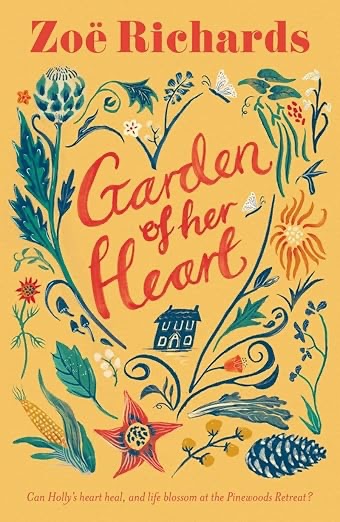
I was immediately attracted to this book because of it’s themes of trauma and recovery, something I have personal and professional experience with. This is an ultimately uplifting story of healing that was the perfect antidote to the current news cycle and being pretty much housebound due to illness. The story is set on a well-being retreat and follows one loner, two secrets and three weeks at Pinewoods Retreat. When Holly Bush (yes, that’s her name ) is made redundant with gardening leave, after suffering a brutal attack. She decides to visit a retreat not far from home, finding friendship and a garden in need of love. She ends up doing literal gardening leave and journals her way through the holiday, working on both her mental and physical scars as well as discovering an inner strength and resilience.

I’d been looking forward to reading this, but the TBR and my health got in the way. Although, perhaps this was the perfect time to read it. Zoe is open about her own journey with mental health and it’s something that will resonate with a lot of people. I bonded with Holly very quickly and was rooting for immediately. I thought all of the characters were very real and the owners of the retreat, Dee and Lorraine, were incredibly authentic and seemed to truly care about their residents. They reminded me of people I’ve worked with and thank goodness for people like this! The other residents were an interesting mix and I loved watching Holly’s relationship with Bex, Ruth and San grow into friendship and mutual support. They all felt honest and real. Hunter, the odd-job guy, was a bit of a fox and almost made me want to pick up a trowel and get planting. I loved the journaling aspects of the retreat, because it’s something I’ve taught for some time in mental health settings and for people with acquired disabilities. It makes such a difference to people’s wellbeing and their acceptance of a huge life change. I loved facilitating these sessions and being unable to work at the moment it was lovely to be back in that atmosphere.

The story is moving and there are sad parts, these are people who are healing and they need to process their trauma in order to move on. There are characters who don’t behave very well, but they’re on their own healing journey and it really isn’t easy. I found it moving as people let go of all the fear, anger and frustration they were feeling. There’s something so beautiful about seeing someone blossom this way and the garden was obviously a great metaphor for that. It’s why I chose the lotus flower as my logo for counselling because of the quote about it growing from a muddy pod; beautiful and strong. There was just so much hope for the future, not to mention the enduring friendships that are made. I think Zoe captured the sense of peace that comes from being your authentic self. While there is a hint of romance, I loved the way it was kept in the background, with the friendship and trust between Holly and the new allies being the most important part. This is a great debut, creating a place of healing that readers could easily be inspired by. It’s not just a enjoyable story, I think a lot of people will identify with it and perhaps start their own recovery journey. It’s a book that will stay in my uplifting reads for those grey days when I need comfort from what I’m reading. 

Out now from UCLan Publishing

Meet the Author

Zoë Richards was inspired to write Garden of Her Heart by being a suicide survivor from which she learned the healing that worked best for her, which is not the same for everyone. Dog walks around the Formby pinewoods, not far from her home, gave her the location, in an area known locally as The Lost Resort, a town that never came into existence, close to the sea. In the woods there is a sole Victorian house, standing alone on a cinder track, and this is the inspiration for the location of Pinewoods Retreat. She lives in Southport, near Liverpool, has been married to Rob for 34 years, and they have a grown-up daughter and a cockapoo who will never grow up. She worked for the NHS as an improvement programme manager, reforming how children and young people with special educational needs and disabilities are supported in healthcare. Writing gives her an escape from the intensity of work and from caring for her elderly mother.

Zoë is an author and host of the podcast, Write, Damn It!. She has written for national magazines for many years. She is represented by Clare Coombes of The Liverpool Literary Agency and her debut novel, Garden of Her Heart, a novel about recovery, community and purpose, was published by UCLan Publishing in June 2024. Her second novel, Tell It To The Bees is a standalone sequel, and is out in August 2025.

With over 30 years of experience of working on mindset, and a teacher of coaching for over 25 years, Zoë hosts the Write, Damn It! podcast, where she has weekly conversations with authors, and offers doses of support to writers. She also coaches writers to overcome their demons and blocks, and helps them get the writing done. Much of what she uses on mindset comes from lived experience, as she is a suicide survivor who learned how to get through the darkest times using mindset and wellbeing support. 

Zoë lives on the Merseyside coast with her husband and MillyMoo the cockapoo. She has an adult daughter and a granddaughter – and best not forget Peanut the grandpup too.

Posted in Squad Pod

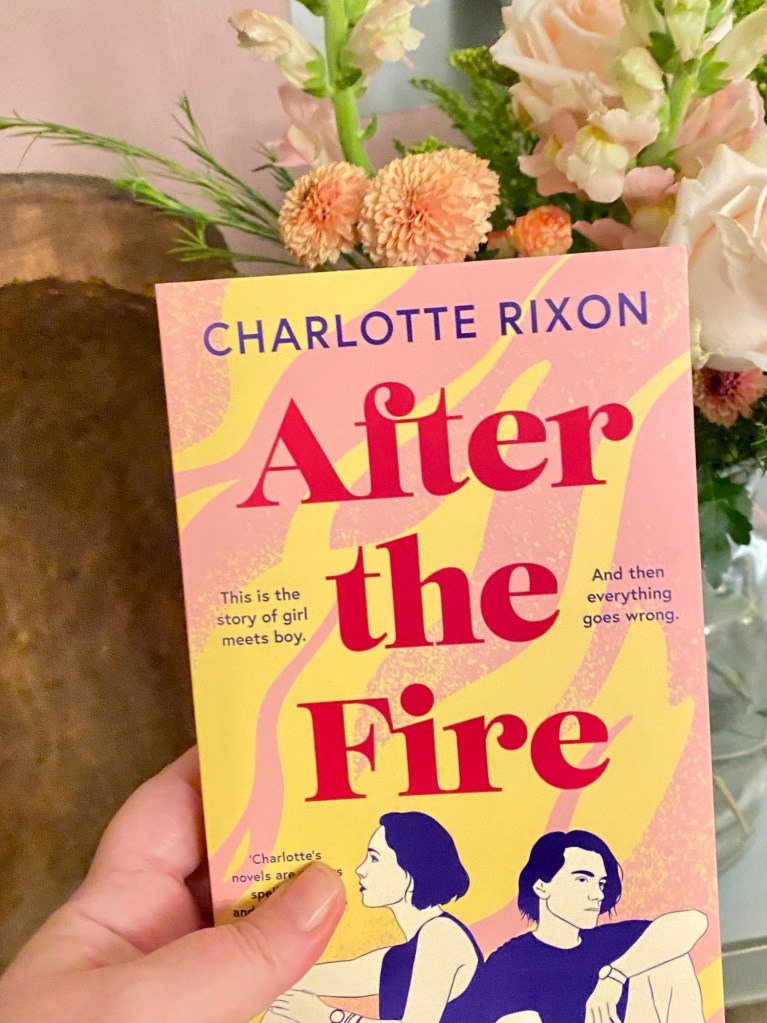
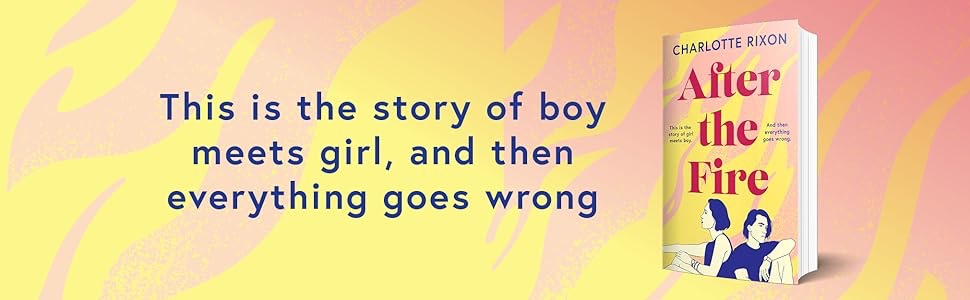
After the Fire by Charlotte Rixon 

This is the story of girl meets boy.

And then everything goes wrong . . .

Ever since they first met at university, Beth and Nick have circled in and out of one another’s lives: supporting each other through grief, marriage, divorce, career crises and family dramas.

Fourteen years ago, when they were on the cusp of adulthood, they both survived a devastating fire that sent their lives in different directions. And they’ve been running ever since: from the pain, from the memories, and most devastatingly of all, from the guilt.

But no matter how hard they try, there’s something else they can’t run from. The inescapable, terrifying truth: they’re in love with each other.

But how can they move forward, when neither of them can stop looking back?

I always say I don’t like romance, then a book like this comes along and I’m all in. Maybe it’s being over 50, but stories of first love grab me in the feels. Especially tragic first love. The thing is we’ve all had the experience of love that’s come at the wrong place or the wrong time, so reading a love story like Beth and Nick’s brings up memories and feelings of nostalgia. Our first love experiences are so intense and when feeling are unrequited or interrupted they can stay with us for the rest of our lives. Beth and Nick have a brilliant first meeting. They’re placed in the same flat at university and Beth walks into the shared bathroom and gets an eyeful! Beth is the last person to join the flat because she’s been ill so relationships have already been established. The other two girls, Rosa and Anna, were best friends before university and Nick is already in a relationship with Anna. Beth senses some chemistry between her and Nick, but she tries hard to ignore it. Nobody wants to be the girl who steals their flatmate’s boyfriend in the first weeks of the first term. When he turns up to watch her in drama club she thinks he must feel the same. 

It’s Nick who takes action. He breaks up with Anna and invites Beth on a late night walk. As they walk there’s just so much anticipation. The author builds to their first kiss with all that yearning and tension around who will make the first move. When they spot the fire in their building it’s already well ablaze and Anna is killed. 

Wracked with survivor’s guilt, Nick leaves university. Beth struggles to cope, feeling like Nick has abandoned her. She decides to stay and finish her drama course. Lives move on. Yet feelings for each other and about the tragic start to their time at university, still linger. The author tells the story through both characters and over 15 years as they build careers and relationships. They both think of each other. They try to keep in touch as friends and their paths do meet from time to time, but they’re always held back by the past. They do try to support each other, so when Beth’s long-term relationship breaks down, she finds herself wanting to talk to Nick. I really felt their longing for that first love and their thoughts that maybe it could have worked. Then reality crashes in and those feelings of guilt cloud their hopes. Yet the novel isn’t schmaltzy. There are meaty issues here like domestic violence and mental health, not to mention those trauma related feelings they’ve never really shared with each other.  

If there was ever a book to emphasise the importance of counselling or simply talking to each other, it’s this one. Until Nick and Beth talk through what happened and how it’s affected them since, they will always be haunted by Anna’s death. When trauma is left unresolved people find unhealthy ways to deal with those hidden emotions. Nick has a rescuer personality, developed because he never again wants to feel like he did back then as the cause of Anna’s sadness in her final hours. I love that Beth writes about what happened and her feelings for Nick because at least she’s processing the trauma, because the more we talk about it the less power it has. The tension in the novel comes from wondering if this pair will ever come together at the right time and place. Will they get the chance to put things right? Can they ever find their way back to each other? I was deeply invested and filled with hope for them. The author has written a beautiful love story, but it has impact because it isn’t a fairy tale and these two characters feel absolutely real. At the end I felt like comparisons to One Day, the archetypal friends to lovers classic, are entirely justified. 

Out now in paperback from Aria.

Meet the Author


Charlotte Rixon is the pen name of Charlotte Duckworth, USA Today-bestselling author of suspense fiction published by Quercus. Charlotte studied Classics at Leeds University and went on to gain a PGDip in Screenwriting. She worked for many years as a magazine journalist, and is a graduate of the Faber Academy ‘Writing A Novel’ course. You can find out more about her on her website: charlotterixon.com.

Posted in Sunday Spotlight

Sunday Spotlight: A Work of Art

Artists are an endless source of material for novelists and have fascinated me for most of my adult reading life. I think we afford artists the right to behave badly, because what they do feels like alchemy. To be able to take mere pen and paint and turn it into something that’s beautiful or utterly new is magical to someone like me who can only just manage to sketch something if I have lots of time and patience. I stick to colouring for my artistic endeavours. If I think about it I’ve been going to art galleries since my teenage years when the chance to see Klimt’s work at Tate Liverpool was too exciting to pass on. I loved ‘The Kiss’ but this exhibit took his work and placed it into the context of the secessionist movement, just one branch of Art Nouveau. I continued to visit exhibits on Art Nouveau, at the Kelvingrove Gallery in Glasgow to see the Glasgow School exhibits, The Met in New York a few times, as well as the Guggenheim there and in Venice. I visited London for many exhibits at the V and A and the Tate including Lucian Freud, a painter I’ve come to appreciate more recently. One of my great loves are the Pre-Raphaelites, since having the chance to study their work at university. We visit my mum’s hometown of Liverpool very frequently and I’m a regular at the Walker Gallery and Lady Lever gallery in Port Sunlight both of which have a great collection of Pre-Raphaelite work. Artists are often unconventional, have complicated love lives and some have a reputation for being hellraisers. Is it any wonder that we love to read about them? I usually jump at the chance and have quite a collection! here are a few of my favourite novels that feature painters.

Mistral’s Daughter by Judith Krantz

I have a very cracked and broken copy of this novel and I’ve read it several times. I blame it for starting my fascination with painters, I used to swipe it off mum’s bookshelves when I was a teenager. It’s romantic and sexually explicit, two things teenagers are definitely interested in! It follows the story of three generations of women from Paris to New York. We first experience Maggie Lunel’s journey to become an artist’s model. She is chosen by Julian Mistral and becomes his muse, as well as his lover until his ego and arrogance make her walk out. Years later, Maggie’s daughter Teddy is working as a fashion model. Her father Perry Kilkullen was the last man Maggie would fall in love with. Teddy has a job in France posing with artists for a fashion shoot and as soon as she poses with Mistral it is love at first sight. Mistral is married, but he leaves and sets up home with Teddy, never returning to America. Fauve Lunel is Mistral’s daughter, brought up with her grandmother Maggie she visits Mistral in the summer at his villa in the south of France. Fauve is a talented artist and begins to look into her family roots, finding out they are Jewish. When she realise Mistral might have been a collaborator during WW2 the revelation tears father and daughter apart, will they ever reconcile? This is a great story, romantic and bit racy too.

The Marriage of Oppositesby Alice Hoffman

As you all know by now, I’m a big fan of Alice Hoffman, but when I first picked up this novel on publication day I found it was very different from her usual books. We always expect to find strong women in Hoffman’s novels but there’s usually an element of magic realism to her work. Our heroine Rachel is definitely a strong woman, but magic takes a back seat for this novel that reads more like an biography. Rachel lives on the stunning island of São Tomé or St Thomas and is the mother of Camille Pissarro, one of the founders of Impressionism. Rachel is brought up with a strict Jewish faith, but she has always dreamed of getting off the island and going to Paris. Unfortunately Rachel has no choice and is married off to a widower with three children. Nevertheless she makes of the best of things until her husband dies suddenly. When his nephew Frédéric comes from Paris to settle the will and there is an instant spark between them. For once Rachel decides to make decisions for her own life and begins a passionate affair. The scandal that ensues when they marry has the whole island in uproar, but Rachel stands firm and will not be moved. This is a beautiful story, set on a lush island that’s described in gorgeous detail by Hoffman – she made me want to go there. I loved her relationship with her son and hoped that one day she would get to go to Paris as she dreamed.

Notes From An Exhibition by Patrick Gale

Set in the beautiful county of Cornwall, around Newlyn and Penzance, this is the story of a family struggling with secrets, brought back to the place they were born after a tragedy. Their mother, celebrated artist Rachael Kelly, is found dead in her Penzance studio after struggling with the creative highs and devastating lows that have coloured her life. As her family try to make sense of their mother’s life and it’s effect on them, devastating secrets come to light. As always with Patrick Gale the level of empathy in this book is incredible, he understands how different people think and respond to events. His depiction of mental illness is so authentic and heart-breaking. Rachael’s bi-polar disorder is the source of her art, but Gale also explores how it affects the rest of her working life and how it impacts on her family, especially her children. This is a favourite of mine and I’ve read it several times, but it never loses it’s power.

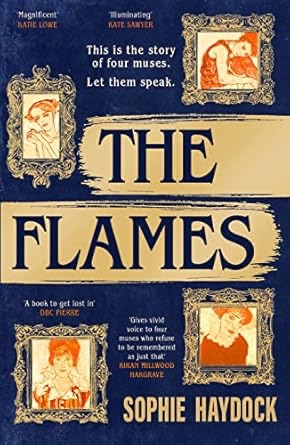
The Flames by Sophie Haydock

I devoured this brilliant book by Sophie Haydock, where she takes four women painted by artist Egon Schiele. Set in Vienna in 1912, on the back of the secessionist movement and artists like Gustav Klimt, Schiele paints four women and Sophie gives them a voice. Gertrude is in awe of her brilliant older brother, often posing for him but envying his freedom and agency. Then there’s Vally, a model for Klimt who’s trying to work her way out of poverty. Then sisters Edith and Adele move into the apartment building opposite Schiele’s in Vienna. The daughters of wealthy parents, they are not the type of girls who usually model for an artist and are expected to marry well. Yet both become embroiled with Schiele, professionally and privately. A portrait is always how the artists sees or wants to present you to the world, here the women step out from behind that image and tell their own story.

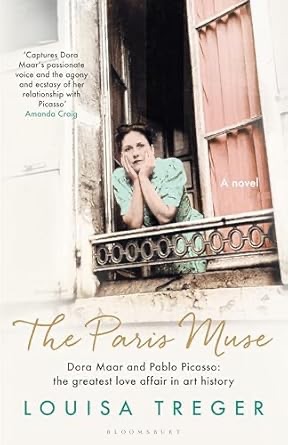
The Paris Muse by Louise Treger

Louise Treger’s 2024 novel concerns the life, or more accurately the love, of Dora Maar – a photographer and painter who lived in Paris for most of her life and most notably, during the German occupation in WWII. Born Henrietta Theodora Markovitch in 1907, she was known as a surrealist photographer exhibiting alongside Dali and other notable surrealists. She used her photographic art to better represent life through links with ideas, politics and philosophy rather than slavishly photographing what was naturally there. She was exhibited in the Surrealist Exposition in Paris and the International Surrealist Exhibition in London in 1936. In the same year she was exhibited at MOMA in NYC. She first encountered Picasso while taking photos at a film set in 1935, but they were not introduced until a few days later when Paul Elduard introduced them at Cafe des Deux Magots. They met in quite a dramatic way that showed her intent to catch his eye. She sat alone and using a pen knife she drove the blade between her splayed fingers and where she missed, blood stained the gloves she wore. The fact that Picasso kept these gloves and packed them away with his treasured mementoes is a metaphor for their entire relationship – he fed from her emotions. The author allows Dora to tell her own story and we are inside her mind at all times. We could say this is only her viewpoint of their relationship, but in a world where she is most known through her relationship with a man instead of her own work, Treger is simply redressing the balance. This is tough to read in parts, showing the ego of Picasso and how his call for freedom in their relationship, means his freedom. I felt sad for Dora, possibly influenced by some of my own experiences. She seemed like a smaller woman at the end with none of her original vitality and flamboyance. I’m so glad to know that her art lives on and is still exhibited as part of the surrealist canon. 

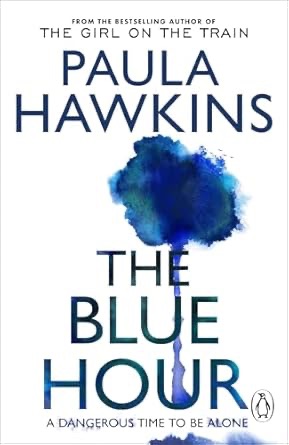
The Blue Hour by Paula Hawkins

WELCOME TO ERIS – A TIDAL ISLAND WITH ONLY ONE HOUSE, ONE INHABITANT, ONE WAY OUT. . .

A place that is unreachable from the Scottish mainland for twelve hours each day. Once the hideaway of Vanessa, a famous artist whose husband disappeared twenty years ago. Now home to Grace. A solitary creature of the tides, content in her own isolation. Local GP Grace, often referred to as Vanessa’s companion or friend, might have inherited Eris. However, Vanessa’s artworks were left to an art foundation set up by her first agent. The curator of the foundation is Becker, hired for his expertise in Vanessa’s work. He is under pressure from the new owner to extract the last of Vanessa’s work from Eris. They have tried polite enquiries, legal letters and ultimatums but they are sure this has all been in vain and that Grace is deliberately holding back. Now a situation has arisen with one of Vanessa’s found object installations already on display in the gallery. A visiting doctor is convinced that the bone suspended in a glass box is human. They withdraw the box from view and contemplate having to break it open to have the bone properly tested. The unspoken thought on everyone’s mind is whether this might solve the mystery of Vanessa’s missing husband? It’s an opportunity for Becker to tell Grace face to face, but also to address the missing works that must be on Eris. He feels this is the best way forward; a last ditch attempt before legal action. However, visiting Eris is not without it’s risks. Are all of it’s secrets and lies about to be uncovered? This is a great thriller, full of questions about what an artist needs to be able to create, who owns an artwork and when does friendship become obsession?

New Reads To Look Out For …

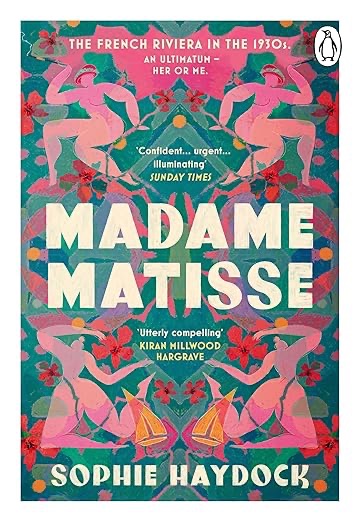
Sophie Haydock is delving back into the art world with her novel about the women surrounding the artist Matisse.

This is the story of three women – one an orphan and refugee who finds a place in the studio of a famous French artist, the other a wife and mother who has stood by her husband for nearly forty years. The third is his daughter, caught in the crossfire between her mother and a father she adores. Amelie is first drawn to Henri Matisse as a way of escaping the conventional life expected of her. A free spirit, she sees in this budding young artist a glorious future for them both. Ambitious and driven, she gives everything for her husband’s art, ploughing her own desires, her time, her money into sustaining them both, even through years of struggle and disappointment. Lydia Delectorskaya is a young Russian emigree, who fled her homeland following the death of her mother. She is trying to make a place for herself on France’s golden Riviera, amid the artists, film stars and dazzling elite. Eventually she finds employment with the Matisse family. From this point on, their lives are set on a collision course. Marguerite is Matisse’s eldest daughter. When the life of her family implodes, she must find her own way to make her mark and to navigate divided loyalties. Based on a true story, Madame Matisse is a stunning novel about drama and betrayal; emotion and sex; glamour and tragedy, all set in the hotbed of the 1930s art movement in France. In art, as in life, this a time when the rules were made to be broken…

Out from Doubleday on 6th March 2025

PROVENCE, 1920

Ettie moves through the remote farmhouse, silently creating the conditions that make her uncle’s artistic genius possible. Joseph, an aspiring journalist, has been invited to the house. He believes he’ll make his name by interviewing the reclusive painter, the great Edouard Tartuffe. But everyone has their secrets. And, under the cover of darkness, Ettie has spent years cultivating hers. Over this sweltering summer, everyone’s true colours will be revealed.

Because Ettie is ready to be seen. Even if it means setting her world on fire. This book will transport you straight to the south of France and straight to the heart of one woman’s rage.

Out on 30th Jan from John Murray Press.

Posted in Netgalley

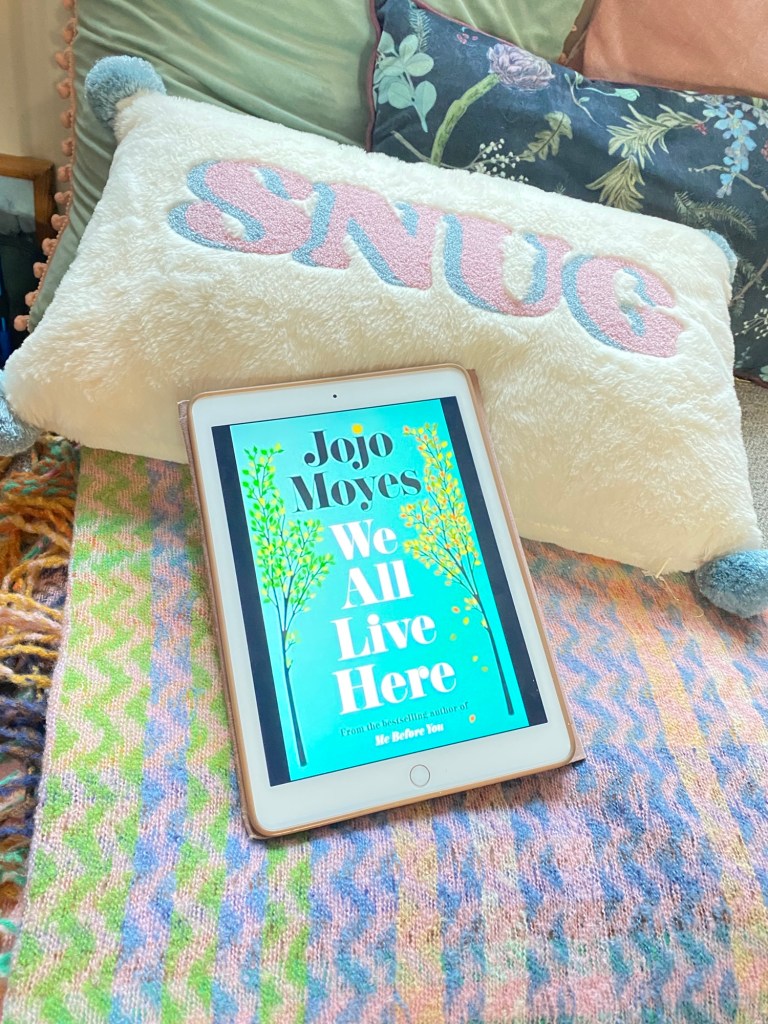
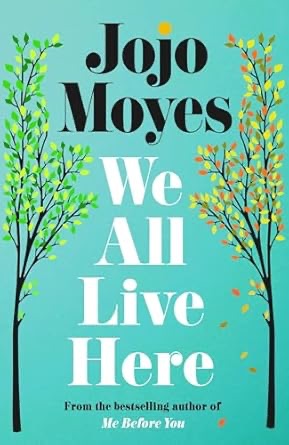
We All Live Here by Jojo Moyes 

Lila’s life is built on shifting sands at the moment. Lila is a single mum to Celie and Violet since her husband died revealed his affair with Mayja, a yummy mummy from the school gates. His betrayal was made worse by the fact Lila was promoting her book, on how to have a successful marriage. Her mum died recently and stepdad Bill and has slowly moved himself from their bungalow a few doors away, into Lila’s house along with his piano and healthy eating regime. To add a further unexpected surprise her biological father Gene turns up looking for a bed. Gene is a hellraiser, a drinking and partying actor whose claim to fame is playing the captain of a starship in a 1960’s sci- fi series. He’s still living off that fame and Lila is unsure whether she can trust him. Bill and Gene can’t stand each other. However, she gives him the sofa bed in her office, where she’s trying to produce three chapters of a new book that her agent is chasing. Lila wanted to write something honest, but the publisher is looking for the humorous and sexy exploits of a newly divorced woman. How can she write in one dad’s bedroom, while her other dad is practising his piano and planning garden renovations. Not to mention dreading school pick-up and having to see her husband’s girlfriend wafting around like a butterfly, waiting for her son Hugo. The final nail in the coffin comes when Mayja announces she’s pregnant. The last thing Lila feels like doing is pursuing romance, but to keep her agent and publisher happy and the roof over their heads she is going to have to come up with some sexy exploits. Enter Jensen the gardener and Gabriel the architect, but can Lila carve out any time for them or herself? 

Lila’s house is something quite rare in fiction, which sometimes feels full of American fridge freezers and Quooker taps. It has quirks like ancient coloured bathroom suites and a toilet that blocks regularly. Celie is 16 and clearly dealing with something at school that she won’t talk about. Violet has had to cope with a boy in her class now being her step-brother, not to mention no longer being the baby. Pressure builds for them all as Mayja becomes unwell and has to be at hospital until the birth of their baby. They are living of the last of Lila’s money from her first book, but it won’t last forever and submitting one of the most raw and honest pieces of writing she’s ever done only to see it rejected, is very hard to take. I had my hear set on Jensen from the minute he came to do the garden because there’s no barrier or mask with him, what you see is what you get. As he and Lila start to talk about Bill’s plans for the garden, often sharing a brew outdoors and chatting, there’s a clear friendship growing. He’s so easy to talk to and remarkably open. Gabriel is his polar opposite in a lot of ways, there’s an instant attraction for Lila and a lot of messaging back and forth but I could sense that he wanted to be in control of their interactions. I am very wary of men who pick you up and then put you away when they’re done, like a worn and boring plaything. There’s a lot of humour in Lila’s attempts to gather sexploits for her book, but there’s clearly potential for people to get hurt too. I also learned a few terms, most notably ‘bread crumbing’ which I’ve been subjected to a couple of times. Similarly, a previous partner described me as ‘too much’ so I had a t-shirt made with ‘too much’ on it and wore it proudly, sad for myself that I spent time on someone who wasn’t enough. This is something Lila comes to realise, maybe Dan’s affair was a symptom of their relationship going wrong? If only she’d known it was ok to take up space.

‘She thinks sometimes that she always felt she was a little too much for him, too needy, too angry, too sad, too hysterical.’

I really fell in love with this family, as unwieldy as it is somehow it does work. I admired Lila, who tries her best to be on board with the changes in her life especially around her marriage. She knows that the girls will have a sibling but can she accept Dan and Mayja as part of that family? Their relationship does hurt her, but her feelings aren’t going to stop them becoming parents and she wants her girls to have a good relationship with the baby. I thought she was incredibly brave to try and put herself back in the dating pool, something I’ve always avoided. I used to say that if someone comes into my life that’s fine, but I’m not wasting my free time on people I potentially don’t like, especially when there are good books waiting on my TBR! Luckily my husband did just that. He walked (fell) into my front door and I feel like we’ve never stopped talking since. You can see the work Lila has done on herself as she dispenses little bits of wisdom on the way: 

The dynamic between Gene and Bill is funny too, it’s immediately antagonistic but their bickering made me smile. Bill is angry thanks to all the things Lila’s mother, Francesca, has told him and for his desertion of his wife and daughter. Bill sees Lila as his daughter and has never had any competition for her affections. There’s obviously a fear that Gene will pick Lila up and then drop her again, even worse there’s now Celie and Violet to consider. Bill has always shown love in the way he cooks healthy meals for the girls, picks them up from school and spends time with them. Gene wants to have fun with them, Violet is especially fond of snuggling up on the couch after school and watching her new Grandad’s old sci-fi series. Celie is more difficult to befriend, but Gene is surprisingly perceptive and works out what’s wrong, giving her good solid advice that works. Far from this being a bed for a couple of nights, Lila can actually see him fitting in with their family and that scares her. Especially when she finds out there are secrets about his relationship with her mother that surprise her and potentially hurt Bill. 

I read this books so quickly because I felt I was observing a real family, with all the chaos and the rollercoaster of emotions that comes with it. I loved that in a family with so many people, there was always someone who could be there for somebody else, like Gene is there for Celie. There’s so much acceptance in this novel and it’s a great message for a New Year where we are pushed into thinking we need to detox, eat less, go the gym, run 5k and all that other rubbish. Lila learns to accept the change in her life, but will she move on when she’s ready, rather than for a book deal? She also has to accept that a person can have huge flaws, but still have a place and the ability to be a support for others. Bill has to accept Francesca is not coming back and the Gene who hurt Francesca all those years ago isn’t the Gene in front of him now. Both the girls have to accept that they now share their father, but could build a new relationship with Mayja and their new sibling that enhances their life. There are so many breakthroughs here that I can’t list them all, but I did identify hugely with a scene where Lila finally takes some time for herself and has a massage, encouraged by her friend. In the final throes of my last relationship I visited a Bowen Therapist and had a similar experience. 

‘something wells in her, an emotion unlocked by the reality of another human being touching her, listening to Lila’s body, feeling its pain and its tensions and carefully remedying them. Suddenly, she feels a great swell of something overwhelming her. Grief ? Gratitude? She isn’t sure. She becomes aware that she is weeping, the tears running unchecked through the hole where her face is nestled, dropping onto the floor, her shoulders vibrating with an emotion she can no longer hold back.’

This was a beautifully written moment where someone is just there for Lila and the weight of holding everybody up can fall from her shoulders. It’s the first time she has taken for herself and all the emotions she’s kept in check can come out. I love how Jojo Moyes writes women and the mental load we carry for everyone around us. A load more exhausting than childcare, housework, career all rolled into one. Here she lets go and it’s the point at which she starts to rebuild her life. Does she pick the gardener or the sexy architect? I’ll leave that for you to find out. 

Out on 11th Feb from Michael Joseph.

Meet the Author

Jojo Moyes is a novelist and journalist. Her books include the bestsellers Me Before You, After You and Still Me, The Girl You Left Behind, The One Plus One and her short story collection Paris for One and Other Stories. The Giver of Stars is her most recent bestseller and Reese Witherspoon Book Club Pick. Her novels have been translated into forty-six languages, have hit the number one spot in twelve countries and have sold over thirty-eight million copies worldwide.

Me Before You has now sold over fourteen million copies worldwide and was adapted into a major film starring Sam Claflin and Emilia Clarke. Jojo lives in Essex with her family.

Posted in Random Things Tours

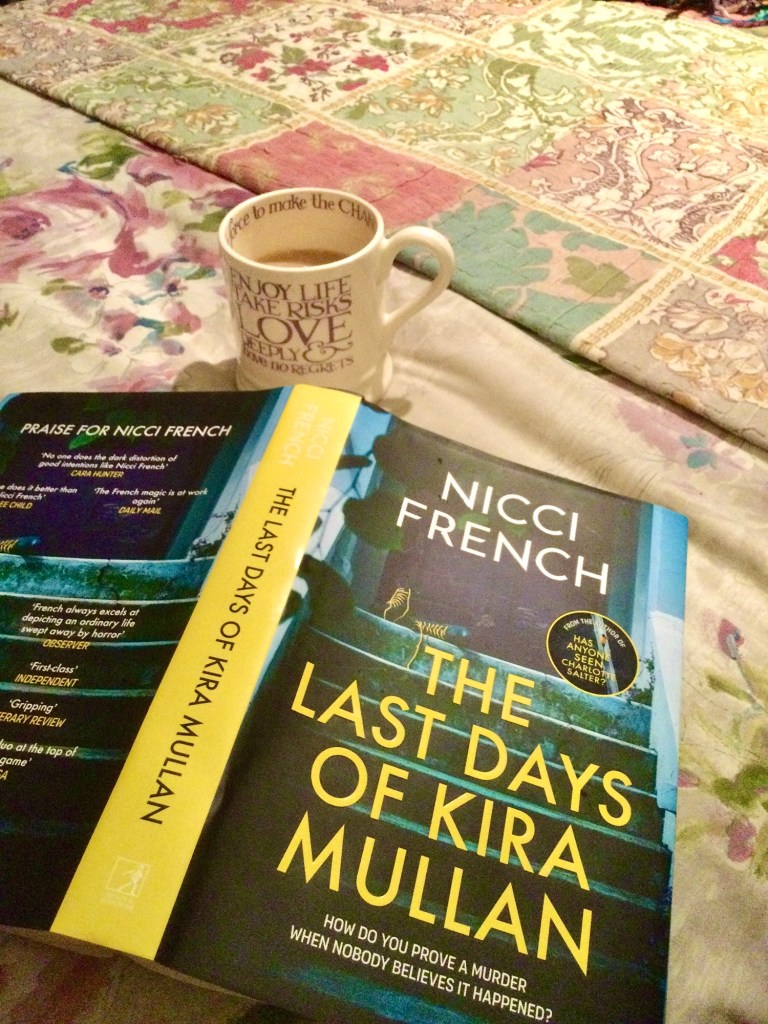
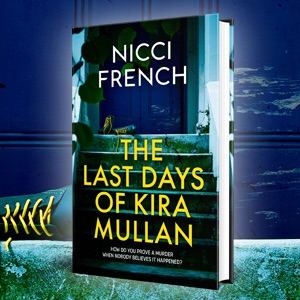
The Last Days of Kira Mullan by Nicci French

I always jump at the chance to read a new Nicci French book. Also they’re so prolific that it’s easy to find earlier novels in charity shops. This novel is set in a Victorian house split into flats and it’s newest residents are Nancy and her boyfriend Felix. Nancy is recovering after a psychiatric episode and a stay in hospital. Thankfully her voices have subsided but she’s fragile and moving to a new part of London has been destabilising. After venturing out for a walk she starts to experience voices again and in her confusion she rushes back to the flat. At the front door she bumps into a young woman wearing very striking green boots with yellow laces. The woman speaks to Nancy but it doesn’t make sense and it doesn’t help that she’s trying to distinguish between which voices are real. All she knows is that the woman was distressed and possibly needed help. Only 24 hours later the young woman is found hanging in the basement flat. Her name was Kira Mullan. Everyone seems sad that Kira committed suicide but for Nancy, something feels off. She isn’t sure that Kira did kill herself. How can she convince the others that she’s telling the truth when nobody trusts her?

This novel was absolutely gripping with brilliantly written main characters and a haunting central victim in Kira. I loved the idea of following the story through Nancy who has been struggling with her mental health and a clever, perceptive detective in Maud. The authors have cleverly placed Nancy on shifting sands – not only has she had a period of psychosis but she’s moved house and into an entirely strange area of London. She’s also lost her livelihood as a chef and could be living in a building with a murderer. She’s also without a touchstone in her life. I know exactly who to go to and ask whether I’m the asshole? I have friends who will tell the truth about whether I’m over-reacting or if something is genuinely wrong. This was invaluable when I found myself in an emotionally abusive relationship. I’d hoped that Nancy’s boyfriend Felix would be that person but I’d noticed a few red flags. He’s very attentive and seems to want her wrapped up in cotton wool, but Nancy is doing all the right things. On the day after she’s heard voices she asks to see the psychiatrist who changes the dosage of her medication and goes for counselling. She’s resting and doing her breathing exercises. In fact there’s very little else she can do. The authors leave us constantly wondering about her; is she paranoid or are the other residents out to get her?

Felix claims he only wants people to look out for her but Nancy feels like her space and autonomy are being encroached on. Felix tells the other residents everything about her history, including the psychosis, even the doctor who lives across the hall. He even gives next door neighbour Michelle their door key so she can let herself in, much to Nancy’s shock. His actions have actually left Nancy more vulnerable, leaving her open to abuse from others that they can deny. Who’s going to believe the mad girl? Nancy doesn’t think she’s paranoid but can see that her actions might seems excessive: she goes through Kira’s bin; steals a used condom from the flat and goes to look at the apartment with an estate agent; she also tells the police and Kira’s mother that she doesn’t think it was suicide. Just as she thinks she’s getting close to answers she is sectioned again after Michelle informs Felix that she threatened her. The authors show us how vulnerable mentally unwell women are in the care system and NHS, even though they’re designed to protect them. Not only is her liberty taken away and she’s prey to unscrupulous carers and nurses. In this upside down world, the more she protests her sanity the worse things become. She loses whole days to medication and is told by one male nurse that her life would be easier if she was ‘nice’ to him. So Nancy bites him. She has only one choice here. Be obedient, ignore the barbs and smile sweetly through visits she doesn’t want. It’s the only way she’ll be free. 

I loved the relationship between the detective Maud and Nancy. Maud is so perceptive and their experiences do mirror each other in a way. Maud knows that as a woman in the MET she is in the minority and she’s fully aware of the type of man that can be hiding behind a uniform or a title. In their respective institutions Nancy and Maud are trapped within a system they can’t change. Maud knows that if she becomes emotional or passionate about a particular case she will be seen as an irrational or hormonal woman. If she’s assertive and asks for what’s rightfully hers she’ll be called a bitch. In order to get the cases she wants and stand up for women like Kira and Nancy she has to play the game. It seemed to me that Maud saw the red flags with certain people whether in the flats or the house next door. She never holds Nancy’s illness against her and accepts that although she’s been struggling, she still might have something useful for solving the case. She also has a network of women within the system who will do her favours, such as looking over autopsy results and giving a second opinion. I loved the way she handles herself and her confidence in very dangerous circumstances. This was a gripping and psychologically brilliant read. I’d didn’t work out all of what had happened in Kira’s final days but the end was satisfying and I reached it very quickly because this is quite the page turner. 

Out in hardback from Simon & Schuster on Jan 16th 2025

Meet the Author

Nicci French is the pseudonym of English husband-and-wife team Nicci Gerrard and Sean French, who write psychological thrillers together.

Posted in Netgalley

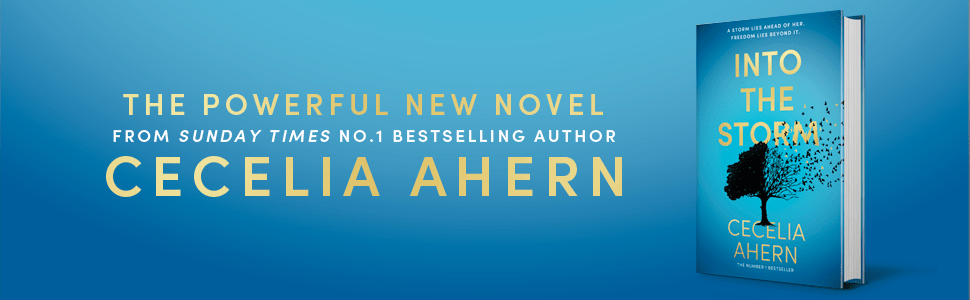
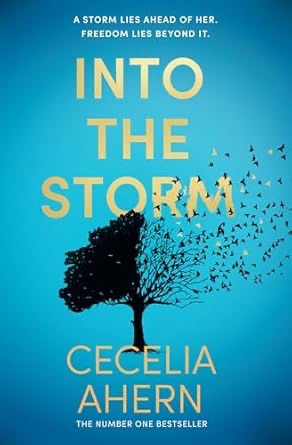
Into the Storm by Cecilia Ahern

One wild night in the middle of December, local GP Enya is driving home from a house call in a dreadful storm and visibility is poor. She comes across a taxi parked in the middle of the road and a boy lying motionless on the wet ground. Oscar, the taxi driver, tells her he has just found the boy like this and he doesn’t know if he’s breathing. As the rain pours down Enya kneels in the road and performs CPR, desperately hoping she can save his life. After she’s questioned by the police and returns home she sits in the car for moment, soaked to the skin and thinks about her mother. Brigid, a rather eccentric and free-spirited woman, died at the age of 47 while swimming in the sea. For a while, as Enya battled to save the teenage boy’s life she felt the water running down her face and wondered if this was how her mother felt? Enya struggles in the aftermath of the incident and can’t seem to put it out of her mind. Is it because the boy was so like her son, of a similar age and wearing the same clothes? The storm propels her into huge life changes as she walks away from her loveless marriage and takes a job in the small town of Abbeydooley. There she lives in a remote spot, but with a rag tree in the garden that brings people from far and wide to tie their ribbons and fabric to it’s branches. Even though her days are filled with patients and she starts to make friends, that night in the rain just won’t leave her. As she looks out of the window at the sacred tree she is faced with the stories of all the people who’ve tied a memento there. Could it be time to face the truth of her own story as well as the memory of her mother? 

We meet Enya in the middle of a crisis and the night of the storm is really the breaking point of that crisis. Enya is 46 and the day after her 47th birthday she will be older than her mother ever was. She has always had the sense that her mother was still going before her but from that day it’s only her. Alone. The grief hits her like a tsunami wave. There’s also the matter of her marriage and living situation. Xander made me feel cold. He comes across as clinical and controlling. The house they live in doesn’t feel like a home to Enya. Their home was the new build that she poured all her effort into, it’s where she had Ross and where she learned him to ride a bike in the garden. Now it’s their GP surgery and they’ve lived in Xander’s inherited family home ever since his parent’s death. There is nothing of Enya in the house and every ornament and painting is exactly where it was when Xander was a boy. If she moves the coat rack slightly or repositions an ornament it is soon quietly placed back where it should be. He even controls her relationship with Ross, having chosen his boarding school and at home telling her not to disturb him when all she wants is to spend time with her son. There’s an invisible barrier there and I could feel her sense of powerlessness. Enya has been struggling for some time: feeling overwhelmed at work; making small mistakes with forms and requests; desperately trying to find an escape, somewhere she can breathe. She has also struggled to let the injured boy go and has visited the hospital and made contact with the boy’s mum. When the offer comes to relocate to Abbeydooley she jumps at the chance. 

Her introduction to Abbeydooley life isn’t a smooth one. The tree is baffling to her. It has filthy and torn rags all over it and completely obstructs her view from the window, taking all her light. She sees it as an eyesore and asks the maintenance person to come out and remove it. Margaret is a brilliant character and the women don’t get off to the best start. Margaret has assumed the tree is damaged and turns up the next morning with a chainsaw, but when she sees the tree is intact she refuses to touch it. Doesn’t Enya realise this is a rag tree, a sacred tree that’s watered by a spring from the site of the original abbey? People believe it’s a sacred site, that their prayers will be answered if they leave something to represent the person or problem they’re facing. It seems ridiculous to Enya, especially when a tour mini-bus arrives with a group of pensioners excited to see this symbol of pagan traditions. Alongside this observance of pagan religion, Enya also has to contend with the church. A visit from the parish priest makes her realise that traditionally the GP and priest have worked quite closely together, sharing information and forming a team to help parishioners and patients. Enya is reluctant, but is starting to learn that in these remote rural areas being a GP is a very different thing to the app led computerised system she and Xander used. Maybe she will have to adapt to a new way of working and living. 

The whole book is a combination of a woman trying to find her way in the world and navigate emotional challenges, with a darker mystery woven in. The backdrop of Abbeydooley is almost like the light relief in the story, with it’s old-fashioned ways and humorous characters like Handyman Willy. I wondered whether it would be a redemption arc, where the town’s quirky ways would win Enya over and change her life. However it’s more complex than that. Abbeydooley becomes a space for Enya to breathe and think, but her demons have definitely followed her. We’re not sure whether she’s a narrator we can rely on. It’s not Xander’s opinion or the little slips at work that concerned me, it’s more about her rising paranoia and the small reveals that prove she isn’t telling us everything. When an agitated man turns up at the surgery to confront Enya we have no idea who he is or what bearing he might have the story. She sees another man through her window late at night, are they the same man or is someone making a late night visit to the tree? All this time Xander keeps her from her son so she’s reduced to leaving voice notes for him in the hope he’ll listen to them alone. Xander claims he’s protecting their son, but from what? I really enjoyed Margaret because she sees Enya at her worst and remains her friend. Margaret knows what it’s like to make a mistake and blow your own life apart. So she’s the best person for Enya to spend time with. What I found sad is that Enya has had support there all along. Although Xander has slowly controlled her, she has allowed her life to restrict her to the point where she felt her only choice was total escape. Yet she has her sister and brother-in-law, they are warm and welcomed her into their home when she first left. She could have made changes, been closer to her son and faced up to everything. Enya seems like a person who runs away: from grief, from her marriage, from the truth. I didn’t always understand her as a character, but her journey was fascinating. With my counsellor head on I wanted her to find a way to break free from all the restrictions she placed on herself. She would certainly make a fascinating client.


Meet the Author

Cecelia Ahern is an Irish novelist who wrote her debut novel PS, I LOVE YOU at the age of 21 years old, which was published in 2004. It became one of the biggest selling novels in recent years and was made into a hit film starring Hilary Swank, as was her second novel LOVE, ROSIE starring Lily Collins. She is published around the world in 40 countries, in over 30 languages and has sold over 25 million copies of her novels. She has published 19 novels, including a Young Adult series FLAWED and PERFECT, and the highly acclaimed collection of short stories ROAR. Her 20th novel INTO THE STORM will be published in October 2024.

She is the co-creator of TV comedy series SAMANTHA WHO? starring Christina Applegate and ROAR, the TV series, is streaming now on Apple TV+ starring Nicole Kidman.

Posted in Publisher Proof

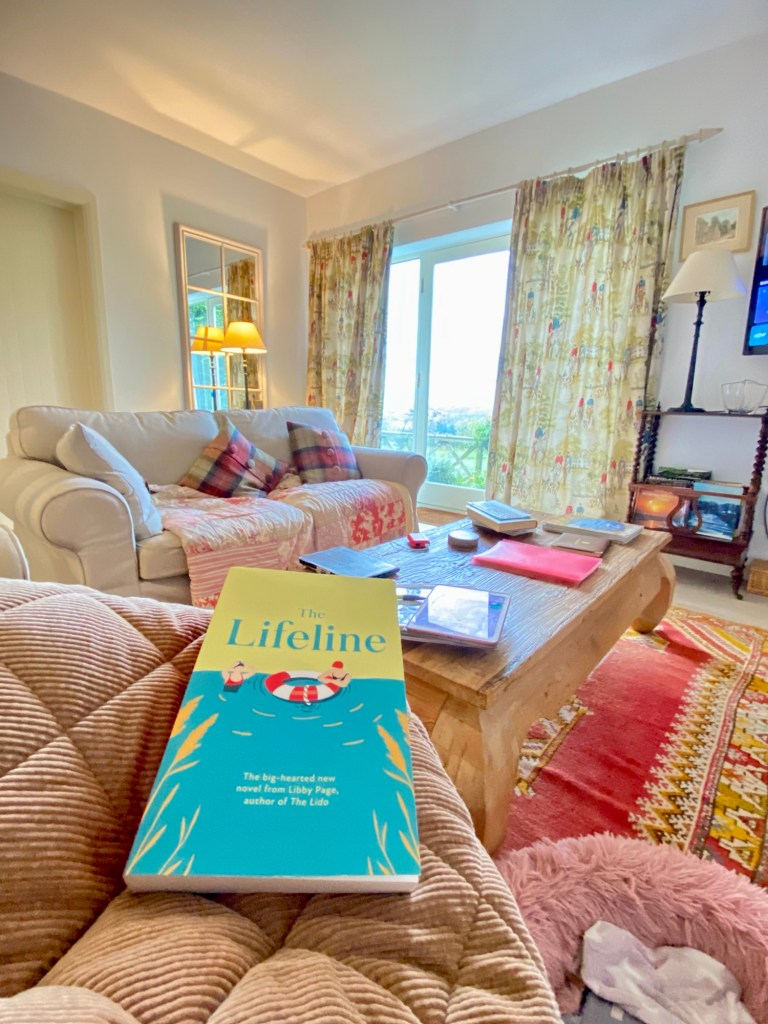
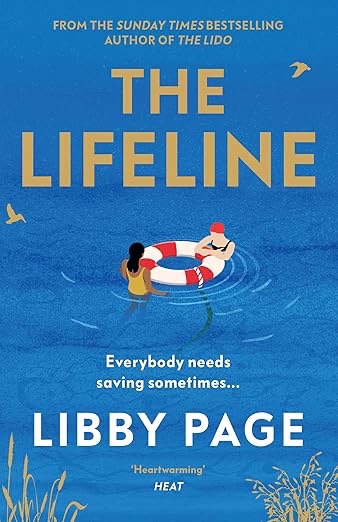
The Lifeline by Libby Page

Libby Page novels always touch on interesting and difficult subjects, but through a very cosy lens – a balance that’s very hard to achieve. Her focus is women’s lives and here our main characters are Kate and Phoebe, both of whom are going through big life changes. Kate has recently given birth to daughter Rosie and moved from London to a small village, nearer to her family. Kate and her husband wanted Rosie to grow up with a garden and to spend time with her wider family. While her husband sets up his photography business, Kate has found the first few months of motherhood hard and hasn’t bonded with her daughter in the way she hoped. She’s also missing her job in journalism, her best friends and the buzz of her London life. Phoebe has lived in the village for a while, in a flat above some shops with her boyfriend Max. She is a mental health nurse with flame red hair and visits her patients on a motorbike. It’s all change when Max decides he’s leaving and takes all the furniture. Phoebe doesn’t give herself time to process the break-up and keeps pushing herself to visit patients. She doesn’t realise that right now, she also needs help. Could the village’s wild swimming group be what both women need to restore them back to themselves? 

I was immediately attracted to the character of Phoebe, having worked in similar roles most of my life. I thought this was a slightly sugar coated version of mental health work, that touched some of the realities without changing the feel of the book. It did show that no two days are the same and the difficult juggling act of seeing regular patients when another has a crisis and needs to seen immediately. Phoebe is very conscientious and usually ends up working longer hours and eating into her own downtime to ensure everyone is seen. I could see Phoebe was heading for burn out, always putting her own needs last and missing the people and activities that restore her soul. Ive never had a baby, but I have seen what a seismic change it is from my friend’s experiences. Their world’s shrink because they’re so overwhelmed by this small person who is so dependent on them. I didn’t always understand why friends hadn’t called or couldn’t come to events, but having stepdaughters has made me realise how all consuming parenthood is. I’ve definitely seen less of friends and sacrificed my own needs for theirs, and babies need so much more. What I noticed about both women was how difficult it was for them to admit they’re struggling. Phoebe is conditioned by her job to always put someone else first. Kate has been influenced by the Instagram yummy mummies and the perfection of her sister’s life. She feels inadequate next to them, not realising that social media is edited to show the best photos and most interesting experiences. It’s a case of comparison is the thief of joy. Could both these women change their lives by finding a moment for themselves by the river? 

The story is set in an idyllic little village with cozy details like a coffee and cake van down by the river, an Italian deli under Phoebe’s flat and picturesque stone cottages. It’s clearly affluent but as Phoebe’s clients show, sorrow and illness can come into any home. It’s these cute and cozy details that make the book feel like a warm hug. I loved the camaraderie of the wild swimming group and the way they all pulled together when their swimming spot is threatened due to contaminated water. There’s a touch of romance too, in the rather gorgeous shape of Italian Luca from the deli. I enjoyed the humour too, especially the bridal boutique incident – the most disturbing boutique incident since Bridesmaids. Above everything it’s the female friendship that absolutely sings in this novel, confirming something I know to be true; it’s the women in our lives that hold us up when we fall, celebrate when we’re happy and stick with us through the seismic changes women experience in life. 

Meet the Author

Libby Page is the Sunday Times bestselling author of The Lido and four other warm-hearted novels. She lives in Somerset, England with her family. Before becoming an author she worked in journalism and marketing. When not writing she can be found reading, and swimming outdoors.

Posted in Netgalley

The Salt Flats by Rachelle Atalla

Fin and his wife Martha are travelling in South America. Their eventual destination are the salt flats in Bolivia, an other worldly natural phenomenon where the horizon becomes endless and you’re standing in the sky. Martha and Fin are not just sight-seeing, although the urge to take photographs and capture the illusion is strong. Having been together for 11 years, lately they’ve struggled as Martha has been in the grip of an obsessive anxiety over the climate crisis. They are booked into a retreat on the salt flats, found by Martha and extortionately expensive, it promises a transcendent experience using salt to purify mind and body. So the couple find themselves crammed into a pick-up truck alongside Rick and Barb, a middle aged and out of shape American couple, and partners Hannah and Zoe. They are now in the hands of their driver who doesn’t speak a word of English and an elusive shaman called Oscar. They will spend the next few days meditating, relaxing in warm salt pools and participating in a series of salt ceremonies where hallucinogenic visions bring them face o face with their subconscious reality. Yet the final ceremony descends into chaos, Martha and Fin need to grapple with Martha’s anxiety and the moral implications of their trip. As for their marriage, could this nightmare bring them together or are some wounds too deep to heal?

I’ve been fascinated with the salt flats after seeing them on an episode of World’s Most Dangerous Roads. It was incredible to see the sky reflected in the shallow saltwater surface, giving the impression of standing in the sky. It’s an image recently repeated on Race Across the World and even on a small screen it’s an incredible landscape. The author recreates that otherworldly and alien environment so well, creating an atmosphere of dislocation from the normal world even before any hallucinogens. It struck me as an odd place for a spa or well-being centre, something I always imagine as comfortable and with lush surroundings. This landscape is hard and barren. It left me dubious about the benefits of such a place and how professional it would be. As they’re collected by a taciturn driver I half expected him to rob them and leave them in the middle of nowhere. When they break down en route it doesn’t help, giving an impression of something run on a shoestring in a very inhospitable place. The building is much less luxurious than the group imagined, considering the high price they’ve paid to be there. It’s an igloo type structure built from blocks of salt. Even the beds in the dormitory have salt bases and the group are less than impressed to be sleeping in the same room. Each of the group have personal reasons to be there and the first salt ritual brings up themes of infidelity, assault and intrusive negative thoughts about the future. By confronting these issues, Oscar tells them they can process the trauma and move on. Trust has to build very quickly between the group who are letting each other into their personal spaces, both physical and mental. They’re baring their souls to each other. It’s clear that none of them will come out of this experience unchanged. Whether that’s a negative or positive change is hard to say. When Fin wakes up with a blooded face he is completely confused about how he got there. He knows he interacted with Zoe and that Barb had an accident, but the rest is fluffy and unclear. Where is the blood from and what horrors has he blacked out from his memory. 

I didn’t bond with all of the characters but I was definitely intrigued by them. I could understand why all of them needed change in their lives. It was easy to understand Martha’s concerns about the direction the world is taking. Although her preoccupations are with climate change, Brexit, Covid and wars breaking out across the world have left me with anxieties about the future, especially for the younger members of our family. It only takes a few swipes of the iPad to see how climate is changing the lives of those in low lying countries. However, that proximity to information can radicalise people as the most extreme viewpoints shout loudest online and I felt this had happened to Martha. Finn couldn’t keep living with constant anxiety about the future and needed Martha to meet him in the present every so often. The author’s depiction of their relationship felt very real, showing how people in long term relationship can change over time. Sometimes out takes a conscious choice to re-commit to that person or a bit of compromise that reminds why you committed to each other in the first place. Agreeing to the salt spa was Finn’s act of commitment, to show that he can give Martha a little of what she needs in the hope it will be enough. However, he ruins that a little with his scepticism and his shock at how spartan the spa is for the money spent. As horrors start to unfold will he blame Martha or will everything they’ve experienced bring them closer together? That’s if they both get out alive. The monumental stupidity of allowing themselves to be taken into the middle of nowhere at the mercy of people who don’t speak their language and have taken a huge chunk of their savings, starts to sink in. As things start to unravel you won’t be able to put this fascinating debut down.

Out Now from Hodder and Stoughton

Meet the Author

Rachelle Atalla is a Scottish-Egyptian novelist, short story writer and screenwriter based in Glasgow. Her debut novel The Pharmacist was published by Hodder & Stoughton in May 2022.

Posted in Netgalley

Lights Out by Louise Swanson

The Government have declared a state of emergency in this tense and thought provoking thriller from Louise Swanson. They’re introducing a temporary policy of electricity rationing, so at 8pm every night the lights and all other electrical power will turn off. For Grace this is her worst nightmare, because she’s terrified of the dark and no reassurance or safety measure from her husband is going to change that. She knows that at some point she will be forced to face the dark alone. An experience of being enclosed in the dark as a child has left it’s mark. All she can do is take as many night shifts at the hospital as possible, where they’re exempt from the switch off. In the house she will have to carry a torch and try to be alone as little as possible. When the switch off comes it’s effects are worse than she could possibly have imagined. Someone is coming into her home. Late at night when she’s shivering under the covers, too scared to move. Someone is leaving behind strange gifts – a third goldfish is swimming beside Brad and Jennifer in the bowl, a horrible painting of a dragon has replaced her own photo on the stairs, a pair of candlesticks in the kitchen. With them he leaves a strange and unsettling note: 

‘I have you in my sights. Love, the Night.’

Where can Grace feel safe if not in her own home? She’s an interesting character, clearly badly affected by childhood trauma and the memories of her previous, abusive relationship. The author opens with a first person account of being locked in a small pitch black space, it’s so vivid I could feel her fear. Grace tells us she was locked in a cupboard by the other children at school, where they continue taunting her until she wets herself. Since then she has always kept the lights on after dark and her partner sleeps in an eye mask to avoid the constant light. She also works at night where she can and sleeps in the day at home. She works as a carer in the hospice, spending a lot of time sitting beside those who are close to death, once her other tasks are completed. She didn’t go to university because she had a baby boy while very young and he has recently left home to live with his partner. Grace moved in with her own boyfriend and he has promised to be home in time for first big switch off. However, when she’s counting down the minutes, torch in hand, her partner is nowhere to be seen. 

The author shows brilliantly how even a strong and capable woman can be triggered by something that others barely notice. She touches on how the lights out policy affects the wider population – hypothermia in the elderly, rotting food defrosting and causing waste, a rise in crime. For others the lack of power has some positives, people can’t hide or be distracted by screens and communication within families will improve. Grace has been a single mum and she works well with people who are dying, so we know she isn’t scared of the big stuff. So why has one experience from childhood left such a huge impression? Her mother had always hoped she’d grow out of it and now the twelve hours of darkness must surely mean she must face the fear? It’s like state sponsored exposure therapy. Then ‘the night’ starts visiting and suddenly the dark covers up worse fears, new ones that are very real indeed. Even worse, her night visitor isn’t breaking in, so surely they must have a key. She is unsure how to deal with it and ringing the police is pointless when they’re dealing with a darkness induced crime wave. 

In between Grace’s sections of the story we meet a man who is in therapy. He left me feeling very on edge and I found myself wondering how I’d react if he were my client. He seems very unaware how counselling works, despite it being a fairly common concept these days. He also responds strangely to the therapist’s standard introduction. He fidgets, stands and paces round the room and I was uneasy on the therapist’s behalf. He seemed agitated. He’s convinced that his girlfriend is seeing another man. Is he paranoid? We have no idea how he fits into the story, but I was intrigued by him. Grace’s world becomes even more confusing when someone from her past turns up at the hospice as a patient. She knows she should disclose their connection, but if she does she knows she won’t be able to work with them. She decides to keep it to herself so she can sit with them. What clues, if any, might they have about her childhood and could what they know help her fear of the dark? As the pages turned I became more and more suspicious of her partner. Never home when he says he will be, distracted and very unsympathetic. I didn’t like him from the start and wondered if he was exercising coercive control over her. The moments when she’s under the covers with her heart racing as she hears her intruder moving around downstairs are truly terrifying. Yet he doesn’t seem malicious. He seemed to enjoy her fear and I even wondered if the night was closer to home than she thought. The truth was even stranger than expected and I found myself rooting for Grace, wanting her to get some resolution about her night visitor but also more long term relief from her phobia. That could only come from openness and facing the truth of her childhood and that time in the pitch dark cupboard. This is an enjoyable thriller with interesting insights on how childhood trauma affects us and how early relationships can inform the attachments we form in later life. 

Out Now from Hodder and Stoughton

Meet the Author

Louise Swanson’s debut, End of Story, was written during the final lockdown of 2020 – also following a family tragedy, it offered refuge in the fiction she created. The themes of the book – grief, isolation, love of the arts, the power of storytelling – came from a very real place. The second Swanson book will arrive in hardback and eBook spring 2024. Watch this space. 

Swanson, a mother of two who lives in East Yorkshire with her husband, regularly blogs, talks at events, and is a huge advocate of openly discussing mental health and suicide.

She also writes as Louise Beech. Beech’s nine books have won the Best magazine Book of the Year 2019, shortlisted for the Romantic Novel of the Year, longlisted for the Polari Prize, and been a Clare Mackintosh Book Club Pick. Her memoir, Daffodils, was released in audiobook in 2022, and the paperback version, Eighteen Seconds, in April 2023..