Posted in Random Things Tours

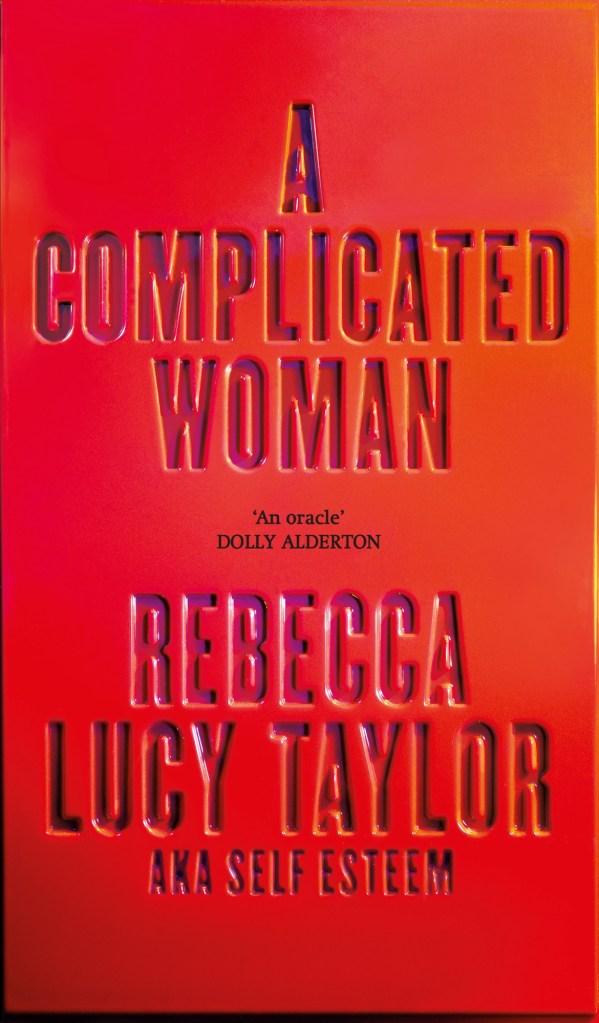
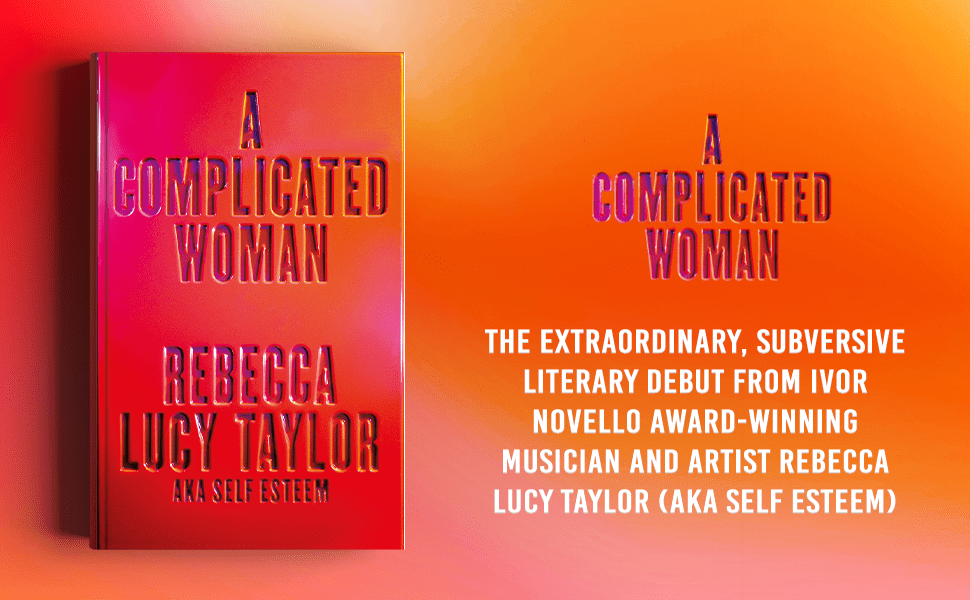
A Complicated Woman by Rebecca Lucy Taylor aka Self Esteem 

“I never could′ve told you anything I long for

While I was in the water swimming ‘gainst tides we′re taught to

Take it in our stride, laugh it off, take it on the chin just right

Don’t be too loud or too quiet, but I got all this fight

And now I see it clear with every passing of each year

I deserve to be here

And every time I fall, I crawl back like an animal

My focus is powerful.”

I knew I was going to love Self Esteem when I first caught her set at Glastonbury a few years ago, referencing 1990 Madonna with her black suit and corset. What made me stop and watch was that instead of the iconic John Paul Gaultier conical bra each breast was covered with the dome of Meadowhall Shopping Centre in Sheffield. At that point I didn’t know that Rebecca Lucy Taylor was born there but I could see she had a sense of humour, a sense of where she was from and had something very powerful to say as the above lyrics from her song Focus to Power show. In the intervening years Self Esteem has become a creative force with three solo albums, including A Complicated Woman this year. She had a Mercury Prize nomination for her album Prioritise Pleasure in 2022 and was the BBC Music Introducing act in 2021. She is not just a singer, she’s a multi-instrumentalist and has composed for theatre and became a West End lead in 2023/24 playing Sally Bowles in Cabaret. She’s been awarded an honorary doctorate in music from the University of Sheffield and a portrait of her hangs in the National Gallery. Now she has written a memoir, bringing together notes and lyrics, journal entries and observations on life as a woman in the 21st Century, referencing relationships, abuse, self-worth, creativity and living under the weight of the impossible expectations we impose on young women. The blurb refers to it as a ‘subversive anti-Bible’ and a ‘cathartic scream of a book’ and it is raw, emotional and so incredibly exposing. I will be buying it for my stepdaughters. 

The narrative is jagged and feels unfinished, a structure that underlines the theme of being the ‘finished’ article something that applies to both the professional and personal self. Creative work never feels fully done. I always imagined that when writing a book I would know when it was complete and I would feel satisfied that it was finished. A piece of writing is always open to change, but we have to let it go at some point and finishing is a collaborative process with mentors, agents, editors and might end up looking different to what you expected. Similarly as people we are never finished, the self is not one fixed thing and can be influenced by mood, something we watched, whether we slept well or not and interactions with others. I think we imagine as children that there’s a point where we become an adult and our self is a fixed thing, but the self is fluid and open to change until the last day we’re alive. The author writes that she wakes up knowing it’s going to be a day when her brain is against her. So out of all the options open she decides on the middle ground: 

‘Ultimately doing nothing garnished by a little of what I as a child imagined being an adult would be. A coffee in a cafe, walk to the cinema, watch an art house film alone, walk home.’ 

It’s almost a fake it till you make it idea. The self is just a raw block of clay but we still go out there, pretending to do what we think adults should.

Self Esteem at Glastonbury 2022

Toxic relationships are also a huge part of the book and it’s clear there was one in particular that was coercive and damaging. Tiny little snippets of information are dropped about him and I identified strongly with how she feels at these times. She addresses him remembering that: ‘ he made sure to take at least two pieces of jigsaw and hide them so it could finish it himself.’ It made me shiver with recognition. My heart broke for her in this paragraph: 

“I’ll never forget the first time it cracked and he became someone else. I spent that night trying to sleep on the floor and reaching back up to him in his single bed, sleeping soundly. Offering my hand over and over through the night. – And forever he held back. Each tendon in his fingers finally gracing me with tension. And in that moment the sickness in my stomach was gone and the addiction to his acceptance began.” 

She clearly spent years trying to please this person, to be enough but not too much. Enough in the right way that was acceptable to him. A rollercoaster of arguments followed by apologies to make things nice again, a blissful few weeks when he’s happy because she made herself smaller, then a withdrawal of affection, hurtful comments and arguments. It’s a place I’ve been and it only ended when I accepted I was enough, just as I was. I still feel sick to my stomach when something takes me back there and this really hit home. As she says, ‘tell me anyone who left when they should have.’ She also addresses the inevitable question of children, something women are always asked and I have noticed that I make a lot more sense to some friends now I have stepdaughters. The author wishes she could just have one, now, not because she wants one just because it would be done and people would stop asking. They ask as if you’ve forgotten to do it. There’s a point in the book though where change begins and it’s in a letter, because unsent letters have such power. It’s a letting go leaving the path clear to be whatever.

We get the sense of a person who has a huge and imaginative inner world, but is hampered by her own mind throwing out options, constantly questioning whether this or that is the right thing to do. There’s a very busy internal critic here and while the author may be an over-thinker and struggle with anxiety, I think this second-guessing herself is a habit many women have. It starts with parental pressures of what a girl should be, educational expectations influenced by gender, societal expectations of what an adult woman should want and how successful she should be. It’s as if feminism succeeded in giving women more choice, but also more expectations rather than equality. Yes of course we can have a career, but then you must go home and more than a fair share of housework, cooking, laundry and having the mental load of who eats what, which week a friend is coming to stay and an encyclopaedic knowledge of where every object belonging each family member might be found. On top of that are grooming standards, the endless opinions on whether women should age naturally or have surgery, when they should stop wearing short skirts and how to keep their sex lives spicy. No one asks a man when he’s going to fit in having a child or whether he should sacrifice his career for his family. This pressure is described beautifully here as it runs throughout the narrative alongside the extra pressures of being creative and a famous woman. Everyone talks about America Ferrarra’s speech in the Barbie film about what a woman is but I find the author’s words much more affecting as she writes a poem about herself as the woman she feels society wants her to be. A woman who eats the right things, who makes money but stays generous and humble, who is modern and desirable, but above all things maternal. It reads like a modern fairy tale.

‘I had one thousand friends and each and every one was happy with me, and felt I had given them enough time and attention’. 

It feels like slicing yourself into a thousand different pieces to be everything and keep everyone happy and they all think you’re amazing, but you’re still slicing yourself. It takes therapy, age and self-acceptance to throw off these expectations and doubts. In amongst this torrent of emotions there is a down to earth feel and a sense of humour that comes out a lot in lists – ‘things I should have said no to’ being one. There are also blunt truths that she clearly can’t say to the person but records in her diary – ‘I want to be fucked like that but not have to hear about your Edinburgh show.” I loved this directness, tempered with humour. It also shows how hard it can be for some women to say what they want and don’t want without judgement. 

She gives us an insight into how those judgements are magnified in the music industry, where you’re trying to get your creative work out there but are being told you’d sell better if you wrote a certain way or were a bit more attractive. If she’d compromised she’d have a record deal by now, she’s told, why is she so difficult? This is a tale we’ve heard again and again in the music industry but it has to keep being said till something changes. We’ve heard it from the incredible Raye who wrote for other people for years because her own stuff didn’t fit in a specific box, or Cat Burns who writes about how difficult it is to know how to be the human everyone expects. Paloma Faith is an incredible inspiration and I watched a clip of her speaking to students at the university graduation. She has delved into music, fashion, writing, broadcasting and art and she passed on an incredible bit of advice – she has always been brimming with ideas and would worry that she couldn’t fix on one way to get these thoughts and ideas out there. She remembered a conversation with one of the tutors who said she didn’t have to fit all of her ideas into one mould. One idea might be a brilliant book, rather than trying to condense it into a song but another might be better suited to fashion or art. She didn’t have to fit into one mould. I think Rebecca is the embodiment of that idea, brim full of ideas and happy to range across music gigs, theatre shows, dance, tv appearances and memoir writing. The point is the creativity, not the medium. 

I can think of so many women who can take something from this book and it will sit happily up on my shelf with writing from Caitlin Moran and Paloma Faith, hugely creative and intelligent women with a lot to say. It renewed something I’ve been wrestling with in my own head now I’m hitting menopause and middle age – it’s ok not to ‘grow up’ but take joy in every new incarnation of yourself and the changes it brings. It’s subversive in a world where we’re told we should be striving to stay young and relevant. to be unhappy getting older. I found so much inspiration in this memoir, both personal and creative, as well as a wonderful feeling of being seen. 

Posted in Sunday Spotlight

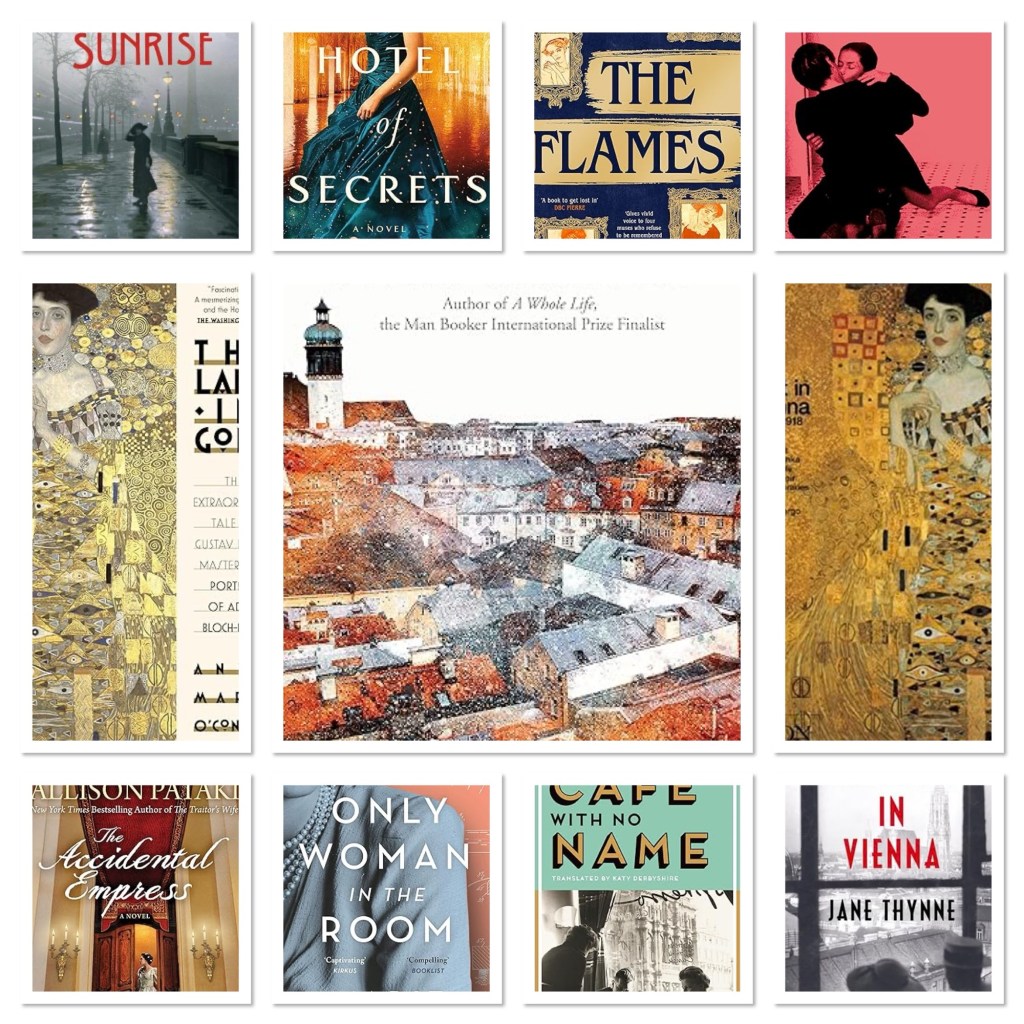
City Break in a Book: Vienna

I’ve never been to Vienna but it’s very firmly on my list of places I’d like to visit. Firstly I love Klimt with a passion and have been to any and every exhibition of his work, but never in his homeland. I’m also interested in Freud, for obvious reasons. I’d like to eat a piece of Sachertorte there too. For now I’ll have to keep reading books set in the city.

Set in 1938 in London and Vienna, this is a tense and atmospheric thriller told from within a climate of uncertainty and fear as World War Two threatens. As war looms over Britain and there is talk of gas masks and blackout, people are understandably jumpy and anxious. Stella Fry, has been working in Vienna for a Jewish family and returns home with no job and a broken heart. She answers an advertisement from a famous mystery writer, Hubert Newman, who needs a manuscript typed. She takes on the job and is shocked the next day to learn of the writer’s sudden, unexplained death. She is even more surprised when, twenty-four hours later, she receives Newman’s manuscript and reads the Dedication: To Stella, spotter of mistakes. Harry Fox, formerly of Special Branch and brilliant at surveillance, has been suspended for some undisclosed misdemeanor. He has his own reasons for being interested in Hubert Newman. He approaches Stella Fry to share his belief that the writer’s death was no accident. What’s more, since she was the last person to see Newman, she could be in danger herself.

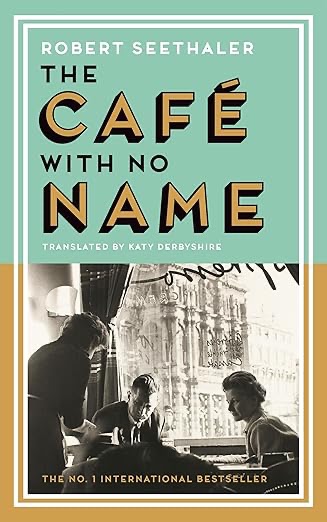
It is 1966, and Robert Simon has just fulfilled his dream by taking over a café on the corner of a bustling Vienna market. He recruits a barmaid, Mila, and soon the customers flock in. Factory workers, market traders, elderly ladies, a wrestler, a painter, an unemployed seamstress in search of a job, each bring their stories and their plans for the future. As Robert listens and Mila refills their glasses, romances bloom, friendships are made and fortunes change. And change is coming to the city around them, to the little café, and to Robert’s dream. 

A story of the hopes, kindnesses and everyday heroism of one community, The Café with No Name has charmed millions of European readers. It is an unforgettable novel about how we carry each other through good and bad times, and how even the most ordinary life is, in its own way, quite extraordinary.

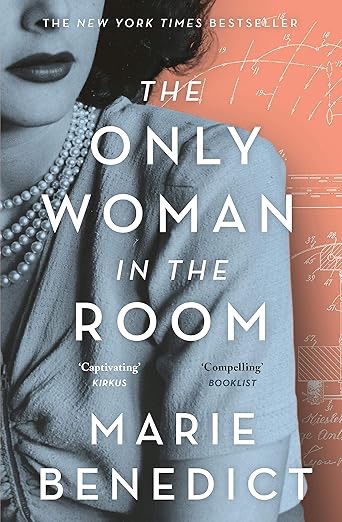
Hedy Lamarr possessed a stunning beauty. She also possessed a stunning mind. Could the world handle both?

Her beauty almost certainly saved her from the rising Nazi party and led to marriage with an Austrian arms dealer. Underestimated in everything else, she overheard the Third Reich’s plans while at her husband’s side, understanding more than anyone would guess. She devised a plan to flee in disguise from their castle, and the whirlwind escape landed her in Hollywood. She became Hedy Lamarr, screen star.

But she kept a secret more shocking than her heritage or her marriage: she was a scientist. And she knew a few secrets about the enemy. She had an idea that might help the country fight the Nazis…if anyone would listen to her.

A powerful novel based on the incredible true story of the glamour icon and scientist whose groundbreaking invention revolutionised modern communication, The Only Woman in the Room is a masterpiece.

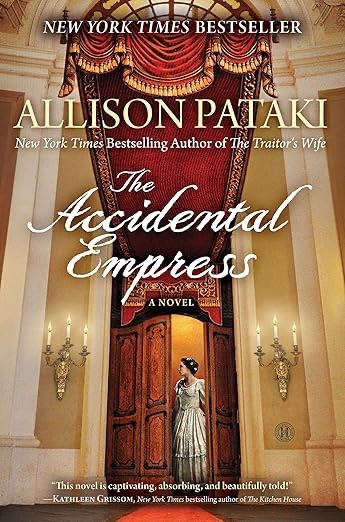
The year is 1853, and the Habsburgs are Europe’s most powerful ruling family. With his empire stretching from Austria to Russia, from Germany to Italy, Emperor Franz Joseph is young, rich, and ready to marry.

Fifteen-year-old Elisabeth, “Sisi,” Duchess of Bavaria, travels to the Habsburg Court with her older sister, who is betrothed to the young emperor. But shortly after her arrival at court, Sisi finds herself in an unexpected dilemma: she has inadvertently fallen for and won the heart of her sister’s groom. Franz Joseph reneges on his earlier proposal and declares his intention to marry Sisi instead.

Thrust onto the throne of Europe’s most treacherous imperial court, Sisi upsets political and familial loyalties in her quest to win, and keep, the love of her emperor, her people, and of the world.

With Pataki’s rich period detail and cast of complex, bewitching characters, The Accidental Empress offers a glimpse into one of history’s most intriguing royal families, shedding new light on the glittering Hapsburg Empire and its most mesmerizing, most beloved “Fairy Queen.”

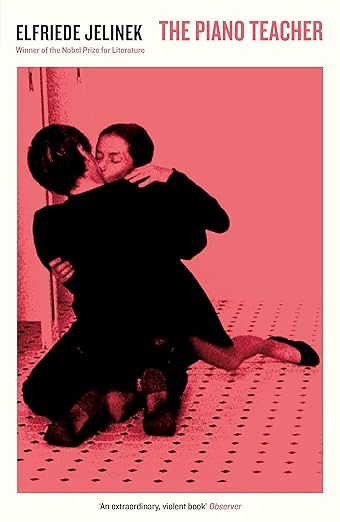
Erika Kohut teaches piano at the Vienna Conservatory by day. By night she trawls the city’s porn shows while her mother, whom she loves and hates in equal measure, waits up for her. Into this emotional pressure-cooker bounds music student and ladies’ man Walter Klemmer.

With Walter as her student, Erika spirals out of control, consumed by the ecstasy of self-destruction. A haunting tale of morbid voyeurism and masochism, The Piano Teacher, first published in 1983, is Elfreide Jelinek’s Masterpiece.

Jelinek was awarded the Nobel Prize For Literature in 2004 for her ‘musical flow of voices and counter-voices in novels and plays that, with extraordinary linguistic zeal, reveal the absurdity of society’s clichés and their subjugating power.

The Piano Teacher was adapted into an internationally successful film by Michael Haneke, which won three major prizes at Cannes, including the Grand Prize and Best Actress for Isabelle Huppert.

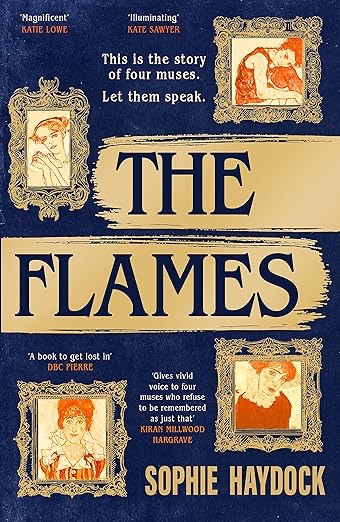
Vienna at the dawn of the 20th century. An opulent, extravagant city teeming with art, music and radical ideas. A place where the social elite attend glamorous balls in the city’s palaces whilst young intellectuals decry the empire across the tables of crowded cafes. It is a city where anything seems possible – if you are a man. 

Edith and Adele are sisters, the daughters of a wealthy bourgeois industrialist. They are expected to follow the rules, to marry well, and produce children. Gertrude is in thrall to her flamboyant older brother. Marked by a traumatic childhood, she envies the freedom he so readily commands. Vally was born into poverty but is making her way in the world as a model for the eminent artist Gustav Klimt. 

None of these women is quite what they seem. Fierce, passionate and determined, they want to defy convention and forge their own path. But their lives are set on a collision course when they become entangled with the controversial young artist Egon Schiele whose work – and private life – are sending shockwaves through Vienna’s elite. All it will take is a single act of betrayal to change everything for them all. Because just as a flame has the power to mesmerize, it can also destroy everything in its path…

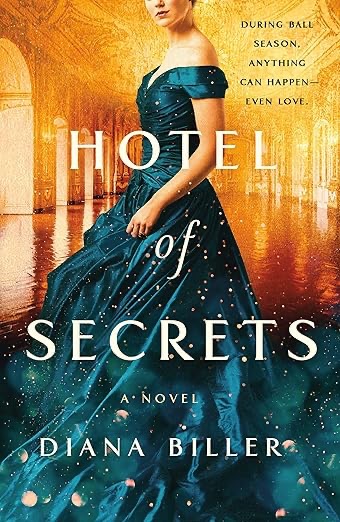
It’s Ball Season in Vienna, and Maria Wallner only wants one thing: to restore her family’s hotel, the Hotel Wallner, to its former glory. She’s not going to let anything get in her way – not her parents’ three-decade-long affair; not seemingly-random attacks by masked assassins; and especially not the broad-shouldered American foreign agent who’s saved her life two times already. No matter how luscious his mouth is. Eli Whittaker also only wants one thing: to find out who is selling American secret codes across Europe, arrest them, and go home to his sensible life in Washington, DC. He has one lead – a letter the culprit sent from a Viennese hotel. But when he arrives in Vienna, he is immediately swept up into a chaotic whirlwind of balls, spies, waltzes, and beautiful hotelkeepers who seem to constantly find themselves in danger. He disapproves of all of it! But his disapproval is tested as he slowly falls deeper into the chaos – and as his attraction to said hotelkeeper grows. Diana Biller’s The Hotel of Secrets is chock full of banter-filled shenanigans, must-have-you kisses, and romance certain to light a fire in the hearts of readers everywhere.

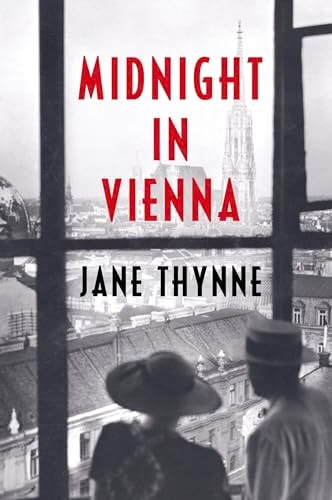
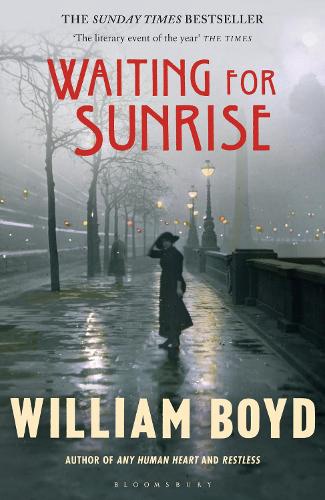
Vienna, 1913. It is a fine day in August when Lysander Rief, a young English actor, walks through the city to his first appointment with the eminent psychiatrist Dr Bensimon. Sitting in the waiting room he is anxiously pondering the particularly intimate nature of his neurosis when a young woman enters. She is clearly in distress, but Lysander is immediately drawn to her strange, hazel eyes and her unusual, intense beauty. Her name is Hettie Bull. They begin a passionate love affair and life in Vienna becomes tinged with a powerful frisson of excitement for Lysander. He meets Sigmund Freud in a café, begins to write a journal, enjoys secret trysts with Hettie and appears – miraculously – to have been cured. Back in London, 1914. War is imminent, and events in Vienna have caught up with Lysander in the most damaging way. Unable to live an ordinary life, he is plunged into the dangerous theatre of wartime intelligence – a world of sex, scandal and spies, where lines of truth and deception blur with every waking day. Lysander must now discover the key to a secret code which is threatening Britain’s safety, and use all his skills to keep the murky world of suspicion and betrayal from invading every corner of his life. Moving from Vienna to London’s West End, from the battlefields of France to hotel rooms in Geneva, Waiting for Sunrise is a feverish and mesmerising journey into the human psyche, a beautifully observed portrait of wartime Europe, a plot-twisting thriller and a literary tour de force from the bestselling author of Any Human Heart, Restless and Ordinary Thunderstorms.
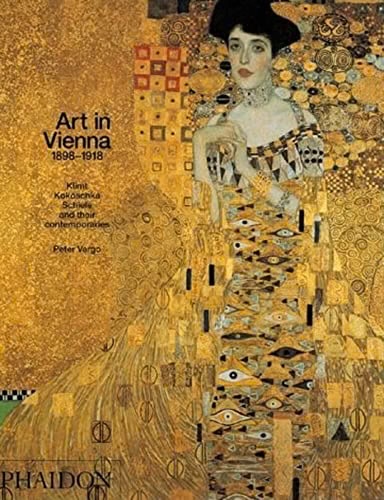
The artistic stagnation of Vienna at the end of the nineteenth century was rudely shaken by the artists of the Secession. Their works at first shocked a conservative public, but their successive exhibitions, their magazine Ver Sacrum and their dedication to the applied arts and architecture soon brought them an enthusiastic following and wealthy patronage. With 60 new colour illustrations, this classic book, now in its third edition, brilliantly traces the course of this development, of the Wiener Werkstätte that followed, and the individual works of the artists concerned. The result is a fascinating documentary study of the successes and failures, hopes and fears of the members of an artistic movement that is so much admired today.

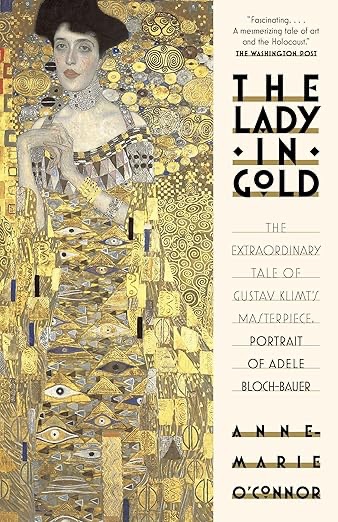
This is the true story that inspired the movie “Woman in Gold” starring Helen Mirren and Ryan Reynolds. Anne-Marie O Connor brilliantly regales us with the galvanizing story of Gustav Klimt’s 1907 masterpiece, the breathtaking portrait of a Viennese Jewish socialite, Adele Bloch-Bauer. The celebrated painting, stolen by Nazis during World War II, subsequently became the subject of a decade-long dispute between her heirs and the Austrian government.When the U.S. Supreme Court became involved in the case, its decision had profound ramifications in the art world. Expertly researched, masterfully told, “The Lady in Gold” is at once a stunning depiction of fin-de siecle Vienna, a riveting tale of Nazi war crimes, and a fascinating glimpse into the high-stakes workings of the contemporary art world.

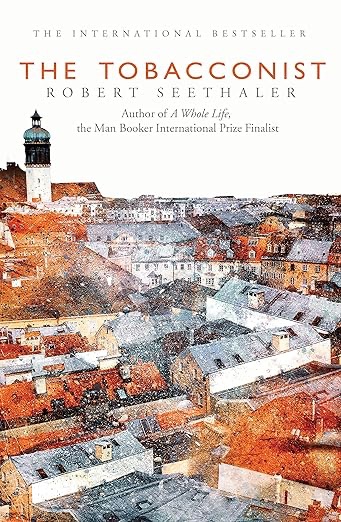
Seventeen-year-old Franz Huchel journeys to Vienna to apprentice at a tobacco shop. There he meets Sigmund Freud, a regular customer, and over time the two very different men form a singular friendship. When Franz falls desperately in love with the music hall dancer Anezka, he seeks advice from the renowned psychoanalyst, who admits that the female sex is as big a mystery to him as it is to Franz.

As political and social conditions in Austria dramatically worsen with the Nazis’ arrival in Vienna, Franz, Freud, and Anezka are swept into the maelstrom of events. Each has a big decision to make: to stay or to flee?

Posted in Sunday Spotlight

Sunday Spotlight. City Breaks in a Book: Paris

A weekend trip to the City of Lights is usually on everyone’s bucket list but if you can’t travel these books will give you a flavour of Paris. Whether it’s an escapist romance or a travelogue each will give you an insight into life in Paris, from the fin de siecle through two World Wars and all the way through to the COVID pandemic and it’s aftermath, these choices take in the Twentieth Century and beyond. Hope you find something you enjoy.

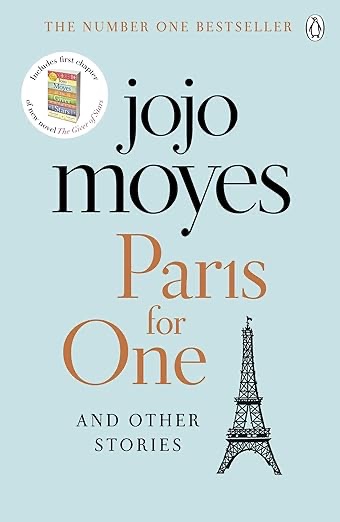
Not the best known of Jojo Moyes’s books, but a series of short stories all with the backdrop of Paris.

In Paris for One, Nell is deserted by her boyfriend minutes before setting off on what was supposed to be a fantastic romantic weekend away to Paris. Can she forget him and find herself? Honeymoon in Paris is a tale of the early days of two marriages in both 1912 and 2012, featuring Liv and Sophie from Jojo Moyes’ bestselling romance The Girl You Left Behind.

Beth is faced with a difficult decision in Bird in the Hand when she bumps into an old flame at a party, with her husband . . . 

This is classic Jojo Moyes fiction – easy to read and within a few lines you’re pulled into the story. The characters are absorbing and soon have you on side, rooting for their romantic dreams to come true.

Historical Fiction

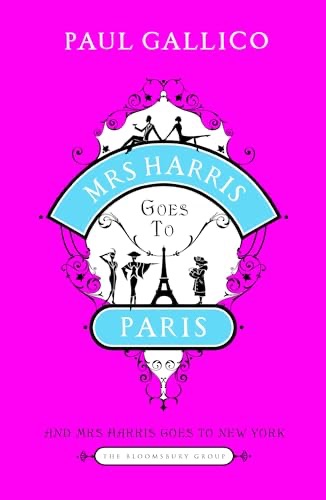
This book is utterly charming from start to finish, while seemingly sprinkled with fairy dust our heroine has some very painful and difficult setbacks. Mrs Harris is a salt-of-the-earth cleaner living in London, struggling financially with her husband never returning from WWII. She cheerfully cleans the houses of the rich and one day, when tidying Lady Dant’s wardrobe, she sees the most beautiful thing she has ever seen in her life – a Dior dress. In her fairly drab and working class existence, she’s never seen anything as magical as this dress. It seems to be alive, like living and wearable work of art. She’s never wanted a material thing so much in her life. Mrs Harris scrimps, saves and slaves away, often finding that the very rich avoid their bills and has to assert herself. Then one day, after three long years, she finally has enough money to go to Paris. However, when she arrives at the House of Dior, she could never have imagined how her life is going to be transformed and how many other lives she will touch in return. Always kind, always cheery, she finds time to charm the ladies who create Dior’s designs in the atelier and organise the love lives of other key staff. Mrs Harris really does takes Paris by storm and learns one of life’s greatest lessons along the way. This treasure is from the 1950s introduces the irrepressible Mrs Harris, part charlady, part fairy-godmother, whose adventures take her from her humble London roots to the heights of glamour in Paris until eventually she has the dress of her dreams. It only highlights those lovely qualities that we know have been there all along. I am absolutely in love with this character.
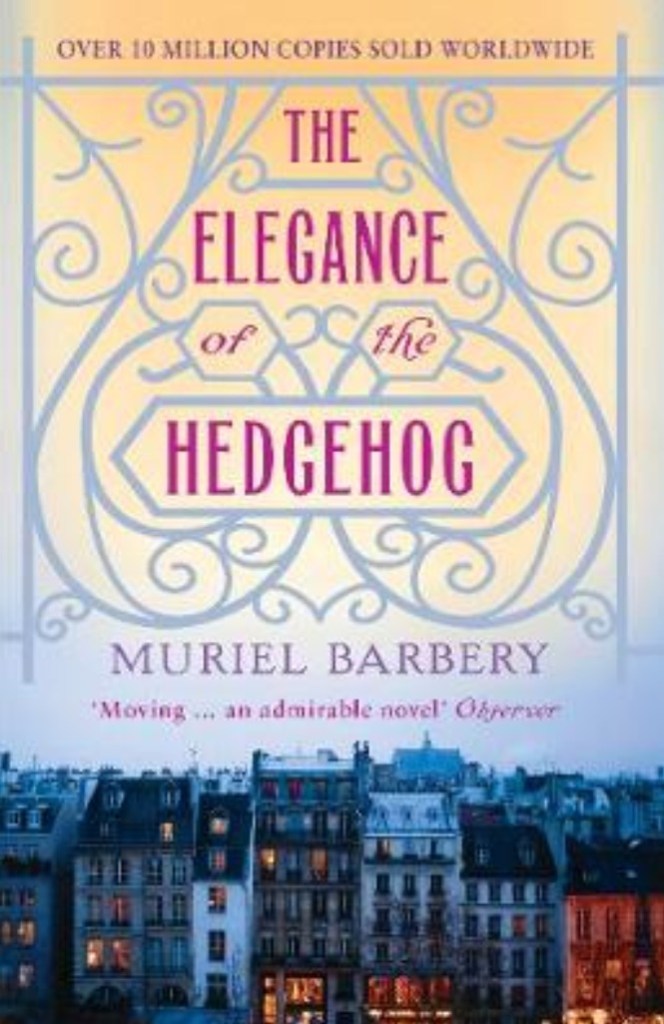
Rene is the concierge of a grand Parisian apartment building. With the residents she keeps up a professional facade and to them she’s what they expect, a helpful and reliable concierge but not as sophisticated or cultured as they are. Underneath is this the real Rene – a woman who’s incredibly passionate about culture and probably knows more than her rather snobbish residents. Her loves are Japanese Arthouse Cinema and her cat, Leo Tolstoy. Meanwhile, several floors above, is twelve-year-old Paloma Josse, another person keeping their knowledge to themselves. She doesn’t want the empty future her parents have laid out for her and decides she will end her life on her thirteenth birthday. Unknown to both Rene and Paloma, the sudden death of one of their privileged neighbours alter everything for them. The simplicity of the story is what makes this book magical. It shares deep truths about the choices we make in life and the way they change everything. It’s quirky and has an intelligent humour, but is also elegantly written. The charm of it seems quintessentially Parisian.
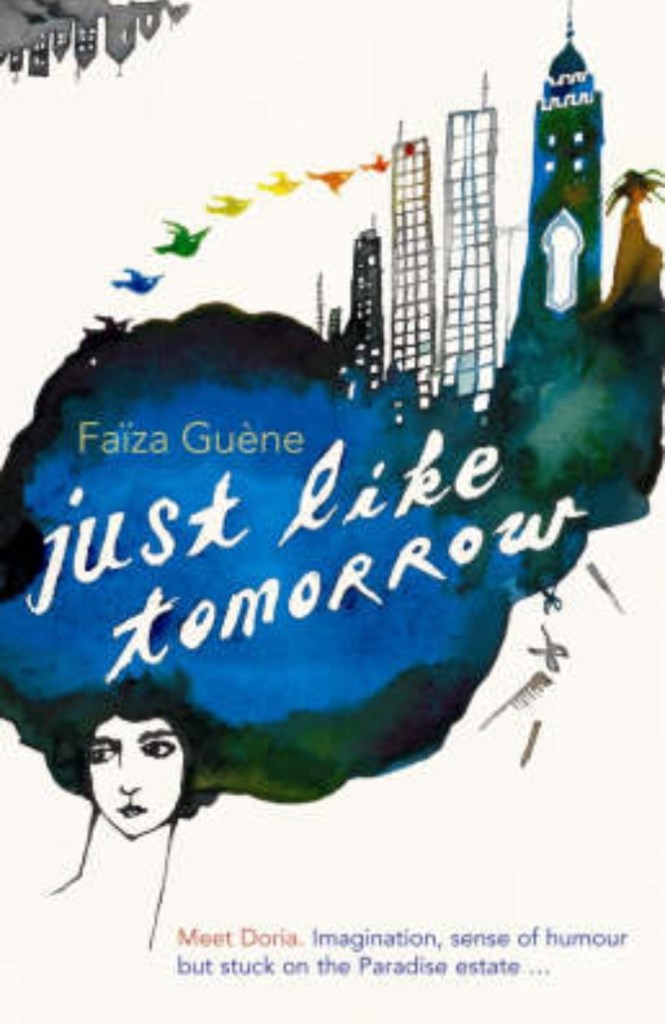
Doria is in a difficult place. That place is the Paradise Estate, dreadfully misnamed and situated on the outskirts of Paris showing a different side to the city. In Doria’s unforgettable voice, we learn that her father has returned to Morocco. He’s looking for a new wife, who can produce a boy. So her mother is trying to get by a single mother, but she can’t speak French and is illiterate. The only work she can find is cleaning. It could be worse, Samra who lives above them has a father who won’t let her out. Another young resident, Youssef, has been put in prison for stealing cars and supplying drugs. One good thing is her weekly appointment with a psychologist, who listens even if she doesn’t have answers. The author has created a memorable character in Doria who is knowing beyond her years but also heart-breakingly naive. This book gives us a beautifully drawn alternative to the romantic tourist impression of Paris.

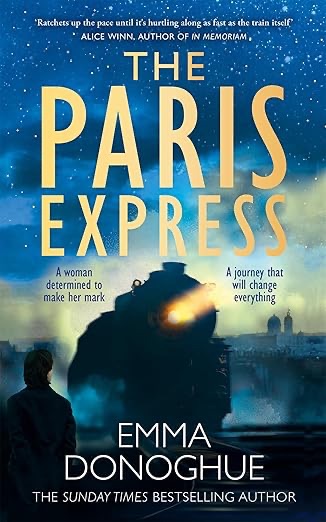
A woman called Mado is determined to make her mark and begins a journey that will change everything. Set on a train to Paris in 1895, and based on a real incident when a train crashed into the platform at Montparnasse, a young woman boards the Granville Express with a deadly plan. The author sets us firmly in the fin de siecle, not just with the clothing but with the attitudes. We can see a shift from the Victorian ideals of the previous seventy years. We have Alice who is travelling for work and taking the opportunity to talk her boss into a new investment. Marcelle is a pioneering scientific researcher inspired by Marie Curie. Mado’s androgynous clothing and short hair make her stand out as someone unconventional and modern. She’s definitely a feminist, but is also an anarchist and I could feel the tension in her body as I read, how far is she willing to go to make her political point? The prose speeds up as the train edges closer and closer to Paris and more passengers climb aboard until the reader is almost breathless.
.

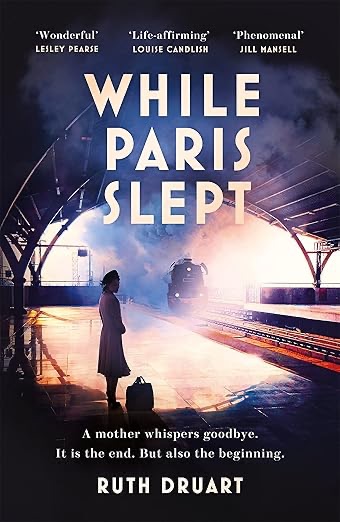
Another wonderful historical novel here, this time set in Paris during WWII. It’s 1944 and Jean Luc is working on the railway under the Nazi occupation when a train bound for Auschwitz is passing through. In an act of desperation a mother makes the ultimate sacrifice and gives the thing she loves most to a stranger. Now she can face her own future with the hope that she’s done the right thing.

Ten years later in Santa Cruz and Jean Luc is happy to have left the memories of the occupation behind. The scar on his face is the daily reminder of the horrors of life under the Nazis. His new life has given him the family he’s always wanted and he doesn’t expect the past to come knocking. That one night on the train platform has shaped all of the futures in a way none of them imagined.

This is such an emotional story, beautifully researched and gives us some insight into life in Paris under the occupation and the terrible choices people had to make to save the ones they love.


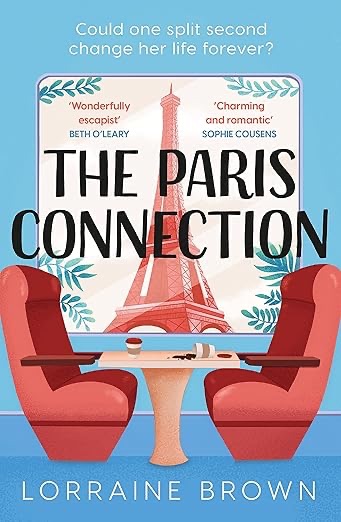
Could one split second change her life forever?

Hannah and Si are in love and on the same track – that is, until their train divides on the way to a wedding. The next morning, Hannah wakes up in Paris and realises that her boyfriend (and her ticket) are 300 miles away in Amsterdam!

But then Hannah meets Léo on the station platform, and he’s everything Si isn’t. Spending the day with him in Paris forces Hannah to question how well she really knows herself – and whether, sometimes, you need to go in the wrong direction to find everything you’ve been looking for…

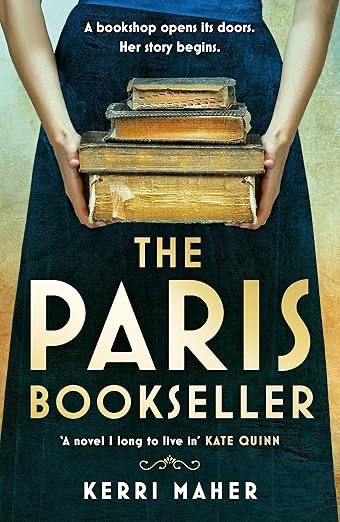
PARIS, 1920. On the bohemian Left Bank, Sylvia runs a little bookshop called Shakespeare and Company. Here she welcomes the greatest writers of the day – and from the moment James Joyce finally walks through her door, the two become friends.

When Joyce’s controversial novel Ulysses is banned, Sylvia is determined to publish it herself.

But championing the most scandalous book of the century will come at a cost – and Sylvia finds herself risking ruin, her reputation and her heart, all in the name of the life-changing power of books.

Set in post-war Paris, The Paris Bookseller is a sweeping story of love, courage and betrayal – and a breathtakingly beautiful love letter to books.

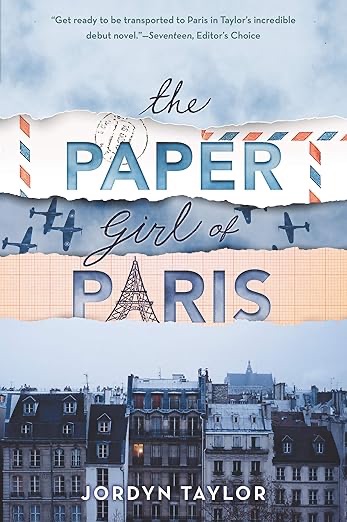
Sixteen-year-old Alice is spending the summer in Paris, but she isn’t there for pastries and walks along the Seine. When her grandmother passed away two months ago, she left Alice an apartment in France that no one knew existed. An apartment that has been locked for more than seventy years.

Alice’s grandmother never mentioned the family she left behind when she moved to America after World War II. With the help of Paul, a charming Parisian student, she sets out to uncover the truth. However, the more time she spends digging through the mysteries of the past, the more she realizes there are secrets in the present that her family is still refusing to talk about.

THEN:

Sixteen-year-old Adalyn doesn’t recognize Paris anymore. Everywhere she looks, there are Nazis, and every day brings a new horror of life under the Occupation. When she meets Luc, the dashing and enigmatic leader of a resistance group, Adalyn feels she finally has a chance to fight back.

But keeping up the appearance of being a much-admired socialite while working to undermine the Nazis is more complicated than she could have imagined. As the war goes on, Adalyn finds herself having to make more and more compromises—to her safety, to her reputation, and to her relationships with the people she loves the most.

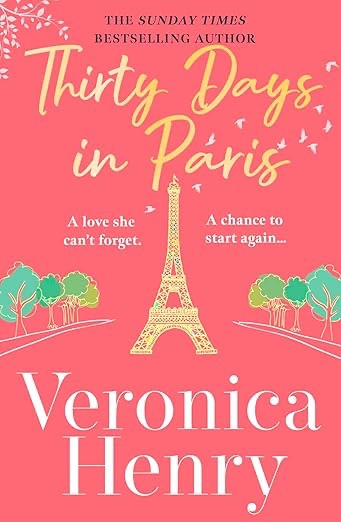
Because Paris is always a good idea…

Years ago, Juliet left a little piece of her heart in Paris – and now, separated from her husband and with her children flying the nest, it’s time to get it back!

So she puts on her best red lipstick, books a cosy attic apartment near Notre-Dame and takes the next train out of London.

Arriving at the Gare du Nord, the memories come flooding back: bustling street cafés, cheap wine in candlelit bars and a handsome boy with glittering eyes.

But Juliet has also been keeping a secret for over two decades – and she begins to realise it’s impossible to move forwards without first looking back.

Something tells her that the next thirty days might just change everything…

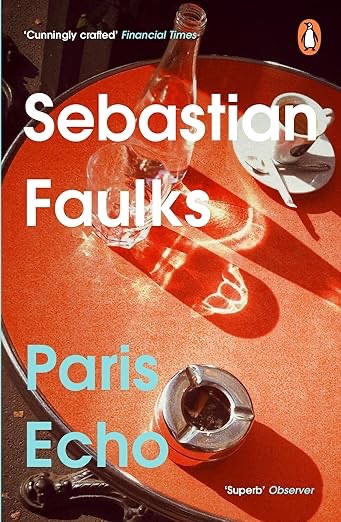
In the depths of the archive, Hannah dances with the ghosts of Vichy France, lost in testimony and a desire to hear the voices of the past. Back in her apartment, Moroccan teenager Tariq crashes on her sofa, consumed by his search for the mother he barely knew. Their excavations will unearth rich histories that will teach them both just how much the future is worth fighting for.

She is there to study the wartime experiences of women living there under German Occupation, while still licking the wounds of a painful, decade-old romance.Paris Echo knocks on big subjects such as the legacy of empire and identity, but mostly it’s a heart-warming masterclass in storytelling that weaves and winds and brims with a deep affection for Paris: its otherworldliness, and the ghosts of history that lurk around every beautiful, tree-lined avenue.  

Paris Echo is a propulsive and haunting novel of empire and identity, told with biting wit and tenderness, which exposes the shadows of the city of lights.

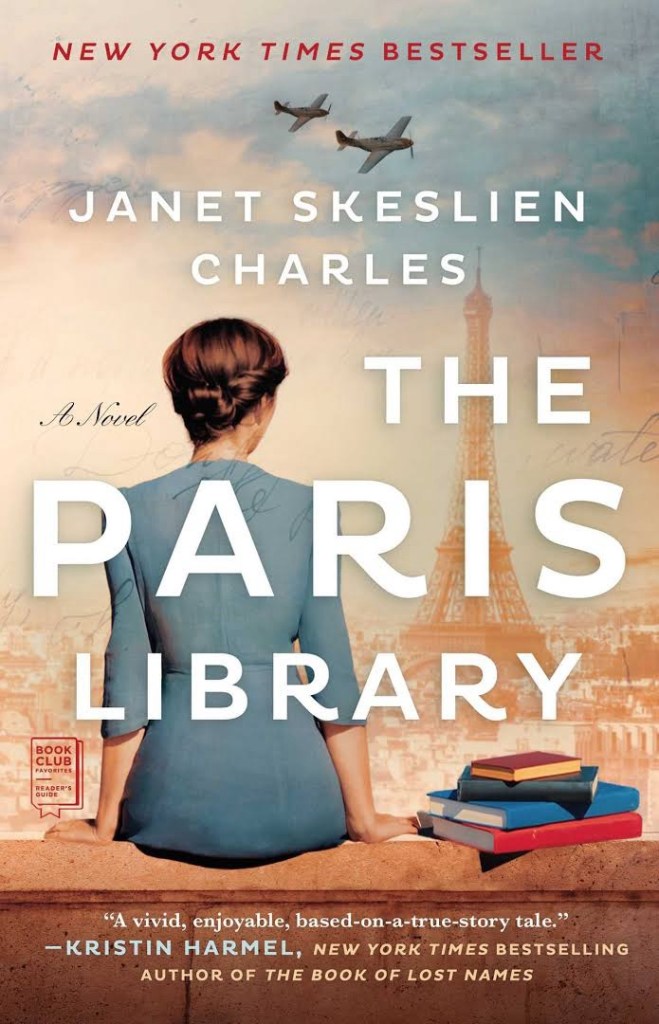
PARIS, 1939
Odile Souchet is obsessed with books, and her new job at the American Library in Paris – with its thriving community of students, writers and book lovers – is a dream come true. When war is declared, the Library is determined to remain open. But then the Nazis invade Paris, and everything changes.
In Occupied Paris, choices as black and white as the words on a page become a murky shade of grey – choices that will put many on the wrong side of history, and the consequences of which will echo for decades to come.

MONTANA, 1983
Lily is a lonely teenager desperate to escape small-town Montana. She grows close to her neighbour Odile, discovering they share the same love of language, the same longings. But as Lily uncovers more about Odile’s mysterious past, she discovers a dark secret, closely guarded and long hidden.

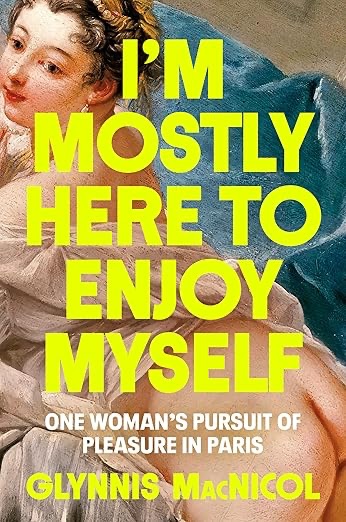
When you’re a woman of a certain age, you are only promised that everything will get worse. But what if everything you’ve been told is a lie?Come to Paris, August 2021, when the City of Lights was still empty of tourists and a thirst for long-overdue pleasure gripped those who wandered its streets.

After New York City emptied out in March 2020, Glynnis MacNicol, spent sixteen months alone in her tiny Manhattan apartment. She was 46, unmarried and the isolation was punishing. A whole year without touch. Women are warned of invisibility as they age, but this was an extreme loneliness, so when the opportunity to sublet a friend’s apartment in Paris arose, MacNicol jumped on it. Leaving felt less like a risk than a necessity.What follows is a decadent, joyful, unexpected journey into one woman’s pursuit of radical enjoyment.

The weeks in Paris are filled with friendship and food and sex. There is dancing on the Seine; a plethora of gooey cheese; midnight bike rides through empty Paris; handsome men; afternoons wandering through the empty Louvre; nighttime swimming in the ocean off a French island. And yes, plenty of nudity. I’m Mostly Here to Enjoy Myself is an intimate, insightful, powerful, and endlessly pleasurable memoir of an intensely lived experience whose meaning and insight expand far beyond the personal narrative. MacNicol is determined to document the beauty, excess, and triumph of a life that does not require permission.The pursuit of enjoyment is a political act, both a right and a responsibility. Enjoying yourself—as you are—is not something the world tells you is possible, but it is.

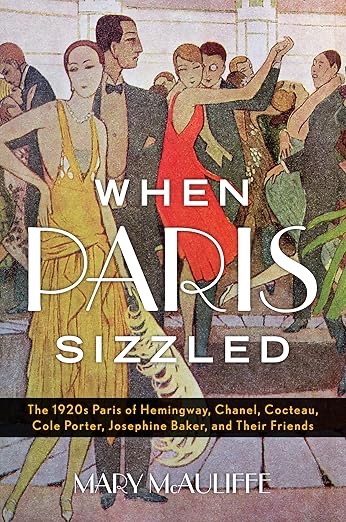
When Paris Sizzled vividly portrays the City of Light during the fabulous 1920s, when Parisians emerged from the horrors of WWI to find that a new world greeted them. This world reverberated with the hard metallic clang of the assembly line, the roar of automobiles, and the beat of jazz. Mary McAuliffe traces a decade that saw seismic change on almost every front, from art and architecture to music, literature, fashion, entertainment, transportation, and, most notably, behavior. The epicenter of all this creativity, as well as of the era’s good times, was Montparnasse, where impoverished artists and writers found colleagues and cafés, and tourists discovered the Paris of their dreams. Major figures on the Paris scene―such as Gertrude Stein, Jean Cocteau, Picasso, Stravinsky, Diaghilev, and Proust―continued to hold sway, while others now came to prominence―including Ernest Hemingway, Coco Chanel, Cole Porter, and Josephine Baker, as well as André Citroën, Le Corbusier, Man Ray, Sylvia Beach, James Joyce, and the irrepressible Kiki of Montparnasse. Paris of the 1920s unquestionably sizzled. Yet rather than being a decade of unmitigated bliss, les Années folles also saw an undercurrent of despair as well as the rise of ruthless organizations of the extreme right, aimed at annihilating whatever threatened tradition and order―a struggle that would escalate in the years ahead. There are rich illustrations and an evocative narrative, through which Mary McAuliffe brings this vibrant era to life.

Posted in Personal Purchase

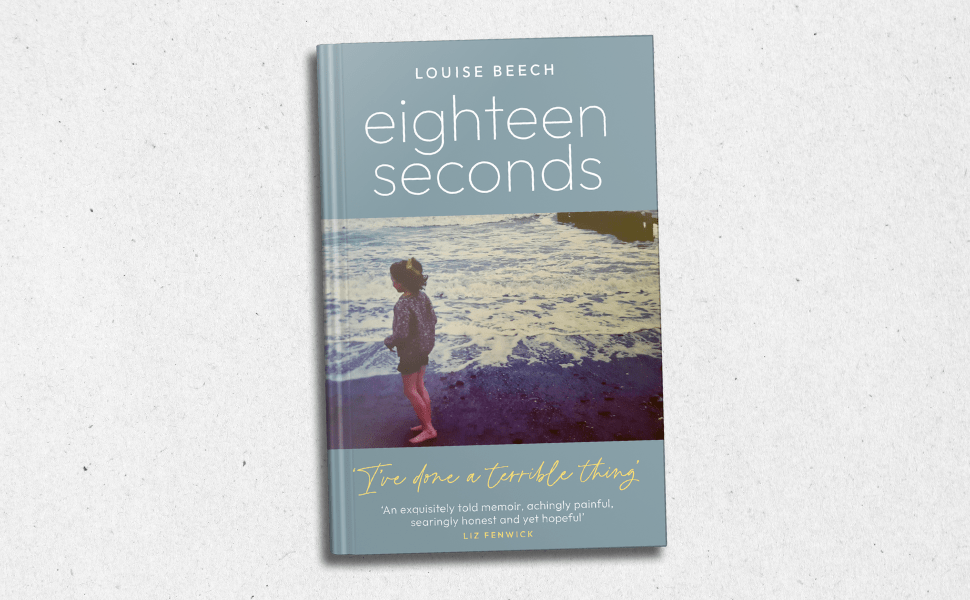
Eighteen Seconds by Louise Beech

My mother once said to me, ‘I wish you could feel the way I do for eighteen seconds. Just eighteen seconds, so you’d know how awful it is.’

I was reading this raw and painful memoir to discuss at my local book club Pudding and Pages. Sadly, my health wasn’t great that day and I wasn’t able to go. So I decided to tell all of you about it instead, because I love Louise’s writing and I identified very strongly with some of her experiences. This is such a psychologically astute story, from someone who has done a lot of work on their childhood trauma, even while being traumatised anew with the shock that comes on an ordinary morning. Normally, Louise would take her children to school and then have a walk along the path at the side of the River Humber and underneath the bridge itself. Her husband asks if she will take her walk earlier than normal as he has a package being delivered later and needs her to be home. She agrees, completing her walk earlier than usual, and returning home to a call from one of her sisters. Their mother has thrown herself off the Humber Bridge, it’s only by changing her schedule that Louise didn’t witness it. This call hits the reader like a punch to the gut and I’m sure that’s how she must have felt. If you’ve ever had a similar call you’ll know it hard to communicate the force of that moment. Your mind is still at home holding the phone while your body is grabbing the car keys and scrambling to reach A+E as soon as possible. 

Honestly, the siblings are shocked to find their mother alive when they reach the hospital. She landed, not in the water but on the path, causing multiple broken bones, internal bleeding and head injuries. As they navigate those first few hours Louise contrasts them with inserts that are flashbacks to their childhood. Their mum’s first suicide attempt flashes through her mind. The three girls were placed with grandma for several month, but Baby Colin had to be taken into foster care. Although losing their mum was terrifying for Louise’s younger twin sisters it must have been desperately traumatic for Colin who lost his whole family that day. She describes these months with grandma as the safest and most loved she ever felt. Their return to their mother heralded the worst years of their childhood, the abuse ranged from neglect to prioritising her own needs and emotions over that of her children. New relationships always came first, placing them in grave danger as she plunged headfirst into alcoholism. For Louise, as the eldest, it meant being a second mum to the other three while mum partied. In a way Louise became the identified problem of the family – she’s miserable, no fun and constantly moaning according to her mother and her male friends. It was an immense struggle to keep the younger ones happy, especially the girls who worried every time the door closed that their mother would ever come back. The didn’t know she was choosing to be in the pub. Louise’s attempts to get her mother to see what effect her alcoholism was having on the twins were met with either silence or insults, depending on which friend was drinking with her at the time. She just wants her mum to be responsible for her own children. 

This is such a hard read in parts but it isn’t without humour and hope. Once her mum is recovered enough to talk again, her sense of humour is restored and she is remarkably charming when she wants to be. I loved how the siblings handled her, with a patience and humour she barely deserves at times. I loved the sibling’s family WhatsApp group, including their Uncle Edwin who’s in Australia. Their ability to share gallows humour, even in the worst of circumstances reminded me a little of my family. Their discussions about her underwear and accusing Colin of sneaking it away, descends into uproar when he tells them it looks better on him. ‘Well you haven’t seen it on Edwin’, one of his sister’s hits back. My family and I used gallows humour all the time when my husband was dying. From my own experience I recognised the bulldozing that happens in MDT Discharge meetings, where everyone is agreeing to a plan you haven’t said yes to. Once I was told by an NHS Continuing Care nurse that my opinion didn’t really count because I wasn’t a nurse. No consideration to the fact that the care was happening in my house and I was the only full-time carer. In fact I was carrying out medical tasks such as pump feeding, suction and catheterising, so to all intents and purposes I was nursing him. The horror of realising there was nowhere for my husband to die broke me, because he didn’t have cancer so couldn’t go to a hospice. He wanted to come home but I couldn’t do it alone, Louise writes about similar issues in a very matter of fact way, because that’s the only way to be at times like this – blunt and forthright. Then in between the family uses humour to deal with a hurt that can’t heal and can’t change. 

I read this at a difficult time for my family, because my mum and her two sisters are dealing with care for my 90 year old grandmother, who has been a very difficult woman. My mum has felt completely overlooked by her mother, often left out of decisions or not considered when it comes to family memories or possessions. As the only daughter with any memory of her grandma (always referred to as Mother) she had hoped to be given her engagement ring when the time came, with her sisters receiving the wedding and engagement ring of their own mum. She was really upset to find her middle sister had been given Mother’s ring, with the other two going to her youngest sister. It wasn’t the item as much as the memory, not helped by my grandma saying ‘well the others really wanted them and I knew you wouldn’t make a fuss’. This total lack of consideration opened a Pandora’s box of hurt, including a terrible decision made when the family returned from a spell in Australia in the late 1960s. Having to accept housing away from their home city of Liverpool, they settled in Scunthorpe but both of my grandparents needed to work. My mother was twelve and her two sisters were pre-school age, so my grandma didn’t register my mum for school and left her at home caring for the younger children. This lack of education was devastating for my mum who felt like she was sacrificed for the good of her sisters and also felt ashamed that she had few qualifications. It affected her opportunities but also her confidence, leading to life long mental health issues. Despite this my mum shows incredible intelligence, is well-read and has had a lot of psychotherapy. I think that at the age of 72 she is very in touch with her authentic self and knows that she needs to ration the time spent with her mother, place careful boundaries around herself and us and accept a relationship that’s very one sided. I recognised a lot of my mum in Louise’s personal growth and that motherly relationship with her younger siblings. This book made me realise there are families like ours where intergenerational trauma is a very real part of life. I think the book holds out a lot of hope that with boundaries, solid friendships, somewhere to express the negative emotions and a lot of humour it’s possible to survive narcissistic parenting. Lastly, I admire Louise’s honesty and openness in writing this memoir so beautifully and I hope it has proved both cathartic and healing for her too.

Meet the Author

Louise Beech lives in East Yorkshire and grew up dreaming of being a writer but it took many years and many rejections for her to finally get a book deal in 2015, aged 44. Her debut, How to be Brave, got to No4 on Amazon and was a Guardian Readers’ Pick; Maria in the Moon was described as ‘quirky, darkly comic and heartfelt’ by the Sunday Mirror; The Lion Tamer Who Lost was shortlisted for the Popular Romantic Novel of 2019 at the RNA Awards and longlisted for the Polari Prize 2019; Call Me Star Girl was Best magazine’s Book of the Year 2019; I Am Dust was a Crime MagazineMonthly Pick; and This Is How We Are Human was a Clare Mackintosh Book Club pick. In 2023 her new novel, End of Story, will be published under the pen name Louise Swanson. Louise regularly writes short stories for magazines, blogs, and talks at universities and literary events.

Posted in Sunday Spotlight

Sunday Spotlight: Non- Fiction on My TBR

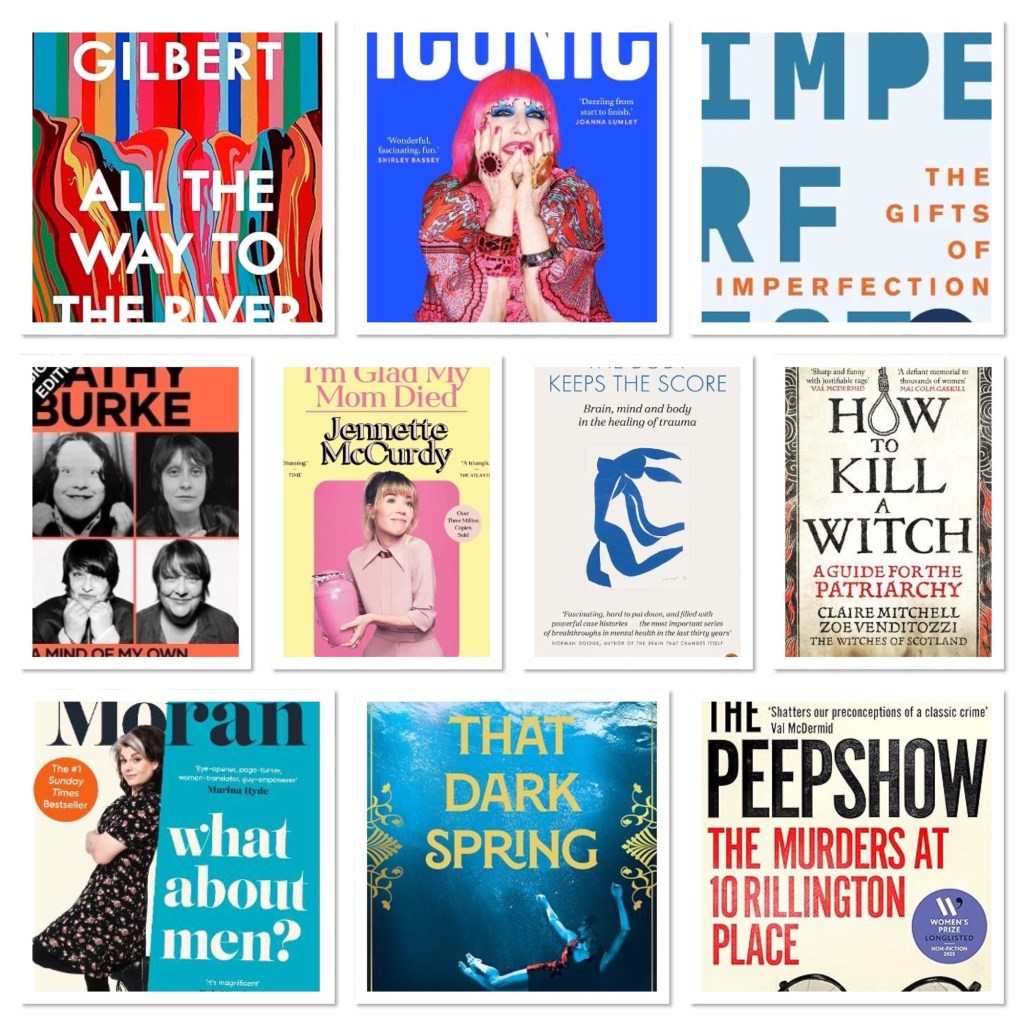
I started the year wanting to read more non-fiction, something I usually do when I need a literary ‘palate cleanser’. We all get those slumps or brain fog moments because we’ve not stopped reading for weeks. My usual pick -me-up is to grab a memoir or psychology book and for some reason that always works. So I want to share with you a few of the books I’ve read or that are on my TBR and wishlist.

Books I Re-Read

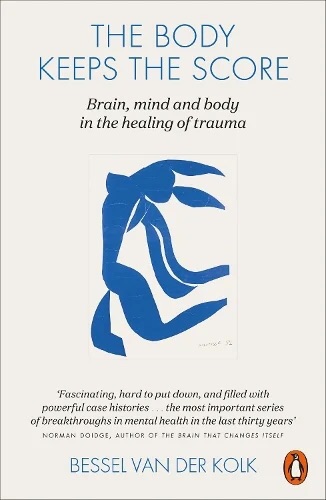
This book was one I picked up during my training in counselling. I was working with people who have acquired a disability through disease or trauma and I was really interested in how people process such a huge change in life. There’s such a long grieving process for what is lost, including the life they were expecting to have. This is the effect of a physical illness or disability on mental health. This book made me think about the opposite effect though, the effect thar emotional trauma has on the body. Mental pain, felt bodily, can be devastating for sufferers, their families and future generations. If you think about something mentally painful that has happened to you – the loss of a loved one or pet, workplace or exam stress, the breakdown of a friendship or relationship – now think about your behaviour or responses at that time. Some of them will be mental but others will be physical: feeling sick or losing your appetite; having a headache or migraine; sleeping more than usual or insomnia. Some people are unable to feel mental pain until they feel it in the body, in fact most of you will have thought about how stressed you’ve been when your shoulders feel tense or a headache is creeping up on you. It’s believed some people never feel mental pain immediately when the trauma is happening and the body stores it, converting it into physical symptoms. Written by one of the world’s experts on traumatic stress, this book offers a bold new paradigm for treatment, moving away from standard talking and drug therapies and towards an alternative approach that heals mind, brain and body.

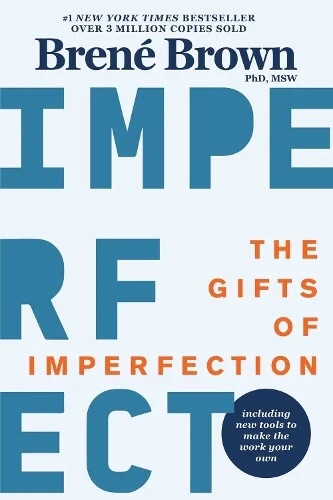
I’m a huge fan of Brené Brown and as a perfectionist I get a lot out of her work on accepting imperfection. I’ve always wanted to write a book but I’m impeded by imposter syndrome and fear of failure. In this book she approaches this as both a social scientist and a friend. She tells the truth, makes us laugh, and even cry with you. And what’s now become a movement all started with The Gifts of Imperfection. She doesn’t just give us statistics and words on a page, but creates effective daily practices called the ten guideposts to wholehearted living. These guideposts help us understand the practices that will allow us to change our lives and families, they also walk us through the unattainable and sabotaging expectations that get in the way. I found this incredibly helpful and I dip in and out of the book when I’m having imposter moments or have fallen out of practice with my writing.

My Non- Fiction TBR

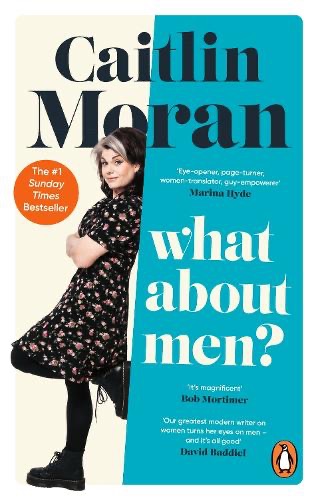
I am a huge fan of Caitlin Moran and have been since her NME days in the 1990s. Her How to be a Woman book is my go to gift for teenage girls. Her writing is frank, raw, informative and hilariously funny. She lays out her teens for us as she struggled with identity, menstruation, weight gain and having so many siblings exploring masturbation was almost impossible. She talks about the things no one talks about openly and with my book group it really opened up some difficult conversations. Here she takes a look at men, at a time where misogyny is a daily occurrence and men like Andrew Tate are inciting hatred of women online. Written before the recent drama Adolescence, she proposes it has never been a more difficult time to be a teenage boy. And, therefore, there has never been a more difficult time to be the parent of a teenage boy.

We’ve all read the headlines, boys are failing in education; facing a hopeless jobs market; getting their sexual education from violent pornography; and being endlessly targeted by online influencers who, yes, tell them to make their beds, and go to the gym – but also push dodgy cryptocurrency schemes, and think the best place for a woman is ‘working in a Romanian sex-dungeon’. She opens with a group of angry teenage boys claiming feminism has ‘gone too far’, and asks: what do boys actually mean when they say that? Are all angry boys, underneath everything, scared? What happens when your son becomes a fan of Andrew Tate? And why do one-in-ten gym-going boys say they’ve felt ‘suicidal’ about their bodies?

Having spent a decade writing about women, girls, and their problems, Caitlin Moran found that, in reality, boys and girls have more in common than they think. Women have spent decades trying to feel better about their bodies; trying to find positive role-models; and feeling angry, and scared, about their place in the world. If feminism has ‘gone too far’ is it because we have started to solve these problems? And, if so, what can boys, and men, learn from this? I am possibly the only person who hasn’ t watched Adolescence yet and I’d like to read this first.

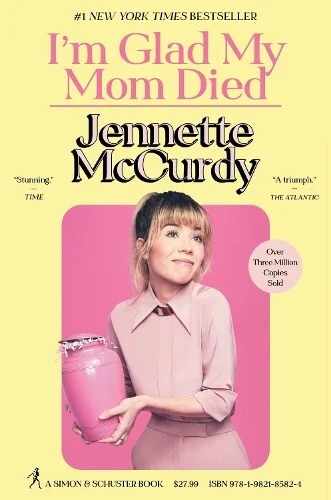
I’m a big believer, whether it’s with friends or in therapy, I’m giving people permission to say the unsayable. In fact this is probably most useful in my conversations with Mum who has to deal with a parent who’s definitely in denial and is so focused on appearing nice to others that it’s pretty much impossible to have an honest conversation. So we make an effort as I’m in middle age and she’s in old age, to be honest with each other and say ‘this made me angry’ or ‘that made me feel sad.’ I thought the title of this book was definitely one of those unsayable things! This memoir by iCarly and Sam & Cat star Jennette McCurdy about her struggles as a former child actor—including eating disorders, addiction, and a complicated relationship with her overbearing mother—and how she retook control of her life. 

I didn’t know Jennette until my stepdaughters explained she’d been acting since she was six years old when she had her first audition. Her mother’s dream was for her only daughter to become a star, and Jennette would do anything to make her mother happy. So she went along with what Mom called “calorie restriction,” eating little and weighing herself five times a day. She endured extensive at-home makeovers while Mom chided, “Your eyelashes are invisible, okay? You think Dakota Fanning doesn’t tint hers?” She was even showered by Mom until age sixteen while sharing her diaries, email, and all her income.

Jennette recounts all this in unflinching detail—just as she chronicles what happens when the dream finally comes true. Cast in a new Nickelodeon series called iCarly, she is thrust into fame. Though Mom is ecstatic, emailing fan club moderators and getting on a first-name basis with the paparazzi (“Hi Gale!”), Jennette is riddled with anxiety, shame, and self-loathing, which manifest into eating disorders, addiction, and a series of unhealthy relationships. These issues only get worse when, soon after taking the lead in the iCarlyspinoff Sam & Cat alongside Ariana Grande, her mother dies of cancer. Finally, after discovering therapy and quitting acting, Jennette embarks on recovery and decides for the first time in her life what she really wants. I received this for Christmas and I know I’m going to love it.

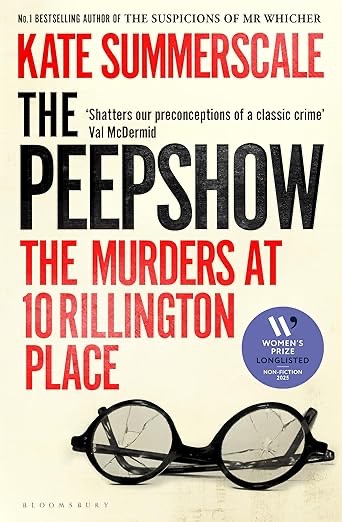
Another book I bought at Christmas, but I haven’t managed to read it yet. I had heard of 10 Rillington Place as a murder site but hadn’t read the story. In London, 1953. Police discovered the bodies of three young women hidden in a wall at 10 Rillington Place, a dingy terrace house in Notting Hill. On searching the building, they found another body beneath the floorboards, then an array of human bones in the garden. But they had already investigated a double murder at 10 Rillington Place, three years ago, and the killer was hanged. Did they get the wrong man?

A nationwide manhunt is launched for the tenant of the ground-floor flat, a softly spoken former policeman named Reg Christie. Star reporter Harry Procter chases after the scoop. Celebrated crime writer Fryn Tennyson Jesse begs to be assigned to the case. The story becomes an instant sensation, and with the relentless rise of the tabloid press the public watches on like never before. Who is Christie? Why did he choose to kill women, and to keep their bodies near him? As Harry and Fryn start to learn the full horror of what went on at Rillington Place, they realise that Christie might also have engineered a terrible miscarriage of justice in plain sight. In this riveting true story, Kate Summerscale mines the archives to uncover the lives of Christie’s victims, the tabloid frenzy that their deaths inspired, and the truth about what happened inside the house.

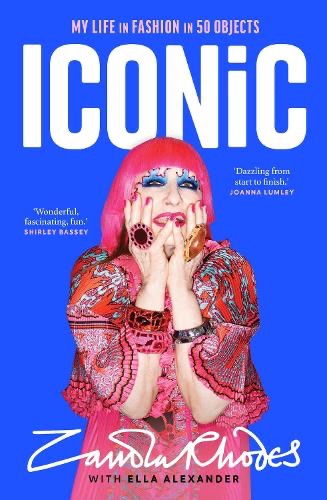
I love fashion and have quite a collection of fashion books, mainly from visiting exhibits and museums. Zandra Rhodes is fascinating because she’s an unapologetic maximalist. In this insightful memoir, Zandra shares her life story for the first time. Told through a variety of mementos collected over the years, it is a vibrant account filled with rockstars and royalty, of life-changing friendships and poignant reflections on her personal triumphs and tragedies, as well as the fears, sacrifices and pressures that come with being an era-defining designer.

Full of poignant reflections and life lessons on achieving success while defying convention, Zandra takes the reader right alongside her as she recounts being inspired by her avant-garde mother to her time at the Royal College, from a road trip to Rome with Ossie Clark and Celia Birtwell, to opening her first London store thanks to a kind loan from Vanessa Redgrave with Joe Cocker singing With a Little Help From My Friends, from hanging out with Andy Warhol and Halston in New York’s Studio 54 to lifelong friendships with legends such as Karl Lagerfeld and Diana Vreeland; from designing for everyone from Freddie Mercury to Diana Ross, Princess Dianato Barbra Streisand to founding the Fashion and Textile Museum.

Capturing the rich and unexpected life of a British icon, this memoir explores what it is to defy the norm.

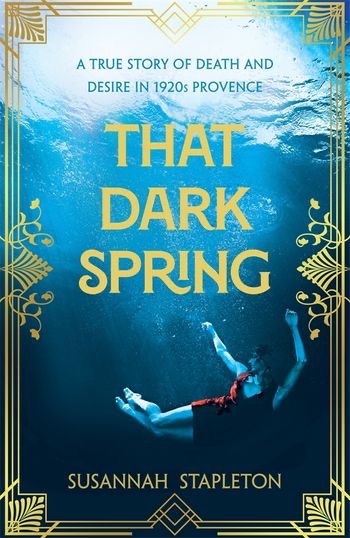
I must admit that the cover drew me to this book and I didn’t initially realise this was a true crime book. In April 1929, the body of British artist Olive Branson was found submerged in a water tank outside her farmhouse in a picturesque Provence village. Dressed only in a pink shirt and stockings, she had a bullet hole between her eyes and a revolver by her side.

Was it suicide – or murder?

The initial investigation concluded suicide, but under pressure from Olive’s family to conduct a murder enquiry, city detective Alexandre Guibbal was brought in to reopen the case. Examining never-before-seen evidence, acclaimed true crime writer Susannah Stapleton builds a vivid and absorbing picture of an unconventional life and a violent death, and an investigation that shines a bright light on a village simmering with resentments and dangerous rivalries . . .

On My Wishlist

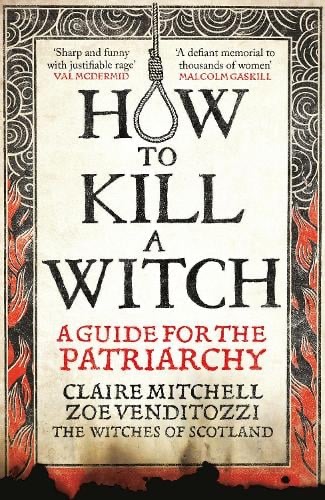
Last year I read two books based within the history of witch hunters in Scotland and I became fascinated with the truth behind these stories so I’ve been waiting for this to come out. As a woman, if you lived in Scotland in the 1500s, there was a very good chance that you, or someone you knew, would be tried as a witch. Witch hunts ripped through the country for over 150 years, with at least 4,000 accused, and with many women’s fates sealed by a grizzly execution of strangulation, followed by burning.

Inspired to correct this historic injustice, campaigners and writers Claire Mitchell, KC, and Zoe Venditozzi, have delved deeply into just why the trials exploded in Scotland to such a degree. In order to understand why it happened, they have broken down the entire horrifying process, step-by-step, from identification of individuals, to their accusation, ‘pricking’, torture, confessions, execution and beyond. 
With characteristically sharp wit and a sense of outrage, they attempt to inhabit the minds of the persecutors, often men, revealing the inner workings of exactly why the Patriarchy went to such extraordinary lengths to silence women, and how this legally sanctioned victimisation proliferated in Scotland and around the world. 

With testimony from a small army of experts, pen portraits of the women accused, trial transcripts, witness accounts and the documents that set the legal grounds for the hunts, How to Kill A Witch builds to form a rich patchwork of tragic stories, helping us comprehend the underlying reasons for this terrible injustice, and raises the serious question – could it ever happen again?

Out on 15th May from Monoray

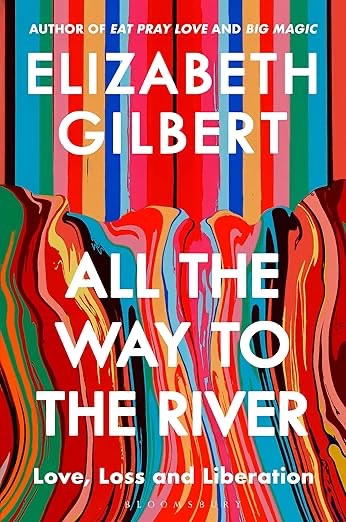
I loved Eat, Pray, Love when I read it and hoped Elizabeth Gilbert had found happiness with the man she met in Bali towards the end of the novel. Then I was vaguely aware that her life had become tumultuous. This memoir details that time. In 2000, Elizabeth Gilbert met Rayya. They became friends, then best friends, then inseparable. When tragedy entered their lives, the truth was finally laid bare: the two were in love. They were also a pair of addicts, on a collision course toward catastrophe.

What if your most beautiful love story turned into your biggest nightmare? What if the dear friend who taught you so much about your self-destructive tendencies became the unstable partner with whom you disastrously reenacted every one of them? And what if your most devastating heartbreak opened a pathway to your greatest awakening?

All the Way to the River is a landmark memoir that will resonate with anyone who has ever been captive to love – or to any other passion, substance or craving – and who yearns, at long last, for liberation.

Out on 9th September 2025 from Bloomsbury Publishing

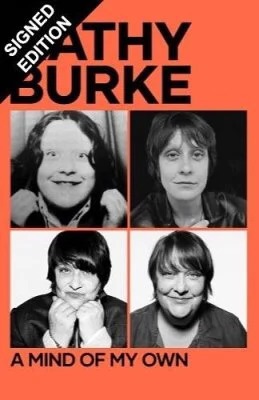
Who doesn’t love Kathy Burke? She’s an absolute treasure. I loved the documentaries she did for Channel 4. Just following her on X keeps me amused so the idea of a memoir is so exciting. There’s only a short blurb for this one but it’s already on my birthday list.

Even when she was a kid in Islington, Kathy Burke did things her own way. After gaining a place at the Anna Scher Theatre when she was a teenager changed the course of her life, she became an actor in 1982. By the mid-1990s Kathy was a household name. Whether you know her as the beloved Perry, for her award-winning acting, or for being proudly woke and calling out tw*ts on social media, Kathy has always had a mind of her own. Funny and wise, this is her memoir.

Out on 23rd October from Gallery UK

Posted in Publisher Proof

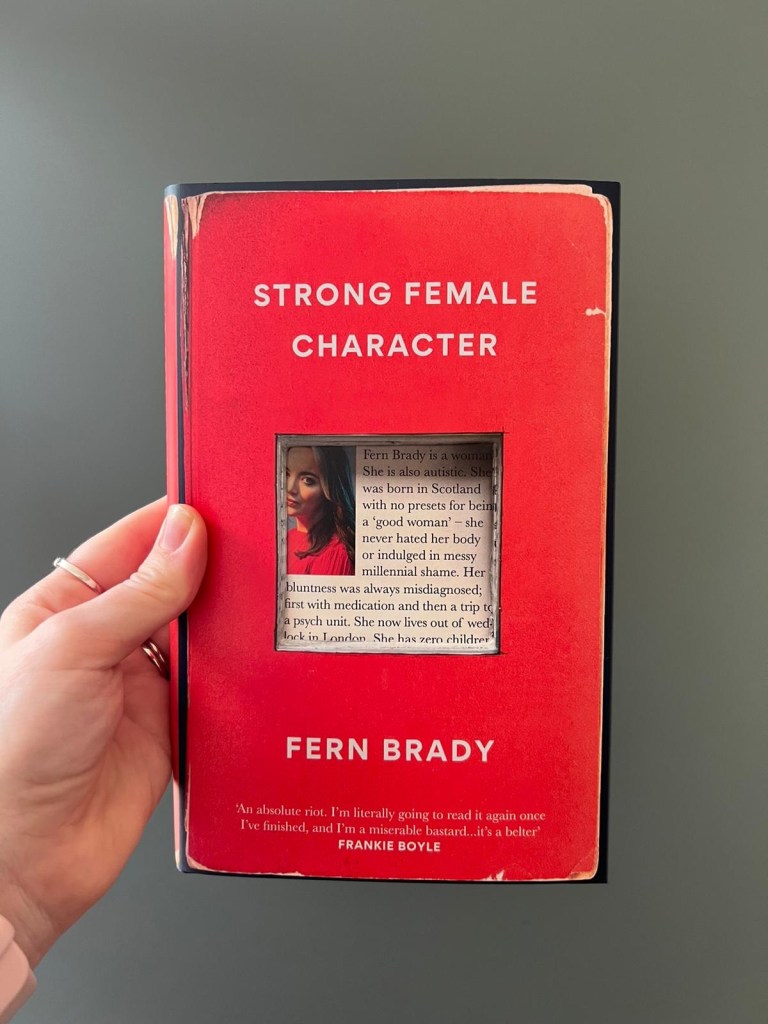
Strong Female Character by Fern Brady

When I received an email asking if I’d be interested in a finished copy of Fern Brady’s memoir I was typing ‘Yes please’ before I’d even finished reading the email. Something about Fern made me sit up and take notice when I was half-watching a late night showing of Live at the Apollo. She was such an interesting mix of intelligence, wit, forthrightness and that little bit of indefinable magic that captures an audience and takes them with you. By the time she appeared in Taskmaster I was a big fan. If you listen to my partner, this was because of her approach to tasks, which is very like my own. She dissected tasks in a very analytical way that was completely obvious to her, then when her team mates didn’t catch on (quite often in one case) she would speak to them as if they were insufferably stupid. Apparently the look in Fern’s eyes and her tone of voice reminded him of me watching a quiz show or reality series. Every Monday I become inexplicably wound up by Mastermind, especially when contestants pass questions instead of just throwing an answer out there. It’s obvious to me that if passes count against you in the tie-break situation, it would be better to simply shout ‘banana’ if you don’t know the answer. They might look stupid but they’d have no passes. So I guess I felt something of a kinship with her and the way our brains work, although in other respects we couldn’t be more different.

I had heard that Fern was recently diagnosed as on the autistic spectrum, a very hard won diagnosis for women and something I’ve had some experience of in my mental health work. Any mental health team has it’s share of people who are neuro-divergent, especially older people whose schools were simply unaware of the condition, whatever gender the individual might be. I’ve seen first hand the devastation that can be caused by undiagnosed autism. The inability to fit in at school, the crippling ‘shyness’ that leads to bullying, subsequent depression and anxiety, institutionalisation from long periods on psychiatric wards, coping strategies such as self-imposed isolation, drinking or drug taking. Then all the social issues that come along with these difficulties, like struggling to find or keep employment, poverty, neglect or even being preyed upon by those in society who look out for people to cuckoo or subject to modern slavery. This may sound extreme to some, but I’ve personally seen all of the above happen to people who were not diagnosed early. Not that diagnosis is the cure for all of these terrible life circumstances, but labelling does help because it enables the individual to access benefits, housing, support and some degree of protection in society. Fern was one of these people, born in an era when diagnosis was more common, but usually reserved for boys. The problem is that autism looks very different in women – women don’t fall into the Sheldon Cooper, no girlfriend, obsessive, Star Trek loving, nerd stereotype.

Fern was diagnosed exactly twenty years after she first told a doctor she had autism. Prior to that doctors told her she couldn’t possibly be autistic because she made eye contact and she’d had boyfriends (as if the ability to maintain a heterosexual relationship inoculated you from being neuro-divergent). One night after performing, Fern told her boyfriend that an audience member thought she might have Asperger’s and she should read a book called Aspergirls. She wasn’t sure she wanted to, but as her boyfriend started to read up on it he said to her ‘this is an exact description of you’. Often the signs of autism are simply missed in women because we have become too good at disguising or masking how we truly feel in a situation. Women are able, particularly in a work environment, to put on a mask. For example, all through school and university I was terrified of public speaking. I didn’t want everyone’s eyes on me, I would start to feel hot, sweaty and go completely purple in the face. Eventually I became so embarrassed about being purple in the face I became anxious about that too. These symptoms were exacerbated by a terrifying exercise at the beginning of teacher training where we had to pick a song that told a story and then sing it, unaccompanied in our seminar group. I felt like my mum’s pressure cooker, shuddering with heat and pressure until it gave a high pitched whistle and she would let the steam out. It felt like that but with nobody on hand to release the pressure. When things like this happened and even now when I’m involved in confrontation I’m right back there sweating, with a face like a giant blueberry. I didn’t last a term. However, if I am teaching a whole class of people, like one of my therapeutic writing workshops, I barely break a sweat. I have put on the mask of an expert, someone who knows what they’re talking about and how much it can help. So, as an expert, I can do the task.

Fern struggles to fit in wherever she goes in life, whether it’s school, college or work. She can’t fathom the unspoken social codes that govern our existence, especially in groups of women. Her obsessions are not the archetypal trains, sci-fi or comics. As a child she was obsessed with learning languages, culminating in a successful application to Edinburgh University to study Arabic and Persian. She had no desire to visit the countries where these languages were spoken, she just loved doing verb drills and was running out of languages. She played the piano incredibly well at a young age too, but because these were seen as ‘positive’ pastimes it never occurred to anyone to label them as autistic tendencies. She funded her studies at university by stripping, somewhere she felt that she fitted in. Although that was probably due to the fact that most stripper’s dressing rooms have their fair share of misfits. She didn’t have to be herself in the club, she put on a persona and got on with it. The early years of her comedy career were harder, mainly because there were more social codes to navigate, such as having to pretend she would like to have coffee and ‘get to know’ someone instead of just asking if she could be considered for a panel show slot. Sometimes it felt as if people wasted years playing games just to work with someone, when a simple ‘do you want to work together?’ Would have sufficed. She noticed that people didn’t like her to be so direct, particularly standing up in meetings and asking what the point was? This was something I used to do regularly in my last job as an advocate for people with disabilities. I had a huge case load on part-time hours so if someone called a meeting with no obvious point I would ask if they could quickly get to the point so I could assess if it was worth me sitting there. I remember saying that I’d like to get back to my desk and ‘do some real work’. I was there for the clients who needed me, not my colleagues. In hindsight I can see why our receptionist was terrified of me.

I loved the honesty of this book. Fern is brutally honest, even about those things that perhaps don’t show her in the best light. Her frankness about the autism, but also the mental health problems and addictions she experienced as a result of remaining undiagnosed, is admirable because it will help people who are in that destructive cycle. Her teenage years are particularly fraught and painful to read, mainly because she’s totally misunderstood by those who are supposed to love her. I found Fern’s retrospective take on those years and her post-diagnosis discussion with her mother was particularly moving. Fern is staunchly feminist and I loved that her inability to read social cues meant she didn’t internalise some of the bullshit that still exists in society about how women should behave. When in a shared flat at university, her flat mates basically slut-shamed her for having too many men at the flat. Hilariously, Fern replies that there seven days in a week and she’s shown restraint by only bringing a man back four times. There are other laugh out loud moments like this, where Fern is more than happy to create humour from her situation. There were some similarities in religious upbringing that resonated with me and made me smile.

This is not the typical redemptive narrative arc memoir where someone transcends their illness/situation in order to tie up any loose ends and become the ‘superhuman’ that we should all emulate. I have a disability and this is a narrative trope I can’t stand to see in disability memoirs. People don’t overcome a permanent disability, whether it’s visible or invisible; physical or mental. We learn to accommodate it and live alongside it if we’re lucky. Fern shows that beautifully by describing her difficulties working within her industry with her diagnosis. She describes the Taskmaster experience brilliantly and it’s refreshing to read a celebrity admitting to ongoing issues with their health. It’s more of that brutal honesty she’s famous for and it helps to know that what we see on TV doesn’t come without it’s difficulties, particularly the meltdowns which are a result of the stresses and strains of filming. As you can probably tell I identified strongly with this book and I have wondered if it might be worth mentioning to my GP that I have struggled with social codes; have been told that people are scared of my rather forthright opinions and ideas; have physical crashes after periods of stress; avoid parties; have repetitive mind games or movements that calm me and help me go to sleep; prefer to deal with people in writing; watch repetitive programs that are calming to me; prefer to see friends one to one rather than socialise in groups of women. These may just be personality quirks, but I have wondered and could see how a label might help me understand some of my behaviours. I really welcomed Fern’s story in terms of understanding myself better, whether diagnosed or not, but I also admired her ability to bare her soul and find the funny in her difficulties.

Meet the Author

Fern Marie Brady (born 26 May 1986) is a Scottish comedian, podcaster, and writer. Before becoming a stand-up comedian Brady worked as a journalist. She achieved fame as a stand-up comedian by entering stand-up competitions such as at the Edinburgh Film Theatre. As a result of her success as a stand-up she was invited on to comedy panel shows such as 8 Out Of Ten Cats. In 2020 she became a podcaster when she co-created a podcast entitled Wheel of Misfortune.

Brady was diagnosed as being on the autistic spectrum in 2021, as an adult. She has been active within the field of autism education since learning of her diagnosis. She has written how she has been dealing with the diagnosis in her 2023 memoir Strong Female Character.

Posted in Random Things Tours

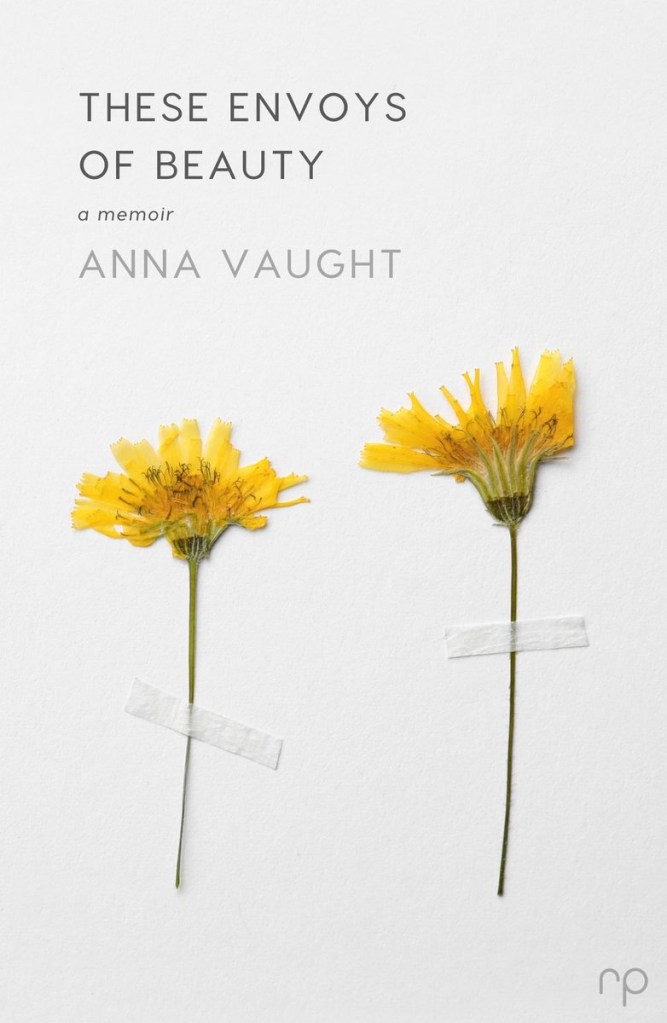
These Envoys of Beauty by Anna Vaught

It was only yesterday on the blog that I was welcoming spring by talking about a book of poetry aimed at helping people with their mental health. Nature was one of the main ways we could boost our well-being, so it seems very fitting that I was also reading this beautiful memoir by Anna Vaught where she shares her very personal mental health journey and how nature became her best coping mechanism from a very young age. The book is made up of a series of essays, each one beginning with a quote from Ralph Waldo Emerson’s Nature including the book’s title.

If the stars should appear one night in a thousand years, how would men believe and adore; and preserve for many generations the remembrance of the city of God which had been shown! But every night come out these envoys of beauty and light the universe with their admonishing smile.

Ralph Waldo Emerson. From Nature, Chapter One.

His words bring a sense of wonder to the natural world, and if kept and nurtured, that sense of almost childlike wonder is an amazing antidote to the hurried and stressful way of life we now have. In fact if we still have that ability to stop and be with the natural world around us, it becomes a time out of time. We come out of those moments and back to reality amazed at how much time has passed and how everything else in life receded and allowed us that enjoyment. As some of my bookish friends know, I have recently been struggling with my mood due to the frustration of having a multiple sclerosis relapse. While I am in pain and battling fatigue, my very busy brain is desperate to carry on writing my book. Basically my body can’t keep up with the breadth of my imagination and the desire to put it down on paper. Yesterday, we drove to our local farm shop and on the way home we passed a field that’s had a winter crop harvested and is only just growing a short covering of grass. From a distance away I suddenly saw two young hares – my favourite animal – chasing each other, weaving and winding around each other at speed then every so often stopping to stand on their hind legs and attempt to box. We pulled over and for a short while we lost ourselves watching these mystical creatures performing the rituals of their ancestors. My partner commented on how my face lit up while watching them, possibly because one of my earliest memories involves a leveret found by my dad that I was able to hold in my palm. I remember the softness of it’s fur, the cartilage of it’s ears and the way the light shone through the pink inside of the ear to show blood vessels coursing their way through.

Like Anna Vaught’s family we were rural working class, with my father either a farm labour or working in land drainage – a very important role in Lincolnshire where the 14th Century system of dykes designed by Vermuyden still keeps the county’s land drained for farming. As children, my brother and I would leave the house in the morning and not return till late afternoon. Vaught’s description of her childhood reminded me of those days where we would lie and read in trees, suck the nectar from sweet nettle flowers and watch the wildlife. I was obsessed with the Country Diary of an Edwardian Lady, so while my brother was fishing I’d do botanical sketches of foxgloves, campions and cow parsley. These countryside hours feel idyllic, but the truth was my mum struggled with untreated depression till I was a teenager. Since then my brother and I have both had our own bouts of depression, but thanks to better treatments and to my training in mental health I had the skills to know what was happening and ask for help. I have also developed my own toolbox for days when my mental health and physical health are having a battle with each other. Like the author, spending time in nature is definitely a large part of that. I truly bonded with this incredible, honest and moving book and was profoundly moved by the author’s decision to share her more painful life experiences. This is partly why my response is also very personal.

The author bases each chapter on a plan, such as Rosebay Willowherb or lichen and moss. She writes about the wonder of each living thing, but it’s also a kicking off point for her own memories and feelings at the time. She writes a deeply moving section in the first chapter where she admits that she was reciting the Latin names of plants in her head to calm herself and try to get to sleep. She told many different adults – the dinner lady, the teacher, the vicar – that she felt compelled to say them out loud ‘so as not to make the dreadful thing happen’ possibly the emergence of OCD. These little glimpses of the child Anna show how lost and unsafe she felt with her parents:

If, as a child you are surrounded by a sort of passionate morbidity, by a frightening psychiatric incident in the family – which is frightening because it is spoken of behind closed doors and euphemism – it may be that you need to latch on to things around you which provide stability and reassurance. Much of this was in the natural world for me.

P26

Vaught is open, raw and deeply moving in the sections where she writes about her childhood experience and it is worth mentioning that the book contains childhood mental illness, emotional abuse, suicide, depression and anxiety. She places her own warning for these subjects at the beginning of the book so I felt they were worth mentioning here. It is emotionally devastating to read someone crying out for help, but receiving nothing from the people expected to care for her most. She describes feeling dissociated, cut off from the world and the people in it as if she was living behind a sheet of glass. She writes quite bluntly that her parents did not talk about it or try to help her. Her mother’s view was the depressed people were indulging themselves. Teenage moods and PMS were imaginary and people who professed to be mentally I’ll had ‘failed to control themselves.’ I felt this in my core. To be so dismissed and gaslighted to this extent in your own family must be devastating to self – esteem and leaves you questioning and testing yourself permanently. She writes that she felt, not just unwanted, but a malevolent creature that might easily do someone harm, an idea that meant making friends and keeping relationships with extended family was quite difficult. It was also instilled in her that it wasn’t just her mum, that other family members and visiting friends had notice she was different too. Her father was distant, but when she was allowed to go out with him she felt chosen and would chatter away to him, probably making up for lost time, until he would snap and tell her to be quiet. On one occasion telling her that they preferred to spend their time with their ‘Number One Son because he listens and likes to be with us, and he never says a word. And you should know you are here under sufferance.’ How crushing must it have been to hear that, especially with her mother so angry with her, something she can only say now after years of therapy.

However, this is far from a misery memoir. I would say it is a story of resilience, of finding the things that boost it and removing from your life those things that crush your spirit. She provides possible mindful exercises that might calm and lists the places she finds most inspiring to visit and experience nature. She signposts the reader to other books that might give you coping mechanisms, while being mindful there is no one size fits all approach because we are all very different. One thing that caught my eye was something I have taught to my groups with chronic ill health and pain; that even in the depths of depression we must be mindful without our bodies and our emotions. We must observe how depression is making us feel both physically and emotionally. What is it about the weeks leading up to this bout of illness that you notice? Were you under stress at work? Were there financial pressures? Were you worried about someone else in your life? Then also make notes on what you did during the worst weeks that made you feel okay? Which strategies brought calm when your mind was spiralling with anxiety? Which people were the best to have around and vice versa? So in this way, a bout of depression or mental ill health has taught us something – what are the best ways to live that might help boost our resilience in the future? As with illnesses like MS, M.E. and various types of chronic pain, stress does worsen symptoms. Using these personal strategies may not totally remove the mental or physical ill health, in fact we may live our lives in seasons ( I always know I will have a short relapse in spring and another in the autumn) but we can be resilient, we can keep in mind that despite being in the depths of winter we can always come out the other side. This is one of the main lessons that the author has always taken from nature, it’s ability to heal itself and come back in the spring. We have faith that at this time of year, plants will start pushing through and now the hellebores and snowdrops of late winter are giving way to tulips, daffodils and bluebells. We plant our brown, unpromising bulbs in the late autumn into cold soil with complete faith they will push through and bring us joy, just when the winter has seemed so long.

If you can cope with the internal winter of depression then depression can be your friend’.

P 117

Not that we would wish depression on anyone, but that it can be a learning experience. It can teach us how to manage the next time it recurs and realise that even a life with limits has richness. This is something I’ve taken on board while reading and it started me off writing a short journal piece about what my bouts of MS can teach me and again it’s resilience. That just as it’s sure to happen again, I can also be sure that it will pass. I can use it to rest, to read and scribble notes, perhaps even to read solely for pleasure. My relapses are simply my body’s winter. To finish I loved her reference to Wilson A. Bentley who lived in Vermont and gave a great deal of his life to studying snowflakes, a natural phenomenon that’s so transient, simply melting away as though it never existed. Bentley felt they were a reminder of how transient earthly beauty can be, but that rather than rendering his study of them pointless, it made it more special because:

‘In the ephemeral nature of phenomena, however, he also found comfort, because while the beauty of the snow was evanescent, like the seasons or the stars he saw in the evening sky, it would fade but always come again.’

Introduction, The Envoys of Beauty.

Meet the Author.

Anna Vaught is an English teacher, mentor and author of several books, including 2020’s Saving Lucia. She has also written a short story collection, Famished. She is currently a columnist for MsLexia and has written regularly for The Bookseller. Anna’s second short fiction collection Ravished was published by Reflex Press in 2022 and 2023 will see five books including this one published across Europe. She volunteers with young people and is founder of the Curae prize for writer-carers and edits it’s journal. She works alongside chronic illness and is a passionate campaigner for mental health provision. Anna is published by Reflex Press and is currently working on another novel.

Posted in Random Things Tours

The Marmalade Diaries by Ben Aitken

I was so charmed by this wonderful book about writer Ben and his unusual experiences during the COVID lockdowns. Something I could truly understand as the lockdowns bonded me with my partner and his two girls at a speed and depth that couldn’t have happened at any other time. Ben is looking for a new place to live, when through a charity scheme he sees an apartment in a great part of town. There’s one catch. He will have a housemate. The charity places younger people in homes belonging to the elderly. The aim is to help the homeowner stay independent and in their own homes far longer than normally possible and in houses with way more room than they need. Winnie is 85 years old and a formidable woman with very set opinions about how things are done. Winnie doesn’t suffer fools and isn’t very gentle with her criticism. There’s a gulf between the pair in so many areas: their politics, their class and their ages. How can two people with so many differences live together harmoniously?

This is a book that can be read so quickly. It’s in a diary form so there’s always that temptation to read just one more entry. Ben’s previous work has been travel writing and he brings all of those skills to this book. Physically he’s in the same place, but he’s taking a voyage into this person, seeing her like no one else has and experiencing her in very different types of weather. Winnie is grieving her husband of 65 years. Henry died suddenly, in their marital bed upstairs, less than a year ago so she’s in a very emotionally vulnerable state. Of course Winnie doesn’t seem terribly vulnerable, unless you count ‘busyness’ as a response to grief. I think Winnie has always been a busy person, possibly through anxiety or perhaps a work ethic instilled by her upbringing, but this has been exacerbated by living alone. Her son Stewart and his family tried to move in for a few months over summer, but that didn’t work out and fairly quickly Ben can see why. Imagining that he would largely live upstairs and help when called upon, he’s surprised that as soon as they’re alone Winnie asks him what he’s cooking for tea? The apartment has a small kitchen, but it seems Winnie expects him to cook and eat with her downstairs. Not that these meals are appreciated, with Winnie dishing out critique that would seem harsh on Masterchef.

As soon as the dishes are cleared she lays the table for breakfast and lays it for two – something she says she still does without thinking. Ben gets into the habit of lighting the fire and then having breakfast, although there are rules to be observed here. Winnie makes her own marmalade, but only once a year when the Seville oranges are available, so she puts only the thinnest scraping of marmalade on the toast to make it last. Heaven forbid they run out and have to buy some. That wouldn’t be on at all. Eggs have a language all their own, with certain specimens warranting their own message written on the shell in pen and left in the fridge. One rather philosophically asks whether it is cooked or not? Another has been giving her nightmares because he’s ‘been harbouring it for yonks.’ It was her wry little comments on the newspaper that made me giggle. When she sees a picture of comedian Matt Lucas in the paper, she observes ‘well he won’t survive the pandemic’. She’s also remarkably cunning, willing to pull out the poor little old lady card when its to her advantage and let people think she didn’t hear or understand them. When she asks Ben to let the coal man through the side gate one day, there’s a misunderstanding about the delivery. Ben indicates they need it tipping into the bunker (an extra £10) but Winnie has only paid for it to be dropped at the edge of the property. Ben wonders if she’s forgotten or misunderstood, but the coal man says no, she does this every time. Once the coal is safely in the bunker and an extra invoice issued Winnie miraculously appears and denies all knowledge of the problem.

There’s some beautiful observation around the family, because Ben is in the perfect position to analyse their relationships as an outsider on the inside. Out of her three children, it is Arthur who seems to have her heart and most of her time. Arthur lives in a group home within walking distance for Winnie and even in a pandemic she’s not going to stop taking him the paper, the fruit from the garden or a daily yoghurt. Once a week she spends a good hour cleaning out his electric shaver, which always looks like he’s pruned the garden with it. Arthur had cerebral palsy and had a traumatic birth where Winnie’s pelvis was cut to get him out before he was deprived of any more oxygen. Maybe it’s his vulnerability due to his disability, or that shared traumatic experience right at the start of his life, but Winnie doesn’t seem complete until Arthur is there to look after. The other two children seem to have accepted this arrangement, but there is some underlying resentment, especially when it comes to Winnie forgetting theirs and their children’s birthdays. For Stewart and his family, their far more relaxed way of being clashed with Winnie’s distrust of anyone in bed past 9am, people who have their marmalade more than wafer thin and people who lounge for more than ten minutes without a schedule for their next task.

I guess Winnie is selfish in a lot of ways, she’s not self-aware and really finds it hard to prioritise other people’s way of doing things. Some of her habits would have driven me to distraction, particularly her ability to pick up new tasks just as it’s time to leave the house. Even after making a plan she could leave her housemate waiting for hours because the roses needed deadheading. My other half has a similar ability to be doing one thing, cooking tea for example, then pick up a second job that didn’t need prioritising, such as reprogramming the TV channels or syncing the car with his new phone, often leaving tea to burn to a cinder. So I felt Ben’s pain, but also understood the deep connection he started to form with this formidable woman. I feared what would happen when the arrangement came to an end and I found the ending so poignant. Ben’s feeling that he knows this person better than anyone, that her idiosyncrasies are just that and not a sign of something more sinister is beautiful considering where they started. A deep friendship and respect has formed, despite their difference in age and outlook. The pandemic and it’s lockdowns have bonded them in a way that couldn’t have happened at any other time. We fall in love with the Winnie he sees, without rose-tinted spectacles or sentimentality, and I think that’s the greatest compliment he could have given her.

Published by Icon Books 10th March 2022

Meet The Author

Ben Aitken was born under Thatcher, grew to 6ft then stopped, and is an Aquarius. He followed Bill Bryson around the UK for Dear Bill Bryson: Footnotes from a Small Island (2015) then moved to Poland to understand why everyone was leaving. A Chip Shop in Poznan: My Unlikely Year in Poland (2019) is the fruit of that unusual migration. For The Gran Tour: Travels with my Elders (2020), the author went on six package coach holidays – Scarborough, Llandudno, Lake Como et al – with people twice or thrice his age in order to see what they had to say for themselves and to narrow the generation gap a notch. The Marmalade Diaries (2022) is the story of an unlikely friendship during an unlikely time, and stems from the author’s decision to move in with an 85 year old widow ten days before a national lockdown.

Posted in Sunday Spotlight

Sunday Spotlight! Great Celebrity Memoirs.

I’m not a usual reader of celebrity memoirs. I know there’s a certain snobbery in bookish circles for the celebrity memoir, so I thought I’d get that in there before you click away to another blog. I’m all for whatever gets people reading to be honest, but it’s a rare book that sits above the usual ghost written Christmas fare. These are memoirs that sit above the ordinary, that have touched me emotionally or made me laugh, that have surprised me with the beauty of their writing or their inventiveness, or even revealed incredible stories that kept me gripped to the final page. Some you may have heard of while others are lesser known, but just as compelling.

Patient by Ben Watt.

‘In the summer of 1992, on the eve of a trip to America, I was taken to a London hospital with bad chest pain and stomach pains. They kept me in for two and half months. I fell very ill – about as ill it is possible to be without actually dying – confronting a disease hardly anyone, not even some doctors, had heard of. People ask what was it like, and I say yes, of course it was dramatic and graphic and all that stuff, but at times it was just kind of comic and strange. It was, I suppose, my life-changing story.’

Benn Watt is half of the band Everything But The Girl and his short memoir covers a period when his bandmate Tracey Thorn was also his partner. In 1992, when I was taking my ALevels and listening to his band, Ben contracted a rare life-threatening illness that baffled doctors and required months of hospital treatment and operations. This is the story of his fight for survival and the effect it had on him and those nearest him. I recommend this book because it is beautifully written and captures the feeling of being seriously unwell perfectly. He describes coming institutionalised, so in sync with the day to day running of the ward that he could tell to the second when the newspaper lady was going to enter the ward. I love his play on ‘Patient’ as noun and verb at the same time, the patience it requires to endure the diagnostic process and to cope with what I call ‘hospital time’ – where ‘I’ll be a minute’ means half an hour. Only two years after his book is set, I was going through my own lengthy periods of hospitalisation, enduring unpleasant tests and realising there are limits to medical science. It’s an incredibly scary place to be and Ben conveys that so well, as well as the strange feeling when discharged when the patient goes from totally dependent to alone. I remember after a lengthy hospital stay, sitting in my flat thinking it was getting close to mealtime and that I was hungry, then a second later realising I had to make my own food! What he captures best is the realisation that what he expected to be a short interlude in his life, is actually becoming his life. The narrowing of his horizons from someone who toured the world to a resident of a single ward, or even to an individual bed.

Ben Watt

Red Carpets and Other Banana Skins by Rupert Everett

I became fascinated with Rupert Everett after seeing him on Graham Norton’s chat show and finding him both hilarious and painfully honest, both about himself and others. I loved his wit and comic timing in My Best Friend’s Wedding and especially in the Oscar Wilde films he starred in. I was pleased to find he was a devotee of Wilde, who wanted to make an honest film about his later life. My best friend from university always sends me a book at Christmas and I was lucky enough to receive a signed copy of his second memoir Vanished Years. I made sure I found a copy of his first memoir above so I could read them back to back. They both lived up to my expectations. I seem to remember first noticing him in conjunction with Madonna back in the 80’s and he had come across as a pretty boy in that context, but there is so much more to that rather spoiled exterior. His performance in Another Country was exceptional and his eventual film of Oscar Wilde was extraordinarily moving, but it is the drama of his private life that has attracted more attention than his talent. These memoirs show that he has always been surrounded by interesting and notorious people, becoming friends with Andy Warhol by the time he was 17. He has been friend to some of the most famous women in the world: Donatella Versace, Bianca Jagger, Sharon Stone and Faye Dunaway. This notoriety and films such as Dunstan Checks In overshadow incredible work with the RSC and I finally saw him shine on stage in the West End as Professor Higgins in Pygmalion.

I have always known, from his interview with Graham Norton, that Everett is a raconteur, but these memoirs show he can write a great story too. He has an uncanny ability to be at the centre of dramatic events: he was in Berlin when the wall came down, in Moscow at the end of Communism and in Manhattan on September 11th. The celebrity stories are deliciously gossipy and terribly honest. It seems Everett doesn’t hold anything back, whether he’s lampooning someone else or himself. His second memoir is again mischievous, but also touching with stories from childhood and early life. He takes the reader on an amazing journey around the world and from within the celebrity circus from LA to London. I loved the addition of family stories, such as a pilgrimage to Lourdes with his father that is both hilarious and moving. There’s a misguided step into reality TV that goes horribly wrong. A lot of celebrity authors are easy on themselves, writing solely from their own perspective rather than presenting life objectively. Everett is unfailingly honest, presenting his flaws and tragedies with the same scrutiny and irreverence he gives to others. Both books are incredibly enjoyable, a journey with the best and most disreputable storyteller you will ever meet.

Rupert Everett as Oscar Wilde

The Storyteller by Dave Grohl.

One of my favourite video clips recently was of the Westboro’ Baptist Church protesting outside a Foo Fighter’s gig. Then with perfect timing around the corner came a couple of majorettes, followed by a flat bed truck with a band playing The Beatle’s ‘All You Need Is Love’. On the back stood Dave Grohl with a microphone, shouting out their love for the protestors. I’ve always known that Grohl was a good guy and despite only enjoying some of the Foo Fighter’s music I’ve always thought he was an interesting and enlightened person. I’ve also wondered how he recovered following the suicide of Nirvana front man and personal friend Kurt Cobain, an event that stood out in my mind in the same way the death of John Lennon did for my parents. I loved Grohl’s humour and willingness to make an idiot of himself. My best friend and I rewatched the Tenacious D video for Tribute where Grohl is painted red and given an amazing pair of horns as Lucifer. I was bought this book last Christmas by my stepdaughters. However, it was only recently, after the death of another bandmate and friend Taylor Hawkins, that I picked it up and read a few pages every night in bed.

Grohl addresses my reservations about about celebrity memories straight away, stating that he’s even been offered a few questionable opportunities: ‘It’s a piece of cake! Just do four hours of interviews, find someone else to write it, put your face on the cover, and voila!’. Grohl writes his early experiences with fondness and an obvious nostalgia. He found the writing process much the same as writing songs, with the same eagerness to share the stories with the world. He has clearly linked back to old memories and emotions, feeling as if he was recounting ‘a primitive journal entry from a stained notebook’. He has definitely embraced the opportunity to show us what it was like to be a kid from Springfield, Virginia with all the crazy dreams of a young musician. He takes us from gigging with Scream at 18 years old, through his time in Nirvana to the Foo Fighters. What’s lovely is that same childlike enthusiasm while jamming with Iggy Pop, playing at the Academy Awards, dancing with AC/DC and the Preservation drumming for Tom Petty or meeting Sir Paul McCartney at Royal Albert Hall, hearing bedtime stories with Joan Jett or a chance meeting with Little Richard, to flying halfway around the world for one epic night with his daughters…the list goes on. We may know some of these stories, but what he promises is to help us reimagine these stories, focused through his eyes. I’ve seen reviews that claim he has glossed over or withheld some of the truth of his experiences, particularly around Kurt Cobain with Courtney Love absent from proceedings. I don’t think this is being disingenuous, I think this is what Dave Grohl is like – generous, humble and honest with regard to his own take on events. Perhaps he feels other people’s stories are their own and not his to tell. I was so impressed with how grounded he is and how aware of the most important things in his life: his family; his daughters; his friends; those who remind him of where he’s come from; and lastly, his music.

On Writing: A Memoir of the Craft by Stephen King.

Stephen King begins this memoir with the accident that he says has made the last twenty years of his life an incredible gift. With some humour he recounts being on his four mile daily walk and taking a break to relive himself in the woods. As he was returning to the road, a van driver was simultaneously trying to prevent one of his dogs rummaging in a beer cooler. This unlucky coincidence meant King was in a position to be struck as the van swerved off the road. A man who witnessed the crash watched as the impact threw King up and over the van, smashing the windscreen with his head and propelling him into a ditch 14 feet away. Local man, Donald Baker, found King ‘in a tangled-up mess, lying crooked, and had a heck of gash in his head. He kept asking what had happened.’ The van driver seemed devoid of emotion or panic, claiming he thought he’d hit a deer until he noticed King’s bloody glasses on his front seat. In a strange parody of his bestselling novel Misery King was left hospitalised with a shattered hip and pelvis, broken ribs, a punctured lung and fractured femur. The driver died only one year after the accident, from unrelated causes. It took King months to recover, with some limitations remaining to this day.

This strange hybrid book comes out of that time, from that trauma which affected him mentally as well as physically, back to his childhood, his early adult life, his marriage and the drinking that nearly cost him his relationship. If people read this hoping to read a masterclass or a shortcut to writing a bestseller, they’ll be disappointed. You don’t need a fancy masterclass to be a writer, you simply need to write. However, he does explore his own process and influences. There’s some practical advice on character building and plotting, showing how a spark of an idea was turned into Carrie. He also talks about pace, plots and presentation of a manuscript. He talks about he origins and development of certain books and uses examples of other writer’s work to illustrate what he’s advising. What he can’t do is identify that magic or spark that made him a No 1 bestseller for almost half a century. I enjoyed his stories about his early adult years when he was struggling financially, but was so persistent. The jobs he had to take to support his family, when the writing simply wasn’t paying. He was teaching by day and writing in the evenings. He also talks about the perceptions of him in the industry, perceptions I have always thought unfair, that despite incredible economic success and prolific output, he will never be considered a good writer. I loved his advice to write in a room with blinds and a closed door, if you’re not distracted by a view it is easy to disappear into a vista of your own making. He also plays loud rock music, but that wouldn’t be for me, I need silence or calm background music, no TV and no talking. It’s true that every writer needs their own best conditions for writing – although a closed door with no interruptions seems universal – you will need to find your own process. However, I do think he hits upon something important about life, like Dave Grohl, and that is the importance of family to ground us and stand by us while we create and especially when economic success does come.


Posted in Sunday Spotlight

Sunday Spotlight! Memoirs and Other Non-Fiction Lifesavers

I’ve been struggling over the last couple of weeks, probably since the procedure on my back and short term increase of medication, I’ve struggled to connect fully with a book and to remember all the plot points in those twisty – turny thrillers I usually love. Often when I’m like this I find the best thing to read is non-fiction, which in my case usually means history or memoirs. So for the next few Sundays I’m going to feature some of the non-fiction books I’ve enjoyed and those that have changed my life.

An Evil Cradling by Brian Keenan

I wouldn’t have read this amazing piece of writing, had it not been set for my Autobiography class at university. It is an absolutely stunning book, for it’s story, it’s language and how Keenan tries to hold on to his sense of self when everything that normally defines us is stripped away. The Irish writer was teaching in Beirut in the 1980’s, when he was taken hostage by Shi’ite Militia Men, he was held for four years, much of his time with the British writer John McCarthy. What Keenan manages to do is convey the fear, the indignities, the atrocities and the endless hours of waiting. He muses on what it is that makes us ‘us’. Usually when we are asked what makes us who we are we tend to list the foods, music, sport or pastimes we love. I might feel defined as a rock music fan, who loves Italian food, Woody Allen films and reading novels. However, if we imagine all those things taken away, who do we become? While keeping us abreast of day to day events, Keenan goes inside himself to ask who he is when he isn’t observed or compared to another. He has to consider whether it is easier to let his psyche split into many different pieces that may be impossible to assemble should he survive? Or should he try to keep his sense of a cohesive self, if indeed there is one, and if he reminds himself daily of who he is will it help him survive. It’s hard to imagine the situation Keenan is in and how deprived he is of sensory information, so much so that just seeing an orange inspires this passage:

‘I want to bow before it. Loving that blazing, roaring, orange colour … Everything meeting in a moment of colour and form, my rapture no longer abstract euphoria. It is there in that tiny bowl, the world recreated in that broken bowl. I feel the smell of each fruit leaping into me and lifting me and carrying me away. I am drunk with something that I understand but cannot explain. I am filled with a sense of love. I am filled and satiated by it. What I have waited and longed for has without my knowing come to me, and taken all of me.’

Three Things You Need to Know About Rockets by Jessica A Fox

This was one of those books I simply fell upon while on holiday in Northumberland as I was browsing in Cogito Books at Hexham. For some reason this appealed to me as a holiday read because it felt light and had an escapist quality. Fox is living a life I can’t imagine, in a sublet house that has a lovely garden for meditation and she has a job working as a story teller, at NASA of all places. When she’s hit with redundancy she feels a need for a change of direction and Googles ‘second hand bookshops in Scotland’, dreaming of a quiet bookish retreat. She finds a bookshop in Wigtown where there is a book festival in the summer and they want voluntary help, with accommodation included. She fires off an email which starts an incredible journey geographically and emotionally.

She arrives in Scotland and is welcomed into the home and shop of Euan, where she’s due to spend a month. It’s not long before it’s clear there are feelings between these two book lovers, but they are very different people. Jessica’s is enthusiastic and wears her heart on her sleeve whereas Euan is all reserve and doesn’t want to define or commit to the relationship. When she returns to Scotland for a second time, she makes it clear that she needs to know he is as committed to this as she is and sets an ultimatum. She will return to the US and if he wants a relationship with her he must come out to get her before a certain date. Heartbroken, she returns to her parents house and tries to put her life back together again, thinking that she must move forward in case he doesn’t come. This isn’t soppy or sentimental, as Jessica relates a good amount of personal growth too. She learns to slow down, after living in a city where everything is available at any time of day, and has to accept that in Wigtown going for a walk or seeing some Highland Cattle is quite enough incident in one day. I truly enjoyed this and look forward to reading Euan’s story, under his real name Shaun Bythell.

Small Dogs Can Save Your Life by Bel Mooney

Although this is now packaged in a cutesy pink way, it’s quite a powerful memoir about loss and finding one’s identity against, written by journalist Bel Mooney and relating some of the most painful times in her life. Married for thirty-five years, Bel recounts the life shattering experience of her husband coming home and telling her he was in love with someone else. He had met an opera singer through his work and it had been an instant understanding between them. Through her pain, Bel could recognise this as love and he left the family home. While still in shock and starting to negotiate the terms of their divorce, Mooney rescued a small Maltese dog called Bonnie. Her story recounts the growth of her bond with this little rescue dog and how the simple act of looking after an animal can aid the process of recovery. The small steps it required to look after her small dog were the first tentative steps towards finding a new life, when she couldn’t even imagine what it might look like. When her husband’s new partner was suddenly diagnosed with terminal cancer, she even finds the strength to be loving and compassionate despite her own pain.

I know the power of a dog to heal. After the death of my husband I’d managed to do no more than put one foot in front of the other for about six months, when I bought a tiny cockapoo puppy. I collected him on New Year’s Eve and we settled in to a night in front of the fire with the TV on. I was watching the film Finding Neverland and the sequence where the boy’s mother slowly slips away while they perform a play for her really hit a nerve with me. The weight of the past six months seemed to suddenly become unbearable and for the first time in my life I actually considered what a relief it might be to not be here anymore. I knew I had enough medication in the house to do the job. The thing that stopped me was the bundle of fur I’d brought home that afternoon. In the battle going on inside my head I kept coming back to how scared and bewildered he would be. His first night away from his litter I couldn’t do that to him. Rafferty has been by my side ever since and on those days where I couldn’t face coming out from under the duvet, having to get up and let him out in the morning forced me to keep going. He’s now fifteen and his health is failing, but I’m still there each day supporting him like he’s supported me. Without him, I wouldn’t be here. So it seems that books and small dogs can save your life.