Posted in Sunday Spotlight

Sunday Spotlight! Romance, Love and One Day by David Nicholls

I wouldn’t say I’m a fan of romantic novels on the whole, not as a genre anyway. However, I’m also that annoying person who writes outside the boxes on forms, resists the Census and ticks ‘rather not say’ if there’s an option to do so. My objection is to categories and putting things in boxes. I don’t object to a love story, in fact some of my favourite books are love stories. It’s just I don’t like it when love stories are packaged as romantic fiction or women’s fiction, given candy pink or baby blue covers, and characters who have little depth or motivation beyond the ‘meet cute’. I understand that, since Shakespeare, there’s been a set formula to the love story, but this can be taken to extremes. I actively hate simple love stories with manufactured obstacles and I definitely hated Fifty Shades of Grey (which was in no way a love story, but marketed as one). Perhaps my problem isn’t with love, but with romance; a much more contrived hearts, flowers and happy endings sort of place.

I like real obstacles: the terrible coincidence in Rosie Walsh’s The Man Who Didn’t Call; the limits posed by Will’s attitude to his disability in Me Before You; the mad wife in the attic in Jane Eyre; the girlish mistake of refusing a proposal in Persuasion. My favourite romcom is When Harry Met Sally so I do enjoy a ‘friends to lovers’ scenario, but it’s also witty with snappy dialogue and Billy Crystal making a woman miaow in bed. I love stories that are based within a historical or time-slip setting like the Outlander series of novels by Diana Gabaldon. I also like it when characters are so real it’s painful like Sally Rooney’s awkward teenage fumbling in Ordinary People. The characters must have depth, genuine problems or some meaty psychological issues to get my teeth into. I enjoy love stories set in other cultures or those that could be written as forbidden. I loved the viewpoint of a man coming to terms with his homosexuality in A Place Called Winter by Patrick Gale and the transgressive love affair of D.H. Lawrence’s Lady Chatterley’s Lover. I enjoyed how love blossomed from a marriage of convenience during the Windrush era in Andrea Levy’s Small Island. I also loved the bittersweet tale of love gone wrong in David Nicholls’s other novel Us where our protagonist’s marriage breakdown comes into focus on a trip through Europe, interspersed beautifully with scenes from when they fall in love.
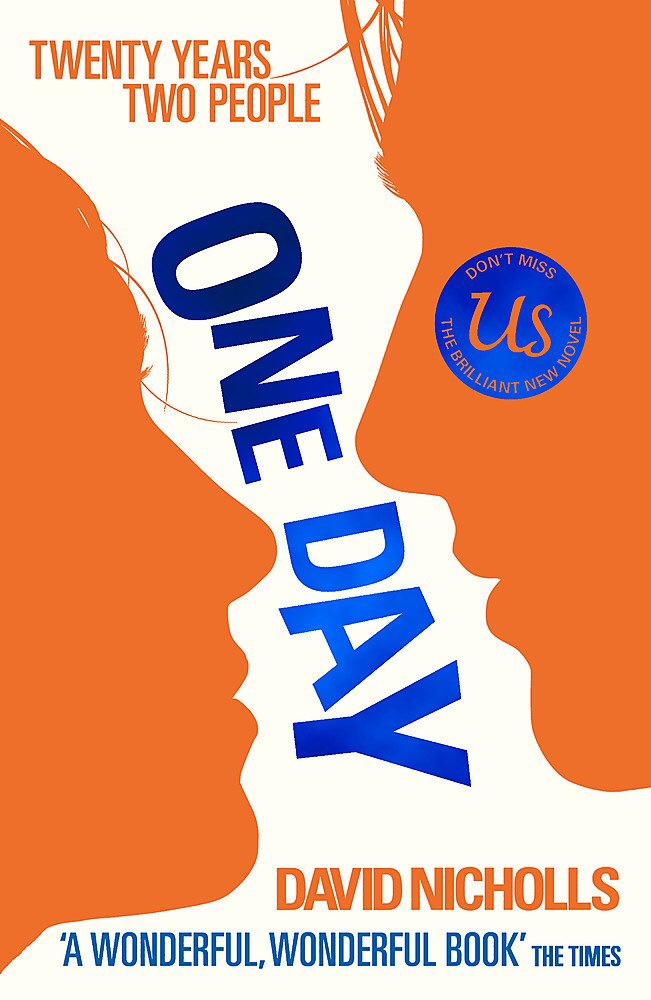
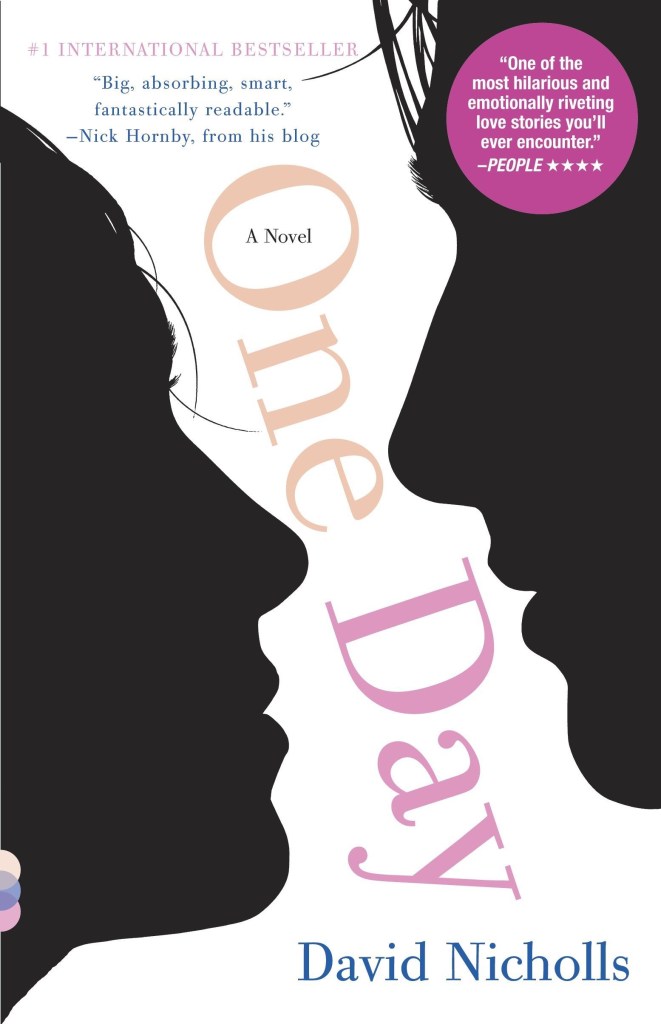
Several years ago, like thousands of others, I was blindsided by One Day. There was a time when you couldn’t move on public transport without knocking into someone reading this book. It’s a simple premise. Dexter and Emma were at Edinburgh University and as they graduate they spend the day together and forge a friendship, they climb Arthur’s Seat in their cap and gowns and talk about what they want for their futures. Dex would like to work in television and Emma would like to be a writer. The book then follows their story on the same day each year, sometimes together and sometimes apart, we see how life has changed them and the circumstances they find themselves in. Of course we know that Emma and Dex should be together, but will they ever find the right time or the courage to try?

I’ll be honest, at first I didn’t feel ‘grabbed’ by their story. My interest was mainly in their individual lives, especially considering that the book is set so that they’re both a similar age to me. I recognised the era, the reference points and also the struggles of life as they go through them. I thought Dex was a bit of a dick to be honest. He’s a player, egotistical and at times downright unpleasant. I really bonded with Emma though. A northern girl, she has a brand of kindness and an ability to see through bullshit that I liked. I saw some of me in her and I have always wanted to be a writer, but also went into teacher training (and didn’t finish). She clearly loves Dex, but will he ever see her? Mostly he sees her as a consolation prize, a shoulder to cry on, an advice giver and sometimes the great big kick up the arse he deserves. I can honestly say I hoped they never got together at several points in the book, because I didn’t think he deserved her. There’s a point where Emma has gone through a really tough time. She breaks off her engagement and goes through moving out and separating from her fiancé emotionally and financially. She goes out to Paris for a while and starts to write a children’s book. She has her hair cut short. She makes friends. I loved this Emma and I thought she’s built a new life from the ground up with no help from anyone. I wanted her to stay there.

As I know all too well, our love lives never simple. Often, where the decisions to be together seem very easy to make, it’s the right person. It’s reciprocal and committed. When we’re younger we’re learning about who we are in a relationship. We don’t know how much to compromise and how much to stick firmly to who we are or what we want for ourselves. We can get tangled up in relationships that are no good for us, are abusive, are with people who cheat, or people who put up obstacles and change their minds. We love people who aren’t ready, or who are too busy adding notches to the bed post. We can be so unsure of ourselves in our teenage years (and beyond) that we accept relationships that aren’t good for us and allow behaviour that’s demeaning or grinds down our self-worth. It’s also hard to love someone who doesn’t love you or who claims they can’t be with you. That great line from Sex and the City springs to mind – ‘he’s just not that into you’ – because when they are into you, they move mountains to be there. I felt that Dex was scared of real love and preferred empty encounters with beautiful women. Emma doesn’t value herself enough to set boundaries or ask for the love she deserves.
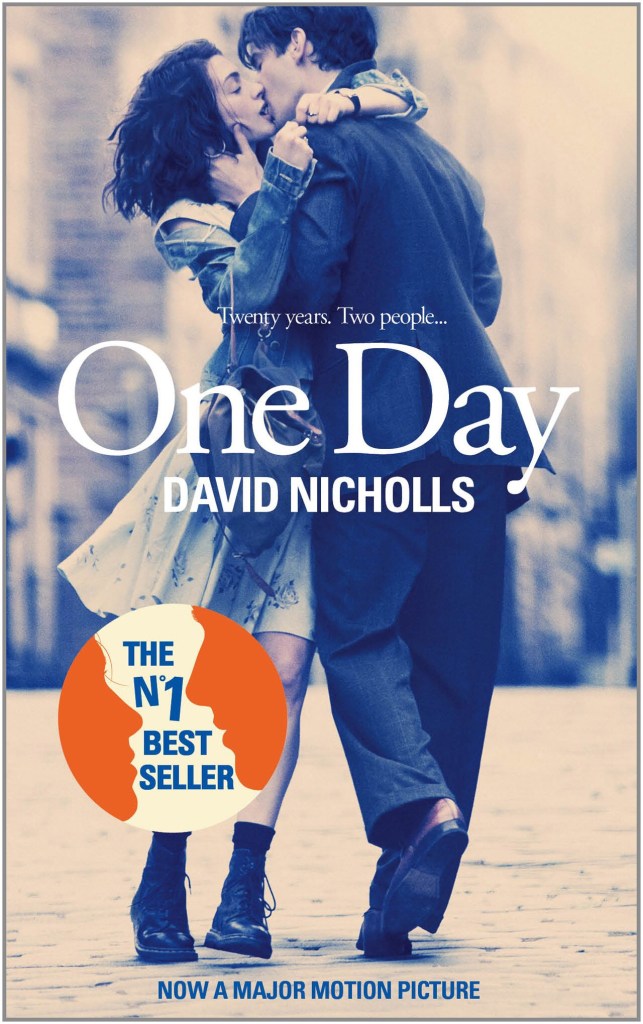
Everybody who knows the book will know the line I’m talking about. That one line I read and spontaneously burst into tears. That rarely happens with a book, but it did here. That’s when I knew this book had got me. My emotions were so invested in these characters that I had such a spontaneous response. I’m not sure how David Nicholls managed it, but I’ve spoken to other people who were similarly emotional. I think it’s the way he writes these two characters, they’re real and flawed. They struggle with life. We go through so many highs and lows with them, because even though we meet up with them on one day, we’re drawn in to how they got where they are. They’re not perfect either, far from it. Nichols weaves in addiction problems, affairs, career disasters and the difficulties of being a parent. There’s also huge loss to, and how the characters deal with these setbacks. One Day is a love story. Love is the primary theme of the novel. However, it’s also about being honest with ourself and others about our feelings and about recognising what love actually is. Perhaps I love One Day because it does go beyond the ‘falling in love’ stage, that even after years of yearning and kidding themselves about their feelings, Emma and Dex can still wake up one morning unnecessarily grumpy and tense with one another. Life is full of obstacles and love doesn’t stop them coming. Love isn’t always excitement, flinging your clothes off and swinging from chandeliers. Real love is always about being with your best friend.

Meet The Author


David Alan Nicholls (born 30 November 1966) is an English novelist and screenwriter. Nicholls is the middle of three siblings. He attended Barton Peveril sixth-form college at Eastleigh, Hampshire, from 1983 to 1985 (taking A-levels in Drama and Theatre Studies along with English, Physics and Biology), and playing a wide range of roles in college drama productions. Colin Firth was at the same College and they later collaborated in And When Did You Last See Your Father?. He went to Bristol University in the 1980s (graduating with a BA in Drama and English in 1988) before training as an actor at the American Musical and Dramatic Academy in New York. Throughout his 20s, he worked as a professional actor using the stage name David Holdaway. He played small roles at various theatres, including the West Yorkshire Playhouse and, for a three-year period, at the Royal National Theatre. He struggled as an actor and has said “I’d committed myself to a profession for which I lacked not just talent and charisma, but the most basic of skills. Moving, standing still – things like that.”

Since then, David has turned to writing full-time, and is the author of four novels. ‘One Day’ was an international bestseller and the follow-up, ‘Us’, was long listed for the Man Booker Prize. He’s also a screenwriter and TV dramatist; his credits include adaptations of ‘Far From The Madding Crowd’, ‘Great Expectations’, ‘Tess of the D’Urbervilles’ and feature film version of his own novels. ‘One Day’ and ‘Starter for Ten

Posted in Random Things Tours

This Is How We Are Human by Louise Beech.

I absolutely loved this incredible book about love, disability, sex and the secrets we keep from each other. Veronica and her son Sebastian live together in Hull. Veronica wants the best for her son and just like all parents, she wants him to grow up and have a full life. However, Veronica isn’t like other parents, because despite Sebastian being twenty years, six months and two days old, he’s struggling with the love and relationships part of his life. Seb is autistic and he is lonely. Seb loves swimming, his fish, fried eggs and Billy Ocean, he’d also love to have sex but no one will have sex with him. He’s already been in trouble after the girl next door convinced him to write an explicit letter to her underage sister. When their lives collide with Violetta, Veronica thinks she can see a way forward. She’s thought of paying someone before, but has stopped herself. Here though, is someone they’ve met before and who was natural with Seb. Veronica couldn’t have known she was leading a double life as a high class escort, in order to earn enough money to keep her seriously ill father at home. These three lives come together and change each other in unexpected ways.

There were scenes in this that made me laugh and some that made me cry. His need for sexual release is having a huge impact on his carefully ordered life. His swimming sessions have continued at the same time and day of the week, all the way from childhood, but his inability to see why his nakedness is different to the children’s has meant they must stop. When Veronica takes Seb to the sexual health clinic, because she’s desperate for advice, their lack of help and understanding infuriated me. The nurse seemed more concerned about whether Seb might hurt someone, or how Veronica’s thoughts about paying for it would be harming him. She even threatens to report her to social services. There’s no compassion or admission that they really don’t know what to do. It’s an issue I’ve thought about for a long time, having supported people with learning difficulties or autistic spectrum disorders in an advocacy role. Sadly, the figures for sexual violence against women with learning disabilities are terrifyingly high. While young people are often infantilised by parents who don’t want to accept their child is an adult. I read many years ago about an initiative in Holland very like our Direct Payments/Personal Budget system for care if you have a disability. However, social workers could add a component that would pay for the disabled person (physical disabilities) to hire a sex worker if they needed that for an sexual outlet. As Seb himself says:

‘People seem to get dead upset about it. But it’s just like paying for swimming lessons. You want to learn to do it and someone who knows how to will show you for an agreed fee’.

He sees it as a simple business transaction. Offsetting the worry, sadness and anger I felt in their behalf it’s Seb’s frankness that brings the humour. His mother greets him in the morning with a cheery ‘what do you want to do today?’ and his reply is ‘I want to have sex’. He goes on to explain that he might pay for sex:

‘If I was rich. But I’m not. I’ll just have to find someone who appreciates me before I die. I hope it’s this week. I’m feeling very sexual today.’

Seb is such a loveable and interesting character. He’s also handsome, so does draw attention from women when out and about, but Veronica knows that as soon as he speaks they will start to lose interest. She meets with Violetta and proposes her plan. However, there are real ethical concerns here and everyone is keeping secrets. Veronica isn’t planning on telling Seb the truth about his ‘sessions’ with Violetta, but she isn’t planning on telling Seb she’s been hired or why she needs the money. Seb has his own secrets and there is an ending to this that neither woman envisaged, showing a prejudice they didn’t know they had. They’ve discussed concerns that Seb may become attached to his tutor, but they didn’t imagine that she might become compromised in some way or that Seb might transfer his affections to someone new.

This is brave new ground in fiction. I have a physical disability, and I can count on one hand books that have a disabled character who openly discusses or explores their sexuality. This is almost society’s last taboo – the sexual disabled body is not to be looked at or mentioned. This is partly about the infantilisation of people with disabilities, they need care and are therefore vulnerable and untouchable. It’s partly to do with an innate reflex to reject what is different – often the fear of urine bags, colostomy bags, and other paraphernalia is so great, that the person becomes neutral to other people and they close their minds to the fact that this person is a sexual being. We saw this prejudice in action with the controversy around Marc Quinn’s statue of Alison Lapper. Not only was this a disabled woman who was naked, she was also pregnant. People rejected her body strongly, calling it ugly and disgusting. However, I think a large part of the furore was down to people being uncomfortable that Lapper’s pregnancy was a visual clue of a healthy sex life. Most of the same people would probably be uncomfortable with this book, but I was so excited to see the issue out in the open. We need to talk about it more. People with disabilities are having sex, often more adventurous and inventive sex, because they have to communicate more and find a way round their disability. It’s only by talking about it that we start to break down these prejudices and accept that a healthy sex life is a normal part of life for all adults able to consent. This was a difficult subject, handled with frankness, but also the greatest care and sensitivity. I’m so grateful that this talented writer turned her hand to this subject, writing characters that felt utterly real and incredibly relatable. It was funny, moving, and full of love, of every kind.

Meet The Author

Louise Beech is an exceptional literary talent, whose debut novel How To Be Brave was a Guardian Readers’ Choice for 2015. The follow-up, The Mountain in My Shoe was shortlisted for Not the Booker Prize. Both of her previous books Maria in the Moon and The Lion Tamer Who Lost were widely reviewed, critically acclaimed and number-one bestsellers on Kindle. The Lion Tamer Who Lost was shortlisted for the RNA Most Popular Romantic Novel Award in 2019. Her 2019 novel Call Me Star Girl won Best magazine Book of the Year, and was followed by I Am Dust.

Posted in most Anticipated 2021

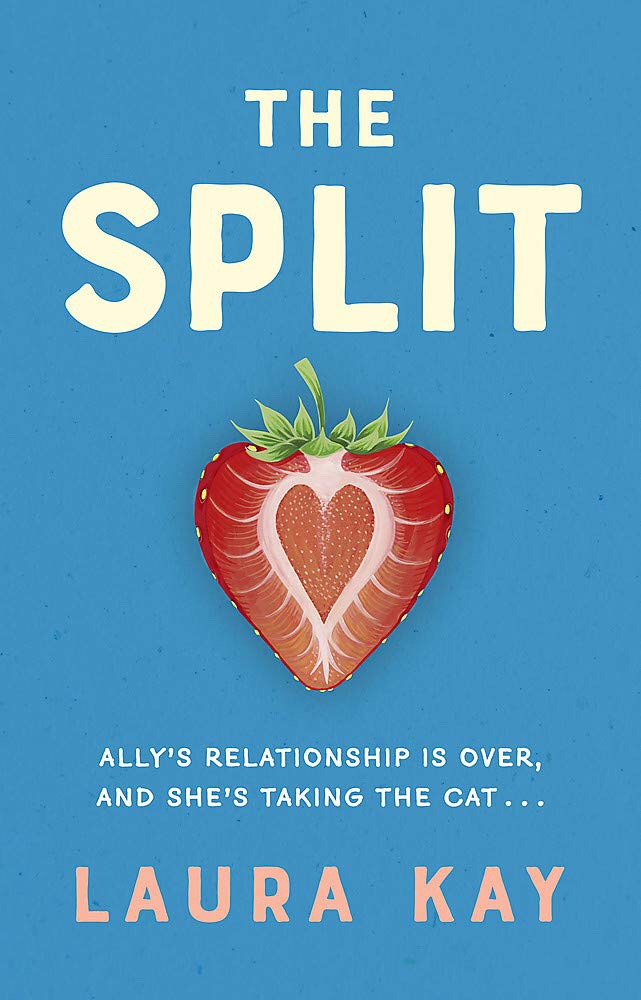
Most Anticipated 2021! The Split by Laura Kay.

A brilliant, heart-warming and intensely funny story of love, heartache, friendship and family. Perfect for fans of Marian Keyes and Beth O’Leary.

Brutally dumped by her girlfriend, Ally is homeless, friendless and jobless… but at least she has Malcolm. Wounded and betrayed, Ally has made off with the one thing she thinks might soothe the pain: Emily’s cat. 

After a long train journey she arrives home to her dad in Sheffield, ready to fold herself up in her duvet and remain on the sofa for the foreseeable. Her dad has other ideas. A phone call later, and Ally is reunited with her first ever beard and friend of old, Jeremy. He too is broken-hearted and living at home again. 

In an inspired effort to hold each other up, the pair decide to sign up for the local half marathon in a bid to impress their exes with their commitment and athleticism. 

Given neither of them can run, they enlist the support of athletic, not to mention beautiful, Jo. But will she have them running for the hills… or will their ridiculous plan pay off…?

I’m looking forward to this book so much. Even the proof cover is funny and gives you a good idea of the offbeat humour inside. I also loved that it’s a romantic, comic novel about a same sex relationship – this should just be a norm, but in my reading experience is quite rare. I was also drawn in by the promise of a long train journey with a cat to Sheffield. Sheffield is very local to me, and once on a journey back from Liverpool I was sat on the middle platform at Sheffield station, drinking a chai tea and people watching. On the next platform down was another bench where a young man was desperately trying to get a fighting cat back into a cardboard box. I stood up to help, just as he managed to get it in the box and close the flaps. On the final stretch of my journey I remember wondering what on earth had made the man take a train journey with a cat in a cardboard box? Even more, what had possessed him to take the cat out at a major railway station on the middle platform. I now know that books are borne out of such inspiration!!

Laura Kay wrote the book because she had been fed up of not seeing herself represented in romcoms, and placing a queer character as the heroine, rather than the token funny friend is refreshing. It had always been there in her head. She says she’d been writing the book in snippets and phrases for a long time, but was finally pushed into writing the book because she wanted to read it. She wanted to represent friendship between two queer characters in her depiction of Ally and Jeremy. Most importantly she wanted to write about cake, which is one of my favourite subjects. This book is heartfelt, warm and very funny, plus it addresses that terrible conflict of loving a horrible pet that simply cannot stand you. What more could you want for 2021? Look out for my full review on publication.

Meet The Author

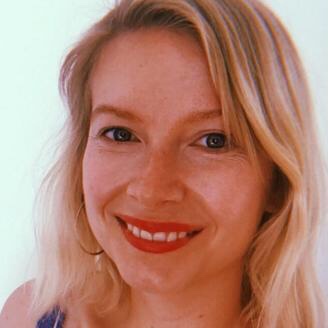
Laura has an MA in American History from the University of Sheffield and works as a writer and editor. She lives in London with her wife and cat. This is her debut novel.