Posted in Squad Pod Collective

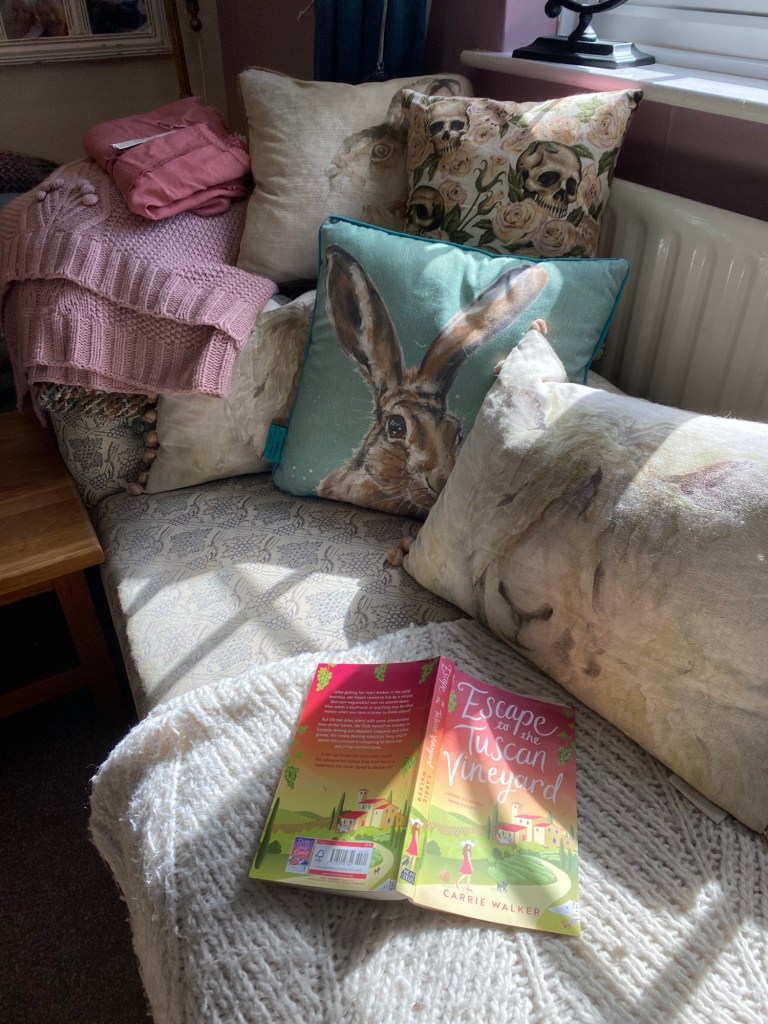
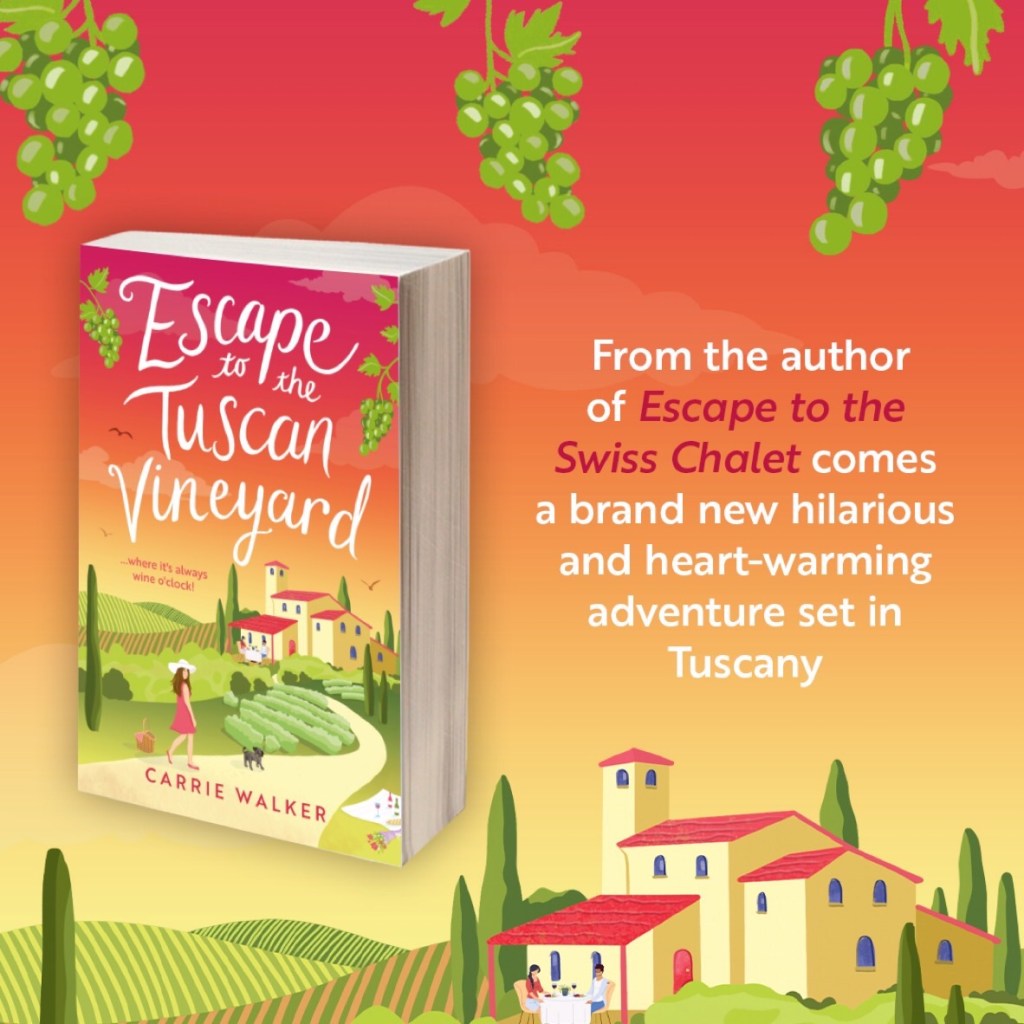
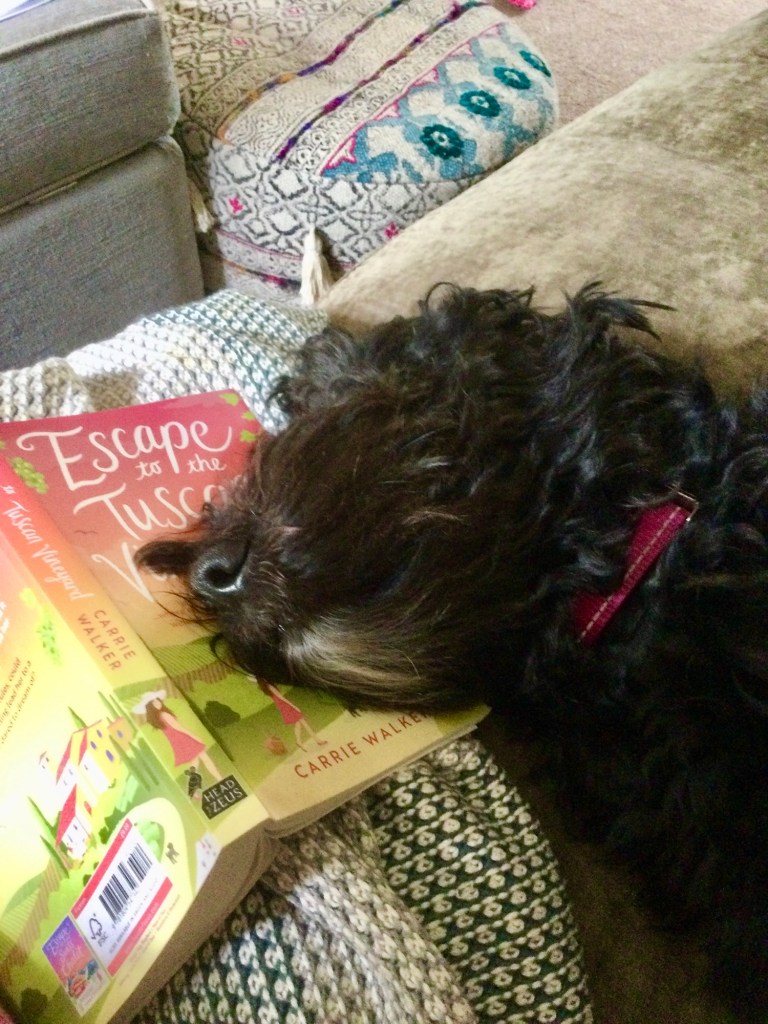
Escape to the Tuscan Vineyard by Carrie Walker

Just when Abi thinks she’s getting her big break as a movie make-up artist, everything starts to go wrong. When she’s told her booking on Moonmen was a mistake, she wonders if it had anything to do with her encounter in a sauna with a good looking guy who wasn’t honest about who he was. Nevertheless she has been paid for a month and when she tells her best friend Holly, she says there’s no excuse not to fly out to Tuscany and pay her a long overdue visit. When she makes it to San Gimignano she’s charmed by the ancient town and the lovely B and B that she’s booked into. The owners, Mia and Paulo are just starting out and Abi has the chance to be a guinea pig, sampling their food, activities and the wine from the attached vineyard. Then she meets Tony, a handsome American Italian man at Holly and her boyfriend Xavier’s restaurant and she decides to have a little holiday fling. Since the heartbreak she encountered in her last long term relationship, Abi has a rule when it comes to affairs of the heart; single encounters only because then she can’t get attached and can’t be hurt. However, something told me that Tony might not be discouraged as easily as she thinks.

Well this novel is a lovely slice of Italian sunshine! It can be read in a day and is the perfect escapist read. I’m not a usual romance reader so this wasn’t something I’d normally pick up. I wasn’t even sure I was going to like it at first because Abi was the type of person who rubs me up the wrong way. In fact there were moments I wanted to give her a slap. When we first meet her she’s running everywhere, helping her Mum out with hair and make-up when an ill advised spray tan and hair tint have left her looking like an Oompa Loompa. Luckily Abi has all the fixes to get her glowing again then she’s off picking up balloons and cake, getting changed and decorating a party room ready for her friend’s surprise birthday ‘do’. She’s so precise and controlled about everything. The discipline she has to get up every morning and pull on her running gear, even when she isn’t working, made me shudder.

‘A quick shower and I was in full make-up by 7.35am and ready for the day ahead. Which suddenly felt like a lot of time to fill. I made the pot of chamomile tea and opened my notepad to start a fresh, new list and get myself organised. I loved a list. It helped me feel in control.’

Abi is all routine and organisation, with no fun or relaxation. Luckily I’m a huge fan of transformation and I had a feeling that this one was going to be worth waiting for. I really enjoyed the humour in the story and I knew if anything could change someone Italy could. Abi loosened up by slow degrees – with a cake for breakfast here and a lie-in there. This is mainly because Italy forces her to be spontaneous. Despite a well planned itinerary Abi can’t sightsee because the buses don’t always run on time and sometimes don’t turn even up. People often close their shops to pop for lunch or an afternoon nap when the heat becomes too much. There’s nothing to do some days except be in the pool and the shade. She soon realises that La Dolce Vita is the only way and she’ll have to get on board with it. I started to enjoy this more relaxed Abi and as we hear more of her story and her feelings of loss and heartbreak the more we understand her.

The setting is simply magical. The vineyard view with the red roofs of the town in the distance sounded idyllic and the food made my mouth water. I’m also a massive fan of Glow-Up even though I rarely use make-up myself, so I loved all the detail about Abi’s career and how skilled she is creating everything from a face painted with bunches of grapes to a full Venetian mask with feathers and gold detailing. When she’s using her skills to help the vineyard and the people she loves, Abi really does shine. I did get drawn in by the romance because it’s impossible to dislike Tony. He’s a straight forward decent man who doesn’t play games and respects Abi’s boundaries. I wanted him to be able to break them down, but I didn’t know if he’d be able to. Ironically, in her desperate need to avoid being hurt, she’s hurting herself. I felt like I’d had a holiday myself when I finished the book. I’d thoroughly enjoyed the villa, especially the wine festival with its incredible food and a fairy lit pergola – the perfect venue for dancing the night away. The family of puppies were pretty irresistible too. Venice was the absolute crowning glory of the story, with Abi making-up the movie stars she’s longed to work with and dealing out some sweet revenge at the same time. Plus it’s my favourite place in the world so that helps. It’s wonderfully uplifting to see someone leave behind painful and negative patterns, it’s one of the reasons I love counselling. Even more than I wanted Abi to find romance, I wanted her to truly live life again instead of trying to control it. I could see a whole new world opening up for her and that made for a very satisfying read. I remember a bit of Eat, Pray, Love by Elizabeth Gilbert where she’s done the praying and the eating and falls in love on the island of Bali. She goes to her herbal doctor who listens as she panics that she’s not kept to her meditation routine and she’s going to lose the balance she’d worked so hard for. Her doctor smiles at this and points out that if we look at our lives overall there has to be some imbalance, otherwise it won’t be balanced. This is something Abi has had to realise for herself.

‘I didn’t want to slip back into my old, controlling ways. I needed to start taking chances again. My lists had to be less about cleaning and more about trying new things and going to new places. I’d wasted so much time…’

And what about Tony? I’ll leave you to find that out for yourself.

Meet the Author

Carrie Walker is a Brummie born romcom lover with a lifelong passion for travel. She has lived in a ski resort, by a beach, in the country and the city, and travelled solo through Asia, South America and Europe.

Her own love life was more com than rom until she met her husband a few years ago and settled down with him and her dog Ziggy in a pub-filled village in Essex.

Longlisted for Helen Lederer’s Comedy Women in Print prize in 2021, writing has long been Carrie’s side hustle, penning columns and features for newspapers and magazines, while working in many other jobs. She has been the CEO of a global disability movement, a board director of a brand agency, the editor of a newspaper, a radio presenter, a football mascot, dressed up as a carrot for the BBC and now she is writing books. Escape to the Swiss Chalet was her debut novel.

Posted in Netgalley, Personal Purchase

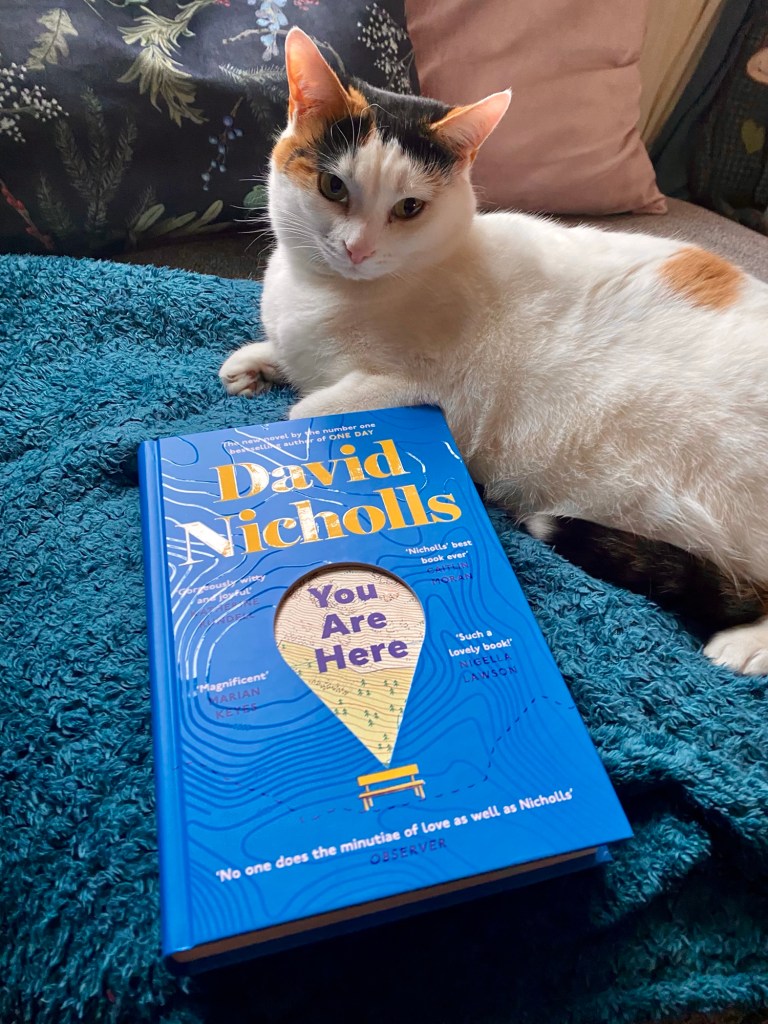
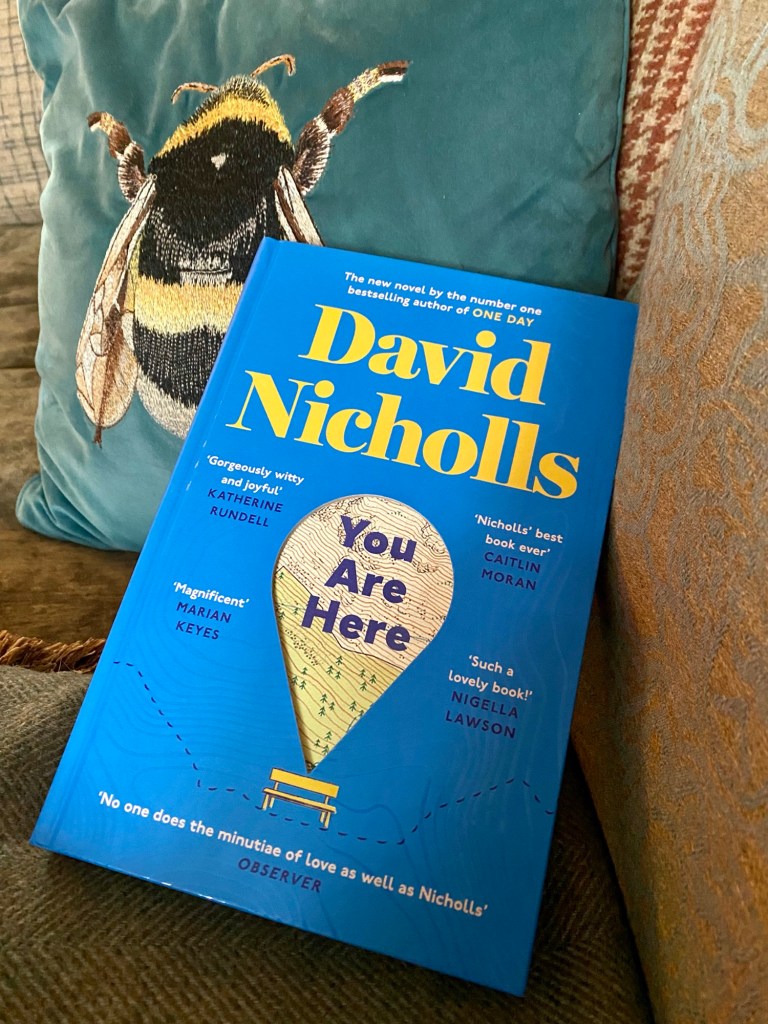
You Are Here by David Nicholls

I have had the joy of reading two books, each by one of my favourite authors, back to back on my holidays and I have genuinely loved it. David Nicholls has been a household name thanks to the new production of One Day on Netflix. The beauty of Nicholls’s novel about friends Emma and Dex makes it one of my favourites of all time and I’m definitely not alone. There was a time back in the 2000s where if you were on a train journey most of the people in your carriage were reading One Day. It was a book that utterly broke my heart because I believed in those characters so much and the shock of what happened is still with me, to such an extent that I haven’t been able to watch the last two episodes of the series. I can’t bear what’s coming. Similarly, both the book and BBC adaptation of his novel Us was deeply moving but utterly real. With the wonderful Tom Hollander as his lead, we become so emotionally invested in this couple, then just as they’re ready set to out for a once in a lifetime trip his wife asks for a divorce. Their plan, to spend all summer travelling around Europe, would be their last trip as a family, before their son leaves home for university. Can they set aside this bombshell and continue with their holiday? The set up in both these earlier novels is so simple and You Are Here is no different. A group of friends travel from London to the Lake District to walk some of Wainwright’s routes through Cumbria towards the Pennines. Cleo has invited four single friends; Conrad is meant for copy editor Marnie and Tessa is intended to get on with geography teacher and dedicated walker Michael who is extending his trip to walk the entire coast to coast, ending in Robin Hood’s Bay. Michael is still getting over separating from his wife so finds these social occasions difficult, much preferring solitude. Marnie spends much of her time alone too, so this will be a step out of their comfort zone for both of them. When the others bail out after a day of endless rain, Marnie and Michael are left to walk together. Can they both strike up a friendship?

David Nicholls has this amazing ability to articulate the minutiae of conversation and communication between the opposite sexes. He’s also brilliant with those tiny moments of shared humour, stolen glimpses and the body language of love. It may seem strange that a whole book is about two people walking across the country, but everything happens within that time spent together. After a couple of days Michael can see that Marnie is an inexperienced walker but determined, intelligent and well-read. She has been in relationships that eroded her confidence, has a keen sense of humour but tends to lose it a little when tired and hungry. Marnie is surprised by Michael. Although she knows little about geography she can appreciate how passionate he is about his subject, he wears his beard as a mask so that people keep their distance, is perfectly comfortable in his own company and is hurt very badly by the break-down of his marriage. This isn’t two young people swept up in the blind passions of love at first sight. This is a slow burn. It’s a potential romance that grows slowly and unexpectedly for both of them. It’s lovely to read a ‘real’ love story about people who are older and have been kicked about a bit by love in the past. Nicholls has alternated each character’s chapters, so we’re also taken into Marnie and Michael’s inner worlds. Within these chapters we have flashbacks through their lives and their past relationships, slowly learning what has built these people who are in front of us, trying to bring their lives together. We are also privy to private thoughts that let us know this couple could be perfect for each other. When bullied into social activity by friends we can see that they’re both introverts. Michael agrees to a plan just to make Cleo shut up. She means well, it’s just that for her the answer to a empty weekend is the presence of others, while it’s their absence that floats his boat. Similarly Marnie knows that a bit of socialising is expected, however…

‘She had become addicted to the buzz of the cancelled plan […]for the moment no words were sweeter to Marnie than ‘I’m sorry, I can’t make it.’ It was like being let off an exam that she expected to fail.’

I understood Marnie. I was the kid at school who was so excited to have finished the reading scheme by age eight, because while everyone else was reading to the teacher I had free library time. I would pull up a beanbag and disappear into the world of the Little Women or Jane Eyre, loving that I was alone, out of the hustle and bustle of the classroom I was free to be anywhere just by opening a book and stepping through a wardrobe. Marnie gives a similar description of her early reading years to mine, the weekly library visits and the devouring of anything I could find and making no distinction between what was deemed literature and what wasn’t. My only criteria was that I enjoyed it. I learned to enjoy activities with friends – ice skating, horse riding, cinema – but nothing beat that thrill of knowing a delicious book was waiting in my room.

‘Private, intimate, a book was something she could pull around and over herself, like a quilt.’

Reading is a little like Michael’s walking in that it takes me on a journey, but also helps me unplug from the stress of daily life. If I’m reading a physical book it’s even more separate from the world because it’s not alerting me to things on social media, emails or messages from friends with cat videos. Marnie wonders if her reserve and need for alone time comes from her upbringing with parents she’d describe as cautious and timid:

‘At no point did her parents move house, gamble, use an overdraft, change jobs, have affairs, go abroad, shout in public, park illegally, eat on the street or get drunk, and while they must have had sex at some point, this was covered up as carefully as a past murder. Marnie was the only evidence.’

Michael is taking in the world around him, but at a totally different pace. He can stop and concentrate slowly on a beautiful bird song or the reflection of the hills in a still lake. He is a Romantic with a capital ‘R’, perhaps not a flowers and surprise trip to Paris sort of man, but he can see poetry in the everyday. As they stroll the hills he truly does understand the Romantic poets, engaging Marnie in conversation about routes that William Wordsworth and his sister Dorothea might have taken. He tries to feel the state of the sublime and thinks he often finds it in a spectacular view that couldn’t have been seen any other way than walking off the beaten track. He is still so caught up in the breakdown of his last relationship, still to some extent thinking as part of a couple although it’s clear to his friends that his wife has definitely moved on. He’s been so disconnected from his wife, for so long that he didn’t know anything was wrong and the shock of the split was seismic. This is why Cleo invites him on the weekend in the first place, to try and point him forwards, rather than backwards. This is a spiritual and mental journey for him, as well as a physical one. Michael has that symptom of depression where you feel like you’re looking at the world through a thick pane of glass, removed from reality. This is a protective barrier too, he keeps his pain so deep inside himself he thinks no one can see it. It stops him from being able to express himself and he finds Marnie so performative at first. She rails against her sore feet, the weather, the mud – all things that are so part and parcel of hiking it wouldn’t occur to him to do the same. Her humour does break through occasionally.

‘You’re funny, but I’m the one with the lighter rucksack so who’s laughing?’ ‘That is true. I’ve got twelve pairs of pants in here, for three nights.’ ‘Why?’‘I don’t know. Maybe I worried I might shit myself four times a day.’ ‘Has that ever happened?’ ‘Not since my honeymoon.’

By the end my heart was breaking for these fledglings. I so wanted them both to be happy, even if they simply ended as friends. David Nicholls throws in one last obstacle that takes us by surprise, even while my heart was racing I could see how much it was needed for that character to have a final epiphany. He’s brilliant at creating that bittersweet feeling that comes as we’re older and have romantic baggage. At first when we lose someone the shock and pain is everything, then after time and doing a little bit of work on ourselves a day hopefully comes where we can look back and it not hurt. We can acknowledge the pain but not let it overwhelm us. In fact, eventually, we can look back and smile about the good times, the love that was shared and how glad we are that we experienced it. That we’re able to move forward and enjoy new adventures. I really understand this from my own life and I genuinely closed the book with a smile on my face, knowing that both Marnie and Michael have so much life to look forward to whether together or apart on their journey.

Out now from Hodder & Stoughton (Sceptre)

Meet the Author

David Nicholls is the bestselling author of Starter for Ten, The Understudy, One Day, Us, Sweet Sorrow and now You Are Here. One Day was published in 2009 to extraordinary critical acclaim: translated into 40 languages, it became a global bestseller, selling millions of copies worldwide. His fourth novel, Us, was longlisted for the Booker Prize for Fiction.

On screen, David has written adaptations of Far from the Madding Crowd, When Did You Last See Your Father? and Great Expectations, as well as of his own novels, Starter for Ten, One Day and Us. His adaptation of Edward St Aubyn’s Patrick Melrose, starring Benedict Cumberbatch, was nominated for an Emmy and won him a BAFTA for best writer.

He is also the Executive Producer and a contributing screenwriter on a new Netflix adaptation of One Day. His latest novel, You Are Here, is out now in hardback.

Posted in Personal Purchase

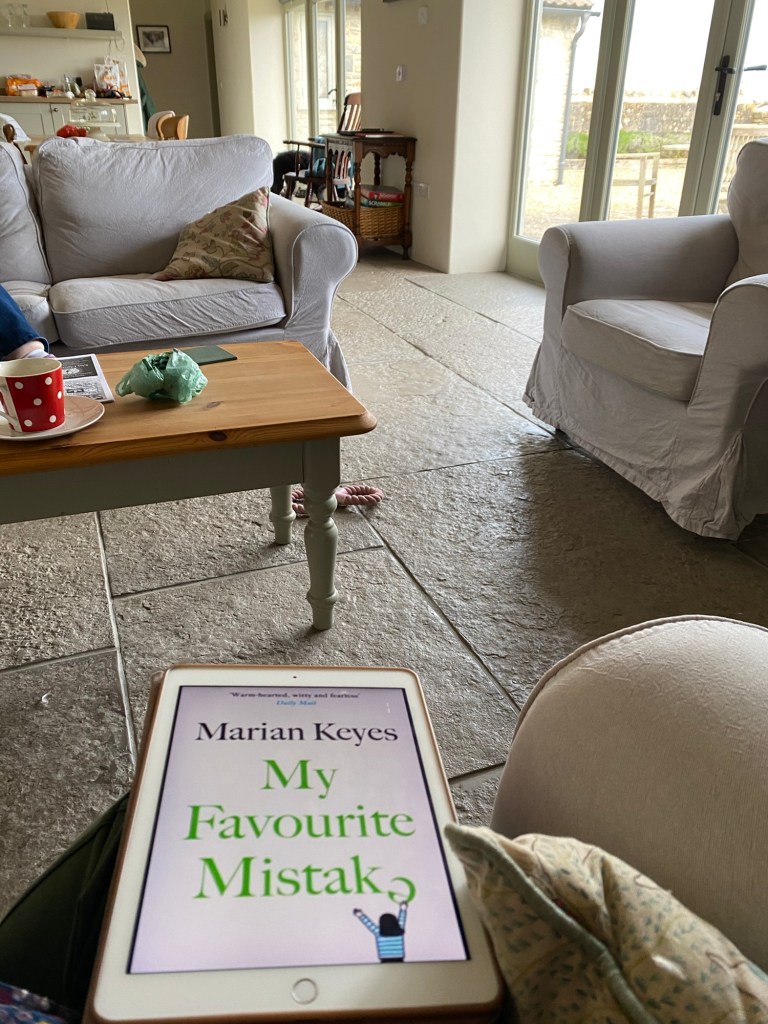
My Favourite Mistake by Marian Keyes

I’m going to say it.

I am a Marian Keyes superfan.

I love her tweets or whatever the hell we call them now. I love her honesty. I love her Strictly fandom. I especially love her sense of humour. I love that her books have drawn my stepdaughter into daily reading, because of course more than anything I love her writing. She puts all her quirk, wit and self-awareness into the characters she writes. She is a writing goddess! She gets better year on year and I loved this dive straight back into the Walsh family after Again, Rachel. Rachel has always been my favourite Walsh, but in this latest novel Anna really did steal my heart. Anna is nearing her fiftieth birthday and her high flying PR role in the beauty business is wearing a little thin. Although she’s always loved living in NYC, the pandemic left her feeling the distance from her family in Ireland. After losing her husband Aidan in a terrible car accident several years ago, her contact with his family in Boston has waned. Her subsequent relationship with Angelo – a ‘feathery stroker’ – has been conducted with respect, equality and a deep fondness, but never passionate, all consuming love. With a need to be near those she loves, she gives notice on her job, her apartment and her relationship.

Her family think she’s gone mad and she almost starts to think she’s made a huge mistake when a sudden job opportunity comes her way. Her sister’s friend Bridie has been building a luxury hotel and spa on farmland near the coast, but the project has hit the buffers. Locals have vandalised the site leaving machinery sabotaged and the luxury bungalows daubed with paint. Bridie and her husband have had the worst news, their daughter has been diagnosed with cancer and needs their total focus. What they need is an experienced but down to earth PR who will be able to converse with the locals in town, find out what their grievances are and hopefully, get the project moving forward again. Anna is booked into the local hotel and can be ready to hit the ground running, but there’s just one snag. The finance broker who has put together the deal for Bridie’s project is Joey Armstrong. Joey was part of the Irish ex-pat community in New York when Anna and Rachel first moved out there. He was also one of the ‘Real Men’, a group of long haired, tight jeaned, rock gods who included Rachel’s husband Luke. Joey was hot. All tawny haired, with the most kissable mouth Anna had ever seen, not to mention his jeans which were just on the wrong side of decent. The first night they met Anna felt an immediate vibe and was full of anticipation until her sister Helen walked in. She saw Joey’s eyes immediately slide over her and become laser focused on her beautiful sister. Anna was immediately slighted and when Helen and Joey left together she decided to dispel this particular lean hipped rock god to the back of her mind. However, this wasn’t the last time their paths crossed. Joey has always been a mix of old flame and thorn in Anna’s side. Can she put aside their past and work together on this project?

Anna has that wonderful characteristic that can’t be taught, she has an easy charm and an ability to talk to anyone from building contractors to the lady of the manor. She takes to M’town straight away, working out who are the cornerstones of the community and who has something to lose from the development at Bridie’s farm. Knowing that her NYC clothes won’t work in rural Ireland, she dresses in jeans and a waterproof coat and pulls her hair back in a ponytail. Minimal make-up leaves her looking fresh-faced and the facial scar from her accident with Aidan is exposed. She’s shrewd enough to realise that it gives her an advantage, no matter whether they people feel sorry for her, are curious or think it shows honesty and openness. She’s smart and has similar skills to her sister Rachel when it comes to communication. The openness, lack of judgement and appreciation that Rachel shows her clients in the counselling room, is equally fruitful when trying to get to the bottom of why certain people in town are against the development. Anna genuinely cares and within days can see where mistakes were made, where a concern was overlooked or an individual was inconvenienced. She can make the most insignificant person feel like the centre of her world and is soon making friends. We follow her investigation and watch her become more and more embedded in this quirky but beautiful little place. In between we see glimpses into Anna’s past, from the before and after devastation of Aidan’s death to her relationship with best friend Jackie and her daughter Trea. Jackie has been her best friend, a relationship that even survived Jackie’s fraught relationship with Joey. When Jackie becomes pregnant, Anna puts aside her own feelings for Joey and becomes her birthing partner and almost a co-parent to Trea. However, something happens to jeopardise their friendship and the women have barely spoken since.

A Marian Keyes romance is never just heart and flowers. It’s always about the heroine’s personal baggage and need for self-growth too. Often I prefer the inner growth to the potential relationship, but not in this case. I absolutely loved this couple and their story. We all have that someone who got away. For me it was a lanky and eccentric music lover called Glynn who would turn up at the door unannounced – often sporting flowers from the graveyard or my dad’s own flowerbeds. There was rarely any warning with Glynn, he might be waiting for me at school having invited himself for tea or have walked five miles from town with some song lyrics scribbled on a postcard that I just had to have. We would lie on my bed and listen to the Cocteau Twins, Ride and The Smiths. My dad would despair at his Joe Bloggs wide leg jeans with frayed hems that dragged mud and grass into the house. He had hair like Clint Boon from the Inspiral Carpets and a huge billowing parka that I stole and wore for two years straight. He also had a complicated home life and often reminded me of Snufkin from The Moomins, who loved the solidity and dependability of Moomin House but also needed time to wander alone whenever it suited him. I was hopelessly in love with him, but it took him three years to finally ask me out and I was scared that it was finally happening that I panicked and refused. Even now, every few months or so he sends me a Spotify track by House of Love or Northside and I love that little reminder of teenage love. Similarly, Joey and Anna have a very long history with several near misses and a deep friendship when he let her close. Although they’ve never had a romantic relationship it is Anna and not one of his many lovers who knows the truth about his upbringing and how damaging those years were. He has trusted her with his deepest secrets, but he has also hurt her, possibly more than anyone else in her life. He has also caused her to lose her closest friend. Yet Anna knows that once she also wounded Joey deeply, the details of which we only find out late in the story.

I loved the pace of the romance, with Marian Keyes knowing exactly when to drop in a flashback that explains everything and keeping that ‘will they/ won’t they’ tension without it seeming artificial. Often with rom coms I feel like obstacles are there just for the sake of it, but the flow is natural and I never felt like the outcome was a done deal. There were so many obstacles and items of baggage it felt like they were on the luggage conveyor belt at Gatwick. There’s everything from the past – him choosing Helen, then Jackie and then most of NYC if Mrs Walsh is to be believed, before Anna. Joey has so much work to do, not just about his childhood but about the here and now. Blending families isn’t easy and he has three adorable boys as well as Trea to think about. They’re both temporarily working on this project and in M’town so what happens when the hotel is built or if Birdie has enough and changes her plans? Anna might be healed physically, but her scar does bother her and has changed her life in ways she didn’t imagine. It does work as a filter, anyone it clearly bothers has no place in her bed. However, at times it does play on her confidence and when she sets up an online suggestion inbox for the locals there are enough hurtful comments to remind her of a time when she wasn’t okay. Joey is fit to murder the culprits but Anna rises above it and keeps moving forward, despite the hurt and the reminder that Joey didn’t even choose her before the accident. So, why would he choose her now? Is it possible to remain friends when they’re so close? Finally, there’s the beautiful setting, nobody does small town Ireland like Keyes and these people are imperfect, but hilarious. Some of their concerns are petty, but others are grounded in years and years of tradition. Work is hard to find in a small town so local tradesmen not being asked to contract was a huge mistake, but easily smoothed over once Anna explains the artistry and level of finish expected. Could Anna thrive somewhere like this, or is she just passing through? I loved, loved, loved this book and being on holiday I had the luxury of sitting in the garden in Glastonbury and reading right through to the end. This is peak Marian Keyes and if you don’t fall in love with Anna or her love story with Joey there’s clearly something a little bit wrong with you.

Meet the Author

Marian Keyes is the international bestselling author of Watermelon, Lucy Sullivan is Getting Married, Rachel’s Holiday, Last Chance Saloon, Sushi for Beginners, Angels, The Other Side of the Story, Anybody Out There, This Charming Man, The Brightest Star in the Sky , The Mystery of Mercy Close, The Woman Who Stole My Life, The Break and her latest Number One bestseller, Grown Ups. Her two collections of journalism, Making it up as I Go Along and Under the Duvet: Deluxe Edition are also available from Penguin.

Posted in Random Things Tours

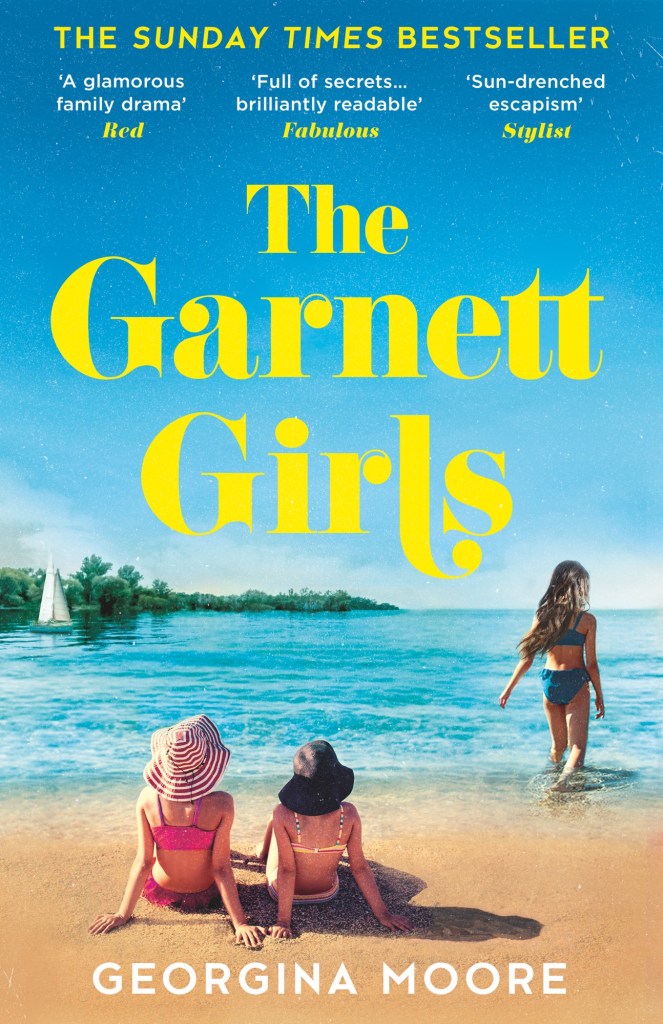
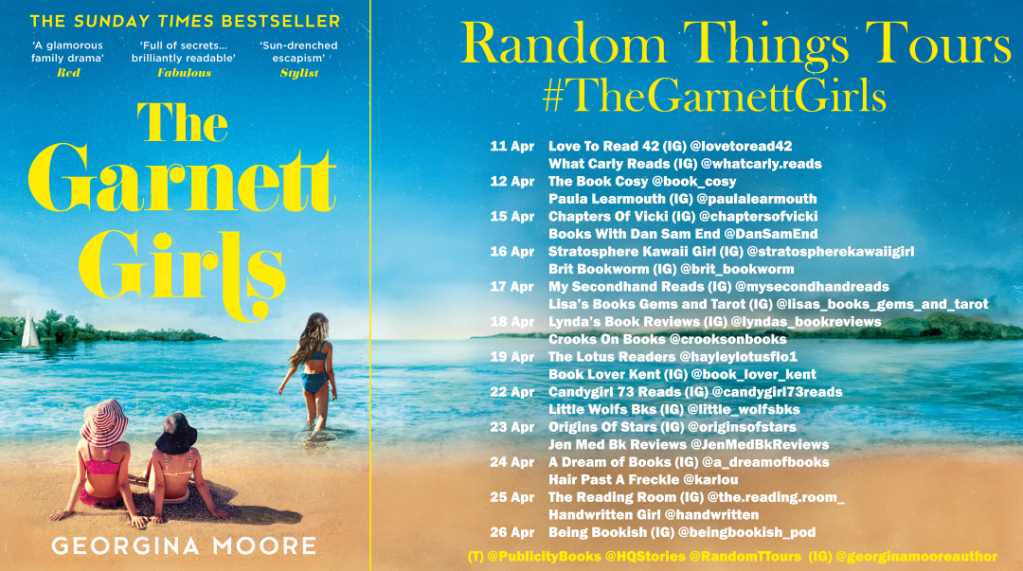
The Garnett Girls by Georgina Moore

Regular readers will know how much I love stories of large families, their complicated dynamics and the psychological ins and outs of why they are, the way they are. This was the perfect read for me and I was immediately intrigued by the deep family secrets at the centre of the three sister’s relationships with their mother Margo. The three sisters are: eldest, Rachel married to Gabriel with two small girls and a career as a lawyer; Imogen, the playwright who is anticipating long term boyfriend William to conduct the perfect proposal while being unsure whether it’s what she wants. Then there’s Sasha, the fierce and rather wild youngest sister, who is struggling between her family and her coercive husband Phil while family friend Johnny watches on, wildly in love with her. The sisters live in the shadow of their mother Margo and father Richard’s tempestuous love affair and marriage which sadly ended in divorce. His drinking and their arguing lead to Richard walking out, to join his secret other family. None of the girls have ever seen their father since that day. Rachel remembers moving to their holiday home Sandycove from their house in London and Margo being unwell. She and Imogen, along with their Aunt Alice try to keep the house running, but Sasha is still a baby struggling to cope with Margo’s unavailability. In the present day, every one of the Garnett girls is carrying a secret, but Sasha’s secret has the potential to blow the family apart.

I loved the community on the island, where the family home has always stood. Rachel and Gabriel now live in Sandycove with their children. Rachel works in London during part of the week and Gabriel works as a counsellor but also looks after the home and the girls. Sandycove is still the official place where the Garnett family get together for special occasions and Margo is constantly popping in and out, helping with cooking and childcare. She now lives at at The Other Place, a bungalow up in the village. It’s here she conducts day to day life and her illicit love affairs, kept separate from her family, who often know a lot more than she realises. Because they’re together in the week, Gabriel and Margo often plan family get togethers and outings. This bothers Rachel who knows they’re only trying to take the burden from her, but she often feels like Sandycove isn’t their own, it belongs to everyone. In gaining the family legacy they’ve also lost something. Their close knit days of just the four of them are gone. Imi’s story starts in beautiful Venice where her perfect boyfriend William is set to propose. She knows this because Margo and Rachel are calling on a daily basis to hear what they’ve been up to. They’ve been a couple for a long time now and her family love William. They think he’s perfect too and Imi knows that if she vocalised her doubts to her mum or one of her sisters they’d think she’s lost her mind. On her return the read through of her play is set to begin and an up and coming Hollywood star has been cast in the lead role. Imi isn’t sure about Rowan and worries that it may be the worst kind of stunt casting, but from the moment she meets the actress, she can’t stop looking at her. Having always felt her relationship falls short of her parent’s great love, finally Imi knows what a coup de foudre feels like. Sasha has had a radical and fierce short haircut that she knows Margo will hate and will make her look very different from her sisters. Sasha is holding on to something else they’ll hate too, she is in contact with their father Richard and his family. Over the course of the novel, all the secrets hoarded by the sisters will come out. Can their close knit relationships survive?

Each of the three sisters are beautifully drawn by the author and became completely real to me very quickly. I loved their family dynamic too, even though I might find it a little bit suffocating if they were mine! Margo especially is a lot to take, with her daily phone calls and constant ‘pop-in’s’. There’s also the potential embarrassment of her sexual adventures, although I did enjoy her liberation and openness about having an active sex life as a grandmother. Sandycove has so many deep emotions buried in it’s walls. It almost runs like a stately home, with a list of annual events for family and friends that are a fixture in the village calendar. The family’s parties are incredible and I’d love to go to one! I thought the way the author used flashbacks was clever, because they helped me understand each of the women. So we see Sandycove as the home of 16 year old Margo who thinks she’s met the love of her life. Margo’s mother is unconvinced and is determined to keep this older man away from her daughter. Margo isn’t easily dissuaded from her love affair and ropes her sister Alice into helping her, eventually fleeing her childhood home with Richard in tow. Her self-awareness doesn’t stretch to realising that she’s now doing just the same with her own daughters – so sure that William is the one for Imi she’s planning the wedding before the proposal. We also go back to the moment when this family fell apart; this past event answered a lot of questions for me. I loved the moment of realisation for Rachel that her need for independence lies back there, in fact it was about survival. Yet she knows her independence made Margo feel unwanted and also masked a need to live up to her mother’s expectations and a fear of being unable to. She didn’t want to live somewhere that people came up to her in the street to tell her how like Margo she was. She wanted to live somewhere there was no Margo, maybe then there’d be enough space left for her to be Rachel. She knows that now these old feelings put a distance between her and Gabriel, in fact the whole family see strong, capable Rachel without thinking how exhausting it must be at times, how she can never be vulnerable.

Imi longs for someone to listen, so much so that on the day of her Venice proposal she drinks at the hotel bar with a young man just because he doesn’t talk over her, or assume what she wants in her life. When William proposes he uses the words ‘it’s what everyone wants’ before asking if it’s what she wants. It’s as if she’s ripe for rebellion, but doesn’t know how yet. Sasha’s rebellion is rather more visible, the short platinum blonde crop is a backlash against the long flowing hair that makes her a Garnett girl. Her identity is visible in the way she looks, with her slightly severe and spiky clothes and her red-soled high heels. She picks at Imi for accepting Margo’s bullying and interference, knowing straight away that Margo had bought Imi’s dress for the engagement party. Sasha can see that though she is beautiful she isn’t comfortable in it. In fact Imi wasn’t even comfortable with the party. Yet Sasha soon returns to Phil’s side, as he lurks in the doorway looking put out. He hates Garnett parties and prefers to have Sasha to himself; there are deep-seated reasons why Sasha has fallen into this possessive relationship, mistaking control for love. I thought these labyrinthine dynamics were brilliantly done, so real and perfectly in tune with coercive control and how intergenerational trauma works. I knew it was going to take the revelation of all the family secrets, probably in an explosive Garnett way, for these dynamics to change and for the girls and Margo to heal. I was so sucked into their world that I read the book in two sittings, desperate to see the girls speak their truth and start controlling their own lives. I also wanted healing for Margo too, because she’s been at war with an idea for the past twenty years. Her impression of the man who left her and the life he left her for is all in her head and it’s maybe time to face reality. The Garnett women can only move forward by being honest and real with each other and themselves. This was a wonderful read for people like me – the nosey and psychologically trained. It’s astute, beautifully written and full of strong women who are talented, ambitious and intelligent. It was a joy to read.

Published in paperback this month by HQ Stories.

Check out the rest of the blog tour

Meet the Author

Georgina Moore grew up in London and lives on a houseboat on the River Thames with her partner, two children and Bomber, the Border Terrier.   The Garnett Girls is her first novel and is set on the Isle of Wight, where Georgina and her family have a holiday houseboat called Sturdy. Georgina is working on her second novel, Walnut Tree Island, which will be published in 2025.

Posted in Random Things Tours

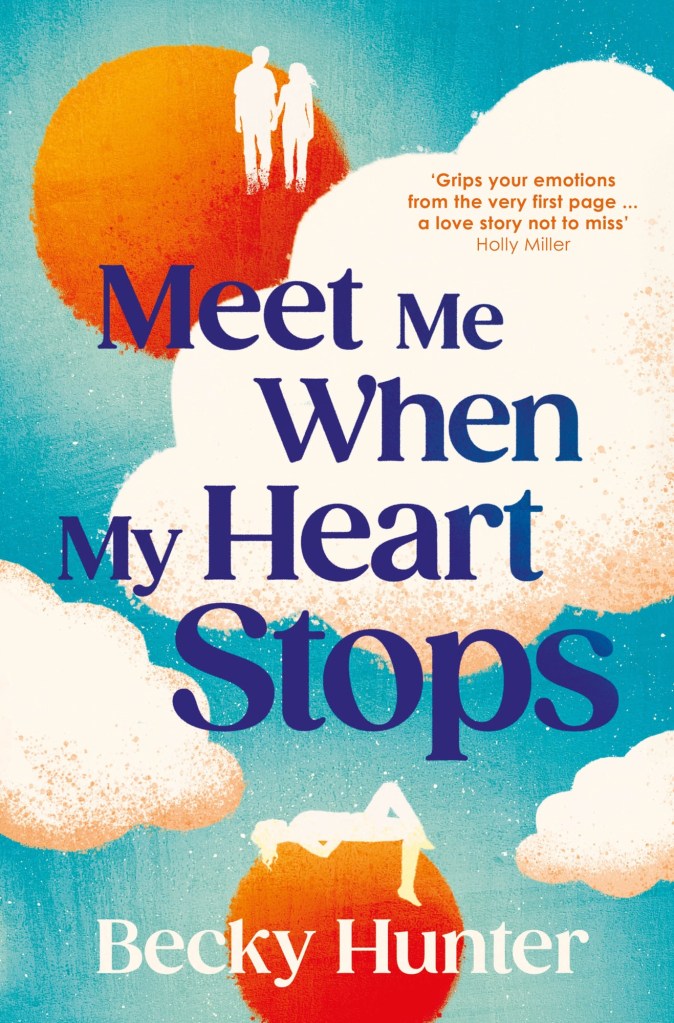
Meet Me When My Heart Stops by Becky Hunter

What if your soulmate could only ever be the love of your afterlife?

The first time Emery’s heart stops, she is only five years old…

Emery is born with a heart condition that means her heart could quite literally stop at any moment. The people around her know what to do – if they act quickly enough there will be no lasting damage, and Emery’s heart can be restarted. But when this happens, she is briefly technically dead.

Each time Emery’s heart stops, she meets Nick. His purpose is to help people adjust to the fact that they are dead, to help them say goodbye, before they move on entirely. He does not usually meet people more than once – but with Emery, he is able to make a connection, and he finds himself drawn to her.

As Emery’s life progresses, and she goes through ups and downs, she finds that a part of her is longing for those moments when her heart will stop – so that she can see Nick again.

This is the story of two fated lovers who long for each other, but are destined never to share more than a few fleeting moments – because if they were to be together, it would mean the end of Emery’s life.

I recently got married. Kev is my best friend and I can’t imagine daily life without him. Seventeen years ago I could never have imagined this scenario. Seventeen years ago my soul mate was taken away from me. Jerz and I had been together for seven years and I lost him by slow degrees over that time, as he slowly succumbed to breathing complications due to multiple sclerosis. One of the things I found so difficult about his death was just how final it was. I’ve often heard bereaved people say that they can feel their loved one’s presence, that they communicate with them or that they feel visited by them in some way. I felt nothing. I couldn’t believe that we could be so close in life, then have nothing. Somehow I thought our love could transcend death. I still love him of course, but nothing comes back. I wondered if our connection wasn’t as close as I imagined, or were those other people just kidding themselves? Unable to face the reality of death had they imagined the robin visiting their garden was a loved one? I had one night where I was so close to joining him. I couldn’t imagine carrying on. But somehow we do and I felt I would be letting him down if I didn’t fully live my life. Kev and I talk about him often and he knows that if he goes first he must find Jez and share stories of what it’s like to be married to me. So, in a way I felt I had some investment in this story. I have my very own Nick in the afterlife, but I’ve met mine before. I wasn’t sure about a love with someone completely new in the hereafter. I wasn’t even sure what Nick was – Death, the Devil, an angel? However, I was fascinated with Emery’s real life.

When someone is diagnosed with a condition that’s life limiting or ending, it doesn’t just affect the individual. The whole of that person’s family and friends have to get used to the diagnosis and what it means for them. For my late husband and me ( I also have MS) it meant a closeness with our family that possibly wouldn’t have happened without those periods of illness and uncertainty. I think it makes us appreciate each other more and make the most of being together. Yet for Emery’s parents it’s even worse. My parents felt guilty that I’d been diagnosed, relieved, scared and incredibly sad all at once, but whatever happened we knew that I’d still be around. Emery’s family have to accept that they might lose their daughter, but have no idea when it’s going to happen: it could be when she’s 6 years old on her way to school, it could be when they’ve just had a teenage row, it could be when she’s at university and no one’s there to help, it could be on her wedding day. It’s hard to live with such uncertainty. It’s hard to just carry on and live a normal life, but it’s also hard to continually treat someone as if you might lose them, every single day of your life. Sadly Emery’s parents react in different ways. While her mother is scared and grieving, she believes in carrying on as normally as possible. Whereas her father becomes anxious and hyper-vigilant. He wants to know where Emery is at all times, which risks he can eliminate, for everyone around Emery to know about her heart condition and that she only hangs out with those who know and can do CPR. This isn’t so much of an issue at a primary school age, but as Emery becomes a teenager she wants to spend time with new friends, go on school trips and maybe meet with boys. All of this is completely normal for her friends, but Emery has to ask and then listen to her parents tearing each other apart downstairs. For her dad there are no negotiations and no compromises. Until, in the end, it just becomes too much to cope with and her mum leaves. Emery lives with the guilt of feeling that it was her condition that caused her parents to split up.

I wondered throughout how much of Nick was real and how much was a subconscious invention. Something her mind created so that in those first moments after death Emery doesn’t feel alone. It’s also easier to be in love with someone who isn’t in your everyday world, especially when you have a hidden illness. As Emery learns, dating in the real world is much more complicated. When do you ‘come out’ to that new person about your invisible illness? What if you collapse on a date? Then as time goes on the bigger questions start to come up. How can you move in or marry someone and give them this terrible burden to carry? How can you live a normal life together when at any time they could lose you? Look what her illness did to her parent’s marriage? How do you tell someone that if they pick you, they’ll have to sacrifice having their own children? Isn’t it too big an ask? Nick knows everything, in fact when she’s with him she’s already dead so that removes the risk. It is the easiest relationship she has. I could see how it would be easier to be in love with him than someone in real life. Emery’s trusted friends are Bonnie and Colin who live nearby, they know everything and are trained for the worst eventuality. It’s clear that Colin has feelings for Emery, but he’s the boy next door. He’s probably the only boy that her dad would feel she was safe with and that’s a real turn off! As Emery gets more rebellious and starts to test her limits she doesn’t always understand that she’s more than just one individual – she’s the sum of the people who love and care for her too. The consequences of her risky actions are not just hers; there are consequences for her parents, her sister Amber and her niece, her friends Bonnie and Colin, who clearly has feelings for her. If she made the decision to be with Nick, it would mean all these people losing her.

I was truly fascinated by how the author portrayed Emery’s journey. It was full of emotion and beautifully written. I can testify that it really isn’t easy coping with a life-limiting condition. I was 21 when I was diagnosed and could reason things out, but I still struggled with my self-image and how other people saw me differently. I’d had my wild teenage years not knowing, but Emery has to go through all of that never knowing if this is her last day. It polarises life by making some things feel completely futile and others soul- searchingly important. There’s not much room for the everyday when every day might be your last. I’m not sure if it was the author’s intention, but I didn’t fall in love with Nick and Emery’s love story. I fell in love with Emery herself, this beautiful, bright and vibrant girl who dies for the first time age 5. I understood her and more to the point, I felt like the author truly understood Emery’s experience. I felt seen. I was also rooting for Colin. I wanted Emery to choose real life, the ups and downs and every day with all it’s messiness and complicated feelings. To share life with someone instead of the afterlife.

Published by Corvus 21st April 2024

Becky grew up in Berkshire, UK, and has loved reading since before she can remember. After studying social sciences at Cambridge university, this love of reading led her to a career in publishing, where she worked as a book publicist in London for several years before taking a career break and moving to Mozambique to volunteer with horses. It was here that she decided to give writing a proper go, though it was still a few years, a few more destinations, and a couple more jobs before she had the idea that would become ONE MOMENT, her debut novel.

She currently splits her time between London, Bristol and Falmouth, and works as a freelance book publicist and editor, alongside her own writing.

Find Becky on Twitter (@Bookish_Becky) or Instagram (beckyhunterbooks) – she’d love to hear from you!

Posted in Netgalley, Personal Purchase

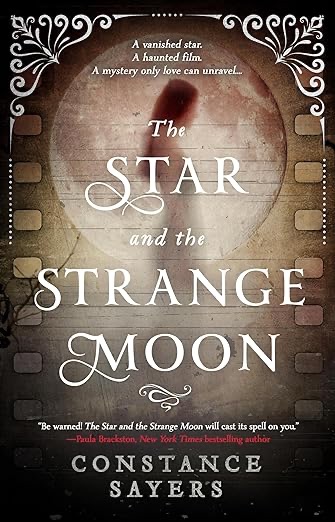
The Star and the Strange Moon by Constance Sayers.

Constance Sayer’s latest book has a lot of her literary trademarks: time slip narratives; a mystery to solve; magic realism and romance. She places her story in the world of Hollywood and film-making, with two main characters – the actress Gemma Turner and young film-maker Chris Kent. In 1968 Gemma is staying in London with her rock star lover Charlie Hicks when she is offered an unexpected film opportunity. Until now Gemma has been making a series of surfing films based in California, but she’s been longing to make something that has more critical acclaim. French director Thierry Valden is part of the nouvelle vague or new wave movement and has offered her the lead role in his next film L’Etrange Lune a vampire film set in 19th Century France. He seems open to changes and often works with improvisation so her long held skills as a writer might be needed too. However, when she gets to Thierry’s chateau the mood seems to have changed. She is greeted by Manon Valden, who warns Gemma off her husband immediately which isn’t very welcoming. Thierry doesn’t seem like the man she met before and when she reads the up to date script it still has the same stilted dialogue, despite the potential changes she had sent him. When she finally speaks to Thierry alone, he makes it clear that something has changed. He had envisioned more of a collaboration both on the script and possibly in the bedroom, but L’Etrange Lune will be his final film and he can’t afford to take risks. Gemma will have other opportunities for scriptwriting but he won’t. The next day as they’re filming in the nearby town of Amboise, Gemma has a scene where she runs down a darkened and cobbled alleyway, seconds after calling action the camera has suddenly lost her. Has she fallen on the cobbles? Are the dark shadows concealing her? Maybe she’s walked off in a huff. Yet it seems Gemma is genuinely gone and as they look back over the scene on film, frame by frame, she’s simply disappeared in front of their eyes.

Christopher Kent has had a strange fascination with the actress Gemma Turner since he was a child. Now at film school in 2007, his attachment to the actress stands out because she was never one of the greats – students aren’t usually hung up on obscure actresses from a handful of surf films. He remembers the day he first saw her, in a hotel where vintage black and white photos of actors were hung next to every door. In a very chaotic and traumatic childhood, this was one of those moments where he and his mum were without a roof over their heads. Chris could sense his mum was edgy and on the verge of a mood change, but as they approached their room and she saw the photo by the door she flew into a rage. She pulled the picture of Gemma Turner off the wall and smashed it, shouting personal insults and expletives. What was her link to the actress? Knowing Chris’s fascination with Gemma, his girlfriend and fellow student Ivy comes to him with a strange proposition. Every ten years Gemma’s final film, L’Etrange Lune, is shown to a select group of 65 guests at a randomly chosen cinema. Ivy’s father is one of the 65, but for this viewing he has offered Ivy his two place. They must wear a mask and cloak, but most importantly of all they must never approach or try to identify other members, nor can they talk about what they’ve seen. Chris doesn’t know what to make of the film. It seems to be a rather formulaic vampire movie, but there’s something odd about Gemma’s performance, almost haunting in fact. While in some places it’s fairly average, in other scenes there’s an incredible intensity to her acting. It’s almost as if she’s genuinely terrified.

I found the book a little slow at first, but once we reached Gemma’s disappearance I was hooked by this strange story. As we reach Gemma’s timeline in France and Chris starts investigating her disappearance several decades later, the pace of both timelines really picks up. There are suddenly enough strange and impossible happenings for the reader to start wondering what’s coming next. To be honest it felt like anything might happen! I loved the sense of evil created by the film – the strange melancholy that falls over those who see it, something that worsens if you keep going back every ten years. The rumours that the film changes in that decade are intriguing and suggest someone is still behind the lens. Could one of the 65 be playing tricks on the rest? Perhaps not letting on they have extra scenes that Thierry discarded, or that they have found an actress who is the double of Gemma Turner. Is something magical at work here? Despite all the warnings, I did understand Chris’s need to investigate, even when those he interviews start to feel the consequences of talking. This is such a clever concept and the author creates a real sense of mystery with wonderful period detail, especially in the 19th Century when there’s much discussion on the restriction and discomfort of women’s fashion especially in the summer. I also enjoyed 1960’s London where Gemma’s lover Charlie is part of a Fleetwood Mac-esque band where partners are swapped as readily as song lyrics. There’s even a very unexpected romance woven within this magical and unexpected series of times and worlds. What I wanted to see more than anything was for Chris to overcome the trauma of his childhood and fulfil his potential, wherever and whenever that might be.

Out in paperback from Piatkus 28th March 2024

Meet the Author

Constance Sayers is the author of A Witch in Time, The Ladies of the Secret Circus, and The Star and the Strange Moon from Hachette Book Group.

A finalist for Alternating Current’s Luminaire Award for Best Prose, her short fiction has been nominated for the Pushcart Prize and Best of the Net.

She received her master of arts in English from George Mason University and graduated magna cum laude with a bachelor of arts in writing from the University of Pittsburgh. She attended The Bread Loaf Writers Conference where she studied with Charles Baxter and Lauren Groff. A media executive, she’s twice been named one of the “Top 100 Media People in America” by Folio and included in their list of “Top Women in Media.”

She splits her time between Alexandria, Virginia and West Palm Beach, Florida.

Posted in Squad Pod

The Knowing by Emma Hinds

If this author had a certain readership in mind when writing this debut novel, she might as well have had a picture of me. I would have picked this book up on the strength of the cover alone. Three of my all time favourite books are: The Crimson Petal and the White set in the seedier areas of 19th Century London with a heroine is a prostitute called Sugar; The Night Circus that appears without warning, held together by real magic and the result of an epic battle between two magicians; The Museum of Extraordinary Things where our heroine is a mermaid, exhibited in a freak show at Coney Island. See what I mean? It’s perfect for me. The blurb promised me a tattooed mystic, a show run by a prostitute with dwarfism and real life New York gangs and Barnum as their contemporaries. It’s quite a heady mix and I was enthralled from page one. Flora is a tattoo artist and mystic, in an abusive relationship with a tattooist called Jordan, a member of an Irish gang the Dead Rabbits. She longs for escape from the slums of Five Points and the degrading relationship she’s been in since she was a teenager. Then she meets Minnie, a beautifully dressed woman whose dwarfism has led her to a career as a circus and freak show performer. Minnie promises Flora a career and life in an opulent town house uptown, not to mention her freedom. However, the freedom she’s promised comes with certain conditions.

Flora stays with Minnie, in her palatial bedroom and bathroom within the townhouse that belongs to her lover, Chester Moreton. Avoiding Chester’s advances seems to be one condition of Flora’s freedom, along with constant worry about being found by Jordan’s friends in the Dead Rabbits gang. She’s to earn her keep as a mystic, with her tattoos and tarot cards the centre of attention. Minnie knows that Flora’s skills run deeper, although she’s always been warned to hide them and ‘tell nuthin’. Flora’s gift is ‘the knowing’ an ability to summon the dead that’s always on the periphery of her performances, but kept at bay by Flora’s willpower. It’s when she’s pushed into allowing her spirit guide to break through that the trouble begins. At the Hotel du Woods she exposes the abuser and killer of a young boy, setting in motion a chain of events including suicide, murder and madness. Flora and Minnie escape and voyage to Manchester, where they try to survive on what they can earn from sex work and Flora’s tarot readings, but the past is never far behind and once again Flora finds herself at the centre of a love triangle where obsession and betrayal are medicated with drugs and alcohol and a tragic end seems inevitable.

I felt fully immersed in the novel immediately as the author creates an incredible sense of place. Five Points is grimy, deprived and controlled by gangs. I loved how the author used the grotesque throughout the novel and particularly where she’s describing the slums of New York and Manchester, filled with rats, unwashed bodies and an ever present grime that’s sticky on the skin. This took me straight back to university and Kristeva’s theory of abjection. The things that women’s bodies can do are magical or monstrous. Flora’s body is a conduit, allowing the dead to speak through her. Minnie’s body is seen as grotesque by others, but she wears angel’s wings and when she’s in bed with Flora it’s the softness of her skin that’s noticed first. All women have a transformative power to produce another life, when their pregnancy isn’t terminated by the men in their lives. The author doesn’t hold back when describing the reality of life for women, particularly women like Flora who haven’t had choices. Bodies seem divorced from minds when it comes to sex with men, as torsos become slabs of meat, breaths are whisky sour and skin is raw, red and broken. Sex is rarely consensual and always comes with violence. It’s a grim world so any chance to escape into a better future is welcome. The gentle and pleasurable attentions of Minnie are a promise of things to come, where Flora could have choices and sexual experiences that come from a loving place instead of a place of ownership.

No one here is perfect. Each character is morally grey and I loved that complexity in their personalities and the ambiguity it brought to their actions. I was also transfixed by the sheer power of Flora’s ‘knowing’. Mediumship has become something of a joke these days, a formulaic stage show where people are picked out of the audience and told that Grandad left the priceless clock in the attic or under the floorboards. It’s always benign and a little bit boring. Flora’s spirits are not there to guide her and they’re definitely not benign. They want to expose truths, tell the subject’s darkest secret and even mete out punishment where necessary. The first seance at Hotel du Woods is successful from one viewpoint – the spirits do come through – but a disaster from the other side when a vengeful spirit talks a man into killing himself. No one will be booking them again! Flora will have to learn how to control the spirit’s power and keep the vengeful ones at bay. Strangely, for a story where our main character is prevented from carrying children, this felt like a story about mothers too. It’s about the lack of a mother when growing up and how the lack of motherly love and protection feels, but it also shows the people who fill that void and become mother figures. This could be a difficult read for some, especially the sexual violence, but it would have been the daily reality for women living in 19th Century slums and for some women in upper Manhattan townhouses. I desperately wanted Flora to survive and have the right people around her, to give her the feeling of being loved and wanted. This is an addictive read of vengeance, betrayal and obsessive love and I couldn’t stop reading until I knew the truth of Flora’s fate.

Meet the Author

Emma Hinds is a queer novelist and playwright from Manchester. She focuses on untold historical Queer narratives and her debut novel, The Knowing, from Bedford Square Publishers is coming in January 2024.

Posted in Publisher Proof

Shark Heart by Emily Habeck

When Ella from Hachette Books messaged me to say there was a book she thought would be right up my street I was a little surprised. I didn’t think the publicists would know me and my book choices well enough to make predictions about what I’d like. I was wrong. She knew exactly who this book was for. ‘It’s about a man turning into a Great White Shark’ she told me, well what’s not to like? I was hooked on the idea before the book even arrived. Lewis and Wren have fallen in love. They’ve no idea that their first year of marriage will also be their last. It’s only weeks after their wedding when Lewis receives a rare and shocking diagnosis. He has an unusual mutation. Although he might retain some of his consciousness, his memories and possibly his intellect, his body will become that of a Great White Shark. Lewis is complicated, an artist at heart he has always wanted to write the great American play for his generation. How will his liberal and loving heart beat on within the body of one of the earth’s most ruthless predators? He also has to come to terms with never fulfilling his dreams, but expressing that anger with shark DNA in his system has huge repercussions. He has to come to terms with leaving Wren behind, for her own safety. Wren wants to fight on. To find a way of living and loving each other as Lewis changes. She is told that there will come a point when this will be too dangerous. Lewis will then have to live in a state run facility or free in the ocean. It’s when she sees a glimpse of his developing carnivorous nature that a memory from her past is triggered. Wren has to make a terrible, heart-wrenching decision.

I felt emotionally devastated by this beautiful novel that uses a fantastical premise to unleash experiences of grief, love, loss and potentially, healing. Wren and Lewis reminded me of my relationship with my late husband. We married after six weeks and even then I knew I wouldn’t have him forever. I had almost seven years until I lost him. This book explained how my own grief experience felt. After Jez’s death I felt furious with anyone who said ‘Jez would think..’ or claimed they could sense his presence. I could feel nothing. No voice, no presence, nothing. It was as if he had never existed. For Lewis there becomes a point when his incessant desire to feed will become his overriding thought, strong enough to wipe out all others, will that include his love for Wren? He will not exist as Lewis anymore, the doctors tell Wren, he will not even know who she is, because he will be all shark. Wren has to come to terms with letting Lewis go, but how do you walk away from the most precious thing in your life? I had a point where I had to decide that I couldn’t look after my husband any more. I was exhausted, we had no carers in place and it didn’t feel safe to try and go it alone. Besides, as his brother told me, I had to start building a life without Jez. I cried more the night he went into nursing care, than when he died, because I felt I’d let him down and I knew he would die. He did, only six weeks later. Wren is told the same after a terrible violent incident occurs at the after-party for the play Lewis’s students have worked on. Wren calls the specialist nurse for advice, but she urges Wren that it’s time. Will they be able to say goodbye?

Despite these similarities to my life, it wasn’t Lewis’s story that broke my heart, It was Wren’s story. This is not the first time Wren has had to say goodbye. When she was barely a teenager her mother also had a rare diagnosis, but her mutation was that of a Komodo Dragon, equally deadly and impossible to live with. One scene between Wren and her mother, as she leaves her in the state facility, was so deeply moving I cried. I found it unbearable. This is what’s astonishing about Emily Habeck’s debut. It seems so fantastical, yet is utterly real in it’s experiences and emotions. Using such unusual animals as the mutation/illness creates a distance from the feelings involved. Some readers might even think the premise ridiculous – but the terrible anticipation, the moment of loss, the grief and relentless momentum of life are exactly the same. It doesn’t matter whether it’s the decision to put an elderly parent in a home or a Komodo Dragon into a facility, the guilt and pain as you walk away feels identical. It isn’t all relentless misery though. We meet Wren’s mother as the teenager she once was, experiencing love for the first time. We also go back to Lewis and his new life in the ocean, as his emotions flit between loss and what’s for dinner. His friendship with Margaret is so funny. She was once a human too and she’s been looking for another hybrid to talk to, and boy does she talk?! She’d try the patience of a shark. In a beautifully unusual way and in an almost poetic prose, this beautiful debut is about life. It’s ups and downs, the horrendous losses and the gains: the naivety of first love, becoming a mother, our love and care for an elderly parent, friendships and realising that a special little girl sees you as her dad. Life is constant adaptation, evolving and developing all the time. Every end is a beginning. This is such a special novel, an incredible debut with such a keen grasp of what being human is all about. I can see this becoming an all-time favourite for me. It quite simply took my breath away.

Meet the Author

Emily Habeck has a BFA in theater from SMU’s Meadows School of the Arts as well as master’s degrees from Vanderbilt Divinity School and Vanderbilt’s Peabody College. She grew up in Ardmore, Oklahoma. Shark Heart is her first novel.
Published on 3rd August by Jo Fletcher Books

Posted in Netgalley

Vita and the Birds by Polly Crosby

1938: Lady Vita Goldsborough lives in the menacing shadow of her controlling older brother, Aubrey. But when she meets local artist Dodie Blakeney, the two women form a close bond, and Vita finally glimpses a chance to be free.

1997: Following the death of her mother, Eve Blakeney returns to the coast where she spent childhood summers with her beloved grandmother, Dodie. Eve hopes that the visit will help make sense of her grief. The last thing she expects to find is a bundle of letters that hint at the heart-breaking story of Dodie’s relationship with a woman named Vita, and a shattering secret that echoes through the decades.

What she discovers will overturn everything she thought she knew about her family – and change her life forever.

I’ve looked forward to the new Polly Crosby novel for a while, it was one of my most anticipated books of 2023. I love her writing so I gave myself a lovely sunny weekend to completely wallow in the story. It seemed fitting that I was outside, since nature plays a strong part in the novel both metaphorically and as an extra character that’s often more vivid than the inner spaces. Eve has felt adrift since her mum Angela died so her four brothers think it might be good for her to take a trip to the coast and clear out their grandmother’s studio. Grandmother Dodie was a painter and lived a fairly basic life in a small ramshackle studio just off the beach. Eve has fond memories of childhood holidays there, when her brothers would snuggle up with her like sleepy puppies on the studio floor at night. Close by is the strangely alluring Cathedral of the Marshes, a glass building so imposing it has the presence of such a holy building. Once, when she was a teenager, Eve had taken a dare to go into the cathedral with Elliot, one of the local boys. She remembers being terrified, but doesn’t remember much else about that night apart from seeing a painting standing on an easel. Strangely, it was a portrait of her and she ran out into the night, never to return. How will it feel to be back in a place that she has feared, but that still holds some of her best childhood memories? When she finds Dodie’s letters and reads of her relationship with Vita, she is plunged into a completely hidden part of her grandmother’s life.

This is a dual timeline novel, so through the letters we go back to the outbreak of WW2 and Dodie’s early years at the studio. She met one of her more notorious neighbours, Vita Goldsborough, resident of Goldsborough Hall and an owner of the glass cathedral. Vita and her brother Aubrey are the subject of gossip in the village. The stories are varied: Vita went mad and was put in a psychiatric hospital; Vita and Aubrey committed incest; they were to blame for ‘the vanishings’. They didn’t mix in the village and the stories around the siblings seemed to multiply and when a local girl vanished they were the first to be blamed by villagers. Strangely, as Eve arrives, a boy goes missing. It seems like an echo of the past, a foreshadowing, as if this is a thin place where memories and historical events seem close enough to touch. The physical sorting of her grandmother’s belongings is a simple enough task, she will just hire a skip, but when it comes to finding things that evoke memories and emotions they’re not so easily thrown away. Now Eve finds herself questioning the past and discovering things about this place and her beloved grandmother that she’d never imagined.

I thought this was a fascinating story highlighting women’s history and showing how much Victorian attitudes still prevailed in aristocratic society. The way Aubrey Goldsborough thinks feels around forty years out of date and the power he has over his sister we would now label as coercive control. Vita tries to explain to Dodie that his hold over her is so powerful he doesn’t have to force her, he simply has to tell her what to do and she obeys. He wants Vita to be respectable and only spend time with the right sort of people. Becoming friends with a bohemian artist like Dodie was definitely unexpected and she is the epitome of the wrong sort of company. Vita decides that Dodie must paint her portrait, something that her brother can’t really object to. Aubrey would like her to make a good marriage, but Vita’s interactions with men are fast and short-lived. Vita’s rebellions had to be passive aggressive – she gathers her jewels and keeps them in a box chained to the bottom of a pond in the glass cathedral. Hopefully, she can sell them without Aubrey knowing and have some financial freedom. She and Dodie hide in plain sight after Aubrey goes to war. They set up home in the cathedral, able to see everything around them, but thanks to the reed beds outside they are very unlikely to be seen. In another echo of her grandmother’s past, Eve meets an elderly lady in the village who asks to have her portrait painted. Eve isn’t usually a portrait painter, but can’t turn down the generous money offered for the work. She has the key to the cathedral and suggests they use it for their sitting, so Eve stands where her grandmother did many years before. What might this lady know about that time and her grandmother’s life?

The outside spaces seem to have an effect on Eve and I noticed a more natural, authentic part of her shine through. When she’s wild swimming or having a campfire on the beach with her brothers it feels like she belongs here. I was fascinated with how Polly plays with interior and exterior spaces, mirroring the parts of themselves her characters are revealing and concealing. Dodie’s studio has one glass side, leaving the whole living space open to view and her only concession to privacy is a screen where her models can undress. This is so in keeping with Dodie’s character, she is who she is and nothing is usually concealed. A beautiful detail comes when Eve is aware that putting the light on opens the space up to the outside like a stage set, but switching it off opens up the landscape outside. The cathedral is something of a paradox because I thought at first the glass would be very exposing, but Aubrey had designed it with living spaces that were kept private. I was imagining it like a Victorian glasshouse or orangery, very ornate with an almost tropical climate inside. The central ‘Turkish Room’ where Vita sits for her portrait has an otherworldly feel, with a smell of vegetation and rotting fruit. A large pool sits at the centre and church pews are placed around it upholstered with Turkish throws and pillows. There’s a sensuality to this space, the heavy warmth and the softness of pillows contrasts sharply with the glass. The room is hidden by the marsh reeds and it feels like a world apart, a feeling echoed by the ornamental bird cage engraved just for them. It holds Vita’s canaries, until one day they escape out through a hole in the roof. Yet they come back and visit Vita, eating out of her hand and filling the room with beautiful bird song. The name Eve finds scratched on the cage alongside that of Vita and Dodie should be no surprise. It’s a hope that person will return and bring a new generation back to the cathedral, represented by the flock of yellow and brown canaries Eve sees fly into the cathedral – the ancestors of those first two birds returning to their home.

As with previous novels, Polly really knows how to pile on the layers of mystery and create an undercurrent that’s quite unnerving: the painting that looks like Eve; the birdcage and the names engraved on it; the earrings Eve finds under the sink in the studio that she’s never seen her grandmother wear. Eve’s mind plays tricks on her, confused by the likeness between Vita and her grandmother, but also with herself. She’s still confused about that night when she was a teenager, when she went into the cathedral on a dare. Did she really hear a woman’s voice? Was she holding something when she ran away? Was it a shard of glass? As we move towards finding out what happened in the cathedral all those years ago the tension builds and I worried whether the two women would be safe from someone like Aubrey. Eve knows that he was found dead in the cathedral cut by a shard of glass, but was it suicide or murder? Whatever happened to Vita, someone her grandmother never talked about? There’s also the question of Eve’s mum Angela, born around the same time period but brought up by Dodie alone and has never known her father. As Goldsborough Hall was obliterated by a bomb during the war, only the cathedral remains and I wondered who owned it now? I was totally engrossed by this point and dishes went unwashed, the dog went unwalked and my other half, who knows when I’m lost in a story, kept me amply supplied with tea and toast. I do this strange thing when I’ve really enjoyed a book, I seem to hug it to my heart as if it can reach the characters inside. This was one of those books. It’s a beautiful hidden love story and an intriguing mystery as well, told with compassion and empathy.

Meet the Author

Polly Crosby grew up on the Suffolk coast, and now lives with her husband and son in the heart of Norfolk.

Polly’s third novel, Vita & the Birds, came out in May this year. Her first novel for young adults, This Tale is Forbidden – a dystopian fractured fairytale with hints of the Brother’s Grimm and The Handmaid’s Tale – is out in January next year with Scholastic.

In 2018, Polly won Curtis Brown Creative’s Yesterday Scholarship, which enabled her to finish her debut novel, The Illustrated Child. Later the same year, she was awarded runner-up in the Bridport Prize’s Peggy Chapman Andrews Award for a First Novel. Polly received the Annabel Abbs Creative Writing Scholarship at the University of East Anglia.
Polly can be found on Twitter, Instagram & Tiktok as @WriterPolly

Website: pollycrosby.com

Posted in Squad Pod

This Family by Kate Sawyer

I fell in love with Kate Sawyer’s imagination and writing skill when I read her debut novel The Stranding, so I was excited when the Squad Pod were able to confirm her new novel for our May book club. I didn’t know what to expect, whether there would be more of the same dystopian themes and emotional intelligence that I’d loved before or something completely different? This Family is different in that it’s set on one day where a family, with all it’s fractures and memories, are celebrating a wedding day. I often read books where I know I’m getting only a fragment of a much bigger picture. Kate Sawyer writes on several levels at once, from the personal to the universal. Each character has their inner world, their current outer world, other times and events, other people’s perspective on the character and events, then national and international concerns. It’s like someone shaking out the contents of my mind into a big jumble and seeing every single thought: I need to get some bread, last night’s dinner party was boring, thoughts of another dinner party years ago where I said something stupid, a worry about my dad’s health, thoughts on the book I’m reading, concern about the state of the health service and the war in Ukraine. Kate constructs her characters with all those levels creating a tapestry of this family’s life and how they all fit together to make a beautiful whole.

This was one of those books where I was conscious of empathising with an older character – Mary – who is getting married today and wants to have just one day where everyone behaves and is thinking of her happiness above their own concerns. She wants Phoebe to stay sober. She wants Emma to speak to her sister. Could her first husband Richard not be a dick? That’s all she wants. Just one day. As the family come together we see aspects of the day from different perspectives with all of the details I’ve mentioned. We see Phoebe’s inner thoughts. Then Mary’s thoughts and impressions of Phoebe. Rosie brings up a global concern – usually climate change, but Mary says it’s banned for one day. There is talk of COVID, the financial crisis, and even small boats crossing the Channel. Life is a tapestry of all these things, multi-layered and with contrasting colours. Kate gives each character their section, but she includes those events over the last few years that have stopped us all in our tracks like 9/11, theBoxing Day tsunami, the London terror attacks. Mary’s thread of worry when she hears of the tsunami, knowing one of her daughters is in Thailand. The thought she might be hurt pushing aside all irritations and harsh words. As a worker in the NHS Rosie’s proximity to the terror attacks and the pandemic cause other’s concern. This family is a jumble of memories, hurts caused, joint history, change, and then those moments of sharp focus when all that matters is their love for each other.

Their relationships are complex and at first it’s hard to know who everyone is and how they relate to each other. In fact the story of Mary is told so slowly I didn’t know who she was marrying until at least half way through the book. Going back over time, characters were married to different people and the relationships change. Even the sisters relationships with each other turn out to be complicated, yet they are still family. Emma’s story hit me deeply, because it was a story of childlessness and grief tearing lives apart. Emma married Michael, who was Phoebe’s best friend at university. Their marriage suffered due to pregnancy loss and when they lose their son, just as Emma was starting to think everything would be okay, it’s Mary that she asks for. She shuts Michael out and starts divorce proceedings, holding tightly to her feelings and unable to take on anyone else’s feelings of loss. Yet Michael will be at the wedding and will Emma be able to face him? There’s also her sister Phoebe to face and she has had a family, including a newborn. There’s a lack of communication between these two sisters, all pent up anger, jealousy and loss that they must put aside at least for today. When the truth of their rift is revealed the scene physically winded me. I felt for Emma, but could also see she’s her own worst enemy at times. It made me think about my own childlessness and the things people have said to me that hurt deeply at the time, but I could see if I held on to them I was hurting myself. At a time of great loss Emma cuts out the very people who might have helped and has missed seeing her niece and nephew.

Phoebe is a real talking point to and discussing her with other members of the squad has been enlightening, with many disliking her intensely. I could see where she’s hurt people with her reckless temper and with her addiction. Phoebe is now sober and married with a family, somewhere it’s hard to imagine her being when we delve into her past. I could understand how the family feel cannibalised by Phoebe’s successful newspaper column and her book, Mary particularly. She tried not to read it because she didn’t want to be blindsided by something her daughter recalls, in her own inimitable way. Phoebe needs her family, but their relationships with her are being slowly devoured, sentence by sentence. I found it interesting that when others recall terrible things Phoebe has done in the past, she really couldn’t see their position because she’s clouded by drink. She feels sorry for herself and can’t see past the self pity to wonder how others feel. As she recalls the terrible thing she said to her sister all the feelings of shame come bubbling to the surface, but she repeats a mantra to herself – ‘I do not hate myself; I hate the actions of my addiction’. She accepts that even though she has made amends, Emma doesn’t have to forgive her or accept her apology. Phoebe can only forgive herself.

I loved the meta-fiction element of how the story is told. Mary comments on the nature of stories, how the same event can be viewed differently by every person who was there just as the book’s structure shows. The wedding, when it finally arrives, feels like a natural full stop. As Mary looks out of the kitchen window and sees the three sisters laughing under the tree that made her want this house, she sees closure. As they laugh in the dappled un light and Emma holds her nephew Albie for the first time something has healed. This beginning – the start of Mary and her husband’s married life – is also an ending. He commits to a new chapter, leaving his first wife behind, but knowing that both he and Mary share their memories. Mary is moving from the house that the sisters have spent their whole lives in. She knows she will miss that tree. But she will no longer have the care of her previous mother-in-law, Irene. She observes that this day is only the end of a chapter, not the end of the book. More will happen, shown in that surprising fragment of an ending. We long for the closed answer, the neat and tidy ending, but that’s not life. Life is unexpected, messy, cruel and joyous. Then the author throws in a shock we aren’t expecting and despite Phoebe having done so much damage to this family, I didn’t want this ending for her. Yet her daughter Clara is only looking back, a memory she grasps at but can’t fully know. Is it a true memory, or is it a memory constructed from other people’s stories of that day? The author is always questioning how we construct reality, whether there is one true account of an event, or whether the story is fragmented, fluid and ever changing? This was a fascinating read psychologically and really made me think about how others see events we’ve shared and how families choose to overlook each other’s faults and bad behaviour, to come together and choose love, again and again.

Published by Coronet 11th May 2023

Kate was born in Bury St Edmunds, Suffolk, UK where she grew up in the countryside as the eldest of four siblings, after briefly living with her parents in Qatar and the Netherlands. 

Kate Sawyer worked as an actor and producer before turning her hand to fiction. She has previously written for theatre and short-film. Having lived in South London for the best part of two decades with brief stints in the Australia and the USA she recently returned to East Anglia to have her first child as a solo mother by choice.