What’s a book or movie that genuinely scared you?
In the aftermath of Halloween it seems strangely fitting to be thinking about what scares me and I have to admit to having the most vivid imagination and can easily scare myself without much input from books or films. However, I can never really anticipate what’s going to scare me in a book, with the exception of Pennywise the clown of course. He scares everyone right? So aside from It, I read a steady diet of Dean Koontz, Stephen King and James Herbert in my teens but always found myself more spooked by old fashioned ghosts or more realistic fears. So here are the three most recent writers I’ve been kept awake by and the books that creeped me out.
The Watchers and Stay in the Light by A.M.Shine
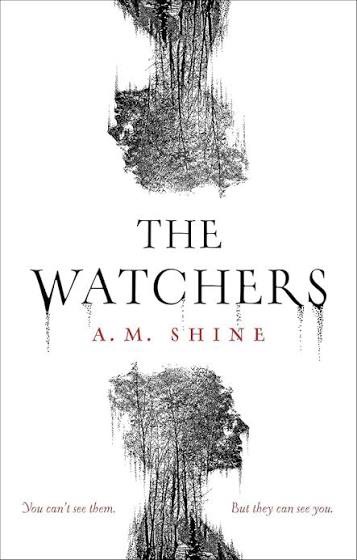
I chose A.M.Shine’s first novel, The Watchers on Netgalley and was blown away by how creepy it was. A woman is sent on an errand by her antique dealer friend and ends up getting lost in rural Ireland. When her car breaks down she knows she will have to walk to civilisation and the best way seems to be through a forest track. It’s still light and she figures she has enough time to get to the other side before sunset. Once in the forest Mina realises her mistake, it seems bigger than from outside and she’s concerned that the light might start to fade before she can get to the other side. She feels unnerved, although she can’t say why, then she hears a scream that isn’t human, but isn’t like any animal she’s ever heard either. As the shadows gather she is beginning to panic, when suddenly she sees a woman beckoning her and urging her to hurry. She’s standing by a concrete bunker and although that seems odd, Mina decides it’s better than staying out here to be found by whatever made that terrible noise. As they hurry inside and the door slams behind them, the screams grow in intensity and volume, almost as if they were right on her heels. As her eyes adjust to the light she finds herself in a room with a bright overhead light. One wall is made entirely of glass, but Mina can’t see beyond it and into the forest because it is now pitch dark. Yet she has the creeping sensation of being watched through the glass, almost like she is the parrot in a glass cage. A younger man and woman are huddled together in one space, so there are now four people in this room, captive and watched by many eyes. Their keepers are the Watchers, dreadful creatures that live in burrows by day, but come out at night to hunt and to watch these captive humans. If caught out after dark, the door will be locked, and you will be the Watcher’s unlucky prey. Who are these creatures and why do they keep watching?
I was absolutely entranced by this incredibly disturbing tale and loved the way the author created this unbelievable world inside the everyday. In the opening section Mina’s world is relatively normal, she goes about her day like any one of us. She has an irritatingly perfect sister, she gets lonely, she sometimes drinks too much wine. We can identify with these imperfections and relate to her. So when this ordinary woman, finds herself caught up in the extraordinary, we believe it because we already believe in her. Yet, the author carefully leave tiny details, that instinctively alert us that something is wrong. The remoteness of the place, the way her phone suddenly stops working, the single strange cry she hears – as if something is on lookout, alerting others to her presence. All of these are universal literary signifiers for ‘something’s not quite right here’. The author never describes the Watchers visually, again there are signs they leave behind and other sensory clues: the burrows in the ground, claw marks around the window, the revolting smell, their cries. Just as Mina is standing in the light, unable to see them lurking in the dark, so are we. Even when you think we’re going to ‘see’ them, we never fully do. The clues set our imagination on overdrive, we build the monsters in our heads which makes them so much scarier as they feed into our personal fears and phobias. The dynamics of the characters in this book are unsettling too and it has an incredible ending that blew my mind! I have the sequel Stay in the Light on my bookshelves because I know I want to read it. I just have to be in the right frame of mind.
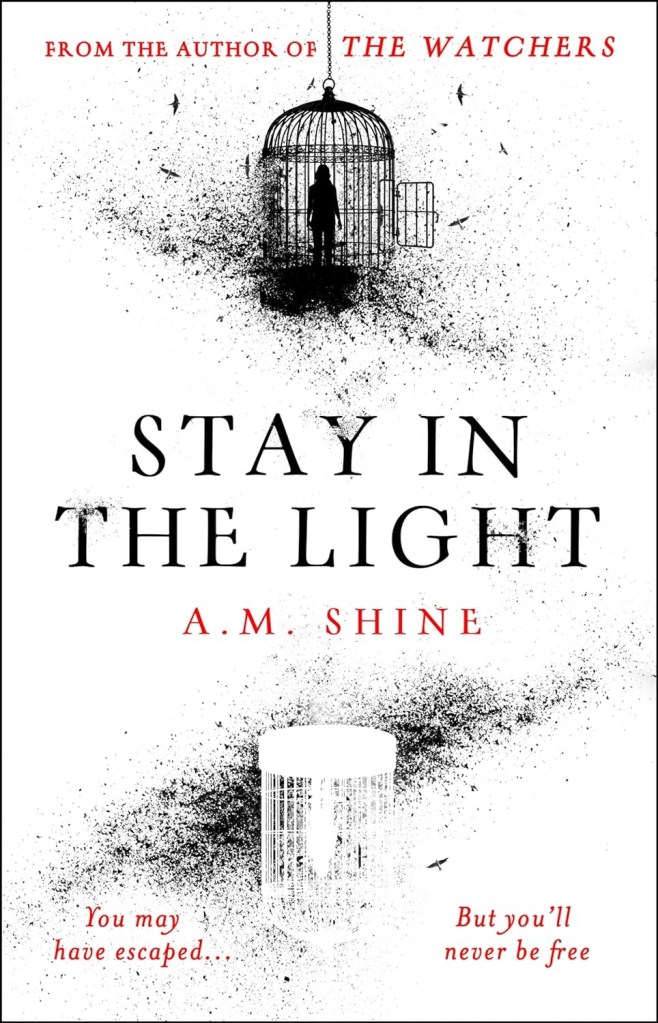
Nightwatching and Warning Signs by Tracy Sierra
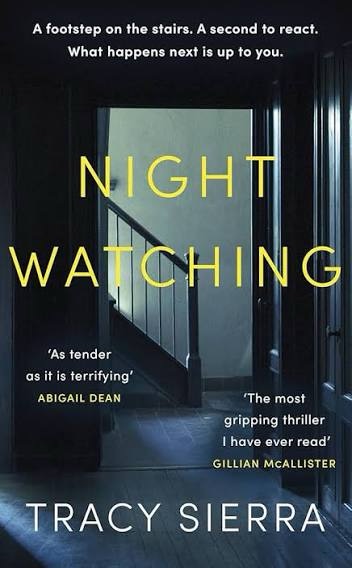
I was sent Tracy Sierra’s first book Night Watching totally out of the blue. I opened the parcel and then the first opportunity I got I flicked to the front page. I didn’t stop reading. I sat down where I was and disappeared into an opening section that is every woman’s worst nightmare; waking up to an intruder in the house. It begins with a nonsense rhyme:
Yesterday upon the stair I met a man who wasn’t there,
He wasn’t there again today, oh how I wish he’d go away.
Antagonish by Hugo Mearns
My grandad used to read me this exact rhyme and strange supernatural stories. I used to ask ‘but is he there or not?’ This is the very question this whole book revolves around from the very first line – ‘there is someone in the house’. Our unnamed narrator becomes alert in the night as a strange noise nudges her awake. I was told by a book reviewer who I respect enormously that this was brilliant and she was absolutely right. Although I drove my husband crazy by waking him up to ask if he remembered locking the door. He hadn’t always and I knew I wouldn’t sleep until one of us had crept downstairs and checked. Preferably not me! Our narrator is at her secluded home with her two small children in a blizzard. The sound she hears is a familiar one, a tread on the stairs to her room, but it’s unusually heavy and slow. She has a split second to make the decision – does she hide, try to run or stay and fight. Will all three of them get out alive and if they do will anyone believe her?
The first thing that hit me about this book was the unique voice this mother has. We see everything through her eyes and experience everything her body goes through – mainly fear. There’s the heart-stopping tension of that first night, the immediate threat rendering everything else unimportant. Yet there are other fears lurking underneath – will the police believe her, will it stir up questions about her husband’s absence, what will her father-in-law make of what has happened? She is waiting for people to doubt her and the reader doubts her too. Always on the lookout for unreliable narrators, I did wonder whether I should trust what she was experiencing. It’s just so incredibly odd. This tall intruder seems to have two voices: a raspy harsh voice when he’s angry then more of a soft, weedling voice. A voice you might use for children as he asks them to ‘come out little pigs, little pigs are more delicious’. As he does this right next door to their hiding place, it’s even more terrifying. Her little girl whispers to her its the ‘Corner Man’ from her nightmares, he sits in the corner of her bedroom at night and whispers to her. My heart was in my throat at this point! Was he real or something supernatural? Could he possibly be real if this is true? My husband was relieved when I finished this one, but the habit of locking the door is ingrained on both of us.
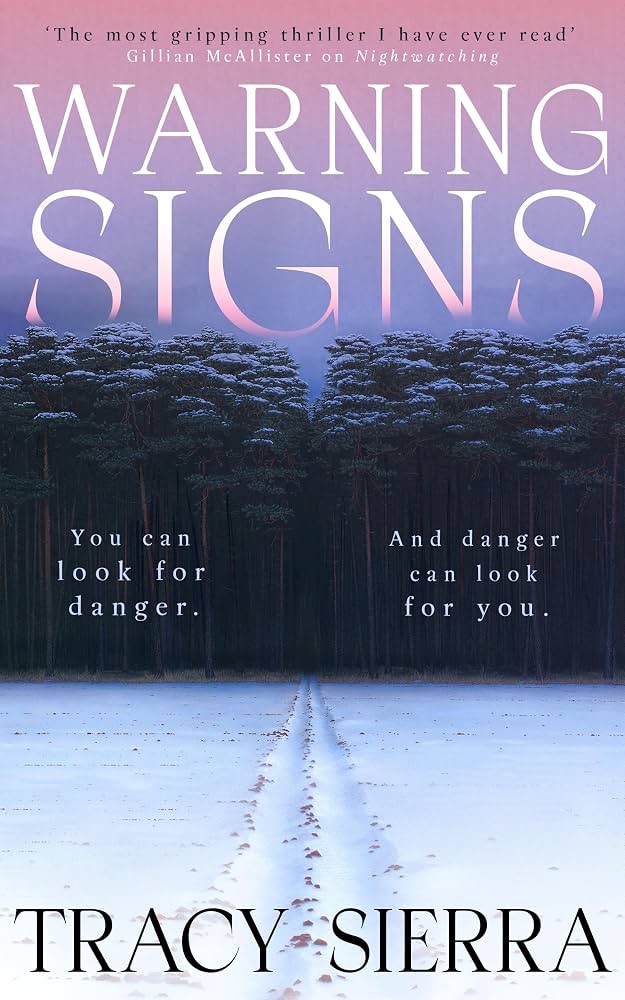
I approached her second novel with trepidation, would it be as good as the first? Well I can set your mind at rest. This novel is incredible and it’s on my end of year favourites list. This is a ‘stayed in bed almost all day to keep reading it’ type of incredible. The plot is simple enough. A young boy named Zach is taken by his father on a ‘boy’s trip’ to the wilderness with people he hopes will invest in his business. As they settle into their cabin and make it ready for guests it’s clear that Zach is an innocent boy, easily ordered around by his dad who’s angry that his secretary Ginny hasn’t been up to prepare the cabin as she promised. As they settle in for their first night, Zach is convinced something is lurking around especially when he has the visit the outside toilet alone and in the dark. The noises and shadows are like nothing he’s heard before. Could a monster be up here with them in the mountains? Possibly. But monsters aren’t always what we expect.
This author is fast becoming a master of complex and painful family dynamics with an edge of horror. This monster in the snow brought back memories of the first time I read The Shining and there are parallels in the isolated mountain setting, a potential pressure cooker of people forced together and the young, innocent boy at the centre of the tale. Zach knows this place very well, having come up here regularly with his mum and sister and this was one of my first questions. Where are the women in this story? We know Zach came up here with groups of women and their kids, but his mum, sister and even the expected Ginny are nowhere. In a small vignette at the beginning we see a previous trip and Zach’s mum explaining how to check the snow for the likelihood of an avalanche. She impresses upon him the importance of turning back, even if the risk is small it’s not worth taking. It’s clear very early on that Bram, his father, doesn’t have the same attitude to risk. He’s the sort of guy who thinks men take risks and would rather show bravado to his guests than follow the advice of his wife through Zach or the guide that comes with the cabin.
Zach is such a beautiful narrator and he’s written with such care, everything he thinks or tells us maintains that innocent, slightly anxious voice. I desperately wanted to protect him and get him out of this situation. As adults we wear masks – the one we wear for our job for example or the ‘telephone voice’ many of us use without really intending to. Children don’t and that creates a tension, especially in an environment where the whole purpose is to impress and sell yourself. Bram makes it clear that these men expect a winner and he has to act like one. This idea of wearing different masks is beautifully depicted as Zach takes us back to an evening at home where his mother had returned home late and a little drunk. He listened in silence to their argument and cursed his mother because she knows the rules. Why does she set out to make him angry? Zach describes his father’s other side as his ‘underself.’
“For Christmas two years ago, someone had given his sister a stuffed octopus that could be flicked inside out. Flip one way, pink, fuzzy and smiling. Flip the other way, green, slick and glowering […] switching outerself to underself.”
He has that horrible realisation we all have at some point in our childhood, that other people might dislike your parent or think they’re an idiot. As they set out and he watches his interactions with the other men he realises they can see through Bram. The guide sees he knows nothing and Bram’s need to own the best of everything means his mountain gear is flashy, it looks too new. The only other kid on the trip is Russ and he makes it clear that he knows exactly what type of man Bram is because his dad is exactly the same:
“My dad, yours? They’re selfish. They nearly got us killed. And for what? Steve said you and me shouldn’t have skied it and they ignored him, because god forbid they don’t get to do exactly what they want.”
How scary must it be as a child to learn that your parent is willing to take huge risks with your life for money? Even worse, Zach finds something that makes him wonder; if his dad has an underself does everyone else? The environment brings its own dangers with further snowfall and too many risks taken. Survival becomes a question between which is safest – taking the chance with the environment or staying indoors which is undoubtedly warmer and locks out whatever it is that Zach saw the night he ventured to the outside toilet. There’s always a tipping point and the pressure the author builds is almost unbearable. My heart was in my throat during those final chapters because I felt so protective of this incredible little boy. Tracy Sierra is able to evoke that heart thumping fear we feel as children, sometimes when we’re doing nothing more dangerous than lying in bed in the dark. With Zach she explores the difference between a manageable fear that’s no more than a calculated risk with the right understanding and techniques, a fear that simply comes from encountering something we’ve never seen before and the fear we can’t face because it’s too terrible. There are far scarier things than the monsters we imagine in the dark.
Changeling by Matt Wesolowski
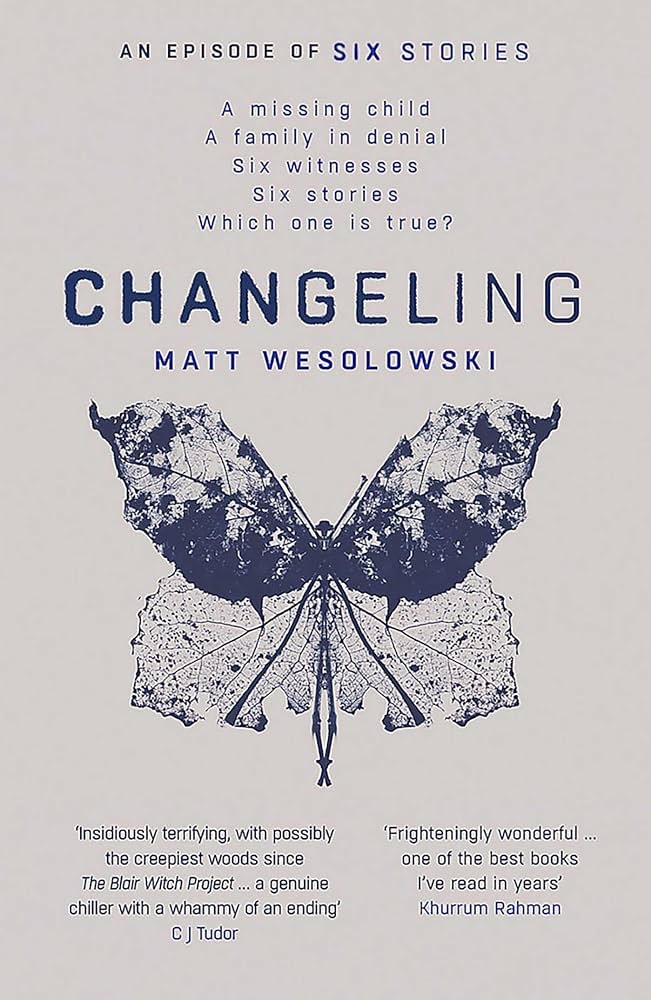
I read this with no idea of the subject matter, except that it would be framed as a mystery being revisited by a podcast called Six Stories, where Scott King interviews six people connected to a cold case. It’s not that he expects or aims to solve the case, although that’s a possibility, it’s about hearing different voices, perhaps ones that haven’t been heard or have something to add to their original evidence. I had no idea of the geographical location in the book nor could I have predicted reading it when I did. The case begins on Christmas Eve 1988 when Sorrel Marsden is travelling along the Wentshire Forest Pass, a road between Chester and Wrexham in North Wales. He hears a knocking sound in the car and decides to pull over in a lay-by to investigate. As he gets out he glances back to check on his son Alfie who is fast asleep in his booster seat in the back. Sorrel checks under the bonnet of the car, but not seeing anything obvious he decides to continue his journey. However, as he drops the bonnet he notices the rear passenger door is open and Alfie’s booster seat is empty. He looks for his son on the edges of the forest, but with no clue where Alfie has gone he goes to the phone box and calls the police.
I read this while we holidayed on the welsh borders, with the River Wye running through the garden of the cottage. We were travelling back from Chester Zoo when I started to read The Changeling and I’d passed navigation duties to my stepdaughter so I could put my feet up in the back. So I read Sorrel Marsden’s account of his son’s disappearance just as we drove from Chester into Wales! Wesolowski is skilled at creating a setting that slowly unnerves the reader and I felt this strongly as I read about the history of the forest and the interview King does with a contractor working on the construction of a holiday park. He worked in the forest when Alfie disappeared and tried to help search for the boy. Yet the floodlights and vehicles wouldn’t work – the very embodiment of a ghost in the machine. They were sleeping onsite when the knocking started, insistent and gaining in volume despite having no visible source. What I found most chilling were the voices, whispery and urgent little voices that were indecipherable but angry in tone and with a terrifying intensity. Sorrel Marsden has made a point of walking the pass every year on the anniversary of Alfie’s disappearance. He never claims to hear or see anything on his treks, but they do serve a purpose. They set him up as the victim, the hero of the piece, especially then compared with Alfie’s mother Sonia who has never taken part in the search or been interviewed about her son. Until now.
Sonia does consent to meeting King and talks for the first time about that awful Christmas. She doesn’t deny drinking, but claims that Sorrel is an unusual man, with an ability to draw people to him that goes beyond his looks or personality. She recalls being belittled and controlled. Yes she struggled as a very young and isolated mum, but no help came. Despite claiming she was a bad mother, Sorrel left her alone with Alfie and rarely visited. Other women contacted Scott King to tell their own story of encounters with Sorrel. Like a mini ‘Me Too’ movement these women come together to talk about coercive control, psychological abuse, strange knocking sounds keeping them awake and leaving them unnerved. I had my suspicions about Sorrel Marsden. The women refer to an unusual feeling they’d experienced, as if he had them in an enchantment. It made me think of the word ‘glamour’ in the way it’s applied to witches – folk tales tell of a witch’s ability to ‘glamour’ people, to only show those sides of themselves they wish to be seen. It’s also known as love-bombing. Sorrel is a master manipulator and serial abuser able to charm and convince women to trust him. He then slowly isolates them, breaks down their confidence, gaslights them and convinces them they are worthless.
Sorrel took them camping once in the same forest where Alfie disappeared. From then on Sonia would hear strange voices and knocking when no one was there. However the section that genuinely lifted up the hairs on the back my neck seemed a bit tenuous at first. King interviews a man whose mother has recently died. She was a teacher in the 1980’s, gathering research on pupils who had behavioural issues. Her son found the research in the attic and was intrigued by her notes on Child A, because Child A was Alfie Marsden. She recorded his behaviour on several occasions and the more she saw, the more scared she was. Alfie would turn his back on other pupils and deliberately ignore group activities. Alone with him, she heard muttering and although he wasn’t moving, she could hear a strange knocking. There were times where she was scared to look him in the face, he was unnaturally still as if he was listening somewhere or to something else. Did Alfie just have behavioural issues or was there something more sinister at play? There are a couple of utterly brilliant twists towards the end, neither of which I’d expected and one made me rethink everything I’d read up to that point, in a Sixth Sense way. I wanted to go back and reread with that knowledge, to see how I’d missed it. This was a brilliant and disturbing novel, a clever mix of psychological and supernatural elements that’s very addictive and will stay with you long after the book is finished. I was obsessed with noises in the night at our holiday cottage and felt watched in the open plan glass extension, especially at night. I had to read something fun and light afterwards but it definitely stayed with me.
You can listen to Matt Wesolowski’s real life encounter with the supernatural on this episode of the Uncanny podcast where he talks about a student house and a goth poltergeist.