Posted in Netgalley

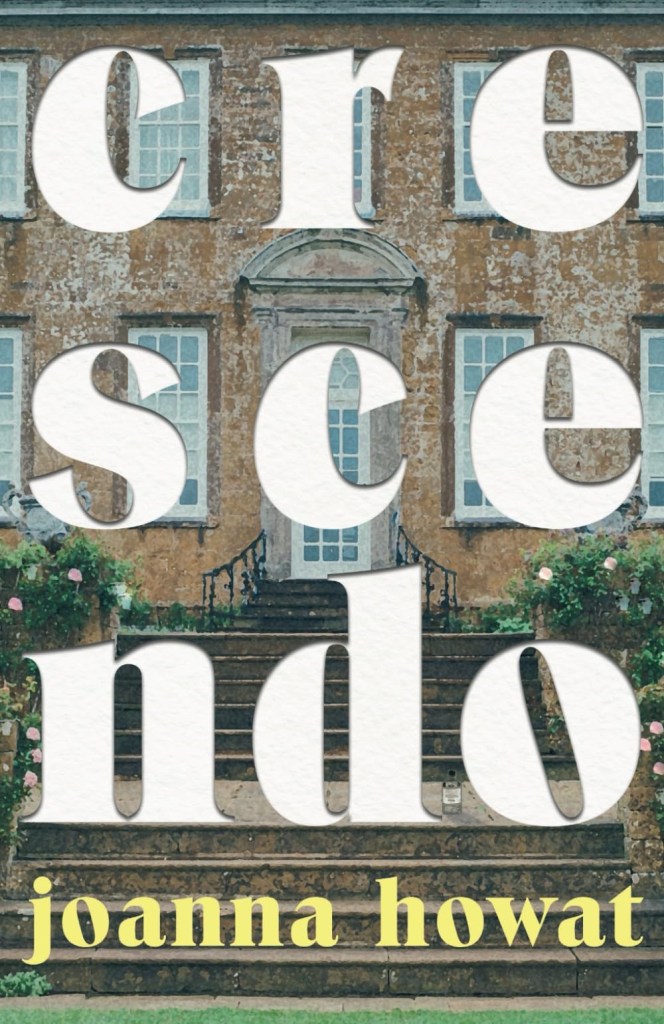
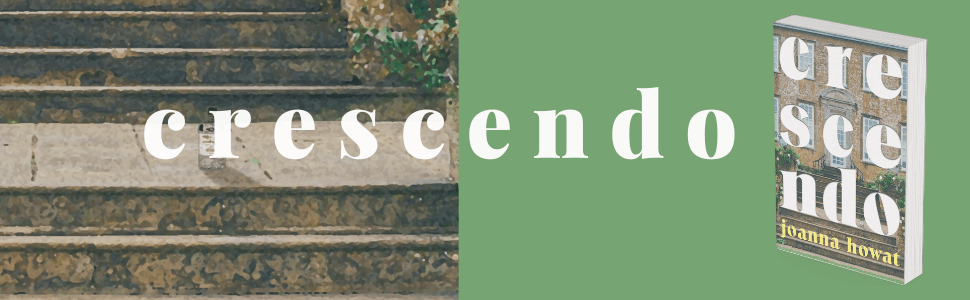
Crescendo by Joanna Howat

I love reading debuts because you’re never sure what you’re going to find and this tale of two adult siblings who lose their parents suddenly has all the family dynamics and trauma that I love to untangle in a novel. Jamie and Caz are used to their parents being top of the social scale in their area, a small village close to a market town in Yorkshire. Their family home is a hall in the centre of the village, where Jamie still lives alongside his parents having not found his career path yet. Caz has left home, but has a chequered history of teen pregnancy and alcoholism. She married husband Steve after he came to work on the hall’s electrics when her first little girl was only a baby and she had been sober for several months. Now they live in a cottage a short drive away from her childhood home and recently she’s had another baby. The catalyst to their problems is the loss of their parents. One Sunday both siblings are there for lunch when Jamie and his father clash over what he sees as his son’s fecklessness when it comes to making a life for himself. Jamie has secured a job with the local estate agents but desperately needs to sell a house this month. The best thing in his life is his recent relationship with local vet Zoe. What Jamie loves is his piano, but he doesn’t think he has the skill of a concert pianist. This Sunday he decides not to take his father’s criticism and storms out in a huff. That night the hall goes up in flames, so fast that no one could escape and the hall is burned to the ground. 

For both siblings the village now looks like a set of teeth with one missing. The huge gap left in the centre is soon boarded so no one can see the wreckage, but it doesn’t allay the shock. Caz is immediately emotional, dazed even and takes refuge with Ruth, their housekeeper who lived next to the hall. Jamie seems frozen. The only thing he wants to save is his piano but it is damaged, maybe beyond repair. Insurance will take care of it and will hopefully rebuild the hall, but do they want that? They have no idea about their parent’s wishes, for the meantime Jamie has to buy some clothes and moves in with Zoe. It’s very early in their relationship but Jamie thinks they’ll get along fine. As he moves through life like an automaton, Caz starts to slide downhill. Gin was her usual tipple, but avoiding that she thinks an occasional glass of wine won’t hurt. One glass soon becomes a bottle and as she starts to hide her stash from Steve we can see that this could be a serious relapse. So can Jamie, but he’s having his own problems. The turmoil in his life is too heavy for the early stages of a relationship. Zoe had no relationship with his parents and although she can listen, she still has her own routine of riding and looking after her horse, whereas at the moment Jamie is sleepwalking through work and every time they are intimate, visions of the hall burning down come into his mind and ruin the moment. He’s not sure if he’s dealing with his grief at all. When Zoe decides they need some space from each other, he moves out to Caz and Steve’s house. Now he’s noticing that his sister isn’t coping either and his nieces are suffering. How can the siblings best help each other to cope? 
I loved how the author shows grief hitting people in different ways. In some ways Jamie has never had to grow up. Living under his parent’s roof has enabled to try jobs and leave them with minimum consequences, while away hours in the village pub and not think beyond tomorrow. Caz has also depended on her parents, dropping out of university pregnant and with an alcohol problem. She moved home and had her baby there, until Steve actually walked through the door for a contracting job and they fell in love. For both of them, there’s now no safety net and the place filled with all those memories has gone too. Jamie also fears the loss of his piano, which has been lifted from the wreckage and been sent to a specialist repairer by the insurers. Music was the way that Jamie processed his emotions and without it he seems strangely neutral all the time, occasionally tapping out melodies using his fingers on whatever surface he find. Caz is more erratic, grabbing convenience foods instead of her usual home cooked meals and forgetting the girls activities or even to wash their uniforms. When the drinking starts Steve stays away from it, leaving Jamie with a full time job and two small children to feed and get out of the door in the open. He knows teachers have noticed the girls are a bit unkempt, but he doesn’t want to drop his sister in it. He just keeps smiling and nodding that everything’s okay. There’s only one person that won’t have the wool pulled over their eyes and that’s their parent’s housekeeper Ruth. Caz fears not letting the emotions out. Jamie thinks if he gives in and feels his emotions he might fall apart completely.

Through Jamie the author shows how grief can change our outlook on life completely. He becomes sentimental about an old couple looking for a house. He has a beautiful Georgian house on the books and he’s shown it to a rude and superior client with an enormous dog who didn’t seem interested. Then he has an adorable old couple who want to downsize and be closer to amenities, but he needs a studio to work in and it is in town. When he shows it to them he knows it should be theirs and when they offer he is ecstatic and shakes hands. Then the first woman comes back and offers 10k over the asking price, but Jamie says it’s already sold and turns her offer down, much to the fury of his manager. Jamie feels different, where once he might have taken the high offer now he can’t. Does he see his own parents in the old couple? Or is it that loss has given him a conscience? I really identified with this because after being seriously ill I returned to my work as an advertising rep only to struggle with selling newspaper space. It felt so trivial in the scheme of things I simply didn’t have the killer instinct. This was when I was sacked but went on to train as a counsellor and worked with the Mental Health Team in my area. It felt like I’d helped someone every day I went to work and it felt more in tune with my changing values. 
I really felt for Jamie and wanted him to get his piano back and be able to express himself more. I was also so happy at his care for his nieces and his loyalty to his sister. Underneath the immaturity Zoe was concerned about, he’s a kind, perceptive and caring man. I was hoping they would find a way back to each other. Similarly I wanted Steve to reconnect with his wife and family and realise that while keeping a roof over their head was important, so was spending time together as a family. The author’s setting is perfect and having lived in villages all my life, I knew they come with beautiful countryside around them, but also residents who want to know all of your business. As my parents get older I do wonder what it might be like when they’re gone and I’m now the oldest member of the family. They’re my anchor, but so is my brother and I know our relationship will probably be stronger. I think the author makes it clear how seismic a shock it is when someone close to us dies. I loved the play on musical terms because the storyline has a tempo and Jamie is our conductor, desperately trying to keep the orchestra together towards the crescendo and beyond. This is a thoughtful and real story that had a lot of heart in it. 

Out now from Flying Dog Press

Meet the Author
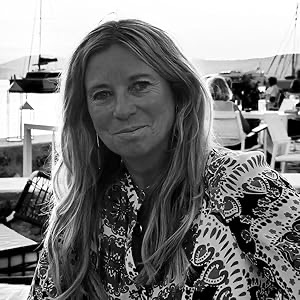

Joanna Howat trained as a journalist and worked as a news producer for BBC Radio 5 Live. She now lives in her native North Yorkshire with her family and two spaniels, and is a keen classical pianist. Crescendo is her first published novel.
Posted in Netgalley

The Heiress by Rachel Hawkins 

When Ruby McTavish Callahan Woodward Miller Kenmore dies, she’s not only North Carolina’s richest woman, she’s also its most notorious…

This addictive thriller was set in the Blue Ridge Mountains and gave off distinct Saltburn vibes with it’s resident family and the outsiders who’ve come to stay. Camden was adopted by the infamous Ruby McTavish, Carolina’s richest woman and childhood victim of a kidnapping plot. Camden has been estranged from his adoptive mother for years, walking away from the family money and living an ordinary life with wife Jules. When he receives a visit from his cousin he can’t ignore his family any longer. Ruby has left Ashby House, the family home, to Camden despite the fact he doesn’t live there or speak to any of the family that do. His first instinct, on being asked to return to his childhood home is to refuse, but Jules persuades him that they should take the trip. Ashby House is famous because Ruby McTavish was kidnapped from the grounds when she was a small child, but then returned. Ruby was famous locally: for the kidnapping, for the wealth she inherits from her father Alexander McTavish who was a lumber magnate and for the amount of times she was married. Can Camden make peace with his eccentric step-family members who rely on Ashby House for a roof over their heads? Or will he sign away his inheritance and turn his back on them forever? 

Ashby House is as eccentric and jumbled up as the family that remains and is set in a beautiful spot with the Blue Ridge Mountains providing it’s backdrop. 

‘Built in 1904 by lumber magnate Alexander McTavish, the house is as eccentric as the family who owns it. Part Victorian, part Palladian, it features smooth gray stone and peaked roofs, marble patios and leaded windows. It should not work and yet, miraculously—almost mystically—it does. Guests of the home have commented that there’s something about Ashby House that makes you feel as if the rest of the world does not exist. As if you could stay safely tucked behind its walls forever and want for nothing else.’

Jules is charmed by the house, particularly the view from the porch up to the mountains. Up till now she has been satisfied with their life and their cosy little flat. She was used to being anonymous. Now she can’t shop in town without special treatment, everyone seems to know that she’s Camden McTavish’s wife. Even if some family members thought Cam shouldn’t inherit, not being a blood McTavish, the town seemed to accept him. As the remaining family members at Ashby start to manipulate and jostle for position, I wondered whether Jules was growing rather fond of the life that her husband had vowed to leave behind. Though it was becoming clear that being part of this particular family is a bit of a poisoned chalice. It felt all the time that a game was being played out but I had no idea who had devised it. I loved Ruby’s letters, beautifully placed between the main narrative, explaining her motivations and serving up some brutal honesty about her husbands. Strangely, although her behaviour is reprehensible, it’s hard not to like Ruby. She’s audacious, daring and has a dark humour I really enjoy. However, she’s also self-centred and devious. In fact most members of the family could be described this way. Ashby House is a viper’s nest of ego, deception, manipulation and avarice. I worried that Cam and Jules would submit to it’s deathly grip. Could that incredible porch view and the ease of a life with money win them over? 

The first chapters of the book are a little slow and I was unsure about where it was going at first. After that we get Ruby’s letters, but also the family history that Cam wants no part of, as well as a build up in the tension between the family members. This starts to grab you and the pace picks up all the way to the end. I started to wonder where revelations might come from next! While everyone was under one roof it started to feel like an old-fashioned detective novel/film with an ensemble cast and a plot straight from a Knives Out or Agatha Christie film. This unusual mansion is something of a labyrinth, with each family member quietly plotting and conspiring in their own corner of the building. The slightly overgrown grounds, mountains and sheer cliffs gave plenty of opportunities for ‘accidents’. The author was brilliant at a quick reveal, then immediately hitting you with another suspicion or question. I loved the long running theme of nature or nurture. Is deception in the McTavish blood or is it simply learned by watching generations of machinations nesting in Ashby House? 

Out now from Headline

Meet the Author

Rachel Hawkins (www.rachel-hawkins.com) was a high school English teacher before becoming a full-time writer. She lives with her family in Alabama, and is currently at work on the third book in the Hex Hall series. To the best of her knowledge, Rachel is not a witch, though some of her former students may disagree….

Posted in Books of the Year 2024

My Top 20 Books of 2024 – Part 1

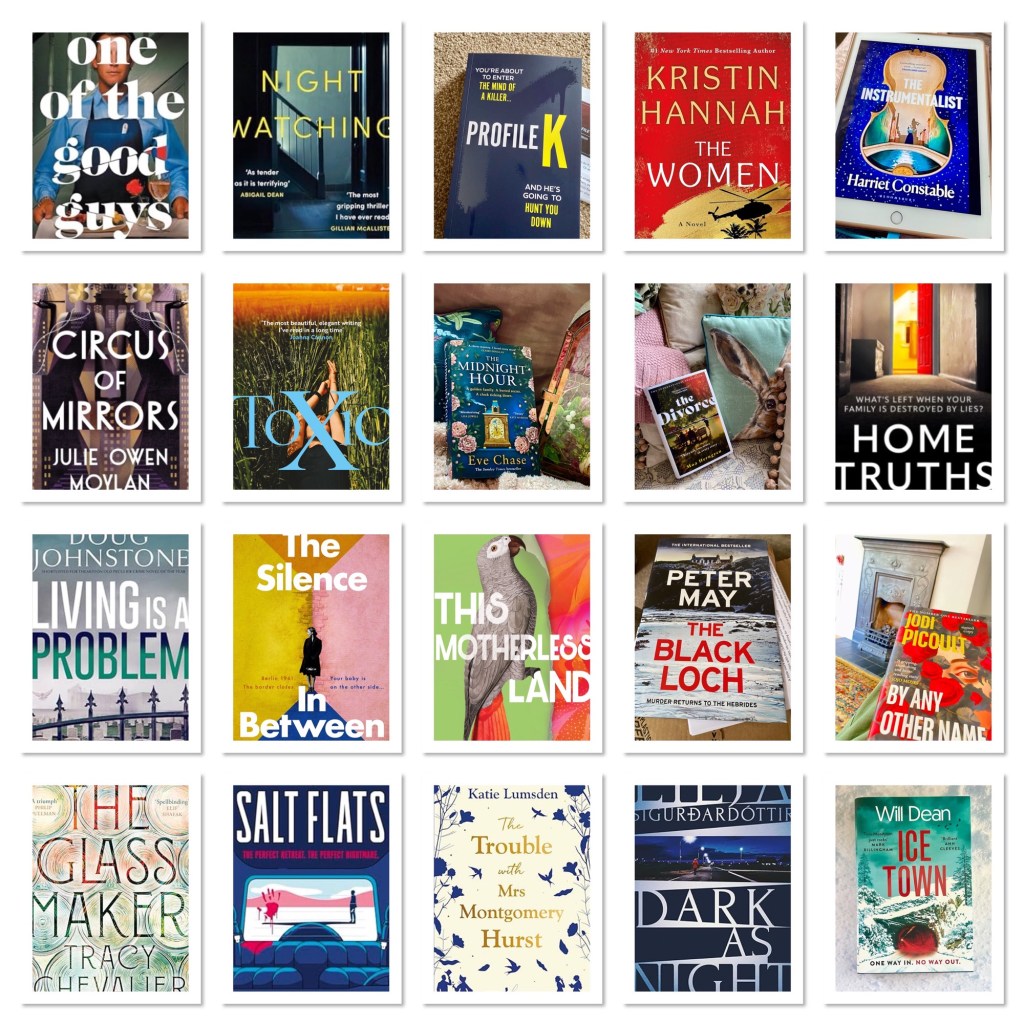
For the last four years I’ve been choosing my favourite books of the according to the year – Top 23 of 2023. I realised that would have to stop, otherwise I’d be doing my top 30 in a few years and that would be ridiculous. So I’ve limited myself to 20 and it’s been so hard. I’ve had to be ruthless. I enjoyed every one of these books, despite their different genres, because of the psychological elements: anxiety about the state of the world; relationship dynamics; becoming radicalised; events from the past marring the future; what makes someone kill; growing up with loss. Also, as you’d perhaps expect considering everything we have to worry about in today’s world, there are allusions to climate change, anti -vaxxers, pandemics, war, misogyny and violence against women, the wellbeing industry and psychological problems. There’s so much to wrap your reading brain around here so I’m going to whet your appetite…

This Squad Pod read from early 2024 kept me on the edge of my seat throughout. It was like a breath of fresh air. Cole is a great husband to wife Melanie, in fact he would definitely say he’s one of the good guys. So when his marriage ends he can’t understand what he’s done wrong. In the aftermath he moves to an isolated coastal area and meets artist Lennie who lives in the cottage on the cliff. Soon they’re tentatively embarking on a relationship, but when two activists go missing during their coastal walk to publicise violence against women it disrupts everything and the police are starting to ask questions. The twists in this book are brilliantly executed and totally unexpected. It’s daringly different and left me so much to think about.

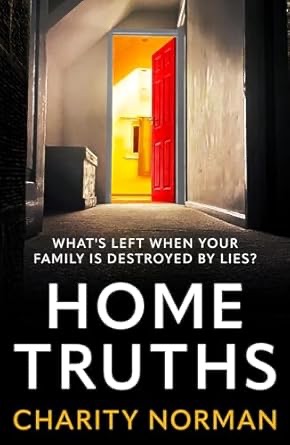
Charity Norman always leaves us with a lot to think about, but this latest novel was particularly thought provoking. Scott and Livia have two children and are always on call to help Scott’s brother, who has Down’s Syndrome. It’s Scott’s inability to help his brother one Saturday morning followed by his sudden death that starts a downward spiral. One careless comment about his brother’s care sets Scott on a search for answers, branching into medical conspiracy theories and the dark web. So when son Noah falls ill, Scott has an online community ready to feed into his distrust and his grip on reality starts to slide, dragging his family with him. As their marriage begins to fall apart, Livia can’t support or even understand her husband’s perspective. In fact he’s become a danger to his children and she must protect them, whatever it takes. This is a brilliantly drawn study of how social media can lead to obsession and allow sinister, unscrupulous people to take advantage of those who are vulnerable. It’s also a painfully accurate depiction of marriage breakdown and a perfect book club choice.

This was another book where marriage breakdown is depicted in painstaking detail. It reads like a thriller where different perspectives and revelations constantly change our perceptions of a situation. It’s like a whodunnit, except the death we’re mourning is the death of a relationship. Bea and Niklas have been together for thirty years and live a comfortable life in Stockholm with their children. Yet one night, after what feels like a trivial argument Niklas walks out and doesn’t come home. Weeks pass where Niklas takes a break and Bea is constantly pushing for answers, but when he returns to their flat he stuns Bea by asking for a divorce. For Bea this has come completely out of the, but is it as unexpected as she claims? Bea narrates the first half of this novel and halfway through the narrative returns to the beginning and Niklas tells us his version of events, which is very illuminating and may change the readers mind about their marriage. This is a simple device that works to devastating effect. I felt genuinely sad for this couple, because neither of them are bad people. It explores boundaries and the unhealthy reasons people can end up together. It’s also a response to grief, beautifully played out over decades. Utterly brilliant.

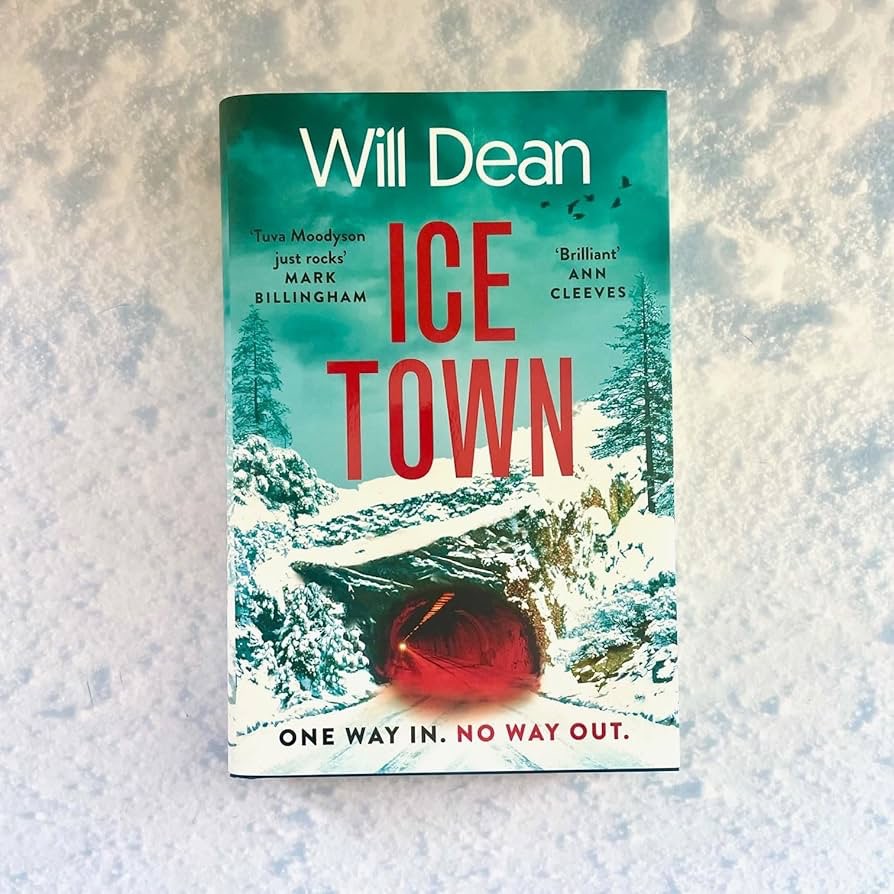
This is the fifth instalment of Will Dean’s Tuva Moodysson series and it was an absolute cracker. Tuva is investigating further north from Gavrik to an even more isolated town on the edge of the arctic circle. Essleburg is a town where everyone knows everyone else and there’s only one way in or out. A huge tunnel under a mountain provides access to the town, but closes down at night. Once you’re in, you’re in for the night and so is everyone else. From her hotel room at the sun-bed store Tuva sets out to look for a missing teenage boy, drawn by the fact that he is also deaf. But when bodies are found Tuva must face facts, the boy could be one of the victim and if not, could he be the killer? With it’s usual quirky characters and alien landscape, Tuva’s world is as isolating as it is disorienting. As usual Will Dean knows when to ratchet up the tension and when Tuva is in danger it’s absolutely heart-racing stuff.

As all of you know I’m a massive Skelf fan and this addition to the series was brilliant. Every Skelf novel begins with a funeral and they rarely go off without a hitch. This one is no exception, with a drone buzzing the ceremony and it’s guests. Could it be to do with the deceased or has someone got it in for the Skelf women? Jenny’s case follows on from the last book and the cops they investigated for sexually abusing young girls in the travelling community. Both are inexplicably out on bail and Jenny likes to know where they are at all times. Daughter Hannah’s case concerns Brodie the new recruit to the undertaking business. Brodie finds strange scrabbled marks around his baby son’s grave and Hannah sets up a camera, but when told that Brodie hears voices she wonders if he might have gone to the grave and acted subconsciously. Dorothy’s case comes from her involvement with a community choir that includes some Ukrainian war widows. One of the women, Yanna, has gone missing. Her husband Fedir was killed over a year ago and now she’s left her two small children with her mother-in-law. Could she have returned to Ukraine to fight, or has something happened to her? Each of the Skelf women feel vulnerable this time and I felt like the author was playing on my emotions a little. I could sense we were on the verge of a huge change and it left me on tenterhooks throughout.  

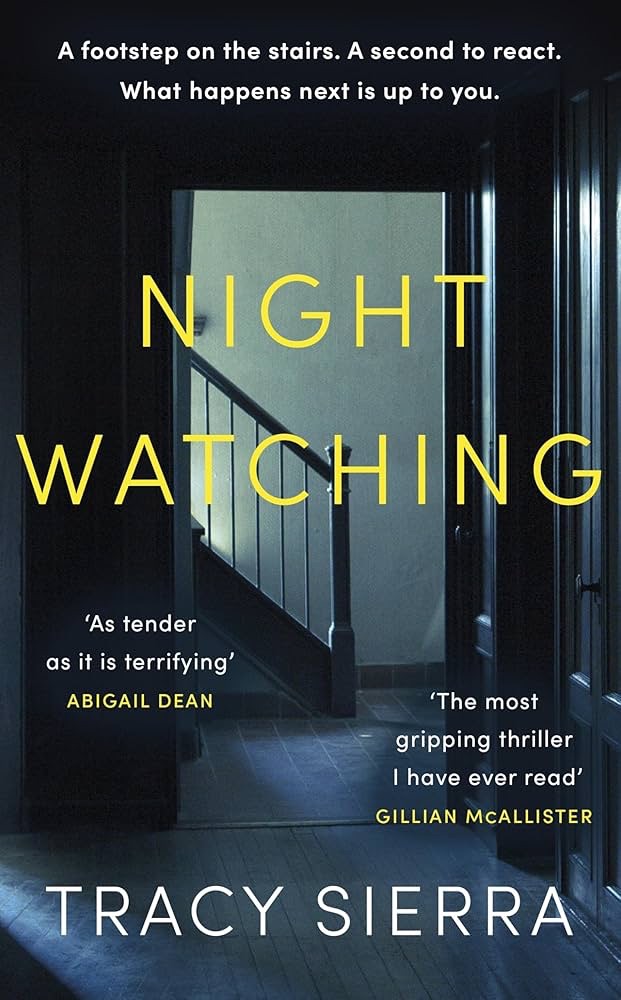
I absolutely loved this book. From the very first line – ‘there is someone in the house’ – this book grabs you and never lets go. Our narrator is at her secluded home with her two small children in a blizzard. The sound she hears is a familiar one, a tread on the stairs to her room, but it’s unusually heavy and slow. She has a split second to make the decision – does she hide, try to run or stay and fight. Will all three of them get out alive and if they do will anyone believe her? The first thing that hit me about this book was the unique the narrator’s unique voice. We see everything through her eyes and experience everything her body goes through – the heart-stopping tension of that first night with it’s immediate threat renders everything else unimportant. I should trust what she is experiencing. It’s just so incredibly odd. This tall intruder seems to have two voices: one is harsh and angry the other is soft, wheedling – a voice you might use for children as he asks them to ‘come out little pigs, little pigs are more delicious’. Her little girl identifies him as ‘Corner Man’ from her nightmares. Often sitting in the corner of her bedroom at night whispering to her. My heart was in my throat at this point! Was he real or something supernatural? Could he possibly be real if this is true? Yet I wondered if this overwrought mother is imagining this person, but that opens up a more frightening prospect – is she hallucinating and terrorising her own children with her delusions. The author plays with the reader beautifully from start to finish.

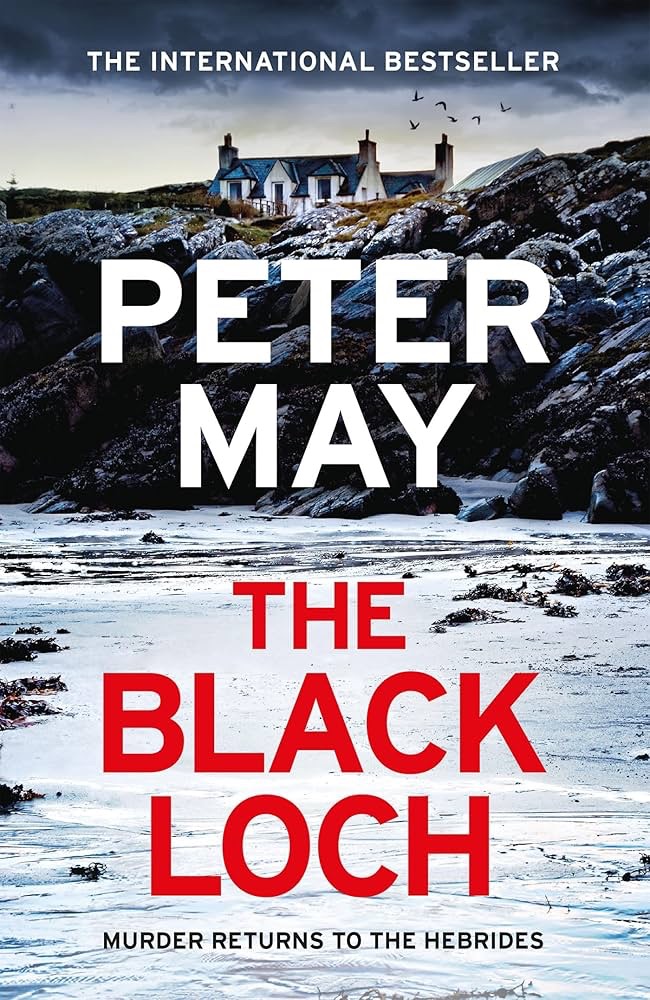
Surprisingly this was my first Peter May novel and is a sequel to his crime novels set in the Hebrides. Once a detective and now retired, Fin is drawn back to Lewis by family, when Caitlin Black’s body is discovered on a remote beach. Only eighteen years old, Caitlin was a student at the Nicholson Institute. When it emerges that she was having an illicit affair with Fionnlagh McLeod, her teacher and a married man twenty years her senior he becomes the prime suspect and is arrested on suspicion of her rape and murder. He is also Finn’s son. He must return to Lewis to support his daughter-in-law and granddaughter. He must also, despite the evidence against him, that he must try to clear his son’s name. As Fin travels around the island, he is drawn into past memories and soon realises this crime has echoes back into his own teenage past on the island. A terrible accident at a salmon farm caused two deaths, just as they started to expand on the island and become a multi-million pound industry. This is Finn’s journey, of family ties, secret relationships and the bleak and unforgiving landscape, where violence, revenge and old loyalties converge.

Frances McGrath is your typical All American teenage girl, living with her family on Coronado Beach, California. She has memories of growing up on that beach, swimming and surfing with her brother Finley. She is from a good family and expectations are that she will have the ‘right’ marriage and become a mother. However, things change when Finley makes a huge decision; he decides to enlist for Vietnam. It’s no surprise that he might go into military service at some point. Frankie’s dad has a wall in his office called the ‘Hero’s Wall’ where every family member’s military service is celebrated with cuttings, photos and medals. All the men, anyway. Yet not many of their friends and family members have sons who’ve voluntarily enlisted for Vietnam. There are ways of avoiding the draft, depending on who you know. Yet Finley enlists of his own accord, possibly believing the American government’s assertions that they must fight communism in Vietnam, lest it become even more widespread. Within weeks there’s a knock at the door; Finley has been killed in action. In a whirlwind of grief Frankie starts looking into her options. She wants to honour her brother and become a hero worthy of her father’s wall. Both the Air Force and Navy need a nurse to complete a long period of training before they’re posted to work in the field. However, if she enlists in the US Army, they’ll post her out to Vietnam after basic nursing training. Much to her parent’s shock Frankie is soon on her way to Vietnam. This is an incredible story about the horrors of war, falling in love and giving voice to the women forgotten in military history.

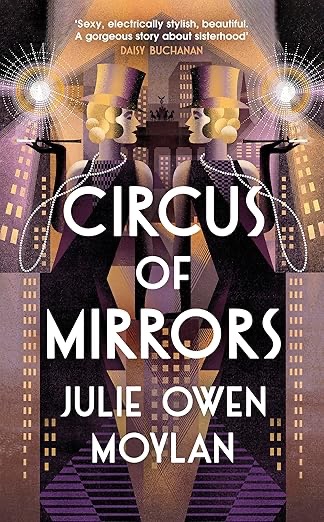
There have been some incredible historical novels this year, but I really was blown away by this story set just after WW1 and progressing to the mid-twentieth century. Two German sisters, Leni and Annette, live in Berlin and when we first meet them they’re in dire straits, living in a makeshift shelter in an abandoned garden. Thanks to war and the influenza epidemic they’ve lost their family. Leni gets a chance to earn some money at a notorious and rather seedy cabaret club called Babylon Circus. The naive and rather shy Leni becomes a cigarette girl in a second hand and pinned costume that just covers her modesty, but she is at first shocked by what she sees. With shades of the musical Cabaret the author creates a club that is a mirage of clever lighting, fairground mirrors and risqué musical numbers. It’s enchanting by dark and unwelcoming by day, but it doesn’t matter because this is the type of fun that can only be had at night. Everything is overseen by owner Dieter, a man with his own disguise having left half his face on a battlefield. When pianist Paul arrives, he and Leni start to gravitate towards each other. But Paul has a plan to leave Berlin and he would like to take Leni with him. We then move forward to the Cold War and a divided Berlin, where Annette has travelled from America to visit her sister and niece. The tensions and secrets of the Babylon Circus years still hang over the sisters, can they come to terms with the choices they made back then? Can Leni find a second chance of happiness? The author depicts her characters and the time period perfectly, with so much atmosphere. It’s an absolute must read.

Another amazing story set in Berlin is Josie Ferguson’s The Silence In Between. Imagine waking up and a wall has divided your city in two. Imagine that on the other side is your child…

Lisette is in hospital with her baby boy. The doctors tell her to go home and get some rest, that he’ll be fine. When she awakes, everything has changed. Because overnight, on 13 August 1961, the border between East and West Berlin has closed, slicing the city – and her world – in two.
Lisette is trapped in the east, while her newborn baby is unreachable in the west. With the streets in chaos and armed guards ordered to shoot anyone who tries to cross, her situation is desperate. Lisette’s teenage daughter, Elly, has always struggled to understand the distance between herself and her mother, but perhaps she can do something to bridge the gap between them. What begins as the flicker of an idea turns into a daring plan to escape East Berlin, find her baby brother, and bring him home. The author takes us effortlessly back and forth in time to understand this family and  my heart kept breaking for them over and over for. While I struggled to read it at first, I’m so happy that I went back to it because it was breathtaking. It was as if someone had bottled both moments in time and simply poured them onto the page, raw and confronting. This is an absolute must read for historical fiction fans and a book I will definitely go back to in the future. 

Thanks for reading part one. Part 2 is coming tomorrow.

Posted in Netgalley

Lights Out by Louise Swanson

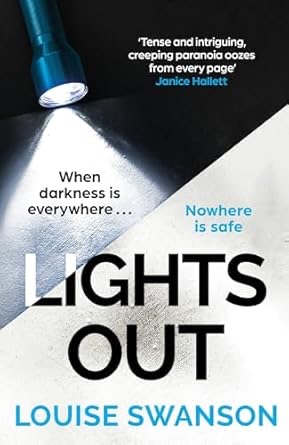
The Government have declared a state of emergency in this tense and thought provoking thriller from Louise Swanson. They’re introducing a temporary policy of electricity rationing, so at 8pm every night the lights and all other electrical power will turn off. For Grace this is her worst nightmare, because she’s terrified of the dark and no reassurance or safety measure from her husband is going to change that. She knows that at some point she will be forced to face the dark alone. An experience of being enclosed in the dark as a child has left it’s mark. All she can do is take as many night shifts at the hospital as possible, where they’re exempt from the switch off. In the house she will have to carry a torch and try to be alone as little as possible. When the switch off comes it’s effects are worse than she could possibly have imagined. Someone is coming into her home. Late at night when she’s shivering under the covers, too scared to move. Someone is leaving behind strange gifts – a third goldfish is swimming beside Brad and Jennifer in the bowl, a horrible painting of a dragon has replaced her own photo on the stairs, a pair of candlesticks in the kitchen. With them he leaves a strange and unsettling note: 

‘I have you in my sights. Love, the Night.’

Where can Grace feel safe if not in her own home? She’s an interesting character, clearly badly affected by childhood trauma and the memories of her previous, abusive relationship. The author opens with a first person account of being locked in a small pitch black space, it’s so vivid I could feel her fear. Grace tells us she was locked in a cupboard by the other children at school, where they continue taunting her until she wets herself. Since then she has always kept the lights on after dark and her partner sleeps in an eye mask to avoid the constant light. She also works at night where she can and sleeps in the day at home. She works as a carer in the hospice, spending a lot of time sitting beside those who are close to death, once her other tasks are completed. She didn’t go to university because she had a baby boy while very young and he has recently left home to live with his partner. Grace moved in with her own boyfriend and he has promised to be home in time for first big switch off. However, when she’s counting down the minutes, torch in hand, her partner is nowhere to be seen. 

The author shows brilliantly how even a strong and capable woman can be triggered by something that others barely notice. She touches on how the lights out policy affects the wider population – hypothermia in the elderly, rotting food defrosting and causing waste, a rise in crime. For others the lack of power has some positives, people can’t hide or be distracted by screens and communication within families will improve. Grace has been a single mum and she works well with people who are dying, so we know she isn’t scared of the big stuff. So why has one experience from childhood left such a huge impression? Her mother had always hoped she’d grow out of it and now the twelve hours of darkness must surely mean she must face the fear? It’s like state sponsored exposure therapy. Then ‘the night’ starts visiting and suddenly the dark covers up worse fears, new ones that are very real indeed. Even worse, her night visitor isn’t breaking in, so surely they must have a key. She is unsure how to deal with it and ringing the police is pointless when they’re dealing with a darkness induced crime wave. 

In between Grace’s sections of the story we meet a man who is in therapy. He left me feeling very on edge and I found myself wondering how I’d react if he were my client. He seems very unaware how counselling works, despite it being a fairly common concept these days. He also responds strangely to the therapist’s standard introduction. He fidgets, stands and paces round the room and I was uneasy on the therapist’s behalf. He seemed agitated. He’s convinced that his girlfriend is seeing another man. Is he paranoid? We have no idea how he fits into the story, but I was intrigued by him. Grace’s world becomes even more confusing when someone from her past turns up at the hospice as a patient. She knows she should disclose their connection, but if she does she knows she won’t be able to work with them. She decides to keep it to herself so she can sit with them. What clues, if any, might they have about her childhood and could what they know help her fear of the dark? As the pages turned I became more and more suspicious of her partner. Never home when he says he will be, distracted and very unsympathetic. I didn’t like him from the start and wondered if he was exercising coercive control over her. The moments when she’s under the covers with her heart racing as she hears her intruder moving around downstairs are truly terrifying. Yet he doesn’t seem malicious. He seemed to enjoy her fear and I even wondered if the night was closer to home than she thought. The truth was even stranger than expected and I found myself rooting for Grace, wanting her to get some resolution about her night visitor but also more long term relief from her phobia. That could only come from openness and facing the truth of her childhood and that time in the pitch dark cupboard. This is an enjoyable thriller with interesting insights on how childhood trauma affects us and how early relationships can inform the attachments we form in later life. 

Out Now from Hodder and Stoughton

Meet the Author

Louise Swanson’s debut, End of Story, was written during the final lockdown of 2020 – also following a family tragedy, it offered refuge in the fiction she created. The themes of the book – grief, isolation, love of the arts, the power of storytelling – came from a very real place. The second Swanson book will arrive in hardback and eBook spring 2024. Watch this space. 

Swanson, a mother of two who lives in East Yorkshire with her husband, regularly blogs, talks at events, and is a huge advocate of openly discussing mental health and suicide.

She also writes as Louise Beech. Beech’s nine books have won the Best magazine Book of the Year 2019, shortlisted for the Romantic Novel of the Year, longlisted for the Polari Prize, and been a Clare Mackintosh Book Club Pick. Her memoir, Daffodils, was released in audiobook in 2022, and the paperback version, Eighteen Seconds, in April 2023..

Posted in Netgalley

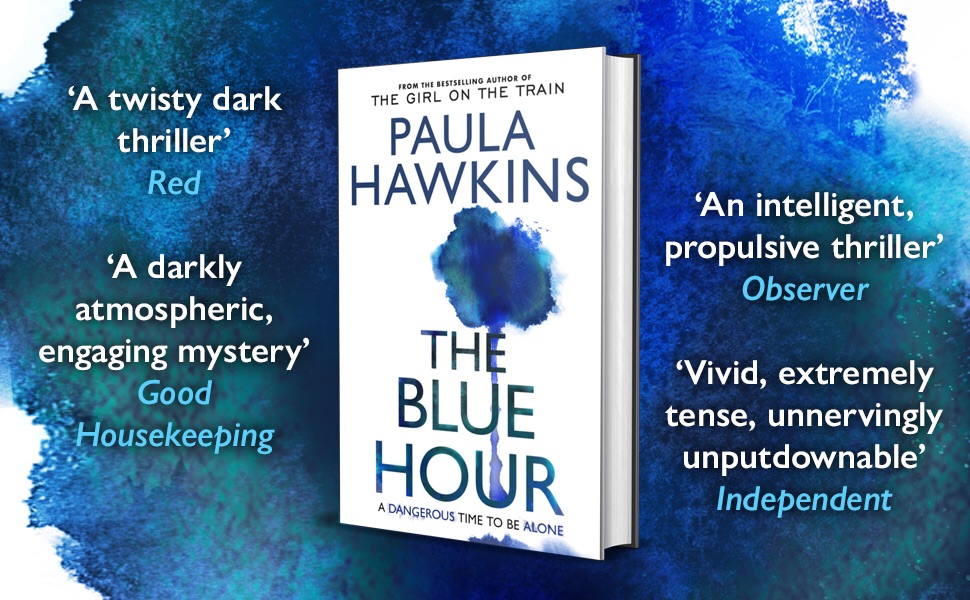
The Blue Hour by Paula Hawkins

Set on an isolated Scottish island called Eris, where the mainland is only accessible at high tide, an infamous artist has retreated from the world. Twenty years ago Vanessa’s notoriously unfaithful husband visited the island then went missing. After Vanessa’s death, the island became the home of local GP Grace, often referred to as Vanessa’s companion or friend. However, all her artworks were left to an art foundation set up by her first agent. The curator of the foundation is Becker, hired for his expertise in Vanessa’s work. He is under pressure from the new owner to extract the last of Vanessa’s work from Eris. They have tried polite enquiries, legal letters and ultimatums but they are sure this has all been in vain and that Grace is deliberately holding back. Now a situation has arisen with one of Vanessa’s found object installations already on display in the gallery. A visiting doctor is convinced that the bone suspended in a glass box is human. They withdraw the box from view and contemplate having to break it open to have the bone properly tested. The unspoken thought on everyone’s mind is whether this might solve the mystery of Vanessa’s missing husband? It’s an opportunity for Becker to tell Grace face to face, but also to address the missing works that must be on Eris. He feels this is the best way forward; a last ditch attempt before legal action. However, visiting Eris is not without it’s risks. Are all of it’s secrets and lies about to be uncovered. 

I’ve been waiting to love a Paula Hawkins novel ever since the brilliant The Girl on the Train, which was THE novel to be reading when it first came out. It was a successful film too, even though I felt it lost something when transferred to America rather than it’s London setting. Her following novels haven’t really stayed with me in the same way, even though they were page turners. This story really did grab me. I love reading about the lives of authors and artists, because they’re always interesting characters with depth and complexity. They also usually have atmospheric settings with the sort of rambling houses I dreamed of living in when I was little. This had all three and I truly couldn’t put it down, choosing it over TV in the evening and going to be early with it too. The story was intriguing too, with the mystery of the human bone to be solved but also the missing works of art, not to mention Vanessa’s husband. Vanessa has always insisted he left the island and his wallet was found washed up near the causeway suggesting his leaving was ill-timed and the tide came in as he was crossing. Becker is torn. He knows that they must test the bone, but he feels sick at the thought of destroying one of Vanessa’s works in the process. His boss agrees that he must travel to Eris to discuss it with Grace in person and take the opportunity to bring back any works he finds that should be in the gallery. 

I loved the complicated relationships in this story. Even Becker is in a strange relationship triangle. He arrived at the foundation specifically look after Vanessa’s legacy, but there was more change when Vanessa’s agent died and the house, grounds and art foundation passed from father to son. Also left behind were his frail and elderly wife and his son’s fiancée Helen. Becker was immediately attracted to Helen and to his surprise his feelings were reciprocated. This ultimately resulted in Helen leaving her fiancé for Becker and moving to his cottage on the estate. They are now married and Helen is pregnant with their first child. Becker had expected to lose his job over the affair, but his new boss was surprisingly gracious. Becker is from a modest background and he sometimes can’t believe that Helen chose him, besides her ongoing friendship with her ex-fiancé leaves him uneasy. This is a man who has everything and now he must leave Helen in his hands, so he’s feeling very conflicted about his trip to Eris. 

Grace is absolutely fascinating and her relationship with Vanessa is complex. She is aggrieved that Vanessa ‘left her with nothing’ neatly ignoring the fact that she now owns the house and island. The foundation’s position is that Grace has withheld certain paintings, sketches and Vanessa’s diaries. She comes across as a borderline personality. Her early experiences have left her feeling unwanted and inadequate leaving her unable to form healthy relationships. In order to be accepted she has learned to blend her personality to fit whoever she’s with, but sadly has no idea who she really is. When she wants to form an attachment she makes herself indispensable to the other person. In Vanessa’s case she becomes quietly present, in the background preparing meals, cleaning the house and making sure Vanessa has all the conditions she needs in order to create. In her way she feels she has contributed to the works Vanessa produces. There is no word for what Grace is – friend or companion is the usual – but really she’s like a servant, always anticipating their mistress’s needs. Most of the time she feels indispensable to Vanessa, but occasionally she is displaced from her position, by the latest lover or her ex-husband popping in and monopolising Vanessa, until she abandons work and spends time with him, often not leaving the bed for the duration of his visit. Grace hates him, often retreating to her cottage across the causeway until she sees his little red sports car departing the village. Then there are heated arguments and recriminations over his visit until the pair settle once more into their usual routine. Grace fears abandonment. She remembers the relief she felt when she found her tribe at university only to return home from lectures one day and find that her two friends have moved out of their shared house without even a note. As the village GP Grace is clearly intelligent and skilled but I worried about her access to vulnerable patients. I couldn’t decide whether she was a tragic figure, or a sinister one. 

Vanessa could be volatile. Her tempestuous friendship with her agent was well known and friends were surprised that she left him such a huge bequest on her death. Her marriage was also a rollercoaster of ups and downs, both of them drawn to each other but utterly incapable of living together. Could one of their legendary fights have gone wrong? As Becker arrives on Eris a battle of wills develops between him and Grace and secrets will out. The author keeps you guessing; is Grace the victim or persecutor? Is she holding on to the diaries because they incriminate Vanessa? Or is she trying to preserve the memories of her life with her friend, in the only place where Grace has felt like she’s home? The author pitched the tension perfectly and I devoured the final third of the book. We move between Becker’s narrative and Grace’s, alongside excerpts from Vanessa’s diary where each excerpt or reminiscence reveals about her clue or changes the story dramatically. Above it all is the artist – a figure we might imagine we know through their work, but art can be a mask, just a way of painting over the cracks. The diaries offer a less curated Vanessa, as well as the raw and unvarnished truth. Eris stands above all as a mystical landscape, like one of those places in a horror film that you can never leave no matter how hard you try. This was a brilliant thriller where you’re never sure about the truth until the very end.

Out Now from Doubleday

Meet the Author

PAULA HAWKINS worked as a journalist for fifteen years before writing her first novel. Born and brought up in Zimbabwe, Paula moved to London in 1989. Her first thriller, The Girl on the Train, has sold more than 23 million copies worldwide. Published in over fifty languages, it has been a Number 1 bestseller around the world and was a box office hit film starring Emily Blunt.
Paula’s thrillers, Into the Water and A Slow Fire Burning, were also instant Number 1 bestsellers.

Posted in Personal Purchase

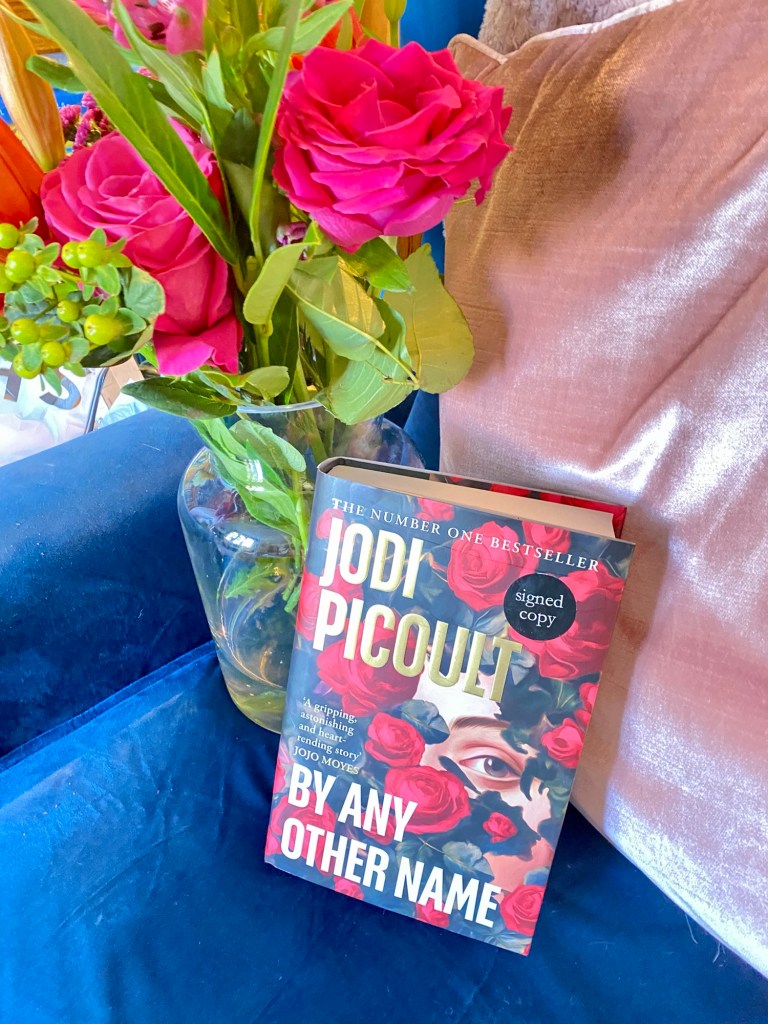
By Any Other Name by Jodi Picoult

In Manhattan, Melina Green finds out that women’s voices are worth less than a man’s. Theatre critic Jasper Tolle eviscerates a play she has entered into a competition and it knocks her confidence so badly she finds it difficult to get her theatre career off the ground. Years later, her best friend Andre encourages her to write about her ancestor, 16th Century poet Emilia Bassano. Emilia has been described as the ‘dark lady’ of Shakespeare’s sonnets. Melina is inspired, furiously researching Emilia’s life and the possibility that she might have written for the stage, despite it being banned in Elizabethan England. She then wonders if she used a pseudonym or submitted her work under another playwright. Melina starts to read about the Shakespeare conspiracy – what if the bard didn’t write all those incredible plays after all? There are many theories out there about who could have written them, but what if the playwright was Emilia? Melina is inspired, ferociously writing her play. Andre is also inspired, after they celebrate her finishing the play and Melina sleeps, he decides to enter the play into a festival taking place ‘off off Broadway’. Cleverly deleting the last few letters of her name he enters it with the more ambiguous Mel Green. Could this be her big break and her chance to prove that women writers are still sidelined, even in the 21st Century? 

I’m a huge fan of Jodi Picoult and I met her when she was in the UK promoting her book Sing You Home. Her books usually follow a pattern of presenting controversial issues -abortion, racism, the Holocaust – then testing them through the legal process. The first book that really caught the UK imagination was My Sister’s Keeper where a young girl takes her parents to court for medical autonomy, after she has donated blood and bone marrow to her sister with leukaemia. She’s had no say in these medical procedures and feels like she’s spare parts for her sister. This new novel is a complete departure from this tradition and it reads like a labour of love. I collected my copy from The Rabbit Hole Bookshop in Brigg and had read several chapters while we drove to Liverpool. Picoult has a brilliant way of drawing you straight into the character’s world and this book is no exception, despite it spanning several centuries. Picoult’s best novels are the ones where she can touch on her Jewish heritage such as one of my favourites, The Storyteller. This has definitely played a part here and the passion with which she tells Emilia’s story makes everything come alive. 

Emilia is the sort of character I fall in love with. She’s determined, intelligent and dreams of being much more than women are allowed to be. Life deals her a terrible hand at times, but she tries to make the best of it. Sometimes she’s desperately struggling to survive and other times she’s living in the lap of luxury. Historically we only know fragments of Emilia’s life but she is mentioned in an article written by Elizabeth Winkler entitled ‘Was Shakespeare a Woman?’ We know that Emilia was from a Jewish family who kept up a pretence of Christianity outside their home. They were court musicians under Elizabeth I which dragged Emilia into the fringes of court life. Most information on her comes from the diary of Simon Forman who was an astrologer/doctor and he describes her as a woman who is sexually progressive and has one illegitimate child. He describes her as the paramour of Lord Hunsdon until she became pregnant and was then married off to a minstrel. Hunsdon was Lord Chamberlain with responsibility for entertainment and the theatre. Foreman describes her as beautiful and intelligent, but gives her the sad news that she will become pregnant again, but will miscarry. Picoult uses these small facts and others she’s found to flesh out this fascinating woman and pose the theory that she could, at least in part, have written the plays attributed to Shakespeare. The page is the only place where Emilia has any power or agency. She was brought up by a countess away from her family, the head of the family then sells her to Hunsdon as a courtesan and then to the minstrel Alphonso who squanders all of the money Hunsdon settled on her. Could this lack of agency have possibly create female characters with the sass of Beatrice, the adventurer in Viola, the manipulative and power hungry Lady MacBeth or the shrewish Katherine? 

There is so much to love here, from Emilia’s personal story with it’s twists and turns, to the fascinating possibility that Shakespeare is merely a front  rather than our greatest ever playwright. I enjoyed the idea of this woman who occupies a liminal space in so many ways: Italian by descent batt living in England; living humbly but entertaining the dazzling heights of Elizabeth’s court; Jewish but masquerading as Christians; living a rich lifestyle with Hunsdon but in the precarious position of a courtesan; a woman hiding her immense talent behind a man. Every single part of her life is a masquerade, in fact there are only two men she is herself with. She lets go with her secret lover Southampton and her great friend Kit Marlow – a friendship that beautifully echoes Melina and Andre’s relationship centuries later. Picoult’s skill in setting a scene takes us directly into Elizabethan London and we see the city at it’s extremes due to Emilia’s huge changes in fortune. The house she grows up in is a far cry from the humble home of her family and Hunsdon’s home is grander still. Then what follows are terrible years of hardship and violence, where she’s little more than a servant. They have very little to eat and we really see the squalor and poverty of the capital in those moments. I enjoyed the idea of literary salons as a space where women can freely share their talent and it’s only her position as Hunsdon’s mistress that gives her access to contemporaries like Spenser, Jonson and Marlow. I felt like even if the reader doesn’t agree with Picoult’s theory on Shakespeare her evidence is compelling and you realise she loves Britain and it’s literary tradition. 

The modern day narrative does pose some interesting questions about authorship, especially the opportunities for women. As someone who reads female authors the majority of the time it seems like the opportunities are there at first glance. Yet I took on board all the points made here, how in a commercial space it’s hard as a woman to secure financial backing for their creative ideas. Especially where those who hold the purse strings are men. Although I was interested in Melina’s story I didn’t feel as connected to her as a character in the same way I did with Emilia. When the historical story is so dramatic and heartfelt it can overshadow the present day narrative. Overall though I loved this book and it’s up there with my favourites of the year so far. I felt completely transported to Elizabethan London. As for the premise, it’s an interesting one and the afterword brilliantly backs up her theory with points from her background research. It certainly gave me something to think about where Shakespeare is concerned. I could see why people question his authorship, but I can also see the all the reasons why such claims are rubbished and denied. What I’m taking away though is what an incredible woman Emilia was, with or without the possibility she was a playwright. I’ll definitely enjoy exploring around the subject further and I know this is a book I’ll be re-reading in the future.

Published 10th October by Penguin

Meet the Author

Jodi Picoult is the #1 New York Times bestselling author of twenty-nine novels, including Mad Honey, Wish You Were Here, The Book of Two Ways, A Spark of Light, Small Great Things, Leaving Time, and My Sister’s Keeper, and, with daughter Samantha van Leer, two young adult novels, Between the Lines and Off the Page. Picoult lives in New Hampshire.

Follow Jodi Picoult on Instagram, TikTok, Facebook, and Twitter: @jodipicoult

Posted in Random Things Tours

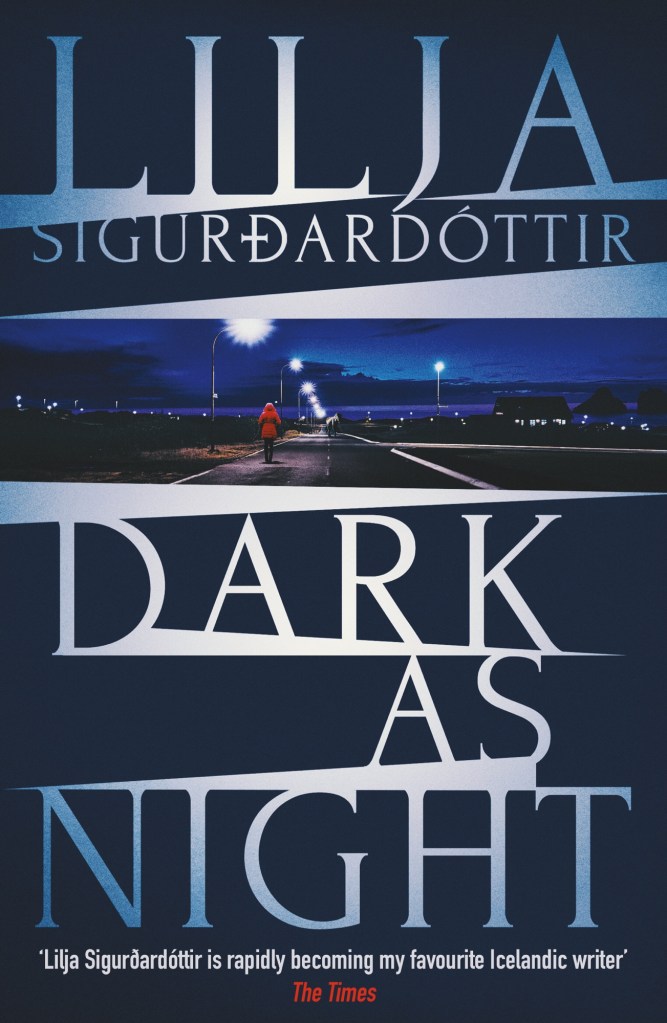
Dark as Night: Forbidden Iceland 4 by Lilja Sigurdardóttir

I always look forward to a new book in the incredible Àrora series and this one really delivers! It takes two long-standing mysteries in the novels and sheds new light on everything we thought we knew. The disappearance of Àrora’s sister was the only reason she came to Iceland from the UK. She works as a financial investigator, usually in the area of tax. She’s built a life here, including a relationship with detective Daniel. Now she’s contacted by a woman who says her young daughter has memories of being Arora’s sister Isafold and they’d like to meet with her. Àrora is a straightforward and rational woman, but I remembered those lonely months where she trawled old lava flows with a drone, based on nothing but a feeling. She knows that Isafold is dead but finding her has been a compulsion for so long. How can she ignore what this little girl has to say? Lady Gugulu has been living in Daniel’s garage conversion for a long time. Once a science student and potential academic, he leads a quiet life and makes his money performing as a drag artiste. He and Daniel have become close so he’s shocked to find that his tenant has suddenly vacated the garage without a forwarding address. When three men turn up, Daniel has a sense that they’re investigators or secret service. Whoever they are, they’re leaving no stone unturned. A black eye and split lip later, he enlists Àrora to look into his friend’s finances in the hope of finding his whereabouts.

In turn Daniel convinces his superiors to take another look at the missing person case opened on Isafold and her violent boyfriend, nicknamed the ‘Ice Bear’. He also wants to look into the parents and background of the little girl who knows things only those closest to Àrora and her sister would know. How does she know these details and could she possibly be genuine? I loved how the author played with doubt and belief when it came to this little girl. Àrora is very shocked that she knows Bjorn’s nickname and that their father called Àrora his troll girl and Isafold his elf girl. Their father was a weight trainer and Àrora definitely took after him. She still trains and is currently trying to increase her lifting weight. She’s been having steroid injections but knows they’re having an affect on her libido and emotions. She’s been irritable and takes her moods out on Daniel at times. Now she’s transfixed by the little girl and genuinely feels like she’s back with her sister when they meet. Every time they talk I felt she left Àrora on a cliffhanger. Just when Àrora is trying to stay rational, she reveals something that only Isafold could know, even confirming that Àrora is right and her sister is lying in black lava. Daniel is sceptical and suspects the parents of coaching their daughter. He brings in a child psychologist and I was absolutely glued to their session, dying to see what would come next with so many unexpected twists! 

I’d always been intrigued by Daniel’s lodger but I’d never imagined this background and I was so worried for him. Having been treated to a second visit from the men in black, Daniel knows he’s dealing with either foreign agents or interpol. The best thing is to put Àrora on the trail and as she sets off to the Canary Islands to talk to Lady Gugulu’s mother. She’s suspects he’s used several identities over the years, but what exactly is he running from? As the men in black turn over the whole garage, Daniel gets the feeling they’re not just looking for his friend, they’re looking for something. It’s great to see Daniel and Àrora going the extra mile for each other in their investigations. There’s an incredible trust built up between them, because these people are so precious to them and the outcome of the investigations could be life-changing. They’re also confronting a reality that stretches their credulity: Daniel has to suspend his disbelief around all things mystical. He sets out expecting to find a rational explanation for the little girl’s apparently supernatural knowledge, treating the family as suspects rather than witnesses. I was glued to this part of the story, truly expecting evidence that they were scamming Àrora in some way. Similarly the revelation that Lady Gugulu has been on the run from the authorities is utterly unexpected. Daniel’s always known that his friend was intelligent but as Àrora starts to uncover an academic background at Oxbridge and a very unexpected career path Daniel has to accept the possibility that his friend is not what he seemed. As he says, it’s as if he has James Bond on his trail. It was lovely to spend some time with a character who always been in the background up till now. I enjoyed learning about his academic and romantic past, moving beyond his sexuality and drag persona. He proves himself incredible resourceful and resilient on this journey and my admiration for him grew enormously. 

This was an enthralling addition to the Forbidden Iceland series. I loved that the author isn’t easy on her heroine, allowing the reader to see her flaws and her vulnerabilities and how they drive her actions. She’s a proper three dimensional character and hard to like in parts, particularly in the way she treats Daniel. Although, their teamwork is incredible and their ability to lean on and trust each other speaks volumes. We all know thrillers that are addictive at the time, but instantly forgettable. Here the writing was tense and addictive, but the deep and intelligent characters stay with you. The unifying story across all these novels has been Àrora’s loss of her sister so to see her search potentially moving forward was quite emotional. While someone is missing there’s always an element of hope and this is the first breakthrough in a long search. This could tip Àrora and her mother from hope, into the depths of grief. It also opens up the question of Àrora’s prolonged stay in Iceland which might come to an end if Isafold is found. The little girl who holds all this potential knowledge is a fascinating character, beautifully written with a feeling of the uncanny and otherworldly about her. Could she genuinely hold the key to Isafold’s disappearance? A strange separate narrative that’s unattributed took me all the way back to the first book and a potential clue about what might have happened to Àrora’s sister. I didn’t want to put this book down at any point. It is simply the best so far in a series that gets better and better. 

Published by Orenda Books 10th October 2024

Meet the Author

Icelandic crime-writer Lilja Sigurdardottir was born in the town of Akranes in 1972 and raised in Mexico, Sweden, Spain and Iceland. An award-winning playwright and screenwriter, Lilja has written eleven crime novels, many of which have been translated into multiple languages and hitting bestseller lists worldwide. Lilja has won The Icelandic Performing Arts Award for ‘Best Play of the Year’, The Icelandic Crime Fiction Awards twice, been longlisted for the CWA International Dagger, been shortlisted for the prestigious Glass Key Award twice and had a Guardian Book of the Year. The film rights for the Reykjavik Noir trilogy (Snare, Trap and Cage) have been bought by Palomar Pictures in California. She lives in Reykjavík, Iceland, with her partner but also spends considerable time in Scotland.

Posted in Netgalley

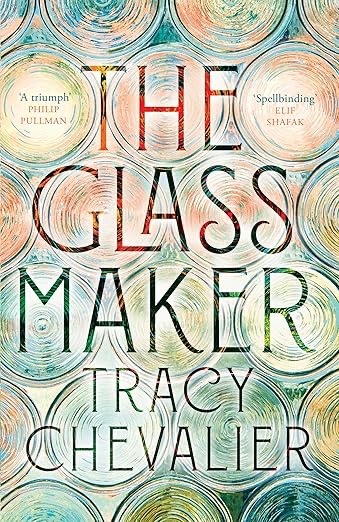
The Glass Maker by Tracey Chevalier

Orsola is the spirited teenage daughter of the Rosso family, all glassmakers from the tiny Venetian island of Murano. She’s very young when she sees her father bleed out in the workshop after he’s struck in the neck by a shard of glass while making pieces for a chandelier. Out of his two sons, the youngest is quiet, solid and dependable and would have made the perfect maestro, while his eldest Marco is loud, egotistical and very proud of his skill with glass. Now the entire family’s fortunes lie on his shoulders as the eldest always inherits the title of maestro from their father. He needs to support everyone from his widowed mother Laura and her youngest daughter Stella. His promotion leaves room for another servente to become the apprenticed glassmaker, second only to the maestro. In an unusual move Marco employs Antonio, originally a fisherman he has always wanted to work with glass. For Orsola it is love at first sight. Meanwhile, she is looking for ways to supplement the family’s income and visits their patron and merchant, a Dutchman called Klingenhorn. He suggests that she approach the only female glassmaker in the city to teach her how to make glass beads over a heated lamp. Once her beads are of the right quality, Klingenhorn agrees to place an order and she sets to work with determination. Orsola is our window on the Rosso family and she imparts both their history and the history of the island with it’s amazing glassmaking heritage. It is a history filled with love, passion, duty, tragedy and ingenuity, plus a little touch of the magic that Venice has in abundance. 

It’s hard not to fall in love with Orsola because she’s so brave and independent, attacking life with a fearlessness that aligns her with the most important woman working in glass, Maria Barrovier. The family business is run by the men of the family, leaving the women powerless. Her mother has a great business brain and younger brother Giacomo would have definitely been a safer pair of hands, churning out the same simple glassware for daily use. Yet thanks to a circumstance of birth they are all at the mercy of the mercurial Marco. He is so dissatisfied with their usual output of plates and goblets that have been the Rosso’s bread and butter, he wants to make more ornate and decorative glass, but misses the fact that it still has to be functional.  Orsola keeps her own business dealings with Klingenhorn a secret from her family, telling them her bead making is merely a hobby. Her budding romance with Antonio is intoxicating, but she knows immediately that he wouldn’t be her brother’s choice for a husband. They spend moonlit nights marooned on Antonio’s boat dreaming of a life where they can be together, away from the rivalry his presence has caused in the workshop. The Rosso’s business is a rollercoaster and they have to face hardship, change focus and rebuild several times. The author takes us from the 17th Century plague that hit Venice hard, all the way through to the COVID pandemic. While centuries pass in the real world, somehow everything happens within Orsola’s lifetime. When I visited Venice for the first time, particularly in the evening, I had a strange feeling I might turn a corner and be in another century. Orsola rarely leaves Murano and Venice, only once venturing to the mainland, rowed by Klingenhorn’s slave. I felt that if Orsola actually set foot on the mainland she would suddenly age by decades. 

The time difference felt strange at first, but it soon felt completely normal. We get to experience the city’s heyday as a bustling port, filled with merchants and people of all races and places. We see that dwindle as time goes on and slowly native Venetians leave and tourists move in. The author explores issues that are important to the island today: the worsening of the acqua Alta; the building of flood defences in the lagoon; cruise ships dwarfing the city and disgorging hundreds of tourists into San Marco at once; the shops selling cheap Chinese versions of local crafts such as mask makers, leather workers and glass makers, undercutting local artists; the changing flora and fauna, illustrated by the dolphins reported in the lagoon during COVID when only residents were left in the city. The author explores that conundrum of the negative impact of tourism on the city, while also acknowledging the city’s absolute dependence on it’s visitors. The endless lament that Venice is sinking, only serving to heighten people’s desire to see it. There are those who feel Venice has become a theme park of of it’s original self. I utterly adore Venice and I’m going next year for what will probably be the last time as it is difficult for a disabled person to get around. The author mentions a Las Vegas hotel where a microcosm of Venice has been created, with some visitors thinking they no longer need to travel to see the city. Yet it’s picture perfect bridges and clean canals are miles away from the real Venice. Of all my memories of Venice, the most important are those that are far from perfect. It’s the churn of the mud in the Grand Canal and silty smell of the mud, the washing hanging above your head, meeting locals and their dogs walking after dinner and the sound of squeaking rubber against the dock as the vaporetto leaves it’s stop. We always laugh about the old man we met crossing a bridge into Castello who farted loudly, before laughing uproariously! I feel that spooky sensation I had walking round the back of La Fenice after dark and the smell of candles and incense as we heard mass in an unexpectedly beautiful church. It was watching everyday things that gave me an idea of living in Venice: the grocery deliveries; being rushed to hospital or having the rubbish collected by boats. It’s all these things that make Venice real and not a film set. 

Of course I was longing for Orsola to reunite with her one love Antonio and I won’t ruin your enjoyment by telling all, except to say that just like the real Venice, real life is rarely a romantic novel. However, what I enjoyed most was Orsola herself because she is a pioneer and an incredible business woman. In fact she succeeds precisely because she is a woman. While Marco inherits the business, his ego and inability to change could have derailed the whole family. The women in this novel ‘manage’ the men, working around them and often slowly drip feeding ideas and solutions to the men until they adopt the idea as their own. Whereas Marco never asks for advice and rarely takes it, Orsola recognises the shortcomings of the business or when a crisis is looming. She knows who to ask, consulting with Klingenhorn and his replacement Johnas, Maria Barovier and the women of Cannaregio about threading and stacking seed beads. Even as the novel comes up to date she’s still diversifying, opening a second shop in a busy tourist Calle of Venice itself and employing someone to crate the glass balloons and trinkets that are easily packaged and stowed in a suitcase. She survives by being pragmatic, recognising when to challenge and when to do her duty, even if her temper does get the better of her at times. The depth of research that’s gone into her story and the author recommends many sources in her brilliant afterword. She creates a Venice I recognise, full of beauty and history but also a real and imperfect place, reliant on the very thing that destroys it. She captures the soul of the island and of Murano too and the people who feel themselves as Muranese first and foremost. I loved the magic of these places and how it attracts the eccentric and eclectic characters who have made it their home over the years. From Casanova, to Peggy Guggenheim and the previous owner of her home, the Marchessa and her pet Cheetahs. It is a moving, vibrant and intelligent novel that I know I will want to read again and again.  

The Borough Press 12th September 2024

Meet the Author

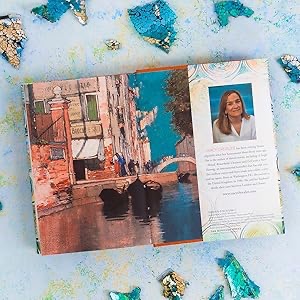
Tracy is the author of 11 novels, including the international bestseller GIRL WITH A PEARL EARRING, which has sold over 5 million copies and been made into an Oscar-nominated film starring Scarlett Johansson and Colin Firth. American by birth, British by geography, she lives in London and Dorset. Her latest novel, THE GLASSMAKER, is set in Venice and follows a family of glass masters over the course of 5 centuries.

Posted in Publisher Proof

The Black Loch by Peter May

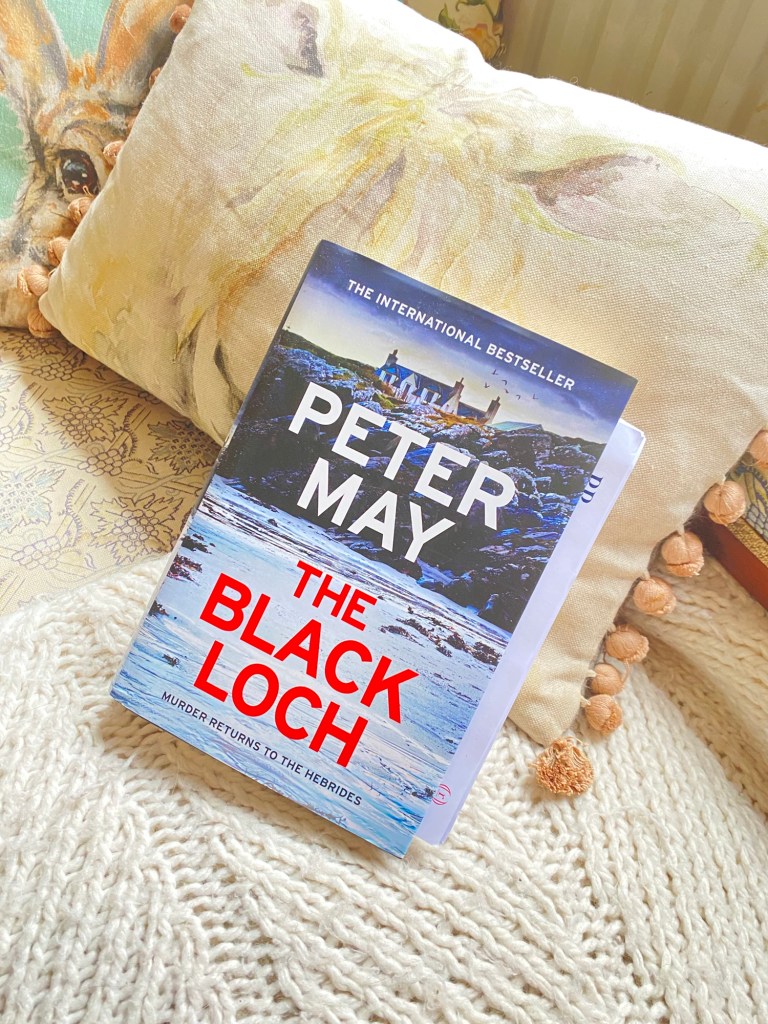
Readers probably won’t believe this but this is my first Peter May novel. I’ve had his books on my ‘authors to explore’ list for when I’m second hand book shopping, but something always gets in the way of me reading them. So, when I was offered this blog tour I jumped at the chance to finally read one. I love books set in Scotland and I am a particular fan of Tartan Noir – crime novels and mystery novels from authors like Doug Johnstone and Val McDermid. I was immediately drawn into the incredible scenery and atmosphere of the Isle of Lewis. This is the fourth in a trilogy, so I’ve definitely got some catching up to do where Fin McLeod is concerned. Once a detective and now retired, Fin is drawn back to Lewis when Caitlin Black’s body is discovered on a remote beach. Only eighteen years old, Caitlin was a student at the Nicholson Institute. It emerges that she was having an illicit affair with Fionnlagh McLeod, her teacher and a married man twenty years her senior. Fionnlagh soon becomes the prime suspect and is arrested on suspicion of her rape and murder. He is also Finn’s son. Finn knows he must return to Lewis to support his daughter-in-law and granddaughter. He also knows, despite the evidence against him, that he must try to clear his son’s name. As Fin travels around the island, he is drawn into past memories and soon realises this crime has echoes back into his own teenage past on the island. A terrible accident at a salmon farm caused two deaths, just as the industry started to expand on the island and become a multi-million pound concern. This is a journey of family ties, secret relationships and a bleak and unforgiving landscape, where violence, revenge and revelations converge. 
Fin and his wife Marsaili both grew up on the island, so it holds echoes of their relationship over the years. It’s strange for them to be back on Lewis after a ten year absence and awkward to turn up on Fionnlagh’s doorstep where his wife Donna is devastated by the possibility that her husband has killed his teenage lover. Their daughter Eilidh is happy to see her grandparents and currently oblivious about her father’s fate, but it’s clear to see the damage Fionnlagh’s exploits have had on Donna. These early chapters felt like being sucked down into a whirlpool of memories. There’s such an incredible sense of place and the use of Gaelic words and names feels foreign, strange and somehow magical at the same time. There are tourists enjoying the white sandy beaches, but we’re taken down below the surface to the realities of living somewhere so remote and bleak. Then further down to the horrors underneath where salmon are eaten alive by lice in their cages, where beached whales gasp their last agonising breath on the sand and a beautiful girl with her whole life ahead of her can be thrown over a cliff like rubbish.

He finally reached the Black Loch just before seven-thirty. He parked above the beach as sunlight fanned out towards him across cut-crystal water, revealing the secret colours that concealed themselves on the shore, among rocks and boulders and the seaweed washed up to dry along the high-tide mark. To his right, cliffs of Lewisian gneiss rose steeply out of the water and he could just see the gables and chimneys of the house that stood above them overlooking the bay. He cast his eyes down again to the water’s edge and left footprints in the wet sand as he followed the curve of the day towards the looming black of the cliffs. Somewhere here Caitlin’s body had been washed ashore.”

Peter May has portrayed the environment, whilst also showing the extent to which climate change and the eco- industry have impacted the surroundings he’s known for his whole life. The old cottages are damp and battered, some being refurbed by incomers with money either as family homes or holiday cottages. New houses are squat, one-storey dwellings built to blend with the sand and the heather with large  windows giving uninterrupted views of the landscape. Younger islanders are focused on eco-activism with Caitlin Black and her friend Isobel starring in a programme about the island’s ecology. They care about fish farming practices driven by the market across the globe for salmon. Practices that prevent wild salmon from swimming up river to spawn as well as terrible conditions for the farmed salmon too. Huge cages that once held a few hundred salmon now hold a hundred thousand, with such a high mortality rate they’re having to take them from the cages and dump them into rock crevices formed from by the tide. They lay there rotting until the sea washes them away.

The activist’s aerial shots exposing the illegal dumping of dead fish, and the zombie salmon, half eaten by sea lice, swimming listlessly around in cages where anything up to twenty-five percent of fish were already dead. She listened in horror as he conjured up an image of the stinking, maggot-ridden morts […] and the 1000-litre containers of formaldehyde that a desperate Bradan Mor was using to try to kill the sea lice.”

Fin’s narrative takes us on his investigations around the island, trying to find evidence to disprove the police’s theory that his son is a killer. A task made much more difficult when his DNA matches samples taken from Caitlin’s body. Why would he rape someone he’s been sleeping with for months? This is according to locals who’d noticed their clandestine comings and goings from a derelict cottage by the sea. Despite the urgency of the present moment, Fin is also pulled inexorably into the past, because this island has a huge hold and power. I felt centuries of history in the land it’s people and their relationships. This is sometimes positive, as Fin remembers beach parties where he first met Masaili as a teenager and they make love on the beach in the present, grasping a tiny moment of happiness and connection in the hurt and devastation. The most terrible memories involve a scheme to steal fish from the fish farm and pass them off as wild salmon, for a ghillie from the estate to sell on. Fin goes along with it despite his misgivings, but the scheme is originally suggested by Niall. A group of teenagers meet and drive to the fish farm several times, but one night there’s an awful storm and a sense of foreboding. This enterprise leads to two deaths and creates a suspicion in Fin about his friend Niall. If he is willing to steal from his own family and brush aside the death of a friend, is he capable of murder? Niall’s surname is Black and Caitlin is his daughter.

It feels as if the island has a consciousness. It sees your past and your future as clearly as the present, almost as if they’re happening simultaneously. I felt it when Finn walked across the very place he stood with Masaili when they were first meeting at six years old and she had two pigtails. She also called him Finn for the first time, christening him with a nickname he still uses. This is a thin place, unchanged for centuries. It also said something about how we experience the world. We are rarely solidly who we are in the present, with past and future forgotten. We are simultaneously all the selves we’ve ever been. In this way Fionnlagh can be a good father, a talented teacher and a suspect in a murder. There are also darker moments from Fin and Marsaili’s past that come alive here. Her narration is a rare moment in the novel but she relives a night in Glasgow from their university years, when she found Finn in bed with another girl in their student flat? It makes us realise that Finn isn’t wholly the upstanding man we think he is, he was also the cause of so much hurt, rather like his son. 

There’s a sense in which this trauma is generational, not just in individual families but in the island itself. The environment has always been harsh and people have found it to survive. It’s a hunting and fishing community and other nearby islands, like St.Kilda, became uninhabitable in the early Twentieth Century due to the difficulty of growing and catching enough food for the islanders. Fin takes us back to a conversation he had with his grandfather about the whaling industry, brutal tales of harpooning these majestic creatures and turning the sea red. It links to the beached whales in the bay, possibly drawn off course by one of them being unwell and in distress. As the vet assesses these giant creatures and people desperately try to save them he talks about a tradition in the Faroe Islands where they draw whales to the shore then hack them to pieces. Fin has violent memories of being forced to join a seasonal slaughter. In his last summer before university, Fin felt like a black cloud had descended because he and his friend Artair had been chosen to join the guga hunters. This was a four hundred year old tradition where twelve men would travel to An Sgeir, an island no more than a rock in the middle of the ocean. A guga was a young gannet, once hunted in a desperate need for food, their slaughter was now a rite of passage. Hunters killed two thousand birds in a fortnight, then they would be plucked and salted. Fin felt disgusted by the idea, but it seemed unavoidable and it would be dishonourable to give up your place.

“Neither Artair nor I wanted to spend two weeks on that bleak and inhospitable rock, scrambling among the blood and shit that covered the cliffs, slaughtering defenceless birds.”

This was a tense and complex case with so many possible suspects, and Peter May also keeps us guessing about Fionnlagh. Perhaps he could be the killer, after all he does confess. In a way this created a crime novel that didn’t revolve completely on whodunnit, but on the tensions between different characters and also their environment. He also creates a compelling picture of the beautiful and intelligent victim, Caitlin Black. A girl as embedded in the island as Fin, with a deep passion for the island’s environment and it’s flora and fauna. She epitomises the gap between generations, but also between those who want to protect the island and those who are making a generous living by exploiting and polluting it. I loved how deep the island and it’s history ran in these people, something I can understand having lived right next to the River Trent for most of my life. In fact the first thing I did when moving into my last village twelve years ago was go to the river bank and take off my sandals to feel the river bank under my feet. The river and it’s daily tidal bore, the smell of fresh cut hay, the cool of the forest, the crunch of dry pine needles underfoot as well as the smell of straw bales in the sun and freshly turned earth are all in my soul. They make up part of who I am and although I moved away for study, I have returned and unknowingly into the same village where my great-great grandmother is buried. Our ancestors call to us and this is definitely what Fin and Marsaili are feeling, as well as need to be close to Fionnlagh, Donna and Eilidh. This is something he couldn’t have imagined ten years ago, but now he wonders if it’s where they belong. Perhaps this means future additions to the series and on the basis of 5is novel, I’ll be the first in the queue if it does.

“He leaned over to kiss her and remembered that little girl with the pigtails who had walked him up the road from the school to Crobost Stores giving him the nickname that had stuck for the rest of his life.”

Out on 12th September from RiverRun Books, an imprint of Quercus.

Meet the Author

Peter May was born and raised in Scotland. He won Journalist of the Year at twenty-one and was a published novelist at twenty-six. When his first book was adapted as a major drama series for the BBC, he quit journalism and became one of Scotland’s most successful television dramatists. He created three prime-time drama series, led two of the highest-rated series in Scotland as a script editor and producer and worked on more than 1,000 episodes of ratings-topping drama before deciding to leave television and return to his first love, writing novels.

Posted in Orenda

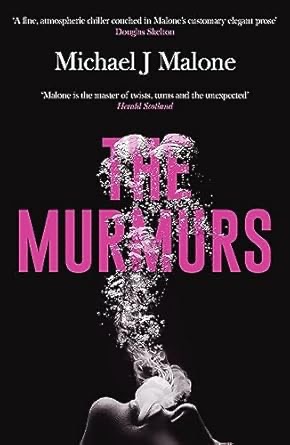
The Murmurs by Michael J. Malone

I quickly became fascinated with this mix of historical fiction, psychological suspense and the paranormal. We meet Annie Jackson as she tentatively starts her new job in a nursing home in the West End of Glasgow, hoping to get her life back on track. Annie suffers with terrible nightmares where she’s stuck in a car underwater. She also has the sensation that someone is holding her head under water until her lungs feel ready to burst. She also has debilitating headaches and she can feel one threatening as her new manager introduces her to resident Steve. Then something very odd happens, as a blinding pain in Annie’s head is followed by Steve’s face starting to shake, then reform. A whispering sound begins in her head and she sees Steve as a skull, followed by a vision of him falling in his room and suffering a debilitating stroke. She desperately wants to tell him but how can she without seeming like a lunatic? He becomes agitated and upset, as Annie starts to describe the layout of Steve’s bathroom and he asks her to stop. As she’s sent home from another job she starts to think back to her childhood and the first manifestations of her debilitating problem. Annie survived the terrible car accident that wiped her childhood memories and killed her mother. This strange supernatural phenomenon is why Annie is alone and struggles to make friends. These are ‘the murmurs’. 

I felt so much compassion for Annie, as the story splits into two different timelines: we are part of Annie’s inner world as a child, but also in the present as fragments of memory slowly start to emerge. We also go back even further to the childhood of Annie’s mother Eleanor and her two sisters Bridget and Sheila. We experience their lives through other people’s stories and written correspondence, especially that of a nun who also works in a residential home. I enjoyed how this gave me lots of different perspectives and how the drip feed of information slowly made sense of what was happening in the present day. Different revelations have a huge effect on the adult Annie and because her memories have been buried for so long she experiences the shock and surprise at exactly the same time as we do. This brings an immediacy to the narrative and I felt like I was really there alongside her, in the moment. With my counselling brain I could see a psyche shattered by trauma, desperately looking for answers, she is piecing herself back together as she goes. 

Teenage Annie had a similar vision about a girl called Jenny Burn, who went missing never to return. The murmurs awakened when her mum’s sister Aunt Sheila came to visit them. She tried to openly discuss an Aunt Bridget who also had a ‘gift’ but has ended up in a home. Eleanor, Annie’s mother, asks Sheila to leave, but it’s too late because Annie has already seen that her aunt is dying of cancer. Annie evades her mum and makes her way to the hotel, the only place Sheila can be staying. Unfortunately, Jenny is working on reception. Annie can see her climbing into a red car and she desperately wants to warn her, but she knows she’ll come across as a crazy person. Eleanor is desperately looking for a way to deal with her daughter, she’s a person of importance in the church and she can’t be seen to have a daughter who has visions. Pastor Mosley has Eleanor exactly where he wants her. There’s a control and fanaticism in him that scared me much more than Annie’s murmurs. When Eleanor takes Annie to the pastor, he demonstrates his control by holding her head firmly under his head as he prays for her. When she almost faints, he’s convinced there’s a demon in her. Annie is scared of him, she gets a terrible feeling about him but doesn’t know why. Religion is portrayed as sinister and controlling, with fervent followers who never question, but live in the way they’ve been instructed is Christian? story takes an interesting turn when Annie’s brother Lewis, a financial advisor, becomes involved with the church once more and it’s new pastor Christopher Jenkins, the son of their childhood neighbour. He’s revolutionised the church and through the internet he’s turning it into a global concern. He’s not just interested in saving souls though, he’s also amassing money from his internet appeals. He also seems very interested in meeting Annie. 

As the book draws to a close the revelations come thick and fast as both past and future collide. The search for Aunts Bridget and Sheila seems to unearth more questions than answers. Annie finds out that Jenny wasn’t the only woman who went missing in Mossgaw all those years ago. As she starts to have suspicions about her childhood home, Chris seems very keen to draw her back there. Might he be planning a huge surprise? I was a bit confused at first with all these disparate elements, but as all the pieces started to slot together I was stunned by the truths that are unearthed. Then as Annie’s childhood memories were finally triggered I felt strangely terrified but also relieved for her all at once. I hoped that once she’d regained that past part of herself she would feel more confident and free, despite the strange gift she seemed to have inherited. Maybe by facing the past and leaning in to her relationship with her brother, she might feel more grounded and strong enough to cope with her ‘gift’. I thought the author brought that compassion he’s shown in previous novels but combined it with a spooky edge and some intriguing secrets. I really loved the way he showed mistakes of the past still bleeding into the present, as well as the elements of spiritual abuse that were most disturbing. This book lures you in and never lets go, so be prepared to be hooked.

Meet the Author

Michael J. Malone was born and brought up in the heart of Burns’ country, just a stone’s throw from the great man’s cottage in Ayr. Well, a stone thrown by a catapult, maybe.

He has published over 200 poems in literary magazines throughout the UK, including New Writing Scotland, Poetry Scotland and Markings.

BLOOD TEARS, his debut novel won the Pitlochry Prize (judge:Alex Gray) from the Scottish Association of Writers and when it was published he added a “J” to his name to differentiate it from the work of his talented U.S. namesake.

He can be found on twitter – @michaelJmalone1

Facebook – https://www.facebook.com/themichaeljmalonepage

And here’s my newsletter – subscribe for lots of cool stuff! – https://michaeljmalone.substack.com